
पर्सनलाइजेशन किस प्रकार ग्राहक निष्ठा और बिक्री को बढ़ाता है
यह तकनीकी संदर्भ मार्गदर्शिका बड़े पैमाने पर ग्राहक पर्सनलाइजेशन के लिए WiFi एनालिटिक्स का लाभ उठाने की आर्किटेक्चरल आवश्यकताओं और व्यावसायिक प्रभाव का विवरण देती है। यह IT प्रबंधकों, नेटवर्क आर्किटेक्ट्स और वेन्यू ऑपरेशंस निदेशकों के लिए विरासत (legacy) गेस्ट एक्सेस इंफ्रास्ट्रक्चर को एक प्राथमिक डेटा इनजेशन लेयर में बदलने के लिए व्यावहारिक डिप्लॉयमेंट मार्गदर्शन प्रदान करती है जो मापने योग्य निष्ठा और राजस्व वृद्धि को संचालित करती है। डेटा स्कीमा डिज़ाइन, CRM इंटीग्रेशन, GDPR अनुपालन और हॉस्पिटैलिटी, रिटेल और इवेंट्स में वास्तविक दुनिया के केस स्टडीज को कवर करते हुए, यह मार्गदर्शिका तकनीकी टीमों को एक ऐसा नेटवर्क तैयार करने के लिए आवश्यक फ्रेमवर्क से लैस करती है जो सक्रिय रूप से राजस्व में योगदान देता है।
इस गाइड को सुनें
पॉडकास्ट ट्रांसक्रिप्ट देखें
हमारी मुख्य श्रृंखला का हिस्सा: WiFi Marketing Guide →

कार्यकारी सारांश
हॉस्पिटैलिटी, रिटेल और सार्वजनिक क्षेत्र के वेन्यू ऑपरेटरों को एक निरंतर चुनौती का सामना करना पड़ता है: अनाम मेहमानों की भीड़ को मापने योग्य ग्राहक निष्ठा और राजस्व में बदलना। पुराने नेटवर्क इंफ्रास्ट्रक्चर में गेस्ट एक्सेस को केवल एक कॉस्ट सेंटर (cost centre) माना जाता था, लेकिन आधुनिक एज प्लेटफॉर्म्स ने एक्सेस पॉइंट को एक प्राथमिक डेटा इनजेशन लेयर में बदल दिया है।
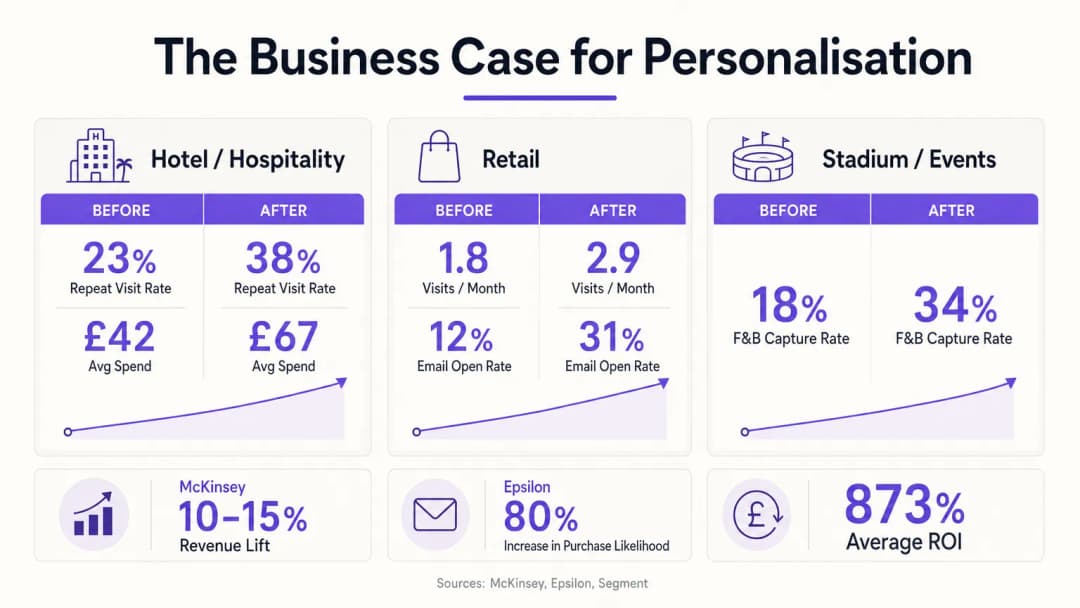
यह तकनीकी संदर्भ मार्गदर्शिका बड़े पैमाने पर पर्सनलाइजेशन लागू करने के लिए आवश्यक आर्किटेक्चरल परिवर्तनों का परीक्षण करती है। कैप्टिव पोर्टल ऑथेंटिकेशन को कस्टमर रिलेशनशिप मैनेजमेंट (CRM) सिस्टम और मार्केटिंग ऑटोमेशन के साथ एकीकृत (integrate) करके, IT और मार्केटिंग टीमें ऐसे प्रासंगिक अनुभव प्रदान कर सकती हैं जो सिद्ध व्यावसायिक परिणाम प्राप्त करते हैं। उद्योग के आंकड़े दर्शाते हैं कि मजबूत पर्सनलाइजेशन रणनीतियों से राजस्व में 10% से 15% की वृद्धि होती है, जबकि 80% उपभोक्ता उन ब्रांडों से खरीदारी करने की अधिक संभावना व्यक्त करते हैं जो उनकी आवश्यकताओं के अनुरूप अनुभव प्रदान करते हैं।
IT प्रबंधकों और नेटवर्क आर्किटेक्ट्स के लिए, बुनियादी कनेक्टिविटी से इंटेलिजेंट एनालिटिक्स ओवरले की ओर बढ़ने के लिए डेटा स्कीमा, API इंटीग्रेशन और अनुपालन (compliance) फ्रेमवर्क पर सावधानीपूर्वक विचार करने की आवश्यकता होती है। यह मार्गदर्शिका व्यावहारिक डिप्लॉयमेंट पद्धतियां, आर्किटेक्चरल ब्लूप्रिंट और वास्तविक दुनिया के केस स्टडीज प्रदान करती है जो दर्शाते हैं कि एक ऐसा नेटवर्क कैसे तैयार किया जाए जो राजस्व में सक्रिय रूप से योगदान देता है।
तकनीकी गहन विश्लेषण (Technical Deep-Dive)
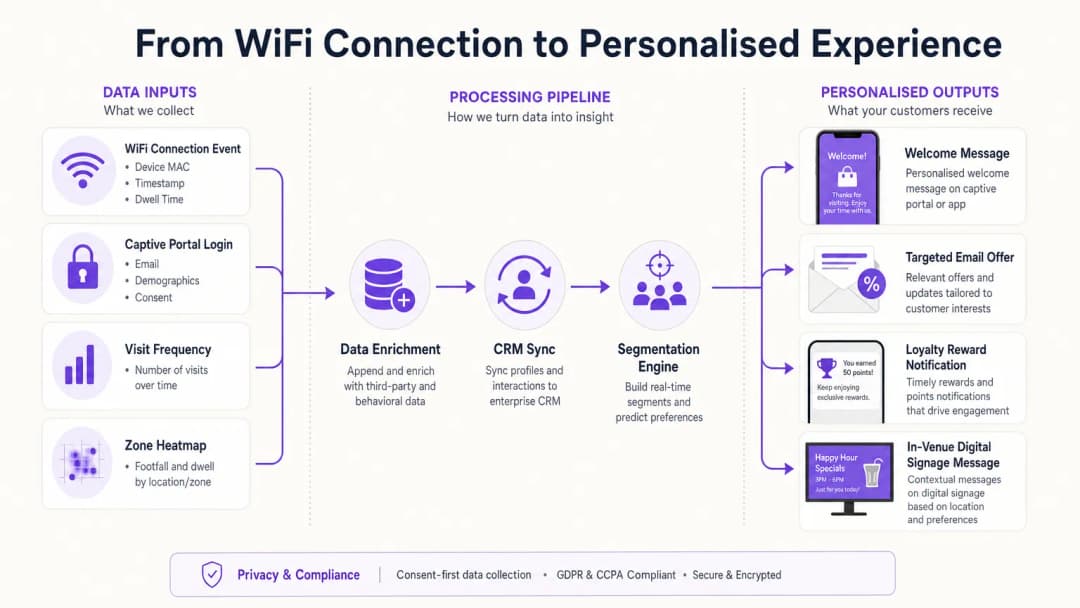
स्केलेबल पर्सनलाइजेशन की नींव आइसोलेटेड नेटवर्क साइलो से एक एकीकृत डेटा इकोसिस्टम में स्थानांतरित होने पर टिकी है। जब कोई उपयोगकर्ता Guest WiFi के माध्यम से ऑथेंटिकेट करता है, तो नेटवर्क हाई-फिडेलिटी टेलीमेट्री कैप्चर करता है — जिसमें डिवाइस MAC एड्रेस, ड्वेल टाइम, ज़ोन ट्रांज़िशन और ऑथेंटिकेशन पेलोड शामिल होते हैं।
डेटा इनजेशन और स्कीमा मैपिंग
इस टेलीमेट्री का लाभ उठाने के लिए, एनालिटिक्स ओवरले को डेटा को एक यूनिफाइड स्कीमा में नॉर्मलाइज करना होगा। इस प्रक्रिया में डिटरमिनिस्टिक डेटा (जैसे, कैप्टिव पोर्टल लॉगिन के दौरान प्रदान किए गए ईमेल एड्रेस और जनसांख्यिकीय विवरण) और प्रोबबिलिस्टिक डेटा (जैसे, AP ट्राइएंगुलेशन और RSSI वैल्यू से प्राप्त व्यवहार पैटर्न) दोनों को कैप्चर करना शामिल है।
इससे बनने वाला डेटा लेक सीधे वेन्यू के CRM और मार्केटिंग ऑटोमेशन प्लेटफॉर्म में फीड किया जाता है। Purple का WiFi Analytics प्लेटफॉर्म एक सेंट्रल इनजेशन इंजन के रूप में कार्य करता है, जो कच्चे RADIUS अकाउंटिंग पैकेट और HTTP रीडायरेक्ट पेलोड को डाउनस्ट्रीम उपयोग के लिए उपयुक्त स्ट्रक्चर्ड JSON ऑब्जेक्ट्स में पार्स करता है।
इंटीग्रेशन आर्किटेक्चर
सफल डिप्लॉयमेंट बाहरी सिस्टम के साथ नेटवर्क टेलीमेट्री को सिंक्रोनाइज़ करने के लिए मजबूत API आर्किटेक्चर पर निर्भर करते हैं। RESTful APIs रियल-टाइम डेटा ट्रांसफर को सुगम बनाते हैं, जिससे ट्रिगर होने वाले वर्कफ़्लो सक्षम होते हैं, जैसे कि किसी हाई-वैल्यू ग्राहक द्वारा नेटवर्क पर ऑथेंटिकेट करते ही वेलकम ईमेल भेजना।
एक ऐसी स्थिति पर विचार करें जहां कोई ग्राहक Retail वातावरण में प्रवेश करता है। नेटवर्क कंट्रोलर डिवाइस प्रोब रिक्वेस्ट का पता लगाता है और MAC एड्रेस को एक ज्ञात ग्राहक प्रोफाइल से जोड़ता है। इसके बाद एनालिटिक्स प्लेटफॉर्म CRM के लिए एक वेबहुक ट्रिगर करता है, जो ग्राहक के खरीदारी इतिहास का मूल्यांकन करता है और कैप्टिव पोर्टल या ब्रांड के मोबाइल एप्लिकेशन पर पर्सनलाइज्ड ऑफर भेजता है।
Hospitality डिप्लॉयमेंट में, यही आर्किटेक्चर प्रॉपर्टी मैनेजमेंट सिस्टम (PMS) इंटीग्रेशन को सक्षम बनाता है। जब कोई पुराना मेहमान चेक-इन करता है और होटल के WiFi से कनेक्ट होता, तो सिस्टम उनकी प्रोफाइल का ऐतिहासिक प्रवास (stay) डेटा के साथ क्रॉस-रेफरेंस करता है और रूम अपग्रेड या F&B प्रमोशन के लिए लक्षित (targeted) अपसेल के साथ कैप्टिव पोर्टल पर एक पर्सनलाइज्ड वेलकम मैसेज भेजता है।
| डेटा प्रकार (Data Type) | स्रोत (Source) | डाउनस्ट्रीम उपयोग (Downstream Use) |
|---|---|---|
| ईमेल एड्रेस | कैप्टिव पोर्टल लॉगिन | CRM प्रोफाइल निर्माण, ईमेल अभियान |
| MAC एड्रेस | नेटवर्क एसोसिएशन | विज़िट फ्रीक्वेंसी ट्रैकिंग, ड्वेल एनालिसिस |
| ज़ोन ड्वेल टाइम | AP ट्राइएंगुलेशन | प्रासंगिक ट्रिगर ऑफर |
| विज़िट फ्रीक्वेंसी | RADIUS अकाउंटिंग | लॉयल्टी टियर असाइनमेंट |
| डेमोग्राफिक्स | प्रोग्रेसिव प्रोफाइलिंग | ऑडियंस सेगमेंटेशन |
कार्यान्वयन मार्गदर्शिका (Implementation Guide)
पर्सनलाइजेशन-केंद्रित नेटवर्क आर्किटेक्चर को डिप्लॉय करने के लिए डेटा सटीकता, सिस्टम इंटरऑपरेबिलिटी और नियामक अनुपालन (regulatory compliance) सुनिश्चित करने के लिए एक संरचित दृष्टिकोण की आवश्यकता होती है।
चरण 1: इंफ्रास्ट्रक्चर असेसमेंट
एनालिटिक्स ओवरले डिप्लॉय करने से पहले, मौजूदा WLAN इंफ्रास्ट्रक्चर का मूल्यांकन करें। सुनिश्चित करें कि वायरलेस कंट्रोलर और एक्सेस पॉइंट आवश्यक प्रोटोकॉल — RADIUS, SNMP और Syslog — का समर्थन करते हैं और निरंतर टेलीमेट्री रिपोर्टिंग से जुड़े अतिरिक्त प्रोसेसिंग ओवरहेड को संभाल सकते हैं। Purple का प्लेटफॉर्म हार्डवेयर-अग्नोस्टिक है, जो Cisco, Juniper, Ruckus और अन्य प्रमुख वेंडर्स के मौजूदा इंफ्रास्ट्रक्चर के साथ एकीकृत होता है, जिससे डिप्लॉयमेंट के लिए आवश्यक पूंजीगत व्यय (CapEx) काफी कम हो जाता है।
चरण 2: कैप्टिव पोर्टल कॉन्फ़िगरेशन
यूज़र फ्रिक्शन और डेटा अधिग्रहण (data acquisition) के बीच संतुलन बनाने के लिए कैप्टिव पोर्टल को डिज़ाइन करें। प्रोग्रेसिव प्रोफाइलिंग तकनीक लागू करें, शुरुआती लॉगिन के दौरान न्यूनतम जानकारी का अनुरोध करें और बाद की विज़िट के दौरान धीरे-धीरे ग्राहक प्रोफाइल तैयार करें। सुनिश्चित करें कि पोर्टल डिज़ाइन कॉर्पोरेट ब्रांड दिशानिर्देशों के अनुरूप हो और सोशल लॉगिन या OpenRoaming इंटीग्रेशन जैसी निर्बाध ऑथेंटिकेशन विधियों की पेशकश करता हो। सभी डेटा संग्रह स्पष्ट, GDPR-अनुपालन सहमति तंत्र पर आधारित होने चाहिए।
चरण 3: सिस्टम इंटीग्रेशन
WiFi एनालिटिक्स प्लेटफॉर्म और वेन्यू के CRM, मार्केटिंग ऑटोमेशन और प्रॉपर्टी मैनेजमेंट सिस्टम के बीच द्विदिश (bidirectional) डेटा प्रवाह स्थापित करें। डेटा सुसंगतता सुनिश्चित करने के लिए मजबूत मिडलवेयर या सीधे API इंटीग्रेशन का उपयोग करें। जटिल वातावरण के लिए, सभी ग्राहक इंटरैक्शन के लिए एक केंद्रीय भंडार के रूप में कार्य करने के लिए कस्टमर डेटा प्लेटफॉर्म (CDP) डिप्लॉय करने पर विचार करें। यह विशेष रूप से Transport हब और मल्टी-साइट रिटेल चेन के लिए प्रासंगिक है जहां ग्राहकों की यात्रा कई भौतिक स्थानों तक फैली होती है।
चरण 4: कैंपेन लॉजिक और ऑटोमेशन
डेटा पाइपलाइन स्थापित होने के बाद, मार्केटिंग ऑटोमेशन नियम कॉन्फ़िगर करें जो नेटवर्क इवेंट्स को ग्राहक कार्यों में बदलते हैं। ट्रिगर शर्तें परिभाषित करें (जैसे, पहली विज़िट, 5वीं विज़िट, विशिष्ट ज़ोन में 30 मिनट से अधिक का ड्वेल टाइम) और उन्हें संबंधित कैंपेन कार्यों से मैप करें। ऑफर की प्रासंगिकता और कन्वर्शन रेट्स को लगातार ऑप्टिमाइज़ करने के लिए A/B टेस्टिंग फ्रेमवर्क स्थापित करें।
अपने विशिष्ट सेटअप को लेकर कोई सवाल हैं?
हमारी टीम 80,000 से अधिक वेन्यू में वेन्यू ऑपरेटरों, IT मैनेजरों और नेटवर्क इंजीनियरों के साथ काम करती है। 20 मिनट का कॉल बुक करें और हम आपको दिखाएंगे कि आपके जैसे अन्य लोगों ने इसे कैसे हल किया।
सर्वोत्तम प्रथाएं (Best Practices)
पर्सनलाइजेशन उपक्रमों के प्रभाव को अधिकतम करने के लिए, IT और मार्केटिंग टीमों को निम्नलिखित वेंडर-न्यूट्रल सर्वोत्तम प्रथाओं का पालन करना चाहिए।
डेटा गुणवत्ता को प्राथमिकता दें। दोषपूर्ण या गलत डेटा को CRM में प्रवेश करने से रोकने के लिए एंट्री पॉइंट पर डेटा वैलिडेशन नियम लागू करें। उच्च डेटा फिडेलिटी बनाए रखने के लिए डेटाबेस का नियमित रूप से ऑडिट और सफाई करें। दस डुप्लिकेट, अधूरे प्रोफाइल की तुलना में एक एकल प्रामाणिक ग्राहक रिकॉर्ड अधिक मूल्यवान है।
प्राइवेसी-फर्स्ट दृष्टिकोण अपनाएं। सुनिश्चित करें कि सभी डेटा संग्रह प्रथाएं GDPR और CCPA जैसे क्षेत्रीय नियमों का अनुपालन करती हैं। कैप्टिव पोर्टल में स्पष्ट, पारदर्शी सहमति तंत्र लागू करें और उपयोगकर्ताओं को उनके डेटा प्राथमिकताओं को प्रबंधित करने के लिए सुलभ उपकरण प्रदान करें। गैर-अनुपालन से महत्वपूर्ण वित्तीय और प्रतिष्ठित जोखिम उत्पन्न होते हैं।
प्रासंगिक ट्रिगर्स लागू करें। अत्यधिक प्रासंगिक मैसेजिंग वितरित करने के लिए रियल-टाइम लोकेशन डेटा का लाभ उठाएं। हॉस्पिटैलिटी सेटिंग में, जब कोई मेहमान वेलनेस सेंटर के पास स्थित AP से कनेक्ट होता है, तो स्पा प्रमोशन ट्रिगर करें। रिटेल में, जब कोई ग्राहक कपड़ों के ज़ोन में 10 मिनट से अधिक समय बिताता है, तो फिटिंग रूम असिस्टेंस ऑफर ट्रिगर करें।
IT और मार्केटिंग लक्ष्यों को संरेखित करें। IT और मार्केटिंग विभागों के बीच क्रॉस-फंक्शनल सहयोग को बढ़ावा दें। IT को यह सुनिश्चित करना चाहिए कि इंफ्रास्ट्रक्चर आवश्यक टेलीमेट्री को विश्वसनीय रूप से वितरित कर सके, जबकि मार्केटिंग को व्यावसायिक नियमों और कैंपेन लॉजिक को परिभाषित करना चाहिए। इन टीमों के बीच तालमेल की कमी असफल डिप्लॉयमेंट का सबसे आम कारण है।
व्यापक ग्राहक अनुभव रणनीति बनाने वाले संगठनों के लिए, Como Construir uma Estratégia de Experiência do Cliente और Cómo construir una estrategia de experiencia del cliente मार्गदर्शिकाएँ पूरक फ्रेमवर्क प्रदान करती हैं।
ट्रबलशूटिंग और जोखिम निवारण
इंटेलिजेंट नेटवर्क ओवरले डिप्लॉय करने से नई जटिलताएं और संभावित विफलता बिंदु उत्पन्न होते हैं। सेवा उपलब्धता और डेटा अखंडता बनाए रखने के लिए सक्रिय जोखिम निवारण आवश्यक है।
API रेट लिमिटिंग। ट्रांसपोर्ट हब या स्टेडियम जैसे उच्च-घनत्व वाले वेन्यू भारी मात्रा में टेलीमेट्री डेटा उत्पन्न कर सकते, जिससे डाउनस्ट्रीम APIs की रेट लिमिट पार हो सकती है। डेटा इग्रेस (egress) को प्रबंधित करने के लिए इंटेलिजेंट क्यूइंग और बैचिंग तंत्र लागू करें। कम मूल्य वाले इवेंट्स (जैसे, ट्रांजिएंट रोमिंग) को फ़िल्टर करें और केवल महत्वपूर्ण स्थिति परिवर्तनों के लिए वेबहुक ट्रिगर करें।
MAC रैंडमाइजेशन। आधुनिक मोबाइल ऑपरेटिंग सिस्टम उपयोगकर्ता की गोपनीयता की रक्षा के लिए MAC रैंडमाइजेशन का उपयोग करते हैं, जिससे सेशन के बीच प्रोबबिलिस्टिक डिवाइस ट्रैकिंग बाधित होती है। सटीक ट्रैकिंग बनाए रखने के लिए, उपयोगकर्ताओं को कैप्टिव पोर्टल के माध्यम से ऑथेंटिकेट करने या वेन्यू का मोबाइल एप्लिकेशन डाउनलोड करने के लिए प्रोत्साहित करें, जो डिटरमिनिस्टिक आइडेंटिफायर्स का उपयोग कर सकता है। Passpoint या OpenRoaming के माध्यम से सर्टिफिकेट-आधारित ऑथेंटिकेशन सबसे मजबूत दीर्घकालिक समाधान प्रदान करता है।
Network Congestion. निरंतर टेलीमेट्री रिपोर्टिंग सीमित बैकहॉल लिंक पर महत्वपूर्ण बैंडविड्थ का उपभोग कर सकती है। कोर नेटवर्क पर लोड को कम करने के लिए रिपोर्टिंग अंतराल (intervals) को ऑप्टिमाइज़ करें और जहां संभव हो एज प्रोसेसिंग का लाभ उठाएं। उच्च-थ्रूपुट आवश्यकताओं वाले वेन्यू के लिए, लगातार बैकहॉल प्रदर्शन सुनिश्चित करने के लिए एक समर्पित leased line पर विचार करें।
डेटा विसंगति विफलता। यदि कोई सिस्टम अस्थायी रूप से अनुपलब्ध है, तो द्विदिश (bidirectional) API इंटीग्रेशन से डेटा विसंगति का जोखिम पैदा होता है। थोड़े समय के आउटेज के दौरान किसी भी ग्राहक इवेंट के नुकसान को रोकने के लिए इडेम्पोटेंट (idempotent) API कॉल और मजबूत रिट्राय लॉजिक लागू करें।
ROI और व्यावसायिक प्रभाव
पर्सनलाइजेशन रणनीति का अंतिम उद्देश्य मापने योग्य व्यावसायिक मूल्य उत्पन्न करना है। नेटवर्क एनालिटिक्स का लाभ उठाकर, वेन्यू ऑपरेटर गुणात्मक अनुमानों से मात्रात्मक प्रदर्शन मेट्रिक्स की ओर बढ़ सकते हैं।
सफलता को मापना
डिप्लॉयमेंट के प्रभाव का मूल्यांकन करने के लिए स्पष्ट की-परफॉर्मेंस इंडिकेटर्स (KPIs) स्थापित करें। निम्नलिखित तालिका उद्योग डिप्लॉयमेंट पर आधारित प्राथमिक मेट्रिक्स और उनके अपेक्षित बेंचमार्क दर्शाती है।
| KPI | बेसलाइन (डिप्लॉयमेंट-पूर्व) | लक्ष्य (डिप्लॉयमेंट-बाद) | मापन विधि |
|---|---|---|---|
| रिपीट विज़िट रेट | 23% | 35%+ | WiFi एनालिटिक्स / CRM |
| औसत ट्रांजैक्शन वैल्यू | बेसलाइन | +15% से +25% | POS इंटीग्रेशन |
| ईमेल कैंपेन ओपन रेट | 12% | 28%+ | मार्केटिंग ऑटोमेशन |
| F&B कैप्चर रेट (स्टेडियम) | 18% | 30%+ | POS / WiFi कोरिलेशन |
| कस्टमर लाइफटाइम वैल्यू | बेसलाइन | +20% | CRM एनालिटिक्स |
इन मेट्रिक्स का लगातार विश्लेषण करके और पर्सनलाइजेशन एल्गोरिदम को परिष्कृत (refine) करके, संगठन अपने नेटवर्क इंफ्रास्ट्रक्चर के ROI को अधिकतम कर सकते हैं। Purple का प्लेटफॉर्म अपने 80,000+ वेन्यू डिप्लॉयमेंट में औसतन 873% ROI दर्ज करता है, जो नेटवर्क को केवल एक उपयोगिता (utility) मानने के बजाय एक रणनीतिक व्यावसायिक संपत्ति मानने की परिवर्तनकारी व्यावसायिक क्षमता को दर्शाता है।
मुख्य परिभाषाएं
कैप्टिव पोर्टल
एक वेब पेज जिसे सार्वजनिक-पहुंच नेटवर्क के उपयोगकर्ता को एक्सेस दिए जाने से पहले देखने और इंटरैक्ट करने के लिए बाध्य होना पड़ता है। यह डिटरमिनिस्टिक ग्राहक डेटा के लिए प्राथमिक इनजेशन बिंदु के रूप में कार्य करता है।
IT टीमें स्वीकार्य उपयोग नीतियों को लागू करने, मार्केटिंग सहमति प्राप्त करने और बैकएंड डेटाबेस के विरुद्ध उपयोगकर्ताओं को ऑथेंटिकेट करने के लिए कैप्टिव पोर्टल कॉन्फ़िगर करती हैं। कैप्टिव पोर्टल का डिज़ाइन सीधे डेटा गुणवत्ता और नेटवर्क अपनाने की दरों को प्रभावित करता है।
प्रोग्रेसिव प्रोफाइलिंग
पहली मुलाकात के दौरान एक व्यापक फॉर्म पूरा करने की मांग करने के बजाय कई इंटरैक्शन में धीरे-धीरे ग्राहक जानकारी एकत्र करने की तकनीक।
ऑथेंटिकेशन घर्षण (friction) को कम करने और उपयोगकर्ता अनुभव को बेहतर बनाने के लिए उपयोग किया जाता है, जबकि समय के साथ मजबूत ग्राहक प्रोफाइल का निर्माण जारी रहता है। उपभोक्ता-उन्मुख वेन्यू में उच्च नेटवर्क अपनाने की दरों को बनाए रखने के लिए महत्वपूर्ण है।
MAC रैंडमाइजेशन
आधुनिक मोबाइल ऑपरेटिंग सिस्टम (iOS 14+, Android 10+) द्वारा कार्यान्वित एक गोपनीयता सुविधा जो वायरलेस नेटवर्क को स्कैन करने या उससे कनेक्ट करने पर एक अस्थायी, यादृच्छिक (random) मीडिया एक्सेस कंट्रोल (MAC) एड्रेस उत्पन्न करती है।
यह सुविधा सत्रों (sessions) में प्रोबबिलिस्टिक डिवाइस ट्रैकिंग को जटिल बनाती है, जिससे सटीक दीर्घकालिक एनालिटिक्स के लिए कैप्टिव पोर्टल या Passpoint/OpenRoaming के माध्यम से डिटरमिनिस्टिक ऑथेंटिकेशन आवश्यक हो जाता है।
टेलीमेट्री
वह स्वचालित संचार प्रक्रिया जिसके द्वारा दूरस्थ या दुर्गम बिंदुओं पर माप और अन्य डेटा एकत्र किए जाते हैं और निगरानी और विश्लेषण के लिए प्राप्त करने वाले उपकरणों को प्रेषित किए जाते हैं।
WiFi एनालिटिक्स में, टेलीमेट्री में सिग्नल स्ट्रेंथ (RSSI), एसोसिएशन स्टेट्स, रोमिंग इवेंट्स और एक्सेस पॉइंट्स और वायरलेस कंट्रोलर्स द्वारा उत्पन्न ड्वेल टाइम जैसे डेटा पॉइंट शामिल होते हैं।
वेबहुक
कस्टम HTTP कॉलबैक के साथ एक वेब एप्लिकेशन के व्यवहार को बढ़ाने या बदलने की एक विधि, जो एक स्रोत सिस्टम में विशिष्ट घटनाओं द्वारा ट्रिगर होती है और रियल-टाइम में एक गंतव्य URL पर भेजी जाती है।
एनालिटिक्स प्लेटफॉर्म से बाहरी CRM या मार्केटिंग ऑटोमेशन सिस्टम में रियल-टाइम इवेंट डेटा — जैसे कि ग्राहक का WiFi में लॉग इन करना — भेजने के लिए वेबहुक का भारी उपयोग किया जाता है।
कस्टमर डेटा प्लेटफॉर्म (CDP)
एक प्रकार का पैकेज्ड सॉफ़्टवेयर जो एक स्थायी, एकीकृत ग्राहक डेटाबेस बनाता है जो अन्य प्रणालियों के लिए सुलभ होता है, कई स्रोतों से डेटा खींचकर, उसे साफ करके और एक एकल ग्राहक प्रोफ़ाइल में संयोजित करके।
उन्नत एंटरप्राइज डिप्लॉयमेंट WiFi टेलीमेट्री को POS डेटा, लॉयल्टी प्रोग्राम मेट्रिक्स और ई-कॉमर्स इंटरैक्शन के साथ एकल, व्यावहारिक ग्राहक दृश्य में एकत्रित करने के लिए CDPs का उपयोग करते हैं।
ड्वेल टाइम
वह समय अवधि जिसके दौरान कोई डिवाइस नेटवर्क से या किसी विशिष्ट भौतिक ज़ोन के भीतर संबद्ध रहता है, जैसा कि WiFi एनालिटिक्स प्लेटफॉर्म द्वारा मापा जाता है।
वेन्यू के प्रदर्शन और ग्राहक जुड़ाव का आकलन करने के लिए एक महत्वपूर्ण मीट्रिक। बढ़ा हुआ ड्वेल टाइम जुड़ाव का एक मजबूत संकेतक है और अक्सर प्रति विज़िट उच्च राजस्व के साथ सीधे सहसंबंधित होता है।
ओमनीचैनल एट्रिब्यूशन
विभिन्न चैनलों — भौतिक स्टोर, वेबसाइट, मोबाइल ऐप — में सभी ग्राहक टचपॉइंट्स को ट्रैक करने और उनका मूल्यांकन करने की प्रक्रिया जो खरीदारी जैसे वांछित परिणाम में योगदान करते हैं।
WiFi एनालिटिक्स सटीक ओमनीचैनल एट्रिब्यूशन मॉडल बनाने के लिए आवश्यक महत्वपूर्ण भौतिक-दुनिया डेटा स्ट्रीम प्रदान करता है, जो ऑनलाइन और ऑफलाइन ग्राहक व्यवहार के बीच की खाई को पाटता है।
RADIUS (Remote Authentication Dial-In User Service)
एक क्लाइंट/सर्वर नेटवर्किंग प्रोटोकॉल जो उन उपयोगकर्ताओं के लिए केंद्रीकृत ऑथेंटिकेशन, ऑथराइजेशन और अकाउंटिंग (AAA) प्रबंधन प्रदान करता है जो एक नेटवर्क सेवा से जुड़ते हैं और उसका उपयोग करते हैं।
RADIUS अकाउंटिंग पैकेट एंटरप्राइज WiFi डिप्लॉयमेंट में कच्चे टेलीमेट्री डेटा का प्राथमिक स्रोत हैं, जो सेशन स्टार्ट/स्टॉप इवेंट्स, डेटा उपयोग और डिवाइस आइडेंटिफायर्स को कैप्चर करते हैं।
हल किए गए उदाहरण
एक 200 कमरों वाली बुटीक होटल श्रृंखला उन मेहमानों को लक्षित करके F&B राजस्व बढ़ाना चाहती है जो अक्सर लॉबी लाउंज का उपयोग करते हैं लेकिन मुख्य रेस्तरां में शायद ही कभी भोजन करते हैं। इस उद्देश्य का समर्थन करने के लिए IT टीम को नेटवर्क का आर्किटेक्चर कैसे तैयार करना चाहिए?
IT टीम को WiFi एनालिटिक्स प्लेटफॉर्म के भीतर लॉबी लाउंज और मुख्य रेस्तरां में एक्सेस पॉइंट्स को अलग-अलग ज़ोन में कॉन्फ़िगर करना चाहिए। उन्हें एनालिटिक्स प्लेटफॉर्म और होटल के प्रॉपर्टी मैनेजमेंट सिस्टम (PMS) और मार्केटिंग ऑटोमेशन टूल के बीच एक API इंटीग्रेशन लागू करना होगा। जब कोई मेहमान कैप्टिव पोर्टल के माध्यम से ऑथेंटिकेट करता है, तो सिस्टम उनकी प्रोफाइल का क्रॉस-रेफरेंस करता है। यदि एनालिटिक्स इंजन लॉबी ज़ोन में उच्च ड्वेल टाइम का पता लगाता है लेकिन रेस्तरां ज़ोन में कोई हालिया POS लेनदेन नहीं पाता है, तो यह मार्केटिंग प्लेटफॉर्म पर एक वेबहुक ट्रिगर करता है, जो तुरंत ईमेल या SMS के माध्यम से एक पर्सनलाइज्ड, समय-संवेदनशील डाइनिंग डिस्काउंट भेजता है। कैंपेन लॉजिक में तात्कालिकता पैदा करने के लिए 30 मिनट की समाप्ति विंडो (expiry window) शामिल होनी चाहिए ताकि यह सुनिश्चित हो सके कि ऑफर को टालने के बजाय वर्तमान विज़िट के दौरान ही भुनाया जाए।
एक बड़ी रिटेल श्रृंखला 'विंडो शॉपर्स' की भारी मात्रा का सामना कर रही है जो भौतिक स्टोर में ब्राउज़ करते हैं लेकिन अंततः प्रतिस्पर्धियों से ऑनलाइन खरीदारी करते हैं। इस खोए हुए राजस्व को प्राप्त करने के लिए नेटवर्क आर्किटेक्चर को कैसे अनुकूलित (optimise) किया जा सकता है?
नेटवर्क आर्किटेक्ट्स को कैप्टिव पोर्टल पर एक प्रोग्रेसिव प्रोफाइलिंग रणनीति अपनानी चाहिए, जो ऑथेंटिकेशन के बदले में एक उच्च-मूल्य प्रोत्साहन (जैसे, 15% डिस्काउंट कोड) की पेशकश करे। एनालिटिक्स प्लेटफॉर्म को रिटेलर के ई-कॉमर्स प्लेटफॉर्म और CRM के साथ एकीकृत किया जाना चाहिए। विशिष्ट विभागों में ग्राहक के इन-स्टोर ड्वेल टाइम का विश्लेषण करके और उनके ऑनलाइन ब्राउज़िंग इतिहास के साथ इसका क्रॉस-रेफरेंस करके, CRM अत्यधिक लक्षित, पर्सनलाइज्ड फॉलो-अप कैंपेन उत्पन्न कर सकता है। इसके अलावा, यदि ग्राहक इन-स्टोर WiFi से कनेक्ट होने के दौरान अपने ऑनलाइन बास्केट में कोई आइटम जोड़ता है लेकिन चेकआउट करने में विफल रहता है, तो सिस्टम भौतिक POS पर खरीदारी पूरी करने के लिए एक अनुकूलित प्रोत्साहन के साथ तत्काल 'एबैंडन्ड बास्केट' (abandoned basket) नोटिफिकेशन ट्रिगर कर सकता है।
अभ्यास प्रश्न
Q1. आपका संगठन 50 रिटेल स्थानों पर एक नया WiFi एनालिटिक्स ओवरले डिप्लॉय कर रहा है। मार्केटिंग निदेशक CRM को तुरंत भरने के लिए शुरुआती कैप्टिव पोर्टल लॉगिन के दौरान 15 विभिन्न डेटा पॉइंट (भौतिक पता, फोन नंबर और विस्तृत प्राथमिकताओं सहित) कैप्चर करना चाहते हैं। IT आर्किटेक्ट के रूप में, आपकी क्या सिफारिश है?
संकेत: नेटवर्क अपनाने की दरों पर उपयोगकर्ता घर्षण (user friction) के प्रभाव और प्रोग्रेसिव प्रोफाइलिंग की अवधारणा पर विचार करें।
मॉडल उत्तर देखें
शुरुआती लॉगिन के दौरान 15 डेटा पॉइंट मांगने के खिलाफ सलाह दें। घर्षण का यह स्तर नेटवर्क अपनाने की दरों को गंभीर रूप से कम कर देगा, जिसके परिणामस्वरूप कुल डेटा पूल छोटा हो जाएगा और पूरी पर्सनलाइजेशन रणनीति कमजोर हो जाएगी। इसके बजाय, एक प्रोग्रेसिव प्रोफाइलिंग रणनीति लागू करें। पहली विज़िट के दौरान केवल आवश्यक डिटरमिनिस्टिक डेटा — ईमेल एड्रेस और मार्केटिंग सहमति — कैप्चर करें। बाद की विज़िट पर, कैप्टिव पोर्टल गतिशील रूप से एक या दो अतिरिक्त डेटा पॉइंट का अनुरोध कर सकता है। यह दृष्टिकोण एक सहज उपयोगकर्ता अनुभव के लिए IT आवश्यकता के साथ समृद्ध डेटा के लिए मार्केटिंग टीम की आवश्यकता को संतुलित करता है, और अंततः एक बड़ा, उच्च गुणवत्ता वाला डेटासेट प्रदान करेगा।
Q2. एक स्टेडियम क्लाइंट को WiFi कनेक्शन इवेंट्स के आधार पर रियल-टाइम, इन-सीट F&B ऑफर ट्रिगर करने का प्रयास करते समय महत्वपूर्ण विलंबता (latency) का सामना करना पड़ रहा है। एनालिटिक्स प्लेटफॉर्म वर्तमान में 80,000 की क्षमता वाली भीड़ द्वारा उत्पन्न प्रत्येक एसोसिएशन और रोमिंग इवेंट के लिए CRM को व्यक्तिगत API कॉल भेजने के लिए कॉन्फ़िगर किया गया है। आप इस आर्किटेक्चरल बाधा (bottleneck) को कैसे हल करेंगे?
संकेत: कच्ची टेलीमेट्री और व्यावहारिक व्यावसायिक घटनाओं के बीच अंतर का मूल्यांकन करें, और डेटा इग्रेस (egress) रणनीतियों पर विचार करें।
मॉडल उत्तर देखें
वर्तमान आर्किटेक्चर कच्चे, कम-मूल्य वाले टेलीमेट्री के साथ CRM API को ओवरलोड कर रहा है। WiFi एनालिटिक्स प्लेटफॉर्म के भीतर एज फ़िल्टरिंग और बैचिंग लागू करें। सबसे पहले, क्षणिक (transient) रोमिंग इवेंट्स को फ़िल्टर करें और केवल महत्वपूर्ण स्थिति परिवर्तनों के लिए वेबहुक ट्रिगर करें — विशेष रूप से प्रारंभिक ऑथेंटिकेशन या एक विशिष्ट रियायती (concession) ज़ोन में लंबे समय तक ड्वेल टाइम। दूसरा, गैर-समय-संवेदनशील डेटा के लिए, रियल-टाइम API कॉल से एसिंक्रोनस बैच प्रोसेसिंग में संक्रमण करें, निर्धारित अंतरालों पर एकत्रित डेटा पेलोड प्रसारित करें। यह API लोड को अनुमानित 90% तक कम कर देता है जबकि यह सुनिश्चित करता है कि मार्केटिंग प्लेटफॉर्म को अभी भी रियल-टाइम ऑफर डिलीवरी के लिए आवश्यक प्रासंगिक ट्रिगर प्राप्त हों।
Q3. हाल ही के एक iOS अपडेट के बाद जो आक्रामक रूप से MAC रैंडमाइजेशन का उपयोग करता है, मार्केटिंग टीम आपके वेन्यू के नेटवर्क पर बार-बार आने वाले विज़िटर्स को ट्रैक करने की अपनी क्षमता में भारी गिरावट की रिपोर्ट करती है। ट्रैकिंग फिडेलिटी को बहाल करने के लिए आपको कौन सी तकनीकी रणनीति अपनानी चाहिए?
संकेत: प्रोबबिलिस्टिक ट्रैकिंग विधियों की तुलना डिटरमिनिस्टिक ऑथेंटिकेशन से करें।
मॉडल उत्तर देखें
प्रोबबिलिस्टिक ट्रैकिंग (MAC एड्रेस का उपयोग करके) से डिटरमिनिस्टिक ऑथेंटिकेशन पर निर्भरता स्थानांतरित करें। सेशन टाइमआउट अवधि को कम करके नेटवर्क को अधिक बार कैप्टिव पोर्टल री-ऑथेंटिकेशन की आवश्यकता के लिए कॉन्फ़िगर करें। उपयोगकर्ताओं को सोशल लॉगिन या लॉयल्टी प्रोग्राम ID जैसे लगातार क्रेडेंशियल्स का उपयोग करके ऑथेंटिकेट करने के लिए दृढ़ता से प्रोत्साहित करें। यदि वेन्यू के पास एक मोबाइल ऐप है, तो एक SDK को एकीकृत करें जो एक स्थिर, ऐप-विशिष्ट आइडेंटिफायर का उपयोग करता है। सबसे मजबूत दीर्घकालिक समाधान के लिए, Passpoint या OpenRoaming के माध्यम से सर्टिफिकेट-आधारित ऑथेंटिकेशन लागू करें, जो लगातार, डिवाइस-बाउंड क्रेडेंशियल का उपयोग करके MAC रैंडमाइजेशन को पूरी तरह से बायपास करता है।
इस श्रृंखला में आगे पढ़ें
रिटर्न विज़िट बढ़ाने के लिए मार्केटिंग में SMS का लाभ कैसे उठाएं
यह तकनीकी संदर्भ मार्गदर्शिका बताती है कि कैसे एंटरप्राइज़ स्थान बार-बार होने वाली विज़िट को बढ़ावा देने के लिए SMS मार्केटिंग इंजन के साथ WiFi एनालिटिक्स को एकीकृत कर सकते हैं। यह रीयल-टाइम उपस्थिति डेटा कैप्चर करने, भौतिक व्यवहार के आधार पर स्वचालित SMS अभियान ट्रिगर करने और रिटर्न दरों पर सीधे प्रभाव को मापने के लिए आवश्यक आर्किटेक्चर का विवरण देता है। मार्केटिंग ऑटोमेशन के साथ नेटवर्क इंफ्रास्ट्रक्चर को संरेखित करके, IT और ऑपरेशन्स टीमें कस्टमर रिटेंशन के लिए एक उच्च-उपज वाला चैनल स्थापित कर सकती हैं।
कस्टमर एक्सपीरियंस स्ट्रेटेजी कैसे बनाएं
यह टेक्निकल रेफरेंस गाइड IT लीडर्स, नेटवर्क आर्किटेक्ट्स और वेन्यू ऑपरेशंस डायरेक्टर्स के लिए डेटा-ड्रिवन कस्टमर एक्सपीरियंस स्ट्रेटेजी बनाने के बारे में एक व्यावहारिक फ्रेमवर्क प्रदान करती है। इसमें गेस्ट WiFi ऑथेंटिकेशन और कैप्टिव पोर्टल डिजाइन से लेकर स्पेशियल एनालिटिक्स, CRM इंटीग्रेशन और मापने योग्य ROI तक का पूरा आर्किटेक्चर शामिल है — जिसमें हॉस्पिटैलिटी, रिटेल और पब्लिक-सेक्टर एनवायरनमेंट से लिए गए ठोस इम्प्लीमेंटेशन सिनेरियो शामिल हैं। पूरे गाइड में Purple के गेस्ट WiFi और एनालिटिक्स प्लेटफॉर्म को सक्षम इंफ्रास्ट्रक्चर लेयर के रूप में प्रस्तुत किया गया है।
स्टोर में ग्राहक डेटा कैसे एकत्र करें: एक रिटेलर की गाइड
यह तकनीकी संदर्भ गाइड IT प्रबंधकों, नेटवर्क आर्किटेक्ट्स और वेन्यू ऑपरेशन्स निदेशकों को भौतिक रिटेल स्थानों में फर्स्ट-पार्टी ग्राहक डेटासेट बनाने के लिए एक व्यावहारिक ढांचा प्रदान करती है। इसमें Guest WiFi, POS सिस्टम, लॉयल्टी कार्यक्रमों और सर्वेक्षण कियोस्क के लिए परिनियोजन आर्किटेक्चर, अनुपालन दायित्वों और एकीकरण रणनीतियों को शामिल किया गया है। यह गाइड प्रत्येक संग्रह विधि को मापने योग्य व्यावसायिक परिणामों से जोड़ती है, जिसमें रिटेल, हॉस्पिटैलिटी और इवेंट्स वातावरण के ठोस कार्यान्वयन परिदृश्य शामिल हैं।
अपने विशिष्ट सेटअप को लेकर कोई सवाल हैं?
हमारी टीम 80,000 से अधिक वेन्यू में वेन्यू ऑपरेटरों, IT मैनेजरों और नेटवर्क इंजीनियरों के साथ काम करती है। 20 मिनट का कॉल बुक करें और हम आपको दिखाएंगे कि आपके जैसे अन्य लोगों ने इसे कैसे हल किया।