
Privacy by Design: GDPR Compliance साठी WiFi डेटा अनामित करणे
हे अधिकृत मार्गदर्शक GDPR अनुपालन सुनिश्चित करण्यासाठी WiFi डेटा अनामित करण्यासाठी तांत्रिक आर्किटेक्चर आणि अंमलबजावणी धोरणांचा तपशील देते. हे IT लीडर्स आणि नेटवर्क आर्किटेक्ट्सना कठोर डेटा प्रायव्हसी आवश्यकतांसह मजबूत व्हेन्यू ॲनालिटिक्सचा समतोल राखण्यासाठी कृतीयोग्य फ्रेमवर्क प्रदान करते.
हे मार्गदर्शक ऐका
पॉडकास्ट ट्रान्सक्रिप्ट पहा
आमच्या मुख्य मालिकेचा भाग: WiFi Analytics Guide →
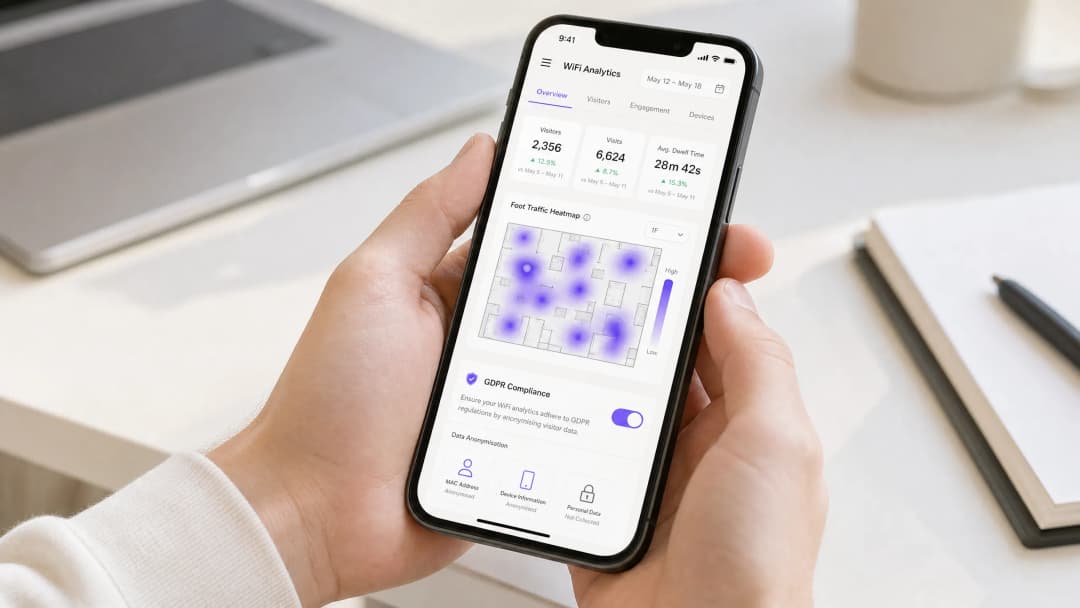
कार्यकारी सारांश (Executive Summary)
मोठ्या प्रमाणावर जागांचे व्यवस्थापन करणाऱ्या एंटरप्राइझ IT डायरेक्टर्स आणि नेटवर्क आर्किटेक्ट्ससाठी, बिझनेस इंटेलिजन्स आणि नियामक अनुपालन (regulatory compliance) यामधील ताण हा रोजचाच अनुभव आहे. ऑपरेशन्स टीम्सना फूटफॉल, ड्वेल टाइम आणि कन्व्हर्जन रेट समजून घेण्यासाठी तपशीलवार WiFi Analytics ची आवश्यकता असते. त्याच वेळी, अनुपालन अधिकाऱ्यांना General Data Protection Regulation (GDPR) आणि तत्सम गोपनीयता फ्रेमवर्कचे काटेकोरपणे पालन करणे आवश्यक असते.
हे मार्गदर्शक वायरलेस इन्फ्रास्ट्रक्चरमध्ये प्रायव्हसी बाय डिझाईन (Privacy by Design) च्या तांत्रिक अंमलबजावणीचा शोध घेते. रॉ प्रोब रिक्वेस्ट आणि MAC ॲड्रेस अनामित (anonymise) करण्यासाठी आवश्यक असलेल्या आर्किटेक्चरचे आम्ही विश्लेषण करू, जेणेकरून संस्थेला नियामक जोखमीचा सामना न करावा लागता उपयुक्त माहिती मिळवता येईल. गोपनीयतेला आर्किटेक्चरच्या स्तरावरच समाविष्ट करून - केवळ नंतर विचार करण्याची गोष्ट न ठेवता - जागांच्या मालकी संस्था पूर्ण डेटा अखंडता राखत असतानाच ROI वाढवण्यासाठी त्यांच्या Guest WiFi नेटवर्कचा फायदा घेऊ शकतात.
तांत्रिक सखोल अभ्यास: WiFi डेटाचे स्वरूप
अनुपालन आव्हाने समजून घेण्यासाठी, आपण प्रथम वायरलेस ॲक्सेस पॉइंट्स (APs) द्वारे जनरेट केलेल्या रॉ डेटाचे परीक्षण केले पाहिजे.
MAC ॲड्रेसची गुंतागुंत
जेव्हा मोबाईल डिव्हाइसमध्ये WiFi सक्षम असते, तेव्हा ते जवळील नेटवर्क शोधण्यासाठी वेळोवेळी "प्रोब रिक्वेस्ट" ब्रॉडकास्ट करते. या विनंत्यांमध्ये डिव्हाइसचा Media Access Control (MAC) ॲड्रेस समाविष्ट असतो. GDPR (Recital 30) अंतर्गत, MAC ॲड्रेस स्पष्टपणे वैयक्तिक डेटा म्हणून वर्गीकृत केले जातात कारण त्यांचा वापर एखाद्या व्यक्तीला ओळखण्यासाठी आणि ट्रॅक करण्यासाठी केला जाऊ शकतो, जरी त्यांची वास्तविक जगातील ओळख अज्ञात राहिली असली तरीही.
अनामितीकरण प्रक्रिया (The Anonymisation Pipeline)
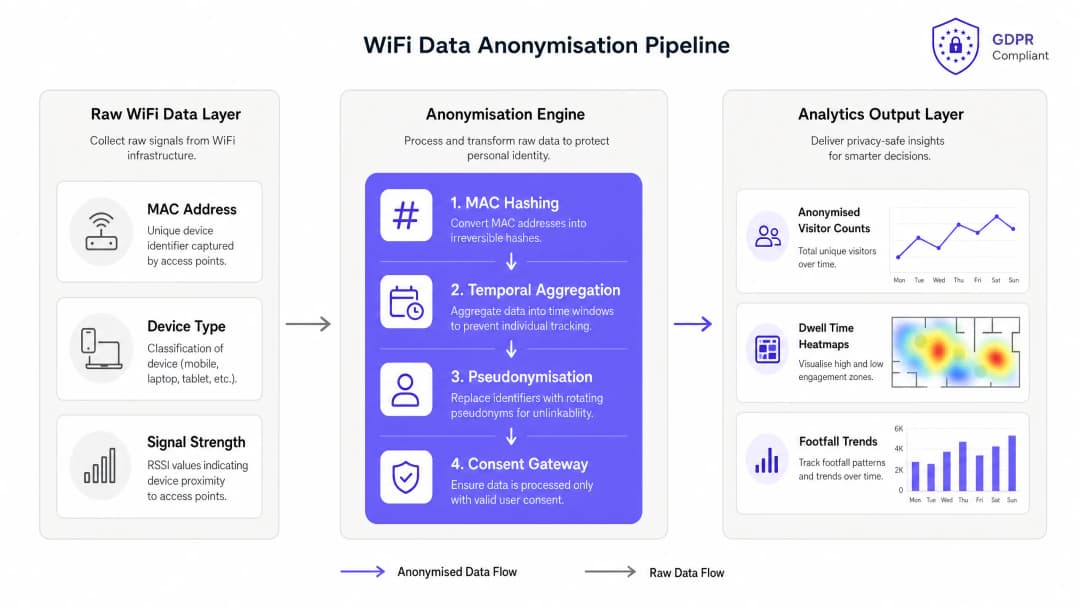
स्पष्ट संमतीशिवाय विश्लेषणासाठी या डेटावर कायदेशीररित्या प्रक्रिया करण्यासाठी, तो अपरिवर्तनीयपणे अनामित (anonymised) करणे आवश्यक आहे. स्यूडोनिमायझेशन (Pseudonymisation - MAC ला स्टॅटिक आयडेंटिफायरसह बदलणे) अपुरे आहे, कारण डेटा अजूनही GDPR च्या अधीन राहतो. खऱ्या अनामितीकरणासाठी बहु-स्तरीय प्रक्रिया आवश्यक आहे:
- क्रिप्टोग्राफिक हॅशिंग: रॉ MAC ॲड्रेस मजबूत अल्गोरिदम (उदा. SHA-256) वापरून एजवर किंवा कंट्रोलरद्वारे डेटा स्वीकारल्याबरोबर त्वरित हॅश केले पाहिजेत.
- डायनॅमिक सॉल्टिंग: डिक्शनरी अटॅक किंवा रेनबो टेबल लूकअप रोखण्यासाठी, हॅशमध्ये "सॉल्ट" (रँडम डेटा) जोडला जाणे आवश्यक आहे. महत्त्वाचे म्हणजे, हे सॉल्ट वारंवार (उदा. दररोज) बदलले पाहिजे. एकदा सॉल्ट काढून टाकल्यानंतर, विविध दिवसांचे हॅश एकमेकांशी जोडले जाऊ शकत नाहीत, ज्यामुळे वेळेच्या संदर्भात अनामितीकरण (temporal anonymisation) सुनिश्चित होते.
- डेटा एकत्रीकरण (Data Aggregation): विश्लेषण हे वैयक्तिक डिव्हाइसच्या हालचालींच्या मार्गांऐवजी एकत्रित मेट्रिक्सवर (उदा. "१०:०० ते १०:१५ दरम्यान झोन A मध्ये ५० डिव्हाइसेस") आधारित असावे.
अंमलबजावणी मार्गदर्शिका: अनुपालनासाठी आर्किटेक्टिंग
सुसंगत ॲनालिटिक्स सोल्यूशन उपयोजित करण्यासाठी एका व्हेंडर - न्यूट्रल दृष्टिकोनाची आवश्यकता असते जो विद्यमान पायाभूत सुविधांसह अखंडपणे समाकलित होतो.
पायरी 1: एजवर डेटा मिनिमायझेशन
तुमचे WLAN कंट्रोलर्स किंवा APs ॲनालिटिक्स इंजिनमध्ये डेटा पाठवण्यापूर्वी अनावश्यक डेटा फील्ड ड्रॉप करण्यासाठी कॉन्फिगर करा. तुम्हाला फक्त प्रेझेन्स डेटा हवा असल्यास, अत्यंत आवश्यक असल्याशिवाय डीप पॅकेट इन्स्पेक्शन (DPI) पेलोड्स किंवा अचूक RSSI ट्रायलेटरेशन लॉग फॉरवर्ड करू नका.
पायरी 2: संमती गेटवे
जेव्हा वापरकर्ते Captive Portal द्वारे नेटवर्कशी सक्रियपणे कनेक्ट होतात, तेव्हा तुम्ही पॅसिव्ह ॲनालिटिक्सकडून सक्रिय एंगेजमेंटकडे मार्गक्रमण करता. येथे, स्पष्ट संमती अत्यंत महत्त्वाची आहे. पोर्टलने मार्केटिंग आणि ट्रॅकिंगसाठी स्पष्ट, अनबंडल केलेले पर्याय (opt-ins) सादर केले पाहिजेत. आधुनिक सोल्यूशन्स, जसे की wi fi assistant चा वापर करणारे सोल्यूशन्स, अनुपालन राखत ही प्रक्रिया सुलभ करू शकतात.
पायरी 3: सुरक्षित डेटा ट्रान्समिशन
APs कडून ॲनालिटिक्स प्लॅटफॉर्मवर ट्रान्समिट केला जाणारा सर्व डेटा ट्रान्झिटमध्ये TLS 1.2 किंवा त्याहून अधिक वापरून एन्क्रिप्ट केलेला असल्याची खात्री करा, जो लागू असेल तिथे IEEE 802.1X आणि PCI-DSS सारख्या मानकांशी सुसंगत असेल.
तुमच्या विशिष्ट सेटअपबद्दल काही प्रश्न आहेत का?
आमची टीम ८०,००० हून अधिक वेन्यूजमधील वेन्यू ऑपरेटर्स, IT मॅनेजर्स आणि नेटवर्क इंजिनिअर्ससोबत काम करते. २० मिनिटांचा कॉल बुक करा आणि तुमच्यासारख्या इतरांनी ही समस्या कशी सोडवली हे आम्ही तुम्हाला दाखवू.
सर्वोत्तम पद्धती: प्रायव्हसी बाय डिझाइनची 7 तत्त्वे
डॉ. ॲन कॅव्हुकियन यांनी विकसित केलेली, प्रायव्हसी बाय डिझाइन फ्रेमवर्क आता GDPR (अनुच्छेद 25) साठी पायाभूत आहे.

- प्रोॲक्टिव्ह, रिॲक्टिव्ह नाही: गोपनीयतेच्या जोखमी उद्भवण्यापूर्वीच त्यांचा अंदाज घ्या. डेटा संचयित करण्यापूर्वी अनामितीकरण (anonymisation) पाइपलाइन लागू करा.
- डीफॉल्ट म्हणून गोपनीयता: डीफॉल्ट सेटिंग नेहमीच सर्वात गोपनीयता-संरक्षक असावी. वापरकर्त्यांना त्यांच्या डेटाचे संरक्षण करण्यासाठी कोणतीही कारवाई करावी लागू नये.
- डिझाइनमध्ये एम्बेड केलेली गोपनीयता: गोपनीयता हा नेटवर्क आर्किटेक्चरचा एक मुख्य घटक असला पाहिजे, कोणताही स्वतंत्रपणे जोडलेला मॉड्यूल नाही.
- पूर्ण कार्यक्षमता (पॉझिटिव्ह-सम): तुमच्याकडे गोपनीयता आणि ॲनालिटिक्स दोन्ही असू शकतात. हा झिरो-सम गेम नाही.
- एंड-टू-एंड सुरक्षा: डेटा गोळा करण्यापासून ते नष्ट करेपर्यंत, त्याच्या संपूर्ण जीवनचक्रात सुरक्षित असला पाहिजे.
- दृश्यमानता आणि पारदर्शकता: ऑपरेशन्सची पडताळणी करता येणे शक्य असावे. वापरकर्त्यांना कोणता डेटा गोळा केला जातो आणि का, हे माहित असणे आवश्यक आहे.
- वापरकर्त्याच्या गोपनीयतेचा आदर: मजबूत डीफॉल्ट आणि स्पष्ट सूचना देऊन वापरकर्त्याच्या हिताला सर्वोपरि ठेवा.
ट्रबलशूटिंग आणि जोखीम कमी करणे
MAC रँडमायझेशनचे आव्हान
आधुनिक ऑपरेटिंग सिस्टीम्स (iOS 14+, Android 10+) ट्रॅकिंग रोखण्यासाठी MAC रँडमायझेशनचा वापर करतात. हे वापरकर्त्याची गोपनीयता वाढवत असले तरी, यामुळे ॲनालिटिक्स गुंतागुंतीचे होते.
जोखीम: फिरत्या MAC ॲड्रेसेसमुळे युनिक व्हिजिटर्सची संख्या गरजेपेक्षा जास्त मोजली जाणे. निवारण: तंतोतंत लॉयल्टी मॅट्रिक्ससाठी प्रमाणीकृत सत्रांवर (authenticated sessions) अवलंबून राहा. पॅसिव्ह ॲनालिटिक्ससाठी, त्रुटींचे प्रमाण गृहीत धरा आणि परिपूर्ण युनिक डिव्हाइस मोजणीऐवजी सापेक्ष ट्रेंड्सवर लक्ष केंद्रित करा. तुमचे चॅनेल प्लॅनिंग सर्वोत्तम असल्याची खात्री करा; खराब RF वातावरण ट्रॅकिंगच्या समस्या अधिक वाढवते. कनेक्शनची गुणवत्ता स्थिर ठेवण्यासाठी 20MHz vs 40MHz vs 80MHz: Which Channel Width Should You Use? सारख्या मार्गदर्शकांचे पुनरावलोकन करणे मदत करू शकते.
ROI आणि व्यावसायिक प्रभाव
मजबूत, सुसंगत ॲनालिटिक्स लागू केल्याने विविध क्षेत्रांमध्ये मोजता येण्याजोगा व्यावसायिक फायदा मिळतो:
- Retail: कन्व्हर्जन रेट (जाणारे-येणारे विरुद्ध प्रवेश करणारे ग्राहक) समजून घेतल्याने विंडो डिस्प्ले आणि कर्मचारी संख्येमध्ये डेटा-आधारित बदल करणे शक्य होते.
- Hospitality: F&B क्षेत्रातील ड्वेल टाईमचे विश्लेषण केल्याने सेवा गती आणि टेबल टर्नओव्हर ऑप्टिमाइझ करण्यात मदत होते, ज्याचा थेट परिणाम महसुलावर होतो. अधिक धोरणांसाठी, How To Improve Guest Satisfaction: The Ultimate Playbook पहा.
- Transport: प्रवाशांच्या गर्दीवर लक्ष ठेवल्याने गर्दीच्या वेळा टाळता येतात आणि पीक अवर्समध्ये संसाधनांचे योग्य वाटप करण्यास मदत होते.
हे ज्ञान नियमांचे पालन करून मिळवले जात असल्याची खात्री करून, संस्था त्यांच्या ब्रँडची प्रतिष्ठा सुरक्षित ठेवतात आणि दंडात्मक GDPR दंडांपासून स्वतःचा बचाव करतात, ज्यामुळे त्यांच्या वायरलेस इन्फ्रास्ट्रक्चरचा दीर्घकालीन ROI सुरक्षित होतो.
महत्वाच्या व्याख्या
प्रोब रिक्वेस्ट
जवळपासचे वायरलेस नेटवर्क शोधण्यासाठी WiFi सक्षम डिव्हाइसद्वारे ब्रॉडकास्ट केलेला फ्रेम.
हा पॅसिव्ह ॲनालिटिक्ससाठी डेटाचा मुख्य स्त्रोत आहे आणि यामध्ये डिव्हाइसचा MAC ॲड्रेस समाविष्ट असतो.
MAC Address
मीडिया ॲक्सेस कंट्रोल ॲड्रेस; नेटवर्क इंटरफेस कंट्रोलरला नियुक्त केलेला एक युनिक आयडेंटिफायर.
GDPR अंतर्गत वैयक्तिक डेटा म्हणून वर्गीकृत, ज्यासाठी संरक्षण आणि अनामितीकरण आवश्यक आहे.
क्रिप्टोग्राफिक हॅशिंग
एक वन-वे मॅथेमॅटिकल फंक्शन जे डेटा (जसे की MAC Address) कॅरेक्टर्सच्या ठराविक आकाराच्या स्ट्रिंगमध्ये रूपांतरित करते.
मूळ MAC ॲड्रेस अस्पष्ट करण्यासाठी वापरले जाते, परंतु सॉल्टिंग केल्याशिवाय हे स्वतःच पुरेसे नाही.
सॉल्टिंग
युनिक आउटपुटची हमी देण्यासाठी हॅश फंक्शनच्या इनपुटमध्ये यादृच्छिक (random) डेटा जोडणे.
हॅश केलेल्या MAC ॲड्रेसचे रिव्हर्स-इंजिनिअर करण्यासाठी हल्लेखोरांना आधीच तयार केलेले टेबल्स (रेंबो टेबल्स) वापरण्यापासून रोखते.
सुडोनिमायझेशन (Pseudonymisation)
ओळख पटवणारा डेटा कृत्रिम आयडेंटिफायर्ससह बदलणे.
सुरक्षिततेसाठी उपयुक्त, परंतु सुडोनिमायझेशन केलेला डेटा अद्याप GDPR च्या अधीन राहतो कारण त्याची संभाव्यतः पुन्हा ओळख पटवली जाऊ शकते.
अनामितीकरण (Anonymisation)
डेटावर अशा प्रकारे प्रक्रिया करणे की डेटा विषयाची (data subject) पुन्हा ओळख पटवणे कायमचे अशक्य होते.
पॅसिव्ह ॲनालिटिक्सचे अंतिम उद्दिष्ट, ज्यामुळे डेटा GDPR च्या कक्षेतून बाहेर पडतो.
RSSI
रिसीव्ह्ड सिग्नल स्ट्रेंथ इंडिकेटर; मिळालेल्या रेडिओ सिग्नलमधील पॉवरचे मोजमाप.
ॲक्सेस पॉईंटपासून डिव्हाइसच्या अंतराचा अंदाज घेण्यासाठी ॲनालिटिक्समध्ये वापरले जाते, जेणेकरून युझर व्हेन्यूच्या आत आहे की बाहेर हे ठरवता येते.
डेटा मिनिमायझेशन
वैयक्तिक डेटा पुरेसा, संबंधित आणि केवळ आवश्यक त्या गोष्टींपुरता मर्यादित असावा हे तत्त्व.
एक मुख्य GDPR आवश्यकता जी सांगते की व्हेन्यूने त्यांच्या घोषित उद्देशासाठी आवश्यक असलेल्या प्रमाणापेक्षा जास्त WiFi डेटा गोळा किंवा स्टोअर करू नये.
सोडवलेली उदाहरणे
एका ५०० स्टोअरच्या रिटेल चेनला GDPR चे उल्लंघन न करता पॅसिव्ह WiFi ॲनालिटिक्स वापरून विंडो कन्व्हर्जन रेट्स (बाहेरून जाणारे विरुद्ध स्टोअरमध्ये येणारे ग्राहक) मोजायचे आहेत.
- प्रोब रिक्वेस्ट कॅप्चर करण्यासाठी कॉन्फिगर केलेले सेन्सर्स/APs तैनात करा.
- एज-आधारित हॅशिंग एजंट लागू करा. हा एजंट दररोज बदलणाऱ्या सॉल्टसह एकत्रित करून MAC ॲड्रेसवर SHA-256 हॅश लागू करतो.
- एजंट केवळ हॅश केलेला आयडेंटिफायर, RSSI (सिग्नल स्ट्रेंथ) आणि टाईमस्टॅम्प केंद्रीय ॲनालिटिक्स प्लॅटफॉर्मवर पाठवतो.
- प्लॅटफॉर्म 'बाहेरून जाणारे' (कमकुवत सिग्नल) आणि 'आत येणारे' (मजबूत सिग्नल) यांच्यात फरक करण्यासाठी RSSI थ्रेशोल्ड वापरतो.
- मध्यरात्री, सॉल्ट नष्ट केले जाते. सोमवारच्या हॅशचा मंगळवारच्या हॅशशी संबंध जोडला जाऊ शकत नाही.
एका मोठ्या एक्झिबिशन सेंटरला बहु-दिवसीय कार्यक्रमात वारंवार येणाऱ्या अभ्यागतांच्या उपस्थितीचा मागोवा घ्यायचा आहे, ज्यासाठी २४ तासांपेक्षा जास्त कालावधीचा डेटा जोडणे आवश्यक आहे.
दररोज सॉल्ट बदलणाऱ्या पॅसिव्ह ॲनालिटिक्सद्वारे दिवसांचा संबंध जोडला जाऊ शकत नाही. व्हेन्यूने ॲक्टिव्ह ॲनालिटिक्सवर स्विच केले पाहिजे.
- हाय-स्पीड WiFi देणारे Captive Portal तैनात करा.
- लॉगिन प्रक्रियेदरम्यान ट्रॅकिंग आणि ॲनालिटिक्ससाठी स्पष्ट, स्वतंत्र संमती विनंती सादर करा.
- एकदा संमती मिळाल्यानंतर, सिस्टम युझरच्या ऑथेंटिकेट केलेल्या प्रोफाइलशी लिंक केलेला एक कायमस्वरूपी सुडोनिम (Pseudonym) जनरेट करते.
- या सुडोनिमचा वापर बहु-दिवसीय कार्यक्रमात युझरचा मागोवा घेण्यासाठी केला जातो.
सराव प्रश्न
Q1. एका हॉस्पिटलच्या IT संचालकाला WiFi चा वापर करून बाह्यरुग्ण विभागातील (outpatient clinics) रुग्णांच्या हालचालींचा मागोवा घ्यायचा आहे. त्यांनी MAC ॲड्रेस हॅश (hash) करण्याची पण एक स्टॅटिक सॉल्ट (static salt) वापरण्याची योजना आखली आहे, जेणेकरून ते एका महिन्याभरात अनेक भेटींदरम्यान व्यक्तींचा मागोवा घेऊ शकतील. हे नियम सुसंगत (compliant) आहे का?
टीप: अनामितीकरण आणि सुडोनिमायझेशन मधील फरक आणि संमतीच्या आवश्यकतेचा विचार करा.
नमुना उत्तर पहा
नाही, पॅसिव्ह ट्रॅकिंगसाठी (passive tracking) हे नियम सुसंगत नाही. स्टॅटिक सॉल्ट वापरण्याचा अर्थ असा आहे की डेटा स्यूडोनिमाइज्ड (pseudonymised) केला आहे, अनॉनिमाइज्ड (anonymised) नाही, कारण कालांतराने त्या व्यक्तीची ओळख पटवली जाऊ शकते. महिन्याभरात व्यक्तींचा मागोवा घेण्यासाठी, हॉस्पिटलने स्पष्ट संमती मिळवणे आवश्यक आहे (उदा. Captive Portal द्वारे). संमतीशिवाय, खरी गुप्तता (anonymisation) सुनिश्चित करण्यासाठी सॉल्ट वारंवार (उदा. दररोज) बदलणे आवश्यक आहे.
Q2. तुमची नेटवर्क आर्किटेक्चर टीम क्लाउड ॲनालिटिक्स प्रदात्याला थेट RAW MAC ॲड्रेस पाठवण्याचा प्रस्ताव मांडते, आणि असा युक्तिवाद करते की प्रदात्याच्या सेवा शर्तींमध्ये नमूद आहे की ते डेटा प्राप्त झाल्यावर तो अनॉनिमाइज करतील. आपण या आर्किटेक्चरला मान्यता दिली पाहिजे का?
टीप: 'Privacy Embedded into Design' आणि 'End-to-End Security' तत्त्वे लागू करा.
नमुना उत्तर पहा
नाही, आपण याला मान्यता देऊ नये. इंटरनेटवर थेट RAW MAC ॲड्रेस ट्रान्समिट करणे, अगदी विश्वासू प्रोसेसरकडे पाठवत असले तरीही, अनावश्यक जोखीम निर्माण करते आणि Privacy Embedded into Design च्या तत्त्वाचे उल्लंघन करते. अनॉनिमायझेशन प्रक्रिया (hashing आणि salting) डेटा कॉर्पोरेट नेटवर्क सोडण्यापूर्वीच एजवर (कंट्रोलर किंवा AP वर) झाली पाहिजे.
Q3. MAC randomisation ची वारंवारता वाढवणाऱ्या एका iOS अपडेटनंतर, तुमच्या मार्केटिंग टीमला पॅसिव्ह ॲनालिटिक्समधील 'पुन्हा भेट देणारे युजर्स' या मेट्रिक्समध्ये ३०% घट झाल्याचे दिसून आले. त्यांनी IT टीमला या उपकरणांची ओळख पटवण्यासाठी तांत्रिक तोडगा शोधण्यास सांगितले आहे. योग्य प्रतिसाद काय असावा?
टीप: MAC randomisation चा हेतू आणि पॅसिव्ह विरुद्ध ॲक्टिव्ह ॲनालिटिक्सच्या मर्यादांवर लक्ष केंद्रित करा.
नमुना उत्तर पहा
योग्य प्रतिसाद म्हणजे मार्केटिंग टीमला हे समजावून सांगणे की युजर्सच्या नकळत त्यांची ओळख पटवण्यासाठी MAC randomisation ला बायपास करणे हे प्रायव्हसी तत्त्वांचे आणि GDPR चे उल्लंघन करते. याचे उत्तर पॅसिव्ह ट्रॅकिंगसाठी तांत्रिक तोडगा काढणे हे नसून, ॲक्टिव्ह ट्रॅकिंगकडे धोरणात्मक वळण घेणे हे आहे. IT टीमने मार्केटिंग टीमसोबत मिळून एक प्रभावी Guest WiFi पोर्टल तयार केले पाहिजे जे युजर्सना लॉग इन करण्यास आणि संमती देण्यास प्रोत्साहित करेल, ज्यामुळे अचूक लॉयल्टी मेट्रिक्स मिळतील.
या मालिकेमध्ये पुढे वाचा
Guest WiFi आणि Location Analytics च्या व्यावसायिक ROI चे मोजमाप करणे
हे तांत्रिक संदर्भ IT आणि ठिकाण व्यवस्थापन (venue) टीम्सना नेटवर्कची कार्यक्षमता आणि संमती दिलेल्या डेटापासून ते प्रमाणित ऑपरेशन्स किंवा व्यावसायिक परिणामांपर्यंतच्या स्पष्ट साखळीद्वारे Guest WiFi च्या ROI चे मोजमाप कसे करावे हे दाखवते. हे गृहीतकांपासून मोजण्यायोग्य पुराव्याला वेगळे करते, Purple Connect, Capture आणि Engage यांना योग्य मोजमाप स्तराशी जोडते आणि हॉटेल्स, रिटेल इस्टेट्स व इव्हेंट ठिकाणांसाठी नियोजन परिस्थिती प्रदान करते.
Heatmapping vs Presence Analytics: तांत्रिक फरक
हा अधिकृत तांत्रिक मार्गदर्शक एंटरप्राइझ व्हेन्यू ऑपरेटर्ससाठी WiFi heatmapping आणि presence analytics मधील महत्त्वपूर्ण आर्किटेक्चरल आणि ऑपरेशनल फरक तपशीलवार स्पष्ट करतो. हा IT लीडर्स, नेटवर्क आर्किटेक्ट्स आणि ऑपरेशन्स डायरेक्टर्सना त्यांच्या विद्यमान वायरलेस इन्फ्रास्ट्रक्चरमधून जास्तीत जास्त ROI मिळवण्यासाठी उपयुक्त डिप्लोयमेंट फ्रेमवर्क्स, वास्तविक-जगातील अंमलबजावणीची उदाहरणे आणि व्हेंडर-न्यूट्रल सर्वोत्तम पद्धती प्रदान करतो.
WiFi Location Analytics चा वापर करून Dwell Time कसा मोजावा
हे मार्गदर्शक WiFi location analytics चा वापर करून wifi dwell time मोजण्यासाठी सर्वसमावेशक तांत्रिक संदर्भ प्रदान करते, ज्यामध्ये 802.11 probe request capture पासून RSSI आधारित trilateration द्वारे geofenced zone analysis पर्यंतच्या संपूर्ण आर्किटेक्चरचा समावेश आहे. हे IT व्यवस्थापक, नेटवर्क आर्किटेक्ट आणि वेन्यू ऑपरेशन्स डायरेक्टर्स यांच्यासाठी डिझाइन केले आहे ज्यांना रिटेल, हॉस्पिटॅलिटी, हेल्थकेअर आणि सार्वजनिक क्षेत्रातील वातावरणात अचूक, स्केलेबल लोकेशन इंटेलिजन्स तैनात करायचे आहे. वाचकांना प्रत्यक्ष अंमलबजावणीचे मार्गदर्शन, वास्तविक जगातील केस स्टडीज आणि कच्च्या स्पेशिअल डेटाचे मोजमाप करण्यायोग्य व्यावसायिक परिणामांमध्ये रूपांतर करण्यासाठी एक स्पष्ट फ्रेमवर्क मिळेल.
तुमच्या विशिष्ट सेटअपबद्दल काही प्रश्न आहेत का?
आमची टीम ८०,००० हून अधिक वेन्यूजमधील वेन्यू ऑपरेटर्स, IT मॅनेजर्स आणि नेटवर्क इंजिनिअर्ससोबत काम करते. २० मिनिटांचा कॉल बुक करा आणि तुमच्यासारख्या इतरांनी ही समस्या कशी सोडवली हे आम्ही तुम्हाला दाखवू.