
डिजाइन द्वारा गोपनीयता: GDPR अनुपालन के लिए WiFi डेटा को अनाम बनाना
यह आधिकारिक गाइड GDPR अनुपालन सुनिश्चित करने के लिए WiFi डेटा को अनाम बनाने की तकनीकी वास्तुकला और कार्यान्वयन रणनीतियों का विवरण देती है। यह IT लीडर्स और नेटवर्क आर्किटेक्ट्स को सख्त डेटा गोपनीयता आवश्यकताओं के साथ मजबूत स्थल विश्लेषण को संतुलित करने के लिए व्यावहारिक रूपरेखा प्रदान करती है।
इस गाइड को सुनें
पॉडकास्ट ट्रांसक्रिप्ट देखें
हमारी मुख्य श्रृंखला का हिस्सा: WiFi Analytics Guide →
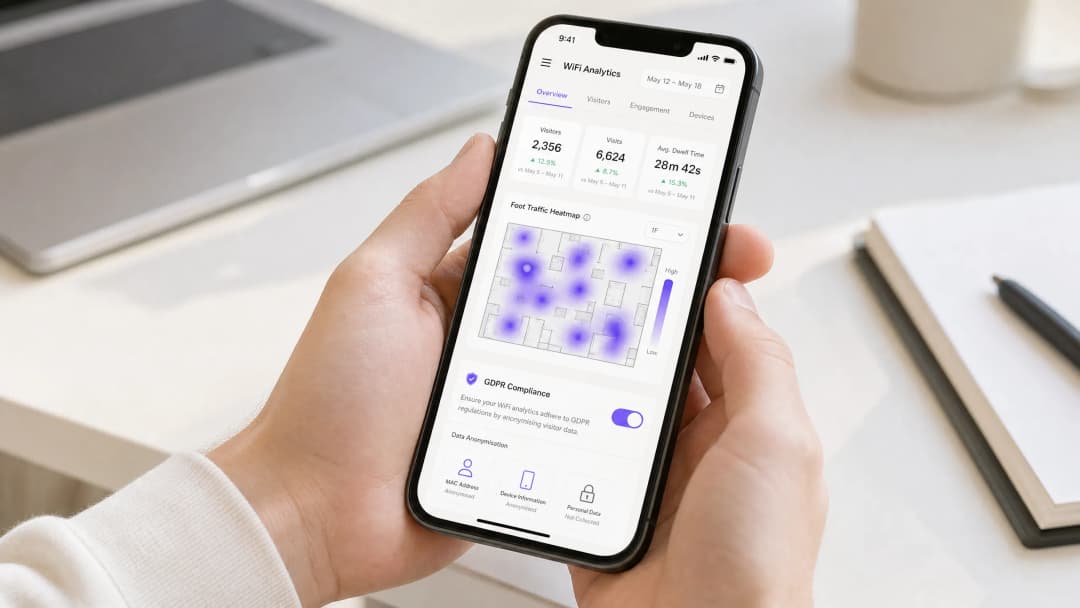
कार्यकारी सारांश (Executive Summary)
बड़े पैमाने के परिसरों का प्रबंधन करने वाले एंटरप्राइज IT निदेशकों और नेटवर्क आर्किटेक्ट्स के लिए, बिजनेस इंटेलिजेंस और नियामक अनुपालन (regulatory compliance) के बीच का तनाव एक दैनिक वास्तविकता है। ऑपरेशन्स टीमें फुटफॉल, ड्वेल टाइम (ठहराव का समय) और कन्वर्शन दरों को समझने के लिए विस्तृत WiFi Analytics की मांग करती हैं। साथ ही, अनुपालन अधिकारियों को General Data Protection Regulation (GDPR) और इसी तरह के गोपनीयता ढांचों का कड़ाई से पालन करने की आवश्यकता होती है।
यह गाइड वायरलेस इन्फ्रास्ट्रक्चर के भीतर प्राइवेसी बाय डिजाइन (Privacy by Design) के तकनीकी कार्यान्वयन का पता लगाती है। हम रॉ (raw) प्रोब अनुरोधों और MAC एड्रेस को गुमनाम (anonymise) करने के लिए आवश्यक आर्किटेक्चर का विश्लेषण करेंगे, जिससे यह सुनिश्चित हो सके कि संगठन को नियामक जोखिम में डाले बिना व्यावहारिक इनसाइट्स प्राप्त किए जा सकें। गोपनीयता को बाद के विचार के रूप में देखने के बजाय आर्किटेक्चरल स्तर पर शामिल करके - परिसर पूर्ण डेटा अखंडता बनाए रखते हुए ROI को बढ़ावा देने के लिए अपने Guest WiFi नेटवर्क का लाभ उठा सकते हैं।
तकनीकी गहराई: WiFi डेटा की संरचना
अनुपालन चुनौती को समझने के लिए, हमें सबसे पहले वायरलेस एक्सेस पॉइंट्स (APs) द्वारा जनरेट किए गए रॉ डेटा की जांच करनी होगी।
MAC एड्रेस की पहेली
जब किसी मोबाइल डिवाइस का WiFi सक्षम होता है, तो वह आस-पास के नेटवर्क की खोज करने के लिए समय-समय पर "प्रोब अनुरोध" प्रसारित करता है। इन अनुरोधों में डिवाइस का मीडिया एक्सेस कंट्रोल (MAC) एड्रेस होता है। GDPR (रीसाइटल 30) के तहत, MAC एड्रेस को स्पष्ट रूप से व्यक्तिगत डेटा के रूप में वर्गीकृत किया गया है क्योंकि इनका उपयोग किसी व्यक्ति को ट्रैक करने और उसकी पहचान करने के लिए किया जा सकता है, भले ही उसकी वास्तविक दुनिया की पहचान अज्ञात हो।
एनोनिमाइजेशन पाइपलाइन (The Anonymisation Pipeline)
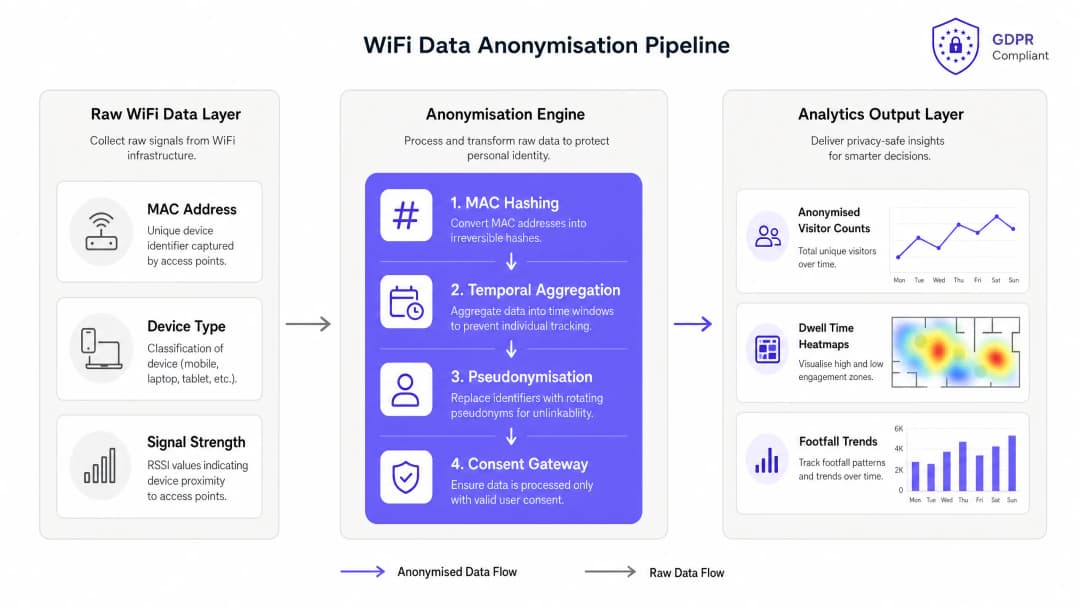
बिना स्पष्ट सहमति के एनालिटिक्स के लिए कानूनी रूप से इस डेटा को प्रोसेस करने के लिए, इसे अपरिवर्तनीय रूप से गुमनाम (anonymise) किया जाना चाहिए। स्यूडोनिमाइजेशन (MAC को एक स्थिर पहचानकर्ता से बदलना) अपर्याप्त है, क्योंकि डेटा पर GDPR लागू रहता है। वास्तविक एनोनिमाइजेशन के लिए एक बहु-चरणीय पाइपलाइन की आवश्यकता होती है:
- क्रिप्टोग्राफिक हैशिंग: रॉ MAC एड्रेस को एज (edge) पर या कंट्रोलर द्वारा ग्रहण किए जाने के तुरंत बाद मजबूत एल्गोरिदम (जैसे, SHA-256) का उपयोग करके हैश किया जाना चाहिए।
- डायनेमिक साल्टिंग: डिक्शनरी हमलों या रेनबो टेबल लुकअप को रोकने के लिए, हैश में एक "साल्ट" (यादृच्छिक डेटा) जोड़ा जाना चाहिए। महत्वपूर्ण रूप से, इस साल्ट को बार-बार बदला (रोटेट किया) जाना चाहिए (जैसे, दैनिक)। एक बार साल्ट को हटा दिए जाने के बाद, हैश को दिनों के बीच लिंक नहीं किया जा सकता है, जिससे अस्थायी एनोनिमाइजेशन सुनिश्चित होता है।
- डेटा एग्रीगेशन: एनालिटिक्स को व्यक्तिगत डिवाइस ट्रैजेक्टरी के बजाय एग्रीगेटेड मेट्रिक्स (जैसे, "जोन A में 10:00 से 10:15 के बीच 50 डिवाइस") पर निर्भर होना चाहिए।
कार्यान्वयन गाइड: अनुपालन के लिए आर्किटेक्चर तैयार करना
एक अनुपालन-अनुकूल एनालिटिक्स समाधान को तैनात करने के लिए एक वेंडर-न्यूट्रल दृष्टिकोण की आवश्यकता होती है जो मौजूदा बुनियादी ढांचे के साथ सहजता से एकीकृत हो सके।
चरण 1: एज पर डेटा न्यूनीकरण (Data Minimisation)
एनालिटिक्स इंजन में ट्रांसमिशन से पहले अनावश्यक डेटा फ़ील्ड को हटाने के लिए अपने WLAN कंट्रोलर या APs को कॉन्फ़िगर करें। यदि आपको केवल उपस्थिति (presence) डेटा की आवश्यकता है, तो गहरी पैकेट निरीक्षण (DPI) पेलोड या सटीक RSSI ट्राइलेटरेशन लॉग को तब तक आगे न भेजें जब तक कि बिल्कुल आवश्यक न हो।
चरण 2: सहमति गेटवे
जब उपयोगकर्ता सक्रिय रूप से एक Captive Portal के माध्यम से नेटवर्क से जुड़ते हैं, तो आप पैसिव एनालिटिक्स से एक्टिव एंगेजमेंट में स्थानांतरित हो जाते हैं। यहाँ, स्पष्ट सहमति सर्वोपरि है। पोर्टल को मार्केटिंग और ट्रैकिंग के लिए स्पष्ट, अनबंडल ऑप्ट-इन प्रस्तुत करना चाहिए। आधुनिक समाधान, जैसे कि जो एक wi fi assistant का लाभ उठाते हैं, अनुपालन बनाए रखते हुए इस प्रक्रिया को आसान बना सकते हैं।
चरण 3: सुरक्षित डेटा ट्रांसमिशन
यह सुनिश्चित करें कि APs से एनालिटिक्स प्लेटफ़ॉर्म पर प्रेषित सभी डेटा ट्रांज़िट में TLS 1.2 या उच्चतर का उपयोग करके एन्क्रिप्टेड हो, जो लागू होने पर IEEE 802.1X और PCI-DSS जैसे मानकों के अनुरूप हो।
अपने विशिष्ट सेटअप को लेकर कोई सवाल हैं?
हमारी टीम 80,000 से अधिक वेन्यू में वेन्यू ऑपरेटरों, IT मैनेजरों और नेटवर्क इंजीनियरों के साथ काम करती है। 20 मिनट का कॉल बुक करें और हम आपको दिखाएंगे कि आपके जैसे अन्य लोगों ने इसे कैसे हल किया।
सर्वोत्तम प्रथाएं: प्राइवेसी बाय डिज़ाइन के 7 सिद्धांत
डॉ. एन कावुकियन द्वारा विकसित, प्राइवेसी बाय डिज़ाइन फ्रेमवर्क अब GDPR (अनुच्छेद 25) के लिए आधारभूत है।

- प्रतिक्रियाशील नहीं बल्कि सक्रिय (Proactive not Reactive): गोपनीयता जोखिमों के उत्पन्न होने से पहले ही उनका अनुमान लगाएं। डेटा संग्रहीत होने से पहले अनामीकरण (anonymisation) पाइपलाइनों को लागू करें।
- डिफ़ॉल्ट के रूप में गोपनीयता (Privacy as Default): डिफ़ॉल्ट सेटिंग हमेशा सबसे अधिक गोपनीयता-सुरक्षात्मक होनी चाहिए। उपयोगकर्ताओं को अपने डेटा की सुरक्षा के लिए कार्रवाई करने की आवश्यकता नहीं होनी चाहिए।
- डिज़ाइन में एम्बेडेड गोपनीयता: गोपनीयता नेटवर्क आर्किटेक्चर का एक मुख्य घटक होना चाहिए, न कि कोई अलग से जोड़ा गया मॉड्यूल।
- पूर्ण कार्यक्षमता (सकारात्मक-योग): आपके पास गोपनीयता और एनालिटिक्स दोनों हो सकते हैं। यह कोई ज़ीरो-सम गेम नहीं है।
- शुरुआत से अंत तक सुरक्षा (End-to-End Security): डेटा को उसके संपूर्ण जीवनचक्र के दौरान सुरक्षित किया जाना चाहिए, संग्रह से लेकर नष्ट होने तक।
- दृश्यता और पारदर्शिता: संचालन सत्यापन योग्य होना चाहिए। उपयोगकर्ताओं को पता होना चाहिए कि कौन सा डेटा एकत्र किया जा रहा है और क्यों।
- उपयोगकर्ता की गोपनीयता का सम्मान: उपयोगकर्ता के हितों को सर्वोपरि रखें, मजबूत डिफ़ॉल्ट सेटिंग्स और स्पष्ट सूचनाएं प्रदान करें।
समस्या निवारण और जोखिम न्यूनीकरण
MAC रैंडमाइजेशन चुनौती
आधुनिक ऑपरेटिंग सिस्टम (iOS 14+, Android 10+) ट्रैकिंग को रोकने के लिए MAC रैंडमाइजेशन का उपयोग करते हैं। हालांकि यह उपयोगकर्ता की गोपनीयता को बढ़ाता है, यह एनालिटिक्स को जटिल बनाता है।
जोखिम: रोटेटिंग MAC एड्रेस के कारण अद्वितीय विज़िटर्स की संख्या का अधिक गिना जाना।Mitigation: सटीक निष्ठा मेट्रिक्स के लिए प्रमाणित सत्रों पर निर्भर रहें। पैसिव एनालिटिक्स के लिए, त्रुटि के अंतर को स्वीकार करें और पूर्ण विशिष्ट डिवाइस संख्या के बजाय सापेक्ष रुझानों पर ध्यान केंद्रित करें। सुनिश्चित करें कि आपकी चैनल योजना इष्टतम है; खराब RF वातावरण ट्रैकिंग समस्याओं को बढ़ा देते हैं। 20MHz vs 40MHz vs 80MHz: Which Channel Width Should You Use? जैसी गाइड की समीक्षा करने से कनेक्शन की गुणवत्ता को स्थिर करने में मदद मिल सकती है।
ROI और व्यावसायिक प्रभाव
मजबूत, अनुपालन वाले एनालिटिक्स को लागू करने से सभी क्षेत्रों में मापने योग्य व्यावसायिक मूल्य प्राप्त होता है:
- Retail: रूपांतरण दरों (राहगीरों बनाम प्रवेश करने वालों) को समझने से विंडो डिस्प्ले और स्टाफिंग स्तरों में डेटा-संचालित समायोजन किया जा सकता है।
- Hospitality: F&B क्षेत्रों में ठहरने के समय (dwell times) का विश्लेषण करने से सेवा की गति और टेबल टर्नओवर को अनुकूलित करने में मदद मिलती है, जिसका सीधा प्रभाव राजस्व पर पड़ता है। अधिक रणनीतियों के लिए, How To Improve Guest Satisfaction: The Ultimate Playbook देखें।
- Transport: यात्रियों के प्रवाह की निगरानी करने से बाधाएं रुकती हैं और व्यस्त समय के दौरान संसाधन आवंटन की जानकारी मिलती है।
यह सुनिश्चित करके कि ये अंतर्दृष्टि अनुपालन के साथ एकत्र की गई हैं, संगठन अपनी ब्रांड प्रतिष्ठा की रक्षा करते हैं और दंडात्मक GDPR जुर्मानों से बचते हैं, जिससे उनके वायरलेस बुनियादी ढांचे का दीर्घकालिक ROI सुरक्षित होता है।
मुख्य परिभाषाएं
प्रोब रिक्वेस्ट
आस-पास के वायरलेस नेटवर्क की खोज करने के लिए WiFi-सक्षम डिवाइस द्वारा प्रसारित एक फ्रेम।
यह पैसिव एनालिटिक्स के लिए डेटा का प्राथमिक स्रोत है और इसमें डिवाइस का MAC address शामिल होता है।
MAC Address
मीडिया एक्सेस कंट्रोल एड्रेस; नेटवर्क इंटरफ़ेस कंट्रोलर को सौंपा गया एक विशिष्ट आइडेंटिफायर।
GDPR के तहत व्यक्तिगत डेटा के रूप में वर्गीकृत, जिसके लिए सुरक्षा और अनामीकरण की आवश्यकता होती है।
क्रिप्टोग्राफिक हैशिंग
एकतरफा गणितीय कार्य जो डेटा (जैसे MAC address) को वर्णों के एक निश्चित आकार के स्ट्रिंग में परिवर्तित करता है।
मूल MAC address को छिपाने के लिए उपयोग किया जाता है, हालांकि सॉल्टिंग के बिना यह अपने आप में अपर्याप्त है।
सॉल्टिंग
एक विशिष्ट आउटपुट की गारंटी के लिए हैश फ़ंक्शन के इनपुट में यादृच्छिक डेटा जोड़ना।
हमलावरों को हैश किए गए MAC address को रिवर्स-इंजीनियर करने के लिए पूर्व-गणना की गई तालिकाओं (रेनबो टेबल) का उपयोग करने से रोकता है।
स्यूडोनिमाइजेशन (छद्म नामकरण)
पहचान करने वाले डेटा को कृत्रिम आइडेंटिफायर से बदलना।
सुरक्षा के लिए उपयोगी है, लेकिन छद्म नाम वाला डेटा GDPR के अधीन रहता है क्योंकि इसे संभावित रूप से फिर से पहचाना जा सकता है।
अनामीकरण (एनोनिमाइजेशन)
डेटा को इस तरह से संसाधित करना कि डेटा विषय की पहचान को अपरिवर्तनीय रूप से फिर से स्थापित न किया जा सके।
पैसिव एनालिटिक्स के लिए अंतिम लक्ष्य, डेटा को GDPR के दायरे से हटाना।
RSSI
प्राप्त सिग्नल शक्ति संकेतक (Received Signal Strength Indicator); प्राप्त रेडियो सिग्नल में मौजूद शक्ति का एक माप।
एक्सेस पॉइंट से डिवाइस की दूरी का अनुमान लगाने के लिए एनालिटिक्स में उपयोग किया जाता है, जिससे यह निर्धारित होता है कि उपयोगकर्ता किसी स्थल के अंदर है या बाहर।
डेटा न्यूनतमकरण
यह सिद्धांत कि व्यक्तिगत डेटा पर्याप्त, प्रासंगिक और आवश्यक सीमा तक सीमित होना चाहिए।
एक मुख्य GDPR आवश्यकता जो यह निर्देशित करती है कि स्थलों को उनके घोषित उद्देश्य के लिए कड़ाई से आवश्यक डेटा से अधिक WiFi डेटा एकत्र या संग्रहीत नहीं करना चाहिए।
हल किए गए उदाहरण
एक 500-स्टोर रिटेल चेन को GDPR का उल्लंघन किए बिना पैसिव WiFi एनालिटिक्स का उपयोग करके विंडो रूपांतरण दरों (वहां से गुजरने वाले बनाम स्टोर में प्रवेश करने वाले) को मापने की आवश्यकता है।
- प्रोब रिक्वेस्ट को कैप्चर करने के लिए कॉन्फ़िगर किए गए सेंसर/APs तैनात करें।
- एक एज-आधारित हैशिंग एजेंट लागू करें। एजेंट MAC address पर SHA-256 हैश लागू करता है, जिसे दैनिक रूप से घूमने वाले सॉल्ट के साथ संयोजित किया जाता है।
- एजेंट केवल हैश किए गए आइडेंटिफायर, RSSI (सिग्नल की शक्ति), और टाइमस्टैम्प को केंद्रीय एनालिटिक्स प्लेटफॉर्म पर भेजता है।
- प्लेटफॉर्म 'वहां से गुजरने वालों' (कमजोर सिग्नल) और 'प्रवेश करने वालों' (मजबूत सिग्नल) के बीच अंतर करने के लिए RSSI थ्रेसहोल्ड का उपयोग करता है।
- आधी रात को, सॉल्ट को हटा दिया जाता है। सोमवार के हैश को मंगलवार के हैश से लिंक नहीं किया जा सकता है।
एक बड़ा प्रदर्शनी केंद्र बहु-दिवसीय कार्यक्रम में बार-बार आने वाले आगंतुकों की उपस्थिति को ट्रैक करना चाहता है, जिसके लिए 24 घंटे की अवधि से अधिक डेटा लिंकेज की आवश्यकता होती है।
दैनिक सॉल्ट रोटेशन के साथ पैसिव एनालिटिक्स दिनों को लिंक नहीं कर सकता। स्थल को एक्टिव एनालिटिक्स में स्थानांतरित होना चाहिए।
- हाई-स्पीड WiFi की पेशकश करने वाला एक Captive Portal तैनात करें।
- लॉगिन प्रक्रिया के दौरान ट्रैकिंग और एनालिटिक्स के लिए एक स्पष्ट, गैर-बंडल सहमति अनुरोध प्रस्तुत करें।
- एक बार सहमति मिलने के बाद, सिस्टम उपयोगकर्ता के प्रमाणित प्रोफ़ाइल से जुड़ा एक स्थायी छद्म नाम (स्यूडोनिम) जनरेट करता है।
- इस छद्म नाम का उपयोग बहु-दिवसीय कार्यक्रम में उपयोगकर्ता को ट्रैक करने के लिए किया जाता है।
अभ्यास प्रश्न
Q1. एक अस्पताल के IT डायरेक्टर WiFi का उपयोग करके आउटपेशिएंट क्लीनिकों के माध्यम से मरीजों के आने-जाने को ट्रैक करना चाहते हैं। वे MAC addresses को हैश करने की योजना बना रहे हैं, लेकिन एक स्टैटिक साल्ट (static salt) का उपयोग करना चाहते हैं ताकि वे एक महीने में कई बार आने वाले व्यक्तियों को ट्रैक कर सकें। क्या यह अनुपालन (compliant) के अनुसार है?
संकेत: अनामीकरण और स्यूडोनिमाइजेशन के बीच अंतर, और सहमति की आवश्यकता पर विचार करें।
मॉडल उत्तर देखें
नहीं, यह पैसिव ट्रैकिंग (passive tracking) के लिए अनुपालन के अनुसार नहीं है। स्टैटिक साल्ट का उपयोग करने का मतलब है कि डेटा छद्म नाम (pseudonymised) है, न कि अज्ञात (anonymised), क्योंकि समय के साथ व्यक्ति की पहचान की जा सकती है। एक महीने तक व्यक्तियों को ट्रैक करने के लिए, अस्पताल को स्पष्ट सहमति प्राप्त करनी होगी (जैसे, Captive Portal के माध्यम से)। सहमति के बिना, वास्तविक अनामीकरण (anonymisation) सुनिश्चित करने के लिए साल्ट को बार-बार (जैसे, दैनिक रूप से) रोटेट किया जाना चाहिए।
Q2. आपकी नेटवर्क आर्किटेक्चर टीम एक क्लाउड एनालिटिक्स प्रदाता को रॉ (raw) MAC addresses भेजने का प्रस्ताव करती है, और उनका तर्क है कि प्रदाता की सेवा की शर्तों में लिखा है कि वे प्राप्ति पर डेटा को अज्ञात (anonymise) कर देंगे। क्या आपको इस आर्किटेक्चर को मंजूरी देनी चाहिए?
संकेत: 'डिजाइन में अंतर्निहित गोपनीयता' और 'एंड-टू-एंड सुरक्षा' सिद्धांतों को लागू करें।
मॉडल उत्तर देखें
नहीं, आपको इसे मंजूरी नहीं देनी चाहिए। इंटरनेट पर रॉ MAC addresses प्रसारित करना, यहाँ तक कि एक विश्वसनीय प्रोसेसर को भी, अनावश्यक जोखिम पैदा करता है और डिजाइन में अंतर्निहित गोपनीयता के सिद्धांत का उल्लंघन करता है। अनामीकरण पाइपलाइन (हैशिंग और साल्टिंग) कॉर्पोरेट नेटवर्क से डेटा बाहर जाने से पहले एज पर (कंट्रोलर या AP पर) होनी चाहिए।
Q3. एक iOS अपडेट के बाद जो MAC रैंडमाइजेशन की आवृत्ति को बढ़ाता है, आपकी मार्केटिंग टीम पैसिव एनालिटिक्स से 'रिटर्न विजिटर' मेट्रिक्स में 30% की गिरावट देखती है। वे IT से इन डिवाइसेज की पहचान करने के लिए एक तकनीकी समाधान खोजने के लिए कहते हैं। उचित प्रतिक्रिया क्या है?
संकेत: MAC रैंडमाइजेशन के उद्देश्य और पैसिव बनाम एक्टिव एनालिटिक्स की सीमाओं पर ध्यान केंद्रित करें।
मॉडल उत्तर देखें
उचित प्रतिक्रिया यह स्पष्ट करना है कि उपयोगकर्ताओं की जानकारी के बिना उनकी पहचान करने के लिए MAC रैंडमाइजेशन को बायपास करना गोपनीयता सिद्धांतों और GDPR का उल्लंघन करता है। इसका समाधान पैसिव ट्रैकिंग के लिए कोई तकनीकी बाईपास ढूंढना नहीं है, बल्कि एक्टिव ट्रैकिंग की ओर एक रणनीतिक बदलाव है। IT को मार्केटिंग के साथ मिलकर एक आकर्षक गेस्ट WiFi पोर्टल लागू करना चाहिए जो उपयोगकर्ताओं को प्रमाणित करने और सहमति प्रदान करने के लिए प्रोत्साहित करे, जिससे सटीक लॉयल्टी मेट्रिक्स प्राप्त हो सकें।
इस श्रृंखला में आगे पढ़ें
Guest WiFi और Location Analytics के व्यावसायिक ROI को मापना
यह तकनीकी संदर्भ IT और वेन्यू टीमों को दिखाता है कि नेटवर्क हेल्थ और सहमति वाले डेटा से लेकर सत्यापित परिचालन या व्यावसायिक परिणामों तक एक मजबूत श्रृंखला के साथ guest WiFi के ROI को कैसे मापा जाए। यह मापने योग्य साक्ष्यों को अनुमानों से अलग करता है, Purple Connect, Capture और Engage को सही माप परत (measurement layer) से मैप करता है, और होटलों, रिटेल परिसरों और इवेंट वेन्यू के लिए नियोजन परिदृश्य प्रदान करता है।
Heatmapping बनाम Presence Analytics: तकनीकी अंतर
यह आधिकारिक तकनीकी मार्गदर्शिका एंटरप्राइज़ वेन्यू ऑपरेटरों के लिए WiFi heatmapping और presence analytics के बीच महत्वपूर्ण आर्किटेक्चरल और परिचालन अंतरों का विवरण देती है। यह IT लीडर्स, नेटवर्क आर्किटेक्ट्स, और ऑपरेशन्स डायरेक्टर्स को उनके मौजूदा वायरलेस इन्फ्रास्ट्रक्चर से अधिकतम ROI प्राप्त करने के लिए व्यावहारिक डिप्लॉयमेंट फ्रेमवर्क, वास्तविक दुनिया के कार्यान्वयन परिदृश्य, और वेंडर-न्यूट्रल सर्वोत्तम प्रथाएं प्रदान करती है।
WiFi Location Analytics का उपयोग करके Dwell Time की गणना कैसे करें
यह गाइड WiFi location analytics का उपयोग करके wifi dwell time की गणना करने के लिए एक व्यापक तकनीकी संदर्भ प्रदान करती है, जिसमें 802.11 probe request capture से लेकर RSSI-आधारित trilateration और geofenced zone analysis तक का संपूर्ण आर्किटेक्चर शामिल है। इसे IT प्रबंधकों, नेटवर्क आर्किटेक्ट्स और वेन्यू ऑपरेशंस निदेशकों के लिए डिज़ाइन किया गया है जिन्हें रिटेल, हॉस्पिटैलिटी, हेल्थकेयर और सार्वजनिक क्षेत्र के वातावरण में सटीक, स्केलेबल लोकेशन इंटेलिजेंस तैनात करने की आवश्यकता है। पाठकों को व्यावहारिक कार्यान्वयन मार्गदर्शन, वास्तविक दुनिया के केस स्टडीज और कच्चे स्थानिक डेटा को मापने योग्य व्यावसायिक परिणामों में बदलने के लिए एक स्पष्ट ढांचा मिलेगा।
अपने विशिष्ट सेटअप को लेकर कोई सवाल हैं?
हमारी टीम 80,000 से अधिक वेन्यू में वेन्यू ऑपरेटरों, IT मैनेजरों और नेटवर्क इंजीनियरों के साथ काम करती है। 20 मिनट का कॉल बुक करें और हम आपको दिखाएंगे कि आपके जैसे अन्य लोगों ने इसे कैसे हल किया।