
Train WiFi: रेल्वे ऑपरेटर आणि प्रवाशांसाठी संपूर्ण मार्गदर्शिका
ही अधिकृत मार्गदर्शिका रेल्वेवरील प्रवासी WiFi ची रचना, अंमलबजावणीतील आव्हाने आणि व्यावसायिक संधी यांचे सविस्तर विश्लेषण करते. ज्येष्ठ IT आणि ऑपरेशन्स लीडर्ससाठी डिझाइन केलेली ही मार्गदर्शिका बॅकहॉल एकत्रीकरण, नेटवर्क वर्गीकरण आणि कम्प्लायन्सच्या जबाबदारीला उपयुक्त प्रवासी विश्लेषणात (analytics) कसे बदलायचे याविषयी माहिती देते.
Video overview
हे मार्गदर्शक ऐका
पॉडकास्ट ट्रान्सक्रिप्ट पहा
आमच्या मुख्य मालिकेचा भाग: Guest WiFi मार्गदर्शिका →
कार्यकारी सारांश (Executive Summary)
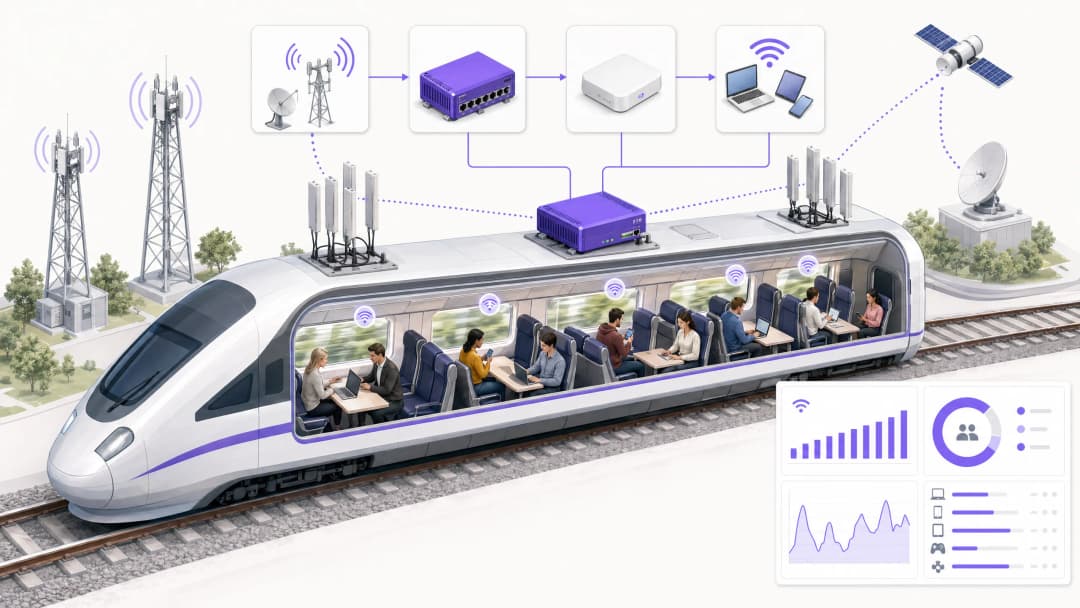
रेल्वे ऑपरेटर्ससाठी, उच्च-दर्जाची train WiFi ही आता केवळ प्रवाशांची सोय राहिलेली नसून ती एक आवश्यक ऑपरेशनल इन्फ्रास्ट्रक्चर बनली आहे. सर्वोत्कृष्ट आणि जुन्या सिस्टीम्समधील फरक स्पष्ट आहे: Ookla च्या Q2 2025 च्या डेटाच्या आधारे, स्वीडनमध्ये ६४.५८ Mbps ची सरासरी डाउनलोड गती मिळते, तर UK अजूनही १.०९ Mbps वर अडकले आहे [1]. हा ५९ पट फरक प्रामुख्याने तंत्रज्ञानाची समस्या नाही; तर ती आर्किटेक्चर आणि गुंतवणूक धोरणातील अयशस्वीता आहे.
हे मार्गदर्शक आयटी (IT) डायरेक्टर्स, नेटवर्क आर्किटेक्ट्स आणि व्हेन्यू ऑपरेशन्स लीडर्ससाठी विक्रेता-तटस्थ (vendor-neutral) ब्ल्यूप्रिंट प्रदान करते. आम्ही लवचिक ऑनबोर्ड कनेक्टिव्हिटीसाठी आवश्यक असलेल्या थ्री-लेयर आर्किटेक्चरचे विश्लेषण करतो, नेटवर्क सेगमेंटेशनच्या महत्त्वपूर्ण सुरक्षा आवश्यकतांचा शोध घेतो आणि Guest WiFi सारखे प्लॅटफॉर्म्स कच्च्या कनेक्शन डेटाला कशा प्रकारे कृती करण्यायोग्य व्यावसायिक बुद्धिमत्तेत (actionable business intelligence) रूपांतरित करतात हे दाखवून देतो. तुम्ही हाय-स्पीड इंटरसिटी मार्गाचे व्यवस्थापन करत असाल किंवा प्रादेशिक प्रवासी सेवेचे, बॅकहॉल एकत्रीकरण आणि GDPR-सुसंगत डेटा कॅप्चरची तत्त्वे सारखीच राहतात.
तांत्रिक सखोल विश्लेषण: थ्री-लेयर आर्किटेक्चर (Three-Layer Architecture)
आधुनिक train WiFi ची अंमलबजावणी Retail किंवा Hospitality मध्ये आढळणाऱ्या स्थिर व्हेन्यू अंमलबजावणीपेक्षा मूलभूतपणे वेगळी आहे. नेटवर्कने ३०० किमी/तास वेगाने प्रवास करताना, ट्रॅकसाइड सेल्समध्ये हँडऑफ करताना आणि हेवी इन्सुलेशन असलेल्या रोलिंग स्टॉकमधून जाताना सेशन सातत्य राखले पाहिजे.
स्तर १: WAN बॅकहॉल आणि एग्रीगेशन (WAN Backhaul and Aggregation)
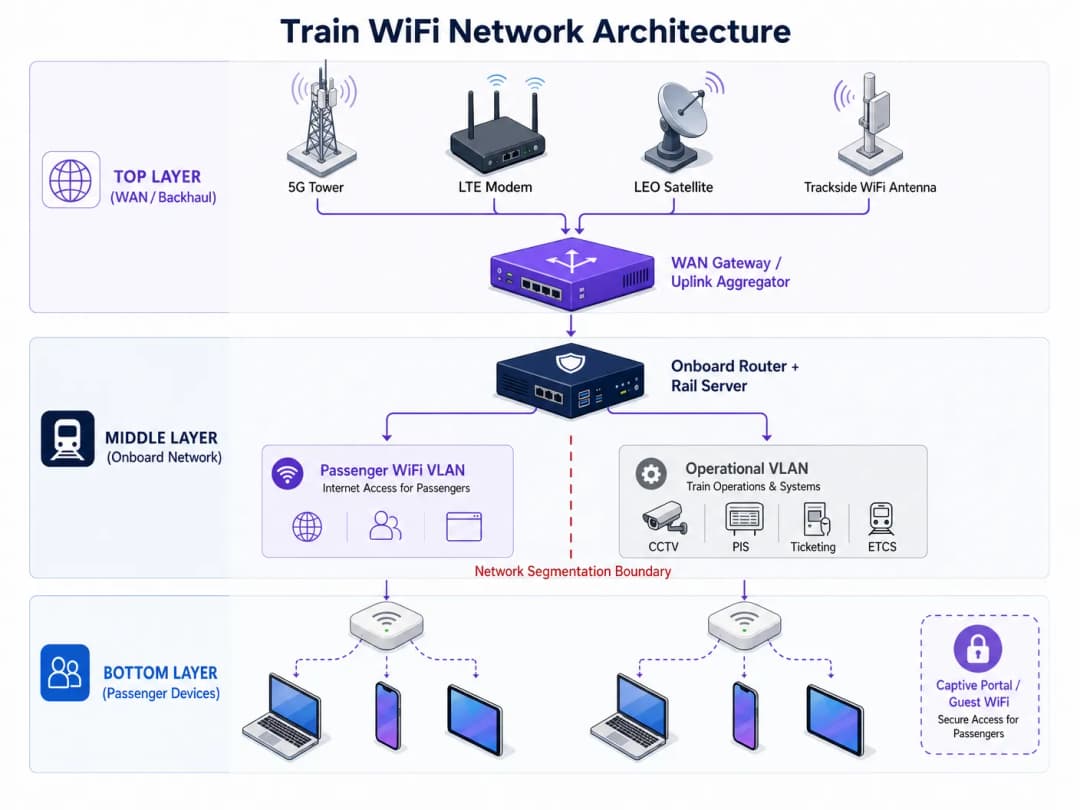
तुमच्या प्रवाशांच्या अनुभवाची मर्यादा पूर्णपणे तुमच्या बॅकहॉल क्षमतेवर अवलंबून असते. छतावर बसवलेला अँटेना असलेला एकच LTE मॉडेम आता पुरेसा नाही. आधुनिक आर्किटेक्चर अनेक अपलिंक्स एकत्रित करण्यासाठी WAN गेटवे चा वापर करतात:
- सेल्युलर बाँडिंग: एकाच नेटवर्कचे कव्हरेज नसलेले ब्लॅक स्पॉट्स कमी करण्यासाठी एकापेक्षा जास्त मोबाईल नेटवर्क ऑपरेटर्स (MNOs) कडून मिळणारे 4G/5G कनेक्शन्स एकत्र करणे.
- ट्रॅकसाइड इन्फ्रास्ट्रक्चर: रेल्वे कॉरिडॉरमध्ये तैनात केलेले समर्पित ५ GHz किंवा ६० GHz वायरलेस नेटवर्क.
- LEO सॅटेलाइट: लो-अर्थ-ऑर्बिट कॉन्स्टेलेशन्स (उदा. स्टारलिंक) जे ग्रामीण किंवा सीमावर्ती भागांमध्ये जेथे टेरेस्ट्रियल सेल्युलर अपयशी ठरते, तिथे १०० - २०० Mbps थ्रुपुट प्रदान करतात [2].
स्तर २: ऑनबोर्ड नेटवर्क आणि सेगमेंटेशन (Onboard Network and Segmentation)
WAN गेटवे ऑनबोर्ड राउटर आणि रेल्वे सर्व्हरला फीड पुरवतो. हा स्तर नेटवर्क सेगमेंटेशन चे महत्त्वपूर्ण कार्य हाताळतो.
"प्रवासी WiFi पूर्णपणे विलग असलेल्या VLAN वर चालवले गेले पाहिजे, ज्यामध्ये CCTV फीड्स, पॅसेंजर इन्फॉर्मेशन सिस्टीम्स (PIS), किंवा युरोपियन ट्रेन कंट्रोल सिस्टम (ETCS) सिग्नलिंग डेटा वाहून नेणाऱ्या ऑपरेशनल नेटवर्क्ससाठी कोणताही राउटिंग मार्ग नसेल."
UK मधील पॅसेंजर WiFi नेटवर्क्सवर 2024 मध्ये झालेल्या सायबर हल्ल्याने अपुऱ्या विभागणीच्या (segmentation) गंभीर धोक्यांवर प्रकाश टाकला, जेथे सार्वजनिक-फेसिंग असुरक्षिततेमुळे टर्मिनलच्या विस्तृत पायाभूत सुविधा धोक्यात आल्या होत्या [3]. IEEE 802.1X पोर्ट-आधारित ऑथेंटिकेशन आणि कडक आंतर-VLAN फायरवॉल नियम लागू करणे ही तडजोड न करता येणारी सुरक्षा आवश्यकता आहे. शिवाय, रेल्वे सर्व्हर कंटेनराइज्ड ॲप्लिकेशन होस्टिंग प्रदान करतो, ज्यामुळे बॅकहॉल कनेक्टिव्हिटी खंडित झाल्यावरही स्थानिक कंटेंट कॅशिंग आणि Captive Portal सेवा कार्यरत राहू शकतात.
लेयर 3: पॅसेंजर ॲक्सेस आणि कॅबिन हार्डवेअर
अंतिम लेयरमध्ये डब्यांमध्ये वितरित केलेले ॲक्सेस पॉइंट्स (APs) समाविष्ट असतात. जुने हार्डवेअर हे कामगिरीमधील एक मोठी अडचण ठरते. जर्मनीमध्ये, WiFi 4 (802.11n) वरून WiFi 5 (802.11ac) वर अपग्रेड केल्याने गतीमध्ये 241% ची सुधारणा झाली, तर ट्रॅफिकला 2.4 GHz बँडवरून 5 GHz वर हस्तांतरित केल्याने 328% वाढ झाली [1]. तरीही, युरोपियन रेल्वे कनेक्शन्सपैकी जवळजवळ 40% अजूनही WiFi 4 वर अवलंबून आहेत.

तुमच्या विशिष्ट सेटअपबद्दल काही प्रश्न आहेत का?
आमची टीम ८०,००० हून अधिक वेन्यूजमधील वेन्यू ऑपरेटर्स, IT मॅनेजर्स आणि नेटवर्क इंजिनिअर्ससोबत काम करते. २० मिनिटांचा कॉल बुक करा आणि तुमच्यासारख्या इतरांनी ही समस्या कशी सोडवली हे आम्ही तुम्हाला दाखवू.
इम्प्लीमेंटेशन गाईड: उपयोजन आणि अनुपालन (Compliance)
ट्रेन WiFi तैनात करणे हा एक गुंतागुंतीचा सिस्टम्स इंटिग्रेशन प्रकल्प आहे. खालील पायऱ्या एका मजबूत उपयोजन धोरणाची रूपरेषा मांडतात:
- बॅकहॉल ऑडिट करा: कॅबिन APs निर्दिष्ट करण्यापूर्वी, सेल्युलर कव्हरेजमधील त्रुटींसाठी तुमच्या मार्गाचे ऑडिट करा. या ब्लॅक स्पॉट्सवर आधारित तुमची अपलिंक एकत्रीकरण धोरण डिझाइन करा.
- RF-पारगम्य खिडक्या निर्दिष्ट करा: आधुनिक ट्रेनच्या खिडक्या थर्मल कार्यक्षमतेसाठी धातूच्या कोटिंगचा वापर करतात, ज्यामुळे सेल्युलर सिग्नल्स 20-30 dB ने कमी होऊ शकतात. यावर मात करण्यासाठी अंतर्गत APs ला जोडणारे छतावर बसवलेले अँटेना अनिवार्य आहेत.
- एक मजबूत Captive Portal लागू करा: Captive Portal हा प्रवासी आणि ऑपरेटरमधील मुख्य इंटरफेस आहे. सेवा अटी सादर करताना त्याने सत्यापित क्रेडेंशियल्स (ईमेल किंवा सोशल लॉगिन) सुरक्षितपणे कॅप्चर केले पाहिजेत.
- GDPR अनुपालन सुनिश्चित करा: ऑपरेटरने प्रवाशांच्या डेटावर प्रक्रिया करण्यासाठी कायदेशीर आधार स्थापित केला पाहिजे. संमती मुक्तपणे दिली गेली पाहिजे आणि स्पष्टपणे नोंदवली गेली पाहिजे. मजबूत DNS आणि सुरक्षेसह तुमच्या नेटवर्कचे रक्षण करा हा येथील एक महत्त्वाचा विचार आहे.
ROI आणि व्यावसायिक प्रभाव: डेटाचे इंटेलिजन्समध्ये रूपांतर करणे
मोफत WiFi प्रदान करणे हा एक मोठा ऑपरेशनल खर्च आहे. ROI व्युत्पन्न करण्यासाठी, ऑपरेटरनी फर्स्ट-पार्टी डेटा गोळा करण्यासाठी कनेक्शन लेयरचा लाभ घेतला पाहिजे.
जेव्हा प्रवासी सुसंगत Captive Portal द्वारे ऑथेंटिकेट करतात, तेव्हा ऑपरेटर प्रवासाच्या वर्तनाची समृद्ध प्रोफाइल तयार करू शकतात. येथेच WiFi analytics परिवर्तनात्मक ठरते. कनेक्शनची वारंवारता, विशिष्ट स्थानकांवरील थांबण्याचा वेळ आणि डब्यांमधील गर्दीच्या पॅटर्नचे विश्लेषण करून, ऑपरेटरना अशी ऑपरेशनल इंटेलिजन्स मिळते जी Transport हब आणि विमानतळांवर गोळा केलेल्या अंतर्दृष्टीशी स्पर्धा करते.उदाहरणाार्थ, व्यावसायिक प्रवाशांचा एक विशिष्ट गट सकाळी ०७:३० च्या सेवेदरम्यान सातत्याने कनेक्ट होतो हे समजल्याने लक्ष्यित, उच्च-मूल्य विपणन संप्रेषण (marketing communications) किंवा लॉयल्टी प्रोग्राम एकत्रीकरण सक्षम होते. हा डेटा-चालित दृष्टिकोन WiFi नेटवर्कला एका खर्चाच्या केंद्राकडून थेट महसूल-सक्षम करणाऱ्या मालमत्तेमध्ये रूपांतरित करतो.
Listen to the Briefing
आर्किटेक्चर आणि व्यावसायिक धोरणाबद्दल अधिक तपशीलवार माहितीसाठी, आमचे संपूर्ण तांत्रिक ब्रिफिंग ऐका:
संदर्भ: [1] Ookla Speedtest Intelligence, "Fast Trains, Slow WiFi: The Reality of Onboard Connectivity in Europe and Asia", Q2 2025. [2] Industry Trials, LEO Satellite Integration for Mobility, 2024 - 2025. [3] Railway Technology, "UK passenger WiFi network hacked", September 2024.
महत्वाच्या व्याख्या
WAN Aggregation
थ्रूपुट आणि लवचिकता वाढवण्यासाठी एकाधिक वाईड एरिया नेटवर्क कनेक्शन्स (उदा. दोन 5G कनेक्शन्स आणि एक सॅटेलाइट लिंक) एकाच लॉजिकल कनेक्शनमध्ये एकत्र करण्याची प्रक्रिया.
कनेक्शन खंडित होऊ नये म्हणून बदलत्या मोबाईल कव्हरेज क्षेत्रांमधून धावणाऱ्या ट्रेन्ससाठी अत्यंत महत्त्वाचे आहे.
Network Segmentation (VLAN)
काॅम्प्युटर नेटवर्कचे लहान, स्वतंत्र सब-नेटवर्कमध्ये विभाजन करणे. व्हर्च्युअल लोकल एरिया नेटवर्क्स (VLANs) ट्रॅफिक एकाच फिजिकल स्विचेसवर शेअर होत असले तरीही ते लॉजिकली वेगळे ठेवतात.
प्रवाशाच्या असुरक्षित उपकरणाला महत्त्वाच्या ट्रेन कंट्रोल सिस्टममध्ये प्रवेश करण्यापासून रोखण्यासाठी आवश्यक आहे.
Captive Portal
एक वेब पेज जे सार्वजनिक-प्रवेश नेटवर्कच्या वापरकर्त्याला प्रवेश मिळण्यापूर्वी पाहणे आणि त्यावर प्रक्रिया करणे बंधनकारक असते.
सेवा अटी लागू करण्यासाठी, वापरकर्त्याचा डेटा गोळा करण्यासाठी आणि GDPR संमती सुरक्षित करण्यासाठी वापरले जाते.
RF Attenuation
रेडिओ लहरी एखाद्या माध्यमातून जात असताना त्यांच्या सिग्नलच्या ताकदीमध्ये होणारी घट.
मेटॅलिक थर्मल कोटिंग असलेल्या आधुनिक ट्रेनच्या खिडक्यांमुळे मोठ्या प्रमाणावर RF अडथळा येतो, ज्यामुळे छतावर अँटेना बसवावे लागतात.
LEO Satellite
कमी कक्षेतील पृथ्वी उपग्रह (Low Earth Orbit satellites) जे पारंपारिक भूस्थिर उपग्रहांच्या तुलनेत पृथ्वीच्या खूप जवळून काम करतात, ज्यामुळे कमी लेटन्सी आणि जास्त बँडविड्थ मिळते.
ग्रामीण किंवा सीमावर्ती भागातील ट्रेन्ससाठी बॅकहॉल सोल्यूशन म्हणून याचा मोठ्या प्रमाणावर वापर केला जात आहे.
IEEE 802.1X
LAN किंवा WLAN शी कनेक्ट करू इच्छिणाऱ्या उपकरणांना ऑथेंटिकेशन यंत्रणा प्रदान करणारा, पोर्ट-आधारित नेटवर्क ऍक्सेस कंट्रोल (PNAC) साठीचा एक IEEE मानक.
रेल्वेवरील ऑपरेशनल नेटवर्क इंटरफेसेस अनधिकृत प्रवेशापासून सुरक्षित ठेवण्यासाठी वापरले जाते.
Rail Server
रेल्वेवर स्थानिक पातळीवर कंटेनराइज्ड ऍप्लिकेशन्स होस्ट करण्यासाठी डिझाइन केलेले एक रग्डाइज्ड ऑनबोर्ड कॉम्प्युटर.
WAN लिंकवरील अवलंबित्व कमी करण्यासाठी स्थानिक मनोरंजन, कॅशिंग आणि captive portal सेवा होस्ट करण्यासाठी वापरले जाते.
First-Party Data
कंपनीने थेट आपल्या ग्राहकांकडून गोळा केलेली आणि स्वतःच्या मालकीची असलेली माहिती.
योग्यरित्या कॉन्फिगर केलेल्या Guest WiFi नेटवर्कचे प्राथमिक व्यावसायिक आउटपुट.
सोडवलेली उदाहरणे
दाट शहरी भाग आणि दुर्गम ग्रामीण खोऱ्यांमधून धावणाऱ्या ४-डब्यांच्या कम्युटर ट्रेन्स चालवणार्या एका प्रादेशिक रेल्वे ऑपरेटरला WiFi डिस्कनेक्ट होण्याबाबत प्रवाशांच्या तीव्र तक्रारींचा सामना करावा लागत आहे. त्यांच्या सध्याच्या सेटअपमध्ये प्रत्येक ट्रेनसाठी एकच 4G LTE मॉडेम वापरला जात आहे. त्यांनी त्यांच्या रचनेची पुनर्रचना कशी करावी?
- WAN बॅकहॉल अपग्रेड करा: सिंगल LTE मॉडेमच्या जागी अपलिंक एकत्रीकरण करण्यास सक्षम असलेला WAN गेटवे स्थापित करा. शहरी भागांत फेलओव्हर पर्याय मिळवण्यासाठी दोन वेगवेगळ्या मोबाईल नेटवर्क ऑपरेटर्सचा (MNOs) वापर करणारे ड्युअल-SIM राउटर इन्स्टॉल करा.
- ग्रामीण भागातील त्रुटी दूर करा: मोबाईल कव्हरेज नसलेल्या दुर्गम खोऱ्यांसाठी, सेकंडरी एकत्रित लिंक म्हणून WAN गेटवेमध्ये LEO सॅटेलाइट टर्मिनल (उदा. Starlink Mobility) समाकलित करा.
- स्थानिक कॅशिंग (Local Caching): टनेलमध्ये थोड्या वेळासाठी पूर्ण कनेक्शन खंडित झाले तरीही प्रवाशांचा UI प्रतिसाद देत राहील याची खात्री करण्यासाठी कॅप्टिव्ह पोर्टल (captive portal) आणि प्रवासाची मुख्य माहिती स्थानिक पातळीवर कॅश करण्यासाठी ऑनबोर्ड रेल्वे सर्व्हर तैनात करा.
एक इंटरसिटी रेल्वे फ्रँचायझी आपल्या ट्रेनचा ताफा अपग्रेड करत आहे आणि [Retail](/industries/retail) ठिकाणे ज्याप्रमाणे काम करतात, त्याचप्रमाणे मार्केटिंगसाठी प्रवाशांचे विश्लेषण गोळा करण्यासाठी नवीन ऑनबोर्ड WiFi चा वापर करू इच्छिते. त्यांनी कोणते कम्प्लायन्स आणि तांत्रिक टप्पे पाळले पाहिजेत?
- Captive Portal अंमलबजावणी: एक मजबूत captive portal लागू करा ज्यासाठी वापरकर्त्यांना इंटरनेट वापरण्यापूर्वी ईमेल किंवा सोशल लॉगिनद्वारे प्रमाणीकरण (authenticate) करणे आवश्यक असेल.
- GDPR कम्प्लायन्स: पोर्टल मार्केटिंग संवादांसाठी स्पष्टपणे संमती (opt-in consent) मागत असल्याची खात्री करा. आधीच टिक केलेले बॉक्स वापरले जाऊ नयेत. सिस्टमने संमती दिलेल्या गोपनीयता धोरणाची वेळ आणि आवृत्ती नोंदवून ठेवली पाहिजे.
- विश्लेषणाचे एकत्रीकरण: प्रवासाची वारंवारता, थांबण्याचा वेळ ट्रॅक करण्यासाठी आणि परवानगी असेल तिथे तिकीट डेटाशी तुलना करण्यासाठी प्रमाणीकृत सेशन डेटा एका केंद्रित WiFi Analytics प्लॅटफॉर्मवर पाठवा.
सराव प्रश्न
Q1. तुमच्या CTO ला संथ इंटरनेट स्पीडबद्दलच्या प्रवाशांच्या तक्रारींचे निवारण करण्यासाठी सर्व डब्यांमधील ऍक्सेस पॉईंट्स WiFi 6 वर अपग्रेड करायचे आहेत. तुमचे सध्याचे बॅकहॉल हे एकच 4G कनेक्शन आहे. योग्य आर्किटेक्चरल प्रतिसाद काय असेल?
टीप: डेटा फ्लोमधील नेमकी अडचण (bottleneck) कुठे निर्माण होत आहे याचा विचार करा.
नमुना उत्तर पहा
CTO ला AP अपग्रेड थांबवण्याचा आणि अपलिंक एग्रिगेशन करण्यास सक्षम असलेल्या WAN गेटवेमध्ये बजेट गुंतवण्याचा सल्ला द्या. WiFi 6 वर अपग्रेड केल्याने डब्यातील स्थानिक डिव्हाइस-टू-AP स्पीड सुधारेल, परंतु इंटरनेटचा एकूण थ्रूपुट एकाच 4G कनेक्शनमुळे मर्यादितच राहील. आधी बॅकहॉलची अडचण दूर करा.
Q2. नेटवर्क डिझाइनच्या पुनरावलोकनादरम्यान, एका इंजिनिअरने केबलचा खर्च वाचवण्यासाठी रेल्वेचा CCTV डेटा प्रवासी WiFi सारख्याच राउटर इंटरफेसद्वारे रूट करण्याची शिफारस केली. तुम्ही कसा प्रतिसाद द्याल?
टीप: पब्लिक आणि ऑपरेशनल ट्रॅफिक एकत्र करण्याच्या सुरक्षिततेवरील परिणामांचा विचार करा.
नमुना उत्तर पहा
हा प्रस्ताव त्वरित नाकारा. प्रवासी WiFi आणि CCTV सारख्या ऑपरेशनल सिस्टीम्सना त्यांच्यामध्ये डिनाय-ऑल फायरवॉल नियमांसह स्वतंत्र VLANs मध्ये काटेकोरपणे विभागले गेले पाहिजे. हे ट्रॅफिक एकत्र केल्याने एक गंभीर सुरक्षा त्रुटी निर्माण होते, ज्यामुळे पब्लिक WiFi वरील एखादी दुर्भावनायुक्त व्यक्ती रेल्वेच्या कामकाजात हस्तक्षेप किंवा अडथळा आणू शकते.
Q3. मार्केटिंग टीमला प्रतिबद्धता वाढवण्यासाठी मोफत WiFi वापरणाऱ्या सर्व प्रवाशांना साप्ताहिक न्यूजलेटरसाठी स्वयंचलितपणे सबस्क्राईब करायचे आहे. हे कायदेशीर आहे याची खात्री करण्यासाठी तुम्ही captive portal वर काय कॉन्फिगर केले पाहिजे?
टीप: GDPR अंतर्गत कायदेशीर डेटा प्रक्रियेसाठीच्या आवश्यकतांचे पुनरावलोकन करा.
नमुना उत्तर पहा
तुम्ही captive portal वर मार्केटिंग कम्युनिकेशन्ससाठी एक स्पष्ट, अन-टिक केलेला ऑप्ट-इन चेकबॉक्स समाविष्ट करण्यासाठी कॉन्फिगर केले पाहिजे. स्वयंचलित सबस्क्रिप्शन किंवा आधीच टिक केलेले बॉक्सेस हे स्वेच्छेने आणि स्पष्ट संमती मिळवण्याच्या GDPR च्या आवश्यकतांचे उल्लंघन करतात. ऑडिटच्या उद्देशासाठी सिस्टमने या संमतीची वेळ देखील नोंदवून ठेवली पाहिजे.
या मालिकेमध्ये पुढे वाचा
Staff WiFi vs. Guest WiFi: Corporate Network Segmentation साठी सर्वोत्तम पद्धती
स्टाफ आणि guest WiFi नेटवर्क्सचे विभाजन करण्याबाबत IT लीडर्ससाठी एक सर्वसमावेशक तांत्रिक मार्गदर्शक. यामध्ये VLAN आर्किटेक्चर, 802.1X ऑथेंटिकेशन, फायरवॉल पॉलिसीज आणि सुरक्षित नेटवर्क डिझाइनचा व्यवसायावर होणारा प्रभाव समाविष्ट आहे.
हॉटेल अतिथी WiFi व्यवस्थापन: PMS, पोर्टल्स आणि ब्रँड मानके यांचे एकत्रीकरण
हे तांत्रिक मार्गदर्शक एंटरप्राइझ-श्रेणीचे हॉटेल WiFi नेटवर्क कसे डिझाइन करावे हे तपशीलवार सांगते, ज्यामध्ये VLAN विभाजन, स्वयंचलित सत्र व्यवस्थापनासाठी PMS एकत्रीकरण आणि GDPR-अनुपालक डेटा संकलनासाठी captive portal ऑप्टिमायझेशन यावर लक्ष केंद्रित केले आहे.
Guest WiFi कसा सेट करावा: एक सुरक्षित Enterprise कॉन्फिगरेशन मार्गदर्शिका
ही अधिकृत मार्गदर्शिका IT लीडर्स आणि नेटवर्क आर्किटेक्ट्सना सुरक्षित enterprise guest WiFi तैनात करण्यासाठी एक निश्चित ब्ल्यूप्रिंट प्रदान करते. यामध्ये अंतर्गत प्रणालींचे संरक्षण करताना सुसंगत फर्स्ट - पार्टी डेटा गोळा करण्यासाठी आवश्यक आर्किटेक्चर, WPA3 मायग्रेशन, VLAN सेगमेंटेशन आणि captive portal इंटिग्रेशन समाविष्ट आहे.
तुमच्या विशिष्ट सेटअपबद्दल काही प्रश्न आहेत का?
आमची टीम ८०,००० हून अधिक वेन्यूजमधील वेन्यू ऑपरेटर्स, IT मॅनेजर्स आणि नेटवर्क इंजिनिअर्ससोबत काम करते. २० मिनिटांचा कॉल बुक करा आणि तुमच्यासारख्या इतरांनी ही समस्या कशी सोडवली हे आम्ही तुम्हाला दाखवू.