
Train WiFi: रेल ऑपरेटरों और यात्रियों के लिए संपूर्ण गाइड
यह आधिकारिक गाइड ट्रेनों में यात्री WiFi की संरचना, परिनियोजन चुनौतियों और व्यावसायिक अवसरों का विश्लेषण करती है। सीनियर IT और ऑपरेशन्स लीडर्स के लिए डिज़ाइन की गई, यह गाइड बैकहॉल एग्रीगेशन, नेटवर्क सेगमेंटेशन और अनुपालन दायित्वों को कार्रवाई योग्य पैसेंजर एनालिटिक्स में बदलने के तरीकों को कवर करती है।
Video overview
इस गाइड को सुनें
पॉडकास्ट ट्रांसक्रिप्ट देखें
हमारी मुख्य श्रृंखला का हिस्सा: Guest WiFi गाइड →
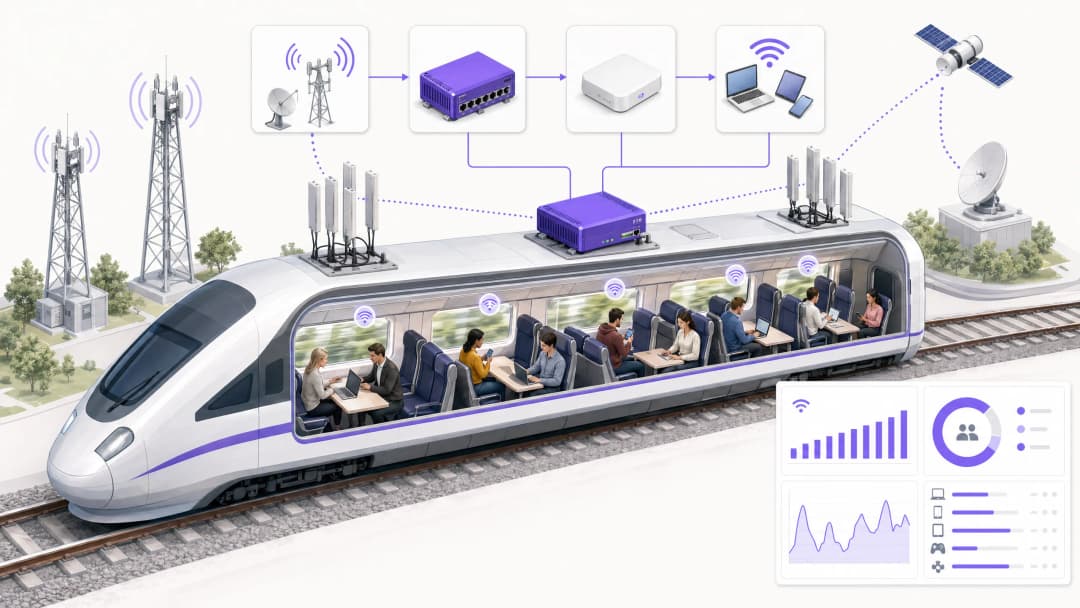
कार्यकारी सारांश (Executive Summary)
रेल ऑपरेटरों के लिए, उच्च गुणवत्ता वाला ट्रेन WiFi अब केवल यात्रियों के लिए एक सुविधा नहीं रह गया है, बल्कि यह एक आवश्यक परिचालन बुनियादी ढांचा बन गया है। सर्वोत्तम और पुराने सेटअप के बीच का अंतर स्पष्ट है: Ookla के 2025 की दूसरी तिमाही के आंकड़ों के अनुसार, स्वीडन 64.58 Mbps की औसत डाउनलोड गति प्राप्त करता है, जबकि यूके 1.09 Mbps पर अटका हुआ है [1]। यह 59 गुना अंतर मुख्य रूप से तकनीक की समस्या नहीं है - बल्कि, यह आर्किटेक्चर और निवेश रणनीति की विफलता है।
यह गाइड IT निर्देशकों, नेटवर्क आर्किटेक्ट्स और वेन्यू ऑपरेशन्स लीडर्स के लिए एक वेंडर-न्यूट्रल ब्लूप्रिंट प्रदान करती है। हम ऑनबोर्ड कनेक्टिविटी के लिए आवश्यक तीन-स्तरीय आर्किटेक्चर का विश्लेषण करते हैं, नेटवर्क सेगमेंटेशन की महत्वपूर्ण सुरक्षा आवश्यकताओं का पता लगाते हैं, और यह प्रदर्शित करते हैं कि कैसे Guest WiFi जैसे प्लेटफॉर्म कच्चे कनेक्शन डेटा को उपयोगी बिजनेस इंटेलिजेंस में बदलते हैं। चाहे आप हाई-स्पीड इंटरसिटी रूट का प्रबंधन कर रहे हों या क्षेत्रीय कम्यूटर सेवा का, बैकहॉल एग्रीगेशन और GDPR-अनुपालन डेटा कैप्चर के सिद्धांत समान रहते हैं।
तकनीकी गहन विश्लेषण: तीन-स्तरीय आर्किटेक्चर
आधुनिक ट्रेन WiFi डिप्लॉयमेंट Retail या Hospitality में पाए जाने वाले स्थिर वेन्यू डिप्लॉयमेंट से पूरी तरह से अलग है। नेटवर्क को 300 किमी/घंटा की गति से यात्रा करते समय, ट्रैकसाइड सेल्स के बीच हैंडऑफ़ करते हुए, और भारी रूप से इंसुलेटेड रोलिंग स्टॉक में प्रवेश करते हुए भी सेशन निरंतरता बनाए रखनी चाहिए।
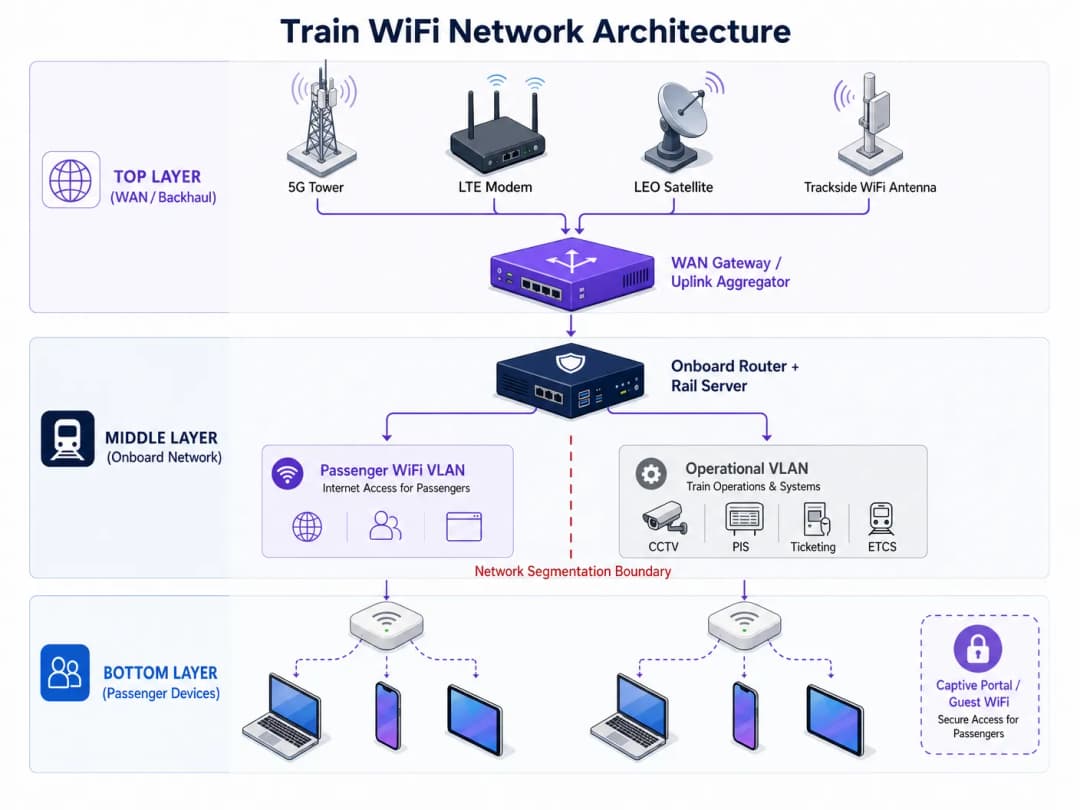
स्तर 1: WAN बैकहॉल और एग्रीगेशन
आपके यात्रियों के अनुभव की सीमा पूरी तरह से आपकी बैकहॉल क्षमता पर निर्भर करती है। छत पर लगे एंटीना वाला एकल LTE मॉडेम अब व्यावहारिक नहीं है। आधुनिक आर्किटेक्चर कई अपलिंक्स को संयोजित करने के लिए एक WAN गेटवे का उपयोग करते हैं:
- सेलुलर बॉन्डिंग: एकल-नेटवर्क कवरेज ब्लैक स्पॉट्स को कम करने के लिए कई मोबाइल नेटवर्क ऑपरेटरों (MNOs) से 4G/5G कनेक्शनों को जोड़ना।
- ट्रैकसाइड इन्फ्रास्ट्रक्चर: रेल कॉरिडोर के साथ तैनात समर्पित 5 GHz या 60 GHz वायरलेस नेटवर्क।
- LEO सैटेलाइट: लो-अर्थ-ऑर्बिट तारामंडल (जैसे Starlink) जो ग्रामीण या सीमा-पार के क्षेत्रों में 100-200 Mbps थ्रूपुट प्रदान करते हैं जहां स्थलीय सेलुलर विफल हो जाता है [2]।
स्तर 2: ऑनबोर्ड नेटवर्क और सेगमेंटेशन
WAN गेटवे ऑनबोर्ड राउटर और रेल सर्वर को फीड करता है। यह स्तर नेटवर्क सेगमेंटेशन के महत्वपूर्ण कार्य को संभालता है।
"यात्री WiFi पूरी तरह से अलग थलग VLAN पर चलना चाहिए, जिसमें सीसीटीवी फीड, यात्री सूचना प्रणाली (PIS), या यूरोपीय ट्रेन नियंत्रण प्रणाली (ETCS) सिग्नलिंग डेटा ले जाने वाले परिचालन नेटवर्क के लिए कोई रूटिंग पाथ नहीं होना चाहिए।"UK में पैसेंजर WiFi नेटवर्क पर 2024 के साइबर हमले ने अपर्याप्त सेगमेंटेशन के गंभीर खतरों को उजागर किया, जहां पब्लिक-फेसिंग कमजोरियों ने व्यापक टर्मिनल इंफ्रास्ट्रक्चर से समझौता किया [3]। IEEE 802.1X पोर्ट-आधारित ऑथेंटिकेशन और सख्त इंटर-VLAN फ़ायरवॉल नियमों को लागू करना एक गैर-परक्राम्य सुरक्षा आवश्यकता है। इसके अलावा, रेल सर्वर कंटेनराइज्ड एप्लिकेशन होस्टिंग प्रदान करता है, जिससे लोकल कंटेंट कैशिंग और Captive Portal सेवाएं बैकहॉल कनेक्टिविटी समाप्त होने पर भी काम कर सकती हैं।
लेयर 3: पैसेंजर एक्सेस और केबिन हार्डवेयर
अंतिम लेयर में डिब्बों में वितरित एक्सेस पॉइंट्स (APs) शामिल हैं। लीगेसी हार्डवेयर प्रदर्शन में एक बड़ा व्यवधान है। जर्मनी में, WiFi 4 (802.11n) से WiFi 5 (802.11ac) में अपग्रेड करने से गति में 241% का सुधार हुआ, जबकि ट्रैफ़िक को 2.4 GHz बैंड से 5 GHz पर स्थानांतरित करने से 328% की वृद्धि हुई [1]। फिर भी, लगभग 40% यूरोपीय रेल कनेक्शन अभी भी WiFi 4 पर निर्भर हैं।

अपने विशिष्ट सेटअप को लेकर कोई सवाल हैं?
हमारी टीम 80,000 से अधिक वेन्यू में वेन्यू ऑपरेटरों, IT मैनेजरों और नेटवर्क इंजीनियरों के साथ काम करती है। 20 मिनट का कॉल बुक करें और हम आपको दिखाएंगे कि आपके जैसे अन्य लोगों ने इसे कैसे हल किया।
कार्यान्वयन गाइड: परिनियोजन और अनुपालन
ट्रेन WiFi को परिनियोजित करना एक जटिल सिस्टम एकीकरण परियोजना है। निम्नलिखित चरण एक मजबूत परिनियोजन रणनीति की रूपरेखा तैयार करते हैं:
- बैकहॉल ऑडिट आयोजित करें: केबिन APs को निर्दिष्ट करने से पहले, सेलुलर कवरेज अंतराल के लिए अपने मार्ग का ऑडिट करें। इन ब्लैक स्पॉट्स के आधार पर अपनी अपलिंक एग्रीगेशन रणनीति तैयार करें।
- RF-पारगम्य खिड़कियां निर्दिष्ट करें: आधुनिक ट्रेन की खिड़कियों में थर्मल दक्षता के लिए धात्विक कोटिंग्स का उपयोग किया जाता है, जो सेलुलर सिग्नलों को 20 - 30 dB तक कम कर सकती हैं। इसे दूर करने के लिए आंतरिक APs को फीड करने वाले रूफ-माउंटेड एंटेना अनिवार्य हैं।
- एक मजबूत Captive Portal लागू करें: Captive Portal पैसेंजर और ऑपरेटर के बीच प्राथमिक इंटरफेस है। इसे सेवा की शर्तों को प्रस्तुत करते हुए सत्यापित क्रेडेंशियल्स (ईमेल या सोशल लॉगिन) को सुरक्षित रूप से कैप्चर करना चाहिए।
- GDPR अनुपालन सुनिश्चित करें: ऑपरेटरों को पैसेंजर डेटा को प्रोसेस करने के लिए एक वैध आधार स्थापित करना होगा। सहमति स्वतंत्र रूप से दी जानी चाहिए और स्पष्ट रूप से रिकॉर्ड की जानी चाहिए। मजबूत DNS और सुरक्षा के साथ अपने नेटवर्क को सुरक्षित रखें यहां एक प्रमुख विचार है।
ROI और व्यावसायिक प्रभाव: डेटा को इंटेलिजेंस में बदलना
मुफ़्त WiFi प्रदान करना एक महत्वपूर्ण परिचालन व्यय है। ROI उत्पन्न करने के लिए, ऑपरेटरों को फर्स्ट-पार्टी डेटा एकत्र करने के लिए कनेक्शन लेयर का लाभ उठाना चाहिए।
जब पैसेंजर एक अनुपालनशील Captive Portal के माध्यम से ऑथेंटिकेट करते हैं, तो ऑपरेटर यात्रा व्यवहार के समृद्ध प्रोफाइल बना सकते हैं। यह वह जगह है जहाँ WiFi analytics परिवर्तनकारी बन जाता है। कनेक्शन की आवृत्ति, विशिष्ट स्टेशनों पर रुकने का समय और डिब्बे के अधिभोग पैटर्न का विश्लेषण करके, ऑपरेटरों को परिचालन संबंधी इंटेलिजेंस प्राप्त होती है जो Transport हब और हवाई अड्डों पर एकत्र किए गए अंतर्दृष्टि का मुकाबला करती है।
उदाहरण के लिए, यह समझना कि व्यावसायिक यात्रियों का एक विशिष्ट समूह लगातार 07:30 की सेवा पर कनेक्ट होता है, लक्षित, उच्च-मूल्य वाले मार्केटिंग संचार या लॉयल्टी प्रोग्राम एकीकरण को सक्षम बनाता है। यह डेटा-संचालित दृष्टिकोण WiFi नेटवर्क को लागत केंद्र से राजस्व-सक्षम संपत्ति में बदल देता है।
Listen to the Briefing
आर्किटेक्चर और व्यावसायिक रणनीति के बारे में अधिक गहराई से जानने के लिए, हमारी पूरी तकनीकी ब्रीफिंग सुनें:
संदर्भ: [1] Ookla Speedtest Intelligence, "Fast Trains, Slow WiFi: The Reality of Onboard Connectivity in Europe and Asia", Q2 2025. [2] Industry Trials, LEO Satellite Integration for Mobility, 2024-2025. [3] Railway Technology, "UK passenger WiFi network hacked", सितंबर 2024.
मुख्य परिभाषाएं
WAN एग्रीगेशन
थ्रूपुट और लचीलेपन को बढ़ाने के लिए कई वाइड एरिया नेटवर्क कनेक्शन (जैसे, दो 5G कनेक्शन और एक सैटेलाइट लिंक) को एकल लॉजिकल कनेक्शन में संयोजित करने की प्रक्रिया।
कनेक्शन टूटने से रोकने के लिए अलग-अलग सेलुलर कवरेज क्षेत्रों से गुजरने वाली ट्रेनों के लिए अत्यंत महत्वपूर्ण।
नेटवर्क सेगमेंटेशन (VLAN)
एक कंप्यूटर नेटवर्क को छोटे, पृथक उप-नेटवर्क में विभाजित करना। वर्चुअल लोकल एरिया नेटवर्क (VLANs) ट्रैफ़िक को तार्किक रूप से अलग रखते हैं, भले ही वे समान भौतिक स्विच साझा करते हों।
किसी प्रभावित यात्री डिवाइस को महत्वपूर्ण ट्रेन नियंत्रण प्रणालियों तक पहुँचने से रोकने के लिए आवश्यक है।
कैप्टिव पोर्टल (Captive Portal)
एक वेब पेज जिसे सार्वजनिक-पहुंच नेटवर्क के उपयोगकर्ता को पहुंच प्रदान किए जाने से पहले देखने और उसके साथ इंटरैक्ट करने के लिए बाध्य होना पड़ता है।
सेवा की शर्तों को लागू करने, उपयोगकर्ता डेटा एकत्र करने और GDPR सहमति सुरक्षित करने के लिए उपयोग किया जाता है।
RF एटेन्यूएशन (RF Attenuation)
रेडियो तरंगों के किसी माध्यम से गुजरने पर सिग्नल की शक्ति में होने वाली कमी।
मेटालिक थर्मल कोटिंग वाले आधुनिक ट्रेन की खिड़कियां बड़े पैमाने पर RF एटेन्यूएशन का कारण बनती हैं, जिसके लिए छत पर लगे एंटेना की आवश्यकता होती है।
LEO सैटेलाइट
लो अर्थ ऑर्बिट सैटेलाइट जो पारंपरिक जियोस्टेशनरी उपग्रहों की तुलना में पृथ्वी के बहुत करीब काम करते हैं, जिससे कम लेटेंसी और उच्च बैंडविड्थ मिलती है।
ग्रामीण या सीमा पार क्षेत्रों में ट्रेनों के लिए बैकहॉल समाधान के रूप में तेजी से उपयोग किया जा रहा है।
IEEE 802.1X
पोर्ट-आधारित नेटवर्क एक्सेस कंट्रोल (PNAC) के लिए एक IEEE मानक, जो LAN या WLAN से जुड़ने के इच्छुक उपकरणों को एक प्रमाणीकरण तंत्र प्रदान करता है।
ट्रेन पर परिचालन नेटवर्क इंटरफेस को अनधिकृत पहुंच से सुरक्षित रखने के लिए उपयोग किया जाता है।
Rail Server
ट्रेन में स्थानीय रूप से कंटेनरीकृत अनुप्रयोगों की मेजबानी करने के लिए डिज़ाइन किया गया एक मजबूत ऑनबोर्ड कंप्यूटर।
WAN लिंक पर निर्भरता को कम करने के लिए स्थानीय मनोरंजन, कैशिंग और Captive Portal सेवाओं की मेजबानी करने के लिए उपयोग किया जाता है।
First-Party Data
वह जानकारी जो एक कंपनी सीधे अपने ग्राहकों से एकत्र करती है और उसकी मालिक होती है।
उचित रूप से कॉन्फ़िगर किए गए अतिथि WiFi नेटवर्क का प्राथमिक व्यावसायिक आउटपुट।
हल किए गए उदाहरण
एक क्षेत्रीय रेल ऑपरेटर, जो घने शहरी क्षेत्रों और गहरी ग्रामीण घाटियों के बीच 4-डिब्बों वाली कम्यूटर ट्रेनें चलाता है, उसे WiFi ड्रॉपआउट के संबंध में यात्रियों से गंभीर शिकायतों का सामना करना पड़ रहा है। उनका वर्तमान सेटअप प्रति ट्रेन एक सिंगल 4G LTE मॉडेम का उपयोग करता है। उन्हें अपनी संरचना को फिर से कैसे डिज़ाइन करना चाहिए?
- WAN बैकहॉल को अपग्रेड करें: सिंगल LTE मॉडेम को ऐसे WAN गेटवे से बदलें जो अपलिंक एग्रीगेशन में सक्षम हो। शहरी क्षेत्रों में फ़ेलओवर प्रदान करने के लिए दो अलग-अलग मोबाइल नेटवर्क ऑपरेटरों (MNOs) का उपयोग करने वाले ड्यूल-SIM राउटर स्थापित करें।
- ग्रामीण कमियों को दूर करें: उन गहरी घाटियों के लिए जहां सेलुलर कवरेज बिल्कुल नहीं है, WAN गेटवे में एक माध्यमिक एग्रीगेटेड लिंक के रूप में एक LEO सैटेलाइट टर्मिनल (जैसे, Starlink Mobility) को एकीकृत करें।
- स्थानीय कैशिंग: कैप्टिव पोर्टल (captive portal) और यात्रा की मुख्य जानकारी को स्थानीय रूप से कैश करने के लिए एक ऑनबोर्ड रेल सर्वर तैनात करें, जिससे यह सुनिश्चित हो सके कि सुरंगों में संक्षिप्त पूर्ण कनेक्शन हानि के दौरान भी यात्री UI उत्तरदायी बना रहे।
एक इंटरसिटी रेल फ्रैंचाइज़ी अपने बेड़े को अपग्रेड कर रही है और मार्केटिंग के लिए यात्री एनालिटिक्स एकत्र करने के लिए नए ऑनबोर्ड WiFi का उपयोग करना चाहती है, ठीक वैसे ही जैसे [Retail](/industries/retail) स्थल काम करते हैं। उन्हें कौन से अनुपालन और तकनीकी कदम उठाने चाहिए?
- कैप्टिव पोर्टल परिनियोजन: एक मजबूत कैप्टिव पोर्टल (captive portal) लागू करें जिसके लिए उपयोगकर्ताओं को इंटरनेट एक्सेस करने से पहले ईमेल या सोशल लॉगिन के माध्यम से प्रमाणित करना आवश्यक हो।
- GDPR अनुपालन: सुनिश्चित करें कि पोर्टल मार्केटिंग संचार के लिए स्पष्ट रूप से ऑप्ट-इन सहमति का अनुरोध करता है। पहले से टिक किए गए बॉक्स का उपयोग नहीं किया जाना चाहिए। सिस्टम को सहमति दी गई गोपनीयता नीति के टाइमस्टैम्प और संस्करण को लॉग करना चाहिए।
- एनालिटिक्स इंटीग्रेशन: यात्रा की आवृत्ति, ठहरने के समय को ट्रैक करने और अनुमति मिलने पर टिकटिंग डेटा के साथ क्रॉस-रेफरेंस करने के लिए प्रमाणित सेशन डेटा को एक केंद्रीकृत WiFi Analytics प्लेटफॉर्म पर रूट करें।
अभ्यास प्रश्न
Q1. आपके CTO धीमी इंटरनेट गति के बारे में यात्रियों की शिकायतों को हल करने के लिए सभी कैरिज एक्सेस पॉइंट्स को WiFi 6 में अपग्रेड करना चाहते हैं। आपका वर्तमान बैकहॉल एकल 4G कनेक्शन है। सही आर्किटेक्चरल प्रतिक्रिया क्या है?
संकेत: विचार करें कि डेटा प्रवाह में वास्तविक बाधा कहाँ आ रही है।
मॉडल उत्तर देखें
CTO को AP अपग्रेड रोकने और बजट को अपलिंक एग्रीगेशन में सक्षम WAN गेटवे में निवेश करने की सलाह दें। WiFi 6 में अपग्रेड करने से कैरिज के भीतर स्थानीय डिवाइस-टू-AP गति में सुधार होगा, लेकिन इंटरनेट का कुल थ्रूपुट एकल 4G कनेक्शन से बाधित रहेगा। पहले बैकहॉल बाधा को ठीक करें।
Q2. नेटवर्क डिज़ाइन समीक्षा के दौरान, एक इंजीनियर केबल बिछाने की लागत बचाने के लिए ट्रेन के CCTV डेटा को यात्री WiFi के समान राउटर इंटरफेस के माध्यम से रूट करने का सुझाव देता है। आप क्या प्रतिक्रिया देंगे?
संकेत: सार्वजनिक और परिचालन ट्रैफ़िक को मिलाने के सुरक्षा प्रभावों पर विचार करें।
मॉडल उत्तर देखें
प्रस्ताव को तुरंत खारिज करें। यात्री WiFi और CCTV जैसे परिचालन प्रणालियों को उनके बीच डेनाइ-ऑल फ़ायरवॉल नियमों के साथ पृथक VLANs में कड़ाई से विभाजित किया जाना चाहिए। इस ट्रैफ़िक को मिलाने से एक गंभीर सुरक्षा भेद्यता पैदा होती है, जिससे सार्वजनिक WiFi पर एक दुर्भावनापूर्ण उपयोगकर्ता को ट्रेन संचालन तक पहुँचने या बाधित करने की अनुमति मिल सकती है।
Q3. मार्केटिंग टीम जुड़ाव बढ़ाने के लिए मुफ्त WiFi का उपयोग करने वाले सभी यात्रियों को साप्ताहिक न्यूज़लेटर में स्वचालित रूप से नामांकित करना चाहती है। यह सुनिश्चित करने के लिए कि यह कानूनी है, आपको Captive Portal पर क्या कॉन्फ़िगर करना होगा?
संकेत: GDPR के तहत वैध डेटा प्रोसेसिंग की आवश्यकताओं की समीक्षा करें।
मॉडल उत्तर देखें
आपको मार्केटिंग संचार के लिए एक स्पष्ट, बिना टिक वाले ऑप्ट-इन चेकबॉक्स को शामिल करने के लिए Captive Portal को कॉन्फ़िगर करना होगा। स्वचालित नामांकन या पहले से टिक किए गए बॉक्स स्वतंत्र रूप से दी गई, स्पष्ट सहमति के लिए GDPR आवश्यकताओं का उल्लंघन करते हैं। ऑडिट उद्देश्यों के लिए सिस्टम को इस सहमति का टाइमस्टैम्प भी लॉग करना होगा।
इस श्रृंखला में आगे पढ़ें
Staff WiFi बनाम Guest WiFi: कॉर्पोरेट नेटवर्क सेगमेंटेशन के लिए सर्वोत्तम प्रथाएं
IT लीडर्स के लिए स्टाफ और गेस्ट WiFi नेटवर्क को विभाजित करने पर एक व्यापक तकनीकी गाइड। इसमें VLAN आर्किटेक्चर, 802.1X ऑथेंटिकेशन, फ़ायरवॉल नीतियां और सुरक्षित नेटवर्क डिज़ाइन का व्यावसायिक प्रभाव शामिल है।
होटल Guest WiFi Management: PMS, Portals, और ब्रांड मानकों को एकीकृत करना
यह तकनीकी मार्गदर्शिका विस्तार से बताती है कि VLAN segmentation, automated session management के लिए PMS integration, और GDPR-compliant डेटा कैप्चर के लिए captive portal अनुकूलन पर ध्यान केंद्रित करते हुए उद्यम-स्तर के होटल WiFi नेटवर्क का निर्माण कैसे किया जाए।
सुरक्षित गेस्ट WiFi कैसे सेटअप करें: एक सुरक्षित एंटरप्राइज कॉन्फ़िगरेशन गाइड
यह आधिकारिक गाइड IT लीडर्स और नेटवर्क आर्किटेक्ट्स को सुरक्षित एंटरप्राइज गेस्ट WiFi को तैनात करने का एक निश्चित खाका प्रदान करती है। इसमें अनुपालन करने वाले फर्स्ट-पार्टी डेटा को कैप्चर करते हुए आंतरिक प्रणालियों की सुरक्षा के लिए आवश्यक आर्किटेक्चर, WPA3 माइग्रेशन, VLAN सेगमेंटेशन और captive portal इंटीग्रेशन शामिल हैं।
अपने विशिष्ट सेटअप को लेकर कोई सवाल हैं?
हमारी टीम 80,000 से अधिक वेन्यू में वेन्यू ऑपरेटरों, IT मैनेजरों और नेटवर्क इंजीनियरों के साथ काम करती है। 20 मिनट का कॉल बुक करें और हम आपको दिखाएंगे कि आपके जैसे अन्य लोगों ने इसे कैसे हल किया।