
Network Edge-এ Malware এবং Phishing ব্লক করা
এই টেকনিক্যাল রেফারেন্স গাইডে আনম্যানেজড গেস্ট এবং IoT ডিভাইসগুলোকে সুরক্ষিত করতে network-level থ্রেট প্রোটেকশন বাস্তবায়নের আর্কিটেকচার, ডেপ্লয়মেন্ট এবং ব্যবসায়িক প্রভাব সম্পর্কে আলোচনা করা হয়েছে। এটি IT লিডারদের জন্য প্রোঅ্যাক্টিভ উপায়ে malware এবং phishing ব্লক করার কার্যকর নির্দেশনা প্রদান করে।
এই গাইডটি শুনুন
পডকাস্ট ট্রান্সক্রিপ্ট দেখুন
আমাদের মূল সিরিজের অংশ: Enterprise WiFi Security Guide →
এক্সিকিউটিভ সামারি
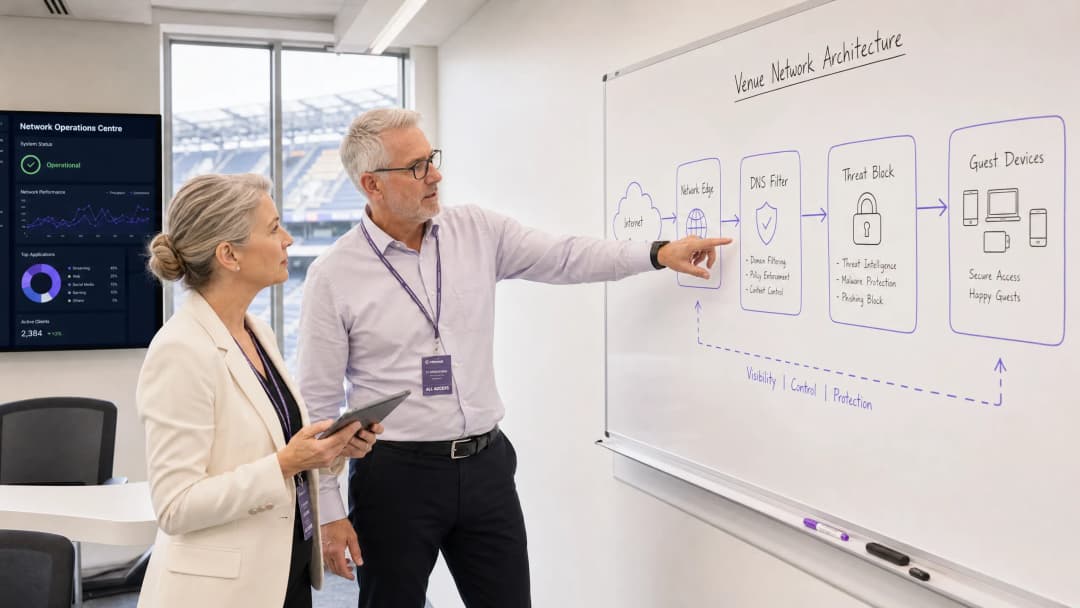
যেসব CTO এবং নেটওয়ার্ক আর্কিটেক্টরা উচ্চ-পদচারণাপূর্ণ স্থানসমূহ পরিচালনা করছেন, তাদের জন্য অননুমোদিত বা আনম্যানেজড ডিভাইসগুলি সুরক্ষিত রাখা একটি অত্যন্ত গুরুত্বপূর্ণ অপারেশনাল চ্যালেঞ্জ। আপনি কোনো অতিথির স্মার্টফোনে এন্ডপয়েন্ট এজেন্ট স্থাপন করতে পারেন না, এবং ব্যবহারকারীরা স্বউদ্যোগে ক্ষতিকারক লিঙ্কগুলি এড়িয়ে চলবেন - এমন ভরসাও আপনি করতে পারেন না। এই নির্দেশিকাটি বিস্তারিতভাবে আলোচনা করে যে কিভাবে নেটওয়ার্ক-লেভেল থ্রেট প্রোটেকশন বাস্তবায়ন করে নেটওয়ার্কের একদম শেষ প্রান্তে (নেটওয়ার্ক এজ) পৌঁছানোর আগেই ম্যালওয়্যার এবং ফিশিং ব্লক করা যায়, যাতে এগুলি অতিথিদের ডিভাইসে প্রবেশ করতে না পারে। DNS ফিল্টারিং এবং থ্রেট ইন্টেলিজেন্স ইন্টিগ্রেশনের মাধ্যমে গেটওয়েতে সিকিউরিটি পলিসি প্রয়োগ করে, ব্যবসা প্রতিষ্ঠানগুলি সক্রিয়ভাবে BYOD, IoT এবং গেস্ট ট্রাফিক সুরক্ষিত রাখতে পারে। এই পদ্ধতিটি ইনসিডেন্ট রেসপন্স ওভারহেড হ্রাস করে, GDPR এবং PCI-DSS এর মতো মানদণ্ডগুলির সাথে সম্মতি নিশ্চিত করে, এবং Hospitality, Retail, এবং Transport শিল্পের আওতাধীন এলাকাগুলিতে Guest WiFi ব্যবহারকারীদের জন্য একটি নিরাপদ পরিবেশ বজায় রাখে।
টেকনিক্যাল ডিপ-ডাইভ
নেটওয়ার্ক এজ প্রোটেকশন আর্কিটেকচার
নেটওয়ার্ক এজ ম্যালওয়্যার প্রোটেকশন সিকিউরিটি এনফোর্সমেন্ট পয়েন্টটিকে এন্ডপয়েন্ট থেকে সরিয়ে গেটওয়েতে নিয়ে আসে। যখন কোনো ডিভাইস ভেন্যু নেটওয়ার্কের সাথে সংযুক্ত হয় এবং একটি ডোমেইন রিসলভ করার চেষ্টা করে, তখন DNS কোয়েরিটি এজ গেটওয়ে দ্বারা ইন্টারসেপ্ট করা হয়। স্ট্যান্ডার্ড রেজোলিউশনের পরিবর্তে, কোয়েরিটি ক্রমাগত আপডেট হওয়া থ্রেট ইন্টেলিজেন্স ফিডের বিপরীতে মূল্যায়ন করা হয়।
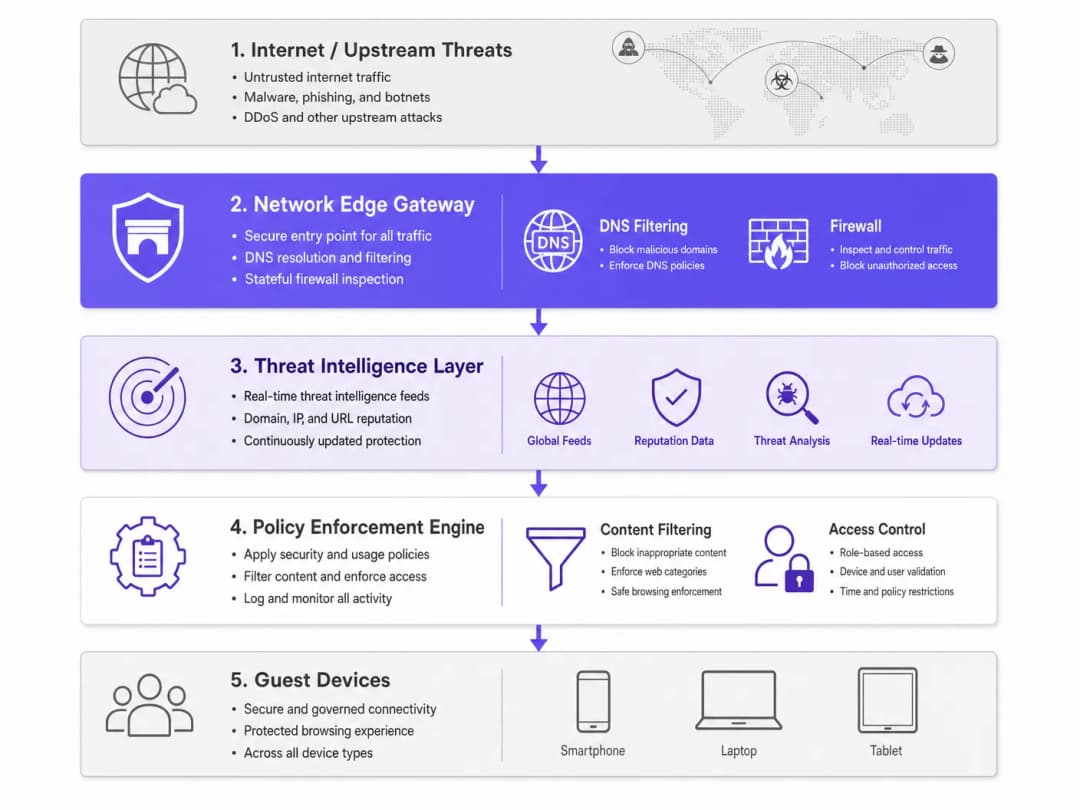
ডোমেইনটি যদি ম্যালওয়্যার ডিস্ট্রিবিউশন, ফিশিং ক্যাম্পেইন, বা বটনেট কমান্ড-অ্যান্ড-কন্ট্রোল (C2) ইনফ্রাস্ট্রাকচারের সাথে সম্পর্কিত হয়, তবে DNS রিকোয়েস্টটি সিঙ্কহোল (sinkhole) করা হয়। কোনো ক্ষতিকারক পেলোড ডাউনলোড হওয়ার আগেই সংযোগটি বিচ্ছিন্ন করা হয়। এই প্রোঅ্যাক্টিভ ব্লকিং ল্যাটারাল মুভমেন্ট প্রতিরোধ করে এবং ভেন্যুর IP রেপুটেশন রক্ষা করে।
মূল উপাদানসমূহ
১. DNS ফিল্টারিং ইঞ্জিন: এটি সমস্ত আউটবাউন্ড DNS রিকোয়েস্ট পরীক্ষা করে। ব্যবহারকারীরা যাতে ভেন্যুর সুরক্ষিত DNS বাইপাস করতে না পারে, সেজন্য এই ইঞ্জিনটিকে পরিচিত পাবলিক DoH (DNS over HTTPS) রিজলভারগুলি ব্লক করার জন্য কনফিগার করা অত্যন্ত জরুরি। ২. থ্রেট ইন্টেলিজেন্স ইন্টিগ্রেশন: এটি এমন গ্লোবাল ইন্টেলিজেন্স ফিডগুলি সাবস্ক্রাইব করে যা রেপুটেশন, নতুন রেজিস্টার্ড ডোমেইন স্ট্যাটাস, এবং পরিচিত ক্ষতিকারক কার্যকলাপের উপর ভিত্তি করে রিয়েল-টাইমে ডোমেইনগুলিকে শ্রেণীবদ্ধ করে। ৩. পলিসি এনফোর্সমেন্ট: ব্যবহারকারীর ভূমিকা (যেমন, স্টাফ বনাম গেস্ট) এবং কন্টেন্ট ক্যাটাগরির উপর ভিত্তি করে এটি গ্র্যানুলার নিয়মাবলী প্রয়োগ করে, যা যুক্তরাজ্যে IWF Compliance for Public WiFi Networks in the UK এর সাথে সম্মতি নিশ্চিত করে।
আপনার নির্দিষ্ট সেটআপ নিয়ে কোনো প্রশ্ন আছে?
আমাদের টিম ৮০,০০০ ভেন্যুতে ভেন্যু অপারেটর, IT ম্যানেজার এবং নেটওয়ার্ক ইঞ্জিনিয়ারদের সাথে কাজ করে। একটি ২০ মিনিটের কল বুক করুন এবং আপনার মতো অন্যরা কীভাবে এর সমাধান করেছেন তা আমরা আপনাকে দেখাব।
ইমপ্লিমেন্টেশন গাইড
নেটওয়ার্ক এজ সুরক্ষা মোতায়েন করার জন্য ন্যূনতম ব্যাঘাত সহ সর্বাধিক সুরক্ষা কভারেজ অর্জনের জন্য একটি পর্যায়ভিত্তিক পদ্ধতির প্রয়োজন।
ধাপ ১: নেটওয়ার্ক সেগমেন্টেশন
VLAN ব্যবহার করে আপনার নেটওয়ার্কটি সঠিকভাবে সেগমেন্ট করা হয়েছে তা নিশ্চিত করুন। অতিথি ট্রাফিক, কর্পোরেট কর্মী, IoT ডিভাইস এবং POS সিস্টেম অবশ্যই বিচ্ছিন্ন সেগমেন্টে থাকতে হবে। এটি কোনো ডিভাইস নেটওয়ার্কে যোগদানের আগে আপোস করা হলে তার ব্লাস্ট ব্যাসার্ধকে সীমাবদ্ধ করে।
ধাপ ২: গেটওয়ে কনফিগারেশন
একটি সুরক্ষিত DNS ফিল্টারিং পরিষেবাতে সমস্ত DNS ট্রাফিক ফরওয়ার্ড করতে আপনার এজ রাউটার বা ফায়ারওয়াল কনফিগার করুন। ফায়ারওয়াল নিয়মগুলি প্রয়োগ করুন যা অনুমোদিত সুরক্ষিত সমাধানকারী ছাড়া অন্য কোনও গন্তব্যে পোর্ট 53 (DNS) এবং পোর্ট 853 (DoT) এ আউটবাউন্ড ট্রাফিক ব্লক করে। আধুনিক নেটওয়ার্ক অপ্টিমাইজেশন সম্পর্কে আরও জানতে, Office Wi Fi: Optimize Your Modern Office Wi-Fi Network দেখুন।
ধাপ ৩: নীতি নির্ধারণ
ভিত্তিরেখা নীতি প্রতিষ্ঠা করুন। বিশ্বব্যাপী পরিচিত ক্ষতিকারক বিভাগগুলি ব্লক করুন। সামগ্রী ফিল্টারিংয়ের জন্য, স্থান-নির্দিষ্ট নীতিগুলি প্রয়োগ করুন - উদাহরণস্বরূপ, সাধারণ খুচরা ব্যবসার তুলনায় একটি Healthcare পরিবেশে আরও কঠোর ফিল্টারিং প্রয়োগ করুন।
সর্বোত্তম অনুশীলনসমূহ
- দানাযুক্ত নীতি প্রয়োগ: সমর্থন টিকিট তৈরি করে এমন কম্বল ব্লকিং এড়িয়ে চলুন। আপনার পরিচয় প্রদানকারীর সাথে সংহত ভূমিকা-ভিত্তিক অ্যাক্সেস নিয়ন্ত্রণ (RBAC) ব্যবহার করুন (উদাহরণস্বরূপ, Purple এর Connect লাইসেন্স)।
- বিস্তৃত লগিং: DNS কোয়েরি এবং ব্লক করা হুমকির একটি সম্পূর্ণ অডিট ট্রেইল বজায় রাখুন। এটি ঘটনার প্রতিক্রিয়া এবং সম্মতি রিপোর্টিংয়ের জন্য অপরিহার্য। বিস্তারিত প্রয়োজনীয়তার জন্য Explain what is audit trail for IT Security in 2026 দেখুন।
- ক্রমাগত পর্যবেক্ষণ: রিয়েল টাইমে নেটওয়ার্ক কর্মক্ষমতা এবং নিরাপত্তা ইভেন্টগুলি নিরীক্ষণ করতে WiFi Analytics ব্যবহার করুন।
সমস্যা সমাধান এবং ঝুঁকি প্রশমন
এনক্রিপ্ট করা DNS হ্যান্ডলিং
আধুনিক অপারেটিং সিস্টেমগুলি ক্রমবর্ধমানভাবে DoH এবং DoT ব্যবহার করে, যা DNS কোয়েরিগুলিকে এনক্রিপ্ট করে এবং ঐতিহ্যগত এজ ফিল্টারিং বাইপাস করতে পারে। এটি প্রশমিত করতে, ডিভাইসগুলিকে স্ট্যান্ডার্ড পোর্ট 53 এর মাধ্যমে পরিবেশন করা ভেন্যুর সুরক্ষিত DNS-এ ফিরে যেতে বাধ্য করতে পরিচিত পাবলিক DoH সমাধানকারীগুলির (যেমন 8.8.8.8 এবং 1.1.1.1) একটি আপডেট করা ব্লক তালিকা বজায় রাখুন।
বৈধ ট্রাফিক অতিরিক্ত ব্লক করা
আগ্রাসী হুমকি বুদ্ধিমত্তা ফিড কখনও কখনও বৈধ ডোমেনগুলিকে চিহ্নিত করতে পারে, বিশেষ করে বিপণন প্রচারের জন্য ব্যবহৃত নতুন নিবন্ধিত ডোমেনগুলি। একটি দ্রুত অনুমতি তালিকাভুক্তকরণ প্রক্রিয়া স্থাপন করুন এবং মিথ্যা ইতিবাচকগুলি দ্রুত সমাধান করতে IT অপারেশন টিমকে ক্ষমতায়ন করুন।

ROI এবং ব্যবসায়িক প্রভাব
নেটওয়ার্ক এজ ম্যালওয়্যার সুরক্ষার ব্যবসায়িক কেসটি ঝুঁকি হ্রাস এবং কর্মক্ষম দক্ষতার উপর ভিত্তি করে তৈরি। গেটওয়েতে হুমকি ব্লক করার মাধ্যমে, ভেন্যুগুলি BYOD এবং গেস্ট ডিভাইসের জন্য এন্ডপয়েন্ট সিকিউরিটির সাথে সম্পর্কিত প্রতি-ডিভাইস লাইসেন্সিং খরচ দূর করতে পারে। এটি IT সার্ভিস ডেস্কের কর্মীদের আপোসকৃত ডিভাইসগুলি তদন্ত করতে বা ব্ল্যাকলিস্টেড IP ঠিকানাগুলি নিয়ে কাজ করার পেছনে ব্যয় করা সময়কে নাটকীয়ভাবে হ্রাস করে। এর ফলে প্রাপ্ত সুরক্ষিত, নির্ভরযোগ্য কানেক্টিভিটি কেবল গেস্টদের অভিজ্ঞতাকেই উন্নত করে না বরং ভেন্যুর ব্র্যান্ড সুনামও রক্ষা করে।
মূল সংজ্ঞাসমূহ
Network Edge
সীমানা যেখানে একটি লোকাল নেটওয়ার্ক ইন্টারনেটের সাথে সংযুক্ত হয়, যা সাধারণত একটি রাউটার, ফায়ারওয়াল বা গেটওয়ে দ্বারা পরিচালিত হয়।
আনম্যানেজড ডিভাইসগুলোর জন্য সিকিউরিটি কন্ট্রোল ডেপ্লয় করার এটিই সবচেয়ে উপযুক্ত স্থান, কারণ সমস্ত ট্রাফিককে অবশ্যই এর মধ্য দিয়ে যেতে হয়।
DNS Filtering
DNS কোয়েরিগুলো ইন্টারসেপ্ট করে এবং একটি পলিসি বা থ্রেট ফিডের বিরুদ্ধে সেগুলো মূল্যায়ন করে নির্দিষ্ট ওয়েবসাইট বা IP অ্যাড্রেসে অ্যাক্সেস ব্লক করার প্রক্রিয়া।
যেকোনো ডেটা স্থানান্তরের পূর্বেই ডিভাইসগুলোকে ক্ষতিকারক ডোমেনের সাথে সংযোগ স্থাপন করা থেকে প্রোঅ্যাক্টিভভাবে বিরত রাখতে ব্যবহৃত হয়।
Sinkholing
ক্ষতিকারক ট্রাফিককে তার নির্ধারিত গন্তব্যের পরিবর্তে একটি নিরাপদ, নিয়ন্ত্রিত IP অ্যাড্রেসে রিডাইরেক্ট করা।
যখন একটি গেস্ট ডিভাইস কোনো malware সার্ভারে পৌঁছানোর চেষ্টা করে, তখন edge গেটওয়ে রিকোয়েস্টটিকে sinkhole করে সংক্রমণ প্রতিরোধ করে।
Threat Intelligence Feed
পরিচিত ক্ষতিকারক ডোমেন এবং IP অ্যাড্রেস সহ সম্ভাব্য বা বর্তমান সাইবার হুমকি সম্পর্কিত ডেটার একটি ক্রমাগত আপডেট হওয়া স্ট্রিম।
ট্রাফিক অনুমোদন বা ব্লক করা হবে কিনা সে বিষয়ে রিয়েল-টাইম সিদ্ধান্ত নিতে edge গেটওয়েগুলো এই ফিডগুলো ব্যবহার করে।
DoH (DNS over HTTPS)
HTTPS প্রোটোকলের মাধ্যমে দূরবর্তী ডোমেন নেম সিস্টেম রিজল্যুশন সম্পন্ন করার এবং ডেটা এনক্রিপ্ট করার একটি প্রোটোকল।
গোপনীয়তার জন্য ভালো হলেও, পরিচিত DoH রিজলভারগুলো স্পষ্টভাবে ব্লক না করা থাকলে DoH কর্পোরেট edge ফিল্টারিং বাইপাস করতে পারে।
VLAN Segmentation
ট্রাফিক আলাদা রাখতে একটি একক ফিজিক্যাল নেটওয়ার্ককে একাধিক লজিক্যাল নেটওয়ার্কে বিভক্ত করা।
অবিশ্বস্ত গেস্ট ট্রাফিককে সংবেদনশীল কর্পোরেট বা POS সিস্টেম থেকে আলাদা রাখার জন্য অপরিহার্য।
BYOD (Bring Your Own Device)
প্রতিষ্ঠানের নেটওয়ার্কে কর্মীদের বা গেস্টদের তাদের নিজস্ব ব্যক্তিগত ডিভাইস ব্যবহার করার অনুমতি দেওয়ার অনুশীলন।
BYOD ডিভাইসগুলো সাধারণত আনম্যানেজড থাকে, যা এন্ডপয়েন্ট সিকিউরিটি অসম্ভব করে তোলে এবং network edge প্রোটেকশনকে প্রয়োজনীয় করে তোলে।
Audit Trail
DNS কোয়েরি এবং ব্লক করা সংযোগ সহ নেটওয়ার্ক সিস্টেমের কার্যকলাপের একটি কালানুক্রমিক রেকর্ড।
সিকিউরিটি কন্ট্রোলগুলো সক্রিয় রয়েছে তা প্রমাণ করতে PCI-DSS এবং GDPR-এর মতো ফ্রেমওয়ার্কগুলোর কমপ্লায়েন্সের জন্য প্রয়োজন।
সমাধানকৃত উদাহরণসমূহ
একটি ৫০০-রুমের হোটেলের গেস্ট WiFi সুরক্ষিত করা প্রয়োজন এবং একই সাথে IoT ডিভাইসগুলোকে (স্মার্ট টিভি, রুম কন্ট্রোল) বাহ্যিক কমান্ড-এন্ড-কন্ট্রোল সার্ভার থেকে সুরক্ষিত রাখা নিশ্চিত করতে হবে।
DNS ফিল্টারিং সহ একটি network edge গেটওয়ে ডেপ্লয় করুন। নেটওয়ার্কটিকে Guest, IoT এবং কর্পোরেট VLAN-এ বিভক্ত করুন। IoT এবং Guest VLAN থেকে আসা সমস্ত DNS কোয়েরি ইন্টারসেপ্ট করে সেগুলোকে সুরক্ষিত DNS সার্ভিসে ফরোয়ার্ড করার জন্য গেটওয়েটি কনফিগার করুন। IoT VLAN-এর জন্য একটি কঠোর পলিসি প্রয়োগ করুন যা শুধুমাত্র পরিচিত, প্রয়োজনীয় ডোমেনগুলো ব্যবহারের অনুমতি দেয় (allowlisting), এবং একই সাথে Guest VLAN-এর জন্য একটি স্ট্যান্ডার্ড থ্রেট-ব্লকিং পলিসি প্রয়োগ করুন।
একটি বড় রিটেইল চেইন ইন-স্টোর WiFi-এর সাথে সংযুক্ত থাকা অবস্থায় গেস্ট ডিভাইসগুলো স্প্যাম পাঠানোর কারণে ঘন ঘন IP ব্লক লিস্টিংয়ের সম্মুখীন হচ্ছে।
অ্যাক্টিভ থ্রেট ইন্টেলিজেন্স ফিড সহ network edge malware প্রোটেকশন বাস্তবায়ন করুন। সমস্ত গেস্ট ট্রাফিকের জন্য আউটবাউন্ড SMTP (পোর্ট ২৫) ব্লক করতে ফায়ারওয়াল কনফিগার করুন। পরিচিত বটনেট এবং স্প্যাম-ডিস্ট্রিবিউশন ডোমেনের রিকোয়েস্টগুলোকে sinkhole করার জন্য DNS ফিল্টারিং সক্রিয় করুন।
অনুশীলনী প্রশ্নসমূহ
Q1. একটি স্টেডিয়ামের নেটওয়ার্ক অ্যাডমিনিস্ট্রেটর লক্ষ্য করেছেন যে DNS ফিল্টারিং সক্রিয় থাকা সত্ত্বেও কিছু গেস্ট ডিভাইস এখনও পরিচিত ক্ষতিকারক ডোমেনগুলোতে পৌঁছাতে পারছে। এর সম্ভাব্য কারণ কী এবং কীভাবে এর সমাধান করা উচিত?
ইঙ্গিত: এমন আধুনিক প্রোটোকলগুলো বিবেচনা করুন যা স্ট্যান্ডার্ড পোর্ট ৫৩ ফিল্টারিংকে বাইপাস করতে পারে।
মডেল উত্তর দেখুন
ডিভাইসগুলো সম্ভবত DNS over HTTPS (DoH) বা DNS over TLS (DoT) এর মতো এনক্রিপ্ট করা DNS প্রোটোকল ব্যবহার করছে, যা স্ট্যান্ডার্ড পোর্ট 53 ফিল্টারিং বাইপাস করে। অ্যাডমিনিস্ট্রেটরের উচিত পরিচিত পাবলিক DoH/DoT রিজলভার ব্লক করার জন্য ফায়ারওয়াল নিয়মগুলো আপডেট করা এবং পোর্ট 853-এ আউটবাউন্ড ট্রাফিক ব্লক করা, যা ডিভাইসগুলোকে ভেন্যুর সুরক্ষিত DNS ব্যবহার করতে বাধ্য করবে।
Q2. একটি হাসপাতাল পরিবেশে নেটওয়ার্ক এজ প্রোটেকশন স্থাপন করার সময়, গেস্ট WiFi এবং মেডিকেল IoT ডিভাইস VLAN এর নীতিগুলোর মধ্যে কী ধরনের পার্থক্য থাকা উচিত?
ইঙ্গিত: সবচেয়ে কম সুযোগের নীতি (concept of least privilege) এবং অনুমানযোগ্য আচরণের বিষয়টি বিবেচনা করুন।
মডেল উত্তর দেখুন
গেস্ট WiFi-এর ক্ষেত্রে একটি স্ট্যান্ডার্ড থ্রেট-ব্লকিং পলিসি ব্যবহার করা উচিত (যা ম্যালওয়্যার, ফিশিং এবং অনুপযুক্ত কন্টেন্ট ব্লক করবে) তবে সাধারণত ইন্টারনেট অ্যাক্সেস মঞ্জুর করবে। অন্যদিকে, মেডিকেল IoT VLAN-এর ক্ষেত্রে একটি কঠোর 'ডিফল্ট ডিনাই' পলিসির সাথে একটি অ্যালাউলিস্ট ব্যবহার করা উচিত, যা শুধুমাত্র নির্দিষ্ট, প্রয়োজনীয় ভেন্ডর সার্ভারের সাথে যোগাযোগের অনুমতি দেবে। IoT ডিভাইসের ট্রাফিক প্যাটার্ন অনুমান করা সহজ, যার ফলে অ্যালাউলিস্টিং অত্যন্ত কার্যকর হয়।
Q3. একটি রিটেইল ক্লায়েন্ট এজ ফিল্টারিং চালু করতে চায় কিন্তু তারা উদ্বিগ্ন যে নতুন রেজিস্টার হওয়া বৈধ মার্কেটিং ক্যাম্পেইন ডোমেনগুলো ব্লক হয়ে যেতে পারে। এর জন্য কোন প্রক্রিয়াটি বাস্তবায়ন করা উচিত?
ইঙ্গিত: অপারেশনাল ওয়ার্কফ্লো এবং ব্যবসায়িক চাহিদার সাথে নিরাপত্তার ভারসাম্য বজায় রাখার দিকে মনোযোগ দিন।
মডেল উত্তর দেখুন
একটি দ্রুত অ্যালাউলিস্টিং ওয়ার্কফ্লো বাস্তবায়ন করুন। যদিও 'নতুন রেজিস্টার হওয়া ডোমেন' একটি সাধারণ থ্রেট ক্যাটাগরি, তবুও আইটি টিমের এমন একটি প্রক্রিয়া থাকা উচিত যাতে ক্যাম্পেইন শুরু হওয়ার আগে মার্কেটিং টিম থেকে পাওয়া ডোমেনগুলো দ্রুত যাচাই করে অ্যালাউলিস্টে যোগ করা যায়, যা নিশ্চিত করবে যে নিরাপত্তা যেন ব্যবসায়িক কার্যক্রমে বাধা না দেয়।
এই সিরিজে পড়া চালিয়ে যান
DNS Over HTTPS (DoH): পাবলিক WiFi ফিল্টারিংয়ের জন্য এর প্রভাব
এই টেকনিক্যাল রেফারেন্স গাইডটি ব্যাখ্যা করে যে কীভাবে DNS over HTTPS (DoH) পাবলিক WiFi নেটওয়ার্কগুলোতে প্রথাগত পোর্ট 53 কন্টেন্ট ফিল্টারিং বাইপাস করে। এটি নেটওয়ার্ক আর্কিটেক্ট এবং আইটি ম্যানেজারদের ভিজিবিলিটি পুনরুদ্ধার করতে, কমপ্লায়েন্স প্রয়োগ করতে এবং এন্টারপ্রাইজ পরিবেশে গেস্ট অ্যাক্সেস সুরক্ষিত করার জন্য কার্যকর, ভেন্ডর-নিউট্রাল মিটিগেশন স্ট্র্যাটেজি প্রদান করে।
Public WiFi Liability: কেন কনটেন্ট ফিল্টারিং বাধ্যতামূলক
এই টেকনিক্যাল রেফারেন্স নির্দেশিকাটি ফিল্টারবিহীন পাবলিক WiFi প্রদানের আইনি এবং অপারেশনাল ঝুঁকিগুলির রূপরেখা প্রদান করে, যেখানে ভেন্যু অপারেটরদের জন্য কনটেন্ট ফিল্টারিং কেন একটি বাধ্যতামূলক ডেপ্লয়মেন্টের প্রয়োজনীয়তা তা বিস্তারিতভাবে ব্যাখ্যা করা হয়েছে। এটি নেটওয়ার্ককে অবৈধ কার্যকলাপ, কপিরাইট লঙ্ঘন এবং নিয়ন্ত্রক নন-কমপ্লায়েন্স থেকে রক্ষা করার জন্য অ্যাকশনেবল আর্কিটেকচার কৌশল, বাস্তবায়ন পদক্ষেপ এবং ঝুঁকি প্রশমন কৌশল প্রদান করে। ভেন্যু অপারেটর এবং CTO-গণ একটি সুরক্ষিত, কমপ্লায়েন্ট Guest WiFi পরিবেশ বাস্তবায়নের জন্য সুনির্দিষ্ট কেস স্টাডি, সিদ্ধান্ত নেওয়ার ফ্রেমওয়ার্ক এবং কনফিগারেশন নির্দেশিকা পাবেন।
UK-তে পাবলিক WiFi নেটওয়ার্কের জন্য IWF কমপ্লায়েন্স
এই নির্ভরযোগ্য গাইডটি UK জুড়ে বিভিন্ন ভেন্যুতে IWF-কমপ্লায়েন্ট পাবলিক WiFi নেটওয়ার্ক বাস্তবায়নের জন্য কারিগরি প্রয়োজনীয়তা, আর্কিটেকচার এবং ডিপ্লয়মেন্ট কৌশল বিস্তারিতভাবে বর্ণনা করে। এটি আইটি লিডারদের উচ্চ-কার্যক্ষমতার নেটওয়ার্ক অ্যাক্সেস বজায় রেখে আইনি ঝুঁকি হ্রাস করার জন্য কার্যকর ফ্রেমওয়ার্ক প্রদান করে।
আপনার নির্দিষ্ট সেটআপ নিয়ে কোনো প্রশ্ন আছে?
আমাদের টিম ৮০,০০০ ভেন্যুতে ভেন্যু অপারেটর, IT ম্যানেজার এবং নেটওয়ার্ক ইঞ্জিনিয়ারদের সাথে কাজ করে। একটি ২০ মিনিটের কল বুক করুন এবং আপনার মতো অন্যরা কীভাবে এর সমাধান করেছেন তা আমরা আপনাকে দেখাব।