

Captive Portal অভিগম্যতা: WCAG 2.1 সম্মতি নির্দেশিকা
এই প্রামাণিক নির্দেশিকাটি WCAG 2.1 AA অভিগম্যতা মান পূরণ করে এমন Captive Portal ডিজাইন, পরীক্ষা এবং স্থাপন করার বিস্তারিত বিবরণ দেয়। UK এবং US পাবলিক-সেক্টর সম্মতি আদেশগুলি পরিচালনা করা ভেন্যু অপারেটর এবং IT দলগুলির জন্য এটি একটি অপরিহার্য পাঠ।
🎧 এই গাইডটি শুনুন
ট্রান্সক্রিপ্ট দেখুন
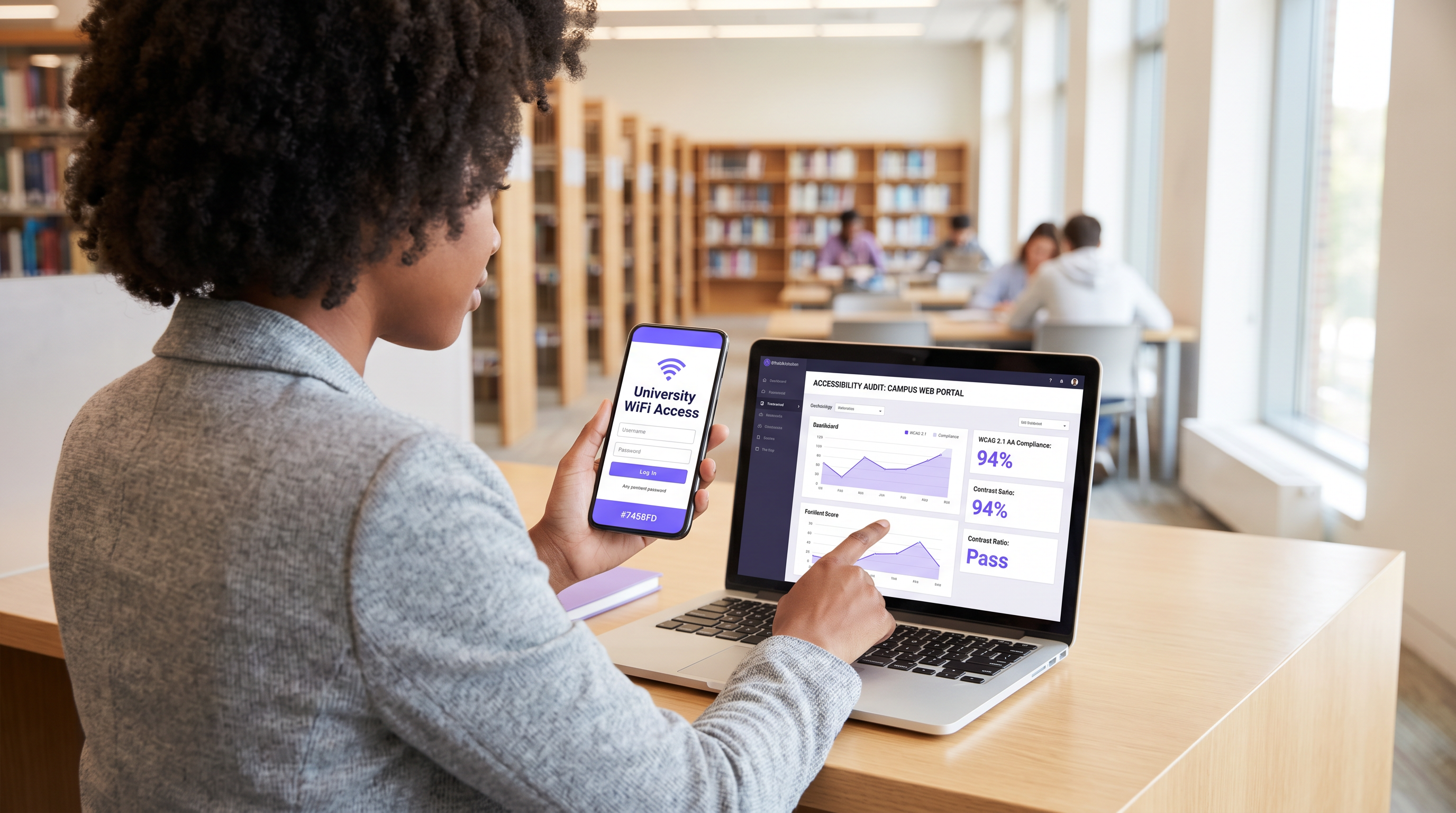
এক্সিকিউটিভ সারাংশ
এন্টারপ্রাইজ IT নেতা এবং ভেন্যু অপারেশনস ডিরেক্টরদের জন্য, Captive Portal অভিগম্যতা আর ঐচ্ছিক উন্নতি নয়—এটি একটি কঠোর আইনি বাধ্যবাধকতা। UK পাবলিক সেক্টর বডিস অ্যাক্সেসিবিলিটি রেগুলেশনস এবং ADA Title II-এর অধীনে US ডিপার্টমেন্ট অফ জাস্টিসের 2024 সালের চূড়ান্ত নিয়ম অনুযায়ী, WiFi স্প্ল্যাশ পেজ সহ সমস্ত পাবলিক-ফেসিং ডিজিটাল পরিষেবাগুলিকে Web Content Accessibility Guidelines (WCAG) 2.1 Level AA মেনে চলতে হবে। সম্মতি পালনে ব্যর্থতা সংস্থাগুলিকে আইনি ঝুঁকি, সুনামহানি এবং অতিথিদের বিচ্ছিন্নতার সম্মুখীন করে।
তা সত্ত্বেও, আধুনিক IT এস্টেটগুলিতে Captive Portalগুলি সবচেয়ে বেশি উপেক্ষা করা সম্মতি টাচপয়েন্টগুলির মধ্যে একটি। যেহেতু এগুলি নেটওয়ার্ক ইঞ্জিনিয়ারিং এবং ওয়েব ডেভেলপমেন্টের সংযোগস্থলে অবস্থিত, তাই এগুলি প্রায়শই স্ট্যান্ডার্ড অভিগম্যতা অডিট এড়িয়ে যায়। এই প্রযুক্তিগত রেফারেন্স গাইডটি WCAG 2.1 AA মান পূরণের জন্য Captive Portal ডিজাইন, পরীক্ষা এবং প্রতিকার করার বিষয়ে কার্যকর, বিক্রেতা-নিরপেক্ষ নির্দেশনা প্রদান করে। এই অনুশীলনগুলি বাস্তবায়নের মাধ্যমে, নেটওয়ার্ক আর্কিটেক্টরা নিশ্চিত করতে পারেন যে তাদের Guest WiFi স্থাপনগুলি সমস্ত ব্যবহারকারীর জন্য ন্যায়সঙ্গত অ্যাক্সেস প্রদান করে, একই সাথে Hospitality , Retail এবং পাবলিক-সেক্টর পরিবেশ জুড়ে সম্মতি ঝুঁকি হ্রাস করে।
Captive Portal অভিগম্যতা সম্মতি সংক্রান্ত আমাদের এক্সিকিউটিভ ব্রিফিং শুনুন:
টেকনিক্যাল ডিপ-ডাইভ: Captive Portal-এ WCAG 2.1 AA প্রয়োগ
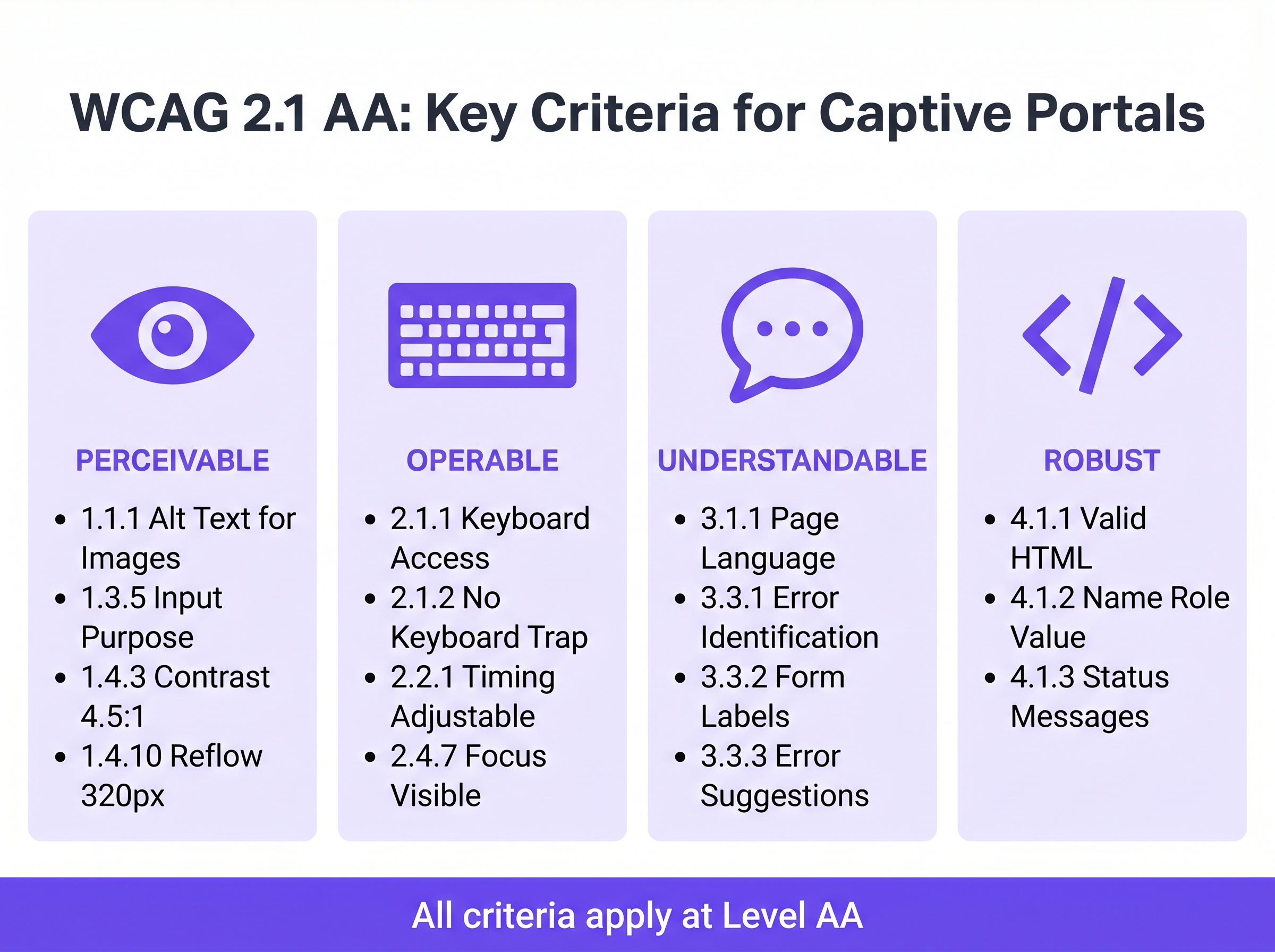
WCAG 2.1 কাঠামোটি চারটি মূল নীতির উপর ভিত্তি করে গঠিত: Perceivable (উপলব্ধিযোগ্য), Operable (পরিচালনাযোগ্য), Understandable (বোঝার যোগ্য), এবং Robust (শক্তিশালী) (POUR)। যদিও স্ট্যান্ডার্ডটিতে Level AA-তে 50টি সাফল্যের মানদণ্ড রয়েছে, একটি Captive Portal—সাধারণত একটি সরলীকৃত প্রমাণীকরণ ফর্ম—কে প্রাথমিকভাবে ফর্ম ইন্টারঅ্যাকশন, কীবোর্ড নেভিগেশন এবং স্ক্রিন রিডার সামঞ্জস্যতাকে প্রভাবিত করে এমন মানদণ্ডগুলি পূরণ করতে হবে।
Perceivable: বৈসাদৃশ্য এবং রিফ্লো
ব্র্যান্ডেড Captive Portalগুলিতে সবচেয়ে সাধারণ অভিগম্যতা ব্যর্থতা হল অপর্যাপ্ত রঙের বৈসাদৃশ্য। সাফল্যের মানদণ্ড 1.4.3 (Contrast Minimum) অনুযায়ী স্ট্যান্ডার্ড টেক্সটের জন্য কমপক্ষে 4.5:1 এবং বড় টেক্সট বা UI উপাদানগুলির জন্য 3:1 এর বৈসাদৃশ্য অনুপাত প্রয়োজন। ভেন্যু অপারেটররা প্রায়শই প্রাথমিক ব্র্যান্ডের রঙগুলি—যেমন সাদা পটভূমিতে হালকা ধূসর টেক্সট—প্রয়োগ করার চেষ্টা করেন, যা অবিলম্বে সম্মতি পরীক্ষায় ব্যর্থ হয়। নেটওয়ার্ক দলগুলিকে স্প্ল্যাশ পেজের জন্য একটি অভিগম্য ডিজিটাল প্যালেট সংজ্ঞায়িত করতে মার্কেটিংয়ের সাথে সহযোগিতা করতে হবে।
উপরন্তু, মানদণ্ড 1.4.10 (Reflow) অনুযায়ী 320 CSS পিক্সেল ভিউপোর্ট প্রস্থে (একটি ডেস্কটপ মনিটরে 400% জুমের সমতুল্য) অনুভূমিক স্ক্রলিং ছাড়াই বিষয়বস্তু উপস্থাপন করতে হবে। অনেক লিগ্যাসি Captive Portal নির্দিষ্ট-প্রস্থের কন্টেইনার ব্যবহার করে যা ম্যাগনিফিকেশনের অধীনে সম্পূর্ণরূপে ভেঙে যায়, কার্যকরভাবে কম দৃষ্টিসম্পন্ন ব্যবহারকারীদের আটকে রাখে। আধুনিক রেসপনসিভ ডিজাইন একটি মৌলিক প্রয়োজনীয়তা।
Operable: কীবোর্ড নেভিগেশন এবং সেশন টাইমিং
মোটর প্রতিবন্ধকতাযুক্ত ব্যবহারকারীদের জন্য যারা মাউসের পরিবর্তে সহায়ক প্রযুক্তির উপর নির্ভর করেন, কীবোর্ড অভিগম্যতা অত্যন্ত গুরুত্বপূর্ণ। মানদণ্ড 2.1.1 (Keyboard) নির্দেশ করে যে পোর্টালে প্রতিটি ইন্টারেক্টিভ উপাদান—ইনপুট ফিল্ড, সাবমিট বাটন এবং টার্মস অফ সার্ভিস চেকবক্স—শুধুমাত্র Tab, Enter, Space এবং অ্যারো কী ব্যবহার করে পৌঁছানো এবং পরিচালনা করা সম্ভব হতে হবে। একটি সাধারণ স্থাপত্যগত ত্রুটি ঘটে যখন কাস্টম-স্টাইল্ড চেকবক্সগুলি নেটিভ HTML <input type="checkbox"> উপাদানগুলির পরিবর্তে <div> উপাদান হিসাবে প্রয়োগ করা হয়, যা কীবোর্ড নেভিগেশনের কাছে সেগুলিকে অদৃশ্য করে তোলে।
সেশন ম্যানেজমেন্টও অভিগম্যতা চ্যালেঞ্জ তৈরি করে। মানদণ্ড 2.2.1 (Timing Adjustable) সরাসরি নেটওয়ার্ক কন্ট্রোলারে কনফিগার করা প্রমাণীকরণ টাইমআউট উইন্ডোগুলির ক্ষেত্রে প্রযোজ্য। যদি একটি Captive Portal নিবন্ধনের জন্য একটি কঠোর সময়সীমা আরোপ করে, তবে যারা স্ক্রিন রিডার বা সুইচ কন্ট্রোল ব্যবহার করে ধীরে ধীরে নেভিগেট করেন, তারা অসামঞ্জস্যপূর্ণভাবে টাইম আউট হবেন। টাইমআউট হওয়ার আগে পোর্টালটিকে ব্যবহারকারীকে সতর্ক করতে হবে এবং সেশন বাড়ানোর একটি প্রক্রিয়া প্রদান করতে হবে।
Understandable: ফর্ম লেবেল এবং ত্রুটি হ্যান্ডলিং
ফর্ম অভিগম্যতা একটি সম্মতিপূর্ণ Captive Portal-এর মূল ভিত্তি। মানদণ্ড 3.3.2 (Labels or Instructions) সমস্ত ইনপুট ফিল্ডের জন্য দৃশ্যমান, স্থায়ী লেবেল প্রয়োজন। আধুনিক UI ডিজাইনে একটি ব্যাপক অ্যান্টি-প্যাটার্ন হল স্থায়ী লেবেলের বিকল্প হিসাবে প্লেসহোল্ডার টেক্সটের ব্যবহার। প্লেসহোল্ডার টেক্সট ইনপুটের সাথে সাথে অদৃশ্য হয়ে যায়, যা জ্ঞানীয় প্রতিবন্ধকতাযুক্ত ব্যবহারকারীদের প্রসঙ্গ ছাড়াই ছেড়ে দেয় এবং প্রায়শই বৈসাদৃশ্য প্রয়োজনীয়তা পূরণে ব্যর্থ হয়।
যখন প্রমাণীকরণ ব্যর্থ হয়—হয়তো একটি অবৈধ ইমেল ফরম্যাট বা একটি অননুমোদিত MAC অ্যাড্রেসের কারণে—ত্রুটিটি স্পষ্টভাবে চিহ্নিত এবং টেক্সটে বর্ণনা করা আবশ্যক (মানদণ্ড 3.3.1)। শুধুমাত্র একটি লাল বর্ডারের উপর নির্ভর করে ত্রুটির অবস্থা নির্দেশ করা রঙ নির্ভরতা নিয়ম এবং ত্রুটি সনাক্তকরণ উভয় প্রয়োজনীয়তা লঙ্ঘন করে। ত্রুটির টেক্সটটিকে aria-describedby অ্যাট্রিবিউট ব্যবহার করে প্রোগ্রাম্যাটিকভাবে সংশ্লিষ্ট ফিল্ডের সাথে যুক্ত করতে হবে।
Robust: স্ক্রিন রিডার সামঞ্জস্যতা
মানদণ্ড 4.1.2 (Name, Role, Value) হল সহায়ক প্রযুক্তি সমর্থনের ভিত্তি। প্রতিটি ইন্টারেক্টিভ উপাদানের একটি অভিগম্য নাম এবং প্রোগ্রাম্যাটিক ভূমিকা থাকতে হবে। যখন NVDA বা VoiceOver ব্যবহারকারী একটি "Connect" বাটনের সম্মুখীন হন, তখন অন্তর্নিহিত HTML-কে এটিকে স্পষ্টভাবে একটি বাটন হিসাবে চিহ্নিত করতে হবে এবং এর উদ্দেশ্য ঘোষণা করতে হবে। যদি পোর্টালটি অভিগম্য টেক্সট লেবেল ছাড়াই শুধুমাত্র আইকন-ভিত্তিক সোশ্যাল লগইন বাটনগুলির (যেমন, একটি Google বা Facebook লোগো) উপর নির্ভর করে, তবে স্ক্রিন রিডারগুলি কেবল "button" বা "link" ঘোষণা করবে, যা ব্যবহারকারীকে কোনো প্রসঙ্গ প্রদান করবে না।
বাস্তবায়ন নির্দেশিকা: অভিগম্য পোর্টাল তৈরি
একটি অভিগম্য Captive Portal স্থাপন করতে পূর্ববর্তী সংশোধন থেকে সক্রিয় ডিজাইনের দিকে পরিবর্তন প্রয়োজন। থনিম্নলিখিত স্থাপন পর্যায়গুলি নেটওয়ার্ক এস্টেট জুড়ে সম্মতি নিশ্চিত করে।
পর্যায় 1: সিমান্টিক HTML আর্কিটেকচার
সবচেয়ে কার্যকর অ্যাক্সেসিবিলিটি কৌশল হল জটিল ARIA (Accessible Rich Internet Applications) ওভারলেগুলির পরিবর্তে নেটিভ, সিমান্টিক HTML-এর উপর নির্ভর করা। <form>, <fieldset>, <legend>, <label>, এবং <input> উপাদানগুলি স্পেসিফিকেশন অনুযায়ী ব্যবহার করুন। নেটিভ উপাদানগুলি ডিফল্টরূপে কীবোর্ড কার্যকারিতা এবং স্ক্রিন রিডার সমর্থন উত্তরাধিকার সূত্রে পায়।
উদাহরণস্বরূপ, যখন মার্কেটিং সম্মতি চাওয়া হয়— Event-Driven Marketing Automation Triggered by WiFi Presence -এর জন্য একটি গুরুত্বপূর্ণ পদক্ষেপ—চেকবক্সটিকে for এবং id অ্যাট্রিবিউট ব্যবহার করে তার লেবেলের সাথে স্পষ্টভাবে লিঙ্ক করতে হবে। এটি শুধুমাত্র স্ক্রিন রিডার ঘোষণা নিশ্চিত করে না বরং ক্লিকযোগ্য হিট এরিয়াও বাড়ায়, যা মোটর নিয়ন্ত্রণ সমস্যাযুক্ত ব্যবহারকারীদের জন্য উপকারী।
পর্যায় 2: ফোকাস ম্যানেজমেন্ট এবং মোডাল
Captive portals প্রায়শই ব্যাপক শর্তাবলী বা গ্রহণযোগ্য ব্যবহারের নীতিগুলি প্রদর্শনের জন্য মোডাল ডায়ালগ ব্যবহার করে। অ্যাক্সেসিবিলিটির দৃষ্টিকোণ থেকে, মোডালগুলি উচ্চ-ঝুঁকিপূর্ণ উপাদান। যখন একটি মোডাল খোলে, তখন কীবোর্ড ফোকাস প্রোগ্রাম্যাটিকভাবে মোডালের মধ্যে স্থানান্তরিত করতে হবে এবং ব্যবহারকারী স্পষ্টভাবে এটি বন্ধ না করা পর্যন্ত ফোকাস এর মধ্যে আটকে রাখতে হবে (Criterion 2.1.2: No Keyboard Trap)। যদি ফোকাস মোডাল থেকে বেরিয়ে আসে এবং অস্পষ্ট ব্যাকগ্রাউন্ড পৃষ্ঠায় ফিরে আসে, তাহলে স্ক্রিন রিডার ব্যবহারকারীরা সম্পূর্ণরূপে বিভ্রান্ত হয়ে পড়েন।
পর্যায় 3: ডাইনামিক স্টেট ঘোষণা
আধুনিক স্প্ল্যাশ পৃষ্ঠাগুলি প্রায়শই সম্পূর্ণ পৃষ্ঠা পুনরায় লোড করার পরিবর্তে API-এর মাধ্যমে অ্যাসিঙ্ক্রোনাসভাবে প্রমাণীকরণ প্রক্রিয়া করে। যদিও এটি সাধারণ ব্যবহারকারীর অভিজ্ঞতা উন্নত করে, তবে স্থিতির পরিবর্তনগুলি ঘোষণা না করা হলে এটি অ্যাক্সেসিবিলিটির ফাঁক তৈরি করে। ARIA লাইভ অঞ্চলগুলি (aria-live="polite" স্থিতির আপডেটের জন্য, aria-live="assertive" গুরুতর ত্রুটির জন্য) ব্যবহার করুন যাতে স্ক্রিন রিডারগুলি গতিশীল পরিবর্তনগুলি ঘোষণা করে, যেমন "নেটওয়ার্কের সাথে সংযোগ করা হচ্ছে..." বা "প্রমাণীকরণ ব্যর্থ হয়েছে। আপনার বিবরণ পরীক্ষা করুন।"
সর্বোত্তম অনুশীলন এবং পরীক্ষা পদ্ধতি
Captive portal অ্যাক্সেসিবিলিটি যাচাই করার জন্য একটি হাইব্রিড পদ্ধতির প্রয়োজন। স্বয়ংক্রিয় স্ক্যানিং সরঞ্জামগুলি দ্রুত বেসলাইন চেক সরবরাহ করে, তবে প্রকৃত কার্যকারিতা নিশ্চিত করার জন্য ম্যানুয়াল পরীক্ষা বাধ্যতামূলক।
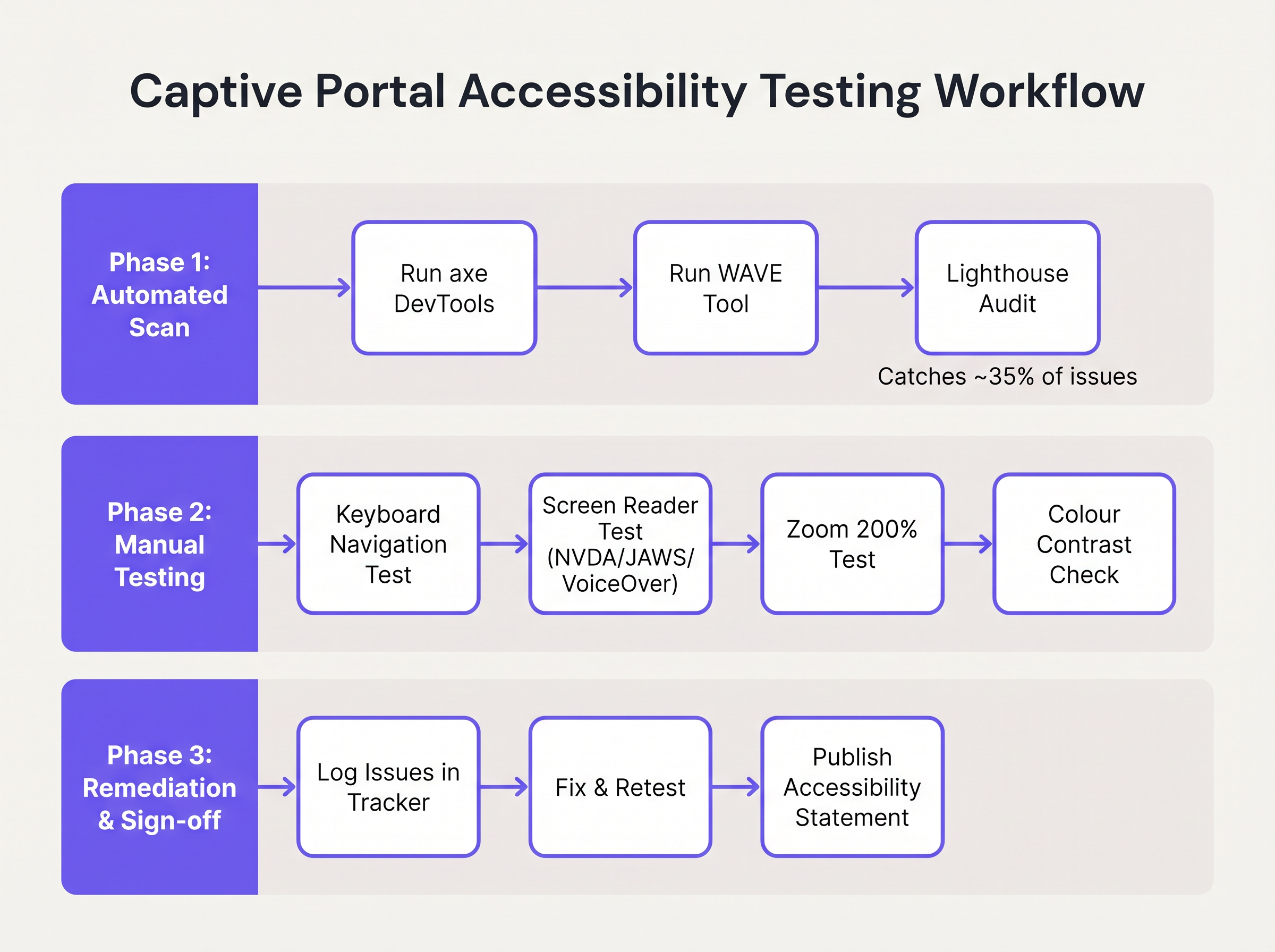
- স্বয়ংক্রিয় স্ক্যানিং: axe DevTools বা WAVE-এর মতো সরঞ্জামগুলি পোর্টাল ডেভেলপমেন্ট পাইপলাইনে একত্রিত করুন। এই সরঞ্জামগুলি দ্রুত কাঠামোগত সমস্যাগুলি সনাক্ত করে যেমন অনুপস্থিত
altটেক্সট, অনুপস্থিত লেবেল এবং গুরুতর কনট্রাস্ট লঙ্ঘন। তবে, স্বয়ংক্রিয় সরঞ্জামগুলি সাধারণত WCAG ব্যর্থতার মাত্র 30-40% ধরতে পারে। - কীবোর্ড নেভিগেশন অডিট: নেটওয়ার্ক ইঞ্জিনিয়ারদের নিয়মিতভাবে মাউস সংযোগ বিচ্ছিন্ন করে এবং শুধুমাত্র কীবোর্ডের মাধ্যমে নেভিগেট করে লাইভ পোর্টাল পরীক্ষা করতে হবে। যাচাই করুন যে ফোকাস ইন্ডিকেটর (সক্রিয় উপাদানকে হাইলাইট করা আউটলাইন) অত্যন্ত দৃশ্যমান এবং ট্যাব অর্ডার একটি যৌক্তিক, অনুমানযোগ্য ক্রম অনুসরণ করে।
- স্ক্রিন রিডার যাচাইকরণ: নেটিভ স্ক্রিন রিডার ব্যবহার করে পোর্টালটি পরীক্ষা করুন: iOS-এ VoiceOver (গুরুত্বপূর্ণ, কারণ মোবাইল ডিভাইসগুলি Captive portal প্রমাণীকরণের সিংহভাগ প্রতিনিধিত্ব করে), Android-এ TalkBack, এবং Windows ডেস্কটপে NVDA বা JAWS। যাচাই করুন যে সমস্ত ফর্ম ক্ষেত্র, ত্রুটি এবং স্থিতির পরিবর্তনগুলি সঠিকভাবে ঘোষণা করা হয়েছে।
- বিক্রেতার জবাবদিহিতা: যখন পরিচালিত WiFi পরিষেবা বা পোর্টাল প্ল্যাটফর্ম সংগ্রহ করা হয়, তখন বিক্রেতার কাছ থেকে একটি Voluntary Product Accessibility Template (VPAT) বা একটি স্বাধীন WCAG 2.1 AA কনফরমেন্স রিপোর্ট দাবি করুন। Purple-এর পোর্টাল বিল্ডার মৌলিক অ্যাক্সেসিবিলিটি বৈশিষ্ট্যগুলি অন্তর্ভুক্ত করে, যা Guest WiFi স্থাপনার জন্য সম্মতিকে সুগম করে।
সমস্যা সমাধান এবং ঝুঁকি প্রশমন
যখন অ্যাক্সেসিবিলিটি অডিট ব্যর্থ হয়, তখন মূল কারণগুলি সাধারণত Captive portal আর্কিটেকচারের তিনটি নির্দিষ্ট ক্ষেত্রে পাওয়া যায়।
কাস্টম UI ফাঁদ
ডেভেলপাররা প্রায়শই নেটিভ HTML ফর্ম উপাদানগুলিকে কাস্টম <div> এবং <span> কনস্ট্রাক্ট দিয়ে প্রতিস্থাপন করে যা CSS দিয়ে স্টাইল করা হয় সুনির্দিষ্ট ব্র্যান্ড নির্দেশিকাগুলির সাথে মেলে। যদিও দৃশ্যত আকর্ষণীয়, এই কাস্টম উপাদানগুলি সমস্ত নেটিভ অ্যাক্সেসিবিলিটি সিমান্টিকস সরিয়ে দেয়।
প্রশমন: সর্বদা নেটিভ HTML উপাদানগুলির উপর ভিত্তি করে তৈরি করুন। যদি কাস্টম স্টাইলিং বাধ্যতামূলক হয়, তবে সেগুলিকে প্রতিস্থাপন না করে নেটিভ উপাদানগুলিতে CSS প্রয়োগ করুন। যদি একটি কাস্টম উপাদান ব্যবহার করতেই হয়, তবে ডেভেলপারদের ARIA রোল, স্টেট এবং কীবোর্ড ইভেন্ট লিসেনার ব্যবহার করে অ্যাক্সেসিবিলিটি স্ট্যাক ম্যানুয়ালি পুনরায় তৈরি করতে হবে—যা একটি জটিল এবং ত্রুটি-প্রবণ প্রক্রিয়া।
CAPTCHA বাধা
ঐতিহ্যবাহী ভিজ্যুয়াল CAPTCHA (ব্যবহারকারীদের বিকৃত টেক্সট সনাক্ত করতে বা ট্র্যাফিক লাইটের ছবি নির্বাচন করতে বলা হয়) গুরুতর দৃষ্টি প্রতিবন্ধকতাযুক্ত ব্যবহারকারীদের জন্য মৌলিকভাবে অ্যাক্সেসযোগ্য নয়।
প্রশমন: আধুনিক, অদৃশ্য CAPTCHA সমাধানগুলি (যেমন reCAPTCHA v3 বা Cloudflare Turnstile) প্রয়োগ করুন যা ব্যবহারকারীর মিথস্ক্রিয়ার পরিবর্তে আচরণগত টেলিমেট্রির উপর ভিত্তি করে ঝুঁকি মূল্যায়ন করে। যদি একটি চ্যালেঞ্জ এড়ানো না যায়, তবে একটি অ্যাক্সেসযোগ্য অডিও বিকল্প সরবরাহ করতে হবে।
স্বয়ংক্রিয় পুনঃনির্দেশ বিভ্রান্তি
সফল প্রমাণীকরণের পর, Captive portals সাধারণত ব্যবহারকারীর ব্রাউজারকে একটি নির্দিষ্ট ল্যান্ডিং পৃষ্ঠা বা মূলত অনুরোধ করা URL-এ পুনঃনির্দেশ করে। স্ক্রিন রিডার ব্যবহারকারীদের জন্য, হঠাৎ, অনাকাঙ্ক্ষিত প্রসঙ্গ পরিবর্তন অত্যন্ত বিভ্রান্তিকর।
প্রশমন: পুনঃনির্দেশ কার্যকর করার আগে একটি স্পষ্ট, মধ্যবর্তী স্থিতির বার্তা ("প্রমাণীকরণ সফল হয়েছে। আপনাকে এখন ইন্টারনেটে পুনঃনির্দেশ করা হচ্ছে।") প্রদান করুন। নিশ্চিত করুন যে লক্ষ্য ল্যান্ডিং পৃষ্ঠাটিও সম্পূর্ণরূপে অ্যাক্সেসযোগ্য।
ROI এবং ব্যবসায়িক প্রভাব
Captive portal অ্যাক্সেসিবিলিটিতে বিনিয়োগ শুধুমাত্র ঝুঁকি এড়ানোর বাইরেও পরিমাপযোগ্য রিটার্ন প্রদান করে। পাবলিক-সেক্টর সত্তা, শিক্ষা প্রতিষ্ঠান এবং স্বাস্থ্যসেবা প্রদানকারীদের জন্য, WCAG 2.1 AA সম্মতি একটি কঠোর আইনি আদেশ; সম্মতি পালনে ব্যর্থতা আনুষ্ঠানিক তদন্ত, আর্থিক জরিমানা এবং জনসম্পর্ক সংকট ডেকে আনে।
তবে, Retail এবং Transport -এর মতো বাণিজ্যিক ক্ষেত্রগুলিতে, অ্যাক্সেসিবিলিটি সরাসরি নীচের লাইনকে প্রভাবিত করে। একটি Captive portal গ্রাহক অধিগ্রহণের একটি প্রাথমিক চ্যানেল।ata. যদি বিশ্ব জনসংখ্যার ১৫% কোনো না কোনো ধরনের অক্ষমতার সম্মুখীন হন, একটি অগম্য পোর্টাল সক্রিয়ভাবে একটি উল্লেখযোগ্য জনসংখ্যাকে আনুগত্য কর্মসূচিতে যোগদান বা বিপণন যোগাযোগে অপ্ট-ইন করা থেকে বিরত রাখে।
একটি অ্যাক্সেসযোগ্য পোর্টাল স্থাপন করে, ভেন্যু অপারেটররা প্রমাণীকরণ সাফল্যের হার সর্বাধিক করে, তাদের লক্ষ্যযোগ্য বিপণন শ্রোতাদের প্রসারিত করে, এবং অন্তর্ভুক্তিমূলক ডিজিটাল অভিজ্ঞতার প্রতি একটি বাস্তব প্রতিশ্রুতি প্রদর্শন করে। এই অনুবর্তী পোর্টালগুলিকে বৃহত্তর বিপণন কৌশলগুলির সাথে একীভূত করা—যেমন Mailchimp Plus Purple: WiFi সাইন-আপ থেকে স্বয়ংক্রিয় ইমেল মার্কেটিং —নিশ্চিত করে যে প্রসারিত ডেটা সংগ্রহ সরাসরি গ্রাহকের জীবনকাল মূল্যের বৃদ্ধিতে রূপান্তরিত হয়।
মূল শব্দ ও সংজ্ঞা
WCAG 2.1 AA
The Web Content Accessibility Guidelines version 2.1, Level AA. The internationally recognised technical standard for digital accessibility, mandated by law in the UK and US for public-sector digital services.
The benchmark standard that network architects must reference when procuring or designing captive portal solutions to ensure legal compliance.
Assistive Technology (AT)
Hardware or software—such as screen readers, screen magnifiers, or alternative keyboards—used by individuals with disabilities to interact with digital interfaces.
Captive portals must be coded to interface correctly with AT; failure to do so prevents authentication and network access.
Screen Reader
Software that translates on-screen text and interface elements into synthesized speech or braille output (e.g., VoiceOver, NVDA, JAWS).
The primary tool used by visually impaired guests to navigate WiFi splash pages, requiring strict adherence to semantic HTML and ARIA standards.
ARIA (Accessible Rich Internet Applications)
A set of HTML attributes that define ways to make web content and web applications more accessible to people with disabilities.
Used by portal developers to bridge accessibility gaps in complex or dynamic UI components when native HTML is insufficient.
Keyboard Trap
An accessibility failure where a user navigating via keyboard can enter a specific component (like a modal dialog) but cannot use the keyboard to exit it.
A critical failure point in captive portals, often occurring when terms and conditions overlays are poorly implemented, permanently blocking the authentication flow.
Focus Indicator
The visual outline (often a ring) that highlights which interactive element currently has keyboard focus.
Essential for sighted keyboard users to track their position on the portal. Often mistakenly removed by designers for aesthetic reasons using `outline: none` in CSS.
Contrast Ratio
The mathematical difference in luminance between a text color and its background color, ranging from 1:1 to 21:1.
WCAG AA requires a minimum ratio of 4.5:1 for standard text. Network teams must verify brand colors against this metric before deploying splash pages.
Semantic HTML
The use of HTML markup to reinforce the semantics, or meaning, of the information in webpages rather than merely to define its presentation.
The fundamental building block of an accessible portal. Using a `<button>` tag for a submit action rather than a styled `<div>` ensures the browser and screen reader understand the element's purpose.
কেস স্টাডিজ
A 400-room hotel is upgrading its guest WiFi infrastructure. The marketing department has provided a portal design featuring light grey placeholder text inside form fields, custom-styled terms and conditions checkboxes built using `<div>` elements, and a session timeout of 60 seconds to prevent lingering unauthenticated connections. How should the network architect remediate this design for WCAG 2.1 AA compliance?
The network architect must mandate three specific remediations before deployment:
- Form Labels: Replace the placeholder text with persistent, visible
<label>elements positioned above each input field. Ensure the text meets the 4.5:1 contrast ratio requirement against the background. - Native Checkboxes: Discard the custom
<div>checkboxes. Implement native<input type="checkbox">elements, styled via CSS if necessary, ensuring they are reachable via the Tab key and toggleable via the Spacebar. - Timeout Management: The 60-second timeout is too aggressive for users relying on assistive technology. The architect should implement a warning modal at 45 seconds, alerting the user to the impending timeout and providing a clear, keyboard-accessible button to extend the session.
A university IT department is deploying a new captive portal across campus. During testing, they discover that when a user enters an invalid student ID format, the input box border turns red, but VoiceOver on iOS does not announce the error, leaving visually impaired students unable to authenticate. How should the development team fix this?
The team must implement programmatic error association and dynamic announcements.
- They must add a descriptive text error message below the input field (e.g., "Error: Student ID must be 8 digits").
- They must assign a unique ID to the error message element.
- They must add the
aria-describedbyattribute to the input field, referencing the error message's ID. - To ensure immediate announcement upon form submission, the error container should utilize an ARIA live region (e.g.,
aria-live="assertive").
দৃশ্যপট বিশ্লেষণ
Q1. Your venue marketing team wants to remove the visible text labels from the captive portal login form and rely entirely on placeholder text inside the input fields to achieve a 'cleaner, minimalist aesthetic'. How should you respond?
💡 ইঙ্গিত:Consider WCAG Criterion 3.3.2 (Labels or Instructions) and the behaviour of placeholder text when a user begins typing.
প্রস্তাবিত পদ্ধতি দেখুন
You must reject this design change. Relying solely on placeholder text violates WCAG 2.1 AA Criterion 3.3.2. Placeholder text disappears as soon as the user begins typing, removing vital context for users with cognitive disabilities. Furthermore, default placeholder text often fails the 4.5:1 minimum contrast ratio requirement. Persistent, visible <label> elements positioned outside the input fields are mandatory for compliance.
Q2. During a manual accessibility audit of your new splash page, you attempt to navigate using only the keyboard. You successfully Tab through the email and name fields, and press Enter to open the 'Terms and Conditions' modal overlay. However, once inside the modal, pressing Tab cycles focus through the background page elements behind the modal, rather than the 'Accept' and 'Decline' buttons within the modal itself. What is this failure called, and how is it resolved?
💡 ইঙ্গিত:Consider how keyboard focus must be managed when dynamic overlays are presented to the user.
প্রস্তাবিত পদ্ধতি দেখুন
This is a failure of focus management, specifically violating the principles related to keyboard operability and focus order. When the modal opens, the development team must programmatically shift focus into the modal container. More importantly, they must implement a 'focus trap' using JavaScript, ensuring that pressing Tab cycles only through the interactive elements within the modal until the user explicitly dismisses it. Once dismissed, focus must be returned to the button that originally opened the modal.
Q3. A local government client requires that their public WiFi portal meets strict WCAG 2.1 AA standards. They have requested a 2-minute session timeout on the authentication page for security reasons. Is this compliant?
💡 ইঙ্গিত:Review WCAG Criterion 2.2.1 (Timing Adjustable) regarding time limits.
প্রস্তাবিত পদ্ধতি দেখুন
A strict 2-minute timeout without warning is not compliant. Under WCAG Criterion 2.2.1 (Timing Adjustable), users must be warned before a time limit expires and given at least 20 seconds to extend the time limit with a simple action (e.g., pressing the Spacebar). Users with motor impairments or those using screen readers may require significantly longer than 2 minutes to read terms and conditions and complete form fields.




