

এন্টারপ্রাইজ অ্যাক্সেস পয়েন্ট নির্বাচন: Cisco, Aruba, Ruckus, UniFi-এর তুলনা
এই প্রামাণিক প্রযুক্তিগত রেফারেন্স গাইড Cisco Meraki, Aruba, Ruckus, এবং UniFi এন্টারপ্রাইজ অ্যাক্সেস পয়েন্টগুলির স্থাপত্য, বৈশিষ্ট্য এবং TCO জুড়ে তুলনা করে। এটি আইটি নেতাদের জটিল পরিবেশে উচ্চ-পারফরম্যান্স WiFi স্থাপনের জন্য কার্যকর, বিক্রেতা-নিরপেক্ষ সুপারিশ প্রদান করে।
🎧 এই গাইডটি শুনুন
ট্রান্সক্রিপ্ট দেখুন
কার্যনির্বাহী সারসংক্ষেপ
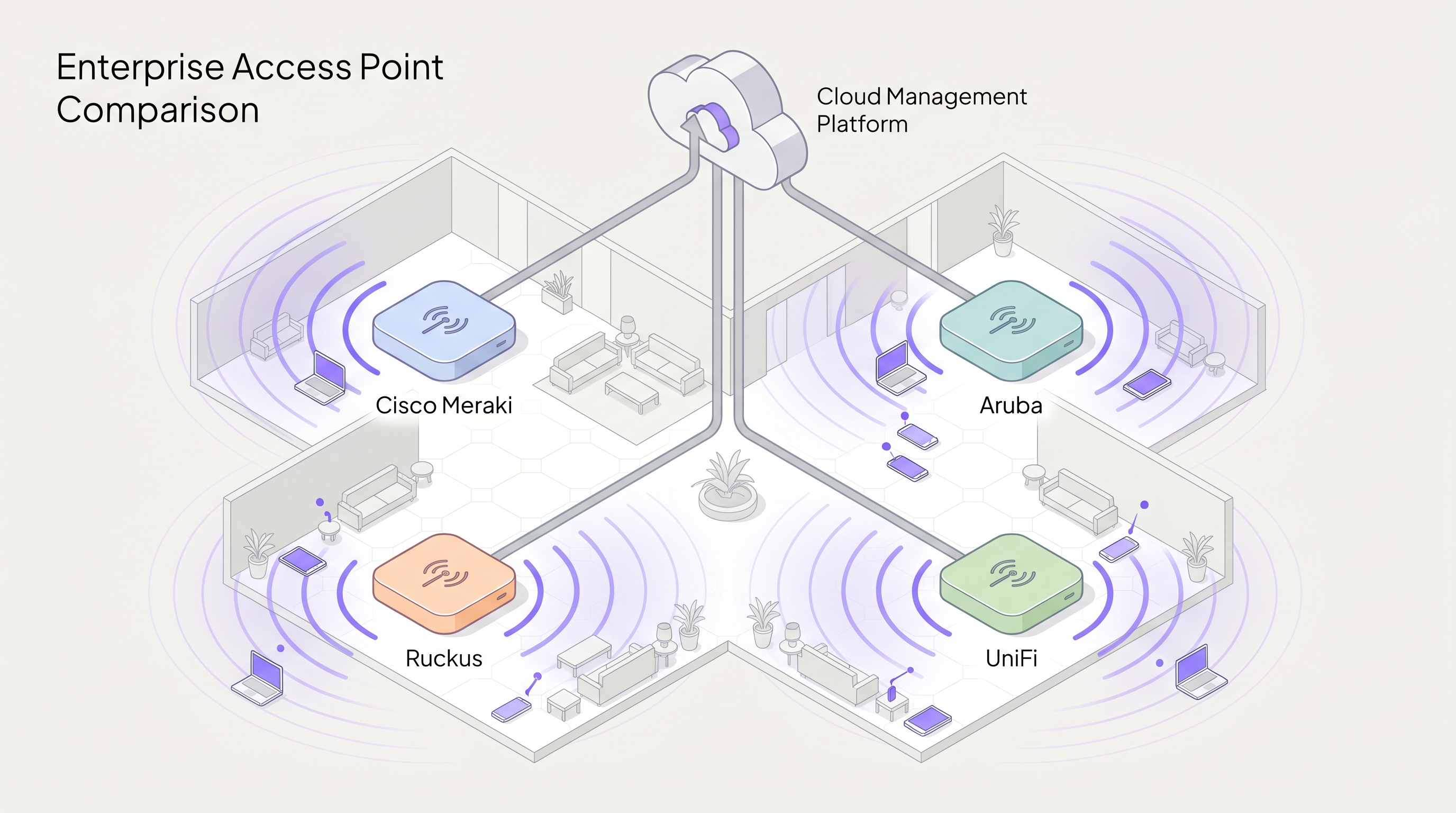
সঠিক এন্টারপ্রাইজ অ্যাক্সেস পয়েন্ট (AP) বিক্রেতা নির্বাচন একটি কৌশলগত সিদ্ধান্ত যা নেটওয়ার্ক কর্মক্ষমতা, অপারেশনাল ওভারহেড এবং দীর্ঘমেয়াদী মূলধন ব্যয় নির্ধারণ করে। এই গাইডটি এন্টারপ্রাইজ WiFi ক্ষেত্রে চারটি প্রভাবশালী খেলোয়াড়: Cisco Meraki, Aruba (HPE), Ruckus (CommScope), এবং UniFi (Ubiquiti)-এর একটি বিক্রেতা-নিরপেক্ষ প্রযুক্তিগত তুলনা প্রদান করে।
আইটি পরিচালক এবং নেটওয়ার্ক স্থপতিদের জন্য, সিদ্ধান্তের ম্যাট্রিক্স কেবল কাঁচা RF কর্মক্ষমতার বাইরেও বিস্তৃত। এটি স্থাপত্য দর্শনকে অন্তর্ভুক্ত করে—বিশেষত, ক্লাউড-নেটিভ, কন্ট্রোলার-ভিত্তিক এবং হাইব্রিড ম্যানেজমেন্ট মডেলগুলির মধ্যে পছন্দ। এছাড়াও, লুকানো লাইসেন্সিং খরচ এবং ভীতিকর "লাইসেন্স ক্লিফ" পাঁচ বছরের জীবনচক্র জুড়ে মালিকানার মোট খরচ (TCO) নাটকীয়ভাবে বাড়িয়ে দিতে পারে।
আপনি 60,000 আসনের স্টেডিয়ামের জন্য উচ্চ-ঘনত্বের কভারেজ স্থাপন করছেন, 200-স্টোরের Retail এস্টেট জুড়ে জিরো-টাচ প্রভিশনিং চালু করছেন, অথবা Healthcare -এ HIPAA-সম্মত সেগমেন্টেশন বাস্তবায়ন করছেন, এই গাইডটি প্রতিটি বিক্রেতার ক্ষমতা, সীমাবদ্ধতা এবং সর্বোত্তম ব্যবহারের ক্ষেত্রগুলি ভেঙে দেখায়। হার্ডওয়্যারের উপরে একটি ইন্টেলিজেন্স স্তর হিসাবে, Purple চারটি প্ল্যাটফর্মের সাথেই নির্বিঘ্নে একত্রিত হয় Guest WiFi প্রমাণীকরণ এবং WiFi Analytics সরবরাহ করতে।
প্রযুক্তিগত গভীর বিশ্লেষণ
স্থাপত্য দর্শন: ক্লাউড বনাম কন্ট্রোলার
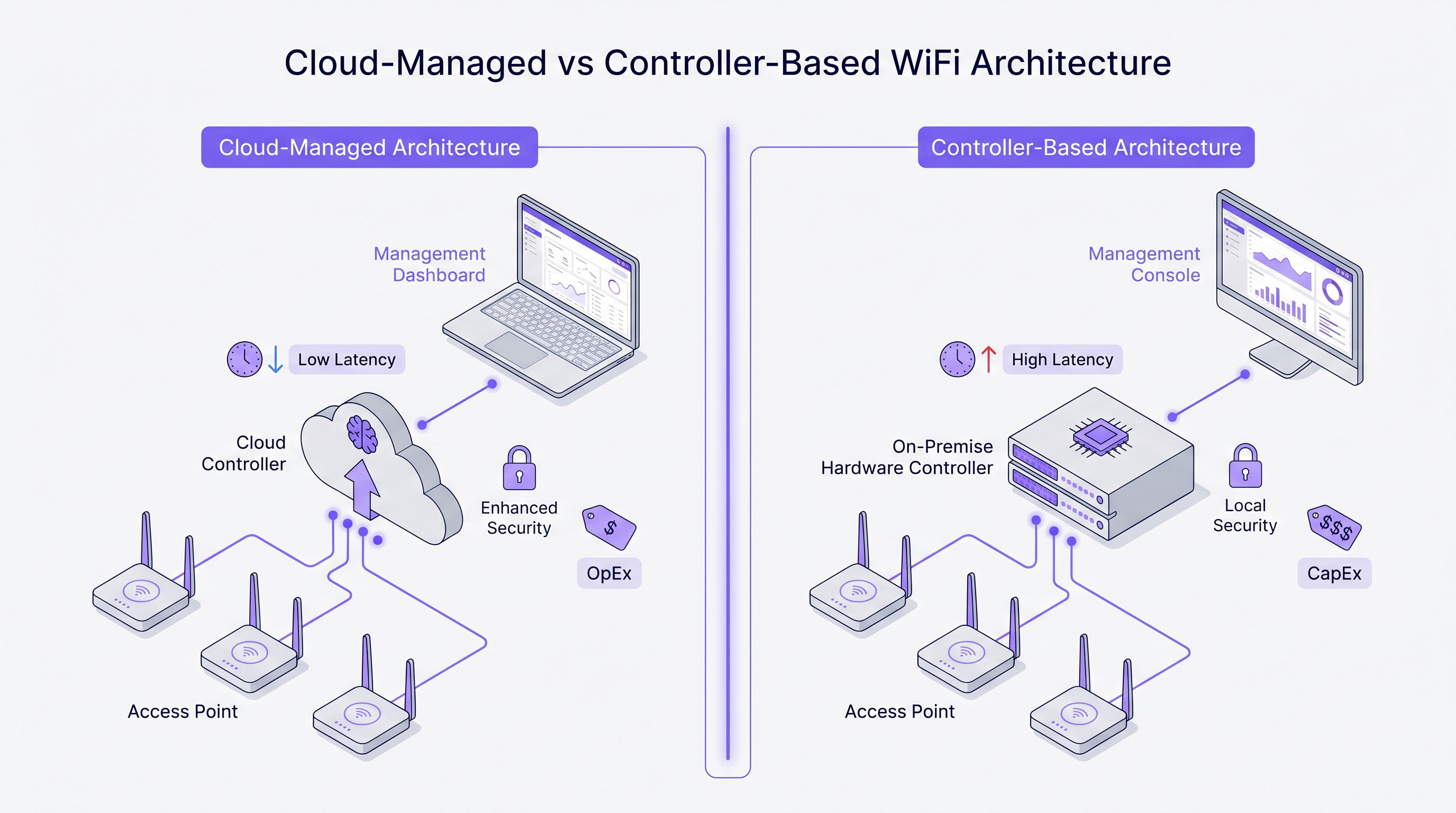
এই বিক্রেতাদের মধ্যে সবচেয়ে মৌলিক পার্থক্য তাদের নেটওয়ার্ক ব্যবস্থাপনা এবং কন্ট্রোল প্লেন ট্রাফিকের স্থাপত্যগত পদ্ধতিতে নিহিত।
Cisco Meraki কঠোরভাবে ক্লাউড-নেটিভ আর্কিটেকচারে কাজ করে। পোর্টফোলিওর প্রতিটি AP শুধুমাত্র Meraki ড্যাশবোর্ডের মাধ্যমে পরিচালিত হয়। কোনো অন-প্রিমিজ কন্ট্রোলার বিকল্প নেই। কনফিগারেশন, ফার্মওয়্যার স্থাপন, ক্লায়েন্ট দৃশ্যমানতা এবং নীতি প্রয়োগ সবই Cisco-এর ক্লাউড অবকাঠামোর মাধ্যমে পরিচালিত হয়। এই মডেলটি বিতরণ করা পরিবেশে চমৎকার কাজ করে যেখানে একটি একক প্যানেল এবং জিরো-টাচ প্রভিশনিং অত্যন্ত গুরুত্বপূর্ণ।
Aruba (HPE) একটি হাইব্রিড পদ্ধতির পক্ষে সমর্থন করে। Aruba APs Aruba Central (ক্লাউড) এর মাধ্যমে পরিচালিত হতে পারে অথবা একটি অন-প্রিমিজ Aruba Mobility Conductor এর সাথে স্থাপন করা যেতে পারে। এই নমনীয়তা জনসেবা এবং স্বাস্থ্যসেবা সংস্থাগুলির জন্য অত্যন্ত গুরুত্বপূর্ণ যাদের কঠোর ডেটা সার্বভৌমত্ব বা এয়ার-গ্যাপড ম্যানেজমেন্ট প্লেন প্রয়োজন। Aruba-এর স্থাপত্য সুইচ পোর্ট এবং AP স্তরে উন্নত ডাইনামিক সেগমেন্টেশন এবং রোল-ভিত্তিক অ্যাক্সেস কন্ট্রোল (RBAC) সমর্থন করে।
Ruckus (CommScope) একইভাবে ক্লাউড (Ruckus One) এবং অন-প্রিমিজ (SmartZone) উভয় ব্যবস্থাপনা সমর্থন করে। Ruckus তার নিজস্ব BeamFlex অ্যাডাপ্টিভ অ্যান্টেনা প্রযুক্তির মাধ্যমে হার্ডওয়্যার স্তরে নিজেকে আলাদা করে। সর্বমুখী সম্প্রচারের পরিবর্তে, BeamFlex গতিশীলভাবে হাজার হাজার অ্যান্টেনা প্যাটার্ন থেকে নির্বাচন করে RF শক্তিকে ক্লায়েন্টের দিকে এবং হস্তক্ষেপ থেকে দূরে সরিয়ে দেয়, যা এটিকে চ্যালেঞ্জিং RF পরিবেশে ব্যতিক্রমীভাবে স্থিতিস্থাপক করে তোলে।
UniFi (Ubiquiti) চলমান লাইসেন্সিং ফি থেকে ম্যানেজমেন্ট সফটওয়্যারকে বিচ্ছিন্ন করে ঐতিহ্যবাহী এন্টারপ্রাইজ মডেলকে ব্যাহত করে। UniFi Network Controller স্ব-হোস্ট করা যেতে পারে, একটি ডেডিকেটেড হার্ডওয়্যার অ্যাপ্লায়েন্স (Cloud Key) এ চালানো যেতে পারে, অথবা ক্লাউডে হোস্ট করা যেতে পারে। যদিও হার্ডওয়্যারটি অত্যন্ত সাশ্রয়ী, প্ল্যাটফর্মটিতে অন্যান্য তিনটি বিক্রেতার মধ্যে পাওয়া দানাদার Quality of Service (QoS), ক্যারিয়ার-গ্রেড রিডানডেন্সি এবং উন্নত RF সমস্যা সমাধানের সরঞ্জামগুলির অভাব রয়েছে।
Wi-Fi 6E এবং 6 GHz স্পেকট্রাম
চারটি বিক্রেতাই তাদের এন্টারপ্রাইজ পোর্টফোলিওতে Wi-Fi 6 (802.11ax) এবং Wi-Fi 6E একত্রিত করেছে। Wi-Fi 6E উচ্চ-ঘনত্বের স্থাপনার জন্য একটি গুরুত্বপূর্ণ সন্ধিক্ষণ, যা 6 GHz ব্যান্ডে 1,200 MHz পর্যন্ত বিশুদ্ধ স্পেকট্রাম উন্মুক্ত করে। এটি চ্যানেল প্রতিযোগিতা এবং কো-চ্যানেল হস্তক্ষেপ দূর করে যা সম্মেলন কেন্দ্র এবং Hospitality ভেন্যুগুলির মতো পরিবেশে 2.4 GHz এবং 5 GHz ব্যান্ডগুলিকে জর্জরিত করে।
Orthogonal Frequency Division Multiple Access (OFDMA)-এর মতো প্রযুক্তিগুলি একটি একক AP কে সাব-চ্যানেলে একাধিক ক্লায়েন্টকে একই সাথে পরিষেবা দিতে দেয়, যা ল্যাটেন্সি নাটকীয়ভাবে হ্রাস করে। প্রতি AP তে 50 টিরও বেশি সমসাময়িক ক্লায়েন্ট প্রত্যাশিত যেকোনো নতুন স্থাপনার জন্য, Wi-Fi 6E হার্ডওয়্যারটি বেসলাইন স্পেসিফিকেশন হওয়া উচিত।
বাস্তবায়ন নির্দেশিকা
1. RF সাইট সার্ভে এবং ক্ষমতা পরিকল্পনা
শুধুমাত্র একটি ফ্লোর প্ল্যানের উপর ভিত্তি করে AP স্থাপন করা কভারেজ ফাঁক এবং রোমিং ব্যর্থতার একটি নিশ্চিত পথ। Ekahau বা iBwave-এর মতো সরঞ্জাম ব্যবহার করে একটি পেশাদার RF সাইট সার্ভে বাধ্যতামূলক। সার্ভেতে বিল্ডিং উপকরণ (যেমন, হোটেলের কংক্রিটের দেয়াল, গুদামের ধাতব র্যাকিং) থেকে অ্যাটেনুয়েশন এবং মডেল ক্ষমতা প্রয়োজনীয়তাগুলি বিবেচনা করতে হবে, কেবল কভারেজ নয়।
2. নেটওয়ার্ক সেগমেন্টেশন এবং নিরাপত্তা
পেমেন্ট প্রক্রিয়াকরণ বা সংবেদনশীল ডেটা হ্যান্ডলিং পরিবেশের জন্য, কঠোর লেয়ার 2 সেগমেন্টেশন প্রয়োজন। ফায়ারওয়াল নিয়মের মাধ্যমে কর্পোরেট নেটওয়ার্ক থেকে বিচ্ছিন্ন করে অতিথি ট্রাফিকের জন্য একটি ডেডিকেটেড VLAN তৈরি করুন। শুধুমাত্র SSID বিভাজনের উপর নির্ভর করা PCI DSS সম্মতির জন্য যথেষ্ট নয়। কর্পোরেট প্রমাণীকরণের জন্য IEEE 802.1X এবং অতিথি অ্যাক্সেসের জন্য একটি captive portal বাস্তবায়ন শক্তিশালী নিরাপত্তা নিশ্চিত করে। স্বাস্থ্যসেবা স্থাপনার জন্য, HIPAA-Compliant Guest WiFi for Healthcare Providers সম্পর্কিত আমাদের নির্দেশিকা দেখুন।
3. রোমিং অপ্টিমাইজেশন
যেসব পরিবেশে ক্লায়েন্টরা অত্যন্ত মোবাইল, সেখানে নির্বিঘ্ন রোমিং অত্যন্ত গুরুত্বপূর্ণ। সমস্ত প্রাসঙ্গিক SSIDs-এ 802.11r (Fast BSS Transition) এবং 802.11k (Radio Resource Measurement) সক্ষম করুন। Meraki এগুলি ডিফল্টরূপে সক্ষম করে, যেখানে Aruba এবং Ruckus-এর জন্য সুস্পষ্ট কনফিগারেশন প্রয়োজন। স্টিকি ক্লায়েন্ট সমস্যা প্রতিরোধ করতে ক্লায়েন্ট ডিভাইসগুলি এই প্রোটোকলগুলিকে সমর্থন করে তা নিশ্চিত করুন।
সেরা অনুশীলন
- 5-বছরের TCO মডেল করুন: হার্ডওয়্যারের খরচ মোট ব্যয়ের একটি অংশ মাত্র। Meraki-এর মতো বিক্রেতাদের জন্য, বাধ্যতামূলক বার্ষিক লাইসেন্সিং 5-বছরের TCO-এর বেশিরভাগ অংশ গঠন করে। হার্ডওয়্যার, লাইসেন্সিং, সাপোর্ট চুক্তি এবং বাস্তবায়ন পরিষেবাগুলি পুঙ্খানুপুঙ্খভাবে গণনা করুন।
- লাইসেন্স ক্লিফ এড়িয়ে চলুন: সাবস্ক্রিপশন-ভিত্তিক মডেলগুলির জন্য, আপনার লাইসেন্সগুলি সহ-মেয়াদী করুন। অসম নবায়নের তারিখ সহ একটি এস্টেট উত্তরাধিকারসূত্রে পাওয়া অপারেশনাল ঝুঁকি এবং প্রশাসনিক ওভারহেড তৈরি করে। একটি একক নবায়নের তারিখে একত্রিত করুন।
- উচ্চ ঘনত্বের জন্য ডিজাইন করুন: স্টেডিয়াম বা লেকচার থিয়েটারে, লক্ষ্য হল RF সেল আকার নিয়ন্ত্রণ করা। নির্দিষ্ট বসার এলাকায় কভারেজ সীমিত করতে ডিরেকশনাল অ্যান্টেনা ব্যবহার করুন (অথবা Ruckus BeamFlex ব্যবহার করুন), যা কো-চ্যানেল হস্তক্ষেপ কমায়।
- একটি ইন্টেলিজেন্স ওভারলে ব্যবহার করুন: হার্ডওয়্যার বিক্রেতা নির্বিশেষে, আপনার অ্যানালিটিক্স এবং মার্কেটিং স্তরকে পরিকাঠামো থেকে বিচ্ছিন্ন করুন। Purple-এর মতো প্ল্যাটফর্মগুলি Cisco, Aruba, Ruckus, এবং UniFi-এর সাথে স্থানীয়ভাবে একত্রিত হয়, যা নিশ্চিত করে যে আপনি ভবিষ্যতে হার্ডওয়্যার বিক্রেতা পরিবর্তন করলেও আপনার WiFi Analytics সামঞ্জস্যপূর্ণ থাকবে।
সমস্যা সমাধান ও ঝুঁকি প্রশমন
"স্টিকি ক্লায়েন্ট" সমস্যা
দুর্বল সিগন্যালযুক্ত একটি AP-তে ক্লায়েন্টদের লেগে থাকা এবং কাছাকাছি AP-তে রোম না করা একটি সাধারণ সমস্যা। প্রশমনের মধ্যে রয়েছে ন্যূনতম বেসিক রেট টিউন করা (1, 2, 5.5, এবং 11 Mbps-এর মতো লিগ্যাসি 802.11b রেটগুলি নিষ্ক্রিয় করা) এবং ক্লায়েন্টদের আরও ভালো রোমিং সিদ্ধান্ত নিতে সাহায্য করার জন্য 802.11v সক্ষম করা। Aruba-এর ClientMatch প্রযুক্তি পরিকাঠামো স্তরে এটি গতিশীলভাবে পরিচালনা করে।
কো-চ্যানেল ইন্টারফারেন্স (CCI)
ঘন স্থাপনায়, একই চ্যানেলে প্রেরণকারী AP গুলি একে অপরের সাথে হস্তক্ষেপ করে, যা নয়েজ ফ্লোর বাড়ায় এবং থ্রুপুট কমায়। প্রশমনের জন্য সতর্ক চ্যানেল পরিকল্পনা (2.4 GHz-এ ওভারল্যাপিং চ্যানেল এড়ানো) এবং Cisco-এর Auto RF বা Aruba-এর ARM-এর মতো ডায়নামিক রেডিও ম্যানেজমেন্ট বৈশিষ্ট্যগুলি সক্ষম করা প্রয়োজন যাতে ট্রান্সমিট পাওয়ার এবং চ্যানেল অ্যাসাইনমেন্টগুলি স্বয়ংক্রিয়ভাবে সামঞ্জস্য করা যায়।
Meraki হার্ড শাটডাউন
Cisco Meraki-এর সাথে সবচেয়ে উল্লেখযোগ্য অপারেশনাল ঝুঁকি হল কঠোর লাইসেন্সিং প্রয়োগ। যদি একটি সাবস্ক্রিপশন গ্রেস পিরিয়ডের বাইরে চলে যায়, তাহলে AP গুলি সম্পূর্ণরূপে কাজ করা বন্ধ করে দেয়। প্রশমনের জন্য কঠোর সম্পদ ব্যবস্থাপনা এবং নবায়নের জন্য সক্রিয় বাজেট পরিকল্পনা প্রয়োজন।
ROI এবং ব্যবসায়িক প্রভাব
এন্টারপ্রাইজ WiFi-এর জন্য বিনিয়োগের উপর রিটার্ন সাধারণ সংযোগের বাইরেও বিস্তৃত। একটি শক্তিশালী নেটওয়ার্ক খুচরা বিক্রেতার মোবাইল পয়েন্ট-অফ-সেল সিস্টেম থেকে শুরু করে স্বাস্থ্যসেবার ক্লিনিক্যাল যোগাযোগ পর্যন্ত গুরুত্বপূর্ণ ব্যবসায়িক ক্রিয়াকলাপগুলিকে সমর্থন করে। আরও বিস্তারিত জানতে আমাদের Hospital Guest WiFi: Patient Experience and Network Separation গাইডটি দেখুন।
এছাড়াও, একটি Captive Portal এবং অ্যানালিটিক্স প্ল্যাটফর্ম একত্রিত করা নেটওয়ার্ককে একটি ব্যয় কেন্দ্র থেকে একটি রাজস্ব-উৎপাদনকারী সম্পদে রূপান্তরিত করে। প্রথম-পক্ষের অতিথি ডেটা ক্যাপচার করে, ভেন্যুগুলি ব্যক্তিগতকৃত বিপণন প্রচারাভিযান চালাতে, ফুটফল পরিমাপ করতে এবং ক্রিয়াকলাপ অপ্টিমাইজ করতে পারে। ROI সর্বাধিক করার মূল চাবিকাঠি হল আপনার অপারেশনাল ক্ষমতা এবং বাজেটের সাথে সামঞ্জস্যপূর্ণ AP বিক্রেতা নির্বাচন করা, যখন ব্যবসায়িক বুদ্ধিমত্তা নিষ্কাশনের জন্য একটি বিক্রেতা-অজ্ঞেয়বাদী ওভারলে ব্যবহার করা।
মূল শব্দ ও সংজ্ঞা
Zero-Touch Provisioning (ZTP)
The ability to configure network devices automatically by connecting them to the internet, allowing them to download their configuration from a central cloud controller.
Critical for multi-site retail or branch deployments where sending an IT engineer to every site is cost-prohibitive.
BeamFlex
A proprietary adaptive antenna technology developed by Ruckus that dynamically changes antenna patterns to focus RF energy towards the client.
Provides a significant performance advantage in environments with high multi-path interference or extreme client density.
IEEE 802.1X
An IEEE standard for port-based network access control (PNAC), providing an authentication mechanism to devices wishing to attach to a LAN or WLAN.
The enterprise standard for securing corporate devices, requiring integration with a RADIUS server (like Cisco ISE or Aruba ClearPass).
Dynamic Segmentation
The automated assignment of network access policies and VLANs to users and devices based on their role, rather than their physical connection point.
A key feature of Aruba's architecture, allowing IT teams to enforce consistent security policies across wired and wireless networks.
OFDMA (Orthogonal Frequency Division Multiple Access)
A feature of Wi-Fi 6 that allows an AP to divide a channel into smaller sub-channels (Resource Units) to transmit data to multiple clients simultaneously.
Crucial for reducing latency in high-density environments like stadiums and conference centres.
Co-Channel Interference (CCI)
Interference caused when multiple APs in the same physical area transmit on the same frequency channel, forcing them to share airtime.
A primary cause of poor WiFi performance, mitigated through proper RF design and dynamic radio management.
802.11r (Fast BSS Transition)
A protocol that allows a client device to authenticate with a target AP before roaming, reducing the time required to transition between APs.
Essential for seamless roaming, particularly for voice-over-IP (VoIP) applications in hospitality and healthcare.
Single Pane of Glass
A management interface that unifies data and controls from multiple components (e.g., APs, switches, firewalls) into a single unified dashboard.
The primary selling point of cloud-native platforms like Cisco Meraki, simplifying operations for lean IT teams.
কেস স্টাডিজ
A 400-room luxury hotel with thick concrete walls is experiencing severe roaming issues and poor signal penetration. The current legacy infrastructure uses omnidirectional APs placed in the hallways. The IT director needs to select a vendor for a complete hardware refresh.
Deploy Ruckus Wi-Fi 6 APs (e.g., R550 or H550 wall-plate APs) inside the guest rooms rather than the hallways. Ruckus's BeamFlex adaptive antenna technology excels in mitigating multi-path interference caused by concrete walls. Configure the network using Ruckus SmartZone for on-premise control, ensuring that 802.11r and 802.11k are enabled for seamless roaming as guests move between the lobby and their rooms.
A national retail chain with 250 small footprint stores needs to deploy a consistent, secure WiFi network for both corporate PoS devices and guest access. The IT team is lean and centralised at headquarters, with no technical staff on site at the stores.
Implement Cisco Meraki MR36 APs managed via the Meraki Dashboard. Utilise Meraki's zero-touch provisioning to ship unconfigured APs directly to the stores, where non-technical staff simply plug them in. Configure a corporate VLAN for PoS devices using 802.1X, and a segmented guest VLAN integrated with Purple for captive portal authentication and analytics. Leverage Meraki's cloud-managed architecture to push firmware updates and policy changes globally from HQ.
দৃশ্যপট বিশ্লেষণ
Q1. A university campus requires a major WiFi upgrade. The network must support dynamic role-based access control for students, faculty, and IoT devices. The university's security policy mandates that the core network management infrastructure must remain on-premise, though they are open to cloud monitoring. Which vendor is the optimal choice?
💡 ইঙ্গিত:Consider the requirement for on-premise management combined with advanced role-based access control.
প্রস্তাবিত পদ্ধতি দেখুন
Aruba is the optimal choice. Aruba's hybrid architecture allows for on-premise controllers (Mobility Conductors) to satisfy the strict security policy. Furthermore, Aruba's Dynamic Segmentation and ClearPass Policy Manager provide industry-leading capabilities for role-based access control across diverse user groups and IoT devices.
Q2. A medium-sized logistics company operates three warehouses. They have a highly constrained IT budget and a capable in-house network engineer. They need basic WiFi coverage for barcode scanners but do not require advanced analytics, SLA-backed support, or carrier-grade redundancy. Which vendor should they evaluate?
💡 ইঙ্গিত:Focus on the budget constraints and the presence of an in-house engineer to manage the system.
প্রস্তাবিত পদ্ধতি দেখুন
UniFi is the most appropriate choice. The lack of ongoing licensing fees and the low cost of hardware fit the constrained budget. Since they have an in-house engineer and do not require SLA-backed support or advanced enterprise features, the UniFi platform provides the best value for this specific scenario.
Q3. A regional airport is upgrading its terminal WiFi. The environment is characterised by vast open spaces, high ceilings, and extreme client density during peak hours. The IT team is concerned about co-channel interference and signal propagation. Which hardware feature should drive their vendor selection?
💡 ইঙ্গিত:Identify the vendor known for proprietary RF mitigation in hostile, high-density environments.
প্রস্তাবিত পদ্ধতি দেখুন
The airport should evaluate Ruckus, specifically focusing on its BeamFlex adaptive antenna technology. In large open spaces with high density, omnidirectional antennas create excessive co-channel interference. BeamFlex dynamically steers the RF signal, reducing interference and improving performance in challenging physical environments.
মূল বিষয়সমূহ
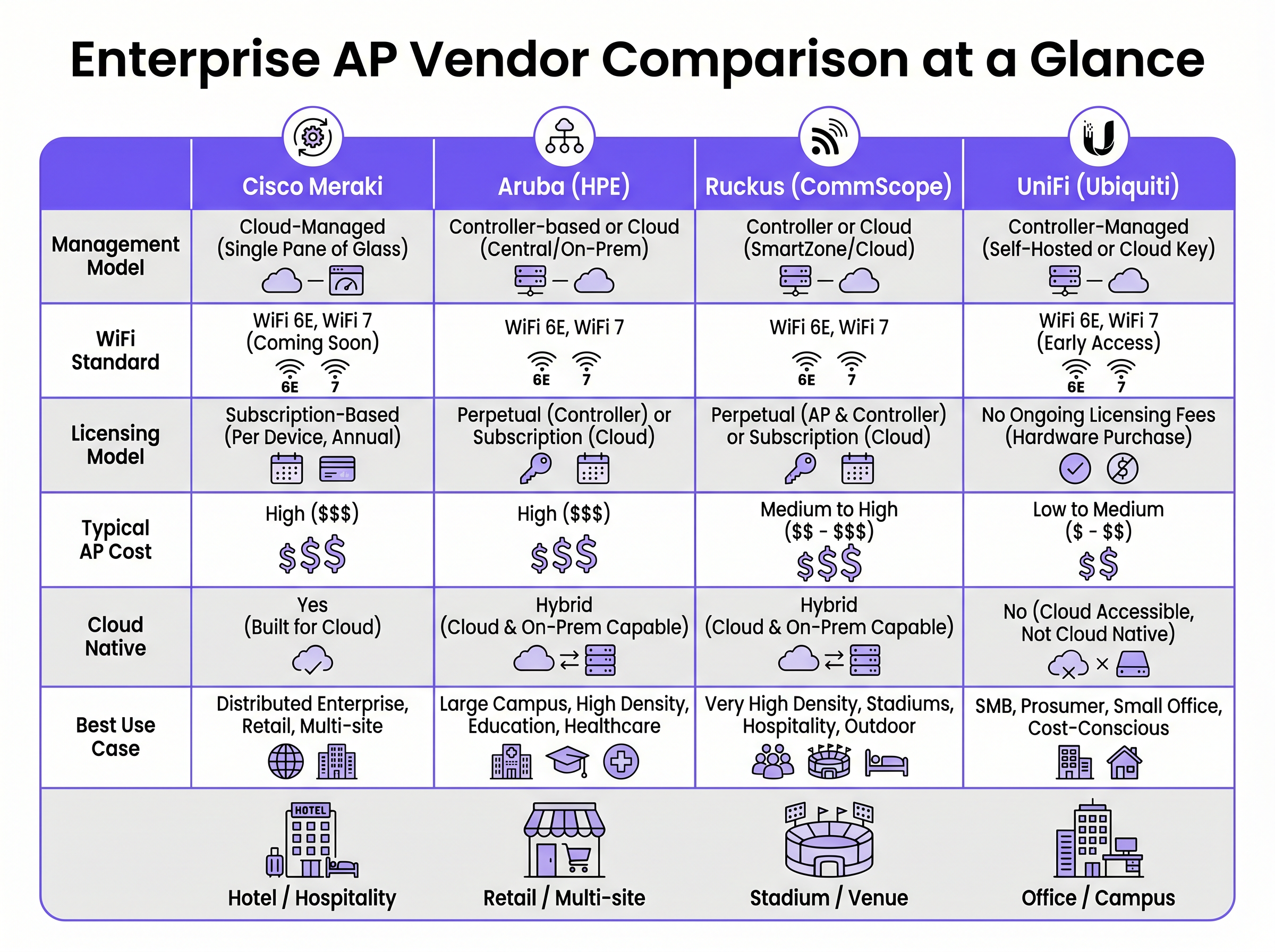
- ✓Cisco Meraki offers unmatched cloud simplicity and zero-touch provisioning, ideal for distributed retail, but carries high ongoing licensing costs.
- ✓Aruba provides robust hybrid architecture (cloud or on-premise) and advanced dynamic segmentation, making it a standard for healthcare and higher education.
- ✓Ruckus excels in hostile RF environments and high-density venues (stadiums, concrete hotels) due to its proprietary BeamFlex antenna technology.
- ✓UniFi delivers cost-effective hardware with no ongoing licensing fees, suitable for SMBs and budget-conscious deployments with in-house IT support.
- ✓Always model a 5-year Total Cost of Ownership (TCO) to account for mandatory subscription fees, which can eclipse the initial hardware CapEx.
- ✓Deploying Wi-Fi 6E hardware is essential for future-proofing high-density environments by leveraging the uncongested 6 GHz spectrum.
- ✓Purple's intelligence layer is vendor-agnostic, integrating with all four platforms to provide consistent Guest WiFi authentication and analytics regardless of the underlying hardware.




