
এন্টারপ্রাইজ এবং হোম ল্যাবের জন্য সেরা WiFi অ্যাক্সেস পয়েন্টসমূহ
এই টেকনিক্যাল নির্দেশিকাটি ২০২৫ - ২০২৬ সালের জন্য সেরা এন্টারপ্রাইজ WiFi অ্যাক্সেস পয়েন্টসমূহ মূল্যায়ন করে, যার মধ্যে রয়েছে Cisco, HPE Aruba, Ruckus, Juniper Mist, এবং Ubiquiti-এর WiFi 6E এবং WiFi 7 হার্ডওয়্যার যা উচ্চ-ঘনত্বের আতিথেয়তা, খুচরা ব্যবসা এবং পাবলিক ভেন্যু স্থাপনায় ব্যবহৃত হয়। এটি পরবর্তী প্রজন্মের ওয়্যারলেস নেটওয়ার্ক নির্মাণকারী আইটি লিডারদের জন্য কার্যকর আর্কিটেকচার কৌশল, ভেন্ডর তুলনা, নিরাপত্তা ফ্রেমওয়ার্ক এবং ROI মেট্রিক্স প্রদান করে। Purple-এর হার্ডওয়্যার-নিরপেক্ষ গেস্ট WiFi এবং অ্যানালিটিক্স প্ল্যাটফর্মটিকে সর্বত্র একটি ইন্টেলিজেন্স লেয়ার হিসেবে মানচিত্রায়িত করা হয়েছে যা নেটওয়ার্ক অবকাঠামোকে একটি ফার্স্ট-পার্টি ডেটা সম্পদে রূপান্তরিত করে।
এই গাইডটি শুনুন
পডকাস্ট ট্রান্সক্রিপ্ট দেখুন
আমাদের মূল সিরিজের অংশ: Guest WiFi Guide →
এক্সিকিউটিভ সামারি
উচ্চ-ঘনত্বের পরিবেশ পরিচালনা করেন এমন CTO এবং IT ডিরেক্টরদের জন্য - স্টেডিয়ামের করিডোর থেকে শুরু করে বিশাল হাসপাতাল ক্যাম্পাস পর্যন্ত - সেরা অ্যাক্সেস পয়েন্ট নির্বাচন করা এখন আর কেবল বিশুদ্ধ থ্রুপুটের বিষয় নয়। WiFi 6E এবং উদীয়মান WiFi 7 (IEEE 802.11be) স্ট্যান্ডার্ডে রূপান্তর এন্টারপ্রাইজ নেটওয়ার্কের পরিমণ্ডলকে আমূল পরিবর্তন করেছে। আধুনিক অ্যাক্সেস পয়েন্টগুলিকে অবশ্যই ডিভাইসের চরম ঘনত্ব পরিচালনা করতে হবে, নির্বিঘ্ন রোমিং সমর্থন করতে হবে, অত্যাধুনিক অ্যানালিটিক্স প্ল্যাটফর্মের সাথে একীভূত হতে হবে এবং WPA3-Enterprise এবং IEEE 802.1X সহ কঠোর নিরাপত্তা প্রোটোকল বজায় রাখতে হবে।
এই নির্দেশিকাটি Cisco, HPE Aruba Networking, Ruckus, Juniper Mist এবং Ubiquiti-এর শীর্ষ-স্তরের এন্টারপ্রাইজ অ্যাক্সেস পয়েন্টগুলির একটি কঠোর প্রযুক্তিগত মূল্যায়ন প্রদান করে। আমরা আর্কিটেকচারাল বিবেচনা, Multi-Link Operation (MLO) কার্যকারিতা, PoE++ পাওয়ার বাজেট এবং সুবিধা ব্যবস্থাপনার জন্য ব্যবহারিক স্থাপনার কৌশলগুলি অন্বেষণ করব। আমরা আরও খতিয়ে দেখব কীভাবে একটি বুদ্ধিমান Guest WiFi ওভারলে-র সাথে এই হার্ডওয়্যার সমাধানগুলির একীকরণ নেটওয়ার্ক অবকাঠামোকে একটি নির্দিষ্ট খরচ থেকে রাজস্ব উৎপাদনকারী সম্পদে রূপান্তরিত করতে পারে।
প্রযুক্তিগত গভীর বিশ্লেষণ: WiFi 6E বনাম WiFi 7 আর্কিটেকচার
এন্টারপ্রাইজ ওয়্যারলেস অ্যাক্সেস পয়েন্ট মার্কেট বর্তমানে দুটি প্রধান স্ট্যান্ডার্ডের সংযোগস্থলে অবস্থান করছে: পরিপক্ক এবং ব্যাপকভাবে ব্যবহৃত WiFi 6E (6 GHz ব্যান্ডে მოქმედী IEEE 802.11ax) এবং দ্রুত গতিতে এগিয়ে চলা WiFi 7 (IEEE 802.11be)। ৩ থেকে ৫ বছরের মেয়াদে হার্ডওয়্যার আপগ্রেড চক্রের পরিকল্পনা করছেন এমন নেটওয়ার্ক স্থপতিদের জন্য প্রযুক্তিগত পার্থক্যগুলি বোঝা অত্যন্ত গুরুত্বপূর্ণ।
Multi-Link Operation (MLO) এবং থ্রুপুট
WiFi 7-এ Multi-Link Operation (MLO) প্রবর্তন করা হয়েছে, যা ক্লায়েন্ট ডিভাইসগুলি কীভাবে অ্যাক্সেস পয়েন্টগুলির সাথে ইন্টারঅ্যাক্ট করে তার ক্ষেত্রে একটি যুগান্তকারী পরিবর্তন এনেছে। পূর্ববর্তী স্ট্যান্ডার্ডগুলির বিপরীতে যেখানে একটি ক্লায়েন্ট একটি একক ব্যান্ডের সাথে সংযুক্ত হত - ২.৪ GHz, ৫ GHz বা ৬ GHz - MLO একই সাথে একাধিক ব্যান্ডে একযোগে ডেটা আদান-প্রদান করতে সক্ষম করে। এটি লেটেন্সি উল্লেখযোগ্যভাবে হ্রাস করে এবং সামগ্রিক থ্রুপুট বৃদ্ধি করে, যা কনভেনশন সেন্টার এবং স্পোর্টস অ্যারেনার মতো অত্যন্ত ঘনবসতিপূর্ণ পরিবেশের জন্য অপরিহার্য করে তোলে।
তাছাড়াও, WiFi 7 মূলত 6 GHz স্পেকট্রামে 320 MHz চ্যানেল উইডথ এবং 4K-QAM (Quadrature Amplitude Modulation) মডুলেশন সমর্থন করে, যা WiFi 6-এর 1024-QAM মডুলেশনের তুলনায় পিক ডেটা স্পিডে ২০% পর্যন্ত বৃদ্ধি প্রদান করে। এটি মনে রাখা গুরুত্বপূর্ণ যে 4K-QAM মডুলেশন কাজ করার জন্য অত্যন্ত উচ্চ মানের সিগন্যাল-টু-নয়েজ রেশিও (SNR) প্রয়োজন; কোলাহলপূর্ণ এবং উচ্চ-হস্তক্ষেপযুক্ত পরিবেশে মডুলেশন রেট স্বয়ংক্রিয়ভাবে হ্রাস পাবে। থিওরিটিক্যাল পিক থ্রুপুট ডেটার ওপর ভিত্তি করে আপনার ক্যাপাসিটি প্ল্যানিং করবেন না।
ভেন্ডর ওভারভিউ এবং হার্ডওয়্যার স্পেসিফিকেশন
সেরা অ্যাক্সেস পয়েন্ট হার্ডওয়্যারগুলোর তুলনা করার সময়, ফিজিক্যাল অ্যান্টেনা অ্যারে, রেডিও আর্কিটেকচার এবং প্রসেসিং ক্ষমতা নামমাত্র থ্রুপুট ডেটার চেয়ে বাস্তব কর্মক্ষমতা নির্ধারণে অনেক বেশি ভূমিকা রাখে।

Cisco Catalyst 9136 Series হলো WiFi 6E সেক্টরের একটি অত্যন্ত শক্তিশালী ডিভাইস, যার 5 GHz ব্যান্ডে রয়েছে একটি শক্তিশালী 8x8 MIMO কনফিগারেশন, যা এটিকে উচ্চ-ঘনত্বের লেকচার হল বা অডিটোরিয়ামের জন্য অসাধারণভাবে উপযুক্ত করে তোলে। এটি ট্রাই-ব্যান্ড (2.4/5/6 GHz) অপারেশন সমর্থন করে এবং অন-প্রাঙ্গনে ম্যানেজমেন্টের জন্য Cisco Catalyst Center (পূর্বে DNA Center) অথবা ক্লাউড-ম্যানেজড ডেপ্লয়মেন্টের জন্য Cisco Meraki-র সাথে নেটিভভাবে সংহত হয়। সম্পূর্ণ ক্ষমতায় সব রেডিও চালু রাখতে এর জন্য 802.3bt (PoE++) স্ট্যান্ডার্ড প্রয়োজন।
HPE Aruba Networking AP-735 হলো একটি অত্যাধুনিক WiFi 7 অপশন, যা ডবল 5 Gbps ইথারনেট আপলিঙ্ক পোর্ট সহ একটি ট্রাই-রেডিও 2x2 MIMO সিস্টেম অফার করে। Aruba-র মালিকানাধীন Ultra Tri-Band (UTB) ফিল্টারিং 5 GHz এবং 6 GHz ব্যান্ডের মধ্যে হস্তক্ষেপ কমাতে অত্যন্ত কার্যকরী, যা উচ্চ-ঘনত্বের ডেপ্লয়মেন্টে একটি সাধারণ সমস্যা। AP-735-টি Aruba Central-এর মাধ্যমে পরিচালিত হয়, যা বিল্ট-ইন AIOps সহ একটি ক্লাউড-নেটিভ প্ল্যাটফর্ম।
Ruckus R760 তীব্র RF হস্তক্ষেপ রয়েছে এমন পরিবেশে চমৎকার পারফর্ম করে। R760 (WiFi 6E) ডিভাইসটি Ruckus-এর নিজস্ব BeamFlex+ অ্যাডাপ্টিভ অ্যান্টেনা প্রযুক্তি ব্যবহার করে, যা ক্লায়েন্টদের দিকে সিগন্যালকে ডাইনামিক্যালি চালিত করে এবং কো-চ্যানেল হস্তক্ষেপ প্রশমিত করে। এটি প্রায়শই কঠিন ফিজিক্যাল পরিবেশ যেমন গুদামঘর, পুরু কংক্রিটের দেয়ালযুক্ত পুরানো হোটেল বা যেখানে সিগন্যালের ব্যাপক মাল্টিপাথ রিফ্লেকশন ঘটে, সে সব জায়গার জন্য সেরা অ্যাক্সেস পয়েন্ট। এটি একটি 10 GbE আপলিঙ্ক সমর্থন করে এবং Ruckus One (ক্লাউড) বা SmartZone (অন-প্রাঙ্গনে) দ্বারা পরিচালনা করা যায়।Juniper Mist AP45 হলো কৃত্রিম বুদ্ধিমত্তা দ্বারা পরিচালিত Juniper-এর ফ্ল্যাগশিপ মডেল। AP45 (Wi-Fi 6E)-এ সিকিউরিটি স্ক্যানিংয়ের জন্য একটি ডেডিকেটেড চতুর্থ রেডিও এবং ইনডোর লোকেশন সার্ভিসের জন্য একটি Bluetooth Low Energy (BLE) অ্যারে রয়েছে, যা Mist AI ক্লাউড ম্যানেজমেন্ট প্ল্যাটফর্মের সাথে নির্বিঘ্নে একীভূত। এর AIOps ইঞ্জিন প্রেডিক্টিভ অ্যানালিটিক্স, প্রোঅ্যাক্টিভ অ্যানোমালি ডিটেকশন এবং অটোমেটেড রুট-কজ অ্যানালাইসিস প্রদান করে, যা রেজোলিউশনের গড় সময় (MTTR) উল্লেখযোগ্যভাবে কমিয়ে দেয়।
Ubiquiti UniFi U7 Pro অত্যন্ত প্রতিযোগিতামূলক মূল্যে Wi-Fi 7-এর কার্যক্ষমতা অফার করে, যা একে বাজেট-সচেতন ব্যবসা বা অত্যাধুনিক হোম ল্যাবের জন্য সেরা অ্যাক্সেস পয়েন্ট হিসেবে গড়ে তুলেছে। যদিও এটি Cisco বা Aruba-এর মতো এন্টারপ্রাইজ-গ্রেড সাপোর্ট SLA অফার করে না, তবে এর 2.5 GbE আপলিঙ্ক এবং ব্যাপক 6 GHz সাপোর্ট একে দক্ষ অভ্যন্তরীণ আইটি টিম দ্বারা পরিচালিত মিড-মার্কেট ডিপ্লয়মেন্টের জন্য অত্যন্ত আকর্ষণীয় করে তোলে।
ম্যানেজমেন্ট প্যারাডাইমগুলোর বিস্তারিত বিশ্লেষণের জন্য, আমাদের কন্ট্রোলার-ভিত্তিক বনাম ক্লাউড-ম্যানেজড অ্যাক্সেস পয়েন্টের তুলনা গাইডটি দেখুন।
আপনার নির্দিষ্ট সেটআপ নিয়ে কোনো প্রশ্ন আছে?
আমাদের টিম ৮০,০০০ ভেন্যুতে ভেন্যু অপারেটর, IT ম্যানেজার এবং নেটওয়ার্ক ইঞ্জিনিয়ারদের সাথে কাজ করে। একটি ২০ মিনিটের কল বুক করুন এবং আপনার মতো অন্যরা কীভাবে এর সমাধান করেছেন তা আমরা আপনাকে দেখাব।
ইমপ্লিমেন্টেশন গাইড: হাই-ডেনসিটি ডিপ্লয়মেন্ট
এন্টারপ্রাইজ অ্যাক্সেস পয়েন্ট ইনস্টল করার জন্য নিখুঁত পরিকল্পনার প্রয়োজন। একটি সাধারণ এবং ব্যয়বহুল ভুল হলো "যত বেশি, তত ভালো" পদ্ধতি অনুসরণ করা, যা অতিরিক্ত কো-চ্যানেল ইন্টারফারেন্স তৈরি করে এবং কম সংখ্যক AP দিয়ে সঠিকভাবে ডিজাইন করা নেটওয়ার্কের চেয়েও দুর্বল পারফরম্যান্স দেয়।
১. ক্যাপাসিটি প্ল্যানিং এবং ডেনসিটি ক্যালকুলেশন
কেবলমাত্র কাভারেজের জন্য ডিজাইন করবেন না; ক্যাপাসিটির জন্য ডিজাইন করুন। একটি হাই-ডেনসিটি Retail পরিবেশে, ব্যবহারকারী প্রতি ২-৩টি ডিভাইস ধরে নিয়ে সম্ভাব্য সমসাময়িক ডিভাইসের সংখ্যা হিসাব করুন।
একটি সাধারণ নিয়ম হিসেবে: স্ট্যান্ডার্ড এন্টারপ্রাইজ সেটআপের জন্য, রেডিও প্রতি ৩০-৫০টি সক্রিয় ক্লায়েন্টকে লক্ষ্য রাখুন। অ্যাডভান্সড OFDMA শিডিউলিং সহ Wi-Fi 6E/7 AP ব্যবহার করা হাই-ডেনসিটি পরিবেশে, এই সংখ্যা প্রতি AP-তে ৭৫-১০০টি ক্লায়েন্ট পর্যন্ত বাড়তে পারে, যদি আপলিঙ্ক এবং PoE বাজেট পর্যাপ্ত থাকে। হার্ডওয়্যার অর্ডার করার আগে সর্বদা Ekahau বা Hamina-এর মতো টুল ব্যবহার করে একটি প্রেডিক্টিভ RF সাইট সার্ভে দ্বারা এই সংখ্যাগুলো যাচাই করে নিন।
২. নেটওয়ার্ক ইনফ্রাস্ট্রাকচার আপগ্রেড
লিগ্যাসি সুইচিং ইনফ্রাস্ট্রাকচারের উপর Wi-Fi 7 অ্যাক্সেস পয়েন্ট ইনস্টল করা হলে তা মারাত্মক বাধা (bottleneck) সৃষ্টি করে, যা আপনার হার্ডওয়্যার ইনভেস্টমেন্টকে সম্পূর্ণ ব্যর্থ করে দেয়।
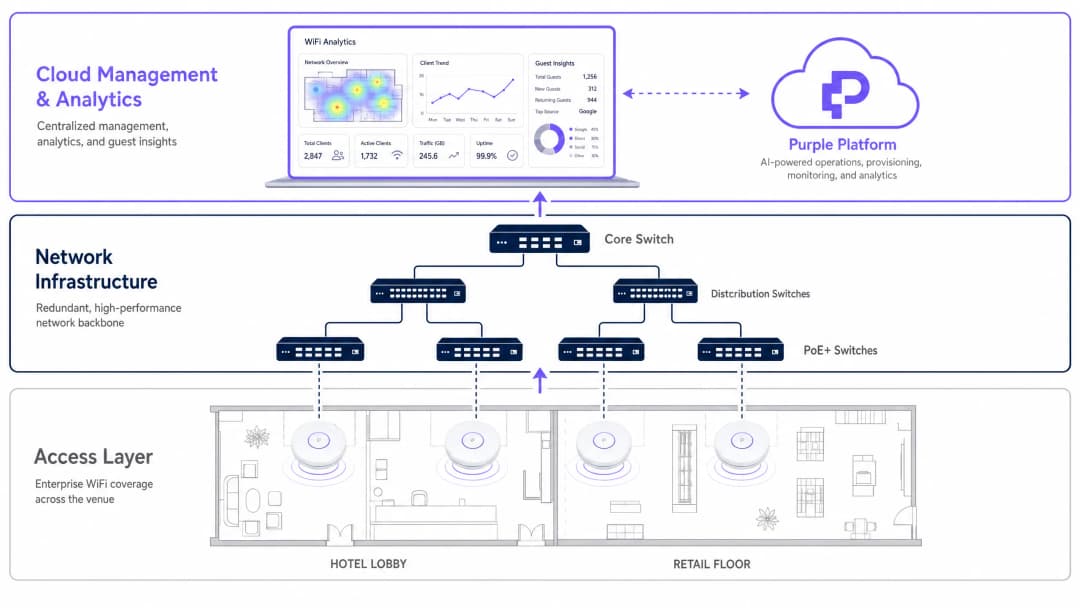
Aruba AP-735 বা Cisco 9136-এর মতো অ্যাক্সেস পয়েন্টগুলির জন্য অ্যাক্সেস লেভেলে প্রতি পোর্টে 2.5 Gbps, 5 Gbps বা 10 Gbps সাপোর্ট করে এমন Multi-Gigabit (mGig) সুইচের প্রয়োজন হয়। পাওয়ারের ক্ষেত্রে, আধুনিক ট্রাই-ব্যান্ড AP-গুলি উল্লেখযোগ্য ওয়াটেজ ব্যবহার করে। আপনার অ্যাক্সেস সুইচগুলি যেন PoE++ (802.3bt, যা প্রতি পোর্টে 60W Type 3 বা 90W Type 4 পর্যন্ত প্রদান করে) সাপোর্ট করে তা নিশ্চিত করুন। স্ট্যান্ডার্ড PoE+ (802.3at, সর্বোচ্চ 30W) দিয়ে এই AP-গুলি চালালে রেডিও নিষ্ক্রিয় হয়ে যাবে, CPU পারফরম্যান্স সীমিত হবে এবং ম্যানেজমেন্ট ড্যাশবোর্ডে ডিগ্রেডেড মোড অ্যালার্ট দেখা যাবে।
3. আইডেন্টিটি এবং অ্যাক্সেস ম্যানেজমেন্ট
এন্টারপ্রাইজ সুরক্ষার জন্য শক্তিশালী অথেন্টিকেশন আবশ্যক। করপোরেট ডিভাইসগুলির জন্য IEEE 802.1X/RADIUS সহ WPA3-Enterprise হলো মানদণ্ড, যা প্রতি ব্যবহারকারীর জন্য এনক্রিপশন কি এবং সেন্ট্রালাইজড পলিসি প্রয়োগের সুবিধা দেয়। গেস্ট অ্যাক্সেসের জন্য একটি ভিন্ন পদ্ধতির প্রয়োজন যা ন্যূনতম জটিলতার সাথে সুরক্ষার ভারসাম্য বজায় রাখে।
একটি WiFi Analytics প্ল্যাটফর্মের সাথে ইন্টিগ্রেটেড একটি Captive Portal স্থাপন করলে প্রতিষ্ঠানগুলি মার্কেটিংয়ের জন্য মূল্যবান ফার্স্ট-পার্টি ডেটা সংগ্রহ করার পাশাপাশি নিরাপদ অ্যাক্সেস প্রদান করতে পারে। আরও নির্বিঘ্ন অভিজ্ঞতার জন্য, OpenRoaming বাস্তবায়নের কথা বিবেচনা করুন। How a wi fi assistant Enables Passwordless Access in 2026-এ বিস্তারিতভাবে বর্ণনা করা হয়েছে যে, Purple তাদের Connect লাইসেন্সের মাধ্যমে OpenRoaming-এর জন্য একটি ফ্রি আইডেন্টিটি প্রোভাইডার হিসেবে কাজ করে, যা ডিভাইসগুলিকে পোর্টালের সাথে কোনো ম্যানুয়াল ইন্টারঅ্যাকশন ছাড়াই স্বয়ংক্রিয়ভাবে এবং নিরাপদে অথেন্টিকেট হতে সাহায্য করে।
Transport এবং পাবলিক সেক্টরের ক্ষেত্রে, অস্থায়ী ব্যবহারকারীদের উচ্চ ট্রাফিক পরিচালনা করার জন্য এই ঝামেলাহীন অথেন্টিকেশন মডেলটি বিশেষভাবে মূল্যবান।
বেস্ট প্র্যাকটিস এবং ইন্ডাস্ট্রি স্ট্যান্ডার্ড
RF Site Surveys: ইনস্টলেশনের আগে সর্বদা একটি প্রেডিক্টিভ সার্ভে এবং ইনস্টলেশনের পরে একটি অ্যাক্টিভ ভ্যালিডেশন সার্ভে পরিচালনা করুন। দেয়াল, কাচ এবং মানুষের শরীরের কারণে সৃষ্ট সিগন্যাল অ্যাটেনুয়েশন বিবেচনা করুন - মানুষের ভিড় উল্লেখযোগ্যভাবে RF এনার্জি শোষণ করে, যার কারণে একটি সাইট সার্ভে করার সময় ভালো পারফরম্যান্স দেওয়া স্টেডিয়ামও একটি সোল্ড-আউট ইভেন্টের সময় মারাত্মকভাবে ব্যর্থ হতে পারে।
চ্যানেল প্ল্যানিং: 5 GHz এবং 6 GHz ব্যান্ডে, এন্টারপ্রাইজ সেটআপের জন্য 40 MHz বা 80 MHz চ্যানেল উইডথ ব্যবহার করুন যাতে থ্রুপুট এবং উপলব্ধ চ্যানেলের ভারসাম্যতা বজায় থাকে। আইসোলেটেড পরিবেশ ছাড়া 160 MHz বা 320 MHz উইডথ এড়িয়ে চলুন, কারণ এগুলো নন-ওভারল্যাপিং চ্যানেলের সংখ্যা মারাত্মকভাবে সীমিত করে এবং কো-চ্যানেল ইন্টারফেয়ারেন্সের সম্ভাবনা বাড়িয়ে দেয়।Conformità (অনুবর্তন): নিশ্চিত করুন যে নেটওয়ার্ক আর্কিটেকচার প্রাসঙ্গিক মানদণ্ড মেনে চলছে। PCI-DSS 4.0 স্ট্যান্ডার্ড WiFi-এর মাধ্যমে কার্ডের পেমেন্ট প্রক্রিয়াকরণ করে এমন যেকোনো সিস্টেমের জন্য নেটওয়ার্ক সেগমেন্টেশন বাধ্যতামূলক করে। Healthcare পরিবেশে, HIPAA ডেটা স্থানান্তরের ক্ষেত্রে কঠোর নিয়ন্ত্রণের দাবি করে। GDPR সমস্ত শিল্প জুড়ে অতিথি WiFi পোর্টালের মাধ্যমে অর্জিত সমস্ত ব্যক্তিগত ডেটার ক্ষেত্রে প্রযোজ্য।
ফার্মওয়্যার পরিচালনা: প্যাচ প্রয়োগ করার জন্য একটি কঠোর সময়সূচী স্থাপন করুন। এন্টারপ্রাইজ AP সরবরাহকারীরা দুর্বলতা সংশোধন করতে নিয়মিত নিরাপত্তা প্যাচ প্রকাশ করে। ক্লাউড ম্যানেজড প্ল্যাটফর্ম (Aruba Central, Mist AI, Meraki) কনফিগারযোগ্য রক্ষণাবেক্ষণ উইন্ডোর সাথে এই প্রক্রিয়াটিকে স্বয়ংক্রিয় করতে পারে।
সমস্যা সমাধান এবং ঝুঁকি প্রশমন
Sticky Clients: একটি সাধারণ সমস্যা যেখানে একটি ডিভাইস কাছাকাছি থাকা অন্য কোনো এক্সেস পয়েন্টে রোমিং করতে অস্বীকার করে, যা সামগ্রিক সেলের কার্যকারিতা হ্রাস করে। ক্লায়েন্টদের আরও ভাল রোমিং সিদ্ধান্ত নিতে সহায়তা করার জন্য IEEE 802.11k (রেডিও রিসোর্স মেজারমেন্ট) এবং IEEE 802.11v (BSS ট্রানজিশন ম্যানেজমেন্ট) স্ট্যান্ডার্ড প্রয়োগ করে সমস্যাটি প্রশমিত করুন। প্রতিটি SSID-এ ন্যূনতম বাধ্যতামূলক ডেটা রেট সেট করুন যাতে সিগন্যাল যখন একটি ব্যবহারযোগ্য থ্রেশহোল্ডের নীচে নেমে যায়, সাধারণত 5 GHz-এ 12 Mbps, তখন ক্লায়েন্টদের সংযোগ বিচ্ছিন্ন করতে বাধ্য করা যায়।
অসমমিতিক রাউটিং: এক্সেস পয়েন্টটি মোবাইল ক্লায়েন্টের ট্রান্সমিশন দূরত্বের চেয়ে বেশি দূরত্বে ট্রান্সমিট করতে পারে, যার ফলে ক্লায়েন্ট সম্পূর্ণ সিগন্যাল শক্তি প্রদর্শন করলেও প্রায় শূন্য থ্রুপুট অনুভব করে। এর সমাধান সহজ: এক্সেস পয়েন্টগুলোকে সর্বোচ্চ ট্রান্সমিশন শক্তিতে চালিত করবেন না। AP-এর Tx পাওয়ারকে মোবাইল ডিভাইসের গড় ক্ষমতার সাথে সামঞ্জস্য করুন, সাধারণত 12-15 dBm। এটি সংলগ্ন AP-গুলোর মধ্যে কো-চ্যানেল ইন্টারফেয়ারেন্সও হ্রাস করে।
PoE বাজেট নিঃশেষ হওয়া: বড় ইনস্টলেশনের ক্ষেত্রে, একটি সুইচ চ্যাসিসের মোট PoE পাওয়ার বাজেট অতিক্রম করা সহজ, এমনকি যদি পৃথক পোর্ট বাজেটগুলো পর্যাপ্ত মনে হয়। সর্বদা সুইচের মোট PoE পাওয়ার বাজেটের বিপরীতে সমস্ত সংযুক্ত AP-এর সামগ্রিক বিদ্যুৎ খরচ গণনা করুন, কেবল প্রতি-পোর্ট সীমা নয়।
SSID-এর অনিয়ন্ত্রিত বৃদ্ধি: প্রতিটি SSID ম্যানেজমেন্ট ওভারহেড (বেকন ফ্রেম) তৈরি করে যা এয়ারটাইম গ্রাস করে। প্রতি AP-তে SSID-এর সংখ্যা সর্বাধিক ৩-৪ টির মধ্যে সীমাবদ্ধ রাখুন। প্রতিটি বিভাগের জন্য আলাদা নেটওয়ার্ক তৈরি না করে IoT, কর্পোরেট এবং অতিথিদের জন্য SSID একীভূত করুন।
ROI এবং ব্যবসায়িক প্রভাব
সেরা অ্যাক্সেস পয়েন্ট হার্ডওয়্যারে আপগ্রেড করার ব্যবসায়িক যুক্তি শুধুমাত্র IT পারফরম্যান্স মেট্রিক্সের বাইরেও অনেক বিস্তৃত। Hospitality শিল্পে, একটি নির্ভরযোগ্য WiFi ক্রমাগতভাবে অতিথিদের সন্তুষ্টির স্কোরের অন্যতম প্রধান কারণ হিসেবে স্থান পায়। একটি বড় কনফারেন্স ইভেন্ট চলাকালীন নেটওয়ার্ক বিভ্রাট সরাসরি রি-বুকিংয়ের হার এবং ব্র্যান্ডের সুনামের উপর প্রভাব ফেলতে পারে।
হার্ডওয়্যারের উপরে একটি উন্নত অ্যানালিটিক্স প্ল্যাটফর্ম একীভূত করার মাধ্যমে, IT টিম সরাসরি ব্যবসায়িক ROI প্রদর্শন করতে পারে। নেটওয়ার্কটি ফুট ট্রাফিকের ধরণ, থাকার সময়কাল, ব্যবহারের পিক পিরিয়ড এবং গ্রাহকের ডেমোগ্রাফিক বোঝার একটি হাতিয়ার হয়ে ওঠে। এই ডেটা সরাসরি অপারেশনাল সিদ্ধান্তগুলোকে প্রভাবিত করে, যা কর্মীদের সংখ্যা নির্ধারণ থেকে শুরু করে রিটেইল লোকেশনে মার্চেন্ডাইজ প্লেসমেন্ট পর্যন্ত বিস্তৃত।
হোটেল প্রেক্ষাপটে কীভাবে এই ডেটা ব্যবহার করবেন সে সম্পর্কে একটি ব্যবহারিক গাইডের জন্য, How To Improve Guest Satisfaction: The Ultimate Playbook দেখুন। পাবলিক সেক্টরে, একটি শক্তিশালী এবং অন্তর্ভুক্তিমূলক ওয়্যারলেস অবকাঠামো ডিজিটাল অন্তর্ভুক্তির কৌশলগুলোর জন্য ক্রমশ কেন্দ্রীয় হয়ে উঠছে, যা Purple Appoints Iain Fox as VP Growth – Public Sector to Drive Digital Inclusion and Smart City Innovation-এ হাইলাইট করা হয়েছে।
বিল্ট-ইন অ্যানালিটিক্স সহ একটি সু-সম্পাদিত এন্টারপ্রাইজ WiFi বাস্তবায়নের পরিমাপযোগ্য ফলাফলের মধ্যে সাধারণত অন্তর্ভুক্ত থাকে: কানেক্টিভিটি সম্পর্কিত অতিথিদের অভিযোগে ১৫ - ২৫% হ্রাস, শুধুমাত্র ইমেইল ফর্মের তুলনায় সোশ্যাল লগইন ব্যবহার করার সময় Captive Portal কনভার্সন রেটে ৩০ - ৪০% বৃদ্ধি, এবং একটি প্রদর্শনযোগ্য ফার্স্ট-পার্টি ডেটা অ্যাসেট যা একটি পোস্ট-কুকি পরিবেশে থার্ড-পার্টি ডেটা সরবরাহকারীদের উপর নির্ভরতা কমিয়ে দেয়।
মূল সংজ্ঞাসমূহ
Multi-Link Operation (MLO)
একটি Wi-Fi ৭ (802.11be) ফিচার যা ডিভাইসগুলোকে একসাথে একাধিক ফ্রিকোয়েন্সি ব্যান্ডে - যেমন, ৫ GHz এবং ৬ GHz-এ একযোগে ডেটা ট্রান্সমিট এবং রিসিভ করার অনুমতি দেয়।
ঘন এন্টারপ্রাইজ পরিবেশে লেটেন্সি কমাতে এবং থ্রুপুট বাড়ানোর জন্য অত্যন্ত গুরুত্বপূর্ণ। এটি কাজ করার জন্য AP এবং ক্লায়েন্ট ডিভাইস উভয়কেই Wi-Fi ৭ সমর্থন করতে হবে।
4K-QAM (Quadrature Amplitude Modulation)
Wi-Fi ৭-এ ব্যবহৃত একটি মড্যুলেশন স্কিম যা প্রতি সিম্বলে ১২ বিট এনকোড করে, যেখানে Wi-Fi ৬-এর 1024-QAM-এ প্রতি সিম্বলে ১০ বিট থাকে, যা প্রায় ২০% বেশি পিক থ্রুপুট প্রদান করে।
কার্যকরভাবে কাজ করার জন্য একটি অত্যন্ত উচ্চ সিগন্যাল-টু-নয়েজ রেশিও (SNR) প্রয়োজন। কোলাহলপূর্ণ পরিবেশে, AP স্বয়ংক্রিয়ভাবে কম মড্যুলেশন রেটে নেমে আসে। 4K-QAM পিক ফিগারগুলোর ওপর ভিত্তি করে ক্যাপাসিটি প্ল্যানিং করবেন না।
Spatial Streams (MIMO)
মাল্টিপল-ইনপুট মাল্টিপল-আউটপুট প্রযুক্তি একই সাথে স্বাধীন ডেটা স্ট্রিম ট্রান্সমিট করতে একাধিক অ্যান্টেনা ব্যবহার করে। এটি ২x২, ৪x৪ বা ৮x৮ (transmitting x receiving antennas) হিসেবে চিহ্নিত করা হয়।
অধিক স্প্যাশিয়াল স্ট্রিম একটি AP-কে আরও বেশি সমসাময়িক ক্লায়েন্ট কানেকশন পরিচালনা করতে এবং উচ্চতর সামগ্রিক থ্রুপুট প্রদান করতে সাহায্য করে। Cisco ৯১৩৬-এর মতো একটি ৮x৮ AP একটি ২x২ AP-এর চেয়ে উল্লেখযোগ্যভাবে বেশি সমসাময়িক ক্লায়েন্টকে সেবা দিতে পারে।
802.3bt (PoE++)
পাওয়ার ওভার ইথারনেট স্ট্যান্ডার্ড যা টুইস্টেড-পেয়ার ইথারনেট ক্যাবলের মাধ্যমে চালিত ডিভাইসগুলোতে ৬০W (টাইপ ৩) বা ৯০W (টাইপ ৪) পর্যন্ত DC পাওয়ার সরবরাহ করতে সক্ষম।
কার্যকারিতা ব্যাহত না করে আধুনিক, হাই-পারফরম্যান্স ট্রাই-ব্যান্ড এন্টারপ্রাইজ অ্যাক্সেস পয়েন্টগুলোতে পাওয়ার দেওয়ার জন্য বাধ্যতামূলক। 802.3at (PoE+, ৩০W) সুইচে ট্রাই-ব্যান্ড AP ডেপ্লয় করলে পারফরম্যান্স কমে যাবে বা রেডিও নিষ্ক্রিয় হয়ে যাবে।
OpenRoaming
একটি Wi-Fi Alliance ফেডারেশন স্ট্যান্ডার্ড যা ব্যবহারকারীদের একটি প্রি-প্রোভিশনড ক্রেডেনশিয়াল প্রোফাইল ব্যবহার করে Captive Portals বা ম্যানুয়াল পাসওয়ার্ড এন্ট্রি ছাড়াই স্বয়ংক্রিয়ভাবে এবং নিরাপদে অংশগ্রহণকারী গেস্ট WiFi নেটওয়ার্কগুলোর সাথে সংযুক্ত হতে দেয়।
Purple Connect লাইসেন্সের অধীনে OpenRoaming-এর জন্য একটি ফ্রি আইডেন্টিটি প্রোভাইডার হিসেবে কাজ করে, যা ভেন্যুগুলোকে নির্বিঘ্ন, নিরাপদ গেস্ট অথেন্টিকেশন অফার করতে সক্ষম করে। বিশেষ করে পরিবহন হাব এবং পাবলিক সেক্টর ভেন্যুতে প্রচুর পরিমাণে ক্ষণস্থায়ী ব্যবহারকারীদের জন্য অত্যন্ত মূল্যবান।
BSS Transition Management (802.11v)
একটি IEEE স্ট্যান্ডার্ড যা নেটওয়ার্ক ইনফ্রাস্ট্রাকচারকে ক্লায়েন্ট ডিভাইসগুলোতে অ্যাডভাইজরি মেসেজ পাঠানোর অনুমতি দেয়, যা সিগন্যালের শক্তি এবং লোডের ওপর ভিত্তি করে সংযোগ করার জন্য একটি আরও ভালো অ্যাক্সেস পয়েন্ট সাজেস্ট করে।
ওয়্যারলেস নেটওয়ার্ক জুড়ে লোড ব্যালেন্সিং নিশ্চিত করতে এবং 'sticky clients' কমাতে IT অ্যাডমিনদের দ্বারা ব্যবহৃত হয়। ক্লায়েন্টদের AP-এর একটি ক্যান্ডিডেট লিস্ট প্রদান করতে এটি 802.11k (রেডিও রিসোর্স মেজারমেন্ট)-এর সাথে মিলিয়ে কাজ করে।
Co-Channel Interference (CCI)
যখন দুই বা ততোধিক অ্যাক্সেস পয়েন্ট ঠিক একই ফ্রিকোয়েন্সি চ্যানেলে কাজ করে এবং একে অপরের সীমার মধ্যে থাকে, তখন যে ইন্টারফারেন্স তৈরি হয়, যা তাদের CSMA/CA প্রোটোকলের মাধ্যমে পর্যায়ক্রমে ট্রান্সমিট করতে বাধ্য করে।
অতিরিক্ত ডেপ্লয় করা এন্টারপ্রাইজ নেটওয়ার্কগুলোতে পারফরম্যান্স হ্রাসের প্রাথমিক কারণ হলো CCI। সতর্ক চ্যানেল প্ল্যানিং, ট্রান্সমিট পাওয়ার কমানো এবং আরও বেশি নন-ওভারল্যাপিং চ্যানেল অফার করা ওয়াইডার 6 GHz ব্যান্ড ব্যবহারের মাধ্যমে এটি কমানো যায়।
OFDMA (Orthogonal Frequency-Division Multiple Access)
Wi-Fi 6-এ প্রবর্তিত OFDM-এর একটি মাল্টি-ইউজার ভার্সন যা একটি চ্যানেলকে ছোট রিসোর্স ইউনিটে (সাব-ক্যারিয়ার) বিভক্ত করে, যার ফলে একটি AP একটি একক ট্রান্সমিশন উইন্ডোর মধ্যে একসাথে একাধিক ক্লায়েন্টের সাথে যোগাযোগ করতে পারে।
IoT ডিভাইস বা ঘন ঘন ডেটার সংক্ষিপ্ত বার্স্ট পাঠানো মোবাইল অ্যাপ্লিকেশনের মতো অনেক ছোট-প্যাকেট ট্রান্সমিশনসহ হাই-ডেনসিটি পরিবেশে নাটকীয়ভাবে দক্ষতা উন্নত করে। এটি লেটেন্সি হ্রাস করে এবং এয়ারটাইম দক্ষতা উন্নত করে।
BeamFlex+ (Ruckus Proprietary)
Ruckus Networks-এর অ্যাডাপ্টিভ অ্যান্টেনা টেকনোলজি যা প্রতিটি পৃথক ক্লায়েন্ট ট্রান্সমিশনের জন্য ডাইনামিকালি সর্বোত্তম অ্যান্টেনা প্যাটার্ন নির্বাচন করে, SNR সর্বাধিক করতে এবং ইন্টারফারেন্স সর্বনিম্ন করতে সিগন্যালটিকে ডাইরেক্ট করে।
ধাতব র্যাকিংযুক্ত ওয়্যারহাউস বা উল্লেখযোগ্য মাল্টিপাথ রিফ্লেকশন রয়েছে এমন ভেন্যুগুলোর মতো চ্যালেঞ্জিং RF পরিবেশে বিশেষভাবে কার্যকর। এই পরিস্থিতিতে স্ট্যান্ডার্ড অমনিডাইরেকশনাল অ্যান্টেনার তুলনায় একটি পরিমাপযোগ্য পারফরম্যান্স অ্যাডভান্টেজ প্রদান করে।
সমাধানকৃত উদাহরণসমূহ
একটি ৪০০ রুমের বিলাসবহুল হোটেল সন্ধ্যার পিক আওয়ারের সময় লবি এবং কনফারেন্স এলাকায় WiFi কার্যক্ষমতা নিয়ে অতিথিদের কাছ থেকে তীব্র অভিযোগের সম্মুখীন হচ্ছে। বর্তমান অবকাঠামোতে করিডোরে ইনস্টল করা WiFi 5 (802.11ac) অ্যাক্সেস পয়েন্ট ব্যবহার করা হচ্ছে। আইটি পরিচালকের একটি সম্পূর্ণ রিডিজাইন প্রয়োজন। এর জন্য প্রস্তাবিত পদ্ধতি কী?
ধাপ ১ - কভারেজ মডেল থেকে ক্যাপাসিটি মডেলে পরিবর্তন করুন। করিডোর থেকে AP সরিয়ে ফেলুন, যা অতিথিরা রুম এবং করিডোরের মধ্যে যাতায়াত করার সময় "স্টিকি ক্লায়েন্ট" সমস্যার সৃষ্টি করে। এর পরিবর্তে রুমে ওয়াল-প্লেট AP (যেমন, Cisco 9105AXW বা Aruba AP-303H) ব্যবহার করে মাইক্রো-সেল তৈরি করুন যা প্রতিটি রুমের মধ্যে RF ডোমেনকে সীমাবদ্ধ রাখে।\n\nধাপ ২ - উচ্চ-ঘনত্বের লবি এবং কনফারেন্স এলাকায়, সিলিংয়ের উচ্চতা ৮ মিটারের বেশি হলে ডিরেকশনাল অ্যান্টেনা ব্যবহার করে WiFi 6E বা WiFi 7 অ্যাক্সেস পয়েন্ট (যেমন, Aruba AP-735 বা Cisco 9136) স্থাপন করুন। লবিতে প্রতি ৭৫ - ১০০ বর্গমিটারে একটি AP এবং কনফারেন্স রুমে প্রতি ৫০ জন উপস্থিতির জন্য একটি AP-এর লক্ষ্য নির্ধারণ করুন।\n\nধাপ ৩ - এজ সুইচগুলিকে mGig (2.5/5 Gbps) এবং PoE++ (802.3bt) সমর্থন করার জন্য আপগ্রেড করুন যাতে নতুন ট্রাই-ব্যান্ড AP-গুলি কার্যক্ষমতা হ্রাস না করে চালিত হতে পারে।\n\nধাপ ৪ - প্রতি ব্যবহারকারীর ব্যান্ডউইথ বরাদ্দ পরিচালনা করতে, GDPR-সম্মত ডেটা সংগ্রহ নিশ্চিত করতে এবং কনফারেন্সে উপস্থিতদের থাকার সময় ও বারবার আসার হারের ওপর অ্যানালিটিক্স সংগ্রহ করতে Purple-এর গেস্ট WiFi Captive Portal প্রয়োগ করুন।\n\nধাপ ৫ - সেশন ড্রপ ছাড়াই লবি AP এবং কনফারেন্স রুম AP-গুলির মধ্যে নির্বিঘ্ন রোমিং নিশ্চিত করতে 802.11k/v/r (ফাস্ট BSS ট্রানজিশন) সক্ষম করুন।
একটি বড় রিটেইল চেইনকে একসাথে ৫০টি নতুন স্টোরে WiFi স্থাপন করতে হবে। হ্যান্ডহেল্ড ইনভেন্টরি স্ক্যানার এবং POS টার্মিনালের জন্য তাদের উচ্চ নির্ভরযোগ্যতা প্রয়োজন (PCI-DSS সম্মতি বাধ্যতামূলক), তবে একই সাথে ফার্স্ট-পার্টি মার্কেটিং ডেটা সংগ্রহের জন্য তারা ক্রেতাদের গেস্ট WiFi অফার করতে চায়। বাজেট সীমিত। এর জন্য প্রস্তাবিত আর্কিটেকচার কী?
ধাপ ১ - খরচ এবং পারফরম্যান্সের মধ্যে ভারসাম্য বজায় রাখতে মিড-টিয়ার Wi-Fi 6E অ্যাক্সেস পয়েন্ট (যেমন, Juniper Mist AP45 বা Ruckus R560) ডেপ্লয় করুন। Mist AI প্ল্যাটফর্মের AIOps ক্ষমতা ৫০টি সাইট জুড়ে চলমান IT ম্যানেজমেন্টের ওভারহেড কমিয়ে দেয়, যা একটি উল্লেখযোগ্য অপারেশনাল খরচ বাঁচায়।
ধাপ ২ - VLAN এবং পৃথক SSID ব্যবহার করে নেটওয়ার্কটি সেগমেন্ট করুন: কর্পোরেট ডিভাইস এবং POS টার্মিনালগুলোর জন্য 802.1X অথেন্টিকেশন সহ একটি WPA3-Enterprise SSID (একটি ডেডিকেটেড VLAN-এ আইসোলেট করা যাতে গেস্ট ট্রাফিকের সাথে কোনো inter-VLAN রাউটিং না থাকে), এবং গেস্টদের জন্য ক্লায়েন্ট আইসোলেশন সহ একটি পৃথক ওপেন SSID।
ধাপ ৩ - গেস্ট নেটওয়ার্কের জন্য Purple-এর Captive Portal প্রয়োগ করুন। অ্যাক্সেসের বিনিময়ে একটি সোশ্যাল লগইন বা ইমেল অ্যাড্রেস বাধ্যতামূলক করতে পোর্টালটি কনফিগার করুন, যা মার্কেটিং টিমকে একটি ফার্স্ট-পার্টি CRM ডাটাবেস তৈরি করতে সাহায্য করবে। কোনো একক ব্যবহারকারী যাতে আপলিঙ্ক স্যাচুরেট করতে না পারে তার জন্য প্রতি ক্লায়েন্টে ব্যান্ডউইথ লিমিট (যেমন, ১০ Mbps ডাউন / ৫ Mbps আপ) প্রয়োগ করুন।
ধাপ ৪ - ইনভেন্টরি স্ক্যানার অ্যাসেটের অবস্থান ট্র্যাক করতে এবং মার্চেন্ডাইজিং অপ্টিমাইজেশনের জন্য ক্রেতাদের ফুট ট্রাফিকের প্যাটার্ন বিশ্লেষণ করতে AP-গুলোর BLE ক্ষমতা ব্যবহার করুন।
ধাপ ৫ - Mist AI জিরো-টাচ প্রোভিশনিং ওয়ার্কফ্লো ব্যবহার করে সমস্ত ৫০টি সাইট জুড়ে কনফিগারেশন টেমপ্লেটটি স্ট্যান্ডার্ডাইজ করুন, যা প্রতি সাইটে ডেপ্লয়মেন্টের সময় দিন থেকে কমিয়ে কয়েক ঘণ্টায় নামিয়ে আনে।
অনুশীলনী প্রশ্নসমূহ
Q1. আপনি ৩০০টি আসন বিশিষ্ট একটি হাই-ডেনসিটি ইউনিভার্সিটির লেকচার থিয়েটারের জন্য একটি WiFi নেটওয়ার্ক ডিজাইন করছেন। আপনি তিনটি WiFi 6E অ্যাক্সেস পয়েন্ট ডেপ্লয় করার পরিকল্পনা করছেন। পারফরম্যান্স হ্রাস রোধ করার জন্য সবচেয়ে গুরুত্বপূর্ণ একক RF ডিজাইন বিবেচনা কোনটি এবং আপনি কীভাবে এটি সমাধান করবেন?
ইঙ্গিত: একই ফিজিক্যাল স্পেসে একাধিক AP থাকলে কী ঘটে এবং কীভাবে তারা একই ফ্রিকোয়েন্সি চ্যানেলে এয়ারটাইম শেয়ার করে তা বিবেচনা করুন।
মডেল উত্তর দেখুন
সবচেয়ে গুরুত্বপূর্ণ বিবেচনা হলো Co-Channel Interference (CCI) কমানো। একই ফিজিক্যাল স্পেসে তিনটি AP সহ, আপনাকে অবশ্যই নিশ্চিত করতে হবে যে সেগুলো নন-ওভারল্যাপিং চ্যানেলে কনফিগার করা হয়েছে - বিশেষ করে 5 GHz এবং 6 GHz ব্যান্ডে। 6 GHz ব্যান্ডে ৫৯টি পর্যন্ত নন-ওভারল্যাপিং 20 MHz চ্যানেল রয়েছে, যা 5 GHz-এর চেয়ে উল্লেখযোগ্যভাবে বেশি ফ্লেক্সিবিলিটি প্রদান করে। উপরন্তু, আপনাকে প্রতিটি AP-এর ট্রান্সমিট (Tx) পাওয়ার উল্লেখযোগ্যভাবে হ্রাস করতে হবে যাতে তাদের সেলের সাইজ অতিরিক্ত ওভারল্যাপ না করে। যদি দুটি AP একই চ্যানেলে একে অপরকে স্পষ্টভাবে শুনতে পায়, তবে তারা CSMA/CA-এর মাধ্যমে ট্রান্সমিশন স্থগিত করবে, যা কার্যকরভাবে তিনটি AP-এর ক্ষমতাকে একটি একক AP-এর ক্ষমতায় নামিয়ে আনে। একটি সেকেন্ডারি বিবেচনা হলো অমনিডাইরেকশনাল অ্যান্টেনার পরিবর্তে বসার জায়গার দিকে নিচের দিকে মুখ করা ডাইরেকশনাল অ্যান্টেনা ব্যবহার করা, যাতে রুমের মধ্যে RF ডোমেনকে সীমাবদ্ধ রাখা যায়।
Q2. একটি ক্লায়েন্ট তাদের ওয়্যারহাউসের WiFi আপগ্রেড করতে চায় যাতে নতুন অটোমেটেড গাইডেড ভেহিকল (AGVs) সমর্থন করা যায় যেগুলোর জন্য sub-50ms লেটেন্সি এবং ধারাবাহিক রোমিং প্রয়োজন। ওয়্যারহাউসে উচ্চ ধাতব র্যাকিং এবং মারাত্মক মাল্টিপাথ ইন্টারফারেন্স রয়েছে। খরচ বাঁচানোর জন্য তারা Ubiquiti UniFi U7 Pro বিবেচনা করছে। আপনার সুপারিশ এবং যুক্তি কী?
ইঙ্গিত: হার্ডওয়্যারের অ্যান্টেনা টেকনোলজি নির্দিষ্ট RF পরিবেশের জন্য উপযুক্ত কিনা তা মূল্যায়ন করুন এবং AGV-এর রোমিং প্রয়োজনীয়তাগুলো বিবেচনা করুন।
মডেল উত্তর দেখুন
যদিও U7 Pro লাভজনক, তবে এই পরিবেশের জন্য এটি সঠিক পছন্দ নয়। মেটালের র্যাকিং মারাত্মক মাল্টিপাথ ইন্টারফারেন্স তৈরি করে যা মোকাবেলা করতে স্ট্যান্ডার্ড অমনিডাইরেকশনাল অ্যান্টেনা হিমশিম খায়। আমি Ruckus R760 বা এর সমতুল্য ডিভাইসের সুপারিশ করছি, বিশেষ করে এর BeamFlex+ অ্যাডাপ্টিভ অ্যান্টেনা প্রযুক্তির জন্য, যা শারীরিকভাবে বাধা থাকা জিনিসপত্রের চারপাশে সিগন্যাল পাঠাতে এবং মাল্টিপাথ রিফ্লেকশন কমাতে অ্যান্টেনার প্যাটার্ন পরিবর্তনশীলভাবে সামঞ্জস্য করে। AGV রোমিংয়ের প্রয়োজনীয়তার জন্য, AP গুলোর মধ্যে সাব - ৫০ms রোমিং হ্যান্ডঅফ সক্রিয় করতে 802.11r (ফাস্ট BSS ট্রানজিশন) প্রয়োগ করুন - এটি গুদামের মধ্যে দ্রুত গতিতে চলমান AGV গুলোর জন্য অত্যন্ত গুরুত্বপূর্ণ। AGV ক্লায়েন্টদের রোমিং শুরু করার আগে সর্বোত্তম AP সনাক্ত করতে সহায়তা করার জন্য Ruckus প্ল্যাটফর্মটি 802.11k/v-ও সমর্থন করে।
Q3. আপনার টিম একটি কর্পোরেট ক্যাম্পাসে নতুন ট্রাই-ব্যান্ড WiFi 7 অ্যাক্সেস পয়েন্ট স্থাপন করেছে। পাইলট পর্বের সময়, ৬ গিগাহার্টজ রেডিওগুলো ব্রডকাস্ট করছে না এবং AP গুলো ক্লাউড ম্যানেজমেন্ট ড্যাশবোর্ডে 'ডিগ্রেডেড মোড' রিপোর্ট করছে। AP গুলো বিদ্যমান PoE+ সুইচের সাথে সংযুক্ত রয়েছে। এর মূল কারণ কী এবং এর প্রতিকার কী?
ইঙ্গিত: আধুনিক, উচ্চ-ক্ষমতাসম্পন্ন ট্রাই-ব্যান্ড অ্যাক্সেস পয়েন্টগুলোর পাওয়ারিংয়ের জন্য ফিজিক্যাল ইনফ্রাস্ট্রাকচারের প্রয়োজনীয়তাগুলো পর্যালোচনা করুন।
মডেল উত্তর দেখুন
মূল কারণটি হলো অপর্যাপ্ত পাওয়ার ওভার ইথারনেট বাজেট। বিদ্যমান PoE+ সুইচগুলো (802.3at) প্রতি পোর্টে সর্বোচ্চ ৩০W সরবরাহ করে। আধুনিক ট্রাই-ব্যান্ড WiFi 7 AP গুলোর সম্পূর্ণ ক্ষমতায় একসাথে তিনটি রেডিও পরিচালনা করতে সাধারণত 802.3bt (PoE++) - প্রতি পোর্টে ৬০W বা ৯০W পর্যন্ত - প্রয়োজন হয়। যখন AP অপর্যাপ্ত পাওয়ার সনাক্ত করে, তখন এটি স্বয়ংক্রিয়ভাবে একটি ডিগ্রেডেড মোডে প্রবেশ করে, যার ফলে সবচেয়ে বেশি পাওয়ার ব্যবহারকারী উপাদানগুলো প্রথমে নিষ্ক্রিয় হয়ে যায়, যা সাধারণত ৬ গিগাহার্টজ রেডিও এবং সেকেন্ডারি ইথারনেট পোর্ট। প্রতিকার হলো অ্যাক্সেস লেয়ার সুইচগুলোকে 802.3bt-সক্ষম মডেল দিয়ে প্রতিস্থাপন করা। অন্তর্বর্তীকালীন ব্যবস্থা হিসেবে, কিছু AP-তে PoE+ সুইচের আউটপুটকে আরও বাড়াতে পাওয়ার ইনজেক্টর (মিডস্প্যান) ব্যবহার করা যায়, তবে এটি কোনো দীর্ঘমেয়াদী স্কেলযোগ্য সমাধান নয়।
Q4. একটি কনফারেন্স সেন্টারে একটি একক হলে একসঙ্গে ২,০০০ জন পর্যন্ত দর্শক অনুষ্ঠান উপভোগ করতে পারেন। সাম্প্রতিক একটি ইভেন্টের সময়, সেটআপের সময় WiFi ভালো কাজ করলেও হলটি পূর্ণ হওয়ার সাথে সাথেই পারফরম্যান্স মারাত্মকভাবে হ্রাস পায়। RF সাইট সার্ভেটি খালি হলে করা হয়েছিল। কী ভুল হয়েছিল এবং কীভাবে আপনি ভবিষ্যতের স্থাপনাগুলোতে এটি প্রতিরোধ করবেন?
ইঙ্গিত: একটি খালি হল এবং একটি পূর্ণ হলের মধ্যে ফিজিক্যাল পরিবেশ কীভাবে পরিবর্তিত হয় এবং RF প্রপাগেশনের উপর এর কী প্রভাব পড়ে তা বিবেচনা করুন।
মডেল উত্তর দেখুন
সমস্যাটি হলো মানুষের শরীর উল্লেখযোগ্যভাবে RF শক্তি শোষণ করে - বিশেষ করে ৫ গিগাহার্টজ এবং ৬ গিগাহার্টজ ফ্রিকোয়েন্সিতে। ২,০০০ মানুষে পূর্ণ একটি হল খালি হলের তুলনায় সম্পূর্ণ ভিন্ন একটি RF পরিবেশ তৈরি করে। খালি হলে করা প্রেডিক্টিভ সাইট সার্ভেতে এই অ্যাটেনুয়েশনকে বিবেচনা করা হয়নি। এর ফলাফল হলো যে AP গুলোর খালি হলে পর্যাপ্ত কভারেজ রয়েছে বলে মনে হয়েছিল, সেগুলোর এখন কার্যকর রেঞ্জ কমে গেছে, যার ফলে প্রতি AP-তে ক্লায়েন্ট সংখ্যা বৃদ্ধি পেয়েছে, রিট্রাই রেট বেড়েছে এবং থ্রুপুট হ্রাস পেয়েছে। প্রতিরোধের জন্য প্রয়োজন: (১) হলটি পূর্ণ বা প্রায় পূর্ণ থাকা অবস্থায় একটি লোডেড সাইট সার্ভে করা, অথবা মানুষের শরীরের অ্যাটেনুয়েশন মডেল করতে পারে এমন সিমুলেশন টুল ব্যবহার করা; (২) খালি হলের সার্ভের পরামর্শের চেয়ে বেশি AP ডেনসিটি বৃদ্ধি করা; (৩) বডি অ্যাটেনুয়েশন ক্ষতিপূরণের জন্য AP এবং ক্লায়েন্টের মধ্যে দূরত্ব কমাতে কম উচ্চতায় (যেমন, সিটের নিচে বা বারান্দার নিচে মাউন্ট করা) AP স্থাপন করা।
এই সিরিজে পড়া চালিয়ে যান
WLC (Wireless LAN Controller) কী এবং এটি কি এখনও আপনার প্রয়োজন?
এই বিস্তারিত নির্দেশিকাটি Wireless LAN Controllers (WLCs) এর বিবর্তন অন্বেষণ করে এবং ২০২৬ সালে সঠিক আর্কিটেকচার নির্ধারণের জন্য একটি প্রযুক্তিগত কাঠামো প্রদান করে। এটি ঐতিহ্যগত হার্ডওয়্যার, ক্লাউড-ম্যানেজড এবং কন্ট্রোলার-হীন মডেলগুলো কভার করে, যা কমপ্লায়েন্স, স্কেলেবিলিটি এবং গেস্ট এক্সপেরিয়েন্সের ওপর তাদের প্রভাব বিস্তারিতভাবে ব্যাখ্যা করে।
Access Points-এর জন্য Power over Ethernet (PoE): একটি বাস্তবায়ন নির্দেশিকা
এই নির্দেশিকাটি হোটেল, রিটেল এস্টেট, স্টেডিয়াম এবং সরকারি খাতের সুবিধাসহ এন্টারপ্রাইজ ভেন্যুগুলোতে Power over Ethernet (PoE) access points স্থাপনের জন্য অবকাঠামো প্রযুক্তিবিদ, নেটওয়ার্ক স্থপতি এবং IT সিদ্ধান্ত গ্রহণকারীদের একটি সুনির্দিষ্ট প্রযুক্তিগত রেফারেন্স প্রদান করে। এটি 802.3af থেকে 802.3bt পর্যন্ত IEEE স্ট্যান্ডার্ড, পাওয়ার বাজেট হিসাব, ক্যাবলিংয়ের প্রয়োজনীয়তা, VLAN সেগমেন্টেশন এবং নিরাপত্তা কমপ্লায়েন্স কভার করে, যার মধ্যে বাস্তবসম্মত বাস্তবায়ন পরিস্থিতি এবং পরিমাপযোগ্য ROI বেঞ্চমার্ক রয়েছে। যেকোনো [Guest WiFi](/guest-wifi) বা [WiFi Analytics](/guest-wifi-marketing-analytics-platform) স্থাপনের জন্য PoE আর্কিটেকচার বোঝা অত্যন্ত মৌলিক, কারণ ফিজিক্যাল লেয়ারের নির্ভরযোগ্যতা সরাসরি ডেটা ক্যাপচার, ব্যবহারকারীর অভিজ্ঞতা এবং অপারেশনাল আপটাইমের গুণমান নির্ধারণ করে।
মেশ নেটওয়ার্ক বনাম অ্যাক্সেস পয়েন্ট: বড় ভেন্যুর জন্য কোনটি ভালো?
এই টেকনিক্যাল গাইডটি বড় আকারের ভেন্যুগুলির জন্য মেশ নেটওয়ার্ক এবং ঐতিহ্যবাহী তারযুক্ত অ্যাক্সেস পয়েন্টগুলির মধ্যে একটি সুনির্দিষ্ট তুলনা প্রদান করে, যার মধ্যে আর্কিটেকচার, পারফরম্যান্সের আপস এবং স্থাপনার কৌশল অন্তর্ভুক্ত রয়েছে। এটি IT ম্যানেজার, নেটওয়ার্ক আর্কিটেক্ট এবং CTO-দের হসপিটালিটি, রিটেল, ইভেন্ট এবং পাবলিক-সেক্টর পরিবেশের জন্য উচ্চ-পারফরম্যান্স সম্পন্ন, কমপ্লায়েন্ট WiFi অবকাঠামো ডিজাইন করার জন্য কার্যকর ফ্রেমওয়ার্ক সরবরাহ করে। গাইডটি এই আর্কিটেকচারাল সিদ্ধান্তগুলিকে Purple-এর হার্ডওয়্যার-অ্যাগনস্টিক গেস্ট WiFi এবং অ্যানালিটিক্স প্ল্যাটফর্মের সাথেও যুক্ত করে, যা দেখায় কীভাবে সঠিক অবকাঠামো পছন্দ পরিমাপযোগ্য ব্যবসায়িক ফলাফল অর্জন করতে সাহায্য করে।
আপনার নির্দিষ্ট সেটআপ নিয়ে কোনো প্রশ্ন আছে?
আমাদের টিম ৮০,০০০ ভেন্যুতে ভেন্যু অপারেটর, IT ম্যানেজার এবং নেটওয়ার্ক ইঞ্জিনিয়ারদের সাথে কাজ করে। একটি ২০ মিনিটের কল বুক করুন এবং আপনার মতো অন্যরা কীভাবে এর সমাধান করেছেন তা আমরা আপনাকে দেখাব।