
एंटरप्राइज आणि होमलॅबसाठी सर्वोत्तम WiFi ऍक्सेस पॉइंट्स
हा तांत्रिक मार्गदर्शक २०२५ - २०२६ साठी सर्वोत्तम एंटरप्राइज WiFi ऍक्सेस पॉइंट्सचे मूल्यमापन करतो, ज्यामध्ये हाय - डेन्सिटी हॉस्पिटॅलिटी, रिटेल आणि सार्वजनिक ठिकाणांच्या उपयोजनांमध्ये Cisco, HPE Aruba, Ruckus, Juniper Mist, आणि Ubiquiti कडील WiFi ६E आणि WiFi ७ हार्डवेअर समाविष्ट आहे. हे पुढील पिढीचे वायरलेस नेटवर्क तयार करणाऱ्या आयटी लीडर्ससाठी कृतीयोग्य आर्किटेक्चर धोरणे, व्हेंडर तुलना, सुरक्षा फ्रेमवर्क आणि ROI मेट्रिक्स प्रदान करते. Purple चे हार्डवेअर - अज्ञेयवादी अतिथी WiFi आणि विश्लेषण प्लॅटफॉर्म संपूर्णपणे इंटेलिजन्स लेअर म्हणून मॅप केले आहे जे नेटवर्क इन्फ्रास्ट्रक्चरला फर्स्ट - पार्टी डेटा ॲसेटमध्ये बदलते.
हे मार्गदर्शक ऐका
पॉडकास्ट ट्रान्सक्रिप्ट पहा
आमच्या मुख्य मालिकेचा भाग: Guest WiFi Guide →
कार्यकारी सारांश (Executive Summary)
स्टेडियमच्या कॉरिडोअरपासून ते मोठ्या हॉस्पिटल कॅम्पसपर्यंत - उच्च-घनता (high-density) असलेले वातावरण व्यवस्थापित करणाऱ्या CTO आणि IT संचालकांसाठी, सर्वोत्तम ॲक्सेस पॉइंट निवडणे आता केवळ चांगल्या थ्रूपुटपुरते मर्यादित राहिलेले नाही. WiFi 6E आणि नवीन येणाऱ्या WiFi 7 (IEEE 802.11be) मानकांकडील बदलाने एंटरप्राइझ नेटवर्किंगचे स्वरूप पूर्णपणे बदलून टाकले आहे. आधुनिक ॲक्सेस पॉइंट्सना उपकरणांची कमालीची घनता हाताळावी लागते, विनाव्यत्यय रोमिंगला सपोर्ट करावा लागतो, अत्याधुनिक विश्लेषण प्लॅटफॉर्मसह समाकलित व्हावे लागते आणि WPA3-Enterprise व 802.1X सह कडक सुरक्षा प्रोटोकॉल राखणे आवश्यक असते.
हे मार्गदर्शक Cisco, HPE Aruba, Ruckus, Juniper Mist आणि Ubiquiti कडील उच्च दर्जाच्या एंटरप्राइझ ॲक्सेस पॉइंट्सचे कठोर तांत्रिक मूल्यमापन प्रदान करते. आम्ही आर्किटेक्चरल विचार, Multi-Link Operation (MLO) वैशिष्ट्ये, PoE++ पॉवर बजेट आणि सुविधा व्यवस्थापनासाठी व्यावहारिक अंमलबजावणी धोरणांचा शोध घेतो. याव्यतिरिक्त, या हार्डवेअर सोल्यूशन्सचे एका इंटेलिजेंट Guest WiFi ओव्हरलेसह समाकलन केल्यास नेटवर्क इन्फ्रास्ट्रक्चरचे एका निश्चित खर्चाकडून महसूल मिळवून देणाऱ्या संसाधनात कसे रूपांतर होऊ शकते, याचेही आम्ही विश्लेषण करतो.
तांत्रिक सखोल विश्लेषण: WiFi 6E विरुद्ध WiFi 7 आर्किटेक्चर
एंटरप्राइझ वायरलेस ॲक्सेस पॉइंट्सची बाजारपेठ सध्या दोन प्रमुख मानकांमध्ये विभागली गेली आहे: परिपक्व आणि मोठ्या प्रमाणावर वापरले जाणारे WiFi 6E (6 GHz बँडमध्ये कार्यरत असणारे IEEE 802.11ax) आणि वेगाने पुढे जाणारे WiFi 7 (IEEE 802.11be). ३ ते ५ वर्षांच्या कालावधीसाठी हार्डवेअर अपग्रेड सायकलचे नियोजन करणाऱ्या नेटवर्क आर्किटेक्ट्ससाठी तांत्रिक फरक समजून घेणे अत्यंत महत्त्वाचे आहे.
Multi-Link Operation (MLO) आणि थ्रूपुट (Throughput)
WiFi 7 मध्ये Multi-Link Operation (MLO) सादर करण्यात आले आहे, जे क्लायंट डिव्हाइसेस ॲक्सेस पॉइंट्सशी कशा प्रकारे संवाद साधतात यामध्ये एक मोठा बदल घडवून आणते. मागील मानकांच्या उलट जेथे क्लायंट एकाच बँडशी जोडला जायचा - २.४ GHz, ५ GHz किंवा ६ GHz - MLO एकाच वेळी अनेक बँड्सवर एकाच वेळी ट्रान्समिशन आणि रिसीव्हिंग करण्यास सक्षम करते. हे लक्षणीयरीत्या लेटन्सी कमी करते आणि एकूण थ्रूपुट वाढवते, ज्यामुळे कन्व्हेन्शन सेंटर्स आणि स्पोर्ट्स एरिनासारख्या उच्च-घनतेच्या वातावरणासाठी हे अत्यंत आवश्यक बनते.
याव्यतिरिक्त, WiFi 7 हे 6 GHz स्पेक्ट्रममध्ये 320 MHz च्या विस्तृत चॅनेल विड्थला आणि 4K-QAM (Quadrature Amplitude Modulation) ला सपोर्ट करते, ज्यामुळे WiFi 6 च्या 1024-QAM मॉड्युलेशनच्या तुलनेत पीक डेटा वेगात 20% पर्यंत वाढ मिळते. हे लक्षात घेणे महत्त्वाचे आहे की 4K-QAM मॉड्युलेशन कार्य करण्यासाठी अत्यंत उच्च सिग्नल टू नॉईज रेशो (SNR) ची आवश्यकता असते; गोंगाट आणि जास्त हस्तक्षेप असलेल्या वातावरणात, मॉड्युलेशनचा दर आपोआप कमी होईल. थ्रूपुटच्या सैद्धांतिक पीक डेटावर तुमच्या क्षमतेचे नियोजन करू नका.
व्हेंडरचा आढावा आणि हार्डवेअर तपशील
जेव्हा सर्वोत्तम ॲक्सेस पॉईंट हार्डवेअरची तुलना केली जाते, तेव्हा प्रत्यक्ष अँटेना रचना, रेडिओ आर्किटेक्चर आणि प्रोसेसिंग क्षमता या गोष्टी नाममात्र थ्रूपुट डेटापेक्षा वास्तविक कामगिरी अधिक चांगल्या प्रकारे ठरवतात.

Cisco Catalyst 9136 Series हे WiFi 6E मधील एक अग्रगण्य मॉडेल आहे, ज्यामध्ये 5 GHz बँडवर मजबूत 8x8 MIMO कॉन्फिगरेशन आहे, ज्यामुळे ते उच्च-घनतेचे लेक्चर हॉल किंवा ऑडिटोरियमसाठी अपवादात्मकपणे योग्य ठरते. हे ट्राय-बँड (2.4/5/6 GHz) ऑपरेशनला सपोर्ट करते आणि ऑन-प्रिमाइसेस व्यवस्थापनासाठी Cisco Catalyst Center सोबत किंवा क्लाउड-व्यवस्थापित उपयोजनांसाठी Cisco Meraki सोबत मूळरित्या समाकलित होते. सर्व रेडिओ पूर्ण क्षमतेने चालवण्यासाठी याला 802.1X च्या 802.3bt (PoE++) मानकाची आवश्यकता असते.
HPE Aruba Networking AP-735 हा एक अत्याधुनिक WiFi 7 पर्याय आहे, जो ड्युअल 5 Gbps इथरनेट अपलिंक पोर्टसह 2x2 MIMO ट्राय-रेडिओ सिस्टम प्रदान करतो. Aruba चे प्रोप्रायटरी अल्ट्रा ट्राय-बँड (UTB) फिल्टरिंग हे 5 GHz आणि 6 GHz बँडमधील हस्तक्षेप कमी करण्यासाठी अत्यंत प्रभावी आहे, जी उच्च-घनतेच्या उपयोजनांमध्ये उद्भवणारी एक सामान्य समस्या आहे. AP-735 चे व्यवस्थापन Aruba Central द्वारे केले जाते, जे अंगभूत AIOps असलेले क्लाउड-नेटिव्ह प्लॅटफॉर्म आहे.
Ruckus R760 हे तीव्र RF हस्तक्षेप असलेल्या वातावरणात उत्कृष्ट कामगिरी करते. R760 (WiFi 6E) हे Ruckus च्या प्रोप्रायटरी BeamFlex+ अडॅप्टिव्ह अँटेना तंत्रज्ञानाचा वापर करते, जे क्लायंटकडे सिग्नल डायनॅमिकली निर्देशित करते आणि को-चॅनेल हस्तक्षेप कमी करते. यामुळे गोदामे, जाड सिमेंटच्या भिंती असलेली जुनी हॉटेल्स किंवा लक्षणीय मल्टिपाथ रिफ्लेक्शन्स असलेल्या वास्तू यांसारख्या आव्हानात्मक भौतिक वातावरणासाठी हा सहसा सर्वोत्तम ॲक्सेस पॉईंट ठरतो. हे 10 GbE अपलिंकला सपोर्ट करते आणि Ruckus One (क्लाउड) किंवा SmartZone (ऑन-प्रिमाइसेस) द्वारे व्यवस्थापित केले जाते. Juniper Mist AP45 हे कृत्रिम बुद्धिमत्तेद्वारे (AI-driven) चालवले जाणारे Juniper चे प्रमुख मॉडेल आहे. AP45 (Wi-Fi 6E) मध्ये सुरक्षा स्कॅनिंगसाठी एक समर्पित चौथी रेडिओ आणि इनडोअर लोकेशन सेवांसाठी Bluetooth Low Energy (BLE) अॅरे समाविष्ट आहे, जे Mist AI क्लाउड मॅनेजमेंट प्लॅटफॉर्मसह अखंडपणे समाकलित होते. याचे AIOps इंजिन प्रेडिक्टिव्ह अॅनालिटिक्स, प्रोअॅक्टिव्ह विसंगती शोधणे आणि स्वयंचलित मूळ कारण विश्लेषण प्रदान करते, ज्यामुळे रिझोल्यूशनची सरासरी वेळ (MTTR) लक्षणीयरीत्या कमी होते.
Ubiquiti UniFi U7 Pro अत्यंत स्पर्धात्मक किंमतीत WiFi 7 वैशिष्ट्ये ऑफर करतो, ज्यामुळे हा खर्च-संवेदनशील व्यवसाय किंवा अत्याधुनिक होमलॅबसाठी सर्वोत्तम ॲक्सेस पॉइंट बनतो. जरी हा Cisco किंवा Aruba सारखे कॉर्पोरेट सपोर्ट SLAs ऑफर करत नसला, तरी याचे 2.5 GbE अपलिंक आणि ६ GHz चे संपूर्ण सपोर्ट यामुळे अंतर्गत कुशल IT टीमद्वारे व्यवस्थापित केलेल्या मध्यम-बाजारातील उपयोजनांसाठी हा एक अतिशय आकर्षक पर्याय बनतो.
व्यवस्थापन पॅराडाइम्सच्या तपशीलवार विश्लेषणासाठी, आमचे मार्गदर्शक पहा Confronto tra Access Point basati su Controller e gestiti in Cloud.
तुमच्या विशिष्ट सेटअपबद्दल काही प्रश्न आहेत का?
आमची टीम ८०,००० हून अधिक वेन्यूजमधील वेन्यू ऑपरेटर्स, IT मॅनेजर्स आणि नेटवर्क इंजिनिअर्ससोबत काम करते. २० मिनिटांचा कॉल बुक करा आणि तुमच्यासारख्या इतरांनी ही समस्या कशी सोडवली हे आम्ही तुम्हाला दाखवू.
अंमलबजावणी मार्गदर्शक: हाय-डेन्सिटी अंमलबजावणी
एंटरप्राइझ ॲक्सेस पॉइंट्सच्या स्थापनेसाठी अत्यंत काळजीपूर्वक नियोजनाची आवश्यकता असते. एक सामान्य आणि महागडी चूक म्हणजे "जितके जास्त तितके चांगले" हा दृष्टिकोन वापरणे, ज्यामुळे सह-चॅनेल इंटरफेअरेन्स (co-channel interference) वाढतो आणि कमी AP सह योग्यरित्या डिझाइन केलेल्या नेटवर्कच्या तुलनेत खराब कामगिरी मिळते.
१. क्षमता नियोजन आणि डेन्सिटी कॅल्क्युलेशन्स
केवळ कव्हरेजसाठी डिझाइन करू नका; क्षमतेसाठी डिझाइन करा. उच्च-डेन्सिटी Retail वातावरणात, प्रति युझर २-३ डिव्हाइसेस गृहीत धरून, एकाच वेळी सक्रिय असणाऱ्या संभाव्य डिव्हाइसेसच्या संख्येची गणना करा.
एक सामान्य नियम म्हणून: मानक एंटरप्राइझ स्थापनेसाठी, प्रति रेडिओ ३०-५० सक्रिय क्लायंट्सचे लक्ष्य ठेवा. प्रगत OFDMA नियोजनासह WiFi 6E/7 APs वापरणाऱ्या उच्च-डेन्सिटी वातावरणात, पुरेशी अपलिंक आणि PoE बजेट उपलब्ध असल्यास, ही संख्या प्रति AP ७५-१०० क्लायंट्सपर्यंत वाढू शकते. हार्डवेअर ऑर्डर करण्यापूर्वी Ekahau किंवा Hamina सारखी साधने वापरून प्रेडिक्टिव्ह RF साईट सर्व्हेद्वारे या आकड्यांची नेहमी पडताळणी करा.
२. नेटवर्क इन्फ्रास्ट्रक्चर अपग्रेड्स
जुन्या स्विचिंग इन्फ्रास्ट्रक्चरवर WiFi 7 ॲक्सेस पॉइंट्स स्थापित केल्याने गंभीर अडथळे निर्माण होतात, ज्यामुळे तुमच्या हार्डवेअर गुंतवणुकीचा संपूर्ण फायदा मिळत नाही.
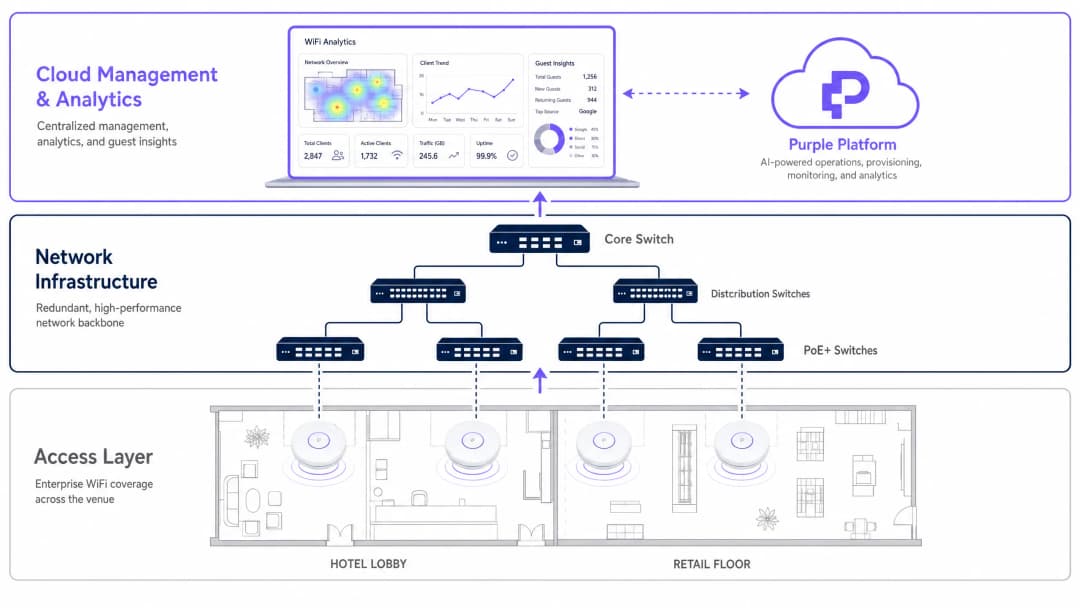 Aruba AP-735 किंवा Cisco 9136 सारख्या ऍक्सेस पॉईंट्सना ऍक्सेस लेव्हलवर प्रति पोर्ट 2.5 Gbps, 5 Gbps किंवा 10 Gbps ला सपोर्ट करणारे Multi-Gigabit (mGig) स्विचेस आवश्यक असतात. पॉवरच्या बाबतीत, आधुनिक ट्राय-बँड APs लक्षणीय वॅटेज वापरतात. ऍक्सेस स्विचेस PoE++ (802.3bt, जे प्रति पोर्ट 60W प्रकार 3 किंवा 90W प्रकार 4 पर्यंत प्रदान करते) ला सपोर्ट करत असल्याची खात्री करा. हे APs मानक PoE+ (802.3at, जास्तीत जास्त 30W) वर चालवल्याने रेडिओ बंद होतील, CPU परफॉर्मन्स मर्यादित होईल आणि मॅनेजमेंट डॅशबोर्डमध्ये डिग्रेडेड मोडचे इशारे मिळतील.
3. ओळख आणि ऍक्सेस मॅनेजमेंट
एंटरप्राइझ सुरक्षेसाठी मजबूत ऑथेंटिकेशन आवश्यक आहे. IEEE 802.1X/RADIUS सह WPA3-Enterprise हा कॉर्पोरेट उपकरणांसाठी मानक आहे, जो प्रति-वापरकर्ता एनक्रिप्शन की आणि पॉलिसीजची मध्यवर्ती अंमलबजावणी ऑफर करतो. पाहुण्यांच्या (गेस्ट) ऍक्सेससाठी वेगळ्या दृष्टिकोनाची आवश्यकता असते जी सुरक्षेसोबतच किमान अडथळ्यांचा समतोल राखते.
WiFi Analytics प्लॅटफॉर्मसह एकत्रित केलेले Captive Portal तैनात केल्याने संस्थांना सुरक्षित ऍक्सेस प्रदान करतानाच मार्केटिंगसाठी मौल्यवान फर्स्ट-पार्टी डेटा गोळा करणे शक्य होते. आणखी सुलभ अनुभवासाठी, OpenRoaming लागू करण्याचा विचार करा. How a wi fi assistant Enables Passwordless Access in 2026 मध्ये तपशीलवार वर्णन केल्याप्रमाणे, Purple हे Connect परवान्यासह OpenRoaming साठी विनामूल्य ओळख प्रदाता (identity provider) म्हणून कार्य करते, ज्यामुळे उपकरणांना पोर्टलशी मॅन्युअल संवाद न साधता स्वयंचलितपणे आणि सुरक्षितपणे ऑथेंटिकेट करता येते.
Transport आणि सार्वजनिक क्षेत्रांमध्ये, हा अडथळामुक्त ऑथेंटिकेशन मॉडेल तात्पुरत्या वापरकर्त्यांच्या मोठ्या संख्येचे व्यवस्थापन करण्यासाठी विशेषतः मौल्यवान आहे.
सर्वोत्तम पद्धती आणि उद्योग मानके
RF Site Surveys: इन्स्टॉलेशनपूर्वी प्रेडिक्टिव्ह सर्वे आणि इन्स्टॉलेशननंतर ॲक्टिव्ह व्हॅलिडेशन सर्वे दोन्ही नेहमी करा. भिंती, काच आणि मानवी शरीरांमुळे होणाऱ्या अडथळ्यांचा (attenuation) विचार करा - गर्दी लक्षणीय प्रमाणात RF ऊर्जा शोषून घेते, म्हणूनच साईट सर्वे दरम्यान चांगला परफॉर्मन्स देणारे स्टेडियम हाऊसफुल इव्हेंट दरम्यान पूर्णपणे अपयशी ठरू शकते.
चॅनल प्लॅनिंग: 5 GHz आणि 6 GHz बँड्समध्ये, एंटरप्राइझ उपयोजनांसाठी 40 MHz किंवा 80 MHz चॅनल विड्थ वापरा जेणेकरून थ्रूपुट आणि उपलब्ध चॅनेल्सचा समतोल राखता येईल. जोपर्यंत तुम्ही वेगळ्या वातावरणात नसाल तोपर्यंत 160 MHz किंवा 320 MHz विड्थ वापरणे टाळा, कारण ते नॉन-ओव्हरलॅपिंग चॅनेल्सची संख्या अत्यंत मर्यादित करतात आणि को-चॅनल हस्तक्षेपाची (interference) शक्यता वाढवतात. Conformità (अनुपालन): तुमची नेटवर्क आर्किटेक्चर संबंधित मानकांचे पालन करत असल्याची खात्री करा. PCI DSS 4.0 मानक WiFi द्वारे कार्ड पेमेंट प्रक्रियेत आणणाऱ्या कोणत्याही सिस्टमसाठी नेटवर्क सेगमेंटेशन अनिवार्य करते. Healthcare वातावरणात, HIPAA अंतर्गत डेटा ट्रान्समिशनवर कडक नियंत्रणे आवश्यक आहेत. सर्व उद्योगांमध्ये अतिथी WiFi पोर्टल्सद्वारे गोळा केलेल्या सर्व वैयक्तिक डेटावर GDPR लागू होतो.
फर्मवेअर व्यवस्थापन: फर्मवेअर पॅचेस लागू करण्यासाठी एक कडक वेळापत्रक निश्चित करा. एंटरप्राइझ AP पुरवठादार असुरक्षितता दूर करण्यासाठी नियमितपणे सुरक्षा पॅचेस रिलीज करतात. क्लाउड व्यवस्थापित प्लॅटफॉर्म्स (Aruba Central, Mist AI, Meraki) कॉन्फिगर करण्यायोग्य मेंटेनन्स विंडोद्वारे ही प्रक्रिया स्वयंचलित करू शकतात.
त्रुटी निवारण आणि जोखीम कमी करणे
Sticky Clients: एक सामान्य समस्या जिथे एखादे डिव्हाइस जवळच्या ॲक्सेस पॉईंटकडे रोमिंग करण्यास नकार देते, ज्यामुळे संपूर्ण सेलची कामगिरी मंदावते. क्लायंटना चांगला रोमिंग निर्णय घेण्यास मदत करण्यासाठी IEEE 802.11k (रेडिओ रिसोर्स मेझरमेंट) आणि IEEE 802.11v (BSS ट्रान्झिशन मॅनेजमेंट) मानके लागू करून ही समस्या कमी करा. सिग्नल वापरण्यायोग्य मर्यादेच्या खाली, सामान्यतः 5 GHz वर 12 Mbps च्या खाली गेल्यास क्लायंटचे कनेक्शन सक्तीने तोडण्यासाठी प्रत्येक SSID वर किमान डेटा दर अनिवार्य सेट करा.
असममित राउटिंग (Asymmetric Routing): ॲक्सेस पॉईंट मोबाईल क्लायंट ट्रान्समिट करू शकणाऱ्या अंतरापेक्षा जास्त अंतरावर ट्रान्समिट करू शकतो, ज्यामुळे क्लायंटला पूर्ण सिग्नल स्ट्रेंथ दिसते परंतु थ्रूपुट जवळजवळ शून्य मिळते. हे कमी करणे सोपे आहे: ॲक्सेस पॉईंट्स कमाल ट्रान्समिट पॉवरवर चालवू नका. AP ची Tx पॉवर सरासरी मोबाईल डिव्हाइस क्षमतेनुसार समायोजित करा, जी सामान्यतः 12 - 15 dBm असते. हे शेजारील AP मधील सह-चॅनेल हस्तक्षेप देखील कमी करते.
PoE बजेट संपणे: मोठ्या इन्स्टॉलेशन्समध्ये, वैयक्तिक पोर्ट बजेट पुरेसे वाटत असले तरीही, स्विच चॅसिसच्या एकूण PoE पॉवर बजेटपेक्षा जास्त वापर होणे सोपे असते. नेहमी केवळ प्रति-पोर्ट मर्यादांचा विचार न करता, स्विचच्या एकूण PoE पॉवर बजेटच्या तुलनेत सर्व कनेक्ट केलेल्या AP च्या एकूण वीज वापराची गणना करा.
SSID चा अतिवापर (SSID Proliferation): प्रत्येक SSID मॅनेजमेंट ओव्हरहेड (Beacon Frames) तयार करतो जो एअरटाइम वापरतो. प्रति AP जास्तीत जास्त 3 - 4 SSID पर्यंत मर्यादा ठेवा. प्रत्येक विभागासाठी स्वतंत्र नेटवर्क तयार करण्याऐवजी IoT, कॉर्पोरेट आणि अतिथींसाठी SSID चे एकत्रीकरण करा.
ROI आणि व्यावसायिक प्रभाव
उत्कृष्ट ऍक्सेस पॉईंट हार्डवेअरवर अपग्रेड करण्याचा बिझनेस केस केवळ आयटी (IT) परफॉर्मन्स मेट्रिक्सच्या पलीकडे जातो. Hospitality क्षेत्रामध्ये, विश्वासार्ह WiFi हे सातत्याने पाहुण्यांच्या समाधान गुणवत्तेतील मुख्य घटकांपैकी एक मानले जाते. एका मोठ्या कॉन्फरन्स दरम्यान नेटवर्क बिघाड झाल्यास थेट री-बुकिंग दरांवर आणि ब्रँडच्या प्रतिष्ठेवर परिणाम होऊ शकतो.
हार्डवेअरवर प्रगत ॲनालिटिक्स प्लॅटफॉर्म समाकलित करून, आयटी (IT) टीम्स व्यवसायाला थेट ROI दर्शवू शकतात. पादचाऱ्यांची वर्दळ, थांबण्याचा वेळ, सर्वाधिक वापराचा काळ आणि ग्राहकांचे लोकसंख्याशास्त्रीय तपशील समजून घेण्यासाठी हे नेटवर्क एक साधन बनते. हा डेटा थेट कर्मचारी पातळीपासून ते रिटेल स्टोअर्समधील मर्चेंडाईज प्लेसमेंटपर्यंतच्या ऑपरेटिंग निर्णयांना माहिती पुरवतो.
हॉटेलच्या संदर्भात या डेटाचा कसा फायदा घ्यावा यावरील व्यावहारिक मार्गदर्शकासाठी, How To Improve Guest Satisfaction: The Ultimate Playbook पहा. सार्वजनिक क्षेत्रात, डिजिटल समावेश उपक्रमांसाठी एक मजबूत आणि सर्वसमावेशक वायरलेस इन्फ्रास्ट्रक्चर वाढत्या प्रमाणात मध्यवर्ती बनत आहे, जसे की Purple Appoints Iain Fox as VP Growth – Public Sector to Drive Digital Inclusion and Smart City Innovation मध्ये हायलाइट केले आहे.
एकात्मिक ॲनालिटिक्ससह सुव्यवस्थित एंटरप्राइझ WiFi अंमलबजावणीच्या मोजण्यायोग्य परिणामांमध्ये सामान्यतः खालील गोष्टींचा समावेश होतो: कनेक्टिव्हिटीशी संबंधित पाहुण्यांच्या तक्रारींमध्ये १५ ते २५% घट, केवळ ईमेल फॉर्मच्या तुलनेत सोशल लॉगिन वापरताना Captive Portal च्या कन्व्हर्जन दरांमध्ये ३० ते ४०% वाढ, आणि पोस्ट-कुकी वातावरणात थर्ड-पार्टी डेटा प्रदात्यांवरील अवलंबित्व कमी करणारी एक स्पष्ट फर्स्ट-पार्टी डेटा मालमत्ता.
महत्वाच्या व्याख्या
Multi-Link Operation (MLO)
एक Wi-Fi ७ (802.11be) वैशिष्ट्य जे उपकरणांना एकाच वेळी एकाधिक फ्रिक्वेन्सी बँड्स - उदाहरणार्थ, ५ GHz आणि ६ GHz वर डेटा ट्रान्समिट आणि रिसीव्ह करण्याची परवानगी देते.
दाट एंटरप्राइझ वातावरणात लेटन्सी कमी करण्यासाठी आणि थ्रुपुट वाढवण्यासाठी अत्यंत महत्त्वाचे आहे. काम करण्यासाठी AP आणि क्लायंट डिव्हाइस दोन्हीने Wi-Fi ७ ला सपोर्ट करणे आवश्यक आहे.
4K-QAM (Quadrature Amplitude Modulation)
Wi-Fi ७ मध्ये वापरली जाणारी एक मॉड्युलेशन योजना जी प्रति सिम्बॉल १२ बिट्स एन्कोड करते, ज्याच्या तुलनेत Wi-Fi ६ चे 1024-QAM (प्रति सिम्बॉल १० बिट्स) आहे, जी अंदाजे २०% जास्त पीक थ्रुपुट देते.
प्रभावीपणे कार्य करण्यासाठी अत्यंत उच्च सिग्नल-टू-नॉईझ रेशो (SNR) आवश्यक आहे. गोंगाट असलेल्या वातावरणात, AP आपोआप कमी मॉड्युलेशन रेट्सवर मागे येतो. क्षमतेचे नियोजन 4K-QAM च्या सर्वोच्च आकड्यांवर आधारित करू नका.
Spatial Streams (MIMO)
Multiple-Input Multiple-Output तंत्रज्ञान एकाच वेळी स्वतंत्र डेटा प्रवाहित करण्यासाठी एकाधिक अँटेना वापरते. हे २x२, ४x४, किंवा ८x८ (ट्रान्समिट x रिसीव्ह अँटेना) म्हणून दर्शविले जाते.
अधिक स्पेशल स्ट्रीम्स AP ला एकाच वेळी अधिक क्लायंट कनेक्शन्स हाताळण्याची आणि उच्च एकूण थ्रुपुट प्रदान करण्याची परवानगी देतात. Cisco ९१३६ सारखे ८x८ AP हे २x२ AP च्या तुलनेत लक्षणीयरीत्या अधिक समवर्ती क्लायंट्सना सेवा देऊ शकते.
802.3bt (PoE++)
पॉवर ओव्हर इथरनेट मानक जे ट्विस्टेड-पेअर इथरनेट केबल्सवर पॉवर उपकरणांना ६०W (Type ३) किंवा ९०W (Type ४) पर्यंत DC पॉवर देण्यास सक्षम आहे.
कार्यक्षमतेशी तडजोड न करता आधुनिक, उच्च-कार्यक्षमता असलेल्या ट्राय-बँड एंटरप्राइझ ॲक्सेस पॉइंट्सना वीज पुरवण्यासाठी अनिवार्य आहे. ८०२.३at (PoE+, ३०W) स्विचेसवर ट्राय-बँड APs तैनात केल्यास कामगिरी ढासळेल किंवा रेडिओ बंद पडतील.
OpenRoaming
एक Wi-Fi Alliance फेडरेशन मानक जे वापरकर्त्यांना पूर्व-कॉन्फिगर केलेल्या क्रेडेंशियल प्रोफाइलचा वापर करून, Captive Portals किंवा मॅन्युअल पासवर्ड एन्ट्रीशिवाय सहभागी अतिथी WiFi नेटवर्कशी स्वयंचलितपणे आणि सुरक्षितपणे कनेक्ट होण्याची परवानगी देते.
Purple हे Connect लायसन्स अंतर्गत OpenRoaming साठी विनामूल्य ओळख प्रदाता म्हणून काम करते, ज्यामुळे केंद्रांना अखंड, सुरक्षित अतिथी ऑथेंटिकेशन ऑफर करणे शक्य होते. विशेषतः ट्रान्सपोर्ट हब आणि सार्वजनिक क्षेत्रातील मोठ्या प्रमाणात ये-जा करणाऱ्या वापरकर्त्यांच्या ठिकाणी हे अत्यंत मूल्यवान आहे.
BSS Transition Management (802.11v)
एक IEEE मानक जे नेटवर्क इन्फ्रास्ट्रक्चरला क्लायंट डिव्हाइसेसना सल्ला देणारे संदेश पाठविण्याची परवानगी देते, ज्याद्वारे सिग्नलची ताकद आणि लोडच्या आधारावर कनेक्ट करण्यासाठी अधिक चांगल्या ॲक्सेस पॉइंटची शिफारस केली जाते.
आयटी ॲडमिन्सद्वारे 'sticky clients' चे प्रमाण कमी करण्यासाठी आणि वायरलेस नेटवर्कवर लोड बॅलेंसिंग सुनिश्चित करण्यासाठी वापरले जाते. क्लायंट्सना APs ची एक संभाव्य यादी प्रदान करण्यासाठी 802.11k (रेडिओ रिसोर्स मेजरमेंट) च्या संयोगाने कार्य करते.
Co-Channel Interference (CCI)
जेव्हा दोन किंवा अधिक ॲक्सेस पॉइंट्स अगदी एकाच फ्रिक्वेन्सी चॅनेलवर कार्य करतात आणि एकमेकांच्या रेंजमध्ये असतात, तेव्हा निर्माण होणारा हस्तक्षेप, ज्यामुळे त्यांना CSMA/CA प्रोटोकॉलद्वारे आळीपाळीने ट्रान्समिट करावे लागते.
अति प्रमाणात डिप्लॉय केलेल्या एंटरप्राइझ नेटवर्क्समध्ये कार्यक्षमता कमी होण्याचे मुख्य कारण CCI हे आहे. काळजीपूर्वक चॅनेल प्लॅनिंग करून, ट्रान्समिट पॉवर कमी करून आणि अधिक नॉन - ओव्हरलॅपिंग चॅनेल्स देणाऱ्या विस्तृत 6 GHz बँडचा वापर करून हे कमी केले जाऊ शकते.
OFDMA (Orthogonal Frequency-Division Multiple Access)
WiFi 6 मध्ये सादर केलेली OFDM ची मल्टी - युझर आवृत्ती जी एका चॅनेलला लहान रिसोर्स युनिट्समध्ये (सब - कॅरियर्स) विभाजित करते, ज्यामुळे एका AP ला एकाच ट्रान्समिशन विंडोमध्ये एकाधिक क्लायंट्सशी एकाच वेळी संवाद साधता येतो.
IoT डिव्हाइसेस किंवा वारंवार लहान डेटा पाठवणारे मोबाईल ॲप्लिकेशन्स यांसारख्या अनेक लहान - पॅकेट ट्रान्समिशन असलेल्या हाय - डेंसिटी वातावरणात कार्यक्षमता मोठ्या प्रमाणात सुधारते. लेटन्सी कमी करते आणि एअरटाइम कार्यक्षमता सुधारते.
BeamFlex+ (Ruckus Proprietary)
Ruckus Networks चे ॲडॉप्टिव्ह अँटेना तंत्रज्ञान जे प्रत्येक वैयक्तिक क्लायंट ट्रान्समिशनसाठी डायनॅमिकली सर्वोत्तम अँटेना पॅटर्न निवडते, आणि SNR जास्तीत जास्त करण्यासाठी व हस्तक्षेप कमी करण्यासाठी सिग्नल योग्य दिशेने वळवते.
मेटल रॅकिंग असलेली वेअरहाउसेस किंवा लक्षणीय मल्टिपाथ रिफ्लेक्शन्स असलेल्या ठिकाणांसारख्या आव्हानात्मक RF वातावरणात विशेषतः प्रभावी आहे. अशा परिस्थितीमध्ये मानक ऑम्नीडायरेक्शनल अँटेनाच्या तुलनेत मोजण्यायोग्य कामगिरीचा फायदा प्रदान करते.
सोडवलेली उदाहरणे
एका ४०० खोल्यांच्या लक्झरी हॉटेलमध्ये संध्याकाळच्या गर्दीच्या वेळी लॉबी आणि कॉन्फरन्स एरियामध्ये WiFi च्या कामगिरीबाबत पाहुण्यांच्या गंभीर तक्रारी येत आहेत. सध्याच्या इन्फ्रास्ट्रक्चरमध्ये कॉरिडॉरमध्ये तैनात केलेले WiFi ५ (802.11ac) ऍक्सेस पॉइंट्स वापरले जातात. आयटी डायरेक्टरला संपूर्ण रिडिझाईनची आवश्यकता आहे. शिफारस केलेला दृष्टिकोन काय आहे?
पायरी १ - कव्हरेज मॉडेलकडून कॅपॅसिटी मॉडेलकडे शिफ्ट व्हा. कॉरिडॉरमधून APs काढा, ज्यामुळे पाहुणे खोल्या आणि कॉरिडॉर दरम्यान फिरत असताना 'स्टिकी क्लायंट' च्या समस्या उद्भवतात. त्याऐवजी इन - रूम वॉल - प्लेट APs (उदा. Cisco 9105AXW किंवा Aruba AP-303H) वापरा जेणेकरून प्रत्येक खोलीत RF डोमेन मर्यादित ठेवणारे मायक्रो - सेल्स तयार होतील.
पायरी २ - हाय - डेन्सिटी लॉबी आणि कॉन्फरन्स एरियामध्ये, छताची उंची ८ मीटरपेक्षा जास्त असल्यास दिशात्मक अँटेना वापरून WiFi ६E किंवा WiFi ७ ऍक्सेस पॉइंट्स (उदा. Aruba AP-735 किंवा Cisco 9136) तैनात करा. लॉबीमध्ये प्रति ७५ - १०० चौरस मीटर मागे एक AP आणि कॉन्फरन्स रूममध्ये प्रति ५० उपस्थितांमागे एक AP चे लक्ष्य ठेवा.
पायरी ३ - डिग्रेडेड मोडशिवाय नवीन ट्राय - बँड APs ला पॉवर देण्यासाठी mGig (२.५/५ Gbps) आणि PoE++ (802.3bt) चे समर्थन करण्यासाठी एज स्विचेस अपग्रेड करा.
पायरी ४ - प्रति युझर बँडविड्थ वाटप व्यवस्थापित करण्यासाठी, GDPR - सुसंगत डेटा कॅप्चर लागू करण्यासाठी आणि कॉन्फरन्स उपस्थितांच्या ड्वेल टाईम आणि पुनरावृत्ती भेट दरांबद्दल विश्लेषणे गोळा करण्यासाठी Purple चे Guest WiFi Captive Portal लागू करा.
पायरी ५ - लॉबी APs आणि कॉन्फरन्स रूम APs दरम्यान सेशन ड्रॉपशिवाय अखंड रोमिंग सुनिश्चित करण्यासाठी 802.11k/v/r (फास्ट BSS ट्रान्झिशन) सक्षम करा.
एका मोठ्या रिटेल साखळीला एकाच वेळी ५० नवीन स्टोअर्समध्ये WiFi तैनात करायचे आहे. त्यांना हँडहेल्ड इन्व्हेंटरी स्कॅनर्स आणि POS टर्मिनल्ससाठी उच्च विश्वासार्हतेची आवश्यकता आहे (PCI-DSS अनुपालन अनिवार्य आहे), परंतु फर्स्ट - पार्टी मार्केटिंग डेटा कॅप्चर करण्यासाठी खरेदीदारांना अतिथी WiFi देखील ऑफर करायचे आहे. बजेट मर्यादित आहे. शिफारस केलेले आर्किटेक्चर काय आहे?
पायरी १ - खर्च आणि कामगिरी यांचा समतोल राखण्यासाठी मध्यम श्रेणीचे Wi-Fi 6E ॲक्सेस पॉइंट्स (उदा. Juniper Mist AP45 किंवा Ruckus R560) तैनात करा. Mist AI प्लॅटफॉर्मची AIOps क्षमता ५० ठिकाणांवरील सुरू असलेले आयटी व्यवस्थापन खर्च कमी करते, ज्यामुळे ऑपरेशनल खर्चात मोठी बचत होते.
पायरी २ - VLANs आणि स्वतंत्र SSIDs चा वापर करून नेटवर्कचे विभाजन करा: कॉर्पोरेट डिव्हाइसेस आणि POS टर्मिनल्ससाठी 802.1X ऑथेंटिकेशनसह एक WPA3-Enterprise SSID (ज्याला अतिथी ट्रॅफिकसोबत कोणत्याही inter-VLAN राउटींगशिवाय समर्पित VLAN वर वेगळे ठेवले आहे), आणि अतिथींसाठी क्लायंट आयसोलेशन असलेले एक स्वतंत्र ओपन SSID.
पायरी ३ - अतिथी नेटवर्कसाठी, Purple चे Captive Portal लागू करा. प्रवेशाच्या बदल्यात सोशल लॉगिन किंवा ईमेल पत्ता अनिवार्य करण्यासाठी पोर्टल कॉन्फिगर करा, ज्यामुळे मार्केटिंग टीमला फर्स्ट-पार्टी CRM डेटाबेस तयार करता येईल. कोणताही एक वापरकर्ता अपलिंक पूर्णपणे व्यापून टाकू नये यासाठी प्रति क्लायंट बँडविड्थ मर्यादा (उदा. १० Mbps डाऊन / ५ Mbps अप) लागू करा.
पायरी ४ - इन्व्हेंटरी स्कॅनर ॲसेटच्या ठिकाणांचा मागोवा घेण्यासाठी आणि मर्चेंडायझिंग ऑप्टिमायझेशनसाठी खरेदीदारांच्या पादचारी ट्रॅफिक पॅटर्नचे विश्लेषण करण्यासाठी APs च्या BLE क्षमतेचा वापर करा.
पायरी ५ - Mist AI झिरो-टच प्रोव्हिजनिंग वर्कफ्लो वापरून सर्व ५० ठिकाणांवर कॉन्फिगरेशन टेम्पलेट प्रमाणित करा, ज्यामुळे प्रति-ठिकाण तैनातीचा वेळ दिवसांवरून तासांवर येईल.
सराव प्रश्न
Q1. तुम्ही ३०० विद्यार्थ्यांची आसनक्षमता असलेल्या हाय - डेंसिटी युनिव्हर्सिटी लेक्चर थिएटरसाठी WiFi नेटवर्क डिझाइन करत आहात. तुमचे तीन WiFi 6E ॲक्सेस पॉइंट्स डिप्लॉय करण्याचे नियोजन आहे. कार्यक्षमता कमी होण्यापासून रोखण्यासाठी सर्वात महत्त्वाची एकमेव RF डिझाइनची बाब कोणती आहे आणि तुम्ही ती कशी सोडवाल?
टीप: एकाच फिजिकल स्पेसमध्ये अनेक APs असताना काय होते आणि ते एकाच फ्रिक्वेन्सी चॅनेलवर एअरटाइम कसा शेअर करतात याचा विचार करा.
नमुना उत्तर पहा
सर्वात महत्त्वाची बाब म्हणजे Co-Channel Interference (CCI) कमी करणे. एकाच फिजिकल स्पेसमध्ये तीन APs असताना, तुम्ही हे सुनिश्चित केले पाहिजे की ते नॉन - ओव्हरलॅपिंग चॅनेल्सवर कॉन्फिगर केलेले आहेत - विशेषतः 5 GHz आणि 6 GHz बँड्सवर. 6 GHz बँडमध्ये, ५९ पर्यंत नॉन - ओव्हरलॅपिंग 20 MHz चॅनेल्स आहेत, जे 5 GHz पेक्षा लक्षणीयरीत्या अधिक लवचिकता प्रदान करतात. याव्यतिरिक्त, तुम्ही प्रत्येक AP ची ट्रान्समिट (Tx) पॉवर मोठ्या प्रमाणात कमी केली पाहिजे जेणेकरून त्यांचे सेल साइजेस जास्त ओव्हरलॅप होणार नाहीत. जर दोन APs एकाच चॅनेलवर एकमेकांचे सिग्नल स्पष्टपणे ऐकू शकत असतील, तर ते CSMA/CA द्वारे ट्रान्समिशन पुढे ढकलतील, ज्यामुळे प्रभावीपणे तीन APs ची क्षमता एकाच AP च्या क्षमतेइतकी कमी होईल. दुसरी महत्त्वाची बाब म्हणजे, RF डोमेन खोलीपुरतेच मर्यादित ठेवण्यासाठी ऑम्नीडायरेक्शनल अँटेना वापरण्याऐवजी बसण्याच्या जागेकडे खाली निर्देशित केलेले डायरेक्टिव्ह अँटेना वापरणे.
Q2. एका क्लायंटला त्यांच्या वेअरहाऊस WiFi ला अपग्रेड करायचे आहे जेणेकरून नवीन ऑटोमेटेड गायडेड व्हेइकल्स (AGVs) ना सपोर्ट मिळेल ज्यांना sub-50ms लेटन्सी आणि सातत्यपूर्ण रोमिंगची आवश्यकता आहे. वेअरहाऊसमध्ये उंच मेटल रॅकिंग आणि गंभीर मल्टिपाथ हस्तक्षेप आहे. खर्च वाचवण्यासाठी ते Ubiquiti UniFi U7 Pro चा विचार करत आहेत. तुमची शिफारस आणि त्यामागील कारण काय आहे?
टीप: हार्डवेअरचे अँटेना तंत्रज्ञान विशिष्ट RF वातावरणासाठी योग्य आहे की नाही याचे मूल्यमापन करा आणि AGVs च्या रोमिंग आवश्यकतांचा विचार करा.
नमुना उत्तर पहा
जरी U7 Pro किफायतशीर आहे, तरीही तो या वातावरणासाठी योग्य पर्याय नाही. मेटल रॅकिंगमुळे तीव्र मल्टिपाथ इंटरफेयरेन्स निर्माण होतो ज्यावर मात करणे मानक ओम्नीडायरेक्शनल अँटेनासाठी कठीण जाते. मी विशेषतः Ruckus R760 किंवा तत्सम डिव्हाइसची शिफारस करतो, त्याच्या BeamFlex+ अडॅप्टिव्ह अँटेना तंत्रज्ञानासाठी, जे भौतिक अडथळ्यांच्या बाजूने सिग्नल नेव्हिगेट करण्यासाठी आणि मल्टिपाथ रिफ्लेक्शन्स कमी करण्यासाठी अँटेना पॅटर्न डायनॅमिकली सुस्थीत करते. AGV रोमिंगच्या आवश्यकतेसाठी, APs दरम्यान ५०ms पेक्षा कमी वेळेत रोमिंग हँडऑफ सक्षम करण्यासाठी 802.11r (फास्ट BSS ट्रान्झिशन) लागू करा - वेअरहाऊसमध्ये वेगाने फिरणाऱ्या AGVs साठी हे अत्यंत महत्त्वपूर्ण आहे. Ruckus प्लॅटफॉर्म AGV क्लायंटना रोमिंग सुरू करण्यापूर्वी सर्वोत्तम AP ओळखण्यात मदत करण्यासाठी 802.11k/v ला देखील सपोर्ट करतो.
Q3. तुमच्या टीमने कॉर्पोरेट कॅम्पसमध्ये नवीन ट्राय-बँड Wi-Fi 7 ॲक्सेस पॉइंट्स तैनात केले आहेत. पायलट फेज दरम्यान, ६ GHz रेडिओ ब्रॉडकास्ट करत नाहीत आणि APs क्लाउड मॅनेजमेंट डॅशबोर्डमध्ये 'डिग्रेडेड मोड' रिपोर्ट करत आहेत. APs सध्याच्या PoE+ स्विचेसला जोडलेले आहेत. याचे मूळ कारण काय आहे आणि यावर उपाय काय आहे?
टीप: आधुनिक, उच्च-कार्यक्षमता असलेल्या ट्राय-बँड ॲक्सेस पॉइंट्सना पॉवर देण्यासाठी आवश्यक असलेल्या भौतिक पायाभूत सुविधांच्या आवश्यकतांचे पुनरावलोकन करा.
नमुना उत्तर पहा
याचे मूळ कारण अपुरे पॉवर ओव्हर इथरनेट बजेट हे आहे. सध्याचे PoE+ स्विचेस (802.3at) प्रति पोर्ट जास्तीत जास्त ३०W पॉवर देतात. आधुनिक ट्राय-बँड Wi-Fi 7 APs ना तिन्ही रेडिओ एकाच वेळी पूर्ण क्षमतेने चालवण्यासाठी साधारणपणे 802.3bt (PoE++) - प्रति पोर्ट ६०W किंवा ९०W पर्यंत - आवश्यक असते. जेव्हा AP ला अपुरी पॉवर आढळते, तेव्हा ते आपोआप डिग्रेडेड मोडमध्ये प्रवेश करते, ज्यामुळे सर्वात जास्त पॉवर वापरणारे घटक प्रथम निष्क्रिय केले जातात, जे सामान्यतः ६ GHz रेडिओ आणि दुय्यम इथरनेट पोर्ट असतात. यावरील उपाय म्हणजे ॲक्सेस लेयर स्विचेस बदलून 802.3bt-सक्षम मॉडेल्स वापरणे. तात्पुरती व्यवस्था म्हणून, काही APs PoE+ स्विचच्या आउटपुटला पूरक म्हणून पॉवर इंजेक्टर (मिडस्पॅन) ला सपोर्ट करतात, परंतु हा दीर्घकालीन आणि स्केलेबल उपाय नाही.
Q4. एका कॉन्फरन्स सेंटरमधील सिंगल हॉलमध्ये २,००० पर्यंत युझर्स एकाच वेळी उपस्थित राहून इव्हेंट आयोजित केले जातात. नुकत्याच झालेल्या एका इव्हेंट दरम्यान, सेटअपच्या वेळी Wi-Fi ने चांगली कामगिरी केली परंतु हॉल पूर्ण क्षमतेने भरल्यानंतर ती गंभीरपणे खालावली. RF साईट सर्व्हे हॉल रिकाम्या असताना करण्यात आला होता. नेमके काय चुकले आणि भविष्यातील तैनात करताना तुम्ही हे कसे रोखाल?
टीप: एका रिकाम्या हॉल आणि गर्दीने पूर्ण भरलेल्या हॉलमधील भौतिक वातावरणात कसा बदल होतो आणि त्याचा RF प्रोपॅगेशनवर काय परिणाम होतो याचा विचार करा.
नमुना उत्तर पहा
मुख्य समस्या अशी आहे की मानवी शरीर मोठ्या प्रमाणात RF ऊर्जा शोषून घेते - विशेषतः ५ GHz आणि ६ GHz फ्रिक्वेन्सीवर. २,००० लोकांनी भरलेला हॉल हा रिकाम्या हॉलपेक्षा पूर्णपणे भिन्न RF वातावरण निर्माण करतो. हॉल रिकाम्या असताना केलेल्या प्रेडिक्टिव साईट सर्व्हेमध्ये या ॲटेन्युएशनचा (attenuation) विचार केला गेला नव्हता. याचा परिणाम असा झाला की रिकाम्या हॉलमध्ये पुरेशी कव्हरेज असल्याचे दिसणाऱ्या APs ची प्रभावी रेंज आता कमी झाली आहे, ज्यामुळे प्रति AP क्लायंटची संख्या वाढली, रिट्राय रेट वाढला आणि थ्रूटपुट खालावला. हे रोखण्यासाठी आवश्यक आहे: (१) हॉल पूर्ण किंवा जवळजवळ पूर्ण क्षमतेने असताना लोडेड साईट सर्व्हे करणे, किंवा मानवी शरीराच्या ॲटेन्युएशनचे मॉडेल दर्शवणारी सिम्युलेशन टूल्स वापरणे; (२) रिकाम्या हॉलच्या सर्व्हेमध्ये सुचवलेल्या संख्येपेक्षा AP ची घनता वाढवणे; (३) AP आणि क्लायंटमधील अंतर कमी करण्यासाठी APs कमी उंचीवर तैनात करणे (उदा. सीटच्या खाली किंवा बाल्कनीच्या खाली माउंट करणे), ज्यामुळे शरीराद्वारे होणारे ॲटेन्युएशन भरून निघेल.
या मालिकेमध्ये पुढे वाचा
WLC (Wireless LAN Controller) म्हणजे काय आणि तुम्हाला अजूनही त्याची गरज आहे का?
ही सर्वसमावेशक मार्गदर्शिका Wireless LAN Controllers (WLCs) च्या उत्क्रांतीचा शोध घेते आणि २०२६ मध्ये योग्य आर्किटेक्चर निश्चित करण्यासाठी तांत्रिक फ्रेमवर्क प्रदान करते. यामध्ये पारंपारिक हार्डवेअर, क्लाउड-मॅनेज्ड आणि कंट्रोलर-लेस मॉडेल्सचा समावेश आहे, जे त्यांच्या अनुपालन, स्केलेबिलिटी आणि अतिथी अनुभवावरील प्रभावाचे तपशील देतात.
Access Points साठी Power over Ethernet (PoE): एक अंमलबजावणी मार्गदर्शिका
ही मार्गदर्शिका इन्फ्रास्ट्रक्चर तंत्रज्ञ, नेटवर्क आर्किटेक्ट्स आणि IT निर्णयकर्त्यांना हॉटेल्स, रिटेल इस्टेट्स, स्टेडियम्स आणि सार्वजनिक क्षेत्रातील सुविधांसह एंटरप्राइझ ठिकाणी Power over Ethernet (PoE) access points तैनात करण्यासाठी निश्चित तांत्रिक संदर्भ प्रदान करते. यात 802.3af ते 802.3bt पर्यंतचे IEEE मानके, पॉवर बजेट गणना, केबलिंग आवश्यकता, VLAN विभागणी आणि सुरक्षा अनुपालन समाविष्ट आहे, ज्यामध्ये ठोस अंमलबजावणीचे सिनॅरिओ आणि मोजता येण्याजोगे ROI बेंचमार्क आहेत. PoE आर्किटेक्चर समजून घेणे हे कोणत्याही [Guest WiFi](/guest-wifi) किंवा [WiFi Analytics](/guest-wifi-marketing-analytics-platform) तैनातीसाठी पायाभूत आहे, कारण फिजिकल लेयरची विश्वासार्हता थेट डेटा कॅप्चरची गुणवत्ता, वापरकर्ता अनुभव आणि ऑपरेशनल अपटाइम ठरवते.
Mesh Network vs Access Points: मोठ्या ठिकाणांसाठी कोणते अधिक चांगले आहे?
हे तांत्रिक मार्गदर्शक मोठ्या प्रमाणावरील ठिकाणांसाठी mesh networks आणि पारंपारिक वायर्ड access points दरम्यान एक निश्चित तुलना प्रदान करते, ज्यामध्ये आर्किटेक्चर, परफॉर्मन्स तडजोड आणि उपयोजन धोरण समाविष्ट आहे. हे IT मॅनेजर्स, नेटवर्क आर्किटेक्ट्स आणि CTOs ना हॉस्पिटॅलिटी, रिटेल, इव्हेंट्स आणि सार्वजनिक क्षेत्रातील वातावरणासाठी हाय-परफॉर्मन्स, सुसंगत WiFi इन्फ्रास्ट्रक्चर डिझाइन करण्यासाठी व्यावहारिक फ्रेमवर्कसह सुसज्ज करते. हे मार्गदर्शक या आर्किटेक्चरल निर्णयांना Purple च्या हार्डवेअर-अज्ञेयवादी गेस्ट WiFi आणि ॲनालिटिक्स प्लॅटफॉर्मशी देखील जोडते, आणि योग्य इन्फ्रास्ट्रक्चरची निवड कशा प्रकारे मोजता येण्याजोगे व्यावसायिक परिणाम मिळवून देते हे दर्शवते.
तुमच्या विशिष्ट सेटअपबद्दल काही प्रश्न आहेत का?
आमची टीम ८०,००० हून अधिक वेन्यूजमधील वेन्यू ऑपरेटर्स, IT मॅनेजर्स आणि नेटवर्क इंजिनिअर्ससोबत काम करते. २० मिनिटांचा कॉल बुक करा आणि तुमच्यासारख्या इतरांनी ही समस्या कशी सोडवली हे आम्ही तुम्हाला दाखवू.