

अतिथि WiFi उपयोग के मामले: विभिन्न उद्योग मुफ्त WiFi का उपयोग कैसे कर रहे हैं
IT लीडर्स के लिए अतिथि WiFi को एक रणनीतिक डेटा अधिग्रहण और एनालिटिक्स प्लेटफॉर्म के रूप में तैनात करने पर एक व्यापक तकनीकी संदर्भ। यह मार्गदर्शिका कनेक्टिविटी को मापने योग्य व्यावसायिक मूल्य में बदलने के लिए आर्किटेक्चर, उद्योग-विशिष्ट उपयोग के मामलों और सर्वोत्तम प्रथाओं को कवर करती है।
🎧 इस गाइड को सुनें
ट्रांसक्रिप्ट देखें
कार्यकारी सारांश
आधुनिक उद्यमों के लिए, मुफ्त अतिथि WiFi प्रदान करना अब लागत केंद्र नहीं है - यह एक महत्वपूर्ण डेटा अधिग्रहण चैनल है। यह मार्गदर्शिका बताती है कि खुदरा, आतिथ्य, स्वास्थ्य सेवा, स्थानों और परिवहन में IT प्रबंधक, नेटवर्क आर्किटेक्ट और CTOs मानक कनेक्टिविटी को कार्रवाई योग्य व्यावसायिक बुद्धिमत्ता में कैसे बदल रहे हैं। उन्नत प्रमाणीकरण तंत्र, मजबूत नेटवर्क सेगमेंटेशन और एकीकृत एनालिटिक्स प्लेटफॉर्म को तैनात करके, संगठन सहमति प्राप्त फर्स्ट-पार्टी डेटा कैप्चर कर सकते हैं, भौतिक फुटफॉल को माप सकते हैं और लक्षित पुनः-एंगेजमेंट के माध्यम से राजस्व बढ़ा सकते हैं।
यह संदर्भ दस्तावेज़ इन उपयोग के मामलों का समर्थन करने के लिए आवश्यक आर्किटेक्चर में एक तकनीकी गहन-विश्लेषण प्रदान करता है, जिसमें 802.1X और WPA3 मानकों से लेकर Captive Portal डिज़ाइन और GDPR अनुपालन तक शामिल हैं। यह विक्रेता-तटस्थ कार्यान्वयन रणनीतियों की रूपरेखा तैयार करता है और बताता है कि Purple के Guest WiFi और WiFi Analytics जैसे प्लेटफॉर्म व्यावसायिक परिणामों से सीधे कैसे जुड़ते हैं। चाहे आप उच्च-घनत्व वाले स्टेडियम परिनियोजन या वितरित खुदरा संपत्ति का प्रबंधन कर रहे हों, यह मार्गदर्शिका आपके वायरलेस इंफ्रास्ट्रक्चर को अनुकूलित करने के लिए आवश्यक व्यावहारिक, वास्तुशिल्प मार्गदर्शन प्रदान करती है।
तकनीकी गहन-विश्लेषण
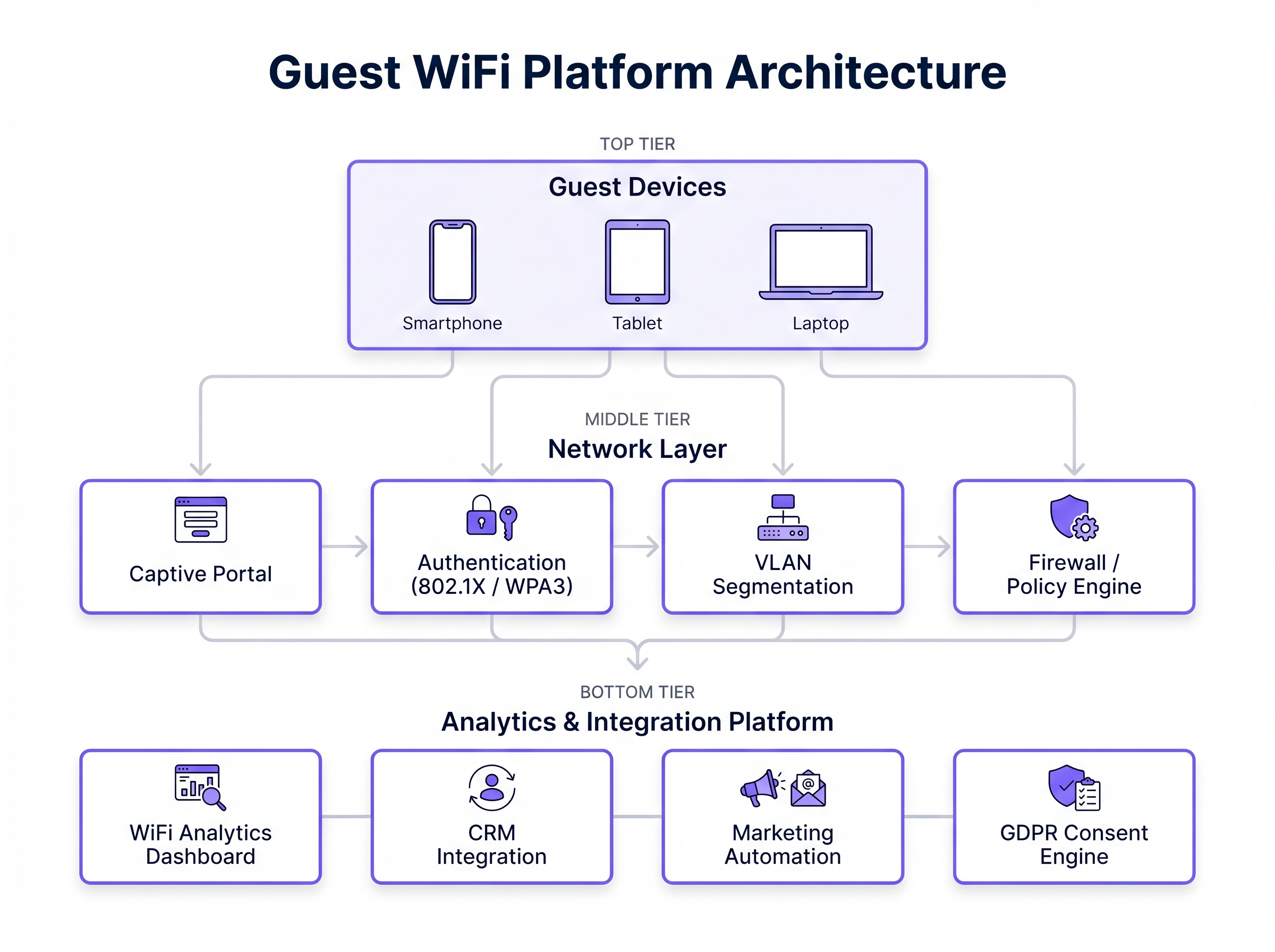
एक बुनियादी मुफ्त WiFi परिनियोजन और एक पूरी तरह से सुसज्जित अतिथि इंटेलिजेंस प्लेटफॉर्म के बीच का अंतर महत्वपूर्ण है। एक मजबूत आर्किटेक्चर को तीन प्राथमिक परतों में सावधानीपूर्वक समन्वय की आवश्यकता होती है: नेटवर्क परत, पहचान परत और एनालिटिक्स परत।
नेटवर्क आर्किटेक्चर और सुरक्षा मानक
नींव में, नेटवर्क परत को सख्त अलगाव बनाए रखते हुए विश्वसनीय थ्रूपुट प्रदान करना चाहिए। एंटरप्राइज़ अतिथि नेटवर्क को ऑफ़लाइन डिक्शनरी हमलों के खिलाफ बढ़ी हुई क्रिप्टोग्राफिक शक्ति के लिए WPA3-SAE (Simultaneous Authentication of Equals) का लाभ उठाना चाहिए। प्रति-उपयोगकर्ता नीति प्रवर्तन की आवश्यकता वाले वातावरण के लिए, RADIUS-आधारित प्रमाणीकरण के साथ IEEE 802.1X मानक है। हालांकि, उपभोक्ता-उन्मुख परिनियोजन के लिए जहां डिवाइस प्रोविजनिंग अव्यावहारिक है, Captive Portal पहचान कैप्चर और नीति स्वीकृति के लिए प्राथमिक तंत्र बना हुआ है।
सख्त नेटवर्क सेगमेंटेशन गैर-परक्राम्य है। अतिथि ट्रैफ़िक को समर्पित VLANs में अलग किया जाना चाहिए, जिसमें स्टेटफुल फ़ायरवॉल द्वारा इंटर-VLAN रूटिंग नीतियों को लागू किया जाना चाहिए ताकि कॉर्पोरेट या पॉइंट-ऑफ़-सेल (POS) वातावरण में पार्श्व गति को रोका जा सके। यह खुदरा और स्वास्थ्य सेवा में विशेष रूप से महत्वपूर्ण है, जहां PCI DSS और HIPAA/GDPR अनुपालन कार्डधारक और रोगी डेटा की सुरक्षा अनिवार्य करते हैं।
पहचान और एनालिटिक्स परत
एक अतिथि WiFi नेटवर्क का व्यावसायिक मूल्य पहचान परत पर कैप्चर किया जाता है। एक अच्छी तरह से डिज़ाइन किया गया Captive Portal एक डेटा अधिग्रहण इंजन के रूप में कार्य करता है, जो प्रमाणित पहचान (ईमेल, SMS, या सोशल OAuth के माध्यम से) को कैप्चर करता है और मार्केटिंग संचार के लिए स्पष्ट सहमति रिकॉर्ड करता है। यह डेटा तब एनालिटिक्स परत में निर्बाध रूप से प्रवाहित होना चाहिए।
Purple के WiFi Analytics जैसे प्लेटफॉर्म कनेक्शन इवेंट, RSSI (Received Signal Strength Indicator) प्रोब डेटा और प्रमाणित प्रोफाइल को एकत्रित करते हैं। यह क्रॉस-वेन्यू पहचान समाधान को सक्षम बनाता है - एक खुदरा विक्रेता को विभिन्न स्टोर स्थानों पर एक लौटने वाले ग्राहक को पहचानने की अनुमति देता है - और स्वचालित CRM एकीकरण और लक्षित मार्केटिंग अभियानों के लिए डेटा नींव प्रदान करता है। इसके अलावा, Purple कनेक्ट लाइसेंस के तहत OpenRoaming जैसी सेवाओं के लिए एक मुफ्त पहचान प्रदाता के रूप में कार्य करता है, जो लौटने वाले उपयोगकर्ताओं के लिए प्रमाणीकरण प्रक्रिया को सुव्यवस्थित करता है।
कार्यान्वयन मार्गदर्शिका: उद्योग उपयोग के मामले
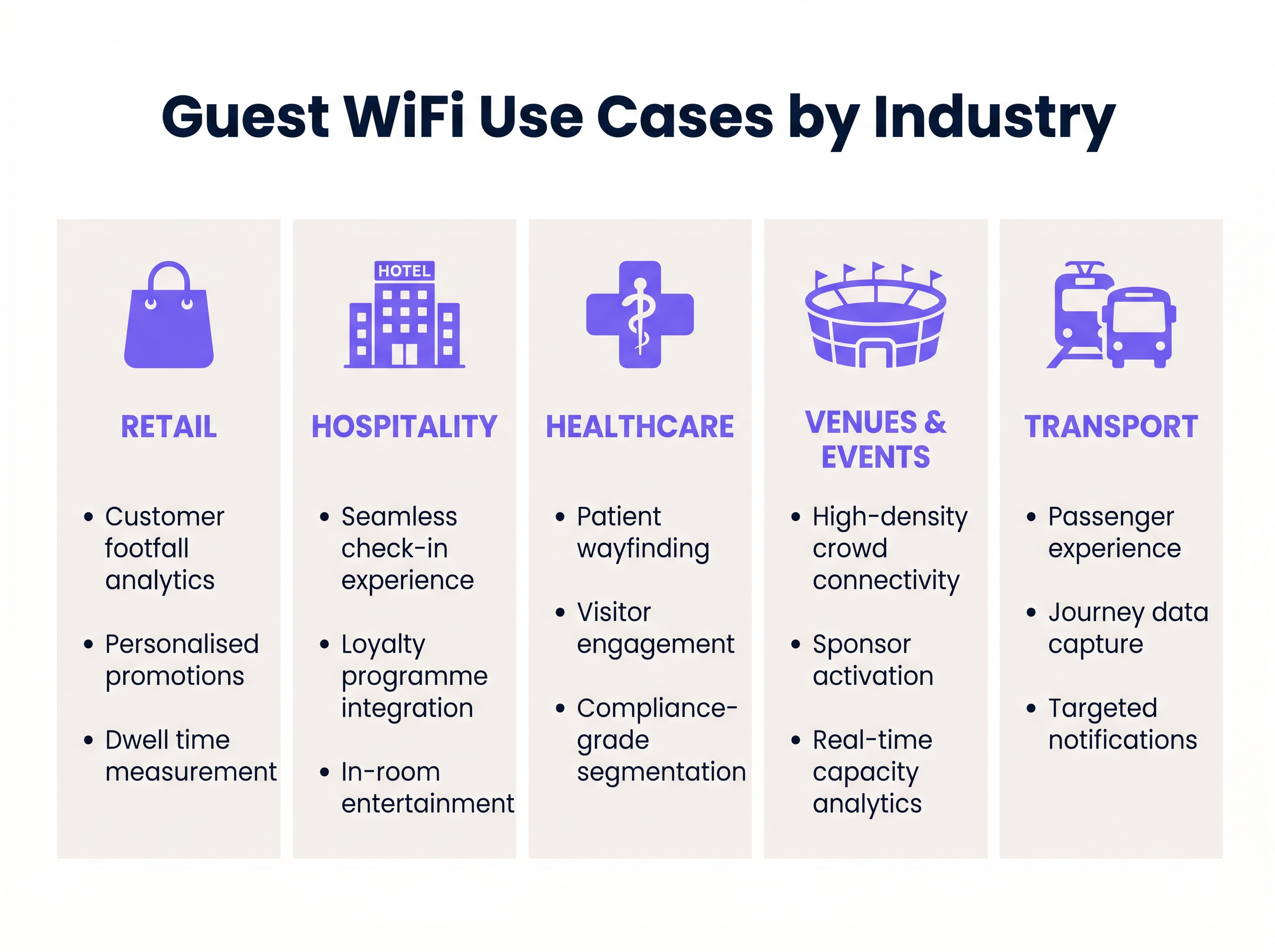
अतिथि WiFi तैनात करते समय विभिन्न वर्टिकल की अलग-अलग आवश्यकताएं और वास्तुशिल्प बाधाएं होती हैं। नीचे इस बात का विश्लेषण दिया गया है कि विशिष्ट उद्योग व्यावसायिक मूल्य बढ़ाने के लिए वायरलेस इंफ्रास्ट्रक्चर का लाभ कैसे उठा रहे हैं।
खुदरा: फुटफॉल एनालिटिक्स और ठहरने का समय
खुदरा क्षेत्र में, प्राथमिक उद्देश्य भौतिक ग्राहक व्यवहार को समझना है। अप्रमाणित प्रोब अनुरोधों और प्रमाणित सत्र डेटा को कैप्चर करके, खुदरा विक्रेता फुटफॉल को माप सकते हैं, विशिष्ट स्टोर ज़ोन में ठहरने के समय को ट्रैक कर सकते हैं और रूपांतरण दरों का विश्लेषण कर सकते हैं।
कार्यान्वयन रणनीति: निष्क्रिय प्रोब अनुरोधों को कैप्चर करने के लिए समर्पित स्कैनिंग रेडियो के साथ एक्सेस पॉइंट तैनात करें। प्रगतिशील प्रोफाइलिंग को सक्षम करने के लिए Captive Portal को केंद्रीय CRM के साथ एकीकृत करें। जब कोई ग्राहक प्रमाणित होता है, तो सिस्टम को मार्केटिंग ऑटोमेशन प्लेटफॉर्म पर एक वेबहुक ट्रिगर करना चाहिए, जिससे उनके इन-स्टोर व्यवहार के आधार पर व्यक्तिगत पुनः-एंगेजमेंट अभियान सक्षम हो सकें।
आतिथ्य: निर्बाध कनेक्टिविटी और प्रासंगिक जुड़ाव
आतिथ्य वातावरण के लिए, विश्वसनीय कनेक्टिविटी आधारभूत है। उन्नत उपयोग के मामले में WiFi प्रमाणीकरण प्रवाह को प्रॉपर्टी मैनेजमेंट सिस्टम (PMS) के साथ एकीकृत करना शामिल है।
कार्यान्वयन रणनीति: Captive Portal को API के माध्यम से PMS को क्वेरी करने के लिए कॉन्फ़िगर करें। जब कोई अतिथि अपना कमरा नंबर और उपनाम दर्ज करता है, तो सिस्टम क्रेडेंशियल को मान्य करता है और उनके ठहरने की अवधि के लिए पहुंच प्रदान करता है। एक WiFi रिसॉर्ट वातावरण में, स्थान-आधारित एनालिटिक्स प्रासंगिक ऑफ़र को ट्रिगर कर सकता है - उदाहरण के लिए, एक ऐसे अतिथि को स्पा प्रचार भेजना जो लंबे समय से पूल क्षेत्र के पास ठहरा हुआ है।
स्थान और कार्यक्रम: उच्च-घनत्व भीड़ विश्लेषण
स्टेडियम और सम्मेलन केंद्र अत्यधिक क्लाइंट घनत्व की चुनौती का सामना करते हैं। एक WiFi चिड़ियाघर या थीम पार्क परिनियोजन में समान विशेषताएँ होती हैं, जिसके लिए बड़े पैमाने पर समवर्ती कनेक्शनों को संभालने के लिए सावधानीपूर्वक RF योजना की आवश्यकता होती है।
कार्यान्वयन रणनीति: एक्सेस पॉइंट पर क्लाइंट वितरण को प्रबंधित करने के लिए दिशात्मक एंटेना और आक्रामक लोड संतुलन का उपयोग करें। तत्काल विज्ञापन राजस्व उत्पन्न करने के लिए प्रायोजक ब्रांडिंग के साथ Captive Portal लागू करें। कार्यक्रम के बाद, कैप्चर किया गया फर्स्ट-पार्टी डेटा (ईमेल पते और जनसांख्यिकी) भविष्य की टिकट बिक्री और मर्चेंडाइज प्रचार के लिए एक महत्वपूर्ण संपत्ति बन जाता है।
स्वास्थ्य सेवा: अनुपालन-ग्रेड विभाजन
स्वास्थ्य सेवा में, ध्यान परिचालन दक्षता और सख्त नियामक अनुपालन पर है। अतिथि नेटवर्क को नैदानिक प्रणालियों से पूरी तरह से अलग किया जाना चाहिए।
कार्यान्वयन रणनीति: सख्त VLAN अलगाव और वेब सामग्री फ़िल्टरिंग लागू करें। Captive Portal में मजबूत GDPR सहमति प्रवाह होना चाहिए, जो सेवा की शर्तों की स्वीकृति को मार्केटिंग ऑप्ट-इन से स्पष्ट रूप से अलग करता हो, जैसा कि डेटा सुरक्षा और संरक्षण टूलकिट द्वारा अनिवार्य है। उपयोग के मामलों में इनडोर मैपिंग के माध्यम से रोगी मार्ग-निर्देशन और डिजिटल स्वास्थ्य संसाधनों तक पहुंच प्रदान करना शामिल है।
परिवहन: यात्री अनुभव और यात्रा मानचित्रण
परिवहन क्षेत्र के लिए, अतिथि WiFi यात्री अनुभव को बेहतर बनाता है और मूल्यवान यात्रा डेटा उत्पन्न करता है।
कार्यान्वयन रणनीति: ट्रेनों या बसों पर सेलुलर बैकहॉल (जैसे, SD-WAN राउटर) के साथ मोबाइल एक्सेस पॉइंट तैनात करें। वितरित वातावरण के लिए आवश्यक नेटवर्क आर्किटेक्चर को समझने के लिए, आधुनिक व्यवसायों के लिए मुख्य SD WAN लाभ की समीक्षा करें। एनालिटिक्स प्लेटफॉर्म यात्री प्रवाह को मैप करने और मार्ग योजना को अनुकूलित करने के लिए कनेक्शन डेटा को टिकटिंग सिस्टम के साथ सहसंबंधित कर सकता है।
सर्वोत्तम अभ्यास
अतिथि WiFi समाधान को डिजाइन और तैनात करते समय, IT टीमों को निम्नलिखित सिद्धांतों का पालन करना चाहिए:
- पोर्टल पर उपयोगकर्ता अनुभव (UX) को प्राथमिकता दें: Captive Portal डिजिटल फ्रंट डोर है। सुनिश्चित करें कि यह प्रतिक्रियाशील है, तेजी से लोड होता है, और iOS, Android और Windows उपकरणों पर निर्बाध रूप से कार्य करता है। पोर्टल डिज़ाइन पर मार्गदर्शन के लिए, अतिथि WiFi लॉगिन पेज कैसे बनाएं देखें।
- स्केलेबिलिटी के लिए डिज़ाइन करें: नेटवर्क को औसत लोड के लिए नहीं, बल्कि चरम क्षमता (95वें प्रतिशत) के लिए इंजीनियर करें। इसके लिए व्यापक RF साइट सर्वेक्षण और क्षमता योजना की आवश्यकता होती है, विशेष रूप से उच्च-घनत्व वाले वातावरण में।
- मजबूत डेटा शासन लागू करें: अतिथि डेटा को अत्यधिक संवेदनशील संपत्ति के रूप में मानें। स्वचालित डेटा प्रतिधारण नीतियां लागू करें, स्पष्ट सहमति तंत्र सुनिश्चित करें, और डेटा विषय पहुंच अनुरोधों (DSARs) को संभालने के लिए एक सहमति प्रबंधन प्लेटफ़ॉर्म (CMP) को एकीकृत करें।
- एकीकरणों को स्वचालित करें: डेटा को WiFi कंट्रोलर में अलग-थलग न छोड़ें। प्रमाणीकरण घटनाओं और स्थान डेटा को सीधे अपने CRM और मार्केटिंग प्लेटफॉर्म में वास्तविक समय में स्ट्रीम करने के लिए APIs और वेबहुक का उपयोग करें।
समस्या निवारण और जोखिम न्यूनीकरण
एंटरप्राइज़ अतिथि WiFi को तैनात करने में अंतर्निहित जोखिम शामिल हैं। सबसे सामान्य विफलता मोड और उनके शमन में शामिल हैं:
- Captive Portal का न दिखना: यह अक्सर आक्रामक DNS अवरोधन या सख्त HTTPS निरीक्षण नीतियों के कारण होता है। शमन: सुनिश्चित करें कि Walled Garden कॉन्फ़िगरेशन प्रमाणीकरण पूरा होने से पहले आवश्यक पहचान प्रदाताओं (जैसे, Google, Facebook) और पोर्टल होस्टिंग डोमेन तक पहुंच की अनुमति देता है।
- VLAN लीकेज: गलत कॉन्फ़िगर किए गए स्विच पोर्ट अतिथि ट्रैफ़िक को कॉर्पोरेट नेटवर्क से गुजरने दे सकते हैं। शमन: VLAN अलगाव को सत्यापित करने के लिए नियमित पैठ परीक्षण और स्वचालित कॉन्फ़िगरेशन ऑडिट करें।
- MAC रैंडमाइजेशन: आधुनिक मोबाइल ऑपरेटिंग सिस्टम उपयोगकर्ता गोपनीयता की रक्षा के लिए MAC एड्रेस रैंडमाइजेशन का उपयोग करते हैं, जिससे क्रॉस-विज़िट ट्रैकिंग जटिल हो जाती है। शमन: डिवाइस-स्तरीय पहचानकर्ताओं (MAC एड्रेस) से Captive Portal के माध्यम से कैप्चर की गई प्रमाणित उपयोगकर्ता पहचानों पर निर्भरता स्थानांतरित करें।
ROI और व्यावसायिक प्रभाव
अतिथि WiFi परिनियोजन के लिए निवेश पर प्रतिफल (ROI) को दो अक्षों पर मापा जाना चाहिए: परिचालन बचत और राजस्व सृजन।
परिचालन की दृष्टि से, स्वचालित प्रमाणीकरण (उदाहरण के लिए, होटलों में PMS एकीकरण) WiFi पहुंच से संबंधित हेल्पडेस्क टिकटों को कम करता है। व्यावसायिक रूप से, प्लेटफ़ॉर्म एक उच्च-मात्रा वाला लीड जनरेशन टूल के रूप में कार्य करता है। पारंपरिक डिजिटल मार्केटिंग चैनलों के माध्यम से ईमेल पते के अधिग्रहण की लागत (CPA) की तुलना अतिथि WiFi पोर्टल के माध्यम से इसे कैप्चर करने की लागत से करके, संगठन आमतौर पर 6 से 12 महीनों के भीतर सकारात्मक ROI प्रदर्शित करते हैं। इसके अलावा, फुटफॉल एनालिटिक्स से प्राप्त अंतर्दृष्टि स्टाफिंग स्तरों, स्टोर लेआउट और लीज वार्ताओं के संबंध में डेटा-संचालित निर्णयों की अनुमति देती है, जिससे समग्र व्यावसायिक प्रभाव बढ़ जाता है।
मुख्य शब्द और परिभाषाएं
Captive Portal
A web page that a user of a public access network is obliged to view and interact with before access is granted. It is the primary mechanism for authentication and terms acceptance.
Critical for capturing first-party data and ensuring users agree to terms of service before consuming bandwidth.
WPA3-SAE
Wi-Fi Protected Access 3 with Simultaneous Authentication of Equals. A security standard that provides robust protection against offline dictionary attacks.
The recommended security standard for modern enterprise guest networks to ensure cryptographic integrity.
MAC Randomisation
A privacy feature in modern mobile operating systems that generates a temporary MAC address for each network connection.
Complicates tracking users based solely on device hardware identifiers, making authenticated captive portal logins essential for persistent tracking.
RSSI (Received Signal Strength Indicator)
A measurement of the power present in a received radio signal.
Used in WiFi analytics to estimate the distance of a device from an access point, enabling location-based services and dwell time calculations.
Walled Garden
A limited environment that controls the user's access to web content and services before they have fully authenticated.
Must be carefully configured to allow access to necessary identity providers (like Google or Facebook for social login) before the user is granted full internet access.
VLAN Segmentation
The practice of dividing a physical network into multiple logical networks to isolate traffic.
Essential for security and compliance, ensuring guest traffic cannot route to corporate or POS systems.
Cross-Venue Identity Resolution
The ability to recognise a returning user across different physical locations within the same brand or estate.
Enables retailers and hospitality groups to build a unified customer profile and trigger consistent marketing campaigns regardless of which location the guest visits.
Progressive Profiling
A method of gradually gathering information about a user across multiple interactions rather than asking for all data upfront.
Used in captive portals to improve conversion rates; a user might provide just an email on their first visit, and a phone number on their second.
केस स्टडीज
A 200-room hotel needs to implement a guest WiFi solution that provides seamless connectivity while capturing first-party data for the marketing team, without increasing the burden on the front desk.
Deploy a WPA3-enabled network with a captive portal integrated directly into the hotel's Property Management System (PMS) via API. Configure the Walled Garden to allow access to the PMS authentication endpoint. When a guest connects, they enter their room number and surname. The portal queries the PMS; upon validation, the device's MAC address is whitelisted for the duration of the stay. Simultaneously, the portal presents a GDPR-compliant opt-in for marketing communications, syncing consented profiles directly to the hotel's CRM.
A national retail chain requires visibility into store conversion rates (footfall vs. transactions) and wants to trigger personalised offers to returning customers based on their previous visits.
Implement access points with dedicated scanning radios to capture passive probe requests for baseline footfall metrics. Deploy a centralised captive portal with social login (OAuth) to capture authenticated identities. Configure cross-venue identity resolution in the central analytics platform. Set up webhooks to trigger an event in the marketing automation platform whenever a known device connects, allowing for real-time, personalised email or SMS offers based on the customer's purchase history.
परिदृश्य विश्लेषण
Q1. A hospital IT director wants to provide free WiFi to patients and visitors but is concerned about HIPAA/GDPR compliance and the security of clinical systems. What is the most critical architectural requirement?
💡 संकेत:Consider how network traffic is isolated at Layer 2 and Layer 3.
अनुशंसित दृष्टिकोण दिखाएं
The most critical requirement is strict network segmentation. Guest traffic must be placed on a dedicated VLAN that is completely isolated from clinical networks. Inter-VLAN routing must be blocked by stateful firewall policies, ensuring that a compromised guest device cannot access patient records or medical equipment.
Q2. A retail marketing team complains that their WiFi analytics dashboard shows a high number of 'visitors' but very few actionable customer profiles. What technical limitation is likely causing this, and how should the IT team resolve it?
💡 संकेत:Think about how modern smartphones handle their hardware identifiers when scanning for networks.
अनुशंसित दृष्टिकोण दिखाएं
The dashboard is likely relying on passive probe requests, which are subject to MAC address randomisation by modern mobile operating systems (iOS/Android). This inflates visitor counts with temporary MACs and prevents profile building. The IT team must implement a captive portal to force authentication, capturing a persistent identity (like an email address) rather than relying on hardware MAC addresses.
Q3. During a major sporting event, the stadium's guest WiFi network becomes unresponsive. The access points are online, but users cannot reach the captive portal to log in. What is the most likely configuration issue?
💡 संकेत:Consider the dependencies required for a device to resolve and load an external web page before authentication.
अनुशंसित दृष्टिकोण दिखाएं
The most likely issue is an incorrectly configured Walled Garden or DNS interception failure. If the Walled Garden does not permit access to the DNS servers, the captive portal hosting domain, or the required external Identity Providers (e.g., Google/Facebook for social login), the device cannot load the portal page, resulting in a denial of service for new connections.




