

Casi d'uso del Guest WiFi: come diverse industrie utilizzano il WiFi gratuito
Un riferimento tecnico completo per i leader IT sull'implementazione del guest WiFi come piattaforma strategica di acquisizione dati e analisi. Questa guida copre architettura, casi d'uso specifici per settore e best practice per trasformare la connettività in valore aziendale misurabile.
🎧 Ascolta questa guida
Visualizza trascrizione
Riepilogo Esecutivo
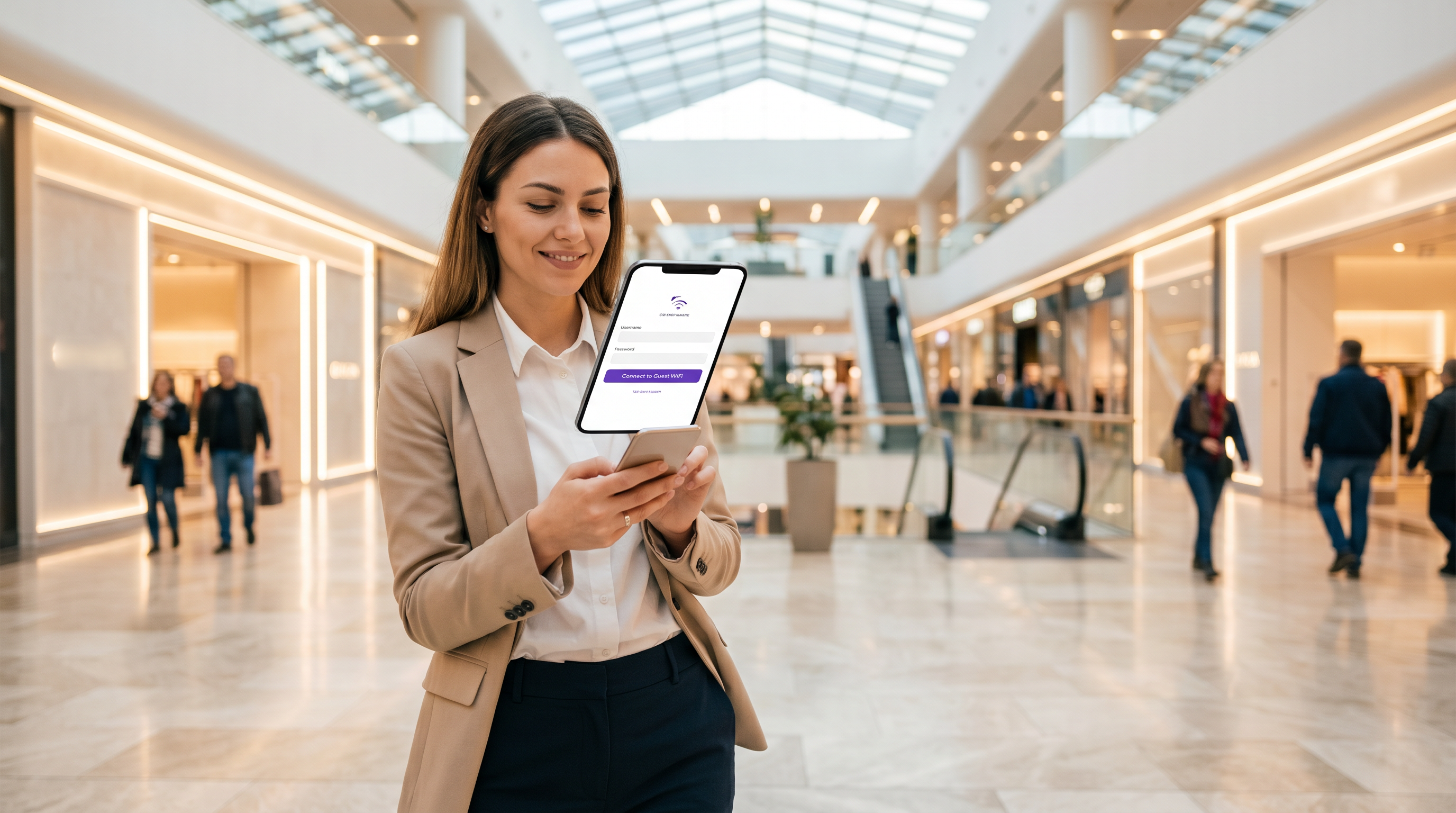
Per le aziende moderne, fornire un guest WiFi gratuito non è più un centro di costo, ma un canale critico per l'acquisizione di dati. Questa guida esamina come i responsabili IT, gli architetti di rete e i CTO nei settori della vendita al dettaglio, dell'ospitalità, della sanità, degli eventi e dei trasporti stanno trasformando la connettività standard in business intelligence azionabile. Implementando meccanismi di autenticazione avanzati, una robusta segmentazione della rete e piattaforme di analisi integrate, le organizzazioni possono acquisire dati di prima parte con consenso, misurare il traffico pedonale fisico e generare entrate tramite un re-engagement mirato.
Questo documento di riferimento fornisce un'analisi tecnica approfondita dell'architettura necessaria per supportare questi casi d'uso, dagli standard 802.1X e WPA3 alla progettazione del Captive Portal e alla conformità GDPR. Delinea strategie di implementazione indipendenti dal fornitore e evidenzia come piattaforme come Guest WiFi e WiFi Analytics di Purple si traducano direttamente in risultati commerciali. Che tu stia gestendo un'implementazione in uno stadio ad alta densità o una rete di vendita al dettaglio distribuita, questa guida fornisce le indicazioni pratiche e architettoniche necessarie per ottimizzare la tua infrastruttura wireless.
Analisi Tecnica Approfondita
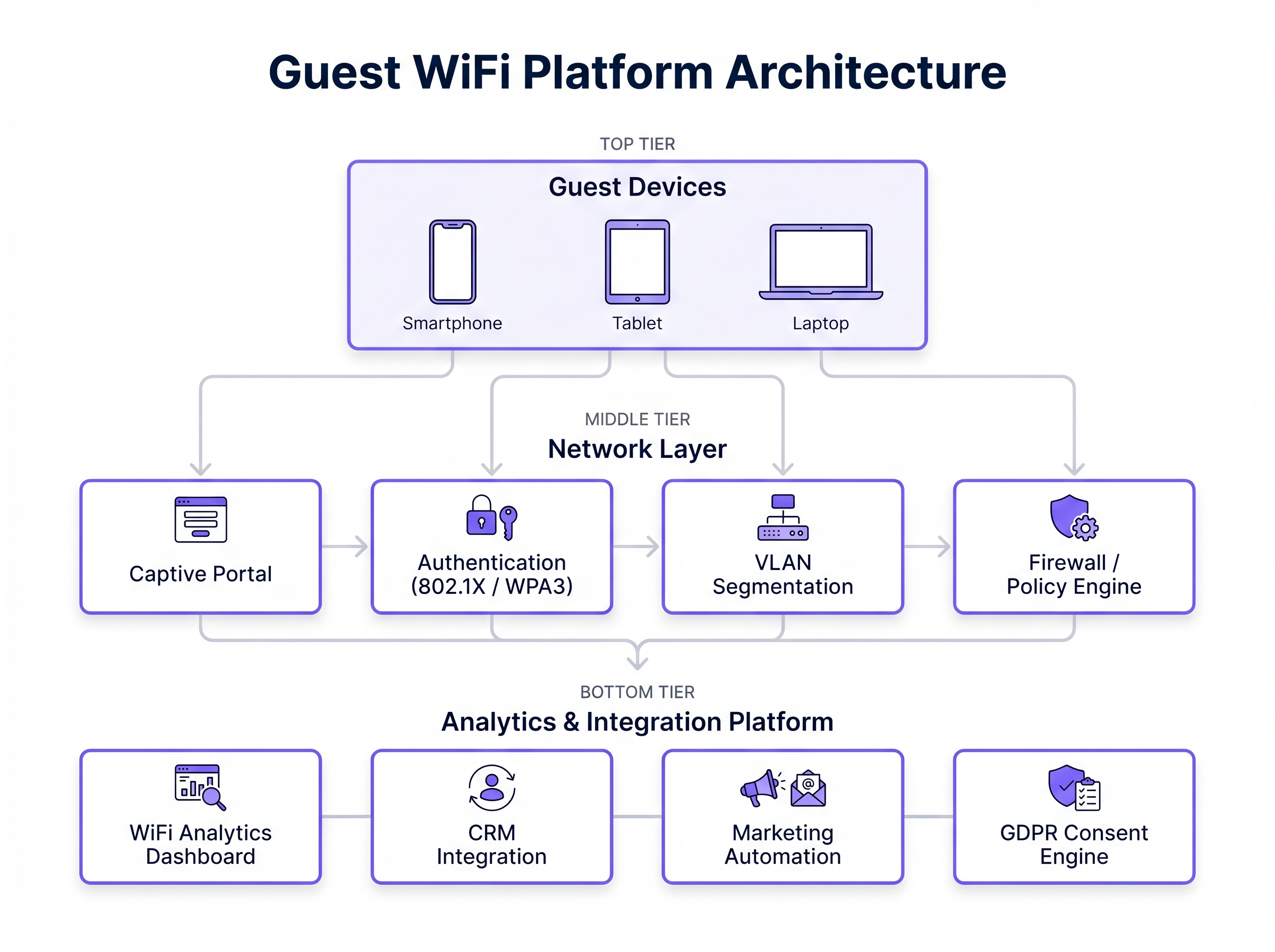
Il divario tra un'implementazione base di WiFi gratuito e una piattaforma di guest intelligence completamente strumentata è significativo. Un'architettura robusta richiede un'attenta orchestrazione su tre livelli principali: il livello di rete, il livello di identità e il livello di analisi.
Architettura di Rete e Standard di Sicurezza
Alla base, il livello di rete deve fornire un throughput affidabile mantenendo un isolamento rigoroso. Le reti guest aziendali dovrebbero sfruttare WPA3-SAE (Simultaneous Authentication of Equals) per una maggiore robustezza crittografica contro gli attacchi a dizionario offline. Per ambienti che richiedono l'applicazione di policy per utente, IEEE 802.1X con autenticazione basata su RADIUS è lo standard. Tuttavia, per implementazioni rivolte ai consumatori dove il provisioning dei dispositivi è impraticabile, il Captive Portal rimane il meccanismo principale per l'acquisizione dell'identità e l'accettazione delle policy.
Una segmentazione rigorosa della rete non è negoziabile. Il traffico guest deve essere isolato in VLAN dedicate, con policy di routing inter-VLAN applicate da firewall stateful per prevenire movimenti laterali verso ambienti aziendali o punti vendita (POS). Ciò è particolarmente critico nel commercio al dettaglio e nella sanità, dove la conformità PCI DSS e HIPAA/GDPR impone la protezione dei dati dei titolari di carta e dei pazienti.
Il Livello di Identità e Analisi
Il valore commerciale di una rete guest WiFi viene catturato al livello di identità. Un Captive Portal ben progettato agisce come motore di acquisizione dati, catturando identità autenticate (tramite email, SMS o OAuth sociale) e registrando il consenso esplicito per le comunicazioni di marketing. Questi dati devono quindi fluire senza soluzione di continuità nel livello di analisi.
Piattaforme come WiFi Analytics di Purple aggregano eventi di connessione, dati di sonda RSSI (Received Signal Strength Indicator) e profili autenticati. Ciò consente la risoluzione dell'identità tra diverse sedi – permettendo a un rivenditore di riconoscere un cliente di ritorno in diverse sedi di negozio – e fornisce la base dati per integrazioni CRM automatizzate e campagne di marketing mirate. Inoltre, Purple agisce come fornitore di identità gratuito per servizi come OpenRoaming sotto la licenza Connect, semplificando il processo di autenticazione per gli utenti di ritorno.
Guida all'Implementazione: Casi d'Uso per Settore
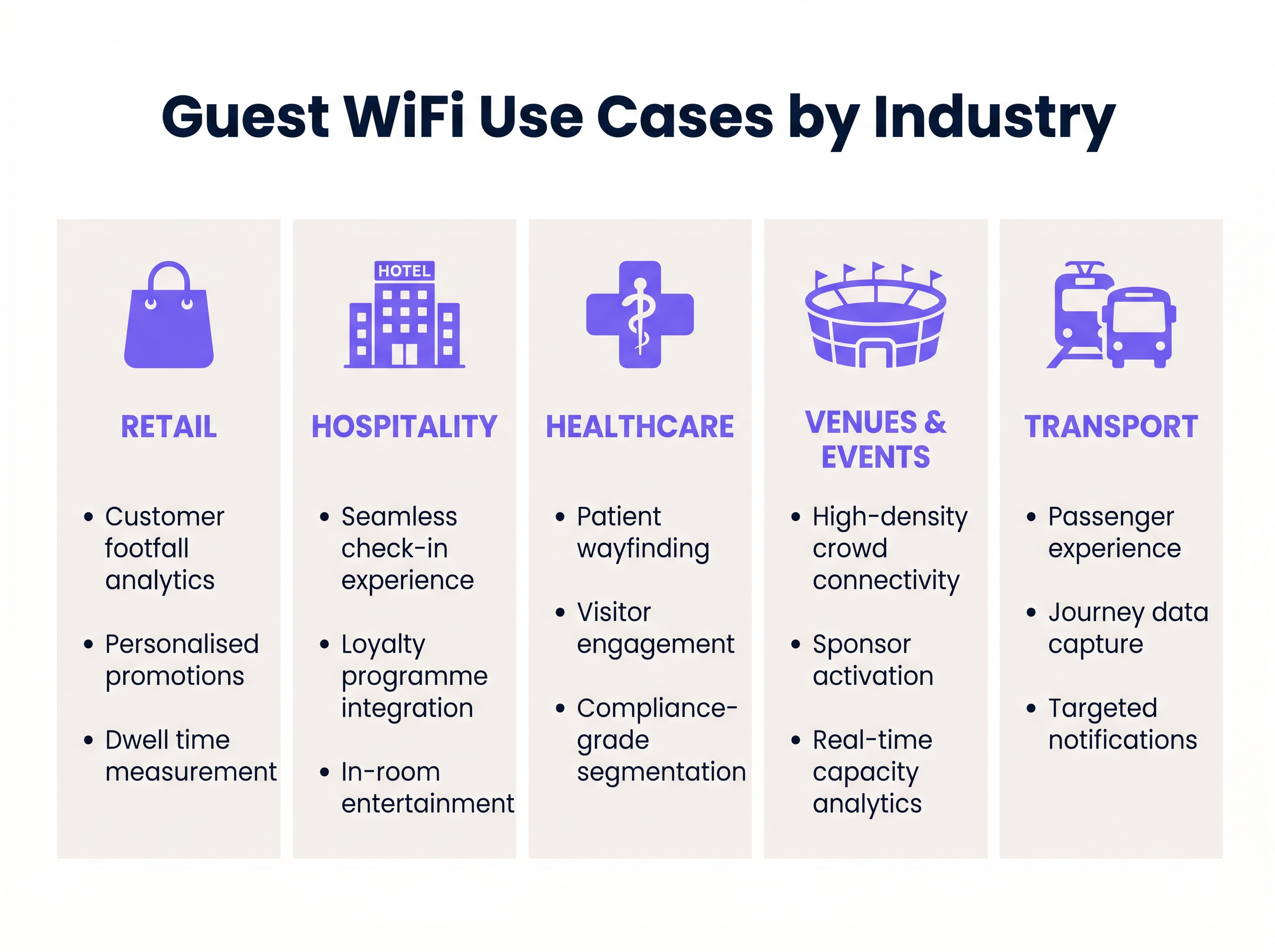
Diversi settori verticali hanno requisiti e vincoli architettonici distinti quando implementano il guest WiFi. Di seguito è riportata un'analisi di come settori specifici stanno sfruttando l'infrastruttura wireless per generare valore aziendale.
Retail: Analisi del Traffico Pedonale e Tempo di Permanenza
Nel settore Retail , l'obiettivo primario è comprendere il comportamento fisico dei clienti. Catturando le richieste di sonda non autenticate e i dati di sessione autenticati, i rivenditori possono misurare il traffico pedonale, tracciare il tempo di permanenza in specifiche zone del negozio e analizzare i tassi di conversione.
Strategia di Implementazione: Implementare access point con radio di scansione dedicate per catturare le richieste di sonda passive. Integrare il Captive Portal con il CRM centrale per abilitare la profilazione progressiva. Quando un cliente si autentica, il sistema dovrebbe attivare un webhook verso la piattaforma di automazione del marketing, abilitando campagne di re-engagement personalizzate basate sul loro comportamento in negozio.
Ospitalità: Connettività Senza Interruzioni e Engagement Contestuale
Per gli ambienti Ospitalità , la connettività affidabile è la base. Il caso d'uso avanzato prevede l'integrazione del flusso di autenticazione WiFi con il Property Management System (PMS).
Strategia di Implementazione: Configurare il Captive Portal per interrogare il PMS tramite API. Quando un ospite inserisce il numero della sua camera e il cognome, il sistema convalida le credenziali e fornisce l'accesso per la durata del suo soggiorno. In un ambiente resort WiFi, l'analisi basata sulla posizione può attivare offerte contestuali, ad esempio, inviando una promozione spa a un ospite che è rimasto a lungo vicino all'area della piscina.
Sedi ed Eventi: Alta Densità "Analisi della folla
Stadi e centri congressi affrontano la sfida dell'estrema densità di client. Un'implementazione WiFi in uno zoo o in un parco a tema presenta caratteristiche simili, richiedendo un'attenta pianificazione RF per gestire connessioni simultanee massicce.
Strategia di implementazione: Utilizzare antenne direzionali e un bilanciamento del carico aggressivo per gestire la distribuzione dei client tra i punti di accesso. Implementare captive portals con branding degli sponsor per generare entrate pubblicitarie immediate. Dopo l'evento, i dati di prima parte acquisiti (indirizzi email e dati demografici) diventano una risorsa fondamentale per future vendite di biglietti e promozioni di merchandising.
Sanità: Segmentazione a norma di conformità
Nel settore Sanità , l'attenzione è rivolta all'efficienza operativa e alla rigorosa conformità normativa. Le reti guest devono essere completamente separate dai sistemi clinici.
Strategia di implementazione: Implementare una rigorosa isolamento VLAN e il filtraggio dei contenuti web. Il captive portal deve presentare robusti flussi di consenso GDPR, separando chiaramente l'accettazione dei termini di servizio dagli opt-in di marketing, come richiesto dal Data Security and Protection Toolkit. I casi d'uso includono l'orientamento dei pazienti tramite mappatura interna e la fornitura di accesso a risorse sanitarie digitali.
Trasporti: Esperienza del passeggero e mappatura del viaggio
Per il settore Trasporti , il WiFi guest migliora l'esperienza del passeggero generando al contempo preziosi dati di viaggio.
Strategia di implementazione: Distribuire punti di accesso mobili con backhaul cellulare (ad es. router SD-WAN) su treni o autobus. Per comprendere l'architettura di rete richiesta per ambienti distribuiti, consultare I principali vantaggi SD WAN per le aziende moderne . La piattaforma di analisi può correlare i dati di connessione con i sistemi di biglietteria per mappare i flussi di passeggeri e ottimizzare la pianificazione dei percorsi.
Migliori Pratiche
Durante la progettazione e l'implementazione di una soluzione WiFi guest, i team IT dovrebbero attenersi ai seguenti principi:
- Dare priorità all'esperienza utente (UX) sul Portal: Il captive portal è la porta d'ingresso digitale. Assicurarsi che sia reattivo, si carichi rapidamente e funzioni senza problemi su dispositivi iOS, Android e Windows. Per indicazioni sulla progettazione del portal, fare riferimento a Come creare una pagina di accesso WiFi guest .
- Progettare per la Scalabilità: Progettare la rete per la capacità di picco (il 95° percentile), non per il carico medio. Ciò richiede indagini RF complete sul sito e pianificazione della capacità, in particolare in ambienti ad alta densità.
- Implementare una Robusta Governance dei Dati: Trattare i dati degli ospiti come una risorsa altamente sensibile. Implementare politiche automatizzate di conservazione dei dati, garantire chiari meccanismi di consenso e integrare una Consent Management Platform (CMP) per gestire le richieste di accesso dei soggetti interessati (DSAR).
- Automatizzare le Integrazioni: Non lasciare i dati isolati nel controller WiFi. Utilizzare API e webhook per trasmettere eventi di autenticazione e dati di localizzazione direttamente nelle piattaforme CRM e di marketing in tempo reale.
Risoluzione dei Problemi e Mitigazione dei Rischi
L'implementazione di un WiFi guest aziendale comporta rischi intrinseci. Le modalità di guasto più comuni e le loro mitigazioni includono:
- Mancata visualizzazione del Captive Portal: Ciò si verifica spesso a causa di un'intercettazione DNS aggressiva o di rigide politiche di ispezione HTTPS. Mitigazione: Assicurarsi che la configurazione del Walled Garden consenta l'accesso ai provider di identità necessari (ad es. Google, Facebook) e al dominio di hosting del portal prima che l'autenticazione sia completata.
- Fuga VLAN: Porte switch mal configurate possono consentire al traffico guest di attraversare le reti aziendali. Mitigazione: Condurre regolarmente penetration test e audit di configurazione automatizzati per verificare l'isolamento VLAN.
- Randomizzazione MAC: I moderni sistemi operativi mobili utilizzano la randomizzazione degli indirizzi MAC per proteggere la privacy degli utenti, complicando il tracciamento tra le visite. Mitigazione: Spostare la dipendenza dagli identificatori a livello di dispositivo (indirizzi MAC) alle identità utente autenticate acquisite tramite il captive portal.
ROI e Impatto Commerciale
Il ritorno sull'investimento (ROI) per un'implementazione WiFi guest dovrebbe essere misurato su due assi: risparmi operativi e generazione di entrate.
A livello operativo, l'autenticazione automatizzata (ad es. integrazione PMS negli hotel) riduce i ticket di helpdesk relativi all'accesso WiFi. Commercialmente, la piattaforma funge da strumento di generazione di lead ad alto volume. Calcolando il Costo Per Acquisizione (CPA) di un indirizzo email tramite i canali di marketing digitale tradizionali rispetto al costo di acquisizione tramite il captive portal WiFi guest, le organizzazioni dimostrano tipicamente un ROI positivo entro 6-12 mesi. Inoltre, le intuizioni derivate dall'analisi del flusso di persone consentono decisioni basate sui dati riguardo ai livelli di personale, alla disposizione dei negozi e alle negoziazioni di leasing, amplificando l'impatto commerciale complessivo.
Termini chiave e definizioni
Captive Portal
A web page that a user of a public access network is obliged to view and interact with before access is granted. It is the primary mechanism for authentication and terms acceptance.
Critical for capturing first-party data and ensuring users agree to terms of service before consuming bandwidth.
WPA3-SAE
Wi-Fi Protected Access 3 with Simultaneous Authentication of Equals. A security standard that provides robust protection against offline dictionary attacks.
The recommended security standard for modern enterprise guest networks to ensure cryptographic integrity.
MAC Randomisation
A privacy feature in modern mobile operating systems that generates a temporary MAC address for each network connection.
Complicates tracking users based solely on device hardware identifiers, making authenticated captive portal logins essential for persistent tracking.
RSSI (Received Signal Strength Indicator)
A measurement of the power present in a received radio signal.
Used in WiFi analytics to estimate the distance of a device from an access point, enabling location-based services and dwell time calculations.
Walled Garden
A limited environment that controls the user's access to web content and services before they have fully authenticated.
Must be carefully configured to allow access to necessary identity providers (like Google or Facebook for social login) before the user is granted full internet access.
VLAN Segmentation
The practice of dividing a physical network into multiple logical networks to isolate traffic.
Essential for security and compliance, ensuring guest traffic cannot route to corporate or POS systems.
Cross-Venue Identity Resolution
The ability to recognise a returning user across different physical locations within the same brand or estate.
Enables retailers and hospitality groups to build a unified customer profile and trigger consistent marketing campaigns regardless of which location the guest visits.
Progressive Profiling
A method of gradually gathering information about a user across multiple interactions rather than asking for all data upfront.
Used in captive portals to improve conversion rates; a user might provide just an email on their first visit, and a phone number on their second.
Casi di studio
A 200-room hotel needs to implement a guest WiFi solution that provides seamless connectivity while capturing first-party data for the marketing team, without increasing the burden on the front desk.
Deploy a WPA3-enabled network with a captive portal integrated directly into the hotel's Property Management System (PMS) via API. Configure the Walled Garden to allow access to the PMS authentication endpoint. When a guest connects, they enter their room number and surname. The portal queries the PMS; upon validation, the device's MAC address is whitelisted for the duration of the stay. Simultaneously, the portal presents a GDPR-compliant opt-in for marketing communications, syncing consented profiles directly to the hotel's CRM.
A national retail chain requires visibility into store conversion rates (footfall vs. transactions) and wants to trigger personalised offers to returning customers based on their previous visits.
Implement access points with dedicated scanning radios to capture passive probe requests for baseline footfall metrics. Deploy a centralised captive portal with social login (OAuth) to capture authenticated identities. Configure cross-venue identity resolution in the central analytics platform. Set up webhooks to trigger an event in the marketing automation platform whenever a known device connects, allowing for real-time, personalised email or SMS offers based on the customer's purchase history.
Analisi degli scenari
Q1. A hospital IT director wants to provide free WiFi to patients and visitors but is concerned about HIPAA/GDPR compliance and the security of clinical systems. What is the most critical architectural requirement?
💡 Suggerimento:Consider how network traffic is isolated at Layer 2 and Layer 3.
Mostra l'approccio consigliato
The most critical requirement is strict network segmentation. Guest traffic must be placed on a dedicated VLAN that is completely isolated from clinical networks. Inter-VLAN routing must be blocked by stateful firewall policies, ensuring that a compromised guest device cannot access patient records or medical equipment.
Q2. A retail marketing team complains that their WiFi analytics dashboard shows a high number of 'visitors' but very few actionable customer profiles. What technical limitation is likely causing this, and how should the IT team resolve it?
💡 Suggerimento:Think about how modern smartphones handle their hardware identifiers when scanning for networks.
Mostra l'approccio consigliato
The dashboard is likely relying on passive probe requests, which are subject to MAC address randomisation by modern mobile operating systems (iOS/Android). This inflates visitor counts with temporary MACs and prevents profile building. The IT team must implement a captive portal to force authentication, capturing a persistent identity (like an email address) rather than relying on hardware MAC addresses.
Q3. During a major sporting event, the stadium's guest WiFi network becomes unresponsive. The access points are online, but users cannot reach the captive portal to log in. What is the most likely configuration issue?
💡 Suggerimento:Consider the dependencies required for a device to resolve and load an external web page before authentication.
Mostra l'approccio consigliato
The most likely issue is an incorrectly configured Walled Garden or DNS interception failure. If the Walled Garden does not permit access to the DNS servers, the captive portal hosting domain, or the required external Identity Providers (e.g., Google/Facebook for social login), the device cannot load the portal page, resulting in a denial of service for new connections.




