

Anwendungsfälle für Gast-WiFi: Wie verschiedene Branchen kostenloses WiFi nutzen
Eine umfassende technische Referenz für IT-Führungskräfte zur Bereitstellung von Gast-WiFi als strategische Datenerfassungs- und Analyseplattform. Dieser Leitfaden behandelt Architektur, branchenspezifische Anwendungsfälle und Best Practices, um Konnektivität in messbaren Geschäftswert umzuwandeln.
🎧 Diesen Leitfaden anhören
Transkript anzeigen

Zusammenfassung für Führungskräfte
Für moderne Unternehmen ist die Bereitstellung von kostenlosem Gast-WiFi kein Kostenfaktor mehr – es ist ein entscheidender Kanal zur Datenerfassung. Dieser Leitfaden untersucht, wie IT-Manager, Netzwerkarchitekten und CTOs in den Bereichen Einzelhandel, Gastgewerbe, Gesundheitswesen, Veranstaltungsorte und Transportwesen Standardkonnektivität in umsetzbare Business Intelligence umwandeln. Durch den Einsatz fortschrittlicher Authentifizierungsmechanismen, robuster Netzwerksegmentierung und integrierter Analyseplattformen können Unternehmen zugestimmte Erstanbieterdaten erfassen, die physische Besucherfrequenz messen und den Umsatz durch gezieltes Re-Engagement steigern.
Dieses Referenzdokument bietet einen technischen Deep-Dive in die Architektur, die zur Unterstützung dieser Anwendungsfälle erforderlich ist, von 802.1X- und WPA3-Standards bis hin zum Captive Portal-Design und der GDPR-Konformität. Es skizziert herstellerneutrale Implementierungsstrategien und zeigt auf, wie Plattformen wie Purple's Guest WiFi und WiFi Analytics direkt zu kommerziellen Ergebnissen führen. Ob Sie eine Stadionbereitstellung mit hoher Dichte oder eine verteilte Einzelhandelsfläche verwalten, dieser Leitfaden liefert die praktische, architektonische Anleitung, die zur Optimierung Ihrer drahtlosen Infrastruktur erforderlich ist.
Technischer Deep-Dive
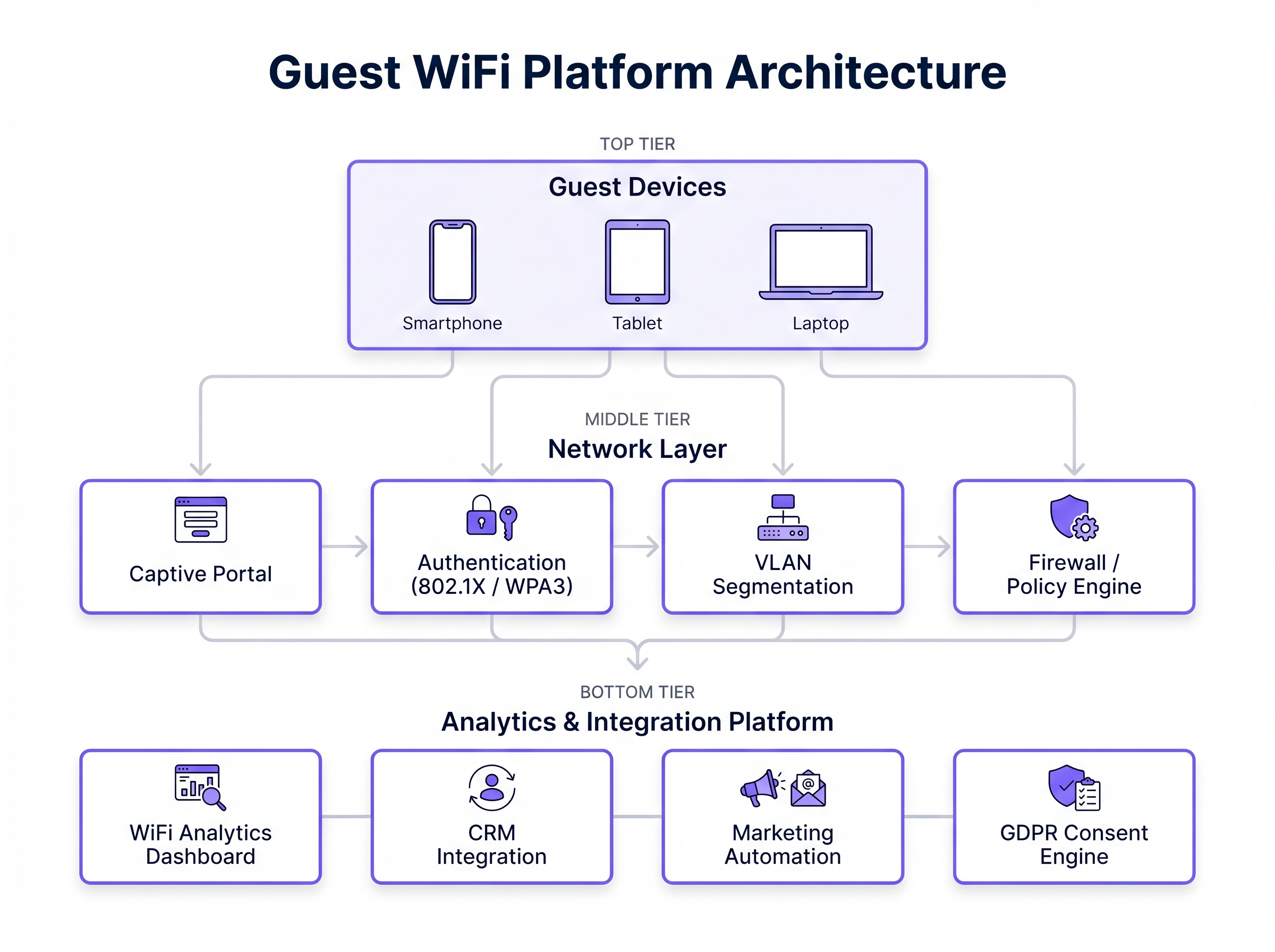
Der Unterschied zwischen einer einfachen kostenlosen WiFi-Bereitstellung und einer vollständig instrumentierten Gast-Intelligence-Plattform ist erheblich. Eine robuste Architektur erfordert eine sorgfältige Orchestrierung über drei primäre Schichten: die Netzwerkschicht, die Identitätsschicht und die Analyseschiicht.
Netzwerkarchitektur und Sicherheitsstandards
Im Fundament muss die Netzwerkschicht einen zuverlässigen Durchsatz bieten und gleichzeitig eine strikte Isolation aufrechterhalten. Gastnetzwerke von Unternehmen sollten WPA3-SAE (Simultaneous Authentication of Equals) nutzen, um die kryptografische Stärke gegen Offline-Wörterbuchangriffe zu verbessern. Für Umgebungen, die eine Richtliniendurchsetzung pro Benutzer erfordern, ist IEEE 802.1X mit RADIUS-basierter Authentifizierung der Standard. Für kundenorientierte Bereitstellungen, bei denen die Gerätebereitstellung unpraktisch ist, bleibt der Captive Portal jedoch der primäre Mechanismus zur Identitätserfassung und Richtlinienakzeptanz.
Eine strikte Netzwerksegmentierung ist nicht verhandelbar. Der Gastverkehr muss in dedizierte VLANs isoliert werden, wobei Inter-VLAN-Routing-Richtlinien von Stateful Firewalls durchgesetzt werden, um eine laterale Bewegung in Unternehmens- oder Point-of-Sale (POS)-Umgebungen zu verhindern. Dies ist besonders kritisch im Einzelhandel und Gesundheitswesen, wo PCI DSS und HIPAA/GDPR-Konformität den Schutz von Karteninhaber- und Patientendaten vorschreiben.
Die Identitäts- und Analyseschiicht
Der kommerzielle Wert eines Gast-WiFi-Netzwerks wird auf der Identitätsschicht erfasst. Ein gut gestalteter Captive Portal fungiert als Datenerfassungs-Engine, die authentifizierte Identitäten (per E-Mail, SMS oder Social OAuth) erfasst und die explizite Zustimmung für Marketingkommunikation aufzeichnet. Diese Daten müssen dann nahtlos in die Analyseschiicht fließen.
Plattformen wie Purple's WiFi Analytics aggregieren Verbindungsereignisse, RSSI (Received Signal Strength Indicator)-Probedaten und authentifizierte Profile. Dies ermöglicht eine standortübergreifende Identitätsauflösung – sodass ein Einzelhändler einen wiederkehrenden Kunden an verschiedenen Filialstandorten erkennen kann – und bildet die Datengrundlage für automatisierte CRM-Integrationen und gezielte Marketingkampagnen. Darüber hinaus fungiert Purple als kostenloser Identitätsanbieter für Dienste wie OpenRoaming unter der Connect-Lizenz, wodurch der Authentifizierungsprozess für wiederkehrende Benutzer optimiert wird.
Implementierungsleitfaden: Branchen-Anwendungsfälle
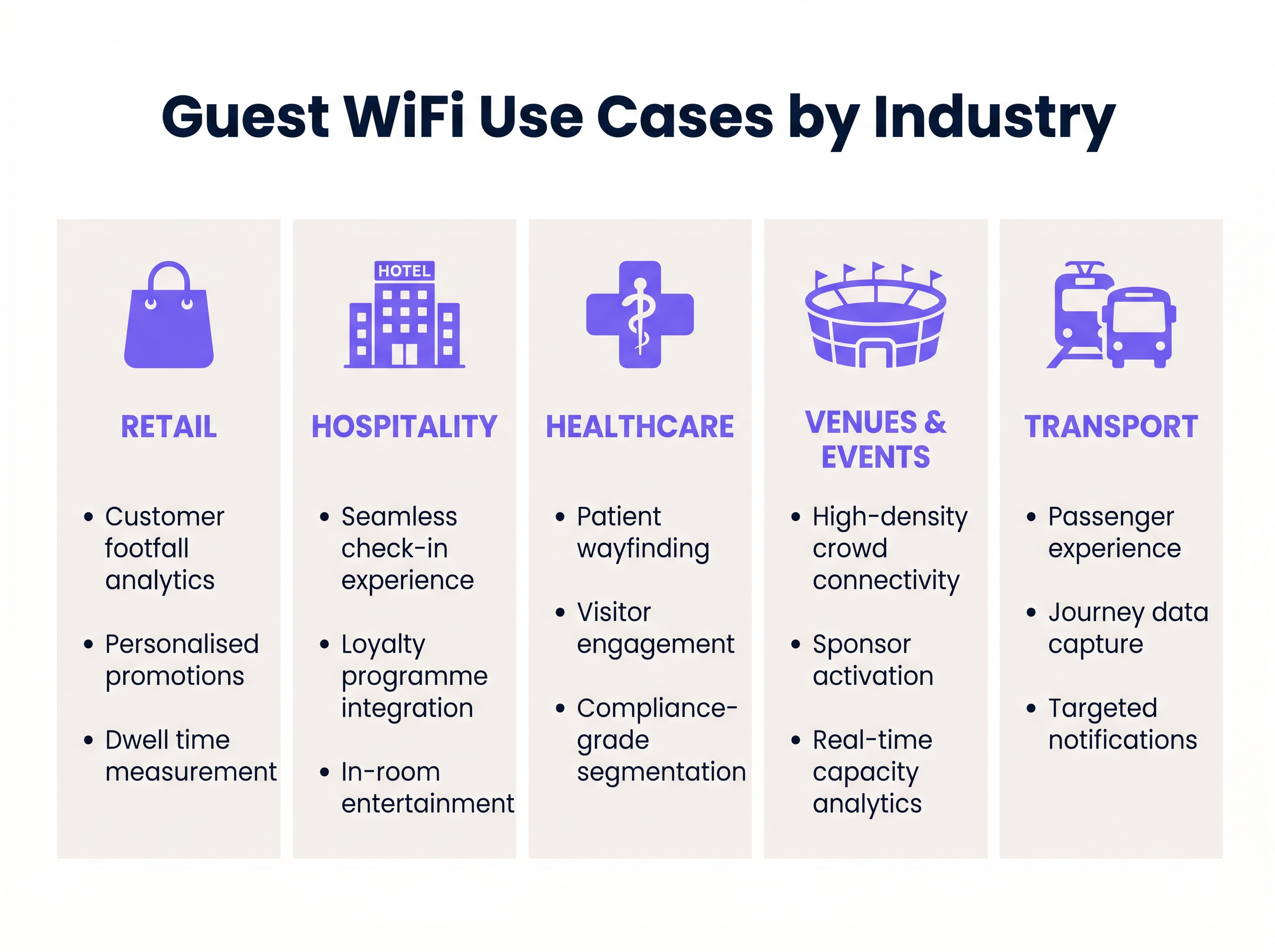
Verschiedene Branchen haben unterschiedliche Anforderungen und architektonische Einschränkungen bei der Bereitstellung von Gast-WiFi. Nachfolgend finden Sie eine Analyse, wie spezifische Branchen drahtlose Infrastruktur nutzen, um Geschäftswert zu schaffen.
Einzelhandel: Besucherfrequenzanalyse und Verweildauer
Im Einzelhandel ist das primäre Ziel das Verständnis des physischen Kundenverhaltens. Durch die Erfassung nicht authentifizierter Probe-Anfragen und authentifizierter Sitzungsdaten können Einzelhändler die Besucherfrequenz messen, die Verweildauer in bestimmten Ladenbereichen verfolgen und Konversionsraten analysieren.
Implementierungsstrategie: Stellen Sie Access Points mit dedizierten Scan-Radios bereit, um passive Probe-Anfragen zu erfassen. Integrieren Sie den Captive Portal in das zentrale CRM, um ein progressives Profiling zu ermöglichen. Wenn ein Kunde sich authentifiziert, sollte das System einen Webhook an die Marketing-Automatisierungsplattform auslösen, um personalisierte Re-Engagement-Kampagnen basierend auf seinem Verhalten im Geschäft zu ermöglichen.
Gastgewerbe: Nahtlose Konnektivität und kontextbezogenes Engagement
Für Gastgewerbe -Umgebungen ist zuverlässige Konnektivität die Grundlage. Der fortgeschrittene Anwendungsfall beinhaltet die Integration des WiFi-Authentifizierungsflusses mit dem Property Management System (PMS).
Implementierungsstrategie: Konfigurieren Sie den Captive Portal so, dass er das PMS über API abfragt. Wenn ein Gast seine Zimmernummer und seinen Nachnamen eingibt, validiert das System die Anmeldeinformationen und stellt den Zugang für die Dauer seines Aufenthalts bereit. In einer WiFi-Resort-Umgebung können standortbasierte Analysen kontextbezogene Angebote auslösen – zum Beispiel das Senden einer Spa-Promotion an einen Gast, der sich längere Zeit in der Nähe des Poolbereichs aufgehalten hat.
Veranstaltungsorte und Events: Hohe Dichte Besucheranalyse
Stadien und Konferenzzentren stehen vor der Herausforderung extremer Client-Dichte. Eine WiFi-Bereitstellung in einem Zoo oder Freizeitpark weist ähnliche Merkmale auf und erfordert eine sorgfältige HF-Planung, um massive gleichzeitige Verbindungen zu bewältigen.
Implementierungsstrategie: Nutzen Sie gerichtete Antennen und aggressives Load Balancing, um die Client-Verteilung über Access Points zu steuern. Implementieren Sie Captive Portals mit Sponsoren-Branding, um sofortige Werbeeinnahmen zu generieren. Nach der Veranstaltung werden die erfassten Erstanbieterdaten (E-Mail-Adressen und demografische Daten) zu einem entscheidenden Vorteil für zukünftige Ticketverkäufe und Merchandising-Aktionen.
Gesundheitswesen: Compliance-konforme Segmentierung
Im Gesundheitswesen liegt der Fokus auf operativer Effizienz und strenger Einhaltung gesetzlicher Vorschriften. Gastnetzwerke müssen vollständig von klinischen Systemen getrennt sein.
Implementierungsstrategie: Implementieren Sie eine strikte VLAN-Isolation und Web-Content-Filterung. Das Captive Portal muss robuste GDPR-Einwilligungsabläufe aufweisen, die die Annahme der Nutzungsbedingungen klar von Marketing-Opt-ins trennen, wie es das Data Security and Protection Toolkit vorschreibt. Anwendungsfälle umfassen die Patientenführung mittels Indoor-Mapping und die Bereitstellung des Zugangs zu digitalen Gesundheitsressourcen.
Transport: Passagiererlebnis und Reiseverfolgung
Für den Transport sektor verbessert Gast-WiFi das Passagiererlebnis und generiert gleichzeitig wertvolle Reisedaten.
Implementierungsstrategie: Setzen Sie mobile Access Points mit zellularem Backhaul (z. B. SD-WAN-Router) in Zügen oder Bussen ein. Um die für verteilte Umgebungen erforderliche Netzwerkarchitektur zu verstehen, lesen Sie Die wichtigsten SD-WAN-Vorteile für moderne Unternehmen . Die Analyseplattform kann Verbindungsdaten mit Ticketsystemen korrelieren, um Passagierströme abzubilden und die Routenplanung zu optimieren.
Best Practices
Beim Entwurf und der Bereitstellung einer Gast-WiFi-Lösung sollten IT-Teams die folgenden Prinzipien beachten:
- Priorisieren Sie die User Experience (UX) am Portal: Das Captive Portal ist die digitale Eingangstür. Stellen Sie sicher, dass es responsiv ist, schnell lädt und nahtlos auf iOS-, Android- und Windows-Geräten funktioniert. Hinweise zum Portaldesign finden Sie unter So erstellen Sie eine Gast-WiFi-Anmeldeseite .
- Für Skalierbarkeit konzipieren: Konzipieren Sie das Netzwerk für Spitzenkapazität (das 95. Perzentil), nicht für die durchschnittliche Last. Dies erfordert umfassende HF-Standortuntersuchungen und Kapazitätsplanung, insbesondere in Umgebungen mit hoher Dichte.
- Robuste Daten-Governance implementieren: Behandeln Sie Gastdaten als hochsensibles Gut. Implementieren Sie automatisierte Datenaufbewahrungsrichtlinien, stellen Sie klare Einwilligungsmechanismen sicher und integrieren Sie eine Consent Management Platform (CMP) zur Bearbeitung von Anfragen betroffener Personen (DSARs).
- Integrationen automatisieren: Lassen Sie Daten nicht im WiFi-Controller isoliert. Nutzen Sie APIs und Webhooks, um Authentifizierungsereignisse und Standortdaten in Echtzeit direkt in Ihre CRM- und Marketingplattformen zu streamen.
Fehlerbehebung & Risikominderung
Die Bereitstellung von Enterprise-Gast-WiFi birgt inhärente Risiken. Die häufigsten Fehlerursachen und deren Behebungen umfassen:
- Nicht-Erscheinen des Captive Portals: Dies tritt häufig aufgrund aggressiver DNS-Abfangmaßnahmen oder strenger HTTPS-Inspektionsrichtlinien auf. Abhilfe: Stellen Sie sicher, dass die Walled Garden-Konfiguration den Zugriff auf die erforderlichen Identitätsanbieter (z. B. Google, Facebook) und die Portal-Hosting-Domain vor Abschluss der Authentifizierung erlaubt.
- VLAN-Leckage: Fehlkonfigurierte Switch-Ports können Gast-Traffic den Durchgang durch Unternehmensnetzwerke ermöglichen. Abhilfe: Führen Sie regelmäßige Penetrationstests und automatisierte Konfigurationsaudits durch, um die VLAN-Isolation zu überprüfen.
- MAC-Randomisierung: Moderne mobile Betriebssysteme verwenden MAC-Adress-Randomisierung, um die Privatsphäre der Benutzer zu schützen, was die Nachverfolgung über mehrere Besuche hinweg erschwert. Abhilfe: Verlagern Sie die Abhängigkeit von gerätebezogenen Identifikatoren (MAC-Adressen) auf authentifizierte Benutzeridentitäten, die über das Captive Portal erfasst werden.
ROI & Geschäftsauswirkungen
Der Return on Investment (ROI) für eine Gast-WiFi-Bereitstellung sollte entlang zweier Achsen gemessen werden: operative Einsparungen und Umsatzgenerierung.
Operativ reduziert die automatisierte Authentifizierung (z. B. PMS-Integration in Hotels) Helpdesk-Tickets im Zusammenhang mit dem WiFi-Zugang. Kommerziell fungiert die Plattform als hochvolumiges Lead-Generierungstool. Durch die Berechnung der Kosten pro Akquisition (CPA) einer E-Mail-Adresse über traditionelle digitale Marketingkanäle im Vergleich zu den Kosten der Erfassung über das Gast-WiFi-Portal erzielen Organisationen typischerweise einen positiven ROI innerhalb von 6 bis 12 Monaten. Darüber hinaus ermöglichen die aus der Besucherfrequenzanalyse gewonnenen Erkenntnisse datengesteuerte Entscheidungen bezüglich Personalbesetzung, Ladenlayouts und Mietverhandlungen, was die gesamten Geschäftsauswirkungen verstärkt.
Schlüsselbegriffe & Definitionen
Captive Portal
A web page that a user of a public access network is obliged to view and interact with before access is granted. It is the primary mechanism for authentication and terms acceptance.
Critical for capturing first-party data and ensuring users agree to terms of service before consuming bandwidth.
WPA3-SAE
Wi-Fi Protected Access 3 with Simultaneous Authentication of Equals. A security standard that provides robust protection against offline dictionary attacks.
The recommended security standard for modern enterprise guest networks to ensure cryptographic integrity.
MAC Randomisation
A privacy feature in modern mobile operating systems that generates a temporary MAC address for each network connection.
Complicates tracking users based solely on device hardware identifiers, making authenticated captive portal logins essential for persistent tracking.
RSSI (Received Signal Strength Indicator)
A measurement of the power present in a received radio signal.
Used in WiFi analytics to estimate the distance of a device from an access point, enabling location-based services and dwell time calculations.
Walled Garden
A limited environment that controls the user's access to web content and services before they have fully authenticated.
Must be carefully configured to allow access to necessary identity providers (like Google or Facebook for social login) before the user is granted full internet access.
VLAN Segmentation
The practice of dividing a physical network into multiple logical networks to isolate traffic.
Essential for security and compliance, ensuring guest traffic cannot route to corporate or POS systems.
Cross-Venue Identity Resolution
The ability to recognise a returning user across different physical locations within the same brand or estate.
Enables retailers and hospitality groups to build a unified customer profile and trigger consistent marketing campaigns regardless of which location the guest visits.
Progressive Profiling
A method of gradually gathering information about a user across multiple interactions rather than asking for all data upfront.
Used in captive portals to improve conversion rates; a user might provide just an email on their first visit, and a phone number on their second.
Fallstudien
A 200-room hotel needs to implement a guest WiFi solution that provides seamless connectivity while capturing first-party data for the marketing team, without increasing the burden on the front desk.
Deploy a WPA3-enabled network with a captive portal integrated directly into the hotel's Property Management System (PMS) via API. Configure the Walled Garden to allow access to the PMS authentication endpoint. When a guest connects, they enter their room number and surname. The portal queries the PMS; upon validation, the device's MAC address is whitelisted for the duration of the stay. Simultaneously, the portal presents a GDPR-compliant opt-in for marketing communications, syncing consented profiles directly to the hotel's CRM.
A national retail chain requires visibility into store conversion rates (footfall vs. transactions) and wants to trigger personalised offers to returning customers based on their previous visits.
Implement access points with dedicated scanning radios to capture passive probe requests for baseline footfall metrics. Deploy a centralised captive portal with social login (OAuth) to capture authenticated identities. Configure cross-venue identity resolution in the central analytics platform. Set up webhooks to trigger an event in the marketing automation platform whenever a known device connects, allowing for real-time, personalised email or SMS offers based on the customer's purchase history.
Szenarioanalyse
Q1. A hospital IT director wants to provide free WiFi to patients and visitors but is concerned about HIPAA/GDPR compliance and the security of clinical systems. What is the most critical architectural requirement?
💡 Hinweis:Consider how network traffic is isolated at Layer 2 and Layer 3.
Empfohlenen Ansatz anzeigen
The most critical requirement is strict network segmentation. Guest traffic must be placed on a dedicated VLAN that is completely isolated from clinical networks. Inter-VLAN routing must be blocked by stateful firewall policies, ensuring that a compromised guest device cannot access patient records or medical equipment.
Q2. A retail marketing team complains that their WiFi analytics dashboard shows a high number of 'visitors' but very few actionable customer profiles. What technical limitation is likely causing this, and how should the IT team resolve it?
💡 Hinweis:Think about how modern smartphones handle their hardware identifiers when scanning for networks.
Empfohlenen Ansatz anzeigen
The dashboard is likely relying on passive probe requests, which are subject to MAC address randomisation by modern mobile operating systems (iOS/Android). This inflates visitor counts with temporary MACs and prevents profile building. The IT team must implement a captive portal to force authentication, capturing a persistent identity (like an email address) rather than relying on hardware MAC addresses.
Q3. During a major sporting event, the stadium's guest WiFi network becomes unresponsive. The access points are online, but users cannot reach the captive portal to log in. What is the most likely configuration issue?
💡 Hinweis:Consider the dependencies required for a device to resolve and load an external web page before authentication.
Empfohlenen Ansatz anzeigen
The most likely issue is an incorrectly configured Walled Garden or DNS interception failure. If the Walled Garden does not permit access to the DNS servers, the captive portal hosting domain, or the required external Identity Providers (e.g., Google/Facebook for social login), the device cannot load the portal page, resulting in a denial of service for new connections.




