

बहु-भाषी Captive Portals: अंतर्राष्ट्रीय स्थलों के लिए सर्वोत्तम अभ्यास
यह आधिकारिक तकनीकी संदर्भ मार्गदर्शिका वरिष्ठ IT पेशेवरों को बहु-भाषी Captive Portals को डिज़ाइन करने और तैनात करने के लिए कार्रवाई योग्य रणनीतियाँ प्रदान करती है। इसमें उन्नत भाषा पहचान वास्तुकला, RTL लेआउट संबंधी विचार, और GDPR-अनुरूप कानूनी सामग्री का स्थानीयकरण शामिल है ताकि अंतर्राष्ट्रीय स्थलों पर निर्बाध गेस्ट WiFi पहुँच सुनिश्चित की जा सके।
🎧 इस गाइड को सुनें
ट्रांसक्रिप्ट देखें
कार्यकारी सारांश
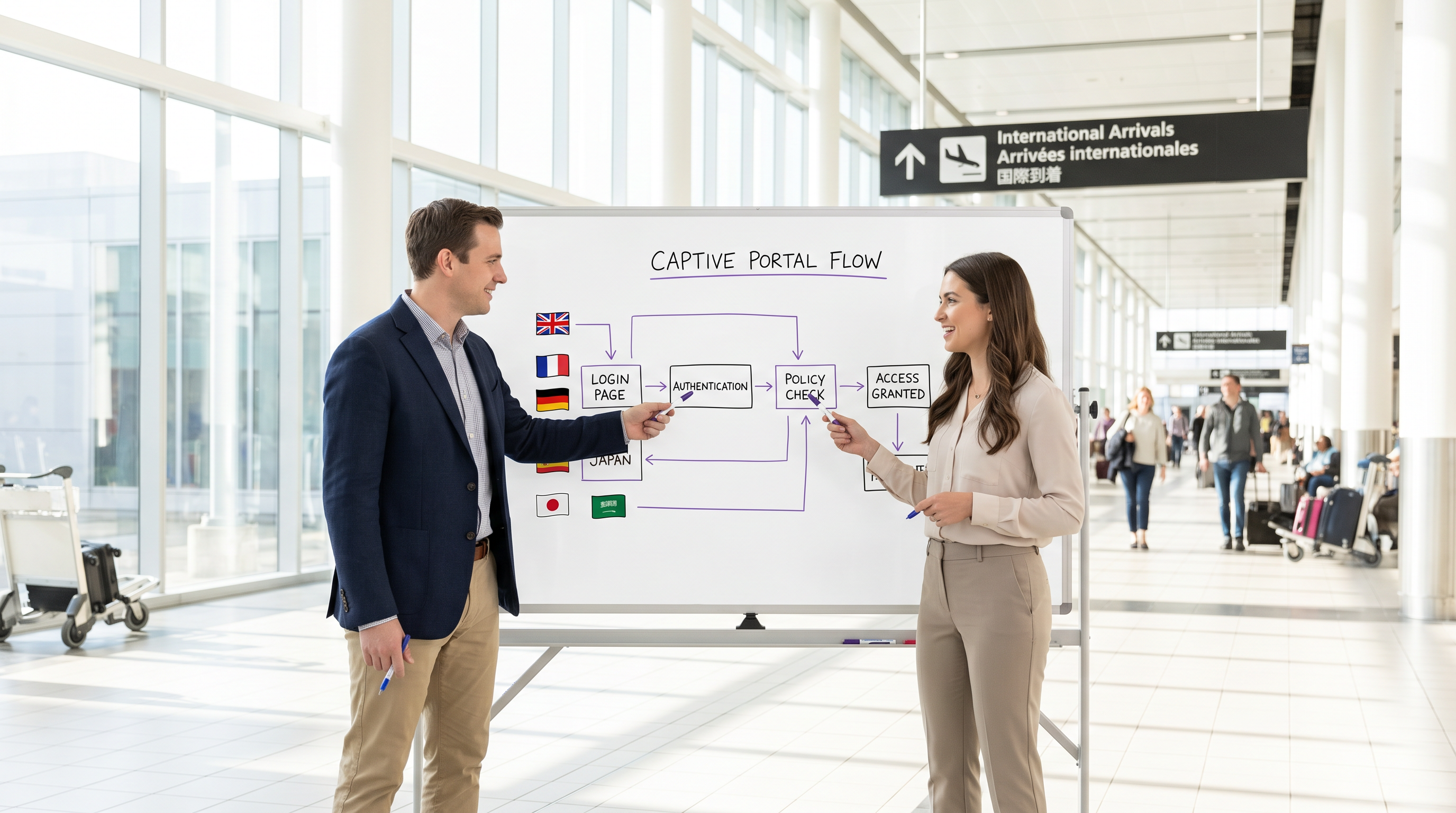
अंतर्राष्ट्रीय स्थलों के लिए—चाहे वे प्रमुख हवाई अड्डे के केंद्र हों, वैश्विक होटल श्रृंखलाएँ हों, या बड़े पैमाने के खुदरा वातावरण हों—Captive Portal अक्सर पहला डिजिटल संपर्क बिंदु होता है जिसका अनुभव कोई आगंतुक करता है। एक खराब स्थानीयकृत पोर्टल न केवल अतिथि अनुभव को खराब करता है, बल्कि महत्वपूर्ण अनुपालन जोखिम भी पैदा कर सकता है और आपके WiFi एनालिटिक्स की प्रभावकारिता को कम कर सकता है। यह मार्गदर्शिका बहु-भाषी Captive Portals को तैनात करने के लिए एक व्यापक तकनीकी ढाँचा प्रदान करती है। हम बुनियादी अनुवाद से आगे बढ़कर भाषा पहचान की अंतर्निहित वास्तुकला, राइट-टू-लेफ्ट (RTL) UI रेंडरिंग की जटिलताओं, और GDPR के तहत सूचित सहमति के लिए कड़े आवश्यकताओं को संबोधित करते हैं। यहाँ विस्तृत रणनीतियों को लागू करके, IT प्रबंधक और नेटवर्क आर्किटेक्ट यह सुनिश्चित कर सकते हैं कि उनका Guest WiFi इंफ्रास्ट्रक्चर दुनिया भर के आगंतुकों के लिए एक सुरक्षित, सुलभ और कानूनी रूप से अनुपालन योग्य प्रमाणीकरण अनुभव प्रदान करता है, अंततः Retail और Hospitality जैसे व्यापक व्यावसायिक उद्देश्यों का समर्थन करता है।
तकनीकी गहन विश्लेषण
भाषा पहचान प्राथमिकता स्टैक
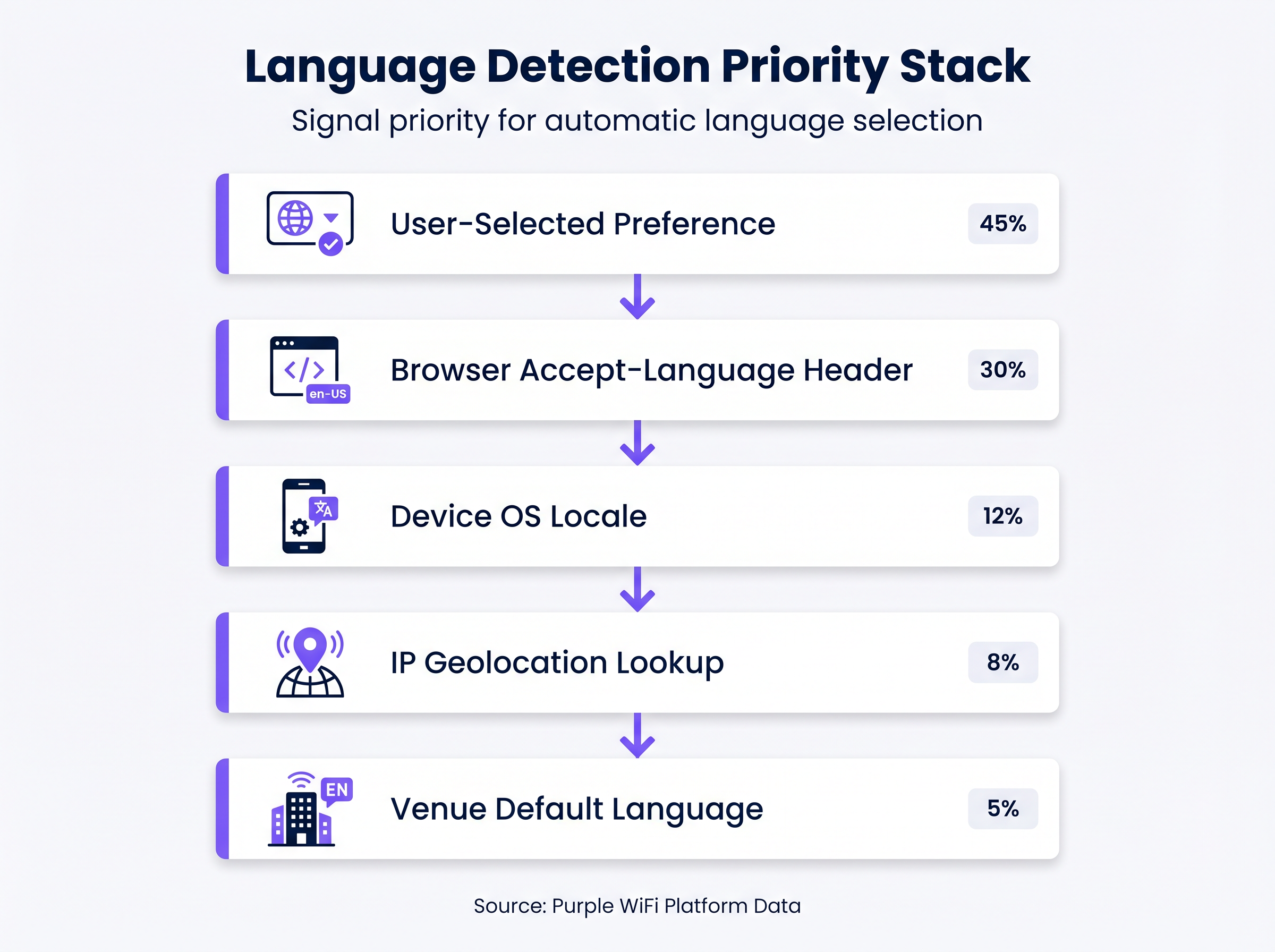
उपयोगकर्ता की भाषा निर्धारित करने के लिए केवल IP जियोलोकेशन पर निर्भर रहना एक सामान्य वास्तुशिल्प दोष है। हवाई अड्डों या अंतर्राष्ट्रीय सम्मेलनों जैसे वातावरण में, उपयोगकर्ता अक्सर कॉर्पोरेट VPN या रोमिंग डेटा प्रोफाइल के माध्यम से कनेक्ट होते हैं, जिससे IP-आधारित जियोलोकेशन 30% तक मामलों में गलत हो जाता है। इसके बजाय, एक मजबूत Captive Portal को भाषा पहचान के लिए एक बहु-स्तरीय प्राथमिकता स्टैक लागू करना चाहिए:
- उपयोगकर्ता-चयनित प्राथमिकता (उच्चतम प्राथमिकता): यदि किसी वापस आने वाले उपयोगकर्ता ने पहले कोई भाषा चुनी है, तो इस प्राथमिकता को संग्रहीत किया जाना चाहिए (उदाहरण के लिए, बैकएंड में एक स्थायी कुकी या MAC पते के जुड़ाव के माध्यम से) और पुनः कनेक्ट होने पर स्वचालित रूप से लागू किया जाना चाहिए।
- ब्राउज़र
Accept-Languageहेडर: यह HTTP हेडर उपयोगकर्ता की स्पष्ट डिवाइस या ब्राउज़र सेटिंग्स का अत्यधिक सटीक प्रतिबिंब प्रदान करता है (उदाहरण के लिए,en-US,en;q=0.9,fr;q=0.8)। यह प्राथमिक स्वचालित पहचान तंत्र होना चाहिए। - डिवाइस OS लोकेल: जहाँ सुलभ हो, अंतर्निहित ऑपरेटिंग सिस्टम लोकेल को क्वेरी करना एक फॉलबैक प्रदान करता है यदि ब्राउज़र हेडर अनिर्णायक हो।
- IP जियोलोकेशन लुकअप: केवल एक द्वितीयक फॉलबैक के रूप में उपयोग किया जाता है, यह स्रोत IP को एक भौगोलिक क्षेत्र में मैप करता है, हालांकि इसकी सीमाओं को स्वीकार किया जाना चाहिए।
- स्थल की डिफ़ॉल्ट भाषा (निम्नतम प्राथमिकता): अंतिम फॉलबैक, आमतौर पर उस देश की प्राथमिक भाषा जहाँ स्थल स्थित है।
राइट-टू-लेफ्ट (RTL) स्क्रिप्ट्स को संभालना
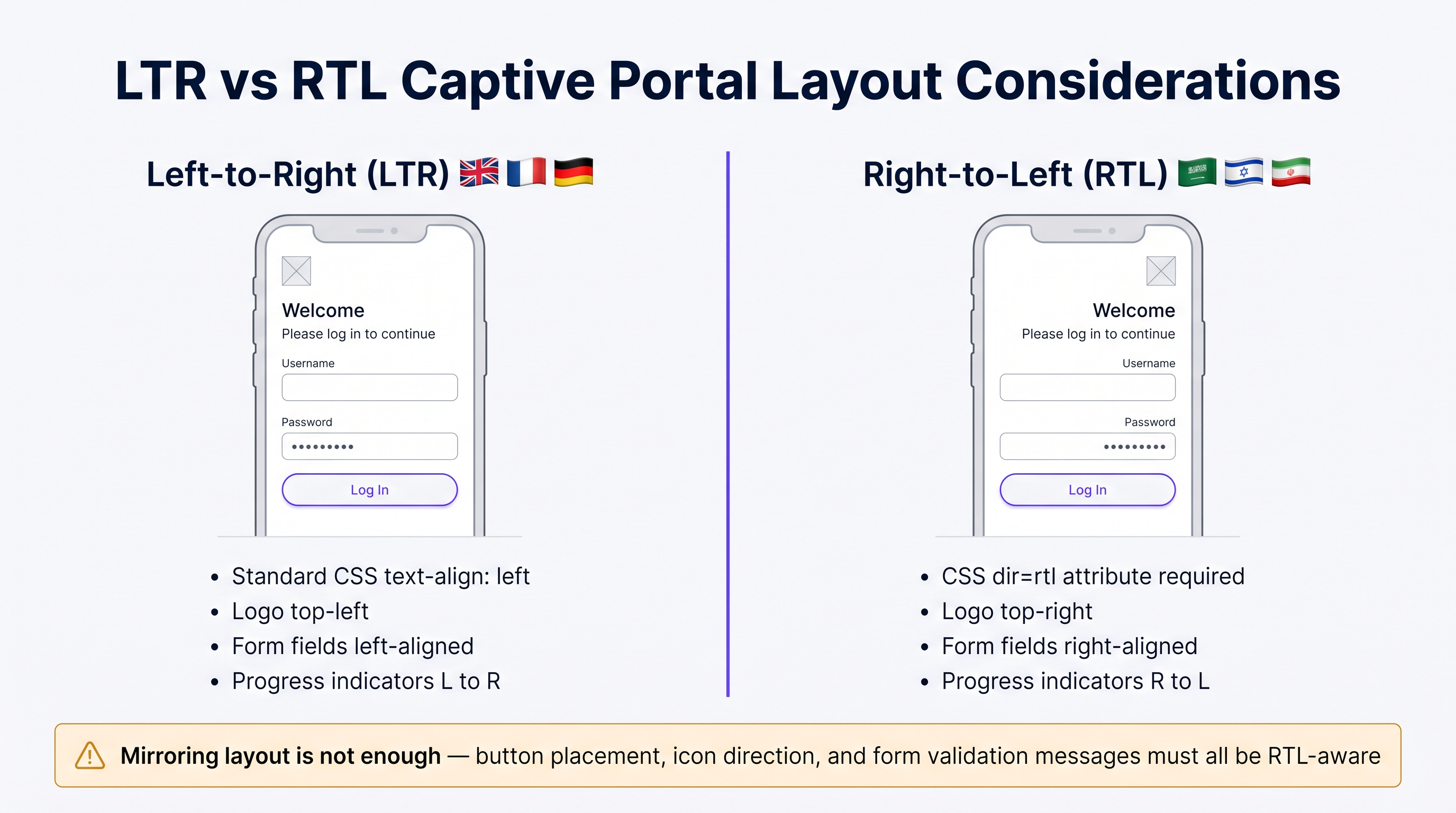
अरबी, हिब्रू या फ़ारसी जैसी भाषाओं को तैनात करने के लिए केवल पाठ का अनुवाद करने से कहीं अधिक की आवश्यकता होती है; इसके लिए UI वास्तुकला में एक मौलिक बदलाव की आवश्यकता होती है। केवल लेफ्ट-टू-राइट (LTR) भाषाओं के लिए डिज़ाइन किया गया एक पोर्टल RTL सामग्री को रेंडर करते समय टूट जाएगा, जिससे पाठ ओवरलैप होगा, फॉर्म फ़ील्ड गलत संरेखित होंगे, और एक अनुपयोगी इंटरफ़ेस बनेगा।
RTL कार्यान्वयन के लिए प्रमुख तकनीकी विचार शामिल हैं:
- दस्तावेज़ दिशा: इन भाषाओं को परोसते समय HTML
dirविशेषता को गतिशील रूप सेrtl(<html dir="rtl">) पर सेट किया जाना चाहिए। यह ब्राउज़र को दस्तावेज़ प्रवाह को प्रतिबिंबित करने का निर्देश देता है। - UI तत्व मिररिंग: सभी लेआउट तत्वों को उलटना होगा। आमतौर पर ऊपर-बाईं ओर रखे गए लोगो को ऊपर-दाईं ओर ले जाना चाहिए। फॉर्म लेबल, इनपुट फ़ील्ड और सबमिट बटन को दाईं ओर संरेखित करना चाहिए।
- CSS फ्रेमवर्क समर्थन: आधुनिक CSS फ्रेमवर्क (जैसे Tailwind या Bootstrap) RTL वेरिएंट प्रदान करते हैं। सुनिश्चित करें कि आपके पोर्टल की बिल्ड पाइपलाइन इन वेरिएंट को संकलित करती है और पता लगाई गई भाषा के आधार पर उन्हें सशर्त रूप से परोसती है।
- फ़ॉन्ट चयन: मानक लैटिन फ़ॉन्ट अक्सर अरबी लिगेचर को सही ढंग से रेंडर करने में विफल रहते हैं। उचित वर्ण आकार और कनेक्टिविटी सुनिश्चित करने के लिए मजबूत यूनिकोड फ़ॉन्ट (जैसे Google Noto) का उपयोग करें।
कार्यान्वयन मार्गदर्शिका
चरण-दर-चरण परिनियोजन रणनीति
- डेटा-आधारित भाषा चयन: एक साथ 20 भाषाओं के साथ लॉन्च करने का प्रयास न करें। अपने मौजूदा WiFi Analytics का विश्लेषण करके अपने आगंतुकों द्वारा बोली जाने वाली शीर्ष 5-7 भाषाओं की पहचान करें। उच्च गुणवत्ता सुनिश्चित करने के लिए अपने प्रारंभिक परिनियोजन को इस उपसमूह पर केंद्रित करें।
- गतिशील सामग्री वितरण: अपने पोर्टल को इस तरह से आर्किटेक्ट करें कि वह अनुवादित स्ट्रिंग्स को Content Delivery Network (CDN) या एक समर्पित स्थानीयकरण सेवा से गतिशील रूप से प्राप्त करे, बजाय इसके कि उन्हें पोर्टल एप्लिकेशन में हार्डकोड किया जाए। यह सामग्री अपडेट को कोड परिनियोजन से अलग करता है।
- लचीले UI कंटेनर: जर्मन पाठ अंग्रेजी से 30% तक लंबा हो सकता है, जबकि एशियाई भाषाओं को अधिक ऊर्ध्वाधर ऊंचाई की आवश्यकता हो सकती है। UI कंटेनर (बटन, अलर्ट बॉक्स, फॉर्म फ़ील्ड) को लचीला डिज़ाइन करें। निश्चित चौड़ाई से बचें और मजबूत पाठ अतिप्रवाह हैंडलिंग (उदाहरण के लिए, टूलटिप्स के साथ CSS
text-overflow: ellipsis) लागू करें। - मानकीकृत दिनांक और समय स्वरूपण: अस्पष्ट दिनांक स्वरूपों (जैसे
04/05/2025) से बचें। सत्र की समाप्ति या शर्तों की स्वीकृति के संबंध में भ्रम को रोकने के लिए हमेशा ISO 8601 स्वरूपण (YYYY-MM-DD) का उपयोग करें या स्थानीयकृत भाषा में महीने को स्पष्ट रूप से लिखें।
सर्वोत्तम अभ्यास
कानूनी सामग्री और GDPR अनुपालन
सेवा की शर्तें (ToS) और गोपनीयता नीतियों का अनुवाद करना केवल एक भाषाई अभ्यास नहीं है; यह GDPR जैसे विनियमों के तहत एक सख्त कानूनी आवश्यकता है। जैसा कि CCPA vs GDPR: Global Privacy Compliance for Guest WiFi Data के आसपास की चर्चाओं में उजागर किया गया है, उपयोगकर्ता को समझ में न आने वाली भाषा में जटिल कानूनी सामग्री प्रस्तुत करना सूचित सहमति को अमान्य कर देता है।
- पेशेवरकानूनी अनुवाद: कानूनी दस्तावेज़ों के लिए कभी भी मशीन अनुवाद का उपयोग न करें। योग्य कानूनी अनुवादकों को नियुक्त करें जो विशिष्ट क्षेत्राधिकार संबंधी बारीकियों को समझते हों (उदाहरण के लिए, फ्रेंच CNIL बनाम जर्मन Datenschutzbehörde की आवश्यकताएं)।
- संस्करण नियंत्रण और ऑडिट ट्रेल: आपके प्रमाणीकरण बैकएंड को न केवल यह लॉग करना चाहिए कि उपयोगकर्ता ने शर्तों को स्वीकार किया, बल्कि शर्तों का कौन सा संस्करण और किस भाषा में स्वीकार किया। यह ऑडिट ट्रेल नियामक पूछताछ के दौरान अनुपालन प्रदर्शित करने के लिए महत्वपूर्ण है।
समस्या निवारण और जोखिम न्यूनीकरण
"आंशिक स्थानीयकरण जाल"
एक सामान्य विफलता मोड प्राथमिक लॉगिन स्क्रीन का अनुवाद करना है जबकि त्रुटि संदेश, सत्यापन चेतावनी, या प्रमाणीकरण के बाद के स्प्लैश पेज को डिफ़ॉल्ट भाषा में छोड़ देना है। यह एक अप्रिय उपयोगकर्ता अनुभव बनाता है और विश्वास को कमजोर करता है। सुनिश्चित करें कि आपकी स्थानीयकरण मैट्रिक्स सभी विशिष्ट मामलों को कवर करती है, जिनमें शामिल हैं:
- RADIUS प्रमाणीकरण विफलता संदेश।
- फ़ॉर्म सत्यापन त्रुटियाँ (उदाहरण के लिए, "अमान्य ईमेल प्रारूप")।
- सत्र समय-समाप्ति चेतावनी।
- प्रमाणीकरण के बाद के रीडायरेक्ट और सफलता पेज।
ROI और व्यावसायिक प्रभाव
एक ठीक से लागू किया गया बहु-भाषा पोर्टल सीधे प्रमुख व्यावसायिक मेट्रिक्स को प्रभावित करता है। प्रमाणीकरण परत पर घर्षण को हटाकर, स्थल उच्च कनेक्शन दरें देखते हैं, जो बदले में उनके मार्केटिंग प्लेटफॉर्म में अधिक मजबूत डेटा प्रदान करता है। इस मूल्य को मापने के लिए गहन जानकारी हेतु, गेस्ट WiFi पर ROI मापना: CMOs के लिए एक फ्रेमवर्क पर हमारी मार्गदर्शिका देखें। इसके अलावा, कई न्यायालयों में अनुपालन सुनिश्चित करने से पर्याप्त नियामक जुर्माने का जोखिम कम होता है, जिससे संगठन के निचले स्तर की रक्षा होती है।
विशेषज्ञ ऑडियो ब्रीफिंग
इन अवधारणाओं पर गहन चर्चा के लिए हमारी 10 मिनट की तकनीकी ब्रीफिंग सुनें:
मुख्य शब्द और परिभाषाएं
Accept-Language Header
An HTTP request header sent by the browser indicating the user's preferred languages and locales.
This is the most reliable automated signal for determining which language version of the captive portal to serve.
RTL (Right-to-Left)
Scripts such as Arabic and Hebrew that are read from right to left, requiring specific HTML and CSS handling.
IT teams must ensure their portal frameworks support RTL variants to prevent layout breakage for these users.
Informed Consent
The requirement under GDPR that a user clearly understands what data is being collected and how it will be used before agreeing.
Presenting Terms of Service in a language the user does not understand invalidates informed consent.
Audit Trail
A secure, timestamped record of events.
Captive portals must maintain an audit trail showing exactly which version and language of the ToS a specific user accepted.
IP Geolocation
The process of determining a device's physical location based on its IP address.
Often inaccurate for language detection due to VPNs and roaming, and should only be used as a fallback.
Unicode Font Stack
A set of fonts designed to support a vast array of international characters and scripts.
Essential for ensuring that languages like Japanese or Arabic render correctly without 'tofu' (missing character boxes).
Text Overflow Handling
CSS techniques used to manage text that exceeds the bounds of its container.
Crucial for multi-language portals where translated strings (e.g., in German) may be significantly longer than the original English.
Dynamic Content Delivery
Serving content (like translated strings) from a separate service or CDN rather than hardcoding it.
Allows content teams to update translations without requiring a new code deployment from the network team.
केस स्टडीज
A major international airport in Europe is upgrading its captive portal. Analytics show that 40% of users connect from devices set to English, 20% German, 15% Arabic, 10% Mandarin, and 15% other languages. The current portal uses IP geolocation and defaults to German.
- Implement the priority stack: Browser Accept-Language > OS Locale > Default (English). 2. Deploy English, German, Arabic, and Mandarin translations. 3. For Arabic, implement a dynamic
<html dir="rtl">switch and load a mirrored CSS stylesheet. 4. Ensure all Terms of Service are translated into these four languages by legal professionals and that the backend logs the accepted language version.
A global retail brand is rolling out a unified guest WiFi portal across its stores in the UK, France, and Japan. They want a consistent brand experience but are concerned about UI consistency across different character sets.
- Design the UI with flexible containers rather than fixed widths. 2. Use CSS Flexbox or Grid to allow buttons and text areas to expand dynamically. 3. Select a robust Unicode font stack (e.g., Google Noto) to ensure consistent rendering of Japanese characters alongside Latin scripts. 4. Implement a prominent language selector dropdown on the portal, using native script names (e.g., 'Français', '日本語') rather than just flags.
परिदृश्य विश्लेषण
Q1. Your venue is hosting a major tech conference with attendees primarily from the US, Germany, and Japan. Your current portal uses IP geolocation to set the language. What is the primary risk, and how should you resolve it?
💡 संकेत:Consider how international travelers typically connect their devices to foreign networks.
अनुशंसित दृष्टिकोण दिखाएं
The primary risk is that international travelers often use corporate VPNs or roaming data profiles, which will mask their true location and cause the IP geolocation to serve the wrong language (likely the venue's default). The solution is to implement a priority stack that relies first on the browser's Accept-Language header, which accurately reflects the user's device settings regardless of their network routing.
Q2. You are expanding your portal to support Arabic. You have translated all the text and applied standard CSS right-alignment to the text blocks. During testing, native speakers report the portal feels 'broken'. What critical step was missed?
💡 संकेत:RTL support requires more than just text alignment; consider the entire document structure.
अनुशंसित दृष्टिकोण दिखाएं
Simply aligning text to the right is insufficient for RTL languages. The critical missing step is setting the HTML document direction (<html dir="rtl">) and implementing a mirrored CSS layout. This ensures that UI elements like logos, form fields, buttons, and progress indicators are properly reversed to match the RTL reading flow.
Q3. To save costs, your marketing team proposes using an automated AI translation tool to translate the portal's Terms of Service and Privacy Policy into five new languages. As the IT manager, how do you respond?
💡 संकेत:Consider the legal implications of inaccurate translations under data protection regulations.
अनुशंसित दृष्टिकोण दिखाएं
You must reject this proposal. Under regulations like GDPR, valid informed consent requires that the user fully understands the legal terms. Automated translations often miss critical legal nuances or jurisdictional specificities. Legal copy must be translated and reviewed by qualified legal professionals in the target jurisdictions to avoid severe compliance risks and potential fines.
मुख्य निष्कर्ष
- ✓IP geolocation is unreliable for language detection; prioritize the browser's Accept-Language header.
- ✓Supporting RTL languages requires mirroring the entire UI layout, not just changing text alignment.
- ✓Never use machine translation for Terms of Service or Privacy Policies due to GDPR compliance risks.
- ✓Design UI containers to be flexible to accommodate text expansion (e.g., German translations).
- ✓Maintain a strict audit trail logging which language version of the ToS each user accepted.
- ✓Use robust Unicode fonts to ensure proper rendering of non-Latin characters.
- ✓Avoid the 'partial localisation trap' by ensuring error messages and post-login pages are also translated.




