
इंडोर WiFi पोझिशनिंग सिस्टम्स: त्या कशा काम करतात आणि त्या कशा डिप्लॉय करायच्या
ही सर्वसमावेशक मार्गदर्शिका WiFi-आधारित इंडोर पोझिशनिंग सिस्टम्सचे तांत्रिक आर्किटेक्चर, डिप्लॉयमेंट धोरणे आणि व्यावसायिक मूल्य यांचे तपशील देते. अचूक स्पेशल ॲनालिटिक्स प्रदान करण्यासाठी हे नेटवर्क आर्किटेक्ट्स आणि IT डायरेक्टर्सना AP प्लेसमेंट, RF कॅलिब्रेशन आणि MAC रँडमायझेशनवर मात करण्याबाबत कृतीयोग्य मार्गदर्शन प्रदान करते.
हे मार्गदर्शक ऐका
पॉडकास्ट ट्रान्सक्रिप्ट पहा
आमच्या मुख्य मालिकेचा भाग: WiFi Analytics Guide →

कार्यकारी सारांश
एंटरप्राइझ वेन्यू ऑपरेटर्ससाठी, व्हिजिटर्सची हालचाल समजून घेणे ही आता चैनीची गोष्ट राहिलेली नाही—ती ऑपरेशनल कार्यक्षमता आणि व्यावसायिक ऑप्टिमायझेशनसाठी एक मूलभूत गरज आहे. इंडोर WiFi पोझिशनिंग सिस्टम्स सध्याच्या नेटवर्क इन्फ्रास्ट्रक्चरला एका शक्तिशाली स्पेशल ॲनालिटिक्स (spatial analytics) इंजिनमध्ये रूपांतरित करतात. तुमच्या डिप्लॉय केलेल्या ॲक्सेस पॉईंट्सवरून रिसीव्हड सिग्नल स्ट्रेंथ इंडिकेटर (RSSI) मोजमापांचा फायदा घेऊन, या सिस्टम्स ब्लूटूथ बीकन्स किंवा अल्ट्रा-वाइडबँड सेन्सर्ससारख्या अतिरिक्त हार्डवेअर ओव्हरलेची गरज न पडता फूटफॉल, ड्वेल टाईम (थांबण्याचा वेळ) आणि झोन ट्रान्झिशनवर कृतीयोग्य माहिती प्रदान करतात。
ही तांत्रिक संदर्भ मार्गदर्शिका WiFi-आधारित इंडोर पोझिशनिंगचे आर्किटेक्चर, डिप्लॉयमेंट संदर्भातील विचार आणि व्यावसायिक प्रभावाचे तपशील देते. नेटवर्क आर्किटेक्ट्स आणि IT डायरेक्टर्ससाठी डिझाइन केलेली, ही मार्गदर्शिका ॲक्सेस पॉईंट कॉन्फिगरेशन, साईट सर्व्हे आणि रेडिओ कॅलिब्रेशनवर वेंडर-न्यूट्रल मार्गदर्शन प्रदान करते, तसेच Purple च्या WiFi Analytics सारख्या प्लॅटफॉर्मसह इंटिग्रेशन कसे रॉ टेलिमेट्री डेटाला मोजता येण्याजोग्या ROI मध्ये बदलते हे दर्शवते. तुम्ही २०० खोल्यांचे हॉटेल, मल्टि-फ्लोर रिटेल वातावरण किंवा एखाद्या मोठ्या सार्वजनिक क्षेत्रातील सुविधेचे व्यवस्थापन करत असाल, तरीही ही मार्गदर्शिका पोझिशनिंग ॲनालिटिक्स प्रभावीपणे आणि नियमांचे पालन करून डिप्लॉय करण्यासाठी आवश्यक तांत्रिक आधार प्रदान करते。
तांत्रिक डीप-डाइव्ह: आर्किटेक्चर आणि मानके
इंडोर पोझिशनिंगचे मूलभूत आव्हान हे आहे की GPS सिग्नल्स इमारतीच्या बांधकाम साहित्यातून विश्वासाने पार होऊ शकत नाहीत. परिणामी, एंटरप्राइझ वेन्यूजला स्थानिक रेडिओ फ्रिक्वेन्सी (RF) इन्फ्रास्ट्रक्चरवर अवलंबून राहावे लागते. कनेक्टिव्हिटीसाठी त्याचे सर्वव्यापी डिप्लॉयमेंट पाहता, WiFi हा एक तार्किक पर्याय आहे。
RSSI ट्रायलेटरेशनची कार्यपद्धती
WiFi पोझिशनिंगसाठी मुख्य मेट्रिक रिसीव्हड सिग्नल स्ट्रेंथ इंडिकेटर (RSSI) आहे. प्रत्येक WiFi-सक्षम डिव्हाइस सतत उपलब्ध नेटवर्क स्कॅन करते आणि जवळच्या ॲक्सेस पॉईंट्सची (APs) सिग्नल ताकद मोजते. RSSI ला मिलिवॉट (dBm) च्या सापेक्ष डेसिबलमध्ये व्यक्त केले जाते, जे सामान्यतः -३० dBm (उत्कृष्ट सिग्नल) ते -९० dBm (वापरण्यायोग्य नसलेला सिग्नल) पर्यंत असते。
इंडोर पोझिशनिंग प्लॅटफॉर्म्स डिव्हाइसच्या स्थानाचा अंदाज लावण्यासाठी ट्रायलेटरेशनचा वापर करतात. जेव्हा एखाद्या डिव्हाइसचे RSSI ज्ञात भौतिक कोऑर्डिनेट्स असलेल्या तीन या अधिक APs द्वारे मोजले जाते, तेव्हा सिस्टम प्रत्येक AP पासूनच्या संभाव्य अंतराची गणना करते. या संभाव्यता त्रिज्यांच्या (probability radii) छेदनबिंदूवरून (intersection) अंदाजे स्थान निश्चित केले जाते।
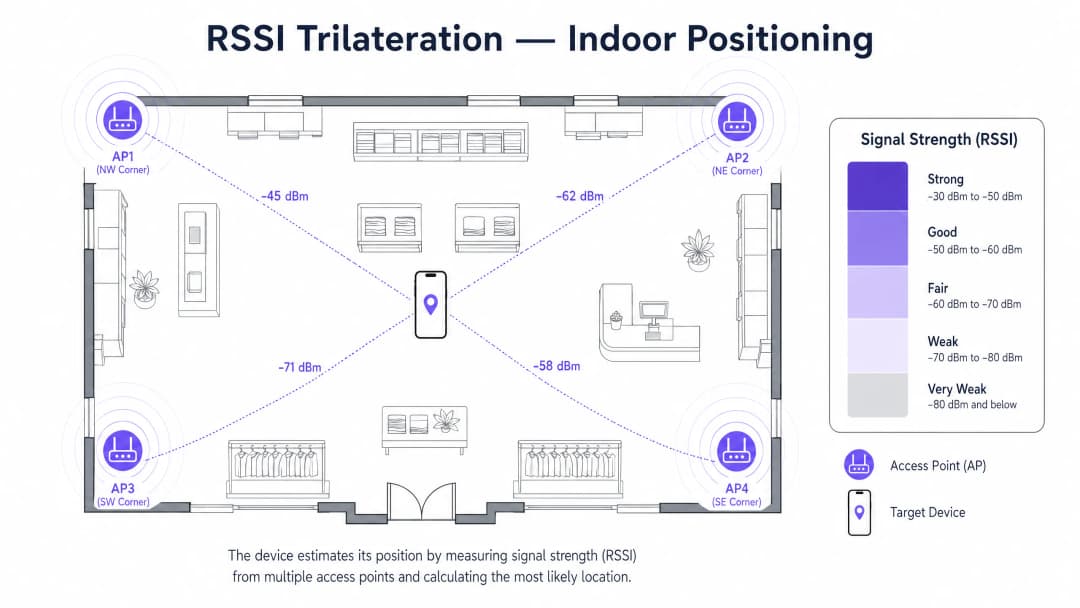
जरी ट्रायलेटरेशन गणितीय आधार प्रदान करत असले, तरी मल्टिपाथ फेडिंग, भौतिक अडथळ्यांद्वारे होणारे शोषण आणि हस्तक्षेप यामुळे रॉ RSSI अत्यंत अस्थिर असतो. त्यामुळे, एंटरप्राइझ सिस्टम्स RF फिंगरप्रिंटिंगचा वापर करतात—ही एक कॅलिब्रेशन प्रक्रिया आहे जिथे संदर्भ डेटाबेस तयार करण्यासाठी ज्ञात स्थानांवर अनुभवजन्य RSSI मोजमाप रेकॉर्ड केले जाते. ऑपरेशन दरम्यान, अचूकतेमध्ये लक्षणीय सुधारणा करण्यासाठी सिस्टम संभाव्यता अल्गोरिदमचा (जसे की k-nearest neighbors किंवा Bayesian inference) वापर करून या फिंगरप्रिंट डेटाबेससह रिअल-टाइम RSSI रीडिंगची तुलना करते।
डिव्हाइस-साइड विरुद्ध इन्फ्रास्ट्रक्चर-साइड पोझिशनिंग
लोकेशन डेटावर प्रक्रिया करण्यासाठी दोन मुख्य आर्किटेक्चरल मॉडेल आहेत:
- डिव्हाइस-साइड पोझिशनिंग: क्लायंट डिव्हाइस (उदा. विशिष्ट ॲप चालवणारा स्मार्टफोन) जवळच्या APs कडून RSSI मोजतो, स्वतःच्या स्थितीची गणना करतो आणि वैकल्पिकरित्या सर्व्हरला त्याची माहिती देतो. हा दृष्टिकोन चांगल्या प्रकारे स्केल होतो परंतु यासाठी वापरकर्त्याच्या प्रयत्नांची (ॲप इन्स्टॉलेशन) आवश्यकता असते आणि तो OS-पातळीवरील बॅकग्राउंड स्कॅनिंग निर्बंधांना बळी पडू शकतो。
- इन्फ्रास्ट्रक्चर-साइड पोझिशनिंग: नेटवर्क APs क्लायंट डिव्हाइसेसद्वारे पाठवल्या जाणाऱ्या प्रोब रिक्वेस्ट्स (probe requests) ऐकतात. APs ही RSSI मोजमापे एका केंद्रीय नियंत्रकाकडे किंवा क्लाउड ॲनालिटिक्स इंजिनकडे पाठवतात, जे स्थितीची गणना करते. हा पसंतीचा एंटरप्राइझ मॉडेल आहे, कारण यासाठी कोणत्याही क्लायंट-साइड सॉफ्टवेअरची आवश्यकता नसते आणि तो सर्व ट्रान्समिट करणाऱ्या डिव्हाइसेससाठी पॅसिव्ह ॲनालिटिक्स प्रदान करतो. Purple चा प्लॅटफॉर्म या इन्फ्रास्ट्रक्चर-साइड दृष्टिकोनाचा वापर करतो, जो Guest WiFi कॅप्टिव्ह पोर्टल च्या माध्यमातून प्रमाणित प्रोफाइलसह लोकेशन डेटाचा परस्परसंबंध जोडतो。
प्रासंगिक IEEE मानके
पोझिशनिंग अचूकता ऑप्टिमाइझ करण्यासाठी, नेटवर्क आर्किटेक्ट्सनी हे सुनिश्चित केले पाहिजे की त्यांचे इन्फ्रास्ट्रक्चर विशिष्ट IEEE 802.11 सुधारणांना सपोर्ट करते:
- 802.11k (रेडिओ रिसोर्स मेझरमेंट): APs आणि क्लायंट्सना RF वातावरणाबद्दल माहितीची देवाणघेवाण करण्यास सक्षम करते, ज्यामुळे नेटवर्कला क्लायंट RSSI मध्ये चांगली दृश्यमानता मिळते。
- 802.11v (BSS ट्रान्झिशन मॅनेजमेंट): नेटवर्कला क्लायंट्सना इष्टतम APs कडे निर्देशित करण्याची परवानगी देते, क्लायंट सर्वोत्तम सिग्नल वैशिष्ट्ये असलेल्या APs शी जोडलेले आहेत याची खात्री करून अप्रत्यक्षपणे लोकेशन टेलिमेट्रीची गुणवत्ता सुधारते。
- 802.11ac (Wave 2) आणि 802.11ax (WiFi 6): जरी प्रामुख्याने थ्रूपुट आणि क्षमतेवर लक्ष केंद्रित केले असले, तरी या मानकांची प्रगत बीमफॉर्मिंग आणि MU-MIMO वैशिष्ट्ये अधिक स्थिर RF वातावरण प्रदान करतात, ज्यामुळे RSSI स्थिरतेला फायदा होतो。
- 802.11az (नेक्स्ट जनरेशन पोझिशनिंग): फाइन-टाइम मेझरमेंट (FTM) साठीचे हे उदयोन्मुख मानक आहे, जे सब-मीटर अचूकता मिळवण्यासाठी RSSI ऐवजी टाईम-ऑफ-फ्लाईटचा वापर करते. जरी अद्याप ते सर्वव्यापी नसले, तरी ते WiFi पोझिशनिंगच्या भविष्याचे प्रतिनिधित्व करते。
तुमच्या विशिष्ट सेटअपबद्दल काही प्रश्न आहेत का?
आमची टीम ८०,००० हून अधिक वेन्यूजमधील वेन्यू ऑपरेटर्स, IT मॅनेजर्स आणि नेटवर्क इंजिनिअर्ससोबत काम करते. २० मिनिटांचा कॉल बुक करा आणि तुमच्यासारख्या इतरांनी ही समस्या कशी सोडवली हे आम्ही तुम्हाला दाखवू.
अंमलबजावणी मार्गदर्शिका: डिप्लॉयमेंट आणि कॉन्फिगरेशन
इंडोर पोझिशनिंग सिस्टम डिप्लॉय करण्यासाठी काळजीपूर्वक नियोजनाची आवश्यकता असते. जे नेटवर्क डिझाइन उत्कृष्ट डेटा कव्हरेज प्रदान करते, ते आपोआप उत्कृष्ट लोकेशन अचूकता प्रदान करेलच असे नाही।
पायरी १: RF साईट सर्व्हे
पोझिशनिंगसाठी प्रेडिक्टिव्ह सॉफ्टवेअर सर्व्हे अपुरा आहे. तुम्हाला प्रत्यक्ष, ऑन-साईट RF सर्व्हे करावा लागेल. यामध्ये प्रत्यक्ष सिग्नल प्रसाराचा नकाशा तयार करण्यासाठी, हस्तक्षेपाचे स्रोत (उदा. HVAC सिस्टम्स, स्ट्रक्चरल स्टील) ओळखण्यासाठी आणि सिग्नल डेड झोन शोधण्यासाठी विशेष स्पेक्ट्रम विश्लेषण साधनांसह वेन्यूमध्ये फिरणे समाविष्ट आहे. प्रत्येक ट्रॅक करण्यायोग्य झोनमध्ये किमान तीन APs कडून लाईन-ऑफ-साईट किंवा मजबूत सिग्नल मिळेल याची खात्री करण्यासाठी APs कुठे जोडले किंवा बदलले पाहिजेत हे हा सर्व्हे ठरवतो. डिप्लॉय केल्यानंतर हे APs सुरक्षित करण्याच्या तपशीलवार मार्गदर्शनासाठी, आमचे Access Point Security: Your 2026 Enterprise Guide पहा。
पायरी २: ॲक्सेस पॉईंट प्लेसमेंट धोरण
कनेक्टिव्हिटीसाठी, कव्हरेज क्षेत्र जास्तीत जास्त करण्यासाठी APs अनेकदा हॉलवेमध्ये ठेवले जातात. पोझिशनिंगसाठी, हे प्रतिकूल आहे. RF सिग्नल आतल्या बाजूला खेचण्यासाठी, APs तुम्ही ट्रॅक करू इच्छित असलेल्या झोनच्या परिमितीवर आणि कोपऱ्यांवर ठेवले पाहिजेत।
- घनता (Density): कोणत्याही दिलेल्या बिंदूवर क्लायंट डिव्हाइस शोधण्यासाठी किमान तीन APs चे लक्ष्य ठेवा (सामान्यतः -७५ dBm किंवा त्याहून चांगले).
- भूमिती (Geometry): APs सरळ रेषेत ठेवणे टाळा. समभुज त्रिकोण किंवा स्टॅगर्ड ग्रीड (staggered grid) पॅटर्न ट्रायलेटरेशन अल्गोरिदमसाठी सर्वोत्तम भूमिती प्रदान करतो.
- उंची (Height): APs एकाच उंचीवर माउंट करा, सामान्यतः ३ ते ४ मीटरच्या दरम्यान. जास्त उंची अचूक 2D पोझिशनिंगसाठी आवश्यक असलेले क्षैतिज RSSI विभेदन कमी करते.
पायरी ३: रेडिओ मॅप कॅलिब्रेशन (फिंगरप्रिंटिंग)
एकदा इन्फ्रास्ट्रक्चर डिप्लॉय झाल्यावर, तुम्हाला सिस्टम कॅलिब्रेट करावी लागेल. यामध्ये पोझिशनिंग प्लॅटफॉर्मवर अचूक, टू-स्केल फ्लोअर प्लॅन अपलोड करणे समाविष्ट आहे. त्यानंतर एक तंत्रज्ञ अनुभवजन्य RSSI नमुने रेकॉर्ड करण्यासाठी परिभाषित ग्रीड बिंदूंवर (सामान्यतः दर २ ते ५ मीटरवर) थांबत वेन्यूमध्ये फिरतो. ही फिंगरप्रिंटिंग प्रक्रिया अल्गोरिदमला शिकवते की भिंती, शेल्फ आणि इतर अडथळे लक्षात घेऊन तुमच्या विशिष्ट भौतिक वातावरणात RF सिग्नल्स प्रत्यक्षात कसे वागतात。
पायरी ४: प्लॅटफॉर्म इंटिग्रेशन आणि ओळख सोल्यूशन
व्यावसायिक संदर्भाशिवाय रॉ X/Y कोऑर्डिनेट्स निरुपयोगी आहेत. पोझिशनिंग इंजिनने ॲनालिटिक्स डॅशबोर्डला डेटा पुरवला पाहिजे. याव्यतिरिक्त, आधुनिक मोबाईल ऑपरेटिंग सिस्टम्स अप्रमाणित डिव्हाइसेसच्या पॅसिव्ह ट्रॅकिंगला रोखण्यासाठी MAC ॲड्रेस रँडमायझेशनचा वापर करतात।
यावर मात करण्यासाठी, पोझिशनिंग सिस्टम नेटवर्क ऑथेंटिकेशन लेयरसह इंटिग्रेट केली पाहिजे. जेव्हा एखादा वापरकर्ता Guest WiFi मध्ये (उदा. कॅप्टिव्ह पोर्टल च्या माध्यमातून) लॉग इन करतो, तेव्हा त्यांचा रँडमायझ्ड MAC ॲड्रेस तात्पुरता त्यांच्या प्रमाणित प्रोफाइलशी जोडला जातो. हे Purple सारख्या प्लॅटफॉर्मला गोपनीयतेच्या नियमांचे पूर्णपणे पालन करून समृद्ध, लॉन्जिट्युडिनल (longitudinal) ॲनालिटिक्स प्रदान करण्यास अनुमती देते. ही बेसलाईन कनेक्टिव्हिटी लागू करू इच्छिणाऱ्या लहान वेन्यूजसाठी, How to Set Up a WiFi Hotspot for Your Business (किंवा पोर्तुगीज आवृत्ती, Como Configurar um Hotspot WiFi para o Seu Negócio) पहा。
एंटरप्राइझ वातावरणासाठी सर्वोत्तम पद्धती
विविध उद्योग अद्वितीय RF आव्हाने सादर करतात. यशस्वी डिप्लॉयमेंटसाठी भौतिक वातावरणानुसार तांत्रिक धोरण अवलंबणे आवश्यक आहे。
हॉस्पिटॅलिटी आणि हेल्थकेयर
Hospitality आणि Healthcare वातावरणात, प्राथमिक आव्हान म्हणजे जाड भिंती, फायर डोअर्स आणि एलिव्हेटर शाफ्ट्समुळे होणारे सिग्नल क्षीणन (attenuation) होय।
- सर्वोत्तम पद्धत: भिंती भेदण्यासाठी हॉलवे APs वर अवलंबून राहण्याऐवजी खोल्यांच्या आत APs डिप्लॉय करा. हे मायक्रो-सेल आर्किटेक्चर रूम-लेव्हल अचूकतेसाठी आवश्यक असलेले विशिष्ट RF सिग्नेचर प्रदान करते。
रिटेल आणि सुपरमार्केट
Retail वातावरण बदलत्या RF डायनॅमिक्सशी संघर्ष करते. मेटल शेल्व्हिंग, इन्व्हेंटरीची घनता आणि मोठी गर्दी RF सिग्नल शोषून घेतात आणि परावर्तित करतात, ज्याचा अर्थ असा आहे की उघडण्याच्या वेळेत आणि पीक अवर्समध्ये RF वातावरण बदलते।
- सर्वोत्तम पद्धत: रिकाम्या स्टोअरमध्ये नाही, तर सामान्य फूट ट्रॅफिकसह ऑपरेशनल तासांमध्ये रेडिओ कॅलिब्रेशन करा. तुमच्या वेंडरद्वारे सपोर्ट असल्यास डायनॅमिक कॅलिब्रेशन अल्गोरिदम वापरा。
ट्रान्सपोर्ट आणि स्टेडियम
Transport हब्स आणि मोठ्या इव्हेंट वेन्यूजमध्ये, आव्हान अवाढव्य स्केल आणि AP घनतेचे असते. जास्त AP घनतेमुळे को-चॅनल (co-channel) हस्तक्षेप होऊ शकतो।
- सर्वोत्तम पद्धत: ट्रान्समिट पॉवर को सावधानीपूर्वक प्रबंधित करें। सेलचा आकार आणि हस्तक्षेप कमी करण्यासाठी APs कमी ट्रान्समिट पॉवरसह कॉन्फिगर केले पाहिजेत, जे पोझिशनिंगसाठी आवश्यक ओव्हरलॅपिंग कव्हरेज प्रदान करण्यासाठी APs च्या उच्च घनतेवर अवलंबून असतात।

त्रुटी निवारण आणि जोखीम कमी करणे
काळजीपूर्वक नियोजन करूनही, पोझिशनिंग सिस्टमच्या कामगिरीत घसरण होऊ शकते. IT टीम्सनी या सामान्य बिघाड प्रकारांचे सक्रियपणे निरीक्षण केले पाहिजे आणि ते कमी केले पाहिजेत।
१. MAC रँडमायझेशनचे आव्हान
उल्लेख केल्याप्रमाणे, iOS आणि Android पॅसिव्ह ट्रॅकिंग रोखण्यासाठी MAC ॲड्रेसेस रँडमायझ करतात. जर तुमची सिस्टम पूर्णपणे पॅसिव्ह प्रोब रिक्वेस्ट्सवर अवलंबून असेल, तर तुमचे ॲनालिटिक्स मोठ्या प्रमाणावर वाढलेली व्हिजिटर्सची संख्या आणि शून्य रिपीट व्हिजिटर्स दर्शवेल।
- शमन (Mitigation): गेस्ट ॲक्सेससाठी कॅप्टिव्ह पोर्टल ऑथेंटिकेशन अनिवार्य करा. व्हॅल्यू एक्सचेंज (संपर्क तपशीलांच्या बदल्यात मोफत WiFi) ओळख निश्चित करण्यासाठी कायदेशीर आधार आणि तांत्रिक यंत्रणा प्रदान करते. तुमचे नेटवर्क स्पूफिंगपासून सुरक्षित असल्याची खात्री करा; इन्फ्रास्ट्रक्चर मजबूत करण्याच्या धोरणांसाठी Protect Your Network with Strong DNS and Security चे पुनरावलोकन करा。
२. फर्मवेअरमधील विसंगती
AP फर्मवेअर व्हर्जन्समध्ये RSSI रिपोर्टिंगचे वर्तन नाट्यमयरित्या बदलू शकते. एखादे अपडेट एखादा AP किती वेळा प्रोब रिक्वेस्ट रिपोर्ट करतो किंवा तो RSSI मूल्याची गणना कशी करतो हे बदलू शकते।
- शमन (Mitigation): संपूर्ण डिप्लॉयमेंटमध्ये फर्मवेअरचे मानकीकरण करा. वेंडर फर्मवेअर अपडेट्स रोल आउट करण्यापूर्वी, ते लोकेशन ॲनालिटिक्स फीड खराब करत नाही ना हे सत्यापित करण्यासाठी स्टेजिंग वातावरणात तपासा。
३. पर्यावरणीय बदल (Environmental Drift)
नवीन मेटल फिक्स्चरसह नूतनीकरण केलेल्या किंवा बदललेल्या पार्टिशन भिंती असलेला वेन्यू सध्याच्या RF फिंगरप्रिंट मॅपला अमान्य करेल, ज्यामुळे लोकेशन अचूकतेमध्ये मोठी घसरण होईल।
- शमन (Mitigation): वेन्यूमधील कोणत्याही महत्त्वपूर्ण भौतिक बदलासाठी IT पुनरावलोकनाची आवश्यकता असलेले धोरण लागू करा. विशेषतः रिटेलसारख्या गतिमान वातावरणात, रेडिओ मॅपचे वेळोवेळी पुन्हा कॅलिब्रेशन (recalibration) शेड्यूल करा。
ROI आणि व्यावसायिक प्रभाव
इंडोर पोझिशनिंग सिस्टम डिप्लॉय करण्याचे समर्थन कृतीयोग्य व्यावसायिक बुद्धिमत्ता (business intelligence) निर्माण करण्याच्या क्षमतेवर अवलंबून असते. जेव्हा Purple च्या WiFi Analytics सारख्या प्लॅटफॉर्मसह इंटिग्रेट केले जाते, तेव्हा तांत्रिक टेलिमेट्री थेट व्यावसायिक मूल्यामध्ये बदलते।
यश मोजणे
यश विशिष्ट ऑपरेशनल KPIs च्या विरुद्ध मोजले पाहिजे:
- कॅप्चर रेट: एकूण फूट ट्रॅफिकची ती टक्केवारी जी WiFi शी जोडली जाते आणि एक प्रमाणित, ट्रॅक करण्यायोग्य प्रोफाइल बनते。
- झोन कन्व्हर्जन: प्रवेशद्वारापासून विशिष्ट उच्च-मूल्य असलेल्या झोनमध्ये (उदा. हॉटेलमधील रेस्टॉरंट किंवा रिटेलमधील एखादा विशिष्ट विभाग) जाणाऱ्या व्हिजिटर्सच्या फनेलचे विश्लेषण करणे。
- ड्वेल टाईम ऑप्टिमायझेशन: विझिटर्स ज्या भागात जास्त वेळ घालवतात ते भाग ओळखणे (जे बॉटलनेक दर्शवतात, जसे की चेकआउट रांगा) विरुद्ध ते ज्या भागात थांबतात (जे प्रतिबद्धता दर्शवतात, जसे की लाउंज किंवा फीचर डिस्प्ले)。
खर्च-फायदा विश्लेषण
WiFi पोझिशनिंगचा प्राथमिक खर्च फायदा हा आहे कि ते आधीच झालेल्या खर्चाचा (sunk costs) लाभ उठवते. कनेक्टिव्हिटीसाठी APs, स्विचिंग आणि केबलिंग आधीच डिप्लॉय केलेले आहेत. वाढीव खर्च म्हणजे ॲनालिटिक्स प्लॅटफॉर्मसाठी सॉफ्टवेअर लायसन्सिंग आणि साईट सर्व्हे व कॅलिब्रेशनसाठी लागणारे मनुष्यबळ।
फायदे ऑपरेशनल कार्यक्षमतेद्वारे मिळतात. उदाहरणार्थ, एखादे स्टेडियम रिअल-टाइम गर्दीच्या घनतेच्या हीटमॅपवर आधारित सुरक्षा किंवा सवलत कर्मचाऱ्यांना डायनॅमिकरित्या डिप्लॉय करू शकते. एखादी रिटेल साखळी एंड-कॅप डिस्प्ले की प्रभावशीलता को मापने के लिए पॉईंट-ऑफ-सेल डेटासह विशिष्ट कॉरिडॉरमधील ड्वेल टाईमचा परस्परसंबंध जोडू शकते. Purple जसे आपल्या ॲनालिटिक्स क्षमतांचा विस्तार करत आहे—नुकतेच क्षेत्र-विशिष्ट सोल्यूशन्स चालवण्यासाठी appointment of VP Education Tim Peers सारख्या धोरणात्मक पावलांद्वारे हायलाईट केल्याप्रमाणे—सध्याच्या नेटवर्क इन्फ्रास्ट्रक्चरमधून सखोल, प्रासंगिक अंतर्दृष्टी मिळवण्याची क्षमता एंटरप्राइझ IT लीडर्ससाठी एक आकर्षक मूल्य प्रस्ताव बनून राहिली आहे।
महत्वाच्या व्याख्या
RSSI (Received Signal Strength Indicator)
ॲक्सेस पॉईंटवरून क्लायंट डिव्हाइसद्वारे प्राप्त झालेल्या RF सिग्नलच्या पॉवर लेव्हलचे मोजमाप, जे ऋण डेसिबल (dBm) मध्ये व्यक्त केले जाते.
RSSI हा रॉ टेलिमेट्री डेटा आहे जो ट्रायलेटरेशन अल्गोरिदमद्वारे डिव्हाइस आणि AP मधील अंतराचा अंदाज लावण्यासाठी वापरला जातो.
Trilateration
तीन किंवा अधिक ज्ञात संदर्भ बिंदूंपासूनचे अंतर मोजून स्थान निश्चित करण्यासाठी वापरले जाणारे गणितीय तंत्र.
अनेक APs कडून मिळालेल्या RSSI मूल्यांवर आधारित X/Y कोऑर्डिनेट्सची गणना करण्यासाठी इन्फ्रास्ट्रक्चरद्वारे वापरला जाणारा हा मुख्य अल्गोरिदम आहे.
RF Fingerprinting
वेन्यूच्या युनिक रेडिओ वातावरणाचा डेटाबेस तयार करण्यासाठी विशिष्ट भौतिक कोऑर्डिनेट्सवर अनुभवजन्य RSSI मूल्ये मोजण्याची आणि रेकॉर्ड करण्याची प्रक्रिया.
मल्टिपाथ हस्तक्षेपावर मात करण्यासाठी आणि मूलभूत गणितीय ट्रायलेटरेशनच्या पलीकडे अचूकता सुधारण्यासाठी आवश्यक.
MAC Address Randomisation
आधुनिक मोबाईल OS मधील एक गोपनीयता वैशिष्ट्य जिथे नेटवर्क स्कॅन करताना डिव्हाइस बनावट, रोटेटिंग MAC ॲड्रेस ब्रॉडकास्ट करते.
हे पॅसिव्ह ट्रॅकिंग सिस्टम्स खंडित करते, ज्यामुळे वापरकर्त्यांना ऑथेंटिकेट करण्यासाठी आणि त्यांची ओळख निश्चित करण्यासाठी कॅप्टिव्ह पोर्टल्स वापरणे आवश्यक होते.
Probe Request
जवळपास उपलब्ध असलेले 802.11 नेटवर्क शोधण्यासाठी क्लायंट डिव्हाइसद्वारे पाठवले जाणारे मॅनेजमेंट फ्रेम.
इन्फ्रास्ट्रक्चर-साइड पोझिशनिंग सिस्टम्स स्थान गणनेसाठी आवश्यक असलेला RSSI डेटा गोळा करण्यासाठी या विनंत्या ऐकतात.
802.11k/v
IEEE मानके जी APs आणि क्लायंट्सना RF वातावरणाबद्दल माहितीची देवाणघेवाण करण्यास आणि रोमिंग व्यवस्थापित करण्यास अनुमती देतात.
या मानकांना सपोर्ट केल्याने नेटवर्कला क्लायंट RSSI मध्ये चांगली दृश्यमानता मिळते, ज्यामुळे पोझिशनिंग अचूकता सुधारते.
Multipath Interference
अशी घटना जिथे रेडिओ सिग्नल्स धातू किंवा काचेसारख्या पृष्ठभागावरून परावर्तित झाल्यामुळे दोन किंवा अधिक मार्गांनी रिसिव्हिंग अँटेनापर्यंत पोहोचतात.
मल्टिपाथमुळे RSSI मध्ये चढ-उतार होतात, म्हणूनच वेन्यूमधील प्रत्यक्ष सिग्नल वर्तनाचा नकाशा तयार करण्यासाठी RF फिंगरप्रिंटिंग आवश्यक आहे.
Dwell Time
एखादे विशिष्ट डिव्हाइस परिभाषित भौतिक झोनमध्ये राहण्याचा कालावधी.
पोझिशनिंग डेटावरून मिळवलेले एक महत्त्वपूर्ण व्यावसायिक मेट्रिक, ज्याचा वापर रिटेल डिस्प्लेमधील प्रतिबद्धता किंवा ट्रान्सपोर्ट हब्समधील रांगेची लांबी मोजण्यासाठी केला जातो.
सोडवलेली उदाहरणे
३०० खोल्यांच्या हॉटेलमध्ये अतिथी कॉरिडॉरमध्ये खराब लोकेशन अचूकतेचा (१५+ मीटर) अनुभव येत आहे, ज्यामुळे एखादे डिव्हाइस नेमके कोणत्या खोलीत आहे हे निश्चित करणे अशक्य होत आहे. सध्याच्या डिप्लॉयमेंटमध्ये मुख्य हॉलवेमध्ये दर २० मीटरवर हाय-पॉवर APs वापरले जातात.
IT टीमने हॉलवे-केंद्रित कव्हरेज मॉडेलकडून मायक्रो-सेल आर्किटेक्चरकडे वळले पाहिजे. त्यांनी थेट अतिथी खोल्यांच्या आत कमी पॉवरचे वॉल-प्लेट APs डिप्लॉय केले पाहिजेत (उदा. दर दोन खोल्यांसाठी एक AP). त्यानंतर त्यांनी नवीन RF फिंगरप्रिंट कॅलिब्रेशन केले पाहिजे. यामुळे प्रत्येक खोलीसाठी स्वतंत्र RF सिग्नेचर्स तयार होतात, ज्यामुळे सिस्टमला रूम १०१ मधील डिव्हाइस विरुद्ध रूम १०२ मधील डिव्हाइस यातील फरक ओळखता येतो.
एका मोठ्या रिटेल क्लायंटने नोंदवले आहे की त्यांच्या पॅसिव्ह WiFi ॲनालिटिक्स डॅशबोर्डवर दररोज १०,००० युनिक व्हिजिटर्स दिसतात, परंतु डोअर काउंटर्स केवळ २,००० नोंदवतात. शिवाय, डॅशबोर्ड ०% रिपीट व्हिजिटर रेट दर्शवतो.
ही सिस्टम आधुनिक iOS आणि Android डिव्हाइसेसच्या MAC ॲड्रेस रँडमायझेशनला बळी पडत आहे. IT टीमने पॅसिव्ह ॲनालिटिक्स फीडमधून स्थानिक पातळीवर प्रशासित (रँडमायझ्ड) MAC ॲड्रेसेस फिल्टर करण्यासाठी ॲनालिटिक्स प्लॅटफॉर्म कॉन्फिगर केला पाहिजे. अचूक, लॉन्जिट्युडिनल डेटा कॅप्चर करण्यासाठी, त्यांनी Guest WiFi वर कॅप्टिव्ह पोर्टल लागू केले पाहिजे, ज्यासाठी वापरकर्त्यांना ऑथेंटिकेट करणे आवश्यक आहे. त्यानंतर ॲनालिटिक्स इंजिन तात्पुरत्या MAC ॲड्रेसऐवजी ऑथेंटिकेटेड सेशन ट्रॅक करेल.
सराव प्रश्न
Q1. तुम्ही ५,००० स्क्वेअर फूटच्या नवीन ओपन-प्लॅन रिटेल स्टोअरसाठी AP लेआउट डिझाइन करत आहात. ग्राहकांच्या प्रवाहाचा मागोवा घेण्यासाठी अचूक इंडोर पोझिशनिंग ही प्राथमिक गरज आहे. सौंदर्याचा दर्जा वाढवण्यासाठी आणि केबलिंग सुलभ करण्यासाठी तुम्ही APs मध्यभागी असलेल्या पॅसेजमध्ये सरळ रेषेत ठेवावेत का?
टीप: ट्रायलेटरेशन अल्गोरिदम छेदणाऱ्या वर्तुळांवर आधारित अंतराची गणना कशी करतात याचा विचार करा.
नमुना उत्तर पहा
नाही. APs सरळ रेषेत ठेवल्याने ट्रायलेटरेशनसाठी अत्यंत खराब भूमिती मिळते, कारण छेदणारी संभाव्यता वर्तुळे दोन ठिकाणी ओव्हरलॅप होतील (रेषेच्या दोन्ही बाजूला मिरर इमेजेस), ज्यामुळे ग्राहक पॅसेजच्या कोणत्या बाजूला आहे हे निश्चित करणे सिस्टमला अशक्य होईल. ट्रॅक केलेल्या क्षेत्राला वेढण्यासाठी APs स्टॅगर्ड किंवा पेरिमिटर कॉन्फिगरेशनमध्ये ठेवले पाहिजेत.
Q2. तुमच्या वेन्यूमध्ये नुकतेच मुख्य लॉबीच्या मध्यभागी जमिनीपासून छतापर्यंतचे मोठे आरशाच्या काचेचे वॉटर फीचर बसवले आहे. त्यानंतर लगेचच, लॉबीमधील लोकेशन अचूकता लक्षणीयरीत्या खालावली. याचे संभाव्य तांत्रिक कारण काय आहे आणि त्यावर काय उपाय आहे?
टीप: RF सिग्नल्स परावर्तित पृष्ठभागांशी कसे संवाद साधतात याचा विचार करा.
नमुना उत्तर पहा
आरशाची काच आणि पाणी यामुळे तीव्र मल्टिपाथ हस्तक्षेप होत आहे, ज्यामुळे RF सिग्नल्स परावर्तित होत आहेत आणि APs द्वारे प्राप्त होणारी RSSI मूल्ये बदलत आहेत. यावरील उपाय म्हणजे नवीन RF साईट सर्व्हे करणे आणि लॉबीसाठी रेडिओ फिंगरप्रिंट मॅप पुन्हा कॅलिब्रेट करणे, ज्यामुळे अल्गोरिदमला जागेची नवीन RF वैशिष्ट्ये समजतील.
Q3. एखाद्या स्टेकहोल्डरला स्टोअरफ्रंटवरून जाणाऱ्या प्रत्येक व्यक्तीच्या हालचालींचा मागोवा घ्यायचा आहे, मग ते Guest WiFi शी कनेक्ट असोत वा नसोत. हे तांत्रिकदृष्ट्या कसे अशक्य आहे आणि कायदेशीरदृष्ट्या कसे समस्याप्रधान आहे ते स्पष्ट करा.
टीप: मोबाईल OS गोपनीयता वैशिष्ट्ये आणि GDPR कायदेशीर आधार आवश्यकतांबद्दल विचार करा.
नमुना उत्तर पहा
तांत्रिकदृष्ट्या, iOS आणि Android डिव्हाइसेस नेटवर्क शोधताना MAC ॲड्रेस रँडमायझेशनचा वापर करतात, ज्याचा अर्थ असा आहे की बाजूने जाणारे एकच डिव्हाइस अनेक भिन्न, ट्रॅक न करता येणारे डिव्हाइसेस म्हणून दिसेल. कायदेशीररित्या, संमतीशिवाय किंवा स्पष्ट कायदेशीर आधाराशिवाय व्यक्तींचा मागोवा घेणे GDPR चे उल्लंघन करते. योग्य दृष्टिकोन म्हणजे वापरकर्त्यांना कॅप्टिव्ह पोर्टल च्या माध्यमातून Guest WiFi शी कनेक्ट करणे आवश्यक करणे, संमती प्रदान करणे आणि सिस्टमला ऑथेंटिकेटेड सेशन ट्रॅक करण्याची परवानगी देणे.
या मालिकेमध्ये पुढे वाचा
Guest WiFi आणि Location Analytics च्या व्यावसायिक ROI चे मोजमाप करणे
हे तांत्रिक संदर्भ IT आणि ठिकाण व्यवस्थापन (venue) टीम्सना नेटवर्कची कार्यक्षमता आणि संमती दिलेल्या डेटापासून ते प्रमाणित ऑपरेशन्स किंवा व्यावसायिक परिणामांपर्यंतच्या स्पष्ट साखळीद्वारे Guest WiFi च्या ROI चे मोजमाप कसे करावे हे दाखवते. हे गृहीतकांपासून मोजण्यायोग्य पुराव्याला वेगळे करते, Purple Connect, Capture आणि Engage यांना योग्य मोजमाप स्तराशी जोडते आणि हॉटेल्स, रिटेल इस्टेट्स व इव्हेंट ठिकाणांसाठी नियोजन परिस्थिती प्रदान करते.
Privacy by Design: GDPR Compliance साठी WiFi डेटा अनामित करणे
हे अधिकृत मार्गदर्शक GDPR अनुपालन सुनिश्चित करण्यासाठी WiFi डेटा अनामित करण्यासाठी तांत्रिक आर्किटेक्चर आणि अंमलबजावणी धोरणांचा तपशील देते. हे IT लीडर्स आणि नेटवर्क आर्किटेक्ट्सना कठोर डेटा प्रायव्हसी आवश्यकतांसह मजबूत व्हेन्यू ॲनालिटिक्सचा समतोल राखण्यासाठी कृतीयोग्य फ्रेमवर्क प्रदान करते.
Heatmapping vs Presence Analytics: तांत्रिक फरक
हा अधिकृत तांत्रिक मार्गदर्शक एंटरप्राइझ व्हेन्यू ऑपरेटर्ससाठी WiFi heatmapping आणि presence analytics मधील महत्त्वपूर्ण आर्किटेक्चरल आणि ऑपरेशनल फरक तपशीलवार स्पष्ट करतो. हा IT लीडर्स, नेटवर्क आर्किटेक्ट्स आणि ऑपरेशन्स डायरेक्टर्सना त्यांच्या विद्यमान वायरलेस इन्फ्रास्ट्रक्चरमधून जास्तीत जास्त ROI मिळवण्यासाठी उपयुक्त डिप्लोयमेंट फ्रेमवर्क्स, वास्तविक-जगातील अंमलबजावणीची उदाहरणे आणि व्हेंडर-न्यूट्रल सर्वोत्तम पद्धती प्रदान करतो.
तुमच्या विशिष्ट सेटअपबद्दल काही प्रश्न आहेत का?
आमची टीम ८०,००० हून अधिक वेन्यूजमधील वेन्यू ऑपरेटर्स, IT मॅनेजर्स आणि नेटवर्क इंजिनिअर्ससोबत काम करते. २० मिनिटांचा कॉल बुक करा आणि तुमच्यासारख्या इतरांनी ही समस्या कशी सोडवली हे आम्ही तुम्हाला दाखवू.