
द कंप्लायन्स प्लेबुक: GDPR आणि गेस्ट WiFi डेटा प्रायव्हसी
हे सर्वसमावेशक मार्गदर्शक आयटी व्यवस्थापक आणि ठिकाण चालकांना GDPR - सुसंगत अतिथी WiFi नेटवर्क तयार करण्यासाठी तांत्रिक फ्रेमवर्क प्रदान करते. यात संमती प्रक्रिया, नेटवर्क वर्गीकरण, स्वयंचलित डेटा धारणा आणि अनुपालनाला नियामक दायित्वाऐवजी सुरक्षित फर्स्ट - पार्टी डेटा मालमत्तेमध्ये कसे रूपांतरित करावे याबद्दल सविस्तर माहिती दिली आहे.
हे मार्गदर्शक ऐका
पॉडकास्ट ट्रान्सक्रिप्ट पहा
आमच्या मुख्य मालिकेचा भाग: Guest WiFi Guide →

मुख्य सारांश (Executive Summary)
Guest WiFi हा डेटा संकलनासाठी एक नियमन केलेला एंडपॉइंट आहे. प्रत्येक हॉटेल, रिटेल चेन, स्टेडियम आणि कॉन्फरन्स सेंटर जे सार्वजनिक नेटवर्क प्रवेश प्रदान करते, ते एखादा अतिथी कनेक्ट होताच General Data Protection Regulation (GDPR) अंतर्गत डेटा नियंत्रक बनते. नियमांचे पालन न केल्यास Information Commissioner's Office (ICO) द्वारे २० दशलक्ष युरो किंवा जागतिक वार्षिक उलाढालीच्या ४% पर्यंतचा दंड ठोठावला जाऊ शकतो.
हा मार्गदर्शक IT व्यवस्थापक, नेटवर्क आर्किटेक्ट्स आणि ऑपरेशन्स डायरेक्टर्सना त्यांचे Guest WiFi सेवा पूर्णपणे सुसंगत असल्याची खात्री करण्यासाठी एक व्यावहारिक, कृतीयोग्य फ्रेमवर्क प्रदान करतो. आम्ही Guest WiFi द्वारे संकलित केलेल्या विशिष्ट डेटा प्रकारांचा, संमती आणि डेटा प्रक्रियेच्या कायदेशीर आवश्यकतांचा आणि सुसंगत सोल्यूशन लागू करण्यासाठी विक्रेता-उदासीन सर्वोत्तम पद्धतींचा अभ्यास करतो.
Captive Portal डिझाइनपासून ते डेटा धारणा धोरणांच्या स्वयंचलिततेपर्यंत - एक सुरक्षित प्रणाली डिझाइन करून नॉन-कॉम्प्लायन्सशी संबंधित कायदेशीर आणि आर्थिक जोखीम कशा कमी करायच्या हे तुम्ही शिकाल. या सिद्धांतांचे पालन करून, व्यवसाय त्यांच्या Guest WiFi चे संभाव्य कॉम्प्लायन्स जोखमीमधून एका धोरणात्मक मालमत्तेमध्ये रूपांतर करू शकतात, जे वापरकर्त्यांच्या गोपनीयतेचा आदर करत व्यावसायिक वाढीस प्रोत्साहन देते.
तांत्रिक सखोल विश्लेषण (Technical Deep-Dive)
Guest WiFi साठी GDPR कॉम्प्लायन्स समजून घेण्याची सुरुवात प्रक्रियेत असलेल्या डेटाच्या स्पष्ट मूल्यांकनाने होते. नियमांनुसार, वैयक्तिक डेटाची व्याख्या विस्तृतपणे ओळखल्या गेलेल्या किंवा ओळखता येण्याजोग्या नैसर्गिक व्यक्तीशी संबंधित कोणतीही माहिती म्हणून केली जाते. Guest WiFi नेटवर्कच्या संदर्भात, यामध्ये अनेक कंपन्यांच्या कल्पनेपेक्षा डेटा पॉइंट्सची विस्तृत श्रेणी समाविष्ट असते. या डेटाचे चुकीचे वर्गीकरण करणे ही कॉम्प्लायन्स धोरणातील एक मूलभूत चूक आहे.
Guest WiFi मधील डेटा श्रेणी
Guest WiFi नेटवर्कद्वारे गोळा केलेला डेटा चार मुख्य श्रेणींमध्ये विभागला जाऊ शकतो. प्रत्येकाचे GDPR कॉम्प्लायन्सवर वेगवेगळे परिणाम होतात, विशेषतः प्रक्रियेसाठी कायदेशीर आधार आणि आवश्यक डेटा धारणा कालावधीच्या संदर्भात.
- नोंदणी डेटा: नाव, ईमेल पत्ता, फोन नंबर आणि सोशल मीडिया प्रोफाइल डेटा. ही ती स्पष्ट माहिती आहे जी अतिथी तुमच्या Captive Portal वर प्रदान करतात. प्राथमिक कायदेशीर आधार म्हणजे सहमती, आणि ती ऐच्छिक, विशिष्ट प्रकरणासाठी, माहितीपूर्ण आणि स्पष्टपणे दिली पाहिजे.
- डिव्हाइस आणि सेशन डेटा: MAC पत्ते, IP पत्ते, कनेक्शन टाइमस्टॅम्प आणि सेशनचा कालावधी. हे स्वयंचलितपणे गोळा केले जातात. नेटवर्क व्यवस्थापन आणि नेटवर्क सुरक्षेसाठी सहसा कायदेशीर आधार हा कायदेशीर हितसंबंध (legitimate interest) असतो, बशर्ते तुम्ही हितसंबंधांचे मूल्यांकन (Legitimate Interest Assessment) केले असेल.
- स्थान डेटा: भौतिक स्थान निर्देशक, थांबण्याचा कालावधी आणि हालचालींचे मार्ग, जे WiFi ॲक्सेस पॉइंट्सच्या ट्रायंग्युलेशनमधून मिळवले जातात. हे WiFi Analytics सिस्टमद्वारे प्रोसेस केले जाते. स्थान ट्रॅकिंग हस्तक्षेप करणारे असू शकत असल्याने, यासाठी स्पष्ट प्रकटीकरण आणि अनेकदा स्पष्ट सहमती आवश्यक असते, विशेषतः जेव्हा ते प्रोफाइलिंगसाठी वापरले जाते.
- वापर डेटा: ॲप्लिकेशनचा वापर, ब्राउझिंग वर्तन आणि बँडविड्थ वापर. तुम्ही डेटा ट्रॅफिकच्या मजकुराची तपासणी करत असल्यास, तुम्हाला अत्यंत स्पष्ट कायदेशीर आधाराची आवश्यकता असेल. हा ट्रॅफिक सुरक्षितपणे व्यवस्थापित करण्याच्या मार्गदर्शनासाठी आमचा मार्गदर्शक Bandwidth Management: A Practical Guide for 2026 पहा.
Captive Portal अनुपालन आर्किटेक्चर
अनुपालनासाठी Captive Portal हे तुमचे प्राथमिक इंटरफेस आहे. येथेच तुम्ही डेटा प्रोसेसिंगसाठी कायदेशीर आधार स्थापित करता.
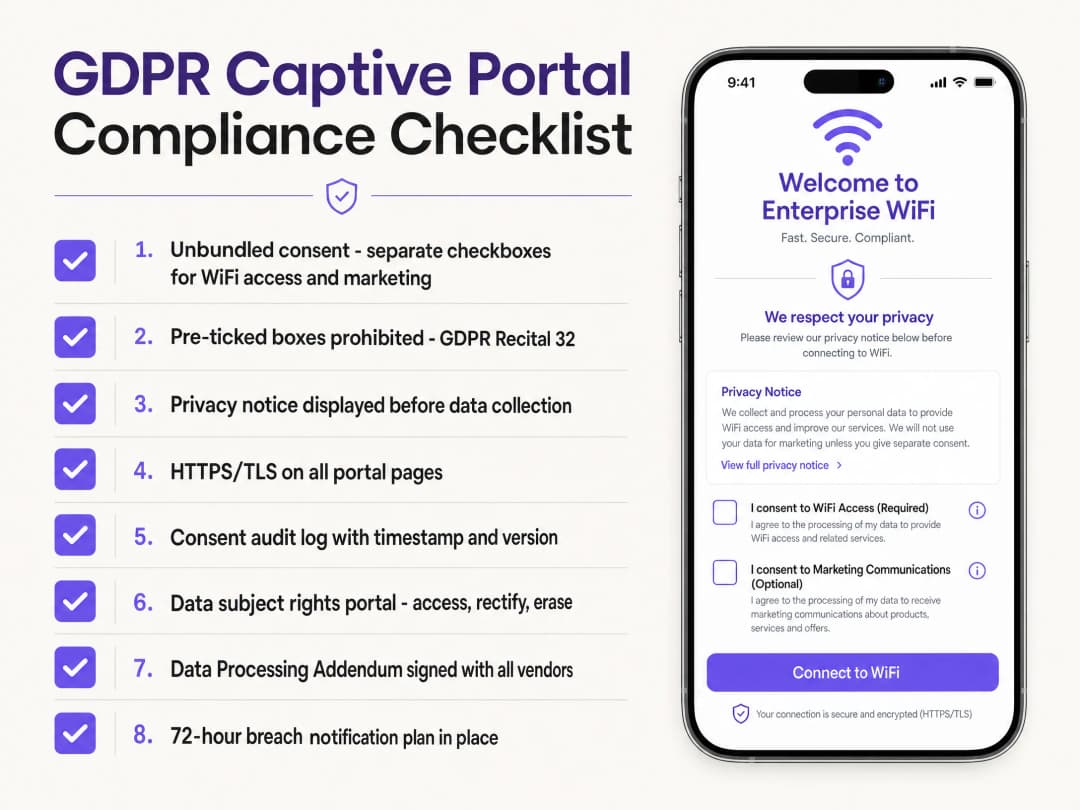
सर्वात सामान्य आर्किटेक्चरल चूक म्हणजे जोडणी (bundling) करणे. जर तुम्ही अतिथीला नेटवर्कमध्ये प्रवेश मिळवण्यासाठी मार्केटिंग ईमेल्स स्वीकारण्याची सक्ती करत असाल, तर ती सहमती ऐच्छिक मानली जात नाही आणि GDPR कलम ७ नुसार अवैध ठरते. तुम्हाला वेगळी सहमती (decoupled consent) लागू करणे आवश्यक आहे.
तुमच्या Captive Portal वर किमान दोन स्वतंत्र सहमती घटक असले पाहिजेत:
- नेटवर्क प्रवेशासाठी वापरण्याच्या अटी स्वीकारण्यासाठी एक अनिवार्य चेकबॉक्स.
- मार्केटिंग संवादाला सहमती देण्यासाठी एक पर्यायी, आधीपासून टिक न केलेला चेकबॉक्स.
GDPR मधील तरतूद ३२ स्पष्टपणे आधीपासून टिक केलेल्या चेकबॉक्सवर बंदी घालते. याव्यतिरिक्त, कलम १३ नुसार वापरकर्त्याने डेटा सबमिट करण्यापूर्वी तुमच्या पोर्टलने स्पष्ट गोपनीयता धोरण (Privacy Policy) दाखवणे आवश्यक आहे. या धोरणामध्ये तुम्ही कोणता डेटा गोळा करत आहात, का करत आहात, तो किती काळ साठवून ठेवणार आहात आणि कोणासोबत शेअर करणार आहात हे स्पष्ट केले पाहिजे.
सर्वात महत्त्वाचे म्हणजे, तुमच्या सिस्टमने एक सहमती ऑडिट लॉग (Consent Audit Log) राखला पाहिजे. या लॉगमध्ये कोणी सहमती दिली, ती कधी दिली, कशासाठी दिली आणि गोपनीयता धोरणाची नेमकी कोणती आवृत्ती दाखवली गेली होती याची नोंद असणे आवश्यक आहे. हाच तुमच्या अनुपालनाचा पुरावा आहे.
नेटवर्क विभाजन आणि सुरक्षा
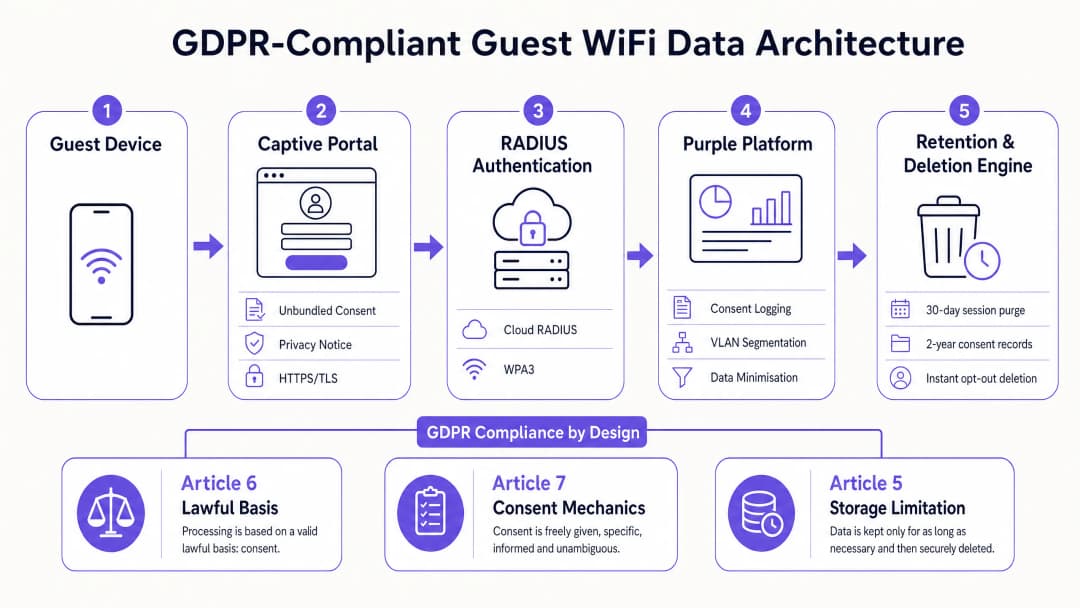
नेटवर्क आर्किटेक्चरच्या दृष्टिकोनातून, विभाजन अत्यंत आवश्यक आहे. तुमचा अतिथी WiFi डेटा ट्रॅफिक एका समर्पित VLAN (व्हर्च्युअल लोकल एरिया नेटवर्क) मध्ये विलग केला पाहिजे, जो तुमच्या कॉर्पोरेट नेटवर्कपासून पूर्णपणे वेगळा असेल. अतिथी डिव्हाइसेसना अंतर्गत सबनेटवर प्रवेश करण्यापासून रोखण्यासाठी ऍक्सेस कंट्रोल लिस्ट वापरा आणि क्लायंट आयसोलेशन सक्रिय करा जेणेकरून अतिथी डिव्हाइसेस एकमेकांशी संवाद साधू शकणार नाहीत. हे अतिथी आणि तुमच्या कॉर्पोरेट मालमत्ता दोन्हीचे संरक्षण करते. या तत्त्वांविषयी अधिक माहितीसाठी, What Is Secure WiFi: Essential Guide for Business 2026 पहा.
प्रमाणीकरणासाठी (ऑथेंटिकेशन), तुमच्या वायरलेस LAN कंट्रोलरला क्लाउड RADIUS सर्व्हरशी समाकलित (इंटिग्रेट) करा. जेव्हा एखादा वापरकर्ता Captive Portal फ्लो पूर्ण करतो, तेव्हा प्लॅटफॉर्म प्रवेश देण्यासाठी कंट्रोलरला RADIUS-Access-Accept संदेश पाठवतो. यामुळे ऑथेंटिकेशन स्तर आणि डेटा गोळा करण्याचा स्तर यामध्ये स्पष्ट फरक राहतो. एनक्रिप्शनसाठी, तुमच्या अतिथी SSID ने WPA3 वापरले पाहिजे, जर तुमच्या हार्डवेअरद्वारे ते समर्थित असेल. किमान AES एनक्रिप्शनसह WPA2 ची सक्ती करा. याव्यतिरिक्त, तुमचे Captive Portal एका वैध TLS प्रमाणपत्रासह HTTPS वरूनच उपलब्ध केले गेले पाहिजे. HTTP वर वैयक्तिक डेटा गोळा करण्यासाठी फॉर्म देणे हा एक गंभीर सुरक्षा दोष आहे.
तुमच्या विशिष्ट सेटअपबद्दल काही प्रश्न आहेत का?
आमची टीम ८०,००० हून अधिक वेन्यूजमधील वेन्यू ऑपरेटर्स, IT मॅनेजर्स आणि नेटवर्क इंजिनिअर्ससोबत काम करते. २० मिनिटांचा कॉल बुक करा आणि तुमच्यासारख्या इतरांनी ही समस्या कशी सोडवली हे आम्ही तुम्हाला दाखवू.
अंमलबजावणी मार्गदर्शक
GDPR सुसंगत अतिथी WiFi नेटवर्क तैनात करण्यासाठी हार्डवेअर, सॉफ्टवेअर आणि धोरणांच्या स्तरांवर एक पद्धतशीर दृष्टिकोन आवश्यक आहे.
- हार्डवेअर निवड: तुमचे ऍक्सेस पॉईंट्स VLAN टॅगिंग, क्लायंट आयसोलेशन आणि WPA3 ला सपोर्ट करतात याची खात्री करा. Purple चे प्लॅटफॉर्म हार्डवेअर-स्वतंत्र आहे आणि Cisco Meraki, HPE Aruba, Ruckus, Juniper Mist, Ubiquiti UniFi, Cambium, Extreme Networks आणि Fortinet सोबत अखंडपणे समाकलित होते. ग्राहकांसाठीचे (कंझ्युमर-ग्रेड) हार्डवेअर वापरू नका; Why Consumer-WiFi-Gear-Doesn’t Belong in Your Guest Network पहा.2. Captive Portal Design: विलग केलेल्या संमतीसह (unbundled consent) एक स्प्लॅश पेज तयार करा. डेटा सबमिट करण्यापूर्वी गोपनीयता धोरण उपलब्ध असल्याची खात्री करा. जर तुम्ही विशिष्ट सोशल लॉगिन आवश्यक असलेल्या क्षेत्रांमध्ये कार्यरत असाल, तर डेटा शेअरिंग पारदर्शक असल्याची खात्री करा. उदाहरणार्थ, आमचे मार्गदर्शक पहा Integration der WeChat-WiFi-Authentifizierung: Captive Portal Onboarding für APAC-Kunden.
- डेटा धारणा ऑटोमेशन (Data Retention Automation): तुमच्या धारणा धोरणानुसार डेटा स्वयंचलितपणे हटवण्यासाठी तुमचे प्लॅटफॉर्म कॉन्फिगर करा. मोठ्या प्रमाणावर डेटा असताना मॅन्युअल पद्धतीने डेटा हटवणे व्यावहारिक नाही.
- विक्रेता करार (Vendor Agreements): तुमच्या अतिथी WiFi प्रदाता, CRM प्रदाता आणि या डेटावर प्रक्रिया करणाऱ्या इतर कोणत्याही तृतीय पक्षासोबत तुमच्याकडे स्वाक्षरी केलेला डेटा प्रोसेसिंग करार (DPA) असल्याची खात्री करा.
सर्वोत्तम पद्धती (Best Practices)
अनुपालन राखण्यासाठी आणि विश्वास निर्माण करण्यासाठी, या उद्योग - मानकीकृत सर्वोत्तम पद्धतींचे पालन करा:
- डेटा मिनिमायझेशन: तुम्हाला पूर्णपणे आवश्यक असलेला डेटाच गोळा करा. तुमच्याकडे फोन नंबरसाठी निश्चित व्यावसायिक वापर प्रकरण (business use case) नसल्यास, Captive Portal मध्ये तो विचारू नका.
- स्वयंचलित संचयन मर्यादा (Automated Storage Limitation): डेटासाठी कडक धारणा कालावधी लागू करा. सत्र लॉग ३० दिवसांनंतर हटवले जावेत. संमतीचे पुरावे सेवा संबंधांच्या कालावधीत अधिक दोन वर्षांसाठी ठेवले जावेत. संमती मागे घेतल्यावर मार्केटिंग प्रोफाईल त्वरित हटवले गेले पाहिजेत.
- डेटा विषयाचे अधिकार सक्षम करणे: एक सेल्फ - सर्व्हिस प्राधान्य केंद्र (self-service preference center) प्रदान करा जिथे अतिथी त्यांची संमती व्यवस्थापित करू शकतात, त्यांच्या डेटाचा ॲक्सेस मागू शकतात किंवा तो हटवण्याची (विसरण्याचा अधिकार) विनंती करू शकतात. यामुळे डेटा ॲक्सेस विनंत्या (DSARs) हाताळण्याचा ऑपेरेशनल भार कमालीचा कमी होतो.
- DPIA आयोजित करणे: तुमच्या तैनातीमध्ये मोठ्या प्रमाणावर लोकेशन ट्रॅकिंग किंवा वर्तणूक प्रोफाइलिंग समाविष्ट असल्यास, GDPR कलम ३५ अंतर्गत डेटा प्रोटेक्शन इम्पॅक्ट असेसमेंट (DPIA) कायद्यानुसार आवश्यक आहे.
समस्यानिवारण आणि जोखीम कमी करणे (Troubleshooting & Mitigation)
मजबूत आर्किटेक्चर असूनही, जोखीम कायम राहतात. या सामान्य त्रुटींचे सक्रियपणे निवारण करा:
- संमतीचा कंटाळा (Consent Fatigue): तुमचे पोर्टल खूप गुंतागुंतीचे असल्यास, वापरकर्ते कनेक्शन सोडतील किंवा विचार न करता पुढे क्लिक करतील. मूल्यांची देवाणघेवाण स्पष्ट ठेवा: ईमेल पत्ता आणि पर्यायी मार्केटिंगच्या बदल्यात जलद, विनामूल्य WiFi.
- DPA चा अभाव: तुमचा अतिथी WiFi प्लॅटफॉर्म प्रदाता हा डेटा प्रोसेसर आहे. स्वाक्षरी केलेल्या DPA शिवाय तुम्ही त्यांच्यासोबत वैयक्तिक डेटा शेअर केल्यास, तुम्ही नियमांचे उल्लंघन करत आहात. डेटा प्रवाहापूर्वी करार जागेवर असल्याचे निश्चित करा.* डेटा उल्लंघनाची उशिरा केलेली तक्रार: GDPR कलम ३३ नुसार, तुम्हाला डेटा उल्लंघनाची माहिती मिळाल्यापासून ७२ तासांच्या आत पर्यवेक्षी प्राधिकरणाकडे वैयक्तिक डेटा उल्लंघनाची तक्रार करणे आवश्यक आहे. हा कालावधी तुमच्या घटना प्रतिसाद योजनेमध्ये समाविष्ट करा; तपास पूर्ण होईपर्यंत तक्रार करण्यासाठी प्रतीक्षा करू नका.
ROI आणि व्यावसायिक परिणाम
अनुपालन हा केवळ एक नियामक अडथळा नाही, तर तो एक धोरणात्मक मार्ग आहे. GDPR-अनुपालक Guest WiFi प्लॅटफॉर्म तुमचे जागतिक वार्षिक उलाढालीच्या ४% पर्यंतच्या दंडापासून संरक्षण करतो, पण त्याचसोबत मोजता येण्याजोगा ROI देखील प्रदान करतो.
वेगळे, जाणीवपूर्वक केलेले Opt-ins लागू करून, तुम्ही फर्स्ट-पार्टी डेटाचा एक उच्च-गुणवत्तेचा डेटाबेस तयार करता. गैर-अनुपालक, एकत्रित दृष्टिकोनाच्या तुलनेत मार्केटिंग Opt-ins चे निव्वळ प्रमाण कदाचित कमी असू शकते, परंतु त्यांचे एंगेजमेंट दर (ओपन रेट्स, क्लिक-थ्रू रेट्स आणि कन्व्हर्शन्स) लक्षणीयरीत्या जास्त असतात, कारण ग्राहकांनी स्वतः तुमच्याकडून माहिती मिळवणे सक्रियपणे निवडलेले असते.
याशिवाय, एक अनुपालक प्लॅटफॉर्म नैतिक मार्गाने मिळवलेली बिझनेस इंटेलिजन्स प्रदान करतो. किरकोळ विक्री आणि आतिथ्य क्षेत्र यांसारख्या उद्योगांमध्ये, हा डेटा कार्यरत सुधारणांना गती देतो - भेट देणाऱ्यांच्या संख्येवर आधारित कर्मचारी नियोजन ऑप्टिमाइझ करण्यापासून ते पाहुण्यांच्या अनुभवाचे वैयक्तिकीकरण करण्यापर्यंत. Purple च्या ISO 27001 प्रमाणित प्लॅटफॉर्मने आधीच ४४० दशलक्ष लॉगइन्स हाताळले आहेत आणि २९ अब्ज डेटा पॉईंट्स गोळा केले आहेत, जे हे सिद्ध करते की स्केलेबिलिटी आणि कठोर अनुपालन फायदेशीरपणे एकत्र राहू शकतात.
महत्वाच्या व्याख्या
डेटा नियंत्रक (Data Controller)
वैयक्तिक डेटावर प्रक्रिया करण्याचे उद्दिष्ट आणि साधने निश्चित करणारी संस्था. जेव्हा एखादे ठिकाण अतिथी WiFi ऑफर करते, तेव्हा ते डेटा नियंत्रक (Data Controller) म्हणून कार्य करते आणि प्राथमिक कायदेशीर जबाबदारी पार पाडते.
आयटी व्यवस्थापकांनी हे समजून घेतले पाहिजे की WiFi प्लॅटफॉर्म आउटसोर्स केल्याने कायदेशीर दायित्व आउटसोर्स होत नाही.
डेटा प्रोसेसर (Data Processor)
डेटा नियंत्रक (Data Controller) च्या वतीने वैयक्तिक डेटावर प्रक्रिया करणारी संस्था. Purple, WiFi प्लॅटफॉर्म प्रदाता म्हणून, डेटा प्रोसेसर (Data Processor) म्हणून कार्य करते.
ठिकाणाच्या अतिथी डेटावर कायदेशीररित्या प्रक्रिया करण्यासाठी औपचारिक डेटा प्रोसेसिंग अॅडेन्डम (DPA) आवश्यक आहे.
Captive Portal
सार्वजनिक नेटवर्कवर प्रवेश मिळण्यापूर्वी वापरकर्त्याने पाहणे आणि संवाद साधणे आवश्यक असलेले स्प्लॅश पृष्ठ किंवा वेब पृष्ठ.
हा मुख्य इंटरफेस आहे जिथे ठिकाणे गोपनीयता सूचना सादर करतात आणि कायदेशीर संमती मिळवतात.
अनबंडल संमती (Unbundled Consent)
संमतीच्या विनंत्या इतर अटी व शर्तींपासून वेगळ्या करण्याची पद्धत. विपणन संमती ही सेवेची अट असू शकत नाही.
GDPR अंतर्गत संमती 'मुक्तपणे दिली गेली आहे' असे मानले जाण्यासाठी captive portal डिझाइनसाठी आवश्यक आहे.
MAC Address
मीडिया अॅक्सेस कंट्रोल पत्ता (Media Access Control address); नेटवर्क इंटरफेस नियंत्रकाला नियुक्त केलेला एक युनिक आयडेंटिफायर. GDPR अंतर्गत, वापरकर्त्याशी लिंक केल्यावर हा वैयक्तिक डेटा मानला जातो.
वापरकर्त्याने ईमेल न दिल्यासही, त्यांचा MAC address नोंदवणे म्हणजे वैयक्तिक डेटावर प्रक्रिया करणे होय.
VLAN Segmentation
भौतिक नेटवर्कचे एकापेक्षा जास्त लॉजिकल नेटवर्कमध्ये विभाजन करणे. अतिथी WiFi ट्रॅफिक कॉर्पोरेट ट्रॅफिकपासून वेगळे केले पाहिजे.
अतिथींच्या उपकरणांना कंपनीच्या अंतर्गत मालमत्तेत प्रवेश करण्यापासून रोखण्यासाठी एक पायाभूत सुरक्षा नियंत्रण.
RADIUS
रिमोट ऑथेंटिकेशन डायल-इन युझर सर्व्हिस (Remote Authentication Dial-In User Service); एक नेटवर्किंग प्रोटोकॉल जो केंद्रीकृत प्रमाणीकरण, अधिकृतता आणि लेखा व्यवस्थापन प्रदान करतो.
नेटवर्क प्रवेश देण्यापूर्वी captive portal प्रक्रिया पूर्ण केलेल्या वापरकर्त्यांना सुरक्षितपणे प्रमाणित करण्यासाठी वापरले जाते.
DSAR
डेटा सब्जेक्ट ॲक्सेस रिक्वेस्ट; व्यक्तींना त्यांच्या वैयक्तिक डेटाची प्रत मागवण्यासाठी किंवा तो दुरुस्त अथवा नष्ट करण्याची विनंती करण्यासाठी उपलब्ध असलेली एक यंत्रणा.
ठिकाणांकडे ३० दिवसांच्या आत हाताळण्यासाठी एक प्रक्रिया असणे आवश्यक आहे. सेल्फ-सर्व्हिस पसंती केंद्रे हा भार स्वयंचलित करतातंतात.
सोडवलेली उदाहरणे
एक २०० खोल्यांचे हॉटेल आपल्या लॉयल्टी प्रोग्राममधील नावनोंदणी वाढवण्यासाठी अतिथींचे ईमेल संकलित करू इच्छित आहे. त्यांच्या सध्याच्या प्रणालीनुसार अतिथींना ऑनलाइन जाण्यासाठी एक अट म्हणून विपणन ईमेल स्वीकारणे आवश्यक आहे.
हॉटेलने अनबंडल संमतीसह एक सुसंगत captive portal तैनात केले पाहिजे. त्यांनी दोन स्वतंत्र टिक बॉक्स लागू केले पाहिजेत: नेटवर्क प्रवेशासाठीच्या सेवा अटी स्वीकारण्यासाठी एक अनिवार्य टिक बॉक्स, आणि विपणन संमतीसाठी एक पर्यायी, अनटिक केलेला टिक बॉक्स. डेटा सबमिट करण्याच्या बटणापूर्वी गोपनीयता सूचना स्पष्टपणे लिंक केलेली असणे आवश्यक आहे.
स्टेडियमची आयटी टीम गर्दीच्या घनतेचे परीक्षण करण्यासाठी आणि कार्यक्रमांमध्ये सुरक्षिततेचे व्यवस्थापन करण्यासाठी WiFi विश्लेषण वापरू इच्छिते. कायदेशीर टीमला चिंता आहे की स्पष्ट संमतीशिवाय डिव्हाइसच्या स्थानाचा मागोवा घेणे हे GDPR चे उल्लंघन करते.
यावर दुहेरी तोडगा आहे. प्रथम, वैध हिताच्या अंतर्गत गर्दी व्यवस्थापन आणि सुरक्षिततेच्या उद्देशांसाठी स्थान डेटावर प्रक्रिया केली जाते हे स्पष्टपणे उघड करण्यासाठी captive portal गोपनीयता सूचना अद्यतनित केली पाहिजे. दुसरे म्हणजे, डेटा क्लाउड विश्लेषण प्लॅटफॉर्मवर पोहोचण्यापूर्वी आयटी टीमने एजवर (access points वर) MAC address चे छद्मनामीकरण (pseudonymisation) लागू केले पाहिजे.
सराव प्रश्न
Q1. तुमच्या मार्केटिंग टीमला त्यांच्या ईमेल डेटाबेसचा आकार वाढवायचा आहे. कॉन्व्हर्जन वाढवण्यासाठी ते गेस्ट WiFi Captive Portal वरील मार्केटिंग ऑप्ट-इन चेकबॉक्स डिफॉल्टनुसार आधीच टिक (pre-ticked) करून ठेवण्याचा प्रस्ताव मांडतात. तुम्ही त्यांना काय सल्ला द्याल?
टीप: अस्पष्ट नसलेल्या संमतीच्या GDPR व्याख्या आणि Recital 32 चा विचार करा.
नमुना उत्तर पहा
तुम्ही हा प्रस्ताव नाकारला पाहिजे. GDPR Recital 32 स्पष्टपणे नमूद करते की शांतता, आधीच टिक केलेले बॉक्सेस किंवा निष्क्रियता म्हणजे संमती मानली जात नाही. संमतीसाठी स्पष्ट सकारात्मक कृती आवश्यक आहे. आधीच टिक केलेले बॉक्सेस वापरल्याने संमती अवैध ठरते आणि संस्थेला नियामक दंडाचा सामना करावा लागू शकतो.
Q2. एक अतिथी तुमच्या WiFi शी कनेक्ट होतो परंतु ईमेल पत्ता देत नाही, आणि 'skip' पर्यायाद्वारे लॉग इन करतो. तुमची सिस्टीम त्यांच्या डिव्हाइसचा MAC address, कनेक्शनची वेळ आणि ते ज्या ॲक्सेस पॉइंटशी कनेक्ट झाले होते त्याची नोंद करते. तुम्ही वैयक्तिक डेटावर प्रक्रिया करत आहात का?
टीप: ओळखकर्ते (identifiers) आणि एखाद्या व्यक्तीला स्वतंत्रपणे ओळखण्याच्या क्षमतेबद्दलच्या ICO च्या मार्गदर्शक तत्त्वांचा विचार करा.
नमुना उत्तर पहा
होय. नाव किंवा ईमेल नसला तरीही, एखाद्या MAC address चा स्थान आणि वेळेच्या डेटाशी ताळमेळ घालून विशिष्ट डिव्हाइस ओळखण्यासाठी आणि कालांतराने त्याच्या हालचालींचा मागोवा घेण्यासाठी वापर केला जाऊ शकतो. ICO याला वैयक्तिक डेटा मानते. तुमच्याकडे यासाठी कायदेशीर आधार (सामान्यत: मूलभूत नेटवर्क लॉगिंगसाठी वैध स्वारस्य - legitimate interest) असल्याची खात्री तुम्ही केली पाहिजे आणि तुमच्या गोपनीयता नोटीसमध्ये या प्रक्रियेबद्दल पारदर्शकपणे उघड केले पाहिजे.
Q3. नियमित ऑडिट दरम्यान, तुम्हाला असे आढळले की तुमचे गेस्ट WiFi प्लॅटफॉर्म गेल्या चार वर्षांपासून तपशीलवार सेशन लॉग्स (IP addresses, MAC addresses, कनेक्शनच्या वेळा) राखून ठेवत आहे. तुम्ही कोणती कारवाई करावी?
टीप: GDPR च्या स्टोरेज मर्यादा सिद्धांताचा संदर्भ घ्या (Article 5).
नमुना उत्तर पहा
तुम्ही ताबडतोब स्वयंचलित डेटा डिलीशन पॉलिसी लागू केली पाहिजे. स्टोरेज मर्यादा सिद्धांतानुसार, डेटा आवश्यकतेपेक्षा जास्त काळ ठेवला जाऊ नये. नेटवर्क ट्रबलशूटिंगसाठी चार वर्षांचे सेशन लॉग्स ठेवणे अत्यंत जास्त आहे. तुम्ही ३० दिवसांपेक्षा जुना असलेला ऐतिहासिक सेशन डेटा काढून टाकला पाहिजे आणि भविष्यातील सेशन लॉग्स ३० दिवसांच्या मर्यादेवर आपोआप डिलीट करण्यासाठी प्लॅटफॉर्म कॉन्फिगर केला पाहिजे.
या मालिकेमध्ये पुढे वाचा
जेव्हा Cisco Meraki WiFi 6 ची विक्री संपुष्टात येईल, तेव्हा WiFi 6 वरून WiFi 7 ऍक्सेस पॉईंट रिफ्रेशचे नियोजन करणे
हे तांत्रिक संदर्भ मल्टि-साइट ऑपरेटरना ३१ डिसेंबर २०२६ च्या अंतिम-ऑर्डर तारखेपूर्वी Cisco Meraki WiFi 6 वरून WiFi 7 रिफ्रेश करण्यासाठी निर्णय फ्रेमवर्क प्रदान करते. हे इस्टेट आणि बॅकहॉल नियोजनाला Meraki Dashboard तपासणीसह जोडते जे प्रत्येक ऍक्सेस पॉईंट बदलताना Purple ऑथेंटिकेशन आणि लोकेशन-ॲनालिटिक्सची सुसंगतता सुरक्षित ठेवते.
GDPR आणि Guest WiFi: व्हेन्यू मार्केटर्स आणि IT साठी अनुपालन मार्गदर्शक
हे तांत्रिक मार्गदर्शक व्हेन्यू IT आणि मार्केटिंग टीम्सना captive portal ला अनुपालनाची दुर्लक्षित जागा न बनवता, GDPR अंतर्गत Guest WiFi डेटा संकलनाचे व्यवस्थापन कसे करावे हे दाखवते. हे नेटवर्क ऍक्सेस, प्रायव्हसी माहिती, पर्यायी मार्केटिंग निवडी आणि CRM फ्लो या गोष्टी वेगळ्या करते, आणि नंतर Purple Connect, Capture आणि Engage चे या ऑपरेशनल निर्णयांसह मॅपिंग करते.
Cisco Catalyst WLC आणि अतिथी WiFi: Purple सह कॅप्टिव्ह पोर्टल सेटअप
Cisco Catalyst 9800 (IOS-XE) वायरलेस LAN कंट्रोलर Purple अतिथी WiFi सह कसे कार्य करतो: बाह्य वेब प्रमाणीकरण, RADIUS आणि वॉल्ड गार्डन, अचूक कॉन्फिगरेशनसाठी Purple च्या टप्प्याटप्प्याने सेटअप मार्गदर्शिकेच्या लिंकसह.
तुमच्या विशिष्ट सेटअपबद्दल काही प्रश्न आहेत का?
आमची टीम ८०,००० हून अधिक वेन्यूजमधील वेन्यू ऑपरेटर्स, IT मॅनेजर्स आणि नेटवर्क इंजिनिअर्ससोबत काम करते. २० मिनिटांचा कॉल बुक करा आणि तुमच्यासारख्या इतरांनी ही समस्या कशी सोडवली हे आम्ही तुम्हाला दाखवू.