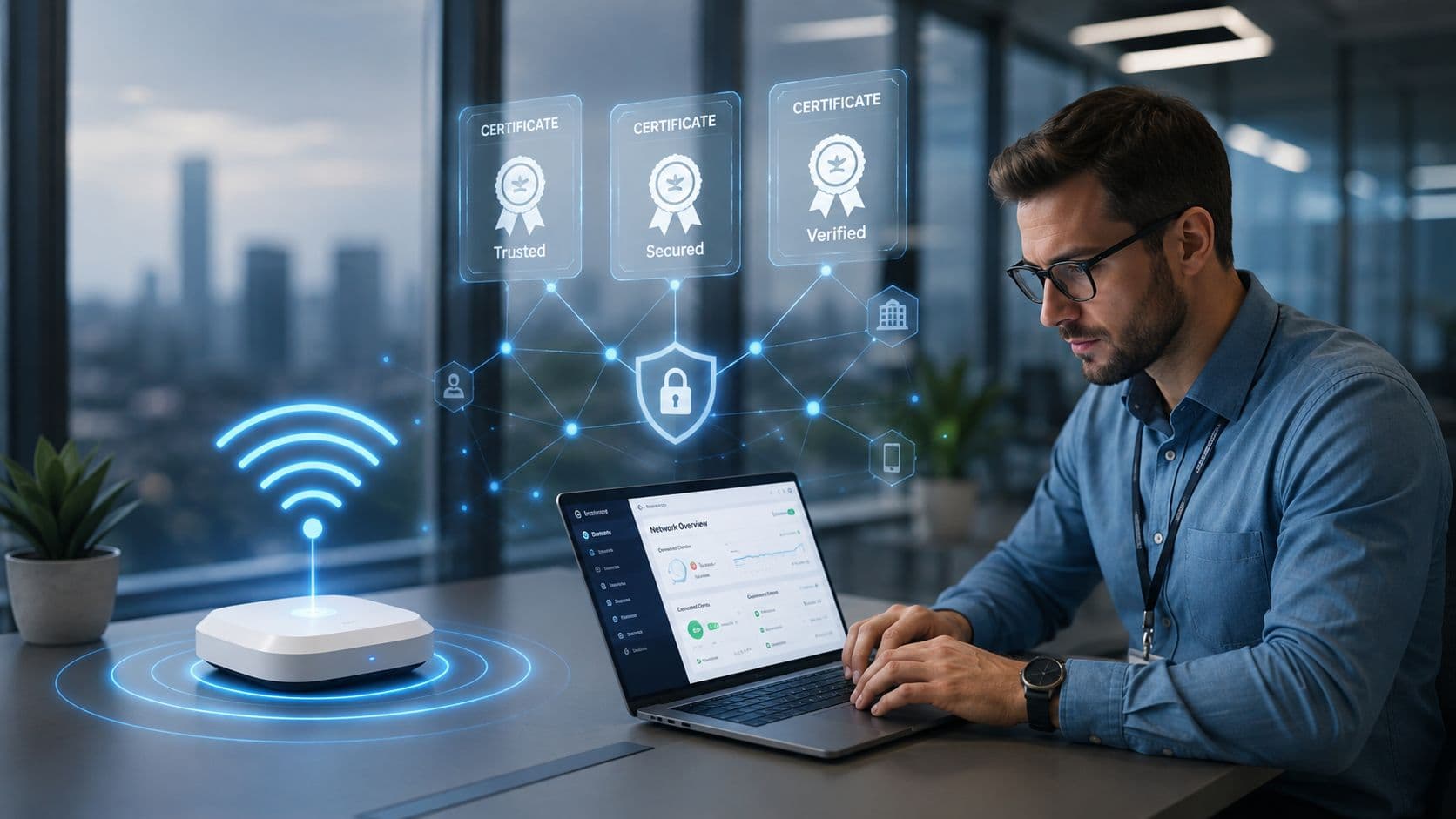
A maioria dos conselhos sobre SD-WAN começa muito abaixo na pilha. Fala-se de circuitos mais baratos, roteamento mais simples e substituição de partes de MPLS por banda larga. Nada disso está errado. Está apenas incompleto.
Os casos de uso de sd wan mais fortes não vêm apenas da engenharia de tráfego. Eles vêm da combinação do controle de rede com a identidade. Quando a rede sabe se a conexão pertence a um funcionário, a um convidado, a um terminal de pagamento, a um residente ou a um dispositivo IoT legado, o SD-WAN deixa de ser apenas uma atualização de WAN. Ele se torna um mecanismo de política para segurança, experiência e operações.
Essa distinção importa porque a maioria dos problemas de negócios não são realmente "problemas de pacotes". Um hotel não precisa apenas de uplinks resilientes. Ele precisa de acesso de convidado personalizado, tráfego de inquilino segmentado e uma maneira de impedir que senhas de WiFi compartilhadas se espalhem pelo edifício. Um varejista não precisa apenas de failover de filial. Ele precisa de conectividade na loja que proteja os sistemas de pagamento enquanto ajuda o marketing a entender o fluxo de pessoas. Um hospital não precisa apenas de tempo de atividade. Ele precisa de WiFi para pacientes isolado dos sistemas clínicos, enquanto o acesso da equipe permanece seguro e gerenciável em todos os locais.
Na prática, as organizações que extraem o máximo do SD-WAN são aquelas que unem transporte, política e identidade. É aí que o acesso zero-trust se torna mais fácil de aplicar. É aí que as jornadas dos convidados se tornam mais fluidas. É aí que as análises se tornam úteis para pessoas fora do TI. Isso também se alinha a uma mudança mais ampla em direção à automação e ao controle centralizado, de forma muito semelhante aos benefícios mais amplos da automação nos negócios.
O mercado se moveu nessa direção rapidamente. No Reino Unido, a adoção de SD-WAN acelerou junto com a expansão mais ampla da conectividade móvel, com a cobertura 4G média atingindo 94% da população até 2025, de acordo com esta análise de tendências de mercado de SD-WAN.
Aqui estão 10 casos de uso de sd wan que importam, e o que costuma funcionar ou falhar quando você os implanta.
1. Autenticação de Convidados Multilocatário com Marca Unificada
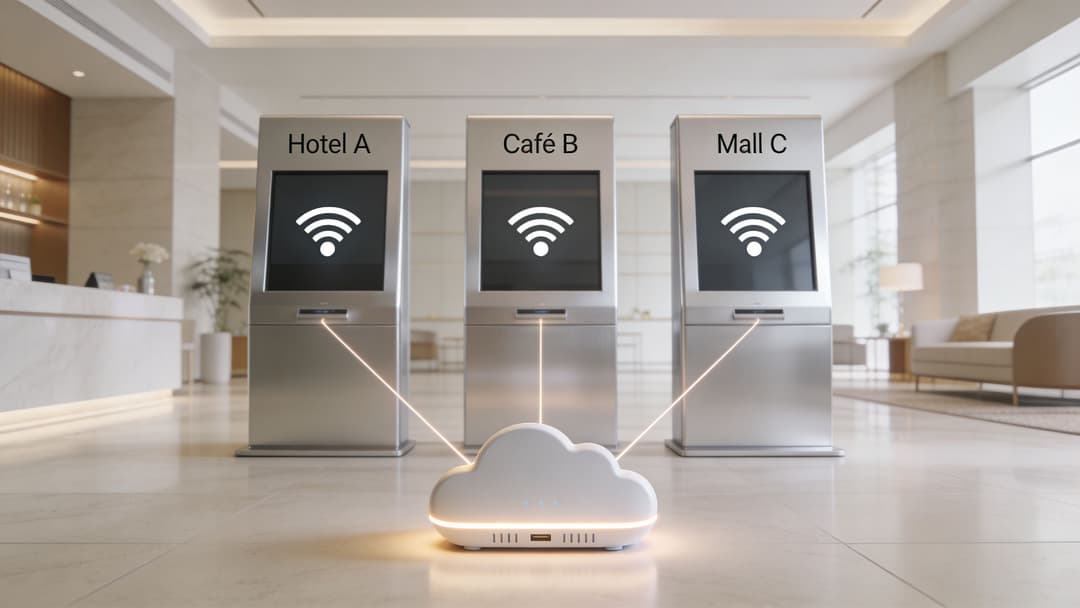
A conectividade compartilhada raramente é a parte difícil em um site multilocatário. A parte difícil é oferecer a cada usuário a experiência certa sem transformar a rede em uma colcha de retalhos de exceções.
Um hotel com um café arrendado, spa de terceiros, andar de co-working e espaço de eventos precisa de mais do que apenas separação por VLAN. Cada marca quer sua própria jornada de login. Cada operador quer a garantia de que seu tráfego está isolado. Os hóspedes esperam um WiFi que pareça parte do local, não um Captive Portal genérico copiado por todo o edifício.
O SD-WAN oferece à equipe central uma camada de política em todos os locais, mas seu valor total aparece quando essa política está vinculada à identidade. Um hóspede que faz check-in por uma noite não deve passar pelo mesmo fluxo de acesso que um gerente de locatário do café, um organizador de conferências ou um prestador de serviços instalando sinalização. Depois de conectar a política de rede à identidade do usuário e do dispositivo, o caso de uso muda de acesso compartilhado para acesso controlado e personalizado. Essa é a diferença entre a segmentação básica e um modelo de convidado zero-trust. O guia da Purple sobre zero trust network access explica bem essa mudança.
O que funciona na prática
Mantenha o front-end simples e o modelo de política rígido. Os hóspedes devem aterrissar na marca e no método de acesso corretos para aquele local ou locatário. Nos bastidores, a rede deve mapear a identidade, o tipo de dispositivo e a localização para decisões de política separadas.
Isso geralmente significa:
- Integração separada por tipo de usuário: Hóspedes, locatários, prestadores de serviços e usuários temporários de eventos precisam de fluxos de login, regras de expiração e direitos de acesso diferentes.
- Use política baseada em identidade, não senhas compartilhadas: Credenciais de convidados compartilhadas se espalham rapidamente em edifícios de uso misto e são difíceis de revogar de forma limpa.
- Atribua dispositivos difíceis a acessos de escopo restrito: Smart TVs, impressoras, quiosques e terminais legados geralmente precisam de iPSK ou controles equivalentes com limites claros de onde podem se conectar.
- Defina controles de tráfego por locatário: Limites de largura de banda, regras de aplicativos e janelas de uso evitam que os backups ou o tráfego de streaming de um operador degradem o serviço para todos os outros.
A contrapartida é a disciplina de gestão. Mais flexibilidade para o locatário geralmente significa mais objetos de política, mais portais personalizados e mais margem para inconsistências se a governança for fraca. Já vi equipes centralizarem a orquestração de SD-WAN, mas deixarem a autenticação de convidados e o design do portal para os gerentes locais. O resultado é previsível - desvio de políticas, chamados de suporte e uma experiência de usuário que muda de andar para andar.
Um modelo melhor usa um único padrão operacional com variação local limitada. Dê a cada locatário a identidade visual de que precisam, mas mantenha as fontes de identidade, regras de acesso e controles de auditoria definidos centralmente.
Regra prática: Se você não conseguir explicar em um minuto quem tem acesso à rede, como se autentica e quando esse acesso expira, simplifique o design.
Este caso de uso é mais importante em hotéis, centros comerciais, alojamentos estudantis e redes de saúde privadas, onde uma equipe de infraestrutura oferece suporte a muitos operadores semi-independentes. Nesses ambientes, o branding unificado é a vitória visível. A segmentação orientada por identidade é o que mantém o modelo sustentável.
2. Acesso de Funcionários Baseado em Zero-Trust com Integração de Diretório
Senhas compartilhadas de WiFi para funcionários são frequentemente tratadas como uma conveniência. Na prática, elas criam pontos cegos. Você não pode vincular o acesso a uma pessoa, não pode revogá-lo de forma limpa quando alguém sai e acaba confiando no segmento de rede mais do que no usuário ou dispositivo que tenta se conectar.
É por isso que este é um dos casos de uso de sd-wan mais práticos para organizações distribuídas. O SD-WAN oferece controle central de políticas e caminhos entre as filiais. A integração de diretório adiciona a camada que faltava. Ela permite que a rede tome decisões com base na identidade, associação a grupos e estado do dispositivo, em vez de localização ou uma credencial reutilizada.
O resultado é melhor do que logins mais simples. Um enfermeiro, gerente de loja, prestador de serviços e analista financeiro podem se conectar no mesmo local e receber direitos de acesso diferentes automaticamente. A WAN ainda escolhe o caminho certo para cada aplicativo, mas a identidade agora decide quem obtém acesso em primeiro lugar e até onde esse acesso se estende. Essa é a mudança da conectividade de filial para o comportamento de rede zero-trust.
A vantagem operacional
Este modelo reduz a quantidade de infraestrutura local que a TI precisa suportar. As equipes não precisam mais manter pilhas de autenticação separadas em cada filial apenas para manter o WiFi dos funcionários funcionando. Novos contratados obtêm acesso mais rápido, funcionários transferidos mantêm as permissões corretas conforme as funções mudam e aqueles que saem perdem o acesso em todos os lugares a partir de uma única ação no diretório.
Isso também fecha uma lacuna comum em projetos de SD-WAN. Já vi redes com políticas de caminho bem projetadas e design de acesso ruim. A filial tem um bom desempenho, mas o modelo de confiança ainda é baseado em estar dentro do prédio. Isso é pensar o antigo com um transporte mais novo.
Uma abordagem mais forte começa com a fonte de identidade que sua empresa já usa, como Microsoft Entra ID, Google Workspace ou Okta, e depois mapeia o acesso à rede para funções e postura do dispositivo. O guia da Purple sobre zero trust network access é uma referência útil para esse modelo de acesso.
Se você estiver implementando isso, mantenha a primeira fase restrita e teste as exceções logo no início.
- Audite os dispositivos antes do design da política: Laptops de funcionários geralmente são simples. Tablets compartilhados, impressoras, scanners, carrinhos clínicos e dispositivos de prestadores de serviços são onde as regras de acesso ficam complexas.
- Construa o acesso em torno de funções, não de locais: Um usuário do financeiro não deve obter acesso mais amplo apenas porque se conectou na sede em vez de em uma filial.
- Trate a revogação como um teste de design: Se você não puder desativar uma conta e cortar o acesso a WiFi, aplicativos e filiais rapidamente, o modelo de controle não é rígido o suficiente.
A verdadeira vitória não é o logon único. É uma única decisão de identidade aplicada em cada site, classe de dispositivo e caminho de conexão.
A compensação é o esforço de planejamento inicial. Grupos de diretório precisam de limpeza. O tratamento de certificados precisa de testes. O tratamento de exceções para endpoints legados precisa de uma política, não de improvisação. Mas uma vez que essas peças estão no lugar, a SD-WAN deixa de ser apenas uma maneira melhor de mover tráfego. Ela se torna uma maneira de fornecer acesso com base em quem o usuário é, qual dispositivo possui e o que a empresa deseja que ele acesse.
3. Experiência de Convidado Fluida com OpenRoaming e Passpoint
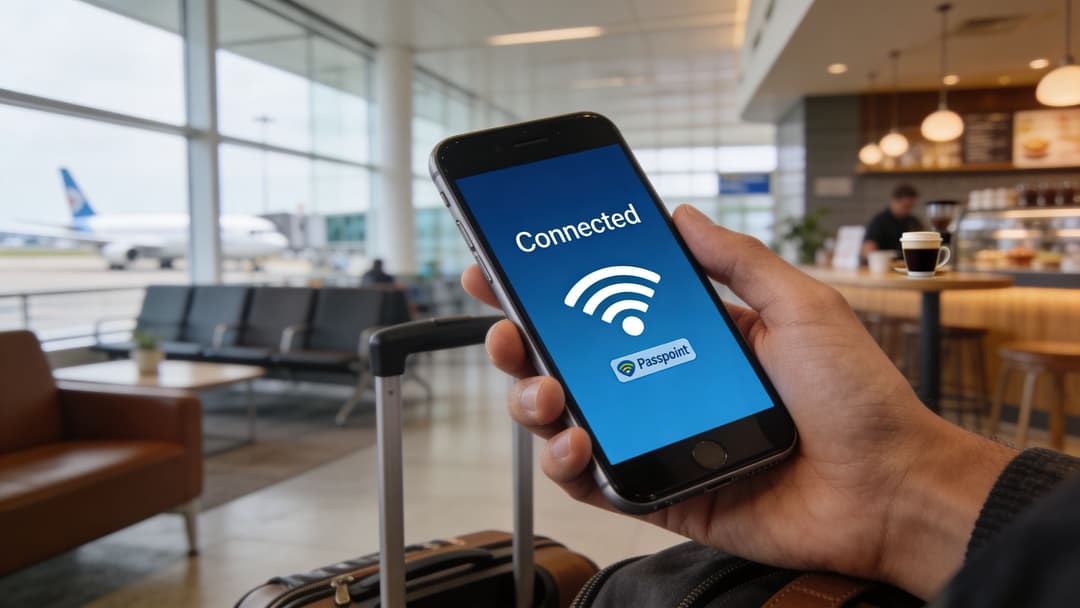
O WiFi de convidados geralmente falha no mesmo lugar. Não na cobertura. No atrito do login.
Os portais de Captive Portal foram uma solução prática para a integração básica, mas envelhecem mal em grande escala. Os convidados são direcionados para formulários, reutilizam senhas fracas e repetem as mesmas etapas a cada visita. Em hotéis, aeroportos, redes de varejo e locais de eventos, esse atrito se transforma em chamados de suporte, sessões abandonadas e uma experiência de marca que parece ultrapassada.
O OpenRoaming e o Passpoint melhoram isso ao mudar a experiência do login baseado em sessão para a conexão baseada em identidade. Um convidado se autentica uma vez em um dispositivo compatível e, em seguida, reconecta-se de forma automática e segura nos locais participantes. Combinado com SD-WAN, isso faz mais do que melhorar a conveniência. Dá a você controle central sobre como o tráfego de convidados é tratado entre os locais, enquanto a camada de identidade decide quem está se conectando e sob quais condições.
Essa distinção é importante.
Uma rede de convidados padrão trata cada dispositivo de forma semelhante após o login. Uma rede de convidados com reconhecimento de identidade pode reconhecer um cliente recorrente, um membro de programa de fidelidade, um participante de conferência ou um dispositivo de prestador de serviços e aplicar diferentes caminhos de acesso, políticas e experiências sem forçar cada usuário a passar pela mesma jornada de portal novamente. É aí que os casos de uso de SD-WAN começam a ir além da eficiência de transporte e entram na entrega de serviços de zero-trust para convidados, não apenas para funcionários.
A compensação é a variabilidade dos dispositivos. Notebooks recentes com iOS, Android e gerenciados por empresas geralmente oferecem bom suporte ao Passpoint. Dispositivos mais antigos, tablets não gerenciados e alguns dispositivos de baixo custo ainda precisam de uma opção de fallback, geralmente um Captive Portal para acesso pela primeira vez ou clientes não suportados.
Uma implementação prática geralmente se resume a três decisões:
- Mantenha dois caminhos de onboarding: Use Passpoint ou OpenRoaming para dispositivos compatíveis e mantenha um caminho de fallback limpo para todo o resto.
- Vincule a política à identidade, não apenas ao SSID: Clientes recorrentes, membros VIP, usuários de eventos e prestadores de serviços terceirizados não devem ter todos a mesma experiência de rede.
- Planeje o consentimento e o uso de dados desde o início: Se a identidade do visitante alimentar fluxos de trabalho de CRM, fidelidade ou personalização posteriormente, acerte o modelo de permissões logo no início.
Este caso de uso funciona especialmente bem onde visitas repetidas são comuns e a transição entre locais é importante. Grupos hoteleiros, hubs de transporte, grandes redes de varejo, estádios e locais públicos gerenciados se beneficiam quando um visitante pode se mover entre locais sem precisar recomeçar do zero todas as vezes.
Isso também reduz o esforço de suporte desperdiçado. As equipes passam menos tempo respondendo a perguntas básicas sobre WiFi e mais tempo lidando com exceções que exigem intervenção humana.
O erro é tratar o OpenRoaming apenas como um recurso de conveniência. Ele também é uma ferramenta de política e segmentação. Quando o SD-WAN e a identidade trabalham juntos, o acesso de visitantes deixa de ser um serviço de internet genérico e passa a ser uma experiência de rede controlada e personalizada com base no usuário, no dispositivo e no contexto da visita.
4. Marketing Baseado em Analytics e Personalização da Jornada do Visitante
As análises de WiFi de visitantes são frequentemente superestimadas porque as equipes coletam muito mais do que podem usar. O valor surge quando o SD-WAN, a identidade e o consentimento são projetados juntos desde o início.
Um Captive Portal básico pode informar que um dispositivo se conectou. Ele não pode dizer muito sobre a pessoa por trás dele, com que frequência ela retorna, quais locais prefere ou se uma promoção mudou seu comportamento. Uma vez que a identidade faz parte da decisão de acesso, a rede deixa de agir como um serviço compartilhado e começa a produzir sinais primários que as equipes de marketing e operações podem usar.
Isso muda a qualidade da tomada de decisões.
Um centro de varejo pode comparar visitas recorrentes por segmento de clientes, não apenas contar o fluxo de pessoas. Um hotel pode vincular o comportamento no local ao status de fidelidade e à resposta de campanhas. O operador de um local de eventos pode ver se visitantes VIP, visitantes diários e a equipe do evento se movem pelo espaço de maneira diferente e, em seguida, ajustar ofertas, equipes ou layouts para corresponder.
Onde os dados de rede se tornam comercialmente úteis
O modelo útil é identidade primeiro, rede depois. O SD-WAN oferece política centralizada e visibilidade em todos os locais. O acesso baseado em identidade adiciona o contexto. Juntos, eles permitem que você trate um membro recorrente em um dispositivo conhecido de forma diferente de um visitante de primeira viagem em um aparelho desconhecido, mesmo que ambos se conectem por meio da mesma infraestrutura.
Essa é a mudança fundamental. A personalização deixa de ser uma camada de marketing acoplada ao WiFi e passa a fazer parte de como o acesso é atribuído, medido e refinado.
Os padrões que costumam gerar valor mais rapidamente são simples:
- Conecte sessões de WiFi a perfis conhecidos: Os registros de CRM se tornam mais úteis quando a frequência de visitas, o histórico de localização e os dados de engajamento consentidos estão associados a eles.
- Meça a permanência por segmento, não apenas por área: O tempo gasto em uma sala VIP tem um significado diferente para um membro do programa de fidelidade, um comprador casual e um participante de uma conferência.
- Acione ações a partir do comportamento: Um visitante recorrente que permanece perto de uma zona premium pode justificar uma mensagem diferente de um visitante de primeira viagem que se conecta brevemente e sai.
- Alimente as operações, não apenas as campanhas: Se os visitantes evitam consistentemente uma entrada, pegam filas muito longas em uma zona ou se concentram em uma área de baixo desempenho, as equipes de instalações e pessoal também devem ver esses dados.
Existe um trade-off aqui. Quanto mais precisa for a personalização, mais disciplinado precisará ser seu modelo de privacidade. As regras de consentimento, retenção e compartilhamento de dados devem ser definidas desde o início, especialmente quando a análise de visitantes alimenta fluxos de trabalho de CRM, fidelidade, publicidade ou suporte ao cliente. Se esses controles forem vagos, o projeto trava nas revisões de governança ou produz dados que ninguém tem permissão para usar.
Já vi equipes comprarem recursos de análise e ainda assim obterem pouco retorno porque ninguém concordou sobre quais decisões os dados deveriam apoiar. A boa prática é mais simples. Comece com algumas perguntas comerciais, como quais visitantes retornam, quais zonas convertem e quais campanhas mudam o comportamento. Em seguida, construa a política de identidade e SD-WAN para responder a essas perguntas de forma clara.
Utilizado dessa forma, o WiFi para visitantes se torna mais do que apenas acesso. Ele se torna uma parte mensurável e consciente da identidade na jornada do cliente.
5. WiFi de Alta Densidade para Locais com Gerenciamento Centralizado
Locais de alta densidade não falham porque o link de internet parece pequeno em um diagrama. Eles falham porque muitas equipes presumem que cada dispositivo e cada sessão merecem o mesmo tratamento. Em um estádio, centro de conferências, terminal ferroviário ou local de festival, essa abordagem falha rapidamente.
O SD-WAN oferece às equipes de operações controle central sobre a seleção de caminhos, failover e política de aplicativos em locais movimentados. O ganho principal é uma tomada de decisão mais ágil sob carga. Qual tráfego mantém a receita fluindo. Qual tráfego mantém a equipe em movimento. Quais usuários e dispositivos devem ter permissão para acessar caminhos premium.
Confiabilidade sob pressão
Os melhores designs de locais combinam disciplina de RF, tráfego segmentado, política central e backhaul redundante. Scanners de ingressos, terminais de pagamento, comunicações da equipe, feeds de IPTV, sistemas prediais e WiFi para visitantes devem estar em vias de política diferentes porque atendem a resultados de negócios diferentes.
É aí que a identidade muda a qualidade do resultado. Uma regra genérica de "equipe" geralmente é ampla demais para um local de eventos ao vivo. Equipes de segurança, concessões, produção, prestadores de serviços e funcionários temporários de eventos não precisam do mesmo acesso, e não devem compartilhar o mesmo nível de confiança. Com a integração de diretório e políticas baseadas em identidade, a WAN pode tratar um scanner gerenciado, um tablet de prestador de serviço e um telefone de visitante como três perfis de risco diferentes, mesmo que se conectem no mesmo edifício ao mesmo tempo.
Uma pequena interrupção durante a entrada pode interromper a receita imediatamente. Se a digitalização desacelera, as filas crescem. Se o tráfego do ponto de venda cai, as vendas param. Se os rádios e os aplicativos de voz falham, as equipes de operações perdem a coordenação no momento em que mais precisam.
Projete para os dez minutos de pico, não para o dia comum.
Um design prático de local de eventos geralmente inclui:
- Prioridade para o tráfego operacional: Pagamentos, bilheteria, voz da equipe e sistemas de eventos mantêm seu desempenho quando a demanda de visitantes aumenta.
- Múltiplos caminhos WAN: Fibra com backup celular geralmente lida melhor com falhas do que depender de um único circuito primário maior.
- Atribuição de políticas baseada em identidade: Funcionários conhecidos, dispositivos aprovados, prestadores de serviços, equipes de mídia e visitantes recebem tratamento diferente com base na função e na postura do dispositivo, e não apenas no SSID ou na VLAN.
- Testes de carga pré-evento: Teste políticas, fluxos cativos, comportamento de roaming e failover contra as condições esperadas do público antes da abertura dos portões.
O gerenciamento centralizado é importante aqui porque os locais de eventos raramente são estáticos. Em uma semana, a rede oferece suporte a uma partida de futebol. Na próxima, apoia um show, uma feira de negócios ou um evento de uso misto com diferentes locatários, modelos de contratação de pessoal e padrões de tráfego. O SD-WAN permite que a equipe mude as políticas centralmente em vez de reconstruir a lógica do local toda vez que o modelo de negócios muda.
O que ainda pega as equipes de surpresa é tratar a densidade apenas como um problema de rede sem fio. É também um problema de identidade e controle. Se milhares de dispositivos conseguem se conectar, mas a rede não consegue distinguir o hardware de equipe confiável de telefones de visitantes não gerenciados, o congestionamento e o risco aumentam juntos. O design mais forte vincula a política de WAN a quem é o usuário, qual dispositivo ele possui e qual trabalho ele precisa realizar no momento. É assim que o WiFi de alta densidade se torna gerenciável em vez de apenas disponível.
6. Secure Patient and Visitor WiFi with HIPAA Compliance

O WiFi para visitantes da área de saúde costuma ser tratado como um serviço secundário. Na prática, ele fica próximo a alguns dos sistemas mais confidenciais que qualquer organização opera. Isso muda o briefing de design.
O principal objetivo não é apenas manter o tráfego de pacientes e visitantes longe das aplicações clínicas. É comprovar, em cada etapa, quem está se conectando, qual dispositivo está utilizando e o que essa conexão tem permissão para acessar. O SD-WAN ajuda a aplicar essas decisões em todas as unidades, mas a camada de identidade é o que transforma a segmentação básica em um modelo de zero-trust capaz de resistir a auditorias e às pressões operacionais do dia a dia.
Um hospital ou clínica geralmente precisa dar suporte a várias jornadas de acesso muito diferentes ao mesmo tempo. Um consultor em um notebook gerenciado não deve acessar a rede da mesma forma que um familiar visitante em um celular pessoal. Um tablet de cabeceira usado para serviços aos pacientes não deve herdar os privilégios de uma estação de trabalho de enfermagem apenas por estar no mesmo andar. Se suas políticas se diferenciam apenas por SSID ou VLAN, você ainda está fazendo suposições amplas de confiança.
O padrão mais forte é combinar o controle de caminho SD-WAN com regras de acesso baseadas em identidade:
- Separe por função e risco: Pacientes, visitantes, médicos, equipe administrativa, prestadores de serviços e dispositivos médicos precisam, cada um, de seu próprio limite de política.
- Vincule o acesso da equipe ao diretório: O acesso nominal por meio de sistemas de identidade corporativa melhora a responsabilidade e facilita o gerenciamento centralizado de alterações de políticas.
- Aplique controles baseados em dispositivos: Um endpoint clínico gerenciado pode ser tratado de forma diferente de um dispositivo pessoal, mesmo para o mesmo usuário.
- Mantenha o tráfego clínico priorizado: Sessões de prontuário eletrônico do paciente (PEP), voz, imagens e outros serviços essenciais para o atendimento devem manter o desempenho durante congestionamentos ou degradação do circuito.
- Registre logs pensando em um processo de resposta: Autenticações com falha, padrões de roaming incomuns e tentativas repetidas de acesso precisam de revisão, não apenas de retenção.
As equipes de saúde costumam ser pegas de surpresa nessa situação. O acesso de visitantes parece de baixo risco porque é destinado apenas ao uso da internet, mas os erros operacionais geralmente acontecem no plano de controle compartilhado. Integração fraca, credenciais compartilhadas, modelos de política simples ou pouca visibilidade de quem se conectou e de onde podem transformar um serviço de conveniência em um problema de conformidade.
Os dados de identidade também melhoram a experiência do paciente e do visitante sem enfraquecer os controles. Você pode oferecer acesso temporizado, integração baseada em patrocinadores ou políticas diferentes para ambulatórios, enfermarias de internação e áreas públicas. Combinado com mapas de calor de WiFi para planejamento de fluxo de pessoas e cobertura em saúde, isso oferece às equipes de TI e de infraestrutura uma visão mais clara de onde a demanda de acesso está aumentando e se o comportamento da rede corresponde ao movimento das pessoas pelo local.
O teste prático é simples. Se um link falha, uma clínica fica lotada ou um prestador de serviço se conecta do dispositivo errado, a rede deve manter os serviços de atendimento disponíveis, conter o tráfego de convidados e aplicar o acesso com base na identidade, em vez de zonas de confiança amplas. Esse é o ponto em que a SD-WAN deixa de ser uma atualização de conectividade e passa a agir como um controle de segurança.
7. WiFi para Convidados no Varejo com Ofertas Baseadas em Localização e Rastreamento de Conversão
O WiFi para convidados no varejo é frequentemente apresentado como um extra de marketing. Na prática, funciona melhor como um sistema de identidade que, por acaso, apoia o marketing.
Essa distinção é importante. A SD-WAN pode manter os pagamentos com cartão, sistemas de estoque, sinalização digital e o tráfego de convidados funcionando corretamente em todas as lojas. Depois de adicionar o acesso baseado em identidade por cima, a mesma rede pode reconhecer um visitante que retorna, colocá-lo no contexto correto e aplicar políticas com base em quem ele é, qual dispositivo está usando e onde está no local. É assim que uma rede básica de convidados começa a suportar controles de zero-trust e experiências de cliente mais relevantes ao mesmo tempo.
Transformando presença em atividade de varejo mensurável
As melhores implantações de varejo não param na contagem de conexões. Elas vinculam as sessões de convidados autenticadas à localização, consentimento, visitas repetidas e resposta a campanhas, e depois comparam isso com o que aconteceu na loja. Um cliente perto da entrada pode precisar de uma oferta de boas-vindas. Alguém que permanece perto de uma zona de produtos pode precisar de um estímulo diferente, ou nenhum estímulo se os controles de frequência indicarem que já viram o suficiente.
A identidade melhora a qualidade do caso de uso nesse sentido. O fluxo de pessoas anônimas tem limites. Usuários conhecidos e com permissão fornecem uma imagem mais clara da intenção, comportamento de repetição e caminhos de conversão, enquanto a SD-WAN mantém a rede subjacente estável o suficiente para que o engajamento do cliente não interrompa os fluxos de pagamento ou as operações da loja.
Uma implantação prática geralmente inclui quatro disciplinas:
- Separar a percepção comercial da confiança da rede: Um convidado que retorna pode receber uma oferta personalizada sem obter acesso amplo a nada além da internet e dos serviços aprovados.
- Correlacionar sessões de WiFi com resultados da loja: Una os dados de localização e visita com sinais de PDV, campanhas ou fidelidade para que as equipes possam avaliar se uma oferta mudou o comportamento.
- Definir regras de frequência e tempo de permanência com cuidado: Um longo tempo de permanência pode sinalizar interesse, filas ou confusão. A lógica de ativação deve refletir o contexto da loja, não um limite genérico.
- Usar política central com flexibilidade local: As equipes corporativas precisam de controles consistentes, mas os formatos, layouts e padrões de tráfego das lojas ainda variam.
Para equipes que refinam o posicionamento, merchandising ou o tempo de promoção, os mapas de calor do local para análise de movimento no varejo ajudam a conectar padrões de tráfego ao comportamento real na loja. Se você estiver padronizando esse modelo em vários locais, uma abordagem de rede como serviço para locais distribuídos pode reduzir a carga operacional de implementar identidade, política e análises de forma consistente.
A compensação é direta. Mais dados não significam automaticamente melhores decisões. As equipes de varejo ainda precisam testar suposições, respeitar os limites de consentimento e evitar automatizar excessivamente ofertas que pareçam intrusivas ou inoportunas. A rede pode apoiar o acompanhamento de conversões e a personalização. Ela não deve substituir o julgamento da loja.
8. Expansão Rápida da Rede de Filiais com Conectividade Gerenciada em Nuvem
A expansão de filiais geralmente falha nas bordas, não no design principal. A política de WAN pode parecer limpa em um diagrama, mas o verdadeiro teste ocorre quando dezenas de novos locais precisam entrar em operação rapidamente, com circuitos diferentes, empreiteiros locais, links temporários e funcionários que não são engenheiros de rede.
É por isso que este continua sendo um dos casos de uso de SD-WAN mais práticos. O SD-WAN transforma a implantação de filiais em um modelo operacional, em vez de uma série de projetos isolados. Você define modelos para seleção de caminho, segmentação, failover e prioridade de aplicação uma vez, e depois os aplica repetidamente em novos locais.
A velocidade importa, mas a consistência importa mais.
Uma nova clínica, filial, showroom ou loja deve entrar em operação com os mesmos controles principais no primeiro dia. Isso inclui regras de acesso à internet, acesso da equipe vinculado à identidade do diretório, acesso de convidados separado dos sistemas de negócios e políticas para dispositivos aprovados. A camada de identidade é o que impede que uma implantação rápida se torne uma exposição rápida. Se uma filial herda conectividade sem herdar o contexto do usuário e do dispositivo, você apenas transferiu o risco de lugar.
Na prática, as melhores implantações padronizam os primeiros 90 por cento de cada filial e documentam detalhadamente as exceções restantes. Já vi implantações desacelerarem porque cada local queria uma VLAN especial, uma regra de firewall local ou um SSID exclusivo. Essas exceções parecem inofensivas isoladamente. Em escala, elas quebram o suporte, enfraquecem a consistência das políticas e tornam a solução de problemas muito mais lenta do que deveria ser.
O gerenciamento em nuvem ajuda porque as equipes locais podem instalar equipamentos sem precisar construir a rede por si mesmas. O provisionamento zero-touch, o backup LTE ou 5G e os modelos centrais reduzem o tempo para o serviço iniciar. A política orientada à identidade é o que torna esse modelo durável. Um membro da equipe deve ter o acesso que sua função permite, em qualquer filial, em qualquer dispositivo aprovado, sem herdar uma confiança ampla apenas porque o local foi aberto rapidamente.
Se você estiver pesando isso em comparação com uma implantação tradicional, a compensação é direta. Os modelos centrais reduzem o tempo de implantação e as despesas operacionais, mas também exigem disciplina. Os líderes de filiais podem perder alguma liberdade local. Geralmente, essa é a troca correta se o seu objetivo for segurança previsível, experiência do usuário repetível e expansão mais rápida com menos surpresas.
Para equipes que estão construindo um modelo operacional repetível em vários locais, uma abordagem de rede como serviço para filiais distribuídas pode simplificar a forma como a conectividade, as políticas, a identidade e o suporte são entregues em conjunto.
9. Habitação Estudantil e WiFi Residencial com Políticas de Acesso Justo
A habitação estudantil expõe rapidamente um design de rede fraco. Um morador está em uma videochamada, outro está jogando, outra pessoa está sincronizando o armazenamento em nuvem e metade do andar tem smart TVs, consoles e câmeras de campainha online ao mesmo tempo. A largura de banda bruta ajuda, mas não resolve o problema fundamental. O WiFi residencial compartilhado falha quando a rede não consegue distinguir entre pessoas, dispositivos e status de moradia.
É por isso que este caso de uso de SD-WAN é tão importante na camada de identidade quanto na camada de transporte. A política central permite que os operadores apliquem regras consistentes de largura de banda, segmentação e prioridades de tráfego em blocos, andares e áreas comuns. O acesso baseado em identidade torna essas regras justas. Um morador recebe o serviço vinculado à sua conta, quarto e dispositivos registrados, e não uma senha genérica que é compartilhada pelo prédio.
O acesso justo funciona melhor quando a política acompanha o morador
O padrão de falha usual é familiar. Uma equipe de propriedade anuncia WiFi ilimitado, um pequeno número de usuários pesados consome uma parcela desproporcional da capacidade e os chamados de suporte se acumulam de moradores que sentem que estão pagando por um serviço ruim. O problema raramente é apenas o backhaul. É a falta de controle.
Em acomodações estudantis, empreendimentos Build-to-Rent, dormitórios e ambientes de co-living, o SD-WAN ajuda os operadores a definir políticas consistentes de modelagem e segmentação em vários locais. O design mais forte vincula essas políticas à identidade do usuário e à identidade do dispositivo. É aí que uma plataforma como a Purple muda o resultado. Em vez de tratar o WiFi residencial como uma rede de convidados básica, ela permite que você associe o acesso ao morador real, aplique regras de uso justo por perfil e isole dispositivos pessoais sem criar infinitas exceções manuais.
Dispositivos legados complicam isso rapidamente. Smart TVs, consoles de jogos e conversores de streaming geralmente não lidam com a autenticação moderna de forma limpa. O iPSK e a integração vinculada ao morador oferecem às equipes de operações uma maneira prática de oferecer suporte a esses dispositivos, mantendo o equipamento de um inquilino separado do de outro. Isso importa no dia da mudança de entrada e importa ainda mais no dia da mudança de saída, quando o acesso deve terminar imediatamente sem afetar o restante do prédio.
As equipes de suporte também precisam de uma visibilidade que vá além de "o WiFi está lento". Se um residente reclamar, o operador deve ser capaz de verificar se a causa é a cobertura de RF, congestionamento local, um limite de política ou o comportamento do próprio dispositivo do residente. Sem essa evidência, cada reclamação se transforma em adivinhação e cada escalonamento se torna caro.
A compensação é direta. Controles de uso justo e políticas baseadas em identidade melhoram a consistência e reduzem os abusos, mas exigem um onboarding mais limpo, melhores registros dos residentes e um processo claro para dispositivos compartilhados ou legados. Para a maioria dos operadores de habitação, essa é uma troca sensata. Os residentes querem um serviço previsível, responsabilidade pessoal e um acesso que os acompanhe adequadamente. Eles não querem uma experiência de convidado temporária disfarçada de banda larga residencial.
10. IoT Seguro e Integração de Gerenciamento de Dispositivos
A SD-WAN costuma ser vendida como um projeto de conectividade de filial. Na prática, o problema mais difícil costuma ser tudo o que não é uma pessoa.
Câmeras, terminais de pagamento, impressoras, quiosques, controladores de portas, sensores, dispositivos de cabeceira e sistemas prediais precisam de acesso à rede, mas não merecem a mesma confiança. Alguns podem lidar com certificados ou autenticação moderna. Muitos dispositivos legados não conseguem. Se você colocar todos eles em uma única VLAN e chamar de “IoT”, você não simplificou as operações. Você apenas escondeu o risco sob um rótulo conveniente.
A mudança fundamental acontece quando você vincula a política de WAN à identidade do dispositivo, não apenas ao site e à sub-rede. É aí que a SD-WAN se torna mais do que direcionamento de tráfego. Ela se torna uma forma de decidir qual dispositivo tem permissão para falar, onde pode falar e sob quais condições. Combine isso com controles de acesso baseados em identidade, como a camada de onboarding e políticas da Purple, e a rede poderá tratar um leitor de cartão, uma fechadura inteligente e uma sinalização digital como três assuntos de segurança diferentes, em vez de três endereços MAC no mesmo segmento.
Essa distinção é importante porque o tipo de dispositivo afeta tanto a segurança quanto as operações. Um terminal de pagamento deve alcançar seu processador e pouco mais. O CFTV pode precisar de largura de banda de upload estável e roteamento ciente de retenção. Um controlador de gerenciamento predial pode precisar de sobrevivência local durante uma falha de circuito. Dispositivos clínicos podem exigir isolamento estrito, controle de alterações e caminhos de acesso auditáveis. Um único modelo de política não pode atender bem a todos esses cenários.
Geralmente recomendo três controles práticos antes que uma implantação vá longe demais:
- Crie um inventário primeiro: Dispositivos desconhecidos transformam a segmentação em adivinhação, e a adivinhação se torna uma dívida técnica permanente.
- Agrupe por função e nível de confiança: Pagamentos, vigilância, segurança de vida, instalações e IoT de estilo de consumo devem residir em grupos de políticas separados.
- Use iPSK ou integração controlada equivalente para endpoints legados: Isso fornece a cada dispositivo uma identidade responsável sem precisar recorrer a uma única senha compartilhada para toda a propriedade.
A camada de identidade é o que torna isso operacionalmente útil. O SD-WAN pode direcionar o tráfego e impor políticas de caminho, mas os controles com reconhecimento de identidade permitem que você anexe a política ao dispositivo real na rede. Se um sensor for substituído, o novo dispositivo deverá herdar o acesso correto apenas após a integração. Se um quiosque for movido para outra filial, suas permissões devem seguir sua função, e não depender de uma exceção local que alguém esqueceu de documentar.
Existe um trade-off. Políticas de dispositivos granulares exigem melhores registros, provisionamento mais limpo e cooperação entre as equipes de rede, segurança, instalações e aplicativos. Mas a alternativa é familiar: regras de permissão amplas, interrupções misteriosas e respostas a incidentes que começam com "com o que esse dispositivo está se comunicando?". Para propriedades com centenas ou milhares de endpoints não gerenciados, a política de SD-WAN orientada por identidade geralmente é a diferença entre conter o risco e correr atrás dele.
10 Casos de Uso de SD‑WAN: Comparação Lado a Lado
| Caso de uso | 🔄 Complexidade de implementação | ⚡ Considerações de recursos e velocidade | 📊 Resultados esperados e ⭐ eficácia | Casos de uso ideais | 💡 Dicas principais |
|---|---|---|---|---|---|
| Autenticação de Convidados Multi-Tenant com Branding Unificado | Alta, segmentação multi-tenant e orquestração de políticas | Infraestrutura moderada, plataforma centralizada reduz o CAPEX; monitore a contenção de largura de banda | UX consistente, implantações de locais mais rápidas, economia de custos, isolamento forte (⭐⭐⭐⭐) | Grupos hoteleiros, operadores de shoppings, universidades, saúde multi-instalações | Use iPSK para dispositivos legados, largura de banda em níveis por tenant, SSIDs separados |
| Acesso de Equipe Zero-Trust com Integração de Diretório | Média, integração de IdP e testes de provisionamento de certificados necessários | Baixa infraestrutura local; depende da disponibilidade do IdP em nuvem; acelera a integração (⚡) | Forte postura de segurança, integração/desligamento mais rápidos, menos incidentes de credenciais (⭐⭐⭐⭐⭐) | Saúde, equipes de campo de varejo, escritórios corporativos híbridos, equipe de hospitalidade | Audite dispositivos legados, faça um piloto da sincronização de diretório, configure políticas baseadas em funções |
| Experiência de Convidado Sem Fricção com OpenRoaming e Passpoint | Média, configuração de Passpoint e configuração de parceiro de roaming | Requer dispositivos compatíveis com Passpoint; tempo inicial de expansão do parceiro | Roaming sem fricção, menos tickets de suporte, maior adoção (⭐⭐⭐⭐) | Aeroportos, redes de hotéis, redes de varejo, locais de eventos, sistemas de trânsito | Promova o Passpoint, ofereça fallback de Captive Portal, integre o e-mail com o CRM |
| Marketing Direcionado por Analytics e Personalização da Jornada do Convidado | Médio, integração com CRM/marketing e pipelines de dados | Necessita de plataforma de análise e volume de visitantes suficiente para gerar valor | ROI mensurável, personalização e conversão aprimoradas (⭐⭐⭐⭐) | Shoppings, hospitalidade, eventos, redes de varejo | Integrar com CRM, práticas que priorizam a privacidade, segmentar por frequência de visitas |
| WiFi para Locais de Alta Densidade com Gerenciamento Centralizado | Alto, planejamento de RF, balanceamento de carga, design de failover | CAPEX significativo para APs e backhaul robusto; requer testes para pico de carga | Conectividade de alta capacidade confiável, visibilidade em tempo real, opções de monetização (⭐⭐⭐⭐) | Estádios, grandes shows, centros de convenções, grandes aeroportos | Realizar vistoria de RF no local, implementar QoS e backhaul redundante, testes de capacidade |
| WiFi Seguro para Pacientes e Visitantes com Conformidade HIPAA | Alto, controles de conformidade, segmentação, registro de auditoria | Maior sobrecarga de criptografia e registros; requer fluxos de trabalho de conformidade | Acesso de visitantes alinhado ao HIPAA, sistemas clínicos protegidos, prontidão para auditoria (⭐⭐⭐⭐⭐) | Hospitais, clínicas, cuidados de longo prazo, centros de tratamento especializados | Usar segmentação por VLAN, autenticação de funcionários baseada em certificados, habilitar logs de auditoria e fluxos de consentimento |
| WiFi de Varejo para Visitantes com Ofertas Baseadas em Localização e Rastreamento de Conversão | Médio, integrações com PDV e marketing adicionam complexidade | Requer conectividade com PDV/CRM e análises em tempo real para rastreamento de conversão | Aumento do tráfego de pedestres, aumento mensurável nas transações, melhor ROI de merchandising (⭐⭐⭐⭐) | Shopping centers, lojas de departamento, redes de supermercados, varejistas especializados | Integrar dados de PDV, testar ofertas A/B, usar o tempo de permanência para otimizar exibições |
| Expansão Rápida de Redes de Filiais com Conectividade Gerenciada na Nuvem | Baixo - Médio, templates e zero-touch reduzem o trabalho local | Provisionamento gerenciado na nuvem acelera a implantação (semanas), depende de internet para o gerenciamento | Implantações mais rápidas, menor OPEX, configurações consistentes em todas as filiais (⭐⭐⭐⭐) | Implantações de varejo, clínicas, restaurantes de franquia, escritórios satélites | Criar templates padrão, usar provisionamento zero-touch, habilitar failover 4G/5G |
| WiFi para Alojamento Estudantil e Residencial com Políticas de Acesso Justo | Médio, autenticação por residente e aplicação de uso justo | Infraestrutura modesta; integração com sistemas de gestão de propriedades é recomendada | Distribuição justa de largura de banda, menos disputas, diferenciação de comodidades (⭐⭐⭐) | Dormitórios universitários, imóveis para aluguel, co-living, comunidades de idosos | Integrar com PMS, definir limites claros de acesso justo, oferecer serviços em camadas e portal de autoatendimento |
| IoT Segura e Integração de Gerenciamento de Dispositivos | Médio - Alto, autenticação específica do dispositivo e planejamento de segmentação | Precisa de inventário de dispositivos, gerenciamento de certificados e fluxo de trabalho de firmware | Redução do risco de IoT, gerenciamento automatizado do ciclo de vida, melhor visibilidade (⭐⭐⭐⭐) | Dispositivos de saúde, terminais de pagamento de varejo, IoT de hospitalidade, IoT industrial | Faça primeiro o inventário dos dispositivos, segmente por tipo de dispositivo, use iPSK para dispositivos legados e agende atualizações de firmware |
Da Conectividade à Inteligência: O Futuro da sua Rede
A abordagem usual do SD-WAN é muito limitada. Implantação de filiais mais rápida, melhor failover, gerenciamento de políticas mais limpo e menor dependência de contratos de WAN legados são importantes, mas resolvem apenas o problema de transporte. A oportunidade maior começa quando a rede consegue avaliar a identidade, não apenas as rotas.
Essa é a mudança por trás das implantações de SD-WAN mais robustas.
Uma rede que entende os usuários, dispositivos e níveis de confiança se comporta de maneira muito diferente de uma que apenas direciona o tráfego pelo melhor caminho. O acesso da equipe se torna uma decisão de política vinculada à identidade do diretório, à postura do dispositivo e à função. O acesso de convidados se torna parte da experiência do cliente, em vez de uma senha compartilhada e uma splash page. O acesso de IoT passa a ser uma questão de confiança delimitada, não de alcance amplo de rede com o qual ninguém se sente totalmente confortável.
As organizações distribuídas não possuem mais uma borda única. Elas têm filiais, locais temporários, dispositivos pessoais, endpoints de convidados não gerenciados, sensores, câmeras, terminais de pagamento e aplicativos em nuvem que ficam fora do antigo modelo hub - and - spoke. O SD-WAN ajuda você a conectar tudo isso. Controles baseados em identidade ajudam a decidir o que cada pessoa e dispositivo deve ter permissão para fazer uma vez conectado.
Essa distinção muda o caso de negócios.
Se você começar com "Como substituímos o MPLS?", geralmente acaba com uma WAN mais limpa e com os mesmos problemas de acesso. Se você começar com "Como damos a um médico, associado de loja, prestador de serviço, residente ou convidado o nível correto de acesso em qualquer local em qualquer dispositivo aprovado?", o design se torna mais preciso. Você escolhe segmentação, autenticação, aplicação de políticas e análises com base no risco e na experiência do usuário, não apenas na largura de banda e no tempo de atividade.
A camada do usuário é onde muitas discussões de SD-WAN ainda falham. A seleção de caminhos é útil. A orquestração central é útil. Nenhuma delas informa se um convidado que está retornando deve se reconectar sem atrito, se um membro da equipe deve ter acesso diferente em um laptop corporativo em comparação com um telefone pessoal, ou se um dispositivo de propriedade de um inquilino pertence à mesma política de um controlador de operações prediais. A identidade faz isso.
É também por isso que o conceito de rede zero-trust e o SD-WAN pertencem cada vez mais à mesma conversa. O SD-WAN oferece uma distribuição consistente de políticas entre os locais. O acesso baseado em identidade dá contexto a essas políticas. Juntos, eles permitem que você aplique regras diferentes para funcionários, visitantes, prestadores de serviço, dispositivos médicos, quiosques e sistemas de IoT sem tratar cada filial como um caso especial.
Para setores como varejo, hospitalidade, saúde, residencial e transporte, trata-se menos de capricho técnico e mais de realidade operacional. Esses ambientes lidam com alta rotatividade de usuários, propriedade mista de dispositivos, obrigações de privacidade e pressão constante para reduzir o esforço de TI local. Uma rede que sabe quem e o que está se conectando é mais fácil de escalar e mais fácil de defender.
As perguntas práticas são diretas:
Como você integra a equipe em todos os locais sem soluções alternativas locais?
Como você oferece aos visitantes uma experiência fluida enquanto mantém o acesso segmentado e auditável?
Como você isola dispositivos e locatários sem criar uma dispersão de políticas?
Como você coleta insights operacionais e de marketing úteis sem transformar a rede em um risco de privacidade?
Responda bem a essas perguntas e o SD-WAN deixa de ser apenas uma atualização de conectividade. Ele se torna a camada de controle para segurança, experiência do usuário e consistência operacional.
Se você está repensando o acesso de visitantes, a autenticação de funcionários ou a rede multi-tenant, a Purple merece uma análise séria. Ela combina autenticação WiFi, acesso baseado em identidade, OpenRoaming, conectividade de equipe zero-trust, análise de dados e suporte para fornecedores líderes como Meraki, Aruba, Ruckus, Mist e UniFi. Para equipes de TI empresariais e operadores de locais físicos, isso significa menos credenciais compartilhadas, aplicação de políticas mais clara e uma rede que pode suportar tanto o controle de acesso quanto os resultados de negócios.