
WiFi ব্যবহার করে সুপারমার্কেটে কীভাবে কাস্টমার এক্সপেরিয়েন্স উন্নত করবেন
এই টেকনিক্যাল রেফারেন্স গাইডে বিস্তারিত আলোচনা করা হয়েছে কীভাবে এন্টারপ্রাইজ WiFi ইনফ্রাস্ট্রাকচার ব্যবহার করে সুপারমার্কেটে কাস্টমার এক্সপেরিয়েন্স পরিমাপযোগ্যভাবে উন্নত করা যায়। এটি আইটি লিডারদের জন্য নেটওয়ার্ক আর্কিটেকচার, রিয়েল - টাইম অ্যানালিটিক্স, কিউ ম্যানেজমেন্ট, ইন - স্টোর নেভিগেশন এবং লয়্যালটি ইন্টিগ্রেশন কভার করে কার্যকরী ইমপ্লিমেন্টেশন স্ট্র্যাটেজি প্রদান করে - যার সাথে রয়েছে গ্রোসারি রিটেইল এনভায়রনমেন্টের জন্য সুনির্দিষ্ট ডেপ্লয়মেন্ট গাইডেন্স, কমপ্লায়েন্স সংক্রান্ত বিষয় এবং ROI ফ্রেমওয়ার্ক।
Video overview
এই গাইডটি শুনুন
পডকাস্ট ট্রান্সক্রিপ্ট দেখুন
আমাদের মূল সিরিজের অংশ: WiFi মার্কেটিং গাইড →
এক্সিকিউটিভ সামারি
আধুনিক গ্রোসারি রিটেইলারদের জন্য, এন্টারপ্রাইজ WiFi এখন আর কেবল একটি খরচ নয় - এটি একটি অত্যন্ত গুরুত্বপূর্ণ সেন্সর নেটওয়ার্ক। মার্জিন কমে আসার এবং গ্রাহকদের প্রত্যাশা বৃদ্ধি পাওয়ার সাথে সাথে, সুপারমার্কেটগুলোকে তাদের ওয়্যারলেস অবকাঠামো ব্যবহার করে ফিজিক্যাল স্টোরের ক্রিয়াকলাপ এবং ডিজিটাল ইন্টেলিজেন্সের মধ্যকার ব্যবধান দূর করতে হবে। এই গাইডটি IT ম্যানেজার, নেটওয়ার্ক আর্কিটেক্ট এবং CTO-দের একটি টেকনিক্যাল রোডম্যাপ প্রদান করে যাতে তারা হাই-পারফরম্যান্স ও সুরক্ষিত WiFi স্থাপন করতে পারেন যা সরাসরি কাস্টমার এক্সপেরিয়েন্স উন্নত করে।
একটি শক্তিশালী 802.11ax (WiFi 6) আর্কিটেকচার বাস্তবায়ন এবং Purple's Guest WiFi এবং WiFi Analytics-এর মতো উন্নত অ্যানালিটিক্স প্ল্যাটফর্মের সাথে এটি যুক্ত করে, অপারেটররা ফুটফল, ডোয়েল টাইম এবং লাইনের দৈর্ঘ্যের উপর রিয়েল-টাইম ভিজিবিলিটি পেতে পারেন। এই গাইডটি VLAN সেগমেন্টেশন, Captive Portal কমপ্লায়েন্স (GDPR, PCI-DSS) এবং বিদ্যমান CRM ও লয়্যালটি সিস্টেমের সাথে নিরবচ্ছিন্ন ইন্টিগ্রেশন সহ গুরুত্বপূর্ণ ডেপ্লয়মেন্ট বিবেচ্য বিষয়গুলো তুলে ধরে। সম্পূর্ণ গাইড জুড়ে, হাই-ডেনসিটি রিটেইল পরিবেশে পরিমাপযোগ্য ROI এবং অপারেশনাল দক্ষতার উপর ফোকাস করা হয়েছে।
Technical Deep Dive
কেন ইন-স্টোর WiFi এখন একটি কৌশলগত সম্পদ
সুপারমার্কেটে কীভাবে গ্রাহক অভিজ্ঞতা উন্নত করা যায় সেই প্রশ্নটি উল্লেখযোগ্যভাবে বিকশিত হয়েছে। এক দশক আগে, এর উত্তর ছিল মূলত অপারেশনাল - আরও ভাল প্রোডাক্ট প্লেসমেন্ট, ছোট লাইন, বন্ধুত্বপূর্ণ স্টাফ। আজ, উত্তরটি ক্রমবর্ধমানভাবে ডেটা-চালিত এবং একটি ফিজিক্যাল রিটেইলারের জন্য স্কেলে উপলব্ধ প্রাথমিক ডেটা সংগ্রহের মাধ্যম হলো WiFi নেটওয়ার্ক।
যখন একজন গ্রাহক তাদের পকেটে একটি স্মার্টফোন নিয়ে স্টোরে প্রবেশ করেন, তখন তাদের ডিভাইসটি পরিচিত নেটওয়ার্কগুলির সন্ধান করতে শুরু করে। এই প্যাসিভ প্রোব ট্রাফিক যেকোনো এন্টারপ্রাইজ-গ্রেড অ্যাক্সেস পয়েন্ট দ্বারা সনাক্ত করা যায়। এটি সংগ্রহ করে এবং Purple-এর WiFi Analytics এর মতো প্ল্যাটফর্মের মাধ্যমে প্রসেস করার পর, এই টেলিমেট্রি গ্রাহকদের চলাচল, জোনের উপস্থিতি এবং সেখানে থাকার সময়ের একটি অবিচ্ছিন্ন, রিয়েল-টাইম চিত্র তৈরি করে - যার জন্য গ্রাহককে সক্রিয়ভাবে কোনো কিছুর সাথে সংযোগ করার প্রয়োজন হয় না।
এটি হলো WiFi-সক্ষম গ্রাহক অভিজ্ঞতা উন্নতির ভিত্তি: একটি প্যাসিভ সেন্সর লেয়ার হিসেবে নেটওয়ার্ক, যা গ্রাহকরা যখন স্বেচ্ছায় একটি Captive Portal-এর মাধ্যমে প্রমাণীকরণ করেন তখন সক্রিয় ডেটা সংগ্রহের মাধ্যমে আরও উন্নত হয়।
নেটওয়ার্ক আর্কিটেকচার এবং স্ট্যান্ডার্ডস
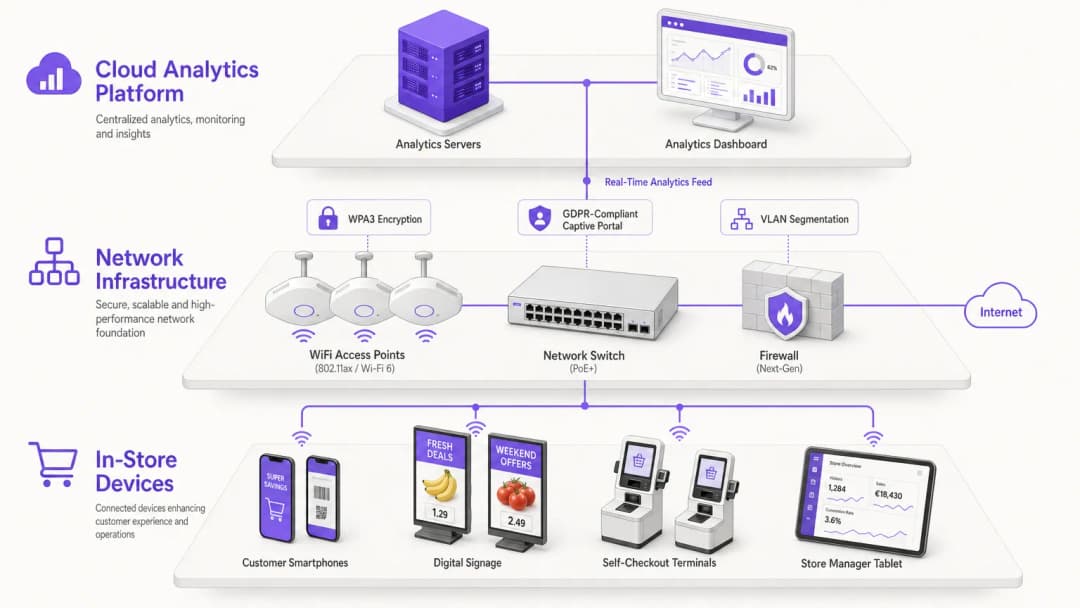
একটি উচ্চ-ক্ষমতাসম্পন্ন সুপারমার্কেট WiFi স্থাপনের জন্য একটি সুপরিকল্পিত আন্ডারলায়িং আর্কিটেকচার প্রয়োজন। আধুনিক রিটেল পরিবেশের সাধারণ উচ্চ ডিভাইস ঘনত্ব পরিচালনা করার জন্য লিগ্যাসি স্ট্যান্ডার্ড থেকে WiFi 6 (802.11ax)-এ রূপান্তর করা অপরিহার্য। WiFi 6-এ OFDMA (Orthogonal Frequency-Division Multiple Access) এবং Target Wake Time (TWT) প্রবর্তন করা হয়েছে, যা ইলেকট্রনিক শেলফ লেবেল (ESLs), হ্যান্ডহেল্ড স্ক্যানার এবং গ্রাহকদের স্মার্টফোনের মতো সংযুক্ত IoT ডিভাইসগুলির জন্য থ্রুপুট এবং ব্যাটারি লাইফ উল্লেখযোগ্যভাবে উন্নত করে।
সিকিউরিটি এবং কমপ্লায়েন্স আর্কিটেকচার:
সিকিউরিটি শুরু থেকেই ডিজাইন করতে হবে, পরে অতিরিক্ত কিছু হিসেবে যোগ করলে হবে না। স্থাপনাগুলিকে অবশ্যই নিম্নলিখিত মানগুলি মেনে চলতে হবে:
- WPA3: WPA2-এর বিরুদ্ধে কার্যকর থাকা ব্রুট-ফোর্স ডিকশনারি অ্যাটাক থেকে রক্ষা করতে সমস্ত নতুন স্থাপনার জন্য WPA3 এনক্রিপশন বাধ্যতামূলক করুন।
- VLAN সেগমেন্টেশন: VLAN ব্যবহার করে কর্পোরেট POS (Point of Sale) এবং ইনভেন্টরি ম্যানেজমেন্ট সিস্টেম থেকে গেস্ট ট্রাফিক সম্পূর্ণ আলাদা করুন। এটি PCI-DSS কমপ্লায়েন্সের জন্য একটি বাধ্যতামূলক আর্কিটেকচারাল প্রয়োজনীয়তা। গেস্ট ডিভাইসগুলি কখনই কার্ডহোল্ডার ডেটা এনভায়রনমেন্ট (CDE)-এ রাউট করতে পারবে না।
- IEEE 802.1X: কর্পোরেট এবং IoT SSID-এর জন্য, শুধুমাত্র অনুমোদিত ডিভাইসগুলি যাতে কর্পোরেট সেগমেন্টে যোগ দিতে পারে তা নিশ্চিত করতে 802.1X পোর্ট-ভিত্তিক নেটওয়ার্ক অ্যাক্সেস কন্ট্রোল প্রয়োগ করুন।
- Captive Portals: গেস্ট SSID-এ একটি সুরক্ষিত, GDPR-সম্মত Captive Portal প্রয়োগ করুন। এই পোর্টালটি ডেটা সংগ্রহ এবং সম্মতি ব্যবস্থাপনার প্রাথমিক টাচপয়েন্ট হিসেবে কাজ করে, যা সরাসরি অ্যানালিটিক্স ইঞ্জিনে তথ্য সরবরাহ করে।
গ্রাহক অভিজ্ঞতায় WiFi Analytics-এর ভূমিকা
সুপারমার্কেট WiFi-এর প্রকৃত গুরুত্ব নিহিত রয়েছে এর থেকে পাওয়া ডেটার মধ্যে। MAC অ্যাড্রেস ট্র্যাক করার মাধ্যমে - যা প্রাইভেসি কমপ্লায়েন্স বজায় রাখতে এজ ডিভাইসেই অ্যানোনিমাইজ এবং হ্যাশ করা হয় - অথবা প্রোফাইল-ভিত্তিক অথেনটিকেশন ব্যবহার করে, নেটওয়ার্কটি একটি Real-Time Location System (RTLS) হিসেবে কাজ করে।

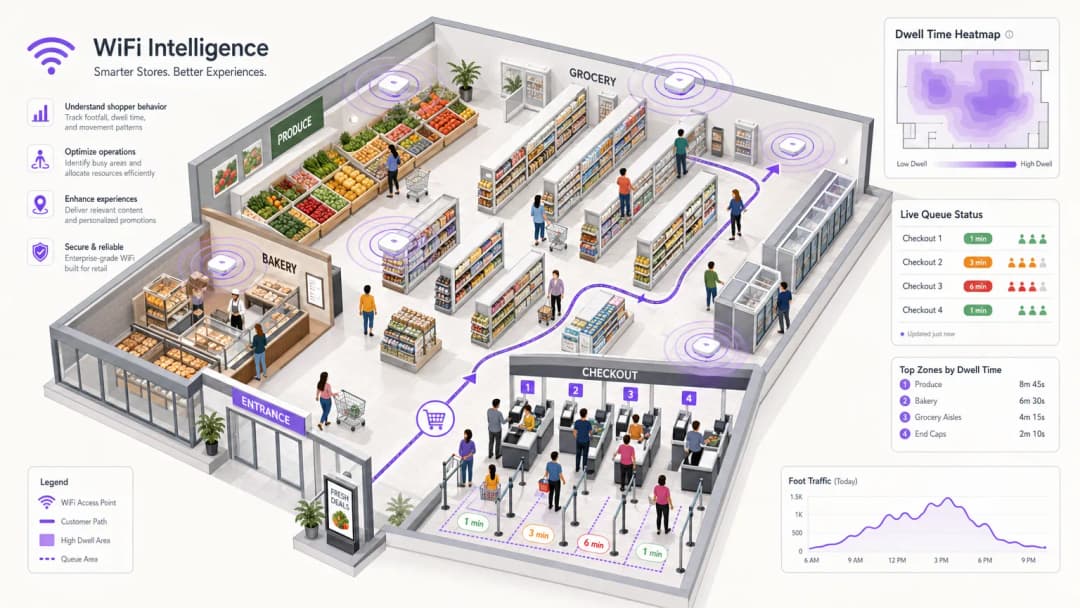
Dwell Time এবং Footfall অ্যানালিটিক্স: অ্যাক্সেস পয়েন্টগুলো পরোক্ষভাবে প্রোবিং ডিভাইস শনাক্ত করে, যা সিস্টেমটিকে বিভিন্ন জোনে ফুটফল এবং ডুয়েলের সময় গণনা করতে সাহায্য করে। Purple-এর মতো একটি প্ল্যাটফর্ম সরাসরি স্টোরের ফ্লোর প্ল্যানে এই জোনগুলোকে ম্যাপ করতে পারে, যা অপারেশন ম্যানেজারদের কাস্টমার ডেনসিটির একটি লাইভ হিটম্যাপ প্রদান করে। বেকারি বা ফ্রেশ প্রডিউস সেকশনে দীর্ঘ ডুয়েলের সময় প্রায়শই বেশি বাস্কেট ভ্যালুর সাথে সম্পর্কিত থাকে - এই ডেটা সরাসরি মার্চেন্ডাইজিংয়ের সিদ্ধান্ত গ্রহণে সহায়তা করে।
কিউ ম্যানেজমেন্ট: চেকআউট জোনের কাছাকাছি ডিভাইসের ঘনত্ব পর্যবেক্ষণ করে, কিউতে অপেক্ষার সময় পূর্বনির্ধারিত সীমা অতিক্রম করলে সিস্টেমটি স্টোর ম্যানেজারদের কাছে অটোমেটেড অ্যালার্ট পাঠাতে পারে। এটি কাস্টমাররা বিরক্ত হওয়ার আগেই ডাইনামিকভাবে স্টাফ রিডিপ্লয়মেন্ট করতে সাহায্য করে - যা কিউ ম্যানেজমেন্টের ক্ষেত্রে একটি রিঅ্যাক্টিভের চেয়ে প্রোঅ্যাক্টিভ পদ্ধতি।
লয়্যালটি ইন্টিগ্রেশন: যখন একজন কাস্টমার Captive Portal-এর মাধ্যমে অথেনটিকেট করেন, তখন তাদের ডিভাইসের আইডেন্টিফায়ারটি তাদের CRM প্রোফাইলের সাথে লিঙ্ক হয়ে যায়। পরবর্তী ভিজিটগুলো স্বয়ংক্রিয়ভাবে শনাক্ত করা যায়, যার ফলে কাস্টমারকে কোনো অ্যাপ ওপেন করার প্রয়োজন ছাড়াই পার্সোনালাইজড অফার, লয়্যালটি পয়েন্ট নোটিফিকেশন এবং ভিজিট ফ্রিকোয়েন্সি ট্র্যাকিংয়ের সুবিধা দেওয়া যায়।
আপনার নির্দিষ্ট সেটআপ নিয়ে কোনো প্রশ্ন আছে?
আমাদের টিম ৮০,০০০ ভেন্যুতে ভেন্যু অপারেটর, IT ম্যানেজার এবং নেটওয়ার্ক ইঞ্জিনিয়ারদের সাথে কাজ করে। একটি ২০ মিনিটের কল বুক করুন এবং আপনার মতো অন্যরা কীভাবে এর সমাধান করেছেন তা আমরা আপনাকে দেখাব।
ইমপ্লিমেন্টেশন গাইড
কাস্টমার এক্সপেরিয়েন্স উন্নত করতে একটি এন্টারপ্রাইজ-গ্রেড WiFi সলিউশন ডেপ্লয় করার জন্য তিনটি আলাদা ধাপে সতর্ক পরিকল্পনার প্রয়োজন হয়।
ধাপ ১: সাইট সার্ভে এবং RF প্ল্যানিং
একটি একক অ্যাক্সেস পয়েন্ট ইনস্টল করার আগেও, একটি বিস্তারিত প্রেডিক্টিভ এবং অ্যাক্টিভ সাইট সার্ভে পরিচালনা করুন। সুপারমার্কেটগুলোতে অনন্য RF চ্যালেঞ্জ রয়েছে: মেটাল শেলফ, তরল-ভর্তি প্রোডাক্ট এবং রেফ্রিজারেশন ইউনিট সবই সিগন্যালের উল্লেখযোগ্য অ্যাটেনুয়েশন ঘটায় যা অফিসের পরিবেশে থাকে না।
১. পরিবেশ ম্যাপ করুন: স্টোরের লেআউট মডেল করতে RF প্ল্যানিং সফটওয়্যার ব্যবহার করুন, যেখানে বিভিন্ন ধরনের শেলফ এবং রেফ্রিজারেশন ইউনিটের জন্য নির্দিষ্ট অ্যাটেনুয়েশন ভ্যালু ইনপুট দিতে হবে। ২. ক্যাপাসিটির জন্য ডিজাইন করুন: চেকআউটের মতো হাই-ডেনসিটি এলাকায় মাইক্রো-সেল তৈরি করতে ডিরেকশনাল অ্যান্টেনা সহ AP ডেপ্লয় করুন, যা কো-চ্যানেল ইন্টারফেয়ারেন্স কমাবে। লক্ষ্য হলো কেবল কভারেজ নিশ্চিত করা নয়, বরং প্রতিটি AP যেন নির্দিষ্ট সংখ্যক কনকারেন্ট কাস্টমারকে সামলাতে পারে তা নিশ্চিত করা। ৩. ইনফ্রাস্ট্রাকচার রেডিনেস: WiFi 6 হার্ডওয়্যারের জন্য মাল্টি-গিগাবিট ব্যাকহল এবং PoE+ (Power over Ethernet Plus) প্রয়োজনীয়তা সাপোর্ট করতে সমস্ত AP লোকেশনে Category 6A ক্যাবলিং করা নিশ্চিত করুন।
ধাপ ২: কনফিগারেশন এবং ইন্টিগ্রেশন
১. SSID স্ট্র্যাটেজি: ম্যানেজমেন্ট ওভারহেড এবং বিকন পলিউশন কমাতে SSID-এর সংখ্যা সীমিত রাখুন। সাধারণত, তিনটি SSID-ই যথেষ্ট: Store_Guest, Store_Corp এবং Store_IoT।
২. Captive Portal Setup: ব্র্যান্ডের নির্দেশিকা অনুযায়ী গেস্ট পোর্টাল কনফিগার করুন। ব্যবহারকারী লগইন করার সাথে সাথে নিরবচ্ছিন্ন ডেটা সিঙ্ক চালু করতে API-এর মাধ্যমে সিআরএম-এর সাথে পোর্টালটি সংযুক্ত করুন। ফিরে আসা গ্রাহকদের জন্য জটিলতা কমাতে সোশ্যাল লগইন বা প্রোফাইল-ভিত্তিক প্রমাণীকরণ অফার করার কথা বিবেচনা করুন।
৩. Analytics Integration: ওয়্যারলেস ল্যান কন্ট্রোলার (WLC) বা ক্লাউড ম্যানেজমেন্ট প্ল্যাটফর্মকে অ্যানালিটিক্স ইঞ্জিনের সাথে সংযুক্ত করুন। ডেটা ফিডগুলি সঠিকভাবে কনফিগার করা হয়েছে এবং ক্লাউড অ্যানালিটিক্স প্ল্যাটফর্মে নিরাপদে টেলিমেট্রি ডেটা ট্রান্সমিট করছে কিনা তা নিশ্চিত করুন।
৪. Zone Configuration: অ্যানালিটিক্স প্ল্যাটফর্মের মধ্যে, লজিক্যাল জোনগুলি নির্ধারণ করুন যা ফিজিক্যাল স্টোরের নির্দিষ্ট এলাকাগুলির (যেমন ফলমূল/সবজি, বেকারি, চেকআউট, ক্যাফে) সাথে মিলে যায়। এটি জোন-নির্দিষ্ট ডুয়েল টাইম (dwell time) এবং ফুটফল রিপোর্টিং সক্ষম করে।
ধাপ ৩: যাচাইকরণ এবং অপ্টিমাইজেশন
স্থাপনের পর, মূল ডিজাইন পরিকল্পনার সাথে মিলিয়ে সিস্টেমটি যাচাই করুন। চ্যানেল অ্যাসাইনমেন্টগুলি সঠিক কিনা এবং কো-চ্যানেল ইন্টারফেয়ারেন্স গ্রহণযোগ্য সীমার মধ্যে রয়েছে কিনা তা নিশ্চিত করতে একটি স্পেকট্রাম অ্যানালাইজার নিয়ে স্টোরটি পরিদর্শন করুন। জোনের সীমানাগুলি সঠিক কিনা এবং ফুটফল ডেটা স্টোরের পরিচিত পিক ট্রেডিং পিরিয়ডের সাথে মিলছে কিনা তা নিশ্চিত করতে অ্যানালিটিক্স ড্যাশবোর্ডটি পর্যালোচনা করুন।
সর্বোত্তম অনুশীলন (Best Practices)
নিরবচ্ছিন্ন অনবোর্ডিংকে অগ্রাধিকার দিন: লগইন প্রক্রিয়া যতটা সম্ভব সহজ এবং ঝামেলাহীন হওয়া উচিত। সম্ভব হলে Passpoint (Hotspot 2.0) বা প্রোফাইল-ভিত্তিক প্রমাণীকরণ ব্যবহার করুন যাতে ফিরে আসা গ্রাহকরা প্রতিবার ভিজিটে Captive Portal-এর সাথে যোগাযোগ না করেই স্বয়ংক্রিয়ভাবে সংযোগ করতে পারেন। এটি বিশেষ করে গ্রোসারি স্টোরের ক্ষেত্রে অত্যন্ত গুরুত্বপূর্ণ যেখানে গ্রাহকরা সপ্তাহে একাধিকবার আসতে পারেন।
লোকেশন-ভিত্তিক পরিষেবা ব্যবহার করুন: ব্লু-ডট নেভিগেশন এবং লোকেশন-ট্রিগারড পুশ নোটিফিকেশন সক্ষম করতে স্টোরের মোবাইল অ্যাপের সাথে WiFi নেটওয়ার্ক যুক্ত করুন। গ্রাহকদের তাদের স্মার্টফোনের মাধ্যমে সঠিক আইল বা সারিতে নিয়ে যাওয়া ইন-স্টোর অভিজ্ঞতার একটি সরাসরি ও পরিমাপযোগ্য উন্নতি।
টানা পর্যবেক্ষণ: নেটওয়ার্কটিকে একবার সেট করে ভুলে যাওয়ার মতো বিষয় হিসেবে বিবেচনা করবেন না। অসঙ্গতিগুলি চিহ্নিত করতে এবং পারফরম্যান্স অপ্টিমাইজ করতে ক্রমাগত RF হেলথ, ক্লায়েন্ট ডিস্ট্রিবিউশন এবং অ্যানালিটিক্স ড্যাশবোর্ডগুলি পর্যবেক্ষণ করুন। এন্টারপ্রাইজ কানেক্টিভিটি বিবেচনার আরও বিস্তৃত ধারণার জন্য, আমাদের লিজড লাইন কী? ডেডিকেটেড বিজনেস ইন্টারনেট সম্পর্কিত গাইডটি ডেডিকেটেড কানেক্টিভিটি বিকল্পগুলির বিষয়ে দরকারী তথ্য প্রদান করে যা একটি নির্ভরযোগ্য ইন-স্টোর নেটওয়ার্কের ভিত্তি হিসেবে কাজ করতে পারে।
একই খাতের অন্যান্যদের সাথে তুলনা করুন: এখানে বর্ণিত কৌশলগুলি কেবল গ্রোসারি খাতের মধ্যেই সীমাবদ্ধ নয়। Retail পরিবেশে প্রয়োগ করা একই WiFi অ্যানালিটিক্স নীতিগুলি Hospitality এবং Transport ভেন্যুগুলির জন্যও সমানভাবে প্রাসঙ্গিক। অন্যান্য খাতের সাথে তুলনা করার মাধ্যমে এমন সর্বোত্তম অনুশীলনগুলি সামনে আসতে পারে যা গ্রোসারি খাতে এখনও ব্যাপকভাবে প্রয়োগ করা হয়নি।
সমস্যা সমাধান এবং ঝুঁকি হ্রাস
Co-Channel Interference (CCI): ঘন বিন্যাসের ক্ষেত্রে, একই চ্যানেলে থাকা AP-গুলো একে অপরের সাথে ইন্টারফেয়ারেন্স ঘটাবে, যা সমস্ত ক্লায়েন্টের পারফরম্যান্স হ্রাস করে। প্রতিকার: চ্যানেল অ্যাসাইনমেন্ট এবং ট্রান্সমিট পাওয়ার স্বয়ংক্রিয়ভাবে সামঞ্জস্য করতে Dynamic Radio Management (DRM) প্রয়োগ করুন। চ্যানেল প্ল্যানিংয়ের দিকে সঠিক মনোযোগ না দিয়ে অতিরিক্ত মাত্রায় AP ঘনত্ব বৃদ্ধি করা এড়িয়ে চলুন।
Captive Portal ব্যর্থতা: যদি Captive Portal লোড হতে ব্যর্থ হয়, তবে গেস্টরা কানেক্ট করতে পারবে না এবং ডেটা ক্যাপচার সম্পূর্ণরূপে বন্ধ হয়ে যাবে। প্রতিকার: রিডান্ড্যান্ট পোর্টাল সার্ভার প্রয়োগ করুন এবং DNS ও DHCP সার্ভিসগুলো যেন অত্যন্ত উচ্চ মাত্রায় উপলব্ধ থাকে তা নিশ্চিত করুন। সমস্ত ধরণের ডিভাইসে প্রম্পটটি যেন নির্ভরযোগ্যভাবে উপস্থিত হয় তা নিশ্চিত করতে প্রয়োজনীয় ডোমেনগুলো (Apple-এর Captive Portal ডিটেকশন URL, Google-এর কানেক্টিভিটি চেক এন্ডপয়েন্ট) হোয়াইটলিস্ট করুন।
MAC Randomisation: আধুনিক iOS এবং Android ডিভাইসগুলো নেটওয়ার্ক সার্চ করার সময় র্যান্ডমাইজড MAC অ্যাড্রেস ট্রান্সমিট করে, যা ফুটফল কাউন্টকে বিকৃত করতে পারে। প্রতিকার: উন্নত অ্যানালিটিক্স প্ল্যাটফর্মগুলো র্যান্ডমাইজড প্রোব ডেটা থেকে আসল ইউনিক ভিজিটর সংখ্যা অনুমান করতে পরিসংখ্যানগত অ্যালগরিদম ব্যবহার করে। একবার কোনো ব্যবহারকারী পোর্টালের মাধ্যমে অথেন্টিকেট করলে, তাদের সেশন MAC তাদের প্রোফাইলের সাথে লিঙ্ক হয়ে যায়, যা সেই ভিজিটের জন্য সঠিক ব্যক্তিগত-স্তরের ট্র্যাকিং সক্ষম করে।
ডেটা প্রাইভেসি লঙ্ঘন: কাস্টমার ডেটা সঠিকভাবে পরিচালনা না করলে কঠোর ICO জরিমানা এবং সুনামের ক্ষতি হতে পারে। প্রতিকার: স্টোরেজের আগে সমস্ত MAC অ্যাড্রেস যেন অপরিবর্তনীয়ভাবে হ্যাশ করা হয় তা নিশ্চিত করুন। ডেটা রিটেনশন পলিসিগুলো নিয়মিত অডিট করুন। UK GDPR-এর সম্পূর্ণ অনুগত থেকে অ্যানালিটিক্স ট্র্যাকিং এবং মার্কেটিং কমিউনিকেশনের জন্য আলাদা অপ্ট-ইন সহ, Captive Portal-এর মাধ্যমে সুস্পষ্ট এবং বিস্তারিত সম্মতি নেওয়া নিশ্চিত করুন।
ROI এবং ব্যবসায়িক প্রভাব
একটি সঠিকভাবে বাস্তবায়িত WiFi অ্যানালিটিক্স সলিউশন একাধিক ক্ষেত্রে পরিমাপযোগ্য ব্যবসায়িক প্রভাব প্রদান করে। ইন্টারনাল বিজনেস কেস তৈরি করতে নিম্নলিখিত ফ্রেমওয়ার্কটি ব্যবহার করা যেতে পারে।
| ভ্যালু ড্রাইভার | পরিমাপের মেট্রিক | সাধারণ ফলাফল |
|---|---|---|
| কিউ ম্যানেজমেন্ট | গড় চেকআউট অপেক্ষার সময় | ২০ - ৩৫% হ্রাস |
| লয়্যালটি অ্যাকুইজিশন | প্রতি নতুন লয়্যালটি মেম্বার অর্জনের খরচ | ঐতিহ্যবাহী চ্যানেলগুলোর তুলনায় ৪০ - ৬০% কম |
| মার্কেটিং অ্যাট্রিবিউশন | ফিজিক্যাল ভিজিট-টু-ক্যাম্পেইন অ্যাট্রিবিউশন | সরাসরি CPA গণনার সুবিধা দেয় |
| অপারেশনাল দক্ষতা | স্টাফ রিডিপ্লয়মেন্ট রেসপন্স টাইম | ম্যানুয়াল পর্যবেক্ষণের তুলনায় প্রায় রিয়েল-টাইম |
| ডোয়েল টাইম অপ্টিমাইজেশন | হাই-মার্জিন জোনে গড় সময় | টার্গেটেড হস্তক্ষেপের মাধ্যমে পরিমাপযোগ্য বৃদ্ধি |
অপারেশনাল দক্ষতা: স্বয়ংক্রিয় কিউ অ্যালার্টগুলো চেকআউট অপেক্ষার সময় হ্রাস করে, যা সরাসরি কাস্টমার স্যাটিসফ্যাকশন স্কোর (NPS) উন্নত করে এবং ক্রয়ের শেষ ধাপে কার্ট পরিত্যাগ করার প্রবণতা কমায়।
মার্কেটিং ROI: CRM-এর সাথে WiFi ডেটা ইন্টিগ্রেট করার মাধ্যমে, মার্কেটাররা ফিজিক্যাল স্টোর ভিজিটকে ডিজিটাল ক্যাম্পেইনের সাথে লিঙ্ক করতে পারেন, যা প্রকৃত Cost Per Acquisition (CPA) গণনা করতে সক্ষম করে। এটি অ্যাট্রিবিউশন লুপটি সম্পন্ন করে যা ঐতিহাসিকভাবে ফিজিক্যাল রিটেইল মার্কেটিংয়ের ক্ষেত্রে একটি বড় ঘাটতি ছিল।লয়্যালটি অ্যাকুইজিশন: Captive Portal লয়্যালটি প্রোগ্রামে সাইন-আপের জন্য একটি হাই-কনভার্টিং চ্যানেল হিসেবে কাজ করে। একটি ভেরিফাইড ইমেল অ্যাড্রেস এবং স্পষ্ট সম্মতির বিনিময়ে ফ্রি, হাই-স্পিড WiFi অফার করার মাধ্যমে, স্টোরের লিফলেট বা চেকআউট প্রম্পটের মতো সাধারণ প্রথাগত মাধ্যমের তুলনায় কাস্টমার অ্যাকুইজিশন কস্ট উল্লেখযোগ্যভাবে হ্রাস পায়।
পার্শ্ববর্তী খাতগুলোতে এই প্রযুক্তিগুলো কীভাবে প্রয়োগ করা হয় সে সম্পর্কে জানতে, Hospitality WiFi Solutions: What to Look for in a Provider গাইডটি এন্টারপ্রাইজ WiFi ভেন্ডরদের মূল্যায়নের জন্য একটি দরকারী তুলনামূলক ফ্রেমওয়ার্ক প্রদান করে।
মূল সংজ্ঞাসমূহ
802.11ax (Wi-Fi 6)
বর্তমান প্রজন্মের ওয়্যারলেস নেটওয়ার্কিং স্ট্যান্ডার্ড, যা OFDMA প্রযুক্তি ব্যবহার করে একাধিক ডিভাইসকে একই সাথে ডেটা ট্রান্সমিট করার অনুমতি দিয়ে হাই-ডেনসিটি এনভায়রনমেন্টে পারফরম্যান্স উন্নত করার জন্য বিশেষভাবে ডিজাইন করা হয়েছে।
সুপারমার্কেটগুলোর জন্য অপরিহার্য যেখানে শত শত গ্রাহকের স্মার্টফোন, স্টাফদের ট্যাবলেট এবং IoT ডিভাইসগুলো একই অ্যাক্সেস পয়েন্টে এয়ারটাইমের জন্য প্রতিযোগিতা করে।
Captive Portal
একটি ওয়েব পেজ যা কোনো পাবলিক-অ্যাক্সেস নেটওয়ার্কের ব্যবহারকারীকে ইন্টারনেট অ্যাক্সেস পাওয়ার আগে দেখতে এবং ইন্টারঅ্যাক্ট করতে হয়। এটি এমন একটি প্রক্রিয়া যার মাধ্যমে অপারেটররা সম্মতি এবং গ্রাহকের ডেটা সংগ্রহ করে।
একটি রিটেইল WiFi স্থাপনে GDPR-এর অধীনে গ্রাহকের সম্মতি নেওয়া এবং মার্কেটিং ডেটা (ইমেল অ্যাড্রেস, CRM সিঙ্ক) সংগ্রহ করার প্রাথমিক মাধ্যম।
VLAN (Virtual Local Area Network)
একটি লজিক্যাল সাবনেটওয়ার্ক যা বিভিন্ন ফিজিক্যাল LAN থেকে ডিভাইসের একটি সংগ্রহকে গ্রুপ করে, যার ফলে পৃথক ফিজিক্যাল ইনফ্রাস্ট্রাকচারের প্রয়োজন ছাড়াই ট্রাফিক আইসোলেশন করা যায়।
সুপারমার্কেট স্থাপনে সুরক্ষার জন্য অত্যন্ত গুরুত্বপূর্ণ। PCI-DSS কমপ্লায়েন্স বজায় রাখতে গেস্ট ট্রাফিককে অবশ্যই স্টোরের POS এবং কর্পোরেট সিস্টেম থেকে একটি পৃথক VLAN-এ বিভক্ত করতে হবে।
Dwell Time
গ্রাহকের ডিভাইস একটি নির্দিষ্ট লোকেশন জোনের মধ্যে কতটা সময় অতিবাহিত করছে তার পরিমাণ, যা WiFi অ্যানালিটিক্স প্ল্যাটফর্ম দ্বারা পরিমাপ করা হয়।
একটি মূল অপারেশনাল মেট্রিক। বেকারি বা ওয়াইন সেকশনের মতো উচ্চ-মার্জিন এলাকায় dwell time বৃদ্ধি পাওয়ার বিষয়টি প্রায়শই বাস্কেটের আকার বৃদ্ধির সাথে সম্পর্কিত, যা এটিকে মার্চেন্ডাইজিং কার্যকারিতার একটি প্রত্যক্ষ নির্দেশক করে তোলে।
MAC Randomisation
আধুনিক স্মার্টফোনের একটি প্রাইভেসি ফিচার যেখানে ডিভাইসটি প্যাসিভ ট্র্যাকিং প্রতিরোধ করার জন্য, নেটওয়ার্ক স্ক্যান করার সময় তার স্থায়ী হার্ডওয়্যার ঠিকানার পরিবর্তে একটি র্যান্ডম উপায়ে তৈরি MAC অ্যাড্রেস ব্রডকাস্ট করে।
ফুটফল ডেটা বিশ্লেষণ করার সময় IT টিমগুলিকে অবশ্যই এটি বিবেচনায় নিতে হবে। অ্যাডভান্সড অ্যানালিটিক্স প্ল্যাটফর্মগুলি র্যান্ডমাইজড প্রোব ট্রাফিক থেকে প্রকৃত অনন্য ভিজিটর সংখ্যা অনুমান করতে পরিসংখ্যানগত ডিডুপ্লিকেশন ব্যবহার করে।
Passpoint (Hotspot 2.0)
একটি Wi-Fi Alliance স্ট্যান্ডার্ড যা ব্যবহারকারীদের পরবর্তী ভিজিটগুলিতে কোনো Captive Portal-এর সাথে ইন্টারঅ্যাক্ট করার প্রয়োজন ছাড়াই WiFi নেটওয়ার্কগুলির মধ্যে নির্বিঘ্ন, সুরক্ষিত, সেলুলারের মতো রোমিং সুবিধা দেয়।
কোনো বাধা ছাড়াই গ্রাহক অভিজ্ঞতার জন্য সর্বোত্তম সমাধান, যা নিবন্ধিত ক্রেতাদের প্রতিবার স্টোরে প্রবেশ করার সাথে সাথে স্বয়ংক্রিয়ভাবে সংযুক্ত হতে দেয় এবং পোর্টাল ইন্টারঅ্যাকশনের প্রয়োজনীয়তা সম্পূর্ণরূপে দূর করে।
RSSI (Received Signal Strength Indicator)
একটি রিসিভড রেডিও সিগন্যালের পাওয়ার লেভেলের পরিমাপ, যা এক মিলিওয়াটের (dBm) বিপরীতে ডেসিবেলে প্রকাশ করা হয়।
অ্যাক্সেস পয়েন্ট থেকে একটি ডিভাইসের ফিজিক্যাল দূরত্ব অনুমান করতে অ্যানালিটিক্স ইঞ্জিন দ্বারা ব্যবহৃত হয়। একাধিক AP থেকে RSSI রিডিং ট্রায়াঙ্গুলেট করা হল লোকেশন ট্র্যাকিং এবং হিটম্যাপ তৈরির ভিত্তি।
PCI-DSS
Payment Card Industry Data Security Standard। সুরক্ষার একগুচ্ছ স্ট্যান্ডার্ড যা নির্দেশ করে যে সমস্ত প্রতিষ্ঠান পেমেন্ট কার্ডের তথ্য গ্রহণ, প্রসেস, সংরক্ষণ বা প্রেরণ করে তাদের একটি সুরক্ষিত পরিবেশ বজায় রাখতে হবে।
গেস্ট নেটওয়ার্ক যাতে কোনোভাবেই কার্ডহোল্ডারের ডেটা এনভায়রনমেন্ট (CDE) অ্যাক্সেস করতে না পারে তা নিশ্চিত করার জন্য সুপারমার্কেট WiFi স্থাপনের আর্কিটেকচার তৈরি করতে হবে। এটি অর্জনের জন্য VLAN সেগমেন্টেশন হল প্রধান টেকনিক্যাল কন্ট্রোল।
OFDMA (Orthogonal Frequency-Division Multiple Access)
OFDM-এর একটি মাল্টি-ইউজার সংস্করণ যা একটি অ্যাক্সেস পয়েন্টকে একটি চ্যানেলকে ছোট সাব-চ্যানেলে বিভক্ত করতে এবং একসাথে একাধিক ক্লায়েন্টকে পরিষেবা দিতে সাহায্য করে।
একটি গুরুত্বপূর্ণ Wi-Fi 6 ফিচার যা প্রতিটি ক্লায়েন্টকে চ্যানেল অ্যাক্সেসের জন্য অপেক্ষা করার সময় কমিয়ে ঘনবসতিপূর্ণ রিটেইল পরিবেশে নাটকীয়ভাবে দক্ষতা উন্নত করে।
Dynamic Radio Management (DRM)
এন্টারপ্রাইজ ওয়্যারলেস LAN কন্ট্রোলারের একটি স্বয়ংক্রিয় ফিচার যা নেটওয়ার্ক পারফরম্যান্স অপ্টিমাইজ করতে এবং হস্তক্ষেপ কমাতে ক্রমাগত AP চ্যানেল অ্যাসাইনমেন্ট এবং ট্রান্সমিট পাওয়ার অ্যাডজাস্ট করে।
সুপারমার্কেট স্থাপনে অপরিহার্য যেখানে সারাদিনে ফুটফল পরিবর্তনের সাথে সাথে RF পরিবেশ পরিবর্তিত হয়। সর্বোত্তম পারফরম্যান্স বজায় রাখার জন্য শুধুমাত্র ম্যানুয়াল চ্যানেল প্ল্যানিং যথেষ্ট নয়।
সমাধানকৃত উদাহরণসমূহ
৫০টি লোকেশন বিশিষ্ট একটি আঞ্চলিক সুপারমার্কেট চেইন পিক আওয়ারের (১৬:০০ - ১৮:০০) সময় চেকআউটের অপেক্ষার সময় নিয়ে প্রচুর কাস্টমার কমপ্লেন পাচ্ছে। কিউ অনিয়ন্ত্রিত হয়ে ওঠার আগেই টিল-এ ডায়নামিকভাবে স্টাফ বরাদ্দ করার জন্য অপারেশন ডিরেক্টরের একটি ডেটা-চালিত সমাধান প্রয়োজন। বিদ্যমান নেটওয়ার্কটি লেগাসি 802.11ac AP এবং একটি ক্লাউড-ম্যানেজড WLC-এর মিশ্রণ।
AP ডেনসিটি বাড়াতে এবং সেই এলাকায় লোকেশনের সঠিকতা উন্নত করতে বিশেষভাবে চেকআউট জোনের উপরে অতিরিক্ত Wi-Fi 6 AP ডেপ্লয় করুন। ওয়্যারলেস ইনফ্রাস্ট্রাকচারটিকে একটি লোকেশন অ্যানালিটিক্স প্ল্যাটফর্ম যেমন Purple-এর সাথে ইন্টিগ্রেট করুন। প্ল্যাটফর্মের মধ্যে, চেকআউট এলাকার সাথে অবিকল ম্যাপ করা ভার্চুয়াল জোন কনফিগার করুন। স্টোর ম্যানেজারের ট্যাবলেটে SMS বা API ইন্টিগ্রেশনের মাধ্যমে ডেলিভার করা অটোমেটেড অ্যালার্ট সেট আপ করুন - যা চেকআউট জোনের মধ্যে ডিভাইসের সংখ্যা একটি পূর্বনির্ধারিত থ্রেশহোল্ড অতিক্রম করলে (উদাহরণস্বরূপ, টানা তিন মিনিটের বেশি সময় ধরে ২০টির বেশি ডিভাইস থাকলে) ট্রিগার হবে। এটি ম্যানেজারদের কিউ দৃশ্যমান হওয়ার আগেই প্রোঅ্যাক্টিভভাবে নতুন টিল খোলার অনুমতি দেয়। স্টোর-নির্দিষ্ট ট্রাফিক প্যাটার্ন বিবেচনায় নিতে দুই সপ্তাহের বেসলাইন পিরিয়ড জুড়ে থ্রেশহোল্ড মানগুলো ক্যালিব্রেট করুন।
একটি জাতীয় গ্রোসার তাদের নতুন ডিজিটাল লয়্যালটি অ্যাপের অ্যাডোপশন রেট বাড়াতে চায়। বর্তমানে, গ্রাহকদের ম্যানুয়ালি অ্যাপটি ডাউনলোড করতে হয় এবং চেকআউটে তাদের বিবরণ এন্টার করতে হয়, যা ঘর্ষণ তৈরি করে এবং ট্রানজেকশনের সময়কে ধীর করে দেয়। আইটি টিমের এমন একটি সমাধান প্রয়োজন যা শপিং জার্নির আরও শুরুতে গ্রাহকের ডেটা ক্যাপচার করে।
একটি ব্র্যান্ডেড captive portal ব্যবহার করে ঘর্ষণহীন গেস্ট WiFi অনবোর্ডিং প্রক্রিয়া ইমপ্লিমেন্ট করুন। সোশ্যাল মিডিয়া বা বিদ্যমান লয়্যালটি ক্রেডেনশিয়ালের মাধ্যমে ওয়ান-ক্লিক লগইন অফার করতে পোর্টালটি কনফিগার করুন। সফলভাবে সংযুক্ত হওয়ার পরে, ব্যবহারকারীকে একটি স্প্ল্যাশ পেজে রিডাইরেক্ট করুন যা একটি টার্গেটেড ইনসেন্টিভ (উদাহরণস্বরূপ, বর্তমান বাস্কেটে একটি ডিসকাউন্ট) সহ অ্যাপ ডাউনলোডের প্রচার করে। অথেন্টিকেটেড ডিভাইসটিকে গ্রাহকের লয়্যালটি প্রোফাইলের সাথে স্বয়ংক্রিয়ভাবে লিঙ্ক করতে CRM API ইন্টিগ্রেশন ব্যবহার করুন, যা ভবিষ্যতের ভিজিটগুলোতে নিরবচ্ছিন্ন আইডেন্টিফিকেশন সক্ষম করে। যে গ্রাহকরা অথেন্টিকেট করেন না, তাদের জন্য প্যাসিভ প্রোব অ্যানালিটিক্স এখনও সামগ্রিক স্তরে ফুটফল এবং ডোয়েল ডেটা প্রদান করে।
অনুশীলনী প্রশ্নসমূহ
Q1. আপনার স্টোরটি সামনের প্রবেশদ্বারের কাছে তীব্র নেটওয়ার্ক কনজেশনের সম্মুখীন হচ্ছে, যেখানে গ্রাহকরা তাদের ডিজিটাল লয়্যালটি কার্ড লোড করছেন এবং সেলফ-চেকআউট টার্মিনালগুলি কার্ড ট্রানজ্যাকশন প্রসেস করছে। উভয়ই বর্তমানে কোনো লজিক্যাল সেপারেশন ছাড়াই একই ফিজিক্যাল নেটওয়ার্ক ইনফ্রাস্ট্রাকচারে রয়েছে। এখানে সবচেয়ে গুরুত্বপূর্ণ আর্কিটেকচারাল পরিবর্তন কোনটি প্রয়োজন এবং কোন কমপ্লায়েন্স স্ট্যান্ডার্ড এটি বাধ্যতামূলক করে?
ইঙ্গিত: পাবলিক ইন্টারনেট অ্যাক্সেসের বিপরীতে পেমেন্ট সিস্টেমের সুরক্ষা এবং পারফরম্যান্স উভয় প্রয়োজনীয়তা বিবেচনা করুন।
মডেল উত্তর দেখুন
অবিলম্বে কঠোর VLAN বিভাজন কার্যকর করুন। PCI DSS সম্মতি নিশ্চিত করতে সেলফ-চেকআউট টার্মিনাল (POS সিস্টেম) অবশ্যই একটি সুরক্ষিত, অগ্রাধিকারপ্রাপ্ত কর্পোরেট VLAN-এ স্থাপন করতে হবে - নির্দিষ্টভাবে, গেস্ট নেটওয়ার্ক যাতে কার্ডধারীর ডেটা এনভায়রনমেন্টে রাউট করতে না পারে তা প্রতিরোধ করার জন্য। ভারী ব্যবহারকারীরা যাতে সবার পারফরম্যান্স ব্যাহত করতে না পারে সেজন্য ব্যান্ডউইথ রেট-লিমিটিং প্রয়োগ করে গ্রাহকের ট্রাফিক একটি পৃথক গেস্ট VLAN-এ বিচ্ছিন্ন করতে হবে। এটি একটি বাধ্যতামূলক PCI DSS প্রয়োজনীয়তা, কেবল একটি সর্বোত্তম অনুশীলন নয়।
Q2. মার্কেটিং টিম এমন গ্রাহকদের জন্য একটি লক্ষ্যযুক্ত ক্যাম্পেইন চালাতে চায় যারা ওয়াইন আইলে ১০ মিনিটের বেশি সময় কাটায়। বর্তমান অ্যানালিটিক্স ড্যাশবোর্ড কেবল সামগ্রিক স্টোরের ডওয়েল টাইম দেখায়। এই সুনির্দিষ্ট, জোন-ভিত্তিক ট্র্যাকিং সক্ষম করতে কোন প্রযুক্তিগত পদক্ষেপগুলির প্রয়োজন?
ইঙ্গিত: RF ডিজাইন প্রয়োজনীয়তা এবং অ্যানালিটিক্স প্ল্যাটফর্ম কনফিগারেশন উভয়ের কথাই ভাবুন।
মডেল উত্তর দেখুন
প্রথমত, ওয়াইন আইল এবং এর চারপাশের AP প্লেসমেন্ট পর্যালোচনা করুন। নির্ভুল জোন-স্তরের অবস্থান ট্র্যাকিংয়ের জন্য পর্যাপ্ত AP ঘনত্ব প্রয়োজন - সাধারণত ক্লায়েন্টের সিগন্যাল গ্রহণকারী তিনটি বা তার বেশি AP - যাতে নির্ভরযোগ্য RSSI ট্রায়াঙ্গুলেশন সক্ষম করা যায়। বর্তমান AP লেআউট যদি এটি প্রদান না করে, তবে অতিরিক্ত AP স্থাপন করার প্রয়োজন হতে পারে। দ্বিতীয়ত, অ্যানালিটিক্স প্ল্যাটফর্মের মধ্যে নির্দিষ্ট লোকেশন জোন কনফিগার করুন যা ওয়াইন আইলের শারীরিক সীমানাকে নির্ভুলভাবে ম্যাপ করে। তৃতীয়ত, যখন কোনও স্বীকৃত ডিভাইস সেই নির্দিষ্ট জোনের মধ্যে ১০ মিনিটের ডওয়েল থ্রেশহোল্ড অতিক্রম করবে, তখন CRM-এ একটি ইভেন্ট ফায়ার করার জন্য প্ল্যাটফর্মে একটি ওয়েবহুক বা API ট্রিগার সেট আপ করুন। সবশেষে, একটি টেস্ট ডিভাইস নিয়ে শারীরিকভাবে সেই এলাকায় হেঁটে এবং প্ল্যাটফর্মটি নির্ভুলভাবে অবস্থান প্রতিফলিত করছে কিনা তা নিশ্চিত করে জোনের সীমানা যাচাই করুন।
Q3. একটি সাম্প্রতিক অভ্যন্তরীণ অডিটে দেখা গেছে যে captive portal গ্রাহকের ইমেল ঠিকানা সংগ্রহ করছে, কিন্তু মার্কেটিং যোগাযোগের জন্য কোনও স্পষ্ট, আনচেক করা অপ্ট-ইন চেকবক্স নেই। পোর্টালটি ছয় মাস ধরে লাইভ রয়েছে। তাত্ক্ষণিক আইনি ঝুঁকিগুলি কী কী, এবং সঠিক প্রযুক্তিগত ও পদ্ধতিগত প্রতিকার কী?
ইঙ্গিত: নিয়ন্ত্রণকারী কাঠামো এবং ইতিমধ্যে সংগৃহীত ডেটার স্থিতি উভয়ই বিবেচনা করুন।
মডেল উত্তর দেখুন
তাত্ক্ষণিক ঝুঁকি হলো UK GDPR অ-সম্মতি, বিশেষ করে মার্কেটিং যোগাযোগের জন্য অবাধে দেওয়া, সুনির্দিষ্ট, অবহিত এবং দ্ব্যর্থহীন সম্মতির প্রয়োজনীয়তা। এর ফলে ICO প্রয়োগকারী পদক্ষেপ, ১৭.৫ মিলিয়ন পাউন্ড বা বৈশ্বিক বার্ষিক টার্নওভারের ৪% (যা বেশি) পর্যন্ত জরিমানা এবং উল্লেখযোগ্য সুনামের ক্ষতি হতে পারে। প্রযুক্তিগত প্রতিকার হলো captive portal স্প্ল্যাশ পেজটি অবিলম্বে আপডেট করা যাতে মার্কেটিং যোগাযোগের জন্য একটি স্পষ্টভাবে লেবেলযুক্ত, আনচেক করা অপ্ট-ইন চেকবক্স এবং সেইসাথে সম্পূর্ণ গোপনীয়তা নীতির একটি লিঙ্ক অন্তর্ভুক্ত থাকে। পদ্ধতিগতভাবে, অ-সম্মত সময়কালে সংগৃহীত যেকোনো ইমেল ঠিকানা অবশ্যই কোয়ারেন্টাইন করতে হবে এবং বিপণনের উদ্দেশ্যে ব্যবহার করা যাবে না। ICO-তে লঙ্ঘনের বিজ্ঞপ্তি পাঠানোর প্রয়োজন আছে কিনা তা মূল্যায়ন করতে আইনি পরামর্শদাতার সাহায্য নেওয়া উচিত।
এই সিরিজে পড়া চালিয়ে যান
রিটার্ন ভিজিট বাড়াতে কীভাবে বিপণনে SMS ব্যবহার করবেন
এই প্রযুক্তিগত রেফারেন্স গাইডটি রূপরেখা দেয় কীভাবে এন্টারপ্রাইজ ভেন্যুগুলি বারবার ভিজিট বাড়াতে SMS মার্কেটিং ইঞ্জিনের সাথে WiFi অ্যানালিটিক্স সংহত করতে পারে। এটি রিয়েল-টাইম উপস্থিতি ডেটা ক্যাপচার করতে, শারীরিক আচরণের উপর ভিত্তি করে স্বয়ংক্রিয় SMS ক্যাম্পেইন ট্রিগার করতে এবং রিটার্ন রেটের উপর সরাসরি প্রভাব পরিমাপ করার জন্য প্রয়োজনীয় আর্কিটেকচারের বিবরণ দেয়। মার্কেটিং অটোমেশনের সাথে নেটওয়ার্ক অবকাঠামো সারিবদ্ধ করে, IT এবং অপারেশনস টিমগুলি গ্রাহক ধরে রাখার জন্য একটি উচ্চ-ফলনশীল চ্যানেল স্থাপন করতে পারে।
First-party data marketing: ব্যবসায়ের জন্য একটি পুঙ্খানুপুঙ্খ নির্দেশিকা
এই নির্দেশিকাটি ব্যাখ্যা করে যে কীভাবে এন্টারপ্রাইজ গেস্ট WiFi নেটওয়ার্কগুলি ব্যবহার করে একটি শক্তিশালী first-party data মার্কেটিং কৌশল তৈরি করা যায়। এটি captive portals-এর মাধ্যমে সুরক্ষিত ডেটা ক্যাপচারের জন্য প্রযুক্তিগত আর্কিটেকচার, GDPR-সম্মত সম্মতি ওয়ার্কফ্লো, CRM ইন্টিগ্রেশন প্যাটার্ন এবং স্বয়ংক্রিয় ক্যাম্পেইন ডেপ্লয়মেন্ট কভার করে। হসপিটালিটি, রিটেইল, ইভেন্ট এবং পাবলিক সেক্টর পরিবেশের ভেন্যু অপারেটররা নিষ্ক্রিয় দর্শকদের একটি উচ্চ মানের, নিজস্ব মার্কেটিং অডিয়েন্সে পরিণত করার জন্য কার্যকরী নির্দেশিকা পাবেন।
গ্রাহকের ডেটা ম্যানেজমেন্ট প্ল্যাটফর্ম: ব্যবসার জন্য একটি বিস্তৃত নির্দেশিকা
এই নির্দেশিকায় ব্যাখ্যা করা হয়েছে কীভাবে ভেন্যু অপারেটররা খণ্ডিত ভিজিটর ডেটাকে একত্রিত করতে একটি গ্রাহক ডেটা ম্যানেজমেন্ট প্ল্যাটফর্ম স্থাপন করতে পারে। এটি প্রযুক্তিগত আর্কিটেকচার, ইন্টিগ্রেশন কৌশল এবং ফার্স্ট-পার্টি ডেটা প্রোফাইল তৈরিতে Guest WiFi-এর গুরুত্বপূর্ণ ভূমিকা কভার করে।
আপনার নির্দিষ্ট সেটআপ নিয়ে কোনো প্রশ্ন আছে?
আমাদের টিম ৮০,০০০ ভেন্যুতে ভেন্যু অপারেটর, IT ম্যানেজার এবং নেটওয়ার্ক ইঞ্জিনিয়ারদের সাথে কাজ করে। একটি ২০ মিনিটের কল বুক করুন এবং আপনার মতো অন্যরা কীভাবে এর সমাধান করেছেন তা আমরা আপনাকে দেখাব।