
হেলথকেয়ারের জন্য NAC: মেডিকেল ডিভাইস এবং রোগীর ডেটা সুরক্ষিত করা
এই নির্দেশিকাটি হেলথকেয়ার পরিবেশে Network Access Control (NAC) মোতায়েন করার জন্য একটি বিস্তৃত প্রযুক্তিগত রেফারেন্স প্রদান করে, যার মধ্যে মেডিকেল IoT, ক্লিনিকাল সিস্টেম এবং গেস্ট অ্যাক্সেসের জন্য আর্কিটেকচার ডিজাইন, অথেনটিকেশন মেকানিজম, ডিভাইস প্রোফাইলিং এবং VLAN সেগমেন্টেশন অন্তর্ভুক্ত রয়েছে। এটি HIPAA, NHS DSP Toolkit, ISO 27001 এবং GDPR জুড়ে কমপ্লায়েন্স প্রয়োজনীয়তাগুলি পূরণ করে, যার মধ্যে বাস্তবায়ন পরিস্থিতি এবং ভেন্ডর-নিরপেক্ষ সর্বোত্তম অনুশীলন রয়েছে। হেলথকেয়ারের IT ডিরেক্টর এবং CTO-দের জন্য, ক্লিনিকাল ওয়ার্কফ্লো ব্যাহত না করে মেডিকেল ডিভাইস এবং রোগীর ডেটা সুরক্ষিত করার জন্য এটিই কার্যকারী ব্লুপ্রিন্ট।
এই গাইডটি শুনুন
পডকাস্ট ট্রান্সক্রিপ্ট দেখুন
আমাদের মূল সিরিজের অংশ: Enterprise WiFi Security Guide →

এক্সিকিউটিভ সামারি
একটি আধুনিক হেলথকেয়ার নেটওয়ার্ক সুরক্ষিত করা এখন আর কেবল পরিধি রক্ষার মধ্যে সীমাবদ্ধ নেই - এটি এস্টেট জুড়ে সংযুক্ত ডিভাইসের ক্রমবর্ধমান সংখ্যা পরিচালনা করার বিষয়। MRI স্ক্যানার এবং স্মার্ট ইনফিউশন পাম্প থেকে শুরু করে রোগীর ট্যাবলেট এবং দর্শনার্থীদের স্মার্টফোন পর্যন্ত, প্রচুর পরিমাণ এবং বৈচিত্র্যময় এন্ডপয়েন্টগুলি একটি অভূতপূর্ব অ্যাটাক সারফেস তৈরি করে। নেটওয়ার্ক অ্যাক্সেস কন্ট্রোল (NAC) হল এমন একটি গুরুত্বপূর্ণ পরিকাঠামো যা নেটওয়ার্কের সাথে সংযুক্ত প্রতিটি ডিভাইসকে সনাক্ত, প্রমাণীকরণ এবং অনুমোদন করার জন্য প্রয়োজনীয়, যা চিকিৎসা সরঞ্জাম এবং রোগীর ডেটা সুরক্ষিত রাখে।
হেলথকেয়ার সংস্থাগুলির CTO এবং IT ডিরেক্টরদের জন্য, একটি শক্তিশালী NAC সমাধান স্থাপন করা HIPAA, NHS DSP টুলকিট এবং GDPR মেনে চলার জন্য এবং অর্থপূর্ণভাবে ঝুঁকি কমানোর জন্য একটি প্রয়োজনীয়তা। এই গাইডটি হেলথকেয়ার পরিবেশের জন্য তৈরি করা হয়েছে এবং এটি NAC আর্কিটেকচার, বাস্তবায়ন কৌশল এবং সেরা অনুশীলনগুলির উপর বিস্তারিত আলোচনা করে। আমরা অন্বেষণ করব কীভাবে জিরো-ট্রাস্ট নেটওয়ার্ক অ্যাক্সেস অর্জন করা যায়, ক্লিনিকাল IoT ডিভাইসগুলিকে পাবলিক ট্রাফিক থেকে আলাদা করা যায় এবং মূল ক্লিনিকাল নেটওয়ার্কের নিরাপত্তা বিঘ্নিত না করে নিরাপদে দর্শনার্থীদের অ্যাক্সেস পরিচালনা করতে Guest WiFi এর মতো সমাধানগুলি ব্যবহার করা যায়।
টেকনিক্যাল ডিপ-ডাইভ
হেলথকেয়ার নেটওয়ার্কের চ্যালেঞ্জ
হেলথকেয়ার নেটওয়ার্কগুলি অনন্যভাবে জটিল। কঠোর আপটাইম এবং ডেটা ইন্টিগ্রিটি প্রয়োজনীয়তা সহ ক্লিনিকাল সিস্টেম, লেগ্যাসি অপারেটিং সিস্টেমে চলমান ইন্টারনেট অফ মেডিকেল থিংস (IoMT) ডিভাইসের বিশাল ফ্লিট, কর্মীদের নিজস্ব ডিভাইস (BYOD), এবং হাজার হাজার অনিয়ন্ত্রিত রোগী ও দর্শনার্থীদের ডিভাইসগুলিকে তাদের একসাথে সহায়তা করতে হবে। এই পরিবেশে ঐতিহ্যগত পরিধি নিরাপত্তা বা স্ট্যাটিক VLAN অ্যাসাইনমেন্ট সম্পূর্ণ অপর্যাপ্ত। একটি গতিশীল, পরিচয়-চালিত পদ্ধতির প্রয়োজন, যা নেটওয়ার্ক আর্কিটেকচার জুড়ে সর্বনিম্ন-সুবিধা অ্যাক্সেস প্রয়োগ করে।
এই সমস্যার পরিধি বিশাল। একটি সাধারণ ৫০০ শয্যা বিশিষ্ট হাসপাতালে যেকোনো মুহূর্তে ১০,০০০-এর বেশি সংযুক্ত ডিভাইস থাকতে পারে। এই ডিভাইসগুলির মধ্যে ৩০%-এরও কম একটি ঐতিহ্যগত এন্ডপয়েন্ট সিকিউরিটি এজেন্ট চালাতে সক্ষম। অবশিষ্ট ৭০% (ইনফিউশন পাম্প, রোগীর মনিটর, ইমেজিং সরঞ্জাম, স্মার্ট বেড) হোস্ট-ভিত্তিক নিয়ন্ত্রণের পরিবর্তে নেটওয়ার্ক-স্তরের নিয়ন্ত্রণের মাধ্যমে সুরক্ষিত করতে হবে। এটি ঠিক সেই সমস্যা যা সমাধান করার জন্য NAC ডিজাইন করা হয়েছে।
মূল NAC আর্কিটেকচার
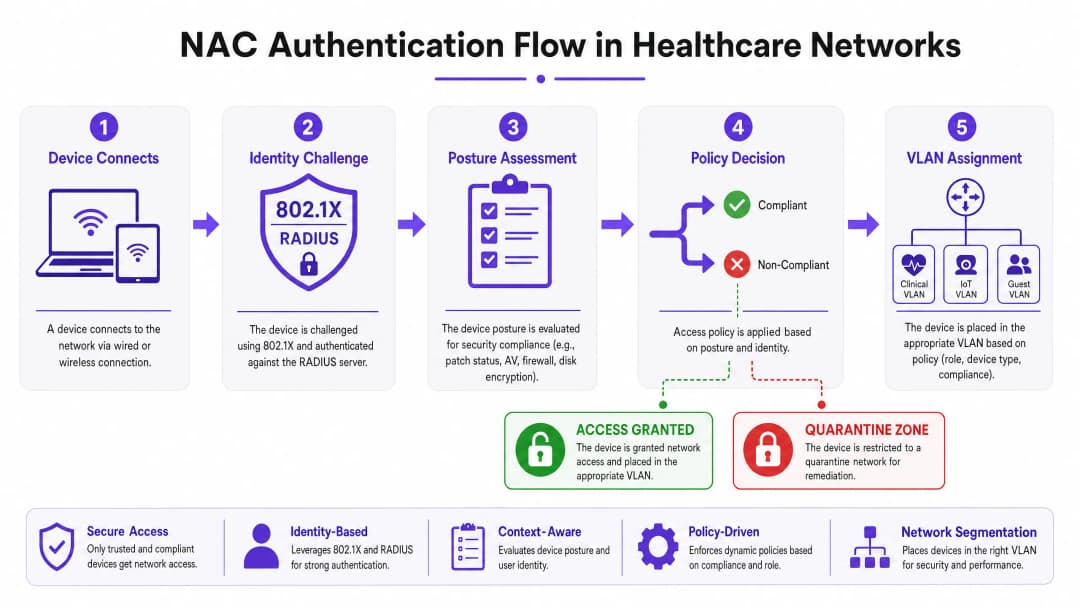
একটি হেলথকেয়ার পরিবেশে প্রোডাকশন-গ্রেড NAC ডিপ্লয়মেন্ট মূলত চারটি মূল উপাদানের ওপর নির্ভর করে যা একসাথে কাজ করে। Supplicant হলো কানেক্ট করা ডিভাইসের ক্লায়েন্ট সফ্টওয়্যার বা নেটিভ অপারেটিং সিস্টেম উপাদান যা অথেনটিকেশন এক্সচেঞ্জ শুরু করে। হেডলেস IoT ডিভাইস যেগুলোতে supplicant সক্ষমতা নেই, সেগুলোর জন্য ফলব্যাক হিসেবে MAC Authentication Bypass (MAB) ব্যবহার করা হয়। Authenticator হলো নেটওয়ার্ক অ্যাক্সেস ডিভাইস (একটি সুইচ বা ওয়্যারলেস অ্যাক্সেস পয়েন্ট) যা কানেকশন রিকোয়েস্ট ইন্টারসেপ্ট করে এবং গেটকিপার হিসেবে কাজ করে ক্রেডেন্সিয়ালগুলো অথেনটিকেশন সার্ভারে ফরোয়ার্ড করে। Authentication Server (সাধারণত একটি RADIUS ভিত্তিক পলিসি ইঞ্জিন যেমন Cisco ISE, Aruba ClearPass বা ForeScout) হলো সিস্টেমের কেন্দ্রীয় ইন্টেলিজেন্স; এটি আইডেন্টিটি ভ্যালিডেট করে, পশ্চার মূল্যায়ন করে এবং ডাইনামিক VLAN অ্যাসাইনমেন্ট সহ অথরাইজেশন সিদ্ধান্ত প্রদান করে। অবশেষে, Directory Store (সাধারণত Microsoft Active Directory বা LDAP) ব্যবহারকারী এবং ডিভাইসের জন্য আইডেন্টিটি রেকর্ড প্রদান করে যার বিপরীতে RADIUS সার্ভার রিকোয়েস্টগুলো ভ্যালিডেট করে।
Authentication Mechanisms
পোর্ট-ভিত্তিক নেটওয়ার্ক অ্যাক্সেস কন্ট্রোলের জন্য IEEE 802.1X হলো গোল্ড স্ট্যান্ডার্ড। এটি supplicant এবং অথেনটিকেশন সার্ভারের মধ্যে EAP (Extensible Authentication Protocol) মেসেজগুলো এনক্যাপসুলেট করার জন্য একটি ফ্রেমওয়ার্ক প্রদান করে। কর্পোরেট-মালিকানাধীন ডিভাইসের জন্য, PEAP-MSCHAPv2 (পাসওয়ার্ড-ভিত্তিক)-এর পরিবর্তে EAP-TLS (সার্টিফিকেট-ভিত্তিক মিউচুয়াল অথেনটিকেশন) ব্যবহারের জন্য জোরালো সুপারিশ করা হয়। EAP-TLS ক্রেডেন্সিয়াল চুরির ঝুঁকি সম্পূর্ণভাবে দূর করে - যদি অথেনটিকেশনের জন্য আপনার ইন্টারনাল PKI দ্বারা সাইন করা একটি বৈধ মেশিন সার্টিফিকেট প্রয়োজন হয়, তবে শুধুমাত্র একটি লিক হওয়া পাসওয়ার্ড কখনোই নেটওয়ার্ক অ্যাক্সেস মঞ্জুর করতে পারবে না।
MAC Authentication Bypass (MAB) হলো এমন ডিভাইসগুলোর জন্য একটি ব্যবহারিক সমাধান যা 802.1X সমর্থন করতে পারে না, যার মধ্যে বেশিরভাগ মেডিকেল IoT সরঞ্জাম অন্তর্ভুক্ত রয়েছে। authenticator ডিভাইসের MAC অ্যাড্রেসকে তার আইডেন্টিটি ক্রেডেন্সিয়াল হিসেবে ব্যবহার করে। যেহেতু MAC অ্যাড্রেস স্পুফ করা সম্ভব, তাই শুধুমাত্র MAB একটি দুর্বল সুরক্ষা, তবে গভীর ডিভাইস প্রোফাইলিং এবং আচরণগত বিশ্লেষণের সাথে যুক্ত হলে এটি পরিচিত মেডিকেল ডিভাইসগুলো পরিচালনার জন্য একটি শক্তিশালী নিয়ন্ত্রণ হিসেবে কাজ করে।
Captive Portal অথেনটিকেশন হলো অতিথি এবং রোগীদের অ্যাক্সেসের জন্য একটি ব্যবস্থা। একটি সঠিক উপায়ে ইমপ্লিমেন্ট করা Guest WiFi সমাধান ব্যবহারকারী রেজিস্ট্রেশন, ব্যবহারের শর্তাবলী (terms-of-service) গ্রহণ এবং ব্যান্ডউইথ ম্যানেজমেন্ট পরিচালনা করে, যা নিশ্চিত করে যে একটি ডিভাইস অ্যাক্সেস পয়েন্টের সাথে যুক্ত হওয়ার মুহূর্ত থেকেই পাবলিক ট্রাফিক ক্লিনিকাল নেটওয়ার্ক থেকে সম্পূর্ণ বিচ্ছিন্ন থাকে।
Device Profiling and Posture Assessment
"কে" কানেক্ট করছে তা জানা যুদ্ধের অর্ধেক মাত্র; তারা "কোন" ডিভাইস দিয়ে কানেক্ট করছে তা জানাও সমান গুরুত্বপূর্ণ। Device Profiling নেটওয়ার্কের প্রতিটি ডিভাইসকে শ্রেণীবদ্ধ করতে প্যাসিভ এবং অ্যাক্টিভ নেটওয়ার্ক প্রোবিং টেকনিক (DHCP fingerprints, HTTP User-Agent strings, SNMP queries, Nmap-ভিত্তিক অ্যাক্টিভ স্ক্যানিং এবং ট্রাফিক প্যাটার্ন বিশ্লেষণ) একত্রিত করে। একটি সুসংগত প্রোফাইলিং ইঞ্জিন শুধুমাত্র নেটওয়ার্ক আচরণের উপর ভিত্তি করে একটি Philips IntelliVue পেশেন্ট মনিটরকে একটি Baxter Sigma Spectrum ইনফিউশন পাম্প থেকে আলাদা করতে পারে, যদিও উভয়ই MAB এর মাধ্যমে কানেক্ট করে।
Posture Assessment ম্যানেজড কর্পোরেট ডিভাইসের ক্ষেত্রে প্রযোজ্য। একটি ক্লিনিকাল VLAN-এ অ্যাক্সেস দেওয়ার আগে, NAC সিস্টেম কমপ্লায়েন্সের জন্য এন্ডপয়েন্টকে পরীক্ষা করে: অপারেটিং সিস্টেমটি কি প্রয়োজনীয় সংস্করণে প্যাচ করা হয়েছে? অ্যান্টিভাইরাস সিগনেচার ডাটাবেস কি আপ টু ডেট? ফুল-ডিস্ক এনক্রিপশন কি সক্রিয় করা আছে? যে ডিভাইসগুলো পোস্টার চেক-এ ব্যর্থ হয় সেগুলোকে ডাইনামিকভাবে একটি রিমেডিয়েশন VLAN-এ অ্যাসাইন করা হয় যেখানে তারা আপডেট পেতে পারে কিন্তু ক্লিনিকাল সিস্টেমে পৌঁছাতে পারে না।
আপনার নির্দিষ্ট সেটআপ নিয়ে কোনো প্রশ্ন আছে?
আমাদের টিম ৮০,০০০ ভেন্যুতে ভেন্যু অপারেটর, IT ম্যানেজার এবং নেটওয়ার্ক ইঞ্জিনিয়ারদের সাথে কাজ করে। একটি ২০ মিনিটের কল বুক করুন এবং আপনার মতো অন্যরা কীভাবে এর সমাধান করেছেন তা আমরা আপনাকে দেখাব।
ইমপ্লিমেন্টেশন গাইড
একটি লাইভ হাসপাতাল পরিবেশে NAC মোতায়েন করার জন্য জটিল যত্ন পরিষেবাগুলোতে বিঘ্ন সৃষ্টি এড়াতে সতর্ক পরিকল্পনার প্রয়োজন। একটি পর্যায়ভিত্তিক পদ্ধতি কেবল সুপারিশ করা হয় না - এটি বাধ্যতামূলক।
ধাপ ১: ডিসকভারি এবং প্রোফাইলিং (মনিটর মোড)
প্রথমে মনিটর মোডে NAC সমাধান মোতায়েন করে শুরু করুন। সুইচ এবং অ্যাক্সেস পয়েন্টগুলোকে NAC সার্ভারে অথেন্টিকেশন রিকোয়েস্ট ফরোয়ার্ড করার জন্য কনফিগার করুন, তবে প্রতিটি কানেকশন লগ করার সময় সমস্ত অ্যাক্সেসের অনুমতি দিতে সার্ভারকে নির্দেশ দিন। সমস্ত শিফট প্যাটার্ন এবং ডিভাইস ব্যবহারের চক্র কভার করতে কমপক্ষে চার সপ্তাহের জন্য এই পর্যায়টি চালান। এই পর্যায়ের আউটপুট হল নেটওয়ার্কের প্রতিটি ডিভাইসের একটি সম্পূর্ণ, যাচাইকৃত ইনভেন্টরি, যার মধ্যে শ্যাডো IT এবং লিগ্যাসি ইকুইপমেন্ট অন্তর্ভুক্ত যা CMDB-তে নাও থাকতে পারে। ডিভাইস প্রোফাইলিং নিয়মগুলোকে পরিমার্জিত করতে এবং এনফোর্সমেন্টের সময় বিশেষ হ্যান্ডলিংয়ের প্রয়োজন হবে এমন যেকোনো ডিভাইস সনাক্ত করতে এই ডেটা ব্যবহার করুন।
ধাপ ২: পলিসি ডেফিনিশন এবং VLAN সেগমেন্টেশন
ডিসকভারি ডেটার উপর ভিত্তি করে, নির্দিষ্ট VLAN-এ ম্যাপ করা দানাদার অ্যাক্সেস পলিসি সংজ্ঞায়িত করুন। ক্লিনিকাল VLANs শুধুমাত্র 802.1X EAP-TLS-এর মাধ্যমে অথেন্টিকেটেড অনুমোদিত স্টাফ ডিভাইস এবং যাচাইকৃত প্রোফাইলিং সহ MAB-এর মাধ্যমে অথেন্টিকেটেড পরিচিত মেডিকেল IoT ডিভাইসের মধ্যে সীমাবদ্ধ থাকা উচিত। IoT VLANs ডিভাইস ক্লাস অনুসারে আরও উপবিভক্ত করা উচিত (উদাহরণস্বরূপ, ইনফিউশন পাম্পের জন্য একটি ডেডিকেটেড VLAN, ইমেজিং ইকুইপমেন্টের জন্য একটি আলাদা VLAN) যার কঠোর ACL প্রতিটি ডিভাইস ক্লাসের প্রয়োজনীয় নির্দিষ্ট ম্যানেজমেন্ট সার্ভারের সাথে যোগাযোগের অনুমতি দেয়। গেস্ট VLANs সমস্ত আনঅথেন্টিকেটেড ট্রাফিককে একটি Captive Portal-এ নির্দেশ করে, যা অভ্যন্তরীণ নেটওয়ার্ক থেকে সম্পূর্ণ বিচ্ছিন্ন থাকার পাশাপাশি অপারেশনাল ভিজিবিলিটি প্রদান করতে সমন্বিত WiFi Analytics সহ একটি প্ল্যাটফর্ম ব্যবহার করে।
ভেন্ডর-নির্দিষ্ট কনফিগারেশন নির্দেশনার জন্য, Cisco Meraki-তে VLAN-steering NAC পলিসি কীভাবে কনফিগার করবেন-এর উপর আমাদের বিস্তারিত টিউটোরিয়ালটি দেখুন।
ধাপ ৩: ধীরে ধীরে এনফোর্সমেন্ট
পর্যায়ক্রমে মনিটর মোড থেকে প্রয়োগ মোডে পরিবর্তন করুন। Low-Impact Enforcement দিয়ে শুরু করুন: মৌলিক ACLs প্রয়োগ করুন যা পরিচিত ক্ষতিকারক ট্রাফিকের প্যাটার্ন ব্লক করে কিন্তু বেশিরভাগ বৈধ ট্রাফিকের অনুমতি দেয়। ক্লিনিকাল অপারেশনকে প্রভাবিত করার আগে যেকোনো পলিসি ভুল কনফিগারেশন সনাক্ত এবং সমাধান করতে এই পর্যায়টি ব্যবহার করুন। তারপর বিভাগ অনুসারে Closed Mode প্রয়োগে রূপান্তর করুন - প্রথমে প্রশাসনিক এলাকা, তারপর ক্লিনিকাল সহায়তা এলাকা এবং সবশেষে ক্রিটিক্যাল কেয়ার ইউনিট। প্রতিটি পর্যায়ে, একটি দ্রুত রোলব্যাক পদ্ধতি বজায় রাখুন এবং প্রয়োগের পর মেডিকেল ডিভাইসগুলো সঠিকভাবে কাজ করছে কিনা তা যাচাই করার জন্য ক্লিনিকাল ইঞ্জিনিয়ারিং দলগুলো যাতে প্রস্তুত থাকে তা নিশ্চিত করুন।
সর্বোত্তম অনুশীলন
সার্টিফিকেট-ভিত্তিক অথেন্টিকেশন বাধ্যতামূলক করুন। সমস্ত কর্পোরেট-মালিকানাধীন ডিভাইসের জন্য, একটি অভ্যন্তরীণ PKI দ্বারা জারি করা মেশিন সার্টিফিকেট সহ EAP-TLS একমাত্র গ্রহণযোগ্য অথেন্টিকেশন পদ্ধতি হওয়া উচিত। পাসওয়ার্ড একটি দায়বদ্ধতা; সার্টিফিকেট তা নয়।
মেডিকেল IoT-কে মাইক্রো-সেগমেন্ট করুন। সমস্ত মেডিকেল ডিভাইসকে একটি একক IoT VLAN-এ অন্তর্ভুক্ত করবেন না। ডিভাইস ক্লাস অনুযায়ী সেগমেন্ট করুন এবং জিরো-ট্রাস্ট ACLs প্রয়োগ করুন। একটি ইনফিউশন পাম্প শুধুমাত্র তার নির্দিষ্ট ম্যানেজমেন্ট সার্ভার এবং EMR সিস্টেমে পৌঁছাতে সক্ষম হওয়া উচিত - অন্য কোথাও নয়। ডিভাইস ক্লাসগুলোর মধ্যে ল্যাটারাল মুভমেন্ট নেটওয়ার্ক স্তরে ব্লক করা উচিত।
নিরবচ্ছিন্ন আচরণগত পর্যবেক্ষণ বাস্তবায়ন করুন। NAC একটি সেট-এন্ড-ফরগেট কন্ট্রোল নয়। আপনার NAC পলিসি ইঞ্জিনকে একটি SIEM বা নেটওয়ার্ক ডিটেকশন অ্যান্ড রেসপন্স (NDR) প্ল্যাটফর্মের সাথে সংহত করুন। যদি একটি প্রোফাইল করা IoT ডিভাইস অস্বাভাবিক আচরণ প্রদর্শন করতে শুরু করে - যেমন অপ্রত্যাশিত পোর্ট স্ক্যানিং বা অস্বাভাবিক আউটবাউন্ড সংযোগ - তবে মানুষের হস্তক্ষেপের জন্য অপেক্ষা না করে NAC সিস্টেমের গতিশীলভাবে এটিকে কোয়ারেন্টাইন করা উচিত।
আপনার ওয়্যারলেস অবকাঠামো অপ্টিমাইজ করুন। প্রতিটি ক্লিনিকাল এলাকায় ডিভাইসের ঘনত্বের জন্য আপনার অ্যাক্সেস পয়েন্ট ডেপ্লয়মেন্ট যাতে পর্যাপ্ত কভারেজ এবং ক্ষমতা প্রদান করে তা নিশ্চিত করুন। বিভিন্ন ওয়্যারলেস ব্যান্ডের প্রভাবগুলো বোঝা অপরিহার্য - আমাদের গাইড Wi Fi Frequencies: A Guide to Wi-Fi Frequencies in 2026 মিশ্র IoT এবং ক্লিনিকাল পরিবেশে 2.4 GHz, 5 GHz এবং 6 GHz-এর মধ্যকার ব্যবহারিক সুবিধা-অসুবিধাগুলো কভার করে।
অতিথি অ্যাক্সেসকে একটি ফার্স্ট-ক্লাস সিকিউরিটি কন্ট্রোল হিসেবে সংহত করুন। গেস্ট WiFi কোনো ঐচ্ছিক অতিরিক্ত বৈশিষ্ট্য নয় - এটি আপনার নেটওয়ার্কের সবচেয়ে ঝুঁকিপূর্ণ ট্রাফিকের ধরনগুলোর একটি। একটি ডেডিকেটেড Guest WiFi প্ল্যাটফর্ম নিশ্চিত করে যে রোগী এবং দর্শনার্থীদের ডিভাইসগুলো ক্লিনিকাল নেটওয়ার্ক থেকে বিচ্ছিন্ন থাকে, এবং স্বাধীনভাবে অথেন্টিকেট ও পরিচালিত হয়। এর ফলে প্রাপ্ত WiFi Analytics ডেটা রোগীর প্রবাহ এবং সুবিধা ব্যবস্থাপনায় অপারেশনাল উন্নতিতে সহায়তা করে।
সমস্যা সমাধান এবং ঝুঁকি প্রশমন
সাধারণ ত্রুটি মোড
Silent IoT Device হলো হেলথকেয়ার NAC ডেপ্লয়মেন্টের সবচেয়ে সাধারণ অপারেশনাল সমস্যা। একটি মেডিকেল ডিভাইস যা লো-পাওয়ার স্লিপ স্টেটে প্রবেশ করে সেটি তার নেটওয়ার্ক কানেকশন ড্রপ করে এবং জেগে ওঠার সময় সঠিকভাবে পুনরায় অথেনটিকেট করতে ব্যর্থ হয়। এর ফলে এমন একটি ডিভাইস তৈরি হয় যা NAC সিস্টেমে অফলাইন দেখায় কিন্তু শারীরিকভাবে উপস্থিত থাকে এবং কাজ করার চেষ্টা করে। এর সমাধানের মধ্যে রয়েছে প্রতিটি ডিভাইস ক্লাসের প্রত্যাশিত স্লিপ সাইকেলের সাথে মিল রেখে সুইচে MAC এজিন টাইমার টিউন করা, এবং সম্পূর্ণ রি-অথেনটিকেশন সাইকেলের প্রয়োজন ছাড়াই ফিরে আসা ডিভাইসগুলিকে সনাক্ত করতে NAC প্রোফাইলিং ইঞ্জিন কনফিগার করা।
সার্টিফিকেট মেয়াদ শেষ হওয়া একটি পদ্ধতিগত ঝুঁকি যা সক্রিয়ভাবে পরিচালনা না করা হলে একসাথে শত শত স্টাফ ডিভাইসকে লক আউট করে দিতে পারে। SCEP বা EST প্রোটোকল ব্যবহার করে স্বয়ংক্রিয় সার্টিফিকেট লাইফসাইকেল ম্যানেজমেন্ট বাস্তবায়ন করুন এবং ৬০ দিনের মধ্যে মেয়াদ শেষ হতে যাওয়া সার্টিফিকেটের জন্য অ্যালার্ট কনফিগার করুন। গণহারে একসাথে মেয়াদ শেষ হওয়া এড়াতে ডিভাইস গ্রুপ জুড়ে সার্টিফিকেট রিনিউয়াল সাইকেল ধাপে ধাপে সাজান।
RADIUS সার্ভার মিসকনফিগারেশন - নেটওয়ার্ক অ্যাক্সেস ডিভাইসে ভুল IP অ্যাড্রেস, অমিল থাকা শেয়ার্ড সিক্রেট বা ভুলভাবে কনফিগার করা EAP মেথড - সাইলেন্ট অথেনটিকেশন ব্যর্থতার কারণ হয় যা সঠিক লগিং ছাড়া ডায়াগনস্টিক করা কঠিন। সমস্ত সুইচ এবং অ্যাক্সেস পয়েন্টে স্ট্যান্ডার্ডাইজড RADIUS কনফিগারেশন পুশ করতে সেন্ট্রালাইজড নেটওয়ার্ক ম্যানেজমেন্ট ব্যবহার করুন এবং সমস্ত অথেনটিকেশন ইভেন্টের একটি অডিট ট্রেইল প্রদান করতে RADIUS অ্যাকাউন্টিং বাস্তবায়ন করুন।
Fail-Open বনাম Fail-Closed সিদ্ধান্ত
হেলথকেয়ার NAC ডেপ্লয়মেন্টের ক্ষেত্রে এটি সবচেয়ে গুরুত্বপূর্ণ আর্কিটেকচারাল সিদ্ধান্ত। একটি fail-closed পলিসি (NAC সার্ভার নাগালের বাইরে থাকলে নেটওয়ার্ক অ্যাক্সেস অস্বীকার করা) সবচেয়ে শক্তিশালী নিরাপত্তা প্রদান করে তবে সার্ভার বিভ্রাটের সময় জীবন রক্ষাকারী মেডিকেল ডিভাইসগুলিকে বিচ্ছিন্ন করার ঝুঁকি তৈরি করে। একটি fail-open পলিসি (সার্ভার ব্যর্থ হলে সীমিত অ্যাক্সেস মঞ্জুর করা) ক্লিনিকাল ধারাবাহিকতা বজায় রাখে তবে হ্রাসকৃত নিরাপত্তা নিয়ন্ত্রণের একটি সুযোগ তৈরি করে। প্রস্তাবিত পদ্ধতিটি হলো একটি টিয়ার্ড ফেইলিউর পলিসি: গুরুত্বপূর্ণ ক্লিনিকাল VLAN-এর জন্য fail-open, যা শক্তিশালী নেটওয়ার্ক স্তরের ACL দ্বারা সমর্থিত, যেখানে অ্যাডমিনিস্ট্রেটিভ এবং গেস্ট VLAN-এর ক্ষেত্রে fail-closed পলিসি কার্যকর হবে। এই সিদ্ধান্তের প্রয়োজন যাতে সর্বনিম্ন হয় তার জন্য একাধিক ফিজিক্যাল লোকেশন বা অ্যাভেইলেবিলিটি জোন জুড়ে হাই-অ্যাভেইলেবিলিটি ক্লাস্টারে NAC পলিসি ইঞ্জিন ডেপ্লয় করুন।
ROI এবং ব্যবসায়িক প্রভাব
হেলথকেয়ারে NAC ডেপ্লয় করার ব্যবসায়িক যুক্তি কয়েকটি দিক থেকে অত্যন্ত জোরালো। প্রাথমিক চালিকাশক্তি হলো ঝুঁকি হ্রাসকরণ: রেগুলেটরি জরিমানা, আইনি খরচ, প্রতিকার ব্যয় এবং সুনামের ক্ষতি বিবেচনা করার পর প্রটেক্টেড হেলথ ইনফরমেশন (PHI) জড়িত একটি একক রিপোর্টযোগ্য ডেটা ব্রিচের গড় খরচ ১০ মিলিয়ন ডলার ছাড়িয়ে যায়। NAC সরাসরি এই ধরনের ঘটনার সম্ভাবনা এবং সম্ভাব্য ক্ষয়ক্ষতির পরিধি উভয়ই হ্রাস করে এটি নিশ্চিত করার মাধ্যমে যে শুধুমাত্র অনুমোদিত, কমপ্লায়েন্ট ডিভাইসগুলিই PHI ধারণকারী সিস্টেমে পৌঁছাতে পারে।অপারেশনাল দক্ষতা একটি মাধ্যমিক কিন্তু গুরুত্বপূর্ণ সুবিধা। স্বয়ংক্রিয় ডিভাইস প্রোফাইলিং এবং অনবোর্ডিং ম্যানুয়াল সুইচ-পোর্ট কনফিগারেশন দূর করে যা NAC বিহীন পরিবেশে উল্লেখযোগ্য IT সার্ভিস ডেস্ক সময় ব্যয় করে। ক্লিনিক্যাল ইঞ্জিনিয়ারিং দলগুলি লাইফসাইকেল ম্যানেজমেন্ট, রক্ষণাবেক্ষণের সময়সূচী এবং সংগ্রহ পরিকল্পনায় সহায়তা করার জন্য একটি রিয়েল-টাইম, নির্ভুল ডিভাইস ইনভেন্টরি লাভ করে।
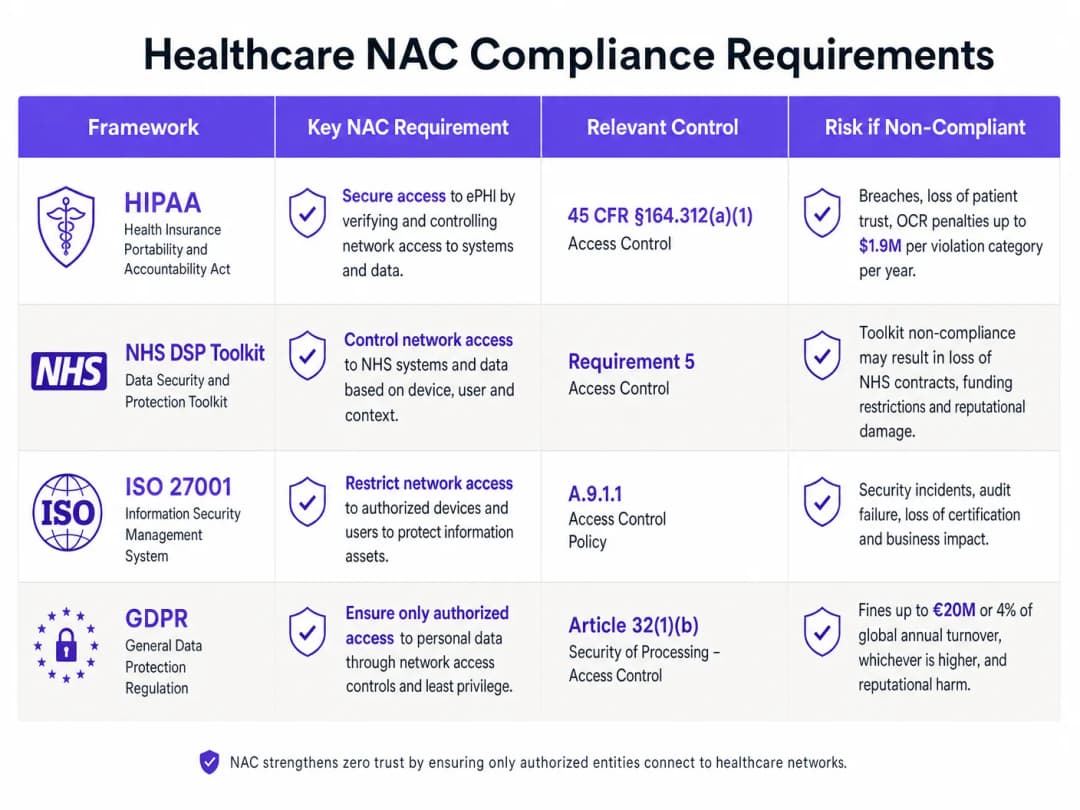
কমপ্লায়েন্সের অবস্থা সরাসরি উন্নত হয়। HIPAA-এর অ্যাক্সেস কন্ট্রোল স্ট্যান্ডার্ড (45 CFR §164.312(a)(1)), NHS DSP টুলকিটের সাইবার নিরাপত্তা প্রয়োজনীয়তা, এবং GDPR আর্টিকেল ৩২-এর সিকিউরিটি-অফ-প্রসেসিং বাধ্যবাধকতা - সবকটির জন্যই রোগীর ডেটা সম্বলিত সিস্টেমে কোন ব্যক্তি এবং ডিভাইস অ্যাক্সেস করতে পারবে তার ওপর প্রমাণযোগ্য নিয়ন্ত্রণের প্রয়োজন হয়। একটি সু-নথিভুক্ত NAC ডিপ্লয়মেন্ট এই বাধ্যবাধকতাগুলি পূরণ করার জন্য প্রয়োজনীয় অডিট প্রমাণ সরবরাহ করে।
অবশেষে, একটি সু-পরিকল্পিত গেস্ট অ্যাক্সেস স্ট্র্যাটেজি থেকে রোগীর অভিজ্ঞতা উপকৃত হয়। রোগী এবং দর্শকদের জন্য নির্ভরযোগ্য, সুরক্ষিত Guest WiFi সন্তুষ্টির স্কোর উন্নত করে, যেখানে অন্তর্নিহিত WiFi Analytics ডেটা বেড ম্যানেজমেন্ট, ভিজিটর ফ্লো এবং সুযোগ-সুবিধার ব্যবহারের ক্ষেত্রে অপারেশনাল উন্নতিতে সহায়তা করে।
মূল সংজ্ঞাসমূহ
Network Access Control (NAC)
একটি সিকিউরিটি ফ্রেমওয়ার্ক যা পলিসি-ভিত্তিক নিয়ন্ত্রণ প্রয়োগ করে যে কোন ডিভাইস এবং ব্যবহারকারীদের একটি নেটওয়ার্কে সংযোগ করার অনুমতি দেওয়া হয়েছে এবং সংযোগ করার পরে তারা কোন রিসোর্সগুলি অ্যাক্সেস করতে পারে। NAC প্রমাণীকরণ, ডিভাইস প্রোফাইলিং, পশ্চার অ্যাসেসমেন্ট এবং ডাইনামিক পলিসি প্রয়োগকে একত্রিত করে।
IT টিমগুলি একটি প্রোডাক্ট ক্যাটাগরি (Cisco ISE, Aruba ClearPass, ForeScout) এবং একটি আর্কিটেকচারাল অ্যাপ্রোচ উভয় হিসেবেই NAC-এর মুখোমুখি হয়। হেলথকেয়ারে, ক্লিনিকাল সিস্টেম, মেডিকেল IoT এবং গেস্ট অ্যাক্সেসের মধ্যে নেটওয়ার্ক সেগমেন্টেশন প্রয়োগ করার জন্য NAC হলো প্রাথমিক প্রক্রিয়া।
IEEE 802.1X
পোর্ট-ভিত্তিক নেটওয়ার্ক অ্যাক্সেস নিয়ন্ত্রণের জন্য একটি IEEE স্ট্যান্ডার্ড যা একটি LAN বা WLAN-এ সংযোগ করতে চাওয়া ডিভাইসগুলির জন্য একটি প্রমাণীকরণ ফ্রেমওয়ার্ক প্রদান করে। এটি সাপ্লিক্যান্ট (ক্লায়েন্ট), অথেনটিকেটর (সুইচ/AP) এবং প্রমাণীকরণ সার্ভার (RADIUS)-এর ভূমিকা নির্ধারণ করে এবং তাদের মধ্যে EAP মেসেজগুলিকে এনক্যাপসুলেট করে।
একটি NAC স্থাপনায় কর্পোরেট-মালিকানাধীন ডিভাইসগুলির জন্য 802.1X হলো প্রমাণীকরণ প্রক্রিয়া। IT টিমগুলি এটিকে নেটওয়ার্ক অ্যাক্সেস ডিভাইস (সুইচ, APs) এবং এন্ডপয়েন্ট ডিভাইস (OS-লেভেল সাপ্লিক্যান্ট সেটিংস বা Group Policy-এর মাধ্যমে) উভয় ক্ষেত্রেই কনফিগার করে।
MAC Authentication Bypass (MAB)
802.1X সমর্থন করতে পারে না এমন ডিভাইসগুলির জন্য ব্যবহৃত একটি ফলব্যাক প্রমাণীকরণ প্রক্রিয়া। নেটওয়ার্ক অ্যাক্সেস ডিভাইসটি সংযোগকারী ডিভাইসের MAC অ্যাড্রেসটিকে তার আইডেন্টিটি ক্রেডেনশিয়াল হিসেবে ব্যবহার করে, অনুমোদনের জন্য এটি RADIUS সার্ভারে ফরোয়ার্ড করে।
হেলথকেয়ার NAC স্থাপনায় মেডিকেল IoT ডিভাইসগুলির জন্য MAB হলো প্রাথমিক প্রমাণীকরণ পদ্ধতি। অর্থপূর্ণ নিরাপত্তা প্রদানের জন্য এটিকে অবশ্যই ডিভাইস প্রোফাইলিংয়ের সাথে সংযুক্ত করতে হবে, কারণ MAC অ্যাড্রেসগুলি স্পুফ করা যেতে পারে।
EAP-TLS (Extensible Authentication Protocol - Transport Layer Security)
একটি সার্টিফিকেট-ভিত্তিক EAP পদ্ধতি যা X.509 ডিজিটাল সার্টিফিকেট ব্যবহার করে ক্লায়েন্ট এবং প্রমাণীকরণ সার্ভারের মধ্যে পারস্পরিক প্রমাণীকরণ প্রদান করে। ক্লায়েন্ট এবং সার্ভার উভয়ই সার্টিফিকেট উপস্থাপন করে, যা পাসওয়ার্ড-ভিত্তিক ক্রেডেনশিয়াল চুরির পথটি দূর করে।
হেলথকেয়ার NAC স্থাপনায় কর্পোরেট ডিভাইসগুলির জন্য EAP-TLS হলো প্রস্তাবিত প্রমাণীকরণ পদ্ধতি। মেশিন সার্টিফিকেট ইস্যু এবং পরিচালনা করার জন্য এটির একটি কার্যকরী অভ্যন্তরীণ PKI প্রয়োজন।
VLAN Steering
NAC সিস্টেমের অথেন্টিকেশন ফলাফল এবং পলিসি সিদ্ধান্তের উপর ভিত্তি করে একটি সংযোগকারী ডিভাইসকে নির্দিষ্ট VLAN-এ ডাইনামিক অ্যাসাইনমেন্ট করা। RADIUS সার্ভার Access-Accept রেসপন্সের অংশ হিসেবে একটি VLAN ID (অথবা VLAN নাম) রিটার্ন করে এবং অথেন্টিকেটর ডিভাইসের পোর্টটিকে সেই VLAN-এ স্থাপন করে।
VLAN steering হলো এমন একটি ব্যবস্থা যার মাধ্যমে NAC নেটওয়ার্ক সেগমেন্টেশন কার্যকর করে। প্রতিটি ডিভাইস ক্লাসের জন্য টার্গেট VLAN নির্দিষ্ট করতে IT টিমগুলো অথেন্টিকেশন সার্ভারে RADIUS অ্যাট্রিবিউট (Tunnel-Type, Tunnel-Medium-Type, Tunnel-Private-Group-ID) কনফিগার করে।
Device Profiling
প্যাসিভ নেটওয়ার্ক প্রোব (DHCP ফিঙ্গারপ্রিন্ট, HTTP User-Agent স্ট্রিং, mDNS/Bonjour বিজ্ঞাপন) এবং অ্যাক্টিভ স্ক্যানিং প্রযুক্তি (Nmap, SNMP কোয়েরি) ব্যবহার করে একটি সংযোগকারী ডিভাইসের ধরন, প্রস্তুতকারক এবং অপারেটিং সিস্টেম সনাক্ত করার প্রক্রিয়া।
হেলথকেয়ার NAC ডেপ্লয়মেন্টে মেডিকেল IoT ডিভাইসগুলো সঠিকভাবে শ্রেণীবদ্ধ করার জন্য Device profiling অত্যন্ত গুরুত্বপূর্ণ। প্রোপাইলিং ছাড়া, MAB-অথেন্টিকেটেড ডিভাইসগুলোকে একে অপরের থেকে আলাদা করা যায় না, যার ফলে ডিভাইস-ক্লাস-নির্দিষ্ট অ্যাক্সেস পলিসিগুলো প্রয়োগ করা অসম্ভব হয়ে পড়ে।
Posture Assessment
নেটওয়ার্ক অ্যাক্সেস দেওয়ার আগে একটি সংযোগকারী ডিভাইসের সিকিউরিটি কমপ্লায়েন্স স্টেট মূল্যায়ন করা। পোস্চার চেক সাধারণত OS প্যাচ লেভেল, অ্যান্টিভাইরাস সিগনেচার কারেন্সি, ডিস্ক এনক্রিপশন স্ট্যাটাস এবং প্রয়োজনীয় সিকিউরিটি সফটওয়্যারের উপস্থিতি যাচাই করে।
হেলথকেয়ার NAC ডেপ্লয়মেন্টে Posture assessment ম্যানেজড কর্পোরেট ডিভাইস (ল্যাপটপ, ওয়ার্কস্টেশন) এর ক্ষেত্রে প্রযোজ্য। যে ডিভাইসগুলো পোস্চার চেক করতে ব্যর্থ হয় সেগুলোকে ডাইনামিকভাবে একটি রিমেডিয়েশন VLAN-এ পাঠানো হয় যেখানে তারা আপডেট পেতে পারে কিন্তু ক্লিনিকাল সিস্টেম অ্যাক্সেস করতে পারে না।
Quarantine VLAN
একটি সীমাবদ্ধ নেটওয়ার্ক সেগমেন্ট যেখানে অথেন্টিকেশন বা পোস্চার অ্যাসেসমেন্টে ব্যর্থ হওয়া নন-কমপ্লায়েন্ট বা অজ্ঞাত ডিভাইসগুলোকে রাখা হয়। কোয়ারেন্টাইন VLAN সাধারণত শুধুমাত্র রিমেডিয়েশন রিসোর্স (প্যাচ সার্ভার, অ্যান্টিভাইরাস আপডেট সার্ভার) এর অ্যাক্সেস সরবরাহ করে এবং সমস্ত ক্লিনিকাল ও কর্পোরেট সিস্টেমে অ্যাক্সেস ব্লক করে।
IT টিমগুলো NAC পলিসি লঙ্ঘনের কার্যকর ব্যবস্থা হিসেবে কোয়ারেন্টাইন VLAN ব্যবহার করে। কোয়ারেন্টাইন VLAN-এ থাকা একটি ডিভাইস নেটওয়ার্কের বাকি অংশ থেকে সম্পূর্ণ বিচ্ছিন্ন থাকে, তবে কমপ্লায়েন্স অর্জনের জন্য প্রয়োজনীয় আপডেটগুলো পেতে সক্ষম হয়।
IoMT (Internet of Medical Things)
সংযুক্ত মেডিকেল ডিভাইস এবং হেলথকেয়ার অ্যাপ্লিকেশনের ইকোসিস্টেম যা রোগীর ডেটা সংগ্রহ ও প্রেরণের জন্য নেটওয়ার্কের মাধ্যমে যোগাযোগ করে। IoMT-এর মধ্যে রয়েছে ইনফিউশন পাম্প, পেশেন্ট মনিটর, ইমেজিং ইকুইপমেন্ট, স্মার্ট বেড এবং পরিধানযোগ্য হেলথ মনিটর।
একটি হেলথকেয়ার NAC ডেপ্লয়মেন্টে IoMT ডিভাইসগুলো সবচেয়ে বড় এবং চ্যালেঞ্জিং ডিভাইস ক্যাটাগরি হিসেবে বিবেচিত হয়। এগুলো সাধারণত লিগ্যাসি অপারেটিং সিস্টেমে চলে, এন্ডপয়েন্ট সিকিউরিটি এজেন্ট সমর্থন করতে পারে না এবং এর জন্য বিশেষায়িত প্রোপাইলিং ও মাইক্রো-সেগমেন্টেশন স্ট্র্যাটেজি প্রয়োজন হয়।
Zero-Trust Network Access (ZTNA)
একটি সিকিউরিটি মডেল যা নেটওয়ার্ক আর্কিটেকচার থেকে অন্তর্নিহিত বিশ্বাস বা ইম্প্লিসিট ট্রাস্ট দূর করে। ZTNA এর অধীনে, নেটওয়ার্ক লোকেশন যাই হোক না কেন, কোনো ডিভাইস বা ব্যবহারকারীকে ডিফল্টভাবে বিশ্বাস করা হয় না। প্রতিটি অ্যাক্সেস রিকোয়েস্ট অবশ্যই স্পষ্টভাবে অথেন্টিকেটেড, অথরাইজড এবং ক্রমাগত যাচাইকৃত হতে হবে।
ZTNA হলো সেই আর্কিটেকচারাল দর্শন যা আধুনিক NAC ডেপ্লয়মেন্টের ভিত্তি হিসেবে কাজ করে। হেলথকেয়ারের ক্ষেত্রে ZTNA-এর অর্থ হলো, এমনকি ক্লিনিকাল VLAN-এ থাকা একটি ডিভাইসকেও তার পরিচয় এবং কমপ্লায়েন্স স্টেট ক্রমাগত প্রমাণ করতে হবে - শুধুমাত্র নেটওয়ার্ক লোকেশন সংবেদনশীল সিস্টেমে অ্যাক্সেসের অনুমতি দেয় না।
সমাধানকৃত উদাহরণসমূহ
একটি ৩৫০ শয্যা বিশিষ্ট NHS Trust তাদের বার্ষিক DSP Toolkit জমা দেওয়ার জন্য প্রস্তুতি নিচ্ছে। IT ডিরেক্টর চিহ্নিত করেছেন যে বর্তমানে নেটওয়ার্কে কোনো ডিভাইস অথেনটিকেশন নেই - সবকিছুই একটি একক VLAN সহ একটি ফ্ল্যাট নেটওয়ার্কের সাথে সংযুক্ত রয়েছে। সেখানে প্রায় ২,৪০০টি সংযুক্ত ডিভাইস রয়েছে, যার মধ্যে আনুমানিক ৮০০টি হলো মেডিকেল IoT ডিভাইস (ইনফিউশন পাম্প, পেশেন্ট মনিটর, ভেন্টিলেটর)। ক্লিনিকাল ক্রিয়াকলাপ ব্যাহত না করে ৬ মাসের মধ্যে Trust-কে কমপ্লায়েন্স অর্জন করতে হবে। তারা কোথা থেকে শুরু করবে?
এই কাজটির শুরু হবে একটি ৪ সপ্তাহের Monitor Mode মোতায়েন দিয়ে। 802.1X এবং MAB অনুরোধগুলি নতুনভাবে মোতায়েন করা RADIUS পলিসি ইঞ্জিনে (Cisco ISE বা Aruba ClearPass এই স্কেলের জন্য শীর্ষস্থানীয় বিকল্প) ফরোয়ার্ড করার জন্য সমস্ত কোর সুইচ এবং ওয়্যারলেস কন্ট্রোলার কনফিগার করুন। সার্ভারটিকে পারমিট-অল কিন্তু সমস্ত কিছু লগ করার জন্য সেট করা হয়েছে। ৪ সপ্তাহ পরে, সমস্ত ২,৪০০টি ডিভাইসকে শ্রেণীবদ্ধ করতে প্রোফাইলিং ডেটা বিশ্লেষণ করুন। প্রায় ৮০০টি মেডিকেল IoT ডিভাইস (MAB প্রার্থী), ৬০০টি কর্পোরেট ওয়ার্কস্টেশন এবং ল্যাপটপ (802.1X প্রার্থী), ৪০০টি স্টাফ BYOD ডিভাইস এবং ৬০০টি রোগী/দর্শনার্থীদের ডিভাইস পাওয়ার প্রত্যাশা করুন। ৫-৮ সপ্তাহে, VLAN আর্কিটেকচার সংজ্ঞায়িত করুন: স্টাফ ডিভাইস এবং EMR-সংযুক্ত সিস্টেমের জন্য ক্লিনিকাল VLAN (10.10.0.0/22), নির্দিষ্ট ম্যানেজমেন্ট সার্ভারে যোগাযোগ সীমিত করতে ACL সহ মেডিকেল ডিভাইসের জন্য IoT VLAN (10.20.0.0/22), এবং একটি Captive Portal-এ রাউট করা গেস্ট VLAN (10.30.0.0/22)। রোগীদের জন্য উন্মুক্ত নেটওয়ার্কের জন্য একটি ডেডিকেটেড গেস্ট WiFi প্ল্যাটফর্ম মোতায়েন করুন। ৯-১৬ সপ্তাহে, প্রশাসনিক ব্লক থেকে শুরু করে ধীরে ধীরে এনফোর্সমেন্ট শুরু করুন। ১৭-২৪ সপ্তাহে, ক্লিনিকাল এলাকায় এনফোর্সমেন্ট প্রসারিত করুন, এনফোর্সমেন্টের আগে ক্লিনিকাল ইঞ্জিনিয়ারিংয়ের সাথে প্রতিটি মেডিকেল ডিভাইস ক্লাস যাচাই করুন। ৬ মাসের মধ্যে, Trust একটি সম্পূর্ণ সেগমেন্টেড নেটওয়ার্ক অর্জন করবে যার সাথে অ্যাক্সেস কন্ট্রোল নথিবদ্ধ থাকবে, যা DSP Toolkit Requirement 5 (অ্যাক্সেস কন্ট্রোল) পূরণ করে এবং জমা দেওয়ার জন্য প্রয়োজনীয় অডিট প্রমাণ সরবরাহ করে।
একটি বেসরকারি হাসপাতাল গ্রুপ তাদের নেটওয়ার্ক প্রসারিত করছে একটি নতুন অনকোলজি উইংকে সমর্থন করার জন্য যাতে ১৫০টি নতুন সংযুক্ত মেডিকেল ডিভাইস রয়েছে, যার মধ্যে দুটি ভিন্ন প্রস্তুতকারকের ৪০টি ইনফিউশন পাম্প, ৬০টি পেশেন্ট মনিটর এবং ৫০টি মিশ্র ডিভাইস (স্মার্ট বেড, নার্স কল সিস্টেম) অন্তর্ভুক্ত। নেটওয়ার্ক টিমের একটি বিদ্যমান Cisco Meraki অবকাঠামো রয়েছে যার কোনো NAC নেই। CISO চান উইংটি ৮ সপ্তাহের মধ্যে খোলার আগে মাইক্রো-সেগমেন্টেশন চালু করতে। মোতায়েন করার কৌশলটি কী হবে?
বিদ্যমান অবকাঠামো হিসেবে Cisco Meraki-এর সাথে, এই স্থাপনাটি Meraki-এর বিল্ট-ইন RADIUS ইন্টিগ্রেশন এবং Group Policy ফিচারগুলিকে কাজে লাগায়। প্রথমে, একটি RADIUS সার্ভার (FreeRADIUS বা Cisco ISE) স্থাপন করুন এবং প্রমাণীকরণের জন্য এটি ব্যবহার করতে নতুন উইংয়ের সমস্ত Meraki সুইচ এবং MR অ্যাক্সেস পয়েন্ট কনফিগার করুন। ডিভাইস ক্লাসিফিকেশনে সহায়তা করার জন্য Meraki-এর ক্লায়েন্ট ফিঙ্গারপ্রিন্টিং ব্যবহার করে সমস্ত মেডিকেল ডিভাইসের জন্য MAB কনফিগার করুন। Meraki ড্যাশবোর্ডে তিনটি Group Policy নির্ধারণ করুন: IoT-InfusionPumps (VLAN 210, ACL শুধুমাত্র 10.10.5.20-এ ইনফিউশন পাম্প ম্যানেজমেন্ট সার্ভার এবং 10.10.1.10-এ EMR-এর ট্রাফিকের অনুমতি দেয়), IoT-PatientMonitors (VLAN 220, ACL যা 10.10.5.30-এ মনিটরিং সার্ভার এবং EMR-এ ট্রাফিকের অনুমতি দেয়), এবং IoT-General (VLAN 230, মিশ্র ডিভাইসের জন্য আরও অনুমতিমূলক ACL)। প্রকিউরমেন্ট ডকুমেন্টেশন থেকে প্রাপ্ত সমস্ত ১৫০টি ডিভাইসের MAC অ্যাড্রেস সহ RADIUS সার্ভারটি আগে থেকে পূরণ করুন। উইংয়ের সফট ওপেনিংয়ের প্রথম দুই সপ্তাহের জন্য Monitor Mode-এ চালান, সমস্ত ডিভাইস সঠিকভাবে প্রোফাইল এবং অ্যাসাইন করা হয়েছে কিনা তা যাচাই করুন। ৩ সপ্তাহে সম্পূর্ণ প্রয়োগে রূপান্তর করুন। বিস্তারিত Meraki-নির্দিষ্ট VLAN স্টিয়ারিং কনফিগারেশনের জন্য, How to Configure NAC Policies for VLAN Steering in Cisco Meraki নির্দেশিকাটি দেখুন।
অনুশীলনী প্রশ্নসমূহ
Q1. একটি আঞ্চলিক হাসপাতালে ১,২০০টি সংযুক্ত ডিভাইস রয়েছে। একটি Monitor Mode NAC ডেপ্লয়মেন্টের সময়, প্রোপাইলিং ইঞ্জিন ৩৪০টি ডিভাইসকে অজ্ঞাত প্রোফাইল হিসেবে চিহ্নিত করে - সেগুলো কোনো পরিচিত মেডিকেল ডিভাইসের ফিঙ্গারপ্রিন্টের সাথে মিলছে না এবং কর্পোরেট ওয়ার্কস্টেশনও নয়। CISO ২ সপ্তাহের মধ্যে এনফোর্সমেন্টে যেতে চান। সঠিক পদক্ষেপ কী হবে এবং CISO-এর নির্দিষ্ট সময়সীমা অনুযায়ী কাজ করার ঝুঁকিগুলো কী কী?
ইঙ্গিত: ভাবুন সেই ৩৪০টি অজ্ঞাত ডিভাইস কী হতে পারে এবং যদি সেগুলো অশ্রেণীবদ্ধ থেকে যায় তবে এনফোর্সমেন্ট কার্যকর হওয়ার পর সেগুলোর কী হবে।
মডেল উত্তর দেখুন
সঠিক পদক্ষেপটি হলো এই ৩৪০টি অজানা ডিভাইস পরীক্ষা এবং শ্রেণীবদ্ধ না করা পর্যন্ত প্রয়োগ বিলম্বিত করা। যখন প্রয়োগ কার্যকর হবে তখন এই ডিভাইসগুলিকে কোয়ারেন্টাইন VLAN-এ রাখা হবে, যার মধ্যে রোগীর সেবার জন্য গুরুত্বপূর্ণ ক্লিনিকাল সরঞ্জামও অন্তর্ভুক্ত থাকতে পারে। এই তদন্তে নিম্নলিখিত পদক্ষেপগুলি অন্তর্ভুক্ত করা উচিত: (১) সম্ভাব্য ডিভাইসের ধরণ সনাক্ত করতে প্রস্তুতকারকের ডাটাবেসের সাথে MAC অ্যাড্রেসের OUI প্রিফিক্সগুলি ক্রস-রেফারেন্স করা, (২) ডিভাইসগুলিকে শারীরিকভাবে সনাক্ত করতে সুইচ পোর্ট অবস্থানগুলি পর্যালোচনা করা, (৩) CMDB-তে নেই এমন কোনও মেডিকেল ডিভাইস সনাক্ত করতে ক্লিনিকাল ইঞ্জিনিয়ারিংকে যুক্ত করা, এবং (৪) হোস্টনেমের প্যাটার্নের জন্য DHCP লগগুলি পর্যালোচনা করা। সমস্ত ৩৪০টি ডিভাইস শ্রেণীবদ্ধ করার এবং উপযুক্ত নীতিগুলি সংজ্ঞায়িত করার পরেই কেবল প্রয়োগের প্রক্রিয়া এগিয়ে নেওয়া উচিত। CISO-এর ২ সপ্তাহের সময়সীমার মধ্যে অগ্রসর হওয়ার ঝুঁকি হলো, যদি কোনও ক্রিটিক্যাল কেয়ারের সময় কোনও অবর্গীকৃত মেডিকেল ডিভাইস কোয়ারেন্টাইন করা হয়, তবে রোগীর সুরক্ষায় সম্ভাব্য বিঘ্ন ঘটতে পারে।
Q2. একজন আইটি আর্কিটেক্ট একটি নতুন হাসপাতাল উইংয়ের জন্য NAC ফেইলিওর মোড পলিসি ডিজাইন করছেন। ক্লিনিকাল ডিরেক্টরের দাবি হলো NAC সার্ভার অফলাইনে গেলেও মেডিকেল ডিভাইসগুলির নেটওয়ার্ক সংযোগ কখনই বিচ্ছিন্ন হওয়া চলবে না। CISO সমস্ত VLAN-এর জন্য ফেইল-ক্লোজড (fail-closed) প্রয়োগের পক্ষে জোর দিচ্ছেন। আপনি কীভাবে এই দ্বন্দ্বের সমাধান করবেন এবং এর জন্য কী ধরনের ক্ষতিপূরণমূলক নিয়ন্ত্রণ (compensating controls) প্রয়োজন?
ইঙ্গিত: স্তরভিত্তিক ফেইলিওর পলিসি এবং একটি বিভ্রাটের সময় NAC পলিসি প্রয়োগের বিকল্প হিসেবে কোন নেটওয়ার্ক-লেভেল নিয়ন্ত্রণগুলি ব্যবহার করা যেতে পারে সে সম্পর্কে চিন্তা করুন।
মডেল উত্তর দেখুন
এর সমাধান হলো একটি স্তরভিত্তিক ফেইলিওর পলিসি যা উভয় প্রয়োজনীয়তাকেই পূরণ করে। IoT VLAN এবং ক্লিনিকাল VLAN-কে ফেইল-ওপেন (fail-open) কনফিগার করা হয়েছে (যদি RADIUS সার্ভার অ্যাক্সেসযোগ্য না হয় তবে অ্যাক্সেসের অনুমতি দিন), যেখানে গেস্ট VLAN এবং অ্যাডমিনিস্ট্রেটিভ VLAN-কে ফেইল-ক্লোজড হিসেবে কনফিগার করা হয়েছে। ক্লিনিকাল VLAN-এর জন্য ফেইল-ওপেন পলিসিকে গ্রহণযোগ্য করে তোলার জন্য ক্ষতিপূরণমূলক নিয়ন্ত্রণগুলি হলো: (১) VLAN গেটওয়েতে কঠোর ACL প্রয়োগ করা যা NAC স্টেট নির্বিশেষে ইন্টার-VLAN ট্রাফিককে সীমাবদ্ধ করে, (২) ফেইলিওর মোড ট্রিগার হওয়ার সম্ভাবনা কমানোর জন্য NAC সার্ভারের হাই অ্যাভেলেবিলিটি ডেপ্লয়মেন্ট (দুটি ডেটা সেন্টারে অ্যাক্টিভ-অ্যাক্টিভ ক্লাস্টার), (৩) NAC বিভ্রাটের সময় অস্বাভাবিক ট্রাফিক সনাক্ত করতে ক্লিনিকাল VLAN-এ নেটওয়ার্ক-লেভেলের IDS/IPS মনিটরিং, এবং (৪) NAC বিভ্রাটের পরিস্থিতির জন্য নথিভুক্ত ইনসিডেন্ট রেসপন্স পদ্ধতি। এই পদ্ধতিটি ক্লিনিকাল ডিরেক্টরের সংযোগের প্রয়োজনীয়তা পূরণ করে এবং একই সাথে CISO-কে নথিভুক্ত ক্ষতিপূরণমূলক নিয়ন্ত্রণ সরবরাহ করে যা একটি গ্রহণযোগ্য সুরক্ষা ব্যবস্থা বজায় রাখে।
Q3. একটি হাসপাতালের NAC ডেপ্লয়মেন্ট ৩ মাস ধরে সম্পূর্ণ প্রয়োগ মোডে চলছে। সিকিউরিটি টিম একটি অ্যালার্ট পেয়েছে যে IoT VLAN-এ থাকা একটি ডিভাইস (যা একটি ইনফিউশন পাম্প হিসেবে প্রোফাইল করা হয়েছে) পোর্ট 443-এ একটি বাহ্যিক IP অ্যাড্রেসের সাথে আউটবাউন্ড সংযোগ স্থাপনের চেষ্টা করছে। ডিভাইসটির MAC অ্যাড্রেস প্রত্যাশিত প্রোফাইলের সাথে মিলে যায়। তাৎক্ষণিক প্রতিক্রিয়া কী হবে এবং এই ঘটনাটি NAC আর্কিটেকচার সম্পর্কে কী নির্দেশ করে?
ইঙ্গিত: তাৎক্ষণিক কন্টেইনমেন্ট অ্যাকশন এবং যে আর্কিটেকচারাল ঘাটতির কারণে এই ট্রাফিকের চেষ্টা করা সম্ভব হয়েছিল (যদিও এটি ব্লক করা হয়েছিল) উভয়ই বিবেচনা করুন।
মডেল উত্তর দেখুন
তাৎক্ষণিক প্রতিক্রিয়া হলো NAC পলিসি ইঞ্জিনের মাধ্যমে ডিভাইসটিকে ডাইনামিকভাবে কোয়ারেন্টাইন করা, তদন্তের জন্য এটিকে IoT VLAN থেকে বিচ্ছিন্ন করা। সিকিউরিটি টিমের উচিত ট্রাফিক কন্টেন্ট বিশ্লেষণ করতে ডিভাইসটির সুইচ পোর্ট থেকে একটি প্যাকেট ট্রেস ক্যাপচার করা, এবং ক্লিনিকাল ইঞ্জিনিয়ারিংকে ডিভাইসটি শারীরিকভাবে পরিদর্শন করতে এবং প্রয়োজনে এটিকে অফলাইনে নিয়ে যাওয়ার জন্য অবহিত করা উচিত। এই ঘটনাটি দুটি আর্কিটেকচারাল সমস্যা নির্দেশ করে: (১) IoT VLAN-এর ACL ইনফিউশন পাম্প থেকে আউটবাউন্ড ইন্টারনেট ট্রাফিক ব্লক করছে না - ACL-এর উচিত শুধুমাত্র নির্দিষ্ট ম্যানেজমেন্ট সার্ভার IP এবং EMR-এ ট্রাফিকের অনুমতি দেওয়া, এবং অন্যান্য সমস্ত গন্তব্যের জন্য একটি স্পষ্ট 'deny-all' নিয়ম থাকা; এবং (২) আচরণগত পর্যবেক্ষণ ইন্টিগ্রেশন সঠিকভাবে কাজ করছে (অ্যালার্টটি তৈরি হয়েছিল), কিন্তু ট্রাফিকের চেষ্টা করার আগেই ACL-এর সেটি ব্লক করা উচিত ছিল। প্রতিকারমূলক পদক্ষেপ হলো প্রতিটি ডিভাইসের শ্রেণির জন্য শুধুমাত্র স্পষ্টভাবে প্রয়োজনীয় যোগাযোগের পথ অনুমোদনের মাধ্যমে একটি ডিফল্ট-ডিনাই (default-deny) ব্যবস্থা বাস্তবায়নের জন্য IoT VLAN ACL-গুলিকে আরও কঠোর করা।
এই সিরিজে পড়া চালিয়ে যান
PPSK WPA3: বৈশিষ্ট্য এবং ডেপ্লয়মেন্ট মডেলের তুলনা
এই টেকনিক্যাল রেফারেন্স গাইডটি PPSK এবং WPA3-SAE-এর তুলনা করে, মাল্টি-টেন্যান্ট পরিবেশের জন্য তাদের আর্কিটেকচারাল পার্থক্য এবং ডেপ্লয়মেন্ট মডেলগুলো ব্যাখ্যা করে। এটি IT ম্যানেজার এবং প্রোপার্টি ডেভেলপারদের Purple-এর আইডেন্টিটি-ভিত্তিক সリューション ব্যবহার করে সুরক্ষিত, আইসোলেটেড WiFi নেটওয়ার্ক গড়ে তোলার বিষয়ে কার্যকর নির্দেশনা প্রদান করে।
কর্মীদের WiFi-এর জন্য ব্যান্ডউইথ পরিচালনা: শেপিং, QoS এবং ট্রাফিক কমানো
এই নির্দেশিকাটি এন্টারপ্রাইজ ভেন্যুতে কর্মীদের WiFi-এর জন্য ব্যান্ডউইথ পরিচালনার ব্যবহারিক পদ্ধতিগুলো বিশদভাবে বর্ণনা করে। এটি ট্রাফিক শেপিং, QoS বাস্তবায়ন এবং কীভাবে কোনো অবকাঠামোগত আপগ্রেড ছাড়াই Purple Shield মোতায়েন নেটওয়ার্ক লোড কমায় তা কভার করে।
প্রতি-ডিভাইস PSK (iPSK, DPSK, MPSK) ব্যবহার করে WiFi SSID-এর সংখ্যা কীভাবে কমানো যায়
এই নির্ভরযোগ্য টেকনিক্যাল রেফারেন্স গাইডটি ব্যাখ্যা করে যে কীভাবে IT টিমগুলো প্রতি-ডিভাইস PSK (xPSK) ব্যবহার করে একাধিক নির্দিষ্ট উদ্দেশ্যে তৈরি নেটওয়ার্ককে একটি একক SSID-এ নিয়ে এসে SSID বিকন ওভারহেডের কারণে সৃষ্ট WiFi পারফরম্যান্সের অবনতি দূর করতে পারে। এটি Cisco iPSK, HPE Aruba MPSK, Ruckus DPSK, Juniper Mist PPSK এবং Ubiquiti UniFi PPSK জুড়ে ভেন্ডর ল্যান্ডস্কেপ কভার করে, যার সাথে ডাইনামিক VLAN অ্যাসাইনমেন্ট, IoT অনবোর্ডিং এবং PCI DSS কমপ্লায়েন্সের ব্যবহারিক ইমপ্লিমেন্টেশন গাইডলাইন রয়েছে। হসপিটালিটি, রিটেইল, স্টেডিয়াম এবং সরকারি খাতের ভেন্যু অপারেটররা এখানে কার্যকর আর্কিটেকচার গাইডেন্স এবং বাস্তব জীবনের কাজের উদাহরণ পাবেন।
আপনার নির্দিষ্ট সেটআপ নিয়ে কোনো প্রশ্ন আছে?
আমাদের টিম ৮০,০০০ ভেন্যুতে ভেন্যু অপারেটর, IT ম্যানেজার এবং নেটওয়ার্ক ইঞ্জিনিয়ারদের সাথে কাজ করে। একটি ২০ মিনিটের কল বুক করুন এবং আপনার মতো অন্যরা কীভাবে এর সমাধান করেছেন তা আমরা আপনাকে দেখাব।