
हेल्थकेअरसाठी NAC: वैद्यकीय उपकरणे आणि रुग्णांचा डेटा सुरक्षित करणे
हे मार्गदर्शक हेल्थकेअर वातावरणात Network Access Control (NAC) तैनात करण्यासाठी एक व्यापक तांत्रिक संदर्भ प्रदान करते, ज्यामध्ये वैद्यकीय IoT, क्लिनिकल सिस्टम आणि अतिथी प्रवेशासाठी आर्किटेक्चर डिझाइन, ऑथेंटिकेशन यंत्रणा, डिव्हाइस प्रोफाइलिंग आणि VLAN सेगमेंटेशन समाविष्ट आहे. हे HIPAA, NHS DSP Toolkit, ISO 27001, आणि GDPR मधील अनुपालन आवश्यकता पूर्ण करते, ज्यामध्ये ठोस अंमलबजावणीचे सिनॅरिओ आणि वेंडर-न्यूट्रल सर्वोत्तम पद्धती आहेत. हेल्थकेअरमधील IT संचालक आणि CTOs साठी, क्लिनिकल वर्कफ्लोमध्ये व्यत्यय न आणता वैद्यकीय उपकरणे आणि रुग्णांचा डेटा सुरक्षित करण्यासाठी ही एक ऑपरेशनल ब्लूप्रिंट आहे.
हे मार्गदर्शक ऐका
पॉडकास्ट ट्रान्सक्रिप्ट पहा
आमच्या मुख्य मालिकेचा भाग: Enterprise WiFi Security Guide →

कार्यकारी सारांश (Executive Summary)
आधुनिक हेल्थकेअर नेटवर्क सुरक्षित ठेवणे म्हणजे आता केवळ नेटवर्कच्या सीमेचे संरक्षण करणे नव्हे - तर संपूर्ण मालमत्तेमधील कनेक्ट केलेल्या डिवाइसेसच्या वेगाने होणाऱ्या वाढीचे व्यवस्थापन करणे आहे. MRI स्कॅनर्स आणि स्मार्ट इन्फ्युजन पंप्सपासून ते रुग्णांचे टॅब्लेट्स आणि अभ्यागतांच्या स्मार्टफोनपर्यंत, एंडपॉइंट्सचे अफाट प्रमाण आणि विविधता यामुळे हल्ल्यासाठी एक अभूतपूर्व क्षेत्र (attack surface) तयार होते. नेटवर्कवर कनेक्ट होणाऱ्या प्रत्येक डिवाइसची ओळख पटवण्यासाठी, त्याचे प्रमाणीकरण आणि अधिकृतता करण्यासाठी Network Access Control (NAC) ही एक महत्त्वपूर्ण पायाभूत सुविधा आहे, जी वैद्यकीय उपकरणे आणि रुग्णांचा डेटा सुरक्षित ठेवते.
हेल्थकेअर संस्थांमधील CTOs आणि IT संचालकांसाठी, HIPAA, NHS DSP Toolkit आणि GDPR चे पालन करण्यासाठी आणि जोखीम लक्षणीयरीत्या कमी करण्यासाठी एक मजबूत NAC सोल्यूशन तैनात करणे अत्यंत आवश्यक आहे. हेल्थकेअर वातावरणासाठी तयार केलेली ही मार्गदर्शिका NAC आर्किटेक्चर, अंमलबजावणी धोरण आणि सर्वोत्तम पद्धतींचा सखोल आढावा घेते. आम्ही झिरो-ट्रस्ट नेटवर्क ॲक्सेस कसा मिळवायचा, क्लिनिकल IoT डिवाइसेसना सार्वजनिक ट्रॅफिकपासून कसे वेगळे करायचे, आणि मुख्य क्लिनिकल नेटवर्कच्या सुरक्षिततेशी तजोड न करता अभ्यागतांच्या ॲक्सेसचे सुरक्षितपणे व्यवस्थापन करण्यासाठी Guest WiFi सारख्या सोल्यूशन्सचा वापर कसा करायचा हे शोधू.
तांत्रिक सखोल माहिती (Technical Deep-Dive)
हेल्थकेअर नेटवर्कचे आव्हान
हेल्थकेअर नेटवर्क्स हे अनन्यसाधारणपणे क्लिष्ट असतात. त्यांनी एकाच वेळी कठोर अपटाइम आणि डेटा अखंडतेच्या आवश्यकता असलेल्या क्लिनिकल सिस्टीम्स, जुन्या ऑपरेटिंग सिस्टीम्सवर चालणाऱ्या Internet of Medical Things (IoMT) डिवाइसेसचा मोठा समूह, कर्मचाऱ्यांचे स्वतःचे डिवाइसेस (BYOD), आणि हजारो अनमॅनेज्ड रुग्ण व अभ्यागतांचे डिवाइसेस यांना सपोर्ट केला पाहिजे. या वातावरणात पारंपारिक सीमा सुरक्षा किंवा स्थिर VLAN असाइनमेंट पूर्णपणे अपुरी आहे. संपूर्ण नेटवर्क आर्किटेक्चरमध्ये किमान-विशेषाधिकार (least-privilege) ॲक्सेस लागू करणाऱ्या डायनॅमिक, ओळख-आधारित दृष्टिकोनाची आवश्यकता आहे.
या समस्येचे प्रमाण अफाट आहे. एका ठराविक ५०० खाटांच्या हॉस्पिटलमध्ये एकाच वेळी १०,००० पेक्षा जास्त कनेक्ट केलेले डिवाइसेस असू शकतात. त्यापैकी ३०% पेक्षा कमी डिवाइसेस पारंपारिक एंडपॉइंट सुरक्षा एजंट चालवण्यास सक्षम असतात. उर्वरित ७०% (इन्फ्युजन पंप, पेशंट मॉनिटर्स, इमेजिंग उपकरणे, स्मार्ट बेड) होस्ट-आधारित नियंत्रणांऐवजी नेटवर्क-स्तरीय नियंत्रणांद्वारे सुरक्षित केले पाहिजेत. हीच ती अचूक समस्या आहे जी सोडवण्यासाठी NAC ची रचना केली गेली आहे.
मुख्य NAC आर्किटेक्चर
हेल्थकेअर पर्यावरणातील प्रोडक्शन-ग्रेड NAC उपयोजन हे एकमेकांशी सुसंगतपणे काम करणाऱ्या चार मुख्य घटकांवर अवलंबून असते. Supplicant हे कनेक्टिंग डिव्हाइसवरील क्लायंट सॉफ्टवेअर किंवा मूळ ऑपरेटिंग सिस्टम घटक आहे जे ऑथेंटिकेशन एक्सचेंज सुरू करते. Supplicant क्षमता नसलेल्या हेडलेस IoT डिव्हाइसेससाठी, फॉलबॅक म्हणून MAC Authentication Bypass (MAB) चा वापर केला जातो. Authenticator हे नेटवर्क ॲक्सेस डिव्हाइस (एक स्विच किंवा वायरलेस ॲक्सेस पॉइंट) असते जे कनेक्शन विनंत्या रोखते आणि गेटकीपर म्हणून काम करते, ऑथेंटिकेशन सर्व्हरकडे क्रेडेंशियल पाठवते. Authentication Server (सामान्यतः RADIUS-आधारित पॉलिसी इंजिन जसे की Cisco ISE, Aruba ClearPass किंवा ForeScout) ही सिस्टमची मध्यवर्ती इंटेलिजन्स आहे; हे आयडेंटिटी सत्यापित करते, पोश्चरचे मूल्यांकन करते आणि डायनॅमिक VLAN असाइनमेंटसह ऑथरायझेशनचे निर्णय परत पाठवते. शेवटी, Directory Store (सामान्यतः Microsoft Active Directory किंवा LDAP) युजर्स आणि डिव्हाइसेससाठी आयडेंटिटी रेकॉर्ड प्रदान करते ज्याच्या आधारे RADIUS सर्व्हर विनंत्या सत्यापित करतो.
ऑथेंटिकेशन मेकॅनिझम्स
पोर्ट-आधारित नेटवर्क ॲक्सेस कंट्रोलसाठी IEEE 802.1X हा सर्वोत्तम मानक आहे. हे Supplicant आणि ऑथेंटिकेशन सर्व्हर दरम्यान EAP (Extensible Authentication Protocol) मेसेज एन्कॅप्स्युलेट करण्यासाठी एक फ्रेमवर्क प्रदान करते. कॉर्पोरेट-मालकीच्या डिव्हाइसेससाठी, PEAP-MSCHAPv2 (पासवर्ड-आधारित) पेक्षा EAP-TLS (प्रमाणपत्र-आधारित परस्पर ऑथेंटिकेशन) ची जोरदार शिफारस केली जाते. EAP-TLS क्रेडेंशियल चोरीचा धोका पूर्णपणे काढून टाकते - जर ऑथेंटिकेशनसाठी तुमच्या अंतर्गत PKI द्वारे स्वाक्षरी केलेले वैध मशीन प्रमाणपत्र आवश्यक असेल, तर केवळ लीक झालेला पासवर्ड कधीही नेटवर्क ॲक्सेस देऊ शकत नाही.
MAC Authentication Bypass (MAB) हा अशा डिव्हाइसेससाठी एक व्यावहारिक उपाय आहे जे 802.1X ला सपोर्ट करू शकत नाहीत, ज्यामध्ये बहुतांश वैद्यकीय IoT उपकरणांचा समावेश होतो. Authenticator डिव्हाइसचा MAC ॲड्रेस त्याची आयडेंटिटी क्रेडेंशियल म्हणून वापरतो. MAC ॲड्रेस स्पूफ केले जाऊ शकत असल्यामुळे, MAB हे स्वतःमध्ये एक कमकुवत संरक्षण आहे, परंतु सखोल डिव्हाइस प्रोफाइलिंग आणि वर्तणुकीच्या विश्लेषणासह एकत्रित केल्यावर ते ज्ञात वैद्यकीय डिव्हाइसेस व्यवस्थापित करण्यासाठी एक मजबूत नियंत्रण बनते.
Captive Portal ऑथेंटिकेशन ही पाहुणे आणि रुग्णांच्या ॲक्सेससाठीची यंत्रणा आहे. एक चांगल्या प्रकारे लागू केलेले Guest WiFi सोल्यूशन युजर नोंदणी, सेवा अटींची स्वीकृती आणि बँडविड्थ व्यवस्थापन हाताळते, ज्यामुळे एखादे डिव्हाइस ॲक्सेस पॉइंटशी जोडल्या गेलेल्या क्षणापासून सार्वजनिक ट्रॅफिक क्लिनिकल नेटवर्कपासून पूर्णपणे विलग राहील याची खात्री होते.
डिव्हाइस प्रोफाइलिंग आणि पोश्चर असेसमेंट
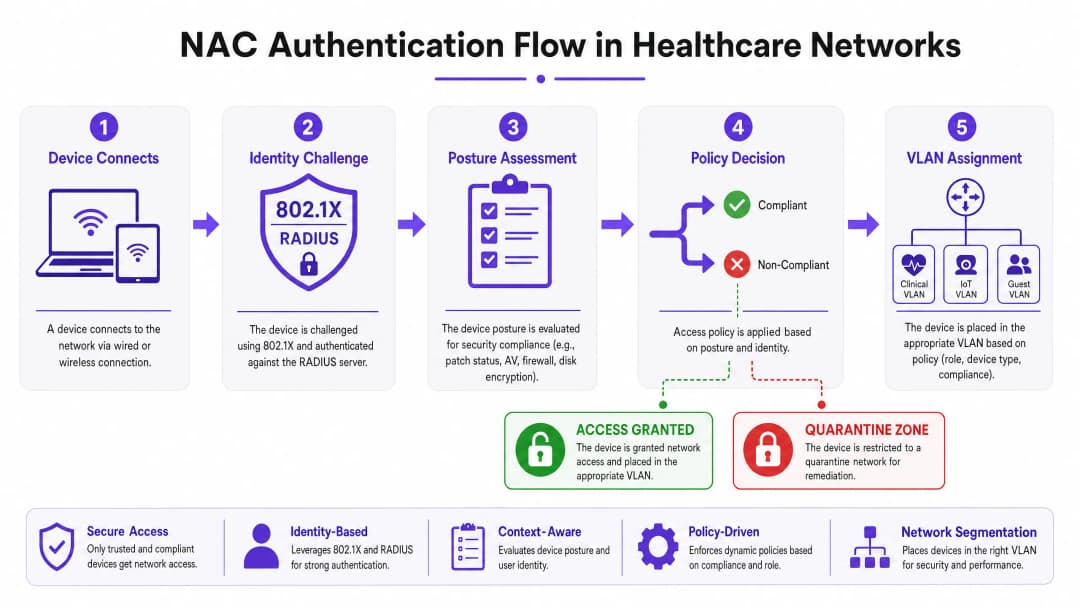
"कोण" कनेक्ट करत आहे हे जाणून घेणे हे केवळ अर्धे युद्ध आहे; ते "कोणत्या" उपकरणाने कनेक्ट करत आहेत हे जाणून घेणे तितकेच महत्त्वाचे आहे. Device Profiling नेटवर्कवरील प्रत्येक उपकरणाचे वर्गीकरण करण्यासाठी पॅसिव्ह आणि ॲक्टिव्ह नेटवर्क प्रोबिंग तंत्र (DHCP फिंगरप्रिंट्स, HTTP User-Agent स्ट्रिंग्स, SNMP क्वेरी, Nmap-आधारित ॲक्टिव्ह स्कॅनिंग आणि ट्रॅफिक पॅटर्न विश्लेषण) एकत्र करते. एक उत्तम प्रकारे ट्यून केलेले प्रोफाइलिंग इंजिन केवळ नेटवर्कच्या वर्तनावरून Philips IntelliVue पेशंट मॉनिटर आणि Baxter Sigma Spectrum इन्फ्युजन पंपमधील फरक ओळखू शकते, जरी दोन्ही MAB द्वारे कनेक्ट होत असले तरीही.
Posture Assessment हे व्यवस्थापित कॉर्पोरेट उपकरणांना लागू होते. क्लिनिकल VLAN ला प्रवेश देण्यापूर्वी, NAC सिस्टम अनुपालनासाठी एंडपॉइंटची चौकशी करते: ऑपरेटिंग सिस्टम आवश्यक आवृत्तीवर पॅच केली आहे का? अँटीव्हायरस सिग्नेचर डेटाबेस अद्ययावत आहेत का? फुल-डिस्क एन्क्रिप्शन सक्षम आहे का? जे उपकरणे पोश्चर तपासणीत अपयशी ठरतात त्यांना डायनॅमिकपणे एका रेमेडिएशन VLAN मध्ये नियुक्त केले जाते जेथे ते अपडेट्स प्राप्त करू शकतात परंतु क्लिनिकल सिस्टम्सपर्यंत पोहोचू शकत नाहीत.
तुमच्या विशिष्ट सेटअपबद्दल काही प्रश्न आहेत का?
आमची टीम ८०,००० हून अधिक वेन्यूजमधील वेन्यू ऑपरेटर्स, IT मॅनेजर्स आणि नेटवर्क इंजिनिअर्ससोबत काम करते. २० मिनिटांचा कॉल बुक करा आणि तुमच्यासारख्या इतरांनी ही समस्या कशी सोडवली हे आम्ही तुम्हाला दाखवू.
अंमलबजावणी मार्गदर्शक
थेट हॉस्पिटलच्या वातावरणात NAC तैनात करण्यासाठी गंभीर काळजी सेवांमध्ये व्यत्यय येऊ नये म्हणून काळजीपूर्वक नियोजनाची आवश्यकता असते. टप्प्याटप्प्याने केलेला दृष्टीकोन केवळ शिफारस केलेला नाही - तो अनिवार्य आहे.
टप्पा १: शोध आणि प्रोफाइलिंग (मॉनिटर मोड)
सुरवातीला NAC सोल्यूशन मॉनिटर मोडमध्ये तैनात करून सुरुवात करा. स्वित्सेस आणि ॲक्सेस पॉईंट्सना ऑथेंटिकेशन विनंत्या NAC सर्व्हरकडे पाठवण्यासाठी कॉन्फिगर करा, परंतु प्रत्येक कनेक्शन लॉग करताना सर्व प्रवेशास अनुमती देण्यासाठी सर्व्हरला सूचना द्या. सर्व शिफ्ट पॅटर्न आणि उपकरणांच्या वापराचे चक्र कव्हर करण्यासाठी हा टप्पा किमान चार आठवड्यांसाठी चालवा. या टप्प्याचे आउटपुट म्हणजे नेटवर्कवरील प्रत्येक उपकरणाची संपूर्ण, प्रमाणित इन्व्हेंटरी असते, ज्यामध्ये शॅडो आयटी आणि जुने उपकरणे समाविष्ट असतात जी कदाचित CMDB मध्ये दिसत नाहीत. उपकरणांचे प्रोफाइलिंग नियम परिष्कृत करण्यासाठी आणि अंमलबजावणी दरम्यान विशेष हाताळणीची आवश्यकता असलेल्या कोणत्याही उपकरणांची ओळख पटवण्यासाठी या डेटाचा वापर करा.
टप्पा २: पॉलिसी व्याख्या आणि VLAN सेगमेंटेशन
शोध डेटाच्या आधारे, विशिष्ट VLANs वर मॅप केलेल्या तपशीलवार प्रवेश पॉलिसी परिभाषित करा. Clinical VLANs हे 802.1X EAP-TLS द्वारे ऑथेंटिकेट केलेल्या अधिकृत कर्मचाऱ्यांच्या उपकरणांपुरते आणि प्रमाणित प्रोफाइलिंगसह MAB द्वारे ऑथेंटिकेट केलेल्या ज्ञात वैद्यकीय IoT उपकरणांपुरते मर्यादित असावेत. IoT VLANs उपकरणांच्या वर्गवारीनुसार आणखी उपविभाजित केले जावे (उदाहरणार्थ, इन्फ्युजन पंपसाठी एक समर्पित VLAN, इमेजिंग उपकरणांसाठी स्वतंत्र VLAN) ज्यामध्ये प्रत्येक उपकरणाच्या वर्गवारीला आवश्यक असलेल्या विशिष्ट व्यवस्थापन सर्व्हरशीच संवाद साधण्याची परवानगी देणारे कडक ACLs असतील. Guest VLANs सर्व अनऑथेंटिकेटेड ट्रॅफिकला एका Captive Portal कडे निर्देशित करतात, जे अंतर्गत नेटवर्कपासून पूर्णपणे वेगळे राहून ऑपरेशनल व्हिज्युअलिटी प्रदान करण्यासाठी एकात्मिक WiFi Analytics असलेल्या प्लॅटफॉर्मचा वापर करतात.
विक्रेता-विशिष्ट कॉन्फिगरेशन मार्गदर्शनासाठी, how to configure VLAN-steering NAC policies in Cisco Meraki वरील आमचे तपशीलवार ट्युटोरियल पहा.
टप्पा ३: हळूहळू अंमलबजावणी
Monitor Mode मधून अंमलबजावणीच्या टप्प्यांमध्ये स्थित्यंतर करा. Low-Impact Enforcement ने सुरुवात करा: जे ज्ञात-खराब ट्रॅफिक पॅटर्न ब्लॉक करतात परंतु बहुतांश कायदेशीर ट्रॅफिकला परवानगी देतात असे मूलभूत ACLs लागू करा. क्लिनिकल ऑपरेशन्सवर परिणाम होण्यापूर्वी पॉलिसीमधील कोणतीही चुकीची कॉन्फिगरेशन ओळखण्यासाठी आणि त्यांचे निराकरण करण्यासाठी या टप्प्याचा वापर करा. त्यानंतर Closed Mode अंमलबजावणीकडे वळा, विभागवार रोल आउट करा - प्रशासकीय क्षेत्रे प्रथम, क्लिनिकल सपोर्ट क्षेत्रे त्यानंतर आणि क्रिटिकल केअर युनिट्स शेवटी. प्रत्येक टप्प्यावर, जलद रोलबॅक प्रक्रिया कायम ठेवा आणि अंमलबजावणीनंतर वैद्यकीय उपकरणे योग्यरित्या कार्य करत असल्याची पडताळणी करण्यासाठी क्लिनिकल इंजिनिअरिंग टीम्स स्टँडबायवर असल्याची खात्री करा.
सर्वोत्तम पद्धती
सर्टिफिकेट-आधारित ऑथेंटिकेशन लागू करा. सर्व कॉर्पोरेट-मालकीच्या उपकरणांसाठी, अंतर्गत PKI द्वारे जारी केलेल्या मशीन सर्टिफिकेट्ससह EAP-TLS ही एकमेव स्वीकारली जाणारी ऑथेंटिकेशन पद्धत असावी. पासवर्ड ही एक जबाबदारी (liability) आहे; सर्टिफिकेट्स नाहीत.
वैद्यकीय IoT चे सूक्ष्म-विभागीकरण (Micro-segment) करा. सर्व वैद्यकीय उपकरणांना एकाच IoT VLAN मध्ये एकत्र करू नका. डिव्हाइस क्लासनुसार वर्गीकरण करा आणि झिरो-ट्रस्ट ACLs लागू करा. इन्फ्युजन पंप त्याच्या विशिष्ट मॅनेजमेंट सर्व्हर आणि EMR सिस्टमपर्यंत पोहोचण्यास सक्षम असावा - इतर कशासाठीही नाही. डिव्हाइस क्लासेसमधील लॅटरल हालचाली नेटवर्क लेयरवर ब्लॉक केल्या पाहिजेत.
सतत वर्तनात्मक देखरेख (continuous behavioural monitoring) लागू करा. NAC हे सेट-अँड-फॉरगेट कंट्रोल नाही. तुमचे NAC पॉलिसी इंजिन SIEM किंवा Network Detection and Response (NDR) प्लॅटफॉर्मसह समाकलित करा. जर प्रोफाइल केलेल्या IoT उपकरणाने विसंगत वर्तन दाखवण्यास सुरुवात केली - अनपेक्षित पोर्ट स्कॅनिंग, असामान्य आउटबाउंड कनेक्शन्स - तर NAC सिस्टमने मानवी हस्तक्षेपाची वाट न पाहता त्याला डायनॅमिकली क्वारंटाइन केले पाहिजे.
तुमच्या वायरलेस इन्फ्रास्ट्रक्चरला अनुकूल (Optimise) करा. तुमचे ॲक्सेस पॉइंट डिप्लॉयमेंट प्रत्येक क्लिनिकल क्षेत्रातील डिव्हाइस डेन्सिटीसाठी पुरेशी कव्हरेज आणि क्षमता प्रदान करत असल्याची खात्री करा. वेगवेगळ्या वायरलेस बँड्सचे परिणाम समजून घेणे आवश्यक आहे - आमचे मार्गदर्शक Wi Fi Frequencies: A Guide to Wi-Fi Frequencies in 2026 मिश्र IoT आणि क्लिनिकल वातावरणात 2.4 GHz, 5 GHz आणि 6 GHz मधील व्यावहारिक तडजोडी कव्हर करते.
गेस्ट ॲक्सेसला प्रथम-श्रेणी सुरक्षा नियंत्रण म्हणून समाकलित करा. गेस्ट WiFi हा पर्यायी अतिरिक्त पर्याय नाही - हा तुमच्या नेटवर्कवरील सर्वोच्च-जोखमीच्या ट्रॅफिक प्रकारांपैकी एक आहे. एक समर्पित Guest WiFi प्लॅटफॉर्म रुग्ण आणि अभ्यागतांची उपकरणे क्लिनिकल नेटवर्कपासून वेगळी ठेवणे, ऑथेंटिकेट करणे आणि स्वतंत्रपणे व्यवस्थापित करणे सुनिश्चित करतो. परिणामी मिळणारा WiFi Analytics डेटा रुग्णांचा प्रवाह आणि सुविधा व्यवस्थापनातील ऑपरेशनल सुधारणांना देखील समर्थन देतो.
ट्रबलशूटिंग आणि जोखीम कमी करणे
सामान्य बिघाड मोड्स (Common Failure Modes)
Silent IoT Device ही healthcare NAC डिप्लॉयमेंटमधील सर्वात सामान्य ऑपरेशनल समस्या आहे. एखादे वैद्यकीय उपकरण जे कमी-पॉवर स्लीप स्टेटमध्ये जाते ते त्याचे नेटवर्क कनेक्शन सोडते आणि जागे झाल्यावर अचूकपणे पुन्हा-प्रमाणित (re-authenticate) होण्यास अपयशी ठरते. याचा परिणाम असा होतो की हे उपकरण NAC सिस्टीममध्ये ऑफलाइन दिसते परंतु ते प्रत्यक्षात उपस्थित असते आणि कार्य करण्याचा प्रयत्न करत असते. यावर उपायांमध्ये प्रत्येक उपकरणाच्या वर्गाच्या अपेक्षित स्लीप सायकलशी जुळण्यासाठी स्विचेसवरील MAC एजिंग टाइमर ट्यून करणे आणि संपूर्ण रि-ऑथेंटिकेशन सायकलची आवश्यकता नसताना परत येणाऱ्या उपकरणांना ओळखण्यासाठी NAC प्रोफाइलिंग इंजिन कॉन्फिगर करणे समाविष्ट आहे.
प्रमाणपत्र कालबाह्यता (Certificate expiry) हा एक सिस्टीमॅटिक धोका आहे जो सक्रियपणे व्यवस्थापित न केल्यास शेकडो कर्मचारी उपकरणांना एकाच वेळी लॉक आउट करू शकतो. SCEP किंवा EST प्रोटोकॉलचा वापर करून स्वयंचलित प्रमाणपत्र लाइफसायकल व्यवस्थापन लागू करा आणि ६० दिवसांच्या आत कालबाह्य होणाऱ्या प्रमाणपत्रांसाठी अलर्ट कॉन्फिगर करा. एकाच वेळी मोठ्या प्रमाणावर कालबाह्यता टाळण्यासाठी डिव्हाइस गटांमध्ये प्रमाणपत्र नूतनीकरण सायकल टप्प्याटप्प्याने व्यवस्थापित करा.
RADIUS सर्व्हर चुकीचे कॉन्फिगरेशन - नेटवर्क ॲक्सेस उपकरणांवर चुकीचे IP ॲड्रेस, विसंगत शेअर्ड सीक्रेट्स किंवा चुकीचे कॉन्फिगर केलेले EAP मार्ग - यामुळे सायलेंट ऑथेंटिकेशन अयशस्वी होते, ज्याचे योग्य लॉगिंगशिवाय निदान करणे कठीण असते. सर्व स्विचेस आणि ॲक्सेस पॉइंट्सवर प्रमाणित RADIUS कॉन्फिगरेशन पुश करण्यासाठी केंद्रीकृत नेटवर्क व्यवस्थापन वापरा आणि सर्व ऑथेंटिकेशन इव्हेंट्सचा ऑडिट ट्रेल प्रदान करण्यासाठी RADIUS अकाउंटिंग लागू करा.
Fail-Open विरुद्ध Fail-Closed चा निर्णय
healthcare NAC डिप्लॉयमेंटमधील हा सर्वात महत्त्वाचा आर्किटेक्चरल निर्णय आहे. fail-closed पॉलिसी (जर NAC सर्व्हरपर्यंत पोहोचणे शक्य नसेल तर नेटवर्क ॲक्सेस नाकारणे) सर्वात मजबूत सुरक्षा प्रदान करते परंतु सर्व्हर आउटेज दरम्यान जीवनावश्यक वैद्यकीय उपकरणांना वेगळे करण्याचा धोका असतो. fail-open पॉलिसी (सर्व्हर अयशस्वी झाल्यास मर्यादित प्रवेश देणे) क्लिनिकल सातत्य राखते परंतु कमी सुरक्षेचा एक काळ तयार करते. यासाठी शिफारस केलेला दृष्टिकोन म्हणजे टायर्ड फेल्युअर पॉलिसी: गंभीर क्लिनिकल VLANs साठी fail-open, ज्याला मजबूत नेटवर्क-स्तरीय ACLs चे समर्थन असेल, तर प्रशासकीय आणि अतिथी VLANs fail-closed राहतील. हा निर्णय घेण्याची वेळ किती कमी वेळा येते हे सुनिश्चित करण्यासाठी एकाधिक भौतिक ठिकाणी किंवा उपलब्धता झोनमध्ये हाय-अवेलेबिलिटी क्लस्टर्समध्ये NAC पॉलिसी इंजिन डिप्लॉय करा.
ROI आणि व्यावसायिक प्रभाव
healthcare मध्ये NAC डिप्लॉय करण्यासाठीचा बिझनेस केस अनेक आयामांमध्ये अत्यंत प्रभावी आहे. मुख्य चालक म्हणजे जोखीम कमी करणे: संरक्षित आरोग्य माहिती (PHI) समाविष्ट असलेल्या एका रिपोर्ट करण्यायोग्य डेटा ब्रीचचा सरासरी खर्च नियमन दंड, कायदेशीर खर्च, उपाययोजना खर्च आणि प्रतिष्ठेचे नुकसान लक्षात घेता $१० दशलक्ष ओलांडतो. केवळ अधिकृत, अनुपालन करणारी उपकरणेच PHI असलेल्या सिस्टीमपर्यंत पोहोचू शकतात याची खात्री करून NAC अशा घटनेची शक्यता आणि संभाव्य प्रभाव थेट कमी करते.कार्यक्षम परिचालन हा एक दुय्यम पण महत्त्वपूर्ण फायदा आहे. स्वयंचलित डिव्हाइस प्रोफाइलिंग आणि ऑनबोर्डिंगमुळे मॅन्युअल स्विच-पोर्ट कॉन्फिगरेशनची आवश्यकता उरत नाही, ज्यामुळे NAC नसलेल्या वातावरणात IT सर्व्हिस डेस्कचा बराच वेळ वाचतो. क्लिनिकल इंजिनिअरिंग टीम्सना लाइफसायकल मॅनेजमेंट, मेंटेनन्स शेड्यूलिंग आणि खरेदी नियोजनास मदत करण्यासाठी रिअल-टाइम, अचूक डिव्हाइस इन्व्हेंटरी मिळते.
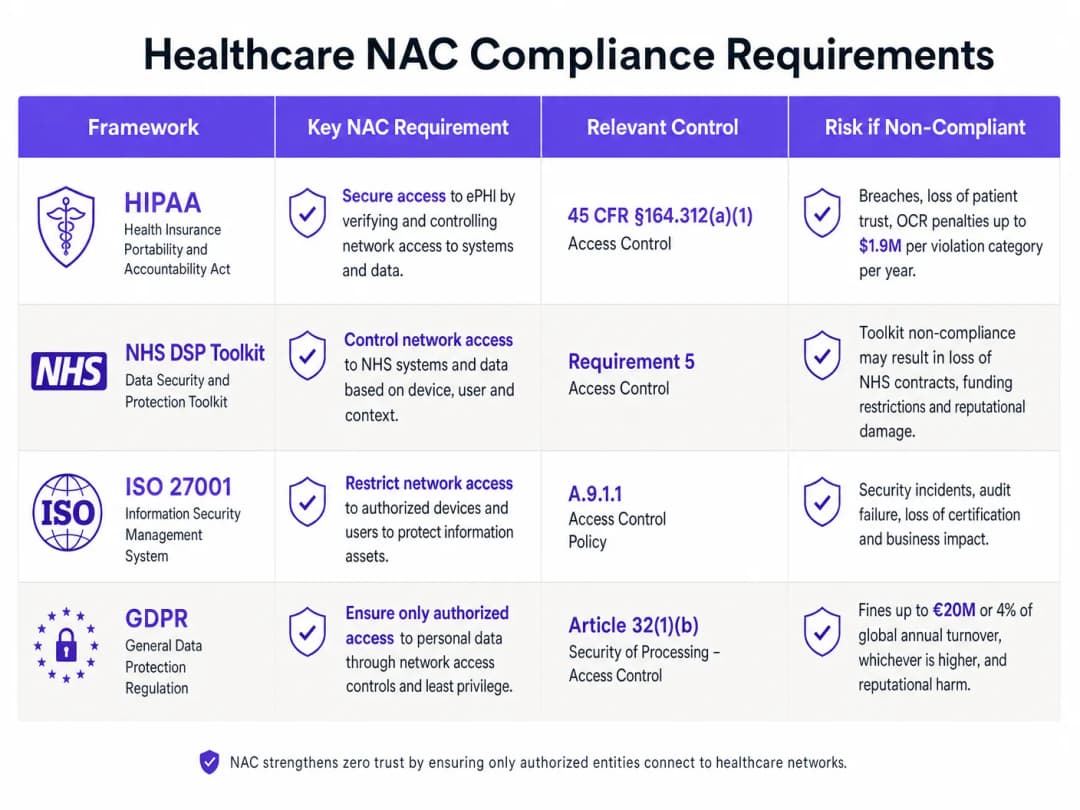
अनुपालन स्थिती थेट सुधारते. HIPAA चे ॲक्सेस कंट्रोल मानके (45 CFR §164.312(a)(1)), NHS DSP Toolkit च्या सायबर सुरक्षा आवश्यकता आणि GDPR च्या कलम ३२ मधील डेटा प्रक्रियेच्या सुरक्षेची दायित्वे, या सर्वांसाठी रुग्णांच्या डेटाचा समावेश असलेल्या सिस्टीममध्ये कोणते लोक आणि उपकरणे प्रवेश करू शकतात यावर स्पष्ट नियंत्रण असणे आवश्यक आहे. योग्यरित्या दस्तऐवजीकरण केलेले NAC डिप्लॉयमेंट या दायित्वांची पूर्तता करण्यासाठी आवश्यक असलेले ऑडिट पुरावे प्रदान करते.
शेवटी, योग्यरित्या अंमलात आणलेल्या गेस्ट ॲक्सेस धोरणामुळे रुग्णांच्या अनुभवात सुधारणा होते. रुग्ण आणि अभ्यागतांसाठी विश्वसनीय, सुरक्षित Guest WiFi समाधान निर्देशांक सुधारते, तर यामागील WiFi Analytics डेटा बेड व्यवस्थापन, अभ्यागतांचा ओघ आणि सुविधांच्या वापरामध्ये व्यावहारिक सुधारणा करण्यास मदत करतो.
महत्वाच्या व्याख्या
Network Access Control (NAC)
एक सुरक्षा फ्रेमवर्क जे पॉलिसी-आधारित नियंत्रण लागू करते की कोणत्या डिव्हाइसेस आणि युजर्सना नेटवर्कशी कनेक्ट होण्याची परवानगी आहे, आणि एकदा कनेक्ट झाल्यावर ते कोणत्या रिसोर्सेसचा वापर करू शकतात. NAC हे ऑथेंटिकेशन, डिव्हाइस प्रोफाइलिंग, पोश्चर असेसमेंट आणि डायनॅमिक पॉलिसी अंमलबजावणी एकत्र आणते.
IT टीम्सना NAC चा सामना प्रोडक्ट कॅटेगरी (Cisco ISE, Aruba ClearPass, ForeScout) आणि आर्किटेक्चरल दृष्टीकोन अशा दोन्ही प्रकारे होतो. हेल्थकेअरमध्ये, क्लिनिकल सिस्टीम्स, मेडिकल IoT आणि गेस्ट ॲक्सेस यांच्यात नेटवर्क सेगमेंटेशन लागू करण्यासाठी NAC ही मुख्य यंत्रणा आहे.
IEEE 802.1X
पोर्ट-आधारित नेटवर्क ऍक्सेस कंट्रोलसाठी एक IEEE मानक जे LAN किंवा WLAN शी कनेक्ट होऊ इच्छिणाऱ्या डिव्हाइसेससाठी ऑथेंटिकेशन फ्रेमवर्क प्रदान करते. हे सप्लिकंट (क्लायंट), ऑथेंटिकेटर (स्विच/AP) आणि ऑथेंटिकेशन सर्व्हर (RADIUS) च्या भूमिका स्पष्ट करते, आणि त्यांच्यामध्ये EAP मेसेजेस एन्कॅप्स्युलेट करते.
802.1X ही NAC डिप्लॉयमेंटमधील कॉर्पोरेट मालकीच्या डिव्हाइसेससाठी वापरली जाणारी ऑथेंटिकेशन यंत्रणा आहे. IT टीम्स नेटवर्क ॲक्सेस डिव्हाइसेस (स्विचेस, APs) आणि एंडपॉइंट डिव्हाइसेस (OS-पातळीवरील सप्लिकंट सेटिंग्ज किंवा Group Policy द्वारे) अशा दोन्हीवर हे कॉन्फिगर करतात.
MAC Authentication Bypass (MAB)
802.1X चे समर्थन न करू शकणाऱ्या डिव्हाइसेससाठी वापरली जाणारी एक फॉलबॅक ऑथेंटिकेशन यंत्रणा. नेटवर्क ॲक्सेस डिव्हाइस कनेक्ट होणाऱ्या डिव्हाइसचा MAC ॲड्रेस त्याचा आयडेंटिटी क्रेडेंशियल म्हणून वापरते, आणि ऑथरायझेशनसाठी ते RADIUS सर्व्हरकडे फॉरवर्ड करते.
हेल्थकेअर NAC डिप्लॉयमेंट्समध्ये मेडिकल IoT डिव्हाइसेससाठी MAB ही प्राथमिक ऑथेंटिकेशन पद्धत आहे. अर्थपूर्ण सुरक्षा प्रदान करण्यासाठी हे डिव्हाइस प्रोफाइलिंगसह एकत्र केले पाहिजे, कारण MAC ॲड्रेसेस स्पूफ केले जाऊ शकतात.
EAP-TLS (Extensible Authentication Protocol - Transport Layer Security)
एक सर्टिफिकेट-आधारित EAP पद्धत जी X.509 डिजिटल सर्टिफिकेट्स वापरून क्लायंट आणि ऑथेंटिकेशन सर्व्हर दरम्यान परस्पर ऑथेंटिकेशन प्रदान करते. क्लायंट आणि सर्व्हर दोन्ही सर्टिफिकेट्स सादर करतात, ज्यामुळे पासवर्ड-आधारित क्रेडेंशियल चोरीचा धोका नाहीसा होतो.
हेल्थकेअर NAC डिप्लॉयमेंट्समधील कॉर्पोरेट डिव्हाइसेससाठी EAP-TLS ही शिफारस केलेली ऑथेंटिकेशन पद्धत आहे. यासाठी मशीन सर्टिफिकेट्स जारी करण्यासाठी आणि व्यवस्थापित करण्यासाठी कार्यरत अंतर्गत PKI आवश्यक आहे.
VLAN Steering
NAC सिस्टीमच्या ऑथेंटिकेशन रिझल्ट आणि पॉलिसीच्या निर्णयावर आधारित विशिष्ट VLAN ला जोडणाऱ्या डिव्हाइसचे डायनॅमिक असाइनमेंट. RADIUS सर्व्हर Access-Accept प्रतिसादाचा भाग म्हणून VLAN ID (किंवा VLAN नाव) परत करतो आणि ऑथेंटिकेटर डिव्हाइसचा पोर्ट त्या VLAN मध्ये ठेवतो.
VLAN steering ही अशी यंत्रणा आहे ज्याद्वारे NAC नेटवर्क विभागीकरण (segmentation) लागू करते. IT टीम प्रत्येक डिव्हाइस वर्गासाठी लक्ष्य VLAN निर्दिष्ट करण्यासाठी ऑथेंटिकेशन सर्व्हरवर RADIUS गुणधर्म (Tunnel-Type, Tunnel-Medium-Type, Tunnel-Private-Group-ID) कॉन्फिगर करतात.
डिव्हाइस प्रोफाइलिंग
पॅसिव्ह नेटवर्क प्रोब्स (DHCP फिंगरप्रिंट्स, HTTP User-Agent स्ट्रिंग्स, mDNS/Bonjour जाहिराती) आणि ॲक्टिव्ह स्कॅनिंग तंत्रज्ञान (Nmap, SNMP क्वेरी) वापरून कनेक्ट होणाऱ्या डिव्हाइसचा प्रकार, उत्पादक आणि ऑपरेटिंग सिस्टीम ओळखण्याची प्रक्रिया.
हेल्थकेअर NAC डेप्लॉयमेंटमध्ये वैद्यकीय IoT डिव्हाइसेसचे अचूक वर्गीकरण करण्यासाठी डिव्हाइस प्रोफाइलिंग आवश्यक आहे. प्रोफाइलिंगशिवाय, MAB-ऑथेंटिकेटेड डिव्हाइसेस एकमेकांपासून वेगळे ओळखता येत नाहीत, ज्यामुळे डिव्हाइस-वर्ग-विशिष्ट ॲक्सेस पॉलिसी लागू करणे अशक्य होते.
पोस्चर असेसमेंट
नेटवर्क प्रवेश मंजूर करण्यापूर्वी कनेक्ट होणाऱ्या डिव्हाइसच्या सुरक्षा अनुपालन स्थितीचे मूल्यांकन. पोस्चर चेक्स सामान्यतः OS पॅच लेव्हल, अँटीव्हायरस सिग्नेचरची सद्यस्थिती, डिस्क एन्क्रिप्शन स्टेटस आणि आवश्यक सुरक्षा सॉफ्टवेअरची उपस्थिती सत्यापित करतात.
हेल्थकेअर NAC डेप्लॉयमेंटमध्ये व्यवस्थापित कॉर्पोरेट डिव्हाइसेस (लॅपटॉप, वर्कस्टेशन्स) वर पोस्चर असेसमेंट लागू होते. जे डिव्हाइसेस पोस्चर चेक्स पूर्ण करू शकत नाहीत त्यांना डायनॅमिकली रिमेडिएशन VLAN मध्ये नियुक्त केले जाते जेथे ते अपडेट्स प्राप्त करू शकतात परंतु क्लिनिकल सिस्टीममध्ये प्रवेश करू शकत नाहीत.
क्वारंटाईन VLAN
एक प्रतिबंधित नेटवर्क सेगमेंट ज्यामध्ये ऑथेंटिकेशन किंवा पोस्चर असेसमेंटमध्ये अयशस्वी ठरलेले किंवा अपरिचित डिव्हाइसेस नियुक्त केले जातात. क्वारंटाईन VLAN सामान्यतः केवळ रिमेडिएशन संसाधनांमध्ये (पॅच सर्व्हर्स, अँटीव्हायरस अपडेट सर्व्हर्स) प्रवेश प्रदान करते आणि सर्व क्लिनिकल आणि कॉर्पोरेट सिस्टीम्सचा प्रवेश ब्लॉक करते.
IT टीम्स NAC पॉलिसी उल्लंघनांसाठी अंमलबजावणी यंत्रणा म्हणून क्वारंटाईन VLANs चा वापर करतात. क्वारंटाईन VLAN मधील डिव्हाइस उर्वरित नेटवर्कपासून प्रभावीपणे वेगळे केले जाते आणि अनुपालन साध्य करण्यासाठी आवश्यक असलेले अपडेट्स प्राप्त करण्यास सक्षम राहते.
IoMT (इंटरनेट ऑफ मेडिकल थिंग्स)
कनेक्ट केलेल्या वैद्यकीय उपकरणांची आणि आरोग्य सेवा ॲप्लिकेशन्सची इकोसिस्टम जी रुग्णाचा डेटा गोळा करण्यासाठी आणि ट्रान्समिट करण्यासाठी नेटवर्कवर संवाद साधतात. IoMT मध्ये इन्फ्युजन पंप, पेशंट मॉनिटर्स, इमेजिंग उपकरणे, स्मार्ट बेड आणि वेअरेबल हेल्थ मॉनिटर्सचा समावेश होतो.
IoMT डिव्हाइसेस हेल्थकेअर NAC डेप्लॉयमेंटमधील सर्वात मोठी आणि आव्हानात्मक डिव्हाइस श्रेणी दर्शवतात. ते सामान्यतः जुन्या ऑपरेटिंग सिस्टीम चालवतात, एंडपॉईंट सुरक्षा एजंट्सना सपोर्ट करू शकत नाहीत आणि त्यांना विशिष्ट प्रोफाइलिंग आणि मायक्रो-सेगमेंटेशन धोरणांची आवश्यकता असते.
झिरो-ट्रस्ट नेटवर्क ॲक्सेस (ZTNA)
एक सुरक्षा मॉडेल जे नेटवर्क आर्किटेक्चरमधून गर्भित विश्वास (implicit trust) काढून टाकते. ZTNA अंतर्गत, कोणत्याही डिव्हाइस किंवा वापरकर्त्यावर त्यांच्या नेटवर्क लोकेशनकडे दुर्लक्ष करून, डीफॉल्टनुसार विश्वास ठेवला जात नाही. प्रत्येक ॲक्सेस विनंती स्पष्टपणे ऑथेंटिकेट, ऑथराइज्ड आणि सतत व्हॅलिडेट केली पाहिजे.
ZTNA हे आर्किटेक्चरल तत्त्वज्ञान आहे जे आधुनिक NAC डेप्लॉयमेंटला आधार देते. हेल्थकेअरमध्ये, ZTNA चा अर्थ असा आहे की क्लिनिकल VLAN वरील डिव्हाइसला देखील त्याची ओळख आणि अनुपालन स्थिती सतत सिद्ध करावी लागेल - केवळ नेटवर्क लोकेशन संवेदनशील सिस्टीममध्ये प्रवेश मंजूर करत नाही.
सोडवलेली उदाहरणे
एक ३५० खाटांचे NHS Trust त्यांच्या वार्षिक DSP Toolkit सबमिशनची तयारी करत आहे. IT संचालकांनी ओळखले आहे की सध्याच्या नेटवर्कमध्ये कोणतेही डिव्हाइस ऑथेंटिकेशन नाही - सर्व काही एकाच VLAN सह फ्लॅट नेटवर्कशी जोडलेले आहे. अंदाजे २,४०० कनेक्ट केलेली उपकरणे आहेत, ज्यापैकी अंदाजे ८०० वैद्यकीय IoT उपकरणे आहेत (इन्फ्युजन पंप, पेशंट मॉनिटर्स, व्हेंटिलेटर). Trust ला क्लिनिकल ऑपरेशन्समध्ये व्यत्यय न आणता ६ महिन्यांत अनुपालन साध्य करायचे आहे. त्यांनी कुठून सुरुवात करावी?
या कामाची सुरुवात ४ आठवड्यांच्या मॉनिटर मोड (Monitor Mode) तैनातीसह होते. सर्व कोअर स्विचेस आणि वायरलेस कंट्रोलर्सना ८०२.१X आणि MAB विनंत्या नवीन तैनात केलेल्या RADIUS पॉलिसी इंजिनवर (या स्केलसाठी Cisco ISE किंवा Aruba ClearPass हे आघाडीचे पर्याय आहेत) फॉरवर्ड करण्यासाठी कॉन्फिगर करा. सर्वर सर्वांना परवानगी देणारा (permit-all) परंतु प्रत्येक गोष्टीची नोंद ठेवणारा सेट केला जातो. ४ आठवड्यांनंतर, सर्व २,४०० उपकरणांचे वर्गीकरण करण्यासाठी प्रोफाइलिंग डेटाचे विश्लेषण करा. अंदाजे ८०० वैद्यकीय IoT उपकरणे (MAB उमेदवार), ६०० कॉर्पोरेट वर्कस्टेशन्स आणि लॅपटॉप (८०२.१X उमेदवार), ४०० कर्मचाऱ्यांचे BYOD उपकरणे आणि ६०० रुग्ण/अभ्यागत उपकरणे मिळण्याची अपेक्षा ठेवा. ५-८ व्या आठवड्यात, VLAN आर्किटेक्चर परिभाषित करा: कर्मचाऱ्यांच्या उपकरणांसाठी आणि EMR शी जोडलेल्या सिस्टमसाठी Clinical VLAN (10.10.0.0/22), विशिष्ट व्यवस्थापन सर्व्हरपुरता संवाद मर्यादित करणाऱ्या ACL सह वैद्यकीय उपकरणांसाठी IoT VLAN (10.20.0.0/22), आणि Captive Portal कडे निर्देशित केलेला Guest VLAN (10.30.0.0/22). रुग्णांच्या नेटवर्कसाठी एक समर्पित Guest WiFi प्लॅटफॉर्म तैनात करा. ९-१६ व्या आठवड्यात, प्रशासकीय ब्लॉकपासून सुरुवात करून टप्प्याटप्प्याने अंमलबजावणी सुरू करा. १७-२४ व्या आठवड्यात, अंमलबजावणी करण्यापूर्वी क्लिनिकल इंजिनिअरिंगसह प्रत्येक वैद्यकीय उपकरण वर्गाची पडताळणी करून क्लिनिकल क्षेत्रांपर्यंत अंमलबजावणीचा विस्तार करा. ६ व्या महिन्यापर्यंत, Trust कडे दस्तऐवजीकरण केलेल्या प्रवेश नियंत्रणांसह पूर्णपणे सेगमेंट केलेले नेटवर्क असेल, जे DSP Toolkit आवश्यकता ५ (Access Control) पूर्ण करेल आणि सबमिशनसाठी आवश्यक ऑडिट पुरावे प्रदान करेल.
एक खाजगी रुग्णालय गट १५० नवीन कनेक्ट केलेल्या वैद्यकीय उपकरणांसह नवीन ऑन्कोलॉजी विभागाला सहाय्य करण्यासाठी आपल्या नेटवर्कचा विस्तार करत आहे, ज्यामध्ये दोन वेगवेगळ्या उत्पादकांचे ४० इन्फ्युजन पंप, ६० पेशंट मॉनिटर्स आणि ५० मिश्र उपकरणे (स्मार्ट बेड, नर्स कॉल सिस्टम) समाविष्ट आहेत. नेटवर्क टीमकडे NAC नसलेले विद्यमान Cisco Meraki इन्फ्रास्ट्रक्चर आहे. ८ आठवड्यांत विभाग सुरू होण्यापूर्वी CISO ला मायक्रो-सेगमेंटेशन लागू करायचे आहे. तैनातीची रणनीती काय आहे?
Cisco Meraki हे आधीपासूनच असलेल्या इन्फ्रास्ट्रक्चरसह असताना, हे डिप्लॉयमेंट Meraki च्या बिल्ट-इन RADIUS इंटिग्रेशन आणि Group Policy वैशिष्ट्यांचा वापर करते. सर्वात आधी, RADIUS सर्व्हर (FreeRADIUS किंवा Cisco ISE) डिप्लॉय करा आणि नवीन विंगमधील सर्व Meraki स्विचेस आणि MR ॲक्सेस पॉइंट्स ऑथेंटिकेशनसाठी त्याचा वापर करण्यासाठी कॉन्फिगर करा. सर्व मेडिकल डिव्हाइसेससाठी MAB कॉन्फिगर करा, ज्यामध्ये डिव्हाइसचे वर्गीकरण करण्यासाठी Meraki च्या क्लायंट फिंगरप्रिंटिंगची मदत घेतली जाईल. Meraki डॅशबोर्डमध्ये तीन Group Policies डिफाइन करा: IoT-InfusionPumps (VLAN 210, ACL केवळ 10.10.5.20 वरील इन्फ्युजन पंप मॅनेजमेंट सर्व्हर आणि 10.10.1.10 वरील EMR कडील ट्रॅफिकला परवानगी देते), IoT-PatientMonitors (VLAN 220, ACL 10.10.5.30 वरील मॉनिटरिंग सर्व्हर आणि EMR कडील ट्रॅफिकला परवानगी देते), आणि IoT-General (VLAN 230, मिक्स डिव्हाइसेससाठी अधिक परवानगी देणारे ACL). प्रोक्युरमेंट डॉक्युमेंटेशनमधून मिळवलेल्या सर्व 150 डिव्हाइसेसच्या MAC ॲड्रेसेस आधीच RADIUS सर्व्हरवर भरून ठेवा. विंगच्या सॉफ्ट ओपनिंगच्या पहिल्या दोन आठवड्यांसाठी हे Monitor Mode मध्ये चालवा, जेणेकरून सर्व डिव्हाइसेसचे प्रोफाइलिंग आणि असाइनमेंट योग्यरित्या झाल्याची पडताळणी होईल. तिसऱ्या आठवड्यात पूर्ण अंमलबजावणी (full enforcement) कडे वळा. Meraki-विशिष्ट तपशीलवार VLAN स्टिअरिंग कॉन्फिगरेशनसाठी, How to Configure NAC Policies for VLAN Steering in Cisco Meraki या मार्गदर्शकाचा संदर्भ घ्या.
सराव प्रश्न
Q1. एका प्रादेशिक रुग्णालयात १,२०० कनेक्ट केलेली डिव्हाइसेस आहेत. मॉनिटर मोड NAC डेप्लॉयमेंट दरम्यान, प्रोफाइलिंग इंजिन ३४० अज्ञात प्रोफाइल असलेली डिव्हाइसेस ओळखते - ती कोणत्याही ज्ञात वैद्यकीय उपकरणाच्या फिंगरप्रिंटशी जुळत नाहीत आणि कॉर्पोरेट वर्कस्टेशन्स देखील नाहीत. CISO ला २ आठवड्यांत अंमलबजावणी सुरू करायची आहे. योग्य कृती काय आहे आणि CISO च्या टाइमलाइननुसार पुढे जाण्याचे धोके काय आहेत?
टीप: ते ३४० अज्ञात डिव्हाइसेस काय असू शकतात आणि ते अवर्गीकृत राहिल्यास अंमलबजावणी सुरू झाल्यावर त्यांचे काय होईल याचा विचार करा.
नमुना उत्तर पहा
योग्य कृती म्हणजे 340 अज्ञात उपकरणांची तपासणी आणि वर्गीकरण होईपर्यंत अंमलबजावणीला विलंब करणे. अंमलबजावणी सुरू झाल्यावर ही उपकरणे क्वारंटाइन VLAN मध्ये ठेवली जातील, ज्यामध्ये रुग्णांच्या देखभालीसाठी अत्यंत महत्त्वाच्या असलेल्या क्लिनिकल उपकरणांचा समावेश असू शकतो. या तपासणीमध्ये पुढील बाबींचा समावेश असावा: (1) संभाव्य उपकरणांचे प्रकार ओळखण्यासाठी MAC address OUI च्या उपसर्गांची उत्पादक डेटाबेससोबत पडताळणी करणे, (2) उपकरणांचा प्रत्यक्ष शोध घेण्यासाठी स्विच पोर्ट स्थानांचे पुनरावलोकन करणे, (3) CMDB मध्ये नसलेली कोणतीही वैद्यकीय उपकरणे ओळखण्यासाठी क्लिनिकल इंजिनिअरिंगची मदत घेणे, आणि (4) होस्टनेम पॅटर्नसाठी DHCP लॉग तपासणे. सर्व 340 उपकरणांचे वर्गीकरण झाल्यानंतर आणि योग्य धोरणे निश्चित झाल्यानंतरच अंमलबजावणी पुढे सुरू करावी. CISO च्या 2-आठवड्यांच्या वेळेनुसार पुढे गेल्यास धोका असा आहे की, एखाद्या गंभीर परिस्थितीमध्ये वर्गीकरण न केलेले वैद्यकीय उपकरण क्वारंटाइन केल्यास रुग्णाच्या सुरक्षिततेला धोका निर्माण होऊ शकतो.
Q2. एक IT आर्किटेक्ट नवीन हॉस्पिटल विंगसाठी NAC फेल्युअर मोड पॉलिसी डिझाइन करत आहे. क्लिनिकल डायरेक्टरचा असा आग्रह आहे की, NAC सर्व्हर ऑफलाइन गेला तरीही वैद्यकीय उपकरणांचे नेटवर्क कनेक्टिव्हिटी कधीही खंडित होऊ नये. तर CISO सर्व VLAN साठी फेल-क्लोज्ड (fail-closed) धोरणाचा आग्रह धरत आहेत. तुम्ही या संघर्षाचे निवारण कसे कराल आणि यासाठी कोणत्या भरपाई नियंत्रण (compensating controls) उपायांची आवश्यकता आहे?
टीप: स्तरीय (tiered) अपयश धोरणे आणि आउटेज दरम्यान NAC धोरण अंमलबजावणीऐवजी कोणते नेटवर्क-स्तरीय नियंत्रण पर्याय वापरले जाऊ शकतात यावर विचार करा.
नमुना उत्तर पहा
या संघर्षाचे निवारण दोन्ही आवश्यकता पूर्ण करणाऱ्या एका स्तरीय (tiered) फेल्युअर पॉलिसीद्वारे केले जाते. IoT VLAN आणि क्लिनिकल VLAN हे फेल-ओपन (fail-open - म्हणजेच RADIUS सर्व्हरशी संपर्क न झाल्यास प्रवेश मंजूर करणे) साठी कॉन्फिगर केले जातात, तर गेस्ट VLAN आणि प्रशासकीय VLAN फेल-क्लोज्ड (fail-closed) साठी कॉन्फिगर केले जातात. क्लिनिकल VLAN साठी फेल-ओपन धोरण स्वीकारार्ह बनवणारे भरपाई नियंत्रण (compensating controls) पुढीलप्रमाणे आहेत: (1) VLAN गेटवेवर लागू केलेले कठोर ACL जे NAC च्या स्थितीचा विचार न करता इंटर-VLAN ट्रॅफिक मर्यादित करतात, (2) फेल्युअर मोड ट्रिगर होण्याची शक्यता कमी करण्यासाठी NAC सर्व्हरची हाय-अव्हॅलेबिलिटी डिप्लॉयमेंट (दोन डेटा सेंटर्सवर ॲक्टिव्ह-ॲक्टिव्ह क्लस्टर), (3) NAC आउटेज दरम्यान असामान्य ट्रॅफिक शोधण्यासाठी क्लिनिकल VLAN वर नेटवर्क-स्तरीय IDS/IPS मॉनिटरिंग, आणि (4) NAC आउटेजच्या परिस्थितीसाठी दस्तऐवजीकरण केलेल्या इन्सिडेंट रिस्पॉन्स प्रक्रिया. हा दृष्टिकोन क्लिनिकल डायरेक्टरची उपलब्धतेची आवश्यकता पूर्ण करतो आणि त्याच वेळी CISO ला योग्य सुरक्षा राखण्यासाठी दस्तऐवजीकरण केलेले भरपाई नियंत्रण उपाय प्रदान करतो.
Q3. हॉस्पिटलचे NAC डिप्लॉयमेंट 3 महिन्यांपासून पूर्ण अंमलबजावणी मोडमध्ये कार्यरत आहे. सुरक्षा टीमला एक अलर्ट मिळतो की IoT VLAN वरील एक उपकरण (ज्याची प्रोफाइल इन्फ्युजन पंप म्हणून केली आहे) पोर्ट 443 वरील एका बाह्य IP ॲड्रेसवर आउटबाउंड कनेक्शन स्थापित करण्याचा प्रयत्न करत आहे. उपकरणाचा MAC address अपेक्षेनुसार मॅच होत आहे. यावर तात्काळ प्रतिसाद काय असेल आणि ही घटना NAC आर्किटेक्चरबद्दल काय दर्शवते?
टीप: तात्काळ नियंत्रण कृती आणि या प्रकारचा ट्रॅफिकचा प्रयत्न (जरी तो ब्लॉक केला गेला असला तरी) होण्यास कारणीभूत असलेली आर्किटेक्चरल त्रुटी या दोन्ही बाबींचा विचार करा.
नमुना उत्तर पहा
तात्काळ प्रतिसाद म्हणजे NAC पॉलिसी इंजिनद्वारे उपकरणाला डायनॅमिकली क्वारंटाइन करणे आणि तपासणी प्रलंबित असेपर्यंत त्याला IoT VLAN पासून वेगळे करणे. सुरक्षा टीमने ट्रॅफिक विश्लेषणासाठी उपकरणाच्या स्विच पोर्टवरून पॅकेट ट्रेस गोळा केला पाहिजे आणि क्लिनिकल इंजिनिअरिंगला प्रत्यक्ष उपकरणाची तपासणी करण्यासाठी आणि आवश्यक असल्यास ते ऑफलाइन करण्यासाठी सूचित केले पाहिजे. ही घटना दोन आर्किटेक्चरल समस्या दर्शवते: (1) IoT VLAN वरील ACL इन्फ्युजन पंपवरून जाणाऱ्या आउटबाउंड इंटरनेट ट्रॅफिकला ब्लॉक करत नाही - ACL ने केवळ विशिष्ट व्यवस्थापन सर्व्हर IP आणि EMR कडील ट्रॅफिकला परवानगी दिली पाहिजे, आणि इतर सर्व गंतव्यस्थानांसाठी स्पष्टपणे 'डिनाय-ऑल' (deny-all) नियम असावा; आणि (2) बिहेव्हियरल मॉनिटरिंगचे इंटिग्रेशन योग्यरित्या कार्य करत आहे (अलर्ट जनरेट झाला होता), परंतु ट्रॅफिकचा प्रयत्न होण्यापूर्वीच ACL ने ते ब्लॉक करायला हवे होते. यावरील उपाय म्हणजे प्रत्येक उपकरण श्रेणीसाठी केवळ स्पष्टपणे आवश्यक असलेल्या संप्रेषण मार्गांना परवानगी देऊन, डिफॉल्ट-डिनाय (default-deny) धोरण लागू करण्यासाठी IoT VLAN ACL अधिक कठोर करणे हा आहे.
या मालिकेमध्ये पुढे वाचा
PPSK WPA3: वैशिष्ट्ये आणि उपयोजन मॉडेल्सची तुलना
हे तांत्रिक संदर्भ मार्गदर्शक PPSK आणि WPA3-SAE ची तुलना करते, मल्टी-टेनंट वातावरणासाठी त्यांचे आर्किटेक्चरल फरक आणि उपयोजन मॉडेल्स स्पष्ट करते. हे IT व्यवस्थापक आणि मालमत्ता विकासकांसाठी Purple च्या ओळख-आधारित उपायांचा वापर करून सुरक्षित, स्वतंत्र WiFi नेटवर्क मिळवण्याबाबत व्यावहारिक मार्गदर्शन प्रदान करते.
कर्मचारी WiFi साठी बँडविड्थ व्यवस्थापित करणे: शेपिंग, QoS आणि ट्रॅफिक कमी करणे
हे मार्गदर्शक व्यावसायिक ठिकाणी कर्मचारी WiFi साठी बँडविड्थ व्यवस्थापित करण्याच्या व्यावहारिक पद्धतींचे तपशील देते. यामध्ये ट्रॅफिक शेपिंग, QoS अंमलबजावणी आणि पायाभूत सुविधांमध्ये सुधारणा न करता Purple Shield तैनात केल्याने नेटवर्क लोड कसा कमी होतो याचा समावेश आहे.
Per-Device PSK (iPSK, DPSK, MPSK) चा वापर करून WiFi SSID ची संख्या कशी कमी करावी
हा अधिकृत तांत्रिक संदर्भ मार्गदर्शक स्पष्ट करतो की IT टीम्स प्रति-डिव्हाइस PSK (xPSK) चा वापर करून एकाच SSID मध्ये एकाधिक विशिष्ट उद्देशांसाठी तयार केलेले नेटवर्क्स एकत्र करून SSID बीकन ओव्हरहेडमुळे होणारी WiFi परफॉर्मन्सची घसरण कशी दूर करू शकतात. यामध्ये Cisco iPSK, HPE Aruba MPSK, Ruckus DPSK, Juniper Mist PPSK, आणि Ubiquiti UniFi PPSK मधील व्हेंडर लँडस्केपचा समावेश आहे, ज्यामध्ये डायनॅमिक VLAN असाइनमेंट, IoT ऑनबोर्डिंग आणि PCI DSS अनुपालनावर व्यावहारिक अंमलबजावणीचे मार्गदर्शन आहे. हॉस्पिटॅलिटी, रिटेल, स्टेडियम आणि सार्वजनिक क्षेत्रातील संस्थांमधील वेन्यू ऑपरेटर्सना यामध्ये कृतीयोग्य आर्किटेक्चर मार्गदर्शन आणि वास्तविक जगातील व्यावहारिक उदाहरणे मिळतील.
तुमच्या विशिष्ट सेटअपबद्दल काही प्रश्न आहेत का?
आमची टीम ८०,००० हून अधिक वेन्यूजमधील वेन्यू ऑपरेटर्स, IT मॅनेजर्स आणि नेटवर्क इंजिनिअर्ससोबत काम करते. २० मिनिटांचा कॉल बुक करा आणि तुमच्यासारख्या इतरांनी ही समस्या कशी सोडवली हे आम्ही तुम्हाला दाखवू.