
আধুনিক MDM অবকাঠামোতে SCEP এবং NAC এর ভূমিকা
এই নির্দেশিকাটি একটি ব্যাপক প্রযুক্তিগত বিশ্লেষণ প্রদান করে যে কীভাবে SCEP এবং NAC একটি এন্টারপ্রাইজ স্কেলে নিরাপদ, জিরো-টাচ নেটওয়ার্ক অ্যাক্সেস দেওয়ার জন্য MDM প্ল্যাটফর্মের সাথে সংহত হয়। এটি 802.1X প্রয়োগের মাধ্যমে সার্টিফিকেট প্রদান থেকে শুরু করে সম্পূর্ণ আর্কিটেকচারকে কভার করে, সাথে হসপিটালিটি এবং রিটেল সেক্টর থেকে বাস্তবায়নের বাস্তব পরিস্থিতি তুলে ধরে। এটি মূলত বড় ভেন্যুর IT লিডারদের জন্য ডিজাইন করা হয়েছে যাদের পাসওয়ার্ডের দুর্বলতা দূর করতে হবে, ডিভাইস প্রভিশনিং স্বয়ংক্রিয় করতে হবে এবং এই ত্রৈমাসিকে কমপ্লায়েন্সের প্রয়োজনীয়তা পূরণ করতে হবে।
Video overview
এই গাইডটি শুনুন
পডকাস্ট ট্রান্সক্রিপ্ট দেখুন
আমাদের মূল সিরিজের অংশ: এন্টারপ্রাইজ WiFi সিকিউরিটি গাইড →

কার্যনির্বাহী সংক্ষিপ্তসার (Executive Summary)
এন্টারপ্রাইজ ভেন্যুগুলোর জন্য - ৮০,০০০ আসনের স্টেডিয়াম থেকে শুরু করে মাল্টি-সাইট রিটেইল চেইন পর্যন্ত - নেটওয়ার্ক এজ সুরক্ষিত করা এখন প্রি-শেয়ার্ড কি এবং ম্যানুয়াল ক্রেডেনশিয়াল ম্যানেজমেন্টের পরিধি ছাড়িয়ে অনেক দূর এগিয়ে গেছে। কর্পোরেট এন্ডপয়েন্ট, BYOD ডিভাইস এবং IoT পরিকাঠামোর ব্যাপক বিস্তার একটি জিরো-ট্রাস্ট আর্কিটেকচার দাবি করে যা IT সার্ভিস ডেস্কের ওপর বাড়তি চাপ না ফেলে সহজেই স্কেল করা যায়।
এই নির্দেশিকাটি Mobile Device Management (MDM) পরিকাঠামোর সাথে Simple Certificate Enrolment Protocol (SCEP) এবং Network Access Control (NAC) সংহত করার জন্য প্রযুক্তিগত আর্কিটেকচারের বিস্তারিত বিবরণ দেয়। SCEP ব্যবহার করে X.509 সার্টিফিকেটের বিতরণ স্বয়ংক্রিয় করার মাধ্যমে, এবং IEEE 802.1X EAP-TLS অথেন্টিকেশন প্রয়োগ করতে NAC ব্যবহার করে, সংস্থাগুলো জিরো-টাচ প্রভিশনিং অর্জন করতে পারে, ক্রেডেনশিয়াল চুরির পথগুলো বন্ধ করতে পারে এবং গতিশীল, পোস্টার-ভিত্তিক নেটওয়ার্ক অ্যাক্সেস প্রয়োগ করতে পারে। যদিও পাবলিক-ফেসিং অ্যাক্সেস একটি ডেডিকেটেড Guest WiFi সলিউশনের মাধ্যমে পরিচালনা করা হয়, এই আর্কিটেকচারটি ভেন্যু সচল রাখার জন্য অত্যন্ত গুরুত্বপূর্ণ ব্যাক-অফ-হাউস অপারেশনগুলোকে সুরক্ষিত করে। এর ফলে IT ওভারহেড নাটকীয়ভাবে হ্রাস পায়, PCI DSS এবং GDPR-এর অধীনে শক্তিশালী কমপ্লায়েন্স নিশ্চিত হয় এবং নেটওয়ার্ক এজে প্রোঅ্যাক্টিভলি জিরো-ট্রাস্ট নীতি প্রয়োগ করা সম্ভব হয়।
প্রযুক্তিগত গভীরে বিশ্লেষণ (Technical Deep Dive)
তিন-স্তর বিশিষ্ট আর্কিটেকচার (The Three-Layer Architecture)
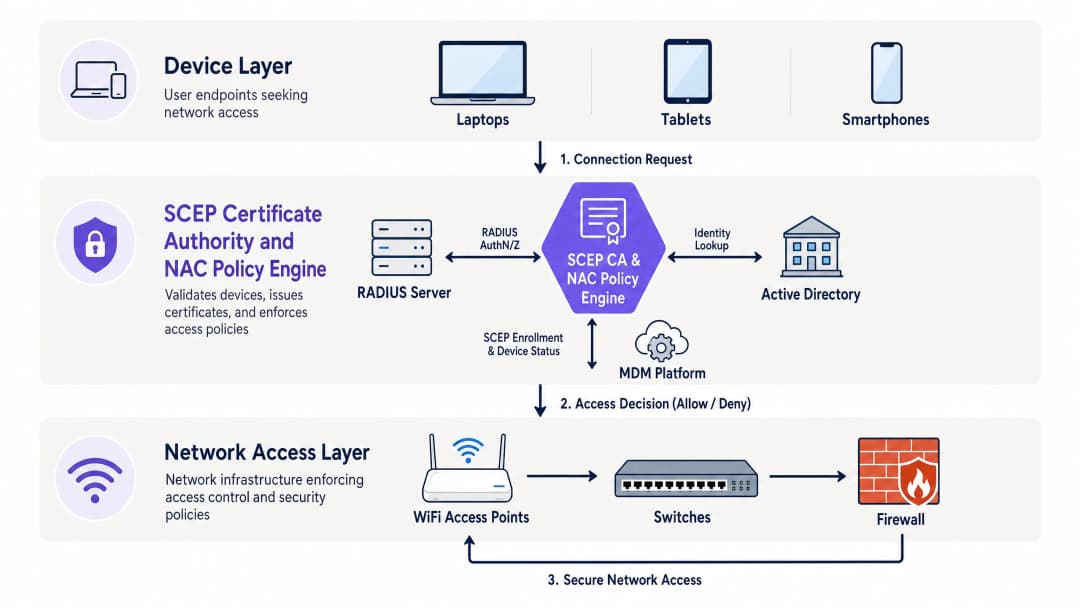
আধুনিক নেটওয়ার্ক সিকিউরিটি ব্যবহারকারীর পাসওয়ার্ড বা ক্রেডেনশিয়ালের পরিবর্তে ক্রিপ্টোগ্রাফিক আইডেন্টিটির ওপর নির্ভর করে। SCEP-NAC-MDM স্ট্যাক তিনটি প্রধান স্তরে কাজ করে:
| স্তর | উপাদানসমূহ | কার্যকারিতা |
|---|---|---|
| ডিভাইস ম্যানেজমেন্ট | MDM / UEM | ডিভাইস কনফিগারেশন, কমপ্লায়েন্স এবং লাইফসাইকেলের জন্য কেন্দ্রীয় কর্তৃপক্ষ |
| আইডেন্টিটি এবং ইস্যুয়েন্স | PKI / SCEP / CA | ডিজিটাল সার্টিফিকেট তৈরি, ইস্যু এবং পরিচালনা করে |
| অ্যাক্সেস এনফোর্সমেন্ট | NAC / RADIUS | নেটওয়ার্ক অ্যাক্সেস দেওয়ার আগে সার্টিফিকেট এবং ডিভাইসের স্থিতি মূল্যায়ন করে |
এই স্তরগুলো ক্রমানুসারে কাজ করে না - এগুলো একটি অবিচ্ছিন্ন ফিডব্যাক লুপের মধ্যে কাজ করে। MDM রিয়েল টাইমে NAC-কে কমপ্লায়েন্সের স্থিতি জানায়, অন্যদিকে কোনো ডিভাইস পোস্টার চেকে ব্যর্থ হলে NAC সরাসরি MDM রিমিডিয়েশন ওয়ার্কফ্লো সচল করতে পারে।
কীভাবে SCEP স্কেলে PKI-কে স্বয়ংক্রিয় করে
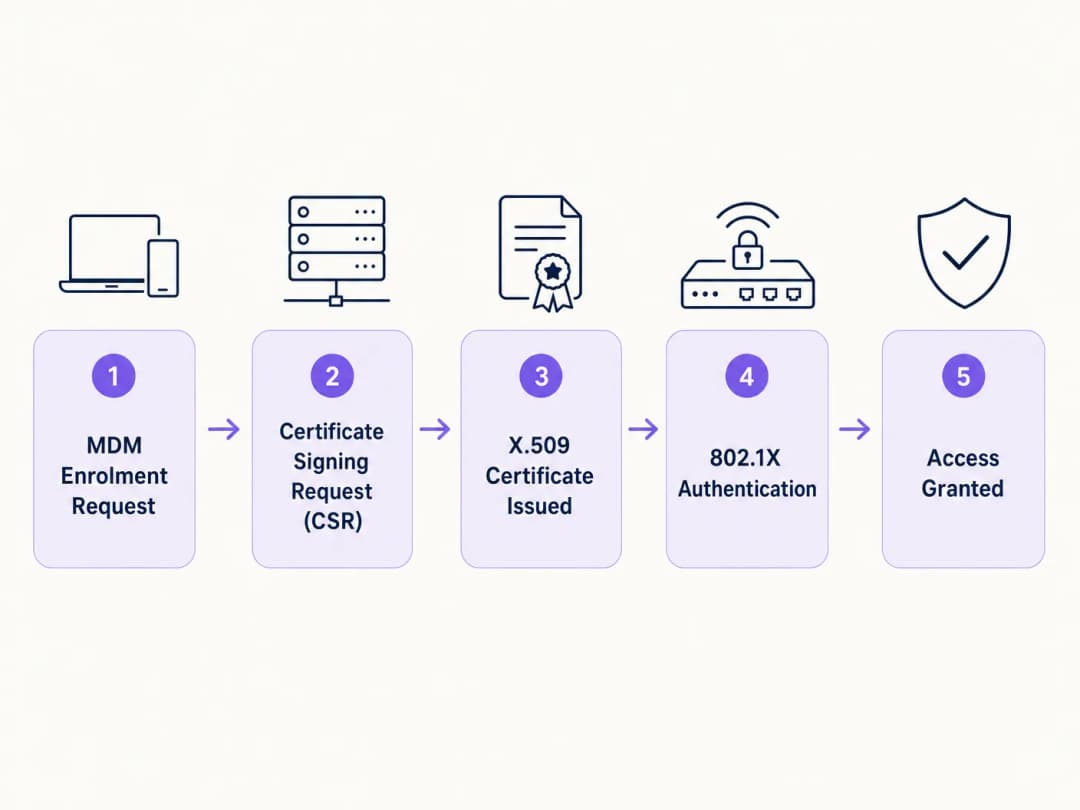
ম্যানুয়ালি সার্টিফিকেট ডেপ্লয়মেন্ট করা বৃহৎ পরিসরে পরিচালনা করা অসম্ভব। ৫০০টি ডিভাইসের একটি এস্টেটে প্রতি ডিভাইসে আলাদাভাবে X.509 সার্টিফিকেট তৈরি, সাইন এবং ইনস্টল করতে একজন IT অ্যাডমিনিস্ট্রেটরের প্রয়োজন হবে - যা প্রতিটি ডিভাইসের জন্য বেশ কয়েক মিনিট সময় নেবে এবং এতে মারাত্মক ভুলত্রুটির ঝুঁকি থেকে যায়। SCEP এটিকে সম্পূর্ণরূপে দূর করে।যখন কোনো ডিভাইস MDM-এ রেজিস্টার করা হয়, তখন MDM একটি কনফিগারেশন প্রোফাইল পাঠায় যাতে একটি SCEP পে-লোড থাকে। এই পে-লোডটি ডিভাইসটিকে স্থানীয়ভাবে একটি কি-পেয়ার জেনারেট করতে নির্দেশ দেয় - অত্যন্ত গুরুত্বপূর্ণ বিষয় হলো, প্রাইভেট কি কখনোই ডিভাইস থেকে বাইরে যায় না - এবং SCEP সার্ভারে একটি সার্টিফিকেট সাইনিং রিকোয়েস্ট (CSR) জমা দেয়। SCEP সার্ভার (সাধারণত Microsoft-এর নেটওয়ার্ক ডিভাইস এনরোলমেন্ট সার্ভিস (NDES) বা একটি ক্লাউড-ভিত্তিক সমমানের সেবা) ডিভাইসটি অনুমোদিত কিনা তা নিশ্চিত করতে MDM-এর সাথে মিলিয়ে অনুরোধটি যাচাই করে। এরপর এটি CSR-টি সার্টিফিকেট অথরিটি (CA)-র কাছে পাঠায়, যা সাইন করা X.509 সার্টিফিকেট ইস্যু করে। সার্টিফিকেটটি ডিভাইসে ফেরত পাঠানো হয় এবং এর সিকিউর এনক্লেভ বা সিস্টেম কি-স্টোরে ইনস্টল করা হয়।
পুরো প্রক্রিয়াটি কোনো ব্যবহারকারীর হস্তক্ষেপ ছাড়াই ব্যাকগ্রাউন্ডে অত্যন্ত নীরবে সম্পন্ন হয়। ১,০০০টি ডিভাইসের একটি ডেপ্লয়মেন্টের জন্য, MDM এনরোলমেন্ট সম্পন্ন হওয়ার মাত্র কয়েক ঘণ্টার মধ্যেই সম্পূর্ণ সার্টিফিকেট এস্টেট প্রস্তুত করা সম্ভব।
NAC এবং 802.1X EAP-TLS: এনফোর্সমেন্ট লেয়ার
একবার একটি ডিভাইসে একটি বৈধ সার্টিফিকেট থাকলে, এটি IEEE 802.1X ব্যবহার করে কর্পোরেট SSID বা ওয়্যার্ড পোর্টের সাথে সংযোগ করার চেষ্টা করে। অ্যাক্সেস পয়েন্ট বা সুইচটি অথেনটিকেটর হিসেবে কাজ করে, যা NAC পলিসি ইঞ্জিন দ্বারা পরিচালিত একটি RADIUS সার্ভারে অনুরোধটি পাঠায়। সবচেয়ে সুরক্ষিত EAP পদ্ধতি হলো EAP-TLS, যার জন্য পারস্পরিক অথেনটিকেশন প্রয়োজন - ক্লায়েন্ট এবং RADIUS সার্ভার উভয়কেই অবশ্যই বৈধ সার্টিফিকেট উপস্থাপন করতে হবে, যা জালিয়াতিমূলক অ্যাক্সেস পয়েন্টের মাধ্যমে ঘটিত ম্যান-ইন-দ্য-মিডল আক্রমণ প্রতিরোধ করে। NAC ক্রমানুসারে কয়েকটি গুরুত্বপূর্ণ পরীক্ষা করে:
১. ক্রিপ্টোগ্রাফিক যাচাইকরণ: সার্টিফিকেটটি কি গাণিতিকভাবে বৈধ এবং একটি বিশ্বস্ত রুট CA দ্বারা সাইন করা? ২. বাতিলকরণ পরীক্ষা: সার্টিফিকেটটি কি সার্টিফিকেট রিভোকেশন লিস্ট (CRL)-এ তালিকাভুক্ত নাকি অনলাইন সার্টিফিকেট স্ট্যাটাস প্রোটোকল (OCSP)-এর মাধ্যমে ফ্ল্যাগ করা? ৩. পোশ্চার অ্যাসেসমেন্ট: API-এর মাধ্যমে MDM-কে জিজ্ঞাসা করে, NAC জানতে চায়: ডিভাইসটি কি কমপ্লায়েন্ট? অপারেটিং সিস্টেমটি কি প্রয়োজনীয় প্যাচ লেভেলে আছে? ডিস্ক এনক্রিপশন কি সক্রিয় করা আছে?
যদি সব পরীক্ষা সফল হয়, তবে NAC একটি RADIUS Access-Accept বার্তা পাঠায়, যা সাধারণত ভেন্ডর-স্পেসিফিক অ্যাট্রিবিউটস (VSAs) বহন করে যা গতিশীলভাবে ডিভাইসটিকে একটি নির্দিষ্ট VLAN-এ অ্যাসাইন করে বা অ্যাক্সেস কন্ট্রোল লিস্ট (ACLs) প্রয়োগ করে। নন-কমপ্লায়েন্ট ডিভাইসগুলোকে সীমিত অনুমতি সহ একটি রেমিডিয়েশন VLAN-এ রাখা হয় - সাধারণত এটি শুধুমাত্র MDM-চালিত রেমিডিয়েশন ওয়ার্কফ্লো শুরু করার জন্য যথেষ্ট।
গেস্ট নেটওয়ার্ক সেগ্রিগেশন
যেকোনো ভেন্যু পরিবেশে, কর্পোরেট অবকাঠামো অবশ্যই পাবলিক নেটওয়ার্ক থেকে কঠোরভাবে আলাদা রাখতে হবে। Guest WiFi প্ল্যাটফর্মটি সম্পূর্ণ পৃথক SSIDs এবং VLANs-এ কাজ করে, যার সাথে কর্পোরেট রিসোর্সের কোনো রাউটেড পথ থাকে না। SCEP-NAC আর্কিটেকচার কর্পোরেট স্তরকে পরিচালনা করে; গেস্ট স্তরটি captive portal অথেন্টিকেশন এবং ডেটা ক্যাপচার ওয়ার্কফ্লো দ্বারা নিয়ন্ত্রিত হয়। যেসব ভেন্যু WiFi Analytics স্থাপন করছে, তাদের জন্য এই পৃথকীকরণ একটি পূর্বশর্ত - অ্যানালিটিক্স ডেটা গেস্ট নেটওয়ার্কের মাধ্যমে প্রবাহিত হয়, যখন অপারেশনাল ডেটা সার্টিফিকেট-অথেন্টিকেটেড কর্পোরেট নেটওয়ার্কের মাধ্যমে প্রবাহিত হয়। উভয় নেটওয়ার্ককে সমর্থনকারী অন্তর্নিহিত RF আর্কিটেকচারের আরও বিশদ জানতে, Wi-Fi Frequencies: A 2026 Guide to Wi-Fi Frequencies দেখুন।
আপনার নির্দিষ্ট সেটআপ নিয়ে কোনো প্রশ্ন আছে?
আমাদের টিম ৮০,০০০ ভেন্যুতে ভেন্যু অপারেটর, IT ম্যানেজার এবং নেটওয়ার্ক ইঞ্জিনিয়ারদের সাথে কাজ করে। একটি ২০ মিনিটের কল বুক করুন এবং আপনার মতো অন্যরা কীভাবে এর সমাধান করেছেন তা আমরা আপনাকে দেখাব।
Implementation Guide
এই আর্কিটেকচারটি সফলভাবে স্থাপন করার জন্য সতর্ক সিকোয়েন্সিং প্রয়োজন যাতে ট্রানজিশনের সময় বৈধ ব্যবহারকারীরা লক আউট না হয়ে যান।
Step 1: PKI and SCEP Preparation
একটি শক্তিশালী ইন্টারনাল PKI তৈরি করুন অথবা একটি ক্লাউড-ভিত্তিক ম্যানেজড PKI (mPKI) পরিষেবা ব্যবহার করুন। SCEP সার্ভারটি স্থাপন এবং সুরক্ষিত করুন - যদি Microsoft NDES ব্যবহার করেন, তবে নিশ্চিত করুন যে এটি CA-এর সাথে সহ-অবস্থিত না থেকে একটি ডেডিকেটেড সার্ভারে চালিত হচ্ছে। স্ট্যাটিক শেয়ার্ড সিক্রেটের পরিবর্তে MDM দ্বারা প্রতিটি ডিভাইসের জন্য তৈরি ডাইনামিক চ্যালেঞ্জ পাসওয়ার্ড ব্যবহার করতে SCEP সার্ভারটি কনফিগার করুন। এটি SCEP URL আবিষ্কৃত হলেও অননুমোদিত সার্টিফিকেটের অনুরোধ প্রতিরোধ করে।
Step 2: MDM Configuration
আপনার MDM প্ল্যাটফর্মে SCEP পেলোড তৈরি করুন। Subject Alternative Name (SAN) ফিল্ডগুলো সতর্কতার সাথে সংজ্ঞায়িত করুন - SAN-এ অবশ্যই অনন্য আইডেন্টিফায়ার (যেমন ডিভাইসের সিরিয়াল নম্বর বা ব্যবহারকারীর UPN) থাকতে হবে যা NAC পলিসি সিদ্ধান্তের জন্য ব্যবহার করবে। প্রোফাইলটি প্রথমে IT টিমের ডিভাইসের একটি পাইলট গ্রুপে পুশ করুন এবং আরও বড় আকারে রোলআউটের আগে সম্পূর্ণ এনরোলমেন্ট ফ্লো যাচাই করুন।
Step 3: NAC and RADIUS Setup
ক্লায়েন্ট সার্টিফিকেট প্রদানকারী রুট CA-কে বিশ্বাস করতে আপনার NAC কনফিগার করুন। EAP-TLS পারস্পরিক অথেন্টিকেশনের জন্য RADIUS সার্ভারে একটি সার্ভার সার্টিফিকেট ইনস্টল করুন। সার্টিফিকেটের বৈশিষ্ট্য এবং MDM কমপ্লায়েন্স স্ট্যাটাসের উপর ভিত্তি করে অ্যাক্সেস পলিসি সংজ্ঞায়িত করুন। ডাইনামিক VLAN অ্যাসাইনমেন্ট নিয়মগুলো প্রয়োগ করুন: কমপ্লায়েন্ট কর্পোরেট ডিভাইসগুলো কর্পোরেট VLAN-এ, নন-কমপ্লায়েন্ট ডিভাইসগুলো রেমিডিয়েশন VLAN-এ, এবং IoT ডিভাইসগুলো একটি ডেডিকেটেড, ইন্টারনেট-সীমাবদ্ধ VLAN-এ যাবে।
Step 4: Network Infrastructure Integration
802.1X-এর জন্য সুইচ এবং ওয়্যারলেস অ্যাক্সেস পয়েন্ট কনফিগার করুন। retail পরিবেশে লেগাসি পয়েন্ট-অফ-সেল হার্ডওয়্যার, অথবা hospitality ভেন্যুতে স্মার্ট রুম কন্ট্রোলারের মতো পরিস্থিতির জন্য, EAP-TLS-এ অংশগ্রহণ করতে না পারা ডিভাইসগুলোর জন্য একটি বিকল্প হিসেবে MAC Authentication Bypass (MAB) প্রয়োগ করুন। নির্দিষ্ট সুইচ পোর্টগুলোতে MAB সীমাবদ্ধ করুন এবং MAC অ্যাড্রেস ডেটাবেস কঠোরভাবে নিয়ন্ত্রিত রাখা নিশ্চিত করুন। healthcare এবং transport পরিবেশের জন্য, খাত-নির্দিষ্ট কমপ্লায়েন্সের প্রয়োজনীয়তা পূরণের জন্য পোস্টার অ্যাসেসমেন্ট নিয়ম কনফিগার করুন।
Step 5: Parallel Rollout and Cutover
কখনই তাৎক্ষণিকভাবে নতুন নেটওয়ার্কে চলে যাবেন না। বিদ্যমান নেটওয়ার্কের পাশাপাশি সমান্তরালভাবে নতুন 802.1X SSID ব্রডকাস্ট করুন। MDM এর মাধ্যমে নতুন WiFi প্রোফাইল পুশ করুন। অ্যাডপশন মনিটর করুন এবং এনরোলমেন্টের ব্যর্থতাগুলো সমাধান করুন। নতুন SSID-এ যখন ৯৫%-এর বেশি ডিভাইস সফলভাবে অথেন্টিকেট করবে, তখন পুরোনো নেটওয়ার্কটি বন্ধ করে দিন।
সেরা অনুশীলনসমূহ
EAP-TLS বাধ্যতামূলক করুন। কর্পোরেট ডিভাইসের জন্য প্রাথমিক অথেন্টিকেশন পদ্ধতি হিসেবে কখনোই EAP-PEAP বা EAP-TTLS গ্রহণ করবেন না। এই পদ্ধতিগুলো একটি TLS টানেলের মধ্যে ব্যবহারকারীর নাম/পাসওয়ার্ড ক্রেডেনশিয়ালের ওপর নির্ভর করে এবং ক্রেডেনশিয়াল হার্ভেস্টিংয়ের কাছে ঝুঁকিপূর্ণ থাকে। EAP-TLS সেই অ্যাটাক সারফেসকে সম্পূর্ণভাবে দূর করে।
রিয়েল-টাইম রিভোকেশন বাস্তবায়ন করুন। শিডিউলড CRL ডাউনলোড এক্সপোজারের সুযোগ তৈরি করে। রিয়েল-টাইমে OCSP চেক করার জন্য NAC কনফিগার করুন। যখন কোনো ডিভাইস হারিয়ে গেছে বা চুরি হয়েছে বলে রিপোর্ট করা হয়, তখন CA-তে সার্টিফিকেটটি বাতিল করে দিন এবং ডিভাইসটি তার পরবর্তী অথেন্টিকেশনের চেষ্টাতেই নেটওয়ার্ক অ্যাক্সেস হারাবে - অথবা অবিলম্বে হারাবে, যদি Change of Authorisation (CoA) বাস্তবায়িত থাকে।
সার্টিফিকেটের যুক্তিসঙ্গত মেয়াদের সময়সীমা নির্ধারণ করুন। এক বছরের মেয়াদের সময়সীমা, যা মেয়াদ শেষ হওয়ার ৩০ দিন আগে অটোমেটেড SCEP রিনিউয়াল ট্রিগার করে, এটিই ইন্ডাস্ট্রির স্ট্যান্ডার্ড। দীর্ঘ মেয়াদের সময়সীমা সার্টিফিকেট আপোসকৃত হলে এক্সপোজারের ঝুঁকি বাড়িয়ে দেয়; স্বল্প মেয়াদের সময়সীমা রিনিউয়াল ব্যর্থতার কারণে আউটজেস হওয়ার ঝুঁকি বাড়িয়ে দেয়।
IoT ডিভাইসগুলোকে কঠোরভাবে আলাদা করুন। IoT ডিভাইসগুলো কখনোই কর্পোরেট এন্ডপয়েন্টের সাথে VLAN শেয়ার করা উচিত নয়। IoT VLAN-এ কঠোর ACL কার্যকর করতে NAC ব্যবহার করুন, যা প্রতিটি ডিভাইস ক্লাসের প্রয়োজনীয় সুনির্দিষ্ট প্রোটোকল এবং ডেস্টিনেশনগুলোকেই কেবল অনুমতি দেয়। যেসব ভেন্যুতে লোকেশন সার্ভিস ডেপ্লয় করা হচ্ছে, পজিশনিং ইনফ্রাস্ট্রাকচার কীভাবে বৃহত্তর নেটওয়ার্ক আর্কিটেকচারের সাথে একীভূত হয় তার জন্য Indoor WiFi Positioning Systems: How They Work and How to Deploy Them দেখুন।
WPA3-এর সাথে সামঞ্জস্যপূর্ণ করুন। যেখানে হার্ডওয়্যার এটি সাপোর্ট করে, সেখানে কর্পোরেট SSID-গুলোকে WPA3-Enterprise ব্যবহার করার জন্য কনফিগার করুন, যা Protected Management Frames (PMF) বাধ্যতামূলক করে এবং WPA2-এর চেয়ে আরও শক্তিশালী ক্রিপ্টোগ্রাফিক সুরক্ষা প্রদান করে। এটি কীভাবে বৃহত্তর এন্টারপ্রাইজ কানেক্টিভিটি ল্যান্ডস্কেপের সাথে মানানসই হয় তার বিস্তারিত তথ্যের জন্য, SD-WAN vs MPLS: A 2026 Guide to Enterprise Networking দেখুন।
ট্রাবলশুটিং এবং ঝুঁকি প্রশমন
| ব্যর্থতার ধরন | মূল কারণ | প্রশমন |
|---|---|---|
| সার্টিফিকেট রিনিউয়ালের পর ডিভাইসগুলো EAP-TLS করতে ব্যর্থ হচ্ছে | SCEP রিনিউয়াল নিঃশব্দে ব্যর্থ হচ্ছে | SCEP সার্ভার লগ মনিটর করুন; ব্যর্থ CSR সাবমিশনের জন্য অ্যালার্ট সেট করুন |
| ঘড়ির সময়ের অমিলের (clock skew) কারণে সার্টিফিকেট ভ্যালিডেশন ব্যর্থ হচ্ছে | NTP মিসকনফিগারেশন | সমস্ত এন্ডপয়েন্ট এবং ইনফ্রাস্ট্রাকচার জুড়ে NTP সিঙ্ক্রোনাইজেশন বাধ্যতামূলক করুন |
| IoT ডিভাইসগুলো অথেন্টিকেট করতে পারছে না | কোনো 802.1X সাপ্লিক্যান্ট নেই | কঠোর MAC অ্যাড্রেস কন্ট্রোল এবং একটি আইসোলেটেড VLAN সহ MAB বাস্তবায়ন করুন |
| CA মাইগ্রেশনের পর একসঙ্গে অনেক ডিভাইস লকআউট হওয়া | লিগ্যাসি রুট CA-কে NAC বিশ্বাস করে না | CA মাইগ্রেশন ধাপে ধাপে সম্পন্ন করুন; পুরোনো CA বাতিল করার আগে নতুন রুট CA-কে NAC ট্রাস্ট স্টোরে যুক্ত করুন |
| বাতিল করা ডিভাইসগুলোও নেটওয়ার্ক অ্যাক্সেস ধরে রাখছে | দীর্ঘ ডাউনলোডের ব্যবধান সহ শুধুমাত্র CRL-ভিত্তিক রিভোকেশন | রিয়েল-টাইম রিভোকেশনের জন্য OCSP এবং CoA বাস্তবায়ন করুন |
নির্দিষ্ট BLE-ভিত্তিক IoT ডিভাইসের জন্য, অথেনটিকেশন আর্কিটেকচার WiFi-সংযুক্ত এন্ডপয়েন্ট থেকে আলাদা। Bluetooth Low Energy ইনফ্ল্যাস্ট্রাকচারের ক্ষেত্রে প্রযোজ্য নির্দিষ্ট নিরাপত্তা বিবেচনার জন্য BLE Low Energy Explained for the Enterprise দেখুন।
ROI এবং ব্যবসায়িক প্রভাব
বিকল্প ব্যবস্থার ব্যয়ের তুলনায় SCEP-NAC-MDM ইন্টিগ্রেশনের ব্যবসায়িক সুবিধা অত্যন্ত স্পষ্ট।
| মেট্রিক | বাস্তবায়নের আগে | বাস্তবায়নের পরে |
|---|---|---|
| IT সার্ভিস ডেস্ক টিকিট (নেটওয়ার্ক অ্যাক্সেস) | উচ্চ - পাসওয়ার্ড রিসেট, কি রোটেশন | প্রায় শূন্য - স্বয়ংক্রিয় সার্টিফিকেট লাইফসাইকেল |
| একটি আপোসকৃত ডিভাইস নিষ্ক্রিয় করার গড় সময় | কয়েক ঘণ্টা (ম্যানুয়াল প্রক্রিয়া) | কয়েক সেকেন্ড (OCSP + CoA) |
| PCI-DSS অ্যাক্সেস কন্ট্রোল কমপ্লায়েন্স | ম্যানুয়াল, অডিট-নিবিড় | স্বয়ংক্রিয়, ক্রমাগত বলবৎ |
| BYOD অনবোর্ডিং সময় | প্রতি ডিভাইসে ১৫-৩০ মিনিট | কোনো IT সম্পৃক্ততা ছাড়াই ৫ মিনিটের কম |
৫০০-ডিভাইসের একটি এস্টেটের জন্য, ম্যানুয়াল সার্টিফিকেট ম্যানেজমেন্ট এবং পাসওয়ার্ড সংক্রান্ত সার্ভিস ডেস্ক টিকিট দূর করা সাধারণত নেটওয়ার্ক সংক্রান্ত IT সাপোর্ট ওভারহেড ২৫-৩৫% হ্রাস করে। ঝুঁকির প্রশমন মূল্য - একটিমাত্র ক্রেডেনশিয়াল-ভিত্তিক লঙ্ঘন এড়ানো - সাধারণত সম্পূর্ণ বাস্তবায়ন ব্যয়কে ছাড়িয়ে যায়। GDPR দ্বারা আবদ্ধ সরকারি খাত এবং স্বাস্থ্যসেবা সংস্থাগুলোর জন্য, স্বয়ংক্রিয় ও অডিটযোগ্য অ্যাক্সেস কন্ট্রোল প্রদর্শন করার ক্ষমতা একটি গুরুত্বপূর্ণ কমপ্লায়েন্স সম্পদ।
মূল সংজ্ঞাসমূহ
SCEP (Simple Certificate Enrollment Protocol)
একটি প্রোটোকল যা ব্যবহারকারীর হস্তক্ষেপ ছাড়াই ডিভাইসগুলিতে ডিজিটাল সার্টিফিকেট ইস্যু এবং প্রত্যাহার করার প্রক্রিয়াকে স্বয়ংক্রিয় করে, যা MDM প্ল্যাটফর্ম এবং সার্টিফিকেট অথরিটির মধ্যে যোগাযোগের স্তর হিসাবে কাজ করে।
স্কেলে হাজার হাজার এন্ডপয়েন্টে নির্বিঘ্নে X.509 সার্টিফিকেট স্থাপন করার জন্য MDM প্ল্যাটফর্মগুলি দ্বারা ব্যবহৃত হয়। 802.1X WiFi অথেন্টিকেশনের জন্য MDM প্রোফাইল কনফিগার করার সময় IT টিমগুলি SCEP-এর মুখোমুখি হয়।
NAC (Network Access Control)
একটি নিরাপত্তা সমাধান যা নেটওয়ার্ক অবকাঠামোতে অ্যাক্সেস চাওয়া ডিভাইসগুলির উপর পলিসি প্রয়োগ করে, অ্যাক্সেস দেওয়ার আগে অথেন্টিকেশনের প্রমাণপত্র, সার্টিফিকেটের বৈধতা এবং ডিভাইসের কমপ্লায়েন্সের অবস্থা মূল্যায়ন করে।
নেটওয়ার্কের প্রান্তে গেটকিপার হিসাবে কাজ করে। আইটি টিমগুলি তাদের সার্টিফিকেট বৈশিষ্ট্য এবং MDM কমপ্লায়েন্স স্ট্যাটাসের উপর ভিত্তি করে কোন ডিভাইসগুলি কোন VLAN-এ অ্যাক্সেস পাবে তা নির্ধারণ করতে NAC পলিসি কনফিগার করে।
MDM (Mobile Device Management)
আইটি বিভাগগুলি দ্বারা একাধিক অপারেটিং সিস্টেম জুড়ে কর্মচারীদের এন্ডপয়েন্টগুলি পর্যবেক্ষণ, পরিচালনা এবং সুরক্ষিত করতে ব্যবহৃত সফ্টওয়্যার, যা ডিভাইসের পরিচয় এবং কমপ্লায়েন্সের জন্য সত্যের কেন্দ্রীয় উৎস হিসাবে কাজ করে।
SCEP এনরোলমেন্ট প্রক্রিয়ার সূচনাকারী এবং NAC দ্বারা কোয়েরি করা পোস্টার ডেটার উৎস। MDM ইন্টিগ্রেশন ছাড়া, NAC পোস্টার-ভিত্তিক অ্যাক্সেস কন্ট্রোল সম্পাদন করতে পারে না।
IEEE 802.1X
পোর্ট-ভিত্তিক নেটওয়ার্ক অ্যাক্সেস কন্ট্রোলের জন্য একটি IEEE স্ট্যান্ডার্ড যা LAN বা WLAN-এর সাথে সংযুক্ত হতে ইচ্ছুক ডিভাইসগুলিকে একটি অথেন্টিকেশন মেকানিজম প্রদান করে, যেখানে পোর্ট খোলার আগে সফল অথেন্টিকেশনের প্রয়োজন হয়।
অন্তর্নিহিত প্রোটোকল যা সুইচ বা অ্যাক্সেস পয়েন্ট কোনো ট্রাফিকের অনুমতি দেওয়ার আগে ডিভাইসগুলিকে অথেন্টিকেট করতে বাধ্য করে। নেটওয়ার্ক অবকাঠামো এবং ডিভাইসের 802.1X সাপ্লিক্যান্ট উভয়ের উপরেই কনফিগার করা থাকে।
EAP-TLS (Extensible Authentication Protocol - Transport Layer Security)
সবচেয়ে নিরাপদ EAP স্ট্যান্ডার্ড, যার জন্য মিউচুয়াল অথেন্টিকেশনের প্রয়োজন হয় যেখানে ক্লায়েন্ট ডিভাইস এবং RADIUS সার্ভার উভয়কেই বৈধ ডিজিটাল সার্টিফিকেট উপস্থাপন করতে হবে, যা পাসওয়ার্ড-ভিত্তিক ক্রেডেনশিয়াল আক্রমণকে দূর করে।
এন্টারপ্রাইজ ওয়্যারলেস নিরাপত্তার জন্য গোল্ড স্ট্যান্ডার্ড। যেখানেই ডিভাইস সার্টিফিকেট অবকাঠামো রয়েছে সেখানে আইটি আর্কিটেক্টদের PEAP বা TTLS-এর পরিবর্তে EAP-TLS বাধ্যতামূলক করা উচিত।
CSR (Certificate Signing Request)
একটি ডিভাইস দ্বারা জেনারেট করা এনকোড করা টেক্সটের একটি ব্লক যার মধ্যে এর পাবলিক কী এবং আইডেন্টিটি বিবরণ থাকে, যা একটি স্বাক্ষরিত X.509 সার্টিফিকেট পাওয়ার জন্য সার্টিফিকেট অথরিটির কাছে জমা দেওয়া হয়।
SCEP এনরোলমেন্ট প্রক্রিয়ার সময় ডিভাইস দ্বারা স্বয়ংক্রিয়ভাবে তৈরি হয়। CSR-এর সাথে সম্পর্কিত প্রাইভেট কী কখনই ডিভাইস থেকে বাইরে যায় না, যা নিশ্চিত করে যে সার্টিফিকেটটি ডুপ্লিকেট করা যাবে না।
MAB (MAC Authentication Bypass)
একটি ফলব্যাক অথেন্টিকেশন পদ্ধতি যেখানে নেটওয়ার্ক ডিভাইসের হার্ডওয়্যার MAC অ্যাড্রেসকে তার ক্রেডেনশিয়াল হিসাবে ব্যবহার করে, যা 802.1X সাপ্লিক্যান্ট ক্ষমতার অভাব রয়েছে এমন ডিভাইসগুলির জন্য ব্যবহৃত হয়।
প্রিন্টার, সেন্সর এবং স্মার্ট রুম কন্ট্রোলারের মতো লেগ্যাসি IoT ডিভাইসগুলির জন্য ব্যবহৃত হয় যা EAP-TLS-এ অংশ নিতে পারে না। এর ফলে সর্বদা একটি অত্যন্ত সীমাবদ্ধ VLAN-এ অ্যাসাইন করা উচিত।
OCSP (Online Certificate Status Protocol)
রিয়েল-টাইমে একটি X.509 ডিজিটাল সার্টিফিকেটের রিভোকেশন স্ট্যাটাস পাওয়ার জন্য ব্যবহৃত একটি ইন্টারনেট প্রোটোকল, যা সার্টিফিকেট রিভোকেশন লিস্ট ডাউনলোড এবং পার্স করার বিকল্প সরবরাহ করে।
NAC সিস্টেমের জন্য অত্যন্ত গুরুত্বপূর্ণ যে কোনো ডিভাইস আপস করা হলে বা চুরি হওয়ার রিপোর্ট করা হলে অবিলম্বে নেটওয়ার্ক অ্যাক্সেস ব্লক করতে হবে। OCSP রিয়েল-টাইম স্ট্যাটাস প্রদান করে; CRL ডাউনলোড একটি রিভোকেশন উইন্ডো তৈরি করে।
CoA (Change of Authorization)
একটি RADIUS এক্সটেনশন (RFC 5176) যা NAC-কে সেশন শেষ হওয়া বা ডিভাইসটি পুনরায় অথেন্টিকেট করার অপেক্ষা না করেই একটি সক্রিয় নেটওয়ার্ক সেশন ডায়নামিকালি মডিফাই বা বন্ধ করার অনুমতি দেয়।
কোনো ডিভাইসের সার্টিফিকেট বাতিল হলে বা তার MDM কমপ্লায়েন্স স্ট্যাটাস পরিবর্তিত হলে সেটিকে অবিলম্বে ডিসকানেক্ট করতে ব্যবহৃত হয়। রিয়েল-টাইম জিরো-ট্রাস্ট প্রয়োগের জন্য অত্যন্ত জরুরি।
সমাধানকৃত উদাহরণসমূহ
একটি ৫০০ কক্ষের বিলাসবহুল রিসোর্টকে তাদের ব্যাক-অফ-হাউস অপারেশন নেটওয়ার্ক সুরক্ষিত করতে হবে। স্টাফরা হাউসকীপিং ম্যানেজমেন্টের জন্য শেয়ার্ড ট্যাবলেট ব্যবহার করেন এবং ম্যানেজমেন্ট কর্পোরেট ল্যাপটপ ব্যবহার করেন। বর্তমান WPA2-PSK নেটওয়ার্কের প্রি-শেয়ার্ড কি একাধিকবার ফাঁস হয়েছে, যার ফলে গত বছর দুটি নিরাপত্তা সংক্রান্ত ঘটনা ঘটেছে। IT টিমের কীভাবে কার্যক্রম ব্যাহত না করে সার্টিফিকেট-ভিত্তিক অথেন্টিকেশনে রূপান্তর করা উচিত?
ফেজ ১ - প্রস্তুতি (সপ্তাহ ১ থেকে ২): একটি ক্লাউড-ভিত্তিক RADIUS/NAC সমাধান স্থাপন করুন এবং এটিকে বিদ্যমান MDM এর সাথে সংহত করুন। সমস্ত ট্যাবলেট এবং ল্যাপটপে ডিভাইস-ভিত্তিক সার্টিফিকেট পুশ করতে MDM-এ একটি SCEP প্রোফাইল কনফিগার করুন। ব্যবহারকারী-ভিত্তিক সার্টিফিকেটের পরিবর্তে ডিভাইস-ভিত্তিক সার্টিফিকেট (ডিভাইস সিরিয়াল নম্বরের সাথে যুক্ত) ব্যবহার করুন, যাতে শেয়ার্ড ট্যাবলেটগুলি কোন স্টাফ সদস্য ব্যবহার করছেন তা বিবেচনা না করেই স্বয়ংক্রিয়ভাবে অথেন্টিকেট হতে পারে। ফেজ ২ - সমান্তরাল স্থাপনা (সপ্তাহ ৩ থেকে ৪): 802.1X EAP-TLS এর জন্য কনফিগার করা একটি নতুন, লুকানো SSID ব্রডকাস্ট করুন। সমস্ত নথিভুক্ত ডিভাইসে MDM এর মাধ্যমে নতুন WiFi প্রোফাইল পুশ করুন। সফল অথেন্টিকেশনের জন্য NAC ড্যাশবোর্ড নিরীক্ষণ করুন। ফেজ ৩ - কাটওভার (সপ্তাহ ৫): ৯৫%+ ডিভাইস নতুন SSID এর সাথে সংযুক্ত হয়ে গেলে, পূর্ববর্তী WPA2-PSK নেটওয়ার্কটি নিষ্ক্রিয় করুন। সমস্ত ডকুমেন্টেশন এবং অ্যাক্সেস পয়েন্ট থেকে পুরানো PSK বাতিল করুন।
একটি জাতীয় রিটেল চেইন ১৫০টি স্টোর জুড়ে ৩,০০০টি নতুন পয়েন্ট অফ সেল টার্মিনাল স্থাপন করছে। সিকিউরিটি টিম কঠোর PCI DSS নেটওয়ার্ক সেগমেন্টেশন এবং জিরো-ট্রাস্ট অ্যাক্সেস বাধ্যতামূলক করেছে। স্থাপনার সময়সীমা হলো ৮ সপ্তাহ। প্রতিটি স্টোরে IT স্টাফের প্রয়োজন ছাড়াই SCEP এবং NAC কীভাবে এটি স্কেলে সহজতর করে?
স্থাপনার পূর্বে: POS বিক্রেতা বিক্রেতার জিরো-টাচ এনরোলমেন্ট প্রোগ্রাম ব্যবহার করে রিটেলারের MDM-এ সমস্ত ৩,০০০টি ডিভাইস আগে থেকেই নথিভুক্ত করে। MDM-টি একটি SCEP প্রোফাইলের সাথে কনফিগার করা হয়েছে যা প্রথম বুট করার সাথে সাথে স্বয়ংক্রিয়ভাবে সক্রিয় হবে। স্থাপনা: যখন স্টোরে একটি POS টার্মিনাল চালু করা হয়, এটি একটি অস্থায়ী অনবোর্ডিং SSID (শুধুমাত্র ইন্টারনেট, কোনো কর্পোরেট অ্যাক্সেস নেই) এর সাথে সংযুক্ত হয়। MDM প্রোফাইলটি পুশ করা হয়, SCEP পেলোড সক্রিয় হয় এবং ডিভাইসটি CA থেকে তার X.509 সার্টিফিকেট অনুরোধ করে এবং গ্রহণ করে। MDM তারপর কর্পোরেট WiFi প্রোফাইল পুশ করে। নেটওয়ার্ক অ্যাক্সেস: যখন POS স্টোরের সুইচ পোর্টের সাথে সংযুক্ত হয়, তখন সুইচটি 802.1X শুরু করে। NAC সার্টিফিকেট যাচাই করে, POS কমপ্লায়েন্ট কিনা তা নিশ্চিত করতে MDM-কে জিজ্ঞাসা করে (এনক্রিপশন সক্ষম, MDM এজেন্ট সক্রিয়, কোনো জেলব্রেক সনাক্ত করা যায়নি), এবং গতিশীলভাবে সুইচ পোর্টটিকে PCI-DSS VLAN-এ অ্যাসাইন করে। POS এখন সচল। স্টোরে শূন্য IT স্টাফের প্রয়োজন ছিল।
অনুশীলনী প্রশ্নসমূহ
Q1. আপনার প্রতিষ্ঠান PEAP-MSCHAPv2 ব্যবহার করে WPA2-Enterprise থেকে EAP-TLS-এ মাইগ্রেট করছে। পাইলট রান করার সময় Windows ল্যাপটপ এবং iPhone সফলভাবে কানেক্ট হয়, কিন্তু ২০০টি গুদামের বারকোড স্ক্যানার অথেন্টিকেট করতে ব্যর্থ হয়। স্ক্যানারগুলি 802.1X সমর্থন করে কিন্তু MDM থেকে SCEP পে-লোড প্রসেস করতে পারে না - এগুলি একটি প্রোপ্রাইটরি এমবেডেড OS দ্বারা চালিত যাতে কোনো MDM এজেন্ট সাপোর্ট নেই। স্ক্যানারগুলি পরিবর্তন না করেই নেটওয়ার্ক সেগমেন্টেশন বজায় রাখার জন্য সবচেয়ে সুরক্ষিত আর্কিটেকচারাল সমাধান কোনটি?
ইঙ্গিত: বিকল্প সার্টিফিকেট ডেলিভারি মেকানিজমের কথা বিবেচনা করুন যার জন্য MDM এজেন্টের প্রয়োজন নেই, এবং যে ডিভাইসগুলি সম্পূর্ণ পশ্চার অ্যাসেসমেন্টে অংশ নিতে পারে না সেগুলির জন্য কী ধরণের নেটওয়ার্ক সেগমেন্টেশন কন্ট্রোল প্রয়োগ করা উচিত তা ভাবুন।
মডেল উত্তর দেখুন
যেহেতু স্ক্যানারগুলি 802.1X সমর্থন করে কিন্তু SCEP বা MDM এনরোলমেন্ট সমর্থন করে না, তাই সবচেয়ে সুরক্ষিত পদ্ধতি হলো একটি ডেডিকেটেড সার্টিফিকেট টেমপ্লেট ও রেস্ট্রিক্টেড কি ইউসেজ প্রোফাইল ব্যবহার করে ম্যানুয়ালি ডিভাইস সার্টিফিকেট প্রোভিশন করা। মেইনটেন্যান্স উইন্ডোর সময় সার্টিফিকেটগুলি একবার ইনস্টল করা হয়। NAC-কে এই সার্টিফিকেটগুলি গ্রহণ করার জন্য কনফিগার করা হয়েছে তবে স্ক্যানারগুলিকে একটি ডেডিকেটেড গুদাম অপারেশন VLAN-এ কঠোর ACL সহ অ্যাসাইন করা হয়েছে - সম্পূর্ণ কর্পোরেট VLAN-এ নয় - কারণ পশ্চার অ্যাসেসমেন্ট করা সম্ভব নয়। বিকল্পভাবে, যদি ম্যানুয়াল সার্টিফিকেট প্রোভিশন অপারেশনালভাবে স্কেল করা না যায়, তবে স্ক্যানার হার্ডওয়্যারের MAC OUI-এর জন্য বিশেষভাবে একটি ফলব্যাক হিসেবে MAB কনফিগার করুন, যেখানে NAC সেগুলিকে একই রেস্ট্রিক্টেড VLAN-এ অ্যাসাইন করবে। এটিকে আপনার রিস্ক রেজিস্টারে একটি পরিচিত ব্যতিক্রম হিসেবে ডকুমেন্ট করুন এবং পরবর্তী হার্ডওয়্যার রিফ্রেশ সাইকেলে স্ক্যানার পরিবর্তনের পরিকল্পনা করুন।
Q2. একজন নেটওয়ার্ক সিকিউরিটি ম্যানেজার লক্ষ্য করেছেন যে যখন কোনো কর্মচারী ল্যাপটপ চুরি যাওয়ার রিপোর্ট করেন, তখন MDM একটি রিমোট ওয়াইপ কমান্ড পাঠায়, কিন্তু ডিভাইসটি ১২ ঘন্টা পর্যন্ত কর্পোরেট WiFi-এর সাথে সংযুক্ত থাকে - যা বর্তমান RADIUS সেশন টাইমআউট। এই সময়ের মধ্যে, ডিভাইসটি ডেটা এক্সফিল্ট্রেট করতে ব্যবহৃত হতে পারে। কোনো ডিভাইস চুরি যাওয়ার রিপোর্ট করার সাথে সাথে নেটওয়ার্ক অ্যাক্সেস অবিলম্বে বন্ধ করতে আর্কিটেকচারটি কীভাবে পরিবর্তন করা উচিত?
ইঙ্গিত: পরবর্তী অথেন্টিকেশন সাইকেলের জন্য অপেক্ষা না করে NAC-কে অবিলম্বে স্ট্যাটাস পরিবর্তন সম্পর্কে অবহিত করা প্রয়োজন। সেশন টার্মিনেশন মেকানিজম এবং রি-অথেন্টিকেশন প্রিভেনশন মেকানিজম উভয়ই বিবেচনা করুন।
মডেল উত্তর দেখুন
দুটি পরিপূরক কন্ট্রোল প্রয়োগ করুন। প্রথমত, কোনো ডিভাইস হারানো বা চুরি হওয়া হিসেবে চিহ্নিত হওয়ার সাথে সাথে NAC-তে একটি ওয়েবহুক পাঠাতে MDM কনফিগার করুন। এরপর NAC নির্দিষ্ট অ্যাক্সেস পয়েন্ট বা সুইচ পোর্টে একটি RADIUS Change of Authorization (CoA) Disconnect-Request মেসেজ পাঠায়, যা সক্রিয় সেশনটি অবিলম্বে বন্ধ করে দেয়। দ্বিতীয়ত, CA-তে ডিভাইসের সার্টিফিকেট বাতিল করুন এবং নিশ্চিত করুন যে NAC-টি CRL-ভিত্তিক বাতিলের পরিবর্তে রিয়েল-টাইম OCSP চেকিংয়ের জন্য কনফিগার করা হয়েছে। এর অর্থ হলো CoA প্রসেস হওয়ার আগে ডিভাইসটি পুনরায় কানেক্ট করার চেষ্টা করলেও OCSP চেকে EAP-TLS অথেন্টিকেশন ব্যর্থ হবে। দুটি কন্ট্রোল একসাথে এক্সপোজার উইন্ডোকে ১২ ঘন্টা থেকে কমিয়ে ৬০ সেকেন্ডের নিচে নিয়ে আসে।
Q3. একটি বড় কনফারেন্স সেন্টারের নেটওয়ার্কের সিকিউরিটি অডিটের সময় দেখা গেল যে, রিমোট ডিভাইস এনরোলমেন্টের অনুমতি দিতে একটি স্ট্যাটিক চ্যালেঞ্জ পাসওয়ার্ড ব্যবহার করে SCEP সার্ভারটি পাবলিক ইন্টারনেটের কাছে এক্সপোজড অবস্থায় রয়েছে। অডিটর এটিকে একটি গুরুতর ভালনারেবিলিটি হিসেবে চিহ্নিত করেছেন। স্ট্যাটিক পাসওয়ার্ডের ঝুঁকি দূর করে রিমোট এনরোলমেন্টের ক্ষমতা বজায় রাখতে SCEP এনরোলমেন্ট প্রসেসটিকে কীভাবে পুনরায় আর্কিটেক্ট করা উচিত?
ইঙ্গিত: ডিভাইস থেকে এক্সট্র্যাক্ট বা ইন্টারসেপ্ট করা যেতে পারে এমন কোনো শেয়ার্ড সিক্রেটের ওপর নির্ভর না করে, সার্টিফিকেট অনুরোধকারী ডিভাইসটি আসলেই MDM দ্বারা অনুমোদিত কিনা তা যাচাই করার জন্য SCEP সার্ভারের একটি উপায় প্রয়োজন।
মডেল উত্তর দেখুন
স্ট্যাটিক চ্যালেঞ্জ পাসওয়ার্ডটি পরিবর্তন করে MDM দ্বারা জেনারেট করা ডাইনামিক, প্রতি ডিভাইসের জন্য ওয়ান-টাইম চ্যালেঞ্জ পাসওয়ার্ড ব্যবহার করুন। কাজের ধাপটি হবে: (১) ডিভাইস এনরোলমেন্টের সময় MDM প্রতিটি ডিভাইসের জন্য একটি ইউনিক এবং নির্দিষ্ট সময়ের জন্য বৈধ চ্যালেঞ্জ পাসওয়ার্ড তৈরি করবে। (২) MDM এই চ্যালেঞ্জটি ডিভাইসে পুশ করা SCEP পে-লোডের মধ্যে অন্তর্ভুক্ত করবে। (৩) ডিভাইসটি তার CSR-এর মধ্যে এই চ্যালেঞ্জটি যুক্ত করবে। (৪) CA-তে CSR পাঠানোর আগে SCEP সার্ভার API-এর মাধ্যমে MDM-এর সাথে চ্যালেঞ্জটি যাচাই করবে। (৫) একবার ব্যবহার করার সাথে সাথেই চ্যালেঞ্জটি বাতিল হয়ে যাবে। এটি নিশ্চিত করে যে শুধুমাত্র MDM দ্বারা পরিচালিত ডিভাইসগুলিই সফলভাবে সার্টিফিকেট পেতে পারে, এবং যদি SCEP URL প্রকাশও হয়ে যায়, তাহলেও কোনো আক্রমণকারী একটি বৈধ ওয়ান-টাইম চ্যালেঞ্জ ছাড়া বৈধ সার্টিফিকেট তৈরি করতে পারবে না। উপরন্তু, SCEP সার্ভারকে শুধুমাত্র HTTPS-এ সীমাবদ্ধ রাখুন এবং যেখানে সম্ভব MDM-এর আউটগোয়িং আইপির জন্য IP allowlisting প্রয়োগ করুন।
এই সিরিজে পড়া চালিয়ে যান
PPSK WPA3: বৈশিষ্ট্য এবং ডেপ্লয়মেন্ট মডেলের তুলনা
এই টেকনিক্যাল রেফারেন্স গাইডটি PPSK এবং WPA3-SAE-এর তুলনা করে, মাল্টি-টেন্যান্ট পরিবেশের জন্য তাদের আর্কিটেকচারাল পার্থক্য এবং ডেপ্লয়মেন্ট মডেলগুলো ব্যাখ্যা করে। এটি IT ম্যানেজার এবং প্রোপার্টি ডেভেলপারদের Purple-এর আইডেন্টিটি-ভিত্তিক সリューション ব্যবহার করে সুরক্ষিত, আইসোলেটেড WiFi নেটওয়ার্ক গড়ে তোলার বিষয়ে কার্যকর নির্দেশনা প্রদান করে।
কর্মীদের WiFi-এর জন্য ব্যান্ডউইথ পরিচালনা: শেপিং, QoS এবং ট্রাফিক কমানো
এই নির্দেশিকাটি এন্টারপ্রাইজ ভেন্যুতে কর্মীদের WiFi-এর জন্য ব্যান্ডউইথ পরিচালনার ব্যবহারিক পদ্ধতিগুলো বিশদভাবে বর্ণনা করে। এটি ট্রাফিক শেপিং, QoS বাস্তবায়ন এবং কীভাবে কোনো অবকাঠামোগত আপগ্রেড ছাড়াই Purple Shield মোতায়েন নেটওয়ার্ক লোড কমায় তা কভার করে।
প্রতি-ডিভাইস PSK (iPSK, DPSK, MPSK) ব্যবহার করে WiFi SSID-এর সংখ্যা কীভাবে কমানো যায়
এই নির্ভরযোগ্য টেকনিক্যাল রেফারেন্স গাইডটি ব্যাখ্যা করে যে কীভাবে IT টিমগুলো প্রতি-ডিভাইস PSK (xPSK) ব্যবহার করে একাধিক নির্দিষ্ট উদ্দেশ্যে তৈরি নেটওয়ার্ককে একটি একক SSID-এ নিয়ে এসে SSID বিকন ওভারহেডের কারণে সৃষ্ট WiFi পারফরম্যান্সের অবনতি দূর করতে পারে। এটি Cisco iPSK, HPE Aruba MPSK, Ruckus DPSK, Juniper Mist PPSK এবং Ubiquiti UniFi PPSK জুড়ে ভেন্ডর ল্যান্ডস্কেপ কভার করে, যার সাথে ডাইনামিক VLAN অ্যাসাইনমেন্ট, IoT অনবোর্ডিং এবং PCI DSS কমপ্লায়েন্সের ব্যবহারিক ইমপ্লিমেন্টেশন গাইডলাইন রয়েছে। হসপিটালিটি, রিটেইল, স্টেডিয়াম এবং সরকারি খাতের ভেন্যু অপারেটররা এখানে কার্যকর আর্কিটেকচার গাইডেন্স এবং বাস্তব জীবনের কাজের উদাহরণ পাবেন।
আপনার নির্দিষ্ট সেটআপ নিয়ে কোনো প্রশ্ন আছে?
আমাদের টিম ৮০,০০০ ভেন্যুতে ভেন্যু অপারেটর, IT ম্যানেজার এবং নেটওয়ার্ক ইঞ্জিনিয়ারদের সাথে কাজ করে। একটি ২০ মিনিটের কল বুক করুন এবং আপনার মতো অন্যরা কীভাবে এর সমাধান করেছেন তা আমরা আপনাকে দেখাব।