
आधुनिक MDM इंफ्रास्ट्रक्चर में SCEP और NAC की भूमिका
यह गाइड इस बात का एक व्यापक तकनीकी विवरण प्रदान करती है कि कैसे SCEP और NAC, एंटरप्राइज स्तर पर सुरक्षित, जीरो-टच नेटवर्क एक्सेस प्रदान करने के लिए MDM प्लेटफॉर्म के साथ एकीकृत होते हैं। इसमें 802.1X प्रवर्तन के माध्यम से सर्टिफिकेट जारी करने से लेकर पूरे आर्किटेक्चर को शामिल किया गया है, जिसमें हॉस्पिटैलिटी और रिटेल से वास्तविक दुनिया के कार्यान्वयन परिदृश्य शामिल हैं। यह बड़े वेन्यू के IT लीडर्स के लिए डिज़ाइन किया गया है जिन्हें इस तिमाही में पासवर्ड की कमजोरियों को समाप्त करने, डिवाइस प्रोविज़निंग को ऑटोमैटिक करने और अनुपालन आवश्यकताओं को पूरा करने की आवश्यकता है।
इस गाइड को सुनें
पॉडकास्ट ट्रांसक्रिप्ट देखें
हमारी मुख्य श्रृंखला का हिस्सा: Enterprise WiFi Security Guide →

कार्यकारी सारांश (Executive Summary)
एंटरप्राइज वेन्यूज के लिए - 80,000 सीटों वाले स्टेडियमों से लेकर मल्टी-साइट रिटेल चेन तक - नेटवर्क एज को सुरक्षित करना प्री-शेयर्ड कीज़ और मैन्युअल क्रेडेंशियल मैनेजमेंट से काफी आगे निकल चुका है। कॉर्पोरेट एंडपॉइंट्स, BYOD डिवाइसेज और IoT इंफ्रास्ट्रक्चर के बढ़ते प्रसार के कारण एक ऐसे जीरो-ट्रस्ट आर्किटेक्चर की आवश्यकता है जो IT सर्विस डेस्क पर बोझ डाले बिना स्केल हो सके।
यह गाइड मोबाइल डिवाइस मैनेजमेंट (MDM) इंफ्रास्ट्रक्चर के साथ सिंपल सर्टिफिकेट एनरोलमेंट प्रोटोकॉल (SCEP) और नेटवर्क एक्सेस कंट्रोल (NAC) को एकीकृत करने के लिए तकनीकी आर्किटेक्चर का विवरण देती है। X.509 सर्टिफिकेट्स के वितरण को ऑटोमेट करने के लिए SCEP का लाभ उठाकर, और IEEE 802.1X EAP-TLS ऑथेंटिकेशन को लागू करने के लिए NAC का उपयोग करके, संगठन जीरो-टच प्रोविजनिंग प्राप्त कर सकते हैं, क्रेडेंशियल-चोरी के रास्तों को समाप्त कर सकते हैं, और डायनेमिक, पोस्चर-बेस्ड नेटवर्क एक्सेस लागू कर सकते हैं। जबकि पब्लिक-फेसिंग एक्सेस को एक समर्पित Guest WiFi सॉल्यूशन के माध्यम से प्रबंधित किया जाता है, यह आर्किटेक्चर उन महत्वपूर्ण बैक-ऑफ-हाउस ऑपरेशन्स को सुरक्षित करता है जो वेन्यू को चालू रखते हैं। इसका परिणाम नाटकीय रूप से कम IT ओवरहेड, PCI-DSS और GDPR के तहत मजबूत अनुपालन, और नेटवर्क एज पर प्रोएक्टिव रूप से लागू जीरो-ट्रस्ट सिद्धांत हैं।
तकनीकी गहन विश्लेषण (Technical Deep Dive)
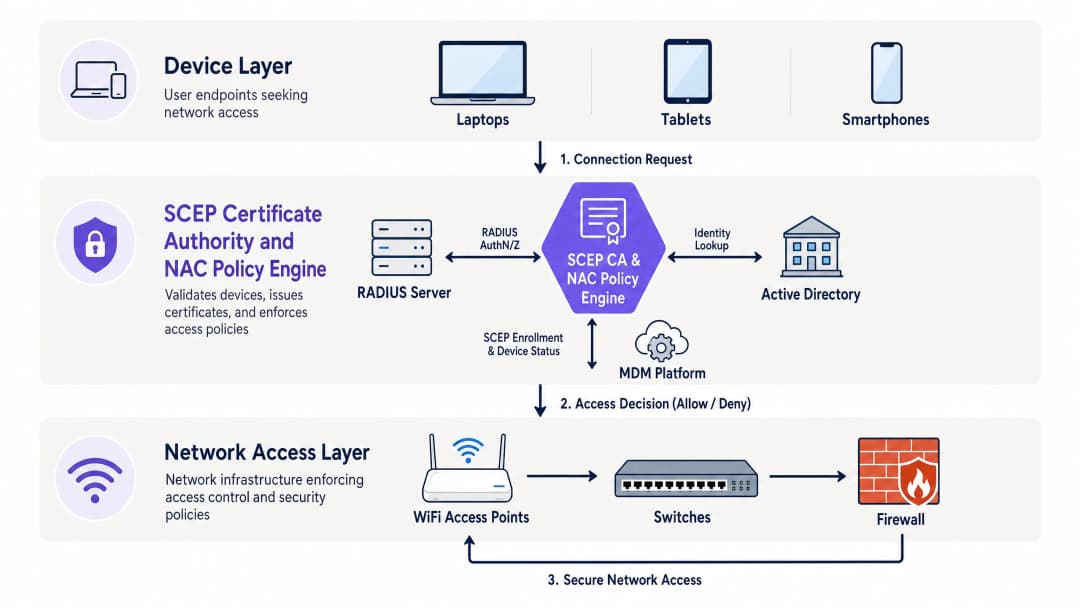
थ्री-लेयर आर्किटेक्चर
आधुनिक नेटवर्क सुरक्षा यूजर्स की जानकारी के बजाय क्रिप्टोग्राफिक आइडेंटिटी पर निर्भर करती है। SCEP-NAC-MDM स्टैक तीन मुख्य लेयर्स पर काम करता है:
| लेयर | घटक | कार्य |
|---|---|---|
| डिवाइस मैनेजमेंट | MDM / UEM | डिवाइस कॉन्फ़िगरेशन, अनुपालन और लाइफसाइकिल के लिए केंद्रीय प्राधिकरण |
| आइडेंटिटी और इश्युएंस | PKI / SCEP / CA | डिजिटल सर्टिफिकेट जनरेट, इश्यू और मैनेज करता है |
| एक्सेस एनफोर्समेंट | NAC / RADIUS | नेटवर्क एक्सेस देने से पहले सर्टिफिकेट और डिवाइस पोस्चर का मूल्यांकन करता है |
ये लेयर्स क्रमिक नहीं हैं - ये एक निरंतर फीडबैक लूप में काम करती हैं। MDM वास्तविक समय में NAC को अनुपालन स्थिति (compliance status) की जानकारी देता है, जबकि कोई डिवाइस पोस्चर चेक में विफल होने पर NAC, MDM रेमेडिएशन वर्कफ़्लो को ट्रिगर कर सकता है।
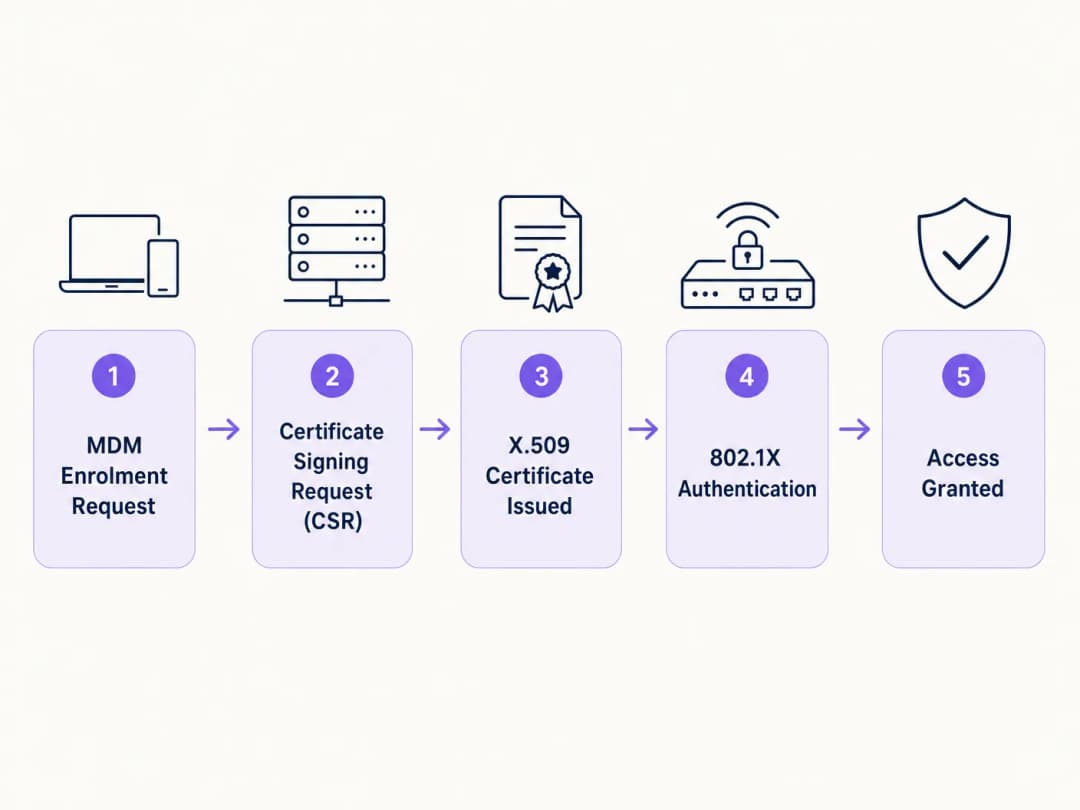
SCEP बड़े पैमाने पर PKI को कैसे ऑटोमेट करता है
बड़े पैमाने पर मैन्युअल सर्टिफिकेट डिप्लॉयमेंट ऑपरेशनल रूप से असंभव है। एक 500-डिवाइस वाले एस्टेट के लिए एक IT एडमिनिस्ट्रेटर को हर डिवाइस पर एक व्यक्तिगत X.509 सर्टिफिकेट जनरेट, साइन और इंस्टॉल करना होगा - एक ऐसी प्रक्रिया जिसमें प्रति डिवाइस कई मिनट लगते हैं और मानवीय भूल का महत्वपूर्ण जोखिम बना रहता है। SCEP इसे पूरी तरह से समाप्त कर देता है।
जब कोई डिवाइस MDM में एनरोल होता है, तो MDM एक कॉन्फ़िगरेशन प्रोफाइल भेजता है जिसमें SCEP पेलोड होता है। यह पेलोड डिवाइस को स्थानीय रूप से एक की-पेयर (key pair) जेनरेट करने का निर्देश देता है - सबसे महत्वपूर्ण बात यह है कि प्राइवेट की कभी भी डिवाइस से बाहर नहीं जाती है - और SCEP सर्वर पर एक सर्टिफिकेट साइनिंग रिक्वेस्ट (CSR) सबमिट करता है। SCEP सर्वर (आमतौर पर Microsoft की नेटवर्क डिवाइस एनरोलमेंट सर्विस (NDES) या इसके समकक्ष कोई क्लाउड-आधारित सर्विस) MDM के ज़रिए इस रिक्वेस्ट को वैलिडेट करता है ताकि यह कन्फर्म हो सके कि डिवाइस ऑथराइज़्ड है। इसके बाद वह CSR को सर्टिफिकेट अथॉरिटी (CA) के पास भेजता है, जो साइन किया हुआ X.509 सर्टिफिकेट जारी करती है। यह सर्टिफिकेट डिवाइस पर वापस भेज दिया जाता है और इसके सिक्योर एन्क्लेव या सिस्टम कीस्टोर में इंस्टॉल हो जाता है।
यह पूरी प्रक्रिया बिना किसी यूजर इंटरैक्शन के, ओवर-द-एयर बैकग्राउंड में पूरी होती है। 1,000-डिवाइस वाले नेटवर्क के लिए, MDM एनरोलमेंट पूरा होने के कुछ ही घंटों के भीतर पूरा सर्टिफिकेट एस्टेट प्रोविज़न किया जा सकता है।
NAC और 802.1X EAP-TLS: एन्फोर्समेंट लेयर
एक बार जब डिवाइस में एक वैलिड सर्टिफिकेट आ जाता है, तो वह IEEE 802.1X का उपयोग करके कॉर्पोरेट SSID या वायर्ड पोर्ट से कनेक्ट करने का प्रयास करता है। एक्सेस पॉइंट या स्विच ऑथेंटिकेटर के रूप में काम करता है, जो इस रिक्वेस्ट को NAC पॉलिसी इंजन द्वारा संचालित RADIUS सर्वर पर फॉरवर्ड करता है। सबसे सुरक्षित EAP मेथड EAP-TLS है, जिसमें म्यूचुअल ऑथेंटिकेशन की आवश्यकता होती है - क्लाइंट और RADIUS सर्वर दोनों को वैलिड सर्टिफिकेट पेश करने होते हैं, जिससे फर्जी एक्सेस पॉइंट के माध्यम से होने वाले मैन-इन-द-मिडल हमलों से बचा जा सके। NAC क्रम से कई महत्वपूर्ण जांच करता है:
- क्रिप्टोग्राफिक वैलिडेशन: क्या सर्टिफिकेट गणितीय रूप से वैलिड है और किसी ट्रस्टेड रूट CA द्वारा साइन किया गया है?
- रिवोकेशन चेकिंग: क्या सर्टिफिकेट को सर्टिफिकेट रिवोकेशन लिस्ट (CRL) में लिस्ट किया गया है या ऑनलाइन सर्टिफिकेट स्टेटस प्रोटोकॉल (OCSP) के माध्यम से फ्लैग किया गया है?
- पोस्चर असेसमेंट: API के माध्यम से MDM से पूछताछ करके, NAC पूछता है: क्या डिवाइस अनुपालन (compliant) कर रहा है? क्या ऑपरेटिंग सिस्टम आवश्यक पैच लेवल पर है? क्या डिस्क एन्क्रिप्शन इनेबल्ड है?
यदि सभी जांच सफल रहती हैं, तो NAC एक RADIUS Access-Accept मैसेज भेजता है, जिसमें आमतौर पर वेंडर-स्पेसिफिक एट्रिब्यूट (VSAs) शामिल होते हैं जो डिवाइस को डायनेमिक रूप से एक विशिष्ट VLAN में असाइन करते हैं या एक्सेस कंट्रोल लिस्ट (ACLs) लागू करते हैं। नॉन-कंप्लायंट डिवाइसेस को सीमित अनुमतियों वाले एक रेमेडिएशन VLAN में रखा जाता है - आमतौर पर सिर्फ इतना कि वे MDM-संचालित रेमेडिएशन वर्कफ़्लो को ट्रिगर कर सकें।
गेस्ट नेटवर्क सेग्रीगेशन
किसी भी स्थल परिवेश में, कॉर्पोरेट इंफ्रास्ट्रक्चर को सार्वजनिक-सामना करने वाले नेटवर्क से सख्ती से अलग किया जाना चाहिए। Guest WiFi प्लेटफॉर्म पूरी तरह से अलग SSIDs और VLANs पर काम करता है, जिसमें कॉर्पोरेट संसाधनों का कोई रूट किया गया पथ नहीं होता है। SCEP-NAC आर्किटेक्चर कॉर्पोरेट स्तर को नियंत्रित करता है; अतिथि स्तर को captive portal प्रमाणीकरण और डेटा कैप्चर वर्कफ़्लो द्वारा नियंत्रित किया जाता है। WiFi Analytics तैनात करने वाले स्थलों के लिए, यह अलगाव एक पूर्व-आवश्यकता है - विश्लेषिकी डेटा अतिथि नेटवर्क के माध्यम से प्रवाहित होता है, जबकि परिचालन डेटा प्रमाणपत्र-प्रमाणित कॉर्पोरेट नेटवर्क के माध्यम से प्रवाहित होता है। दोनों नेटवर्क का समर्थन करने वाले अंतर्निहित RF आर्किटेक्चर पर अधिक जानकारी के लिए, Wi-Fi Frequencies: A 2026 Guide to Wi-Fi Frequencies देखें।
-
अपने विशिष्ट सेटअप को लेकर कोई सवाल हैं?
हमारी टीम 80,000 से अधिक वेन्यू में वेन्यू ऑपरेटरों, IT मैनेजरों और नेटवर्क इंजीनियरों के साथ काम करती है। 20 मिनट का कॉल बुक करें और हम आपको दिखाएंगे कि आपके जैसे अन्य लोगों ने इसे कैसे हल किया।
कार्यान्वयन गाइड
इस आर्किटेक्चर को तैनात करने के लिए सावधानीपूर्वक अनुक्रमण की आवश्यकता होती है ताकि संक्रमण के दौरान वैध उपयोगकर्ताओं को बाहर रखे जाने से बचाया जा सके।
चरण 1: PKI और SCEP तैयारी
एक मजबूत आंतरिक PKI स्थापित करें या क्लाउड-आधारित प्रबंधित PKI (mPKI) सेवा का लाभ उठाएं। SCEP सर्वर को तैनात और सुदृढ़ करें - यदि Microsoft NDES का उपयोग कर रहे हैं, तो सुनिश्चित करें कि यह CA के साथ सह-स्थित होने के बजाय एक समर्पित सर्वर पर चलता है। SCEP सर्वर को स्थिर साझा रहस्य के बजाय MDM द्वारा प्रति डिवाइस उत्पन्न गतिशील चुनौती पासवर्ड का उपयोग करने के लिए कॉन्फ़िगर करें। यह SCEP URL खोजे जाने पर अनधिकृत प्रमाणपत्र अनुरोधों को रोकता है।
चरण 2: MDM कॉन्फ़िगरेशन
अपने MDM प्लेटफ़ॉर्म में SCEP पेलोड बनाएं। Subject Alternative Name (SAN) फ़ील्ड को सावधानीपूर्वक परिभाषित करें - SAN में अद्वितीय पहचानकर्ता (जैसे डिवाइस सीरियल नंबर या उपयोगकर्ता UPN) होना चाहिए जिसका उपयोग NAC नीतिगत निर्णयों के लिए करेगा। प्रोफ़ाइल को पहले IT टीम के उपकरणों के एक पायलट समूह में भेजें, और किसी भी व्यापक रोलआउट से पहले पूर्ण नामांकन प्रवाह को मान्य करें।
चरण 3: NAC और RADIUS सेटअप
क्लाइंट प्रमाणपत्र जारी करने वाले रूट CA पर भरोसा करने के लिए अपने NAC को कॉन्फ़िगर करें। EAP-TLS आपसी प्रमाणीकरण के लिए RADIUS सर्वर पर एक सर्वर प्रमाणपत्र स्थापित करें। प्रमाणपत्र विशेषताओं और MDM अनुपालन स्थिति के आधार पर एक्सेस नीतियां परिभाषित करें। गतिशील VLAN असाइनमेंट नियम लागू करें: अनुपालन करने वाले कॉर्पोरेट उपकरण कॉर्पोरेट VLAN पर, गैर-अनुपालन उपकरण सुधारात्मक VLAN पर, और IoT उपकरण एक समर्पित, इंटरनेट-प्रतिबंधित VLAN पर भेजें।
चरण 4: नेटवर्क इंफ्रास्ट्रक्चर एकीकरण
802.1X के लिए स्विच और वायरलेस एक्सेस पॉइंट कॉन्फ़िगर करें। retail वातावरण में पुराने पॉइंट-ऑफ-सेल हार्डवेयर, या hospitality स्थलों में स्मार्ट रूम कंट्रोलर वाले परिदृश्यों के लिए, EAP-TLS में भाग न ले सकने वाले उपकरणों के लिए फ़ॉलबैक के रूप में MAC Authentication Bypass (MAB) लागू करें। MAB को विशिष्ट स्विच पोर्ट तक सीमित रखें और सुनिश्चित करें कि MAC एड्रेस डेटाबेस को कड़ाई से नियंत्रित किया गया है। healthcare और transport वातावरण के लिए, क्षेत्र-विशिष्ट अनुपालन आवश्यकताओं को पूरा करने के लिए पॉस्चर मूल्यांकन नियम कॉन्फ़िगर करें।
चरण 5: समानांतर रोलआउट और कटओवर
कभी भी तुरंत बदलाव न करें। मौजूदा नेटवर्क के समानांतर नए 802.1X SSID को ब्रॉडकास्ट करें। MDM के माध्यम से नया WiFi प्रोफाइल पुश करें। एडॉप्शन की निगरानी करें और एनरोलमेंट विफलताओं को हल करें। एक बार जब 95% से अधिक डिवाइस नए SSID पर सफलतापूर्वक प्रमाणित हो जाएं, तो पुराने नेटवर्क को बंद कर दें।
सर्वश्रेष्ठ अभ्यास
EAP-TLS को अनिवार्य बनाएं। कॉर्पोरेट डिवाइसों के लिए प्राथमिक प्रमाणीकरण पद्धति के रूप में कभी भी EAP-PEAP या EAP-TTLS को स्वीकार न करें। ये पद्धतियां TLS टनल के भीतर यूजरनेम/पासवर्ड क्रेडेंशियल पर निर्भर करती हैं और क्रेडेंशियल हार्वेस्टिंग के प्रति संवेदनशील बनी रहती हैं। EAP-TLS उस अटैक सरफेस को पूरी तरह से समाप्त कर देता है।
रीअल-टाइम रिवोकेशन लागू करें। शेड्यूल्ड CRL डाउनलोड एक्सपोज़र की अवधि पैदा करते हैं। रीअल-टाइम में OCSP जांच करने के लिए NAC को कॉन्फ़िगर करें। जब किसी डिवाइस के खो जाने या चोरी होने की सूचना मिलती है, तो CA पर सर्टिफिकेट को रिवोक करें और डिवाइस अपने अगले प्रमाणीकरण प्रयास पर - या तुरंत, यदि Change of Authorisation (CoA) लागू है, नेटवर्क एक्सेस खो देता है।
सर्टिफिकेट की उचित वैधता अवधि निर्धारित करें। एक वर्ष की वैधता अवधि, जो समाप्ति से 30 दिन पहले स्वचालित SCEP रिन्यूअल द्वारा सक्रिय होती है, उद्योग का मानक है। लंबी वैधता सर्टिफिकेट से समझौता होने पर एक्सपोज़र की अवधि को बढ़ाती है; छोटी वैधता रिन्यूअल विफलताओं के कारण आउटेज के जोखिम को बढ़ाती है।
IoT को आक्रामक रूप से अलग करें। IoT डिवाइसों को कभी भी कॉर्पोरेट एंडपॉइंट्स के साथ VLAN साझा नहीं करना चाहिए। IoT VLAN पर सख्त ACL लागू करने के लिए NAC का उपयोग करें, जिससे केवल विशिष्ट प्रोटोकॉल और गंतव्यों की अनुमति मिले जो प्रत्येक डिवाइस श्रेणी के लिए आवश्यक हैं। लोकेशन सेवाओं को तैनात करने वाले वेन्यू के लिए, Indoor WiFi Positioning Systems: How They Work and How to Deploy Them देखें कि कैसे पोजीशनिंग इन्फ्रास्ट्रक्चर व्यापक नेटवर्क आर्किटेक्चर के साथ एकीकृत होता है।
WPA3 के साथ संरेखित करें। जहां हार्डवेयर इसका समर्थन करता है, कॉर्पोरेट SSIDs को WPA3-Enterprise का उपयोग करने के लिए कॉन्फ़िगर करें, जो Protected Management Frames (PMF) को अनिवार्य करता है और WPA2 की तुलना में अधिक मजबूत क्रिप्टोग्राफिक सुरक्षा प्रदान करता है। व्यापक एंटरप्राइज कनेक्टिविटी परिदृश्य में यह कैसे फिट बैठता है, इसके विवरण के लिए SD-WAN vs MPLS: A 2026 Guide to Enterprise Networking देखें।
समस्या निवारण और जोखिम न्यूनीकरण
| विफलता मोड | मूल कारण | न्यूनीकरण |
|---|---|---|
| सर्टिफिकेट रिन्यूअल के बाद डिवाइस EAP-TLS में विफल होते हैं | SCEP रिन्यूअल बिना किसी सूचना के विफल होना | SCEP सर्वर लॉग की निगरानी करें; विफल CSR सबमिशन के लिए अलर्ट सेट करें |
| क्लॉक स्क्यू के कारण सर्टिफिकेट सत्यापन विफल होता है | NTP गलत कॉन्फ़िगरेशन | सभी एंडपॉइंट्स और इन्फ्रास्ट्रक्चर में NTP सिंक्रोनाइज़ेशन लागू करें |
| IoT डिवाइस प्रमाणित नहीं हो सकते | कोई 802.1X सप्लीकेंट नहीं | सख्त MAC एड्रेस नियंत्रण और एक अलग VLAN के साथ MAB लागू करें |
| CA माइग्रेशन के बाद बड़े पैमाने पर डिवाइस लॉकआउट | पुराने रूट CA पर NAC द्वारा भरोसा नहीं किया जाना | CA माइग्रेशन को चरणों में करें; पुराने रूट CA को रिवोक करने से पहले नए रूट CA को NAC ट्रस्ट स्टोर में जोड़ें |
| रिवोक किए गए डिवाइस नेटवर्क एक्सेस बनाए रखते हैं | लंबे डाउनलोड अंतराल के साथ केवल-CRL रिवोकेशन | रीअल-टाइम रिवोकेशन के लिए OCSP और CoA लागू करें |
विशिष्ट BLE-आधारित IoT उपकरणों के लिए, प्रमाणीकरण आर्किटेक्चर WiFi-कनेक्टेड एंडपॉइंट्स से भिन्न होता है। ब्लूटूथ लो एनर्जी इंफ्रास्ट्रक्चर पर लागू होने वाले विशिष्ट सुरक्षा विचारों के लिए BLE Low Energy Explained for the Enterprise देखें।
ROI और व्यावसायिक प्रभाव
विकल्पों की लागत के मुकाबले मापे जाने पर SCEP-NAC-MDM एकीकरण का व्यावसायिक मामला सीधा है।
| मीट्रिक | कार्यान्वयन से पहले | कार्यान्वयन के बाद |
|---|---|---|
| IT सर्विस डेस्क टिकट (नेटवर्क एक्सेस) | उच्च - पासवर्ड रीसेट, कुंजी रोटेशन | लगभग शून्य - स्वचालित प्रमाणपत्र जीवनचक्र |
| एक समझौता किए गए डिवाइस को निरस्त करने का औसत समय | घंटे (मैन्युअल प्रक्रिया) | सेकंड (OCSP + CoA) |
| PCI DSS एक्सेस कंट्रोल अनुपालन | मैन्युअल, ऑडिट-गहन | स्वचालित, लगातार लागू किया गया |
| BYOD ऑनबोर्डिंग समय | 15-30 मिनट प्रति डिवाइस | शून्य IT भागीदारी के साथ 5 मिनट से कम |
500-डिवाइस की संपत्ति के लिए, मैन्युअल प्रमाणपत्र प्रबंधन और पासवर्ड से संबंधित सर्विस डेस्क टिकटों को समाप्त करने से आम तौर पर नेटवर्क से संबंधित IT सहायता ओवरहेड 25-35% तक कम हो जाता है। जोखिम न्यूनीकरण मूल्य - एकल क्रेडेंशियल-आधारित उल्लंघन से बचना - नियमित रूप से संपूर्ण कार्यान्वयन लागत से अधिक हो जाता है। GDPR से बंधे सार्वजनिक-क्षेत्र और स्वास्थ्य सेवा संगठनों के लिए, स्वचालित, ऑडिट योग्य एक्सेस कंट्रोल प्रदर्शित करने की क्षमता एक महत्वपूर्ण अनुपालन संपत्ति है।
मुख्य परिभाषाएं
SCEP (सिंपल सर्टिफिकेट एनरोलमेंट प्रोटोकॉल)
एक प्रोटोकॉल जो बिना किसी उपयोगकर्ता हस्तक्षेप के उपकरणों को डिजिटल सर्टिफिकेट जारी करने और रद्द करने की प्रक्रिया को स्वचालित करता है, जो MDM प्लेटफॉर्म और सर्टिफिकेट अथॉरिटी के बीच संचार परत के रूप में कार्य करता है।
हजारों एंडपॉइंट्स पर बड़े पैमाने पर X.509 सर्टिफिकेट्स को आसानी से तैनात करने के लिए MDM प्लेटफॉर्म द्वारा उपयोग किया जाता है। 802.1X WiFi ऑथेंटिकेशन के लिए MDM प्रोफाइल को कॉन्फ़िगर करते समय IT टीमों का सामना SCEP से होता है।
NAC (नेटवर्क एक्सेस कंट्रोल)
एक सुरक्षा समाधान जो नेटवर्क इंफ्रास्ट्रक्चर तक पहुंच चाहने वाले उपकरणों पर पॉलिसी लागू करता है, एक्सेस प्रदान करने से पहले ऑथेंटिकेशन क्रेडेंशियल्स, सर्टिफिकेट की वैधता और डिवाइस अनुपालन स्थिति का मूल्यांकन करता है।
नेटवर्क एज पर गेटकीपर के रूप में कार्य करता है। IT टीमें NAC पॉलिसियों को कॉन्फ़िगर करती हैं ताकि यह परिभाषित किया जा सके कि कौन से उपकरणों को उनके सर्टिफिकेट विशेषताओं और MDM अनुपालन स्थिति के आधार पर किन VLANs तक एक्सेस मिलती है।
MDM (मोबाइल डिवाइस मैनेजमेंट)
मल्टीपल ऑपरेटिंग सिस्टम पर कर्मचारियों के एंडपॉइंट्स की निगरानी, प्रबंधन और सुरक्षा के लिए IT विभागों द्वारा उपयोग किया जाने वाला सॉफ्टवेयर, जो डिवाइस की पहचान और अनुपालन के लिए सत्य के केंद्रीय स्रोत के रूप में कार्य करता है।
SCEP नामांकन प्रक्रिया का आरंभकर्ता और NAC द्वारा पूछे गए पोस्चर डेटा का स्रोत। MDM एकीकरण के बिना, NAC पोस्चर-आधारित एक्सेस कंट्रोल नहीं कर सकता है।
IEEE 802.1X
पोर्ट-आधारित नेटवर्क एक्सेस कंट्रोल के लिए एक IEEE मानक जो LAN या WLAN से जुड़ने के इच्छुक उपकरणों को एक ऑथेंटिकेशन तंत्र प्रदान करता है, जिसके तहत पोर्ट खोले जाने से पहले सफल ऑथेंटिकेशन की आवश्यकता होती है।
वह अंतर्निहित प्रोटोकॉल जो स्विच या एक्सेस पॉइंट द्वारा किसी भी ट्रैफिक को गुजरने की अनुमति देने से पहले उपकरणों को ऑथेंटिकेट करने के लिए मजबूर करता है। नेटवर्क इंफ्रास्ट्रक्चर और डिवाइस के 802.1X सप्लीकेंट दोनों पर कॉन्फ़िगर किया गया है।
EAP-TLS (एक्सटेंसिबल ऑथेंटिकेशन प्रोटोकॉल - ट्रांसपोर्ट लेयर सिक्योरिटी)
सबसे सुरक्षित EAP मानक, जिसमें पारस्परिक ऑथेंटिकेशन की आवश्यकता होती है जहां क्लाइंट डिवाइस और RADIUS सर्वर दोनों को वैध डिजिटल सर्टिफिकेट प्रस्तुत करना होगा, जो पासवर्ड-आधारित क्रेडेंशियल हमलों को समाप्त करता है।
एंटरप्राइज वायरलेस सुरक्षा के लिए स्वर्ण मानक। जहां भी डिवाइस सर्टिफिकेट इंफ्रास्ट्रक्चर मौजूद है, वहां IT आर्किटेक्ट्स को PEAP या TTLS के बजाय EAP-TLS को अनिवार्य करना चाहिए।
CSR (सर्टिफिकेट साइनिंग रिक्वेस्ट)
एक डिवाइस द्वारा जनरेट किए गए एन्कोडेड टेक्स्ट का एक ब्लॉक जिसमें उसकी पब्लिक की (public key) और पहचान विवरण होते हैं, जिसे हस्ताक्षरित X.509 सर्टिफिकेट का अनुरोध करने के लिए सर्टिफिकेट अथॉरिटी को सबमिट किया जाता है।
SCEP नामांकन प्रक्रिया के दौरान डिवाइस द्वारा स्वचालित रूप से जनरेट किया जाता है। CSR के अनुरूप प्राइवेट की (private key) कभी भी डिवाइस को नहीं छोड़ती है, जिससे यह सुनिश्चित होता है कि सर्टिफिकेट की नकल नहीं की जा सकती है।
MAB (MAC ऑथेंटिकेशन बाईपास)
एक फॉलबैक ऑथेंटिकेशन विधि जहां नेटवर्क डिवाइस के हार्डवेयर MAC एड्रेस को उसके क्रेडेंशियल के रूप में उपयोग करता है, जिसका उपयोग उन उपकरणों के लिए किया जाता है जिनमें 802.1X सप्लीकेंट क्षमता की कमी होती है।
प्रिंटर, सेंसर और स्मार्ट रूम कंट्रोलर जैसे पुराने IoT उपकरणों के लिए उपयोग किया जाता है जो EAP-TLS में भाग नहीं ले सकते। इसके परिणामस्वरूप हमेशा अत्यधिक प्रतिबंधित VLAN में असाइनमेंट होना चाहिए।
OCSP (ऑनलाइन सर्टिफिकेट स्टेटस प्रोटोकॉल)
एक इंटरनेट प्रोटोकॉल जिसका उपयोग रीयल-टाइम में X.509 डिजिटल सर्टिफिकेट की निरस्तीकरण स्थिति प्राप्त करने के लिए किया जाता है, जो सर्टिफिकेट निरस्तीकरण सूचियों को डाउनलोड और पार्स करने का एक विकल्प प्रदान करता है।
NAC सिस्टम के लिए महत्वपूर्ण है जिन्हें डिवाइस के साथ समझौता होने या चोरी होने की सूचना मिलने पर तुरंत नेटवर्क एक्सेस को ब्लॉक करने की आवश्यकता होती है। OCSP रीयल-टाइम स्थिति प्रदान करता है; CRL डाउनलोड एक निरस्तीकरण विंडो बनाते हैं।
CoA (चेंज ऑफ़ ऑथराइजेशन)
एक RADIUS एक्सटेंशन (RFC 5176) जो NAC को सत्र समाप्त होने या डिवाइस को फिर से प्रमाणित करने की प्रतीक्षा किए बिना एक सक्रिय नेटवर्क सत्र को गतिशील रूप से संशोधित या समाप्त करने की अनुमति देता है।
इसका उपयोग किसी डिवाइस को तुरंत डिस्कनेक्ट करने के लिए किया जाता है जब उसका सर्टिफिकेट रिवोक हो जाता है या उसकी MDM अनुपालन स्थिति बदल जाती है। रीयल-टाइम जीरो-ट्रस्ट एन्फोर्समेंट के लिए आवश्यक।
हल किए गए उदाहरण
एक 500 कमरों वाले लग्जरी रिसॉर्ट को अपने बैक-ऑफ-हाउस संचालन नेटवर्क को सुरक्षित करने की आवश्यकता है। स्टाफ हाउसकीपिंग मैनेजमेंट के लिए शेयर्ड टैबलेट का उपयोग करता है, और मैनेजमेंट कॉर्पोरेट लैपटॉप का उपयोग करता है। वर्तमान WPA2-PSK नेटवर्क की प्री-शेयर्ड की (key) कई बार लीक हो चुकी है, जिसके परिणामस्वरूप पिछले वर्ष में दो सुरक्षा घटनाएं हुई हैं। IT टीम को बिना किसी व्यवधान के सर्टिफिकेट-आधारित ऑथेंटिकेशन पर कैसे स्विच करना चाहिए?
चरण 1 - तैयारी (सप्ताह 1-2): एक क्लाउड-आधारित RADIUS/NAC समाधान तैनात करें और इसे मौजूदा MDM के साथ एकीकृत करें। सभी टैबलेट और लैपटॉप पर डिवाइस-आधारित सर्टिफिकेट पुश करने के लिए MDM में एक SCEP प्रोफ़ाइल कॉन्फ़िगर करें। उपयोगकर्ता-आधारित सर्टिफिकेट के बजाय डिवाइस-आधारित सर्टिफिकेट (डिवाइस सीरियल नंबर से जुड़े) का उपयोग करें, ताकि शेयर्ड टैबलेट ऑटोमैटिक रूप से ऑथेंटिकेट हो जाएं, भले ही कोई भी स्टाफ सदस्य उनका उपयोग कर रहा हो। चरण 2 - समानांतर तैनाती (सप्ताह 3-4): 802.1X EAP-TLS के लिए कॉन्फ़िगर किए गए एक नए, छिपे हुए SSID को ब्रॉडकास्ट करें। MDM के माध्यम से सभी नामांकित डिवाइस पर नया WiFi प्रोफ़ाइल पुश करें। सफल ऑथेंटिकेशन के लिए NAC डैशबोर्ड की निगरानी करें। चरण 3 - कटओवर (सप्ताह 5): एक बार जब 95%+ डिवाइस नए SSID से कनेक्ट हो जाएं, तो पुराने WPA2-PSK नेटवर्क को बंद कर दें। सभी दस्तावेजों और एक्सेस पॉइंट्स से पुराने PSK को हटा दें।
एक राष्ट्रीय रिटेल चेन 150 स्टोर्स में 3,000 नए पॉइंट ऑफ सेल टर्मिनल तैनात कर रही है। सुरक्षा टीम सख्त PCI DSS नेटवर्क सेग्मेंटेशन और जीरो-ट्रस्ट एक्सेस को अनिवार्य करती है। तैनाती की समय-सीमा 8 सप्ताह है। SCEP और NAC प्रत्येक स्टोर पर IT स्टाफ की आवश्यकता के बिना बड़े पैमाने पर इसे कैसे सुगम बनाते हैं?
तैनाती से पहले: POS विक्रेता रिटेलर के MDM में विक्रेता के जीरो-टच नामांकन कार्यक्रम का उपयोग करके सभी 3,000 उपकरणों को पहले से नामांकित करता है। MDM को एक SCEP प्रोफ़ाइल के साथ कॉन्फ़िगर किया गया है जो पहली बार बूट होने पर ऑटोमैटिक रूप से सक्रिय हो जाएगी। तैनाती: जब स्टोर पर कोई POS टर्मिनल चालू किया जाता है, तो यह एक अस्थायी ऑनबोर्डिंग SSID (केवल-इंटरनेट, कोई कॉर्पोरेट एक्सेस नहीं) से कनेक्ट होता है। MDM प्रोफ़ाइल को पुश किया जाता है, SCEP पेलोड सक्रिय होता है, और डिवाइस CA से अपना X.509 सर्टिफिकेट अनुरोध और प्राप्त करता है। इसके बाद MDM कॉर्पोरेट WiFi प्रोफ़ाइल को पुश करता है। नेटवर्क एक्सेस: जब POS स्टोर के स्विच पोर्ट से कनेक्ट होता है, तो स्विच 802.1X शुरू करता है। NAC सर्टिफिकेट को वैलिडेट करता है, यह पुष्टि करने के लिए MDM से पूछताछ करता है कि POS अनुपालन में है (एन्क्रिप्शन सक्षम है, MDM एजेंट सक्रिय है, कोई जेलब्रेक नहीं मिला), और स्विच पोर्ट को डायनेमिक रूप से PCI-DSS VLAN को सौंपता है। POS अब चालू है। स्टोर पर शून्य IT स्टाफ की आवश्यकता थी।
अभ्यास प्रश्न
Q1. आपका संगठन WPA2-Enterprise का उपयोग PEAP-MSCHAPv2 से EAP-TLS पर माइग्रेट कर रहा है। पायलट के दौरान, Windows लैपटॉप और iPhones सफलतापूर्वक कनेक्ट हो जाते हैं, लेकिन 200 वेयरहाउस बारकोड स्कैनर प्रमाणित करने में विफल रहते हैं। स्कैनर 802.1X का समर्थन करते हैं लेकिन MDM से SCEP पेलोड को प्रोसेस नहीं कर सकते - वे बिना किसी MDM एजेंट समर्थन के एक मालिकाना एम्बेडेड OS चलाते हैं। स्कैनर को बदलने की आवश्यकता के बिना नेटवर्क सेगमेंटेशन को बनाए रखने वाला सबसे सुरक्षित आर्किटेक्चरल समाधान क्या है?
संकेत: वैकल्पिक सर्टिफिकेट वितरण तंत्रों पर विचार करें जिन्हें MDM एजेंट की आवश्यकता नहीं होती है, और उन डिवाइसों पर कौन से नेटवर्क सेगमेंटेशन नियंत्रण लागू होने चाहिए जो पूर्ण पोस्चर असेसमेंट में भाग नहीं ले सकते हैं।
मॉडल उत्तर देखें
चूंकि स्कैनर 802.1X का समर्थन करते हैं लेकिन SCEP या MDM नामांकन का नहीं, सबसे सुरक्षित तरीका एक समर्पित सर्टिफिकेट टेम्पलेट का उपयोग करके प्रतिबंधित कुंजी उपयोग प्रोफ़ाइल के साथ डिवाइस सर्टिफिकेट को मैन्युअल रूप से प्रोविज़निंग करना है। रखरखाव विंडो के दौरान सर्टिफिकेट एक बार इंस्टॉल किए जाते हैं। NAC को इन सर्टिफिकेट को स्वीकार करने के लिए कॉन्फ़िगर किया गया है लेकिन स्कैनर को सख्त ACLs के साथ एक समर्पित वेयरहाउस संचालन VLAN में असाइन किया गया है - न कि पूर्ण कॉर्पोरेट VLAN में - क्योंकि पोस्चर असेसमेंट संभव नहीं है। वैकल्पिक रूप से, यदि मैन्युअल सर्टिफिकेट प्रोविज़निंग परिचालन रूप से स्केलेबल नहीं है, तो विशेष रूप से स्कैनर हार्डवेयर के MAC OUIs के लिए फ़ॉलबैक के रूप में MAB को कॉन्फ़िगर करें, जिसमें NAC उन्हें उसी प्रतिबंधित VLAN में असाइन करता है। इसे अपने जोखिम रजिस्टर में एक ज्ञात अपवाद के रूप में दस्तावेज़ित करें और अगले हार्डवेयर रिफ्रेश चक्र में स्कैनर रिप्लेसमेंट शेड्यूल करें।
Q2. एक नेटवर्क सुरक्षा प्रबंधक देखता है कि जब कोई कर्मचारी लैपटॉप चोरी होने की रिपोर्ट करता है, तो MDM एक रिमोट वाइप कमांड भेजता है, लेकिन डिवाइस 12 घंटे तक - वर्तमान RADIUS सत्र टाइमआउट - कॉर्पोरेट WiFi से जुड़ा रहता है। इस विंडो के दौरान, डिवाइस का उपयोग डेटा निकालने के लिए किया जा सकता है। डिवाइस के चोरी होने की रिपोर्ट होने पर नेटवर्क एक्सेस को तुरंत समाप्त करने के लिए आर्किटेक्चर को कैसे संशोधित किया जाना चाहिए?
संकेत: NAC को अगले प्रमाणीकरण चक्र की प्रतीक्षा करने के बजाय तुरंत स्थिति परिवर्तन के बारे में सूचित किया जाना चाहिए। सत्र समाप्ति तंत्र और पुन: प्रमाणीकरण रोकथाम तंत्र दोनों पर विचार करें।
मॉडल उत्तर देखें
दो पूरक नियंत्रणों को लागू करें। सबसे पहले, किसी डिवाइस को खोया या चोरी के रूप में चिह्नित किए जाने पर तुरंत NAC को एक वेबहुक भेजने के लिए MDM को कॉन्फ़िगर करें। NAC फिर विशिष्ट एक्सेस पॉइंट या स्विच पोर्ट पर RADIUS Change of Authorization (CoA) Disconnect-Request संदेश भेजता है, जिससे सक्रिय सत्र तुरंत समाप्त हो जाता है। दूसरा, CA में डिवाइस के सर्टिफिकेट को रिवोक करें और सुनिश्चित करें कि NAC को CRL-आधारित रिवोकेशन के बजाय रीयल-टाइम OCSP चेकिंग के लिए कॉन्फ़िगर किया गया है। इसका मतलब है कि भले ही CoA प्रोसेस होने से पहले डिवाइस फिर से कनेक्ट हो जाए, EAP-TLS प्रमाणीकरण OCSP चेक पर विफल हो जाएगा। दोनों नियंत्रण मिलकर एक्सपोज़र विंडो को 12 घंटे से घटाकर 60 सेकंड से कम कर देते हैं।
Q3. एक बड़े सम्मेलन केंद्र के नेटवर्क के सुरक्षा ऑडिट के दौरान, यह पता चला है कि SCEP सर्वर रिमोट डिवाइस नामांकन की अनुमति देने के लिए एक स्थिर चुनौती पासवर्ड का उपयोग करके सार्वजनिक इंटरनेट के संपर्क में है। ऑडिटर इसे एक गंभीर भेद्यता के रूप में चिह्नित करता है। रिमोट नामांकन क्षमता को बनाए रखते हुए स्थिर पासवर्ड जोखिम को समाप्त करने के लिए SCEP नामांकन प्रक्रिया को फिर से कैसे तैयार किया जाना चाहिए?
संकेत: SCEP सर्वर को यह सत्यापित करने का एक तरीका चाहिए कि सर्टिफिकेट का अनुरोध करने वाला डिवाइस वास्तव में MDM द्वारा अधिकृत है, बिना किसी साझा रहस्य पर भरोसा किए जिसे किसी डिवाइस से निकाला जा सकता है या इंटरसेप्ट किया जा सकता है।
मॉडल उत्तर देखें
स्थिर चुनौती पासवर्ड को MDM द्वारा उत्पन्न डायनेमिक, प्रति-डिवाइस वन-टाइम चुनौती पासवर्ड से बदलें। वर्कफ़्लो इस प्रकार हो जाता है: (1) MDM नामांकन के दौरान प्रत्येक डिवाइस के लिए एक अद्वितीय, समय-सीमित चुनौती पासवर्ड उत्पन्न करता है। (2) MDM इस चुनौती को डिवाइस पर भेजे गए SCEP पेलोड में शामिल करता है। (3) डिवाइस इस चुनौती को अपने CSR में शामिल करता है। (4) SCEP सर्वर CA को CSR अग्रेषित करने से पहले API के माध्यम से MDM के विरुद्ध चुनौती को सत्यापित करता है। (5) उपयोग के तुरंत बाद चुनौती अमान्य हो जाती है। यह सुनिश्चित करता है कि केवल MDM-प्रबंधित डिवाइस ही सफलतापूर्वक प्रमाणपत्र प्राप्त कर सकें, और यदि SCEP URL का पता चल भी जाता है, तो कोई हमलावर वैध वन-टाइम चुनौती के बिना वैध प्रमाणपत्र उत्पन्न नहीं कर सकता है। इसके अतिरिक्त, SCEP सर्वर को केवल HTTPS तक सीमित करें और जहां संभव हो MDM के आउटबाउंड IPs के लिए IP अनुमति सूची लागू करें।
इस श्रृंखला में आगे पढ़ें
PPSK WPA3: सुविधाओं और परिनियोजन मॉडलों की तुलना
यह तकनीकी संदर्भ गाइड PPSK और WPA3-SAE की तुलना करती है, मल्टी-टेनेंट वातावरण के लिए उनके आर्किटेक्चरल अंतर और परिनियोजन मॉडल की व्याख्या करती है। यह IT प्रबंधकों और प्रॉपर्टी डेवलपर्स को Purple के पहचान-आधारित समाधानों का उपयोग करके सुरक्षित, पृथक WiFi नेटवर्क प्राप्त करने पर व्यावहारिक मार्गदर्शन प्रदान करती है.
Staff WiFi के लिए बैंडविड्थ प्रबंधित करना: शेपिंग, QoS और ट्रैफ़िक को कम करना
यह गाइड एंटरप्राइज़ स्थानों में staff WiFi के लिए बैंडविड्थ प्रबंधित करने के व्यावहारिक तरीकों का विवरण देती है। इसमें ट्रैफ़िक शेपिंग, QoS कार्यान्वयन, और बुनियादी ढांचे के अपग्रेड की आवश्यकता के बिना Purple Shield को तैनात करने से नेटवर्क लोड कैसे कम होता है, यह शामिल है।
प्रति-डिवाइस PSK (iPSK, DPSK, MPSK) का उपयोग करके WiFi SSID की संख्या कैसे कम करें
यह आधिकारिक तकनीकी संदर्भ गाइड बताती है कि कैसे IT टीमें प्रति-डिवाइस PSK (xPSK) का उपयोग करके कई विशिष्ट उद्देश्यों के लिए बनाए गए नेटवर्क को एक सिंगल SSID में मिलाकर SSID बीकन ओवरहेड के कारण होने वाले WiFi परफॉर्मेंस के नुकसान को समाप्त कर सकती हैं। इसमें Cisco iPSK, HPE Aruba MPSK, Ruckus DPSK, Juniper Mist PPSK और Ubiquiti UniFi PPSK के वेंडर परिदृश्य को शामिल किया गया है, जिसमें डायनेमिक VLAN असाइनमेंट, IoT ऑनबोर्डिंग और PCI DSS अनुपालन पर व्यावहारिक कार्यान्वयन मार्गदर्शन दिया गया है। हॉस्पिटैलिटी, रिटेल, स्टेडियम और सार्वजनिक क्षेत्र के संगठनों के वेन्यू ऑपरेटरों को इसमें व्यावहारिक आर्किटेक्चर मार्गदर्शन और वास्तविक दुनिया के व्यावहारिक उदाहरण मिलेंगे।
अपने विशिष्ट सेटअप को लेकर कोई सवाल हैं?
हमारी टीम 80,000 से अधिक वेन्यू में वेन्यू ऑपरेटरों, IT मैनेजरों और नेटवर्क इंजीनियरों के साथ काम करती है। 20 मिनट का कॉल बुक करें और हम आपको दिखाएंगे कि आपके जैसे अन्य लोगों ने इसे कैसे हल किया।