
हाइब्रिड कार्य को सुरक्षित बनाना: निर्बाध पहुंच के लिए NAC और ZTNA का संयोजन
यह आधिकारिक तकनीकी गाइड कॉर्पोरेट, रिटेल, हॉस्पिटैलिटी और सार्वजनिक क्षेत्र के स्थानों में हाइब्रिड कार्य वातावरण को सुरक्षित करने के लिए नेटवर्क एक्सेस कंट्रोल (NAC) और Zero Trust Network Access (ZTNA) के आर्किटेक्चरल अभिसरण को कवर करती है। यह उन IT आर्किटेक्ट्स और CTOs के लिए चरणबद्ध परिनियोजन ब्लूप्रिंट, वास्तविक दुनिया के मामले के अध्ययन और अनुपालन मार्गदर्शन प्रदान करता है जिन्हें अलग-थलग ऑन-प्रिमाइसेस और क्लाउड एक्सेस डोमेन द्वारा बनाई गई सुरक्षा कमियों को समाप्त करने की आवश्यकता है।
Video overview
इस गाइड को सुनें
पॉडकास्ट ट्रांसक्रिप्ट देखें
हमारी मुख्य श्रृंखला का हिस्सा: Enterprise WiFi सुरक्षा गाइड →

कार्यकारी सारांश (Executive Summary)
वितरित वातावरण का प्रबंधन करने वाले एंटरप्राइज नेटवर्क आर्किटेक्ट और CTOs के लिए, नेटवर्क की कोई निश्चित सीमा (perimeter) अब मौजूद नहीं है। मजबूत Network Access Control (NAC) के साथ कॉर्पोरेट मुख्यालय की रक्षा करने और रिमोट एक्सेस के लिए पुराने VPN पर निर्भर रहने का पारंपरिक मॉडल अब व्यावहारिक नहीं है। आधुनिक उद्यमों को एक एकीकृत सुरक्षा स्थिति की आवश्यकता है जो ऑन-प्रिमाइसेस इन्फ्रास्ट्रक्चर को क्लाउड-नेटिव एप्लिकेशन्स के साथ सहजता से जोड़ती है। यह गाइड NAC और Zero Trust Network Access (ZTNA) के आर्किटेक्चरल अभिसरण (convergence) का विवरण देती है, जो उपयोगकर्ता अनुभव या नेटवर्क थ्रूपुट से समझौता किए बिना हाइब्रिड वर्क वातावरण को सुरक्षित करने का एक खाका प्रदान करती है।
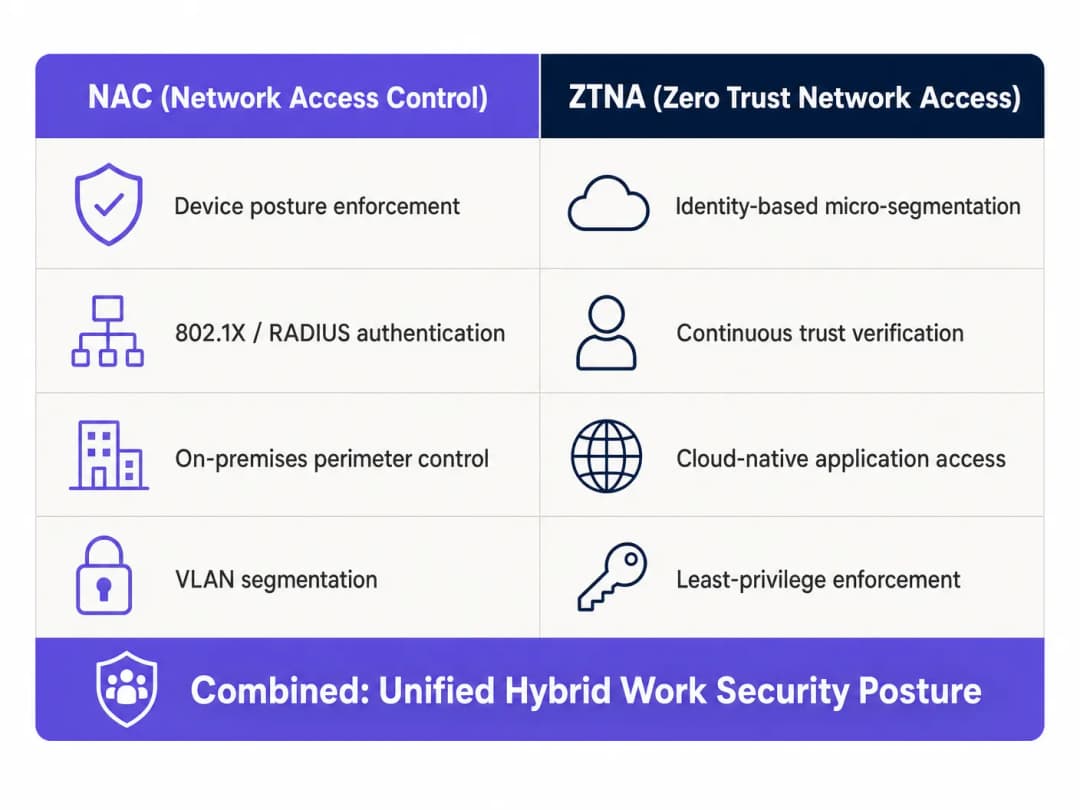
NAC के डिवाइस-स्तरीय पोस्चर प्रवर्तन को ZTNA के पहचान-केंद्रित माइक्रो-सेगमेंटेशन के साथ जोड़कर, उद्यम निरंतर विश्वास सत्यापन (trust verification) प्राप्त कर सकते हैं, चाहे उपयोगकर्ता कहीं भी स्थित हों। यह अभिसरण विशेष रूप से उन उद्योगों में महत्वपूर्ण है जहां ग्राहकों की संख्या अधिक है और अनुपालन आवश्यकताएं जटिल हैं, जैसे कि रिटेल, स्वास्थ्य सेवा और हॉस्पिटैलिटी। इसके अलावा, Purple के Guest WiFi इन्फ्रास्ट्रक्चर जैसे प्लेटफॉर्म का लाभ उठाने से इन ज़ीरो-ट्रस्ट सिद्धांतों को गेस्ट नेटवर्क तक विस्तारित किया जा सकता है, जिससे GDPR और PCI-DSS दायित्वों के अनुरूप मजबूत अलगाव और डेटा सुरक्षा सुनिश्चित होती है।
तकनीकी गहन विश्लेषण: अभिसरित आर्किटेक्चर (Converged Architecture)
पृथक सुरक्षा डोमेन की सीमाएं
ऐतिहासिक रूप से, NAC और ZTNA ने पृथक सुरक्षा डोमेन के रूप में काम किया है। NAC, IEEE 802.1X और RADIUS का लाभ उठाते हुए, कॉर्पोरेट सीमा के भीतर भौतिक और वायरलेस एक्सेस को नियंत्रित करने में उत्कृष्ट है। यह मजबूत डिवाइस प्रोफाइलिंग, पोस्चर मूल्यांकन और VLAN असाइनमेंट प्रदान करता है। इसके विपरीत, ZTNA क्लाउड और ऑन-प्रिमाइसेस एप्लिकेशन्स तक रिमोट एक्सेस को सुरक्षित करने के लिए उभरा है, जो नेटवर्क स्थान के बजाय उपयोगकर्ता पहचान और संदर्भ के आधार पर "कभी भरोसा न करें, हमेशा सत्यापित करें" के सिद्धांत पर काम करता है।
घर्षण तब उत्पन्न होता है जब हाइब्रिड कर्मचारी इन डोमेन के बीच आते-जाते हैं। एक उपयोगकर्ता रोजाना ZTNA के माध्यम से घर पर सहजता से प्रमाणित होता है, लेकिन कॉर्पोरेट कार्यालय में प्रवेश करने पर अक्सर उसे एक असंबद्ध अनुभव का सामना करना पड़ता है, क्योंकि स्थानीय NAC नीतियां उनके ZTNA संदर्भ के साथ संरेखित नहीं हो सकती हैं। यह विखंडन सुरक्षा कमियों और परिचालन ओवरहेड को जन्म देता है, जो सीधे IT दक्षता और अंतिम-उपयोगकर्ता उत्पादकता को प्रभावित करता है।
एकीकृत पहचान और संदर्भ ब्रोकर (Unified Identity and Context Broker)
आर्किटेक्चरल समाधान एक एकीकृत पहचान और संदर्भ ब्रोकरेज परत स्थापित करने में निहित है जो NAC और ZTNA नीति इंजनों के बीच टेलीमेट्री को सिंक्रोनाइज़ करता है। यह एकीकरण निरंतर पोस्चर मूल्यांकन की अनुमति देता है जो नेटवर्क सीमाओं के पार भी बना रहता है।
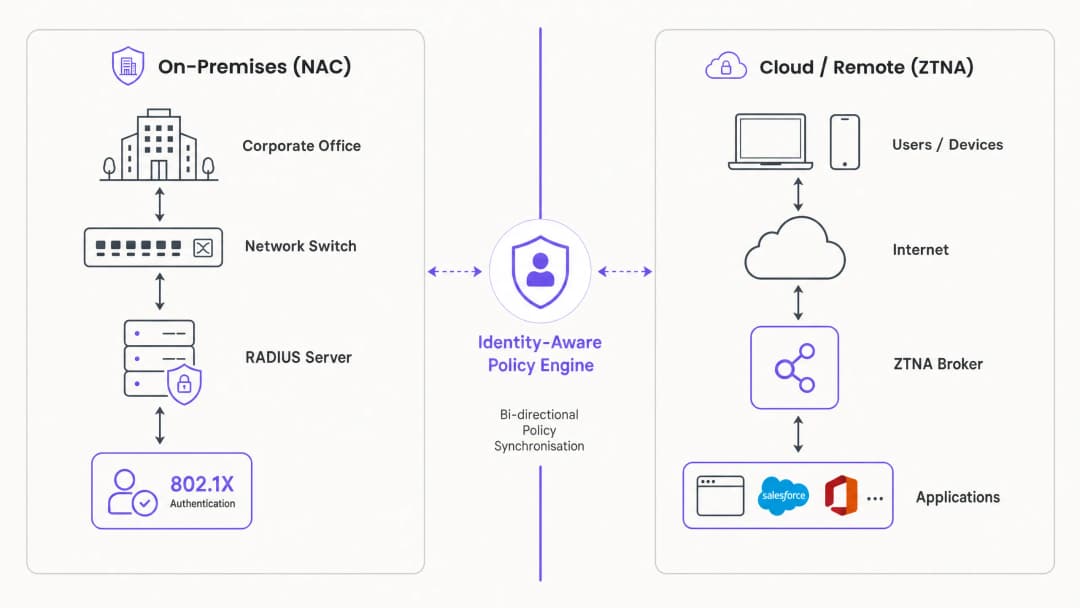
यह एकीकरण तीन प्रमुख तंत्रों के माध्यम से काम करता है। पहला, निरंतर स्थिति मूल्यांकन: जब कोई डिवाइस कॉर्पोरेट नेटवर्क से जुड़ता है, तो NAC समाधान OS संस्करण, एंटीवायरस स्थिति और प्रमाणपत्र सत्यापन को कवर करते हुए एक व्यापक स्थिति जांच करता है। यह संदर्भ API एकीकरण के माध्यम से ZTNA ब्रोकर के साथ तुरंत साझा किया जाता है। दूसरा, डायनेमिक नीति प्रवर्तन: यदि किसी डिवाइस की सुरक्षा स्थिति खराब हो जाती है (उदाहरण के लिए, मैलवेयर का पता चलता है), तो NAC सिस्टम स्थानीय नेटवर्क पर डिवाइस को क्वारंटीन कर देता है और साथ ही ZTNA ब्रोकर को महत्वपूर्ण क्लाउड अनुप्रयोगों तक पहुंच रद्द करने का निर्देश देता है। तीसरा, निर्बाध परिवर्तन: जैसे ही उपयोगकर्ता कार्यालय से किसी दूरस्थ स्थान पर जाता है, ZTNA क्लाइंट स्थापित ट्रस्ट संदर्भ को बनाए रखता है, जिससे पुनः प्रमाणीकरण की आवश्यकता समाप्त हो जाती है और अधिकृत संसाधनों तक निर्बाध पहुंच सुनिश्चित होती है।
इन डिप्लॉयमेंट का समर्थन करने वाली बुनियादी वायरलेस तकनीकों के बारे में गहराई से जानने के लिए, हमारी गाइड देखें: WiFi Frequencies: The 2026 Guide to WiFi Bands।
अपने विशिष्ट सेटअप को लेकर कोई सवाल हैं?
हमारी टीम 80,000 से अधिक वेन्यू में वेन्यू ऑपरेटरों, IT मैनेजरों और नेटवर्क इंजीनियरों के साथ काम करती है। 20 मिनट का कॉल बुक करें और हम आपको दिखाएंगे कि आपके जैसे अन्य लोगों ने इसे कैसे हल किया।
कार्यान्वयन मार्गदर्शिका: चरणबद्ध डिप्लॉयमेंट
एक कन्वर्ज्ड NAC/ZTNA आर्किटेक्चर को डिप्लॉय करने के लिए व्यवधान को कम करने और मजबूत नीति प्रवर्तन सुनिश्चित करने के लिए चरणबद्ध दृष्टिकोण की आवश्यकता होती है।
चरण 1: पहचान और संपत्ति की खोज
प्रवर्तन नीतियों को लागू करने से पहले, आपको अपने नेटवर्क वातावरण की पूर्ण दृश्यता प्राप्त करनी होगी। अपने NAC समाधान को केवल-निगरानी मोड में डिप्लॉय करें - इसे पहुंच को अवरुद्ध किए बिना कॉर्पोरेट लैपटॉप, BYOD, IoT और अतिथि उपकरणों सहित सभी जुड़े उपकरणों को खोजने और प्रोफाइल करने के लिए कॉन्फ़िगर करें। NAC और ZTNA दोनों समाधानों को Azure AD या Okta जैसे केंद्रीय पहचान प्रदाता के साथ एकीकृत करके उपयोगकर्ता पहचान को मजबूत करें। यह दोनों डोमेन में लगातार प्रमाणीकरण नीतियां सुनिश्चित करता है। इसके समानांतर, एप्लिकेशन एक्सेस पैटर्न की निगरानी के लिए अपने ZTNA समाधान का उपयोग करें, यह पहचानें कि किन उपयोगकर्ताओं को विशिष्ट अनुप्रयोगों तक पहुंच की आवश्यकता है और आपके माइक्रो-सेगमेंटेशन नीतियों का आधार तैयार करें।
चरण 2: नीति परिभाषा और माइक्रो-सेगमेंटेशन
न्यूनतम विशेषाधिकार (least privilege) के सिद्धांत के आधार पर विस्तृत एक्सेस नीतियां निर्धारित करके विजिबिलिटी से कंट्रोल की ओर बढ़ें। कॉर्पोरेट डिवाइसेस के लिए बुनियादी सुरक्षा आवश्यकताएं स्थापित करें, जिसमें न्यूनतम OS वर्जन और एक एक्टिव EDR एजेंट की आवश्यकता शामिल हो, और लोकल एक्सेस के लिए इन्हें लागू करने के लिए NAC समाधान को कॉन्फ़िगर करें। ऐसी ZTNA नीतियां परिभाषित करें जो उपयोगकर्ता की भूमिका और डिवाइस कॉन्टेक्स्ट के आधार पर एप्लिकेशन एक्सेस को सीमित करती हैं, जिससे NAC समाधान में परिभाषित पोस्चर आवश्यकताओं के साथ तालमेल सुनिश्चित हो सके। महत्वपूर्ण रूप से, NAC और ZTNA प्लेटफॉर्म के बीच द्विदिशीय (bidirectional) कॉन्टेक्स्ट शेयरिंग को सक्षम करने के लिए API इंटीग्रेशन को कॉन्फ़िगर करें, जिससे यह सुनिश्चित हो सके कि NAC द्वारा पता लगाए गए डिवाइस पोस्चर में बदलाव तुरंत real time में ZTNA ब्रोकर में पॉलिसी अपडेट को ट्रिगर करें।
चरण 3: प्रवर्तन और अनुकूलन (Enforcement and Optimisation)
विसंगतियों की निगरानी करते हुए और आवश्यकतानुसार नीतियों में सुधार करते हुए धीरे-धीरे एनफोर्समेंट मोड को सक्षम करें। एक पायलट यूजर ग्रुप या लोकेशन से शुरुआत करते हुए, NAC समाधान को मॉनिटर मोड से एनफोर्समेंट मोड में बदलें, और ऑथेंटिकेशन विफलताओं पर नज़र रखें। सभी कॉर्पोरेट एंडपॉइंट्स पर ZTNA क्लाइंट को रोल आउट करें, जिससे क्लाउड और ऑन-प्रिमाइसेस दोनों एप्लिकेशन्स तक निर्बाध पहुंच सुनिश्चित हो सके। Purple के Guest WiFi जैसे प्लेटफॉर्म का उपयोग करके मजबूत गेस्ट एक्सेस नीतियों का विस्तार करें, जिससे यह सुनिश्चित हो सके कि गेस्ट ट्रैफ़िक कॉर्पोरेट संसाधनों से पूरी तरह से अलग रहे। उपयोग के पैटर्न की निगरानी करने और पूरे गेस्ट एस्टेट में संभावित विसंगतियों का पता लगाने के लिए WiFi Analytics का लाभ उठाएं।
एंटरप्राइज वातावरण के लिए सर्वोत्तम अभ्यास
पूरे डिप्लॉयमेंट के दौरान यूजर एक्सपीरियंस को प्राथमिकता दें। सुरक्षा से उत्पादकता में बाधा नहीं आनी चाहिए, और सिंगल साइन-ऑन और निरंतर ऑथेंटिकेशन तंत्र का लाभ उठाते हुए, ऑन-प्रिमाइसेस और रिमोट एक्सेस के बीच का बदलाव उपयोगकर्ताओं के लिए पारदर्शी होना चाहिए। ऑन-प्रिमाइसेस एक्सेस के लिए, सभी कॉर्पोरेट डिवाइसेस के लिए IEEE 802.1X ऑथेंटिकेशन को अनिवार्य करें, क्योंकि यह पोर्ट स्तर पर डिवाइस की पहचान का मजबूत क्रिप्टोग्राफिक वेरिफिकेशन प्रदान करता है।
असामान्य व्यवहार की पहचान करने और प्रभावित डिवाइसेस को स्वचालित रूप से क्वारंटाइन करने के लिए अपने NAC और ZTNA समाधानों में AI-संचालित थ्रेट डिटेक्शन क्षमताओं को एकीकृत करें। इस क्षमता पर भविष्य के दृष्टिकोण के लिए, The Future of Wi-Fi Security: AI-Driven NAC and Threat Detection और इसके स्पैनिश समकक्ष El Futuro de la Seguridad Wi-Fi: NAC Impulsado por IA y Detección de Amenazas को देखें। वितरित उद्यमों के लिए, SD-WAN के साथ ZTNA को एकीकृत करना एप्लिकेशन रूटिंग को अनुकूलित कर सकता है और कई साइटों पर प्रदर्शन में सुधार कर सकता है - SD WAN vs MPLS: The 2026 Enterprise Network Guide पर हमारी तुलना देखें।
समस्या निवारण और जोखिम न्यूनीकरण
Context synchronisation latency सबसे महत्वपूर्ण विफलता मोड का प्रतिनिधित्व करता है। यदि NAC और ZTNA के बीच API एकीकरण में देरी होती है, तो एक समझौता किया गया डिवाइस स्वीकार्य समय से अधिक समय तक क्लाउड अनुप्रयोगों तक पहुंच बनाए रख सकता है। इसका समाधान केवल पोलिंग तंत्र पर भरोसा करने के बजाय webhook-आधारित पुश नोटिफिकेशन लागू करना है, जिससे वास्तविक समय के करीब पॉलिसी अपडेट सुनिश्चित हो सकें।
अत्यधिक प्रतिबंधात्मक नीतियां हेल्प-डेस्क टिकटों की संख्या में भारी वृद्धि का कारण बन सकती हैं जब पर्याप्त उपयोगकर्ता संचार के बिना सख्त पॉस्चर जांच लागू की जाती है। उपयोगकर्ताओं को गैर-अनुपालन के बारे में सूचित करने और पहुंच को पूरी तरह से अवरुद्ध करने से पहले स्वयं-सेवा सुधार निर्देश प्रदान करने के लिए एक Captive Portal का उपयोग करें।
IoT डिवाइस प्रमाणीकरण विफलताएं वेन्यू वातावरण में अपरिहार्य हैं। बिना स्क्रीन वाले IoT डिवाइस 802.1X या ZTNA क्लाइंट का समर्थन नहीं कर सकते हैं। इसका समाधान कॉर्पोरेट संसाधनों से IoT ट्रैफ़िक को अलग करने के लिए सख्त डिवाइस प्रोफाइलिंग और कठोर VLAN सेगमेंटेशन के साथ संयुक्त MAC Authentication Bypass (MAB) को अपनाना है।
API एकीकरण स्वास्थ्य निगरानी की अक्सर अनदेखी की जाती है। यदि NAC और ZTNA के बीच सिंक्रोनाइजेशन टूट जाता है, तो एक सुरक्षा अंतर पैदा हो जाता है जिसे कोई भी सिस्टम स्वतंत्र रूप से हल नहीं कर सकता है। एकीकरण स्वास्थ्य के लिए समर्पित निगरानी और अलर्ट लागू करें, और ऐसी फ़ेल-सेफ़ नीतियां परिभाषित करें जो एक निश्चित सीमा से अधिक सिंक्रोनाइजेशन खो जाने पर स्वचालित पहुंच प्रतिबंधों को सक्रिय करती हैं।
ROI और व्यावसायिक प्रभाव
NAC और ZTNA का अभिसरण जोखिम शमन से परे मापने योग्य व्यावसायिक मूल्य प्रदान करता है। एकीकृत नीति प्रबंधन IT टीमों पर प्रशासनिक बोझ को कम करता है, जिससे वे खंडित सुरक्षा सिलोस के प्रबंधन के बजाय रणनीतिक पहलों पर ध्यान केंद्रित कर सकते हैं। लीगेसी VPNs को समाप्त करने से हाइब्रिड कार्य अनुभव में महत्वपूर्ण सुधार होता है, डाउनटाइम और निराशा कम होती है जबकि दूरस्थ उपयोगकर्ताओं के लिए एप्लिकेशन प्रदर्शन में सुधार होता है।
निरंतर पॉस्चर मूल्यांकन और पहचान-आधारित पहुंच नियंत्रण प्रदर्शित करने की क्षमता PCI-DSS और GDPR जैसे फ्रेमवर्क के लिए अनुपालन रिपोर्टिंग को सरल बनाती है, जो परिवहन और खुदरा वातावरण में विशेष रूप से महत्वपूर्ण है जहां कार्डधारक डेटा और व्यक्तिगत डेटा सुरक्षा दायित्व कड़े हैं। वे संगठन जिन्होंने एक अभिसरण आर्किटेक्चर तैनात किया है, लगातार सुरक्षा घटनाओं को रोकने के औसत समय (MTTC) में कमी की रिपोर्ट करते हैं, क्योंकि द्विदिश नीति प्रवर्तन मैन्युअल हस्तक्षेप के बिना स्वचालित क्वारंटाइनिंग को सक्षम बनाता है।
मुख्य परिभाषाएं
Network Access Control (NAC)
एक सुरक्षा समाधान जो नेटवर्क इन्फ्रास्ट्रक्चर तक पहुँच चाहने वाले डिवाइसेस पर नीति लागू करता है, आमतौर पर VLAN असाइनमेंट और एक्सेस अधिकारों को निर्धारित करने के लिए प्रमाणीकरण और पोस्चर मूल्यांकन के लिए 802.1X का उपयोग करता है।
ऑन-प्रिमाइसेस वातावरण को सुरक्षित करने के लिए महत्वपूर्ण है, यह सुनिश्चित करता है कि केवल अनुपालन करने वाले और अधिकृत डिवाइस ही कॉर्पोरेट स्विच और वायरलेस एक्सेस पॉइंट से कनेक्ट हो सकें। IT टीमें भौतिक कार्यालय और वेन्यू नेटवर्क का प्रबंधन करते समय इसका सामना करती हैं।
Zero Trust Network Access (ZTNA)
एक IT सुरक्षा समाधान जो नेटवर्क स्थान के बजाय न्यूनतम विशेषाधिकार और निरंतर पहचान सत्यापन के सिद्धांत पर काम करते हुए, परिभाषित एक्सेस कंट्रोल नीतियों के आधार पर एप्लिकेशन और सेवाओं तक सुरक्षित रिमोट एक्सेस प्रदान करता है।
पहचान-आधारित माइक्रो-सेगमेंटेशन प्रदान करके लीगेसी VPN को प्रतिस्थापित करता है, जिससे पूरे नेटवर्क के बजाय केवल विशिष्ट एप्लिकेशन तक पहुंच मिलती है। रिमोट कर्मचारियों और क्लाउड एप्लिकेशन एक्सेस को सुरक्षित करते समय प्रासंगिक।
माइक्रो-सेगमेंटेशन
हमले के दायरे को कम करने और थ्रेट एक्टर्स द्वारा लेटरल मूवमेंट को रोकने के लिए एक नेटवर्क को अलग-अलग सेगमेंट में विभाजित करने की प्रक्रिया, जिसे नेटवर्क पेरिमिटर के बजाय एप्लिकेशन या वर्कलोड स्तर पर लागू किया जाता है।
ZTNA इस अवधारणा को एप्लिकेशन स्तर पर लागू करता है, जिससे यह सुनिश्चित होता है कि कोई समझौता किया गया एंडपॉइंट अनधिकृत संसाधनों तक पहुँचने के लिए आगे नहीं बढ़ सकता है। ज़ीरो-ट्रस्ट आर्किटेक्चर को डिज़ाइन करते समय IT टीमें इसका सामना करती हैं।
पोस्चर मूल्यांकन
नेटवर्क या एप्लिकेशन एक्सेस प्रदान करने से पहले डिवाइस की सुरक्षा स्थिति का मूल्यांकन करने की प्रक्रिया - जिसमें OS संस्करण, सक्रिय एंटीवायरस, इंस्टॉल किए गए सर्टिफिकेट और पैच स्तर शामिल हैं।
NAC का एक मुख्य कार्य, यह सुनिश्चित करना कि संवेदनशील या प्रभावित डिवाइसेस को कॉर्पोरेट नेटवर्क के साथ इंटरैक्ट करने से पहले क्वारंटीन किया जाए या उनका सुधार किया जाए। डिवाइस ऑनबोर्डिंग और निरंतर निगरानी के दौरान प्रासंगिक।
IEEE 802.1X
पोर्ट-आधारित Network Access Control के लिए एक IEEE मानक, जो नेटवर्क माध्यम पर EAP (एक्स्टेंसिबल ऑथेंटिकेशन प्रोटोकॉल) का उपयोग करके LAN या WLAN से जुड़ने के इच्छुक डिवाइसेस को एक प्रमाणीकरण तंत्र प्रदान करता है।
एंटरप्राइज नेटवर्क प्रमाणीकरण के लिए स्वर्ण मानक, जो डिवाइस की पहचान का मजबूत क्रिप्टोग्राफिक सत्यापन प्रदान करता है। IT टीमें स्विच, वायरलेस कंट्रोलर और RADIUS सर्वर को कॉन्फ़िगर करते समय इसका सामना करती हैं।
RADIUS (Remote Authentication Dial-In User Service)
एक नेटवर्किंग प्रोटोकॉल जो नेटवर्क सेवा से जुड़ने और उसका उपयोग करने वाले उपयोगकर्ताओं के लिए केंद्रीकृत प्रमाणीकरण, प्राधिकरण और लेखांकन (AAA) प्रबंधन प्रदान करता है, जो NAC और पहचान प्रदाताओं के बीच संचार परत के रूप में कार्य करता है।
पहचान प्रदाताओं के साथ संचार करने और एक्सेस नीतियों को लागू करने के लिए NAC समाधानों द्वारा उपयोग किया जाने वाला बैकएंड प्रोटोकॉल। NAC को Active Directory या क्लाउड IdPs के साथ एकीकृत करते समय प्रासंगिक।
MAC Authentication Bypass (MAB)
उन डिवाइसेस के लिए NAC समाधानों द्वारा उपयोग की जाने वाली एक वैकल्पिक प्रमाणीकरण विधि जो 802.1X का समर्थन नहीं करते हैं, नेटवर्क एक्सेस नीतियों को असाइन करने के लिए पहचानकर्ता के रूप में डिवाइस के MAC पते पर निर्भर करती है।
एंटरप्राइज वातावरण में बिना डिस्प्ले वाले डिवाइसेस - प्रिंटर, IoT सेंसर, डिजिटल साइनेज - को समायोजित करने के लिए आवश्यक है। 802.1X की तुलना में कम सुरक्षित है और MAC स्पूफिंग जोखिमों को कम करने के लिए सख्त VLAN सेगमेंटेशन की आवश्यकता होती है।
पहचान प्रदाता (IdP)
एक सिस्टम इकाई जो फेडरेशन या वितरित नेटवर्क के भीतर निर्भर अनुप्रयोगों को प्रमाणीकरण सेवाएं प्रदान करते हुए प्रिंसिपलों के लिए पहचान की जानकारी बनाती है, उसका रखरखाव करती है और उसका प्रबंधन करती है।
उपयोगकर्ता पहचान के लिए सत्य का केंद्रीय स्रोत, सुसंगत प्रमाणीकरण नीतियां सुनिश्चित करने के लिए NAC और ZTNA दोनों के साथ एकीकृत होता है। IT टीमें पूरे एंटरप्राइज सिस्टम में SSO और MFA को कॉन्फ़िगर करते समय इसका सामना करती हैं।
VLAN (Virtual Local Area Network)
एक भौतिक नेटवर्क का एक तार्किक उपखंड जो उपकरणों को पृथक ब्रॉडकास्ट डोमेन में समूहित करता है, जिससे अलग भौतिक बुनियादी ढांचे की आवश्यकता के बिना ट्रैफ़िक विभाजन सक्षम होता है।
एक साझा भौतिक नेटवर्क के भीतर विभिन्न डिवाइस श्रेणियों - कॉर्पोरेट, गेस्ट, IoT - को अलग करने का प्राथमिक तंत्र। कार्डधारक डेटा वातावरण अलगाव के लिए PCI-DSS आवश्यकताओं के अनुपालन के लिए महत्वपूर्ण।
हल किए गए उदाहरण
500 स्थानों वाले एक वैश्विक रिटेल चेन को उन क्षेत्रीय प्रबंधकों के लिए सुरक्षित पहुंच सुनिश्चित करने की आवश्यकता है जो अक्सर स्टोर, कॉर्पोरेट मुख्यालय और दूरस्थ गृह कार्यालयों (होम ऑफिस) के बीच यात्रा करते हैं। वे वर्तमान में बार-बार VPN डिस्कनेक्ट होने और क्लाउड-होस्टेड इन्वेंट्री प्रबंधन अनुप्रयोगों तक असंगत पहुंच का अनुभव करते हैं।
सभी स्थानों पर एक एकीकृत NAC/ZTNA आर्किटेक्चर लागू करें। जब प्रबंधक भौतिक रूप से स्टोर या HQ में हों, तो निर्बाध, सुरक्षित पहुंच के लिए NAC के माध्यम से 802.1X तैनात करें, जो Azure AD के साथ एकीकृत केंद्रीकृत RADIUS सर्वर के विरुद्ध प्रमाणित हो। सभी कॉर्पोरेट लैपटॉप पर एक ZTNA क्लाइंट तैनात करें। API के माध्यम से NAC और ZTNA पॉलिसी इंजनों को एकीकृत करें, तत्काल पॉस्चर अपडेट के लिए वेबहुक सूचनाओं को कॉन्फ़िगर करें। जब कोई प्रबंधक इन-स्टोर नेटवर्क से जुड़ता है, तो NAC डिवाइस को प्रमाणित करता है और ZTNA ब्रोकर के साथ 'विश्वसनीय आंतरिक' संदर्भ साझा करता है। इसके बाद ZTNA ब्रोकर बिना VPN टनल की आवश्यकता के क्लाउड-होस्टेड इन्वेंट्री एप्लिकेशन तक सीधी, अनुकूलित पहुंच प्रदान करता है, जिससे लेटेंसी कम होती है और डिस्कनेक्शन की समस्याएं समाप्त हो जाती हैं। जब प्रबंधक घर से काम करता है, तो ZTNA क्लाइंट कॉर्पोरेट नेटवर्क परिधि पर भरोसा किए बिना समान एक्सेस नीतियों को बनाए रखते हुए एप्लिकेशन के लिए एक सुरक्षित माइक्रो-टनल स्थापित करता है। इन-स्टोर गेस्ट और IoT उपकरणों को Purple के गेस्ट WiFi प्लेटफॉर्म के माध्यम से प्रबंधित अलग VLANs पर अलग किया जाता है।
एक बड़े सम्मेलन केंद्र (कॉन्फ्रेंस सेंटर) को कॉर्पोरेट कर्मचारियों के लिए सुरक्षित WiFi प्रदान करने की आवश्यकता है, साथ ही डिजिटल साइनेज, BLE बीकन और पर्यावरण सेंसर सहित हजारों दैनिक गेस्ट कनेक्शन और तीसरे पक्ष के विक्रेता (वेंडर) IoT उपकरणों को अलग करना है।
तीन अलग-अलग स्तरों पर कड़े VLAN अलगाव के साथ कॉन्फ़िगर किया गया एक मजबूत NAC समाधान तैनात करें। स्तर एक: कॉर्पोरेट कर्मचारी उपकरण 802.1X के माध्यम से प्रमाणित होते हैं और आंतरिक प्रबंधन प्रणालियों तक पूर्ण पहुंच के साथ एक सुरक्षित आंतरिक VLAN को सौंपे जाते हैं। स्तर दो: सार्वजनिक पहुंच को प्रबंधित करने के लिए Purple के गेस्ट WiFi प्लेटफॉर्म को लागू करें, केवल-इंटरनेट पहुंच वाले समर्पित गेस्ट VLAN के माध्यम से कॉर्पोरेट नेटवर्क से पूर्ण अलगाव सुनिश्चित करते हुए मूल्यवान विश्लेषण कैप्चर करें। स्तर तीन: वेंडर IoT उपकरणों के लिए, MAC प्रमाणीकरण बायपास (MAB) का उपयोग करें जो गहन डिवाइस प्रोफाइलिंग के साथ संयुक्त है - डिवाइस के प्रकारों की सटीक पहचान करने और उन्हें प्रतिबंधित, केवल-इंटरनेट VLANs में असाइन करने के लिए DHCP फ़िंगरप्रिंट, HTTP उपयोगकर्ता एजेंट और ट्रैफ़िक पैटर्न का विश्लेषण करता है। कॉर्पोरेट कर्मचारियों के लिए आयोजन स्थल के भीतर या दूरस्थ रूप से किसी भी स्थान से आंतरिक प्रबंधन अनुप्रयोगों को सुरक्षित रूप से एक्सेस करने के लिए ZTNA को एकीकृत करें। BLE बीकन इन्फ्रास्ट्रक्चर के लिए, एकीकरण विचारों के लिए BLE Low Energy Explained for Enterprise पर गाइड देखें।
अभ्यास प्रश्न
Q1. आपका संगठन लीगेसी VPN को बदलने के लिए ZTNA तैनात कर रहा है। हालांकि, कॉर्पोरेट कार्यालय में लौटने वाले उपयोगकर्ताओं को ऑन-प्रिमाइसेस डेटा सेंटर में स्थानीय रूप से होस्ट किए गए अनुप्रयोगों तक पहुँचने के दौरान विलंबता (लेटेंसी) का अनुभव हो रहा है, क्योंकि ZTNA ट्रैफ़िक क्लाउड-होस्टेड ब्रोकर के माध्यम से रूट हो रहा है। इसके लिए अनुशंसित आर्किटेक्चरल समाधान क्या है?
संकेत: विचार करें कि ZTNA क्लाइंट उपयोगकर्ता के भौतिक नेटवर्क संदर्भ के आधार पर एप्लिकेशन के लिए इष्टतम पथ कैसे निर्धारित करता है।
मॉडल उत्तर देखें
कॉर्पोरेट डेटा सेंटर के भीतर एक लोकल एज या ऑन-प्रिमाइसेस ZTNA ब्रोकर लागू करें। ZTNA क्लाइंट को यह पता लगाने के लिए कॉन्फ़िगर करें कि डिवाइस कब NAC के माध्यम से आंतरिक कॉर्पोरेट नेटवर्क पर प्रमाणित होता है और क्लाउड-होस्टेड ब्रोकर के माध्यम से हेयर-पिनिंग के बजाय सीधे आंतरिक ब्रोकर के माध्यम से स्थानीय एप्लिकेशन पर ट्रैफ़िक रूट करता है। यह समान पहचान-आधारित एक्सेस नियंत्रणों को बनाए रखते हुए ऑन-प्रिमाइसेस अनुप्रयोगों के लिए विलंबता को कम करता है। API के माध्यम से NAC संदर्भ साझाकरण को ZTNA ब्रोकर को यह संकेत देना चाहिए कि डिवाइस एक विश्वसनीय आंतरिक नेटवर्क पर है, जिससे स्थानीय रूटिंग निर्णय सक्षम हो सके।
Q2. एक अस्पताल की IT टीम को सैकड़ों जुड़े हुए चिकित्सा उपकरणों - इन्फ्यूजन पंप, रोगी मॉनिटर, इमेजिंग उपकरण - को सुरक्षित करने की आवश्यकता है जो 802.1X सप्लीकेंट्स या ZTNA क्लाइंट नहीं चला सकते हैं। इन उपकरणों को एक कन्वर्ज्ड NAC/ZTNA आर्किटेक्चर के भीतर कैसे सुरक्षित किया जाना चाहिए?
संकेत: फ़ॉलबैक प्रमाणीकरण विधियों और उन उपकरणों के लिए नेटवर्क-स्तरीय अलगाव के सिद्धांत पर विचार करें जो पहचान-आधारित नियंत्रणों में भाग नहीं ले सकते हैं।
मॉडल उत्तर देखें
NAC समाधान पर MAC Authentication Bypass (MAB) का उपयोग करें, साथ ही प्रत्येक चिकित्सा उपकरण प्रकार की सटीक पहचान और वर्गीकरण करने के लिए DHCP फिंगरप्रिंट, HTTP उपयोगकर्ता एजेंटों और ट्रैफ़िक व्यवहार विश्लेषण का उपयोग करके गहन डिवाइस प्रोफाइलिंग का उपयोग करें। एक बार पहचान होने के बाद, NAC इन उपकरणों को अत्यधिक प्रतिबंधित, पृथक VLAN में गतिशील रूप से असाइन करता है जो केवल विशिष्ट, आवश्यक चिकित्सा सर्वर और सिस्टम के साथ संचार की अनुमति देते हैं - डिफ़ॉल्ट रूप से अन्य सभी ट्रैफ़िक को ब्लॉक करते हैं। ZTNA इन उपकरणों पर लागू नहीं होता है; सुरक्षा पूरी तरह से सख्त नेटवर्क सेगमेंटेशन और असामान्य व्यवहार के लिए निरंतर ट्रैफ़िक निगरानी पर निर्भर करती है। PCI-DSS अनुपालन बनाए रखने के लिए सुनिश्चित करें कि चिकित्सा उपकरण VLAN पूरी तरह से कार्डधारक डेटा वातावरण से अलग हैं।
Q3. एक प्रोडक्शन डिप्लॉयमेंट के दौरान, आपके NAC और ZTNA समाधानों के बीच API एकीकरण बिना किसी अलर्ट के विफल हो जाता है। इसके बाद कॉर्पोरेट नेटवर्क पर एक उपयोगकर्ता का लैपटॉप मैलवेयर से संक्रमित हो जाता है। अपेक्षित सुरक्षा परिणाम का वर्णन करें और उस आर्किटेक्चरल कमी की पहचान करें जिसने इसकी अनुमति दी।
संकेत: प्रत्येक पॉलिसी इंजन पर टूटे हुए संदर्भ सिंक्रनाइज़ेशन के प्रभाव का स्वतंत्र रूप से विश्लेषण करें, और विचार करें कि कौन सी निगरानी लागू होनी चाहिए थी।
मॉडल उत्तर देखें
NAC समाधान EDR एकीकरण के माध्यम से खराब हुई स्थिति का पता लगाएगा और स्थानीय नेटवर्क पर डिवाइस को क्वारंटीन कर देगा, जिससे कॉर्पोरेट वातावरण के भीतर लैटरल मूवमेंट रुक जाएगी। हालांकि, क्योंकि API एकीकरण बिना किसी सूचना के विफल हो गया है, ZTNA ब्रोकर को अपडेट की गई स्थिति का संदर्भ प्राप्त नहीं हुआ है। यदि उपयोगकर्ता किसी क्लाउड एप्लिकेशन को एक्सेस करने का प्रयास करता है, तो ZTNA क्लाइंट अभी भी कनेक्शन स्थापित कर सकता है यदि प्रारंभिक पहचान प्रमाणीकरण टोकन मान्य रहता है और समाप्त नहीं हुआ है। आर्किटेक्चरल कमी दोहरी है: पहला, स्वयं API एकीकरण पर स्वास्थ्य निगरानी का न होना; दूसरा, एक फेल-सेफ नीति की कमी जो एक परिभाषित सीमा से अधिक संदर्भ सिंक्रनाइज़ेशन खो जाने पर स्वचालित एक्सेस प्रतिबंधों को ट्रिगर करती है। इसका समाधान एकीकरण स्वास्थ्य पर अलर्टिंग के साथ समर्पित निगरानी को लागू करना, ZTNA ब्रोकर को समय-समय पर स्थिति के पुन: सत्यापन (न केवल प्रारंभिक प्रमाणीकरण) की आवश्यकता के लिए कॉन्फ़िगर करना, और एक डिफॉल्ट-डिनाय नीति को परिभाषित करना है जो सक्रिय होती है यदि NAC संदर्भ फ़ीड एक निर्दिष्ट अंतराल से अधिक समय के लिए अनुपलब्ध है।
इस श्रृंखला में आगे पढ़ें
PPSK WPA3: सुविधाओं और परिनियोजन मॉडलों की तुलना
यह तकनीकी संदर्भ गाइड PPSK और WPA3-SAE की तुलना करती है, मल्टी-टेनेंट वातावरण के लिए उनके आर्किटेक्चरल अंतर और परिनियोजन मॉडल की व्याख्या करती है। यह IT प्रबंधकों और प्रॉपर्टी डेवलपर्स को Purple के पहचान-आधारित समाधानों का उपयोग करके सुरक्षित, पृथक WiFi नेटवर्क प्राप्त करने पर व्यावहारिक मार्गदर्शन प्रदान करती है.
Staff WiFi के लिए बैंडविड्थ प्रबंधित करना: शेपिंग, QoS और ट्रैफ़िक को कम करना
यह गाइड एंटरप्राइज़ स्थानों में staff WiFi के लिए बैंडविड्थ प्रबंधित करने के व्यावहारिक तरीकों का विवरण देती है। इसमें ट्रैफ़िक शेपिंग, QoS कार्यान्वयन, और बुनियादी ढांचे के अपग्रेड की आवश्यकता के बिना Purple Shield को तैनात करने से नेटवर्क लोड कैसे कम होता है, यह शामिल है।
प्रति-डिवाइस PSK (iPSK, DPSK, MPSK) का उपयोग करके WiFi SSID की संख्या कैसे कम करें
यह आधिकारिक तकनीकी संदर्भ गाइड बताती है कि कैसे IT टीमें प्रति-डिवाइस PSK (xPSK) का उपयोग करके कई विशिष्ट उद्देश्यों के लिए बनाए गए नेटवर्क को एक सिंगल SSID में मिलाकर SSID बीकन ओवरहेड के कारण होने वाले WiFi परफॉर्मेंस के नुकसान को समाप्त कर सकती हैं। इसमें Cisco iPSK, HPE Aruba MPSK, Ruckus DPSK, Juniper Mist PPSK और Ubiquiti UniFi PPSK के वेंडर परिदृश्य को शामिल किया गया है, जिसमें डायनेमिक VLAN असाइनमेंट, IoT ऑनबोर्डिंग और PCI DSS अनुपालन पर व्यावहारिक कार्यान्वयन मार्गदर्शन दिया गया है। हॉस्पिटैलिटी, रिटेल, स्टेडियम और सार्वजनिक क्षेत्र के संगठनों के वेन्यू ऑपरेटरों को इसमें व्यावहारिक आर्किटेक्चर मार्गदर्शन और वास्तविक दुनिया के व्यावहारिक उदाहरण मिलेंगे।
अपने विशिष्ट सेटअप को लेकर कोई सवाल हैं?
हमारी टीम 80,000 से अधिक वेन्यू में वेन्यू ऑपरेटरों, IT मैनेजरों और नेटवर्क इंजीनियरों के साथ काम करती है। 20 मिनट का कॉल बुक करें और हम आपको दिखाएंगे कि आपके जैसे अन्य लोगों ने इसे कैसे हल किया।