
निरंतर ट्रस्ट मॉनिटरिंग के लिए पोस्ट-एडमिशन NAC को कैसे लागू करें
यह गाइड हॉस्पिटैलिटी, रिटेल, हेल्थकेयर और पब्लिक-सेक्टर सहित एंटरप्राइज स्थानों पर कंटीन्यूअस ट्रस्ट मॉनिटरिंग के साथ पोस्ट-एडमिशन नेटवर्क एक्सेस कंट्रोल (NAC) को लागू करने के लिए एक विश्वसनीय तकनीकी खाका प्रदान करती है। यह RADIUS CoA, व्यावहारिक आधारभूत विश्लेषण और टेलीमेट्री एकीकरण का उपयोग करके स्टेटिक प्री-एडमिशन चेक से डायनेमिक, सेशन-अवेयर एनफोर्समेंट में आर्किटेक्चरल बदलाव का विवरण देती है। IT आर्किटेक्ट्स और नेटवर्क ऑपरेशंस टीमों को यहां व्यावहारिक परिनियोजन मार्गदर्शन, वास्तविक दुनिया के केस स्टडीज, अनुपालन संरेखण नोट और मापने योग्य ROI फ्रेमवर्क मिलेंगे।
इस गाइड को सुनें
पॉडकास्ट ट्रांसक्रिप्ट देखें
हमारी मुख्य श्रृंखला का हिस्सा: एंटरप्राइज WiFi सुरक्षा गाइड →
कार्यकारी सारांश (Executive Summary)
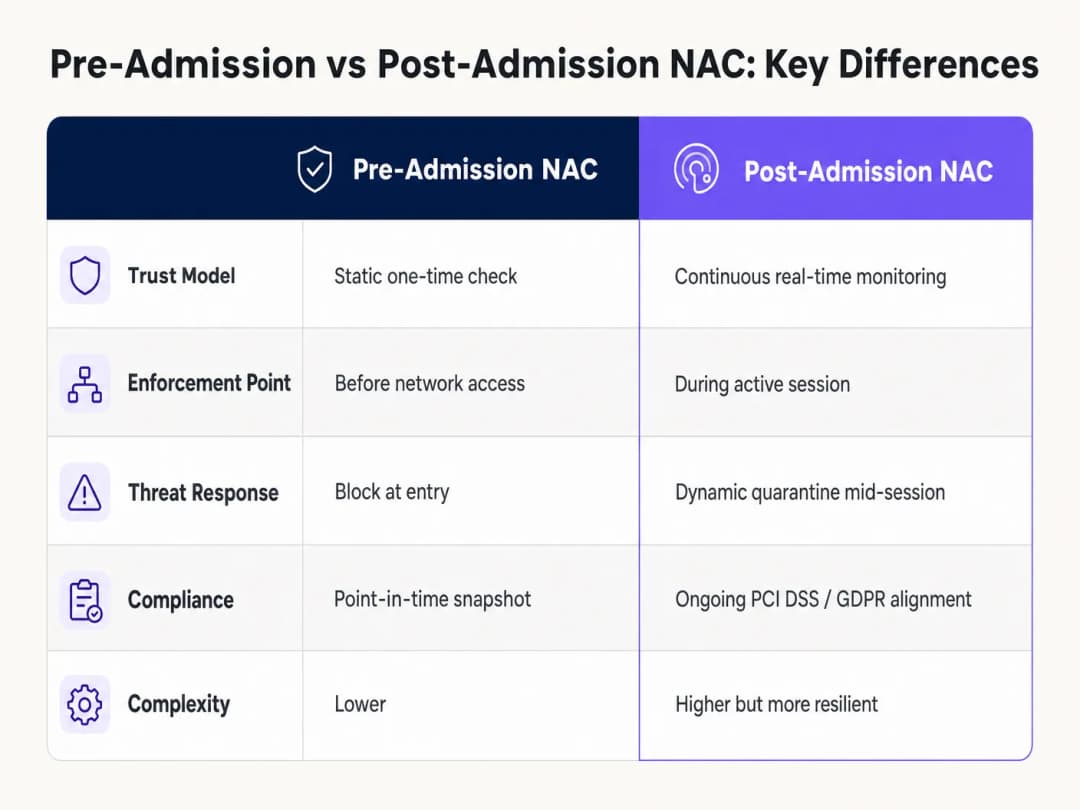
उच्च-घनत्व वाले वातावरण - आतिथ्य (hospitality), रिटेल, स्टेडियम और सार्वजनिक-क्षेत्र के स्थानों में उद्यम नेटवर्क के लिए - पारंपरिक प्री-एडमिशन नेटवर्क एक्सेस कंट्रोल अब पर्याप्त नहीं है। स्थिर, पॉइंट-इन-टाइम सत्यापन जांच उन उपकरणों को संबोधित नहीं कर सकती हैं जो नेटवर्क एक्सेस प्राप्त करने के बाद समझौता (compromised) का शिकार हो जाते हैं या दुर्भावनापूर्ण व्यवहार प्रदर्शित करने लगते हैं। एक उपकरण एक स्वच्छ 802.1X पॉलिसी-इंजन प्रमाणीकरण पास कर सकता है और कुछ ही मिनटों बाद, आंतरिक सबनेट्स को स्कैन करना या डेटा चोरी (exfiltrate) करना शुरू कर सकता है।
पोस्ट-एडमिशन NAC सुरक्षा प्रतिमान को "प्रमाणित करें और भरोसा करें" से Continuous Trust Monitoring में बदल देता है। स्थापित व्यवहार संबंधी बेसलाइन के विरुद्ध डिवाइस की स्थिति, ट्रैफ़िक पैटर्न और सत्र संदर्भ का लगातार मूल्यांकन करके, IT और नेटवर्क संचालन टीमें RADIUS Change of Authorization (CoA) का उपयोग करके सत्र के मध्य में गतिशील रूप से नीति लागू कर सकती हैं। यह मार्गदर्शिका पोस्ट-एडमिशन NAC को लागू करने के लिए एक व्यावहारिक, विक्रेता-अज्ञेयवादी (vendor-agnostic) खाका प्रदान करती है। इसमें आर्किटेक्चरल विचार, Guest WiFi और WiFi Analytics प्लेटफॉर्म के साथ एकीकरण, और कार्रवाई योग्य तैनाती रणनीतियाँ शामिल हैं जो उपयोगकर्ता अनुभव से समझौता किए बिना जोखिम को कम करती हैं।
तकनीकी गहन विश्लेषण (Technical Deep Dive)
प्री-एडमिशन से पोस्ट-एडमिशन में बदलाव
पारंपरिक NAC पहुंच प्रदान करने से पहले पहचान और स्थिति को सत्यापित करने के लिए IEEE 802.1X, MAC Authentication Bypass (MAB) या कैप्टिव पोर्टल्स पर निर्भर करता है। एक बार प्रवेश मिलने के बाद, एक उपकरण के पास आमतौर पर सत्र की अवधि के लिए उसके आवंटित VLAN या माइक्रो-सेगमेंट तक निर्बाध पहुंच होती है। इस मॉडल में एक मौलिक खामी है: यह प्रवेश को एक द्विआधारी (binary), एकमुश्त घटना के रूप में मानता है। खतरा परिदृश्य उस तरह से काम नहीं करता है।
पोस्ट-एडमिशन NAC एक गतिशील नीति इंजन पेश करता है जो सक्रिय सत्रों की लगातार निगरानी करता है। यदि कोई उपकरण आंतरिक सबनेट्स को स्कैन करना, असामान्य ट्रैफ़िक उत्पन्न करना, या ज्ञात कमांड-एंड-कंट्रोल (C2) सर्वरों के साथ संवाद करने का प्रयास करना शुरू करता है, तो NAC समाधान उस उपकरण के नेटवर्क विशेषाधिकारों को गतिशील रूप से बदल देता है। यह RADIUS Change of Authorization (CoA) अनुरोधों (RFC 5176), वायरलेस LAN नियंत्रकों (WLCs) के साथ API एकीकरण, या SD-WAN आर्किटेक्चर के साथ सीधे एकीकरण के माध्यम से प्राप्त किया जाता है - एक ऐसा विषय जिसे SD WAN vs MPLS: The 2026 Enterprise Network Guide में विस्तार से खोजा गया है।

Continuous Trust Monitoring आर्किटेक्चर के मुख्य घटक
एक प्रोडक्शन-ग्रेड Post-Admission NAC डिप्लॉयमेंट के लिए चार एकीकृत घटकों की आवश्यकता होती है जो मिलकर काम करते हैं।
Telemetry Ingestion इसकी नींव है। सिस्टम को WLCs, स्विच, फ़ायरवॉल और एंडपॉइंट डिटेक्शन एंड रिस्पांस (EDR) एजेंटों से रियल-टाइम डेटा एकत्र करना चाहिए। इसमें NetFlow/IPFIX डेटा, RADIUS अकाउंटिंग रिकॉर्ड, DNS रिक्वेस्ट लॉग और डीप पैकेट इंस्पेक्शन (DPI) इंजनों से एप्लिकेशन विजिबिलिटी मेट्रिक्स शामिल हैं। व्यापक टेलीमेट्री के बिना, पॉलिसी इंजन बिना किसी आधार के काम करता है।
The Behavioural Analytics Engine टेलीमेट्री स्ट्रीम को प्रोसेस करता है और स्थापित बेसलाइनों के साथ उनकी तुलना करता है। बेसलाइन निर्माण और विसंगति स्कोरिंग को ऑटोमैटिक करने के लिए मशीन लर्निंग मॉडल का तेजी से उपयोग किया जा रहा है, जिससे मैन्युअल कॉन्फ़िगरेशन का बोझ कम हो जाता है। AI इस क्षेत्र को कैसे बदल रहा है, इस बारे में अधिक जानने के लिए, The Future of Wi-Fi Security: AI-Driven NAC and Threat Detection और इसके स्पैनिश-भाषा समकक्ष El Futuro de la Seguridad Wi-Fi: NAC Impulsado por IA y Detección de Amenazas को देखें।
Dynamic Policy Enforcement इसका परिचालन आउटपुट है। किसी पोर्ट को बाउंस करने, VLAN असाइनमेंट को बदलने या प्रतिबंधात्मक एक्सेस कंट्रोल लिस्ट (ACL) लागू करने के लिए रियल टाइम में RADIUS CoA भेजने की क्षमता ही Post-Admission NAC को एक पैसिव मॉनिटरिंग सिस्टम से अलग बनाती है। विश्वसनीय CoA के बिना, आपके पास केवल एक अलर्टिंग सिस्टम होता है, न कि कोई एन्फोर्समेंट सिस्टम।
The Integration Layer NAC इंजन को व्यापक सुरक्षा इकोसिस्टम से जोड़ता है: इवेंट कोरिलेशन के लिए SIEM प्लेटफॉर्म, ज्ञात-दुर्भावनापूर्ण IP संवर्धन के लिए थ्रेट इंटेलिजेंस फ़ीड, और यूजर कॉन्टेक्स्ट संवर्धन के लिए पहचान प्रदाता। गेस्ट-फेसिंग परिवेशों में, एक WiFi Analytics प्लेटफॉर्म सेशन-स्तरीय संदर्भ प्रदान करता है जो पॉलिसी निर्णयों को काफी समृद्ध बनाता है।
मानक और प्रोटोकॉल संदर्भ
| मानक | Post-Admission NAC के लिए प्रासंगिकता |
|---|---|
| IEEE 802.1X | पोर्ट-आधारित प्रमाणीकरण की नींव; पहचान बाइंडिंग प्रदान करता है जिसका NAC पॉलिसियां संदर्भ लेती हैं |
| RFC 5176 (RADIUS CoA) | मिड-सेशन पॉलिसी एन्फोर्समेंट के लिए प्रोटोकॉल तंत्र |
| WPA3-Enterprise | 802.1X प्रमाणीकरण एक्सचेंज के लिए मजबूत क्रिप्टोग्राफिक सुरक्षा प्रदान करता है |
| PCI-DSS v4.0 | ऑटोमैटिक रिस्पांस क्षमता के साथ नेटवर्क एक्सेस की निरंतर निगरानी की आवश्यकता होती है |
| GDPR Article 32 | निरंतर गोपनीयता और अखंडता सुनिश्चित करने के लिए उचित तकनीकी उपायों का आदेश देता है |
| NIST SP 800-207 | ज़ीरो ट्रस्ट आर्किटेक्चर ढांचा जिसे Post-Admission NAC सीधे लागू करता है |
अपने विशिष्ट सेटअप को लेकर कोई सवाल हैं?
हमारी टीम 80,000 से अधिक वेन्यू में वेन्यू ऑपरेटरों, IT मैनेजरों और नेटवर्क इंजीनियरों के साथ काम करती है। 20 मिनट का कॉल बुक करें और हम आपको दिखाएंगे कि आपके जैसे अन्य लोगों ने इसे कैसे हल किया।
इम्प्लीमेंटेशन गाइड
बड़े पैमाने पर नेटवर्क व्यवधान से बचने के लिए Post-Admission NAC को डिप्लॉय करने के लिए एक चरणबद्ध दृष्टिकोण की आवश्यकता होती है। तुरंत एक्टिव एन्फोर्समेंट को सक्षम करने का प्रयास करना डिप्लॉयमेंट विफलता का सबसे आम कारण है।
चरण 1: विजिबिलिटी और बेसलाइनिंग (सप्ताह 1 - 4)
NAC समाधान को केवल-निगरानी (monitor-only) मोड में तैनात करें। इस चरण के दौरान कोई भी प्रवर्तन (enforcement) कार्रवाई कॉन्फ़िगर नहीं की जानी चाहिए।
सबसे पहले, सुनिश्चित करें कि सभी नेटवर्क एक्सेस डिवाइस (NADs) RADIUS अकाउंटिंग डेटा और फ़्लो टेलीमेट्री को NAC पॉलिसी इंजन पर भेज रहे हैं। सभी प्रबंधित स्विचेस और WLCs पर NetFlow या IPFIX एक्सपोर्ट कॉन्फ़िगर करें। आगे बढ़ने से पहले सत्यापित करें कि NAC इंजन रिकॉर्ड्स को सही ढंग से प्राप्त और पार्स कर रहा है।
सिस्टम को विभिन्न डिवाइस प्रोफाइल में ट्रैफ़िक पैटर्न का निरीक्षण करने दें। यह विशेष रूप से healthcare परिवेशों में महत्वपूर्ण है, जहाँ मेडिकल IoT उपकरणों के ट्रैफ़िक पैटर्न अत्यधिक अनुमानित होते हैं, और retail परिवेशों में, जहाँ पॉइंट-ऑफ-सेल (POS) टर्मिनलों की संचार आवश्यकताएं अच्छी तरह से परिभाषित होती हैं। आधारभूत अवधि (baselining period) में कम से कम एक पूर्ण व्यावसायिक चक्र (आमतौर पर चार सप्ताह) शामिल होना चाहिए ताकि सप्ताहांत बनाम कार्यदिवस के अंतर को कैप्चर किया जा सके।
चरण 2: नीति विकास और परीक्षण (सप्ताह 5-6)
आधारभूत रेखाएँ स्थापित होने के साथ, जोखिम-आधारित नीतियाँ विकसित करें। पूरी तरह से तकनीकी संकेतकों के बजाय व्यावसायिक जोखिम के आधार पर स्पष्ट क्वारंटाइन ट्रिगर्स को परिभाषित करें।
रिटेल परिवेश के लिए, एक महत्वपूर्ण ट्रिगर हो सकता है: Guest VLAN से कोई भी ट्रैफ़िक जो POS VLAN सबनेट्स पर रूट करने का प्रयास कर रहा हो। हॉस्पिटैलिटी के लिए, यह हो सकता है: कोई भी डिवाइस जो प्रति मिनट 500 से अधिक SMB कनेक्शन प्रयास उत्पन्न कर रहा हो। हेल्थकेयर के लिए: कोई भी MAB-प्रमाणित डिवाइस जो अपनी स्वीकृत गंतव्य सूची के बाहर बाहरी IP पतों के साथ संचार कर रहा हो।
ट्रिगर स्थितियों का अनुकरण करके प्रयोगशाला परिवेश में प्रत्येक नीति का परीक्षण करें। सत्यापित करें कि NAC इंजन विसंगति की सही पहचान करता है, CoA अनुरोध उत्पन्न करता है, और NAD एक स्वीकार्य समय विंडो (आमतौर पर महत्वपूर्ण ट्रिगर्स के लिए 500 मिलीसेकंड से कम) के भीतर नई नीति लागू करता है।
चरण 3: क्रमिक प्रवर्तन रोलआउट (सप्ताह 7-10)
सबसे पहले कम जोखिम वाले नेटवर्क सेगमेंट पर सक्रिय प्रवर्तन (active enforcement) सक्षम करें। केवल-कर्मचारी IoT VLAN अक्सर एक अच्छा शुरुआती बिंदु होता है, क्योंकि गेस्ट या क्लिनिकल नेटवर्क की तुलना में झूठी सकारात्मकताओं (false positives) का परिचालन पर सीमित प्रभाव पड़ता है।
क्रमिक प्रवर्तन प्रतिक्रियाओं के साथ शुरुआत करें। उपकरणों को तुरंत डिस्कनेक्ट करने के बजाय, एक प्रतिबंधात्मक ACL लागू करें जो बुनियादी इंटरनेट एक्सेस (स्वीकृत गंतव्यों के लिए HTTP/HTTPS) की अनुमति देता है लेकिन सभी आंतरिक रूटिंग को ब्लॉक करता है। यह खतरों को नियंत्रित करते हुए झूठी सकारात्मकताओं के प्रभाव को कम करता है। दैनिक रूप से क्वारंटाइन कतार की निगरानी करें और आवश्यकतानुसार थ्रेसहोल्ड को ट्यून करें।
आगे बढ़ने से पहले प्रत्येक को मान्य करते हुए, धीरे-धीरे अतिरिक्त सेगमेंट में प्रवर्तन का विस्तार करें। सुनिश्चित करें कि RADIUS CoA सुचारू रूप से काम करता है - NAC इंजन और सभी NADs के बीच UDP पोर्ट 3799 खुला होना चाहिए, और साझा रहस्य (shared secrets) सुसंगत होने चाहिए। transport हब तैनाती में, जहाँ नेटवर्क सेगमेंट कई भौतिक स्थानों में फैले हो सकते हैं, WAN लिंक पर CoA प्रतिक्रिया समय सत्यापित करें।
चरण 4: पूर्ण उत्पादन और निरंतर अनुकूलन
एक बार जब सभी सेगमेंट सक्रिय प्रवर्तन के अंतर्गत आ जाते हैं, तो निरंतर अनुकूलन की एक प्रक्रिया स्थापित करें। साप्ताहिक रूप से क्वारंटाइन घटनाओं की समीक्षा करें, बार-बार होने वाले गलत सकारात्मक (false positives) की पहचान करें, और उसी के अनुसार बेसलाइन को समायोजित करें। एंडपॉइंट और परिधि सुरक्षा घटनाओं के साथ क्रॉस-सहसंबंध के लिए अपने SIEM के साथ NAC इवेंट स्ट्रीम को एकीकृत करें।
Hospitality परिनियोजन के लिए, मौसमी बेसलाइन समायोजन पर विचार करें - पीक समर सीजन में एक होटल नेटवर्क का ट्रैफ़िक पैटर्न जनवरी में उसी नेटवर्क की तुलना में काफी भिन्न होता है। अपडेट के बिना, स्थिर बेसलाइन पीक अवधि के दौरान अधिक गलत सकारात्मक उत्पन्न करेंगी।
सर्वोत्तम प्रथाएं
जहां भी संभव हो 802.1X पर मानकीकृत करें। हालांकि बिना स्क्रीन वाले IoT उपकरणों के लिए MAB आवश्यक है, लेकिन 802.1X एक मजबूत क्रिप्टोग्राफिक पहचान बाइंडिंग प्रदान करता है। सुनिश्चित करें कि जहां भी समर्थित हो, WPA3-Enterprise का उपयोग किया जाए। अंतर्निहित RF वातावरण को समझना आवश्यक है - यह सुनिश्चित करने के लिए कि आपका स्पेक्ट्रम डिज़ाइन निरंतर निगरानी के प्रबंधन ओवरहेड का समर्थन करता है, Wi Fi Frequencies: A Guide to Wi-Fi Frequencies in 2026 देखें।
माइक्रो-सेगमेंटेशन का उपयोग एक पूरक नियंत्रण के रूप में करें। पोस्ट-एडमिशन NAC को नेटवर्क माइक्रो-सेगमेंटेशन के साथ संयोजित करें। यदि कोई उपकरण हैक हो जाता है और किसी भी कारण से CoA प्रतिक्रिया में देरी होती है, तो माइक्रो-सेगमेंटेशन प्रभाव के दायरे को उपकरण के अपने सेगमेंट तक सीमित कर देता है। ये दोनों नियंत्रण पूरक हैं, न कि फालतू।
अनुपालन शासनादेशों के साथ प्रवर्तन नीति को संरेखित करें। सुनिश्चित करें कि आपकी निरंतर निगरानी और स्वचालित प्रतिक्रिया प्रक्रियाएं ऑडिटर्स के लिए प्रलेखित हैं। PCI-DSS v4.0 आवश्यकता 10 यह निर्देश देती है कि नेटवर्क संसाधनों तक सभी पहुंच को लॉग और मॉनिटर किया जाए। GDPR अनुच्छेद 32 के लिए निरंतर गोपनीयता और अखंडता उपायों की आवश्यकता होती है। पोस्ट-एडमिशन NAC सीधे दोनों को पूरा करता है - लेकिन केवल तभी जब ऑडिट ट्रेल सुरक्षित रखे जाएं और स्वचालित प्रतिक्रिया प्रक्रियाएं औपचारिक रूप से प्रलेखित हों।
भौतिक-संदर्भ संवर्धन के लिए BLE पर विचार करें। ऐसे वातावरण में जहां भौतिक उपस्थिति मायने रखती है - उदाहरण के लिए, सम्मेलन केंद्र या रिटेल फ्लोर - BLE बीकन डेटा को एकीकृत करना NAC नीति इंजन के संदर्भ को समृद्ध कर सकता है। एक उपकरण जो नेटवर्क पर प्रमाणित है लेकिन भौतिक रूप से एक प्रतिबंधित क्षेत्र में स्थित है, सार्वजनिक क्षेत्र में उसी उपकरण की तुलना में अधिक जोखिम भरा संकेत है। कार्यान्वयन मार्गदर्शन के लिए BLE Low Energy Explained for Enterprise देखें।
समस्या निवारण और जोखिम न्यूनीकरण
CoA विफलताएं
पोस्ट-एडमिशन NAC परिनियोजन में सबसे आम समस्या NAD द्वारा RADIUS CoA अनुरोधों को संसाधित करने में विफल होना है। इसके लक्षणों में शामिल हैं: NAC इंजन एक सफल CoA ट्रांसमिशन लॉग करता है, लेकिन क्लाइंट डिवाइस अपरिवर्तित पहुंच के साथ नेटवर्क पर बना रहता है। NAD पर UDP पोर्ट 3799 पर ट्रैफ़िक कैप्चर करके निदान करें। सामान्य कारणों में CoA पोर्ट को ब्लॉक करने वाले फ़ायरवॉल नियम, बेमेल RADIUS शेयर्ड सीक्रेट, या NAD के कॉन्फ़िगरेशन में CoA का स्पष्ट रूप से सक्षम न होना शामिल हैं। गो-लाइव से पहले हमेशा एक नियंत्रित परीक्षण में CoA को मान्य करें।
गलत सकारात्मक और परिचालन व्यवधान
अत्यधिक आक्रामक व्यावहारिक बेसलाइन वैध उपकरणों को भी क्वारंटाइन कर देंगी। यह विशेष रूप से हॉस्पिटैलिटी परिवेशों में समस्याग्रस्त है, जहाँ अतिथि उपकरणों का व्यवहार अप्रत्याशित होता है - वीडियो स्ट्रीमिंग, VPN का उपयोग और क्लाउड बैकअप संचालन सभी विसंगति थ्रेसहोल्ड को ट्रिगर कर सकते हैं यदि बेसलाइन बहुत संकीर्ण हैं। हमेशा क्रमिक प्रवर्तन दृष्टिकोण का उपयोग करें और उन ज्ञात-अच्छे उपकरणों के लिए एक व्हाइटलिस्टिंग प्रक्रिया बनाए रखें जो बार-बार अलर्ट ट्रिगर करते हैं।
Scale और Throughput
निरंतर निगरानी से पर्याप्त मात्रा में टेलीमेट्री डेटा उत्पन्न होता है। 10,000 समवर्ती सत्रों वाले स्टेडियम या बड़े सम्मेलन केंद्र में, NAC पॉलिसी इंजन और लॉगिंग इन्फ्रास्ट्रक्चर को बिना किसी रिकॉर्ड को ड्रॉप किए राइट दरों को संभालने के लिए स्केल होना चाहिए। ड्रॉप किया गया टेलीमेट्री डेटा ब्लाइंड स्पॉट बनाता है। इन्फ्रास्ट्रक्चर को औसत के बजाय चरम समवर्ती सत्रों के लिए डिज़ाइन करें, और बर्स्ट को अवशोषित करने के लिए कलेक्टर लेयर पर टेलीमेट्री बफरिंग लागू करें।
वेंडर लॉक-इन
कुछ NAC वेंडर मालिकाना CoA एक्सटेंशन लागू करते हैं जो केवल उनके अपने हार्डवेयर इकोसिस्टम के साथ काम करते हैं। डिप्लॉयमेंट आर्किटेक्चर को अंतिम रूप देने से पहले, सुनिश्चित करें कि आपका NAC पॉलिसी इंजन मानकों पर आधारित RFC 5176 CoA का समर्थन करता है और आपके NAD वेंडर की परीक्षण की गई संगतता मैट्रिक्स पर दिखाई देते हैं।
ROI और व्यावसायिक प्रभाव
Post-Admission NAC को लागू करने से मापने योग्य व्यावसायिक मूल्य मिलता है जो सुरक्षा अनुपालन से कहीं आगे तक जाता है।
प्रतिक्रिया देने के औसत समय (MTTR) में कमी: स्वचालित क्वारंटाइन MTTR को घंटों - या बिना किसी समर्पित SOC टीम वाले परिवेशों में दिनों - से घटाकर मिलीसेकंड कर देता है। 500 स्टोर्स वाले रिटेल चेन के लिए, इसका मतलब है कि किसी शाखा में एक समझौता किया गया उपकरण POS नेटवर्क तक पहुँचने से पहले ही नियंत्रित कर लिया जाता है, चाहे नेटवर्क इंजीनियर साइट पर हो या न हो।
परिचालन दक्षता: नेटवर्क संचालन टीमों को समझौता किए गए उपकरणों को मैन्युअल रूप से खोजने में काफी कम समय बिताना पड़ता है। विस्तृत ऑडिट लॉगिंग के साथ स्वचालित क्वारंटाइन जांच के बोझ को कम करता है और घटना के बाद की रिपोर्टिंग को तेज करता है।
ब्रांड और राजस्व सुरक्षा: सार्वजनिक परिवेशों में, किसी अतिथि उपकरण को बड़े उल्लंघन का जरिया बनने से रोकना आयोजन स्थल की प्रतिष्ठा की रक्षा करता है। किसी होटल या रिटेल परिवेश में डेटा उल्लंघन न केवल GDPR नियामक दंड लाता है, बल्कि महत्वपूर्ण प्रतिष्ठा क्षति भी पहुँचाता है जो सीधे राजस्व को प्रभावित करती है।
कम अनुपालन लागत: संपूर्ण ऑडिट ट्रेल के साथ स्वचालित, निरंतर निगरानी अनुपालन ऑडिट की लागत और प्रयास को कम करती है। PCI QSA को स्वचालित, रीयल-टाइम प्रतिक्रिया क्षमता प्रदर्शित करना मैन्युअल प्रक्रियाओं के दस्तावेजीकरण को प्रस्तुत करने की तुलना में काफी आसान है।
मुख्य परिभाषाएं
Post-Admission NAC
प्रारंभिक नेटवर्क एक्सेस दिए जाने के बाद किसी डिवाइस पर सुरक्षा नीतियों की निरंतर निगरानी और गतिशील प्रवर्तन, प्री-एडमिशन जांचों के विपरीत जो केवल कनेक्शन के बिंदु पर होती हैं।
उन डिवाइसों की पहचान करने के लिए महत्वपूर्ण है जो सत्र के मध्य में असुरक्षित हो जाते हैं या दुर्भावनापूर्ण व्यवहार प्रदर्शित करते हैं जो प्रारंभिक प्रमाणीकरण चरण के दौरान स्पष्ट नहीं था। मेहमानों या अप्रबंधित डिवाइस एक्सेस वाले किसी भी वातावरण के लिए सीधे प्रासंगिक है।
सतत विश्वास निगरानी (Continuous Trust Monitoring)
एक सुरक्षा मॉडल जिसमें विश्वास को कभी भी स्थायी रूप से नहीं माना जाता है; पूरे नेटवर्क सत्र की अवधि के दौरान स्थापित बेसलाइन के विरुद्ध डिवाइस की स्थिति, व्यवहार और संदर्भ का लगातार मूल्यांकन किया जाता है।
Post-Admission NAC को आधार देने वाला परिचालन दर्शन, और NIST SP 800-207 ज़ीरो ट्रस्ट आर्किटेक्चर सिद्धांतों का एक प्रत्यक्ष कार्यान्वयन।
Change of Authorization (CoA)
RFC 5176 में परिभाषित एक RADIUS विस्तार जो एक नीति सर्वर को सक्रिय नेटवर्क क्लाइंट के सत्र प्राधिकरण विशेषताओं को गतिशील रूप से संशोधित करने की अनुमति देता है, जिसमें VLAN असाइनमेंट बदलना, ACL लागू करना, या सत्र को पूरी तरह से समाप्त करना शामिल है।
तकनीकी प्रवर्तन तंत्र जो Post-Admission NAC को निष्क्रिय निगरानी से अलग करता है। यदि CoA काम नहीं कर रहा है, तो सिस्टम सत्र के मध्य में गतिशील नीतियों को लागू नहीं कर सकता है।
व्यवहारात्मक बेसलाइनिंग (Behavioural Baselining)
एक परिभाषित अवलोकन अवधि के दौरान किसी विशिष्ट डिवाइस प्रकार, उपयोगकर्ता भूमिका या नेटवर्क खंड के लिए नेटवर्क गतिविधि के सांख्यिकीय रूप से सामान्य पैटर्न को स्थापित करने की प्रक्रिया।
Post-Admission NAC में विसंगति का पता लगाने की नींव। बेसलाइन जो बहुत संकीर्ण हैं वे गलत सकारात्मक परिणाम उत्पन्न करती हैं; जो बेसलाइन बहुत व्यापक हैं वे वास्तविक खतरों को छोड़ देती हैं। आमतौर पर एक पूर्ण व्यावसायिक चक्र में कम से कम चार सप्ताह के अवलोकन की आवश्यकता होती है।
MAC Authentication Bypass (MAB)
एक नेटवर्क एक्सेस विधि जो पूरी तरह से डिवाइस के MAC एड्रेस के आधार पर पहुंच प्रदान करती है, आमतौर पर बिना स्क्रीन वाले IoT उपकरणों के लिए उपयोग की जाती है जो 802.1X EAP प्रमाणीकरण का समर्थन नहीं कर सकते हैं।
यह स्वाभाविक रूप से MAC स्पूफ़िंग हमलों के प्रति संवेदनशील है। डिवाइस प्रोफाइलिंग के साथ Post-Admission NAC किसी भी ऐसे वातावरण को सुरक्षित करने के लिए आवश्यक है जो MAB पर निर्भर करता है, विशेष रूप से स्वास्थ्य सेवा और औद्योगिक IoT परिनियोजन।
Network Access Device (NAD)
भौतिक हार्डवेयर घटक - आमतौर पर एक प्रबंधित स्विच, वायरलेस लैन नियंत्रक, या VPN गेटवे - जो नेटवर्क की सीमा पर पहुंच नीतियों को लागू करता है और NAC नीति इंजन से CoA निर्देश प्राप्त करता है।
NAD प्रवर्तन बिंदु है। RFC 5176 CoA के साथ इसकी अनुकूलता और इसके CoA प्रसंस्करण की विश्वसनीयता किसी भी Post-Admission NAC आर्किटेक्चर में महत्वपूर्ण कारक हैं।
टेलीमेट्री (Telemetry)
नेटवर्क उपकरणों से एक केंद्रीकृत विश्लेषण इंजन में नेटवर्क परिचालन डेटा - जिसमें NetFlow/IPFIX रिकॉर्ड, RADIUS अकाउंटिंग डेटा, सिशलॉग इवेंट और SNMP ट्रैप शामिल हैं - का स्वचालित, वास्तविक समय संग्रह और प्रसारण।
NAC व्यवहारात्मक विश्लेषण इंजन को संचालित करने के लिए आवश्यक कच्चा डेटा स्ट्रीम प्रदान करता है। टेलीमेट्री कवरेज में कमी से छिपे हुए क्षेत्र बनते हैं जहां प्रभावित डिवाइस बिना पता चले काम कर सकते हैं।
माइक्रो-सेगमेंटेशन (Micro-Segmentation)
एक नेटवर्क को छोटे, पृथक खंडों में विभाजित करने की नेटवर्क आर्किटेक्चर पद्धति जिसमें उनके बीच बारीक पहुंच नियंत्रण होते हैं, जो हमलावर या प्रभावित डिवाइस के क्षैतिज संचलन को सीमित करते हैं।
Post-Admission NAC का एक पूरक नियंत्रण। यदि CoA प्रवर्तन कार्रवाई में देरी होती है, तो माइक्रो-सेगमेंटेशन एक प्रभावित डिवाइस के प्रभाव के दायरे को उसके अपने सेगमेंट तक सीमित कर देता है, जिससे उसे आस-पास के सेगमेंट पर महत्वपूर्ण संपत्तियों तक पहुंचने से रोका जा सके।
RADIUS (Remote Authentication Dial - In User Service)
एक नेटवर्किंग प्रोटोकॉल जो नेटवर्क सेवा से जुड़ने और उसका उपयोग करने वाले उपयोगकर्ताओं के लिए केंद्रीकृत प्रमाणीकरण, प्राधिकरण और लेखांकन (AAA) प्रबंधन प्रदान करता है।
प्रारंभिक प्रवेश (एक्सेस - रिक्वेस्ट/एक्सेप्ट) और प्रवेश के बाद लागू करने (CoA) दोनों के लिए बुनियादी प्रोटोकॉल। अधिकांश एंटरप्राइज NAC परिनियोजन एक RADIUS इन्फ्रास्ट्रक्चर पर बनाए जाते हैं।
हल किए गए उदाहरण
एक बड़ी रिटेल चेन जो 500 स्थानों पर Guest WiFi परिनियोजित कर रही है, उसे यह सुनिश्चित करने की आवश्यकता है कि समझौता किए गए गेस्ट डिवाइस पॉइंट ऑफ सेल (POS) नेटवर्क को स्कैन या उस तक पहुंच न सकें। IT टीम के पास सीमित ऑन-साइट संसाधन हैं और उसे एक ऑटोमेटेड, सेंट्रली मैनेज्ड समाधान की आवश्यकता है। उन्हें पोस्ट-एडमिशन NAC कैसे लागू करना चाहिए?
- प्रत्येक शाखा में एक डिस्ट्रीब्यूटेड टेलीमेट्री कलेक्टर के साथ क्लाउड-होस्टेड NAC पॉलिसी इंजन तैनात करें, जिससे ऑन-साइट NAC हार्डवेयर की आवश्यकता समाप्त हो जाए।
- सभी शाखा WLCs और स्विच को एन्क्रिप्टेड टनल के माध्यम से केंद्रीय NAC इंजन को RADIUS अकाउंटिंग रिकॉर्ड और NetFlow डेटा भेजने के लिए कॉन्फ़िगर करें।
- Guest VLAN के लिए सप्ताह के दिनों और वीकेंड दोनों के ट्रैफ़िक पैटर्न को कवर करने वाली चार सप्ताह की बेसलाइनिंग अवधि परिभाषित करें।
- एक क्रिटिकल वॉयलेशन पॉलिसी बनाएं: यदि Guest VLAN सबनेट से कोई भी ट्रैफ़िक POS VLAN सबनेट (IP रेंज द्वारा परिभाषित) पर रूट करने का प्रयास करता है, तो NAC इंजन तुरंत स्थानीय WLC को एक RADIUS CoA जारी करता है।
- CoA स्थानीय WLC को विशिष्ट क्लाइंट MAC एड्रेस पर 'Quarantine' ACL लागू करने का निर्देश देता है, जिससे DHCP और DNS को छोड़कर बाकी सभी ट्रैफ़िक ड्राप हो जाता है, जिससे डिवाइस प्रभावी रूप से मिड-सेशन में ही आइसोलेट हो जाता है।
- केंद्रीय NOC को एक ऑटोमेटेड अलर्ट कॉन्फ़िगर करें और पोस्ट-इंसिडेंट विश्लेषण के लिए इवेंट को SIEM में लॉग करें।
- सभी 500 स्थानों पर रोल आउट करने से पहले 10 पायलट साइटों पर CoA कार्यक्षमता को सत्यापित करें।
एक अस्पताल नेटवर्क में हजारों हेडलेस मेडिकल IoT डिवाइस हैं जो प्रारंभिक पहुंच के लिए MAC Authentication Bypass (MAB) का उपयोग करते हैं। सुरक्षा टीम MAC स्पूफिंग हमलों और मिड-सेशन में समझौता किए गए डिवाइसों का पता लगाने में असमर्थता को लेकर चिंतित है। पोस्ट-एडमिशन NAC इन जोखिमों को कैसे कम कर सकता है?
- डिवाइस प्रोफाइलिंग क्षमताओं के साथ एक NAC समाधान तैनात करें जो DHCP फिंगरप्रिंट, HTTP यूजर एजेंट और ट्रैफ़िक फ्लो विशेषताओं को ग्रहण कर सके।
- बेसलाइनिंग चरण के दौरान, प्रत्येक डिवाइस प्रकार के लिए एक प्रोफ़ाइल बनाएं: एक इन्फ्यूजन पंप नियमित अंतराल पर पोर्ट 443 पर एक विशिष्ट आंतरिक सर्वर के साथ संचार करता है; एक रोगी निगरानी प्रणाली एक विशिष्ट आंतरिक सबनेट पर नर्सिंग स्टेशन के साथ संचार करती है।
- प्रोफ़ाइल विचलन के आधार पर उल्लंघन नीतियां कॉन्फ़िगर करें: यदि MAB के माध्यम से इन्फ्यूजन पंप के रूप में प्रमाणित डिवाइस किसी भी बाहरी IP एड्रेस के साथ संचार करना शुरू करता है, या गैर-स्वीकृत आंतरिक गंतव्यों के लिए प्रति मिनट 10 से अधिक कनेक्शन शुरू करता है, तो क्वारंटाइन ट्रिगर करें।
- पोर्ट को क्वारंटाइन VLAN में स्थानांतरित करने के लिए स्विच को एक RADIUS CoA जारी करें, जिससे जांच के लिए कनेक्टिविटी बनाए रखते हुए डिवाइस को क्लिनिकल नेटवर्क से अलग किया जा सके।
- क्लिनिकल इंजीनियरिंग टीम और SOC को एक साथ सचेत करें, जिसमें डिवाइस का MAC एड्रेस, स्विच पोर्ट और प्रतिक्रिया को ट्रिगर करने वाली विशिष्ट ट्रैफ़िक विसंगति प्रदान की जाए।
अभ्यास प्रश्न
Q1. आपकी नेटवर्क ऑपरेशन्स टीम की रिपोर्ट है कि नया पोस्ट - एडमिशन NAC परिनियोजन बड़ी संख्या में फ़ाल्स - पॉज़िटिव उत्पन्न कर रहा है, जिससे व्यस्त होटल लॉबी में वैध अतिथि डिवाइस क्वारंटाइन हो रहे हैं। गेस्ट सर्विसेज़ टीम शिकायतों को बढ़ा रही है। सबसे उपयुक्त तत्काल कार्रवाई क्या है, और आपको किस दीर्घकालिक सुधारात्मक योजना पर विचार करना चाहिए?
संकेत: परिनियोजन के चरणों और हॉस्पिटैलिटी गेस्ट नेटवर्क की विशिष्ट ट्रैफ़िक विशेषताओं पर विचार करें।
मॉडल उत्तर देखें
प्रवर्तन नीति को तुरंत एक्टिव क्वारंटाइन से बदलकर केवल मॉनिटर करें, या कम प्रतिबंधात्मक ग्रेजुएटेड प्रवर्तन ACL लागू करें जो डिवाइस को डिस्कनेक्ट किए बिना आंतरिक रूटिंग को सीमित करता है। विशेष रूप से गेस्ट VLAN के लिए व्यावहारिक बेसलाइन की समीक्षा करें - हॉस्पिटैलिटी वातावरण में स्वाभाविक रूप से अप्रत्याशित अतिथि ट्रैफ़िक होता है जिसमें VPN उपयोग, स्ट्रीमिंग सेवाएं और क्लाउड बैकअप शामिल हैं। बेसलाइनिंग अवधि को बढ़ाएं और सक्रिय प्रवर्तन को फिर से सक्षम करने से पहले विसंगति थ्रेसहोल्ड को चौड़ा करें। दीर्घकालिक रूप से, मौसमी बेसलाइन समायोजन लागू करें और एक टियर वाले प्रवर्तन मॉडल पर विचार करें जहां अतिथि उपकरणों को कॉर्पोरेट या IoT उपकरणों की तुलना में कम आक्रामक प्रतिक्रिया मिलती है।
Q2. पायलट परिनियोजन के दौरान, NAC पॉलिसी इंजन सफलतापूर्वक असामान्य व्यवहार का पता लगाता है और उच्च - आत्मविश्वास विसंगति स्कोर के साथ घटना को लॉग करता है, लेकिन क्लाइंट डिवाइस अपरिवर्तित पहुंच के साथ नेटवर्क पर बना रहता है। NOC को अलर्ट प्राप्त होता है लेकिन कोई क्वारंटाइन कार्रवाई लागू नहीं की गई है। सबसे संभावित तकनीकी विफलता क्या है, और आप इसका निदान कैसे करते हैं?
संकेत: मिड - सेशन प्रवर्तन के लिए उपयोग किए जाने वाले विशिष्ट प्रोटोकॉल और पोर्ट के बारे में सोचें।
मॉडल उत्तर देखें
सबसे संभावित विफलता यह है कि RADIUS Change of Authorization (CoA) NAC इंजन और नेटवर्क एक्सेस डिवाइस (NAD) के बीच सही ढंग से काम नहीं कर रहा है। NAD पर UDP पोर्ट 3799 पर ट्रैफ़िक को कैप्चर करके निदान करें कि क्या CoA पैकेट आ रहा है। यदि यह आ रहा है लेकिन अस्वीकार किया जा रहा है, तो NAC इंजन और NAD दोनों पर RADIUS शेयर्ड सीक्रेट कॉन्फ़िगरेशन की जांच करें। यदि यह नहीं आ रहा है, तो NAC इंजन और NAD के बीच फ़ायरवॉल नियमों की जांच करें। यह भी सत्यापित करें कि NAD के RADIUS क्लाइंट कॉन्फ़िगरेशन में CoA स्पष्ट रूप से सक्षम है - कई उपकरणों को CoA अनुरोधों को स्वीकार करने के लिए एक अलग कॉन्फ़िगरेशन स्टेटमेंट की आवश्यकता होती है।
Q3. एक बड़ा सम्मेलन केंद्र एक प्रमुख ट्रेड शो से पहले पोस्ट - एडमिशन NAC परिनियोजन की योजना बना रहा है, जिसमें 8,000 समवर्ती WiFi उपयोगकर्ताओं की उम्मीद है। IT निदेशक चरम लोड के दौरान टेलीमेट्री इन्फ्रास्ट्रक्चर के अभिभूत होने को लेकर चिंतित हैं। इस पैमाने को संभालने के लिए आर्किटेक्चर को कैसे डिज़ाइन किया जाना चाहिए?
संकेत: रॉ टेलीमेट्री वॉल्यूम और प्रोसेस्ड इवेंट वॉल्यूम के बीच अंतर पर विचार करें, और आर्किटेक्चर में एग्रीगेशन कहाँ होना चाहिए।
मॉडल उत्तर देखें
प्रत्येक एक्सेस लेयर टियर पर स्थानीय कलेक्टरों के साथ एक वितरित टेलीमेट्री आर्किटेक्चर लागू करें। रॉ NetFlow और RADIUS अकाउंटिंग डेटा को केंद्रीय NAC पॉलिसी इंजन में अग्रेषित करने से पहले स्थानीय कलेक्टर पर एकत्रित और पूर्व - संसाधित किया जाना चाहिए। यह WAN बैंडविड्थ की खपत और केंद्रीय इंजन पर प्रोसेसिंग लोड को कम करता है। केंद्रीय पॉलिसी इंजन का आकार संसाधित घटना दर के आधार पर तय करें, न कि रॉ टेलीमेट्री वॉल्यूम के आधार पर। पीक लोड के दौरान बर्स्ट स्थितियों को संभालने के लिए कलेक्टर लेयर पर टेलीमेट्री बफरिंग लागू करें। इसके अतिरिक्त, सामान्य ट्रैफ़िक निगरानी के लिए NetFlow डेटा पर सैंपलिंग लागू करने पर विचार करें (जैसे, 1-में-10 पैकेट सैंपलिंग), उच्च जोखिम वाले डिवाइस सेगमेंट के लिए पूर्ण - दर टेलीमेट्री को आरक्षित रखें। इवेंट से पहले सिम्युलेटेड पीक लोड के तहत आर्किटेक्चर को सत्यापित करें।
Q4. एक रिटेल CTO पूछते हैं कि क्या Post-Admission NAC को लागू करने से PCI-DSS v4.0 Requirement 10 पूरी होगी और उनके वार्षिक QSA ऑडिट का दायरा कम होगा। आप उन्हें क्या सलाह देंगे?
संकेत: विचार करें कि PCI DSS आवश्यकता 10 विशेष रूप से क्या अनिवार्य करती है और एक QSA को किस दस्तावेज़ की आवश्यकता होगी।
मॉडल उत्तर देखें
Post-Admission NAC नेटवर्क संसाधनों और कार्डधारक डेटा वातावरण तक सभी पहुंच की स्वचालित, निरंतर लॉगिंग और निगरानी प्रदान करके PCI-DSS v4.0 Requirement 10 अनुपालन का सीधे समर्थन करता है। स्वचालित क्वारंटाइन क्षमता वास्तविक समय की प्रतिक्रिया तंत्र को प्रदर्शित करती है, जो Requirement 10.7 (महत्वपूर्ण सुरक्षा नियंत्रणों की विफलताओं पर प्रतिक्रिया देना) की भावना को पूरा करती है। हालांकि, ऑडिट के दायरे को कम करने के लिए, CTO को यह सुनिश्चित करना होगा कि: NAC इवेंट लॉग छेड़छाड़-मुक्त (tamper-evident) हो और कम से कम 12 महीनों के लिए सुरक्षित रखा जाए; स्वचालित प्रतिक्रिया प्रक्रियाओं को औपचारिक रूप से प्रलेखित किया गया हो; और QSA प्रोडक्शन में काम कर रहे सिस्टम के साक्ष्यों की समीक्षा कर सके। केवल NAC के बजाय नेटवर्क सेगमेंटेशन (CDE को अलग करना) के माध्यम से ऑडिट का दायरा कम होने की अधिक संभावना है, लेकिन NAC QSA के समक्ष प्रस्तुत किए जाने वाले साक्ष्य पैकेज को महत्वपूर्ण रूप से मजबूत करता है।
इस श्रृंखला में आगे पढ़ें
PPSK WPA3: सुविधाओं और परिनियोजन मॉडलों की तुलना
यह तकनीकी संदर्भ गाइड PPSK और WPA3-SAE की तुलना करती है, मल्टी-टेनेंट वातावरण के लिए उनके आर्किटेक्चरल अंतर और परिनियोजन मॉडल की व्याख्या करती है। यह IT प्रबंधकों और प्रॉपर्टी डेवलपर्स को Purple के पहचान-आधारित समाधानों का उपयोग करके सुरक्षित, पृथक WiFi नेटवर्क प्राप्त करने पर व्यावहारिक मार्गदर्शन प्रदान करती है.
Staff WiFi के लिए बैंडविड्थ प्रबंधित करना: शेपिंग, QoS और ट्रैफ़िक को कम करना
यह गाइड एंटरप्राइज़ स्थानों में staff WiFi के लिए बैंडविड्थ प्रबंधित करने के व्यावहारिक तरीकों का विवरण देती है। इसमें ट्रैफ़िक शेपिंग, QoS कार्यान्वयन, और बुनियादी ढांचे के अपग्रेड की आवश्यकता के बिना Purple Shield को तैनात करने से नेटवर्क लोड कैसे कम होता है, यह शामिल है।
प्रति-डिवाइस PSK (iPSK, DPSK, MPSK) का उपयोग करके WiFi SSID की संख्या कैसे कम करें
यह आधिकारिक तकनीकी संदर्भ गाइड बताती है कि कैसे IT टीमें प्रति-डिवाइस PSK (xPSK) का उपयोग करके कई विशिष्ट उद्देश्यों के लिए बनाए गए नेटवर्क को एक सिंगल SSID में मिलाकर SSID बीकन ओवरहेड के कारण होने वाले WiFi परफॉर्मेंस के नुकसान को समाप्त कर सकती हैं। इसमें Cisco iPSK, HPE Aruba MPSK, Ruckus DPSK, Juniper Mist PPSK और Ubiquiti UniFi PPSK के वेंडर परिदृश्य को शामिल किया गया है, जिसमें डायनेमिक VLAN असाइनमेंट, IoT ऑनबोर्डिंग और PCI DSS अनुपालन पर व्यावहारिक कार्यान्वयन मार्गदर्शन दिया गया है। हॉस्पिटैलिटी, रिटेल, स्टेडियम और सार्वजनिक क्षेत्र के संगठनों के वेन्यू ऑपरेटरों को इसमें व्यावहारिक आर्किटेक्चर मार्गदर्शन और वास्तविक दुनिया के व्यावहारिक उदाहरण मिलेंगे।
अपने विशिष्ट सेटअप को लेकर कोई सवाल हैं?
हमारी टीम 80,000 से अधिक वेन्यू में वेन्यू ऑपरेटरों, IT मैनेजरों और नेटवर्क इंजीनियरों के साथ काम करती है। 20 मिनट का कॉल बुक करें और हम आपको दिखाएंगे कि आपके जैसे अन्य लोगों ने इसे कैसे हल किया।