
কীভাবে অবিরাম ট্রাস্ট মনিটরিংয়ের জন্য Post-Admission NAC বাস্তবায়ন করবেন
এই নির্দেশিকাটি হসপিটালিটি, রিটেইল, হেলথকেয়ার এবং পাবলিক-সেক্টর পরিবেশসহ এন্টারপ্রাইজ ভেন্যুগুলোতে Continuous Trust Monitoring সহ Post-Admission Network Access Control (NAC) বাস্তবায়নের জন্য একটি নির্ভরযোগ্য প্রযুক্তিগত ব্লুপ্রিন্ট প্রদান করে। এটি RADIUS CoA, আচরণগত বেসলাইনিং এবং টেলিমেট্রি ইন্টিগ্রেশন ব্যবহার করে স্ট্যাটিক প্রি-অ্যাডমিশন চেক থেকে ডাইনামিক, সেশন-অ্যাওয়ার এনফোর্সমেন্টে আর্কিটেকচারাল পরিবর্তনের বিস্তারিত বিবরণ দেয়। IT আর্কিটেক্ট এবং নেটওয়ার্ক অপারেশন টিমগুলো এখানে কার্যকরী ডিপ্লয়মেন্ট গাইডেন্স, বাস্তবমুখী কেস স্টাডি, কমপ্লায়েন্স অ্যালাইনমেন্ট নোট এবং পরিমাপযোগ্য ROI ফ্রেমওয়ার্ক পাবেন।
এই গাইডটি শুনুন
পডকাস্ট ট্রান্সক্রিপ্ট দেখুন
আমাদের মূল সিরিজের অংশ: Enterprise WiFi সিকিউরিটি গাইড →
এক্সিকিউটিভ সামারি
উচ্চ ঘনত্বের পরিবেশ - আতিথেয়তা, খুচরা বিক্রেতা, স্টেডিয়াম এবং সরকারি খাতের ভেন্যুগুলোর এন্টারপ্রাইজ নেটওয়ার্কের জন্য - প্রথাগত প্রি-অ্যাডমিশন নেটওয়ার্ক অ্যাক্সেস কন্ট্রোল আর যথেষ্ট নয়। স্ট্যাটিক, পয়েন্ট-ইন-টাইম ভেরিফিকেশন চেকগুলোর মাধ্যমে এমন ডিভাইসগুলোর সমাধান করা সম্ভব নয় যেগুলো নেটওয়ার্ক অ্যাক্সেস পাওয়ার পর ম্যালিশিয়াস আচরণ শুরু করে বা ম্যালওয়্যার দ্বারা আক্রান্ত হয়। একটি ডিভাইস হয়তো একটি ক্লিন 802.1X পলিসি-ইঞ্জিন অথেন্টিকেশন সফলভাবে সম্পন্ন করতে পারে এবং এর কয়েক মিনিট পরেই অভ্যন্তরীণ সাবনেটগুলো স্ক্যান করা বা ডেটা পাচার করা শুরু করতে পারে।
পোস্ট-অ্যাডমিশন NAC সুরক্ষার ধারণাকে "অথেন্টিকেট এবং বিশ্বাস করুন" থেকে Continuous Trust Monitoring-এ পরিবর্তন করে। প্রতিষ্ঠিত আচরণগত ভিত্তির বিপরীতে ডিভাইসের পজিশন, ট্রাফিকের ধরণ এবং সেশনের প্রসঙ্গ ক্রমাগত মূল্যায়ন করার মাধ্যমে, আইটি এবং নেটওয়ার্ক অপারেশন টিমগুলো RADIUS Change of Authorization (CoA) ব্যবহার করে মিড-সেশনের পলিসি গতিশীলভাবে প্রয়োগ করতে পারে। এই গাইডটি পোস্ট-অ্যাডমিশন NAC বাস্তবায়নের জন্য একটি ব্যবহারিক, ভেন্ডর-নিরপেক্ষ ব্লুপ্রিন্ট প্রদান করে। এটি আর্কিটেকচারাল বিবেচ্য বিষয়সমূহ, Guest WiFi এবং WiFi Analytics প্ল্যাটফর্মগুলোর সাথে ইন্টিগ্রেশন এবং কার্যকর ডিপ্লয়মেন্ট কৌশলগুলো কভার করে যা ব্যবহারকারীর অভিজ্ঞতাকে ব্যাহত না করে ঝুঁকি হ্রাস করে।
টেকনিক্যাল ডিপ ডাইভ
প্রি-অ্যাডমিশন থেকে পোস্ট-অ্যাডমিশনে রূপান্তর
প্রথাগত NAC অ্যাক্সেস দেওয়ার আগে পরিচয় এবং পজিশন যাচাই করতে IEEE 802.1X, MAC Authentication Bypass (MAB) বা Captive Portal-এর উপর নির্ভর করে। একবার প্রবেশাধিকার পাওয়ার পর, একটি ডিভাইস সাধারণত সেশনের সময়কালের জন্য তার নির্ধারিত VLAN বা মাইক্রো-সেগমেন্টে অবাধ অ্যাক্সেস পেয়ে থাকে। এই মডেলটির একটি মৌলিক ত্রুটি রয়েছে: এটি অ্যাডমিশনকে একটি এককালীন ঘটনা হিসাবে বিবেচনা করে। কিন্তু থ্রেট ল্যান্ডস্কেপ সেভাবে কাজ করে না।
পোস্ট-অ্যাডমিশন NAC একটি ডায়নামিক পলিসি ইঞ্জিন প্রবর্তন করে যা সক্রিয় সেশনগুলোকে ক্রমাগত পর্যবেক্ষণ করে। যদি কোনো ডিভাইস অভ্যন্তরীণ সাবনেটগুলো স্ক্যান করা শুরু করে, অস্বাভাবিক ট্রাফিক তৈরি করে, বা পরিচিত কমান্ড-অ্যান্ড-কন্ট্রোল (C2) সার্ভারগুলোর সাথে যোগাযোগের চেষ্টা করে, তবে NAC সমাধানটি সেই ডিভাইসের নেটওয়ার্কের সুবিধাগুলো গতিশীলভাবে পরিবর্তন করে। এটি RADIUS Change of Authorization (CoA) রিকোয়েস্ট (RFC 5176), ওয়্যারলেস ল্যান কন্ট্রোলার (WLCs) এর সাথে API ইন্টিগ্রেশন, বা সরাসরি SD-WAN আর্কিটেকচারের সাথে ইন্টিগ্রেশনের মাধ্যমে অর্জন করা হয় - যা SD WAN vs MPLS: The 2026 Enterprise Network Guide নামক গাইডে বিস্তারিতভাবে আলোচনা করা হয়েছে।

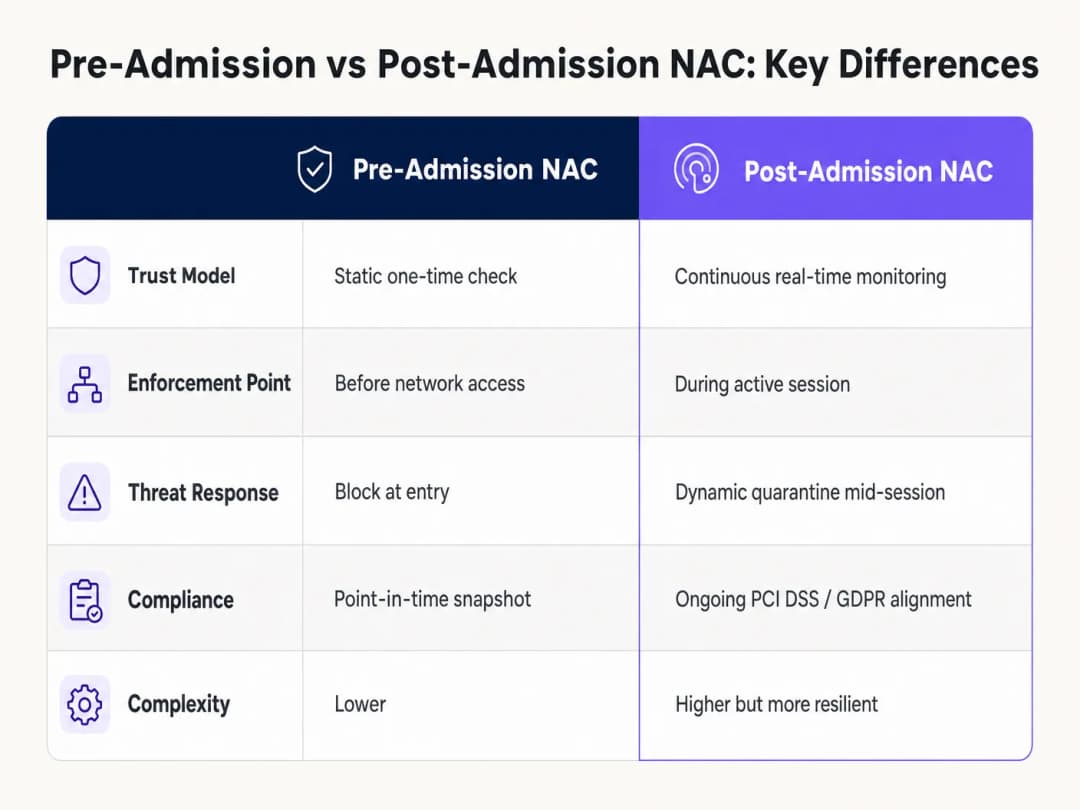
একটি Continuous Trust Monitoring আর্কিটেকচারের মূল উপাদানসমূহ
একটি প্রোডাকশন-গ্রেড Post-Admission NAC ডেপ্লয়মেন্টের জন্য চারটি সমন্বিত উপাদান প্রয়োজন যা একসাথে কাজ করে।
Telemetry Ingestion হলো এর ভিত্তি। সিস্টেমটিকে অবশ্যই WLC, সুইচ, ফায়ারওয়াল এবং এন্ডপয়েন্ট ডিটেকশন অ্যান্ড রেসপন্স (EDR) এজেন্ট থেকে রিয়েল-টাইম ডাটা গ্রহণ করতে হবে। এর মধ্যে রয়েছে NetFlow/IPFIX ডাটা, RADIUS অ্যাকাউন্টিং রেকর্ড, DNS রিকোয়েস্ট লগ এবং ডিপ প্যাকেট ইন্সপেকশন (DPI) ইঞ্জিন থেকে অ্যাপ্লিকেশন ভিজিবিলিটি মেট্রিক্স। ব্যাপক টেলিমেট্রি ছাড়া, পলিসি ইঞ্জিনটি অন্ধভাবে কাজ করে।
The Behavioural Analytics Engine টেলিমেট্রি স্ট্রীমগুলি প্রসেস করে এবং সেগুলিকে প্রতিষ্ঠিত বেসলাইনের সাথে তুলনা করে। বেসলাইন তৈরি এবং অ্যানোমালি স্কোরিং স্বয়ংক্রিয় করতে মেশিন লার্নিং মডেলগুলি ক্রমশ বেশি ব্যবহৃত হচ্ছে, যা ম্যানুয়াল কনফিগারেশনের ঝামেলা কমায়। AI কীভাবে এই ক্ষেত্রটিকে পরিবর্তন করছে সে সম্পর্কে আরও বিস্তারিত জানতে, দেখুন The Future of Wi-Fi Security: AI-Driven NAC and Threat Detection এবং এর স্প্যানিশ ভাষার প্রতিরূপ El Futuro de la Seguridad Wi-Fi: NAC Impulsado por IA y Detección de Amenazas।
Dynamic Policy Enforcement হলো এর অপারেশনাল আউটপুট। একটি পোর্ট বাউন্স করতে, VLAN অ্যাসাইনমেন্ট পরিবর্তন করতে বা একটি রেস্ট্রিক্টিভ অ্যাক্সেস কন্ট্রোল লিস্ট (ACL) প্রয়োগ করতে রিয়েল টাইমে RADIUS CoA পাঠানোর ক্ষমতাই Post-Admission NAC-কে একটি প্যাসিভ মনিটরিং সিস্টেম থেকে আলাদা করে। নির্ভরযোগ্য CoA ছাড়া, আপনার কাছে যা থাকে তা কেবল একটি অ্যালার্টিং সিস্টেম, কোনো এনফোর্সমেন্ট সিস্টেম নয়।
The Integration Layer NAC ইঞ্জিনকে বৃহত্তর সিকিউরিটি ইকোসিস্টেমের সাথে সংযুক্ত করে: ইভেন্ট কোরিলেশনের জন্য SIEM প্ল্যাটফর্ম, পরিচিত-ক্ষতিকারক IP সমৃদ্ধকরণের জন্য থ্রেট ইন্টেলিজেন্স ফিড এবং ব্যবহারকারীর কনটেক্সট সমৃদ্ধকরণের জন্য আইডেন্টিটি প্রোভাইডার। গেস্ট-ফেসিং পরিবেশে, একটি WiFi Analytics প্ল্যাটফর্ম সেশন-লেভেল কনটেক্সট প্রদান করে যা পলিসি সংক্রান্ত সিদ্ধান্তগুলিকে উল্লেখযোগ্যভাবে সমৃদ্ধ করে।
স্ট্যান্ডার্ড এবং প্রোটোকল রেফারেন্স
| স্ট্যান্ডার্ড | Post-Admission NAC-এর সাথে প্রাসঙ্গিকতা |
|---|---|
| IEEE 802.1X | পোর্ট-ভিত্তিক অথেনটিকেশনের ভিত্তি; identity binding প্রদান করে যা NAC পলিসিগুলি রেফারেন্স হিসেবে ব্যবহার করে |
| RFC 5176 (RADIUS CoA) | মিড-সেশন পলিসি এনফোর্সমেন্টের জন্য প্রোটোকল মেকানিজম |
| WPA3-Enterprise | 802.1X অথেনটিকেশন এক্সচেঞ্জের জন্য আরও শক্তিশালী ক্রিপ্টোগ্রাফিক সুরক্ষা প্রদান করে |
| PCI-DSS v4.0 | স্বয়ংক্রিয় রেসপন্স ক্ষমতাসহ নেটওয়ার্ক অ্যাক্সেসের ক্রমাগত পর্যবেক্ষণ প্রয়োজন |
| GDPR অনুচ্ছেদ 32 | চলমান গোপনীয়তা এবং অখণ্ডতা নিশ্চিত করতে উপযুক্ত প্রযুক্তিগত ব্যবস্থার নির্দেশ দেয় |
| NIST SP 800-207 | জিরো ট্রাস্ট আর্কিটেকচার ফ্রেমওয়ার্ক যা Post-Admission NAC সরাসরি প্রয়োগ করে |
আপনার নির্দিষ্ট সেটআপ নিয়ে কোনো প্রশ্ন আছে?
আমাদের টিম ৮০,০০০ ভেন্যুতে ভেন্যু অপারেটর, IT ম্যানেজার এবং নেটওয়ার্ক ইঞ্জিনিয়ারদের সাথে কাজ করে। একটি ২০ মিনিটের কল বুক করুন এবং আপনার মতো অন্যরা কীভাবে এর সমাধান করেছেন তা আমরা আপনাকে দেখাব।
ইমপ্লিমেন্টেশন গাইড
বৃহৎ আকারের নেটওয়ার্ক বিভ্রাট এড়াতে Post-Admission NAC ডেপ্লয় করার জন্য একটি পর্যায়ক্রমিক পদ্ধতির প্রয়োজন। অবিলম্বে সক্রিয় এনফোর্সমেন্ট সক্ষম করার চেষ্টা করা হলো ডেপ্লয়মেন্ট ব্যর্থতার একক সবচেয়ে সাধারণ কারণ।
পর্যায় ১: ভিজিবিলিটি এবং বেসলাইনিং (সপ্তাহ ১ - ৪)
মনিটর-অনলি মোডে NAC সলিউশনটি ডেপ্লয় করুন। এই ফেজের সময় কোনো এনফোর্সমেন্ট অ্যাকশন কনফিগার করা উচিত নয়।
প্রথমে, নিশ্চিত করুন যে সমস্ত Network Access Devices (NADs) RADIUS অ্যাকাউন্টিং ডেটা এবং ফ্লো টেলিমেট্রি NAC পলিসি ইঞ্জিনে পাঠাচ্ছে। সমস্ত ম্যানেজড সুইচ এবং WLC-তে NetFlow বা IPFIX এক্সপোর্ট কনফিগার করুন। এগিয়ে যাওয়ার আগে যাচাই করুন যে NAC ইঞ্জিনটি সঠিকভাবে রেকর্ডগুলি পাচ্ছে এবং পার্স করছে কিনা।
সিস্টেমটিকে বিভিন্ন ডিভাইস প্রোফাইল জুড়ে ট্রাফিক প্যাটার্ন পর্যবেক্ষণ করার অনুমতি দিন। এটি বিশেষ করে healthcare পরিবেশের জন্য অত্যন্ত গুরুত্বপূর্ণ, যেখানে মেডিকেল IoT ডিভাইসগুলির অত্যন্ত অনুমানযোগ্য ট্রাফিক প্যাটার্ন থাকে, এবং retail পরিবেশের জন্য, যেখানে পয়েন্ট-অফ-সেল (POS) টার্মিনালগুলির সুনির্দিষ্ট যোগাযোগ প্রয়োজনীয়তা থাকে। বেসলাইনিং পিরিয়ডটি অন্তত একটি সম্পূর্ণ বিজনেস সাইকেল (সাধারণত চার সপ্তাহ) কভার করা উচিত যাতে উইকেন্ড বনাম সপ্তাহের অন্যান্য দিনের তারতম্যগুলি ক্যাপচার করা যায়।
ফেজ ২: পলিসি ডেভেলপমেন্ট এবং টেস্টিং (সপ্তাহ ৫ - ৬)
বেসলাইন তৈরি হয়ে গেলে, রিস্ক-ভিত্তিক পলিসিগুলি ডেভেলপ করুন। সম্পূর্ণরূপে টেকনিক্যাল ইন্ডিকেটরগুলির পরিবর্তে ব্যবসায়িক ঝুঁকির উপর ভিত্তি করে সুনির্দিষ্ট কোয়ারেন্টাইন ট্রিগারগুলি নির্ধারণ করুন।
একটি retail পরিবেশের জন্য, একটি গুরুত্বপূর্ণ ট্রিগার হতে পারে: Guest VLAN থেকে POS VLAN সাবনেটে রুট করার চেষ্টা করা যেকোনো ট্রাফিক। হসপিটালিটির জন্য এটি হতে পারে: প্রতি মিনিটে ৫০০-এর বেশি SMB কানেকশন চেষ্টার সৃষ্টি করা যেকোনো ডিভাইস। healthcare-এর জন্য: অনুমোদিত ডেস্টিনেশন তালিকার বাইরে এক্সটার্নাল IP অ্যাড্রেসের সাথে যোগাযোগ করা যেকোনো MAB-অথেনটিকেটেড ডিভাইস।
ট্রিগার কন্ডিশনগুলি সিমুলেট করে একটি ল্যাব পরিবেশে প্রতিটি পলিসি পরীক্ষা করুন। যাচাই করুন যে NAC ইঞ্জিনটি সঠিকভাবে অ্যানোমালি সনাক্ত করছে, CoA রিকোয়েস্ট জেনারেট করছে এবং NAD একটি গ্রহণযোগ্য সময়ের মধ্যে (সাধারণত গুরুত্বপূর্ণ ট্রিগারের জন্য ৫০০ মিলিসেকেন্ডের কম) নতুন পলিসি প্রয়োগ করছে।
ফেজ ৩: গ্রাজুয়েটেড এনফোর্সমেন্ট রোলআউট (সপ্তাহ ৭ - ১০)
প্রথমে কম ঝুঁকিপূর্ণ নেটওয়ার্ক সেগমেন্টে অ্যাক্টিভ এনফোর্সমেন্ট চালু করুন। একটি স্টাফ-অনলি IoT VLAN প্রায়শই একটি ভালো শুরুর পয়েন্ট হতে পারে, কারণ গেস্ট বা ক্লিনিকাল নেটওয়ার্কের তুলনায় ফলস পজিটিভের অপারেশনাল প্রভাব সীমিত থাকে।
গ্রাজুয়েটেড এনফোর্সমেন্ট রেসপন্স দিয়ে শুরু করুন। ডিভাইসগুলিকে অবিলম্বে ডিসকানেক্ট করার পরিবর্তে, একটি রেস্ট্রিক্টিভ ACL প্রয়োগ করুন যা বেসিক ইন্টারনেট অ্যাক্সেস (অনুমোদিত ডেস্টিনেশনে HTTP/HTTPS) অনুমতি দেয় কিন্তু সমস্ত ইন্টারনাল রাউটিং ব্লক করে। এটি হুমকির বিস্তার রোধ করার পাশাপাশি ফলস পজিটিভের প্রভাব কমায়। প্রতিদিন কোয়ারেন্টাইন কিউ মনিটর করুন এবং প্রয়োজন অনুযায়ী থ্রেশহোল্ড টিউন করুন।
পর্যায়ক্রমে অতিরিক্ত সেগমেন্টে এনফোর্সমেন্ট প্রসারিত করুন, এগিয়ে যাওয়ার আগে প্রতিটি সেগমেন্ট ভ্যালিডেট করুন। নিশ্চিত করুন যে RADIUS CoA নির্ভরযোগ্যভাবে কাজ করছে - NAC ইঞ্জিন এবং সমস্ত NAD-এর মধ্যে UDP পোর্ট ৩৭৯৯ খোলা থাকতে হবে এবং শেয়ার্ড সিক্রেটগুলি সামঞ্জস্যপূর্ণ হতে হবে। transport হাব ডেপ্লয়মেন্টে, যেখানে নেটওয়ার্ক সেগমেন্টগুলি একাধিক ফিজিক্যাল লোকেশনে বিস্তৃত হতে পারে, সেখানে WAN লিঙ্কের মাধ্যমে CoA রেসপন্স টাইম যাচাই করুন।
ফেজ ৪: ফুল প্রোডাকশন এবং কন্টিনিউয়াস অপ্টিমাইজেশন
একবার সমস্ত সেগমেন্ট সক্রিয় প্রয়োগের অধীনে চলে গেলে, একটি ধারাবাহিক অপ্টিমাইজেশানের গতি প্রতিষ্ঠা করুন। সাপ্তাহিক কোয়ারেন্টাইন ইভেন্টগুলি পর্যালোচনা করুন, বারবার ঘটতে থাকা ফলস পজিটিভগুলি সনাক্ত করুন এবং সেই অনুযায়ী বেসলাইনগুলি সামঞ্জস্য করুন। এন্ডপয়েন্ট এবং পেরিমিটার নিরাপত্তা ইভেন্টগুলির সাথে ক্রস-সম্পর্কের জন্য আপনার SIEM-এর সাথে NAC ইভেন্ট স্ট্রিমকে একীভূত করুন।
Hospitality ডিপ্লয়মেন্টের জন্য, মৌসুমী বেসলাইন সামঞ্জস্যের কথা বিবেচনা করুন — পিক সামার সিজনে একটি হোটেল নেটওয়ার্কের ট্রাফিক প্যাটার্ন জানুয়ারির একই নেটওয়ার্কের তুলনায় বস্তুগতভাবে আলাদা হয়। আপডেট ছাড়া, স্ট্যাটিক বেসলাইনগুলি পিক পিরিয়ডের সময় উচ্চতর ফলস পজিটিভ তৈরি করবে।
Best Practices
যেকোনো জায়গায় যেখানে সম্ভব 802.1X স্ট্যান্ডার্ডাইজ করুন। যদিও হেডলেস IoT ডিভাইসের জন্য MAB প্রয়োজনীয়, 802.1X একটি শক্তিশালী ক্রিপ্টোগ্রাফিক আইডেন্টিটি বাইন্ডিং প্রদান করে। সমর্থিত হলে WPA3-Enterprise ব্যবহার করা নিশ্চিত করুন। অন্তর্নিহিত RF পরিবেশ বোঝা অপরিহার্য — আপনার স্পেকট্রাম ডিজাইন যাতে ক্রমাগত পর্যবেক্ষণের ম্যানেজমেন্ট ওভারহেড সমর্থন করে তা নিশ্চিত করতে Wi Fi Frequencies: A Guide to Wi-Fi Frequencies in 2026 দেখুন।
একটি পরিপূরক নিয়ন্ত্রণ হিসাবে মাইক্রো-সেগমেন্টেশন ব্যবহার করুন। নেটওয়ার্ক মাইক্রো-সেগমেন্টেশনের সাথে Post-Admission NAC একত্রিত করুন। যদি কোনো ডিভাইস আপোসকৃত হয় এবং কোনো কারণে CoA রেসপন্স বিলম্বিত হয়, তাহলে মাইক্রো-সেগমেন্টেশন ব্লাস্ট ব্যাসার্ধকে ডিভাইসের নিজস্ব সেগমেন্টে সীমাবদ্ধ করে। দুটি নিয়ন্ত্রণ পরিপূরক, রিডান্ড্যান্ট নয়।
কমপ্লায়েন্স ম্যান্ডেটের সাথে প্রয়োগের নীতি সারিবদ্ধ করুন। আপনার ক্রমাগত পর্যবেক্ষণ এবং স্বয়ংক্রিয় প্রতিক্রিয়া পদ্ধতিগুলি অডিটরদের জন্য নথিভুক্ত করা হয়েছে তা নিশ্চিত করুন। PCI-DSS v4.0-এর Requirement 10 নির্দেশ করে যে নেটওয়ার্ক রিসোর্সগুলির সমস্ত অ্যাক্সেস লগ এবং মনিটর করা হতে হবে। GDPR-এর Article 32-এ চলমান গোপনীয়তা এবং অখণ্ডতা ব্যবস্থার প্রয়োজন রয়েছে। Post-Admission NAC সরাসরি উভয়কেই সন্তুষ্ট করে - তবে কেবল তখনই যখন অডিট ট্রেইলগুলি ধরে রাখা হয় এবং স্বয়ংক্রিয় প্রতিক্রিয়া পদ্ধতিগুলি আনুষ্ঠানিকভাবে নথিভুক্ত করা হয়।
শারীরিক-প্রসঙ্গ সমৃদ্ধকরণের জন্য BLE বিবেচনা করুন। যে সমস্ত পরিবেশে শারীরিক উপস্থিতি গুরুত্বপূর্ণ - যেমন কনফারেন্স সেন্টার বা রিটেইল ফ্লোর - সেখানে BLE বিকন ডেটা একীভূত করা NAC পলিসি ইঞ্জিনের প্রসঙ্গকে সমৃদ্ধ করতে পারে। একটি ডিভাইস যা নেটওয়ার্কে অথেনটিকেটেড কিন্তু শারীরিকভাবে একটি সীমাবদ্ধ এলাকায় অবস্থিত, সেটি পাবলিক এলাকায় থাকা একই ডিভাইসের চেয়ে উচ্চ-ঝুঁকির সংকেত। বাস্তবায়ন নির্দেশিকা পেতে BLE Low Energy Explained for Enterprise দেখুন।
Troubleshooting and Risk Mitigation
CoA Failures
Post-Admission NAC ডিপ্লয়মেন্টের সবচেয়ে সাধারণ সমস্যা হলো NAD-গুলির RADIUS CoA অনুরোধগুলি প্রক্রিয়া করতে ব্যর্থ হওয়া। এর লক্ষণগুলির মধ্যে রয়েছে: NAC ইঞ্জিন একটি সফল CoA ট্রান্সমিশন লগ করে, কিন্তু ক্লায়েন্ট ডিভাইসটি অপরিবর্তিত অ্যাক্সেস সহ নেটওয়ার্কে থেকে যায়। NAD-এ UDP পোর্ট 3799-এ ট্রাফিক ক্যাপচার করে সমস্যা নির্ণয় করুন। সাধারণ কারণগুলির মধ্যে রয়েছে ফায়ারওয়াল নিয়ম যা CoA পোর্ট ব্লক করছে, অমিল RADIUS শেয়ার্ড সিক্রেট, অথবা NAD-এর কনফিগারেশনে CoA স্পষ্টভাবে সক্রিয় না থাকা। লাইভে যাওয়ার আগে সর্বদা একটি নিয়ন্ত্রিত টেস্টে CoA যাচাই করুন।
False Positives and Operational Disruption
অতিরিক্ত আক্রমণাত্মক আচরণগত বেসলাইন বৈধ ডিভাইসগুলিকে কোয়ারেন্টাইন করে ফেলবে। এটি আতিথেয়তা পরিবেশের (hospitality environments) ক্ষেত্রে বিশেষভাবে সমস্যাযুক্ত, যেখানে গেস্ট ডিভাইসের আচরণ অনির্দেশ্য - ভিডিও স্ট্রিমিং, VPN ব্যবহার এবং ক্লাউড ব্যাকআপ অপারেশন সবই অসঙ্গতি থ্রেশহোল্ডকে ট্রিগার করতে পারে যদি বেসলাইনগুলি খুব সংকীর্ণ হয়। সর্বদা ক্রমানুসারে প্রয়োগের পদ্ধতি (graduated enforcement approach) ব্যবহার করুন এবং ঘন ঘন অ্যালার্ট ট্রিগার করে এমন পরিচিত ভালো ডিভাইসগুলির জন্য একটি হোয়াইটলিস্টিং প্রক্রিয়া বজায় রাখুন।
স্কেল এবং থ্রুপুট
ক্রমাগত মনিটরিং প্রচুর পরিমাণে টেলিমেট্রি ভলিউম তৈরি করে। ১০,০০০ সমসাময়িক সেশন সহ একটি স্টেডিয়াম বা বড় কনফারেন্স সেন্টারে, কোনো রেকর্ড না হারিয়ে রাইট রেটগুলি পরিচালনা করার জন্য NAC পলিসি ইঞ্জিন এবং লগিং পরিকাঠামোকে স্কেল করতে হবে। ড্রপ হওয়া টেলিমেট্রি ব্লাইন্ড স্পট তৈরি করে। গড়ে নয়, বরং পিক সমসাময়িক সেশনের জন্য পরিকাঠামোর আকার নির্ধারণ করুন এবং আকস্মিক চাপ সামলাতে কালেক্টর লেয়ারে টেলিমেট্রি বাফারিং বাস্তবায়ন করুন।
ভেন্ডর লক-ইন
কিছু NAC ভেন্ডর মালিকানাধীন CoA এক্সটেনশন প্রয়োগ করে যা শুধুমাত্র তাদের নিজস্ব হার্ডওয়্যার ইকোসিস্টেমের সাথে কাজ করে। ডিপ্লয়মেন্ট আর্কিটেকচার চূড়ান্ত করার আগে, নিশ্চিত করুন যে আপনার NAC পলিসি ইঞ্জিন স্ট্যান্ডার্ড-ভিত্তিক RFC 5176 CoA সমর্থন করে এবং আপনার NADগুলি ভেন্ডরের পরীক্ষিত সামঞ্জস্য ম্যাট্রিক্সে উপস্থিত রয়েছে।
ROI এবং ব্যবসায়িক প্রভাব
পোস্ট-অ্যাডমিশন NAC বাস্তবায়ন পরিমাপযোগ্য ব্যবসায়িক মূল্য প্রদান করে যা কেবল নিরাপত্তা কমপ্লায়েন্সের চেয়ে অনেক বেশি বিস্তৃত।
সাড়া দেওয়ার গড় সময় (MTTR) হ্রাস: স্বয়ংক্রিয় কোয়ারেন্টাইন MTTR কে কয়েক ঘণ্টা থেকে কমিয়ে মিলি সেকেন্ডে নিয়ে আসে - যেখানে ডেডিকেটেড SOC টিম নেই এমন পরিবেশের ক্ষেত্রে এটি কয়েক দিন পর্যন্ত হতে পারে। ৫০০টি স্টোর সহ একটি রিটেইল চেইনের জন্য, এর অর্থ হল একটি শাখায় আক্রান্ত কোনো ডিভাইস POS নেটওয়ার্কে পৌঁছানোর আগেই সেটিকে আটকে দেওয়া সম্ভব হয়, নেটওয়ার্ক ইঞ্জিনিয়ার সাইটে উপস্থিত থাকুন বা না থাকুন।
অপারেশনাল দক্ষতা: নেটওয়ার্ক অপারেশন টিম ম্যানুয়ালি আক্রান্ত ডিভাইসগুলি ট্র্যাক করতে উল্লেখযোগ্যভাবে কম সময় ব্যয় করে। বিস্তারিত অডিট লগিং সহ স্বয়ংক্রিয় কোয়ারেন্টাইন তদন্তের বোঝা হ্রাস করে এবং ইনসিডেন্ট-পরবর্তী রিপোর্টিংকে দ্রুততর করে।
ব্র্যান্ড এবং রাজস্ব সুরক্ষা: সর্বসাধারণের মুখোমুখি পরিবেশে, একটি গেস্ট ডিভাইস যাতে আরও বড় লঙ্ঘনের স্প্রিংবোর্ড না হতে পারে তা প্রতিরোধ করা ভেন্যুর সুনাম রক্ষা করে। একটি হোটেল বা রিটেইল পরিবেশে ডেটা লঙ্ঘন কেবল GDPR নিয়ন্ত্রক জরিমানাই বহন করে না, বরং সরাসরি রাজস্বকে প্রভাবিত করে এমন বস্তুগত সুনামের ক্ষতি করে।
কম কমপ্লায়েন্স খরচ: একটি সম্পূর্ণ অডিট ট্রেইল সহ স্বয়ংক্রিয়, ক্রমাগত মনিটরিং কমপ্লায়েন্স অডিটের খরচ এবং প্রচেষ্টা কমিয়ে দেয়। ম্যানুয়াল প্রক্রিয়াগুলির নথিপত্র জমা দেওয়ার চেয়ে একটি PCI QSA-র কাছে স্বয়ংক্রিয়, রিয়েল-টাইম সাড়া দেওয়ার ক্ষমতা প্রদর্শন করা বস্তুগতভাবে অনেক সহজ।
মূল সংজ্ঞাসমূহ
Post-Admission NAC
প্রাথমিক নেটওয়ার্ক অ্যাক্সেস দেওয়ার পর কোনো ডিভাইসের উপর ক্রমাগত সিকিউরিটি পলিসি পর্যবেক্ষণ এবং ডাইনামিক প্রয়োগ করার প্রক্রিয়া, যা শুধুমাত্র সংযোগের সময় করা প্রি-অ্যাডমিশন চেকের বিপরীত।
সেশনের মাঝামাঝি সময়ে যে ডিভাইসগুলো ম্যালওয়্যার দ্বারা আক্রান্ত হয় বা ক্ষতিকর আচরণ প্রদর্শন করে যা প্রাথমিক অথেনটিকেশন ধাপে স্পষ্ট ছিল না, সেগুলো সনাক্ত করার জন্য অত্যন্ত গুরুত্বপূর্ণ। গেস্ট বা আনম্যানেজড ডিভাইস অ্যাক্সেস রয়েছে এমন যেকোনো পরিবেশের জন্য এটি সরাসরি প্রাসঙ্গিক।
Continuous Trust Monitoring
এমন একটি সিকিউরিটি মডেল যেখানে ট্রাস্ট বা বিশ্বাস কখনোই স্থায়ীভাবে ধরে নেওয়া হয় না; একটি ডিভাইসের অবস্থা, আচরণ এবং কনটেক্সট পুরো নেটওয়ার্ক সেশন জুড়ে প্রতিষ্ঠিত বেসলাইনের বিপরীতে ক্রমাগত মূল্যায়ন করা হয়।
Post-Admission NAC-এর ভিত্তিপ্রস্তর স্বরূপ অপারেশনাল দর্শন এবং NIST SP 800-207 Zero Trust Architecture নীতিমালার একটি সরাসরি বাস্তবায়ন।
Change of Authorization (CoA)
RFC 5176-এ সংজ্ঞায়িত একটি RADIUS এক্সটেনশন যা একটি পলিসি সার্ভারকে সক্রিয় নেটওয়ার্ক ক্লায়েন্টের সেশন অথরাইজেশন অ্যাট্রিবিউট ডাইনামিকভাবে পরিবর্তন করার অনুমতি দেয়, যার মধ্যে VLAN অ্যাসাইনমেন্ট পরিবর্তন করা, ACL প্রয়োগ করা বা সেশনটি সম্পূর্ণভাবে বন্ধ করা অন্তর্ভুক্ত।
টেকনিক্যাল প্রয়োগ প্রক্রিয়া যা প্যাসিভ মনিটরিং থেকে Post-Admission NAC-কে আলাদা করে। যদি CoA কাজ না করে, তবে সিস্টেম সেশনের মাঝামাঝি সময়ে ডাইনামিক পলিসি প্রয়োগ করতে পারে না।
Behavioural Baselining
একটি নির্দিষ্ট ডিভাইসের ধরন, ইউজার রোল বা নেটওয়ার্ক সেগমেন্টের জন্য একটি নির্দিষ্ট পর্যবেক্ষণ সময়কাল জুড়ে পরিসংখ্যানগতভাবে স্বাভাবিক নেটওয়ার্ক অ্যাক্টিভিটি প্যাটার্ন প্রতিষ্ঠা করার প্রক্রিয়া।
Post-Admission NAC-এ অস্বাভাবিকতা সনাক্তকরণের ভিত্তি। বেসলাইনগুলো খুব সংকীর্ণ হলে তা মিথ্যা অ্যালার্ট তৈরি করে; আবার খুব বেশি বিস্তৃত হলে তা আসল থ্রেট সনাক্ত করতে ব্যর্থ হয়। সাধারণত একটি সম্পূর্ণ ব্যবসায়িক চক্র জুড়ে ন্যূনতম চার সপ্তাহের পর্যবেক্ষণের প্রয়োজন হয়।
MAC Authentication Bypass (MAB)
একটি নেটওয়ার্ক অ্যাক্সেস পদ্ধতি যা শুধুমাত্র একটি ডিভাইসের MAC অ্যাড্রেসের ভিত্তিতে অ্যাক্সেস প্রদান করে, সাধারণত হেডলেস IoT ডিভাইসের জন্য ব্যবহৃত হয় যা 802.1X EAP অথেনটিকেশন সমর্থন করতে পারে না।
সহজেই MAC স্পুফিং আক্রমণের শিকার হতে পারে। MAB-এর উপর নির্ভর করে এমন যেকোনো পরিবেশকে সুরক্ষিত করতে ডিভাইস প্রোফাইলিং সহ Post-Admission NAC অপরিহার্য, বিশেষ করে স্বাস্থ্যসেবা এবং শিল্পক্ষেত্রের IoT ডেপ্লয়মেন্টের জন্য।
Network Access Device (NAD)
একটি ফিজিক্যাল হার্ডওয়্যার উপাদান - সাধারণত একটি ম্যানেজড সুইচ, ওয়্যারলেস LAN কন্ট্রোলার বা VPN গেটওয়ে - যা নেটওয়ার্কের প্রান্তে অ্যাক্সেস পলিসি প্রয়োগ করে এবং NAC পলিসি ইঞ্জিন থেকে CoA নির্দেশনা গ্রহণ করে।
NAD হলো পলিসি প্রয়োগের মূল বিন্দু। RFC 5176 CoA-এর সাথে এর সামঞ্জস্যতা এবং CoA প্রসেসিংয়ের নির্ভরযোগ্যতা যেকোনো Post-Admission NAC আর্কিটেকচারের জন্য অত্যন্ত গুরুত্বপূর্ণ বিষয়।
Telemetry
নেটওয়ার্ক ডিভাইস থেকে একটি সেন্ট্রালাইজড অ্যানালিটিক্স ইঞ্জিনে নেটওয়ার্ক অপারেশনাল ডেটার - যার মধ্যে NetFlow/IPFIX রেকর্ড, RADIUS অ্যাকাউন্টিং ডেটা, syslog ইভেন্ট এবং SNMP ট্র্যাপ অন্তর্ভুক্ত - স্বয়ংক্রিয়, রিয়েল-টাইম সংগ্রহ এবং প্রেরণ প্রক্রিয়া।
NAC আচরণগত অ্যানালিটিক্স ইঞ্জিন পরিচালনার জন্য প্রয়োজনীয় র ডেটা স্ট্রিম প্রদান করে। Telemetry কভারেজের ঘাটতি এমন ব্লাইন্ড স্পট তৈরি করে যেখানে আক্রান্ত ডিভাইসগুলো সনাক্ত না হয়েই কাজ চালিয়ে যেতে পারে।
Micro-Segmentation
একটি নেটওয়ার্ককে ছোট, বিচ্ছিন্ন সেগমেন্টে বিভক্ত করার নেটওয়ার্ক আর্কিটেকচার পদ্ধতি যেখানে সেগমেন্টগুলোর মধ্যে কঠোর অ্যাক্সেস কন্ট্রোল থাকে, যা কোনো আক্রমণকারী বা আক্রান্ত ডিভাইসের ল্যাটারাল মুভমেন্টকে সীমাবদ্ধ করে।
Post-Admission NAC-এর একটি পরিপূরক নিয়ন্ত্রণ ব্যবস্থা। যদি একটি CoA প্রয়োগের কাজ বিলম্বিত হয়, তবে Micro-Segmentation একটি আক্রান্ত ডিভাইসের ক্ষতির পরিধি শুধুমাত্র তার নিজস্ব সেগমেন্টের মধ্যে সীমাবদ্ধ রাখে, যা তাকে পাশের সেগমেন্টের গুরুত্বপূর্ণ রিসোর্সগুলোতে পৌঁছাতে বাধা দেয়।
RADIUS (Remote Authentication Dial-In User Service)
একটি নেটওয়ার্কিং প্রোটোকল যা কোনও নেটওয়ার্ক সার্ভিস ব্যবহারকারী এবং সংযুক্ত হওয়া ইউজারদের জন্য কেন্দ্রীভূত Authentication, Authorisation, এবং Accounting (AAA) ম্যানেজমেন্ট প্রদান করে।
প্রাথমিক প্রবেশ (Access-Request/Accept) এবং প্রবেশ-পরবর্তী প্রয়োগ (CoA) উভয়ের জন্যই এটি একটি মৌলিক প্রোটোকল। বেশিরভাগ এন্টারপ্রাইজ NAC ডেপ্লয়মেন্ট একটি RADIUS অবকাঠামোর উপর ভিত্তি করে তৈরি করা হয়।
সমাধানকৃত উদাহরণসমূহ
৫০০টি লোকেশন জুড়ে Guest WiFi ডিপ্লয় করা একটি বড় রিটেইল চেইনের নিশ্চিত করা প্রয়োজন যে আক্রান্ত গেস্ট ডিভাইসগুলো যেন Point of Sale (POS) নেটওয়ার্ক স্ক্যান বা অ্যাক্সেস করতে না পারে। IT টিমের সাইটে সীমিত রিসোর্স রয়েছে এবং একটি স্বয়ংক্রিয়, সেন্ট্রালি ম্যানেজড সলিউশন প্রয়োজন। তাদের কীভাবে Post-Admission NAC বাস্তবায়ন করা উচিত?
১. প্রতিটি ব্রাঞ্চে একটি ডিস্ট্রিবিউটেড টেলিমেট্রি কালেক্টরসহ একটি ক্লাউড-হোস্টেড NAC পলিসি ইঞ্জিন ডিপ্লয় করুন, যা সাইটে NAC হার্ডওয়্যারের প্রয়োজনীয়তা দূর করবে। ২. এনক্রিপ্টেড টানেলের মাধ্যমে সেন্ট্রাল NAC ইঞ্জিনে RADIUS অ্যাকাউন্টিং রেকর্ড এবং NetFlow ডেটা পাঠাতে সমস্ত ব্রাঞ্চ WLC এবং সুইচ কনফিগার করুন। ৩. Guest VLAN-এর জন্য কার্যদিবস এবং ছুটির দিনের ট্রাফিক প্যাটার্ন উভয়ই কভার করে একটি চার সপ্তাহের বেসলাইনিং পিরিয়ড নির্ধারণ করুন। ৪. একটি ক্রিটিক্যাল ভায়োলেশন পলিসি তৈরি করুন: যদি Guest VLAN সাবনেট থেকে কোনো ট্রাফিক POS VLAN সাবনেটে (IP রেঞ্জ দ্বারা সংজ্ঞায়িত) যাওয়ার চেষ্টা করে, তবে NAC ইঞ্জিন সাথে সাথে লোকাল WLC-তে একটি RADIUS CoA ইস্যু করবে। ৫. CoA নির্দেশটি WLC-কে নির্দিষ্ট ক্লায়েন্ট MAC অ্যাড্রেসে একটি 'Quarantine' ACL প্রয়োগ করার নির্দেশ দেয়, যা DHCP এবং DNS ব্যতীত অন্য সমস্ত ট্রাফিক ড্রপ করে এবং সেশনের মাঝখানেই ডিভাইসটিকে কার্যকরভাবে বিচ্ছিন্ন করে। ৬. সেন্ট্রাল NOC-তে একটি স্বয়ংক্রিয় অ্যালার্ট কনফিগার করুন এবং পোস্ট-ইন্সিডেন্ট বিশ্লেষণের জন্য ঘটনাটি SIEM-এ লগ করুন। ৭. সমস্ত ৫০০টি লোকেশনে রোলআউট করার আগে ১০টি পাইলট সাইটে CoA কার্যকারিতা যাচাই করুন।
একটি হাসপাতাল নেটওয়ার্কে হাজার হাজার হেডলেস মেডিকেল IoT ডিভাইস রয়েছে যা প্রাথমিক অ্যাক্সেসের জন্য MAC Authentication Bypass (MAB) ব্যবহার করে। সিকিউরিটি টিম MAC স্পুফিং অ্যাটাক এবং সেশনের মাঝখানে আক্রান্ত ডিভাইস শনাক্ত করতে না পারার বিষয়ে চিন্তিত। Post-Admission NAC কীভাবে এই ঝুঁকিগুলো কমাতে পারে?
১. ডিভাইস প্রোফাইলিং ক্ষমতাসম্পন্ন একটি NAC সলিউশন ডিপ্লয় করুন যা DHCP ফিঙ্গারপ্রিন্ট, HTTP ইউজার এজেন্ট এবং ট্রাফিক ফ্লো-এর বৈশিষ্ট্যগুলো গ্রহণ করতে পারে।
২. বেসলাইনিং পর্বের সময়, প্রতিটি ডিভাইসের ধরনের জন্য একটি প্রোফাইল তৈরি করুন: যেমন একটি ইনফিউশন পাম্প নিয়মিত বিরতিতে পোর্ট ৪৪৩-এ একটি নির্দিষ্ট ইন্টারনাল সার্ভারের সাথে যোগাযোগ করে; একটি পেশেন্ট মনিটরিং সিস্টেম একটি নির্দিষ্ট ইন্টারনাল সাবনেটে নার্সিং স্টেশনের সাথে যোগাযোগ করে।
৩. প্রোফাইল ডেভিয়েশনের ওপর ভিত্তি করে ভায়োলেশন পলিসি কনফিগার করুন: MAB-এর মাধ্যমে ইনফিউশন পাম্প হিসেবে অথেন্টিকেটেড কোনো ডিভাইস যদি কোনো এক্সটারনাল IP অ্যাড্রেসের সাথে যোগাযোগ শুরু করে, অথবা অনুমোদিত নয় এমন ইন্টারনাল ডেস্টিনেশনে প্রতি মিনিটে ১০টির বেশি কানেকশন তৈরি করে, তবে কোয়ারেন্টাইন ট্রিগার করুন।
৪. পোর্টটিকে একটি কোয়ারেন্টাইন VLAN-এ সরিয়ে নেওয়ার জন্য সুইচে একটি RADIUS CoA ইস্যু করুন, যা ক্লিনিকাল নেটওয়ার্ক থেকে ডিভাইসটিকে বিচ্ছিন্ন করবে এবং তদন্তের জন্য কানেক্টিভিটি বজায় রাখবে।
৫. ক্লিনিকাল ইঞ্জিনিয়ারিং টিম এবং SOC-কে একসাথে অ্যালার্ট করুন, ডিভাইসটির MAC অ্যাড্রেস, সুইচ পোর্ট এবং রেসপন্স ট্রিগারকারী নির্দিষ্ট ট্রাফিক অ্যানোমালি প্রদান করুন।_ম্যালি প্রদান করে। প্রদান করুন।
অনুশীলনী প্রশ্নসমূহ
Q1. আপনার নেটওয়ার্ক অপারেশন টিম রিপোর্ট করেছে যে নতুন Post-Admission NAC ডেপ্লয়মেন্টের ফলে প্রচুর পরিমাণে ভুল পজিটিভ কেস তৈরি হচ্ছে এবং একটি ব্যস্ত হোটেল লবিতে থাকা বৈধ গেস্ট ডিভাইসগুলোকে কোয়ারেন্টাইন করা হচ্ছে। গেস্ট সার্ভিস টিম এই অভিযোগগুলো দ্রুত সমাধান করার জন্য চাপ দিচ্ছে। এই পরিস্থিতিতে সবচেয়ে উপযুক্ত তাৎক্ষণিক পদক্ষেপ কী হবে এবং দীর্ঘমেয়াদী প্রতিকারের জন্য আপনার কী পরিকল্পনা করা উচিত?
ইঙ্গিত: ডেপ্লয়মেন্টের ধাপগুলো এবং একটি হসপিটালিটি গেস্ট নেটওয়ার্কের নির্দিষ্ট ট্রাফিকের বৈশিষ্ট্যগুলো বিবেচনা করুন।
মডেল উত্তর দেখুন
তাৎক্ষণিকভাবে প্রয়োগের নীতিটি Active Quarantine থেকে পরিবর্তন করে Monitor Only মোডে ফিরিয়ে আনুন, অথবা তুলনামূলক কম কঠোর গ্র্যাজুয়েটেড এনফোর্সমেন্ট ACL প্রয়োগ করুন যা ডিভাইসটির সংযোগ বিচ্ছিন্ন না করেই ইন্টারনাল রাউটিংকে সীমিত করে। বিশেষ করে গেস্ট VLAN -এর জন্য আচরণগত বেসলাইনগুলো পর্যালোচনা করুন - হসপিটালিটি পরিবেশে স্বভাবতই অনির্দেশ্য গেস্ট ট্রাফিক থাকে যার মধ্যে VPN ব্যবহার, স্ট্রিমিং সার্ভিস এবং ক্লাউড ব্যাকআপ অন্তর্ভুক্ত। অ্যাক্টিভ এনফোর্সমেন্ট পুনরায় চালু করার আগে বেসলাইনিংয়ের সময়কাল বাড়ান এবং অ্যানোমালি থ্রেশহোল্ডের পরিধি আরও প্রশস্ত করুন। দীর্ঘমেয়াদে, মৌসুমী বেসলাইন সামঞ্জস্যগুলো প্রয়োগ করুন এবং একটি টিয়ার্ড এনফোর্সমেন্ট মডেল বিবেচনা করুন যেখানে গেস্ট ডিভাইসগুলো কর্পোরেট বা IoT ডিভাইসের চেয়ে কম কঠোর প্রতিক্রিয়া পায়।
Q2. একটি পাইলট ডেপ্লয়মেন্টের সময়, NAC পলিসি ইঞ্জিন সফলভাবে অস্বাভাবিক আচরণ সনাক্ত করে এবং উচ্চ-নির্ভরযোগ্যতার অ্যানোমালি স্কোর সহ ইভেন্টটি লগ করে, কিন্তু ক্লায়েন্ট ডিভাইসটি অপরিবর্তিত অ্যাক্সেস সহ নেটওয়ার্কের সাথেই যুক্ত থাকে। NOC অ্যালার্টটি পেলেও কোনও কোয়ারেন্টাইন অ্যাকশন নেওয়া হয়নি। সবচেয়ে সম্ভাব্য প্রযুক্তিগত ত্রুটি কোনটি এবং আপনি কীভাবে এটি নির্ণয় করবেন?
ইঙ্গিত: মিড-সেশন এনফোর্সমেন্টের জন্য ব্যবহৃত নির্দিষ্ট প্রোটোকল এবং পোর্ট সম্পর্কে চিন্তা করুন।
মডেল উত্তর দেখুন
সবচেয়ে সম্ভাব্য ত্রুটি হলো NAC ইঞ্জিন এবং নেটওয়ার্ক অ্যাক্সেস ডিভাইসের (NAD) মধ্যে RADIUS Change of Authorization (CoA) সঠিকভাবে কাজ করছে না। রোগ নির্ণয়ের জন্য, NAD-এ UDP পোর্ট 3799-এর ট্রাফিক ক্যাপচার করে নিশ্চিত করুন যে CoA প্যাকেটটি পৌঁছাচ্ছে কিনা। যদি এটি পৌঁছানোর পরও রিজেক্ট হয়, তবে NAC ইঞ্জিন এবং NAD উভয় ক্ষেত্রেই RADIUS শেয়ার্ড সিক্রেট কনফিগারেশন চেক করুন। যদি এটি না পৌঁছায়, তাহলে NAC ইঞ্জিন এবং NAD-এর মধ্যকার ফায়ারওয়াল রুলগুলো পরীক্ষা করুন। এছাড়াও NAD-এর RADIUS ক্লায়েন্ট কনফিগারেশনে CoA স্পষ্টভাবে চালু করা আছে কিনা তা যাচাই করুন - অনেক ডিভাইসে CoA অনুরোধ গ্রহণ করার জন্য একটি আলাদা কনফিগারেশন স্টেটমেন্টের প্রয়োজন হয়।
Q3. একটি বড় কনফারেন্স সেন্টার আনুমানিক ৮,০০০ সমসাময়িক WiFi ব্যবহারকারীর একটি প্রধান ট্রেড শো-র আগে Post-Admission NAC ডেপ্লয়মেন্টের পরিকল্পনা করছে। আইটি ডিরেক্টর চিন্তিত যে পিক লোডের সময় টেলিমেট্রি অবকাঠামোতে অতিরিক্ত চাপ পড়তে পারে। এই স্কেলটি পরিচালনা করার জন্য আর্কিটেকচারটি কীভাবে ডিজাইন করা উচিত?
ইঙ্গিত: র বা কাঁচা টেলিমেট্রি ভলিউম এবং প্রসেস করা ইভেন্ট ভলিউমের মধ্যে পার্থক্য বিবেচনা করুন এবং আর্কিটেকচারের কোন স্তরে এই অ্যাগ্রিগেশন হওয়া উচিত তা ভাবুন।
মডেল উত্তর দেখুন
প্রতিটি অ্যাক্সেস লেয়ার টিয়ারে লোকাল কালেক্টরসহ একটি ডিস্ট্রিবিউটেড টেলিমেট্রি আর্কিটেকচার প্রয়োগ করুন। সেন্ট্রাল NAC পলিসি ইঞ্জিনে পাঠানোর আগে লোকাল কালেক্টরে র বা কাঁচা NetFlow এবং RADIUS অ্যাকাউন্টিং ডেটা একত্রিত ও প্রি-প্রসেস করা উচিত। এটি WAN ব্যান্ডউইথের ব্যবহার এবং সেন্ট্রাল ইঞ্জিনের প্রসেসিং লোড কমিয়ে দেয়। সেন্ট্রাল পলিসি ইঞ্জিনের সাইজ নির্ধারণ করুন প্রসেস করা ইভেন্ট রেটের উপর ভিত্তি করে, কাঁচা টেলিমেট্রি ভলিউমের উপর ভিত্তি করে নয়। পিক লোডের সময় আকস্মিক চাপ সামাল দিতে কালেক্টর লেয়ারে টেলিমেট্রি বাফারিং প্রয়োগ করুন। উপরন্তু, সাধারণ ট্রাফিক পর্যবেক্ষণের জন্য NetFlow ডেটাতে স্যাম্পলিং প্রয়োগ করার কথা বিবেচনা করুন (যেমন, ১-এর মধ্যে ১০টি প্যাকেট স্যাম্পলিং), এবং হাই-রিস্ক ডিভাইস সেগমেন্টের জন্য ফুল-রেট টেলিমেট্রি সংরক্ষণ করুন। ইভেন্টের আগে সিমুলেটেড পিক লোডের অধীনে আর্কিটেকচারটি যাচাই করুন।
Q4. একজন রিটেইল CTO জানতে চান যে Post-Admission NAC প্রয়োগ করলে PCI-DSS v4.0-এর Requirement 10 পূরণ হবে কিনা এবং তাদের বার্ষিক QSA অডিটের পরিধি হ্রাস পাবে কিনা। আপনি তাকে কী পরামর্শ দেবেন?
ইঙ্গিত: PCI DSS Requirement 10 বিশেষভাবে কী নির্দেশ করে এবং একজন QSA-র কী ধরনের ডকুমেন্টেশনের প্রয়োজন হবে তা বিবেচনা করুন।
মডেল উত্তর দেখুন
Post-Admission NAC নেটওয়ার্ক রিসোর্স এবং কার্ডহোল্ডার ডেটা এনভায়রনমেন্টে সমস্ত অ্যাক্সেসের স্বয়ংক্রিয় ও ক্রমাগত লগিং এবং মনিটরিং প্রদান করে সরাসরি PCI-DSS v4.0 Requirement 10 কমপ্লায়েন্সকে সমর্থন করে। স্বয়ংক্রিয় কোয়ারেন্টাইন ক্ষমতা একটি রিয়েল-টাইম রেসপন্স মেকানিজম প্রদর্শন করে, যা Requirement 10.7 (গুরুত্বপূর্ণ সিকিউরিটি কন্ট্রোলের ব্যর্থতায় সাড়া দেওয়া)-এর মূল উদ্দেশ্য পূরণ করে। তবে, অডিটের পরিধি কমাতে CTO-কে অবশ্যই নিশ্চিত করতে হবে যে: NAC ইভেন্ট লগ ট্যাম্পার-প্রুফ বা হস্তক্ষেপ-প্রমাণিত এবং কমপক্ষে ১২ মাসের জন্য সংরক্ষিত থাকে; স্বয়ংক্রিয় রেসপন্স পদ্ধতিগুলো আনুষ্ঠানিকভাবে নথিভুক্ত করা হয়; এবং QSA প্রোডাকশনে চলমান সিস্টেমের প্রমাণ পর্যালোচনা করতে পারে। শুধুমাত্র NAC-এর চেয়ে নেটওয়ার্ক সেগমেন্টেশন (CDE আলাদা করা)-এর মাধ্যমে স্কোপ রিডাকশন বা অডিটের পরিধি কমানো বেশি সম্ভব, তবে NAC উল্লেখযোগ্যভাবে QSA-এর কাছে উপস্থাপিত প্রমাণ প্যাকেজকে শক্তিশালী করে।
এই সিরিজে পড়া চালিয়ে যান
PPSK WPA3: বৈশিষ্ট্য এবং ডেপ্লয়মেন্ট মডেলের তুলনা
এই টেকনিক্যাল রেফারেন্স গাইডটি PPSK এবং WPA3-SAE-এর তুলনা করে, মাল্টি-টেন্যান্ট পরিবেশের জন্য তাদের আর্কিটেকচারাল পার্থক্য এবং ডেপ্লয়মেন্ট মডেলগুলো ব্যাখ্যা করে। এটি IT ম্যানেজার এবং প্রোপার্টি ডেভেলপারদের Purple-এর আইডেন্টিটি-ভিত্তিক সリューション ব্যবহার করে সুরক্ষিত, আইসোলেটেড WiFi নেটওয়ার্ক গড়ে তোলার বিষয়ে কার্যকর নির্দেশনা প্রদান করে।
কর্মীদের WiFi-এর জন্য ব্যান্ডউইথ পরিচালনা: শেপিং, QoS এবং ট্রাফিক কমানো
এই নির্দেশিকাটি এন্টারপ্রাইজ ভেন্যুতে কর্মীদের WiFi-এর জন্য ব্যান্ডউইথ পরিচালনার ব্যবহারিক পদ্ধতিগুলো বিশদভাবে বর্ণনা করে। এটি ট্রাফিক শেপিং, QoS বাস্তবায়ন এবং কীভাবে কোনো অবকাঠামোগত আপগ্রেড ছাড়াই Purple Shield মোতায়েন নেটওয়ার্ক লোড কমায় তা কভার করে।
প্রতি-ডিভাইস PSK (iPSK, DPSK, MPSK) ব্যবহার করে WiFi SSID-এর সংখ্যা কীভাবে কমানো যায়
এই নির্ভরযোগ্য টেকনিক্যাল রেফারেন্স গাইডটি ব্যাখ্যা করে যে কীভাবে IT টিমগুলো প্রতি-ডিভাইস PSK (xPSK) ব্যবহার করে একাধিক নির্দিষ্ট উদ্দেশ্যে তৈরি নেটওয়ার্ককে একটি একক SSID-এ নিয়ে এসে SSID বিকন ওভারহেডের কারণে সৃষ্ট WiFi পারফরম্যান্সের অবনতি দূর করতে পারে। এটি Cisco iPSK, HPE Aruba MPSK, Ruckus DPSK, Juniper Mist PPSK এবং Ubiquiti UniFi PPSK জুড়ে ভেন্ডর ল্যান্ডস্কেপ কভার করে, যার সাথে ডাইনামিক VLAN অ্যাসাইনমেন্ট, IoT অনবোর্ডিং এবং PCI DSS কমপ্লায়েন্সের ব্যবহারিক ইমপ্লিমেন্টেশন গাইডলাইন রয়েছে। হসপিটালিটি, রিটেইল, স্টেডিয়াম এবং সরকারি খাতের ভেন্যু অপারেটররা এখানে কার্যকর আর্কিটেকচার গাইডেন্স এবং বাস্তব জীবনের কাজের উদাহরণ পাবেন।
আপনার নির্দিষ্ট সেটআপ নিয়ে কোনো প্রশ্ন আছে?
আমাদের টিম ৮০,০০০ ভেন্যুতে ভেন্যু অপারেটর, IT ম্যানেজার এবং নেটওয়ার্ক ইঞ্জিনিয়ারদের সাথে কাজ করে। একটি ২০ মিনিটের কল বুক করুন এবং আপনার মতো অন্যরা কীভাবে এর সমাধান করেছেন তা আমরা আপনাকে দেখাব।