
निरंतर ट्रस्ट मॉनिटरिंगसाठी पोस्ट-ॲडमिशन NAC कसे लागू करावे
हे मार्गदर्शक हॉस्पिटॅलिटी, रिटेल, हेल्थकेअर आणि सार्वजनिक-क्षेत्रातील वातावरणासह कॉर्पोरेट ठिकाणांवर निरंतर ट्रस्ट मॉनिटरिंगसह पोस्ट-ॲडमिशन नेटवर्क ॲक्सेस कंट्रोल (NAC) लागू करण्यासाठी एक अधिकृत तांत्रिक आराखडा प्रदान करते. यामध्ये RADIUS CoA, बिहेवियरल बेसलाइनिंग आणि टेलिमेट्री इंटिग्रेशनचा वापर करून स्टॅटिक प्री-ॲडमिशन तपासण्यांपासून डायनॅमिक, सेशन-अवेअर अंमलबजावणीपर्यंतच्या आर्किटेक्चरल बदलाचे तपशील दिले आहेत. IT आर्किटेक्ट आणि नेटवर्क ऑपरेशन्स टीम्सना यामध्ये प्रत्यक्ष उपयोजन मार्गदर्शन, रिअल-वर्ल्ड केस स्टडीज, कंप्लायन्स अलाइनमेंट नोट्स आणि मोजता येण्याजोगे ROI फ्रेम्स मिळतील.
हे मार्गदर्शक ऐका
पॉडकास्ट ट्रान्सक्रिप्ट पहा
आमच्या मुख्य मालिकेचा भाग: Enterprise WiFi सुरक्षा मार्गदर्शक →
कार्यकारी सारांश (Executive Summary)
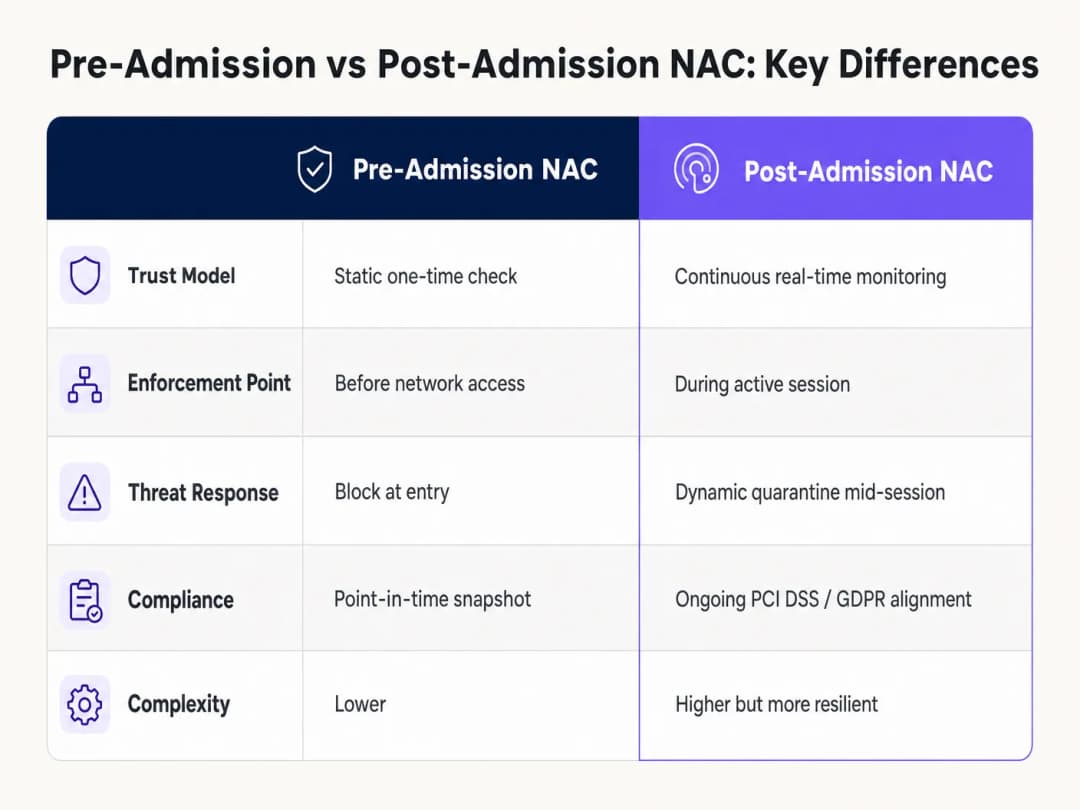
उच्च - घनता असलेल्या वातावरणातील - आदरातिथ्य (hospitality), किरकोळ विक्री (retail), क्रीडा संकुले (stadia) आणि सार्वजनिक क्षेत्रातील ठिकाणे - एंटरप्राइझ नेटवर्कसाठी पारंपारिक प्रिपार्टीशन (pre-admission) नेटवर्क ॲक्सेस कंट्रोल आता पुरेसे राहिलेले नाही. स्थिर, पॉईंट - इन - टाईम व्हेरिफिकेशन तपासण्या अशा उपकरणांना हाताळू शकत नाहीत जे नेटवर्क ॲक्सेस मिळाल्यानंतर तडजोड (compromised) करतात किंवा संशयास्पद वर्तन दाखवण्यास सुरुवात करतात. एखादे उपकरण स्वच्छ 802.1X पॉलिसी - इंजिन ऑथेंटिकेशन यशस्वीरित्या पार करू शकते आणि काही मिनिटांनंतर, अंतर्गत सबनेट स्कॅन करणे किंवा डेटा चोरणे सुरू करू शकते.
Post-Admission NAC सुरक्षा पॅराडाइमला "ऑथेंटिकेट आणि ट्रस्ट" वरून सतत विश्वास मॉनिटरिंग (Continuous Trust Monitoring) कडे वळवते. डिव्हाइसचे पोश्चर, ट्रॅफिक पॅटर्न आणि सेशन कॉन्टेक्स्टचे स्थापित वर्तणुकीच्या बेसलाइनच्या विरुद्ध सतत मूल्यांकन करून, IT आणि नेटवर्क ऑपरेशन्स टीम्स RADIUS Change of Authorization (CoA) चा वापर करून मिड - सेशन दरम्यान डायनॅमिकपणे पॉलिसी लागू करू शकतात. हे मार्गदर्शक Post-Admission NAC लागू करण्यासाठी एक व्यावहारिक, व्हेंडर - अज्ञेयवादी (vendor-agnostic) ब्ल्यूप्रिंट प्रदान करते. यामध्ये आर्किटेक्चरल विचार, Guest WiFi आणि WiFi Analytics प्लॅटफॉर्म्ससह एकत्रीकरण आणि वापरकर्त्याच्या अनुभवाशी तडजोड न करता जोखीम कमी करणाऱ्या व्यावहारिक डिप्लॉयमेंट धोरणांचा समावेश आहे.
तांत्रिक सखोल विश्लेषण (Technical Deep Dive)
प्रिपार्टीशन (Pre-Admission) कडून पोस्ट-ऍडमिशन (Post-Admission) कडे स्थित्यंतर
पारंपारिक NAC प्रवेश देण्यापूर्वी ओळख आणि पोश्चर सत्यापित करण्यासाठी IEEE 802.1X, MAC Authentication Bypass (MAB) किंवा कॅप्टिव्ह पोर्टल्सवर अवलंबून असते. एकदा प्रवेश मिळाल्यानंतर, उपकरणाला सामान्यतः त्याच्या नियुक्त केलेल्या VLAN किंवा मायक्रो - सेगमेंटमध्ये सेशनच्या कालावधीसाठी विनाअडथळा प्रवेश मिळतो. या मॉडेलमध्ये एक मूलभूत त्रुटी आहे: हे प्रवेशाला एक बायनरी, एकवेळची घटना मानते. धोक्याचे स्वरूप तसे काम करत नाही.
Post-Admission NAC एक डायनॅमिक पॉलिसी इंजिन सादर करते जे सक्रिय सेशन्सचे सतत निरीक्षण करते. जर एखाद्या उपकरणाने अंतर्गत सबनेट स्कॅन करणे, विसंगत ट्रॅफिक तयार करणे किंवा ज्ञात कमांड - अँड - कंट्रोल (C2) सर्व्हरशी संवाद साधण्याचा प्रयत्न करणे सुरू केले, तर NAC सोल्यूशन त्या उपकरणाचे नेटवर्क अधिकार डायनॅमिकपणे बदलते. हे RADIUS Change of Authorization (CoA) विनंत्या (RFC 5176), वायरलेस LAN कंट्रोलर्स (WLCs) सह API इंटिग्रेशन किंवा थेट SD-WAN आर्किटेक्चरसह इंटिग्रेशनद्वारे साध्य केले जाते - या विषयाचा सविस्तर अभ्यास SD WAN vs MPLS: The 2026 Enterprise Network Guide मध्ये केला आहे.

सतत विश्वास मॉनिटरिंग आर्किटेक्चरचे मुख्य घटक (Core Components of a Continuous Trust Monitoring Architecture)
एक प्रोडक्शन-ग्रेड Post-Admission NAC डिप्लॉयमेंटसाठी चार एकात्मिक (integrated) घटकांनी एकत्र काम करणे आवश्यक आहे.
Telemetry Ingestion हा पाया आहे. सिस्टमने WLCs, स्विचेस, फायरवॉल आणि एंडपॉइंट डिटेक्शन अँड रिस्पॉन्स (EDR) एजंट्सकडून रिअल-टाइम डेटा गोळा करणे आवश्यक आहे. यामध्ये NetFlow/IPFIX डेटा, RADIUS अकाऊंटिंग रेकॉर्ड्स, DNS रिक्वेस्ट लॉग्स आणि डीप पॅकेट इन्स्पेक्शन (DPI) इंजिनमधील ॲप्लिकेशन व्हिजिबिलिटी मेट्रिक्स समाविष्ट आहेत. सर्वसमावेशक टेलिमेट्रीशिवाय, पॉलिसी इंजिन अंधारात काम करते.
The Behavioural Analytics Engine टेलिमेट्री प्रवाहांवर प्रक्रिया करतो आणि त्यांची स्थापित बेसलाइन्सशी तुलना करतो. मॅन्युअल कॉन्फिगरेशनचा भार कमी करण्यासाठी बेसलाइन तयार करणे आणि ॲनामली स्कोरिंग स्वयंचलित करण्यासाठी मशीन लर्निंग मॉडेल्सचा वाढता वापर केला जात आहे. AI या क्षेत्रात कसा बदल घडवत आहे याच्या सखोल माहितीसाठी, The Future of Wi-Fi Security: AI-Driven NAC and Threat Detection आणि त्याची स्पॅनिश भाषेतील आवृत्ती El Futuro de la Seguridad Wi-Fi: NAC Impulsado por IA y Detección de Amenazas पहा.
Dynamic Policy Enforcement हे ऑपरेशनल आउटपुट आहे. पोर्ट बाऊन्स करण्यासाठी, VLAN असाइनमेंट बदलण्यासाठी किंवा प्रतिबंधात्मक ॲक्सेस कंट्रोल लिस्ट (ACL) लागू करण्यासाठी रिअल टाइममध्ये RADIUS CoA पाठवण्याची क्षमता हीच Post-Admission NAC ला पॅसिव्ह मॉनिटरिंग सिस्टमपेक्षा वेगळी करते. विश्वसनीय CoA शिवाय, तुमच्याकडे फक्त एक अलर्टिंग सिस्टम असते, अंमलबजावणी करणारी (enforcement) सिस्टम नाही.
The Integration Layer NAC इंजिनला विस्तृत सुरक्षा इकोसिस्टमशी जोडतो: इव्हेंट कोरिलेशनसाठी SIEM प्लॅटफॉर्म्स, ज्ञात-हानिकारक IP समृद्धीकरणासाठी थ्रेट इंटेलिजन्स फीड्स आणि युझर कॉन्टेक्स्ट समृद्धीकरणासाठी ओळख प्रदाते. अतिथींना सेवा देणाऱ्या वातावरणात, एक WiFi Analytics प्लॅटफॉर्म सेशन-स्तरीय संदर्भ प्रदान करतो जो पॉलिसी निर्णयांना महत्त्वपूर्ण समृद्ध करतो.
मानके आणि प्रोटोकॉल संदर्भ
| मानक | Post-Admission NAC मधील प्रासंगिकता |
|---|---|
| IEEE 802.1X | पोर्ट-आधारित प्रमाणीकरणाचा (authentication) पाया; NAC पॉलिसी संदर्भांना ओळख बंधन प्रदान करतो |
| RFC 5176 (RADIUS CoA) | मिड-सेशन पॉलिसी अंमलबजावणीसाठी प्रोटोकॉल यंत्रणा |
| WPA3-Enterprise | 802.1X प्रमाणीकरण एक्सचेंजसाठी अधिक मजबूत क्रिप्टोग्राफिक संरक्षण प्रदान करते |
| PCI-DSS v4.0 | स्वयंचलित प्रतिसाद क्षमतेसह नेटवर्क ॲक्सेसच्या सतत देखरेखीची आवश्यकता असते |
| GDPR Article 32 | चालू असलेली गोपनीयता आणि अखंडता सुनिश्चित करण्यासाठी योग्य तांत्रिक उपायांचे आदेश देते |
| NIST SP 800-207 | झिरो ट्रस्ट आर्किटेक्चर फ्रेमवर्क ज्याची Post-Admission NAC थेट अंमलबजावणी करते |
तुमच्या विशिष्ट सेटअपबद्दल काही प्रश्न आहेत का?
आमची टीम ८०,००० हून अधिक वेन्यूजमधील वेन्यू ऑपरेटर्स, IT मॅनेजर्स आणि नेटवर्क इंजिनिअर्ससोबत काम करते. २० मिनिटांचा कॉल बुक करा आणि तुमच्यासारख्या इतरांनी ही समस्या कशी सोडवली हे आम्ही तुम्हाला दाखवू.
अंमलबजावणी मार्गदर्शक
Post-Admission NAC तैनात करण्यासाठी मोठ्या प्रमाणावर नेटवर्क व्यत्यय टाळण्यासाठी टप्प्याटप्प्याने दृष्टिकोन आवश्यक आहे. ताबडतोब सक्रिय अंमलबजावणी सक्षम करण्याचा प्रयत्न करणे हे डिप्लॉयमेंट अपयशाचे सर्वात सामान्य कारण आहे.
टप्पा १: व्हिजिबिलिटी आणि बेसलाइनिंग (आठवडे १ - ४)
NAC सोल्यूशन केवळ मॉनिटर-ओन्ली (monitor-only) मोडमध्ये तैनात करा. या टप्प्यादरम्यान कोणतीही सक्तीची (enforcement) कारवाई कॉन्फिगर केली जाऊ नये.
प्रथम, सर्व नेटवर्क ऍक्सेस डिव्हाइसेस (NADs) RADIUS अकाउंटिंग डेटा आणि फ्लो टेलिमेट्री NAC पॉलिसी इंजिनकडे पाठवत असल्याची खात्री करा. सर्व व्यवस्थापित स्विचेस आणि WLCs वर NetFlow किंवा IPFIX एक्सपोर्ट कॉन्फिगर करा. पुढील प्रक्रियेपूर्वी NAC इंजिन रेकॉर्ड योग्यरित्या प्राप्त आणि पार्स करत असल्याचे सत्यापित करा.
विविध डिव्हाइस प्रोफाइल्समधील ट्रॅफिक पॅटर्नचे निरीक्षण करण्यासाठी सिस्टमला परवानगी द्या. हे विशेषतः healthcare वातावरणात अत्यंत महत्त्वपूर्ण आहे, जेथे वैद्यकीय IoT डिव्हाइसेसमध्ये अत्यंत अंदाजे ट्रॅफिक पॅटर्न असतात, आणि retail वातावरणात, जेथे पॉइंट-ऑफ-सेल (POS) टर्मिनल्समध्ये सु-परिभाषित संवाद आवश्यकता असतात. बेसलाइनिंग कालावधीमध्ये शनिवार आणि रविवार विरुद्ध कामकाजाच्या दिवसांमधील फरक कॅप्चर करण्यासाठी किमान एक पूर्ण व्यावसायिक चक्र (साधारणपणे चार आठवडे) समाविष्ट असावा.
टप्पा २: पॉलिसी विकास आणि चाचणी (आठवडे ५ - ६)
बेसलाइन स्थापित झाल्यानंतर, जोखीम-आधारित पॉलिसी विकसित करा. निव्वळ तांत्रिक निर्देशकांऐवजी व्यावसायिक जोखमीवर आधारित स्पष्ट क्वारंटाइन ट्रिगर्स परिभाषित करा.
रिटेल वातावरणासाठी, एक महत्त्वपूर्ण ट्रिगर असा असू शकतो: गेस्ट VLAN कडून POS VLAN सबनेट्सवर जाण्याचा प्रयत्न करणारा कोणताही ट्रॅफिक. हॉस्पिटॅलिटीसाठी, तो असा असू शकतो: प्रति मिनिट ५०० पेक्षा जास्त SMB कनेक्शनचे प्रयत्न करणारे कोणतेही डिव्हाइस. हेल्थकेअरसाठी: मंजूर गंतव्य सूचीबाहेरील बाह्य IP पत्त्यांशी संवाद साधणारे कोणतेही MAB-ऑथेंटिकेट केलेले डिव्हाइस.
ट्रिगर परिस्थितीचे सिम्युलेशन करून लॅब वातावरणात प्रत्येक पॉलिसीची चाचणी घ्या. NAC इंजिन विसंगती योग्यरित्या ओळखते, CoA विनंती जनरेट करते आणि NAD नवीन पॉलिसी स्वीकार्य वेळ विंडोमध्ये (सामान्यतः गंभीर ट्रिगर्ससाठी ५०० मिलिसेकंदांपेक्षा कमी) लागू करते याची पडताळणी करा.
टप्पा ३: क्रमिक अंमलबजावणी रोलआउट (आठवडे ७ - १०)
प्रथम कमी-जोखमीच्या नेटवर्क विभागांवर सक्रिय अंमलबजावणी सक्षम करा. केवळ कर्मचाऱ्यांसाठी असलेला IoT VLAN हा अनेकदा एक चांगला प्रारंभ बिंदू असतो, कारण गेस्ट किंवा क्लिनिकल नेटवर्कच्या तुलनेत फॉल्स पॉझिटिव्हचा मर्यादित ऑपरेशनल प्रभाव पडतो.
क्रमिक अंमलबजावणी प्रतिसादांसह प्रारंभ करा. डिव्हाइसेस ताबडतोब डिस्कनेक्ट करण्याऐवजी, एक प्रतिबंधात्मक ACL लागू करा जो मूलभूत इंटरनेट प्रवेशाला (मंजूर गंतव्यस्थानांवर HTTP/HTTPS) अनुमती देतो परंतु सर्व अंतर्गत राउटिंग ब्लॉक करतो. हे धोके नियंत्रित ठेवत फॉल्स पॉझिटिव्हचा प्रभाव कमी करते. दररोज क्वारंटाइन रांगेचे निरीक्षण करा आणि आवश्यकतेनुसार थ्रेशोल्ड ट्यून करा.
पुढील टप्प्याकडे जाण्यापूर्वी प्रत्येक विभाग प्रमाणित करून, अतिरिक्त विभागांमध्ये अंमलबजावणीचा उत्तरोत्तर विस्तार करा. RADIUS CoA विश्वसनीयपणे कार्य करत असल्याची खात्री करा - NAC इंजिन आणि सर्व NADs दरम्यान UDP पोर्ट ३७९९ खुला असणे आवश्यक आहे आणि सामायिक रहस्ये सुसंगत असणे आवश्यक आहे. transport हब उपयोजनांमध्ये, जेथे नेटवर्क विभाग एकाधिक भौतिक ठिकाणी पसरलेले असू शकतात, WAN लिंक्सवर CoA प्रतिसाद वेळेची पडताळणी करा.
टप्पा ४: पूर्ण उत्पादन आणि सतत ऑप्टिमायझेशन
एकदा सर्व सेगमेंट्स सक्रिय अंमलबजावणी अंतर्गत आले की, निरंतर ऑप्टिमायझेशनची एक पद्धत स्थापित करा. क्वारंटाईन इव्हेंट्सचे दर आठवड्याला पुनरावलोकन करा, वारंवार होणारे चुकीचे पॉझिटिव्ह (false positives) ओळखा आणि त्यानुसार बेसलाईन समायोजित करा. एंडपॉइंट आणि पेरिमेटर सुरक्षा इव्हेंट्ससह क्रॉस-कोरिलेशनसाठी NAC इव्हेंट स्ट्रीमला तुमच्या SIEM सोबत इंटिग्रेट करा.
Hospitality डिप्लॉयमेंट्ससाठी, हंगामी बेसलाईन समायोजनांचा विचार करा - पिक समर सीझनमध्ये हॉटेल नेटवर्कचे ट्रॅफिक पॅटर्न्स जानेवारीमधील त्याच नेटवर्कच्या पॅटर्न्सपेक्षा बरेच वेगळे असतात. अपडेट्सशिवाय, स्टॅटिक बेसलाइन्स पिक पिरीयड्स दरम्यान जास्त प्रमाणात चुकीचे पॉझिटिव्ह निर्माण करतील.
सर्वोत्कृष्ट पद्धती (Best Practices)
शक्य तिथे 802.1X वर मानकीकरण करा. हेडलेस IoT उपकरणांसाठी MAB आवश्यक असले तरी, 802.1X अधिक मजबूत क्रिप्टोग्रॅफिक आयडेंटिटी बाइंडिंग प्रदान करते. जेथे सपोर्ट असेल तिथे WPA3-Enterprise वापरले जात असल्याची खात्री करा. मूळ RF पर्यावरण समजून घेणे आवश्यक आहे - तुमच्या स्पेक्ट्रम डिझाइनमुळे निरंतर मॉनिटरिंगचा मॅनेजमेंट ओव्हरहेड व्यवस्थित सांभाळला जाईल याची खात्री करण्यासाठी Wi Fi Frequencies: A Guide to Wi-Fi Frequencies in 2026 पहा.
पूरक नियंत्रण म्हणून मायक्रो-सेगमेंटेशनचा वापर करा. पोस्ट-अॅडमिशन NAC ला नेटवर्क मायक्रो-सेगमेंटेशनसह कम्बाइन करा. एखादे डिव्हाइस तडजोड (compromised) झाले असल्यास आणि कोणत्याही कारणास्तव CoA प्रतिसाद विलंबित झाल्यास, मायक्रो-सेगमेंटेशन ब्लास्ट रेडियसला केवळ त्या डिव्हाइसच्या स्वतःच्या सेगमेंटपुरते मर्यादित करते. ही दोन्ही नियंत्रणे एकमेकांना पूरक आहेत, रिडंडंट नाहीत.
अंमलबजावणी धोरण कंप्लायन्स मँडेट्सशी संरेखित करा. तुमच्या निरंतर मॉनिटरिंग आणि स्वयंचलित प्रतिसाद प्रक्रिया ऑडिटर्ससाठी डॉक्युमेंट केल्या असल्याची खात्री करा. PCI-DSS v4.0 आवश्यकता 10 नुसार नेटवर्क संसाधनांमधील सर्व अॅक्सेस लॉग आणि मॉनिटर करणे बंधनकारक आहे. GDPR कलम 32 मध्ये निरंतर गोपनीयता आणि अखंडता उपायांची आवश्यकता आहे. पोस्ट-अॅडमिशन NAC थेट दोन्ही पूर्ण करते - परंतु केवळ तेव्हाच जेव्हा ऑडिट ट्रेल्स राखून ठेवले जातात आणि स्वयंचलित प्रतिसाद प्रक्रिया औपचारिकपणे डॉक्युमेंट केल्या जातात.
भौतिक-संदर्भ समृद्धीसाठी BLE चा विचार करा. ज्या वातावरणात प्रत्यक्ष उपस्थिती महत्त्वाची असते - उदाहरणार्थ कॉन्फरन्स सेंटर्स किंवा रिटेल फ्लोअर्स - तिथे BLE बीकन डेटा समाविष्ट केल्याने NAC पॉलिसी इंजिनचा संदर्भ अधिक समृद्ध होऊ शकतो. नेटवर्कवर ऑथेंटिकेट झालेले पण भौतिकदृष्ट्या प्रतिबंधित भागात असलेले डिव्हाइस, सार्वजनिक भागात असलेल्या त्याच डिव्हाइसपेक्षा जास्त जोखमीचे संकेत देते. अंमलबजावणी मार्गदर्शनासाठी BLE Low Energy Explained for Enterprise पहा.
ट्रबलशूटिंग आणि जोखीम कमी करणे (Troubleshooting and Risk Mitigation)
CoA अपयश (CoA Failures)
पोस्ट-अॅडमिशन NAC डिप्लॉयमेंट्समधील सर्वात सामान्य समस्या म्हणजे NADs द्वारे RADIUS CoA विनंत्यांवर प्रक्रिया न होणे. लक्षणांमध्ये हे समाविष्ट आहे: NAC इंजिन यशस्वी CoA ट्रान्समिशन लॉग करते, परंतु क्लायंट डिव्हाइस बदललेल्या अॅक्सेसशिवाय नेटवर्कवर तसेच राहते. NAD वरील UDP पोर्ट 3799 वर ट्रॅफिक कॅप्चर करून याचे निदान करा. सामान्य कारणांमध्ये CoA पोर्ट ब्लॉक करणारे फायरवॉल नियम, विसंगत RADIUS शेअर्ड सिक्रेट्स, किंवा NAD च्या कॉन्फिगरेशनमध्ये CoA स्पष्टपणे सक्षम नसणे यांचा समावेश होतो. गो-लाइव्ह करण्यापूर्वी नियंत्रित चाचणीमध्ये नेहमी CoA व्हॅलिडेट करा.
फॉल्स पॉझिटिव्ह आणि ऑपरेशनल व्यत्यय (False Positives and Operational Disruption)
अतिशय आक्रमक वर्तन बेसलाईन्स कायदेशीर उपकरणांना देखील क्वारंटाईनमध्ये पाठवतील. हे विशेषतः हॉस्पिटॅलिटीच्या वातावरणात त्रासदायक ठरते, जिथे अतिथी उपकरणांचे वर्तन अनपेक्षित असते - जर बेसलाईन्स खूप मर्यादित असतील तर व्हिडिओ स्ट्रीमिंग, VPN वापर आणि क्लाउड बॅकअप ऑपरेशन्स या सर्व गोष्टींमुळे अनॉमिली थ्रेशोल्ड ट्रिगर होऊ शकतात. नेहमी ग्रॅज्युएटेड एन्फोर्समेंट पद्धत वापरा आणि वारंवार अलर्ट ट्रिगर करणाऱ्या ज्ञात-चांगल्या उपकरणांसाठी व्हाइटलिस्टिंग प्रक्रिया सुरू ठेवा.
Scale आणि Throughput
सतत देखरेख ठेवल्याने मोठ्या प्रमाणात टेलिमेट्री डेटा तयार होतो. १०,००० समवर्ती सेशन्स असलेल्या स्टेडियम किंवा मोठ्या कॉन्फरन्स सेंटरमध्ये, रेकॉर्ड न गमावता राइट रेट्स हाताळण्यासाठी NAC पॉलिसी इंजिन आणि लॉगिंग इन्फ्रास्ट्रक्चरचा विस्तार (scale) करणे आवश्यक आहे. गहाळ झालेली टेलिमेट्री ब्लाइंड स्पॉट्स तयार करते. इन्फ्रास्ट्रक्चरचा आकार सरासरीऐवजी सर्वोच्च समवर्ती सेशन्स लक्षात घेऊन ठरवा आणि अचानक वाढणारा डेटा सामावून घेण्यासाठी कलेक्टर लेयरवर टेलिमेट्री बफरिंग लागू करा.
Vendor Lock-In
काही NAC व्हेंडर्स मालकीचे CoA एक्स्टेंशन लागू करतात जे केवळ त्यांच्या स्वतःच्या हार्डवेअर इकोसिस्टमसह कार्य करतात. डिप्लॉयमेंट आर्किटेक्चर निश्चित करण्यापूर्वी, तुमचे NAC पॉलिसी इंजिन मानकांनुसार RFC 5176 CoA ला सपोर्ट करते आणि तुमचे NADs व्हेंडरच्या टेस्टेड कम्पॅटिबिलिटी मॅट्रिक्सवर दिसत असल्याची खात्री करा.
ROI आणि व्यावसायिक प्रभाव
Post-Admission NAC ची अंमलबजावणी मोजता येण्याजोगे व्यावसायिक मूल्य प्रदान करते जे केवळ सिक्युरिटी कंप्लायन्सच्या पलीकडे जाते.
प्रतिक्रिया देण्याच्या सरासरी वेळेत घट (MTTR): ऑटोमेटेड क्वारंटाईनमुळे MTTR तासांवरून - किंवा डेडिकेटेड SOC टीम नसलेल्या वातावरणात दिवसांवरून - मिलिसेकंदांवर येते. ५०० स्टोअर्स असलेल्या रिटेल चेनसाठी, याचा अर्थ असा आहे की नेटवर्क इंजिनिअर साइटवर असो किंवा नसो, ब्रँचमधील एखादे तडजोड झालेले उपकरण POS नेटवर्कपर्यंत पोहोचण्यापूर्वीच ते रोखले जाते.
कार्यक्षम कार्यक्षमता: नेटवर्क ऑपरेशन्स टीम्सना तडजोड झालेल्या उपकरणांचा मॅन्युअली शोध घेण्यासाठी खूपच कमी वेळ घालवावा लागतो. सविस्तर ऑडिट लॉगिंगसह ऑटोमेटेड क्वारंटाईनमुळे तपासणीचा ताण कमी होतो आणि घटनेनंतरच्या रिपोर्टिंगला गती मिळते.
ब्रँड आणि महसूल संरक्षण: लोकांशी थेट संबंधित असलेल्या वातावरणात, अतिथीच्या उपकरणाला मोठ्या उल्लंघनाचे साधन बनण्यापासून रोखल्याने ठिकाणाच्या प्रतिष्ठेचे रक्षण होते. हॉटेल किंवा रिटेल वातावरणातील डेटा उल्लंघनामुळे केवळ GDPR नियामक दंडच लागू होत नाही तर प्रतिष्ठेचे मोठे नुकसान होते, ज्याचा थेट परिणाम महसुलावर होतो.
कमी कंप्लायन्स खर्च: संपूर्ण ऑडिट ट्रायलसह स्वयंचलित, सतत देखरेखीमुळे कंप्लायन्स ऑडिटचा खर्च आणि श्रम कमी होतात. PCI QSA कडे मॅन्युअल प्रक्रियेचे दस्तऐवज सादर करण्यापेक्षा स्वयंचलित, रिअल-टाइम प्रतिसाद क्षमता प्रदर्शित करणे अधिक सोपे आहे.
महत्वाच्या व्याख्या
पोस्ट-अॅडमिशन NAC
डिव्हाइसला सुरुवातीचा नेटवर्क प्रवेश दिल्यानंतर त्यावर सुरक्षा पॉलिसींचे सतत निरीक्षण आणि डायनॅमिक अंमलबजावणी करणे, या उलट पूर्व-प्रवेश तपासणी केवळ कनेक्शनच्या वेळीच केली जाते.
सत्र दरम्यान (mid-session) असुरक्षित बनलेली किंवा सुरुवातीच्या प्रमाणीकरण टप्प्यात स्पष्ट न झालेले दुर्भावनापूर्ण वर्तन दर्शविणारी डिव्हाइसेस ओळखण्यासाठी हे अत्यंत आवश्यक आहे. अतिथी किंवा अनमॅनेज्ड डिव्हाइस प्रवेश असलेल्या कोणत्याही वातावरणासाठी हे थेट संबंधित आहे.
सततचे विश्वासार्हता नियंत्रण (Continuous Trust Monitoring)
एक सुरक्षा मॉडेल ज्यामध्ये विश्वासार्हता कधीही कायमची गृहीत धरली जात नाही; नेटवर्क सत्राच्या संपूर्ण कालावधीत डिव्हाइसची स्थिती, वर्तन आणि संदर्भाचे स्थापित बेसलाइन्सच्या तुलनेत सतत मूल्यांकन केले जाते.
पोस्ट-अॅडमिशन NAC ला आधार देणारे हे कार्यात्मक तत्त्वज्ञान आहे आणि NIST SP 800-207 झिरो ट्रस्ट आर्किटेक्चरच्या तत्त्वांची थेट अंमलबजावणी आहे.
Change of Authorization (CoA)
RFC 5176 मध्ये परिभाषित केलेला एक RADIUS विस्तार जो पॉलिसी सर्व्हरला सक्रिय नेटवर्क क्लायंटचे सत्र प्रमाणीकरण गुणधर्म डायनॅमिकपणे सुधारण्याची परवानगी देतो, ज्यामध्ये VLAN असाइनमेंट बदलणे, ACLs लागू करणे किंवा सत्र पूर्णपणे समाप्त करणे समाविष्ट आहे.
तांत्रिक अंमलबजावणीची ही अशी प्रणाली आहे जी पोस्ट-अॅडमिशन NAC ला पॅसिव्ह मॉनिटरिंगपासून वेगळे करते. जर CoA कार्यरत नसेल, तर प्रणाली सत्राच्या दरम्यान डायनॅमिक पॉलिसी लागू करू शकत नाही.
वर्तनात्मक बेसलायनिंग (Behavioural Baselining)
ठराविक निरीक्षण कालावधीत विशिष्ट डिव्हाइस प्रकार, वापरकर्ता भूमिका किंवा नेटवर्क सेगमेंटसाठी नेटवर्क क्रियाकलापांचे सांख्यिकीयदृष्ट्या सामान्य स्वरूप स्थापित करण्याची प्रक्रिया.
पोस्ट-अॅडमिशन NAC मधील विसंगती शोधण्याचा (anomaly detection) हा पाया आहे. खूप मर्यादित असलेले बेसलाइन्स चुकीचे सकारात्मक (false positives) परिणाम देतात; तर खूप विस्तृत असलेले बेसलाइन्स खऱ्या धोक्यांना ओळखण्यास मुकतात. यासाठी सहसा संपूर्ण व्यवसाय चक्रात किमान चार आठवड्यांच्या निरीक्षणाची आवश्यकता असते.
MAC Authentication Bypass (MAB)
एक नेटवर्क प्रवेश पद्धत जी केवळ डिव्हाइसच्या MAC पत्त्यावर आधारित प्रवेश मंजूर करते, सामान्यतः हेडलेस IoT डिव्हाइसेससाठी वापरली जाते जी 802.1X EAP प्रमाणीकरणास समर्थन देऊ शकत नाहीत.
हे मूलतः MAC स्पूफिंग हल्ल्यांसाठी असुरक्षित आहे. MAB वर अवलंबून असलेल्या कोणत्याही वातावरणाला सुरक्षित करण्यासाठी, विशेषतः आरोग्य सेवा आणि औद्योगिक IoT उपयोजनांमध्ये, डिव्हाइस प्रोफाइलिंगसह पोस्ट-अॅडमिशन NAC आवश्यक आहे.
Network Access Device (NAD)
भौतिक हार्डवेअर घटक - सामान्यतः मॅनेज्ड स्विच, वायरलेस LAN कंट्रोलर किंवा VPN गेटवे - जो नेटवर्कच्या टोकावर प्रवेश पॉलिसी लागू करतो आणि NAC पॉलिसी इंजिनकडून CoA सूचना प्राप्त करतो.
NAD हा मुख्य अंमलबजावणीचा बिंदू आहे. RFC 5176 CoA सह त्याची सुसंगतता आणि त्याच्या CoA प्रक्रियेची विश्वासार्हता हे कोणत्याही पोस्ट-अॅडमिशन NAC आर्किटेक्चरमधील महत्त्वपूर्ण घटक आहेत.
टेलिमेट्री (Telemetry)
नेटवर्क डिव्हाइसेसकडून केंद्रीय विश्लेषण इंजिनकडे नेटवर्क क्रियाकलाप डेटाचे - ज्यामध्ये NetFlow/IPFIX रेकॉर्ड, RADIUS अकाऊंटिंग डेटा, syslog इव्हेंट्स आणि SNMP ट्रॅप्स समाविष्ट आहेत - स्वयंचलित, रिअल-टाइम संकलन आणि प्रेषण.
NAC वर्तनात्मक विश्लेषण इंजिनला कार्य करण्यासाठी आवश्यक असलेला कच्चा डेटा प्रवाह प्रदान करते. टेलिमेट्री कव्हरेजमधील त्रुटींमुळे असे अंधळे स्पॉट तयार होतात जेथे तडजोड केलेली (compromised) डिव्हाइसेस न शोधता कार्य करू शकतात.
मायक्रो-सेगमेंटेशन (Micro-Segmentation)
नेटवर्कला लहान, विलग सेगमेंटमध्ये विभाजित करण्याची आणि त्यांच्या दरम्यान बारीक प्रवेश नियंत्रणे ठेवण्याची नेटवर्क आर्किटेक्चर पद्धत, जी एखाद्या हल्लेखोराची किंवा तडजोड केलेल्या डिव्हाइसची नेटवर्कमधील हालचाल मर्यादित करते.
पोस्ट-अॅडमिशन NAC चे हे एक पूरक नियंत्रण आहे. जर CoA अंमलबजावणी क्रियेला विलंब झाला, तर मायक्रो-सेगमेंटेशन तडजोड केलेल्या डिव्हाइसचा प्रभाव केवळ त्याच्या स्वतःच्या सेगमेंटपुरता मर्यादित ठेवते, ज्यामुळे त्याला जवळच्या सेगमेंटवरील महत्त्वपूर्ण डेटापर्यंत पोहोचण्यापासून रोखता येते.
RADIUS (Remote Authentication Dial-In User Service)
एक नेटवर्किंग प्रोटोकॉल जो नेटवर्क सेवेशी कनेक्ट करणाऱ्या आणि ती वापरणाऱ्या युजर्ससाठी केंद्रीकृत प्रमाणीकरण (Authentication), अधिकृतता (Authorisation) आणि लेखांकन (Accounting) (AAA) व्यवस्थापन प्रदान करतो.
सुरुवातीच्या प्रवेशासाठी (Access-Request/Accept) आणि प्रवेशोत्तर अंमलबजावणीसाठी (CoA) अशा दोन्हीसाठी पायाभूत प्रोटोकॉल आहे. बहुतेक एंटरप्राइझ NAC उपयोजन हे RADIUS इन्फ्रास्ट्रक्चरवरच तयार केले जातात.
सोडवलेली उदाहरणे
५०० ठिकाणी Guest WiFi उपयोजित करणाऱ्या एका मोठ्या रिटेल साखळीला हे सुनिश्चित करावे लागेल की कोणतीही तडजोड झालेली गेस्ट डिव्हाइसेस पॉइंट ऑफ सेल (POS) नेटवर्क स्कॅन करू शकणार नाहीत किंवा तिथपर्यंत पोहोचू शकणार नाहीत. IT टीमकडे मर्यादित ऑन-साइट संसाधने आहेत आणि त्यांना स्वयंचलित, केंद्रीय व्यवस्थापित सोल्यूशनची आवश्यकता आहे. त्यांनी पोस्ट-ॲडमिशन NAC कसे लागू करावे?
१. प्रत्येक ब्रँचवर डिस्ट्रिब्युटेड टेलिमेट्री कलेक्टरसह क्लाउड-होस्ट केलेले NAC पॉलिसी इंजिन उपयोजित करा, ज्यामुळे ऑन-साइट NAC हार्डवेअरची आवश्यकता टाळता येईल. २. सर्व ब्रँच WLCs आणि स्विचेसना एनक्रिप्टेड टनेल्सद्वारे सेंट्रल NAC इंजिनकडे RADIUS अकाउंटिंग रेकॉर्ड्स आणि NetFlow डेटा पाठवण्यासाठी कॉन्फिगर करा. ३. Guest VLAN साठी वीकडे आणि वीकेंड दोन्ही ट्रॅफिक पॅटर्न कव्हर करणारा चार आठवड्यांचा बेसलाइनिंग कालावधी निश्चित करा. ४. एक गंभीर उल्लंघन पॉलिसी तयार करा: जर Guest VLAN सबनेटवरील कोणत्याही ट्रॅफिकने POS VLAN सबनेटकडे (IP श्रेणीद्वारे परिभाषित) जाण्याचा प्रयत्न केला, तर NAC इंजिन त्वरित स्थानिक WLC ला RADIUS CoA जारी करेल. ५. CoA हे विशिष्ट क्लायंट MAC ॲड्रेसवर 'Quarantine' ACL लागू करण्यासाठी WLC ला निर्देश देते, ज्यामुळे DHCP आणि DNS व्यतिरिक्त इतर सर्व ट्रॅफिक ड्रॉप होते आणि सेशनच्या दरम्यानच डिव्हाइस प्रभावीपणे वेगळे केले जाते. ६. सेंट्रल NOC ला स्वयंचलित अलर्ट कॉन्फिगर करा आणि घटनेनंतरच्या विश्लेषणासाठी इव्हेंट SIEM कडे लॉग करा. ७. सर्व ५०० ठिकाणी लागू करण्यापूर्वी १० पायलट साइट्सवर CoA कार्यक्षमतेची पडताळणी करा.
एका हॉस्पिटल नेटवर्कमध्ये सुरुवातीच्या प्रवेशासाठी MAC Authentication Bypass (MAB) चा वापर करणारी हजारो हेडलेस वैद्यकीय IoT डिव्हाइसेस आहेत. सुरक्षा टीमला MAC स्पूफिंग हल्ल्यांबद्दल आणि सेशन दरम्यान तडजोड झालेली डिव्हाइसेस शोधण्यात येणाऱ्या असमर्थतेबद्दल चिंता वाटत आहे. पोस्ट-ॲडमिशन NAC हे धोके कसे कमी करू शकते?
१. डिव्हाइस प्रोफाइलिंग क्षमता असलेले NAC सोल्यूशन उपयोजित करा जे DHCP फिंगरप्रिंट्स, HTTP युझर एजंट्स आणि ट्रॅफिक फ्लो वैशिष्ट्ये संकलित करू शकेल. २. बेसलाइनिंग टप्प्यादरम्यान, प्रत्येक डिव्हाइस प्रकारासाठी एक प्रोफाइल तयार करा: जसे की एखादा इन्फ्युजन पंप विशिष्ट वेळेच्या अंतराने पोर्ट ४४३ वर एका विशिष्ट अंतर्गत सर्व्हरशी संवाद साधतो; एखादी पेशंट मॉनिटरिंग सिस्टम विशिष्ट अंतर्गत सबनेटवरील नर्सिंग स्टेशनशी संवाद साधते. ३. प्रोफाइल विचलनावर आधारित उल्लंघन पॉलिसी कॉन्फिगर करा: जर MAB द्वारे इन्फ्युजन पंप म्हणून ऑथेंटिकेट झालेले डिव्हाइस कोणत्याही बाह्य IP ॲड्रेसशी संवाद साधण्यास सुरुवात करते, किंवा मंजूर नसलेल्या अंतर्गत गंतव्यस्थानांवर प्रति मिनिट १० पेक्षा जास्त कनेक्शन्स सुरू करते, तर क्वारंटाईन ट्रिगर करा. ४. पोर्टला क्वारंटाईन VLAN मध्ये हलवण्यासाठी स्विचला RADIUS CoA जारी करा, ज्यामुळे तपासणीसाठी कनेक्टिव्हिटी राखून क्लिनिकल नेटवर्कपासून डिव्हाइस वेगळे केले जाईल. ५. क्लिनिकल इंजिनिअरिंग टीम आणि SOC ला एकाच वेळी अलर्ट करा, आणि डिव्हाइसचा MAC ॲड्रेस, स्विच पोर्ट आणि ज्या विशिष्ट ट्रॅफिक विसंगतीमुळे ही कारवाई ट्रिगर झाली त्याची माहिती प्रदान करा.
सराव प्रश्न
Q1. तुमच्या नेटवर्क ऑपरेशन्स टीमने कळवले आहे की नवीन पोस्ट - ॲडमिशन NAC उपयोजन मोठ्या प्रमाणावर फॉल्स पॉझिटिव्ह (चुकीचे संकेत) व्युत्पन्न करत आहे, ज्यामुळे एका गजबजलेल्या हॉटेलच्या लॉबीमध्ये वैध पाहुण्यांचे डिव्हाइसेस क्वारंटाईन होत आहेत. गेस्ट सर्व्हिसेस टीमकडे या तक्रारी वाढत आहेत. सर्वात योग्य त्वरित कारवाई कोणती आहे आणि आपण कोणत्या दीर्घकालीन निवारणाची योजना आखली पाहिजे?
टीप: हॉस्पिटॅलिटी गेस्ट नेटवर्कच्या उपयोजनाचे टप्पे आणि विशिष्ट ट्रॅफिक वैशिष्ट्यांचा विचार करा.
नमुना उत्तर पहा
तात्काळ अंमलबजावणी पॉलिसी 'Active Quarantine' वरून बदलून 'Monitor Only' वर करा, किंवा कमी प्रतिबंधात्मक ग्रॅज्युएटेड अंमलबजावणी ACL लागू करा जे डिव्हाइस डिस्कनेक्ट न करता अंतर्गत राउटिंग मर्यादित करेल. विशेषतः गेस्ट VLAN साठीच्या वर्तनात्मक बेसलाइन्सचे पुनरावलोकन करा - हॉस्पिटॅलिटी वातावरणात साहजिकच अनपेक्षित गेस्ट ट्रॅफिक असते ज्यामध्ये VPN वापर, स्ट्रीमिंग सेवा आणि क्लाउड बॅकअप समाविष्ट असतो. सक्रिय अंमलबजावणी पुन्हा सुरू करण्यापूर्वी बेसलाइनिंगचा कालावधी वाढवा आणि विसंगतीचे (anomaly) थ्रेशोल्ड्स रुंद करा. दीर्घकालीन दृष्टिकोनातून, हंगामी बेसलाइन ॲडजस्टमेंट्स लागू करा आणि श्रेणीबद्ध अंमलबजावणी मॉडेलचा विचार करा जिथे कॉर्पोरेट किंवा IoT डिव्हाइसेसच्या तुलनेत गेस्ट डिव्हाइसेसना कमी आक्रमक प्रतिसाद मिळेल.
Q2. पायलट उपयोजनादरम्यान, NAC पॉलिसी इंजिन विसंगत वर्तन यशस्वीपणे शोधते आणि उच्च-विश्वासार्हतेच्या विसंगती स्कोअरसह इव्हेंट लॉग करते, परंतु क्लायंट डिव्हाइस बदललेल्या प्रवेशासह नेटवर्कवर तसेच राहते. NOC ला अलर्ट प्राप्त होतो परंतु कोणतीही क्वारंटाईन कारवाई लागू केली जात नाही. सर्वात संभाव्य तांत्रिक बिघाड कोणता आहे आणि आपण त्याचे निदान कसे कराल?
टीप: मिड - सेशन अंमलबजावणीसाठी वापरल्या जाणाऱ्या विशिष्ट प्रोटोकॉल आणि पोर्टबद्दल विचार करा.
नमुना उत्तर पहा
सर्वात संभाव्य बिघाड म्हणजे NAC इंजिन आणि नेटवर्क ऍक्सेस डिव्हाइस (NAD) दरम्यान RADIUS Change of Authorization (CoA) योग्यरित्या कार्य करत नाही आहे. CoA पॅकेट येत आहे की नाही याची खात्री करण्यासाठी NAD वरील UDP पोर्ट 3799 वरील ट्रॅफिक कॅप्चर करून निदान करा. जर ते येत असेल परंतु नाकारले जात असेल, तर NAC इंजिन आणि NAD दोन्हीवरील RADIUS शेअर्ड सिक्रेट कॉन्फिगरेशन तपासा. जर ते येत नसेल, तर NAC इंजिन आणि NAD मधील फायरवॉलचे नियम तपासा. तसेच NAD च्या RADIUS क्लायंट कॉन्फिगरेशनमध्ये CoA स्पष्टपणे सक्षम केले आहे की नाही याची पडताळणी करा - बर्याच डिव्हाइसेसना CoA विनंत्या स्वीकारण्यासाठी स्वतंत्र कॉन्फिगरेशन स्टेटमेंट आवश्यक असते.
Q3. एक मोठे कॉन्फरन्स सेंटर एका मोठ्या ट्रेड शोपूर्वी पोस्ट - ऍडमिशन NAC उपयोजनाची योजना आखत आहे जिथे अंदाजे 8,000 एकाच वेळी WiFi वापरणारे युजर्स असतील. आयटी डायरेक्टरला भीती वाटत आहे की पीक लोड दरम्यान टेलिमेट्री इन्फ्रास्ट्रक्चरवर ताण येईल. या स्केलला हाताळण्यासाठी आर्किटेक्चरची रचना कशी केली पाहिजे?
टीप: रॉ (raw) टेलिमेट्री व्हॉल्यूम आणि प्रोसेस्ड इव्हेंट व्हॉल्यूममधील फरक आणि आर्किटेक्चरमध्ये एकत्रीकरण (aggregation) कुठे झाले पाहिजे याचा विचार करा.
नमुना उत्तर पहा
प्रत्येक ऍक्सेस लेयर टियरवर स्थानिक कलेक्टर्ससह वितरित टेलिमेट्री आर्किटेक्चर लागू करा. सेंट्रल NAC पॉलिसी इंजिनकडे फॉरवर्ड करण्यापूर्वी स्थानिक कलेक्टरवर रॉ NetFlow आणि RADIUS अकाउंटींग डेटा एकत्रित आणि प्री - प्रोसेस केला जावा. यामुळे WAN बँडविड्थचा वापर आणि सेंट्रल इंजिनवरील प्रोसेसिंग लोड कमी होतो. रॉ टेलिमेट्री व्हॉल्यूमवर न करता, प्रोसेस्ड इव्हेंट रेटवर आधारित सेंट्रल पॉलिसी इंजिनचा आकार निश्चित करा. पीक लोड दरम्यान येणाऱ्या अतिरिक्त भाराला हाताळण्यासाठी कलेक्टर लेयरवर टेलिमेट्री बफरिंग लागू करा. याव्यतिरिक्त, सामान्य ट्रॅफिक मॉनिटरिंगसाठी NetFlow डेटावर सॅम्पलिंग लागू करण्याचा विचार करा (उदा. 1-in-10 पॅकेट सॅम्पलिंग), आणि पूर्ण-दर टेलिमेट्री केवळ उच्च-जोखीम असलेल्या डिव्हाइस सेगमेंट्ससाठी राखीव ठेवा. कार्यक्रमापूर्वी सिम्युलेटेड पीक लोड अंतर्गत आर्किटेक्चरची पडताळणी करा.
Q4. एक रिटेल CTO विचारतात की Post-Admission NAC लागू केल्याने PCI-DSS v4.0 ची आवश्यकता 10 पूर्ण होईल आणि त्यांच्या वार्षिक QSA ऑडिटची व्याप्ती कमी होईल का. तुम्ही त्यांना काय सल्ला द्याल?
टीप: PCI DSS आवश्यकता 10 मध्ये नेमका कशाचा आदेश दिला आहे आणि QSA ला कोणत्या कागदपत्रांची आवश्यकता असेल याचा विचार करा.
नमुना उत्तर पहा
Post-Admission NAC हे नेटवर्क रिसोर्सेस आणि कार्डधारक डेटा वातावरणातील सर्व ॲक्सेसचे स्वयंचलित, सतत लॉगिंग आणि मॉनिटरिंग प्रदान करून थेट PCI-DSS v4.0 च्या आवश्यकता 10 च्या पालनास समर्थन देते. स्वयंचलित क्वारंटाइन क्षमता रिअल - टाइम प्रतिसाद यंत्रणा दर्शवते, जी आवश्यकता 10.7 (गंभीर सुरक्षा नियंत्रणांच्या अपयशाला प्रतिसाद देणे) पूर्ण करते. तथापि, ऑडिटची व्याप्ती कमी करण्यासाठी, CTO ने हे सुनिश्चित केले पाहिजे की: NAC इव्हेंट लॉग छेडछाड - पुरावा असावा आणि किमान 12 महिने राखून ठेवला जावा; स्वयंचलित प्रतिसाद प्रक्रिया औपचारिकपणे दस्तऐवजीकरण केल्या पाहिजेत; आणि QSA प्रॉडक्शनमध्ये कार्यरत असलेल्या प्रणालीच्या पुराव्याचे पुनरावलोकन करू शकेल. केवळ NAC च्या तुलनेत नेटवर्क सेगमेंटेशन (CDE वेगळे करणे) द्वारे व्याप्ती कमी होण्याची शक्यता जास्त असते, परंतु NAC QSA कडे सादर केलेल्या पुराव्यांच्या संचाला लक्षणीयरीत्या बळकट करते.
या मालिकेमध्ये पुढे वाचा
PPSK WPA3: वैशिष्ट्ये आणि उपयोजन मॉडेल्सची तुलना
हे तांत्रिक संदर्भ मार्गदर्शक PPSK आणि WPA3-SAE ची तुलना करते, मल्टी-टेनंट वातावरणासाठी त्यांचे आर्किटेक्चरल फरक आणि उपयोजन मॉडेल्स स्पष्ट करते. हे IT व्यवस्थापक आणि मालमत्ता विकासकांसाठी Purple च्या ओळख-आधारित उपायांचा वापर करून सुरक्षित, स्वतंत्र WiFi नेटवर्क मिळवण्याबाबत व्यावहारिक मार्गदर्शन प्रदान करते.
कर्मचारी WiFi साठी बँडविड्थ व्यवस्थापित करणे: शेपिंग, QoS आणि ट्रॅफिक कमी करणे
हे मार्गदर्शक व्यावसायिक ठिकाणी कर्मचारी WiFi साठी बँडविड्थ व्यवस्थापित करण्याच्या व्यावहारिक पद्धतींचे तपशील देते. यामध्ये ट्रॅफिक शेपिंग, QoS अंमलबजावणी आणि पायाभूत सुविधांमध्ये सुधारणा न करता Purple Shield तैनात केल्याने नेटवर्क लोड कसा कमी होतो याचा समावेश आहे.
Per-Device PSK (iPSK, DPSK, MPSK) चा वापर करून WiFi SSID ची संख्या कशी कमी करावी
हा अधिकृत तांत्रिक संदर्भ मार्गदर्शक स्पष्ट करतो की IT टीम्स प्रति-डिव्हाइस PSK (xPSK) चा वापर करून एकाच SSID मध्ये एकाधिक विशिष्ट उद्देशांसाठी तयार केलेले नेटवर्क्स एकत्र करून SSID बीकन ओव्हरहेडमुळे होणारी WiFi परफॉर्मन्सची घसरण कशी दूर करू शकतात. यामध्ये Cisco iPSK, HPE Aruba MPSK, Ruckus DPSK, Juniper Mist PPSK, आणि Ubiquiti UniFi PPSK मधील व्हेंडर लँडस्केपचा समावेश आहे, ज्यामध्ये डायनॅमिक VLAN असाइनमेंट, IoT ऑनबोर्डिंग आणि PCI DSS अनुपालनावर व्यावहारिक अंमलबजावणीचे मार्गदर्शन आहे. हॉस्पिटॅलिटी, रिटेल, स्टेडियम आणि सार्वजनिक क्षेत्रातील संस्थांमधील वेन्यू ऑपरेटर्सना यामध्ये कृतीयोग्य आर्किटेक्चर मार्गदर्शन आणि वास्तविक जगातील व्यावहारिक उदाहरणे मिळतील.
तुमच्या विशिष्ट सेटअपबद्दल काही प्रश्न आहेत का?
आमची टीम ८०,००० हून अधिक वेन्यूजमधील वेन्यू ऑपरेटर्स, IT मॅनेजर्स आणि नेटवर्क इंजिनिअर्ससोबत काम करते. २० मिनिटांचा कॉल बुक करा आणि तुमच्यासारख्या इतरांनी ही समस्या कशी सोडवली हे आम्ही तुम्हाला दाखवू.