

মার্কেটিং ক্যাম্পেইনে ফার্স্ট-পার্টি ডেটা কীভাবে ব্যবহার করবেন
এই প্রামাণ্য নির্দেশিকাটি বিশদভাবে বর্ণনা করে যে কীভাবে এন্টারপ্রাইজ আইটি এবং মার্কেটিং দলগুলি তাদের গেস্ট WiFi অবকাঠামোকে একটি শক্তিশালী ফার্স্ট-পার্টি ডেটা ইঞ্জিনে রূপান্তরিত করতে পারে। এতে ডেটা ক্যাপচারের জন্য প্রযুক্তিগত আর্কিটেকচার, GDPR-সম্মত সম্মতি ব্যবস্থাপনা, সেগমেন্টেশন কৌশল এবং ইমেল, SMS, সোশ্যাল অ্যাডভার্টাইজিং এবং প্রোগ্রাম্যাটিক ডিসপ্লে জুড়ে বাস্তব-বিশ্বের সক্রিয়করণ অন্তর্ভুক্ত। ভেন্যু অপারেটর এবং আইটি দলগুলি আতিথেয়তা এবং খুচরা ক্ষেত্র থেকে বাস্তবায়নের সুনির্দিষ্ট নির্দেশিকা, কার্যনির্বাহী উদাহরণ এবং পরিমাপযোগ্য ROI কাঠামো খুঁজে পাবে।
🎧 এই গাইডটি শুনুন
ট্রান্সক্রিপ্ট দেখুন
নির্বাহী সারসংক্ষেপ
এন্টারপ্রাইজ ভেন্যুগুলির জন্য — হোটেল, খুচরা চেইন, স্টেডিয়াম এবং সম্মেলন কেন্দ্র — গেস্ট WiFi নেটওয়ার্ক আর কেবল একটি ব্যয় কেন্দ্র বা একটি মৌলিক সুবিধা নয়। তৃতীয়-পক্ষ কুকিগুলি অপ্রচলিত হয়ে যাওয়ায় এবং গোপনীয়তা বিধিমালা কঠোর হওয়ায়, ভৌত ভেন্যুগুলির একটি অনন্য এবং অব্যবহৃত সুবিধা রয়েছে: সংযোগের স্থানে সরাসরি ভিজিটরদের কাছ থেকে অত্যন্ত নির্ভুল, সম্মতিপ্রাপ্ত ফার্স্ট-পার্টি ডেটা ক্যাপচার করার ক্ষমতা।
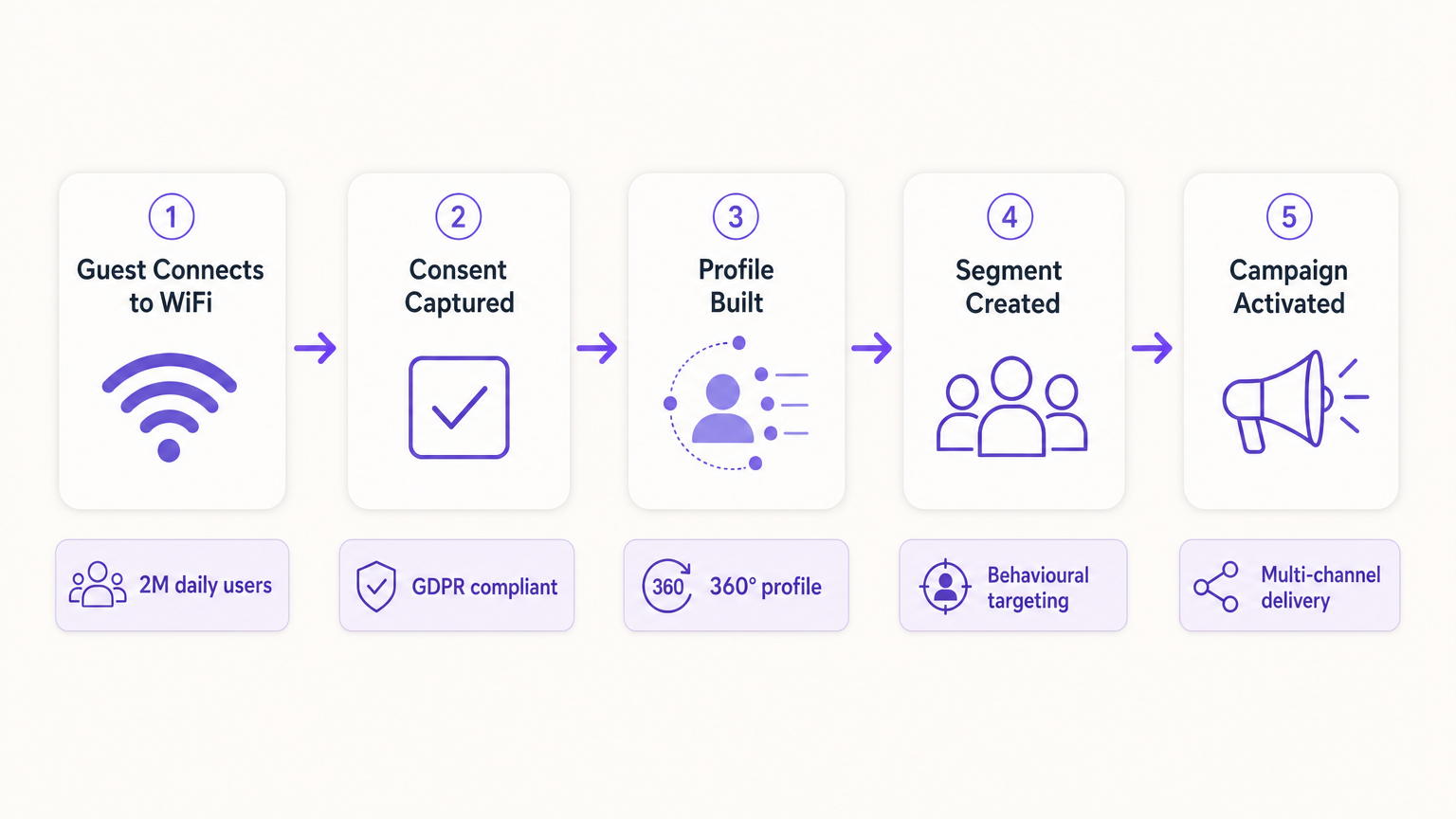
এই নির্দেশিকাটি বর্ণনা করে যে কীভাবে আইটি ম্যানেজার এবং সিটিওরা তাদের ওয়্যারলেস অবকাঠামোকে মার্কেটিং দলগুলির জন্য একটি সম্মতিপূর্ণ ডেটা অধিগ্রহণ ইঞ্জিন হিসাবে তৈরি করতে পারে। CRM এবং মার্কেটিং অটোমেশন প্ল্যাটফর্মগুলির সাথে একটি শক্তিশালী Captive Portal স্থাপন করে, ভেন্যুগুলি নির্বিঘ্নে বৃহৎ পরিসরে জনসংখ্যাগত এবং আচরণগত ডেটা সংগ্রহ করতে পারে। আমরা ডেটা ক্যাপচার মেকানিজমগুলির প্রযুক্তিগত স্থাপন, Guest WiFi অ্যানালিটিক্সের ইন্টিগ্রেশন এবং ইমেল, SMS এবং সোশ্যাল অ্যাডভার্টাইজিং জুড়ে লক্ষ্যযুক্ত মার্কেটিং ক্যাম্পেইনগুলির বাস্তবায়ন অন্বেষণ করব, যা পরিমাপযোগ্য ROI এবং উন্নত গ্রাহক অভিজ্ঞতা প্রদান করবে। Purple-এর প্ল্যাটফর্ম বর্তমানে ৮০,০০০-এর বেশি ভেন্যু এবং প্রায় ২০ লক্ষ দৈনিক ব্যবহারকারীকে পরিষেবা দেয়, যা নেটওয়ার্ক অবকাঠামোকে মার্কেটিং সক্রিয়করণের সাথে সংযুক্ত করার ইন্টিগ্রেশন স্তর সরবরাহ করে।
প্রযুক্তিগত গভীর বিশ্লেষণ: ডেটা অধিগ্রহণ আর্কিটেকচার
একটি ভৌত ভেন্যুতে ফার্স্ট-পার্টি ডেটা সংগ্রহের ভিত্তি ব্যবহারকারীর মোবাইল ডিভাইস, ওয়্যারলেস অ্যাক্সেস পয়েন্ট (AP) এবং Captive Portal অবকাঠামোর মধ্যে মিথস্ক্রিয়ার উপর নির্ভর করে। কোনো মার্কেটিং সক্রিয়করণ শুরু হওয়ার আগে এই আর্কিটেকচার বোঝা অপরিহার্য।
Captive Portal এবং প্রমাণীকরণ
যখন একজন ব্যবহারকারী একটি খোলা SSID-এর সাথে সংযুক্ত হন, তখন নেটওয়ার্ক কন্ট্রোলার তাদের প্রাথমিক HTTP অনুরোধকে একটি Captive Portal-এ পুনঃনির্দেশিত করে। এই স্প্ল্যাশ পৃষ্ঠাটি মূল্য বিনিময়ের একটি গুরুত্বপূর্ণ বিন্দু: ভেন্যু উচ্চ-গতির ইন্টারনেট অ্যাক্সেস সরবরাহ করে এবং ব্যবহারকারী তাদের ডেটা ও সম্মতি প্রদান করে। ডেটার গুণমান এবং ব্যবহারকারীর অভিজ্ঞতা সর্বাধিক করতে, প্রমাণীকরণ প্রক্রিয়াটি অবশ্যই ঘর্ষণহীন এবং প্রযুক্তিগতভাবে শক্তিশালী হতে হবে।
আধুনিক স্থাপনাগুলি তিনটি প্রাথমিক প্রমাণীকরণ পদ্ধতি ব্যবহার করে। Social OAuth ব্যবহারকারীদের Facebook, Google, বা Apple এর মাধ্যমে প্রমাণীকরণ করতে দেয়, যা তাৎক্ষণিকভাবে সমৃদ্ধ জনসংখ্যাগত ডেটা সরবরাহ করে এবং ফর্ম পরিত্যাগ হ্রাস করে। ফর্ম-ভিত্তিক প্রমাণীকরণ ইমেল ঠিকানা, ফোন নম্বর এবং পোস্টাল কোডের মতো নির্দিষ্ট ক্ষেত্রগুলির অনুরোধ করে, যা ভেন্যুকে ক্যাপচার করা ডেটার উপর সরাসরি নিয়ন্ত্রণ দেয়। Passpoint (Hotspot 2.0) এর মাধ্যমে নির্বিঘ্ন প্রমাণীকরণ, IEEE 802.11u স্ট্যান্ডার্ড ব্যবহার করে, ফিরে আসা ব্যবহারকারীদের জন্য স্বয়ংক্রিয়, সুরক্ষিত সংযোগের অনুমতি দেয়, প্রাথমিক সেটআপের পরে Captive Portal সম্পূর্ণরূপে বাইপাস করে — যা পরিবহন কেন্দ্র এবং স্টেডিয়ামের মতো উচ্চ-থ্রুপুট পরিবেশের জন্য একটি গুরুত্বপূর্ণ ক্ষমতা, যেমনটি Wi Fi in Auto: The Complete 2026 Enterprise Guide -এ অন্বেষণ করা হয়েছে।
MAC র্যান্ডমাইজেশন অতিক্রম করা
ঐতিহাসিকভাবে, ভেন্যুগুলি ব্যবহারকারীদের তাদের ডিভাইসের মিডিয়া অ্যাক্সেস কন্ট্রোল (MAC) ঠিকানা ব্যবহার করে ট্র্যাক করত। তবে, আধুনিক অপারেটিং সিস্টেমগুলি — iOS 14 এবং তার উপরে, Android 10 এবং তার উপরে — MAC র্যান্ডমাইজেশন প্রয়োগ করে, প্রতিটি SSID-এর জন্য একটি অনন্য, অস্থায়ী MAC ঠিকানা তৈরি করে। এটি মূলত ডিভাইস-কেন্দ্রিক ট্র্যাকিং ভেঙে দেয় এবং উত্তরাধিকার স্থাপনাগুলিতে ডেটার গুণমান হ্রাসের অন্যতম সাধারণ কারণ।
একটি স্থায়ী ব্যবহারকারী প্রোফাইল তৈরি করতে, আর্কিটেকচারকে হার্ডওয়্যার শনাক্তকারীর পরিবর্তে প্রমাণীকৃত সেশনের উপর নির্ভর করতে হবে। একবার একজন ব্যবহারকারী Captive Portal এর মাধ্যমে প্রমাণীকরণ করলে, তাদের সেশন ডেটা — র্যান্ডমাইজড MAC সহ — WiFi Analytics প্ল্যাটফর্মের মধ্যে তাদের CRM প্রোফাইলের সাথে সংযুক্ত হয়। একই প্রমাণীকরণ পদ্ধতি ব্যবহার করে পরবর্তী ভিজিটগুলি একত্রিত প্রোফাইলে ফিরে যাবে, যা অনুদৈর্ঘ্য আচরণগত ডেটা সংরক্ষণ করবে।
ডেটা প্রবাহ এবং ইন্টিগ্রেশন আর্কিটেকচার
ক্যাপচার করা ডেটা অবশ্যই নেটওয়ার্ক এজ থেকে মার্কেটিং স্ট্যাক পর্যন্ত নির্বিঘ্নে প্রবাহিত হতে হবে। এটি REST APIs বা সুরক্ষিত Webhooks এর মাধ্যমে অর্জন করা হয়, যা ব্যাচ এক্সপোর্টের পরিবর্তে রিয়েল-টাইম ডেটা সিঙ্ক্রোনাইজেশন সক্ষম করে।
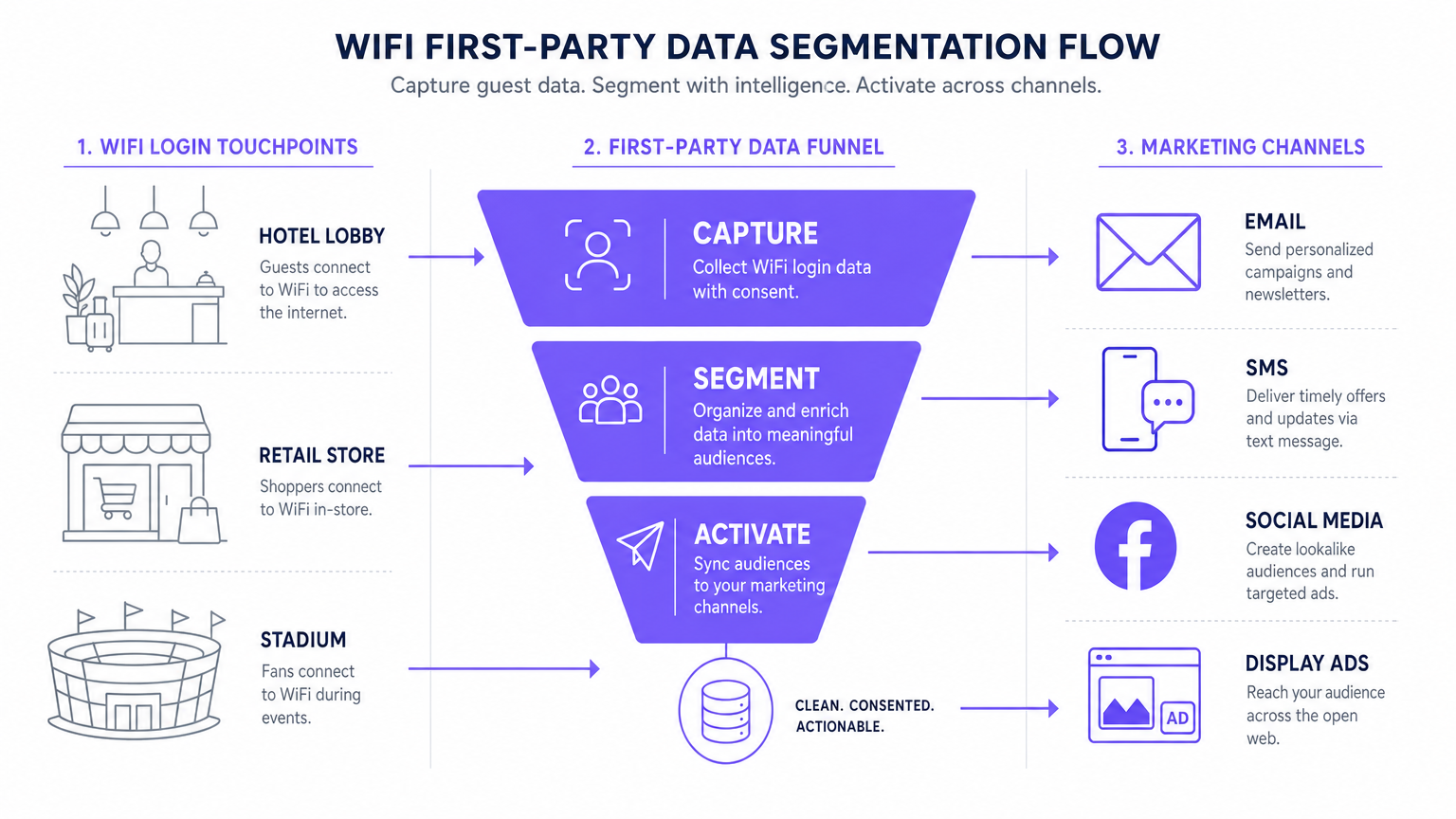
স্ট্যান্ডার্ড ডেটা প্রবাহ পাঁচটি পর্যায় অনুসরণ করে: ক্যাপচার (Captive Portal-এ সংগৃহীত ডেটা), স্বাভাবিকীকরণ (অ্যানালিটিক্স প্ল্যাটফর্ম প্রোফাইলগুলিকে ডিডুপ্লিকেট করে এবং একত্রিত করে), সিঙ্ক (Webhooks CRM-এ রিয়েল-টাইম আপডেট পাঠায়), সেগমেন্ট (মার্কেটিং দলগুলি আচরণগত এবং জনসংখ্যাগত মানদণ্ডের উপর ভিত্তি করে শ্রোতা গোষ্ঠীগুলিকে সংজ্ঞায়িত করে), এবং সক্রিয়করণ (ইমেল, SMS এবং প্রোগ্রাম্যাটিক চ্যানেল জুড়ে ক্যাম্পেইনগুলি ট্রিগার করা হয়)।
বাস্তবায়ন নির্দেশিকা: ডেটা সক্রিয়করণ
ডেটা সংগ্রহ করা কেবল প্রথম ধাপ। প্রকৃত বাণিজ্যিক মূল্য সক্রিয়করণের মধ্যে নিহিত। নিম্নলিখিত বিভাগটি চারটি প্রাথমিক মার্কেটিং চ্যানেল জুড়ে ফার্স্ট-পার্টি WiFi ডেটা কীভাবে স্থাপন করতে হয় তার বিশদ বিবরণ দেয়।
1. ইমেল মার্কেটিং এবং ড্রিপ ক্যাম্পেইন
ইমেল আতিথেয়তা এবং retail উভয় পরিবেশের জন্যই একটি অত্যন্ত কার্যকর চ্যানেল। ট্রিগারড ওয়েলকাম ইমেলগুলি, Webhook এর মাধ্যমে কনফিগার করা হয় যা ব্যবহারকারীর প্রথম লগইন করার সাথে সাথে সক্রিয় হয়, ডিসকাউন্ট কোড বা লয়্যালটি পয়েন্টের মতো প্রতিশ্রুত প্রণোদনা প্রদানের জন্য আদর্শ। ভিজিট-পরবর্তী সমীক্ষা ইমেলগুলি, ব্যবহারকারী নেটওয়ার্ক থেকে সংযোগ বিচ্ছিন্ন হওয়ার ২৪ ঘন্টা পরে স্বয়ংক্রিয়ভাবে পাঠানো হয়, যা রিভিউ তৈরি এবং NPS পরিমাপকে চালিত করে। ৯০ দিনের বেশি সময় ধরে সংযোগ না করা ব্যবহারকারীদের লক্ষ্য করে পুনরায়-এনগেজমেন্ট ক্যাম্পেইনগুলি বারবার ভিজিট বাড়ানোর জন্য কার্যকর, বিশেষ করে hospitality প্রেক্ষাপটে যেখানে মৌসুমী প্রচারগুলি প্রাসঙ্গিক।
২. SMS এবং অবস্থান-ভিত্তিক ট্রিগার
তাৎক্ষণিক, উচ্চ-উদ্দেশ্যমূলক এনগেজমেন্টের জন্য, SMS অতুলনীয়। এই চ্যানেলের জন্য প্রমাণীকরণ প্রক্রিয়ার সময় SMS মার্কেটিংয়ের জন্য সুস্পষ্ট অপ্ট-ইন ক্যাপচার করা প্রয়োজন — যা ইমেল মার্কেটিং সম্মতির থেকে একটি পৃথক, আনটিক করা চেকবক্স। অবস্থান বিশ্লেষণ ব্যবহার করে — যেমন Indoor Positioning System: UWB, BLE, & WiFi Guide -এ বর্ণিত হয়েছে — প্ল্যাটফর্মটি একটি নির্দিষ্ট সময়ের জন্য একটি নির্দিষ্ট অঞ্চলে ব্যবহারকারী অবস্থান করলে একটি SMS ট্রিগার করতে পারে, যা প্রাসঙ্গিকভাবে প্রাসঙ্গিক মাইক্রো-মোমেন্ট মার্কেটিং তৈরি করে।
৩. সোশ্যাল অ্যাডভার্টাইজিং এবং কাস্টম অডিয়েন্স
প্রোগ্রামেটিক ডিসপ্লে এবং সোশ্যাল অ্যাডভার্টাইজিংয়ের জন্য ফার্স্ট-পার্টি ডেটা অমূল্য, বিশেষ করে যখন থার্ড-পার্টি ট্র্যাকিং হ্রাস পায়। Lookalike Audiences তৈরি করা হয় উচ্চ-এনগেজড WiFi ব্যবহারকারী সেগমেন্টগুলি — উদাহরণস্বরূপ, যে ব্যবহারকারীরা মাসে দুবারের বেশি ভেন্যুতে যান — Facebook Ads Manager বা Google Ads-এ একটি সিড Custom Audience হিসাবে এক্সপোর্ট করে। প্ল্যাটফর্মটি তখন একই রকম জনসংখ্যাগত এবং আচরণগত প্রোফাইল সহ নতুন ব্যবহারকারীদের সনাক্ত করে। Retargeting সম্প্রতি ভেন্যুতে আসা ব্যবহারকারীদের লক্ষ্য করে ডিসপ্লে বিজ্ঞাপন পরিবেশন করে, যা ওপেন ওয়েবে ব্র্যান্ড সচেতনতা বাড়ায়।
৪. প্রোগ্রামেটিক ডিসপ্লে
একটি Demand-Side Platform (DSP)-এর সাথে ফার্স্ট-পার্টি অডিয়েন্স সেগমেন্ট সিঙ্ক করার মাধ্যমে, ভেন্যুগুলি প্রিমিয়াম পাবলিশার ইনভেন্টরির জুড়ে পরিচিত দর্শকদের লক্ষ্য করে ডিসপ্লে বিজ্ঞাপন পরিবেশন করতে পারে। এটি transport এবং healthcare ভেন্যুগুলির জন্য বিশেষভাবে কার্যকর যেখানে ভিজিটের ফ্রিকোয়েন্সি এবং উদ্দেশ্য সংকেতগুলি শক্তিশালী।
মৌলিক ডেটা সংগ্রহের কৌশলগুলির জন্য, How to Collect First-Party Data Through WiFi দেখুন।
সম্মতি এবং ব্যবহারকারীর অভিজ্ঞতার জন্য সেরা অনুশীলন
গোপনীয়তা এবং সম্মতি (GDPR এবং CCPA)
সম্মতি অ-আলোচনাযোগ্য এবং প্রথম দিন থেকেই স্থাপনার মধ্যে এটি তৈরি করতে হবে, পরে সংযোজন করা যাবে না। Captive Portal-কে কঠোর ডেটা সুরক্ষা নিয়মাবলী মেনে চলতে হবে। Unbundled consent বাধ্যতামূলক: মার্কেটিং যোগাযোগের জন্য চেকবক্সটি শর্তাবলী এবং নিয়মাবলীর গ্রহণযোগ্যতা থেকে সম্পূর্ণ আলাদা হতে হবে। Granular opt-ins ইমেল এবং SMS মার্কেটিংয়ের জন্য পৃথক চেকবক্স সরবরাহ করবে। একটি পরিষ্কার গোপনীয়তা নীতি লিঙ্ক স্পষ্টভাবে প্রদর্শিত হতে হবে, যেখানে ডেটা কীভাবে ব্যবহার করা হবে, সংরক্ষণ করা হবে এবং শেয়ার করা হবে তার বিস্তারিত বিবরণ থাকবে। ডেটা TLS 1.2 বা তার উপরের সংস্করণ ব্যবহার করে ট্রানজিটে এনক্রিপ্ট করা উচিত এবং AES-256 এনক্রিপশন ব্যবহার করে রেস্টে এনক্রিপ্ট করা উচিত, যেখানে লেনদেন জড়িত সেখানে PCI DSS মেনে চলতে হবে।
রূপান্তরের জন্য Captive Portal অপ্টিমাইজ করা
স্প্ল্যাশ পেজটি তিন সেকেন্ডের মধ্যে লোড হতে হবে। এর চেয়ে বেশি সময় লাগলে, পরিত্যাগের হার উল্লেখযোগ্যভাবে বৃদ্ধি পায়, যার ফলে ডেটা সংগ্রহের সুযোগ হারানো যায়। পোর্টালটি সম্পূর্ণরূপে মোবাইল-রেসপন্সিভ হতে হবে এবং একটি স্পষ্ট, আকর্ষণীয় মূল্য প্রস্তাবনা সহ ডিজাইন করা উচিত। Progressive profiling হল প্রস্তাবিত পদ্ধতি: প্রথম ভিজিটে শুধুমাত্র ইমেল ঠিকানা অনুরোধ করুন, এবং পরবর্তী ভিজিটগুলিতে অতিরিক্ত ক্ষেত্রগুলি — জন্মদিন, পোস্টাল কোড, পছন্দ — দিয়ে প্রোফাইল সমৃদ্ধ করুন। এই পদ্ধতিটি সু-কনফিগার করা স্থাপনাগুলিতে ধারাবাহিকভাবে ৬০ থেকে ৮০ শতাংশ অপ্ট-ইন হার তৈরি করে।
সমস্যা সমাধান এবং ঝুঁকি প্রশমন
| ব্যর্থতার ধরণ | লক্ষণ | প্রশমন কৌশল |
|---|---|---|
| Captive Portal প্রদর্শিত হচ্ছে না | ব্যবহারকারীরা SSID-এর সাথে সংযুক্ত হন কিন্তু পোর্টালে পুনঃনির্দেশিত হন না। | DNS কনফিগারেশন এবং Walled Garden সেটিংস যাচাই করুন। প্রমাণীকরণ সম্পূর্ণ হওয়ার আগে পোর্টাল IP এবং URL পৌঁছানো যায় কিনা তা নিশ্চিত করুন। |
| কম অপ্ট-ইন হার | উচ্চ সংযোগের পরিমাণ কিন্তু কম মার্কেটিং সম্মতি সংগ্রহ। | মূল্য প্রস্তাবনার স্পষ্টতা পর্যালোচনা করুন। ফর্মটি সরল করুন। নিশ্চিত করুন যে মার্কেটিং অপ্ট-ইনটি সুস্পষ্ট কিন্তু প্রতারণামূলক নয়। পোর্টাল লোড সময় পরীক্ষা করুন। |
| ডেটা সিঙ্ক ব্যর্থতা | Purple-এ প্রোফাইল আপডেট হয়েছে কিন্তু CRM-এ প্রতিফলিত হয়নি। | Webhook ডেলিভারি লগ নিরীক্ষণ করুন। গন্তব্য প্ল্যাটফর্মে API কী এবং রেট সীমা যাচাই করুন। ব্যর্থ ডেলিভারির জন্য রিট্রাই লজিক প্রয়োগ করুন। |
| MAC র্যান্ডমাইজেশন ডেটা অবনমিত করছে | 'নতুন' ভিজিটরদের বৃদ্ধি; ফিরে আসা ভিজিটর মেট্রিক্সের পতন। | পরিচয়-কেন্দ্রিক ট্র্যাকিংয়ে স্থানান্তরিত হন। নির্বিঘ্ন পুনঃপ্রমাণীকরণের জন্য Passpoint প্রয়োগ করুন। স্থায়ী পরিচয়ের জন্য অ্যাপ-ভিত্তিক প্রমাণীকরণকে উৎসাহিত করুন। |
| Walled Garden ভুল কনফিগারেশন | সোশ্যাল OAuth লগইন ব্যর্থ হয়; ব্যবহারকারীরা প্রমাণীকরণ সম্পূর্ণ করতে পারেন না। | ওয়্যারলেস LAN কন্ট্রোলারে Walled Garden কনফিগারেশনে সমস্ত প্রয়োজনীয় প্রমাণীকরণ এন্ডপয়েন্ট (যেমন, accounts.google.com, graph.facebook.com) হোয়াইটলিস্ট করুন। |
ROI এবং ব্যবসায়িক প্রভাব
WiFi-এর মাধ্যমে একটি ফার্স্ট-পার্টি ডেটা কৌশল বাস্তবায়ন নেটওয়ার্ককে একটি IT খরচ থেকে পরিমাপযোগ্য বিপণন সম্পদে রূপান্তরিত করে যা পরিমাপযোগ্য রিটার্ন সহ।
Cost Per Acquisition (CPA): একটি Captive Portal-এর মাধ্যমে একজন নতুন, সম্মত ইমেল গ্রাহক অর্জনের খরচ সাধারণত পেইড সোশ্যাল বা সার্চ অ্যাডভার্টাইজিংয়ের মাধ্যমে সমতুল্য খরচের একটি অংশ মাত্র। অবকাঠামো ইতিমধ্যেই স্থাপন করা হয়েছে; অতিরিক্ত খরচ হল প্ল্যাটফর্ম লাইসেন্স এবং পোর্টাল কনফিগারেশন।
Campaign Attribution: একজন ব্যবহারকারী কখন একটি ইমেল অফার পান এবং পরবর্তীতে ভেন্যু WiFi-এ লগ ইন করেন তা ট্র্যাক করার মাধ্যমে, মার্কেটিং দলগুলি ডিজিটাল ক্যাম্পেইনগুলির জন্য অফলাইন অ্যাট্রিবিউশন স্পষ্টভাবে প্রমাণ করতে পারে — একটি ক্ষমতা যা ডিজিটাল অ্যাট্রিবিউশন মডেলগুলি কম নির্ভরযোগ্য হয়ে উঠলে ক্রমবর্ধমান মূল্যবান হয়ে ওঠে।
Increased Customer Lifetime Value (CLV): সঠিক ফার্স্ট-পার্টি ডেটা দ্বারা চালিত ব্যক্তিগতকৃত এনগেজমেন্ট সরাসরি ভিজিটের ফ্রিকোয়েন্সি বৃদ্ধি এবং প্রতি ভিজিটে উচ্চ ব্যয়ের সাথে সম্পর্কিত। একটি হোটেল যা একজন ফিরে আসা কর্পোরেট অতিথিকে সনাক্ত করতে পারে এবং সক্রিয়ভাবে একটি প্রাসঙ্গিক আপগ্রেড অফার করতে পারে, তা এমন একটি হোটেলের চেয়ে উল্লেখযোগ্যভাবে ভালো অভিজ্ঞতা প্রদান করে যা প্রতিটি অতিথিকে বেনামী হিসাবে বিবেচনা করে।
জটিল IoT এবং ডেটা আর্কিটেকচার বিবেচনার জন্য, Internet of Things Architecture: A Complete Guide দেখুন।
মূল শব্দ ও সংজ্ঞা
Captive Portal
A web page that a user of a public-access network is obliged to view and interact with before internet access is granted. It serves as the primary interface for data capture and consent collection.
This is the critical point of value exchange between the venue and the guest. Its design, load speed, and form structure directly determine the quality and volume of first-party data captured.
MAC Randomisation
A privacy feature in modern operating systems (iOS 14+, Android 10+) that generates a temporary, unique MAC address for each wireless network the device connects to, preventing persistent device-level tracking.
This is the most common cause of data quality degradation in legacy WiFi analytics deployments. It necessitates a shift from device-centric to identity-centric tracking architectures.
First-Party Data
Information that an organisation collects directly from its own customers or users, with their explicit consent, through its own channels and touchpoints.
This is the most valuable and compliant data source for marketing, particularly as third-party cookies are phased out across major browsers and advertising platforms.
Webhook
An HTTP-based callback mechanism that sends a structured data payload to a pre-configured endpoint when a specific event occurs in the source system.
Used to push real-time data from the WiFi analytics platform to a CRM or marketing automation tool immediately after a user authenticates, enabling real-time campaign triggers.
Walled Garden
A network configuration that restricts unauthenticated users to a limited set of pre-approved domains and IP addresses, preventing full internet access until authentication is complete.
Correct Walled Garden configuration is essential for allowing the captive portal to load and for enabling social OAuth logins (e.g., whitelisting Facebook and Google authentication endpoints) before the user has completed the login process.
Passpoint (Hotspot 2.0)
An industry standard based on IEEE 802.11u that enables automatic, secure WiFi connections without requiring manual portal interaction after the initial device provisioning.
Improves user experience for returning visitors and ensures consistent, persistent identity-based connections, facilitating seamless data capture and profile enrichment across multiple visits.
Lookalike Audience
A targeting segment created by advertising platforms (such as Facebook Ads or Google Ads) that identifies new users who share similar characteristics with an existing Custom Audience seed list.
Allows venues to leverage their high-quality offline visitor data — captured via WiFi — to find new, highly qualified prospects online, bridging the gap between physical and digital marketing.
Progressive Profiling
A data collection strategy that gathers customer information incrementally across multiple interactions, rather than requesting all data fields in a single form submission.
Increases captive portal conversion rates by reducing friction on the initial login, while still building a comprehensive, enriched customer profile over subsequent visits.
Dwell Time
The duration for which a device remains associated with a WiFi access point or within a defined location zone, used as a proxy for physical presence and engagement.
A critical signal for location-based marketing triggers. A user dwelling in a specific retail zone for more than ten minutes is a high-intent prospect for a contextually relevant offer.
কেস স্টাডিজ
A 200-room luxury hotel wants to increase bookings for its on-site spa. They currently offer free WiFi but do not capture any guest data beyond the room booking system. How should the IT and Marketing teams collaborate to deploy a first-party data solution?
Phase 1 — IT Deployment: The IT team configures the wireless LAN controller to redirect all unauthenticated guest traffic on the 'Hotel_Guest_WiFi' SSID to the Purple captive portal. The Walled Garden is configured to allow access to the portal's CDN and the OAuth endpoints for social login providers.
Phase 2 — Portal Design: Marketing designs a branded splash page with a clear value proposition: 'Complimentary high-speed WiFi — connect in seconds.' The authentication form requests Name and Email, with a separate, unticked checkbox for marketing consent. A link to the privacy policy is displayed prominently.
Phase 3 — Integration: IT configures a secure Webhook to push new authenticated profiles to the hotel's CRM (e.g., Salesforce). A custom field 'WiFi_Opt_In' is mapped to the marketing consent flag.
Phase 4 — Campaign Execution: Marketing configures an automated trigger in the CRM. If a guest authenticates and their profile indicates they have not previously visited the spa (cross-referenced with the booking system), an automated email is sent two hours after check-in offering a 15% discount on spa treatments, valid for the duration of their stay.
Phase 5 — Measurement: Track the email open rate, click-through rate, and spa booking conversion rate. Compare spa revenue per guest for WiFi-opted-in guests versus non-opted-in guests to quantify ROI.
A national retail chain with 50 locations wants to build a Lookalike Audience for Facebook Ads based on their most frequent in-store shoppers, without relying on third-party pixel data.
Step 1 — Baseline Capture: Confirm that the captive portal at all 50 locations is capturing email addresses and marketing consent. Ensure the portal is configured consistently across all sites using a centralised management platform.
Step 2 — Segment Definition: Within the Purple analytics platform, create a segment defined as 'Users who have authenticated at any location more than three times in the last 60 days.' This cohort represents the brand's most loyal physical shoppers.
Step 3 — Secure Export: Export this segment as a hashed (SHA-256) email list. Hashing ensures the raw email addresses are never transmitted to the advertising platform, maintaining GDPR compliance.
Step 4 — Custom Audience Upload: Upload the hashed list to Facebook Ads Manager as a Custom Audience. Facebook matches the hashes against its own user database.
Step 5 — Lookalike Generation: Generate a 1% Lookalike Audience based on this Custom Audience. This targets new Facebook users who share similar characteristics — demographics, interests, and online behaviours — with the brand's most loyal physical shoppers.
Step 6 — Campaign Deployment: Run a prospecting campaign targeting the Lookalike Audience with a new customer acquisition offer.
দৃশ্যপট বিশ্লেষণ
Q1. Your venue is experiencing a 40% drop-off rate at the captive portal. Users are connecting to the SSID but not completing the authentication process. What are the two most likely technical causes and how would you diagnose and resolve each?
💡 ইঙ্গিত:Consider both the network configuration layer and the user experience layer independently.
প্রস্তাবিত পদ্ধতি দেখুন
Cause 1 — Slow Portal Load Time: The splash page is taking too long to render on mobile devices. Diagnosis: Use browser developer tools to measure Time to First Byte (TTFB) and total page load time from a mobile device on the guest network. Resolution: Compress all images, remove non-essential JavaScript, and serve the portal from a CDN. Target sub-3-second load time.
Cause 2 — Walled Garden Misconfiguration: The portal is loading but social OAuth authentication is failing because the authentication provider endpoints are not whitelisted in the Walled Garden. Diagnosis: Attempt a social login and inspect the network requests in developer tools for blocked connections. Resolution: Add the required OAuth endpoints (e.g., accounts.google.com, graph.facebook.com, appleid.apple.com) to the Walled Garden whitelist on the wireless LAN controller.
Q2. A marketing director wants to send an SMS offer to users exactly 15 minutes after they enter the flagship retail store. How would you architect this solution using the existing WiFi infrastructure, and what compliance considerations apply?
💡 ইঙ্গিত:Think about how presence is detected, how the event is communicated to the marketing platform, and what consent is required.
প্রস্তাবিত পদ্ধতি দেখুন
Architecture: 1) Ensure the captive portal explicitly captures mobile phone numbers with a separate, unticked SMS marketing opt-in checkbox. 2) Configure the WiFi analytics platform to track dwell time based on device association with the store's access points. 3) Set up a Webhook triggered by the event 'Dwell Time > 15 minutes AND SMS_Opt_In = True.' 4) The Webhook payload — containing the user's phone number and the store identifier — is sent to the SMS platform (e.g., Twilio), which dispatches the pre-configured offer.
Compliance: The SMS opt-in must be explicit and separate from the WiFi terms of service. The message must include a clear opt-out mechanism (e.g., 'Reply STOP to unsubscribe'). Under GDPR, the user must have been informed at the point of consent that their location within the store would be used to trigger marketing messages.
Q3. Following an iOS update rollout across your user base, your analytics platform shows a 60% spike in 'new' visitors while 'returning' visitor metrics have collapsed. Physical footfall counters show no change in actual visitor numbers. What has happened, and what is the long-term architectural response?
💡 ইঙ্গিত:Consider recent privacy features introduced by mobile operating systems and their impact on device-level tracking.
প্রস্তাবিত পদ্ধতি দেখুন
Diagnosis: This is caused by MAC randomisation. The iOS update has enabled per-network MAC randomisation, meaning each device presents a new, temporary MAC address on each visit. The analytics platform is interpreting each new MAC as a new visitor, breaking device-centric tracking.
Immediate Response: Communicate to the marketing team that historical 'returning visitor' metrics are temporarily unreliable and should not be used for campaign decisions until the identity-centric architecture is in place.
Long-Term Architecture: 1) Ensure all returning users are prompted to re-authenticate via the captive portal. When they log in with their existing email or social account, the new randomised MAC is linked to their existing CRM profile, restoring longitudinal data. 2) Deploy Passpoint profiles to authenticated users' devices. Passpoint uses certificate-based authentication that is not affected by MAC randomisation, ensuring seamless, persistent identity on future visits. 3) Encourage users to download the venue's app, which provides a persistent, app-level identity that is also immune to MAC randomisation.




