
Cómo la personalización aumenta la lealtad de los clientes y las ventas
Esta guía de referencia técnica detalla los requisitos de arquitectura y el impacto comercial de aprovechar la analítica de WiFi para la personalización de clientes a escala. Proporciona orientación de implementación práctica para gerentes de TI, arquitectos de red y directores de operaciones de recintos para transformar la infraestructura heredada de acceso de invitados en una capa principal de ingesta de datos que impulse un aumento medible en la lealtad y los ingresos. Cubriendo el diseño de esquemas de datos, la integración con CRM, el cumplimiento de GDPR y casos de estudio del mundo real en hotelería, retail y eventos, esta guía dota a los equipos técnicos con los marcos de trabajo necesarios para diseñar una red que contribuya activamente a los ingresos brutos.
Video overview
Escucha esta guía
Ver transcripción del podcast
Parte de nuestra serie principal: Guía de WiFi Marketing →

Resumen Ejecutivo
Los operadores de hotelería, retail y espacios públicos se enfrentan a un desafío constante: convertir multitudes de visitantes anónimos en fidelidad de los clientes y en ingresos medibles. En la infraestructura de red heredada, el acceso de invitados se consideraba un simple centro de costos, pero las plataformas perimetrales modernas han transformado el punto de acceso en una capa primaria de ingesta de datos.
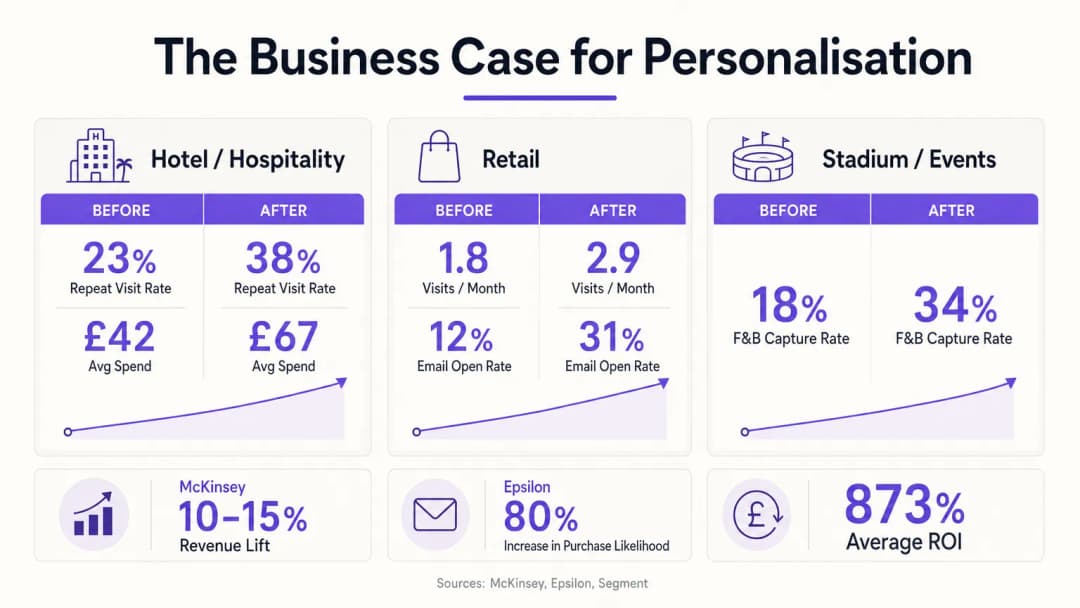
Esta guía de referencia técnica examina los cambios de arquitectura necesarios para implementar la personalización a escala. Al integrar la autenticación de Captive Portal con sistemas de Gestión de Relaciones con el Cliente (CRM) y automatización de marketing, los equipos de TI y marketing pueden ofrecer experiencias contextuales que logran resultados de negocio comprobados. Los datos de la industria muestran que las estrategias sólidas de personalización conducen a un aumento del 10% al 15% en los ingresos, mientras que el 80% de los consumidores reportan tener una mayor probabilidad de comprar a marcas que ofrecen experiencias a la medida.
Para los gerentes de TI y arquitectos de red, pasar de la conectividad básica a una capa de analíticas inteligente requiere una consideración cuidadosa de los esquemas de datos, las integraciones de API y los marcos de cumplimiento. Esta guía proporciona metodologías de implementación prácticas, planos de arquitectura y casos de estudio del mundo real que demuestran cómo construir una red que contribuya activamente a los ingresos.
Análisis técnico detallado
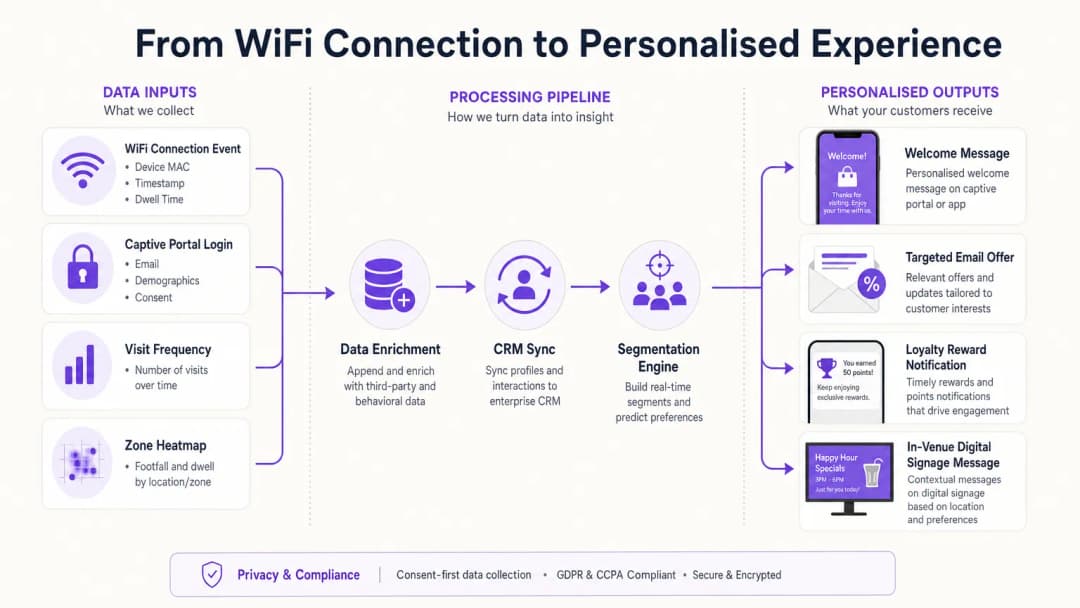
La base de una personalización escalable radica en la transición de silos de red aislados a un ecosistema de datos integrado. Cuando un usuario se autentica a través del Guest WiFi, la red captura telemetría de alta fidelidad, que incluye direcciones MAC de los dispositivos, tiempos de permanencia, transiciones de zonas y cargas útiles de autenticación.
Ingesta de datos y mapeo de esquemas
Para aprovechar esta telemetría, la capa de analítica debe normalizar los datos en un esquema unificado. Este proceso implica capturar tanto datos deterministas (por ejemplo, direcciones de correo electrónico y datos demográficos proporcionados durante el inicio de sesión en el Captive Portal) como datos probabilísticos (por ejemplo, patrones de comportamiento derivados de la triangulación de AP y los valores RSSI).
El lago de datos resultante se envía directamente al CRM de la sede y a las plataformas de automatización de marketing. La plataforma de WiFi Analytics de Purple actúa como un motor de ingesta central, analizando paquetes contables RADIUS sin procesar y cargas útiles de redirección HTTP en objetos JSON estructurados listos para el consumo de los sistemas posteriores.
Arquitectura de integración
Las implementaciones exitosas dependen de arquitecturas de API sólidas para sincronizar la telemetría de red con los sistemas externos. Las API RESTful facilitan la transferencia de datos en tiempo real, lo que permite activar flujos de trabajo automatizados, como el envío de un correo electrónico de bienvenida en el mismo instante en que un cliente de alto valor se autentica en la red.
Considere un escenario donde un cliente ingresa a un entorno de Retail. El controlador de red detecta las solicitudes de sondeo del dispositivo y asocia la dirección MAC con un perfil de cliente conocido. La plataforma de analítica activa entonces un webhook hacia el CRM, el cual evalúa el historial de compras del cliente y ofrece una oferta personalizada en el Captive Portal o en la aplicación móvil de la marca.
En las implementaciones de Hospitality, esta misma arquitectura permite la integración con el Sistema de Gestión de Propiedades (PMS). Cuando un huésped que regresa realiza el check-in y se conecta al WiFi del hotel, el sistema coteja su perfil con los datos históricos de sus estancias y muestra un mensaje de bienvenida personalizado en el Captive Portal, complementado con ofertas dirigidas para mejoras de habitación o promociones de alimentos y bebidas.
| Tipo de dato | Origen | Uso en sistemas posteriores |
|---|---|---|
| Dirección de correo electrónico | Inicio de sesión en Captive Portal | Creación de perfiles en CRM, campañas de correo electrónico |
| Dirección MAC | Asociación de red | Seguimiento de frecuencia de visitas, análisis de permanencia |
| Tiempo de permanencia en zona | Triangulación de AP | Ofertas contextuales activadas por eventos |
| Frecuencia de visitas | Contabilidad de RADIUS | Asignación de nivel de fidelidad |
| Datos demográficos | Perfilado progresivo | Segmentación de audiencias |
Guía de implementación
La implementación de una arquitectura de red centrada en la personalización requiere un enfoque estructurado para garantizar la precisión de los datos, la interoperabilidad del sistema y el cumplimiento normativo.
Fase 1: Evaluación de la infraestructura
Antes de implementar una capa de analíticos, evalúe la infraestructura WLAN existente. Asegúrese de que los controladores inalámbricos y los puntos de acceso sean compatibles con los protocolos necesarios (RADIUS, SNMP y Syslog) y que puedan manejar la sobrecarga de procesamiento adicional asociada con el reporte continuo de telemetría. La plataforma de Purple es agnóstica al hardware, integrándose con la infraestructura existente de Cisco, Juniper, Ruckus y otros proveedores líderes, lo que reduce significativamente el gasto de capital requerido para la implementación.
Fase 2: Configuración del Captive Portal
Diseñe el Captive Portal para equilibrar la fricción del usuario con la adquisición de datos. Implemente técnicas de creación de perfiles progresivos, solicitando información mínima durante el inicio de sesión inicial y construyendo gradualmente el perfil del cliente durante las visitas posteriores. Asegúrese de que el diseño del portal se alinee con las pautas de la marca corporativa y ofrezca métodos de autenticación fluidos, como el inicio de sesión con redes sociales o integraciones con OpenRoaming. Toda la recopilación de datos debe basarse en mecanismos de consentimiento claros y que cumplan con el GDPR.
Fase 3: Integración del sistema
Establezca un flujo de datos bidireccional entre la plataforma de analíticos de WiFi y el CRM, la automatización de marketing y los sistemas de gestión de propiedades de las instalaciones. Utilice middleware robusto o integraciones directas de API para garantizar la consistencia de los datos. Para entornos complejos, considere implementar una plataforma de datos de clientes (CDP) que sirva como un repositorio central para todas las interacciones con los clientes. Esto es particularmente relevante para los centros de Transporte y las cadenas minoristas de múltiples sitios donde el trayecto del cliente abarca varias ubicaciones físicas.
Fase 4: Lógica de campaña y automatización
Una vez establecido el canal de datos, configure reglas de automatización de marketing que traduzcan los eventos de red en acciones del cliente. Defina las condiciones de activación (por ejemplo, primera visita, quinta visita, tiempo de permanencia superior a 30 minutos en una zona específica) y vincúlelas con las acciones de campaña pertinentes. Establezca marcos de pruebas A/B para optimizar continuamente la relevancia de las ofertas y las tasas de conversión.
¿Tiene preguntas sobre su configuración específica?
Nuestro equipo trabaja con gestores de espacios, responsables de TI e ingenieros de redes en 80 000 establecimientos. Reserve una llamada de 20 minutos y le mostraremos cómo lo resolvieron otros profesionales como usted.
Mejores prácticas
Para maximizar el impacto de las iniciativas de personalización, los equipos de TI y de marketing deben adherirse a las siguientes mejores prácticas independientes del proveedor.
Priorice la calidad de los datos. Implemente reglas de validación de datos en el punto de entrada para evitar que ingresen datos corruptos o inexactos al CRM. Realice auditorías y limpiezas periódicas de las bases de datos para mantener una alta fidelidad de los datos. Un único registro de cliente autorizado es mucho más valioso que diez perfiles duplicados e incompletos.
Adopte un enfoque que priorice la privacidad. Asegúrese de que todas las prácticas de recopilación de datos cumplan con las regulaciones regionales como GDPR y CCPA. Implemente mecanismos de consentimiento claros y transparentes dentro del Captive Portal y proporcione a los usuarios herramientas accesibles para gestionar sus preferencias de datos. El incumplimiento plantea importantes riesgos financieros y de reputación.
Implemente activadores contextuales. Aproveche los datos de ubicación en tiempo real para entregar mensajes altamente relevantes. En el sector hotelero, active una promoción de spa cuando un huésped se conecte a un AP cerca del centro de bienestar. En el comercio minorista, active una oferta de asistencia en el probador cuando un cliente pase más de 10 minutos en la zona de ropa.
Alinee los objetivos de TI y marketing. Fomente la colaboración interfuncional entre los departamentos de TI y marketing. TI debe garantizar que la infraestructura pueda entregar de manera confiable la telemetría requerida, mientras que marketing define las reglas comerciales y la lógica de la campaña. La falta de alineación entre estos equipos es la causa más común de implementaciones fallidas.
Para las organizaciones que crean una estrategia integral de experiencia del cliente, las guías Como Construir uma Estratégia de Experiência do Cliente y Cómo construir una estrategia de experiencia del cliente proporcionan marcos complementarios.
Resolución de problemas y mitigación de riesgos
La implementación de una superposición de red inteligente introduce nuevas complejidades y posibles dominios de falla. La mitigación proactiva de riesgos es esencial para mantener la disponibilidad del servicio y la integridad de los datos.
Límite de velocidad de la API. Los lugares de alta densidad, como los centros de transporte o los estadios, pueden generar volúmenes masivos de datos de telemetría, lo que podría superar los límites de velocidad de las APIs posteriores. Implemente mecanismos inteligentes de cola y procesamiento por lotes para gestionar la salida de datos. Filtre los eventos de bajo valor (por ejemplo, el roaming transitorio) y solo active webhooks para cambios de estado significativos.
Aleatorización de MAC. Los sistemas operativos móviles modernos utilizan la aleatorización de MAC para proteger la privacidad del usuario, lo que interrumpe el seguimiento probabilístico de dispositivos entre sesiones. Para mantener la precisión del seguimiento, anime a los usuarios a autenticarse a través del Captive Portal o a descargar la aplicación móvil del establecimiento, que puede utilizar identificadores deterministas. La autenticación basada en certificados a través de Passpoint o OpenRoaming proporciona la solución a largo plazo más sólida.
Congestión de la red. El informe continuo de telemetría puede consumir un ancho de banda significativo en enlaces de retorno limitados. Optimice los intervalos de informe para reducir la carga en la red principal y aproveche el procesamiento en el borde siempre que sea posible. Para establecimientos con requisitos de alto rendimiento, considere una línea dedicada para garantizar un rendimiento de retorno constante.
Fallas en la consistencia de los datos. Las integraciones de API bidireccionales introducen el riesgo de discrepancias de datos si un sistema no está disponible temporalmente. Implemente llamadas de API idempotentes y una lógica de reintento sólida para garantizar que no se pierdan eventos de clientes durante interrupciones breves.
ROI e impacto empresarial
El objetivo final de una estrategia de personalización es generar un valor comercial medible. Al aprovechar el análisis de red, los operadores de los establecimientos pueden pasar de suposiciones cualitativas a métricas de rendimiento cuantitativas.
Medición del Éxito
Establezca indicadores clave de rendimiento (KPI) claros para evaluar el impacto de la implementación. La siguiente tabla describe las métricas primarias y sus puntos de referencia esperados basados en implementaciones de la industria.
| KPI | Línea base (Preimplementación) | Objetivo (Postimplementación) | Método de medición |
|---|---|---|---|
| Tasa de visitas recurrentes | 23% | 35%+ | WiFi Analytics / CRM |
| Valor promedio de transacción | Línea base | +15% a +25% | Integración de POS |
| Tasa de apertura de campañas de correo electrónico | 12% | 28%+ | Automatización de marketing |
| Tasa de captura de F&B (estadios) | 18% | 30%+ | Correlación de POS / WiFi |
| Valor de vida del cliente | Línea base | +20% | CRM analytics |
Al analizar continuamente estas métricas y refinar los algoritmos de personalización, las organizaciones pueden maximizar el ROI de su infraestructura de red. La plataforma de Purple reporta un ROI promedio del 873% en sus más de 80,000 implementaciones en recintos, lo que demuestra el potencial comercial transformador de tratar a la red como un activo comercial estratégico en lugar de un simple servicio básico.
Definiciones clave
Captive Portal
Una página web que un usuario de una red de acceso público está obligado a ver e interactuar con ella antes de que se le conceda el acceso. Sirve como el principal punto de ingreso para datos deterministas del cliente.
Los equipos de TI configuran los Captive Portals para aplicar políticas de uso aceptable, capturar el consentimiento de marketing y autenticar a los usuarios contra una base de datos en el backend. El diseño del Captive Portal afecta directamente la calidad de los datos y las tasas de adopción de la red.
Perfilado Progresivo
La técnica de recopilar gradualmente información del cliente a través de múltiples interacciones en lugar de exigir que se complete un formulario exhaustivo durante el primer encuentro.
Se utiliza para minimizar la fricción de autenticación y mejorar la experiencia del usuario, al tiempo que se construyen perfiles de clientes sólidos con el tiempo. Es crítico para mantener altas tasas de adopción de red en puntos de venta orientados al consumidor.
Aleatorización de MAC
Una función de privacidad implementada por los sistemas operativos móviles modernos (iOS 14+, Android 10+) que genera una dirección Media Access Control (MAC) temporal y aleatoria al escanear o conectarse a redes inalámbricas.
Esta función complica el seguimiento probabilístico de dispositivos a lo largo de las sesiones, lo que hace que la autenticación determinista a través de un Captive Portal o Passpoint/OpenRoaming sea esencial para obtener análisis precisos a largo plazo.
Telemetría
El proceso de comunicación automatizado mediante el cual se recopilan mediciones y otros datos en puntos remotos o inaccesibles y se transmiten a equipos receptores para su monitoreo y análisis.
En el análisis de WiFi, la telemetría incluye puntos de datos como la intensidad de la señal (RSSI), los estados de asociación, los eventos de roaming y los tiempos de permanencia generados por los puntos de acceso y los controladores inalámbricos.
Webhook
Un método para aumentar o alterar el comportamiento de una aplicación web con callbacks HTTP personalizados, activados por eventos específicos en un sistema de origen y enviados a una URL de destino en tiempo real.
Los webhooks se utilizan de manera intensiva para enviar datos de eventos en tiempo real - como cuando un cliente inicia sesión en el WiFi - desde la plataforma de análisis hacia sistemas externos de CRM o automatización de marketing.
Plataforma de Datos de Clientes (CDP)
Un tipo de software empaquetado que crea una base de datos de clientes persistente y unificada accesible para otros sistemas, al extraer datos de múltiples fuentes, depurarlos y combinarlos en un solo perfil de cliente.
Las implementaciones empresariales avanzadas utilizan CDPs para agregar la telemetría de WiFi con datos de POS, métricas de programas de lealtad e interacciones de comercio electrónico en una vista de cliente única y accionable.
Tiempo de Permanencia
La duración de tiempo que un dispositivo permanece asociado a la red o dentro de una zona física específica, según lo medido por la plataforma de análisis de WiFi.
Una métrica crítica para evaluar el rendimiento del establecimiento y el compromiso del cliente. El aumento del tiempo de permanencia es un fuerte indicador de compromiso y, a menudo, se correlaciona directamente con mayores ingresos por visita.
Atribución Omnicanal
El proceso de seguimiento y valoración de todos los puntos de contacto del cliente a través de varios canales - tienda física, sitio web, aplicación móvil - que contribuyen a un resultado deseado, como una compra.
El análisis de WiFi proporciona el flujo de datos crucial del mundo físico requerido para construir modelos de atribución omnicanal precisos, cerrando la brecha entre el comportamiento del cliente en línea y fuera de línea.
RADIUS (Remote Authentication Dial-In User Service)
Un protocolo de red cliente/servidor que proporciona una gestión centralizada de Autenticación, Autorización y Contabilidad (AAA) para los usuarios que se conectan y utilizan un servicio de red.
Los paquetes de contabilidad de RADIUS son la fuente principal de datos de telemetría sin procesar en las implementaciones de WiFi empresariales, capturando eventos de inicio/parada de sesión, uso de datos e identificadores de dispositivos.
Ejemplos resueltos
Una cadena de hoteles boutique de 200 habitaciones desea aumentar los ingresos de alimentos y bebidas dirigiéndose a los huéspedes que utilizan con frecuencia la estancia del lobby pero que rara vez cenan en el restaurante principal. ¿Cómo debería el equipo de TI diseñar la arquitectura de la red para respaldar este objetivo?
El equipo de TI debe configurar los puntos de acceso en la estancia del lobby y el restaurante principal en zonas distintas dentro de la plataforma de analítica de WiFi. Deben implementar una integración de API entre la plataforma de analítica y el Sistema de Gestión de Propiedades (PMS) del hotel y la herramienta de automatización de marketing. Cuando un huésped se autentica a través del Captive Portal, el sistema hace una referencia cruzada con su perfil. Si el motor de analítica detecta un tiempo de permanencia elevado en la zona del lobby pero ninguna transacción reciente de punto de venta en la zona del restaurante, activa un webhook hacia la plataforma de marketing, la cual envía de inmediato un descuento de cena personalizado y con límite de tiempo por correo electrónico o SMS. La lógica de la campaña debe incluir una ventana de expiración de 30 minutos para crear urgencia y asegurar que el beneficio se canjee durante la visita actual en lugar de posponerse.
Una gran cadena de tiendas de retail está experimentando un alto volumen de personas que sólo miran los aparadores, quienes navegan por la tienda física pero finalmente compran en línea a los competidores. ¿Cómo se puede optimizar la arquitectura de la red para capturar estos ingresos perdidos?
Los arquitectos de red deben implementar una estrategia de perfilado progresivo en el Captive Portal, ofreciendo un incentivo de alto valor (por ejemplo, un código de descuento del 15%) a cambio de la autenticación. La plataforma de analítica debe integrarse con la plataforma de comercio electrónico y el CRM del minorista. Al analizar el tiempo de permanencia del cliente en la tienda dentro de departamentos específicos y hacer una referencia cruzada con su historial de navegación en línea, el CRM puede generar campañas de seguimiento personalizadas y altamente dirigidas. Además, si el cliente añade un artículo a su carrito en línea mientras está conectado al WiFi de la tienda pero no finaliza la compra, el sistema puede activar una notificación inmediata de "carrito abandonado" con un incentivo a la medida para completar la compra en el punto de venta físico.
Preguntas de práctica
Q1. Su organización está implementando una nueva capa de análisis de WiFi en 50 puntos de venta minorista. El director de marketing desea capturar 15 puntos de datos diferentes (incluida la dirección física, el número de teléfono y las preferencias detalladas) durante el inicio de sesión inicial en el Captive Portal para poblar de inmediato el CRM. Como arquitecto de TI, ¿cuál es su recomendación?
Sugerencia: Considere el impacto de la fricción del usuario en las tasas de adopción de la red y el concepto de perfilado progresivo.
Ver respuesta modelo
Aconseje no solicitar 15 puntos de datos durante el inicio de sesión inicial. Este nivel de fricción reducirá drásticamente las tasas de adopción de la red, lo que dará como resultado un conjunto de datos global más pequeño y afectará negativamente toda la estrategia de personalización. En su lugar, implemente una estrategia de perfilado progresivo. Capture únicamente los datos deterministas esenciales (dirección de correo electrónico y consentimiento de marketing) durante la primera visita. En las visitas subsiguientes, el Captive Portal puede solicitar dinámicamente uno o dos puntos de datos adicionales. Este enfoque equilibra la necesidad del equipo de marketing de obtener datos enriquecidos con el requisito de TI de ofrecer una experiencia de usuario fluida y, en última instancia, generará un conjunto de datos más grande y de mayor calidad.
Q2. El cliente de un estadio experimenta una latencia significativa al intentar activar ofertas de alimentos y bebidas en tiempo real en los asientos según los eventos de conexión WiFi. Actualmente, la plataforma de analítica está configurada para enviar llamadas de API individuales al CRM para cada uno de los eventos de asociación y roaming generados por la multitud de 80,000 personas. ¿Cómo resolvería este cuello de botella arquitectónico?
Sugerencia: Evalúe la diferencia entre la telemetría sin procesar y los eventos de negocio procesables, y considere estrategias de egreso de datos.
Ver respuesta modelo
La arquitectura actual está saturando la API del CRM con telemetría sin procesar de bajo valor. Implemente filtrado perimetral y procesamiento por lotes dentro de la plataforma de analítica WiFi. En primer lugar, filtre los eventos de roaming transitorios y active webhooks únicamente para cambios de estado significativos; específicamente, la autenticación inicial o el tiempo de permanencia prolongado en una zona de concesión específica. En segundo lugar, para los datos que no son sensibles al tiempo, realice la transición de llamadas de API en tiempo real a un procesamiento asíncrono por lotes, transmitiendo paquetes de datos agregados en intervalos programados. Esto reduce la carga de la API en aproximadamente un 90% al tiempo que garantiza que la plataforma de marketing siga recibiendo los activadores contextuales necesarios para la entrega de ofertas en tiempo real.
Q3. Tras una actualización reciente de iOS que utiliza de forma agresiva la aleatorización de direcciones MAC, el equipo de marketing informa una fuerte disminución en su capacidad para rastrear visitantes recurrentes en la red de su recinto. ¿Qué estrategia técnica debería implementar para restaurar la fidelidad del seguimiento?
Sugerencia: Contraste los métodos de seguimiento probabilístico con la autenticación determinista.
Ver respuesta modelo
Cambie la dependencia del seguimiento probabilístico (mediante direcciones MAC) a la autenticación determinista. Configure la red para requerir la reautenticación del Captive Portal con mayor frecuencia reduciendo la duración del tiempo de espera de la sesión. Incentive fuertemente a los usuarios a autenticarse con credenciales persistentes, como un inicio de sesión social o un ID de programa de fidelidad. Si el recinto tiene una aplicación móvil, integre un SDK que utilice un identificador estable y específico de la aplicación. Para obtener la solución a largo plazo más sólida, implemente la autenticación basada en certificados a través de Passpoint o OpenRoaming, la cual elude por completo la aleatorización de direcciones MAC mediante el uso de una credencial persistente vinculada al dispositivo.
Continúe leyendo esta serie
Cómo aprovechar los SMS en marketing para aumentar las visitas recurrentes
Esta guía de referencia técnica describe cómo las sedes empresariales pueden integrar la analítica de WiFi con motores de marketing por SMS para impulsar las visitas recurrentes. Detalla la arquitectura necesaria para capturar datos de presencia en tiempo real, activar campañas de SMS automatizadas basadas en el comportamiento físico y medir el impacto directo en las tasas de retorno. Al alinear la infraestructura de red con la automatización de marketing, los equipos de TI y operaciones pueden establecer un canal de alto rendimiento para la retención de clientes.
Cómo crear una estrategia de experiencia del cliente
Esta guía de referencia técnica proporciona un marco de trabajo práctico para líderes de TI, arquitectos de red y directores de operaciones de recintos sobre cómo crear una estrategia de experiencia del cliente basada en datos. Abarca la arquitectura completa, desde la autenticación de WiFi de invitados y el diseño de Captive Portal hasta la analítica espacial, la integración de CRM y el ROI medible, con escenarios de implementación concretos extraídos de entornos de hotelería, retail y el sector público. La plataforma de analítica y WiFi de invitados de Purple se posiciona en todo momento como la capa de infraestructura habilitadora.
Cómo recopilar datos de clientes en la tienda: una guía para minoristas
Esta guía de referencia técnica equipa a los gerentes de TI, arquitectos de red y directores de operaciones de establecimientos con un marco práctico para crear conjuntos de datos de clientes de primera fuente en ubicaciones físicas de retail. Cubre la arquitectura de implementación, las obligaciones de cumplimiento y las estrategias de integración para Guest WiFi, sistemas POS, programas de lealtad y kioscos de encuestas. La guía vincula cada método de recopilación con resultados de negocio medibles, con escenarios de implementación concretos para los sectores de retail, hospitalidad y eventos.
¿Tiene preguntas sobre su configuración específica?
Nuestro equipo trabaja con gestores de espacios, responsables de TI e ingenieros de redes en 80 000 establecimientos. Reserve una llamada de 20 minutos y le mostraremos cómo lo resolvieron otros profesionales como usted.