
Medición del ROI empresarial de Guest WiFi y Location Analytics
Esta referencia técnica muestra a los equipos de TI y de recintos cómo medir el ROI de Guest WiFi con una cadena defendible desde la salud de la red y los datos consentidos hasta los resultados operativos o comerciales validados. Separa la evidencia medible de las suposiciones, mapea Purple Connect, Capture y Engage con la capa de medición correcta y ofrece escenarios de planificación para hoteles, propiedades de retail y recintos de eventos.
Video overview
Escucha esta guía
Ver transcripción del podcast
Parte de nuestra serie principal: Guía de WiFi Analytics →
Resumen Ejecutivo
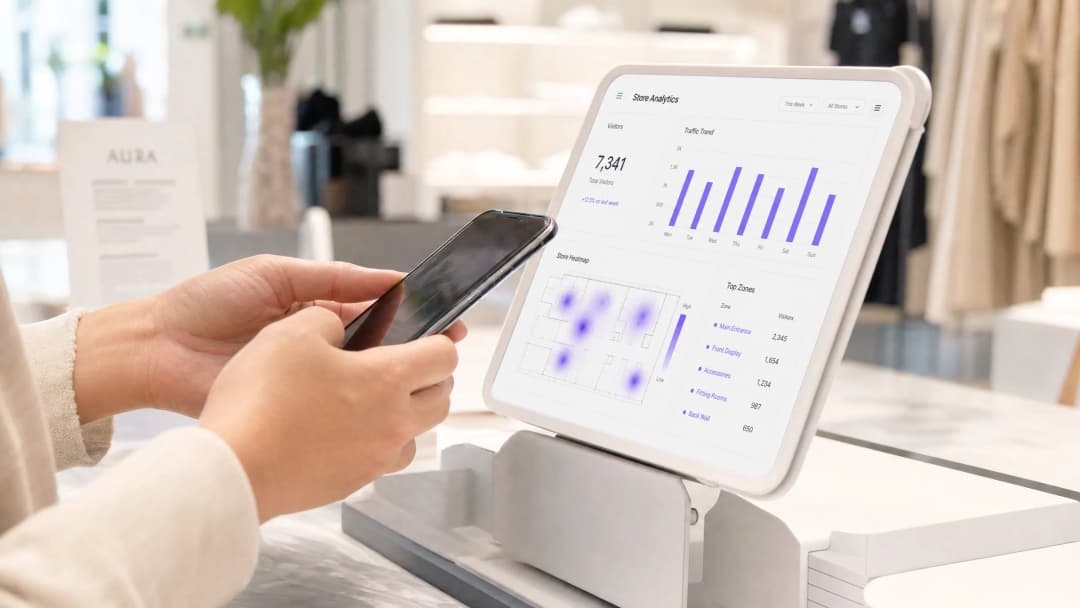
La mayoría de las empresas ven el WiFi de invitados como un gasto operativo puro: una cortesía esperada, una partida en el presupuesto de TI y una fuente de tickets de soporte. Sin embargo, este enfoque pasa por alto un cambio fundamental en las capacidades de la red. Las infraestructuras de WiFi modernas son redes de sensores de alta resolución que capturan grandes cantidades de datos de primera mano y análisis espaciales.
Purple está implementado en más de 80,000 establecimientos activos, procesando aproximadamente 440 millones de inicios de sesión y capturando 29 mil millones de puntos de datos en 2024. La plataforma funciona como una capa en la nube sobre el hardware existente de Cisco Meraki, HPE Aruba, Ruckus, Juniper Mist, Ubiquiti UniFi, Cambium, Extreme Networks y Fortinet. Esta guía demuestra cómo medir el ROI de esta inversión. Yendo más allá de los modelos teóricos, proporciona un marco concreto para calcular el valor a través del aumento de los tiempos de permanencia, el crecimiento de la base de datos de CRM, las eficiencias operativas y los ingresos directos por accesos de pago de varios niveles. Ya sea que administre un grupo hotelero, un conjunto de tiendas minoristas o espacios públicos, los principios de medición siguen siendo los mismos.
Análisis Técnico Detallado: Los Mecanismos de Medición
Para medir el ROI, primero debe comprender cómo se generan los datos. Este proceso se basa en dos métodos distintos de recopilación de datos: Presence Analytics (Análisis de Presencia) y Engagement Analytics (Análisis de Interacción). Confundir estos dos términos corre el riesgo de construir un modelo de medición defectuoso.
Presence Analytics
Presence Analytics captura la actividad antes de que un usuario siquiera se conecte. Cuando un dispositivo móvil con un módulo de WiFi activo ingresa a un establecimiento, transmite solicitudes de sondeo (probe requests). El dispositivo está consultando a la red para ver si hay redes conocidas cerca. Cada Access Point dentro del alcance intercepta estas solicitudes de sondeo. Estas contienen la dirección MAC del dispositivo (un identificador de hardware único) y la intensidad de la señal, expresada como RSSI (Indicador de Intensidad de Señal Recibida).
Al triangular los valores de RSSI a través de múltiples Access Points, la plataforma de análisis calcula la ubicación física del dispositivo. Esto constituye la base para el seguimiento de la afluencia de personas y el cálculo del tiempo de permanencia. Este proceso es anónimo, no requiere interacción del usuario y ocurre en todos sus establecimientos, ya sea que capture estos datos de manera activa o no.
Desde 2020, toda implementación de análisis profesional ha enfrentado un desafío: desde iOS 14 y Android 10, los dispositivos móviles utilizan direcciones MAC aleatorias para las solicitudes de sondeo. En lugar de transmitir un identificador estático, el dispositivo cambia constantemente por direcciones temporales. Si su plataforma de análisis no corrige esto, sus conteos de visitantes serán inexactos. Purple utiliza modelos de corrección estadística calibrados con datos de cámaras del mundo real para garantizar una precisión de ±3-7% (datos de la plataforma Purple). Si está evaluando una plataforma que no puede explicar su metodología para corregir la aleatorización de MAC, esa es una señal de alerta.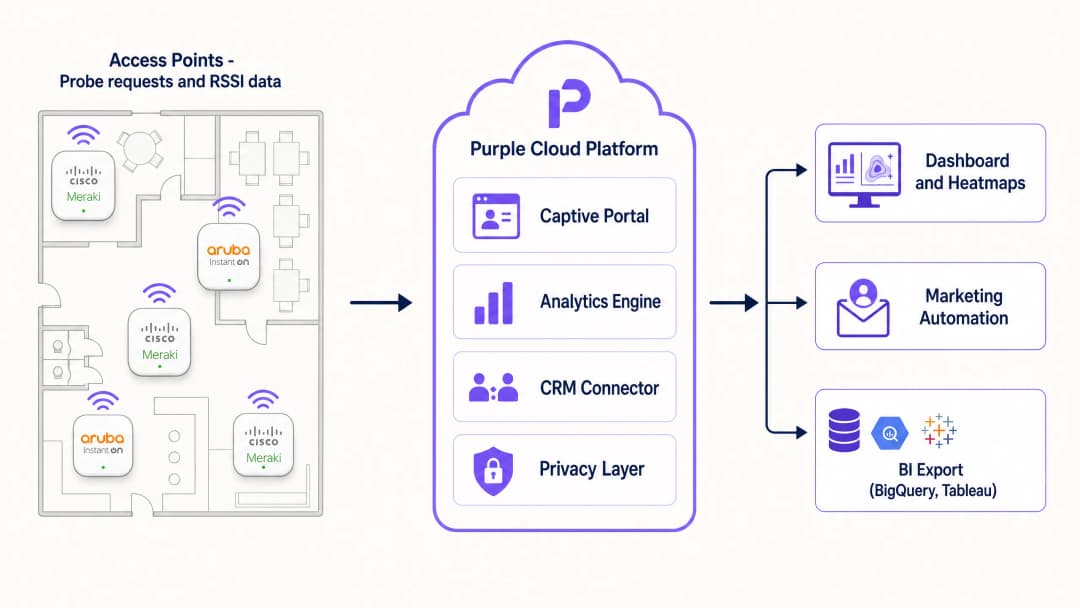
Engagement Analytics
Engagement Analytics comienza cuando un usuario se conecta a la red WiFi de invitados a través de un captive portal. El captive portal sirve como la puerta de enlace de autenticación y el sistema principal para capturar datos de primera mano. Una vez que un usuario se autentica - ya sea a través de Microsoft Entra ID, Google Workspace, inicios de sesión sociales o un formulario de correo electrónico - el dispositivo anónimo se transforma en un perfil de visitante identificado.
Este perfil identificado es el motor principal del ROI de marketing. Vincula la presencia física con una identidad digital. Puede rastrear la frecuencia de visitas de cohortes específicas, medir la tasa de conversión de las campañas de marketing e integrar estos datos directamente en su CRM. Utilizando exactamente estos datos, Harrods logró un ROI de 57 veces (57x) mediante marketing dirigido a clientes adquiridos a través de WiFi de invitados.
Seis métricas clave para la toma de decisiones
Las plataformas de analíticas de WiFi pueden mostrar decenas de métricas. Sin embargo, estas seis métricas son las más críticas para el cálculo del ROI y la toma de decisiones:
| Métrica | Qué mide | Uso principal |
|---|---|---|
| Afluencia de personas | Visitantes únicos en una zona definida durante un período específico | Datos de ubicación base, comparaciones |
| Tiempo de permanencia | Promedio y distribución del tiempo de permanencia por zona y visita | Optimización de distribución, programación de personal, correlación de conversión |
| Tasa de visitas recurrentes | Proporción de visitantes que regresan en un plazo de N días | Señales de lealtad, atribución de marketing |
| Transiciones de zona | Flujos de visitantes desde las zonas de inicio hasta las de destino | Analíticas de recorrido, pruebas de distribución |
| Visitantes nuevos vs. recurrentes | Relación entre adquisición y retención | Atribución de canales de marketing |
| Tasa de captura | Proporción de dispositivos detectados que se autentican | Efectividad del portal, indicador de calidad de datos |
La tasa de captura merece especial atención. Cierra la brecha entre los datos de presencia anónimos y los datos de interacción identificados. Los puntos de referencia de la industria muestran que la tasa de captura normalmente oscila entre el 15% y el 40%, dependiendo del diseño del portal y de los incentivos ofrecidos. Una tasa inferior al 15% indica que el flujo del portal requiere optimización.
Guía de implementación: Alineación para el ROI
Para construir un sistema que ofrezca un ROI medible, se requieren decisiones arquitectónicas específicas. Una red diseñada únicamente para la cobertura no ofrecerá analíticas espaciales precisas.
Densidad y ubicación de los puntos de acceso
Location analytics se basa en la triangulación. Para determinar una ubicación con precisión, un dispositivo debe ser detectado por al menos tres Access Points simultáneamente. En entornos típicos de comercio minorista u hotelería, esto requiere un Access Point por cada 150 a 200 metros cuadrados. De manera crucial, los Access Points deben colocarse en los límites de las zonas, no solo en el centro de una habitación. Si solo coloca los Access Points en el centro, el sistema no podrá determinar con precisión cuándo los huéspedes cruzan un límite. Esta es la razón más común del fracaso en la implementación de analytics.
Para un espacio comercial de 3,000 metros cuadrados, planifique entre 15 y 20 Access Points para garantizar una cobertura superpuesta en los límites de los departamentos. Compare esto con una instalación que solo busque cobertura, la cual podría usar únicamente ocho Access Points para la intensidad de la señal sin considerar la precisión de la triangulación.
Configuración de Captive Portal
El captive portal es su motor de conversión. Mantenga el proceso de inicio de sesión en un máximo de tres pasos. Solicite únicamente datos esenciales durante la primera visita. Si su objetivo principal es el crecimiento del CRM, haga de la dirección de correo electrónico un campo obligatorio y utilice Purple Verify para validarla en el punto de captura. Esto evita que entren datos inválidos a su base de datos. Para hotelería, recomendamos ofrecer ancho de banda premium como un beneficio exclusivo para los miembros del programa de lealtad. Esto impulsa los registros y crea un flujo de ingresos directo a partir de su inversión en WiFi.
Para los establecimientos que buscan dar la bienvenida a los visitantes recurrentes sin fricciones, recomendamos implementar Passpoint (Hotspot 2.0). Passpoint permite que los dispositivos certificados se conecten automáticamente en visitas posteriores sin volver a mostrar el portal, al tiempo que captura los datos de la sesión necesarios para analytics. Esto es altamente efectivo en aeropuertos y hoteles con altas tasas de visitantes recurrentes.
Integración de Datos
Los datos que permanecen inactivos en un portal no generan ROI. Integre la plataforma de WiFi analytics con sus sistemas operativos existentes mediante APIs REST estándar o webhooks. Este paso de integración suele ser el mayor obstáculo, ya que requiere la alineación entre los equipos de TI, marketing y operaciones, quienes rara vez comparten la misma infraestructura de datos. Dé prioridad a esta tarea en las primeras etapas del proyecto.
Para el sector de retail, la integración con los sistemas de Punto de Venta (POS) ofrece el mayor valor. Al correlacionar los tiempos de permanencia en zonas específicas con los datos de las transacciones, puede identificar áreas de alto flujo peatonal y baja conversión, zonas donde los visitantes pasan tiempo pero no compran. En el sector de hospitality, la integración con el Property Management System (PMS) le permite vincular los datos de sesión de WiFi directamente con las reservaciones de habitaciones y el consumo de alimentos y bebidas.
¿Tiene preguntas sobre su configuración específica?
Nuestro equipo trabaja con gestores de espacios, responsables de TI e ingenieros de redes en 80 000 establecimientos. Reserve una llamada de 20 minutos y le mostraremos cómo lo resolvieron otros profesionales como usted.
Mejores Prácticas
Implementar Ancho de Banda Escalonado
El ancho de banda escalonado es la forma más directa de monetizar el WiFi de invitados. Ofrezca un nivel gratuito y de velocidad limitada para la navegación básica, y un nivel premium de alta velocidad de pago (o incentivado mediante programas de lealtad). Este enfoque compensa los costos de red y fomenta los registros en los programas de lealtad. AGS Airports implementó este modelo escalonado y logró un ROI del 842% (datos de clientes de Purple). El modelo funciona porque transforma un centro de costos en un generador de ingresos sin degradar la experiencia del usuario para quienes deciden no pagar.
Segmente la Red
No mezcle el tráfico de invitados con las redes corporativas internas. Utilice VLANs para segregar los dispositivos de los invitados de sus sistemas internos. En entornos de retail que procesan pagos con tarjeta, este es un requisito de seguridad fundamental bajo la norma PCI-DSS. Purple proporciona una infraestructura RADIUS para gestionar de forma centralizada estas políticas en toda su propiedad, con soporte para IEEE 802.1X para el control de acceso a la red basado en puertos y WPA3-Enterprise para los estándares de cifrado más sólidos disponibles.
Para obtener más detalles sobre la arquitectura de seguridad de WiFi empresarial, consulte la guía Enterprise WiFi Security: A Comprehensive Guide for 2026.
Priorice la Privacidad y el Cumplimiento
La privacidad no es opcional. Si opera en el Reino Unido o la UE, debe cumplir con el UK GDPR y el GDPR. En California, se aplica la CCPA. Su Captive Portal debe comunicar claramente qué datos se recopilan, cuánto tiempo se almacenan y cómo pueden los visitantes ejercer sus derechos. Obtenga el consentimiento explícito (opt-in) para las comunicaciones de marketing. Presence Analytics - que es anónimo - se basa en el interés legítimo, respaldado por una Evaluación de Impacto de la Protección de Datos (DPIA) completada y señalización física altamente visible.
Purple cuenta con la certificación ISO 27001, cumple con el GDPR, la CCPA y cuenta con la certificación Cyber Essentials. La plataforma se suministra con plantillas de DPIA y plantillas de señalización, para que no tenga que construir la infraestructura de cumplimiento desde cero. Para obtener información detallada sobre la arquitectura de cumplimiento, consulte la guía WiFi GDPR Compliance: How to Securely Collect Guest Data via Captive Portals.
Resolución de Problemas y Mitigación de Riesgos
Datos de Ubicación Inexactos
Si sus mapas de calor muestran a los visitantes en ubicaciones imposibles, o si los recuentos a nivel de zona no coinciden con las observaciones físicas, el problema suele ser la ubicación del punto de acceso o la configuración de la potencia de transmisión. Asegúrese de que las posiciones de los puntos de acceso en sus planos de planta coincidan exactamente con las ubicaciones físicas. Verifique que la potencia de transmisión no esté configurada demasiado alta - los puntos de acceso excesivamente potentes crean celdas de cobertura grandes y superpuestas, lo que degrada la precisión de la triangulación. Reduzca la potencia de transmisión y aumente la densidad de puntos de acceso para mejorar la resolución espacial.
Baja Conversión del Captive Portal
Si se detecta un alto número de dispositivos pero menos del 15% se autentica, debe revisar el flujo del portal. Las causas comunes incluyen: demasiados campos obligatorios, un portal que no se carga en el navegador predeterminado del dispositivo, la falta de incentivos claros para conectarse o un portal que no está optimizado para dispositivos móviles. Pruebe el portal en dispositivos iOS y Android antes del lanzamiento. Elimine cualquier campo que no sea esencial. Si ofrece una propuesta de valor clara - como WiFi gratuito, descuentos o puntos de lealtad - destáquela de manera prominente en la página de inicio.
Fallas de Integración
Si los datos no fluyen hacia su sistema CRM o POS, primero verifique las credenciales de la API y las configuraciones de webhook. Asegúrese de que los campos de datos mapeados en la plataforma WiFi coincidan con los campos correspondientes en el sistema de destino. Revise los registros de la API para detectar límites de velocidad o errores de autenticación. La mayoría de las fallas de integración se deben a problemas de configuración y no a errores de la plataforma. Asegúrese de que su equipo de TI documente el mapeo de campos antes de la puesta en marcha.
Conteo Excesivo Debido a la Aleatorización de MAC
Si sus conteos de visitantes de WiFi son significativamente más altos que los datos de sus contadores de personas o sistemas de cámaras, su plataforma no está corrigiendo la aleatorización de MAC. Este es un problema conocido en plataformas que no han actualizado sus metodologías de analítica desde 2020. Solicite a su proveedor su metodología de corrección y datos de validación. La corrección de Purple mantiene la variación dentro de un ±3-7% en comparación con los datos de cámaras físicas (datos de la plataforma Purple).
ROI y Valor Comercial
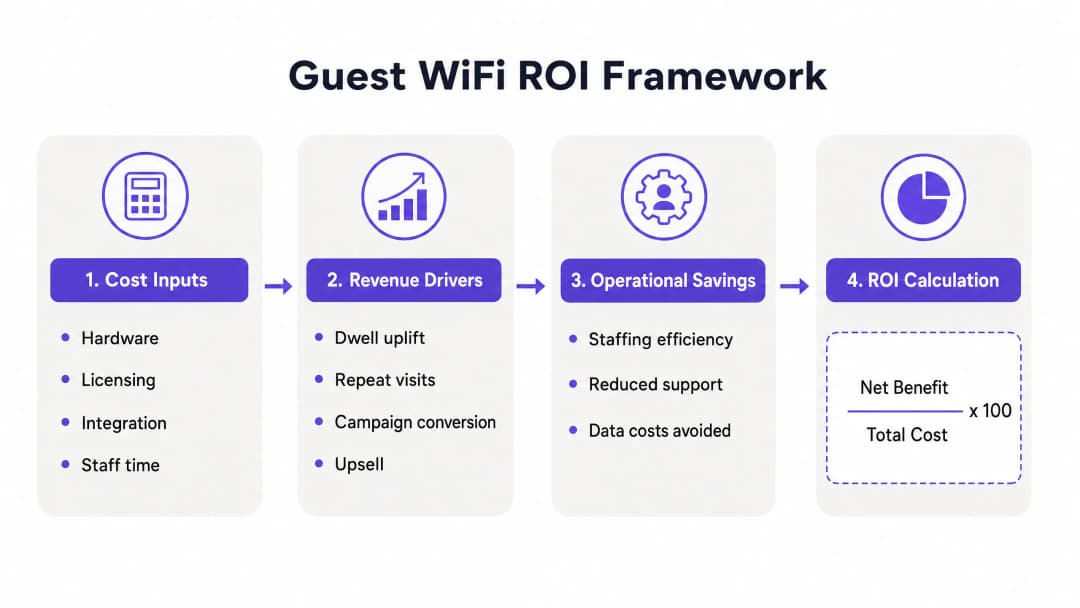
Medir el ROI del WiFi para invitados requiere un enfoque estructurado. Debe cuantificar los costos y compararlos con los beneficios medibles en cuatro categorías.
Factores de Costo
El Costo Total de Propiedad (TCO) incluye: hardware (puntos de acceso, switches, cableado); licenciamiento de software (la capa en la nube de Purple, disponible en los niveles Connect, Capture y Engage); servicios de implementación; y gastos generales de personal para administración y reportes. Para un hotel de 200 habitaciones implementado en cinco sitios, el TCO real a tres años abarcará las actualizaciones de hardware, el licenciamiento y el esfuerzo de integración.
Impulsores de Ingresos
Los datos de la industria muestran que el 62% de las empresas informan un aumento en el tiempo de permanencia de los clientes cuando se ofrece WiFi gratuito (BT Business WiFi Survey, 2025). En el sector minorista, un mayor tiempo de permanencia se correlaciona directamente con un tamaño de carrito de compra más grande. Un aumento del 10% en el tiempo de permanencia dentro de un departamento específico, junto con un incremento del 2% en las ventas de esa categoría, proporciona una señal de ROI clara y causal. El crecimiento de la base de datos de CRM es el segundo factor principal de ingresos. Calcule el valor de un nuevo suscriptor de correo electrónico en función de su tasa de conversión promedio de campaña y el valor promedio de pedido. Si sus campañas de correo electrónico convierten al 3% con un valor promedio de pedido de £80, cada nuevo suscriptor tiene un valor de campaña esperado de £2.40. Un recinto que adquiere 500 nuevos suscriptores al mes genera £1,200 en ingresos mensuales esperados de campaña solo a través de este canal.
Para los recintos que utilizan un ancho de banda escalonado, los ingresos directos de las suscripciones premium proporcionan un retorno medible de inmediato. AGS Airports logró un ROI del 842% utilizando su modelo escalonado (datos de clientes de Purple).
Ahorros Operativos
Los datos de afluencia correlacionados con los turnos del personal evitan el exceso de personal durante los períodos de baja actividad. Un recinto que experimenta una caída constante del 30% en la afluencia los martes por la mañana puede reducir los niveles de personal para ese horario, lo que genera ahorros de costos directos. En los sectores de salud y transporte, los datos de flujo de visitantes también ayudan a la gestión de filas y a la planificación de capacidad, minimizando los cuellos de botella sin aumentar el número de empleados.
Cálculo del ROI
Se aplica la fórmula estándar de ROI: ROI (%) = ((Beneficio Neto - Costo Total) / Costo Total) x 100. El beneficio neto es la suma de los ingresos incrementales por tiempo de permanencia, los ingresos por campañas de CRM, los ingresos por acceso escalonado y los ahorros operativos. El costo total incluye hardware, licencias, despliegue y administración continua.
Para la mayoría de los despliegues en hospitalidad y retail, los clientes de Purple ven un ROI medible dentro de los primeros seis meses. Los primeros 90 días se dedican a establecer los datos de referencia. Durante los siguientes 90 días, el valor operativo y de marketing comienza a materializarse por completo.
-
-
Lectura Adicional
- Guest WiFi - La plataforma principal de Purple para conectividad de invitados
- WiFi Analytics - Plataforma de analíticas y marketing
- Design of a Survey: A Practical Guide for Venues - Cómo usar el Captive Portal para obtener retroalimentación estructurada
- What Is Wireless Display: Protocols and Best Practices 2026 - Referencia para tecnologías inalámbricas complementarias
Definiciones clave
ROI de Guest WiFi
Beneficio neto atribuible más la evasión de costos verificada, menos el costo del programa, expresado frente al costo del programa.
Úselo cuando el área de finanzas pregunte si se debe extender, cambiar o detener el programa.
Guest WiFi
Un servicio de acceso para visitantes que puede proporcionar una conexión de marca y registrar métricas definidas de uso y rendimiento.
Establezca la línea base del servicio antes de agregar la captura de datos o las campañas.
Captive Portal
La página de acceso personalizada utilizada para presentar un flujo de conexión de Guest WiFi.
Úselo para definir el consentimiento, los campos de datos y la experiencia del visitante.
Datos de primera fuente
Datos de contacto o demográficos recopilados directamente de un visitante a través de un flujo aprobado.
Es importante al enriquecer un CRM y construir una audiencia con permisos.
Registro de correo electrónico verificado
Un registro de contacto verificado para reducir las direcciones de correo electrónico no válidas antes de su uso en el CRM.
Es el denominador correcto para una audiencia de correo electrónico alcanzable.
IEEE 802.1X
Un estándar de control de acceso a la red basado en puertos que utiliza EAP y EAPOL para la autenticación mutua.
Es relevante cuando se analiza el control de acceso para el personal o redes de dispositivos administrados.
WPA3
Un programa de seguridad WiFi que utiliza protocolos de seguridad actuales y requiere Protected Management Frames.
Revíselo cuando su equipo de red evalúe la seguridad de acceso y la compatibilidad de los clientes.
Protected Management Frames
Protecciones de seguridad para las tramas de acción de administración de WiFi, requeridas en redes WPA3.
Son importantes al revisar los efectos de las políticas de un despliegue de WPA3.
PCI DSS
Un conjunto de requisitos técnicos y operativos destinados a proteger los datos de las cuentas de pago.
Revíselo cuando la arquitectura de Guest WiFi pueda afectar el entorno de datos de los titulares de tarjetas.
Location analytics
Análisis del comportamiento del visitante, la tasa de retorno o la actividad de la zona a partir del conjunto de datos aprobado.
Úselo para probar cambios operativos en la distribución, el personal, la señalización o los horarios.
Ejemplos resueltos
Un hotel de 200 habitaciones necesita reducir las quejas de conectividad y validar las señales de reserva posteriores a la estancia.
Exporte ocho semanas comparables de éxito de conexión, incidentes de cobertura, contactos de mesa de ayuda, captura consentida, registros de correo electrónico verificados y resultados del sistema de reservas. Ejecute un cambio de período definido en el flujo de acceso o en la comunicación posterior a la estancia. Mida la tasa de quejas de conectividad, la tasa de coincidencia de CRM y las respuestas confirmadas por el sistema de reservas. Sume únicamente el esfuerzo de soporte evitado aprobado y la contribución de reserva confirmada al numerador del ROI.
Una propiedad de retail necesita probar si una oferta consentida genera un resultado de redención incremental.
Seleccione tiendas de prueba y de control emparejadas con las mismas fechas de oferta, capacitación del personal y disponibilidad de productos. Capture contactos verificados únicamente después de una elección consciente. Compare la exposición a la oferta aprobada con los registros de lealtad o de punto de venta. Compare el cambio en la redención entre las tiendas de prueba y de control, manteniendo el volumen bruto de conexiones fuera del cálculo de ingresos.
Un estadio necesita probar si un cambio en la posición de servicio del vestíbulo mejora la experiencia de los asistentes.
Elija grupos de eventos comparables, defina las zonas y utilice el mismo método de observación. Combine las señales de zona de Guest WiFi con las observaciones de filas, los registros de la mesa de ayuda y los datos de concesiones del propio recinto. Registre el cambio operativo y el período de prueba. Reporte la métrica acordada de filas o servicio y cualquier resultado de concesión validado de manera independiente, en lugar de tratar el mapa de calor como prueba financiera.
Continúe leyendo esta serie
Privacy by Design: Anonimización de datos de WiFi para el cumplimiento de GDPR
Esta guía fidedigna detalla la arquitectura técnica y las estrategias de implementación para anonimizar datos de WiFi para garantizar el cumplimiento de GDPR. Proporciona a los líderes de TI y arquitectos de redes marcos de trabajo prácticos para equilibrar los análisis robustos de los recintos con los estrictos requisitos de privacidad de datos.
Heatmapping frente a Analítica de Presencia: Diferencias Técnicas
Esta guía técnica autorizada detalla las diferencias arquitectónicas y operativas críticas entre el heatmapping de WiFi y la analítica de presencia para operadores de recintos empresariales. Proporciona a los líderes de TI, arquitectos de red y directores de operaciones marcos de implementación accionables, escenarios de implementación del mundo real y mejores prácticas neutrales con respecto al proveedor para extraer el máximo ROI de su infraestructura inalámbrica existente.
Cómo calcular el tiempo de permanencia usando analítica de ubicación de WiFi
Esta guía proporciona una referencia técnica completa para calcular el tiempo de permanencia de wifi utilizando la analítica de ubicación de WiFi, abarcando toda la arquitectura desde la captura de solicitudes de sondeo 802.11 hasta el análisis de zonas geocercadas mediante la trilateración basada en RSSI. Está diseñada para gerentes de TI, arquitectos de redes y directores de operaciones de recintos que necesitan desplegar inteligencia de ubicación precisa y escalable en entornos de retail, hotelería, salud y sector público. Los lectores obtendrán orientación de implementación práctica, casos de estudio del mundo real y un marco claro para traducir datos espaciales sin procesar en resultados comerciales medibles.
¿Tiene preguntas sobre su configuración específica?
Nuestro equipo trabaja con gestores de espacios, responsables de TI e ingenieros de redes en 80 000 establecimientos. Reserve una llamada de 20 minutos y le mostraremos cómo lo resolvieron otros profesionales como usted.