
Messung des Business ROI von Gäste-WiFi und Location Analytics
Diese technische Referenz zeigt IT- und Standort-Teams, wie sie den ROI von Gäste-WiFi mit einer nachvollziehbaren Kette von der Netzwerkintegrität über die einwilligungsbasierte Datenerfassung bis hin zu validierten betrieblichen oder kommerziellen Ergebnissen messen. Sie trennt messbare Nachweise von Annahmen, ordnet Purple Connect, Capture und Engage der richtigen Messebene zu und bietet Planungsszenarien für Hotels, Einzelhandelsflächen und Veranstaltungsorte.
Video overview
Diesen Leitfaden anhören
Podcast-Transkript ansehen
Teil unserer Kernserie: WiFi Analytics Guide →
Executive Summary
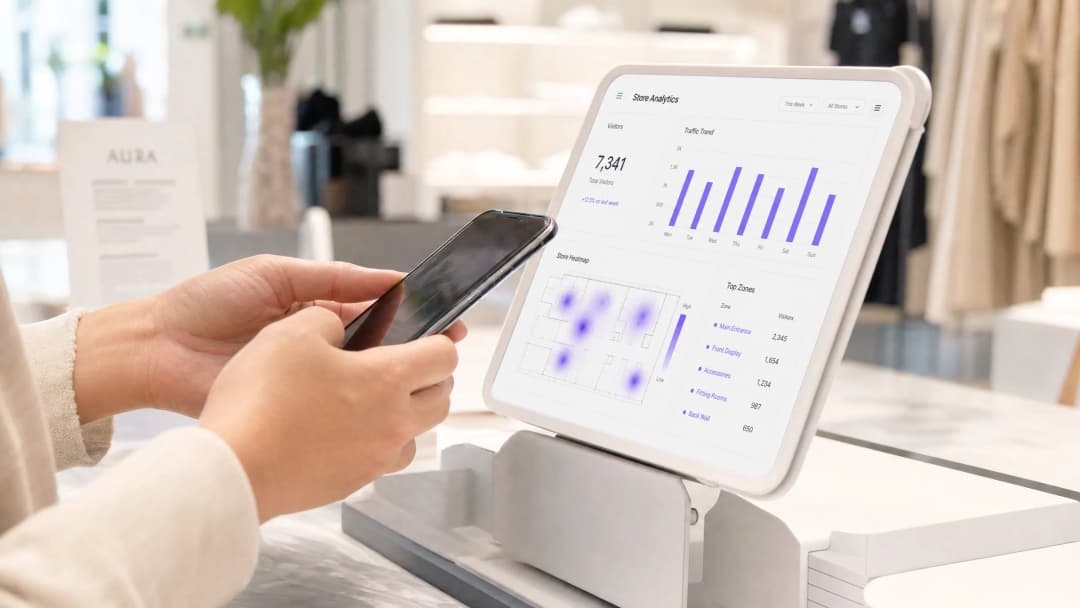
Die meisten Unternehmen betrachten Gäste-WiFi als reine Betriebskosten – eine erwartete Annehmlichkeit, einen Posten im IT-Budget und eine Quelle für Support-Tickets. Dieser Ansatz übersieht jedoch eine grundlegende Veränderung der Netzwerkkapazitäten. Moderne WiFi-Infrastrukturen sind hochauflösende Sensornetzwerke, die große Mengen an First-Party-Daten und räumlichen Analysen erfassen.
Purple ist an über 80.000 Live-Standorten im Einsatz, verarbeitete im Jahr 2024 rund 440 Millionen Logins und erfasste 29 Milliarden Datenpunkte. Die Plattform läuft als Cloud-Overlay auf bestehender Hardware von Cisco Meraki, HPE Aruba, Ruckus, Juniper Mist, Ubiquiti UniFi, Cambium, Extreme Networks und Fortinet. Dieser Leitfaden zeigt Ihnen, wie Sie den ROI dieser Investition messen. Er geht über theoretische Modelle hinaus und bietet ein konkretes Framework zur Wertberechnung durch längere Verweilzeiten, CRM-Datenbankwachstum, betriebliche Effizienz und direkte Einnahmen aus gestaffeltem Zugriff. Ob Sie eine Hotelgruppe, ein Filialnetz im Einzelhandel oder öffentliche Einrichtungen verwalten – die Messprinzipien bleiben dieselben.
Technische Tiefenanalyse: Die Messmechanismen
Um den ROI zu messen, muss man zunächst verstehen, wie Daten generiert werden. Dieser Prozess basiert auf zwei unterschiedlichen Methoden der Datenerfassung: Presence Analytics (Präsenzanalyse) und Engagement Analytics (Interaktionsanalyse). Wer diese beiden Begriffe verwechselt, riskiert ein fehlerhaftes Messmodell.
Presence Analytics
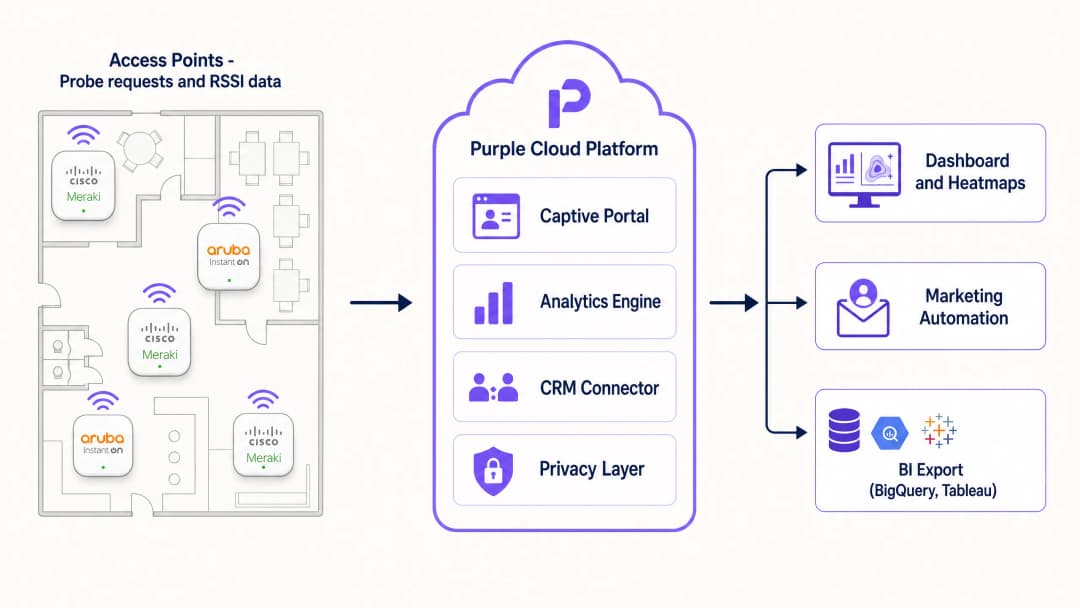
Presence Analytics erfasst Aktivitäten, noch bevor sich ein Nutzer verbindet. Wenn ein mobiles Gerät mit aktivem WiFi-Modul einen Standort betritt, sendet es Probe-Requests (Suchanfragen). Das Gerät fragt das Netzwerk, ob bekannte Netzwerke in der Nähe sind. Jeder Access Point in Reichweite fängt diese Probe-Requests ab. Sie enthalten die MAC-Adresse des Geräts (eine eindeutige Hardware-Kennung) und die Signalstärke, ausgedrückt als RSSI (Received Signal Strength Indicator).
Durch die Triangulation der RSSI-Werte über mehrere Access Points hinweg schätzt die Analyseplattform den physischen Standort des Geräts. Dies ist die Basis für Besucherstrom-Tracking und die Berechnung der Verweilzeit. Dieser Prozess ist anonym, erfordert keine Benutzerinteraktion und findet an Ihren Standorten statt – unabhängig davon, ob Sie diese Daten aktiv erfassen oder nicht.
Seit 2020 steht jede professionelle Analyse-Implementierung vor einer Herausforderung: Seit iOS 14 und Android 10 nutzen mobile Geräte zufällige (randomisierte) MAC-Adressen für Probe-Requests. Das Gerät sendet keine statische Kennung mehr, sondern wechselt zwischen temporären Adressen. Wenn Ihre Analyseplattform dies nicht korrigiert, sind Ihre Besucherzahlen ungenau. Purple nutzt statistische Korrekturmodelle, die mit realen Kameradaten kalibriert sind, um eine Genauigkeit von ±3–7 % zu gewährleisten (Purple-Plattformdaten). Wenn Sie eine Plattform evaluieren, die ihre Methode zur Korrektur der MAC-Randomisierung nicht erklären kann, ist das ein Warnsignal.
Engagement Analytics
Engagement Analytics beginnt, wenn sich ein Nutzer über ein Captive Portal mit dem Gäste-WiFi-Netzwerk verbindet. Das Captive Portal dient als Authentifizierungs-Gateway und primäres System zur Erfassung von First-Party-Daten. Sobald sich ein Nutzer authentifiziert – sei es über Microsoft Entra ID, Google Workspace, Social Logins oder ein E-Mail-Formular –, verwandelt sich das anonyme Gerät in ein identifiziertes Besucherprofil.
Dieses identifizierte Profil ist der Haupttreiber für den Marketing-ROI. Es verknüpft die physische Präsenz mit einer digitalen Identität. Sie können die Besuchshäufigkeit bestimmter Kohorten verfolgen, die Conversion-Rate von Marketingkampagnen messen und diese Daten direkt in Ihr CRM integrieren. Mit genau diesen Daten erzielte Harrods durch gezieltes Marketing an über das Gäste-WiFi gewonnene Kunden einen 57-fachen (57x) ROI.
Sechs entscheidungsrelevante Kennzahlen
WiFi-Analyseplattformen können Dutzende von Kennzahlen anzeigen. Diese sechs Metriken sind jedoch für die ROI-Berechnung und Entscheidungsfindung am wichtigsten:
| Metrik | Was sie misst | Primäre Nutzung |
|---|---|---|
| Besucherzahlen (Footfall) | Eindeutige Besucher in einer definierten Zone über einen bestimmten Zeitraum | Baseline-Standortdaten, Vergleiche |
| Verweilzeit (Dwell time) | Durchschnitt und Verteilung der verbrachten Zeit pro Zone und Besuch | Layout-Optimierung, Personalplanung, Conversion-Korrelation |
| Wiederkehrrate (Return Visit Rate) | Anteil der Besucher, die innerhalb von N Tagen zurückkehren | Loyalitätssignale, Marketing-Attribution |
| Zonenübergänge | Besucherströme von Start- zu Zielzonen | Journey Analytics, Layout-Tests |
| Neukunden vs. wiederkehrende Besucher | Verhältnis von Akquise zu Kundenbindung | Marketingkanal-Attribution |
| Erfassungsrate (Capture Rate) | Anteil der erfassten Geräte, die sich authentifizieren | Effektivität des Portals, Indikator für Datenqualität |
Die Erfassungsrate verdient besondere Aufmerksamkeit. Sie schlägt die Brücke zwischen anonymen Präsenzdaten und identifizierten Interaktionsdaten. Branchen-Benchmarks zeigen, dass die Erfassungsrate je nach Portal-Design und angebotenen Anreizen zwischen 15 % und 40 % liegt. Eine Rate von unter 15 % deutet darauf hin, dass der Portal-Flow optimiert werden muss.
Implementierungsleitfaden: Auf ROI ausrichten
Um ein System aufzubauen, das einen messbaren ROI liefert, sind spezifische architektonische Entscheidungen erforderlich. Ein Netzwerk, das nur auf reine Abdeckung ausgelegt ist, liefert keine präzisen räumlichen Analysen.
Access-Point-Dichte und -Platzierung
Location Analytics basiert auf Triangulation. Um einen Standort präzise zu bestimmen, muss ein Gerät von mindestens drei Access Points gleichzeitig erfasst werden. In typischen Einzelhandels- oder Gastronomieumgebungen erfordert dies einen Access Point pro 150 bis 200 Quadratmeter. Wichtig ist, dass Access Points nicht nur in der Mitte eines Raumes, sondern an den Zonengrenzen platziert werden. Wenn Sie Access Points nur mittig platzieren, kann das System nicht genau bestimmen, wann Gäste eine Grenze überschreiten. Dies ist der häufigste Grund für das Scheitern von Analyse-Implementierungen.
Planen Sie für eine 3.000 Quadratmeter große Einzelhandelsfläche 15 bis 20 Access Points ein, um eine überlappende Abdeckung an den Abteilungsgrenzen zu gewährleisten. Vergleichen Sie dies mit einer reinen Abdeckungsinstallation, die möglicherweise nur acht Access Points für die Signalstärke nutzt, ohne Rücksicht auf Triangulationsgenauigkeit.
Captive Portal-Konfiguration
Das Captive Portal ist Ihre Conversion-Engine. Halten Sie den Login-Prozess bei maximal drei Schritten. Fragen Sie beim ersten Besuch nur die nötigsten Daten ab. Wenn Ihr Hauptziel das CRM-Wachstum ist, machen Sie die E-Mail-Adresse zum Pflichtfeld und nutzen Sie Purple Verify, um sie direkt bei der Erfassung zu validieren. So verhindern Sie, dass ungültige Daten in Ihre Datenbank gelangen. Für die Hotellerie und Gastronomie empfiehlt es sich, Premium-Bandbreite als exklusiven Vorteil für Mitglieder von Treueprogrammen anzubieten. Das steigert die Anmeldungen und schafft eine direkte Einnahmequelle aus der WiFi-Investition.
Für Standorte, die wiederkehrenden Besuchern den Zugang erleichtern möchten, empfiehlt sich die Implementierung von Passpoint (Hotspot 2.0). Passpoint ermöglicht es zertifizierten Geräten, sich bei Folgebesuchen automatisch zu verbinden, ohne dass das Portal erneut angezeigt werden muss, während gleichzeitig die für Analysen erforderlichen Sitzungsdaten erfasst werden. Dies ist besonders an Flughäfen und in Hotels mit vielen Stammgästen äußerst effektiv.
Datenintegration
Daten, die ungenutzt in einem Portal liegen, generieren keinen ROI. Integrieren Sie die WiFi-Analyseplattform über Standard-REST-APIs oder Webhooks in Ihre bestehenden Betriebssysteme. Dieser Integrationsschritt ist oft die größte Hürde, da er die Abstimmung zwischen IT-, Marketing- und Betriebsteams erfordert, die selten dieselbe Dateninfrastruktur nutzen. Priorisieren Sie diese Aufgabe daher frühzeitig im Projekt.
Für den Einzelhandel bietet die Integration in Kassensysteme (POS) den größten Mehrwert. Durch die Verknüpfung von Verweilzeiten in bestimmten Zonen mit Transaktionsdaten können Sie Bereiche mit hoher Frequenz, aber niedriger Conversion identifizieren – also Zonen, in denen sich Besucher zwar aufhalten, aber nichts kaufen. In der Hotellerie ermöglicht die Integration in das Property-Management-System die direkte Verknüpfung von WiFi-Sitzungsdaten mit Zimmerbuchungen und Umsätzen in der Gastronomie.
Haben Sie Fragen zu Ihrem spezifischen Setup?
Unser Team arbeitet mit Standortbetreibern, IT-Managern und Netzwerktechnikern an über 80.000 Standorten zusammen. Buchen Sie ein 20-minütiges Gespräch und wir zeigen Ihnen, wie andere diese Herausforderungen gelöst haben.
Best Practices
Gestaffelte Bandbreite implementieren
Gestaffelte Bandbreite ist der direkteste Weg, um mit Gäste-WiFi Einnahmen zu erzielen. Bieten Sie eine kostenlose, geschwindigkeitsbegrenzte Stufe für einfaches Surfen und eine kostenpflichtige (oder als Treuevorteil angebotene) Premium-Highspeed-Stufe an. Dieser Ansatz deckt die Netzwerkkosten und steigert die Anmeldungen für Treueprogramme. AGS Airports implementierte ein solches gestaffeltes Modell und erzielte einen ROI von 842 % (Purple-Kundendaten). Das Modell funktioniert, weil es das Cost Center in eine Einnahmequelle verwandelt, ohne das Nutzererlebnis derjenigen zu beeinträchtigen, die kein Geld ausgeben möchten.
Netzwerk segmentieren
Mischen Sie den Gästedatenverkehr nicht mit dem internen Unternehmensnetzwerk. Nutzen Sie VLANs, um die Geräte der Gäste von Ihren internen Systemen zu trennen. Im Einzelhandel, wo Kartenzahlungen verarbeitet werden, ist dies eine grundlegende Sicherheitsanforderung gemäß PCI-DSS. Purple bietet eine RADIUS-Infrastruktur zur zentralen Verwaltung dieser Richtlinien über Ihren gesamten Standortbestand hinweg. Sie unterstützt IEEE 802.1X für portbasierte Netzwerkzugriffskontrolle und WPA3-Enterprise für die stärksten verfügbaren Verschlüsselungsstandards.
Weitere Details zur WiFi-Sicherheitsarchitektur in Unternehmen finden Sie im Leitfaden Enterprise WiFi Security: Ein umfassender Leitfaden für 2026.
Datenschutz und Compliance Priorität einräumen
Datenschutz ist keine Option. Wenn Sie in Großbritannien oder der EU tätig sind, müssen Sie die UK GDPR und die EU-GDPR einhalten. In Kalifornien gilt die CCPA. Ihr Captive Portal muss klar kommunizieren, welche Daten erfasst werden, wie lange sie gespeichert werden und wie Besucher ihre Rechte ausüben können. Holen Sie für Marketingkommunikation eine ausdrückliche Einwilligung (Opt-in) ein. Presence Analytics – das anonym erfolgt – basiert auf berechtigtem Interesse (legitimate interest) in Verbindung mit einer durchgeführten Datenschutz-Folgenabschätzung (DSFA/DPIA) und gut sichtbaren Hinweisschildern vor Ort.
Purple ist ISO 27001-zertifiziert, GDPR-konform, CCPA-konform und Cyber Essentials-zertifiziert. Die Plattform wird mit DPIA-Vorlagen und Vorlagen für Hinweisschilder geliefert, sodass Sie die Compliance-Infrastruktur nicht von Grund auf neu erstellen müssen. Detaillierte Informationen zur Compliance-Architektur finden Sie im Leitfaden WiFi GDPR Compliance: So erfassen Sie Gästedaten sicher über Captive Portals.
Fehlerbehebung und Risikominimierung
Ungenaue Standortdaten
Wenn Ihre Heatmaps Besucher an unmöglichen Orten anzeigen oder die Zahlen auf Zonenebene nicht mit den tatsächlichen Beobachtungen übereinstimmen, liegt das Problem meist an der Platzierung der Access Points oder der Konfiguration der Sendeleistung. Stellen Sie sicher, dass die Positionen der Access Points auf Ihren Raumplänen exakt mit den physischen Standorten übereinstimmen. Achten Sie darauf, dass die Sendeleistung nicht zu hoch eingestellt ist – zu starke Access Points erzeugen große, überlappende Funkzellen, was die Triangulationsgenauigkeit verringert. Reduzieren Sie die Sendeleistung und erhöhen Sie die Access-Point-Dichte, um die räumliche Auflösung zu verbessern.
Niedrige Captive Portal-Conversion
Wenn eine hohe Anzahl von Geräten erkannt wird, sich aber weniger als 15 % authentifizieren, sollten Sie den Portal-Flow überprüfen. Häufige Ursachen sind: zu viele Pflichtfelder, ein Portal, das im Standardbrowser des Geräts nicht geladen wird, fehlende klare Anreize für die Verbindung oder ein nicht für Mobilgeräte optimiertes Portal. Testen Sie das Portal vor dem Rollout auf iOS- und Android-Geräten. Entfernen Sie jedes nicht zwingend erforderliche Feld. Wenn Sie keinen klaren Mehrwert bieten – wie kostenloses WiFi, Rabatte oder Treuepunkte –, heben Sie dies auf der Splash-Page deutlich hervor.
Integrationsfehler
Wenn keine Daten in Ihr CRM- oder POS-System einfließen, überprüfen Sie zuerst die API-Anmeldedaten und Webhook-Konfigurationen. Stellen Sie sicher, dass die in der WiFi-Plattform gemappten Datenfelder mit den entsprechenden Feldern im Zielsystem übereinstimmen. Überprüfen Sie die API-Protokolle auf Rate-Limiting- oder Authentifizierungsfehler. Die meisten Integrationsfehler sind auf Konfigurationsprobleme und nicht auf Plattformfehler zurückzuführen. Stellen Sie sicher, dass Ihr IT-Team das Feld-Mapping vor dem Go-Live dokumentiert.
Überzählung durch MAC-Randomisierung
Wenn Ihre WiFi-Besucherzahlen deutlich höher sind als die Daten Ihrer Tür-Zähler oder Kamerasysteme, korrigiert Ihre Plattform die MAC-Randomisierung nicht. Dies ist ein bekanntes Problem bei Plattformen, die ihre Analysemethoden seit 2020 nicht aktualisiert haben. Fragen Sie Ihren Anbieter nach seiner Korrekturmethode und den Validierungsdaten. Die Korrektur von Purple hält die Abweichung im Vergleich zu realen Kameradaten bei ±3–7 % (Purple-Plattformdaten).
ROI und geschäftlicher Nutzen
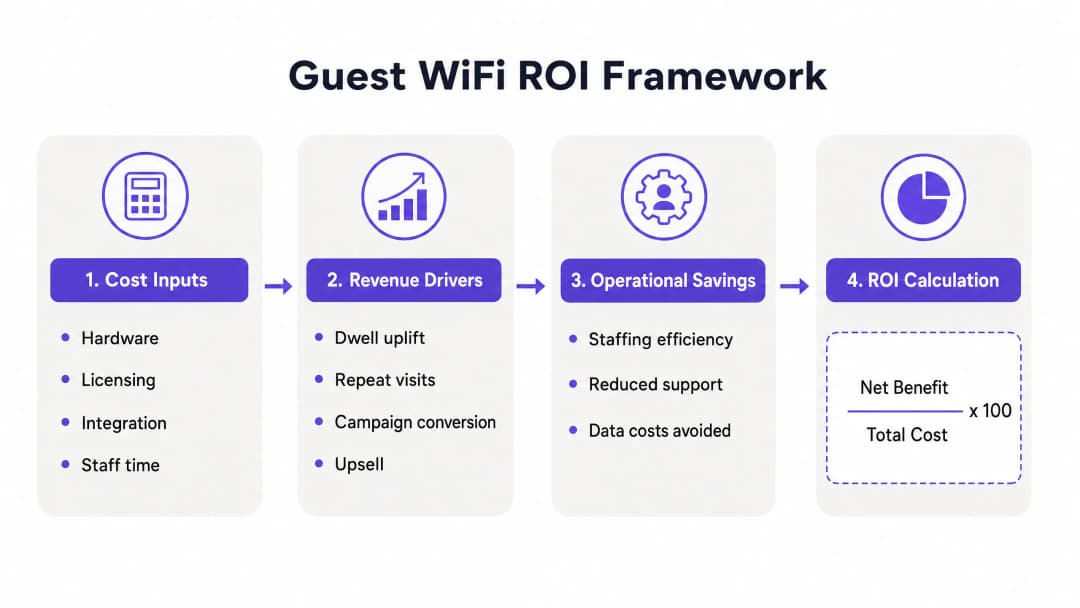
Die Messung des ROI von Gäste-WiFi erfordert einen strukturierten Ansatz. Sie müssen die Kosten quantifizieren und sie mit den messbaren Vorteilen in vier Kategorien vergleichen.
Kostenfaktoren
Die Gesamtbetriebskosten (TCO) umfassen: Hardware (Access Points, Switches, Verkabelung); Software-Lizenzen (das Purple-Cloud-Overlay, verfügbar in den Tarifen Connect, Capture und Engage); Implementierungsdienstleistungen; und den laufenden Personalaufwand für Verwaltung und Reporting. Für ein Hotel mit 200 Zimmern, das das System an fünf Standorten implementiert, umfassen die tatsächlichen Gesamtbetriebskosten über drei Jahre Hardware-Upgrades, Lizenzierung und Integrationsaufwand.
Umsatztreiber
Branchendaten zeigen, dass 62 % der Unternehmen von einer längeren Verweilzeit der Kunden berichten, wenn kostenloses WiFi angeboten wird (BT Business WiFi Survey, 2025). Im Einzelhandel korreliert eine längere Verweilzeit direkt mit einem größeren Warenkorb. Eine Steigerung der Verweilzeit um 10 % in einer bestimmten Abteilung, die mit einem Umsatzplus von 2 % in dieser Kategorie einhergeht, liefert ein klares, kausales ROI-Signal. Das Wachstum der CRM-Datenbank ist der zweite große Umsatztreiber. Berechnen Sie den Wert eines neuen E-Mail-Abonnenten basierend auf Ihrer durchschnittlichen Kampagnen-Conversion-Rate und dem durchschnittlichen Bestellwert. Wenn Ihre E-Mail-Kampagnen eine Conversion-Rate von 3 % bei einem durchschnittlichen Bestellwert von 80 € erzielen, hat jeder neue Abonnent einen erwarteten Kampagnenwert von 2,40 €. Ein Standort, der monatlich 500 neue Abonnenten gewinnt, generiert allein über diesen Kanal einen erwarteten monatlichen Kampagnenumsatz von 1.200 €.
Für Standorte, die gestaffelte Bandbreiten nutzen, bieten die direkten Einnahmen aus Premium-Abonnements eine sofort messbare Rendite. AGS Airports erzielte mit seinem gestaffelten Modell einen ROI von 842 % (Purple-Kundendaten).
Betriebliche Einsparungen
Besucherdaten, die mit den Dienstplänen der Mitarbeiter abgeglichen werden, verhindern Überbesetzungen in ruhigen Zeiten. Ein Standort, der an Dienstagmorgenden einen konstanten Rückgang der Besucherzahlen um 30 % verzeichnet, kann die Personalstärke für diesen Zeitraum reduzieren, was zu direkten Kosteneinsparungen führt. Im Gesundheitswesen und im Transportwesen helfen Besucherstromdaten zudem beim Warteschlangenmanagement und bei der Kapazitätsplanung, wodurch Engpässe ohne zusätzliches Personal minimiert werden.
ROI-Berechnung
Es gilt die Standard-ROI-Formel: ROI (%) = ((Nettovorteil - Gesamtkosten) / Gesamtkosten) x 100. Der Nettovorteil ist die Summe aus den zusätzlichen Einnahmen durch längere Verweilzeiten, den CRM-Kampagnen-Einnahmen, den Einnahmen aus gestaffeltem Zugriff und den betrieblichen Einsparungen. Die Gesamtkosten umfassen Hardware, Lizenzierung, Implementierung und laufende Verwaltung.
Bei den meisten Implementierungen in der Hotellerie und im Einzelhandel sehen Purple-Kunden innerhalb von sechs Monaten einen messbaren ROI. Die ersten 90 Tage dienen der Erfassung von Baseline-Daten. In den folgenden 90 Tagen beginnt sich der betriebliche und marketingseitige Mehrwert voll zu entfalten.
Weiterführende Literatur
- Guest WiFi – Die Kernplattform von Purple für Gäste-Konnektivität
- WiFi Analytics – Analyse- und Marketingplattform
- Design of a Survey: A Practical Guide for Venues – Wie Sie das Captive Portal für strukturiertes Feedback nutzen
- What Is Wireless Display: Protocols and Best Practices 2026 – Referenz für ergänzende Wireless-Technologien
Schlüsseldefinitionen
ROI von Gäste-WiFi
Der netto zurechenbare Nutzen plus die verifizierte Kosteneinsparung, abzüglich der Programmkosten, im Verhältnis zu den Programmkosten ausgedrückt.
Verwenden Sie dies, wenn die Finanzabteilung fragt, ob das Programm verlängert, geändert oder gestoppt werden soll.
Gäste-WiFi
Ein Besucherzugangsdienst, der eine gebrandete Verbindung bereitstellen und definierte Nutzungs- und Performance-Kennzahlen aufzeichnen kann.
Legen Sie die Baseline für den Service fest, bevor Sie Datenerfassung oder Kampagnen hinzufügen.
Captive Portal
Die gebrandete Zugangsseite, die zur Darstellung eines Gäste-WiFi Verbindungsflusses verwendet wird.
Verwenden Sie dies, um die Einwilligung, Datenfelder und das Besuchererlebnis zu definieren.
First-Party-Data
Kontakt- oder demografische Daten, die über einen genehmigten Anmeldefluss direkt von einem Besucher erfasst werden.
Dies ist wichtig, wenn ein CRM angereichert und eine Zielgruppe mit Werbeeinwilligung aufgebaut werden soll.
Verifizierter E-Mail-Datensatz
Ein Kontaktdatensatz, der vor der CRM-Nutzung überprüft wurde, um ungültige E-Mail-Adressen zu reduzieren.
Dies ist die korrekte Bezugsgröße für eine erreichbare E-Mail-Zielgruppe.
IEEE 802.1X
Ein portbasierter Standard zur Netzwerkzugriffskontrolle, der EAP und EAPOL für die gegenseitige Authentifizierung nutzt.
Dies ist relevant, wenn Sie über die Zugriffskontrolle für Mitarbeiter oder Netzwerke mit verwalteten Geräten sprechen.
WPA3
Ein WiFi Sicherheitsstandard, der aktuelle Sicherheitsprotokolle nutzt und Protected Management Frames voraussetzt.
Prüfen Sie dies, wenn Ihr Netzwerkteam die Zugriffssicherheit und Client-Kompatibilität bewertet.
Protected Management Frames
Sicherheitsvorkehrungen für WiFi Management-Action-Frames, die in WPA3 Netzwerken zwingend erforderlich sind.
Diese sind wichtig, wenn die Richtlinieneffekte einer WPA3 Bereitstellung überprüft werden.
PCI DSS
Ein Satz technischer und betrieblicher Anforderungen, die darauf abzielen, Zahlungskontodaten zu schützen.
Prüfen Sie dies, wenn die Architektur des Gäste-WiFi die Umgebung für Karteninhaberdaten beeinflussen könnte.
Location Analytics
Analyse des Besucherverhaltens, der Rückkehrrate oder der Zonenaktivität auf Basis der freigegebenen Datenmenge.
Verwenden Sie dies, um betriebliche Änderungen an Layout, Personalbesetzung, Beschilderung oder Zeiten zu testen.
Ausgearbeitete Beispiele
Ein Hotel mit 200 Zimmern muss Konnektivitätsbeschwerden reduzieren und Buchungssignale nach dem Aufenthalt validieren.
Exportieren Sie acht vergleichbare Wochen mit erfolgreichen Anmeldeversuchen, Abdeckungskonflikten, Service-Desk-Kontakten, erteilten Einwilligungen bei der Datenerfassung, verifizierten E-Mail-Datensätzen und Buchungssystem-Ergebnissen. Führen Sie eine zeitlich begrenzte Änderung am Anmeldefluss oder an der Post-Stay-Kommunikation durch. Messen Sie die Quote der Konnektivitätsbeschwerden, die CRM-Abgleichsquote und die vom Buchungssystem bestätigten Rückmeldungen. Addieren Sie nur den genehmigten, vermiedenen Support-Aufwand und den bestätigten Buchungsbeitrag zum ROI-Zähler.
Ein Einzelhandelsstandort möchte testen, ob ein einwilligungsbasiertes Angebot eine inkrementelle Einlösungsquote erzielt.
Wählen Sie vergleichbare Test- und Kontrollfilialen mit identischen Angebotszeiträumen, Mitarbeiterbriefings und Produktverfügbarkeiten aus. Erfassen Sie verifizierte Kontakte erst nach einer bewussten Interaktion. Gleichen Sie freigegebene Angebotsinteraktionen mit Loyalty- oder Point-of-Sale-Daten ab. Vergleichen Sie die Veränderung der Einlösungsrate zwischen Test- und Kontrollfilialen, wobei reine Verbindungsdaten außerhalb der Umsatzberechnung bleiben.
Ein Stadion möchte testen, ob eine Änderung der Service-Position im Umlaufbereich das Besuchererlebnis verbessert.
Wählen Sie vergleichbare Event-Kategorien, definieren Sie die Zonen und nutzen Sie dieselbe Beobachtungsmethode. Kombinieren Sie die Zonensignale des Gäste-WiFi mit Warteschlangenbeobachtungen, Service-Desk-Berichten und stadioninternen Verkaufsdaten. Dokumentieren Sie die betriebliche Änderung und den Testzeitraum. Berichten Sie die vereinbarte Warteschlangen- oder Service-Kennzahl und das unabhängig validierte Verkaufsergebnis, anstatt die Heatmap als finanziellen Nachweis zu werten.
Weiterlesen in dieser Reihe
Privacy by Design: Anonymisierung von WiFi Daten für die GDPR Konformität
Dieser maßgebliche Leitfaden beschreibt die technische Architektur und die Implementierungsstrategien zur Anonymisierung von WiFi Daten zur Gewährleistung der GDPR Konformität. Er bietet IT-Verantwortlichen und Netzwerkarchitekten praktische Rahmenbedingungen für die Abwägung zwischen robuster Standort-Analyse und strengen Datenschutzanforderungen.
Heatmapping vs. Presence Analytics: Technische Unterschiede
Dieser fundierte technische Leitfaden beschreibt die entscheidenden architektonischen und betrieblichen Unterschiede zwischen WiFi Heatmapping und Presence Analytics für Betreiber von Großunternehmen. Er bietet IT-Leitern, Netzwerkarchitekten und Betriebsleitern praxisnahe Bereitstellungsmodelle, reale Implementierungsszenarien und herstellerunabhängige Best Practices, um einen maximalen ROI aus ihrer bestehenden drahtlosen Infrastruktur zu erzielen.
So berechnen Sie die Verweilzeit mithilfe von WiFi Location Analytics
Dieser Leitfaden bietet eine umfassende technische Referenz für die Berechnung der Verweilzeit mittels WiFi Location Analytics. Er deckt die gesamte Architektur von der Erfassung von 802.11-Probe-Requests über RSSI-basierte Trilateration bis hin zur Analyse geofezierter Zonen ab. Er richtet sich an IT-Manager, Netzwerkarchitekten und Betriebsleiter von Veranstaltungsorten, die präzise, skalierbare Standortdaten in den Bereichen Einzelhandel, Gastgewerbe, Gesundheitswesen und im öffentlichen Sektor einsetzen müssen. Die Leser erhalten praktische Implementierungsanleitungen, Fallstudien aus der Praxis und einen klaren Rahmen für die Übersetzung roher Geodaten in messbare Geschäftsergebnisse.
Haben Sie Fragen zu Ihrem spezifischen Setup?
Unser Team arbeitet mit Standortbetreibern, IT-Managern und Netzwerktechnikern an über 80.000 Standorten zusammen. Buchen Sie ein 20-minütiges Gespräch und wir zeigen Ihnen, wie andere diese Herausforderungen gelöst haben.