
Guest WiFi और Location Analytics के व्यावसायिक ROI को मापना
यह तकनीकी संदर्भ IT और वेन्यू टीमों को दिखाता है कि नेटवर्क हेल्थ और सहमति वाले डेटा से लेकर सत्यापित परिचालन या व्यावसायिक परिणामों तक एक मजबूत श्रृंखला के साथ guest WiFi के ROI को कैसे मापा जाए। यह मापने योग्य साक्ष्यों को अनुमानों से अलग करता है, Purple Connect, Capture और Engage को सही माप परत (measurement layer) से मैप करता है, और होटलों, रिटेल परिसरों और इवेंट वेन्यू के लिए नियोजन परिदृश्य प्रदान करता है।
Video overview
इस गाइड को सुनें
पॉडकास्ट ट्रांसक्रिप्ट देखें
हमारी मुख्य श्रृंखला का हिस्सा: WiFi Analytics गाइड →
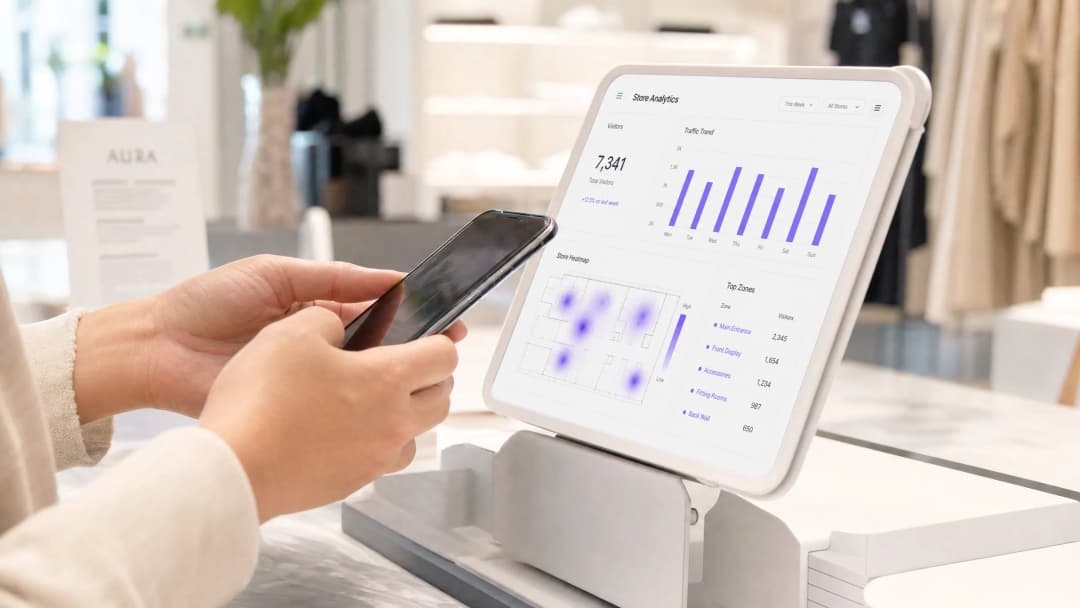
मुख्य सारांश (Executive summary)
बहुतांश संस्था अतिथी WiFi चा वापर व्यवसाय चालवण्याचा एक खर्च म्हणून करतात - एक अपेक्षित सोय, IT बजेटमधील एक घटक आणि सपोर्ट तिकिटांचे एक कारण. हा दृष्टिकोन नेटवर्क क्षमतेमधील मूलभूत बदलाकडे दुर्लक्ष करतो. आधुनिक WiFi उपयोजन हे एक हाय-रिझोल्यूशन सेन्सर नेटवर्क आहे जे मोठ्या प्रमाणावर फर्स्ट-पार्टी डेटा आणि भौगोलिक (spatial) विश्लेषण कॅप्चर करते.
Purple ८०,०००+ हून अधिक लाइव्ह ठिकाणी कार्यरत आहे, २०२४ मध्ये ४४० दशलक्ष लॉगिन प्रक्रियेतून गेले आहेत आणि २९ अब्ज डेटा पॉइंट्स कॅप्चर केले गेले आहेत. हे प्लॅटफॉर्म Cisco Meraki, HPE Aruba, Ruckus, Juniper Mist, Ubiquiti UniFi, Cambium, Extreme आणि Fortinet च्या विद्यमान हार्डवेअरवर क्लाउड ओव्हरले म्हणून चालते. हे मार्गदर्शक त्या गुंतवणुकीचा ROI कसा मोजावा याबद्दल तपशील देते - सैद्धांतिक मॉडेल्सच्या पलीकडे जाऊन ड्वेल टाईम वाढ, CRM डेटाबेस वाढ, ऑपरेशनल कार्यक्षमता आणि टायर्ड ॲक्सेसमधून मिळणाऱ्या थेट महसुलाद्वारे मूल्याची गणना करण्यासाठी ठोस फ्रेमवर्क प्रदान करते. तुम्ही हॉटेल समूह व्यवस्थापित करत असाल, रिटेल इस्टेट किंवा सार्वजनिक क्षेत्रातील सुविधा, मोजमापाची तत्त्वे सारखीच राहतात.
तांत्रिक सखोल विश्लेषण: मोजमापाची यंत्रणा
ROI मोजण्यासाठी, डेटा कसा तयार होतो हे प्रथम समजून घेणे आवश्यक आहे. ही प्रक्रिया डेटा कॅप्चरच्या दोन वेगवेगळ्या पद्धतींवर अवलंबून असते: प्रेझेन्स ॲनालिटिक्स (presence analytics) आणि एंगेजमेंट ॲनालिटिक्स (engagement analytics). या दोघांची गल्लत केल्यास मोजमाप फ्रेमवर्क टिकणार नाही.
प्रेझेन्स ॲनालिटिक्स (Presence analytics)
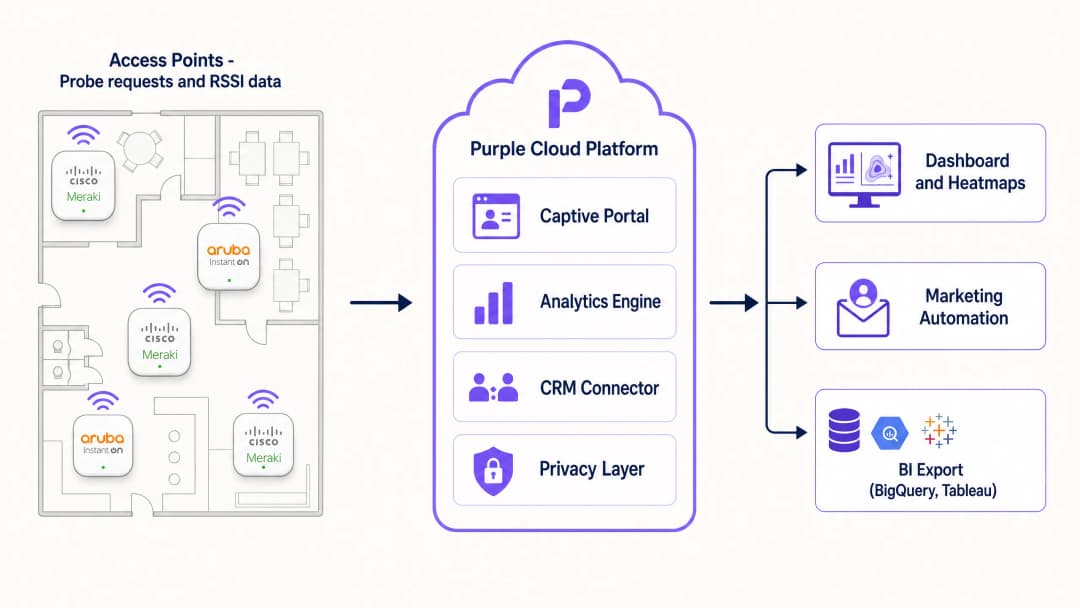
प्रेझेन्स ॲनालिटिक्स म्हणजे वापरकर्ता कशाशीही कनेक्ट होण्यापूर्वी जे घडते ते. जेव्हा एखादे मोबाईल डिव्हाइस त्याच्या सक्रीय WiFi रेडिओसह तुमच्या ठिकाणी प्रवेश करते, तेव्हा ते प्रोब विनंत्या (probe requests) ब्रॉडकास्ट करते - डिव्हाइस नेटवर्कला विचारते की जवळ कोणतेही ओळखीचे नेटवर्क आहे का. रेंजमधील प्रत्येक ॲक्सेस पॉइंट त्या प्रोब विनंतीचा शोध घेतो. त्यामध्ये डिव्हाइसचा MAC ॲड्रेस, एक युनिक हार्डवेअर आयडेंटिफायर आणि RSSI (Received Signal Strength Indicator) म्हणून व्यक्त केलेली सिग्नल स्ट्रेंथ डेटा असतो.
अनेक ॲक्सेस पॉइंट्सवर RSSI चे त्रिकोणीकरण (triangulating) करून, ॲनालिटिक्स प्लॅटफॉर्म डिव्हाइसच्या प्रत्यक्ष स्थानाचा अंदाज लावतो. हा फूटफॉल ट्रॅकिंग आणि ड्वेल टाईम गणनेचा पाया आहे. हे निनावी आहे, यासाठी वापरकर्त्याच्या कोणत्याही कृतीची आवश्यकता नसते आणि तुम्ही डेटा कॅप्चर करत असाल किंवा नसाल, तरीही हे तुमच्या ठिकाणी सध्या घडत आहे.
२०२० पासून प्रत्येक गंभीर ॲनालिटिक्स उपयोजनाला सामोरे जावे लागलेली अडचण खालीलप्रमाणे आहे. iOS 14 आणि Android 10 पासून, मोबाईल डिव्हाइसेस प्रोब विनंत्यांसाठी यादृच्छिक (randomised) MAC ॲड्रेस वापरतात. डिव्हाइस आता स्थिर आयडेंटिफायर ब्रॉडकास्ट करत नाही - ते तात्पुरत्या ॲड्रेसेसवर फिरते. जर तुमचा ॲनालिटिक्स प्लॅटफॉर्म यामध्ये सुधारणा करत नसेल, तर तुमची व्हिजिटर संख्या चुकीची आहे. Purple कॅमेरा ग्राउंड ट्रूथच्या विरूद्ध कॅलिब्रेट केलेले सांख्यिकीय सुधारणा मॉडेल्स लागू करते, ज्यामुळे अचूकता ±३-७% च्या आत राखली जाते (Purple प्लॅटफॉर्म डेटा). जर तुम्ही एखाद्या प्लॅटफॉर्मचे मूल्यमापन करत असाल आणि ते त्यांच्या MAC यादृच्छिकीकरण सुधारणा पद्धतीचे स्पष्टीकरण देऊ शकत नसतील, तर ती धोक्याची घंटा आहे.
एंगेजमेंट ॲनालिटिक्स
जेव्हा एखादा युझर captive portal द्वारे गेस्ट WiFi नेटवर्कशी कनेक्ट होतो, तेव्हा एंगेजमेंट ॲनालिटिक्स सुरू होते. captive portal हे ऑथेंटिकेशन गेटवे आणि फर्स्ट-पार्टी डेटा कॅप्चर करण्यासाठीची प्राथमिक प्रणाली आहे. जेव्हा एखादा युझर ऑथेंटिकेट करतो - मग ते Microsoft Entra ID, Google Workspace, सोशल लॉगिन किंवा ईमेल फॉर्मद्वारे असो - तेव्हा ते अनामिक डिव्हाइसवरून एका ओळखल्या गेलेल्या व्हिजिटर प्रोफाइलमध्ये परावर्तित होतात.
ती ओळखलेली प्रोफाइल हा मार्केटिंग ROI चा मुख्य चालक आहे. ते प्रत्यक्ष उपस्थितीला डिजिटल ओळखीशी जोडते. तुम्ही विशिष्ट कोहॉर्ट्सच्या (cohorts) भेटींच्या वारंवारतेचा मागोवा घेऊ शकता, मार्केटिंग मोहिमांचा कन्व्हर्जन रेट मोजू शकता आणि हा डेटा थेट तुमच्या CRM मध्ये समाकलित करू शकता. याच डेटाचा वापर करून Harrods ने त्यांच्या गेस्ट WiFi नेटवर्कद्वारे मिळवलेल्या ग्राहकांना मार्केटिंग करून ५७ पट (57x) ROI मिळवला.
निर्णय प्रक्रियेत महत्त्व असलेले सहा मेट्रिक्स
WiFi ॲनालिटिक्स प्लॅटफॉर्म डझनभर निष्कर्ष काढलेले मेट्रिक्स दर्शवू शकतात. त्यापैकी सहा मेट्रिक्स हे ROI मोजण्यासाठी जवळजवळ संपूर्ण निर्णय प्रक्रियेचे वजन वाहतात.
| मेट्रिक | ते काय मोजते | प्राथमिक वापर |
|---|---|---|
| फूटफॉल (Footfall) | ठराविक वेळेत निश्चित केलेल्या झोनमधील युनिक व्हिजिटर्स | बेसलाइन ठिकाणाची संख्या, समान तुलना |
| ड्वेल टाइम (Dwell time) | प्रति भेट झोनमधील वेळेची सरासरी आणि वितरण | लेआउट ऑप्टिमायझेशन, कर्मचारी नियोजन, कन्व्हर्जन परस्परसंबंध |
| रिटर्न व्हिजिट रेट | N दिवसांत परत आलेल्या व्हिजिटर्सचा वाटा | लॉयल्टी सिग्नल, मार्केटिंग ॲट्रिब्युशन |
| झोन ट्रान्झिशन्स | निश्चित केलेल्या झोनमधील प्रारंभ-ते-गंतव्य प्रवाह | जर्नी ॲनालिटिक्स, लेआउट चाचणी |
| नवीन विरुद्ध परत येणारे वर्गीकरण | संपादन विरुद्ध धारणा गुणोत्तर | मार्केटिंग चॅनेल ॲट्रिब्युशन |
| कॅप्चर रेट | शोधल्या गेलेल्या डिव्हाइसेसपैकी ऑथेंटिकेट करणाऱ्या डिव्हाइसेसचा वाटा | पोर्टल परिणामकारकता, डेटा गुणवत्ता दर्शक |
कॅप्चर रेटकडे विशेष लक्ष देणे आवश्यक आहे. हा तुमच्या अनामिक उपस्थिती डेटा आणि ओळखल्या गेलेल्या एंगेजमेंट डेटा मधील पूल आहे. इंडस्ट्री बेंचमार्कनुसार, पोर्टलची रचना आणि ऑफर केलेल्या प्रोत्साहनानुसार कॅप्चर रेट १५-४०% च्या दरम्यान असतो. १५% पेक्षा कमी दर हा दर्शवतो की पोर्टल फ्लोकडे लक्ष देण्याची गरज आहे.
अंमलबजावणी मार्गदर्शक: ROI साठी निर्मिती
मोजता येण्याजोगा ROI निर्माण करणारी प्रणाली तैनात करण्यासाठी विशिष्ट आर्किटेक्चरल निर्णयांची आवश्यकता असते. केवळ कव्हरेजसाठी डिझाइन केलेले नेटवर्क अचूक स्पेसियल ॲनालिटिक्स प्रदान करणार नाही.
ॲक्सेस पॉइंट घनता आणि प्लेसमेंट
Location analytics हे triangulation वर अवलंबून असते. अचूक स्थान निश्चित करण्यासाठी एकाच वेळी किमान तीन ॲक्सेस पॉइंट्सद्वारे (access points) डिव्हाइस शोधले जाणे आवश्यक आहे. सामान्य किरकोळ (retail) किंवा आदरातिथ्य (hospitality) वातावरणात, यासाठी प्रति १५० ते २०० चौरस मीटरमध्ये एक ॲक्सेस पॉइंट आवश्यक असतो. अत्यंत महत्त्वाचे म्हणजे, ॲक्सेस पॉइंट्स केवळ खोलीच्या मध्यभागी न ठेवता, झोनच्या सीमांवर ठेवा. जर तुम्ही ॲक्सेस पॉइंट्स फक्त एखाद्या जागेच्या मध्यभागी ठेवले, तर पाहुणे झोनमधील सीमा कधी ओलांडतात हे सिस्टम निश्चित करू शकत नाही. हेच analytics उपयोजन अपयशी ठरण्याचे सर्वात सामान्य कारण आहे.
३,००० चौरस मीटरच्या रिटेल फ्लोअरसाठी, विभागांच्या सीमांवर ओव्हरलॅपिंग कव्हरेज तयार करण्यासाठी १५ ते २० ॲक्सेस पॉइंट्सचे नियोजन करा. याची तुलना केवळ-कव्हरेज उपयोजनाशी करा, ज्यामध्ये triangulation च्या अचूकतेऐवजी केवळ सिग्नलच्या ताकदीसाठी आठ ॲक्सेस पॉइंट्स वापरले जाऊ शकतात.
Captive portal कॉन्फिगरेशन
Captive portal हे तुमचे कन्व्हर्जन इंजिन आहे. लॉगिन प्रवाह तीन किंवा त्यापेक्षा कमी पायऱ्यांचा ठेवा. पहिल्या भेटीदरम्यान कमीत कमी आवश्यक डेटा मागवा. जर तुमचे प्राथमिक ध्येय CRM वाढवणे हे असेल, तर ईमेल पत्ता अनिवार्य करा आणि तो कॅप्चर करतानाच प्रमाणित करण्यासाठी Purple Verify वापरा - यामुळे अवैध डेटा तुमच्या डेटाबेसमध्ये जाण्यापासून रोखला जातो. आदरातिथ्य उपयोजनांसाठी, लॉयल्टी प्रोग्रामच्या सदस्यांना एक विशेष लाभ म्हणून प्रीमियम बँडविड्थ श्रेणी ऑफर करा. हे साइन-अप्स वाढवते आणि WiFi च्या गुंतवणुकीमधून थेट उत्पन्नाचा मार्ग तयार करते.
परत येणाऱ्या अभ्यागतांसाठी अडथळे कमी करू इच्छिणाऱ्या ठिकाणांसाठी, Passpoint (Hotspot 2.0) लागू करा. Passpoint प्रमाणित डिव्हाइसेसना पुन्हा पोर्टल न दाखवता पुढील भेटींवर आपोआप कनेक्ट होण्याची परवानगी देते, आणि त्याच वेळी analytics साठी आवश्यक असलेला सेशन डेटा देखील राखून ठेवते. हे विशेषतः विमानतळ आणि हॉटेल्समध्ये अत्यंत प्रभावी आहे जेथे वारंवार येणारे अभ्यागत मोठ्या संख्येने असतात.
डेटा एकत्रीकरण (Data integration)
कोणीही न तपासणाऱ्या पोर्टलमध्ये पडून राहणारा डेटा ROI निर्माण करत नाही. मानक REST API किंवा webhooks चा वापर करून तुमच्या विद्यमान ऑपरेशनल सिस्टम्ससह WiFi analytics प्लॅटफॉर्म एकत्रित करा. एकत्रीकरणाचा (integration) हा टप्पा असा आहे जिथे बहुतांश उपयोजने रेंगाळतात, कारण यासाठी IT, मार्केटिंग आणि ऑपरेशन्स टीम्समध्ये समन्वयाची आवश्यकता असते जे सहसा समान डेटा इन्फ्रास्ट्रक्चर सामायिक करत नाहीत. प्रकल्पाच्या सुरुवातीलाच या कामाला प्राधान्य द्या.
रिटेल वातावरणासाठी, पॉईंट-ऑफ-सेल (POS) सिस्टमसोबतचे एकत्रीकरण सर्वात जास्त मोलाचे ठरते. झोनमधील वास्तव्याचा काळ (dwell time) आणि ट्रान्झॅक्शन डेटा यांचा परस्परसंबंध जोडून तुम्ही हाय-ट्राफिक, लो-कन्व्हर्जन झोन शोधू शकता - असे क्षेत्र जेथे अभ्यागत वेळ तर घालवत आहेत पण खरेदी करत नाहीत. आदरातिथ्य वातावरणासाठी, प्रॉपर्टी मॅनेजमेंट सिस्टमसोबतचे एकत्रीकरण तुम्हाला WiFi सेशन डेटा थेट रूम बुकिंग आणि खाण्यापिण्याच्या (food and beverage) खर्चाशी जोडण्याची परवानगी देते.
अपने विशिष्ट सेटअप को लेकर कोई सवाल हैं?
हमारी टीम 80,000 से अधिक वेन्यू में वेन्यू ऑपरेटरों, IT मैनेजरों और नेटवर्क इंजीनियरों के साथ काम करती है। 20 मिनट का कॉल बुक करें और हम आपको दिखाएंगे कि आपके जैसे अन्य लोगों ने इसे कैसे हल किया।
सर्वोत्तम पद्धती
टियर-आधारित बँडविड्थ लागू करा
टायर्ड बँडविड्थ हा अतिथी WiFi कडून महसूल मिळवण्याचा सर्वात थेट मार्ग आहे. मूलभूत ब्राउझिंगसाठी विनामूल्य, गती-मर्यादित स्तर (tier) आणि शुल्कासह किंवा लॉयल्टीचा फायदा म्हणून प्रीमियम, हाय-स्पीड स्तर ऑफर करा. हा दृष्टिकोन नेटवर्कच्या खर्चाची भरपाई करतो आणि लॉयल्टी साइन-अप्स वाढवतो. AGS Airports ने टायर्ड मॉडेल लागू केले आणि गुंतवणुकीवर ८४२% परतावा (ROI) मिळवला (Purple चे ग्राहक डेटा). टायर्ड मॉडेल कार्य करते कारण ते पैसे मोजू इच्छित नसलेल्या वापरकर्त्यांचा अनुभव खराब न करता कॉस्ट सेंटरला महसूल लाइनमध्ये रूपांतरित करते.
तुमचे नेटवर्क विभाजित करा (Segment your network)
अतिथी ट्रॅफिकला कॉर्पोरेट ट्रॅफिकसोबत एकत्र करू नका. तुमच्या अंतर्गत प्रणालींपासून अतिथी डिव्हाइसेस वेगळे करण्यासाठी VLANs वापरा. कार्ड पेमेंट प्रोसेस करणाऱ्या रिटेल वातावरणासाठी PCI DSS अंतर्गत ही एक मूलभूत सुरक्षा आवश्यकता आहे. Purple तुमच्या संपूर्ण इस्टेटमध्ये या पॉलिसींचे मध्यवर्ती व्यवस्थापन करण्यासाठी RADIUS इन्फ्रास्ट्रक्चर प्रदान करते, जे पोर्ट-आधारित नेटवर्क ऍक्सेस कंट्रोलसाठी IEEE 802.1X आणि सर्वात मजबूत उपलब्ध एन्क्रिप्शन मानकांसाठी WPA3-Enterprise ला सपोर्ट करते.
एंटरप्राइझ WiFi सुरक्षा आर्किटेक्चरबद्दल अधिक तपशीलांसाठी, Enterprise WiFi Security: A Complete Guide for 2026 मार्गदर्शिका पहा.
संमती आणि अनुपालनाला (compliance) प्राधान्य द्या
डेटा गोपनीयता पर्यायी नाही. तुम्ही UK किंवा EU मध्ये काम करत असल्यास, तुम्ही UK GDPR आणि EU GDPR चे पालन केले पाहिजे. तुम्ही कॅलिफोर्नियामध्ये काम करत असल्यास, तुम्ही CCPA चे पालन केले पाहिजे. तुमच्या Captive Portal ने कोणता डेटा गोळा केला जातो, तो किती काळ साठवला जातो आणि अभ्यागत त्यांच्या अधिकारांचा कसा वापर करू शकतात हे स्पष्टपणे सांगितले पाहिजे. मार्केटिंग संवादांसाठी स्पष्ट संमती मिळवा. प्रेझेन्स ॲनालिटिक्स - जे निनावी असते - पूर्ण केलेल्या डेटा प्रोटेक्शन इम्पॅक्ट असेसमेंट (DPIA) आणि दृश्यमान वेन्यू साइनएजसह कायदेशीर हितसंबंधांनुसार (legitimate interest) चालते.
Purple हे ISO 27001 प्रमाणित, GDPR सुसंगत, CCPA सुसंगत आणि Cyber Essentials प्रमाणित आहे. हे प्लॅटफॉर्म DPIA टेम्पलेट्स आणि वेन्यू साइनएज ॲसेट्ससह येते जेणेकरून तुम्हाला अनुपालन इन्फ्रास्ट्रक्चर सुरुवातीपासून तयार करावे लागणार नाही. अनुपालन आर्किटेक्चरच्या तपशीलवार माहितीसाठी, WiFi GDPR Compliance: How to Securely Collect Guest Data via Captive Portals मार्गदर्शिका पहा.
त्रुटी निवारण (Troubleshooting) आणि जोखीम कमी करणे
चुकीचा स्थान डेटा
जर तुमचे हीटमॅप्स अभ्यागतांना अशक्य ठिकाणी जमा झालेले दाखवत असतील किंवा तुमचे झोन-स्तरीय आकडे प्रत्यक्ष निरीक्षणाशी जुळत नसतील, तर ही समस्या सामान्यत: ऍक्सेस पॉइंटच्या प्लेसमेंट किंवा ट्रान्समिट पॉवर कॉन्फिगरेशनची असते. तुमच्या फ्लोअर प्लॅनवरील ऍक्सेस पॉइंटची ठिकाणे त्यांच्या प्रत्यक्ष ठिकाणांशी तंतोतंत जुळत असल्याची खात्री करा. ट्रान्समिट पॉवर खूप जास्त सेट केलेली नाही याची खात्री करा - ओव्हरपॉवर्ड ऍक्सेस पॉइंट्स मोठे, ओव्हरलॅपिंग कव्हरेज सेल्स तयार करतात जे ट्रायंग्युलेशन अचूकता कमी करतात. अवकाशीय रिझोल्यूशन सुधारण्यासाठी ट्रान्समिट पॉवर कमी करा आणि ऍक्सेस पॉइंटची घनता वाढवा.
कमी Captive Portal रूपांतरण (conversion)
जर मोठ्या संख्येने उपकरणे आढळली परंतु १५% पेक्षा कमी ऑथेंटिकेट झाली, तर पोर्टल फ्लोचे पुनरावलोकन करा. सामान्य कारणांमध्ये हे समाविष्ट आहे: खूप जास्त आवश्यक फील्ड्स, डिव्हाइसच्या डीफॉल्ट ब्राउझरवर लोड न होणारे पोर्टल, कनेक्ट करण्यासाठी स्पष्ट प्रोत्साहनाचा अभाव, किंवा मोबाईल स्क्रीनसाठी अनुकूल नसलेले पोर्टल. डिप्लॉयमेंट करण्यापूर्वी iOS आणि Android उपकरणांवर पोर्टलची चाचणी घ्या. आवश्यक नसलेले प्रत्येक फील्ड काढून टाका. आपण स्पष्ट मूल्याची देवाणघेवाण - मोफत WiFi, सवलत, लॉयल्टी पॉइंट्स - ऑफर करत नसल्यास, ते स्प्लॅश पेजवर ठळकपणे नमूद करा.
इंटिग्रेशन त्रुटी
जर डेटा तुमच्या CRM किंवा POS प्रणालीमध्ये जात नसेल, तर प्रथम API क्रेडेंशियल्स आणि वेबहूक कॉन्फिगरेशन तपासा. WiFi प्लॅटफॉर्ममध्ये मॅप केलेले डेटा फील्ड्स गंतव्य प्रणालीतील संबंधित फील्ड्सशी जुळत असल्याचे सत्यापित करा. रेट लिमिटिंग किंवा ऑथेंटिकेशन त्रुटींसाठी API लॉगचे पुनरावलोकन करा. बहुतेक इंटिग्रेशन अयशस्वी होणे हे प्लॅटफॉर्ममधील बग्सऐवजी कॉन्फिगरेशनच्या समस्यांमुळे होते. गो-लाइव्ह करण्यापूर्वी तुमच्या आयटी टीमने फील्ड मॅपिंगचे दस्तऐवजीकरण केले असल्याची खात्री करा.
MAC रँडमायझेशन ओव्हरकाउंटिंग
जर तुमचे WiFi अभ्यागत मोजणी तुमच्या डोअर काउंटर किंवा कॅमेरा डेटापेक्षा लक्षणीयरीत्या जास्त असेल, तर तुमचा प्लॅटफॉर्म MAC रँडमायझेशनसाठी दुरुस्ती करत नाही. २०२० पासून ज्या प्लॅटफॉर्म्सनी त्यांच्या ॲनालिटिक्स पद्धतीमध्ये सुधारणा केलेली नाही त्यांच्या बाबतीत ही एक ज्ञात समस्या आहे. तुमच्या व्हेंडरला त्यांची दुरुस्ती पद्धत आणि व्हॅलिडेशन डेटा विचारा. Purple ची दुरुस्ती कॅमेरा ग्राउंड ट्रुथच्या तुलनेत ±३-७% अचूकता राखते (Purple प्लॅटफॉर्म डेटा).
ROI आणि व्यावसायिक प्रभाव
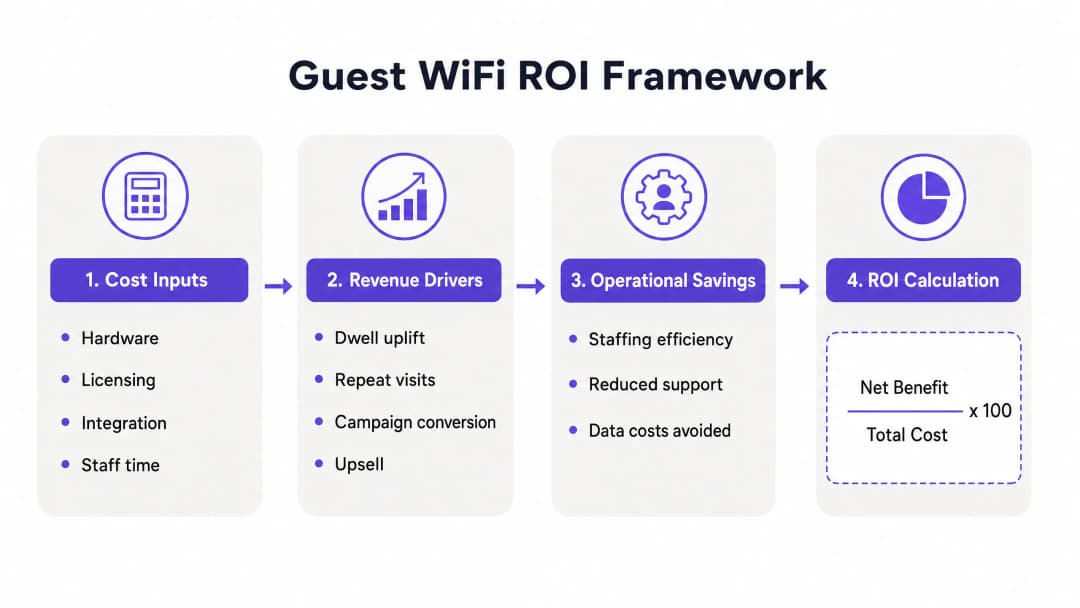
गेस्ट WiFi च्या ROI चे मोजमाप करण्यासाठी एका संरचित दृष्टिकोनाची आवश्यकता असते. तुम्हाला खर्चाचे प्रमाण निश्चित करावे लागेल आणि चार श्रेणींमधील मोजता येण्याजोग्या फायद्यांशी त्याची तुलना करावी लागेल.
खर्चाचे इनपुट
एकूण मालकी खर्चामध्ये हे समाविष्ट आहे: हार्डवेअर (ॲक्सेस पॉइंट्स, स्विचेस, केबलिंग); सॉफ्टवेअर लायसन्सिंग (Connect, Capture, आणि Engage प्लॅनवर उपलब्ध असलेले Purple क्लाउड ओव्हरले); अंमलबजावणी सेवा; आणि व्यवस्थापन आणि रिपोर्टिंगसाठी कर्मचाऱ्यांचा चालू वेळ. पाच प्रॉपर्टीजमध्ये डिप्लॉय करणाऱ्या २०० खोल्यांच्या हॉटेलसाठी, तीन वर्षांतील वास्तविक एकूण मालकी खर्चामध्ये हार्डवेअर रिफ्रेश, लायसन्सिंग आणि इंटिग्रेशनच्या कामाचा समावेश होतो.
महसूल वाढवणारे घटक
उद्योग डेटा दर्शवितो की जेव्हा विनामूल्य WiFi उपलब्ध असते तेव्हा ६२% व्यवसाय नोंदवतात की ग्राहक त्यांच्या ठिकाणी जास्त वेळ घालवतात (BT Business WiFi Survey, २०२५). रिटेलमध्ये, वाढलेला ड्वेल टाइम थेट वाढलेल्या बास्केट आकाराशी संबंधित असतो. विशिष्ट विभागातील ड्वेल टाइममध्ये १०% वाढ जी त्या श्रेणीच्या विक्रीत २% वाढीशी संबंधित आहे, ती एक स्पष्ट, कारणीभूत ROI सिग्नल प्रदान करते. CRM डेटाबेस वाढ हा दुसरा मोठा महसूल वाढवणारा घटक आहे. तुमच्या सरासरी मोहीम (campaign) रूपांतरण दर आणि सरासरी ऑर्डर मूल्यावर आधारित नवीन ईमेल सदस्याच्या मूल्याची गणना करा. जर तुमच्या ईमेल मोहिमा सरासरी £80 च्या ऑर्डर मूल्यासह 3% वर रूपांतरित होत असतील, तर प्रत्येक नवीन सदस्य अपेक्षित मोहीम महसूलात £2.40 च्या मूल्याचा आहे. दरमहा 500 नवीन सदस्य मिळवणारे ठिकाण केवळ त्याच चॅनेलवरून अपेक्षित मासिक मोहीम महसूलात £1,200 जनरेट करते.
टीयर्ड (tiered) बँडविड्थ लागू करणाऱ्या ठिकाणांसाठी, प्रीमियम टीयर सबस्क्रिप्शनमधून मिळणारा थेट महसूल त्वरित मोजता येण्याजोगा परतावा प्रदान करतो. AGS एअरपोर्ट्सने त्यांच्या टीयर्ड मॉडेलमधून 842% ROI मिळवला (Purple ग्राहक डेटा).
ऑपरेशनल बचत
कर्मचार्यांच्या वेळापत्रकाशी सुसंगत असलेला फूटफॉल डेटा शांत कालावधीत अतिरिक्त कर्मचारी ठेवण्याचे प्रमाण कमी करतो. मंगळवारी सकाळी फूटफॉलमध्ये सतत 30% घसरण नोंदवणारे ठिकाण त्या वेळेसाठी कर्मचार्यांची संख्या कमी करू शकते, ज्यामुळे थेट खर्चात बचत होते. healthcare आणि transport वातावरणासाठी, फूटफॉल डेटा रांग व्यवस्थापन आणि क्षमता नियोजनात देखील मदत करतो, ज्यामुळे अतिरिक्त कर्मचार्यांशिवाय ऑपरेशनल अडथळे कमी होतात.
ROI गणना
मानक ROI सूत्र लागू होते: ROI (%) = ((निव्वळ फायदा - एकूण खर्च) / एकूण खर्च) x 100. निव्वळ फायदा म्हणजे ड्वेल (dwell) वाढीपासून मिळणारा अतिरिक्त महसूल, CRM मोहीम महसूल, टीयर्ड ॲक्सेस महसूल आणि ऑपरेशनल बचत यांची बेरीज होय. एकूण खर्च म्हणजे हार्डवेअर, लायसन्सिंग, अंमलबजावणी आणि चालू व्यवस्थापन यांची बेरीज आहे.
बहुतेक आदरातिथ्य (hospitality) आणि किरकोळ विक्री (retail) उपयोजनांसाठी, Purple ग्राहकांना सहा महिन्यांच्या आत मोजता येण्याजोगा ROI दिसतो. पहिले 90 दिवस बेसलाइन डेटा स्थापित करतात. दुसरे 90 दिवस असे असतात जिथे ऑपरेशनल आणि मार्केटिंग मूल्य वाढू लागते.
अधिक वाचन
- Guest WiFi - Purple चे कोर गेस्ट कनेक्टिव्हिटी प्लॅटफॉर्म
- WiFi Analytics - ॲनालिटिक्स आणि मार्केटिंग प्लॅटफॉर्म
- Design of a Survey: A Practical Guide for Venues - संरचित फीडबॅक मिळवण्यासाठी Captive Portal चा वापर कसा करावा
- What Is Wireless Display: Protocols and Best Practices 2026 - पूरक वायरलेस तंत्रज्ञान संदर्भ
मुख्य परिभाषाएं
Guest WiFi का ROI
नेट एट्रिब्यूटेबल लाभ और सत्यापित लागत बचत, जिसमें से प्रोग्राम की लागत घटाई गई हो, जिसे प्रोग्राम की लागत के अनुपात में व्यक्त किया गया हो।
इसका उपयोग तब करें जब फाइनेंस टीम यह पूछे कि प्रोग्राम को आगे बढ़ाना है, बदलना है या बंद करना है।
Guest WiFi
एक विज़िटर एक्सेस सर्विस जो ब्रांडेड कनेक्शन प्रदान कर सकती है और निर्धारित उपयोग व प्रदर्शन मीट्रिक्स को रिकॉर्ड कर सकती है।
डेटा कैप्चर या अभियान जोड़ने से पहले सर्विस बेसलाइन सेट करें।
Captive Portal
Guest WiFi कनेक्शन फ्लो को प्रस्तुत करने के लिए उपयोग किया जाने वाला ब्रांडेड एक्सेस पेज।
सहमति, डेटा फ़ील्ड और विज़िटर अनुभव को परिभाषित करने के लिए इसका उपयोग करें।
फर्स्ट-पार्टी डेटा
किसी स्वीकृत फ्लो के माध्यम से सीधे विज़िटर से एकत्र किया गया संपर्क या जनसांख्यिकीय (demographic) डेटा।
यह तब महत्वपूर्ण होता है जब किसी CRM को समृद्ध करना हो और अनुमति प्राप्त ऑडियंस का निर्माण करना हो।
सत्यापित ईमेल रिकॉर्ड
CRM में उपयोग करने से पहले अमान्य ईमेल पतों को कम करने के लिए जांचा गया संपर्क रिकॉर्ड।
यह संपर्क योग्य ईमेल ऑडियंस के लिए सही भाजक (denominator) है।
IEEE 802.1X
आपसी प्रमाणीकरण के लिए EAP और EAPOL का उपयोग करने वाला एक पोर्ट-आधारित नेटवर्क एक्सेस कंट्रोल मानक।
यह तब प्रासंगिक होता है जब आप कर्मचारियों या प्रबंधित-डिवाइस नेटवर्क के लिए एक्सेस कंट्रोल पर चर्चा करते हैं।
WPA3
एक WiFi सुरक्षा कार्यक्रम जो वर्तमान सुरक्षा प्रोटोकॉल का उपयोग करता है और जिसके लिए Protected Management Frames आवश्यक हैं।
इसकी समीक्षा तब करें जब आपकी नेटवर्क टीम एक्सेस सुरक्षा और क्लाइंट अनुकूलता का मूल्यांकन करे।
Protected Management Frames
WiFi प्रबंधन एक्शन फ़्रेम के लिए सुरक्षा उपाय, जो WPA3 नेटवर्क में आवश्यक हैं।
WPA3 परिनियोजन के नीतिगत प्रभावों की समीक्षा करते समय ये महत्वपूर्ण होते हैं।
PCI DSS
भुगतान खाता डेटा की सुरक्षा के उद्देश्य से तकनीकी और परिचालन आवश्यकताओं का एक समूह।
इसकी समीक्षा तब करें जब Guest WiFi आर्किटेक्चर कार्डधारक के डेटा परिवेश को प्रभावित कर सकता हो।
Location analytics
स्वीकृत डेटा सेट से विज़िटर के व्यवहार, वापसी दर या ज़ोन गतिविधि का विश्लेषण।
लेआउट, स्टाफिंग, साइनेज या समय में परिचालन परिवर्तनों का परीक्षण करने के लिए इसका उपयोग करें।
हल किए गए उदाहरण
एक 200 कमरों वाले होटल को कनेक्टिविटी से जुड़ी शिकायतों को कम करने और रुकने के बाद बुकिंग के संकेतों को सत्यापित करने की आवश्यकता है।
कनेक्ट होने की सफलता, कवरेज की घटनाएं, सर्विस-डेस्क संपर्क, सहमति वाले कैप्चर, सत्यापित ईमेल रिकॉर्ड और बुकिंग-सिस्टम के परिणामों के आठ तुलनीय हफ्तों का डेटा एक्सपोर्ट करें। एक्सेस फ्लो या रुकने के बाद वाले संचार में एक निश्चित अवधि का बदलाव लागू करें। कनेक्टिविटी शिकायतों की दर, CRM मैच दर और बुकिंग-सिस्टम द्वारा पुष्टि की गई प्रतिक्रियाओं को मापें। ROI अंश (numerator) में केवल स्वीकृत बचे हुए सपोर्ट प्रयास और पुष्टि की गई बुकिंग योगदान को जोड़ें।
एक रिटेल परिसर को यह परीक्षण करने की आवश्यकता है कि क्या सहमति वाला कोई ऑफर अतिरिक्त मोचन (redemption) परिणाम देता है।
समान ऑफर तिथियों, स्टाफ ब्रीफिंग और उत्पाद उपलब्धता वाले मिलान किए गए टेस्ट और कंट्रोल स्टोर चुनें। केवल सचेत विकल्प के बाद ही सत्यापित संपर्कों को कैप्चर करें। स्वीकृत ऑफर एक्सपोज़र का लॉयल्टी या पॉइंट-ऑफ़-सेल रिकॉर्ड से मिलान करें। टेस्ट और कंट्रोल स्टोर के बीच मोचन में आए बदलाव की तुलना करें, और कुल कनेक्ट होने की मात्रा को राजस्व गणना से बाहर रखें।
एक स्टेडियम को यह परीक्षण करने की आवश्यकता है कि क्या कंकर्स सर्विस-पोजीशन में बदलाव से दर्शकों के अनुभव में सुधार होता है।
तुलनीय इवेंट श्रेणियों को चुनें, क्षेत्रों को परिभाषित करें और उसी अवलोकन पद्धति का उपयोग करें। Guest WiFi ज़ोन सिग्नलों को कतार अवलोकनों, सर्विस-डेस्क रिकॉर्ड और वेन्यू के पास मौजूद कन्सैशन डेटा के साथ संयोजित करें। परिचालन परिवर्तन और परीक्षण अवधि को रिकॉर्ड करें। हीटमैप को वित्तीय प्रमाण मानने के बजाय, सहमत कतार या सेवा मीट्रिक और स्वतंत्र रूप से सत्यापित किसी भी कन्सैशन परिणाम की रिपोर्ट करें।
इस श्रृंखला में आगे पढ़ें
डिजाइन द्वारा गोपनीयता: GDPR अनुपालन के लिए WiFi डेटा को अनाम बनाना
यह आधिकारिक गाइड GDPR अनुपालन सुनिश्चित करने के लिए WiFi डेटा को अनाम बनाने की तकनीकी वास्तुकला और कार्यान्वयन रणनीतियों का विवरण देती है। यह IT लीडर्स और नेटवर्क आर्किटेक्ट्स को सख्त डेटा गोपनीयता आवश्यकताओं के साथ मजबूत स्थल विश्लेषण को संतुलित करने के लिए व्यावहारिक रूपरेखा प्रदान करती है।
Heatmapping बनाम Presence Analytics: तकनीकी अंतर
यह आधिकारिक तकनीकी मार्गदर्शिका एंटरप्राइज़ वेन्यू ऑपरेटरों के लिए WiFi heatmapping और presence analytics के बीच महत्वपूर्ण आर्किटेक्चरल और परिचालन अंतरों का विवरण देती है। यह IT लीडर्स, नेटवर्क आर्किटेक्ट्स, और ऑपरेशन्स डायरेक्टर्स को उनके मौजूदा वायरलेस इन्फ्रास्ट्रक्चर से अधिकतम ROI प्राप्त करने के लिए व्यावहारिक डिप्लॉयमेंट फ्रेमवर्क, वास्तविक दुनिया के कार्यान्वयन परिदृश्य, और वेंडर-न्यूट्रल सर्वोत्तम प्रथाएं प्रदान करती है।
WiFi Location Analytics का उपयोग करके Dwell Time की गणना कैसे करें
यह गाइड WiFi location analytics का उपयोग करके wifi dwell time की गणना करने के लिए एक व्यापक तकनीकी संदर्भ प्रदान करती है, जिसमें 802.11 probe request capture से लेकर RSSI-आधारित trilateration और geofenced zone analysis तक का संपूर्ण आर्किटेक्चर शामिल है। इसे IT प्रबंधकों, नेटवर्क आर्किटेक्ट्स और वेन्यू ऑपरेशंस निदेशकों के लिए डिज़ाइन किया गया है जिन्हें रिटेल, हॉस्पिटैलिटी, हेल्थकेयर और सार्वजनिक क्षेत्र के वातावरण में सटीक, स्केलेबल लोकेशन इंटेलिजेंस तैनात करने की आवश्यकता है। पाठकों को व्यावहारिक कार्यान्वयन मार्गदर्शन, वास्तविक दुनिया के केस स्टडीज और कच्चे स्थानिक डेटा को मापने योग्य व्यावसायिक परिणामों में बदलने के लिए एक स्पष्ट ढांचा मिलेगा।
अपने विशिष्ट सेटअप को लेकर कोई सवाल हैं?
हमारी टीम 80,000 से अधिक वेन्यू में वेन्यू ऑपरेटरों, IT मैनेजरों और नेटवर्क इंजीनियरों के साथ काम करती है। 20 मिनट का कॉल बुक करें और हम आपको दिखाएंगे कि आपके जैसे अन्य लोगों ने इसे कैसे हल किया।