
गेस्ट WiFi Captive Portals के साथ WeChat ऑथेंटिकेशन को इंटीग्रेट करना
यह गाइड बताती है कि एंटरप्राइज गेस्ट WiFi Captive Portals में WeChat OAuth 2.0 ऑथेंटिकेशन को कैसे इंटीग्रेट किया जाए। इसमें डुअल-प्लेटफ़ॉर्म रजिस्ट्रेशन आवश्यकताओं, फ़र्स्ट-पार्टी डेटा कैप्चर के लिए स्कोप सिलेक्शन, RADIUS Change of Authorization के माध्यम से नेटवर्क एनफोर्समेंट, और GDPR व चीन के PIPL के अनुपालन को कवर किया गया है। हॉस्पिटैलिटी, रिटेल और इवेंट्स के वेन्यू ऑपरेटर्स को बड़े पैमाने पर WeChat लॉगिन गेस्ट WiFi को डिप्लॉय करने के लिए ठोस इम्प्लीमेंटेशन स्टेप्स, रियल-वर्ल्ड केस स्टडीज और सिक्योरिटी हार्डनिंग गाइडेंस मिलेंगे।
इस गाइड को सुनें
पॉडकास्ट ट्रांसक्रिप्ट देखें
Executive summary
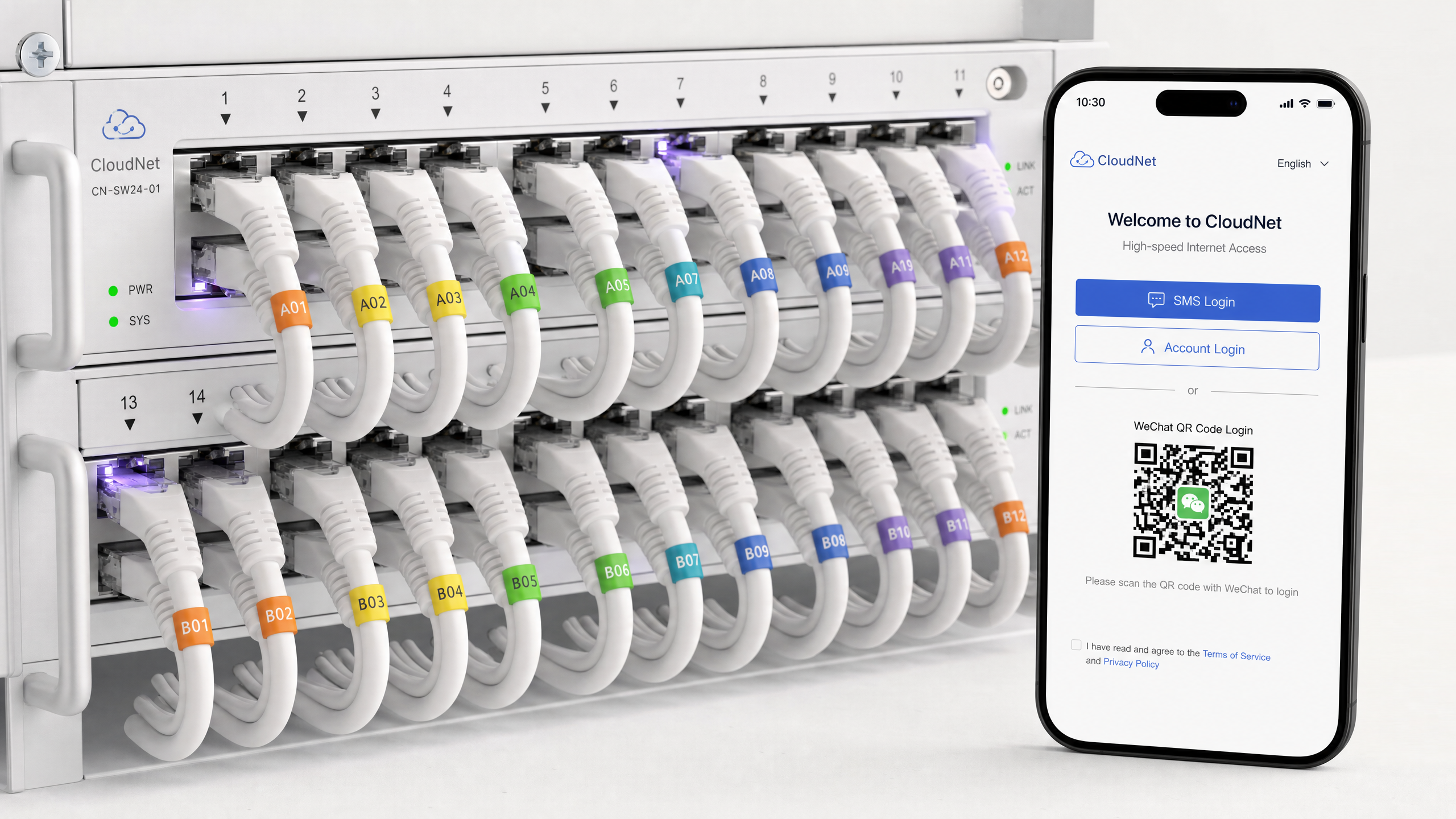
जब कोई चीनी विजिटर आपके एंटरप्राइज नेटवर्क से कनेक्ट होता है और उसे एक ऐसा Captive Portal मिलता है जो केवल ईमेल, Facebook या वाउचर कोड की पेशकश करता है, तो आप तुरंत बाधा (friction) पैदा करते हैं। Tencent के 2024 के डेटा के अनुसार, WeChat के 1.38 बिलियन मंथली एक्टिव यूजर्स हैं। WeChat लॉगिन गेस्ट WiFi क्षमताओं को इंटीग्रेट करना केवल हॉस्पिटैलिटी की सुविधा नहीं है - यह बिना किसी बाधा के इस डेमोग्राफिक से फ़र्स्ट-पार्टी डेटा कैप्चर करने के लिए एक तकनीकी आवश्यकता है।
यह गाइड Captive Portals में WeChat OAuth 2.0 ऑथेंटिकेशन को इंटीग्रेट करने के लिए तकनीकी आर्किटेक्चर का विवरण देती है। यह स्टैंडर्ड मोबाइल ब्राउज़र और WeChat इन-ऐप ब्राउज़र दोनों को सपोर्ट करने के लिए आवश्यक डुअल-प्लेटफ़ॉर्म रजिस्ट्रेशन के बारे में बताती है, डेटा कलेक्शन के लिए snsapi_base और snsapi_userinfo स्कोप के बीच के ट्रेड-ऑफ का मूल्यांकन करती है, और RADIUS Change of Authorization (CoA) या MAC ऑथेंटिकेशन बाईपास का उपयोग करके नेटवर्क एक्सेस को कैसे लागू किया जाए, इसकी रूपरेखा तैयार करती है। इसमें Cisco Meraki, HPE Aruba, Ruckus, Juniper Mist, Ubiquiti UniFi, Cambium, Extreme और Fortinet इंफ्रास्ट्रक्चर पर इसे बड़े पैमाने पर डिप्लॉय करने के लिए आवश्यक सिक्योरिटी कॉन्फ़िगरेशन और अनुपालन आवश्यकताओं - GDPR और चीन के PIPL - को भी कवर किया गया है।
टेक्निकल डीप-डाइव: WeChat OAuth 2.0 आर्किटेक्चर
एक Captive Portal किसी अनऑथेंटिकेटेड डिवाइस से HTTP ट्रैफ़िक को इंटरसेप्ट करता है और उसे पोर्टल सर्वर पर होस्ट किए गए लॉगिन पेज पर रीडायरेक्ट करता है। WeChat ऑथेंटिकेशन जोड़ने से OAuth 2.0 प्रोटोकॉल का उपयोग करके इस फ्लो में एक थर्ड-पार्टी आइडेंटिटी प्रोवाइडर शामिल हो जाता है - यह वही स्टैंडर्ड है जिसका उपयोग Google, Microsoft Entra ID और Okta द्वारा फ़ेडरेटेड आइडेंटिटी के लिए किया जाता है।
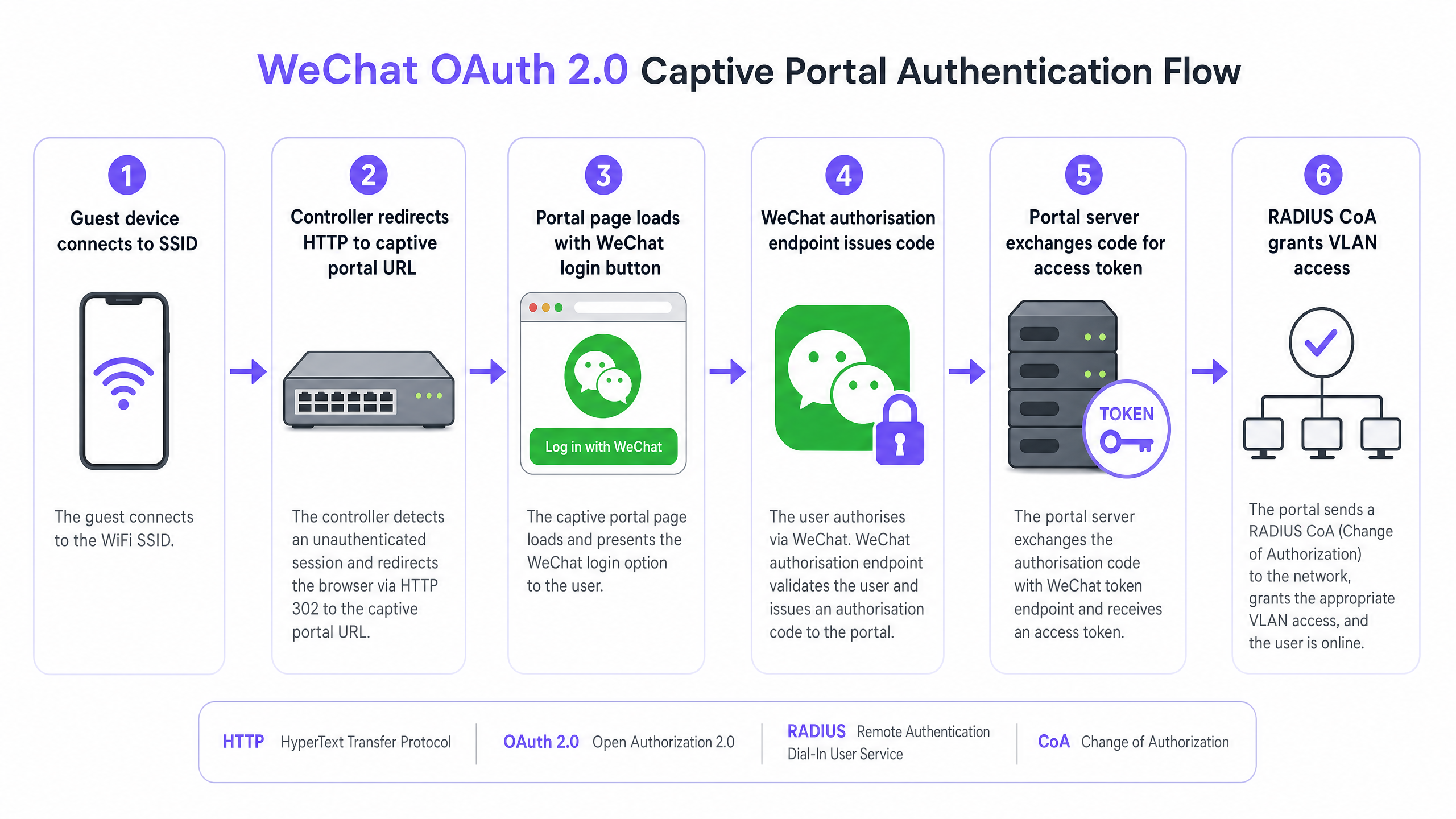
ऑथेंटिकेशन सीक्वेंस इस प्रकार काम करता है। गेस्ट SSID से कनेक्ट होता है। एक्सेस पॉइंट या वायरलेस कंट्रोलर अनऑथेंटिकेटेड सेशन का पता लगाता है और HTTP ट्रैफ़िक को Captive Portal URL पर रीडायरेक्ट करता है। गेस्ट पोर्टल पेज पर WeChat लॉगिन चुनता है। पोर्टल सर्वर ब्राउज़र को open.weixin.qq.com पर WeChat के ऑथराइजेशन एंडपॉइंट पर रीडायरेक्ट करता है, जिसमें AppID, रीडायरेक्ट URI, code का रिस्पॉन्स टाइप और रिक्वेस्टेड स्कोप पास किया जाता है। WeChat अपने स्वयं के सर्वर पर ऑथेंटिकेशन को हैंडल करता है। यदि गेस्ट snsapi_base स्कोप के साथ WeChat इन-ऐप ब्राउज़र का उपयोग करता है, तो ऑथेंटिकेशन साइलेंट होता है - कोई सहमति (consent) प्रॉम्प्ट दिखाई नहीं देता है। यदि snsapi_userinfo का उपयोग किया जाता है, तो WeChat एक सहमति स्क्रीन दिखाता है। WeChat फिर एक टेम्परेरी ऑथराइजेशन कोड के साथ पोर्टल के रीडायरेक्ट URI पर वापस रीडायरेक्ट करता है। पोर्टल सर्वर AppID, AppSecret, कोड और authorization_code का ग्रांट टाइप पास करके api.weixin.qq.com/sns/oauth2/access_token को कॉल करके इस कोड को एक्सेस टोकन से एक्सचेंज करता है। WeChat एक एक्सेस टोकन, एक रिफ्रेश टोकन, यूजर का OpenID और ग्रांटेड स्कोप लौटाता है। यदि snsapi_userinfo ग्रांट किया गया था, तो सर्वर यूजर का निकनेम, अवतार, जेंडर और शहर प्राप्त करने के लिए दूसरा API कॉल करता है।
डुअल-प्लेटफ़ॉर्म रजिस्ट्रेशन की आवश्यकता
अधिकांश इम्प्लीमेंटेशन रजिस्ट्रेशन स्टेज पर ही विफल हो जाते हैं। WeChat दो अलग-अलग डेवलपर प्लेटफ़ॉर्म संचालित करता है, और एंटरप्राइज डिप्लॉयमेंट के लिए आमतौर पर दोनों की आवश्यकता होती है।
| प्लेटफ़ॉर्म | URL | आवश्यक अकाउंट टाइप | समर्थित स्कोप | ब्राउज़र कॉन्टेक्स्ट |
|---|---|---|---|---|
| Official Accounts Platform | mp.weixin.qq.com | Service Account | snsapi_base, snsapi_userinfo | WeChat इन-ऐप ब्राउज़र |
| Open Platform | open.weixin.qq.com | Website Application | snsapi_login | स्टैंडर्ड मोबाइल ब्राउज़र |
WeChat इन-ऐप ब्राउज़र के अंदर पोर्टल एक्सेस करने वाले गेस्ट्स के लिए, आपको Official Accounts Platform पर एक Service Account की आवश्यकता होगी। एक Subscription Account काम नहीं करेगा - इसमें OAuth वेब पेज ऑथराइजेशन अनुमतियों की कमी होती है। Android पर Chrome या iOS पर Safari से पोर्टल एक्सेस करने वाले गेस्ट्स के लिए, आपको Open Platform पर एक Website Application की आवश्यकता होगी, जो snsapi_login स्कोप का उपयोग करता है और यूजर को स्कैन करने के लिए एक QR कोड दिखाता है।
व्यवहार में, अधिकांश वेन्यू डिप्लॉयमेंट दोनों का उपयोग करते हैं। होटल का कोई गेस्ट Chrome में पोर्टल खोल सकता है, एक QR कोड देख सकता है, उसे WeChat से स्कैन कर सकता है और ऑथेंटिकेट कर सकता है। या वे WeChat में ही किसी लिंक पर जा सकते हैं, इन-ऐप ब्राउज़र पर पहुंच सकते हैं, और snsapi_base के साथ साइलेंटली ऑथेंटिकेट कर सकते हैं।
स्कोप सिलेक्शन: डेटा कैप्चर बनाम बाधा (friction)
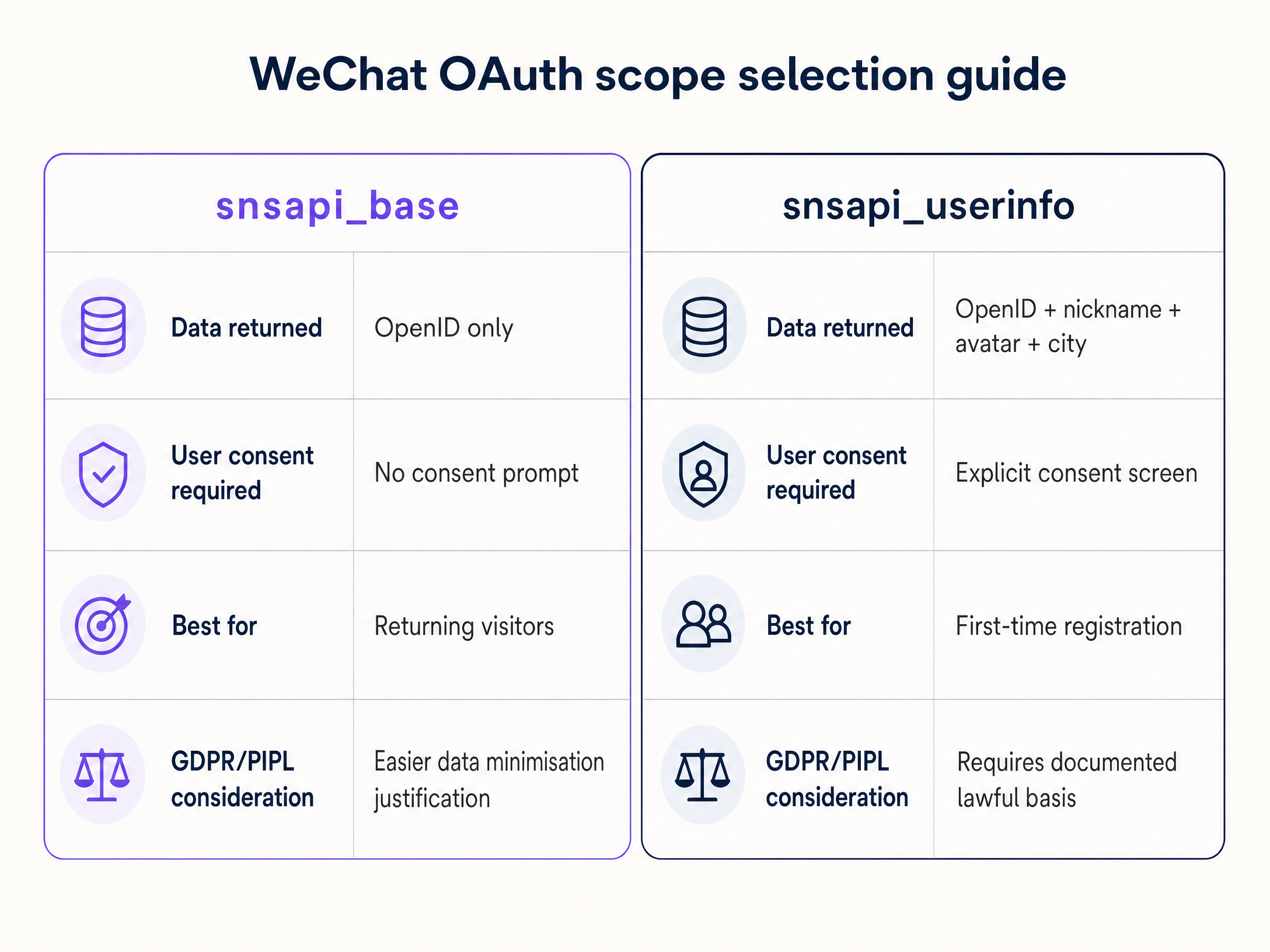
आपके द्वारा रिक्वेस्ट किया गया स्कोप यह निर्धारित करता है कि आप कौन सा डेटा कलेक्ट करते हैं और गेस्ट को किस बाधा का अनुभव होता है। यह अनुपालन (compliance) के निहितार्थों के साथ एक वास्तविक निर्णय बिंदु है।
snsapi_base केवल OpenID लौटाता है - आपके Official Account के भीतर उस यूजर के लिए एक यूनिक आइडेंटिफायर। इसके लिए किसी यूजर सहमति प्रॉम्प्ट की आवश्यकता नहीं होती है। ऑथेंटिकेशन गेस्ट के लिए अदृश्य होता है। इसका उपयोग उन लौटने वाले गेस्ट्स के लिए करें जिनकी प्रोफाइल आपके पास पहले से है, या जब आप बाधा-रहित एक्सेस को प्राथमिकता देते हैं। GDPR और PIPL डेटा मिनिमाइजेशन सिद्धांतों के तहत, snsapi_base को सही ठहराना आसान है।
snsapi_userinfo OpenID के साथ-साथ यूजर का निकनेम, प्रोफाइल पिक्चर, जेंडर और शहर लौटाता है। इसके लिए एक स्पष्ट सहमति स्क्रीन की आवश्यकता होती है। इसका उपयोग पहली बार आने वाले गेस्ट के रजिस्ट्रेशन के लिए करें जहाँ आपको एक प्रोफाइल बनाने की आवश्यकता होती है, जिसे आपके पोर्टल पेज पर एक अनुपालन सहमति लेयर के साथ जोड़ा गया हो।
मल्टी-प्रॉपर्टी डिप्लॉयमेंट के लिए UnionID
OpenID किसी यूजर और एक विशिष्ट Official Account के कॉम्बिनेशन के लिए यूनिक होता है। 20 संपत्तियों वाला एक होटल समूह, जिनमें से प्रत्येक का अपना Official Account है, एक ही गेस्ट के लिए 20 अलग-अलग OpenID देखेगा। UnionID इसे हल करता है। यह एक सिंगल आइडेंटिफायर है जो एक ही Open Platform अकाउंट से जुड़े सभी Official Accounts और ऐप्स में एक यूजर का प्रतिनिधित्व करता है। अपने Official Accounts को अपने Open Platform अकाउंट से लिंक करें, और UnionID OAuth रिस्पॉन्स में वापस आ जाता है। यह cr का आधार हैoss-property अतिथि पहचान।
कार्यान्वयन गाइड
नेटवर्क प्रवर्तन तंत्र
OAuth टोकन प्राप्त करना पहचान प्रमाणित करता है। यह नेटवर्क को नहीं खोलता है। ट्रैफ़िक की अनुमति देने के लिए आपको कंट्रोलर को संकेत देना होगा।
RADIUS Change of Authorization (CoA), जो RFC 3576 में परिभाषित है, अनुशंसित एंटरप्राइज़ दृष्टिकोण है। सफल OAuth के बाद, पोर्टल सर्वर नेटवर्क कंट्रोलर को एक CoA अनुरोध भेजता है। कंट्रोलर डिवाइस को प्री-ऑथेंटिकेशन VLAN से गेस्ट VLAN में स्थानांतरित करता है। यह Cisco Meraki, HPE Aruba, Ruckus, Juniper Mist, Ubiquiti UniFi, Cambium, Extreme और Fortinet के साथ काम करता है।
MAC Authentication Bypass (MAB) डिवाइस के MAC एड्रेस को RADIUS डेटाबेस में एक अधिकृत क्लाइंट के रूप में पंजीकृत करता है। कंट्रोलर उस MAC के आधार पर एक्सेस की अनुमति देता है। MAB को लागू करना आसान है लेकिन यह अविश्वसनीय है: आधुनिक iOS और Android डिवाइस डिफ़ॉल्ट रूप से MAC एड्रेस को रैंडमाइज़ करते हैं, जिससे दोबारा कनेक्ट होने पर सेशन एसोसिएशन टूट जाता है।
Purple का Guest WiFi प्लेटफ़ॉर्म इस अनुवाद को स्वचालित करता है। WeChat OAuth पूरा होने के बाद, Purple का क्लाउड ओवरले अंतर्निहित हार्डवेयर को उपयुक्त CoA या MAB सिग्नल भेजता है, जिससे मैन्युअल VLAN कॉन्फ़िगरेशन की आवश्यकता समाप्त हो जाती है।
सुरक्षा कॉन्फ़िगरेशन
तीन कॉन्फ़िगरेशन गैर-परक्राम्य हैं।
- AppSecret को सुरक्षित रखें।
AppSecretकभी भी क्लाइंट-साइड JavaScript में दिखाई नहीं देना चाहिए। इसे आपके सर्वर पर ही रहना चाहिए। यदि यह उजागर होता है, तो हमलावर आपके एप्लिकेशन का रूप धारण कर सकते हैं और आपकी ओर से WeChat APIs को कॉल कर सकते हैं। - CSRF सुरक्षा लागू करें। एक क्रिप्टोग्राफ़िक रूप से रैंडम
stateमान जनरेट करें, इसे उपयोगकर्ता के सेशन में स्टोर करें, और WeChat द्वारा वापस रीडायरेक्ट किए जाने पर इसे सत्यापित करें। यह RFC 6749 में परिभाषित क्रॉस-साइट रिक्वेस्ट फ़ॉर्जरी हमलों को रोकता है। - सभी रीडायरेक्ट URI वेरिएंट पंजीकृत करें। WeChat आपके पंजीकृत डोमेन के विरुद्ध रीडायरेक्ट URI को सत्यापित करता है। त्रुटि 40029 (अमान्य कोड) को रोकने के लिए, स्टेजिंग वातावरण सहित आपके द्वारा उपयोग किए जाने वाले प्रत्येक सबडोमेन और पाथ वेरिएंट को पंजीकृत करें।
इन-ऐप ब्राउज़र डिटेक्शन
WeChat का इन-ऐप ब्राउज़र एक उपयोगकर्ता एजेंट स्ट्रिंग सेट करता है जिसमें MicroMessenger होता है। आपके पोर्टल को इस स्ट्रिंग का पता लगाना चाहिए और उसी के अनुसार रूट करना चाहिए: इन-ऐप ब्राउज़र के लिए Official Account फ़्लो, मानक ब्राउज़रों के लिए Open Platform QR कोड फ़्लो। इसका पता लगाने में विफल रहने पर खराब अनुभव या प्रमाणीकरण त्रुटियां उत्पन्न होती हैं।
सर्वोत्तम अभ्यास और अनुपालन
GDPR अनुपालन
यदि आप यूरोपीय आगंतुकों की सेवा करते हैं या यूरोप में काम करते हैं, तो GDPR आपके द्वारा WeChat OAuth के माध्यम से एकत्र किए जाने वाले डेटा पर लागू होता है। आपको प्रोसेसिंग के लिए एक कानूनी आधार स्थापित करना होगा - आमतौर पर सहमति या वैध हित। आपको प्रमाणीकरण से पहले Captive Portal पर एक स्पष्ट गोपनीयता नोटिस प्रदान करना होगा। आपको विषय पहुंच अनुरोधों और हटाने के अनुरोधों का सम्मान करना होगा। विस्तृत अनुपालन ढांचे के लिए, The Compliance Playbook: GDPR और Guest WiFi डेटा गोपनीयता देखें।
PIPL अनुपालन
चीन का व्यक्तिगत सूचना संरक्षण कानून तब लागू होता है जब आप चीनी नागरिकों के व्यक्तिगत डेटा को प्रोसेस करते हैं। GDPR की तरह, PIPL के लिए स्पष्ट उद्देश्य सीमा, डेटा न्यूनीकरण और एक प्रलेखित कानूनी आधार की आवश्यकता होती है। snsapi_base को snsapi_userinfo की तुलना में डेटा न्यूनीकरण के तहत उचित ठहराना आसान है। आप जो कुछ भी एकत्र करते हैं, गो-लाइव से पहले अपने कानूनी आधार और प्रतिधारण अवधि को प्रलेखित करें।
नेटवर्क सेगमेंटेशन
VLAN सेगमेंटेशन का उपयोग करके अपने कॉर्पोरेट नेटवर्क से गेस्ट WiFi ट्रैफ़िक को अलग करें। WeChat के माध्यम से प्रमाणित मेहमानों को केवल इंटरनेट एक्सेस वाले एक समर्पित गेस्ट VLAN में जाना चाहिए - आंतरिक प्रणालियों तक कोई पहुंच नहीं होनी चाहिए। यह कार्डधारक डेटा वातावरण अलगाव और सामान्य एंटरप्राइज़ सुरक्षा अभ्यास के लिए PCI DSS आवश्यकताओं के अनुरूप है। सेगमेंटेशन आर्किटेक्चर के बारे में अधिक जानकारी के लिए, Bandwidth Management: A Practical Guide for 2026 देखें।
फ़ॉलबैक प्रमाणीकरण
यदि WeChat का API अनुपलब्ध है, तो आपके पोर्टल को एक वैकल्पिक लॉगिन विधि पर रीडायरेक्ट करना चाहिए। मेहमानों को खाली स्क्रीन के साथ न छोड़ें। ईमेल या SMS का फ़ॉलबैक निरंतरता सुनिश्चित करता है। यह विशेष रूप से Transport और Healthcare वातावरण के स्थानों के लिए महत्वपूर्ण है जहां कनेक्टिविटी एक सेवा दायित्व है।
वास्तविक दुनिया के केस स्टडीज
हॉस्पिटैलिटी: लक्ज़री होटल समूह
लंदन में एक 400 कमरों वाला लक्ज़री होटल मुख्य भूमि चीन के मेहमानों के एक बड़े हिस्से को सेवा प्रदान करता है। उनके मौजूदा Captive Portal को एक ईमेल पते और SMS सत्यापन की आवश्यकता थी। चीनी मोबाइल नंबर अक्सर यूरोपीय प्रदाताओं से SMS प्राप्त करने में विफल रहते हैं, और कई मेहमानों के डिवाइस पर स्थानीय ईमेल कॉन्फ़िगर नहीं होता है। इसका परिणाम पोर्टल पर 60% ड्रॉप-ऑफ दर था।
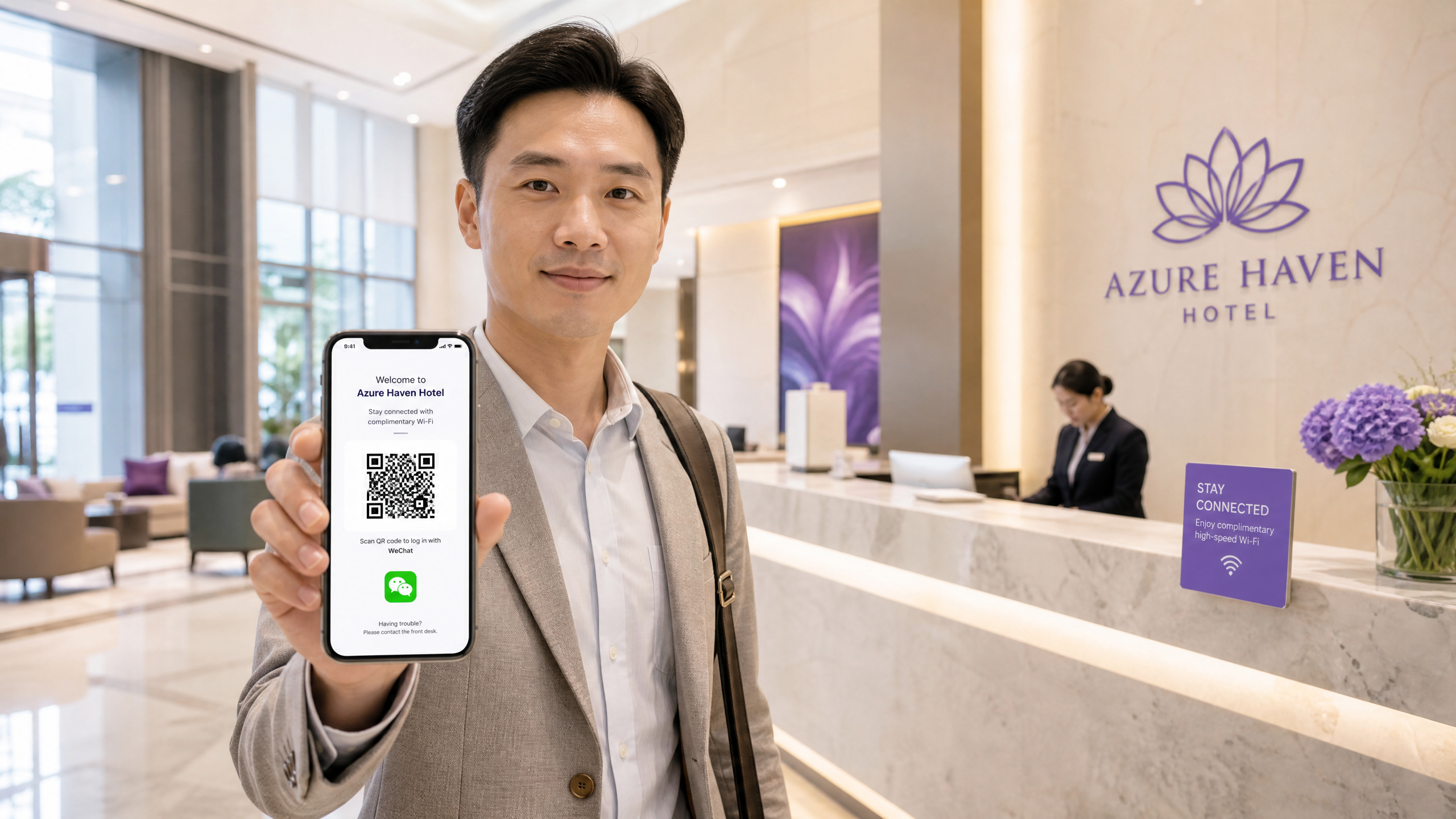
होटल ने Official Accounts प्लेटफ़ॉर्म पर एक सर्विस अकाउंट और Open Platform पर एक वेबसाइट एप्लिकेशन पंजीकृत किया। पोर्टल MicroMessenger उपयोगकर्ता एजेंट का पता लगाता है और इन-ऐप ब्राउज़र उपयोगकर्ताओं के लिए snsapi_base को ट्रिगर करता है - बिना किसी सहमति स्क्रीन के उन्हें तीन सेकंड से भी कम समय में कनेक्ट करता है। Chrome या Safari के माध्यम से आने वाले मेहमानों को एक QR कोड दिखाई देता है। बाद के प्रवासों पर, उसी OpenID को पहचान लिया जाता है और अतिथि को चुपचाप पुनः प्रमाणित कर दिया जाता है। होटल का CRM वापसी यात्रा को लॉग करता है, जिससे लक्षित आगमन-पूर्व संचार सक्षम होता है। हॉस्पिटैलिटी वातावरण में WiFi तैनात करने के बारे में अधिक जानकारी के लिए, Hospitality देखें।
रिटेल: शॉपिंग मॉल एनालिटिक्स
एक बड़ा रिटेल मॉल किरायेदार मिश्रण और विपणन निर्णयों को सूचित करने के लिए चीनी खरीदारों से जनसांख्यिकीय डेटा कैप्चर करना चाहता है। उन्हें मूल शहर, लिंग और यात्रा की आवृत्ति की आवश्यकता है। snsapi_base अपर्याप्त है - उन्हें snsapi_userinfo की आवश्यकता है। पोर्टल पूर्ण userinfo स्कोप का अनुरोध करता है। अतिथि को WeChat सहमति स्क्रीन दिखाई देती है और वह Allow पर टैप करता है। मॉल का एनालिटिक्स प्लेटफ़ॉर्म, जो Purple के WiFi Analytics के साथ एकीकृत है, सत्यापित जनसांख्यिकीय डेटा का एक प्रवाह प्राप्त करता है। शनिवार की दोपहर को, 40% WiFi उपयोगकर्ता एक विशिष्ट क्षेत्र से आते हैं। वह डेटा सीधेy यह सूचित करता है कि पॉप-अप इवेंट के लिए किन ब्रांडों से संपर्क किया जाए। रिटेल WiFi डिप्लॉयमेंट के बारे में अधिक जानने के लिए, Retail देखें।
समस्या निवारण और जोखिम न्यूनीकरण
WeChat OAuth captive portal डिप्लॉयमेंट में पांच सबसे आम विफलता मोड (failure modes) इस प्रकार हैं।
Redirect URI मिसमैच (त्रुटि 40029)। WeChat रजिस्टर्ड डोमेन के खिलाफ redirect URI को सत्यापित करता है। कोई भी सबडोमेन, पाथ या प्रोटोकॉल मिसमैच होने पर कोड एक्सचेंज विफल हो जाता है। स्टेजिंग एनवायरनमेंट सहित हर वेरिएंट को रजिस्टर करें।
AppSecret एक्सपोज़र। क्लाइंट-साइड कोड में AppSecret को एम्बेड करना सबसे गंभीर सुरक्षा त्रुटि है। सभी टोकन एक्सचेंज लॉजिक को सर्वर पर ले जाएं।
CSRF सुरक्षा का न होना। state पैरामीटर सत्यापन को छोड़ने से पोर्टल क्रॉस-साइट रिक्वेस्ट फोर्जरी (cross-site request forgery) के प्रति संवेदनशील हो जाता है। प्रति सेशन एक क्रिप्टोग्राफिक रूप से रैंडम वैल्यू जनरेट करें और कॉलबैक पर इसे सत्यापित करें।
इन-ऐप ब्राउज़र डिटेक्शन विफलता। यूजर एजेंट में MicroMessenger का पता न लगाने का मतलब है कि इन-ऐप ब्राउज़र उपयोगकर्ताओं को गलत OAuth फ़्लो परोस दिया जाता है, जिससे त्रुटियां उत्पन्न होती हैं।
MAC एड्रेस रैंडमाइजेशन से MAB सेशन का टूटना। आधुनिक मोबाइल ऑपरेटिंग सिस्टम MAC एड्रेस को रैंडमाइज करते हैं। MAB-आधारित प्रवर्तन (enforcement) का उपयोग करने वाले मेहमान दोबारा कनेक्ट होने पर अपना सेशन खो देंगे। विश्वसनीय सेशन मैनेजमेंट के लिए RADIUS CoA पर अपग्रेड करें। सुरक्षित WiFi कॉन्फ़िगरेशन पर मार्गदर्शन के लिए, What Is Secure WiFi: Essential Guide for Business 2026 देखें।
ROI और व्यावसायिक प्रभाव
WeChat लॉगिन गेस्ट WiFi कार्यक्षमता को डिप्लॉय करने के तीन मापने योग्य प्रभाव हैं।
बढ़ी हुई ऑथेंटिकेशन दरें। SMS वेरिफिकेशन विफलता बिंदु और ईमेल प्रविष्टि की आवश्यकता को हटाने से सफलतापूर्वक कनेक्ट होने वाले चीनी आगंतुकों का प्रतिशत बढ़ जाता है। WeChat सपोर्ट के बिना पोर्टल्स के लिए 60% ड्रॉप-ऑफ दर एक वास्तविक बेसलाइन है।
फर्स्ट-पार्टी डेटा गुणवत्ता। WeChat-प्रमाणित प्रोफाइल में एक सत्यापित OpenID और snsapi_userinfo के साथ, सीधे सोशल प्लेटफॉर्म से प्राप्त जनसांख्यिकीय (demographic) विशेषताएं शामिल होती हैं। यह डेटा थर्ड-पार्टी कुकीज़ पर निर्भरता के बिना लक्षित मार्केटिंग को चलाने के लिए एनालिटिक्स प्लेटफॉर्म में फीड होता है।
कम सपोर्ट ओवरहेड। घर्षण रहित (frictionless) लॉगिन अंतरराष्ट्रीय मेहमानों द्वारा कनेक्शन समस्याओं के समाधान के लिए किए जाने वाले फ्रंट-डेस्क और IT सपोर्ट कॉल को कम करता है।
Purple 80,000+ स्थानों पर काम करता है और इसने 2024 में 440 मिलियन लॉगिन प्रोसेस किए हैं (Purple आंतरिक डेटा)। यह प्लेटफॉर्म ISO 27001 प्रमाणित, GDPR और CCPA अनुपालन (compliant) है, और 99.999% अपटाइम बनाए रखता है। Retail और Hospitality के स्थानों के लिए, WeChat ऑथेंटिकेशन नेटवर्क को एक लागत केंद्र (cost centre) से एक विश्वसनीय फर्स्ट-पार्टी डेटा अधिग्रहण चैनल में बदल देता है।
मुख्य परिभाषाएं
Captive portal
A web page that intercepts HTTP traffic from an unauthenticated device and requires the user to interact with it before network access is granted.
The primary interface where the WeChat login option is presented to the guest. The portal server hosts this page and orchestrates the OAuth flow.
OAuth 2.0
An industry-standard authorisation protocol (RFC 6749) that allows a third-party application to obtain limited access to an HTTP service on behalf of a user.
The underlying protocol WeChat uses to pass authentication tokens to the portal server without exposing user credentials. The same protocol used by Microsoft Entra ID, Okta, and Google Workspace.
OpenID
A unique alphanumeric identifier assigned to a specific WeChat user for a specific Official Account.
Used as the primary key to identify returning guests in the WiFi analytics database. Changes per Official Account - use UnionID for cross-property recognition.
UnionID
A single WeChat identifier representing a user across all Official Accounts and apps linked to the same Open Platform account.
Essential for hotel groups, retail chains, and stadium operators with multiple venues who need to recognise the same guest across their entire estate.
RADIUS CoA (Change of Authorization)
An extension to the RADIUS protocol (RFC 3576) that allows a RADIUS server to dynamically change the authorisation attributes of an active session.
The secure method used to move a guest device from an isolated pre-authentication VLAN to the active internet VLAN after successful WeChat login. Supported by Cisco Meraki, HPE Aruba, Ruckus, Juniper Mist, Ubiquiti UniFi, Cambium, Extreme, and Fortinet.
snsapi_base
A WeChat OAuth scope that returns only the user's OpenID and requires no consent prompt from the user.
The recommended scope for returning guest re-authentication. Easier to justify under GDPR and PIPL data minimisation principles.
snsapi_userinfo
A WeChat OAuth scope that returns the user's OpenID, nickname, avatar, gender, and city, and requires an explicit consent screen.
Used for first-time guest registration where demographic data is required for analytics. Requires documented lawful basis under GDPR and PIPL.
PIPL (Personal Information Protection Law)
China's comprehensive data privacy legislation, effective November 2021, regulating the processing of personal information of natural persons located in China.
Applies when venues process data from Chinese citizens via WeChat OAuth. Requires clear consent, purpose limitation, data minimisation, and a deletion mechanism.
AppSecret
A confidential cryptographic key issued by WeChat during application registration, used to authenticate API calls from the portal server.
Must be stored exclusively on the server side. Exposure in client-side JavaScript allows attackers to impersonate the application and call WeChat APIs maliciously.
हल किए गए उदाहरण
A 400-room luxury hotel in London has a 60% portal drop-off rate among guests from mainland China. The current portal requires email and SMS verification. The IT Director needs to implement WeChat authentication while maintaining GDPR compliance and network security.
Step 1: Register a Service Account on the WeChat Official Accounts Platform (mp.weixin.qq.com) and a Website Application on the WeChat Open Platform (open.weixin.qq.com). Step 2: Configure the portal to detect the MicroMessenger user agent string. If detected, trigger the snsapi_base OAuth flow for silent authentication. If not detected, present the QR code flow. Step 3: Add a GDPR-compliant privacy notice and consent checkbox to the portal page before the WeChat login button becomes active. The notice must state: data collected (OpenID only), purpose (guest WiFi access and return visit recognition), and retention period. Step 4: After successful OAuth token exchange, the portal server issues a RADIUS CoA request to the Cisco Meraki controller, moving the guest device from the pre-auth VLAN to the segmented guest VLAN. Step 5: Store the OpenID against the device MAC address in the guest database. On subsequent visits, the returning OpenID triggers silent re-authentication.
A retail mall wants to capture gender and city data from Chinese shoppers via guest WiFi to feed into their analytics platform. They currently use MAC Authentication Bypass for their existing portal running on HPE Aruba hardware.
Step 1: Register a Service Account on the WeChat Official Accounts Platform. Step 2: Configure the portal to use snsapi_userinfo scope to retrieve gender and city. Step 3: Add a clear consent screen explaining the value exchange: free WiFi in return for profile data access. The consent must be explicit and granular under both GDPR and PIPL. Step 4: After authentication, the portal server registers the device's MAC address in the RADIUS database. The HPE Aruba controller permits access via MAB. Step 5: Document the lawful basis (consent), purpose (venue analytics and marketing), and retention period (24 months) in a data processing register. Provide a data deletion mechanism.
अभ्यास प्रश्न
Q1. You are deploying a captive portal at a stadium. You want returning season ticket holders who have previously authenticated to connect automatically without seeing a login screen on subsequent visits. Which WeChat OAuth scope should you implement for the re-authentication flow, and why?
संकेत: Consider which scope allows for silent authentication without prompting the user for consent on each visit.
मॉडल उत्तर देखें
Use snsapi_base. This scope returns only the user's OpenID and requires no consent prompt, enabling silent re-authentication. On the first visit, you store the OpenID against the fan's profile. On subsequent visits, the portal detects the returning OpenID via snsapi_base, confirms the match, and issues a RADIUS CoA to grant access - all without the fan seeing a login screen. This also aligns with GDPR data minimisation principles, as you are not collecting additional data beyond what is needed for the authentication function.
Q2. During testing, your portal successfully redirects to WeChat, the user grants consent, and WeChat redirects back to your portal. However, the portal server logs show OAuth error 40029 (invalid code). What is the most likely configuration error, and how do you resolve it?
संकेत: WeChat strictly validates the destination it sends the authorisation code to against a registered list.
मॉडल उत्तर देखें
The most likely cause is a redirect URI mismatch. WeChat validates the redirect URI in the OAuth request against the authorised domain registered on the platform. If the portal server uses a different subdomain, a different path, or HTTP instead of HTTPS, the code exchange fails with error 40029. Resolution: log into the WeChat developer platform, navigate to your Service Account or Website Application settings, and add every redirect URI variant you use - including staging subdomains, different paths, and HTTPS versions. Ensure the redirect_uri parameter in your OAuth request exactly matches one of the registered URIs, including URL encoding.
Q3. An IT manager proposes embedding the WeChat AppSecret in the captive portal's front-end JavaScript to speed up the token exchange process directly from the client browser. Why must you reject this proposal, and what is the correct architecture?
संकेत: Consider the security implications of exposing cryptographic keys in publicly accessible code.
मॉडल उत्तर देखें
Reject this proposal. The AppSecret is a confidential cryptographic key. Embedding it in client-side JavaScript exposes it to anyone who views the page source or intercepts network traffic. An attacker can extract the AppSecret and impersonate the application, calling WeChat APIs on the venue's behalf, accessing user data, and potentially compromising the entire Official Account. The correct architecture: the client-side portal page receives the authorisation code from WeChat and forwards it to the portal server via a server-side API call. The portal server holds the AppSecret in a secure environment variable and performs the token exchange with WeChat's API. The AppSecret never leaves the server.
Q4. A hotel group with 15 properties across Europe wants to build a unified guest profile that recognises when the same Chinese guest stays at different properties. Each property has its own WeChat Official Account. What WeChat identifier should they use, and what configuration is required?
संकेत: The OpenID is account-specific. There is a different identifier designed for cross-account recognition.
मॉडल उत्तर देखें
Use the UnionID. The OpenID changes per Official Account, so the same guest will have 15 different OpenIDs across 15 accounts. The UnionID is a stable identifier representing a user across all Official Accounts and apps linked to the same Open Platform account. Configuration required: link all 15 Official Accounts to a single WeChat Open Platform account. Once linked, the UnionID is returned in the OAuth response when the user has authorised at least one of the linked accounts. Use the UnionID as the primary key in the guest CRM to build cross-property profiles and recognise returning guests regardless of which property they visit.
इस श्रृंखला में आगे पढ़ें
Guest WiFi कैसे सेटअप करें: एक सुरक्षित एंटरप्राइज कॉन्फ़िगरेशन गाइड
यह प्रामाणिक गाइड IT लीडर्स और नेटवर्क आर्किटेक्ट्स को सुरक्षित एंटरप्राइज गेस्ट WiFi को डिप्लॉय करने के लिए एक निश्चित ब्लूप्रिंट प्रदान करती है। इसमें आंतरिक सिस्टम की सुरक्षा करते हुए अनुपालन-योग्य फर्स्ट-पार्टी डेटा कैप्चर करने के लिए आवश्यक आर्किटेक्चर, WPA3 माइग्रेशन, VLAN सेगमेंटेशन और Captive Portal इंटीग्रेशन शामिल है।
गेस्ट WiFi और लोकेशन एनालिटिक्स के व्यावसायिक ROI को मापना
यह गाइड गेस्ट WiFi और लोकेशन एनालिटिक्स के व्यावसायिक ROI को मापने के लिए एक तकनीकी और परिचालन फ्रेमवर्क प्रदान करती है। यह विवरण देती है कि रिटेल, हॉस्पिटैलिटी और सार्वजनिक स्थानों पर ड्वेल टाइम में वृद्धि, परिचालन दक्षता और फर्स्ट-पार्टी डेटा कैप्चर के माध्यम से हार्डवेयर निवेश से मूल्य की गणना कैसे की जाए। IT प्रबंधकों, नेटवर्क आर्किटेक्ट्स, CTOs और वेन्यू ऑपरेशन्स निदेशकों को अपने WiFi निवेश को सही ठहराने और अधिकतम करने के लिए ठोस माप फ्रेमवर्क, वास्तविक दुनिया के केस स्टडीज और अनुपालन मार्गदर्शन मिलेंगे।
WeChat WiFi लॉगिन को एकीकृत करना: सोशल कैप्टिव पोर्टल के माध्यम से जुड़ाव बढ़ाना
यह मार्गदर्शिका एंटरप्राइज़ कैप्टिव पोर्टल्स में WeChat WiFi प्रमाणीकरण को एकीकृत करने के तरीके का विवरण देती है, जिसमें OAuth 2.0 आर्किटेक्चर, RADIUS एकीकरण, और Cisco Meraki, HPE Aruba, और Juniper Mist हार्डवेयर पर चरण-दर-चरण परिनियोजन शामिल है। यह IT प्रबंधकों और नेटवर्क आर्किटेक्ट्स को WeChat के 1.3 बिलियन उपयोगकर्ताओं से फर्स्ट-पार्टी डेटा कैप्चर करने के लिए एक व्यावहारिक ढांचा प्रदान करता है, जबकि Official Account फ़ॉलो और पोस्ट-लॉगिन रीडायरेक्ट के माध्यम से जुड़ाव बढ़ाता है।