
WiFi 7 MLO की व्याख्या: निर्बाध रोमिंग के लिए मल्टी-लिंक ऑपरेशन
यह तकनीकी संदर्भ मार्गदर्शिका एंटरप्राइज़ नेटवर्क आर्किटेक्ट्स और IT लीडर्स के लिए WiFi 7 मल्टी-लिंक ऑपरेशन (MLO) में एक व्यापक डीप-डाइव प्रदान करती है। यह तीन MLO ऑपरेटिंग मोड (eMLSR, NSTR, और STR) को स्पष्ट करता है, बताता है कि MLO लेगेसी बैंड स्टीयरिंग की जगह कैसे लेता है, और वायरलेस ब्रॉडबैंड एलायंस के वास्तविक दुनिया के परीक्षण डेटा द्वारा समर्थित कार्रवाई योग्य डिप्लॉयमेंट मार्गदर्शन प्रदान करता है। हॉस्पिटैलिटी, रिटेल और बड़े सार्वजनिक स्थानों में वेन्यू ऑपरेटरों को WiFi 7 निवेश निर्णयों का समर्थन करने के लिए ठोस कार्यान्वयन रणनीतियाँ और ROI साक्ष्य मिलेंगे।
इस गाइड को सुनें
पॉडकास्ट ट्रांसक्रिप्ट देखें

कार्यकारी सारांश
एंटरप्राइज़ IT लीडर्स और नेटवर्क आर्किटेक्ट्स के लिए, IEEE 802.11be (WiFi 7) में ट्रांज़िशन वायरलेस कनेक्टिविटी में एक पैराडाइम शिफ्ट (व्यापक बदलाव) पेश करता है। इस मानक की आधारशिला मल्टी-लिंक ऑपरेशन (MLO) है, जो Wi-Fi CERTIFIED 7 डिवाइसों के लिए एक अनिवार्य विशेषता है जो मौलिक रूप से बदल देती है कि एक्सेस पॉइंट और क्लाइंट रेडियो फ़्रीक्वेंसी स्पेक्ट्रम में कैसे इंटरैक्ट करते हैं। लेगेसी बैंड स्टीयरिंग के विपरीत, जो नेटवर्क-संचालित रीएसोसिएशन पर निर्भर करता है जिससे ट्रैफ़िक बाधित होता है, MLO एक साथ, क्लाइंट-समन्वित मल्टी-बैंड कनेक्शन सक्षम करता है。
वायरलेस ब्रॉडबैंड एलायंस द्वारा हाल ही में किए गए एंटरप्राइज़ फ़ील्ड परीक्षणों ने उच्च-घनत्व वाले वातावरण में MLO के गहरे प्रभाव को प्रदर्शित किया। लाइव ऑफिस वातावरण में परीक्षण से गंभीर को-चैनल इंटरफेरेंस के तहत अपलिंक थ्रूपुट में 116% तक सुधार, और साथ ही अपलिंक लेटेंसी में 66% की कमी का पता चला। स्टेडियम, कॉन्फ्रेंस सेंटर और बड़े रिटेल फुटप्रिंट का प्रबंधन करने वाले ऑपरेशंस डायरेक्टर्स के लिए, MLO सीधे मिशन-क्रिटिकल एप्लिकेशन के लिए लचीली कनेक्टिविटी में तब्दील हो जाता है। यह गाइड MLO के तकनीकी आर्किटेक्चर को स्पष्ट करती है, तीन प्राथमिक ऑपरेटिंग मोड का विश्लेषण करती है, और आधुनिक एंटरप्राइज़ डिप्लॉयमेंट के लिए कार्रवाई योग्य कार्यान्वयन रणनीतियाँ प्रदान करती है।
तकनीकी डीप-डाइव: मल्टी-लिंक ऑपरेशन का आर्किटेक्चर
WiFi 7 MLO का मूलभूत नवाचार एक मल्टी-लिंक डिवाइस (MLD) आर्किटेक्चर का निर्माण है जो लॉजिकल नेटवर्क कनेक्शन से भौतिक रेडियो लिंक को अलग करता है। WiFi 6E सहित पिछली पीढ़ियों में, एक क्लाइंट डिवाइस किसी भी समय केवल एक बैंड (2.4 GHz, 5 GHz, या 6 GHz) के साथ जुड़ सकता था। यदि इंटरफेरेंस (हस्तक्षेप) उस लिंक को खराब करता है, तो क्लाइंट या एक्सेस पॉइंट को एक अलग बैंड के लिए पूर्ण रीएसोसिएशन शुरू करना पड़ता था — एक ऐसी प्रक्रिया जिसमें आमतौर पर 100 मिलीसेकंड से अधिक की लेटेंसी और अपरिहार्य पैकेट लॉस होता है।
802.11be MLO के साथ, MAC लेयर को अपर MAC (U-MAC) और लोअर MAC (L-MAC) में विभाजित किया गया है। U-MAC व्यापक सुरक्षा एसोसिएशन, एन्क्रिप्शन और अनुक्रम संख्या (sequence numbering) को संभालता है, जबकि L-MAC प्रत्येक व्यक्तिगत रेडियो लिंक के लिए भौतिक चैनल एक्सेस और बीकनिंग का प्रबंधन करता है। यह आर्किटेक्चर एक एकल लॉजिकल कनेक्शन को एक साथ कई भौतिक बैंडों में फैलने की अनुमति देता है। क्लाइंट और एक्सेस पॉइंट प्रारंभिक एसोसिएशन चरण के दौरान इन क्षमताओं पर बातचीत करते हैं, विशिष्ट प्रति-लिंक MAC पतों के साथ एक प्राथमिक MLD MAC पता स्थापित करते हैं।
MLO के तीन मोड
जबकि मार्केटिंग सामग्री अक्सर MLO को एक मोनोलिथिक विशेषता के रूप में प्रस्तुत करती है, IEEE 802.11be मानक तीन अलग-अलग ऑपरेटिंग मोड परिभाषित करता है। हार्डवेयर क्षमताओं का मूल्यांकन करने और डिप्लॉयमेंट टाइमलाइन की योजना बनाने वाले नेटवर्क आर्किटेक्ट्स के लिए इन मोड को समझना महत्वपूर्ण है।
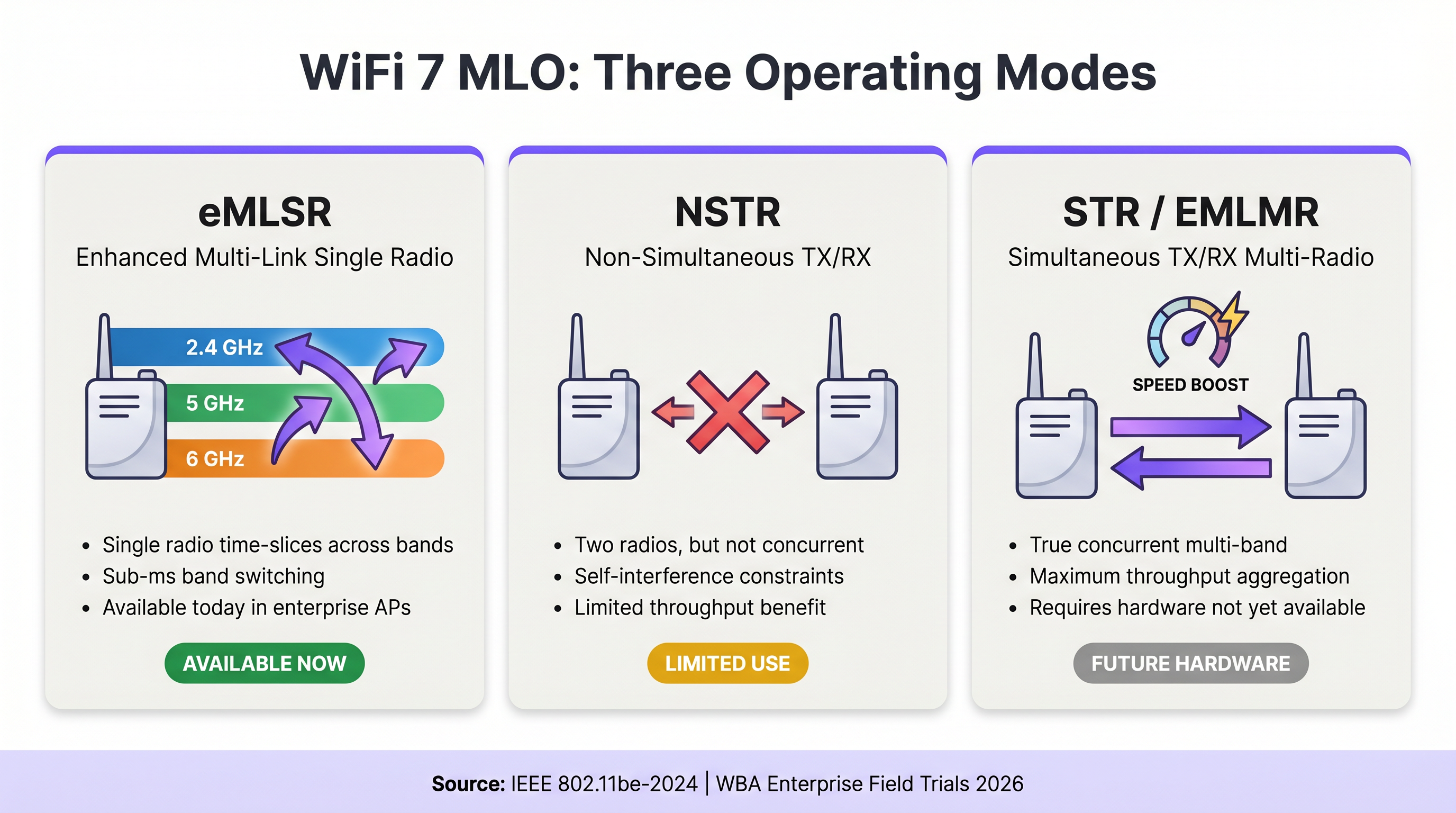
1. एन्हांस्ड मल्टी-लिंक सिंगल रेडियो (eMLSR)
एन्हांस्ड मल्टी-लिंक सिंगल रेडियो वर्तमान एंटरप्राइज़ एक्सेस पॉइंट और क्लाइंट डिवाइसों में उपलब्ध मूलभूत MLO कार्यान्वयन है। इस मोड में, क्लाइंट डिवाइस एक सिंगल रेडियो का उपयोग करता है जो कई बैंडों में तेज़ी से टाइम-स्लाइस करता है। महत्वपूर्ण रूप से, डिवाइस अलग-अलग रिसीव चेन बनाए रखता है, जिससे यह 5 GHz और 6 GHz बैंड को एक साथ सुन सकता है। जब ट्रांसमिट या रिसीव करने का अवसर आता है, तो यह गतिशील रूप से अपने प्राथमिक रेडियो को इष्टतम बैंड पर स्विच कर देता है।
हालाँकि eMLSR सही मायने में एक साथ ट्रांसमिशन और रिसेप्शन प्रदान नहीं करता है, यह सब-मिलीसेकंड बैंड स्विचिंग प्रदान करता है। यह लेगेसी बैंड स्टीयरिंग पर एक बड़ी छलांग का प्रतिनिधित्व करता है, जो लगभग-निर्बाध फेलओवर प्रदान करता है और भीड़भाड़ वाले वातावरण में लेटेंसी को काफी कम करता है। 2025 और 2026 में एंटरप्राइज़ डिप्लॉयमेंट के लिए, eMLSR वह व्यावहारिक वास्तविकता है जो MLO के अधिकांश तत्काल लाभ प्रदान करती है। वायरलेस ब्रॉडबैंड एलायंस के चरण 2 एंटरप्राइज़ फ़ील्ड परीक्षणों ने पुष्टि की कि eMLSR को-चैनल इंटरफेरेंस के तहत 75% डाउनलिंक और 116% अपलिंक थ्रूपुट सुधार प्रदान करता है, साथ ही रीयल-टाइम ट्रैफ़िक के लिए डाउनलिंक लेटेंसी में 44% तक की कमी लाता है।
2. नॉन-सिमल्टेनियस ट्रांसमिट एंड रिसीव (NSTR)
नॉन-सिमल्टेनियस ट्रांसमिट एंड रिसीव कई भौतिक रेडियो का उपयोग करता है लेकिन सेल्फ-इंटरफेरेंस बाधाओं के कारण उन्हें एक साथ काम करने से रोकता है। यदि कोई डिवाइस 5 GHz बैंड पर ट्रांसमिट करता है, तो परिणामी रेडियो फ़्रीक्वेंसी शोर उसे एक साथ 6 GHz बैंड पर मज़बूती से डेटा प्राप्त करने से रोकता है। NSTR को काफी हद तक eMLSR की गतिशील चपलता या सही मायने में एक साथ संचालन के अंतिम लक्ष्य की तुलना में सीमित वास्तविक दुनिया की उपयोगिता के साथ एक मध्यवर्ती कदम के रूप में देखा जाता है।
3. सिमल्टेनियस ट्रांसमिट एंड रिसीव (STR / EMLMR)
मल्टी-लिंक ऑपरेशन विनिर्देश का शिखर सिमल्टेनियस ट्रांसमिट एंड रिसीव है, जो एन्हांस्ड मल्टी-लिंक मल्टी-रेडियो (EMLMR) को सक्षम बनाता है। यह मोड एक डिवाइस को एक साथ कई बैंडों में डेटा ट्रांसमिट और रिसीव करने की अनुमति देता है, थ्रूपुट को एकत्रित करता है और WiFi 7 का सैद्धांतिक अधिकतम प्रदर्शन प्रदान करता है। STR प्राप्त करने के लिए अत्यधिक उन्नत हार्डवेयर की आवश्यकता होती है जो सब-माइक्रोसेकंड टाइमिंग अलाइनमेंट और सेल्फ-इंटरफेरेंस को कम करने के लिए परिष्कृत स्पेक्ट्रम रिसोर्स शेड्यूलिंग (SRS) में सक्षम हो। 2026 की शुरुआत तक, कोई भी उपभोक्ता या एंटरप्राइज़ हार्डवेयर पूरी तरह से सही STR लागू नहीं करता है, जिससे यह वर्तमान डिप्लॉयमेंट विचार के बजाय भविष्य की क्षमता बन जाता है।
कार्यान्वयन गाइड: MLO बनाम लेगेसी बैंड स्टीयरिंग
WiFi 7 रोलआउट की योजना बनाने वाले नेटवर्क इंजीनियरों के लिए, सबसे तत्काल परिचालन परिवर्तन पारंपरिक बैंड स्टीयरिंग का अप्रचलन है। ऐतिहासिक रूप से, एंटरप्राइज़ वायरलेस LAN कंट्रोलर 2.4 GHz पर उनके प्रोब अनुरोधों को अनदेखा करके डुअल-बैंड क्लाइंट्स को कम भीड़भाड़ वाले 5 GHz स्पेक्ट्रम पर बाध्य करने के लिए बैंड स्टीयरिंग का उपयोग करते थे। यह नेटवर्क-केंद्रित दृष्टिकोण स्वाभाविक रूप से विघटनकारी था, क्योंकि क्लाइंट डिवाइस स्टीयरिंग लॉजिक से अनजान रहता था और मजबूरन ट्रांज़िशन के दौरान ड्रॉप किए गए कनेक्शन का अनुभव करता था।
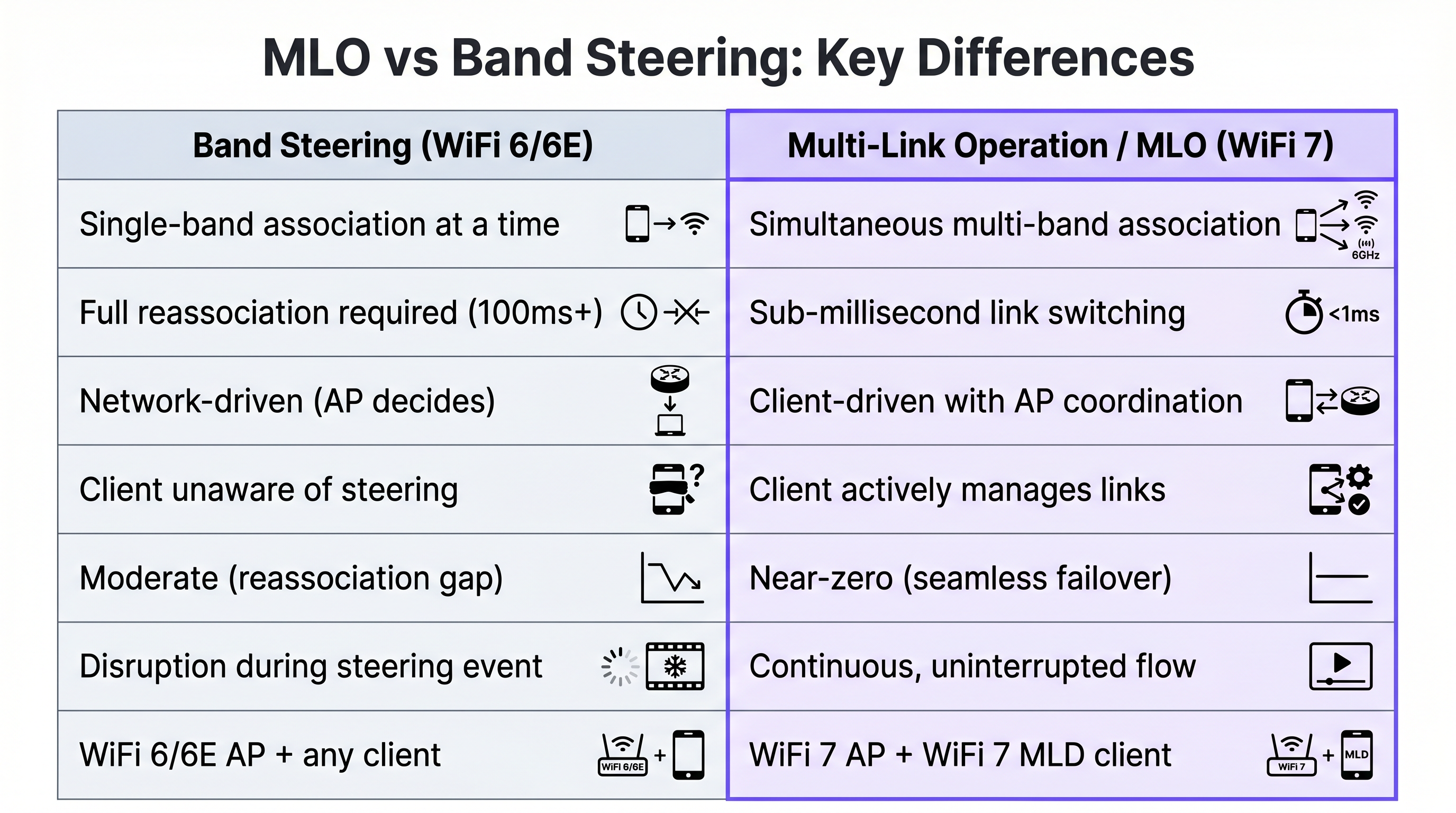
MLO इस प्रतिमान को क्लाइंट-संचालित, AP-समन्वित दृष्टिकोण से बदल देता है। चूंकि क्लाइंट एक साथ कई लिंक के प्रति जागरूकता बनाए रखता है, यह अंतर्निहित लॉजिकल कनेक्शन को तोड़े बिना रीयल-टाइम चैनल स्थितियों के आधार पर ट्रैफ़िक को निर्बाध रूप से स्थानांतरित कर सकता है। यह विशेष रूप से उच्च-घनत्व वाले स्थानों में Guest WiFi डिप्लॉयमेंट के लिए महत्वपूर्ण है जहां रोमिंग और इंटरफेरेंस निरंतर चुनौतियां हैं। हवाई अड्डों और रेल टर्मिनलों जैसे Transport हब के लिए, जहां यात्री कवरेज ज़ोन के माध्यम से तेज़ी से आगे बढ़ते हैं, रीएसोसिएशन देरी का उन्मूलन सीधे मोबाइल चेक-इन और वेफाइंडिंग एप्लिकेशन की गुणवत्ता में सुधार करता है।
डिप्लॉयमेंट तत्परता और इकोसिस्टम
MLO डिप्लॉयमेंट की सफलता पूरी तरह से क्लाइंट इकोसिस्टम पर निर्भर करती है। एक WiFi 7 एक्सेस पॉइंट केवल WiFi 7 MLD-सक्षम क्लाइंट के साथ संचार करते समय MLO का लाभ उठा सकता है। लेगेसी WiFi 6 और 6E डिवाइस सामान्य रूप से कनेक्ट होंगे लेकिन मल्टी-लिंक क्षमताओं से लाभान्वित नहीं होंगे।
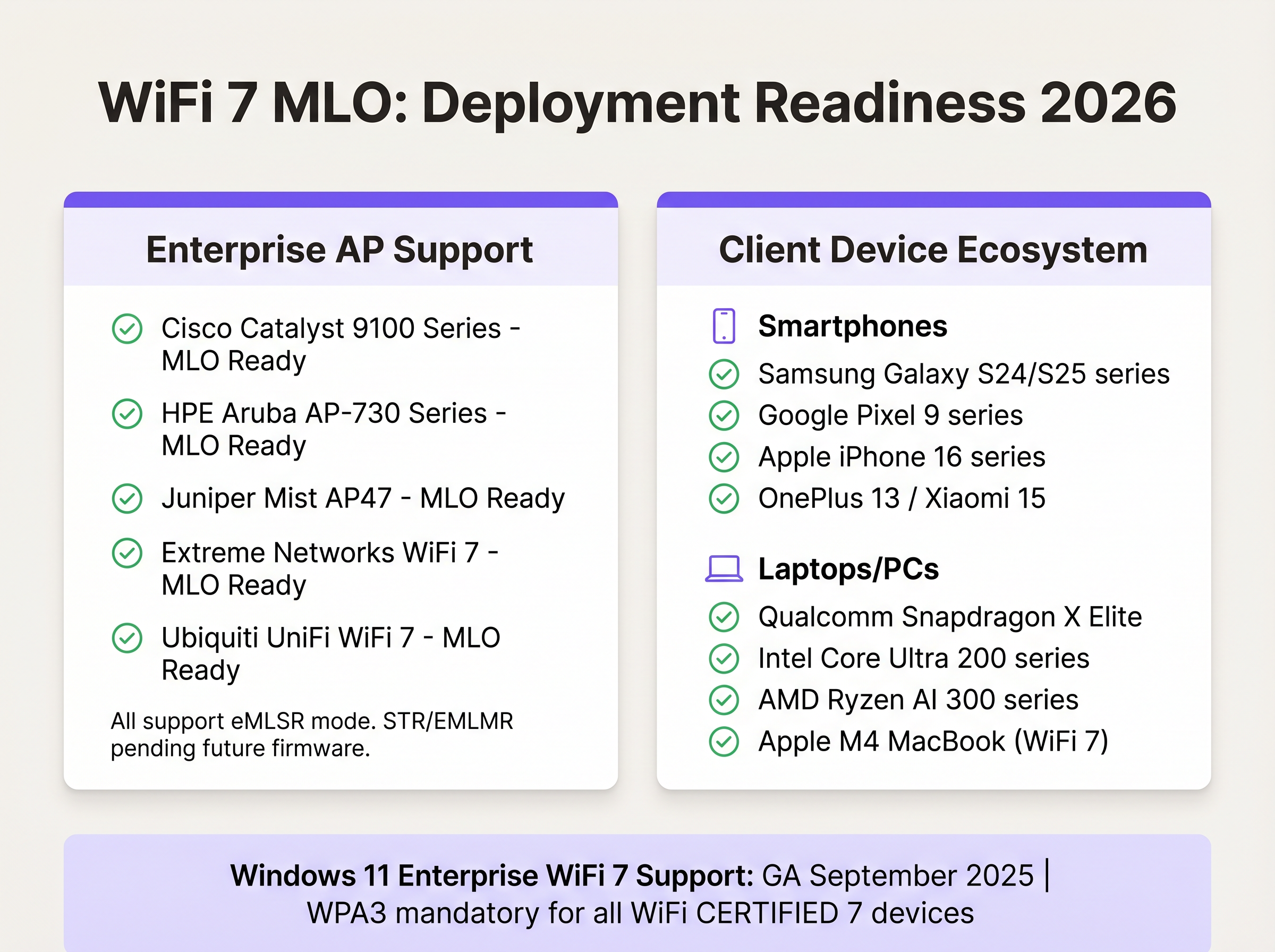
2026 तक, एंटरप्राइज़ इकोसिस्टम तेज़ी से परिपक्व हो रहा है। Cisco, HPE Aruba, और Juniper Mist सहित प्रमुख एक्सेस पॉइंट वेंडर, eMLSR का समर्थन करने वाले मज़बूत WiFi 7 हार्डवेयर प्रदान करते हैं। क्लाइंट साइड पर, Samsung Galaxy S24/S25 सीरीज़ और Apple iPhone 16 सीरीज़ जैसे फ्लैगशिप स्मार्टफोन, Qualcomm Snapdragon X Elite और Intel Core Ultra प्रोसेसर द्वारा संचालित लैपटॉप के साथ, नेटिव MLO सपोर्ट प्रदान करते हैं। इसके अलावा, सितंबर 2025 में Windows 11 Enterprise WiFi 7 सपोर्ट की सामान्य उपलब्धता ने व्यापक कॉर्पोरेट अपनाने को अनब्लॉक कर दिया है।
| वेंडर | प्लेटफ़ॉर्म | MLO मोड | स्थिति |
|---|---|---|---|
| Cisco | Catalyst 9100 Series | eMLSR | उपलब्ध |
| HPE Aruba | AP-730 Series | eMLSR | उपलब्ध |
| Juniper Mist | AP47 | eMLSR | उपलब्ध |
| Extreme Networks | WiFi 7 APs | eMLSR | उपलब्ध |
| Ubiquiti | UniFi WiFi 7 | eMLSR | उपलब्ध |
| सभी वेंडर | STR / EMLMR | सही सिमल्टेनियस | भविष्य का फ़र्मवेयर |
एंटरप्राइज़ रोलआउट के लिए सर्वोत्तम अभ्यास
WiFi 7 नेटवर्क डिज़ाइन करते समय, आर्किटेक्ट्स को MLO लाभों को अधिकतम करने के लिए अपनी RF प्लानिंग को अनुकूलित करना चाहिए। SSID द्वारा बैंड को आक्रामक रूप से अलग करने का पारंपरिक दृष्टिकोण अब इष्टतम नहीं है और MLO प्रदर्शन के लिए सक्रिय रूप से हानिकारक है।
एकीकृत SSID कॉन्फ़िगरेशन। MLO को सक्षम करने के लिए, एक्सेस पॉइंट को सभी भाग लेने वाले बैंड (आमतौर पर 5 GHz और 6 GHz, और वैकल्पिक रूप से 2.4 GHz) में एक एकीकृत SSID प्रसारित करना चाहिए। फ़्रीक्वेंसी द्वारा SSID को विभाजित करना (उदा., 'Corp-5G' और 'Corp-6G') मौलिक रूप से MLO कार्यक्षमता को तोड़ता है, क्योंकि क्लाइंट को बैंड को एकल लॉजिकल इकाई के रूप में समझना चाहिए। यह एकीकृत दृष्टिकोण आधुनिक Guest WiFi आर्किटेक्चर के साथ अच्छी तरह से संरेखित है जहां निर्बाध ऑनबोर्डिंग सर्वोपरि है।
अनिवार्य WPA3 प्रवर्तन। Wi-Fi Alliance सभी Wi-Fi CERTIFIED 7 डिवाइसों के लिए WPA3 सुरक्षा अनिवार्य करता है। इसके अलावा, MLO को जटिल बातचीत और लिंक प्रबंधन प्रक्रियाओं को सुरक्षित करने के लिए प्रोटेक्टेड मैनेजमेंट फ्रेम्स (PMF) की आवश्यकता होती है। नेटवर्क एडमिनिस्ट्रेटर को यह सुनिश्चित करना चाहिए कि WiFi 7 माइग्रेशन शुरू करने से पहले RADIUS सर्वर और आइडेंटिटी प्रोवाइडर WPA3-Enterprise आवश्यकताओं के पूरी तरह से अनुपालन में हैं। विस्तृत अनुपालन रणनीतियों के लिए, हमारे ISO 27001 Guest WiFi: A Compliance Primer को देखें। PCI DSS या GDPR दायित्वों के तहत काम करने वाले संगठनों को ध्यान देना चाहिए कि WPA3 की उन्नत क्रिप्टोग्राफ़िक आवश्यकताएं (GCMP-256 और SAE-GDH सहित) WPA2 की तुलना में एक मज़बूत अनुपालन बेसलाइन प्रदान करती हैं。
ट्रैफ़िक आइडेंटिफ़ायर (TID) मैपिंग। उन्नत एंटरप्राइज़ डिप्लॉयमेंट को TID-टू-लिंक मैपिंग (T2LM) का लाभ उठाना चाहिए। यह सुविधा एक्सेस पॉइंट को निर्दिष्ट लिंक पर ट्रैफ़िक की विशिष्ट श्रेणियों को असाइन करने की अनुमति देती है। उदाहरण के लिए, लेटेंसी-संवेदनशील वॉयस और वीडियो ट्रैफ़िक को विशेष रूप से क्लीन 6 GHz बैंड पर मैप किया जा सकता है, जबकि बल्क डेटा ट्रांसफ़र को 5 GHz बैंड पर रखा जाता है। यह ग्रैन्युलर नियंत्रण Healthcare वातावरण के लिए आवश्यक है जहां रोगी मनोरंजन ट्रैफ़िक पर टेलीमेट्री डेटा को प्राथमिकता दी जानी चाहिए। Retail वातावरण में, प्रदर्शन और सुरक्षा दोनों कारणों से पॉइंट-ऑफ़-सेल ट्रांज़ैक्शन ट्रैफ़िक को सामान्य अतिथि ब्राउज़िंग से अलग किया जा सकता है।
DNS फ़िल्टरिंग एकीकरण। अतिथि एक्सेस के लिए एकीकृत MLO SSID डिप्लॉय करते समय, DNS फ़िल्टरिंग और भी अधिक महत्वपूर्ण हो जाती है क्योंकि एक एकल SSID अब सभी बैंडों में उपकरणों की एक विस्तृत श्रृंखला प्रदान करता है। कार्यान्वयन मार्गदर्शन के लिए DNS Filtering for Guest WiFi: Blocking Malware and Inappropriate Content पर हमारी मार्गदर्शिका देखें जो WiFi 7 रोलआउट का पूरक है।
समस्या निवारण और जोखिम न्यूनीकरण
इसके फायदों के बावजूद, MLO नेटवर्क समस्या निवारण में नई जटिलताओं का परिचय देता है। प्राथमिक जोखिम में असममित लिंक गुणवत्ता शामिल है, जहां एक क्लाइंट गंभीर रूप से खराब बैंड पर कनेक्शन बनाए रखता है क्योंकि द्वितीयक बैंड सतही रूप से स्थिर दिखाई देता है।
असममित पावर स्तर। यदि 6 GHz रेडियो की ट्रांसमिट पावर 5 GHz रेडियो की तुलना में काफी कम है, तो क्लाइंट 'स्टिकी' व्यवहार का अनुभव कर सकते हैं, जो 6 GHz लिंक का प्रभावी ढंग से उपयोग करने से इनकार करते हैं। नेटवर्क इंजीनियरों को RF डिज़ाइन चरण के दौरान बैंड में सेल आकार को सावधानीपूर्वक संतुलित करना चाहिए।
लेगेसी क्लाइंट स्टार्वेशन। मिश्रित वातावरण में, लेगेसी WiFi 6 क्लाइंट आक्रामक WiFi 7 MLD क्लाइंट के खिलाफ एयरटाइम के लिए संघर्ष कर सकते हैं जो बैंड के बीच तेज़ी से हॉप कर सकते हैं। ट्रांज़िशन अवधि के दौरान सख्त एयरटाइम फेयरनेस नीतियों को लागू करना महत्वपूर्ण है। यह Hospitality वातावरण में विशेष रूप से गंभीर चिंता का विषय है जहां अतिथि उपकरणों का मिश्रण कई WiFi पीढ़ियों तक फैला हुआ है।
Captive Portal रुकावटें। Retail और Hospitality वातावरण में, आक्रामक लिंक स्विचिंग कभी-कभी खराब कॉन्फ़िगर किए गए Captive Portal पर गलत री-ऑथेंटिकेशन को ट्रिगर कर सकती है। यह सुनिश्चित करना कि नेटवर्क इन्फ्रास्ट्रक्चर प्रति-लिंक MAC पतों के बजाय MLD MAC पते का उपयोग करके ARP को ठीक से हल करता है, इस समस्या का समाधान करता है। Purple का Guest WiFi प्लेटफ़ॉर्म मूल रूप से MLD MAC एब्स्ट्रैक्शन को संभालता है, जो इस वर्ग की ऑनबोर्डिंग विफलता को रोकता है।
एनालिटिक्स विज़िबिलिटी। पारंपरिक WiFi Analytics प्लेटफ़ॉर्म जो MAC पते द्वारा क्लाइंट को ट्रैक करते हैं, MLO वातावरण में चुनौतियों का सामना कर सकते हैं जहां प्रति-लिंक MAC पते MLD MAC से भिन्न होते हैं। सुनिश्चित करें कि आपका एनालिटिक्स इन्फ्रास्ट्रक्चर सटीक क्लाइंट ट्रैकिंग, ड्वेल टाइम विश्लेषण और फुटफॉल रिपोर्टिंग के लिए MLD MAC पतों को सहसंबंधित करने के लिए अपडेट किया गया है।
ROI और व्यावसायिक प्रभाव
WiFi 7 माइग्रेशन के लिए निवेश पर रिटर्न (ROI) रॉ स्पीड के बजाय परिचालन दक्षता और उपयोगकर्ता अनुभव द्वारा संचालित होता है। स्टेडियम या कॉन्फ्रेंस सेंटर के लिए, विनाशकारी लेटेंसी स्पाइक्स के बिना हज़ारों समवर्ती कनेक्शनों का समर्थन करने की क्षमता सीधे राजस्व सृजन को प्रभावित करती है, मोबाइल रियायतें ऑर्डर करने से लेकर इंटरैक्टिव प्रशंसक अनुभवों तक।
बैंड स्टीयरिंग में निहित विघटनकारी रीएसोसिएशन को समाप्त करके, MLO 'ड्रॉप किए गए कनेक्शन' या 'खराब रोमिंग' से संबंधित हेल्पडेस्क टिकटों को नाटकीय रूप से कम कर देता है। WBA चरण 2 फ़ील्ड परीक्षणों ने प्रदर्शित किया कि eMLSR इंटरफेरेंस होने पर प्रदर्शन बनाए रखता है, गैर-MLO उपकरणों में देखी जाने वाली प्रदर्शन गिरावट से बचता है — जो घने स्थान के वातावरण में एक महत्वपूर्ण अंतर है।
इसके अलावा, वायरलेस नेटवर्क की बढ़ी हुई विश्वसनीयता IoT इन्फ्रास्ट्रक्चर को अपनाने में तेज़ी लाती है, जो समर्पित ओवरले नेटवर्क की आवश्यकता के बिना Wayfinding और पर्यावरणीय Sensors जैसी पहलों का समर्थन करती है। जैसा कि हाल ही में बड़े पैमाने पर डिप्लॉयमेंट में प्रदर्शित किया गया है, जैसे कि LAFC स्टेडियम रोलआउट — WiFi 7 डिप्लॉय करने वाला पहला MLS स्थान — MLO एंटरप्राइज़ मोबिलिटी के अगले दशक के लिए आवश्यक लचीली नींव प्रदान करता है।
अंतिम-मील एक्सेस लेयर के रूप में WiFi 7 को एकीकृत करने वाले SD-WAN आर्किटेक्ट्स के लिए, MLO के विश्वसनीयता सुधार सीधे The Core SD-WAN Benefits for Modern Businesses में चर्चा की गई WAN-स्तरीय रिडंडेंसी के पूरक हैं। मल्टी-पाथ WAN और मल्टी-लिंक WiFi का संयोजन वास्तव में एक लचीला एंड-टू-एंड आर्किटेक्चर बनाता है।
| मीट्रिक | लेगेसी WiFi 6 (बैंड स्टीयरिंग) | WiFi 7 MLO (eMLSR) | सुधार |
|---|---|---|---|
| बैंड स्विचिंग लेटेंसी | 100–300 ms | < 1 ms | ~200x तेज़ |
| इंटरफेरेंस के तहत अपलिंक थ्रूपुट | बेसलाइन | +116% | WBA फ़ील्ड ट्रायल |
| इंटरफेरेंस के तहत डाउनलिंक थ्रूपुट | बेसलाइन | +75% | WBA फ़ील्ड ट्रायल |
| अपलिंक लेटेंसी (रीयल-टाइम ट्रैफ़िक) | बेसलाइन | -66% | WBA फ़ील्ड ट्रायल |
| बैंड स्विच के दौरान पैकेट लॉस | मध्यम | लगभग शून्य | निर्बाध फेलओवर |
संदर्भ
[1] IEEE Standards Association. "IEEE 802.11be-2024: Extremely High Throughput (EHT)." 2024. [2] Wireless Broadband Alliance. "Phase 2 Wi-Fi 7 MLO Enterprise Field Trials Report." मार्च 2026. [3] HPE Aruba Networking. "Wi-Fi 7 Features and Benefits Technical Documentation." दिसंबर 2025. [4] RTINGS. "The Disappointing Truth About Wi-Fi 7: The Dream Of Multi-Link Operation Isn't Yet Here." फरवरी 2026. [5] Microsoft. "Introducing Wi-Fi 7 for enterprise connectivity — Windows IT Pro Blog." सितंबर 2025. [6] Forbes. "What Every CIO Can Learn From MLS's First Wi-Fi 7 Stadium." मार्च 2026.
मुख्य परिभाषाएं
मल्टी-लिंक ऑपरेशन (MLO)
एक अनिवार्य WiFi 7 (IEEE 802.11be) विशेषता जो मल्टी-लिंक डिवाइसों को एकल लॉजिकल कनेक्शन के माध्यम से कई फ़्रीक्वेंसी बैंड (2.4, 5, और 6 GHz) में एक साथ जुड़ने और संचार करने में सक्षम बनाती है, जो निर्बाध फेलओवर और कम लेटेंसी प्रदान करती है।
मूलभूत तकनीक जो लेगेसी बैंड स्टीयरिंग की जगह लेती है। IT टीमों को इस शब्द का सामना तब होता है जब वे WiFi 7 हार्डवेयर विनिर्देशों का मूल्यांकन करते हैं और नए डिप्लॉयमेंट के लिए SSID आर्किटेक्चर की योजना बनाते हैं।
मल्टी-लिंक डिवाइस (MLD)
कोई भी नेटवर्क नोड — क्लाइंट डिवाइस या एक्सेस पॉइंट — जो मल्टी-लिंक ऑपरेशन का समर्थन करने में सक्षम है। एक MLD कई भौतिक रेडियो को एक MLD MAC पते और कई प्रति-लिंक MAC पतों के साथ एकल MAC-लेयर इकाई में एब्स्ट्रैक्ट करता है।
MLO के लिए नेटवर्क तत्परता का ऑडिट करते समय, IT टीमों को यह सत्यापित करना होगा कि एक्सेस पॉइंट और एंड-यूज़र एंडपॉइंट दोनों प्रमाणित MLD हैं। लेगेसी WiFi 6 डिवाइस MLD नहीं हैं और MLO में भाग नहीं ले सकते हैं।
एन्हांस्ड मल्टी-लिंक सिंगल रेडियो (eMLSR)
एक MLO ऑपरेटिंग मोड जहां एक डिवाइस एक साथ कई बैंडों को सुनने के लिए अलग-अलग रिसीव चेन बनाए रखता है, फिर इष्टतम बैंड पर ट्रांसमिट या रिसीव करने के लिए अपने सिंगल रेडियो को तेज़ी से टाइम-स्लाइस करता है। स्विचिंग सब-मिलीसेकंड समय-सीमा में होती है।
2025/2026 एंटरप्राइज़ हार्डवेयर में लागू प्राथमिक MLO मोड। नेटवर्क आर्किटेक्ट्स को खरीद आवश्यकताओं में स्पष्ट रूप से eMLSR समर्थन निर्दिष्ट करना चाहिए।
सिमल्टेनियस ट्रांसमिट एंड रिसीव (STR / EMLMR)
एक उन्नत MLO मोड जो एक डिवाइस को एक बैंड पर ट्रांसमिट करने में सक्षम बनाता है जबकि एक साथ दूसरे पर रिसीव करता है, जिससे कुल थ्रूपुट अधिकतम होता है। इसके लिए सब-माइक्रोसेकंड हार्डवेयर टाइमिंग अलाइनमेंट की आवश्यकता होती है जो अभी तक शिपिंग एंटरप्राइज़ उपकरणों में उपलब्ध नहीं है।
भविष्य की स्थिति की क्षमता। IT लीडर्स को वेंडर मार्केटिंग से सावधान रहना चाहिए जिसका अर्थ है कि STR आज उपलब्ध है; यह 2026 की शुरुआत तक किसी भी शिपिंग एंटरप्राइज़ एक्सेस पॉइंट में मौजूद नहीं है।
TID-टू-लिंक मैपिंग (T2LM)
एक WiFi 7 प्रोटोकॉल सुविधा जो नेटवर्क को विशिष्ट ट्रैफ़िक आइडेंटिफ़ायर (TID) — जैसे वॉयस, वीडियो, या बैकग्राउंड डेटा — को समर्पित भौतिक फ़्रीक्वेंसी बैंड में असाइन करने की अनुमति देती है, जिससे नीति-संचालित ट्रैफ़िक प्राथमिकता सक्षम होती है।
नेटवर्क आर्किटेक्ट्स द्वारा बल्क डेटा ट्रांसफ़र से मिशन-क्रिटिकल लेटेंसी-संवेदनशील एप्लिकेशन को अलग करने के लिए उपयोग किया जाता है। विशेष रूप से स्वास्थ्य सेवा, औद्योगिक और वित्तीय व्यापार वातावरण में मूल्यवान।
अपर MAC (U-MAC)
MLD आर्किटेक्चर का लॉजिकल हिस्सा जो सभी भौतिक लिंक में व्यापक कनेक्शन स्थिति, सुरक्षा एसोसिएशन (PMKSA), एन्क्रिप्शन और अनुक्रम संख्या के लिए ज़िम्मेदार है।
यह सुनिश्चित करता है कि जब कोई क्लाइंट बैंड के बीच स्विच करता है, तो उसे सुरक्षा कुंजियों पर फिर से बातचीत करने या सत्र को पुनरारंभ करने की आवश्यकता नहीं होती है, जिससे वास्तव में निर्बाध रोमिंग सक्षम होती है।
लोअर MAC (L-MAC)
MLD आर्किटेक्चर का भौतिक हिस्सा जो एक विशिष्ट फ़्रीक्वेंसी बैंड के लिए चैनल एक्सेस, बीकनिंग, RTS/CTS कंट्रोल फ्रेम और हार्डवेयर-स्तरीय ट्रांसमिशन के लिए ज़िम्मेदार है।
प्रत्येक बैंड के लिए स्वतंत्र रूप से रॉ रेडियो फ़्रीक्वेंसी विवाद का प्रबंधन करता है, जिससे U-MAC को स्थानीयकृत इंटरफेरेंस घटनाओं से एब्स्ट्रैक्ट रहने की अनुमति मिलती है।
प्रोटेक्टेड मैनेजमेंट फ्रेम्स (PMF)
एक IEEE 802.11w सुरक्षा तंत्र जो नेटवर्क प्रबंधन ट्रैफ़िक को एन्क्रिप्ट करता है, प्रबंधन प्लेन पर डीऑथेंटिकेशन हमलों, स्पूफिंग और मैन-इन-द-मिडिल हमलों को रोकता है।
सभी WiFi 7 डिप्लॉयमेंट के लिए अनिवार्य और MLO के लिए एक शर्त। PMF समर्थन की कमी वाले लेगेसी क्लाइंट आधुनिक सुरक्षित MLO नेटवर्क में शामिल होने में असमर्थ होंगे, जिसके लिए सावधानीपूर्वक ट्रांज़िशन योजना की आवश्यकता होगी।
हल किए गए उदाहरण
एक 400 कमरों वाला लक्ज़री होटल स्मार्ट रूम IoT (लाइटिंग, HVAC) और उच्च-बैंडविड्थ अतिथि स्ट्रीमिंग का समर्थन करने के लिए WiFi 7 में अपग्रेड कर रहा है। वर्तमान WiFi 6 नेटवर्क में आक्रामक बैंड स्टीयरिंग के कारण कर्मचारियों के फर्श के बीच रोमिंग करने पर ड्रॉप किए गए VoIP कॉल की समस्या है। इसे हल करने के लिए नेटवर्क आर्किटेक्ट को नए WiFi 7 इन्फ्रास्ट्रक्चर को कैसे कॉन्फ़िगर करना चाहिए?
आर्किटेक्ट को सभी गलियारों और उच्च-घनत्व वाले क्षेत्रों में eMLSR का समर्थन करने वाले WiFi 7 एक्सेस पॉइंट डिप्लॉय करने चाहिए, विशेष रूप से सीढ़ियों और लिफ्ट लॉबी में कवरेज ओवरलैप पर ध्यान देना चाहिए जहां रोमिंग इवेंट सबसे अधिक होते हैं। महत्वपूर्ण कॉन्फ़िगरेशन परिवर्तन सभी फ़्रीक्वेंसी बैंड को एक एकल, एकीकृत SSID के तहत समेकित करना है — उदाहरण के लिए, 'Hotel_Staff_Secure' — जो 5 GHz और 6 GHz दोनों पर प्रसारित होता है। फ़्रीक्वेंसी बैंड द्वारा SSID को विभाजित करने से स्पष्ट रूप से बचा जाना चाहिए, क्योंकि यह क्लाइंट के अपर MAC को मल्टी-लिंक एसोसिएशन स्थापित करने से रोकता है और नेटवर्क को लेगेसी सिंगल-बैंड व्यवहार पर वापस कर देता है। अनिवार्य के रूप में सेट किए गए प्रोटेक्टेड मैनेजमेंट फ्रेम्स के साथ WPA3-Enterprise लागू किया जाना चाहिए। अंत में, वॉयस ट्रैफ़िक (TID 6 और 7) को सख्ती से 6 GHz बैंड पर मैप करने के लिए वायरलेस LAN कंट्रोलर पर TID-टू-लिंक मैपिंग कॉन्फ़िगर की जानी चाहिए, जिससे कर्मचारियों के उपकरणों के लिए प्राचीन VoIP प्रदर्शन सुनिश्चित हो सके जबकि अतिथि स्ट्रीमिंग ट्रैफ़िक को रीयल-टाइम उपलब्धता के आधार पर गतिशील रूप से 5 GHz या 6 GHz का उपयोग करने की अनुमति मिल सके।
एक बड़ा रिटेल वितरण गोदाम ऑटोनॉमस गाइडेड व्हीकल्स (AGV) डिप्लॉय कर रहा है जिन्हें सुरक्षा शटडाउन को रोकने के लिए सब-20ms लेटेंसी की आवश्यकता होती है। गोदाम में महत्वपूर्ण मेटैलिक रैकिंग है जो गंभीर मल्टीपाथ इंटरफेरेंस और तीव्र सिग्नल गिरावट का कारण बनती है। इस विशिष्ट चुनौती के लिए लेगेसी WiFi 6 की तुलना में WiFi 7 MLO एक बेहतर समाधान क्यों है, और खरीद आवश्यकताओं में कौन सा विशिष्ट मोड निर्दिष्ट किया जाना चाहिए?
खरीद विनिर्देश में eMLSR मोड का समर्थन करने वाले WiFi 7 एक्सेस पॉइंट और क्लाइंट मॉड्यूल की आवश्यकता होनी चाहिए। लेगेसी WiFi 6 सिंगल-बैंड एसोसिएशन पर निर्भर करता है: जब कोई AGV मेटैलिक रैक के पीछे जाता है और अपना 5 GHz सिग्नल खो देता है, तो उसे 2.4 GHz बैंड के लिए पूर्ण रीएसोसिएशन शुरू करना होगा। इस प्रक्रिया में 100–300 मिलीसेकंड लगते हैं, जो 20ms सुरक्षा सीमा से अधिक है और AGV को आपातकालीन स्टॉप ट्रिगर करने का कारण बनता है। eMLSR मोड में WiFi 7 MLO के साथ, AGV क्लाइंट कई बैंडों में एक साथ लॉजिकल एसोसिएशन बनाए रखता है। यह सक्रिय रूप से 5 GHz और 2.4 GHz दोनों को एक साथ सुनता है। जब मेटैलिक रैकिंग के कारण 5 GHz सिग्नल खराब हो जाता है, तो AGV 1 मिलीसेकंड से भी कम समय में अपने ट्रांसमिशन को 2.4 GHz लिंक पर स्विच कर देता है — जो 20ms सुरक्षा आवश्यकता के भीतर आराम से है। खरीद विनिर्देश में TID-टू-लिंक मैपिंग समर्थन की भी आवश्यकता होनी चाहिए ताकि सुरक्षा-महत्वपूर्ण टेलीमेट्री स्ट्रीम को हर समय सबसे विश्वसनीय उपलब्ध बैंड पर पिन किया जा सके।
अभ्यास प्रश्न
Q1. आपका विश्वविद्यालय परिसर WiFi 7 में माइग्रेट कर रहा है। वर्तमान नेटवर्क अलग-अलग SSID का उपयोग करता है: 'Campus-Legacy' (2.4 GHz) और 'Campus-Fast' (5 GHz और 6 GHz)। IT निदेशक WiFi 7 चिपसेट वाले नए छात्र लैपटॉप के लिए मल्टी-लिंक ऑपरेशन के लाभों को अधिकतम करना चाहता है। आपको नए WiFi 7 एक्सेस पॉइंट पर SSID को कैसे कॉन्फ़िगर करना चाहिए, और क्यों?
संकेत: विचार करें कि MLO का अपर MAC भौतिक लिंक को एकल लॉजिकल कनेक्शन में कैसे एब्स्ट्रैक्ट करता है, और उस एब्स्ट्रैक्शन को कार्य करने के लिए किस SSID कॉन्फ़िगरेशन की आवश्यकता है।
मॉडल उत्तर देखें
आपको नेटवर्क को एक एकल, एकीकृत SSID में समेकित करना होगा — उदाहरण के लिए, 'Campus-Secure' — जो सभी उपलब्ध बैंड (2.4, 5, और 6 GHz) में प्रसारित होता है। फ़्रीक्वेंसी द्वारा SSID को विभाजित करने से क्लाइंट के अपर MAC को मल्टी-लिंक एसोसिएशन स्थापित करने से रोका जाता है, जिससे MLO कार्यक्षमता पूरी तरह से अक्षम हो जाती है और डिवाइस को लेगेसी सिंगल-बैंड ऑपरेशन में वापस जाने के लिए मजबूर किया जाता है। एकीकृत SSID क्लाइंट को एसोसिएशन के दौरान AP के साथ मल्टी-लिंक क्षमताओं पर बातचीत करने की अनुमति देता है, जिससे निर्बाध बैंड स्विचिंग और eMLSR के पूर्ण विश्वसनीयता लाभ सक्षम होते हैं।
Q2. एक अस्पताल IT निदेशक वार्ड डिप्लॉयमेंट के लिए दो WiFi 7 एक्सेस पॉइंट का मूल्यांकन कर रहा है। वेंडर A 'अधिकतम थ्रूपुट के लिए सिमल्टेनियस ट्रांसमिट एंड रिसीव (STR)' का भारी विपणन करता है। वेंडर B 'सब-मिलीसेकंड फेलओवर और सिद्ध विश्वसनीयता के लिए अनुकूलित eMLSR' पर ज़ोर देता है। अस्पताल की प्राथमिक आवश्यकता रोगी निगरानी उपकरण ले जाने वाले मोबाइल टेलीमेट्री कार्ट के लिए निरंतर, निर्बाध कनेक्टिविटी सुनिश्चित करना है। 2026 डिप्लॉयमेंट के लिए किस वेंडर का दृष्टिकोण अधिक प्रासंगिक है, और IT निदेशक को वेंडर A से क्या प्रश्न पूछना चाहिए?
संकेत: मार्केटिंग दावों के मुकाबले हार्डवेयर क्षमताओं की वर्तमान स्थिति का मूल्यांकन करें, और प्रौद्योगिकी विकल्प को विशिष्ट उपयोग के मामले की आवश्यकता के साथ संरेखित करें।
मॉडल उत्तर देखें
eMLSR पर वेंडर B का ध्यान 2026 डिप्लॉयमेंट के लिए अधिक प्रासंगिक और यथार्थवादी है। 2026 की शुरुआत तक, सही STR के लिए हार्डवेयर सिंक्रोनाइज़ेशन क्षमताओं की आवश्यकता होती है जो अभी तक शिपिंग एंटरप्राइज़ उपकरणों में उपलब्ध नहीं हैं। इसके अलावा, अस्पताल की प्राथमिक आवश्यकता विश्वसनीयता है — टेलीमेट्री के लिए निरंतर कनेक्टिविटी — न कि रॉ थ्रूपुट। eMLSR वार्डों में कार्ट के रोमिंग के दौरान लचीले कनेक्शन बनाए रखने के लिए आवश्यक तेज़, सब-मिलीसेकंड बैंड स्विचिंग प्रदान करता है। IT निदेशक को वेंडर A से पूछना चाहिए: 'क्या आपका हार्डवेयर IEEE 802.11be में परिभाषित EMLMR, SRS, और STR-MLMR को लागू करता है, और क्या आप बीकन फ्रेम कैप्चर प्रदान कर सकते हैं जो यह पुष्टि करते हैं कि इन क्षमताओं का क्लाइंट्स को विज्ञापन किया जाता है?' यदि वेंडर यह साक्ष्य प्रदान नहीं कर सकता है, तो STR मार्केटिंग दावा कार्यात्मक के बजाय आकांक्षी होने की संभावना है।
Q3. रिटेल वातावरण में WiFi 7 के पायलट डिप्लॉयमेंट के दौरान, इंजीनियरों ने देखा कि लेगेसी WiFi 6 बारकोड स्कैनर बढ़ी हुई लेटेंसी और ड्रॉप किए गए पैकेट का अनुभव कर रहे हैं, जबकि नए WiFi 7 टैबलेट त्रुटिहीन प्रदर्शन करते हैं। WiFi 7 AP एकीकृत SSID और WPA3 के साथ सही ढंग से कॉन्फ़िगर किए गए हैं। लेगेसी डिवाइस के खराब होने का संभावित कारण क्या है, और कौन सा कॉन्फ़िगरेशन परिवर्तन लागू किया जाना चाहिए?
संकेत: विचार करें कि साझा RF वातावरण में पुराने, सिंगल-बैंड उपकरणों के लिए उपलब्ध एयरटाइम को कई बैंड और तेज़ लिंक स्विचिंग का उपयोग करने वाले उन्नत क्लाइंट कैसे प्रभावित कर सकते हैं।
मॉडल उत्तर देखें
संभावित कारण एयरटाइम स्टार्वेशन है। eMLSR का उपयोग करने वाले WiFi 7 MLD क्लाइंट स्पष्ट स्पेक्ट्रम खोजने के लिए बैंड के बीच तेज़ी से हॉप कर सकते हैं, उपलब्ध एयरटाइम का आक्रामक रूप से उपभोग कर सकते हैं। मिश्रित वातावरण में, लेगेसी WiFi 6 बारकोड स्कैनर — जो सिंगल बैंड पर काम करते हैं और पुराने विवाद तंत्र का उपयोग करते हैं — ट्रांसमिशन अवसरों के लिए प्रतिस्पर्धा करने के लिए संघर्ष करते हैं। समाधान वायरलेस LAN कंट्रोलर पर सख्त एयरटाइम फेयरनेस नीतियों को लागू करना है। यह सुनिश्चित करता है कि लेगेसी उपकरणों को रेडियो संसाधनों का एक गारंटीकृत प्रतिशत प्राप्त हो, जो ट्रांज़िशन अवधि के दौरान WiFi 7 क्लाइंट्स को उपलब्ध एयरटाइम पर एकाधिकार करने से रोकता है। लंबी अवधि में, संगठन को लेगेसी स्कैनर को WiFi 7 MLD-सक्षम हार्डवेयर से बदलने की योजना बनानी चाहिए।
इस श्रृंखला में आगे पढ़ें
Wi-Fi 7 (802.11be) की व्याख्या: एंटरप्राइज़ WiFi के लिए क्या बदलता है
यह गाइड 2026–2027 में इंफ्रास्ट्रक्चर रिफ्रेश की योजना बना रहे IT प्रबंधकों, नेटवर्क आर्किटेक्ट्स और CTO के लिए Wi-Fi 7 (IEEE 802.11be) पर एक निश्चित तकनीकी संदर्भ प्रदान करती है। यह चार मुख्य आर्किटेक्चरल प्रगतियों — Multi-Link Operation (MLO), 320 MHz चैनल, 4K-QAM मॉड्यूलेशन और Multi-RU — को Wi-Fi 6E के खिलाफ स्पष्ट तुलना, हॉस्पिटैलिटी और रिटेल से वास्तविक दुनिया के डिप्लॉयमेंट परिदृश्यों, और आवश्यक हार्डवेयर और स्विचिंग अपग्रेड के स्पष्ट मूल्यांकन के साथ कवर करती है। Purple हार्डवेयर-एग्नोस्टिक है और किसी भी Wi-Fi 7 डिप्लॉयमेंट का समर्थन करता है, जिससे यह गाइड AP रिफ्रेश के साथ-साथ अपने गेस्ट WiFi और एनालिटिक्स स्टैक का मूल्यांकन करने वाली टीमों के लिए एक स्वाभाविक प्रवेश बिंदु बन जाती है।
Wi-Fi 6E बनाम Wi-Fi 7: क्या आपको 6E को छोड़कर सीधे 7 पर जाना चाहिए?
2026 वायरलेस हार्डवेयर रिफ्रेश का मूल्यांकन करने वाले IT निदेशकों और नेटवर्क आर्किटेक्ट्स के लिए एक व्यापक निर्णय गाइड। यह Wi-Fi 6E और Wi-Fi 7 की तकनीकी तुलना, एक वर्तमान वेंडर मूल्य निर्धारण मैट्रिक्स, और आतिथ्य, रिटेल और सार्वजनिक क्षेत्रों में उच्च-डेंसिटी वाले स्थानों के लिए कार्रवाई योग्य परिनियोजन सिफारिशें प्रदान करता है — जिससे टीमों को यह निर्धारित करने में मदद मिलती है कि क्या उनकी विशिष्ट परिचालन आवश्यकताओं के लिए Wi-Fi 7 प्रीमियम उचित है।
हाई-डेंसिटी वेन्यू के लिए Wi-Fi 7: स्टेडियम, कॉन्फ्रेंस हॉल और टर्मिनल
यह तकनीकी संदर्भ गाइड IT लीडर्स और नेटवर्क आर्किटेक्ट्स को स्टेडियमों और ट्रांजिट टर्मिनलों जैसे हाई-डेंसिटी वेन्यू में Wi-Fi 7 को तैनात करने के लिए व्यावहारिक रणनीतियाँ प्रदान करती है। यह इस बात की पड़ताल करती है कि कैसे Multi-Link Operation (MLO), 4K-QAM और अंडर-सीट AP डिज़ाइन क्षमता में भारी सुधार करते हैं, हार्डवेयर आवश्यकताओं को कम करते हैं और मापने योग्य ROI प्रदान करते हैं।