

व्यवसायों के लिए गेस्ट WiFi की संपूर्ण मार्गदर्शिका
यह निश्चित तकनीकी मार्गदर्शिका IT लीडरों और नेटवर्क आर्किटेक्ट्स को एंटरप्राइज़ गेस्ट WiFi को तैनात करने, सुरक्षित करने और मुद्रीकृत करने के लिए एक व्यापक ब्लूप्रिंट प्रदान करती है। यह भौतिक नेटवर्क इन्फ्रास्ट्रक्चर, GDPR और PCI DSS जैसे अनुपालन मानकों, और फर्स्ट-पार्टी डेटा कैप्चर के माध्यम से प्राप्त वाणिज्यिक मूल्य के बीच के अंतर को पाटती है।
🎧 इस गाइड को सुनें
ट्रांसक्रिप्ट देखें
कार्यकारी सारांश
आधुनिक उद्यमों के लिए, गेस्ट WiFi एक साधारण लागत केंद्र से एक महत्वपूर्ण इन्फ्रास्ट्रक्चर संपत्ति में विकसित हो गया है जो महत्वपूर्ण वाणिज्यिक लाभ प्रदान करने में सक्षम है। चाहे रिटेल , हॉस्पिटैलिटी , या बड़े सार्वजनिक स्थानों में काम कर रहे हों, IT लीडरों के सामने दोहरी जिम्मेदारी है: निर्बाध, उच्च-प्रदर्शन कनेक्टिविटी प्रदान करना और साथ ही फर्स्ट-पार्टी डेटा को सुरक्षित और अनुपालनपूर्वक कैप्चर करना।
यह मार्गदर्शिका एंटरप्राइज़ गेस्ट WiFi के लिए एक निश्चित वास्तुशिल्प ब्लूप्रिंट प्रदान करती है। हम नेटवर्क सेगमेंटेशन के लिए तकनीकी आवश्यकताओं, सुरक्षित प्रमाणीकरण के लिए आवश्यक क्रिप्टोग्राफिक मानकों और नेटवर्क संतृप्ति को रोकने के लिए आवश्यक परिनियोजन पद्धतियों का विवरण देते हैं। इसके अलावा, हम जांच करते हैं कि Purple जैसे प्लेटफ़ॉर्म नेटवर्क हार्डवेयर और मार्केटिंग तकनीक के बीच के अंतर को कैसे पाटते हैं, अनुपालन Captive Portal के माध्यम से गुमनाम MAC addresses को कार्रवाई योग्य ग्राहक प्रोफाइल में बदलते हैं। गेस्ट WiFi को एक उपयोगिता के बजाय एक रणनीतिक परिनियोजन के रूप में मानकर, संगठन सार्वजनिक एक्सेस नेटवर्क के अंतर्निहित सुरक्षा जोखिमों को कम करते हुए मापने योग्य ROI प्राप्त कर सकते हैं।
सहयोगी तकनीकी ब्रीफिंग पॉडकास्ट सुनें:
तकनीकी गहन-अध्ययन: वास्तुकला और मानक
किसी भी एंटरप्राइज़ गेस्ट WiFi परिनियोजन का आधार कठोर नेटवर्क सेगमेंटेशन और मजबूत प्रमाणीकरण प्रोटोकॉल है। संरचनात्मक सुरक्षा उपायों के बिना एक खुला SSID तैनात करना कॉर्पोरेट डेटा और भुगतान प्रणालियों के लिए अस्वीकार्य जोखिम पैदा करता है।
नेटवर्क सेगमेंटेशन और VLAN Tagging
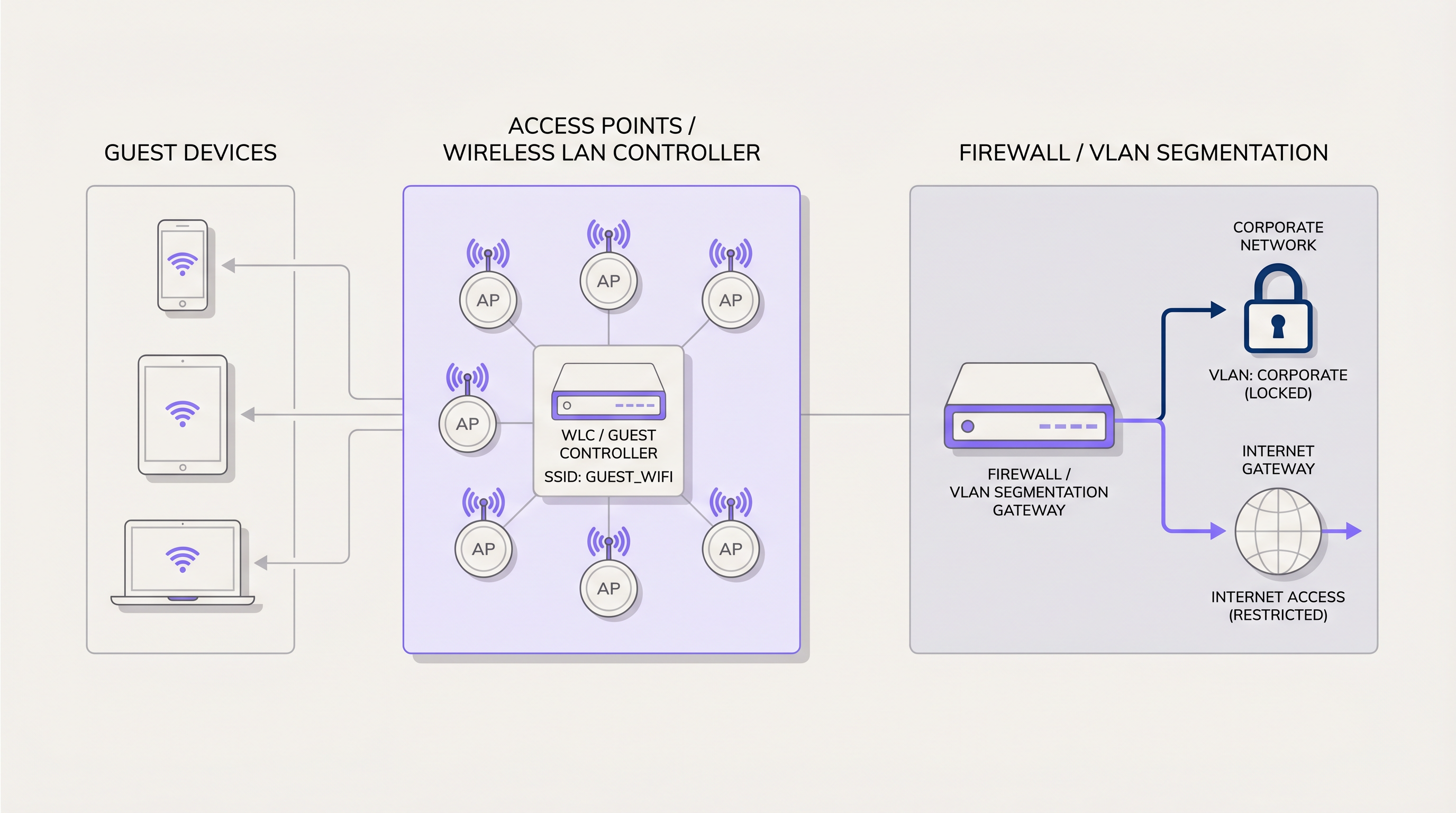
गेस्ट ट्रैफ़िक को लेयर 2 और लेयर 3 पर अलग किया जाना चाहिए। मानक परिनियोजन मॉडल के लिए गेस्ट SSID को एक्सेस पॉइंट (AP) या वायरलेस LAN कंट्रोलर (WLC) पर एक समर्पित वर्चुअल लोकल एरिया नेटवर्क (VLAN) से मैप करने की आवश्यकता होती है। इस VLAN को कोर स्विचिंग इन्फ्रास्ट्रक्चर के माध्यम से सीधे एज फ़ायरवॉल तक ट्रंक किया जाना चाहिए।
फ़ायरवॉल पर, सख्त Access Control Lists (ACLs) को आंतरिक कॉर्पोरेट सबनेट के लिए लक्षित ट्रैफ़िक के लिए "सभी को अस्वीकार करें" नीति लागू करनी चाहिए। गेस्ट ट्रैफ़िक को केवल इंटरनेट गेटवे पर रूट करने की अनुमति दी जानी चाहिए। यह सेगमेंटेशन केवल सर्वोत्तम अभ्यास नहीं है; यह PCI DSS जैसे अनुपालन ढाँचों के लिए एक मूलभूत आवश्यकता है। यदि कोई समझौता किया गया गेस्ट डिवाइस पॉइंट-ऑफ-सेल टर्मिनल पर पैकेट रूट कर सकता है, तो पूरा नेटवर्क अनुपालन से बाहर हो जाता है।
प्रमाणीकरण और एन्क्रिप्शन मानक
खुले, अनएन्क्रिप्टेड गेस्ट नेटवर्क का युग समाप्त हो रहा है। उपयोगकर्ता डेटा को निष्क्रिय जासूसी और मैन-इन-द-मिडिल हमलों से बचाने के लिए, परिनियोजन को WPA3 का लाभ उठाना चाहिए। विशेष रूप से, WPA3-SAE (Simultaneous Authentication of Equals) फॉरवर्ड सीक्रेसी प्रदान करता है, यह सुनिश्चित करता है कि भले ही नेटवर्क पासफ्रेज़ ज्ञात हो, व्यक्तिगत सत्र ट्रैफ़िक एन्क्रिप्टेड रहता है और पूर्वव्यापी रूप से डिक्रिप्ट नहीं किया जा सकता है।
दानेदार एक्सेस कंट्रोल की आवश्यकता वाले वातावरण के लिए, RADIUS बैकएंड प्रमाणीकरण के साथ IEEE 802.1X एंटरप्राइज़-ग्रेड सुरक्षा प्रदान करता है। वाइड एरिया नेटवर्क (WANs) पर क्लाउड पहचान प्रदाताओं को प्रमाणीकरण अनुरोधों को प्रसारित करते समय, RADIUS ट्रैफ़िक को स्वयं सुरक्षित करना महत्वपूर्ण है। IT टीमों को RadSec: TLS के साथ RADIUS प्रमाणीकरण ट्रैफ़िक को सुरक्षित करना लागू करना चाहिए ताकि क्रेडेंशियल अवरोधन को रोका जा सके। Purple इन आर्किटेक्चर में एक मजबूत पहचान प्रदाता के रूप में कार्य करता है, मौजूदा RADIUS इन्फ्रास्ट्रक्चर के साथ सहजता से एकीकृत होता है और OpenRoaming जैसे आधुनिक रोमिंग मानकों का समर्थन करता है।
थ्रूपुट और क्षमता योजना
उच्च-घनत्व वाले वातावरण में, थ्रूपुट इंटरनेट अपलिंक द्वारा नहीं, बल्कि एयरटाइम फेयरनेस और चैनल उपयोग द्वारा बाधित होता है। Wi-Fi 6 (802.11ax) का समर्थन करने वाले APs को तैनात करना इन बाधाओं को कम करने के लिए आवश्यक है। Wi-Fi 6 की Orthogonal Frequency Division Multiple Access (OFDMA) क्षमताएं एक ही AP को एक साथ कई क्लाइंट्स के साथ संवाद करने की अनुमति देती हैं, जिससे भीड़भाड़ वाले क्षेत्रों में विलंबता में भारी कमी आती है।
इसके अलावा, IT टीमों को कंट्रोलर या फ़ायरवॉल स्तर पर प्रति-उपयोगकर्ता दर सीमित करनी चाहिए। एक सख्त बैंडविड्थ कैप (जैसे, प्रति उपयोगकर्ता 10 Mbps डाउन / 2 Mbps अप) आवंटित करना एक ही क्लाइंट को उच्च-बैंडविड्थ अनुप्रयोगों के साथ इंटरनेट अपलिंक पर एकाधिकार करने से रोकता है, जिससे सभी मेहमानों के लिए एक सुसंगत आधारभूत अनुभव सुनिश्चित होता है।
कार्यान्वयन मार्गदर्शिका: हार्डवेयर से पोर्टल तक
एक लचीला गेस्ट WiFi नेटवर्क तैनात करने के लिए एक व्यवस्थित दृष्टिकोण की आवश्यकता होती है, जिसमें भौतिक RF योजना को क्लाउड-आधारित एनालिटिक्स प्लेटफ़ॉर्म के साथ एकीकृत किया जाता है।
चरण 1: RF योजना और साइट सर्वेक्षण
हार्डवेयर खरीद से पहले, एक अनुमानित RF साइट सर्वेक्षण अनिवार्य है। भौतिक वातावरण को मॉडल करने के लिए सॉफ़्टवेयर टूल का उपयोग करना—दीवार क्षीणन, छत की ऊँचाई और उपयोगकर्ता घनत्व को ध्यान में रखते हुए—नेटवर्क आर्किटेक्ट्स को इष्टतम AP प्लेसमेंट और चैनल आवंटन निर्धारित करने की अनुमति देता है। यह सह-चैनल हस्तक्षेप को कम करता है और पूरे स्थान पर पर्याप्त सिग्नल-टू-नॉइज़ अनुपात (SNR) सुनिश्चित करता है।
चरण 2: इन्फ्रास्ट्रक्चर कॉन्फ़िगरेशन
एक बार जब हार्डवेयर भौतिक रूप से तैनात हो जाता है, तो WLC को समर्पित गेस्ट SSID प्रसारित करने के लिए कॉन्फ़िगर करें। सुनिश्चित करें कि संबंधित VLAN सभी स्विच ट्रंक पोर्ट पर सही ढंग से टैग किया गया है। फ़ायरवॉल एज पर, सत्यापित करें कि DHCP स्कोप अपेक्षित समवर्ती उपयोगकर्ता संख्या के लिए पर्याप्त रूप से आकार के हैं; एक /24 सबनेट (254 पते) एंटरप्राइज़ स्थानों के लिए शायद ही पर्याप्त होता है। नेटवर्क स्तर पर दुर्भावनापूर्ण डोमेन और वयस्क सामग्री को ब्लॉक करने के लिए DNS फ़िल्टरिंग लागू करें।
चरण 3: Captive Portal एकीकरण
Captive Portal नेटवर्क इन्फ्रास्ट्रक्चर और t के बीच महत्वपूर्ण एकीकरण बिंदु है।व्यावसायिक उद्देश्य। एक सामान्य स्प्लैश पेज के बजाय, WLC को अनधिकृत अतिथि ट्रैफ़िक को Purple जैसे Guest WiFi प्लेटफ़ॉर्म द्वारा होस्ट किए गए बाहरी Captive Portal पर रीडायरेक्ट करने के लिए कॉन्फ़िगर किया गया है।
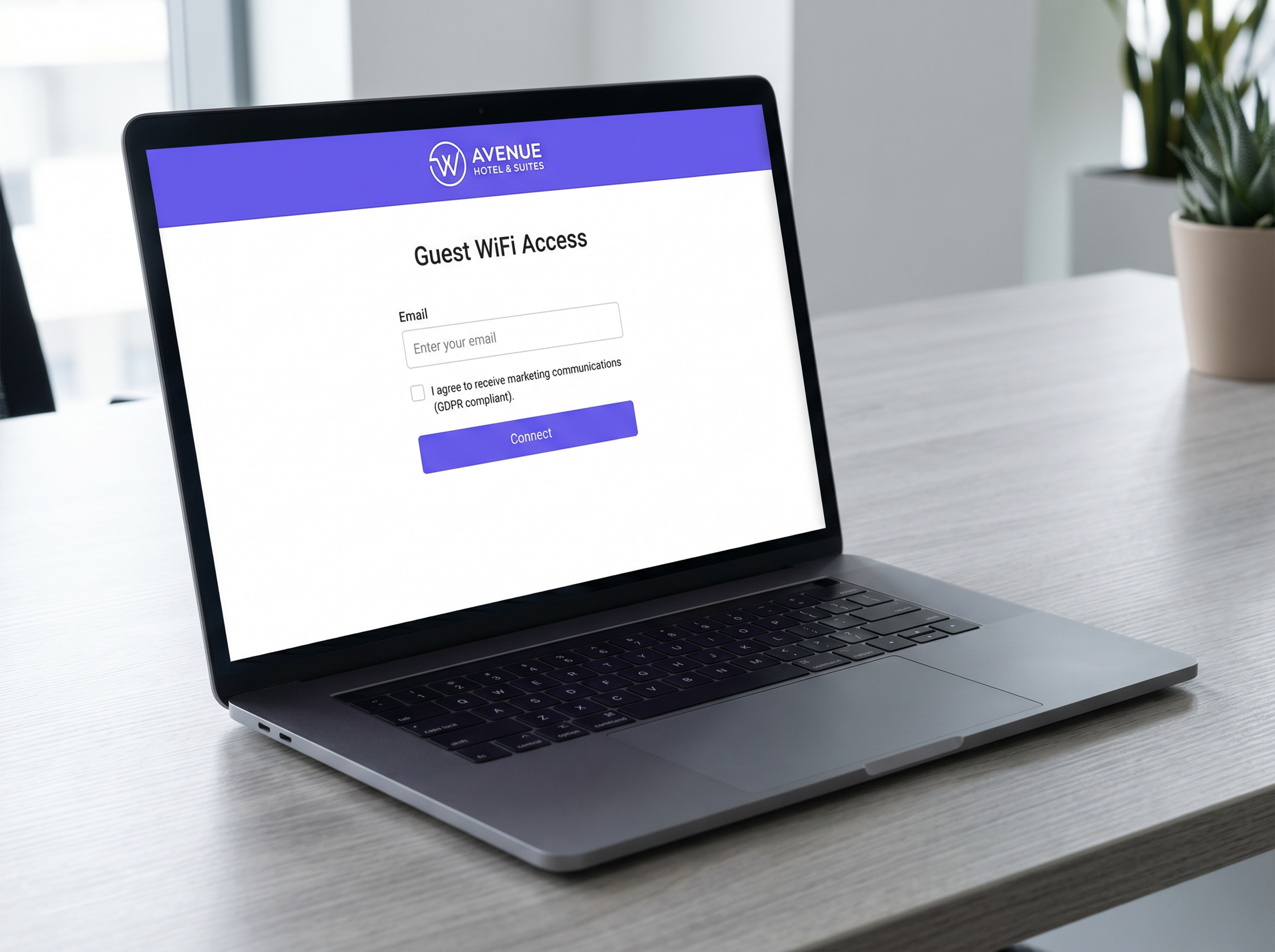
इस पोर्टल को उपयोगकर्ताओं को मानक तरीकों (ईमेल, SMS, सोशल लॉगिन) के माध्यम से प्रमाणित करने के लिए डिज़ाइन किया जाना चाहिए, साथ ही प्रथम-पक्षीय डेटा कैप्चर करना चाहिए। महत्वपूर्ण रूप से, पोर्टल को GDPR अनुपालन की जटिल आवश्यकताओं को पूरा करना चाहिए, जिसमें विस्तृत सहमति विकल्प प्रस्तुत करना और उपयोगकर्ता द्वारा सहमत सटीक टाइमस्टैम्प और शर्तों को रिकॉर्ड करना शामिल है।
चरण 4: Analytics और मार्केटिंग ऑटोमेशन
एक बार प्रमाणित होने के बाद, उपयोगकर्ता के डिवाइस का MAC एड्रेस उनकी जनसांख्यिकीय प्रोफ़ाइल से जुड़ जाता है। यह डेटा एक WiFi Analytics डैशबोर्ड में प्रवाहित होता है, जो IT को ठहरने के समय और फ़ुटफ़ॉल की दृश्यता प्रदान करता है, जबकि मार्केटिंग टीमों को विज़िट फ़्रीक्वेंसी के आधार पर स्वचालित अभियान शुरू करने में सशक्त बनाता है।
सर्वोत्तम अभ्यास और अनुपालन
उद्योग मानकों का पालन करने से व्यवसाय को नियामक जुर्माने और प्रतिष्ठा को होने वाले नुकसान से बचाता है।
- स्पष्ट सहमति तंत्र: GDPR और UK डेटा संरक्षण अधिनियम के तहत, मार्केटिंग संचार के लिए सहमति स्वतंत्र रूप से, विशिष्ट और स्पष्ट होनी चाहिए। Captive Portal पर पहले से टिक किए गए बॉक्स सख्त वर्जित हैं। प्लेटफ़ॉर्म को सभी सहमति लेनदेन का एक ऑडिट करने योग्य लॉग बनाए रखना चाहिए।
- डेटा प्रतिधारण नीतियां: स्वचालित डेटा शुद्धिकरण नीतियों को लागू करें। अतिथि डेटा को अनिश्चित काल तक नहीं रखा जाना चाहिए। Analytics प्लेटफ़ॉर्म को निष्क्रियता की एक परिभाषित अवधि (जैसे, 24 महीने) के बाद रिकॉर्ड को गुमनाम करने या हटाने के लिए कॉन्फ़िगर करें।
- सामग्री फ़िल्टरिंग: सार्वजनिक-सामने वाले नेटवर्क को अवैध या अनुचित सामग्री तक पहुंच को रोकने के लिए DNS-आधारित सामग्री फ़िल्टरिंग लागू करनी चाहिए, जिससे स्थल को देयता से बचाया जा सके और परिवार के अनुकूल वातावरण सुनिश्चित किया जा सके।
समस्या निवारण और जोखिम न्यूनीकरण
यहां तक कि अच्छी तरह से डिज़ाइन किए गए नेटवर्क में भी समस्याएं आती हैं। सामान्य विफलता मोड को समझने से समाधान का समय तेज होता है।
DHCP की कमी
लक्षण: अतिथि AP से जुड़ सकते हैं लेकिन एक APIPA एड्रेस (169.254.x.x) प्राप्त करते हैं और पोर्टल तक नहीं पहुंच सकते। शमन: रिटेल स्टोर जैसे उच्च-टर्नओवर वाले वातावरण में DHCP लीज समय (उदाहरण के लिए, 24 घंटे के बजाय 2 घंटे तक) कम करें। सुनिश्चित करें कि सबनेट का आकार अधिकतम फ़ुटफ़ॉल अनुमानों से मेल खाता हो।
Captive Portal अवरोधन विफलताएँ
लक्षण: अतिथि नेटवर्क से जुड़ते हैं लेकिन Captive Portal स्वचालित रूप से दिखाई नहीं देता (CNA विफलता)। शमन: सुनिश्चित करें कि WLC पर "Walled Garden" या पूर्व-प्रमाणीकरण ACLs Captive Portal के IP एड्रेस और आवश्यक CDN डोमेन पर ट्रैफ़िक की अनुमति देते हैं। यदि OS अपने Captive Portal डिटेक्शन URL (जैसे, captive.apple.com) तक नहीं पहुंच पाता है, तो पोर्टल ट्रिगर नहीं होगा।
अनधिकृत एक्सेस पॉइंट
लक्षण: अनधिकृत APs समान SSIDs प्रसारित कर रहे हैं या कॉर्पोरेट LAN से जुड़े हुए हैं। शमन: WLC पर वायरलेस इंट्रूज़न डिटेक्शन सिस्टम (WIDS) सक्षम करें ताकि कनेक्टेड क्लाइंट्स को डी-ऑथेंटिकेशन फ़्रेम भेजकर अनधिकृत APs को स्वचालित रूप से पता लगाया जा सके और उन्हें नियंत्रित किया जा सके।
ROI और व्यावसायिक प्रभाव
एक मानक नेटवर्क से एक बुद्धिमान WiFi प्लेटफ़ॉर्म में संक्रमण से मापने योग्य व्यावसायिक परिणाम प्राप्त होते हैं। Captive Portal के माध्यम से कैप्चर किए गए डेटा का लाभ उठाकर, व्यवसाय ठोस राजस्व प्राप्त कर सकते हैं।
उदाहरण के लिए, Healthcare में, Analytics रोगी प्रवाह को अनुकूलित कर सकता है और प्रतीक्षा समय को कम कर सकता है। रिटेल में, WiFi डेटा को CRM सिस्टम के साथ एकीकृत करने से लक्षित रीमार्केटिंग अभियानों की अनुमति मिलती है—एक ऐसे ग्राहक को प्रचार प्रस्ताव भेजना जिसने 90 दिनों में विज़िट नहीं किया है। इसके अलावा, आधुनिक नेटवर्किंग प्रतिमानों को अपनाना, जैसे कि The Core SD WAN Benefits for Modern Businesses में चर्चा की गई है, मल्टी-साइट ऑपरेटरों को सैकड़ों स्थानों पर इन नीतियों को केंद्रीय रूप से प्रबंधित करने की अनुमति देता है, जिससे परिचालन ओवरहेड में काफी कमी आती है।
मुख्य शब्द और परिभाषाएं
VLAN (Virtual Local Area Network)
A logical grouping of network devices that acts as if they are on their own independent network, regardless of physical location.
Used to isolate guest WiFi traffic from corporate traffic on the same physical switches and access points.
Captive Portal
A web page that a user of a public-access network is obliged to view and interact with before access is granted.
The primary interface for authenticating users, capturing first-party marketing data, and securing GDPR consent.
Walled Garden
A limited environment that controls the user's access to web content and services before they have fully authenticated.
Essential for allowing devices to load the captive portal page and associated assets (like logos or social login APIs) before internet access is granted.
WPA3-SAE
Wi-Fi Protected Access 3 with Simultaneous Authentication of Equals. The modern standard for wireless encryption.
Replaces WPA2-PSK to provide forward secrecy, preventing attackers from decrypting captured traffic even if they later discover the network password.
OFDMA
Orthogonal Frequency Division Multiple Access. A feature of Wi-Fi 6 that allows an access point to divide a channel into smaller sub-channels.
Crucial for high-density venues (stadiums, conferences) as it allows simultaneous transmission to multiple clients, drastically reducing latency.
MAC Address
Media Access Control address. A unique identifier assigned to a network interface controller for use as a network address.
Used by analytics platforms to track unique device visits, dwell time, and return frequency, even before the user authenticates.
DHCP Exhaustion
A state where a network's DHCP server has no more IP addresses available to assign to new clients.
A common failure in retail environments where footfall is high but the IP subnet is too small or lease times are set too long.
PCI DSS
Payment Card Industry Data Security Standard. A set of security standards designed to ensure that all companies that accept, process, store or transmit credit card information maintain a secure environment.
The primary regulatory reason why guest WiFi must be strictly segmented from point-of-sale (POS) systems.
केस स्टडीज
A 400-room luxury hotel is experiencing severe guest complaints regarding WiFi speeds during the evening hours (7 PM - 10 PM). The internet uplink is a dedicated 1 Gbps fibre circuit. Network monitoring shows the uplink is fully saturated during these times.
The IT team must implement per-device bandwidth rate limiting. On the Wireless LAN Controller or edge firewall, a QoS policy should be applied to the guest VLAN, capping individual client throughput to 15 Mbps download and 5 Mbps upload. Additionally, application-layer filtering should be enabled to throttle peer-to-peer (P2P) file sharing protocols.
A national retail chain wants to implement a captive portal to collect customer emails for marketing, but the legal team is concerned about GDPR compliance following recent ICO fines in the sector.
The deployment must utilize a dedicated Guest WiFi platform like Purple that handles consent natively. The captive portal must be configured with an unticked checkbox explicitly stating: 'I consent to receive marketing communications.' The platform must automatically record the user's MAC address, IP address, timestamp, and the exact text of the consent agreement. A secondary option to connect without providing marketing consent must be available.
परिदृश्य विश्लेषण
Q1. A stadium IT director is planning a network upgrade for a 50,000-seat venue. The current Wi-Fi 5 (802.11ac) network collapses during half-time. They are considering deploying more APs of the same model to increase coverage. Do you agree with this approach?
💡 संकेत:Consider the difference between coverage and capacity, and how Wi-Fi 5 handles concurrent client transmissions.
अनुशंसित दृष्टिकोण दिखाएं
No. Deploying more Wi-Fi 5 APs in a high-density environment will likely increase co-channel interference without solving the capacity issue. The venue requires an upgrade to Wi-Fi 6 (802.11ax) APs. The OFDMA technology in Wi-Fi 6 is specifically designed for high-density environments, allowing the AP to communicate with multiple clients simultaneously, rather than the sequential transmission limitation of Wi-Fi 5.
Q2. A retail client wants to use their guest WiFi to track how many people walk past their store versus how many enter, using MAC address probing. However, they are concerned about MAC randomization features in modern iOS and Android devices. How should you advise them?
💡 संकेत:Consider the limitations of passive tracking versus active authentication.
अनुशंसित दृष्टिकोण दिखाएं
Advise the client that while passive MAC tracking (probing) can provide directional trends, MAC randomization significantly reduces its absolute accuracy for unique user counts. The architectural solution is to incentivize active connection to the captive portal. Once a user authenticates, the platform associates the current MAC address with a known identity (e.g., email), providing highly accurate analytics for that session.
Q3. During a network audit, you discover that the guest WiFi subnet (10.0.50.0/24) can ping the IP address of the venue's internal Active Directory server (10.0.10.5). What is the immediate architectural remediation?
💡 संकेत:Focus on Layer 3 routing and firewall policies.
अनुशंसित दृष्टिकोण दिखाएं
Immediate remediation requires updating the Access Control Lists (ACLs) on the core firewall/router. A rule must be placed at the top of the ACL for the guest VLAN interface that explicitly denies all traffic destined for RFC 1918 private IP space (10.0.0.0/8, 172.16.0.0/12, 192.168.0.0/16), followed by a rule permitting traffic to the internet (0.0.0.0/0).




