

Der vollständige Leitfaden für Gast-WiFi für Unternehmen
Dieser maßgebliche technische Leitfaden bietet IT-Führungskräften und Netzwerkarchitekten einen umfassenden Plan für die Bereitstellung, Sicherung und Monetarisierung von Unternehmens-Gast-WiFi. Er schlägt die Brücke zwischen physischer Netzwerkinfrastruktur, Compliance-Standards wie GDPR und PCI DSS und dem kommerziellen Wert, der durch die Erfassung von Erstanbieterdaten erschlossen wird.
🎧 Diesen Leitfaden anhören
Transkript anzeigen
Executive Summary
Für moderne Unternehmen hat sich Gast-WiFi von einem einfachen Kostenfaktor zu einem kritischen Infrastruktur-Asset entwickelt, das erhebliche kommerzielle Erträge erzielen kann. Ob im Einzelhandel , im Gastgewerbe oder in großen öffentlichen Einrichtungen, IT-Führungskräfte stehen vor einem doppelten Auftrag: nahtlose, leistungsstarke Konnektivität bereitzustellen und gleichzeitig Erstanbieterdaten sicher und konform zu erfassen.
Dieser Leitfaden bietet einen maßgeblichen Architekturplan für Unternehmens-Gast-WiFi. Wir detaillieren die technischen Anforderungen für die Netzwerksegmentierung, die kryptografischen Standards, die für eine sichere Authentifizierung notwendig sind, und die Bereitstellungsmethoden, die zur Vermeidung von Netzwerksättigung erforderlich sind. Darüber hinaus untersuchen wir, wie Plattformen wie Purple die Lücke zwischen Netzwerkhardware und Marketingtechnologie schließen und anonyme MAC-Adressen durch konforme Captive Portals in verwertbare Kundenprofile umwandeln. Indem Gast-WiFi als strategische Bereitstellung und nicht als Dienstprogramm behandelt wird, können Organisationen einen messbaren ROI erzielen und gleichzeitig die inhärenten Sicherheitsrisiken öffentlicher Zugangsnetzwerke mindern.
Hören Sie den begleitenden technischen Briefing-Podcast:
Technischer Deep-Dive: Architektur und Standards
Die Grundlage jeder Unternehmens-Gast-WiFi-Bereitstellung ist eine rigorose Netzwerksegmentierung und robuste Authentifizierungsprotokolle. Die Bereitstellung einer offenen SSID ohne strukturelle Schutzmaßnahmen birgt ein inakzeptables Risiko für Unternehmensdaten und Zahlungssysteme.
Netzwerksegmentierung und VLAN-Tagging
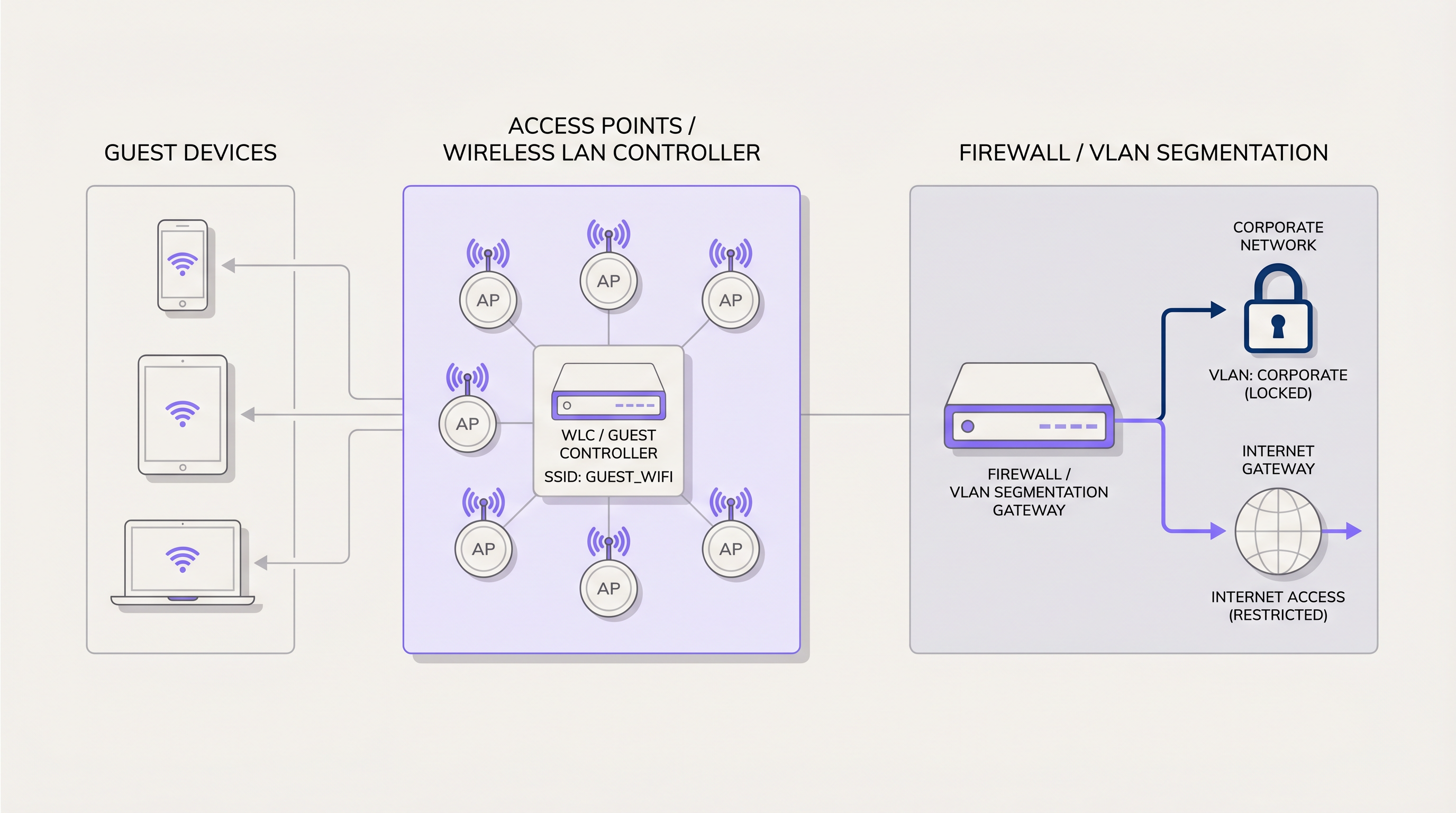
Gast-Traffic muss auf Layer 2 und Layer 3 isoliert werden. Das Standard-Bereitstellungsmodell erfordert die Zuordnung der Gast-SSID zu einem dedizierten Virtual Local Area Network (VLAN) am Access Point (AP) oder Wireless LAN Controller (WLC). Dieses VLAN muss über die zentrale Switching-Infrastruktur direkt zur Edge-Firewall getrunkt werden.
An der Firewall müssen strenge Access Control Lists (ACLs) eine „Deny All“-Richtlinie für Traffic erzwingen, der für interne Unternehmens-Subnetze bestimmt ist. Gast-Traffic sollte nur zum Internet-Gateway geroutet werden dürfen. Diese Segmentierung ist nicht nur Best Practice; sie ist eine grundlegende Anforderung für Compliance-Frameworks wie PCI DSS. Wenn ein kompromittiertes Gastgerät Pakete an ein Point-of-Sale-Terminal routen kann, fällt das gesamte Netzwerk aus der Compliance.
Authentifizierungs- und Verschlüsselungsstandards
Die Ära der offenen, unverschlüsselten Gastnetzwerke geht zu Ende. Um Benutzerdaten vor passivem Abhören und Man-in-the-Middle-Angriffen zu schützen, sollten Bereitstellungen WPA3 nutzen. Insbesondere WPA3-SAE (Simultaneous Authentication of Equals) bietet Forward Secrecy, wodurch sichergestellt wird, dass selbst wenn das Netzwerkpasswort bekannt ist, der individuelle Sitzungsverkehr verschlüsselt bleibt und nicht nachträglich entschlüsselt werden kann.
Für Umgebungen, die eine granulare Zugriffskontrolle erfordern, bietet IEEE 802.1X mit RADIUS-Backend-Authentifizierung Sicherheit auf Unternehmensniveau. Beim Übertragen von Authentifizierungsanfragen über Wide Area Networks (WANs) an Cloud-Identitätsanbieter ist die Sicherung des RADIUS-Traffics selbst entscheidend. IT-Teams sollten RadSec: Securing RADIUS Authentication Traffic with TLS implementieren, um das Abfangen von Anmeldeinformationen zu verhindern. Purple fungiert in diesen Architekturen als robuster Identitätsanbieter, der sich nahtlos in bestehende RADIUS-Infrastrukturen integriert und moderne Roaming-Standards wie OpenRoaming unterstützt.
Durchsatz- und Kapazitätsplanung
In Umgebungen mit hoher Dichte wird der Durchsatz nicht durch den Internet-Uplink begrenzt, sondern durch Airtime Fairness und Kanalauslastung. Die Bereitstellung von APs, die Wi-Fi 6 (802.11ax) unterstützen, ist unerlässlich, um diese Engpässe zu mindern. Die Orthogonal Frequency Division Multiple Access (OFDMA)-Fähigkeiten von Wi-Fi 6 ermöglichen es einem einzelnen AP, gleichzeitig mit mehreren Clients zu kommunizieren, wodurch die Latenz in überfüllten Bereichen drastisch reduziert wird.
Darüber hinaus müssen IT-Teams eine Ratenbegrenzung pro Benutzer auf Controller- oder Firewall-Ebene implementieren. Die Zuweisung einer strengen Bandbreitenbegrenzung (z. B. 10 Mbit/s Down / 2 Mbit/s Up pro Benutzer) verhindert, dass ein einzelner Client den Internet-Uplink mit bandbreitenintensiven Anwendungen monopolisiert, und gewährleistet so ein konsistentes Basiserlebnis für alle Gäste.
Implementierungsleitfaden: Von Hardware zum Portal
Die Bereitstellung eines resilienten Gast-WiFi-Netzwerks erfordert einen systematischen Ansatz, der die physische HF-Planung mit cloudbasierten Analyseplattformen integriert.
Phase 1: HF-Planung und Standortanalyse
Vor der Hardwarebeschaffung ist eine vorausschauende HF-Standortanalyse obligatorisch. Die Verwendung von Software-Tools zur Modellierung der physischen Umgebung – unter Berücksichtigung von Wanddämpfung, Deckenhöhen und Benutzerdichte – ermöglicht es Netzwerkarchitekten, die optimale AP-Platzierung und Kanalzuweisung zu bestimmen. Dies mindert Gleichkanalinterferenzen und gewährleistet ein ausreichendes Signal-Rausch-Verhältnis (SNR) im gesamten Veranstaltungsort.
Phase 2: Infrastrukturkonfiguration
Sobald die Hardware physisch bereitgestellt ist, konfigurieren Sie den WLC so, dass er die dedizierte Gast-SSID sendet. Stellen Sie sicher, dass das entsprechende VLAN auf allen Switch-Trunk-Ports korrekt getaggt ist. Überprüfen Sie am Firewall-Edge, dass die DHCP-Bereiche für die erwartete Anzahl gleichzeitiger Benutzer ausreichend dimensioniert sind; ein /24-Subnetz (254 Adressen) ist für Unternehmensstandorte selten ausreichend. Implementieren Sie DNS-Filterung, um bösartige Domains und Inhalte für Erwachsene auf Netzwerkebene zu blockieren.
Phase 3: Captive Portal Integration
Das Captive Portal ist der kritische Integrationspunkt zwischen der Netzwerkinfrastruktur und ddem Geschäftsziel. Anstatt einer generischen Splash-Seite wird der WLC so konfiguriert, dass er nicht authentifizierten Gast-Traffic zu einem externen Captive Portal umleitet, das von einer Guest WiFi -Plattform wie Purple gehostet wird.
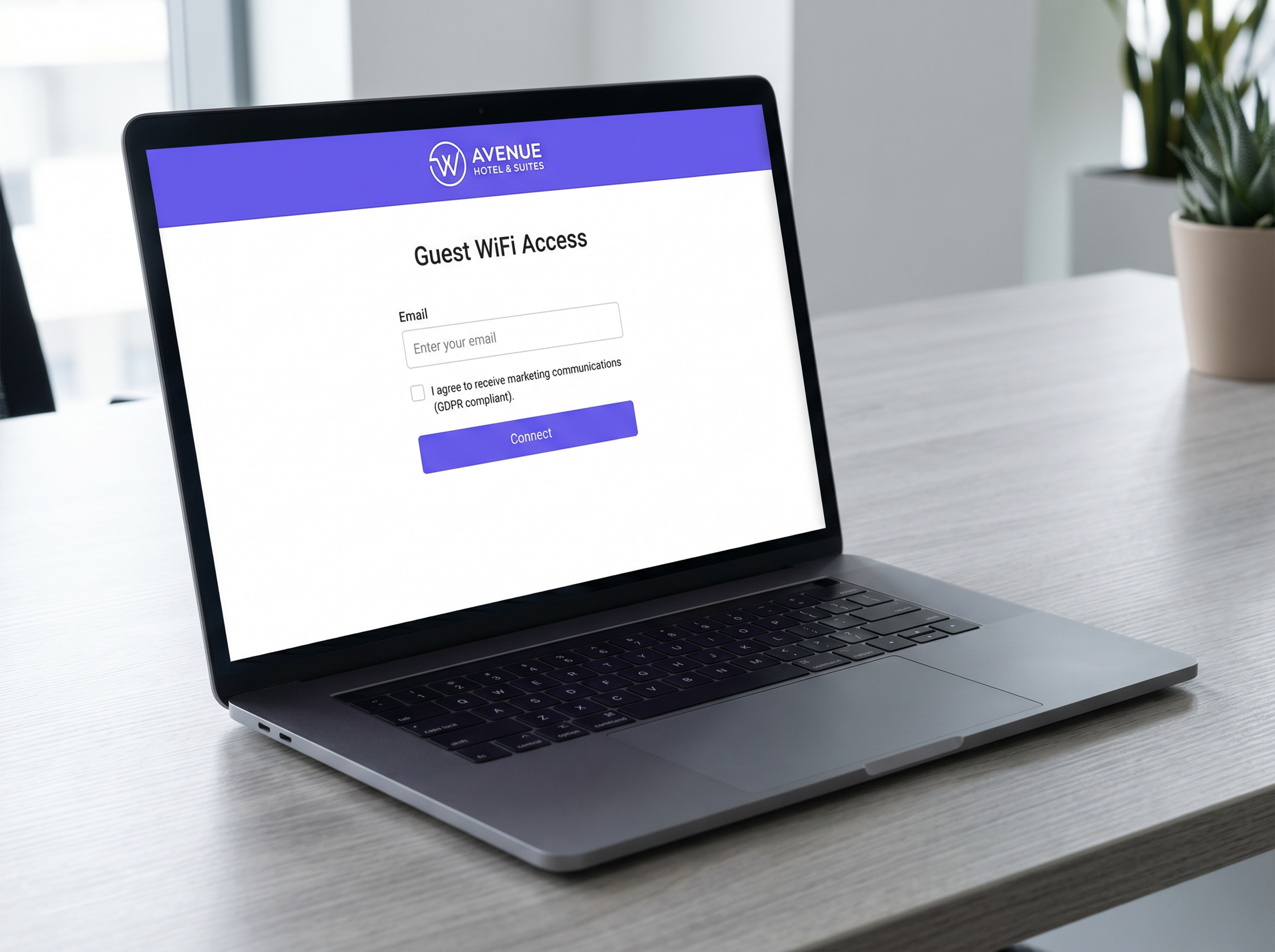
Dieses Portal muss so konzipiert sein, dass es Benutzer über Standardmethoden (E-Mail, SMS, Social Login) authentifiziert und gleichzeitig Erstanbieterdaten erfasst. Entscheidend ist, dass das Portal die komplexen Anforderungen der GDPR-Konformität erfüllen muss, indem es detaillierte Zustimmungsoptionen präsentiert und den genauen Zeitstempel sowie die vom Benutzer akzeptierten Bedingungen aufzeichnet.
Phase 4: Analysen und Marketing-Automatisierung
Nach der Authentifizierung wird die MAC-Adresse des Geräts des Benutzers mit dessen demografischem Profil verknüpft. Diese Daten fließen in ein WiFi Analytics -Dashboard, das der IT Einblicke in Verweildauern und Besucherfrequenzen bietet und Marketingteams ermöglicht, automatisierte Kampagnen basierend auf der Besuchshäufigkeit auszulösen.
Best Practices und Compliance
Die Einhaltung von Industriestandards schützt das Unternehmen vor behördlichen Bußgeldern und Reputationsschäden.
- Explizite Zustimmungsmechanismen: Gemäß GDPR und dem UK Data Protection Act muss die Zustimmung zu Marketingkommunikationen freiwillig, spezifisch und eindeutig erteilt werden. Vorab angekreuzte Kästchen auf Captive Portals sind strengstens verboten. Die Plattform muss ein auditierbares Protokoll aller Zustimmungs-Transaktionen führen.
- Datenaufbewahrungsrichtlinien: Implementieren Sie automatisierte Datenbereinigungsrichtlinien. Gastdaten sollten nicht unbegrenzt aufbewahrt werden. Konfigurieren Sie die Analyseplattform so, dass Datensätze nach einer definierten Inaktivitätsperiode (z. B. 24 Monate) anonymisiert oder gelöscht werden.
- Inhaltsfilterung: Öffentlich zugängliche Netzwerke müssen eine DNS-basierte Inhaltsfilterung implementieren, um den Zugriff auf illegales oder unangemessenes Material zu verhindern, den Veranstaltungsort vor Haftung zu schützen und eine familienfreundliche Umgebung zu gewährleisten.
Fehlerbehebung & Risikominderung
Auch gut konzipierte Netzwerke stoßen auf Probleme. Das Verständnis gängiger Fehlerursachen beschleunigt die Lösungszeit.
DHCP-Erschöpfung
Symptom: Gäste können sich mit dem AP verbinden, erhalten aber eine APIPA-Adresse (169.254.x.x) und können nicht auf das Portal zugreifen. Abhilfe: Verringern Sie die DHCP-Lease-Zeiten (z. B. auf 2 Stunden statt 24 Stunden) in Umgebungen mit hoher Fluktuation wie Einzelhandelsgeschäften. Stellen Sie sicher, dass die Subnetzgröße den geschätzten Spitzenbesucherzahlen entspricht.
Captive Portal Abfangfehler
Symptom: Gäste verbinden sich mit dem Netzwerk, aber das Captive Portal erscheint nicht automatisch (CNA-Fehler). Abhilfe: Stellen Sie sicher, dass der „Walled Garden“ oder die Pre-Authentifizierungs-ACLs auf dem WLC den Traffic zu den IP-Adressen des Captive Portals und den notwendigen CDN-Domains zulassen. Wenn das Betriebssystem seine Captive Portal Erkennungs-URL (z. B. captive.apple.com) nicht erreichen kann, wird das Portal nicht ausgelöst.
Rogue Access Points
Symptom: Unautorisierte APs, die ähnliche SSIDs senden oder mit dem Unternehmens-LAN verbunden sind. Abhilfe: Aktivieren Sie Wireless Intrusion Detection Systems (WIDS) auf dem WLC, um Rogue APs automatisch zu erkennen und einzudämmen, indem De-Authentifizierungs-Frames an verbundene Clients gesendet werden.
ROI & Geschäftsauswirkungen
Der Übergang von einem Standardnetzwerk zu einer intelligenten WiFi-Plattform führt zu messbaren Geschäftsergebnissen. Durch die Nutzung der über das Captive Portal erfassten Daten können Unternehmen greifbare Einnahmen erzielen.
Zum Beispiel können im Gesundheitswesen Analysen den Patientenfluss optimieren und Wartezeiten reduzieren. Im Einzelhandel ermöglicht die Integration von WiFi-Daten mit CRM-Systemen gezielte Retargeting-Kampagnen – das Senden eines Werbeangebots an einen Kunden, der seit 90 Tagen nicht mehr zu Besuch war. Darüber hinaus ermöglicht die Einführung moderner Netzwerkparadigmen, wie sie in Die wichtigsten SD WAN Vorteile für moderne Unternehmen diskutiert werden, Multi-Site-Betreibern, diese Richtlinien zentral über Hunderte von Standorten hinweg zu verwalten, wodurch der Betriebsaufwand erheblich reduziert wird.
Schlüsselbegriffe & Definitionen
VLAN (Virtual Local Area Network)
A logical grouping of network devices that acts as if they are on their own independent network, regardless of physical location.
Used to isolate guest WiFi traffic from corporate traffic on the same physical switches and access points.
Captive Portal
A web page that a user of a public-access network is obliged to view and interact with before access is granted.
The primary interface for authenticating users, capturing first-party marketing data, and securing GDPR consent.
Walled Garden
A limited environment that controls the user's access to web content and services before they have fully authenticated.
Essential for allowing devices to load the captive portal page and associated assets (like logos or social login APIs) before internet access is granted.
WPA3-SAE
Wi-Fi Protected Access 3 with Simultaneous Authentication of Equals. The modern standard for wireless encryption.
Replaces WPA2-PSK to provide forward secrecy, preventing attackers from decrypting captured traffic even if they later discover the network password.
OFDMA
Orthogonal Frequency Division Multiple Access. A feature of Wi-Fi 6 that allows an access point to divide a channel into smaller sub-channels.
Crucial for high-density venues (stadiums, conferences) as it allows simultaneous transmission to multiple clients, drastically reducing latency.
MAC Address
Media Access Control address. A unique identifier assigned to a network interface controller for use as a network address.
Used by analytics platforms to track unique device visits, dwell time, and return frequency, even before the user authenticates.
DHCP Exhaustion
A state where a network's DHCP server has no more IP addresses available to assign to new clients.
A common failure in retail environments where footfall is high but the IP subnet is too small or lease times are set too long.
PCI DSS
Payment Card Industry Data Security Standard. A set of security standards designed to ensure that all companies that accept, process, store or transmit credit card information maintain a secure environment.
The primary regulatory reason why guest WiFi must be strictly segmented from point-of-sale (POS) systems.
Fallstudien
A 400-room luxury hotel is experiencing severe guest complaints regarding WiFi speeds during the evening hours (7 PM - 10 PM). The internet uplink is a dedicated 1 Gbps fibre circuit. Network monitoring shows the uplink is fully saturated during these times.
The IT team must implement per-device bandwidth rate limiting. On the Wireless LAN Controller or edge firewall, a QoS policy should be applied to the guest VLAN, capping individual client throughput to 15 Mbps download and 5 Mbps upload. Additionally, application-layer filtering should be enabled to throttle peer-to-peer (P2P) file sharing protocols.
A national retail chain wants to implement a captive portal to collect customer emails for marketing, but the legal team is concerned about GDPR compliance following recent ICO fines in the sector.
The deployment must utilize a dedicated Guest WiFi platform like Purple that handles consent natively. The captive portal must be configured with an unticked checkbox explicitly stating: 'I consent to receive marketing communications.' The platform must automatically record the user's MAC address, IP address, timestamp, and the exact text of the consent agreement. A secondary option to connect without providing marketing consent must be available.
Szenarioanalyse
Q1. A stadium IT director is planning a network upgrade for a 50,000-seat venue. The current Wi-Fi 5 (802.11ac) network collapses during half-time. They are considering deploying more APs of the same model to increase coverage. Do you agree with this approach?
💡 Hinweis:Consider the difference between coverage and capacity, and how Wi-Fi 5 handles concurrent client transmissions.
Empfohlenen Ansatz anzeigen
No. Deploying more Wi-Fi 5 APs in a high-density environment will likely increase co-channel interference without solving the capacity issue. The venue requires an upgrade to Wi-Fi 6 (802.11ax) APs. The OFDMA technology in Wi-Fi 6 is specifically designed for high-density environments, allowing the AP to communicate with multiple clients simultaneously, rather than the sequential transmission limitation of Wi-Fi 5.
Q2. A retail client wants to use their guest WiFi to track how many people walk past their store versus how many enter, using MAC address probing. However, they are concerned about MAC randomization features in modern iOS and Android devices. How should you advise them?
💡 Hinweis:Consider the limitations of passive tracking versus active authentication.
Empfohlenen Ansatz anzeigen
Advise the client that while passive MAC tracking (probing) can provide directional trends, MAC randomization significantly reduces its absolute accuracy for unique user counts. The architectural solution is to incentivize active connection to the captive portal. Once a user authenticates, the platform associates the current MAC address with a known identity (e.g., email), providing highly accurate analytics for that session.
Q3. During a network audit, you discover that the guest WiFi subnet (10.0.50.0/24) can ping the IP address of the venue's internal Active Directory server (10.0.10.5). What is the immediate architectural remediation?
💡 Hinweis:Focus on Layer 3 routing and firewall policies.
Empfohlenen Ansatz anzeigen
Immediate remediation requires updating the Access Control Lists (ACLs) on the core firewall/router. A rule must be placed at the top of the ACL for the guest VLAN interface that explicitly denies all traffic destined for RFC 1918 private IP space (10.0.0.0/8, 172.16.0.0/12, 192.168.0.0/16), followed by a rule permitting traffic to the internet (0.0.0.0/0).




