

अतिथि WiFi साइन-अप को लॉयल्टी प्रोग्राम सदस्यों में बदलना
यह तकनीकी संदर्भ मार्गदर्शिका आर्किटेक्चर, डेटा रणनीति और रूपांतरण बेंचमार्क की रूपरेखा प्रस्तुत करती है जो पहली बार के अतिथि WiFi उपयोगकर्ताओं को सक्रिय लॉयल्टी प्रोग्राम सदस्यों में बदलने के लिए आवश्यक हैं। यह IT प्रबंधकों और स्थल संचालन निदेशकों के लिए प्रोग्रेसिव प्रोफाइलिंग और रीयल-टाइम एकीकरण के माध्यम से लॉयल्टी नामांकन को अधिकतम करने के लिए कार्रवाई योग्य परिनियोजन मार्गदर्शन प्रदान करती है।
🎧 इस गाइड को सुनें
ट्रांसक्रिप्ट देखें
कार्यकारी सारांश
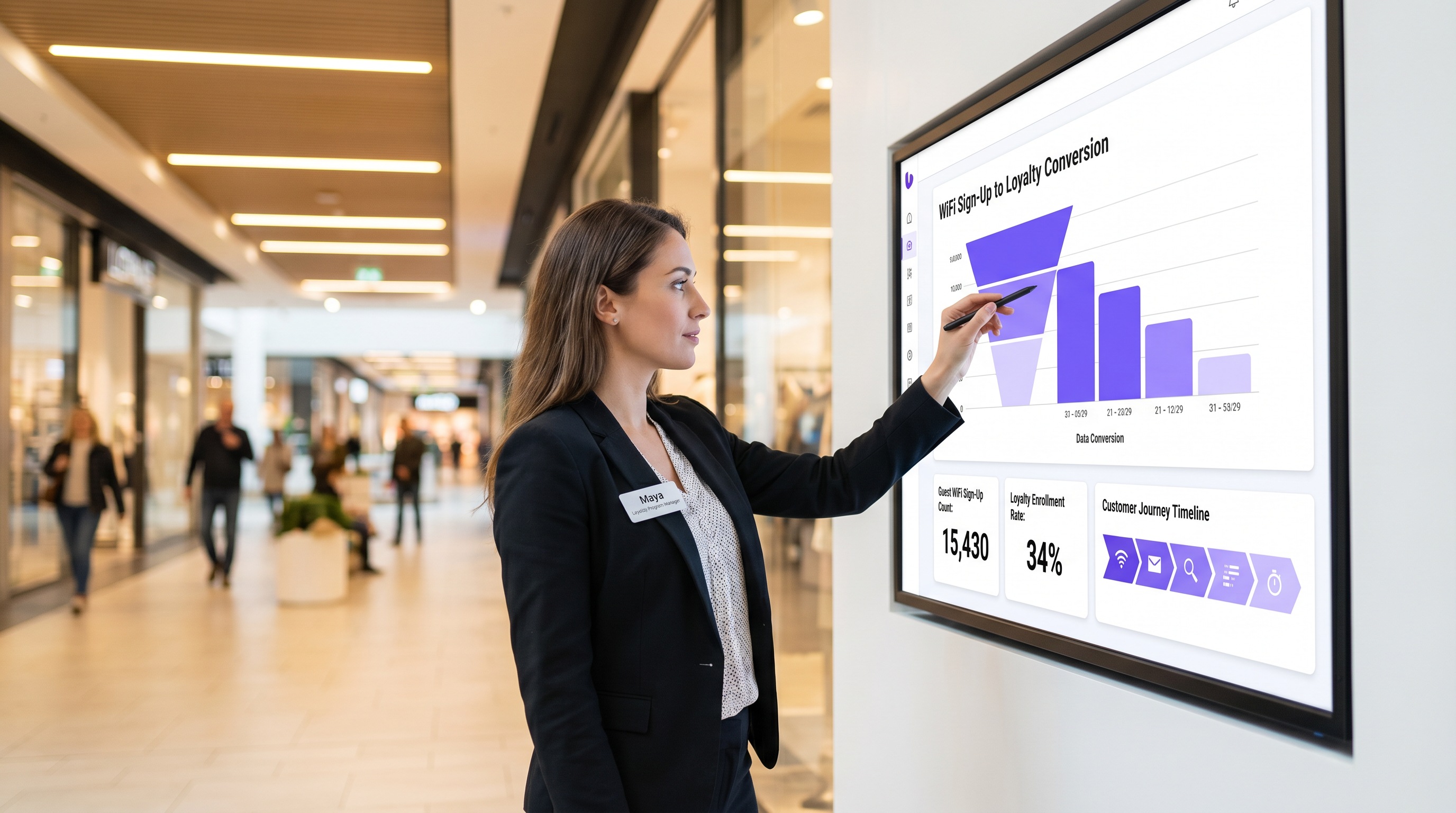
एंटरप्राइज़ स्थलों के लिए—स्टेडियम से लेकर वैश्विक होटल श्रृंखलाओं तक—अतिथि WiFi भौतिक वातावरण में उच्चतम-इरादे वाला डिजिटल टचपॉइंट प्रस्तुत करता है। जब कोई अतिथि नेटवर्क से जुड़ता है, तो वे एक सत्यापित पहचानकर्ता और स्पष्ट सहमति प्रदान करते हैं। फिर भी, कई स्थल इस इंटरैक्शन को लॉयल्टी अधिग्रहण इंजन के बजाय एक डूबी हुई कनेक्टिविटी लागत के रूप में मानते हैं। यह मार्गदर्शिका अतिथि WiFi साइन-अप को सक्रिय लॉयल्टी प्रोग्राम सदस्यों में बदलने के लिए आवश्यक तकनीकी आर्किटेक्चर और डेटा रणनीति का विवरण देती है। बैच निर्यात से दूर होकर और प्रोग्रेसिव प्रोफाइलिंग के साथ रीयल-टाइम API एकीकरण को लागू करके, स्थल WiFi-से-लॉयल्टी रूपांतरण दरों को 10% के आधारभूत स्तर से 30% से अधिक तक बढ़ा सकते हैं। यह दस्तावेज़ IT प्रबंधकों, नेटवर्क आर्किटेक्ट्स और संचालन निदेशकों को इन बेंचमार्क को प्राप्त करने के लिए आवश्यक परिनियोजन ढाँचा प्रदान करता है, जिससे वैश्विक गोपनीयता मानकों का अनुपालन सुनिश्चित होता है और साथ ही मापने योग्य ROI भी प्राप्त होता है।
रणनीतिक अवलोकन के लिए सहयोगी ऑडियो ब्रीफिंग सुनें:
तकनीकी गहन-विश्लेषण
उच्च-रूपांतरण वाले WiFi लॉयल्टी फ़नल का आधार Captive Portal आर्किटेक्चर है। पारंपरिक दृष्टिकोण—जहाँ एक अतिथि एक लंबा फॉर्म भरता है, और डेटा को रात भर के CSV बैच के माध्यम से CRM में निर्यात किया जाता है—मौलिक रूप से त्रुटिपूर्ण है। यह 24 घंटे का एकीकरण अंतराल प्रस्तुत करता है, जिसका अर्थ है कि लॉयल्टी आमंत्रण अतिथि के अधिकतम इरादे का क्षण बीत जाने के बहुत बाद आता है।
आधुनिक परिनियोजन रीयल-टाइम वेबहुक या REST API एकीकरण का उपयोग करते हैं। जब कोई डिवाइस Captive Portal के माध्यम से प्रमाणित होता है, तो WiFi एनालिटिक्स प्लेटफॉर्म (जैसे Guest WiFi ) तुरंत लॉयल्टी सिस्टम को एक इवेंट पेलोड भेजता है। इस पेलोड में सत्यापित ईमेल पता, डिवाइस MAC पता (स्थानीय अनुपालन के आधार पर हैश किया गया या गुमनाम किया गया), स्थल ID और टाइमस्टैम्प शामिल होता है।
महत्वपूर्ण रूप से, यह आर्किटेक्चर प्रोग्रेसिव प्रोफाइलिंग का समर्थन करता है। परित्याग का कारण बनने वाले दस-फ़ील्ड पंजीकरण फॉर्म प्रस्तुत करने के बजाय, प्रारंभिक Captive Portal केवल न्यूनतम व्यवहार्य डेटा सेट का अनुरोध करता है: नाम, ईमेल और मार्केटिंग सहमति। बाद की विज़िट पर, नेटवर्क लौटने वाले MAC पते को पहचानता है और एक गतिशील स्प्लैश पेज प्रस्तुत करता है जो जानकारी का एक अतिरिक्त टुकड़ा मांगता है, जिससे समय के साथ प्रोफ़ाइल समृद्ध होती है और कोई घर्षण पैदा नहीं होता है।
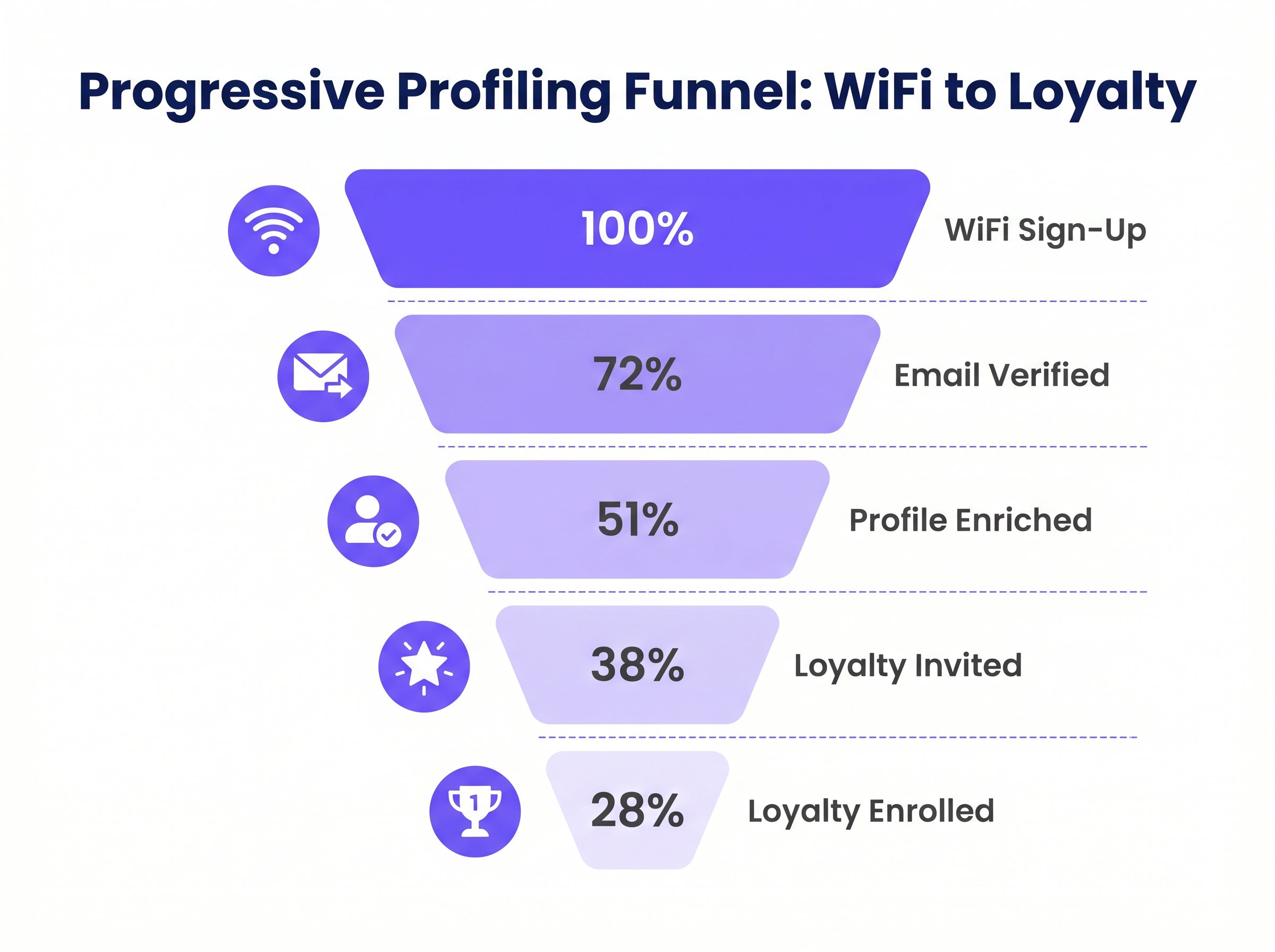
अनुपालन के दृष्टिकोण से, यह रीयल-टाइम, स्पष्ट डेटा कैप्चर GDPR और CCPA आवश्यकताओं के साथ पूरी तरह से संरेखित होता है। सहमति को एक विशिष्ट टाइमस्टैम्प और IP पते के साथ लॉग किया जाता है, जो एक मजबूत ऑडिट ट्रेल प्रदान करता है जिसकी बराबरी खरीदे गए डेटा सूचियाँ नहीं कर सकतीं। इन विनियमों को नेविगेट करने के बारे में अधिक जानकारी के लिए, CCPA बनाम GDPR: अतिथि WiFi डेटा के लिए वैश्विक गोपनीयता अनुपालन पर हमारी मार्गदर्शिका देखें।
कार्यान्वयन मार्गदर्शिका
उच्च-रूपांतरण वाले WiFi लॉयल्टी एकीकरण को परिनियोजित करने के लिए नेटवर्क इंजीनियरिंग और मार्केटिंग संचालन के बीच समन्वय की आवश्यकता होती है। इस चरण-दर-चरण ढाँचे का पालन करें:
- प्रमाणीकरण प्रवाह का ऑडिट करें: सुनिश्चित करें कि आपके एक्सेस पॉइंट और वायरलेस LAN कंट्रोलर (WLCs) सभी अप्रमाणित ट्रैफ़िक को एक केंद्रीय Captive Portal पर रूट करने के लिए कॉन्फ़िगर किए गए हैं। सत्यापित करें कि पोर्टल HTTPS और आधुनिक प्रतिक्रियाशील डिज़ाइन मानकों का समर्थन करता है।
- प्रोग्रेसिव प्रोफाइलिंग लागू करें: Captive Portal लॉजिक को कॉन्फ़िगर करें ताकि पहले सत्र के दौरान केवल नाम, ईमेल और मार्केटिंग संचार के लिए एक अलग, अनचेक ऑप्ट-इन बॉक्स का अनुरोध किया जा सके।
- रीयल-टाइम एकीकरण स्थापित करें: अपने WiFi एनालिटिक्स प्लेटफॉर्म के भीतर वेबहुक को कॉन्फ़िगर करें ताकि प्रमाणीकरण के तुरंत बाद अपने CRM या लॉयल्टी इंजन को डेटा POST किया जा सके। संदर्भित मैसेजिंग की अनुमति देने के लिए पेलोड में स्थल पहचानकर्ता शामिल होना चाहिए।
- विज़िट-आधारित ट्रिगर कॉन्फ़िगर करें: CRM के भीतर, स्वचालित वर्कफ़्लो सेट करें जो स्थल प्रकार और विज़िट गणना के आधार पर लॉयल्टी आमंत्रण को ट्रिगर करते हैं।
- घर्षण-रहित नामांकन सक्षम करें: सुनिश्चित करें कि लॉयल्टी आमंत्रण ईमेल एक वन-टैप, मोबाइल-अनुकूलित नामांकन पृष्ठ से लिंक होता है जिसके लिए उपयोगकर्ता को Captive Portal पर अभी-अभी प्रदान किए गए डेटा को फिर से दर्ज करने की आवश्यकता नहीं होती है।
सर्वोत्तम अभ्यास
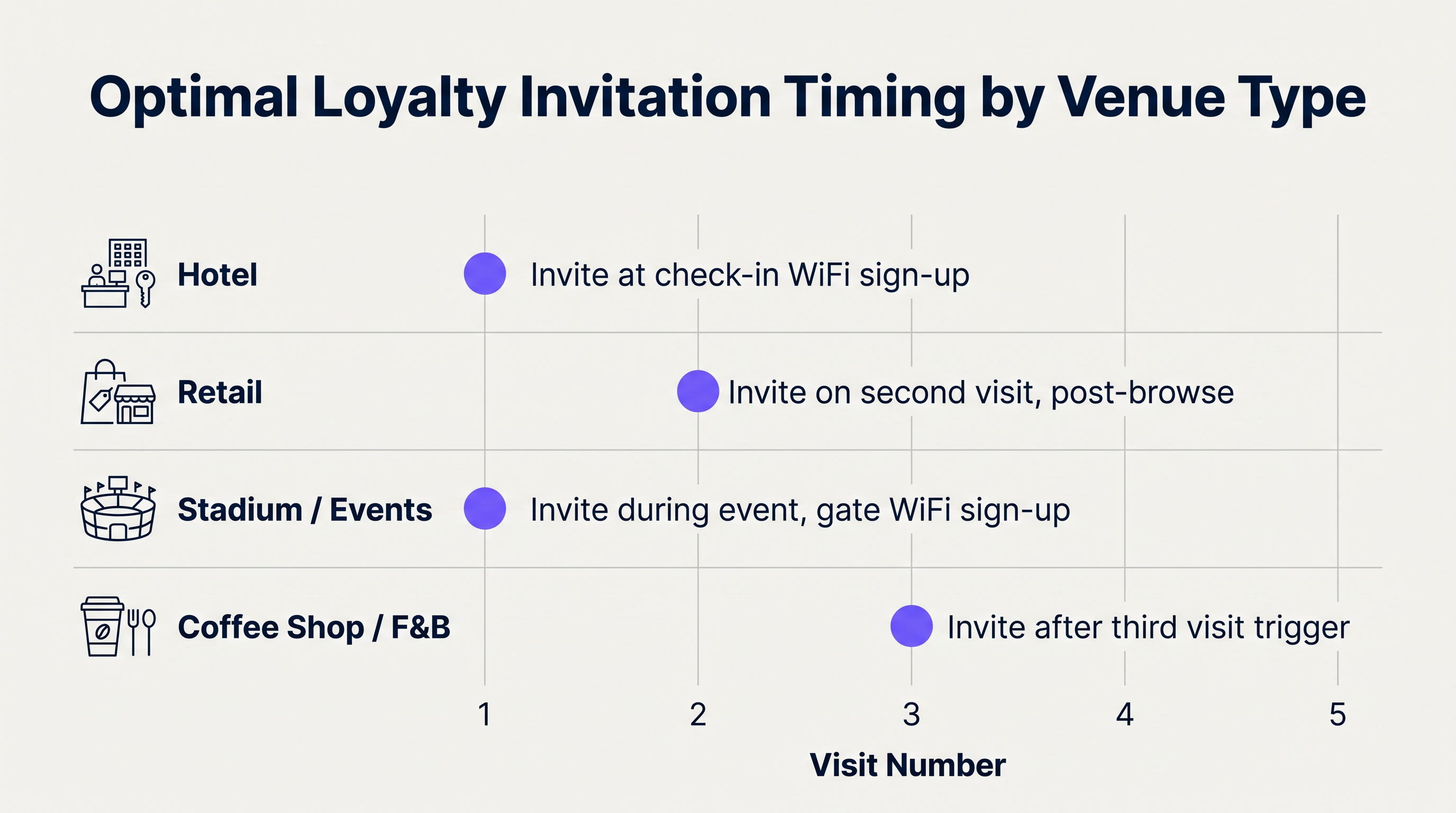
उद्योग बेंचमार्क डेटा से पता चलता है कि लॉयल्टी आमंत्रण का समय रूपांतरण सफलता में सबसे बड़ा एकल चर है। इष्टतम ट्रिगर बिंदु स्थल प्रकार के अनुसार काफी भिन्न होता है:
- हॉस्पिटैलिटी: प्रारंभिक चेक-इन कनेक्शन के दो घंटे के भीतर आमंत्रण ट्रिगर करें। अतिथि व्यवस्थित हो गया है और अपने वर्तमान प्रवास के लिए अंक अर्जित करने के लिए अत्यधिक प्रेरित है।
- रिटेल: दूसरे विज़िट तक आमंत्रण में देरी करें। एक खुदरा स्टोर में पहली बार आने वाले आगंतुक ने अभी तक ब्रांड संबद्धता प्रदर्शित नहीं की है। दूसरे WiFi कनेक्शन पर ईमेल ट्रिगर करने से 28-35% की रूपांतरण दर प्राप्त होती है। खुदरा परिनियोजन में व्यापक अंतर्दृष्टि के लिए, हमारे रिटेल क्षेत्र अवलोकन देखें।
- स्टेडियम और इवेंट्स: कनेक्शन पर तुरंत ट्रिगर करें। ठहरने का समय कम होता है, और अतिथि केवल एक सीज़न में एक बार ही विज़िट कर सकता है। स्थल-पर पुश नोटिफिकेशन को तत्काल ईमेल के साथ संयोजित करने से उच्चतम उपज मिलती है।
- खाद्य और पेय: तीसरी विज़िट पर ट्रिगर करें। यह लॉयल्टी प्रस्ताव पेश करने से पहले आदतन वापसी का एक पैटर्न स्थापित करता है।
इसके अलावा, वेफ़ाइंडिंग और सेंसर का एकीकरण अतिरिक्त प्रासंगिक डेटा प्रदान कर सकता है, जिससे लॉयल्टी आमंत्रण की अनुमति मिलती हैएप्लिकेशन्स को तब ट्रिगर किया जा सकता है जब कोई मेहमान स्थल के भीतर किसी विशिष्ट क्षेत्र में प्रवेश करता है, न कि केवल परिधि पर।
समस्या निवारण और जोखिम न्यूनीकरण
कई सामान्य विफलता मोड एक WiFi लॉयल्टी डिप्लॉयमेंट को पटरी से उतार सकते हैं:
- सहमति का अंतर: स्पष्ट मार्केटिंग सहमति के बिना ईमेल पता कैप्चर करना गोपनीयता नियमों का उल्लंघन करता है। कैप्टिव पोर्टल को सेवा की शर्तों की स्वीकृति को मार्केटिंग ऑप्ट-इन से अलग करना चाहिए। यदि ऑप्ट-इन बंडल किया गया है या पहले से चेक किया गया है, तो परिणामी डेटाबेस कानूनी रूप से विषाक्त है।
- प्रोफ़ाइल विखंडन: एक ही श्रृंखला के भीतर कई स्थानों पर जाने वाला मेहमान डुप्लिकेट रिकॉर्ड बना सकता है यदि CRM में मजबूत पहचान समाधान का अभाव है। CRM को ईमेल पते के आधार पर रिकॉर्ड को डुप्लिकेट करना चाहिए, जबकि संबंधित MAC पतों को एक एकल एकीकृत प्रोफ़ाइल में मर्ज करना चाहिए।
- एकीकरण में देरी: रीयल-टाइम API के बजाय बैच एक्सपोर्ट पर निर्भर रहने का मतलब है कि निमंत्रण बहुत देर से आते हैं। यदि IT रोडमैप तुरंत रीयल-टाइम API एकीकरण का समर्थन नहीं कर सकता है, तो इसे हल करने के लिए सबसे महत्वपूर्ण तकनीकी ऋण के रूप में प्राथमिकता दें।
ROI और व्यावसायिक प्रभाव
एक अतिथि WiFi उपयोगकर्ता को लॉयल्टी सदस्य में परिवर्तित करना नेटवर्क डिप्लॉयमेंट के यूनिट अर्थशास्त्र को मौलिक रूप से बदल देता है। एक मानक अतिथि WiFi उपयोगकर्ता एक एकल, गुमनाम कनेक्शन का प्रतिनिधित्व करता है। एक लॉयल्टी सदस्य मापने योग्य आजीवन मूल्य (LTV) वाली एक ज्ञात इकाई का प्रतिनिधित्व करता है।
प्रोग्रेसिव प्रोफाइलिंग और रीयल-टाइम ट्रिगर्स को लागू करके, एंटरप्राइज़ स्थानों में आमतौर पर WiFi-से-लॉयल्टी रूपांतरण दर 25% और 35% के बीच स्थिर होती है। शून्य-पक्षीय डेटा का यह प्रवाह मार्केटिंग टीमों को महंगे तीसरे पक्ष के अधिग्रहण चैनलों पर निर्भरता कम करने की अनुमति देता है। व्यावसायिक प्रभाव की गणना करते समय, IT नेताओं को नए अधिग्रहीत लॉयल्टी सदस्यों के LTV को नेटवर्क हार्डवेयर और सॉफ्टवेयर लाइसेंस की परिचालन लागत के मुकाबले मॉडल करना चाहिए। विस्तृत कार्यप्रणाली के लिए, अतिथि WiFi पर ROI मापना: CMOs के लिए एक फ्रेमवर्क देखें।
अंततः, एक अच्छी तरह से डिज़ाइन किया गया WiFi लॉयल्टी फ़नल वायरलेस नेटवर्क को एक लागत केंद्र से ग्राहक प्रतिधारण और राजस्व के प्राथमिक चालक में बदल देता है। जैसे-जैसे नेटवर्क आर्किटेक्चर विकसित होते हैं, आधुनिक व्यवसायों के लिए मुख्य SD WAN लाभ को समझना भी यह सुनिश्चित करेगा कि अंतर्निहित बुनियादी ढाँचा इन डेटा-गहन, रीयल-टाइम एप्लिकेशन्स को सुरक्षित और विश्वसनीय रूप से समर्थन दे सके।
मुख्य शब्द और परिभाषाएं
Progressive Profiling
The practice of collecting user data incrementally over multiple interactions rather than requesting all information upfront.
Essential for captive portals to minimize friction while still building rich customer profiles over time.
Captive Portal
A web page that a user of a public-access network is obliged to view and interact with before access is granted.
The primary interface for capturing guest data and securing marketing consent.
Webhook
A method of augmenting or altering the behavior of a web page or web application with custom callbacks, providing real-time data transfer.
Used to instantly send guest WiFi authentication data to a CRM, eliminating the delay of batch exports.
Identity Resolution
The process of matching multiple identifiers (like email addresses and MAC addresses) across devices and touchpoints to a single customer profile.
Crucial for preventing duplicate records when a guest visits multiple venues within a brand's portfolio.
MAC Address Anonymization
The process of hashing or encrypting Media Access Control addresses to protect user privacy while still allowing network systems to recognize returning devices.
Required for compliance with strict privacy frameworks like GDPR while enabling progressive profiling.
Zero-Party Data
Data that a customer intentionally and proactively shares with a brand, such as preference center data or purchase intentions.
Guest WiFi sign-ups provide high-quality zero-party data, reducing reliance on deprecated third-party cookies.
Explicit Consent
An unambiguous, affirmative action by a user agreeing to the processing of their personal data for a specific purpose.
Must be captured via an unchecked opt-in box on the captive portal to ensure legal compliance for marketing communications.
Integration Lag
The delay between a user taking an action (like connecting to WiFi) and that data being available in a downstream system (like a CRM).
The primary cause of low conversion rates in legacy WiFi deployments that rely on batch CSV exports.
केस स्टडीज
A 200-room boutique hotel currently exports a CSV of guest WiFi sign-ups every Monday morning and uploads it to their email platform. They send a generic 'Join our Loyalty Club' email on Tuesday. Their conversion rate is currently 4%. How should the IT Director re-architect this flow to achieve a 25%+ conversion rate?
- Replace the CSV export with a real-time webhook integration from the WiFi platform to the CRM.
- Redesign the captive portal to use progressive profiling: ask only for Name, Email, and Marketing Consent on the first connection.
- Configure the CRM to trigger the loyalty invitation email exactly 90 minutes after the initial WiFi authentication payload is received.
- Personalize the email copy to reference the specific hotel property and offer an immediate perk (e.g., 'Earn double points on your current stay').
A national retail chain with 500 locations requires users to fill out a 7-field form (Name, Email, Phone, Postcode, Date of Birth, Gender, Preferences) to access the guest WiFi. Only 12% of shoppers complete the form, and of those, only 8% join the loyalty programme. What is the recommended deployment strategy?
- Implement progressive profiling. Reduce the initial captive portal form to just Name, Email, and Marketing Consent.
- Configure the WiFi platform to recognize returning devices (MAC addresses) on subsequent visits.
- On the second visit, serve a dynamic splash page asking for Postcode.
- Trigger the loyalty invitation email only after the second visit, utilizing the behavioral data (return intent) to drive higher engagement.
परिदृश्य विश्लेषण
Q1. Your marketing team wants to add 'Date of Birth' and 'Favorite Beverage' to the captive portal form for a new coffee shop deployment to personalize loyalty offers immediately. As the IT Director, how do you respond?
💡 संकेत:Consider the impact of form length on initial connection rates.
अनुशंसित दृष्टिकोण दिखाएं
Advise against adding these fields to the initial sign-up. Explain that every additional field reduces the completion rate. Recommend implementing progressive profiling: capture Name, Email, and Consent on visit 1 to maximize the top-of-funnel acquisition, then configure the network to ask for 'Favorite Beverage' on visit 2 and 'Date of Birth' on visit 3.
Q2. During an audit, the compliance officer notes that the captive portal currently has a pre-checked box stating 'I agree to the Terms of Service and to receive marketing emails.' What architectural changes are required to mitigate this risk?
💡 संकेत:Review the requirements for explicit consent under GDPR.
अनुशंसित दृष्टिकोण दिखाएं
The portal must be re-architected immediately to separate the Terms of Service acceptance from the marketing opt-in. The marketing opt-in must be an explicit, unchecked checkbox. The backend database must also be updated to record the timestamp and IP address specifically associated with the marketing opt-in action, creating a defensible audit trail.
Q3. A stadium client is frustrated that their post-match 'Join our Fan Club' emails, sent the Monday after a weekend game, are only achieving a 5% conversion rate despite capturing 15,000 emails on the guest WiFi. What is the technical solution?
💡 संकेत:Analyze the integration lag and the context of the user.
अनुशंसित दृष्टिकोण दिखाएं
The issue is the integration lag; the intent has evaporated by Monday. The technical solution is to replace the batch export process with a real-time API integration. The CRM should be configured to trigger an immediate email or an in-venue push notification while the fan is still connected to the stadium network, capitalizing on the live event experience.
मुख्य निष्कर्ष
- ✓Guest WiFi is the highest-intent digital touchpoint for physical venues.
- ✓Real-time API integrations are mandatory; batch exports kill conversion rates.
- ✓Progressive profiling (asking for data over multiple visits) dramatically outperforms long registration forms.
- ✓The initial captive portal should only request Name, Email, and Marketing Consent.
- ✓Optimal invitation timing varies by venue: Hotels (Visit 1), Retail (Visit 2), F&B (Visit 3).
- ✓Separating Terms of Service from an unchecked marketing opt-in is critical for compliance.
- ✓Properly executed deployments can achieve 25-35% WiFi-to-loyalty conversion rates.




