

Conversione delle registrazioni WiFi ospiti in membri del programma fedeltà
Questa guida di riferimento tecnica delinea l'architettura, la strategia dei dati e i benchmark di conversione necessari per trasformare gli utenti WiFi ospiti per la prima volta in membri attivi del programma fedeltà. Fornisce indicazioni pratiche per l'implementazione a IT manager e direttori delle operazioni delle sedi per massimizzare l'iscrizione alla fedeltà attraverso la profilazione progressiva e l'integrazione in tempo reale.
🎧 Ascolta questa guida
Visualizza trascrizione
Sintesi Esecutiva
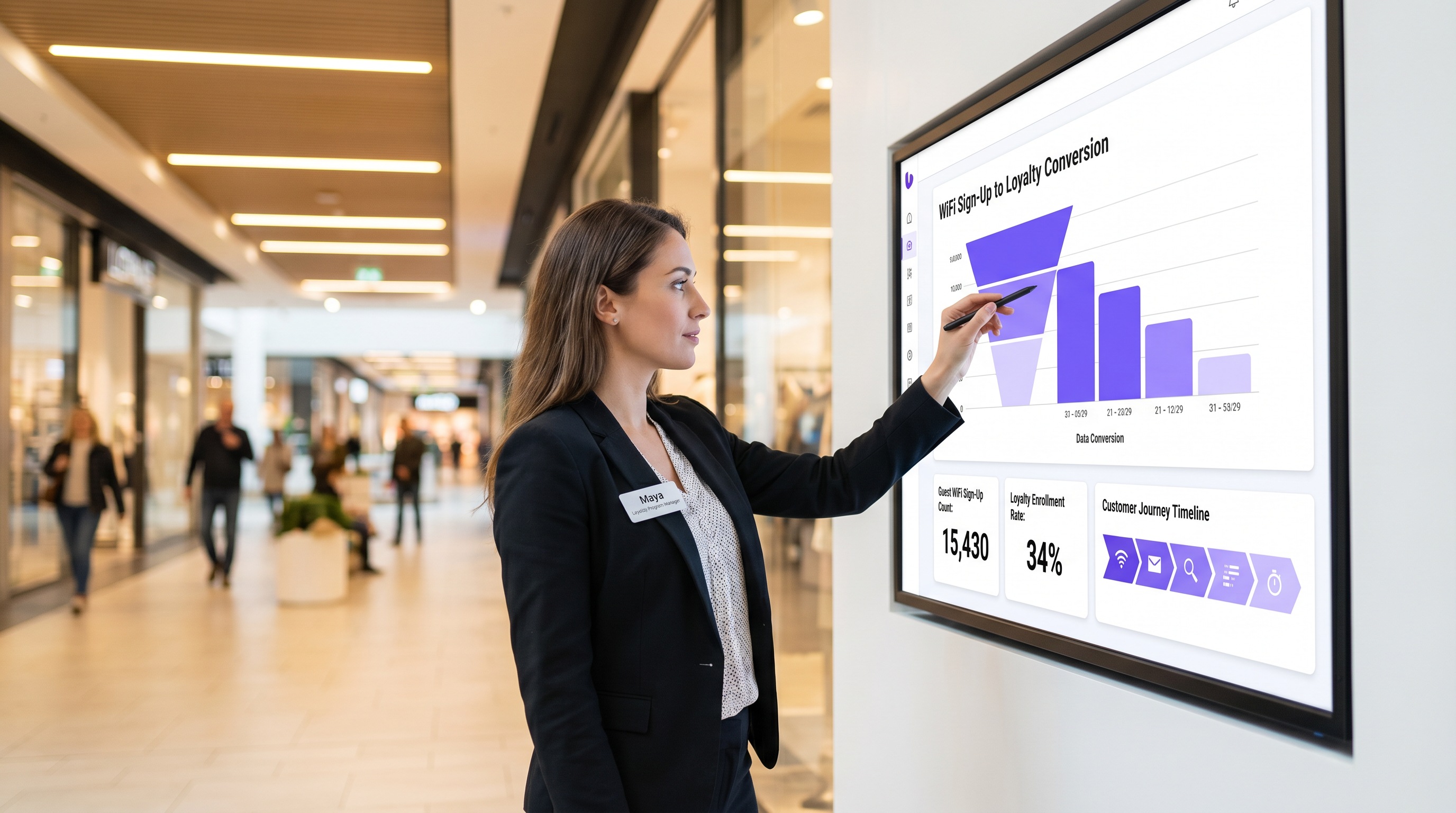
Per le sedi aziendali—dagli stadi alle catene alberghiere globali—il WiFi per gli ospiti rappresenta il punto di contatto digitale con la più alta intenzione nell'ambiente fisico. Quando un ospite si connette alla rete, fornisce un identificatore verificato e un consenso esplicito. Eppure, molte sedi trattano questa interazione come un costo di connettività irrecuperabile piuttosto che come un motore di acquisizione della fedeltà. Questa guida descrive in dettaglio l'architettura tecnica e la strategia dei dati necessarie per convertire le registrazioni WiFi ospiti in membri attivi del programma fedeltà. Abbandonando le esportazioni in batch e implementando integrazioni API in tempo reale con profilazione progressiva, le sedi possono aumentare i tassi di conversione da WiFi a fedeltà da una base del 10% a oltre il 30%. Questo documento fornisce a IT manager, architetti di rete e direttori delle operazioni il framework di implementazione necessario per raggiungere questi benchmark, garantendo la conformità con gli standard globali sulla privacy e generando un ROI misurabile.
Ascolta il briefing audio di accompagnamento per una panoramica strategica:
Approfondimento Tecnico
La base di un funnel di fedeltà WiFi ad alta conversione è l'architettura del Captive Portal. L'approccio tradizionale—in cui un ospite compila un lungo modulo e i dati vengono esportati tramite un batch CSV notturno a un CRM—è fondamentalmente difettoso. Introduce un ritardo di integrazione di 24 ore, il che significa che l'invito alla fedeltà arriva molto tempo dopo che il momento di massima intenzione dell'ospite è passato.
Le implementazioni moderne utilizzano integrazioni webhook o REST API in tempo reale. Quando un dispositivo si autentica tramite il Captive Portal, la piattaforma di analisi WiFi (come Guest WiFi ) invia immediatamente un payload dell'evento al sistema di fedeltà. Questo payload include l'indirizzo email verificato, l'indirizzo MAC del dispositivo (hashing o anonimizzato a seconda della conformità locale), l'ID della sede e il timestamp.
Fondamentalmente, questa architettura supporta la profilazione progressiva. Invece di presentare un modulo di registrazione a dieci campi che causa l'abbandono, il Captive Portal iniziale richiede solo il set minimo di dati vitali: Nome, Email e Consenso Marketing. Nelle visite successive, la rete riconosce l'indirizzo MAC di ritorno e serve una splash page dinamica che richiede un'ulteriore informazione, arricchendo il profilo nel tempo senza introdurre attrito.
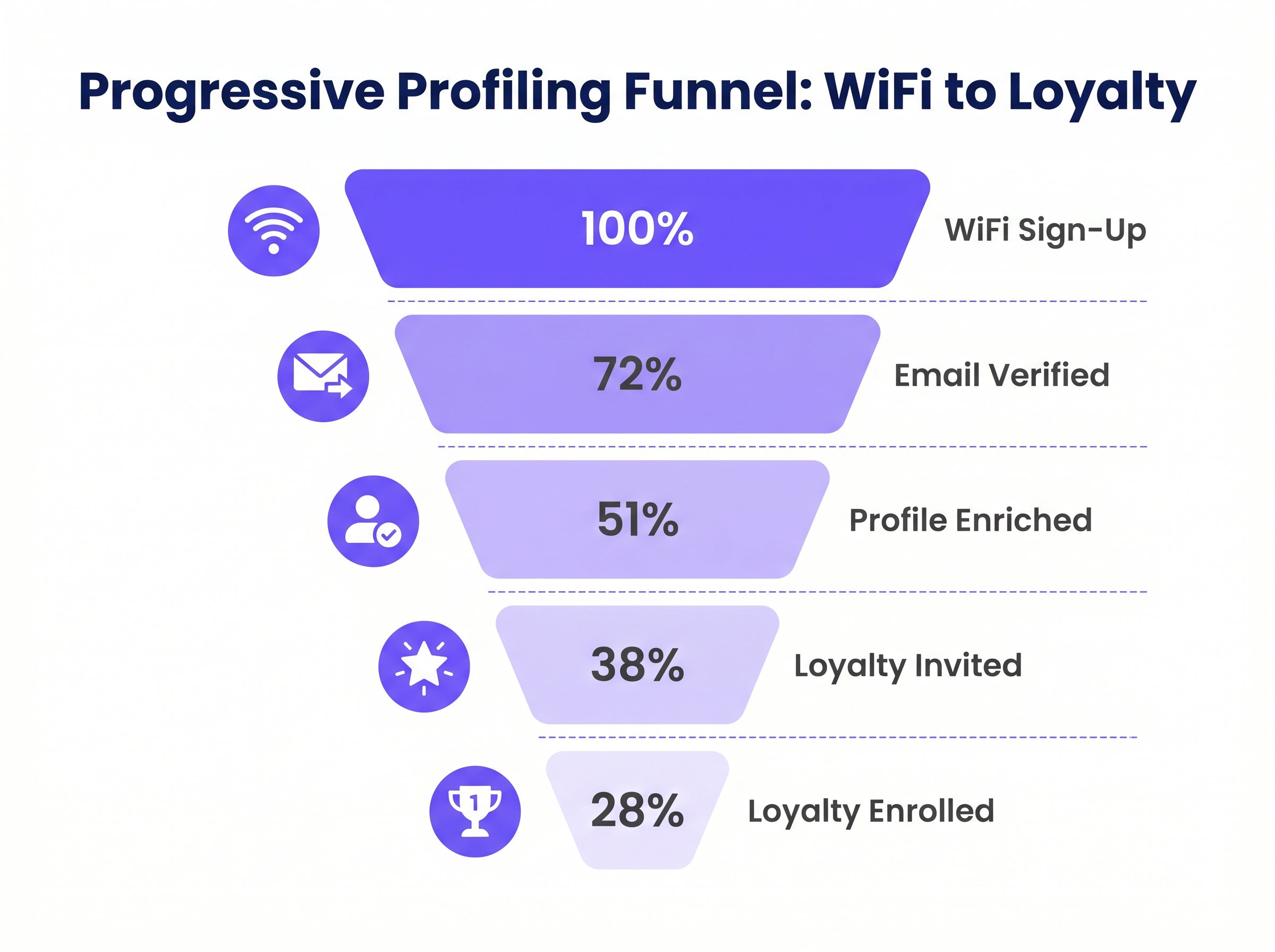
Dal punto di vista della conformità, questa acquisizione di dati esplicita e in tempo reale si allinea perfettamente con i requisiti GDPR e CCPA. Il consenso viene registrato con un timestamp e un indirizzo IP specifici, fornendo una robusta traccia di audit che le liste di dati acquistati non possono eguagliare. Per maggiori informazioni su come gestire queste normative, consulta la nostra guida su CCPA vs GDPR: Conformità globale alla privacy per i dati WiFi ospiti .
Guida all'Implementazione
L'implementazione di un'integrazione di fedeltà WiFi ad alta conversione richiede il coordinamento tra l'ingegneria di rete e le operazioni di marketing. Segui questo framework passo-passo:
- Verificare il Flusso di Autenticazione: Assicurati che i tuoi access point e i controller LAN wireless (WLC) siano configurati per instradare tutto il traffico non autenticato a un Captive Portal centrale. Verifica che il portale supporti HTTPS e i moderni standard di design responsive.
- Implementare la Profilazione Progressiva: Configura la logica del Captive Portal per richiedere solo Nome, Email e una casella di opt-in distinta e non selezionata per le comunicazioni di marketing durante la prima sessione.
- Stabilire l'Integrazione in Tempo Reale: Configura i webhook all'interno della tua piattaforma di analisi WiFi per inviare i dati tramite POST al tuo CRM o motore di fedeltà immediatamente dopo l'autenticazione. Il payload deve includere l'identificatore della sede per consentire una messaggistica contestualizzata.
- Configurare Trigger Basati sulle Visite: All'interno del CRM, imposta flussi di lavoro automatizzati che attivano l'invito alla fedeltà in base al tipo di sede e al numero di visite.
- Abilitare l'Iscrizione Senza Attrito: Assicurati che l'email di invito alla fedeltà si colleghi a una pagina di iscrizione ottimizzata per dispositivi mobili, con un solo tocco, che non richieda all'utente di reinserire i dati appena forniti sul Captive Portal.
Migliori Pratiche
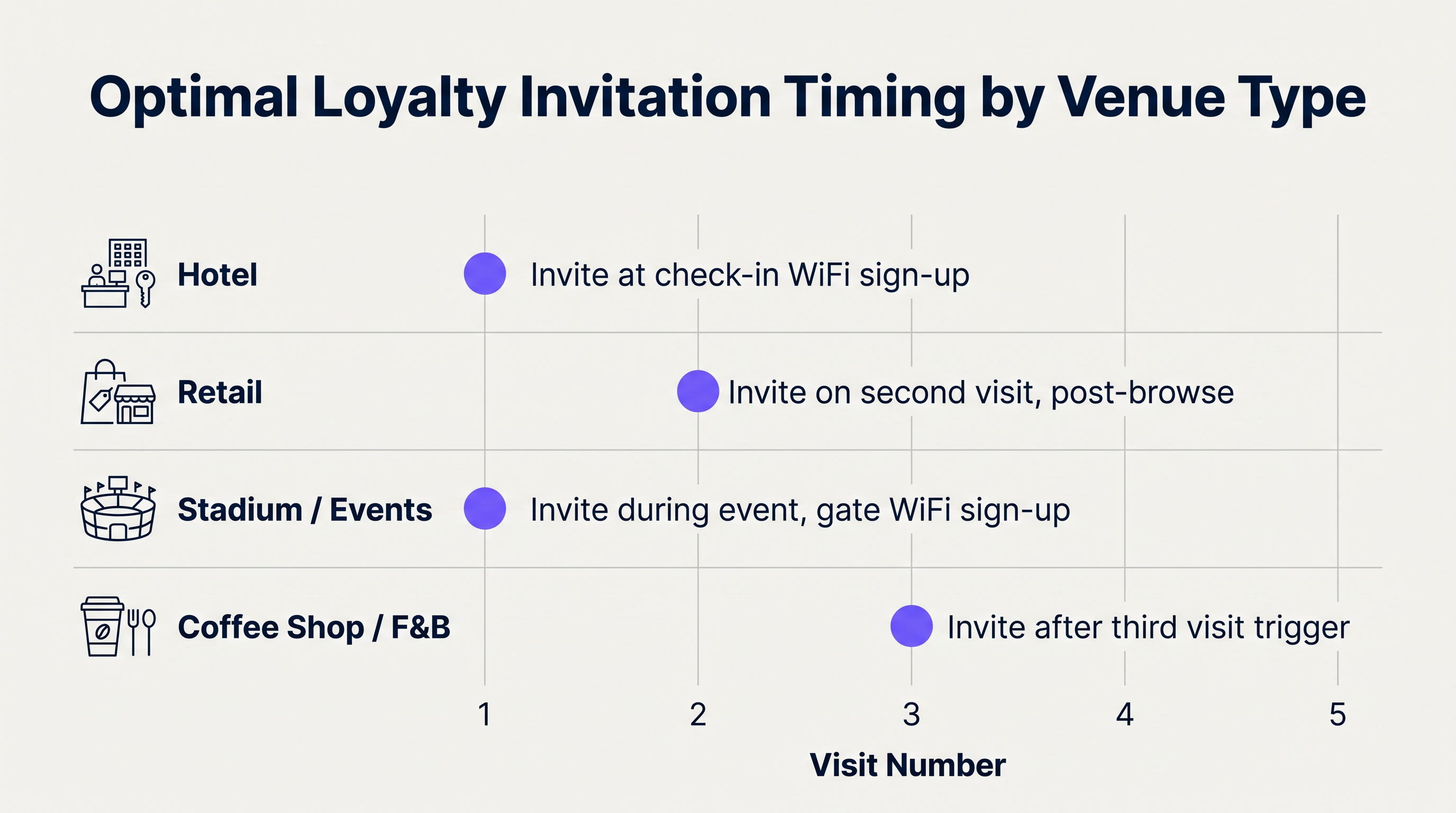
I dati di benchmark del settore rivelano che la tempistica dell'invito alla fedeltà è la variabile più significativa per il successo della conversione. Il punto di attivazione ottimale varia in modo significativo in base al tipo di sede:
- Ospitalità: Attiva l'invito entro due ore dalla connessione iniziale al check-in. L'ospite è sistemato e altamente motivato a guadagnare punti per il suo soggiorno attuale.
- Vendita al Dettaglio: Ritarda l'invito fino alla seconda visita. Un visitatore per la prima volta in un negozio al dettaglio non ha ancora dimostrato affinità con il marchio. L'attivazione dell'email alla seconda connessione WiFi produce tassi di conversione del 28-35%. Per approfondimenti più ampi sulle implementazioni nel settore della vendita al dettaglio, consulta la nostra panoramica del settore Retail .
- Stadi ed Eventi: Attiva immediatamente alla connessione. Il tempo di permanenza è breve e l'ospite potrebbe visitare solo una volta a stagione. Le notifiche push in loco combinate con un'email immediata offrono il rendimento più elevato.
- Ristorazione: Attiva alla terza visita. Questo stabilisce un modello di ritorno abituale prima di introdurre la proposta di fedeltà.
Inoltre, l'integrazione di Wayfinding e Sensors può fornire dati contestuali aggiuntivi, consentendo inviti alla fedeltàazioni da attivare quando un ospite entra in una zona specifica all'interno della struttura, piuttosto che solo al perimetro.
Risoluzione dei problemi e mitigazione del rischio
Diverse modalità di errore comuni possono far deragliare un'implementazione di fedeltà WiFi:
- Il divario del consenso: Acquisire un indirizzo email senza un esplicito consenso marketing viola le normative sulla privacy. Il captive portal deve separare l'accettazione dei Termini di Servizio dall'opt-in marketing. Se l'opt-in è raggruppato o preselezionato, il database risultante è legalmente tossico.
- Frammentazione del profilo: Un ospite che visita più sedi all'interno di una catena può creare record duplicati se il CRM manca di una robusta risoluzione dell'identità. Il CRM deve deduplicare i record basati sull'indirizzo email, unendo gli indirizzi MAC associati in un unico profilo unificato.
- Il ritardo di integrazione: Affidarsi a esportazioni batch anziché ad API in tempo reale significa che gli inviti arrivano troppo tardi. Se la roadmap IT non può supportare immediatamente l'integrazione API in tempo reale, dare priorità a questo come il debito tecnico più critico da risolvere.
ROI e impatto aziendale
Convertire un utente WiFi ospite in un membro fedeltà cambia fondamentalmente l'economia unitaria dell'implementazione della rete. Un utente WiFi ospite standard rappresenta una singola connessione anonima. Un membro fedeltà rappresenta un'entità nota con un valore a vita (LTV) misurabile.
Implementando la profilazione progressiva e i trigger in tempo reale, le sedi aziendali vedono tipicamente i tassi di conversione da WiFi a fedeltà stabilizzarsi tra il 25% e il 35%. Questo afflusso di dati di prima parte consente ai team di marketing di ridurre la dipendenza da costosi canali di acquisizione di terze parti. Nel calcolare l'impatto aziendale, i leader IT dovrebbero modellare l'LTV dei membri fedeltà appena acquisiti rispetto al costo operativo dell'hardware di rete e delle licenze software. Per una metodologia dettagliata, consultare Misurare il ROI sul WiFi ospite: Un framework per i CMO .
In definitiva, un funnel di fedeltà WiFi ben architettato trasforma la rete wireless da un centro di costo a un motore primario di fidelizzazione dei clienti e di entrate. Man mano che le architetture di rete si evolvono, comprendere I principali vantaggi di SD WAN per le aziende moderne garantirà anche che l'infrastruttura sottostante possa supportare queste applicazioni ad alta intensità di dati e in tempo reale in modo sicuro e affidabile.
Termini chiave e definizioni
Progressive Profiling
The practice of collecting user data incrementally over multiple interactions rather than requesting all information upfront.
Essential for captive portals to minimize friction while still building rich customer profiles over time.
Captive Portal
A web page that a user of a public-access network is obliged to view and interact with before access is granted.
The primary interface for capturing guest data and securing marketing consent.
Webhook
A method of augmenting or altering the behavior of a web page or web application with custom callbacks, providing real-time data transfer.
Used to instantly send guest WiFi authentication data to a CRM, eliminating the delay of batch exports.
Identity Resolution
The process of matching multiple identifiers (like email addresses and MAC addresses) across devices and touchpoints to a single customer profile.
Crucial for preventing duplicate records when a guest visits multiple venues within a brand's portfolio.
MAC Address Anonymization
The process of hashing or encrypting Media Access Control addresses to protect user privacy while still allowing network systems to recognize returning devices.
Required for compliance with strict privacy frameworks like GDPR while enabling progressive profiling.
Zero-Party Data
Data that a customer intentionally and proactively shares with a brand, such as preference center data or purchase intentions.
Guest WiFi sign-ups provide high-quality zero-party data, reducing reliance on deprecated third-party cookies.
Explicit Consent
An unambiguous, affirmative action by a user agreeing to the processing of their personal data for a specific purpose.
Must be captured via an unchecked opt-in box on the captive portal to ensure legal compliance for marketing communications.
Integration Lag
The delay between a user taking an action (like connecting to WiFi) and that data being available in a downstream system (like a CRM).
The primary cause of low conversion rates in legacy WiFi deployments that rely on batch CSV exports.
Casi di studio
A 200-room boutique hotel currently exports a CSV of guest WiFi sign-ups every Monday morning and uploads it to their email platform. They send a generic 'Join our Loyalty Club' email on Tuesday. Their conversion rate is currently 4%. How should the IT Director re-architect this flow to achieve a 25%+ conversion rate?
- Replace the CSV export with a real-time webhook integration from the WiFi platform to the CRM.
- Redesign the captive portal to use progressive profiling: ask only for Name, Email, and Marketing Consent on the first connection.
- Configure the CRM to trigger the loyalty invitation email exactly 90 minutes after the initial WiFi authentication payload is received.
- Personalize the email copy to reference the specific hotel property and offer an immediate perk (e.g., 'Earn double points on your current stay').
A national retail chain with 500 locations requires users to fill out a 7-field form (Name, Email, Phone, Postcode, Date of Birth, Gender, Preferences) to access the guest WiFi. Only 12% of shoppers complete the form, and of those, only 8% join the loyalty programme. What is the recommended deployment strategy?
- Implement progressive profiling. Reduce the initial captive portal form to just Name, Email, and Marketing Consent.
- Configure the WiFi platform to recognize returning devices (MAC addresses) on subsequent visits.
- On the second visit, serve a dynamic splash page asking for Postcode.
- Trigger the loyalty invitation email only after the second visit, utilizing the behavioral data (return intent) to drive higher engagement.
Analisi degli scenari
Q1. Your marketing team wants to add 'Date of Birth' and 'Favorite Beverage' to the captive portal form for a new coffee shop deployment to personalize loyalty offers immediately. As the IT Director, how do you respond?
💡 Suggerimento:Consider the impact of form length on initial connection rates.
Mostra l'approccio consigliato
Advise against adding these fields to the initial sign-up. Explain that every additional field reduces the completion rate. Recommend implementing progressive profiling: capture Name, Email, and Consent on visit 1 to maximize the top-of-funnel acquisition, then configure the network to ask for 'Favorite Beverage' on visit 2 and 'Date of Birth' on visit 3.
Q2. During an audit, the compliance officer notes that the captive portal currently has a pre-checked box stating 'I agree to the Terms of Service and to receive marketing emails.' What architectural changes are required to mitigate this risk?
💡 Suggerimento:Review the requirements for explicit consent under GDPR.
Mostra l'approccio consigliato
The portal must be re-architected immediately to separate the Terms of Service acceptance from the marketing opt-in. The marketing opt-in must be an explicit, unchecked checkbox. The backend database must also be updated to record the timestamp and IP address specifically associated with the marketing opt-in action, creating a defensible audit trail.
Q3. A stadium client is frustrated that their post-match 'Join our Fan Club' emails, sent the Monday after a weekend game, are only achieving a 5% conversion rate despite capturing 15,000 emails on the guest WiFi. What is the technical solution?
💡 Suggerimento:Analyze the integration lag and the context of the user.
Mostra l'approccio consigliato
The issue is the integration lag; the intent has evaporated by Monday. The technical solution is to replace the batch export process with a real-time API integration. The CRM should be configured to trigger an immediate email or an in-venue push notification while the fan is still connected to the stadium network, capitalizing on the live event experience.
Punti chiave
- ✓Guest WiFi is the highest-intent digital touchpoint for physical venues.
- ✓Real-time API integrations are mandatory; batch exports kill conversion rates.
- ✓Progressive profiling (asking for data over multiple visits) dramatically outperforms long registration forms.
- ✓The initial captive portal should only request Name, Email, and Marketing Consent.
- ✓Optimal invitation timing varies by venue: Hotels (Visit 1), Retail (Visit 2), F&B (Visit 3).
- ✓Separating Terms of Service from an unchecked marketing opt-in is critical for compliance.
- ✓Properly executed deployments can achieve 25-35% WiFi-to-loyalty conversion rates.




