
WLC (Wireless LAN Controller) কী এবং এটি কি এখনও আপনার প্রয়োজন?
এই বিশদ নির্দেশিকাটি Wireless LAN Controllers (WLCs) এর বিবর্তন অনুসন্ধান করে এবং ২০২৬ সালে সঠিক আর্কিটেকচার নির্ধারণের জন্য একটি টেকনিক্যাল ফ্রেমওয়ার্ক প্রদান করে। এটি ঐতিহ্যবাহী হার্ডওয়্যার, ক্লাউড-ম্যানেজড এবং কন্ট্রোলার-হীন মডেলগুলো কভার করে, যা সম্মতি, স্কেলেবিলিটি এবং গেস্ট অভিজ্ঞতার ওপর তাদের প্রভাবের বিস্তারিত বিবরণ দেয়।
Video overview
এই গাইডটি শুনুন
পডকাস্ট ট্রান্সক্রিপ্ট দেখুন
আমাদের মূল সিরিজের অংশ: Guest WiFi গাইড →
Wireless LAN controller (WLC) architecture advisor
Model your wireless estate, evaluate CAPWAP tunneling versus local FlexConnect switching, calculate controller capacity, and generate enterprise configuration blueprints.
High-availability hardware WLC cluster (centralised CAPWAP)
Centralised CAPWAP data plane tunnels all client traffic to core data centre firewalls for deep packet inspection (DPI) and content filtering.
Key architectural advantages:
- Deterministic RF control, sub-second AP handoffs, and centralised 802.1X policy enforcement
- Carrier-grade High Availability Stateful Switchover (SSO) preventing voice call or video stream drops
- Seamless modernisation with Purple cloud overlay without replacing existing Catalyst switches or APs
Request an enterprise WLC architecture review
Planning a controller refresh, migrating from on-premises WLCs to cloud management, or seeking to modernise guest WiFi on existing Cisco or Aruba hardware? Connect with Purple wireless solutions architects for a customised evaluation.

এক্সিকিউটিভ সারাংশ
এন্টারপ্রাইজ ওয়্যারলেস নেটওয়ার্ক স্থাপনকারী IT ম্যানেজার এবং নেটওয়ার্ক আর্কিটেক্টদের জন্য, Wireless LAN Controller (WLC) ঐতিহাসিকভাবে ওয়্যারলেস পরিকাঠামোর কেন্দ্রীয় স্নায়ুতন্ত্র হিসেবে কাজ করেছে। তবে, আর্কিটেকচারাল ল্যান্ডস্কেপ উল্লেখযোগ্যভাবে পরিবর্তিত হয়েছে। ক্লাউড-ম্যানেজড আর্কিটেকচার এবং ডিস্ট্রিবিউটেড ডেটা প্লেনের উত্থানের সাথে সাথে, যেকোনো নতুন স্থাপনা বা রিফ্রেশ সাইকেলের জন্য মৌলিক প্রশ্নটি এখন আর কেবল "আমাদের কোন কন্ট্রোলার কেনা উচিত" তা নয়, বরং "আমাদের কি আদৌ কোনো হার্ডওয়্যার কন্ট্রোলারের প্রয়োজন আছে?"
এই গাইডটি ২০২৬ সালে WLC আর্কিটেকচারের একটি বিস্তৃত প্রযুক্তিগত বিশ্লেষণ প্রদান করে। আমরা ঐতিহ্যবাহী সেন্ট্রালাইজড হার্ডওয়্যার থেকে আধুনিক ক্লাউড-ম্যানেজড এবং কন্ট্রোলার-লেস টপোলজির বিবর্তন পরীক্ষা করব। বাস্তব-বিশ্বের কমপ্লায়েন্স প্রয়োজনীয়তা (যেমন PCI-DSS এবং GDPR), স্কেলেবিলিটির চাহিদা এবং গেস্ট অভিজ্ঞতার ফলাফলের সাথে এই প্রযুক্তিগত আর্কিটেকচারগুলির ম্যাপিং করে, এই রেফারেন্সটি প্রযুক্তিগত সিদ্ধান্ত গ্রহণকারীদের সঠিক কন্ট্রোল প্লেন স্ট্র্যাটেজি নির্বাচন করতে সক্ষম করে।
এছাড়াও, আমরা আলোচনা করব কীভাবে Purple-এর মতো প্ল্যাটফর্মগুলি এই পরিকাঠামো স্তরের উপরে নিরপেক্ষভাবে কাজ করে, যা অন্তর্নিহিত হার্ডওয়্যার ভেন্ডর নির্বিশেষে সাধারণ সংযোগকে একটি কার্যকর বুদ্ধিমত্তায় রূপান্তরিত করে।
Technical Deep-Dive: WLC বোঝা
Control Plane-এর বিবর্তন
একটি Wireless LAN Controller (WLC) হল একটি নেটওয়ার্ক ডিভাইস যা একাধিক ওয়্যারলেস অ্যাক্সেস পয়েন্ট (APs) জুড়ে সেন্ট্রালাইজড ম্যানেজমেন্ট, কনফিগারেশন এবং সিকিউরিটি পলিসি প্রয়োগের জন্য দায়ী। শুরুর দিকের ওয়্যারলেস ডিপ্লয়মেন্টে, AP-গুলি স্বয়ংক্রিয়ভাবে কাজ করত, যার জন্য ব্যক্তিগত কনফিগারেশনের প্রয়োজন হতো এবং RF পরিবেশ বা রোমিং হ্যান্ডঅফ সমন্বয় করার ক্ষমতার অভাব ছিল। ওয়্যারলেস যখন একটি সুবিধাজনক নেটওয়ার্ক থেকে মিশন-ক্রিটিক্যাল অবকাঠামোতে রূপান্তরিত হল, তখন স্বয়ংক্রিয় AP-গুলির অ্যাডমিনিস্ট্রেটিভ ওভারহেড অচল হয়ে পড়েছিল।
WLC এটি সমাধান করেছে split-MAC আর্কিটেকচার প্রবর্তনের মাধ্যমে। এই মডেলে, AP (যাকে প্রায়শই একটি "lightweight" AP বলা হয়) রিয়েল-টাইম, টাইম-সেনসিটিভ 802.11 ফিজিক্যাল লেয়ারের কাজগুলি পরিচালনা করে, যেমন বিকন ট্রান্সমিশন এবং প্রোব রেসপন্স। কন্ট্রোলারটি নন-রিয়েল-টাইম, MAC-লেয়ারের কার্যাবলীর দায়িত্ব গ্রহণ করে, যার মধ্যে রয়েছে RF ম্যানেজমেন্ট, সিকিউরিটি পলিসি প্রয়োগ এবং ক্লায়েন্ট অথেন্টিকেশন। lightweight AP এবং কন্ট্রোলারের মধ্যে যোগাযোগ সাধারণত একটি CAPWAP (Control and Provisioning of Wireless Access Points) টানেলের মধ্যে এনক্যাপসুলেট করা থাকে।
CAPWAP-এর ভূমিকা
ঐতিহ্যবাহী WLC অপারেশনের জন্য CAPWAP অত্যন্ত মৌলিক। এটি AP এবং কন্ট্রোলারের মধ্যে একটি সুরক্ষিত টানেল স্থাপন করে, যা কন্ট্রোল ট্রাফিক (ম্যানেজমেন্ট এবং কনফিগারেশন) এবং ডেটা ট্রাফিক (ক্লায়েন্ট পেলোড) উভয়ই বহন করে।
একটি সেন্ট্রালাইজড ডেটা প্লেন ডিপ্লয়মেন্টে, সমস্ত ক্লায়েন্ট ট্রাফিক ওয়্যার্ড নেটওয়ার্কে রাউট করার আগে কন্ট্রোলারে ব্যাকহল করা হয়। এটি সেন্ট্রালাইজড পলিসি প্রয়োগ, ডিপ প্যাকেট ইন্সপেকশন এবং সহজ VLAN ম্যানেজমেন্টের অনুমতি দেয়। তবে, এটি হাই-ডেনসিটি পরিবেশে একটি উল্লেখযোগ্য বাধা (bottleneck) তৈরি করতে পারে।
এটি প্রশমিত করতে, অনেক আধুনিক ডিপ্লয়মেন্টে FlexConnect (Cisco) বা অনুরূপ লোকাল-সুইচিং আর্কিটেকচার ব্যবহার করা হয়। এখানে, কন্ট্রোল প্লেন WLC-তে সেন্ট্রালাইজড থাকে, কিন্তু ডেটা প্লেন ডিস্ট্রিবিউটেড হয়, যা ক্লায়েন্ট ট্রাফিককে লোকাল এজ সুইচে ব্রেক আউট করার অনুমতি দেয়। এটি নাটকীয়ভাবে WLC-এর উপর প্রসেসিং লোড হ্রাস করে এবং থ্রুপুট উন্নত করে, বিশেষ করে WAN লিঙ্কের ক্ষেত্রে।
Seamless Roaming এবং ক্লায়েন্ট ম্যানেজমেন্ট
WLC ডিপ্লয় করার অন্যতম প্রধান প্রযুক্তিগত চালিকাশক্তি হল সীমলেস ক্লায়েন্ট রোমিং। একটি মাল্টি-AP পরিবেশে, কভারেজ এরিয়া জুড়ে চলাচলকারী একজন ক্লায়েন্টকে অবশ্যই একটি AP থেকে অন্য AP-তে হ্যান্ডঅফ করতে হবে। কন্ট্রোলার ছাড়া, ক্লায়েন্ট এই সিদ্ধান্তটি সম্পূর্ণ স্বাধীনভাবে নেয়, যার ফলে প্রায়শই "sticky client" সিন্ড্রোম দেখা দেয়, যেখানে ডিভাইসটি দূরবর্তী কোনো AP-এর সাথে দুর্বল সংযোগ বজায় রাখে, যা সামগ্রিক চ্যানেল ক্যাপাসিটি কমিয়ে দেয়।
একটি WLC এই প্রক্রিয়াটি পরিচালনা করে। RF পরিবেশ এবং ক্লায়েন্টের প্রমাণীকরণ অবস্থার একটি কেন্দ্রীভূত ভিউ বজায় রাখার মাধ্যমে (বিশেষ করে 802.1X স্থাপনার জন্য অত্যন্ত গুরুত্বপূর্ণ), কন্ট্রোলার রোমিং ইভেন্টটি আগে থেকেই প্রস্তুত করতে পারে। এটি ক্লায়েন্টের PMK (Pairwise Master Key) ক্যাশ টার্গেট AP-তে স্থানান্তর করতে সহায়তা করে, যা মিলিসেকেন্ডের মধ্যে একটি নির্বিঘ্ন ট্রানজিশন সক্ষম করে, যার ফলে VoIP কল এবং স্ট্রিমিং সেশনগুলো নিরবচ্ছিন্ন থাকে। Hospitality এবং Retail এর মতো ভেন্যুগুলোতে অতিথিদের উচ্চ সন্তুষ্টি বজায় রাখার জন্য এটি অত্যন্ত গুরুত্বপূর্ণ।
Implementation Guide: সঠিক আর্কিটেকচার নির্বাচন করা
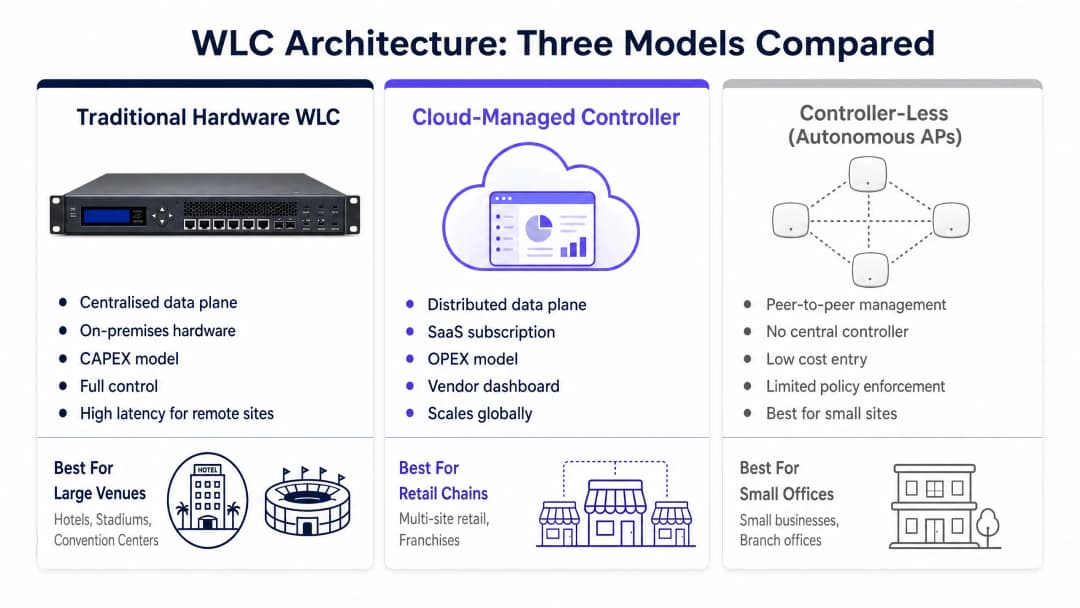
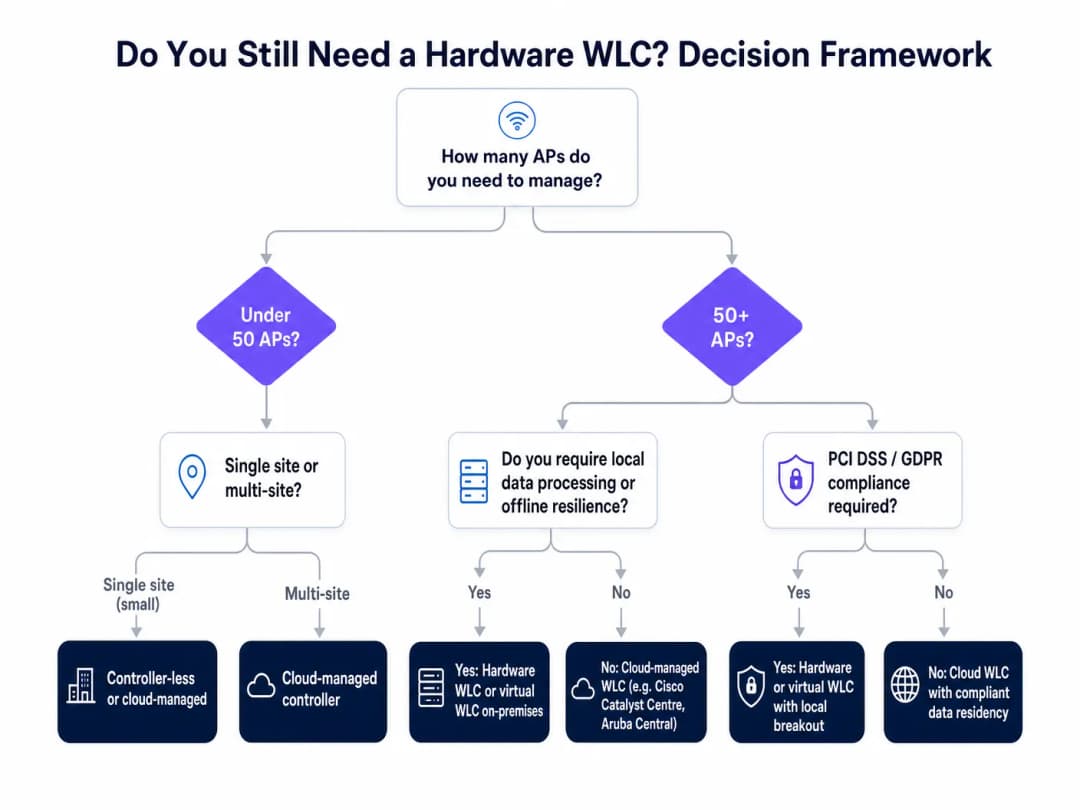
২০২৬ সালে, নেটওয়ার্ক স্থপতিদের অবশ্যই তিনটি স্বতন্ত্র স্থাপনা মডেল মূল্যায়ন করতে হবে। এই সিদ্ধান্তটি স্কেল, কমপ্লায়েন্স, ল্যাটেন্সি সহনশীলতা এবং CAPEX বনাম OPEX বাজেট কাঠামোর ওপর নির্ভর করে।
১. সনাতন হার্ডওয়্যার WLC (অন-প্রিমিসেস)
সনাতন মডেলে একটি স্থানীয় ডেটা সেন্টার বা সার্ভার রুমে একটি ফিজিক্যাল অ্যাপ্লায়েন্স স্থাপন করা হয়।
- আর্কিটেকচার: কেন্দ্রীভূত কন্ট্রোল এবং ডেটা প্লেন (সাধারণত)।
- সুবিধা: ডেটা রেসিডেন্সির ওপর সম্পূর্ণ নিয়ন্ত্রণ, অফলাইন স্থিতিস্থাপকতা (WAN বিভ্রাট সত্ত্বেও টিকে থাকে), এবং অত্যন্ত সুনির্দিষ্ট নীতি প্রয়োগ।
- অসুবিধা: উচ্চ প্রারম্ভিক CAPEX, সীমিত ধারণক্ষমতা যার জন্য উল্লেখযোগ্য স্কেলিংয়ের ক্ষেত্রে হার্ডওয়্যার পরিবর্তনের প্রয়োজন হয়, এবং জটিল রিডান্ডেন্সি কনফিগারেশন (N+1 বা অ্যাক্টিভ/স্ট্যান্ডবাই)।
- সবচেয়ে উপযুক্ত: বড় একক-সাইট স্থাপনা (যেমন, স্টেডিয়াম, প্রধান হাসপাতাল, বিশ্ববিদ্যালয় ক্যাম্পাস) যেখানে কমপ্লায়েন্স বা ল্যাটেন্সি সীমাবদ্ধতার কারণে স্থানীয় ডেটা প্রক্রিয়াকরণ বাধ্যতামূলক।
২. ক্লাউড-ম্যানেজড কন্ট্রোলার
ক্লাউড-ম্যানেজড মডেলটি কন্ট্রোল প্লেনকে একটি ভেন্ডর-হোস্টেড SaaS প্ল্যাটফর্মে স্থানান্তরিত করে, যখন ডেটা প্লেনটি প্রান্তে বিতরণ করা থাকে।
- আর্কিটেকচার: কেন্দ্রীভূত ক্লাউড কন্ট্রোল প্লেন, বিতরণকৃত স্থানীয় ডেটা প্লেন।
- সুবিধা: দ্রুত স্কেলাবিলিটি, OPEX সাবস্ক্রিপশন মডেল, জিরো-টাচ প্রভিশনিং এবং ভৌগোলিকভাবে ছড়িয়ে থাকা সাইট জুড়ে একটি ইউনিফাইড ম্যানেজমেন্ট ড্যাশবোর্ড।
- অসুবিধা: ম্যানেজমেন্টের জন্য নির্ভরযোগ্য WAN সংযোগ প্রয়োজন (যদিও স্থানীয় ডেটা সুইচিং বিভ্রাট সত্ত্বেও টিকে থাকে), এবং ভেন্ডরের ক্লাউড অঞ্চলের ওপর নির্ভর করে সম্ভাব্য ডেটা রেসিডেন্সি সংক্রান্ত উদ্বেগ।
- সবচেয়ে উপযুক্ত: রিটেইল চেইন, বিতরণকৃত এন্টারপ্রাইজ শাখা এবং ফ্র্যাঞ্চাইজি অপারেশনের মতো মাল্টি-সাইট পরিবেশ।
৩. কন্ট্রোলার-লেস (স্বায়ত্তশাসিত/মেশ)
এই মডেলে, অ্যাক্সেস পয়েন্টগুলো পিয়ার-টু-পিয়ার যোগাযোগ করে এবং মৌলিক সমন্বয় পরিচালনার জন্য নিজেদের মধ্যে একটি ভার্চুয়াল কন্ট্রোলার নির্বাচন করে।
- আর্কিটেকচার: বিতরণকৃত কন্ট্রোল এবং ডেটা প্লেন।
- সুবিধা: সবচেয়ে কম খরচে প্রবেশাধিকার, সহজ স্থাপনা, কোনো ডেডিকেটেড কন্ট্রোলার হার্ডওয়্যার বা ক্লাউড সাবস্ক্রিপশনের প্রয়োজন নেই।
- অসুবিধা: সীমিত স্কেলাবিলিটি, মৌলিক রোমিং ক্ষমতা এবং উন্নত এন্টারপ্রাইজ নিরাপত্তা ফিচারের অভাব।
- সবচেয়ে উপযুক্ত: কম ক্লায়েন্ট ঘনত্ব এবং ন্যূনতম কমপ্লায়েন্স প্রয়োজনীয়তা সহ ছোট, একক-সাইট স্থাপনা (যেমন, ছোট রিটেইল ইউনিট, বুটিক ক্যাফে)।
আপনার নির্দিষ্ট সেটআপ নিয়ে কোনো প্রশ্ন আছে?
আমাদের টিম ৮০,০০০ ভেন্যুতে ভেন্যু অপারেটর, IT ম্যানেজার এবং নেটওয়ার্ক ইঞ্জিনিয়ারদের সাথে কাজ করে। একটি ২০ মিনিটের কল বুক করুন এবং আপনার মতো অন্যরা কীভাবে এর সমাধান করেছেন তা আমরা আপনাকে দেখাব।
ডেপ্লয়মেন্টের জন্য সেরা অনুশীলনসমূহ
যে আর্কিটেকচারই বেছে নেওয়া হোক না কেন, নেটওয়ার্কের স্থায়িত্ব এবং পারফরম্যান্স নিশ্চিত করার জন্য ইন্ডাস্ট্রি স্ট্যান্ডার্ড সেরা অনুশীলনগুলি মেনে চলা অত্যন্ত জরুরি।
১. সর্বোচ্চ লোডের জন্য সাইজিং করুন, গড়ের জন্য নয়: WLC-এর ক্ষমতা এককালীন কতটি AP এবং ক্লায়েন্ট সেশন সক্রিয় রয়েছে তার উপর ভিত্তি করে কঠোরভাবে লাইসেন্সপ্রাপ্ত এবং প্রয়োগ করা হয়। পরিবহন হাব বা স্টেডিয়ামের মতো উচ্চ-ঘনত্বের পরিবেশের জন্য ডিজাইন করার সময়, আপনাকে দৈনিক গড় ব্যবহারের পরিবর্তে সর্বোচ্চ ইভেন্ট লোডের উপর ভিত্তি করে ক্ষমতা গণনা করতে হবে। এটি করতে ব্যর্থ হলে সংকটময় সময়ে WLC ক্লায়েন্ট অ্যাসোসিয়েশন অনুরোধগুলি বাতিল করে দেবে।
২. রেডান্ড্যান্সির জন্য ডিজাইন করুন: একটি হার্ডওয়্যার WLC হলো একটি একক পয়েন্ট অফ ফেইলিওর (single point of failure)। ডেপ্লয়মেন্টের ক্ষেত্রে অবশ্যই হাই অ্যাভেইলেবিলিটি (HA) অন্তর্ভুক্ত করতে হবে। আধুনিক প্ল্যাটফর্মগুলি স্টেটফুল সুইচওভার (SSO) সমর্থন করে, যা নিশ্চিত করে যে ক্লায়েন্ট সেশন এবং AP অ্যাসোসিয়েশনগুলি পুনরায় অথেন্টিকেশন ছাড়াই একটি স্ট্যান্ডবাই কন্ট্রোলারে নির্বিঘ্নে স্থানান্তরিত হয়।
৩. উচ্চ ব্যান্ডউইথের জন্য লোকাল ব্রেকআউট প্রয়োগ করুন: সেন্ট্রালাইজড WLC আর্কিটেকচারে, কোর নেটওয়ার্কের CAPWAP টানেলের মাধ্যমে উচ্চ-ব্যান্ডউইথ গেস্ট ট্র্যাফিক (যেমন, ভিডিও স্ট্রিমিং) ব্যাকহল করা এড়িয়ে চলুন। এই ট্র্যাফিকটি সরাসরি ইন্টারনেটে অফলোড করতে এজে লোকাল সুইচিং ব্যবহার করুন, যা কন্ট্রোল প্লেন ফাংশন এবং সুরক্ষিত কর্পোরেট ট্র্যাফিকের জন্য WLC-এর প্রসেসিং ক্ষমতা বাঁচিয়ে রাখবে।
৪. কঠোর নিরাপত্তা নীতি প্রয়োগ করুন: নিরাপত্তা জোরদার করার কেন্দ্রীয় পয়েন্ট হিসেবে WLC ব্যবহার করুন। যেখানে সমর্থিত সেখানে WPA3 Enterprise ডেপ্লয় করা নিশ্চিত করুন, এবং বিশ্বস্ত নয় এমন ডিভাইসগুলির মধ্যে পিয়ার-টু-পিয়ার যোগাযোগ বন্ধ করতে Guest WiFi নেটওয়ার্কগুলিতে শক্তিশালী ক্লায়েন্ট আইসোলেশন প্রয়োগ করুন।
ট্রাবলশুটিং এবং ঝুঁকি হ্রাস
যখন WLC ডেপ্লয়মেন্ট ব্যর্থ হয়, তখন তার প্রভাব প্রায়শই পুরো সিস্টেমের উপর পড়ে। দ্রুত ঝুঁকি হ্রাসের জন্য সাধারণ ব্যর্থতার ধরণগুলি বোঝা অপরিহার্য।
অ্যাসিমেট্রিক রাউটিং এবং CAPWAP ফ্র্যাগমেন্টেশন
ঝুঁকি: একটি জটিল WAN-এ সেন্ট্রালাইজড WLC ডেপ্লয় করার সময়, MTU (Maximum Transmission Unit)-এর অমিলের কারণে CAPWAP প্যাকেটগুলি ফ্র্যাগমেন্টেড বা খণ্ডিত হতে পারে। এটি AP-এর পারফরম্যান্স উল্লেখযোগ্যভাবে হ্রাস করে এবং মাঝে মাঝে AP ডিসকানেক্টের কারণ হতে পারে। ঝুঁকি হ্রাস: AP এবং WLC-এর মধ্যকার সম্পূর্ণ পাথে MTU সামঞ্জস্যপূর্ণ রাখা নিশ্চিত করুন। যদি ফ্র্যাগমেন্টেশন এড়ানো না যায়, তবে প্যাকেট ড্রপ রোধ করতে TCP MSS (Maximum Segment Size) অ্যাডজাস্ট করার জন্য WLC কনফিগার করুন।
AP ঘনত্ব বনাম চ্যানেল ইন্টারফেয়ারেন্স
ঝুঁকি: চ্যানেল প্ল্যানিংকে উপেক্ষা করা হলে, একটি WLC-তে আরও বেশি AP যুক্ত করলেই ক্ষমতা রৈখিকভাবে বৃদ্ধি পায় না। অতিরিক্ত ঘন ডেপ্লয়মেন্টে WLC-এর স্বয়ংক্রিয় RF ম্যানেজমেন্ট (যেমন, Cisco-এর RRM বা Aruba-এর ARM) অস্থির হয়ে উঠতে পারে, যা ক্রমাগত চ্যানেল এবং পাওয়ার লেভেল পরিবর্তন করে এবং ক্লায়েন্ট অভিজ্ঞতাকে ব্যাহত করে।প্রশমন: পুঙ্খানুপুঙ্খ দূরদর্শী এবং সক্রিয় সাইট সমীক্ষা পরিচালনা করুন। কো-চ্যানেল হস্তক্ষেপ রোধ করতে কঠোর সর্বনিম্ন এবং সর্বোচ্চ ট্রান্সমিট পাওয়ার থ্রেশহোল্ড সংজ্ঞায়িত করে WLC এর RF অ্যালগরিদমগুলি ম্যানুয়ালি টিউন করুন।
কমপ্লায়েন্স এবং ডেটা রেসিডেন্সি
ঝুঁকি: বিক্রেতার ডেটা সেন্টারের অবস্থান যাচাই না করে একটি ক্লাউড-ম্যানেজড কন্ট্রোলার মোতায়েন করা তাৎক্ষণিক GDPR বা PCI-DSS লঙ্ঘন ঘটাতে পারে, বিশেষ করে যদি অতিথি MAC অ্যাড্রেস বা প্রমাণীকরণ লগগুলি কমপ্লায়েন্ট বিচারব্যবস্থার বাইরে প্রসেস করা হয়। প্রশমন: ক্লাউড WLC বিক্রেতার ডেটা রেসিডেন্সি আর্কিটেকচার যাচাই করুন। ডেটা প্রসেসিং চুক্তি (DPAs) ঠিক রয়েছে কিনা তা নিশ্চিত করুন এবং ইউরোপীয় স্থাপনার জন্য বিক্রেতা স্থানীয় ডেটা স্টোরেজ সমর্থন করে কিনা তা নিশ্চিত করুন।
ROI এবং ব্যবসায়িক প্রভাব
একটি WLC আর্কিটেকচার মোতায়েন, আপগ্রেড বা মাইগ্রেট করার সিদ্ধান্ত পরিমাপযোগ্য ব্যবসায়িক ফলাফল দ্বারা ন্যায়সঙ্গত হতে হবে। ROI সাধারণত তিনটি ভেক্টরের মাধ্যমে মূল্যায়ন করা হয়:
- কার্যক্ষম দক্ষতা: ক্লাউড-ম্যানেজড WLC-গুলি বিতরণ করা নেটওয়ার্কগুলি পরিচালনা করার কার্যক্ষম ওভারহেড উল্লেখযোগ্যভাবে হ্রাস করে। জিরো-টাচ প্রোভিশনিং AP-গুলিকে সরাসরি দূরবর্তী সাইটগুলিতে পাঠানোর অনুমতি দেয়, যা সংযোগের পরে ক্লাউড থেকে স্বয়ংক্রিয়ভাবে কনফিগারেশন ডাউনলোড করে। এটি ব্যয়বহুল অন-সাইট ইঞ্জিনিয়ারিং পরিদর্শনের প্রয়োজনীয়তা দূর করে।
- ঝুঁকি হ্রাস: শক্তিশালী HA সহ একটি সেন্ট্রালাইজড হার্ডওয়্যার WLC মিশন-ক্রিটিকাল অপারেশনগুলির জন্য প্রয়োজনীয় অফলাইন স্থিতিস্থাপকতা প্রদান করে, যেমন Healthcare পরিবেশ। একটি সিস্টেমিক নেটওয়ার্ক বিভ্রাটের আর্থিক এবং সুনামগত ক্ষতির তুলনায় একটি রিডান্ডেন্ট WLC এর খরচ প্রায় নগণ্য।
- উন্নত অ্যানালিটিক্স সক্ষম করা: WLC মৌলিক সংযোগ প্রদান করে, তবে প্রকৃত ব্যবসায়িক মূল্য অ্যাপ্লিকেশন লেয়ারে আনলক হয়। Purple-এর WiFi Analytics এর মতো প্ল্যাটফর্মের সাথে একটি WLC একীভূত করার মাধ্যমে, র’ কানেকশন ডেটা অ্যাকশনেবল ইন্টেলিজেন্সে রূপান্তরিত হয়। Purple OpenRoaming এর মতো পরিষেবাগুলির জন্য একটি বিনামূল্যের আইডেন্টিটি প্রোভাইডার (IdP) হিসাবে কাজ করে, যা মূল্যবান ফার্স্ট-পার্টি ডেটা সংগ্রহ করে। এটি ভেন্যুগুলিকে ড্বেল টাইম পরিমাপ করতে, ফুটফল প্যাটার্ন বুঝতে এবং লক্ষ্যযুক্ত মার্কেটিং ক্যাম্পেইন চালাতে সাহায্য করে, যা সরাসরি রাজস্ব উৎপাদনে অবদান রাখে।
আমাদের সাম্প্রতিক ঘোষণায় আলোচনা করা হয়েছে, Purple Appoints Iain Fox as VP Growth, ডিজিটাল অন্তর্ভুক্তি এবং স্মার্ট সিটি উদ্ভাবনের উপর ক্রমশ মনোযোগ দেওয়া হচ্ছে। একটি শক্তিশালী WLC আর্কিটেকচার, Purple-এর অ্যানালিটিক্স-এর সাথে যুক্ত হয়ে এই উদ্যোগগুলির ভিত্তি তৈরি করে, যা বিশাল পাবলিক স্পেস জুড়ে নির্বিঘ্ন, সুরক্ষিত এবং অন্তর্দৃষ্টিপূর্ণ সংযোগ সক্ষম করে। তদুপরি, আধুনিক প্রমাণীকরণ পদ্ধতিগুলি গ্রহণ করা, যেমনটি How a wi fi assistant Enables Passwordless Access in 2026-এ বিস্তারিত রয়েছে, তা সম্পূর্ণরূপে WLC অবকাঠামো দ্বারা প্রদত্ত সুরক্ষিত, সেন্ট্রালাইজড পলিসি প্রয়োগের উপর নির্ভর করে।
মূল সংজ্ঞাসমূহ
CAPWAP
Control and Provisioning of Wireless Access Points। একটি লাইটওয়েট AP এবং একটি WLC-এর মধ্যে যোগাযোগ এনক্যাপসুলেট করতে ব্যবহৃত স্ট্যান্ডার্ড প্রোটোকল।
WAN লিঙ্ক জুড়ে AP এবং কন্ট্রোলারের মধ্যে সংযোগের সমস্যা সমাধানের জন্য CAPWAP বোঝা অত্যন্ত গুরুত্বপূর্ণ।
Split-MAC Architecture
এমন একটি ডিজাইন যেখানে 802.11 MAC লেয়ারের কাজগুলো অ্যাক্সেস পয়েন্ট (রিয়েল-টাইম কাজ) এবং WLC (ম্যানেজমেন্ট কাজ) এর মধ্যে বিভক্ত থাকে।
এটি একটি মৌলিক ধারণা যা একটি বড় ওয়্যারলেস এস্টেটের কেন্দ্রীভূত নিয়ন্ত্রণ সক্ষম করে।
Local Switching (FlexConnect)
এমন একটি কনফিগারেশন যেখানে কন্ট্রোল প্লেনটি WLC-তেই থাকে, কিন্তু ক্লায়েন্ট ডেটা ট্রাফিক সরাসরি AP বা এজ স্যুইচে স্থানীয় তারযুক্ত নেটওয়ার্কে রাউট করা হয়।
ডিস্ট্রিবিউটেড পরিবেশে WLC এবং WAN লিঙ্কের ওপর ব্যান্ডউইথ বটলনেক কমানোর জন্য অত্যন্ত প্রয়োজনীয়।
Stateful Switchover (SSO)
একটি হাই-অ্যাভেইলেবিলিটি বৈশিষ্ট্য যেখানে একটি স্ট্যান্ডবাই WLC সমস্ত ক্লায়েন্ট সেশনের অবস্থা বজায় রাখে, যা ক্লায়েন্ট রি-অথেনটিকেশন ছাড়াই নির্বিঘ্ন ফেইলওভারের অনুমতি দেয়।
মিশন-ক্রিটিক্যাল ডেপ্লয়মেন্টের জন্য গুরুত্বপূর্ণ যেখানে হার্ডওয়্যার ব্যর্থতার সময় ড্রপ হওয়া VoIP কল বা স্ট্রিমিং সেশনগুলো গ্রহণযোগ্য নয়।
Sticky Client
একটি ওয়্যারলেস ডিভাইস যা একটি শক্তিশালী সিগন্যাল সহ কাছাকাছি থাকা AP-তে roaming করার পরিবর্তে, একটি দুর্বল সিগন্যাল সহ দূরে থাকা AP-এর সাথে সংযুক্ত থাকে।
RF পরিবেশের একটি কেন্দ্রীভূত ধারণার উপর ভিত্তি করে roaming-এর সিদ্ধান্তগুলি পরিচালনা করার মাধ্যমে WLCs এই সমস্যাটি লাঘব করে।
802.1X
পোর্ট-ভিত্তিক নেটওয়ার্ক অ্যাক্সেস কন্ট্রোলের জন্য একটি IEEE স্ট্যান্ডার্ড, যা LAN বা WLAN-এর সাথে যুক্ত হতে ইচ্ছুক ডিভাইসগুলির জন্য একটি অথেনটিকেশন মেকানিজম প্রদান করে।
এন্টারপ্রাইজ ওয়্যারলেস সিকিউরিটির জন্য স্ট্যান্ডার্ড, যেখানে WLC-কে একটি কেন্দ্রীভূত অথেনটিকেটর হিসেবে কাজ করতে হয়।
Zero-Touch Provisioning (ZTP)
অন-সাইটে ম্যানুয়াল কনফিগারেশন ছাড়াই নেটওয়ার্ক ডিভাইস (যেমন APs) ডিপ্লয় করার ক্ষমতা; ডিভাইসটি তার কনফিগারেশন ডাউনলোড করতে স্বয়ংক্রিয়ভাবে একটি ক্লাউড কন্ট্রোলারের সাথে সংযুক্ত হয়।
মাল্টি-সাইট ডিপ্লয়মেন্টের জন্য ক্লাউড-ম্যানেজড WLC আর্কিটেকচারের প্রধান অপারেশনাল সুবিধা।
Data Plane vs. Control Plane
Data plane ব্যবহারকারীর ট্রাফিক (পেলোড) বহন করে, অন্যদিকে control plane ম্যানেজমেন্ট এবং রাউটিং সংক্রান্ত তথ্য বহন করে।
আধুনিক WLC আর্কিটেকচারগুলি প্রায়শই এগুলিকে আলাদা করে, যেখানে control plane-কে ক্লাউডে রাখা হয় এবং data plane-কে এজে (edge) ডিস্ট্রিবিউট করা হয়।
সমাধানকৃত উদাহরণসমূহ
৪০০টি আউটলেট বিশিষ্ট একটি জাতীয় রিটেল চেইন তাদের নেটওয়ার্ক রিফ্রেশ করার পরিকল্পনা করছে। প্রতিটি আউটলেটে গড়ে ৩টি AP রয়েছে। বর্তমান অবকাঠামোটি পুরনো, স্বায়ত্তশাসিত AP-এর ওপর নির্ভরশীল, যার ফলে অসঙ্গতিপূর্ণ নিরাপত্তা নীতি এবং প্রধান কার্যালয় থেকে নেটওয়ার্কের কার্যকারিতার ওপর শূন্য ভিজিবিলিটি দেখা দিচ্ছে। তাদের এমন একটি সমাধান প্রয়োজন যা CAPEX হ্রাস করে, স্থাপনের জন্য কোনো অন-সাইট IT স্টাফের প্রয়োজন হয় না এবং কেন্দ্রীভূত অ্যানালিটিক্স প্রদান করে।
সর্বোত্তম সমাধান হলো একটি ক্লাউড-ম্যানেজড কন্ট্রোলার আর্কিটেকচার। ৪০০টি হার্ডওয়্যার WLC স্থাপন করা আর্থিকভাবে অলাভজনক, এবং ১,২০০টি স্বায়ত্তশাসিত AP পরিচালনা করা অপারেশনালভাবে অসম্ভব। ক্লাউড মডেলটি AP-গুলোকে সরাসরি দোকানে ড্রপ-শিপ করার সুবিধা দেয় (Zero-Touch Provisioning)। সংযোগ করার পর, এগুলো তাদের কনফিগারেশন ডাউনলোড করতে ভেন্ডরের ক্লাউড ড্যাশবোর্ডের সাথে নিরাপদে টানেল তৈরি করে। ডেটা প্লেনটি স্থানীয়ভাবে থাকে (সরাসরি পয়েন্ট-অফ-সেল ট্রাফিক পরিচালনা করে), যখন কন্ট্রোল প্লেনটি ক্লাউডে কেন্দ্রীভূত থাকে। পুরো সম্পত্তি জুড়ে ফুটফল এবং ডোয়েল টাইমের মেট্রিক্স প্রদান করতে ক্লাউড কন্ট্রোলারের API-এর মাধ্যমে Purple-এর অ্যানালিটিক্স প্ল্যাটফর্মটি একীভূত করা হয়েছে।
একটি প্রধান টিচিং হাসপাতাল ক্লিনিকাল স্টাফদের জন্য গুরুত্বপূর্ণ VoIP যোগাযোগ এবং ইলেকট্রনিক হেলথ রেকর্ডস (EHR)-এ নিরাপদ অ্যাক্সেস দেওয়ার জন্য একটি বিস্তৃত ক্যাম্পাস জুড়ে একটি নতুন ওয়্যারলেস নেটওয়ার্ক স্থাপন করছে। পরিবেশটি ল্যাটেন্সির প্রতি অত্যন্ত সংবেদনশীল, এতে কঠোর HIPAA/GDPR সম্মতি প্রয়োজন এবং বাহ্যিক ইন্টারনেট সংযোগ বিচ্ছিন্ন হলেও এটি অবশ্যই সচল থাকতে হবে।
একটি হাই অ্যাভেইলেবিলিটি (Active/Standby) পেয়ারে অন-প্রাঙ্গনে স্থাপিত একটি ট্র্যাডিশনাল হার্ডওয়্যার WLC প্রয়োজন। অফলাইন স্থিতিস্থাপকতার (একটি WAN বিভ্রাট কাটিয়ে ওঠা) কঠোর প্রয়োজনীয়তার কারণে প্রাইমারি কন্ট্রোল প্লেন হিসেবে ক্লাউড-ম্যানেজড কন্ট্রোলার ব্যবহার বাদ দেওয়া হয়েছে। ল্যাটেন্সি কমানোর জন্য সমস্ত ক্লিনিকাল ট্রাফিক স্থানীয়ভাবে এজে স্যুইচ করা উচিত, যখন ম্যানেজমেন্ট এবং অথেনটিকেশন ট্রাফিক WLC-তে কেন্দ্রীভূত থাকে। WLC পুরো ক্যাম্পাস জুড়ে অভিন্নভাবে 802.1X অথেনটিকেশন কার্যকর করে।
অনুশীলনী প্রশ্নসমূহ
Q1. একটি বিশ্ববিদ্যালয়ের ক্যাম্পাস তাদের ওয়্যারলেস নেটওয়ার্ক আপগ্রেড করছে। লেকচার থিয়েটারগুলির মধ্যে যাতায়াতকারী শিক্ষার্থীদের জন্য তাদের নির্বিঘ্ন roaming, শক্তিশালী 802.1X অথেনটিকেশন প্রয়োজন এবং ইন্টারনেটে পৌঁছানোর আগে সমস্ত ব্যবহারকারীর ট্রাফিক অবশ্যই একটি অন-প্রাঙ্গন ফায়ারওয়াল দ্বারা পরীক্ষা করতে হবে। কোন WLC আর্কিটেকচারটি সবচেয়ে উপযুক্ত?
ইঙ্গিত: অন-প্রাঙ্গনে থাকা একটি অ্যাপ্লায়েন্স দ্বারা সমস্ত ট্রাফিক পরীক্ষা করার প্রয়োজনীয়তার বিষয়টি বিবেচনা করুন।
মডেল উত্তর দেখুন
একটি কেন্দ্রীভূত data plane সহ একটি ট্র্যাডিশনাল হার্ডওয়্যার WLC। একটি অন-প্রাঙ্গন ফায়ারওয়ালের মাধ্যমে সমস্ত ট্রাফিক রাউট করার প্রয়োজনীয়তার অর্থ হলো কোর নেটওয়ার্ক এবং ফায়ারওয়ালে স্থানান্তরিত করার আগে ক্লায়েন্ট ট্রাফিক একটি কেন্দ্রীয় পয়েন্টে (WLC) ফেরত পাঠানো উচিত। লোকাল ব্রেকআউট সহ একটি ক্লাউড-ম্যানেজড কন্ট্রোলার কেন্দ্রীয় ফায়ারওয়ালকে বাইপাস করবে।
Q2. ২০টি রুম বিশিষ্ট একটি বুটিক হোটেলের অতিথিদের ইন্টারনেট অ্যাক্সেসের জন্য একটি সাধারণ ওয়্যারলেস নেটওয়ার্ক প্রয়োজন। তাদের কোনো ডেডিকেটেড আইটি কর্মী নেই এবং বাজেট অত্যন্ত সীমিত। কমপ্লায়েন্সের প্রয়োজনীয়তাও কম। সবচেয়ে সাশ্রয়ী পদ্ধতি কোনটি?
ইঙ্গিত: খুব ছোট ডিপ্লয়মেন্টের জন্য আইটি কর্মীর অভাব এবং ন্যূনতম বাজেটের উপর ফোকাস করুন।
মডেল উত্তর দেখুন
একটি কন্ট্রোলার-হীন (Autonomous/Mesh) আর্কিটেকচার। সম্ভবত ১০টির কম AP-এর একটি ছোট ডিপ্লয়মেন্টের জন্য, একটি হার্ডওয়্যার WLC-এর খরচ বা একটি ক্লাউড কন্ট্রোলারের পুনরাবৃত্ত সাবস্ক্রিপশন যুক্তিসঙ্গত নয়। AP-গুলি সাধারণ কনফিগারেশন এবং roaming পরিচালনা করার জন্য একটি ভার্চুয়াল কন্ট্রোলার নির্বাচন করতে পারে।
Q3. আপনি ৬০,০০০ আসন বিশিষ্ট একটি স্টেডিয়ামের জন্য একটি নেটওয়ার্ক ডিজাইন করছেন। এই ডিজাইনে ৮০০টি অ্যাক্সেস পয়েন্ট প্রয়োজন। ভেন্ডরের WLC ডেটাশিটে সর্বোচ্চ ১,০০০টি AP এবং ১০,০০০টি সমবর্তী ক্লায়েন্টের সক্ষমতা উল্লেখ রয়েছে। এই WLC-টি কি উপযুক্ত আকারের?
ইঙ্গিত: AP সংখ্যা ছাড়িয়ে ভেন্যুর ঘনত্বের বিষয়টি বিবেচনা করুন।
মডেল উত্তর দেখুন
না। যদিও WLC-টি ৮০০টি AP সমর্থন করে, তবুও ১০,০০০-এর সমবর্তী ক্লায়েন্ট সীমাটি ৬০,০০০ আসনের স্টেডিয়ামের জন্য অত্যন্ত অপর্যাপ্ত। একটি ইভেন্ট চলাকালীন, সমবর্তী সংযোগ সম্ভবত ৩০,০০০ ছাড়িয়ে যাবে। WLC-এর আকার অবশ্যই পিক সমবর্তী ক্লায়েন্টদের উপর ভিত্তি করে নির্ধারণ করা উচিত, যার জন্য একটি উল্লেখযোগ্যভাবে বড় কন্ট্রোলার বা কন্ট্রোলারের একটি ক্লাস্টার প্রয়োজন।
প্রায়শই জিজ্ঞাসিত প্রশ্নাবলী
What is a Wireless LAN Controller (WLC) and what does it do?
A Wireless LAN Controller (WLC) is an enterprise network appliance or cloud control plane that centrally manages lightweight access points (APs). It orchestrates radio frequency (RF) channels, transmit power levels, client roaming (802.11k/v/r), 802.1X security authentication, and policy-based VLAN segmentation across an entire wireless local area network.
Do modern enterprise networks still need a hardware WLC?
Not necessarily. While high-density campuses, hospitals, and high-security government facilities often retain on-premises hardware WLCs (such as Cisco Catalyst 9800 or Aruba Mobility Controllers) for centralized traffic tunneling and sub-second failover, distributed enterprises and branch networks increasingly adopt cloud-native or controller-less architectures (such as Cisco Meraki, Juniper Mist, or Aruba Central) with local edge breakout.
What is the difference between centralized CAPWAP and FlexConnect local switching?
In centralized CAPWAP mode, all client data packets are encapsulated in tunnels from the access points back to the central physical WLC for inspection and firewall handoff. In FlexConnect or local switching mode, the controller manages only the control plane, while user data traffic is switched directly onto local VLANs at the edge access switch, eliminating WAN bandwidth bottlenecks.
How does Purple integrate with existing hardware and cloud WLCs?
Purple operates as a cloud overlay platform compatible with all major WLC vendors. On hardware controllers like Cisco Catalyst and Aruba, Purple integrates via external WebAuth URL redirection, RADIUS authentication, and RFC 3576 / RFC 5176 Change of Authorization (CoA). On cloud-managed platforms, Purple connects through native vendor APIs to deliver customized captive portals, CRM sync, and WiFi analytics without hardware replacement.
How does a WLC eliminate sticky client connection issues?
A WLC maintains a real-time, global view of client signal metrics and neighboring access point loads. Using IEEE 802.11k neighbor reports and 802.11v BSS Transition Management frames, the controller actively prompts devices to roam to closer APs before signal degradation occurs, preventing clients from staying locked to distant access points.
এই সিরিজে পড়া চালিয়ে যান
Mesh Network বনাম Access Points: বৃহৎ ভেন্যুর জন্য কোনটি ভালো?
এই প্রযুক্তিগত নির্দেশিকাটি বৃহৎ আকারের ভেন্যুগুলির জন্য mesh network এবং ঐতিহ্যবাহী তারযুক্ত access points-এর মধ্যে একটি সুনির্দিষ্ট তুলনা প্রদান করে, যার মধ্যে আর্কিটেকচার, পারফরম্যান্সের আপস এবং স্থাপনার কৌশল অন্তর্ভুক্ত রয়েছে। এটি আইটি ম্যানেজার, নেটওয়ার্ক আর্কিটেক্ট এবং CTO-দের হসপিটালিটি, রিটেইল, ইভেন্ট এবং পাবলিক সেক্টর পরিবেশের জন্য উচ্চ কার্যক্ষমতাসম্পন্ন এবং কমপ্লায়েন্ট WiFi পরিকাঠামো ডিজাইন করার জন্য কার্যকরী কাঠামো প্রদান করে। এই নির্দেশিকাটি এই আর্কিটেকচারাল সিদ্ধান্তগুলিকে Purple-এর হার্ডওয়্যার নিরপেক্ষ গেস্ট WiFi এবং অ্যানালিটিক্স প্ল্যাটফর্মের সাথে সংযুক্ত করে, যা দেখায় কীভাবে সঠিক পরিকাঠামো নির্বাচন পরিমাপযোগ্য ব্যবসায়িক ফলাফল নিয়ে আসে।
Cisco Meraki বনাম Aruba: Guest WiFi-এর জন্য একটি প্রযুক্তিগত তুলনা
এন্টারপ্রাইজ guest WiFi স্থাপনের জন্য Cisco Meraki এবং HPE Aruba-এর একটি নির্ভরযোগ্য প্রযুক্তিগত তুলনা। এই নির্দেশিকাটি আইটি ম্যানেজার এবং আর্কিটেক্টদের আর্কিটেকচার, অথেন্টিকেশন, নেটওয়ার্ক সেগমেন্টেশন এবং হার্ডওয়্যার-নিরপেক্ষ অ্যানালিটিক্স ইন্টিগ্রেশন সম্পর্কে কার্যকরী ধারণা প্রদান করে।
Controller-Based বনাম Cloud-Managed Access Point-এর তুলনা
এই টেকনিক্যাল রেফারেন্স গাইডটি এন্টারপ্রাইজ পরিবেশের জন্য controller-based এবং cloud-managed Access Point আর্কিটেকচারের তুলনা করে। এটি আইটি লিডারদের জন্য ডেপ্লয়মেন্ট মডেল, টোটাল কস্ট অব ওনারশিপ এবং Purple-এর মতো গেস্ট ইন্টেলিজেন্স প্ল্যাটফর্মের সাথে ইন্টিগ্রেশন ক্ষমতা মূল্যায়নের একটি ভেন্ডর-নিরপেক্ষ ফ্রেমওয়ার্ক প্রদান করে।
আপনার নির্দিষ্ট সেটআপ নিয়ে কোনো প্রশ্ন আছে?
আমাদের টিম ৮০,০০০ ভেন্যুতে ভেন্যু অপারেটর, IT ম্যানেজার এবং নেটওয়ার্ক ইঞ্জিনিয়ারদের সাথে কাজ করে। একটি ২০ মিনিটের কল বুক করুন এবং আপনার মতো অন্যরা কীভাবে এর সমাধান করেছেন তা আমরা আপনাকে দেখাব।