
Cómo mejorar la experiencia del cliente en supermercados usando WiFi
Esta guía de referencia técnica detalla cómo se puede aprovechar la infraestructura de WiFi empresarial para mejorar de forma medible la experiencia del cliente en los supermercados. Proporciona estrategias de implementación prácticas para líderes de TI que abarcan la arquitectura de red, analíticas en tiempo real, gestión de filas, navegación en tienda e integración de programas de lealtad, con orientación concreta de despliegue, consideraciones de cumplimiento y marcos de ROI para entornos de retail de abarrotes.
Escucha esta guía
Ver transcripción del podcast
📚 Parte de nuestra serie principal: WiFi Marketing Guide →
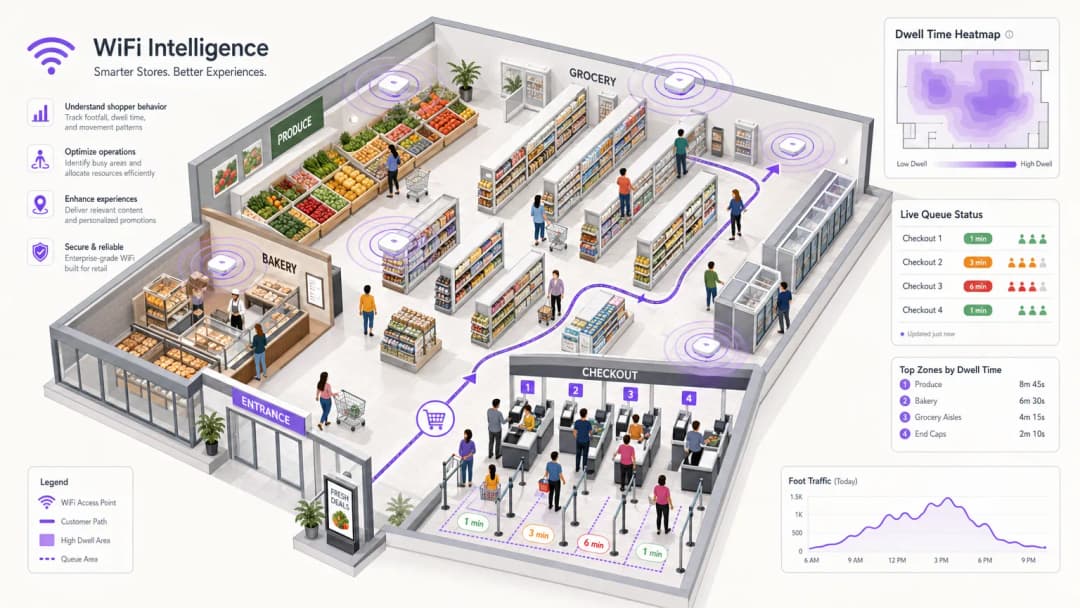
कार्यकारी सारांश
आधुनिक किराना खुदरा विक्रेताओं के लिए, एंटरप्राइज़ WiFi अब केवल एक लागत केंद्र नहीं है — यह एक महत्वपूर्ण सेंसर नेटवर्क है। जैसे-जैसे मार्जिन कम हो रहा है और उपभोक्ताओं की उम्मीदें बढ़ रही हैं, सुपरमार्केट को भौतिक स्टोर संचालन और डिजिटल इंटेलिजेंस के बीच की दूरी को पाटने के लिए अपने वायरलेस बुनियादी ढांचे का लाभ उठाना चाहिए। यह गाइड IT प्रबंधकों, नेटवर्क आर्किटेक्ट्स और CTOs को एक तकनीकी रोडमैप प्रदान करती है ताकि वे उच्च-प्रदर्शन, सुरक्षित WiFi तैनात कर सकें जो सीधे ग्राहक अनुभव को बेहतर बनाता है।
मजबूत 802.11ax (Wi-Fi 6) आर्किटेक्चर को लागू करके और इसे Purple's Guest WiFi और WiFi Analytics जैसे उन्नत एनालिटिक्स प्लेटफॉर्म के साथ एकीकृत करके, ऑपरेटर फुटफॉल, ड्वेल टाइम (ठहराव का समय) और कतार की लंबाई में रीयल-टाइम दृश्यता प्राप्त कर सकते हैं। यह गाइड VLAN सेगमेंटेशन, Captive Portal अनुपालन (GDPR, PCI DSS), और मौजूदा CRM और लॉयल्टी सिस्टम के साथ सहज एकीकरण सहित महत्वपूर्ण तैनाती विचारों को संबोधित करती है। पूरे गाइड में ध्यान उच्च-घनत्व वाले खुदरा वातावरण में मापने योग्य ROI और परिचालन दक्षता पर है।
तकनीकी गहन विश्लेषण
इन-स्टोर WiFi अब एक रणनीतिक संपत्ति क्यों है
सुपरमार्केट में ग्राहक अनुभव को कैसे बेहतर बनाया जाए, यह सवाल काफी विकसित हो चुका है। एक दशक पहले, इसका उत्तर काफी हद तक परिचालन संबंधी था — बेहतर उत्पाद प्लेसमेंट, छोटी कतारें, अधिक अनुकूल कर्मचारी। आज, इसका उत्तर तेजी से डेटा-संचालित होता जा रहा है, और WiFi नेटवर्क एक भौतिक खुदरा विक्रेता के लिए बड़े पैमाने पर उपलब्ध प्राथमिक डेटा संग्रह तंत्र है।
जब कोई ग्राहक अपनी जेब में स्मार्टफोन लेकर स्टोर में प्रवेश करता है, तो उसका डिवाइस ज्ञात नेटवर्क की खोज (probing) शुरू कर देता है। यह पैसिव प्रोब ट्रैफ़िक किसी भी एंटरप्राइज़-ग्रेड एक्सेस पॉइंट द्वारा पता लगाने योग्य होता है। Purple's WiFi Analytics जैसे प्लेटफॉर्म के माध्यम से एकत्रित और संसाधित, यह टेलीमेट्री ग्राहक की आवाजाही, ज़ोन अधिभोग (zone occupancy), और ड्वेल टाइम की एक निरंतर, रीयल-टाइम तस्वीर उत्पन्न करती है — बिना ग्राहक को किसी भी चीज़ से सक्रिय रूप से कनेक्ट करने की आवश्यकता के।
यह WiFi-सक्षम ग्राहक अनुभव सुधार की नींव है: एक पैसिव सेंसर लेयर के रूप में नेटवर्क, जो सक्रिय डेटा कैप्चर द्वारा तब और बढ़ जाता है जब ग्राहक स्वेच्छा से Captive Portal के माध्यम से प्रमाणित होते हैं।
नेटवर्क आर्किटेक्चर और मानक
एक उच्च-प्रदर्शन सुपरमार्केट WiFi तैनाती के लिए एक अच्छी तरह से इंजीनियर किए गए अंतर्निहित आर्किटेक्चर की आवश्यकता होती है। आधुनिक खुदरा वातावरण की विशिष्ट उच्च डिवाइस घनत्व को संभालने के लिए पुराने मानकों से Wi-Fi 6 (802.11ax) पर संक्रमण आवश्यक है। Wi-Fi 6 OFDMA (Orthogonal Frequency-Division Multiple Access) और Target Wake Time (TWT) पेश करता है, जो कनेक्टेड IoT उपकरणों जैसे कि इलेक्ट्रॉनिक shelf labels (ESLs), हैंडहेल्ड स्कैनर और ग्राहक स्मार्टफोन के लिए थ्रूपुट और बैटरी लाइफ में महत्वपूर्ण सुधार करता है।
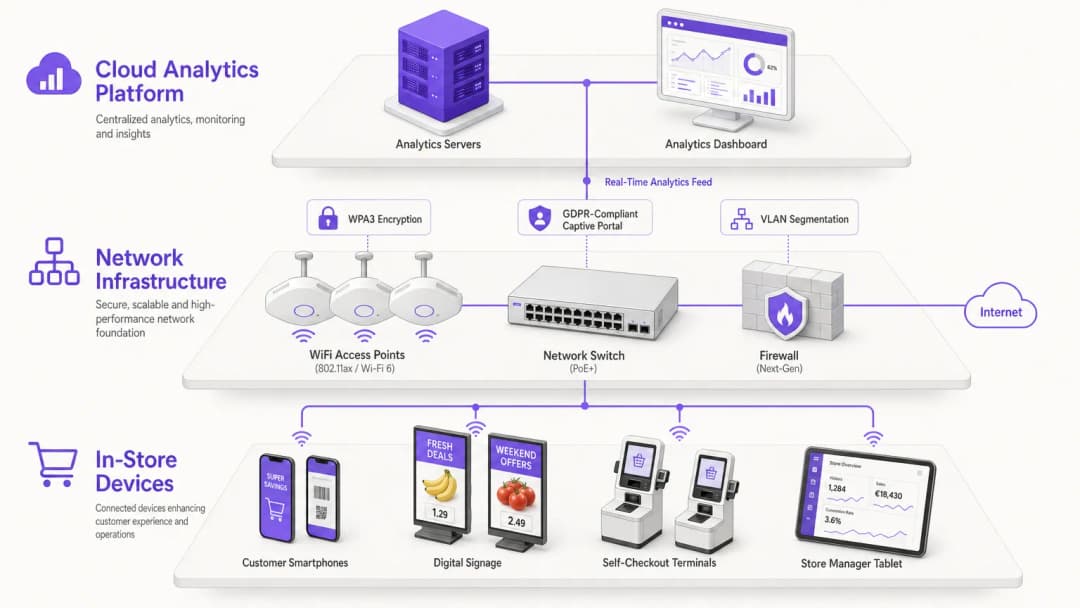
सुरक्षा और अनुपालन आर्किटेक्चर:
सुरक्षा को शुरू से ही डिजाइन किया जाना चाहिए, बाद में जोड़ा नहीं जाना चाहिए। तैनाती को निम्नलिखित मानकों का पालन करना चाहिए:
- WPA3: WPA2 के खिलाफ व्यवहार्य रहने वाले ब्रूट-फोर्स डिक्शनरी हमलों से बचाने के लिए सभी नई तैनातियों के लिए WPA3 एन्क्रिप्शन अनिवार्य करें।
- VLAN Segmentation: VLAN का उपयोग करके कॉर्पोरेट POS (Point of Sale) और इन्वेंट्री प्रबंधन प्रणालियों से गेस्ट ट्रैफ़िक को पूरी तरह से अलग करें। यह PCI DSS अनुपालन के लिए एक अनिवार्य आर्किटेक्चरल आवश्यकता है। गेस्ट डिवाइस कभी भी कार्डधारक डेटा वातावरण (CDE) तक रूट करने में सक्षम नहीं होने चाहिए।
- IEEE 802.1X: कॉर्पोरेट और IoT SSIDs के लिए, यह सुनिश्चित करने के लिए 802.1X पोर्ट-आधारित नेटवर्क एक्सेस कंट्रोल लागू करें कि केवल अधिकृत डिवाइस ही कॉर्पोरेट सेगमेंट में शामिल हो सकें।
- Captive Portals: गेस्ट SSID पर एक सुरक्षित, GDPR-अनुपालक Captive Portal लागू करें। यह पोर्टल डेटा कैप्चर और सहमति प्रबंधन के लिए प्राथमिक संपर्क बिंदु के रूप में कार्य करता है, जो सीधे एनालिटिक्स इंजन को फीड करता है।
ग्राहक अनुभव में WiFi Analytics की भूमिका
सुपरमार्केट WiFi का वास्तविक मूल्य इसके द्वारा उत्पन्न डेटा में निहित है। MAC पतों को ट्रैक करके — गोपनीयता अनुपालन के लिए किनारे (edge) पर अनाम और हैश किए गए — या प्रोफ़ाइल-आधारित प्रमाणीकरण का उपयोग करके, नेटवर्क एक रीयल-टाइम लोकेशन सिस्टम (RTLS) के रूप में कार्य करता है।

ड्वेल टाइम और फुटफॉल एनालिटिक्स: एक्सेस पॉइंट निष्क्रिय रूप से प्रोबिंग उपकरणों का पता लगाते हैं, जिससे सिस्टम विभिन्न ज़ोन में फुटफॉल और ड्वेल टाइम की गणना कर सकता है। Purple जैसा प्लेटफॉर्म इन ज़ोन को सीधे स्टोर फ्लोर प्लान पर मैप कर सकता है, जिससे ऑपरेशंस प्रबंधकों को ग्राहक घनत्व का लाइव हीटमैप मिलता है। बेकरी या ताज़ा उपज अनुभागों में उच्च ड्वेल टाइम अक्सर उच्च बास्केट मूल्यों के साथ सहसंबद्ध होता है — डेटा जो सीधे मर्चेंडाइजिंग निर्णयों को सूचित करता है।
कतार प्रबंधन: चेकआउट ज़ोन के पास डिवाइस घनत्व की निगरानी करके, सिस्टम स्टोर प्रबंधकों को स्वचालित अलर्ट ट्रिगर कर सकता है जब कतार प्रतीक्षा समय पूर्वनिर्धारित सीमाओं से अधिक हो जाता है। यह ग्राहकों के निराश होने से पहले गतिशील रूप से कर्मचारियों के पुनर्वितरण को सक्षम बनाता है — कतार प्रबंधन के लिए एक प्रतिक्रियाशील के बजाय सक्रिय दृष्टिकोण।
लॉयल्टी एकीकरण: जब कोई ग्राहक Captive Portal के माध्यम से प्रमाणित होता है, तो उनके डिवाइस आइडेंटिफायर को उनके CRM प्रोफ़ाइल से लिंक कर दिया जाता है। बाद की यात्राओं को स्वचालित रूप से पहचाना जा सकता है, जिससे व्यक्तिगत ऑफ़र, लॉयल्टी पॉइंट नोटिफिकेशन और विज़िट फ़्रीक्वेंसी ट्रैकिंग सक्षम होती है — बिना ग्राहक को कोई ऐप खोलने की आवश्यकता के।
कार्यान्वयन गाइड
ग्राहक अनुभव में सुधार के लिए एंटरप्राइज़-ग्रेड WiFi समाधान तैनात करने के लिए तीन अलग-अलग चरणों में सावधानीपूर्वक योजना बनाने की आवश्यकता होती है।
चरण 1: साइट सर्वेक्षण और RF योजना
एक भी एक्सेस पॉइंट स्थापित करने से पहले, एक व्यापक भविष्य कहनेवाला और सक्रिय साइट सर्वेक्षण करें। सुपरमार्केट अद्वितीय RF चुनौतियाँ पेश करते हैं: धातु की अलमारियाँ, तरल से भरे उत्पाद और प्रशीतन इकाइयाँ सभी महत्वपूर्ण सिग्नल क्षीणन (attenuation) का कारण बनते हैं जो कार्यालय के वातावरण में मौजूद नहीं होते हैं।
- पर्यावरण को मैप करें: स्टोर लेआउट को मॉडल करने के लिए RF प्लानिंग सॉफ़्टवेयर का उपयोग करें, विभिन्न शेल्फ प्रकारों और प्रशीतन इकाइयों के विशिष्ट क्षीणन मूल्यों को इनपुट करें।
- क्षमता के लिए डिज़ाइन करें: चेकआउट जैसे उच्च-घनत्व वाले क्षेत्रों में, को-चैनल हस्तक्षेप को कम करने के लिए दिशात्मक एंटेना के साथ APs तैनात करें ताकि माइक्रो-सेल बनाए जा सकें। लक्ष्य यह सुनिश्चित करना है कि प्रत्येक AP समवर्ती ग्राहकों की एक प्रबंधनीय संख्या की सेवा करे, न कि केवल कवरेज प्राप्त करना।
- बुनियादी ढांचे की तैयारी: Wi-Fi 6 हार्डवेयर के लिए मल्टी-गीगाबिट बैकहॉल और PoE+ (Power over Ethernet Plus) आवश्यकताओं का समर्थन करने के लिए सभी AP स्थानों पर श्रेणी 6A (Category 6A) केबल बिछाना सुनिश्चित करें।
चरण 2: कॉन्फ़िगरेशन और एकीकरण
- SSID रणनीति: प्रबंधन ओवरहेड और बीकन प्रदूषण को कम करने के लिए SSIDs की संख्या को सीमित करें। आमतौर पर तीन SSIDs पर्याप्त होते हैं:
Store_Guest,Store_Corp, औरStore_IoT। - Captive Portal सेटअप: ब्रांड दिशानिर्देशों के अनुरूप गेस्ट पोर्टल को कॉन्फ़िगर करें। उपयोगकर्ता लॉगिन पर सहज डेटा सिंक्रनाइज़ेशन सक्षम करने के लिए API के माध्यम से पोर्टल को CRM के साथ एकीकृत करें। लौटने वाले ग्राहकों के लिए घर्षण को कम करने के लिए सोशल लॉगिन या प्रोफ़ाइल-आधारित प्रमाणीकरण की पेशकश करने पर विचार करें।
- एनालिटिक्स एकीकरण: वायरलेस LAN कंट्रोलर (WLC) या क्लाउड प्रबंधन प्लेटफॉर्म को एनालिटिक्स इंजन से कनेक्ट करें। सुनिश्चित करें कि डेटा फीड ठीक से कॉन्फ़िगर किए गए हैं और क्लाउड एनालिटिक्स प्लेटफॉर्म पर टेलीमेट्री डेटा को सुरक्षित रूप से प्रसारित कर रहे हैं।
- ज़ोन कॉन्फ़िगरेशन: एनालिटिक्स प्लेटफॉर्म के भीतर, तार्किक ज़ोन (logical zones) को परिभाषित करें जो भौतिक स्टोर क्षेत्रों (उत्पाद, बेकरी, चेकआउट, कैफे) को मैप करते हैं। यही ज़ोन-विशिष्ट ड्वेल टाइम और फुटफॉल रिपोर्टिंग को सक्षम बनाता है।
चरण 3: सत्यापन और अनुकूलन
तैनाती के बाद, मूल डिज़ाइन उद्देश्य के विरुद्ध सिस्टम को सत्यापित करें। चैनल असाइनमेंट सही होने और को-चैनल हस्तक्षेप स्वीकार्य सीमाओं के भीतर होने की पुष्टि करने के लिए स्पेक्ट्रम विश्लेषक के साथ स्टोर का चक्कर लगाएं। यह पुष्टि करने के लिए एनालिटिक्स डैशबोर्ड की समीक्षा करें कि ज़ोन की सीमाएं सटीक हैं और फुटफॉल डेटा ज्ञात पीक ट्रेडिंग अवधियों के साथ संरेखित है।
सर्वोत्तम प्रथाएं
सहज ऑनबोर्डिंग को प्राथमिकता दें: लॉगिन प्रक्रिया यथासंभव घर्षण रहित होनी चाहिए। लौटने वाले ग्राहकों को हर यात्रा पर Captive Portal के साथ बातचीत किए बिना स्वचालित रूप से कनेक्ट होने की अनुमति देने के लिए जहां संभव हो Passpoint (Hotspot 2.0) या प्रोफ़ाइल-आधारित प्रमाणीकरण का उपयोग करें। यह किराना संदर्भ में विशेष रूप से महत्वपूर्ण है जहां ग्राहक प्रति सप्ताह कई बार आ सकते हैं।
स्थान-आधारित सेवाओं का लाभ उठाएं: ब्लू-डॉट नेविगेशन और स्थान-ट्रिगर पुश नोटिफिकेशन को सक्षम करने के लिए स्टोर के मोबाइल ऐप के साथ WiFi नेटवर्क को एकीकृत करें। अपने स्मार्टफोन के माध्यम से ग्राहक को सही गलियारे (aisle) में निर्देशित करना इन-स्टोर अनुभव में एक सीधा, मापने योग्य सुधार है।
सतत निगरानी: नेटवर्क को 'सेट-एंड-फॉरगेट' तैनाती के रूप में न मानें। विसंगतियों की पहचान करने और प्रदर्शन को अनुकूलित करने के लिए लगातार RF स्वास्थ्य, क्लाइंट वितरण और एनालिटिक्स डैशबोर्ड की निगरानी करें। एंटरप्राइज़ कनेक्टिविटी विचारों पर व्यापक परिप्रेक्ष्य के लिए, लीज़्ड लाइन क्या है? समर्पित व्यावसायिक इंटरनेट पर गाइड समर्पित कनेक्टिविटी विकल्पों पर उपयोगी संदर्भ प्रदान करती है जो एक विश्वसनीय इन-स्टोर नेटवर्क को रेखांकित कर सकते हैं।
क्षेत्र के साथियों के खिलाफ बेंचमार्क: यहां वर्णित रणनीतियां केवल किराना तक सीमित नहीं हैं। खुदरा वातावरण में लागू वही WiFi एनालिटिक्स सिद्धांत आतिथ्य और परिवहन स्थलों में समान रूप से प्रासंगिक हैं। क्रॉस-सेक्टर बेंचमार्किंग उन सर्वोत्तम प्रथाओं को सामने ला सकती है जिन्हें अभी तक किराना में व्यापक रूप से नहीं अपनाया गया है।
समस्या निवारण और जोखिम शमन
को-चैनल हस्तक्षेप (CCI): घनी तैनातियों में, एक ही चैनल पर APs एक-दूसरे के साथ हस्तक्षेप करेंगे, जिससे सभी क्लाइंट्स के लिए प्रदर्शन खराब हो जाएगा। शमन: चैनल असाइनमेंट और ट्रांसमिट पावर को स्वचालित रूप से समायोजित करने के लिए डायनेमिक रेडियो मैनेजमेंट (DRM) लागू करें। चैनल योजना पर उचित ध्यान दिए बिना AP घनत्व को अत्यधिक बढ़ाने से बचें।
Captive Portal विफलताएं: यदि Captive Portal लोड होने में विफल रहता है, तो मेहमान कनेक्ट नहीं हो सकते हैं, और डेटा कैप्चर पूरी तरह से बंद हो जाता है। शमन: निरर्थक (redundant) पोर्टल सर्वर लागू करें और सुनिश्चित करें कि DNS और DHCP सेवाएं अत्यधिक उपलब्ध हैं। आवश्यक डोमेन (Apple के Captive Portal डिटेक्शन URLs, Google के कनेक्टिविटी चेक एंडपॉइंट्स) को श्वेतसूची (whitelist) में डालें ताकि यह सुनिश्चित हो सके कि संकेत सभी प्रकार के उपकरणों पर विश्वसनीय रूप से दिखाई दे।
MAC रैंडमाइजेशन: आधुनिक iOS और Android डिवाइस नेटवर्क की खोज करते समय रैंडमाइज्ड MAC पते प्रसारित करते हैं, जो फुटफॉल काउंट को विकृत कर सकते हैं। शमन: उन्नत एनालिटिक्स प्लेटफॉर्म रैंडमाइज्ड प्रोब डेटा से वास्तविक अद्वितीय विज़िटर काउंट का अनुमान लगाने के लिए सांख्यिकीय एल्गोरिदम का उपयोग करते हैं। एक बार जब कोई उपयोगकर्ता पोर्टल के माध्यम से प्रमाणित हो जाता है, तो उनका सत्र MAC उनके प्रोफ़ाइल से लिंक हो जाता है, जिससे उस यात्रा के लिए सटीक व्यक्तिगत-स्तरीय ट्रैकिंग सक्षम हो जाती है।
डेटा गोपनीयता उल्लंघन: ग्राहक डेटा को गलत तरीके से संभालने से गंभीर ICO दंड और प्रतिष्ठा को नुकसान हो सकता है। शमन: सुनिश्चित करें कि भंडारण से पहले सभी MAC पते अपरिवर्तनीय रूप से हैश किए गए हैं। डेटा प्रतिधारण नीतियों का नियमित रूप से ऑडिट करें। सुनिश्चित करें कि UK GDPR के पूर्ण अनुपालन में, एनालिटिक्स ट्रैकिंग और मार्केटिंग संचार के लिए अलग-अलग ऑप्ट-इन के साथ, Captive Portal के माध्यम से स्पष्ट, विस्तृत सहमति प्राप्त की जाए।
ROI और व्यावसायिक प्रभाव
एक उचित रूप से कार्यान्वित WiFi एनालिटिक्स समाधान कई डोमेन में मापने योग्य व्यावसायिक प्रभाव प्रदान करता है। आंतरिक व्यावसायिक मामला बनाने के लिए निम्नलिखित ढांचे का उपयोग किया जा सकता है।
| मूल्य चालक | मापन मीट्रिक | विशिष्ट परिणाम |
|---|---|---|
| कतार प्रबंधन | औसत चेकआउट प्रतीक्षा समय | 20-35% की कमी |
| लॉयल्टी अधिग्रहण | प्रति नए लॉयल्टी सदस्य की लागत | पारंपरिक चैनलों की तुलना में 40-60% कम |
| मार्केटिंग एट्रिब्यूशन | भौतिक विज़िट-टू-अभियान एट्रिब्यूशन | प्रत्यक्ष CPA गणना सक्षम |
| परिचालन दक्षता | कर्मचारी पुनर्वितरण प्रतिक्रिया समय | मैन्युअल अवलोकन बनाम लगभग रीयल-टाइम |
| ड्वेल टाइम अनुकूलन | उच्च-मार्जिन वाले ज़ोन में औसत समय | लक्षित हस्तक्षेपों के साथ मापने योग्य वृद्धि |
परिचालन दक्षता: स्वचालित कतार अलर्ट चेकआउट प्रतीक्षा समय को कम करते हैं, सीधे ग्राहक संतुष्टि स्कोर (NPS) में सुधार करते हैं और खरीद यात्रा के अंतिम चरण में कार्ट परित्याग (cart abandonment) को कम करते हैं।
मार्केटिंग ROI: CRM के साथ WiFi डेटा को एकीकृत करके, विपणक भौतिक स्टोर विज़िट को डिजिटल अभियानों से जोड़ सकते हैं, जिससे प्रति अधिग्रहण वास्तविक लागत (CPA) की गणना की जा सकती है। यह एट्रिब्यूशन लूप को बंद करता है जो ऐतिहासिक रूप से भौतिक खुदरा विपणन में एक बड़ा अंतर रहा है।
लॉयल्टी अधिग्रहण: Captive Portal लॉयल्टी कार्यक्रम साइन-अप के लिए एक उच्च-रूपांतरण चैनल के रूप में कार्य करता है। सत्यापित ईमेल पते और स्पष्ट सहमति के बदले मुफ्त, हाई-स्पीड WiFi की पेशकश करने से इन-स्टोर लीफलेट या चेकआउट संकेतों जैसे पारंपरिक चैनलों की तुलना में ग्राहक अधिग्रहण की लागत काफी कम हो जाती है।
इन तकनीकों को आस-पास के क्षेत्रों में कैसे लागू किया जाता है, इस बारे में जानकारी के लिए, आतिथ्य WiFi समाधान: प्रदाता में क्या देखना है गाइड एंटरप्राइज़ WiFi विक्रेताओं के मूल्यांकन के लिए एक उपयोगी तुलनात्मक ढांचा प्रदान करती है।
Definiciones clave
802.11ax (Wi-Fi 6)
El estándar de red inalámbrica de generación actual, diseñado específicamente para mejorar el rendimiento en entornos de alta densidad al permitir que múltiples dispositivos transmitan datos simultáneamente mediante la tecnología OFDMA.
Esencial para supermercados donde cientos de smartphones de clientes, tablets del personal y dispositivos IoT compiten por el tiempo de transmisión en los mismos puntos de acceso.
Captive Portal
Una página web que un usuario de una red de acceso público está obligado a ver e interactuar con ella antes de que se le conceda acceso a internet. Es el mecanismo mediante el cual los operadores capturan el consentimiento y los datos del cliente.
El mecanismo principal para capturar el consentimiento del cliente bajo la GDPR y recopilar datos de marketing (dirección de correo electrónico, sincronización con CRM) en un despliegue de WiFi para retail.
VLAN (Virtual Local Area Network)
Una subred lógica que agrupa una colección de dispositivos de diferentes LAN físicas, lo que permite el aislamiento del tráfico sin requerir una infraestructura física independiente.
Crítico para la seguridad en despliegues de supermercados. El tráfico de invitados debe segmentarse en una VLAN separada de los sistemas corporativos y de punto de venta (POS) de la tienda para mantener el cumplimiento de PCI DSS.
Dwell Time
La cantidad de tiempo que el dispositivo de un cliente pasa dentro de una zona de ubicación definida, según lo medido por la plataforma de analítica de WiFi.
Una métrica operativa clave. El aumento del tiempo de permanencia en áreas de alto margen, como la panadería o la sección de vinos, a menudo se correlaciona con un mayor tamaño de la cesta de compra, lo que lo convierte en un indicador directo de la efectividad del merchandising.
MAC Randomisation
Una función de privacidad en los smartphones modernos donde el dispositivo transmite una dirección MAC generada aleatoriamente mientras busca redes, en lugar de su dirección de hardware permanente, para evitar el seguimiento pasivo.
Los equipos de TI deben tener esto en cuenta al analizar los datos de afluencia. Las plataformas de analítica avanzada utilizan la deduplicación estadística para estimar los recuentos reales de visitantes únicos a partir del tráfico de sondeo aleatorio.
Passpoint (Hotspot 2.0)
Un estándar de Wi-Fi Alliance que permite un roaming fluido, seguro y similar al celular entre redes Wi-Fi sin requerir que los usuarios interactúen con un Captive Portal en sus visitas de regreso.
La solución óptima para una experiencia de cliente sin fricciones, que permite a los compradores reconocidos conectarse automáticamente cada vez que entran a la tienda, eliminando por completo la interacción con el portal.
RSSI (Received Signal Strength Indicator)
Una medida del nivel de potencia de una señal de radio recibida, expresada en decibelios en relación con un milivatio (dBm).
Utilizado por los motores de analítica para estimar la distancia física de un dispositivo respecto a un punto de acceso. La triangulación de las lecturas de RSSI de múltiples AP es la base del seguimiento de ubicación y la generación de mapas de calor.
PCI DSS
Payment Card Industry Data Security Standard. Un conjunto de estándares de seguridad que exigen que todas las organizaciones que aceptan, procesan, almacenan o transmiten información de tarjetas de pago mantengan un entorno seguro.
Los despliegues de WiFi en supermercados deben diseñarse para garantizar que la red de invitados no pueda acceder al entorno de datos de titulares de tarjetas (CDE). La segmentación por VLAN es el principal control técnico utilizado para lograr esto.
OFDMA (Orthogonal Frequency-Division Multiple Access)
Una versión multiusuario de OFDM que permite a un punto de acceso dividir un canal en subcanales más pequeños y atender a múltiples clientes simultáneamente.
Una función clave de Wi-Fi 6 que mejora drásticamente la eficiencia en entornos de retail densos al reducir el tiempo que cada cliente debe esperar para acceder al canal.
Dynamic Radio Management (DRM)
Una función automatizada de los controladores de LAN inalámbrica empresariales que ajusta continuamente las asignaciones de canales de los AP y la potencia de transmisión para optimizar el rendimiento de la red y minimizar las interferencias.
Esencial en despliegues de supermercados donde el entorno de RF cambia a lo largo del día a medida que varía la afluencia de personas. La planificación manual de canales por sí sola es insuficiente para mantener un rendimiento óptimo.
Ejemplos resueltos
Una cadena regional de supermercados con 50 sucursales está experimentando un alto volumen de quejas de clientes relacionadas con los tiempos de espera en las cajas durante las horas pico (16:00–18:00). El director de operaciones necesita una solución basada en datos para asignar personal de manera dinámica a las cajas registradoras antes de que las filas se vuelvan inmanejables. La red existente es una mezcla de APs 802.11ac heredados y un WLC gestionado en la nube.
Desplegar APs Wi-Fi 6 adicionales posicionados específicamente sobre las zonas de cajas para aumentar la densidad de APs y mejorar la precisión de la ubicación en esa área. Integrar la infraestructura inalámbrica con una plataforma de analítica de ubicación como Purple. Dentro de la plataforma, configurar zonas virtuales mapeadas con precisión al área de cajas. Configurar alertas automatizadas —enviadas a través de SMS o integración de API a las tabletas de los gerentes de tienda— que se activen cuando el conteo de dispositivos dentro de la zona de cajas supere un umbral predefinido (por ejemplo, más de 20 dispositivos durante más de tres minutos consecutivos). Esto permite a los gerentes abrir nuevas cajas de manera proactiva, antes de que la fila sea visible. Calibrar los valores de umbral durante un período de referencia de dos semanas para tener en cuenta los patrones de tráfico específicos de la tienda.
Un supermercado nacional quiere aumentar la tasa de adopción de su nueva aplicación digital de lealtad. Actualmente, los clientes deben descargar manualmente la aplicación e ingresar sus datos en la caja, lo que genera fricción y retrasa los tiempos de transacción. El equipo de TI necesita una solución que capture los datos del cliente en una etapa más temprana del recorrido de compra.
Implementar un proceso de registro de WiFi para invitados sin fricciones utilizando un Captive Portal personalizado con la marca. Configurar el portal para ofrecer inicio de sesión con un solo clic a través de redes sociales o credenciales de lealtad existentes. Una vez conectados con éxito, redirigir al usuario a una página de bienvenida que promueva la descarga de la aplicación con un incentivo específico (por ejemplo, un descuento en la canasta actual). Utilizar la integración de la API del CRM para vincular automáticamente el dispositivo autenticado al perfil de lealtad del cliente, lo que permite una identificación fluida en futuras visitas. Para los clientes que no se autentican, las analíticas de sondeo pasivo siguen proporcionando datos agregados de afluencia y tiempo de permanencia.
Preguntas de práctica
Q1. Su tienda está experimentando una congestión de red severa cerca de la entrada principal, donde los clientes cargan sus tarjetas de lealtad digitales y las terminales de autopago procesan transacciones con tarjeta. Ambos se encuentran actualmente en la misma infraestructura de red física sin separación lógica. ¿Cuál es el cambio de arquitectura más crítico requerido y qué norma de cumplimiento lo exige?
Sugerencia: Considere los requisitos de seguridad y rendimiento para los sistemas de pago frente al acceso público a internet.
Ver respuesta modelo
Implemente una segmentación estricta de VLAN de inmediato. Las terminales de autopago (sistemas POS) deben colocarse en una VLAN corporativa segura y priorizada para garantizar el cumplimiento de PCI DSS; específicamente, para evitar que la red de invitados pueda enrutarse al entorno de datos de los titulares de tarjetas. El tráfico de los clientes debe aislarse en una VLAN de invitados separada con limitación de ancho de banda aplicada para evitar que los usuarios de alto consumo degraden el rendimiento para los demás. Este es un requisito obligatorio de PCI DSS, no simplemente una mejor práctica.
Q2. El equipo de marketing quiere lanzar una campaña dirigida a los clientes que pasan más de 10 minutos en el pasillo de vinos. El panel de analíticas actual solo muestra el tiempo de permanencia general de la tienda. ¿Qué pasos técnicos se requieren para habilitar este seguimiento granular y específico por zonas?
Sugerencia: Piense tanto en los requisitos de diseño de RF como en la configuración de la plataforma de analíticas.
Ver respuesta modelo
Primero, revise la ubicación de los AP en el pasillo de vinos y sus alrededores. El seguimiento de ubicación preciso a nivel de zona requiere una densidad de AP suficiente (normalmente tres o más AP que reciban la señal del cliente) para permitir una triangulación de RSSI confiable. Si la distribución actual de los AP no proporciona esto, es posible que sea necesario implementar AP adicionales. Segundo, configure zonas de ubicación específicas dentro de la plataforma de analíticas que mapeen con precisión los límites físicos del pasillo de vinos. Tercero, configure un webhook o un activador de API en la plataforma para enviar un evento al CRM cuando un dispositivo reconocido supere el umbral de permanencia de 10 minutos dentro de esa zona específica. Finalmente, valide los límites de la zona recorriendo físicamente el área con un dispositivo de prueba y confirmando que la plataforma refleje la ubicación con precisión.
Q3. Una auditoría interna reciente revela que el Captive Portal está recopilando direcciones de correo electrónico de los clientes, pero no hay una casilla de verificación de suscripción (opt-in) explícita y desmarcada para comunicaciones de marketing. El portal ha estado activo durante seis meses. ¿Cuáles son los riesgos legales inmediatos y cuál es la remediación técnica y de procedimiento correcta?
Sugerencia: Considere tanto el marco regulatorio como el estado de los datos ya recopilados.
Ver respuesta modelo
El riesgo inmediato es el incumplimiento del GDPR del Reino Unido, específicamente el requisito de consentimiento libre, específico, informado e inequívoco para las comunicaciones de marketing. Esto puede resultar en acciones de cumplimiento por parte de la ICO, multas de hasta £17.5 millones de libras o el 4% de la facturación anual global (lo que sea mayor) y un daño reputacional significativo. La remediación técnica es actualizar la página de inicio del Captive Portal de inmediato para incluir una casilla de verificación de suscripción (opt-in) para comunicaciones de marketing claramente etiquetada y desmarcada, junto con un enlace a la política de privacidad completa. En cuanto al procedimiento, cualquier dirección de correo electrónico recopilada durante el período de incumplimiento debe ponerse en cuarentena y no debe utilizarse para fines de marketing. Se debe consultar al asesor legal para evaluar si se requiere una notificación de infracción a la ICO.
Continúe leyendo esta serie
Cómo aprovechar los SMS en marketing para aumentar las visitas recurrentes
Esta guía de referencia técnica describe cómo las sedes empresariales pueden integrar la analítica de WiFi con motores de marketing por SMS para impulsar las visitas recurrentes. Detalla la arquitectura necesaria para capturar datos de presencia en tiempo real, activar campañas de SMS automatizadas basadas en el comportamiento físico y medir el impacto directo en las tasas de retorno. Al alinear la infraestructura de red con la automatización de marketing, los equipos de TI y operaciones pueden establecer un canal de alto rendimiento para la retención de clientes.
Marketing de datos de primera mano: una guía completa para empresas
Esta guía explica cómo crear una estrategia sólida de marketing de datos de primera mano utilizando redes de WiFi para invitados empresariales. Cubre la arquitectura técnica para la captura segura de datos a través de portales cautivos, flujos de trabajo de consentimiento que cumplen con el GDPR, patrones de integración de CRM y el despliegue de campañas automatizadas. Los operadores de establecimientos en los sectores de hotelería, comercio minorista, eventos y entornos del sector público encontrarán orientación práctica para convertir a los visitantes pasivos en una audiencia de marketing propia de alta calidad.
Plataforma de gestión de datos de clientes: una guía completa para empresas
Esta guía explica cómo los operadores de recintos pueden implementar una plataforma de gestión de datos de clientes para unificar los datos fragmentados de los visitantes. Cubre la arquitectura técnica, las estrategias de integración y el papel fundamental de Guest WiFi en la creación de perfiles de datos de origen (first-party).