

Captive Portal लॉगिन को कैसे हटाएं (और आपको ऐसा कब करना चाहिए)
This authoritative guide explores the technical architecture, use cases, and implementation strategies for removing or bypassing captive portal logins. Designed for senior IT professionals, it provides actionable insights on when to utilize MAC authentication bypass, 802.1X, and OpenRoaming to streamline access while maintaining security and data collection.
🎧 इस गाइड को सुनें
ट्रांसक्रिप्ट देखें
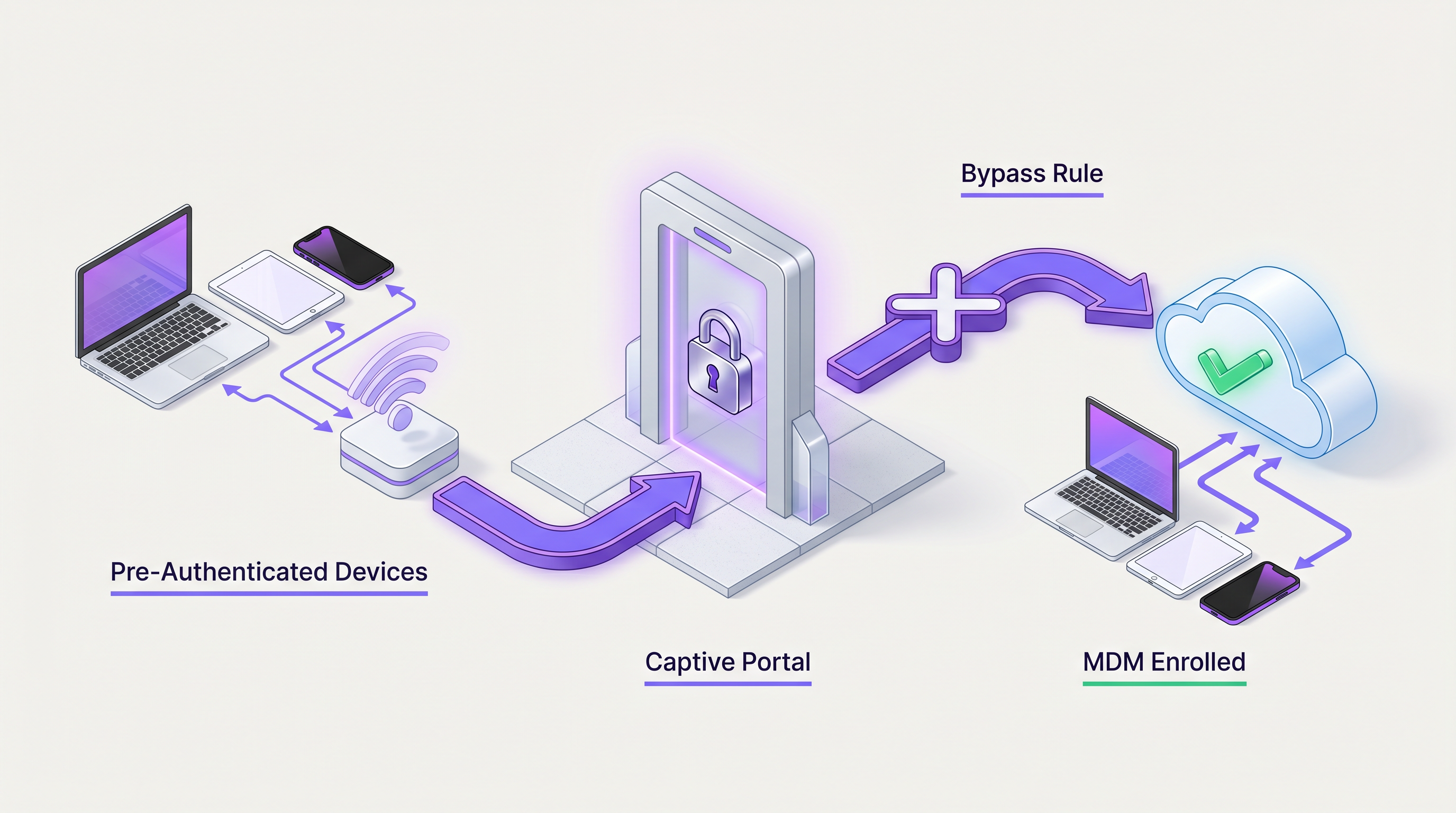
कार्यकारी सारांश
एंटरप्राइज़ IT लीडर्स और वेन्यू ऑपरेटरों के लिए, Captive Portal लॉगिन लंबे समय से एक आवश्यक बुराई रहा है। यह सेवा की शर्तों की स्वीकृति, कानूनी अनुपालन और फर्स्ट-पार्टी डेटा संग्रह के लिए एक महत्वपूर्ण चेकपॉइंट प्रदान करता है। हालाँकि, निर्बाध कनेक्टिविटी को प्राथमिकता देने वाले वातावरण में—जैसे कॉर्पोरेट कैंपस, VIP हॉस्पिटैलिटी ज़ोन और बड़े पैमाने के सार्वजनिक वेन्यू—उपयोगकर्ताओं को वेब-आधारित प्रमाणीकरण प्रवाह (authentication flow) से गुज़रने के लिए मजबूर करने से अस्वीकार्य विलंबता (latency) और उपयोगकर्ता में निराशा उत्पन्न हो सकती है।
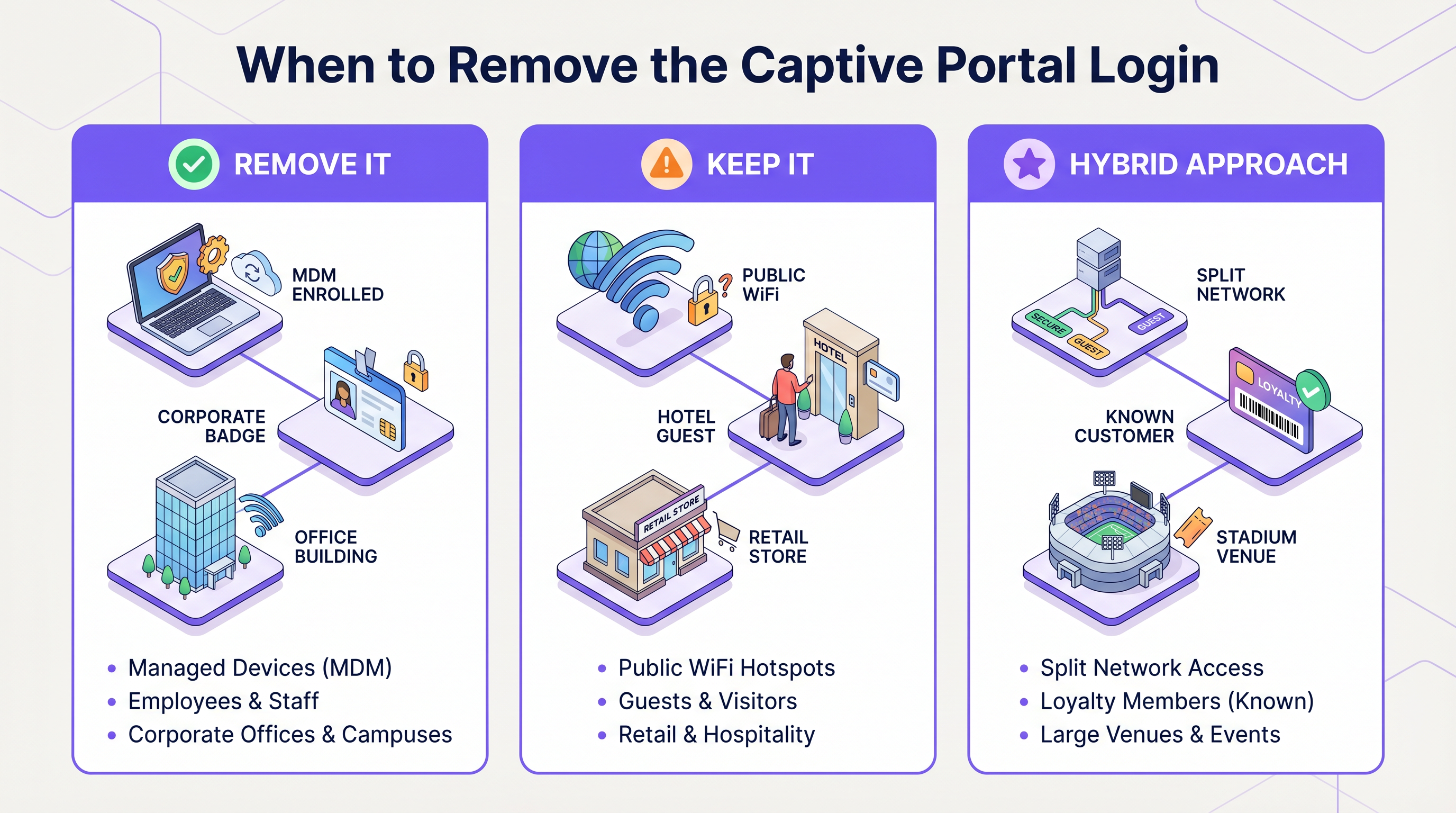
यह गाइड विशिष्ट उपयोगकर्ता समूहों (cohorts) के लिए Captive Portal को बायपास करने या पूरी तरह से हटाने के तकनीकी तंत्र का विवरण देती है। MAC ऑथेंटिकेशन बायपास (MAB), IEEE 802.1X, मोबाइल डिवाइस मैनेजमेंट (MDM) एकीकरण, और OpenRoaming जैसे निर्बाध प्रमाणीकरण फ्रेमवर्क का लाभ उठाकर, नेटवर्क आर्किटेक्ट एक हाइब्रिड एक्सेस मॉडल डिज़ाइन कर सकते हैं। यह दृष्टिकोण सुनिश्चित करता है कि ज्ञात डिवाइस, कॉर्पोरेट एंडपॉइंट और वफादार ग्राहक तुरंत कनेक्ट हों, जबकि अज्ञात मेहमानों को अभी भी प्रारंभिक ऑनबोर्डिंग और डेटा कैप्चर के लिए Guest WiFi पोर्टल के माध्यम से रूट किया जाता है। हम परिनियोजन आर्किटेक्चर (deployment architectures), सुरक्षा निहितार्थों (security implications), और Purple की आइडेंटिटी प्रोवाइडर क्षमताएं इन उन्नत एक्सेस रणनीतियों को कैसे सुविधाजनक बनाती हैं, इसका पता लगाएंगे।
तकनीकी डीप-डाइव
Captive Portal लॉगिन को हटाने के लिए प्रमाणीकरण तंत्र को लेयर 7 (एप्लिकेशन/वेब) से लेयर 2 (डेटा लिंक) पर शिफ्ट करने या निर्बाध आइडेंटिटी फेडरेशन का लाभ उठाने की आवश्यकता होती है। आर्किटेक्चर को उन डिवाइसों के बीच गतिशील रूप से अंतर करना चाहिए जिन्हें पोर्टल की आवश्यकता है और जिन्हें इसे बायपास करना चाहिए।
1. MAC ऑथेंटिकेशन बायपास (MAB)
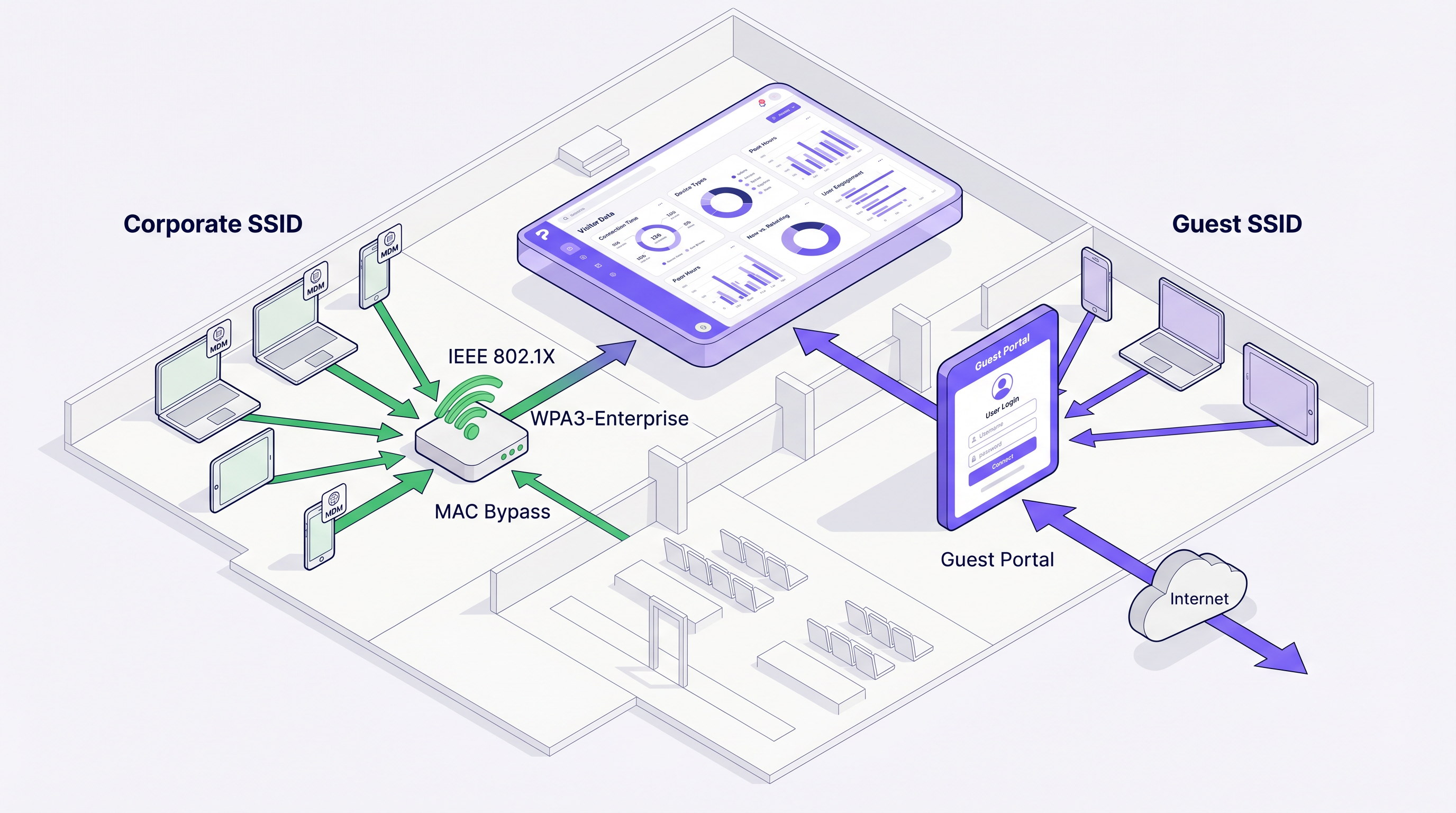
MAB एक नेटवर्क एक्सेस कंट्रोल (NAC) सिस्टम या RADIUS सर्वर को उनके MAC एड्रेस के आधार पर डिवाइसों को प्रमाणित करने की अनुमति देता है। जब कोई डिवाइस एक्सेस पॉइंट से जुड़ता है, तो कंट्रोलर MAC एड्रेस युक्त एक RADIUS Access-Request भेजता है। यदि एड्रेस अधिकृत डेटाबेस (जैसे Purple के ज्ञात विज़िटर डेटाबेस) में मौजूद है, तो RADIUS सर्वर एक Access-Accept लौटाता है, और कंट्रोलर HTTP/HTTPS ट्रैफ़िक को Captive Portal पर रीडायरेक्ट किए बिना डिवाइस को नेटवर्क पर रख देता है।
आर्किटेक्चर फ्लो:
- डिवाइस एसोसिएशन
- कंट्रोलर इंटरसेप्ट करता है और MAC को RADIUS को भेजता है
- RADIUS एंडपॉइंट डेटाबेस की जांच करता है
- VLAN असाइनमेंट या बैंडविड्थ थ्रॉटलिंग के लिए वैकल्पिक वेंडर-स्पेसिफिक एट्रिब्यूट्स (VSAs) के साथ Access-Accept लौटाया जाता है।
MAC रैंडमाइज़ेशन पर ध्यान दें: आधुनिक मोबाइल ऑपरेटिंग सिस्टम (iOS 14+, Android 10+) डिफ़ॉल्ट रूप से रैंडमाइज़्ड MAC एड्रेस का उपयोग करते हैं। लौटने वाले मेहमानों के लिए MAB को मज़बूती से काम करने के लिए, वेन्यू को उपयोगकर्ताओं को उस विशिष्ट SSID के लिए प्राइवेट एड्रेसिंग को अक्षम करने के लिए प्रोत्साहित करना चाहिए, या सिस्टम को प्रोफ़ाइल-आधारित प्रमाणीकरण (जैसे Passpoint/Hotspot 2.0) पर निर्भर होना चाहिए।
2. IEEE 802.1X और WPA3-Enterprise
कॉर्पोरेट डिवाइस या स्टाफ नेटवर्क के लिए, 802.1X मज़बूत पोर्ट-आधारित नेटवर्क एक्सेस कंट्रोल प्रदान करता है। डिवाइस EAP (Extensible Authentication Protocol) का उपयोग करके प्रमाणित होते हैं, आमतौर पर EAP-TLS (सर्टिफिकेट-आधारित) या PEAP (क्रेडेंशियल-आधारित)।
जब डिवाइस MDM के माध्यम से नामांकित होते हैं, तो सर्टिफिकेट स्वचालित रूप से पुश किए जा सकते हैं। ये डिवाइस एक सुरक्षित SSID से जुड़ते हैं और किसी भी पोर्टल इन्फ्रास्ट्रक्चर को पूरी तरह से बायपास करते हैं। यह कॉर्पोरेट कार्यालय परिनियोजन और Retail तथा Hospitality में बैक-ऑफ़-हाउस संचालन के लिए मानक है।
3. Passpoint (Hotspot 2.0) और OpenRoaming
Passpoint WiFi के लिए सेलुलर जैसी रोमिंग सक्षम करता है। इंस्टॉल किए गए प्रोफ़ाइल (क्रेडेंशियल या सर्टिफिकेट) वाले डिवाइस बिना उपयोगकर्ता के हस्तक्षेप के स्वचालित रूप से Passpoint-सक्षम नेटवर्क पर प्रमाणित हो जाते हैं। OpenRoaming, वायरलेस ब्रॉडबैंड एलायंस (WBA) की एक पहल है, जो आइडेंटिटी प्रोवाइडर्स और नेटवर्क प्रोवाइडर्स को एकीकृत (federate) करती है।
Purple कनेक्ट लाइसेंस के तहत OpenRoaming के लिए एक मुफ़्त आइडेंटिटी प्रोवाइडर के रूप में कार्य करता है। जब कोई उपयोगकर्ता एक बार Purple पोर्टल के माध्यम से प्रमाणित होता है और OpenRoaming प्रोफ़ाइल डाउनलोड करता है, तो उनका डिवाइस विश्व स्तर पर किसी भी OpenRoaming-सक्षम नेटवर्क से स्वचालित रूप से कनेक्ट हो जाएगा, जो Captive Portal को पूरी तरह से बायपास कर देगा, जबकि अभी भी वेन्यू को RADIUS अकाउंटिंग के माध्यम से सत्र (session) लॉग करने की अनुमति देगा।
कार्यान्वयन गाइड
हाइब्रिड पोर्टल/बायपास आर्किटेक्चर को तैनात करने के लिए WLAN कंट्रोलर, RADIUS सर्वर और आइडेंटिटी मैनेजमेंट प्लेटफ़ॉर्म के बीच समन्वय की आवश्यकता होती है।
चरण 1: उपयोगकर्ता समूहों (Cohorts) को परिभाषित करें
पहचानें कि किन समूहों को बायपास की आवश्यकता है:
- कॉर्पोरेट/स्टाफ डिवाइस: एक 802.1X SSID पर रूट करें।
- IoT/हेडलेस डिवाइस: एक समर्पित छिपे हुए SSID या डायनामिक VLAN असाइनमेंट पर MAB का उपयोग करें।
- लॉयल्टी मेंबर्स/VIPs: गेस्ट SSID पर MAC कैशिंग (MAB) का उपयोग करें या Passpoint प्रोफ़ाइल तैनात करें।
- मानक मेहमान: मानक Captive Portal के माध्यम से रूट करें।
चरण 2: MAC कैशिंग कॉन्फ़िगर करें (लौटने वाले विज़िटर बायपास)
लौटने वाले मेहमानों के लिए Captive Portal लॉगिन हटाने के लिए:
- बाहरी RADIUS प्रमाणीकरण (उदा., Purple के RADIUS सर्वर) का उपयोग करने के लिए WLAN कंट्रोलर को कॉन्फ़िगर करें।
- गेस्ट SSID पर MAC ऑथेंटिकेशन बायपास सक्षम करें।
- Purple WiFi Analytics डैशबोर्ड में, "Seamless Login" या MAC कैशिंग अवधि (उदा., 30 दिन, 365 दिन) कॉन्फ़िगर करें।
- जब कोई उपयोगकर्ता पोर्टल के माध्यम से प्रमाणित होता है, तो Purple उनका MAC एड्रेस स्टोर करता है।
- कैशिंग विंडो के भीतर बाद की यात्राओं पर, कंट्रोलर MAB निष्पादित करता है, Purple एक Access-Accept लौटाता है, और उपयोगकर्ता तुरंत कनेक्ट हो जाता है।
चरण 3: MDM एकीकरण लागू करें
प्रबंधित डिवाइसों के लिए:
- WPA3-Enterprise कॉन्फ़िगरेशन और क्लाइंट सर्टिफिकेट युक्त WiFi प्रोफ़ाइल तैनात करने के लिए अपने MDM (Intune, Jamf, Workspace ONE) को कॉन्फ़िगर करें।
- सुनिश्चित करें कि RADIUS सर्वर जारी करने वाले सर्टिफिकेट अथॉरिटी (CA) पर भरोसा करने के लिए कॉन्फ़िगर किया गया है।
- डिवाइस गेस्ट पोर्टल का सामना किए बिना चुपचाप कनेक्ट हो जाएंगे।
सर्वोत्तम प्रथाएँ
अपने प्रमाणीकरण आर्किटेक्चर को डिज़ाइन करते समय, इन वेंडर-न्यूट्रल सर्वोत्तम प्रथाओं का पालन करें:
- डायनामिक VLANs के माध्यम से ट्रैफ़िक को सेगमेंट करें: कई SSIDs को ब्रॉडकास्ट करने के बजाय (जो एयरटाइम दक्षता को कम करता है), एक सिंगल SSID ब्रॉडकास्ट करें और उपयोगकर्ताओं को उनके प्रमाणीकरण विधि के आधार पर विभिन्न VLANs (उदा., गेस्ट VLAN, स्टाफ VLAN, IoT VLAN) असाइन करने के लिए RADIUS VSAs का उपयोग करें। इसका विस्तृत विवरण WiFi Onboarding and Captive Portal Best Practices में दिया गया है।
- MAC रैंडमाइज़ेशन प्रबंधित करें: यदि MAB पर निर्भर हैं, तो VIPs या कर्मचारियों को शिक्षित करें कि वेन्यू के नेटवर्क के लिए MAC रैंडमाइज़ेशन को कैसे अक्षम किया जाए। इससे भी बेहतर, दीर्घकालिक लॉयल्टी उपयोगकर्ताओं के लिए Passpoint प्रोफ़ाइल पर ट्रांज़िशन करें।
- RADIUS लेटेंसी की निगरानी करें: MAB एसोसिएशन प्रक्रिया में लेटेंसी जोड़ता है। सुनिश्चित करें कि आपके RADIUS सर्वर भौगोलिक रूप से करीब हैं या प्रमाणीकरण समय को 500ms से कम रखने के लिए क्लाउड-एज नोड्स का उपयोग करें।
- सत्र सीमाएं (Session Limits) लागू करें: पोर्टल को बायपास करते समय भी, समय-समय पर पुनः प्रमाणीकरण को बाध्य करने के लिए RADIUS Session-Timeout एट्रिब्यूट्स का उपयोग करें, जिससे अनुपालन और सटीक एनालिटिक्स ट्रैकिंग सुनिश्चित हो सके।
समस्या निवारण और जोखिम न्यूनीकरण
पोर्टल को हटाने से विशिष्ट विफलता मोड (failure modes) उत्पन्न होते हैं। नेटवर्क प्रशासकों को निम्नलिखित के लिए निगरानी करनी चाहिए:
1. MAC रैंडमाइज़ेशन के कारण MAB विफलताएं लक्षण: लौटने वाले उपयोगकर्ता जिन्हें पोर्टल को बायपास करना चाहिए, उन्हें फिर से लॉग इन करने के लिए मजबूर किया जाता है。 कारण: डिवाइस ने नेटवर्क के लिए एक नया रैंडमाइज़्ड MAC एड्रेस जनरेट किया। न्यूनीकरण: प्रोफ़ाइल-आधारित प्रमाणीकरण (Passpoint) पर शिफ्ट हों या बेहतर अनुभव के लिए प्राइवेट एड्रेसिंग को अक्षम करने का तरीका समझाने वाला एक Captive Portal संदेश लागू करें।
2. RADIUS टाइमआउट समस्याएं लक्षण: डिवाइस पूरी तरह से कनेक्ट होने में विफल रहते हैं या पोर्टल दिखाई देने से पहले लंबी देरी का अनुभव करते हैं। कारण: पोर्टल रीडायरेक्ट पर फ़ॉलबैक करने से पहले कंट्रोलर एक अगम्य (unreachable) RADIUS सर्वर से MAB प्रतिक्रिया की प्रतीक्षा कर रहा है। न्यूनीकरण: कंट्रोलर पर आक्रामक RADIUS टाइमआउट और री-ट्राई सेटिंग्स कॉन्फ़िगर करें (उदा., 2 सेकंड, 2 री-ट्राई) और सुनिश्चित करें कि फ़ॉलबैक तंत्र मौजूद हैं।
3. पुराना (Stale) सत्र डेटा लक्षण: एनालिटिक्स उपयोगकर्ताओं को एक बार में कई दिनों तक कनेक्टेड दिखाते हैं। कारण: पोर्टल को बायपास करने का मतलब है कि उपयोगकर्ता स्पष्ट लॉगिन ईवेंट ट्रिगर नहीं करते हैं, और यदि अकाउंटिंग अपडेट विफल हो जाते हैं, तो सत्र अनंत दिखाई देते हैं। न्यूनीकरण: कंट्रोलर पर Interim-Update अकाउंटिंग सक्षम करें और सख्त आइडल टाइमआउट लागू करें।
ROI और व्यावसायिक प्रभाव
Captive Portal लॉगिन को हटाने के निर्णय में उपयोगकर्ता अनुभव और डेटा अधिग्रहण लक्ष्यों के बीच संतुलन होना चाहिए।
Transport हब जैसे वातावरण के लिए, कनेक्शन घर्षण (friction) को कम करने से सीधे ग्राहक संतुष्टि स्कोर (CSAT) में सुधार होता है। OpenRoaming या MAC कैशिंग को लागू करके, वेन्यू WiFi कनेक्टिविटी से संबंधित सपोर्ट टिकटों में 40-60% की कमी देख सकते हैं।
इसके अलावा, बायपास तंत्र को The Core SD WAN Benefits for Modern Businesses के साथ एकीकृत करना यह सुनिश्चित करता है कि प्रमाणित कॉर्पोरेट डिवाइसों के ट्रैफ़िक को प्राथमिकता दी जाए और सुरक्षित रूप से रूट किया जाए, जबकि गेस्ट ट्रैफ़िक को अलग किया जाता है और बैंडविड्थ-सीमित किया जाता है, जिससे समग्र नेटवर्क ROI अनुकूलित होता है।
Purple के मज़बूत आइडेंटिटी मैनेजमेंट और एनालिटिक्स का लाभ उठाकर, संगठन Captive Portal लॉगिन हटा दिए जाने पर भी विज़िटर के व्यवहार में विस्तृत दृश्यता (granular visibility) बनाए रख सकते हैं, यह सुनिश्चित करते हुए कि मार्केटिंग टीमों को अभी भी वह डेटा प्राप्त हो जिसकी उन्हें आवश्यकता है जबकि IT एक घर्षण रहित (frictionless) नेटवर्क अनुभव प्रदान करता है।
मुख्य शब्द और परिभाषाएं
Captive Portal
A web page that a user of a public access network is obliged to view and interact with before access is granted.
The primary mechanism for guest onboarding, data capture, and terms acceptance.
MAC Authentication Bypass (MAB)
A process where a network device uses the client's MAC address as the username and password for RADIUS authentication.
Used to allow headless devices or returning visitors to connect without interacting with a portal.
IEEE 802.1X
An IEEE Standard for port-based Network Access Control, providing an authentication mechanism to devices wishing to attach to a LAN or WLAN.
The standard for secure, portal-less access for corporate and MDM-enrolled devices.
OpenRoaming
A roaming federation service enabling automatic and secure WiFi connections across different networks without captive portals.
Provides cellular-like roaming for WiFi users, with Purple acting as a free identity provider.
Passpoint (Hotspot 2.0)
A Wi-Fi Alliance specification that streamlines network access and roaming, allowing devices to automatically discover and connect to networks.
The underlying technology that enables OpenRoaming and secure profile-based authentication.
RADIUS
Remote Authentication Dial-In User Service, a networking protocol that provides centralized Authentication, Authorization, and Accounting (AAA).
The core protocol used by the WLAN controller to communicate with Purple's identity platform for MAB and accounting.
VSA (Vendor-Specific Attribute)
Custom attributes in a RADIUS message used to pass vendor-specific configuration data, such as VLAN IDs or bandwidth limits.
Used to dynamically assign users to specific network segments after authentication.
MAC Randomization
A privacy feature in modern OSs that generates a random MAC address for each WiFi network to prevent tracking.
A significant challenge for MAB-based portal bypass, requiring users to disable it for reliable recognition.
केस स्टडीज
A 500-room luxury hotel wants VIP guests (loyalty tier members) to connect to the WiFi automatically without seeing the captive portal, while standard guests must accept terms and conditions.
The IT team implements a single SSID with MAC Authentication Bypass (MAB) pointing to Purple's RADIUS. When a standard guest connects, MAB fails (MAC not in VIP database), and they are routed to the portal. When they log in, the PMS integration checks their loyalty status. If they are a VIP, Purple updates their MAC address in the authorized database. On their next visit, the controller performs MAB, Purple returns Access-Accept, and the VIP connects instantly without a portal.
A retail chain needs to deploy 1,000 barcode scanners across 50 stores. The scanners lack web browsers and cannot navigate a captive portal.
The network architect deploys WPA3-Enterprise (802.1X) for the scanners. The MDM platform pushes a unique client certificate to each scanner. The scanners connect to a hidden 'Ops' SSID, authenticate via EAP-TLS against the corporate RADIUS server, and bypass the portal infrastructure entirely.
परिदृश्य विश्लेषण
Q1. A large conference center wants to provide seamless WiFi access to attendees who downloaded the event app, bypassing the standard captive portal. What is the most robust technical approach?
💡 संकेत:Consider the impact of MAC randomization on temporary event attendees.
अनुशंसित दृष्टिकोण दिखाएं
Integrate a Passpoint (Hotspot 2.0) profile into the event app. When attendees download the app, the profile is installed on their device. When they arrive at the venue, their device automatically authenticates securely via 802.1X using the profile credentials, completely bypassing the captive portal. This avoids the unreliability of MAC Authentication Bypass (MAB) caused by MAC randomization on modern smartphones.
Q2. You are deploying a new WLAN for a corporate campus. Employees complain about having to log into a captive portal every morning. How do you resolve this while maintaining security?
💡 संकेत:Employees use corporate-managed laptops and smartphones.
अनुशंसित दृष्टिकोण दिखाएं
Migrate corporate devices from the portal-based SSID to an 802.1X (WPA3-Enterprise) SSID. Use the company's Mobile Device Management (MDM) solution to push unique client certificates to all managed devices. Configure the RADIUS server to authenticate these certificates (EAP-TLS). Devices will connect silently and securely without user interaction.
Q3. A stadium wants to use MAC caching to allow season ticket holders to bypass the portal on subsequent visits. What communication strategy must accompany this technical deployment?
💡 संकेत:Why might MAC caching fail for iOS and Android users?
अनुशंसित दृष्टिकोण दिखाएं
The stadium must implement a communication campaign (e.g., on the initial captive portal success page or via email) instructing season ticket holders to disable 'Private Wi-Fi Address' (MAC randomization) specifically for the stadium's SSID. If users do not disable this feature, their device will generate a new MAC address on future visits, defeating the MAC caching mechanism and forcing them back to the portal.




