
आउटडोर WiFi परिनियोजन: वेदरप्रूफिंग, PoE, और मेश विकल्प
यह आधिकारिक गाइड आउटडोर WiFi परिनियोजन के लिए महत्वपूर्ण इंजीनियरिंग विचारों का विवरण देती है, जिसमें वेदरप्रूफिंग (IP रेटिंग्स), लंबी केबल दूरी के लिए पावर ओवर ईथरनेट (PoE) रणनीतियों, और मेश तथा वायर्ड बैकहॉल के बीच आर्किटेक्चरल समझौतों पर ध्यान केंद्रित किया गया है। यह प्रतिकूल आउटडोर वातावरण में लचीले, उच्च-प्रदर्शन वाले कनेक्शन को सुनिश्चित करने के लिए IT लीडर्स के लिए व्यावहारिक सिफारिशें प्रदान करती है।
इस गाइड को सुनें
पॉडकास्ट ट्रांसक्रिप्ट देखें
कार्यकारी सारांश
आउटडोर वातावरण में WiFi को तैनात करना—चाहे वह एक विशाल रिसॉर्ट हो, एक ओपन-एयर रिटेल पार्क हो, या 50,000 सीटों वाला स्टेडियम हो—इनडोर कालीन वाले स्थानों की तुलना में मौलिक रूप से भिन्न भौतिक और आर्किटेक्चरल चुनौतियां पेश करता है। IT प्रबंधकों और नेटवर्क आर्केटेक्ट्स को आउटडोर वातावरण को नेटवर्किंग उपकरणों के लिए सक्रिय रूप से प्रतिकूल मानना चाहिए। नमी, अत्यधिक तापमान, बिजली गिरना, और लंबी भौतिक दूरियां सभी मिलकर प्रदर्शन को खराब करते हैं और हार्डवेयर को नष्ट कर देते हैं।
यह गाइड आउटडोर WiFi परिनियोजन के लिए एक व्यापक ढांचा प्रदान करती है। हम एक्सेस पॉइंट्स (APs) और केबलिंग के लिए आवश्यक अनिवार्य इनग्रेस प्रोटेक्शन (IP) रेटिंग्स, पावर ओवर ईथरनेट (PoE) के लिए 100-मीटर ईथरनेट सीमा को पार करने की रणनीतियों, और वायर्ड बैकहॉल बनाम वायरलेस मेश का कब उपयोग किया जाए, इसका एक महत्वपूर्ण विश्लेषण करते हैं। इन इंजीनियरिंग सिद्धांतों का पालन करके, वेन्यू ऑपरेटर यह सुनिश्चित कर सकते हैं कि उनके आउटडोर नेटवर्क हाई-डेंसिटी Guest WiFi के लिए आवश्यक निश्चित प्रदर्शन और WiFi Analytics के लिए विश्वसनीय डेटा संग्रह प्रदान करें।
तकनीकी गहन विश्लेषण
वेदरप्रूफिंग और IP रेटिंग सिस्टम
किसी भी आउटडोर परिनियोजन की नींव भौतिक लचीलापन है। पर्यावरणीय सुरक्षा को परिभाषित करने के लिए उद्योग मानक इनग्रेस प्रोटेक्शन (IP) रेटिंग सिस्टम है। एंटरप्राइज आउटडोर परिनियोजन के लिए, उपभोक्ता-ग्रेड या "वेदर-रेसिस्टेंट" हार्डवेयर अपर्याप्त है।
- IP54/IP55: केवल अत्यधिक सुरक्षित क्षेत्रों के लिए उपयुक्त, जैसे कि गहरे ढके हुए आँगन या लोडिंग बे जो सीधी बारिश से सुरक्षित हैं।
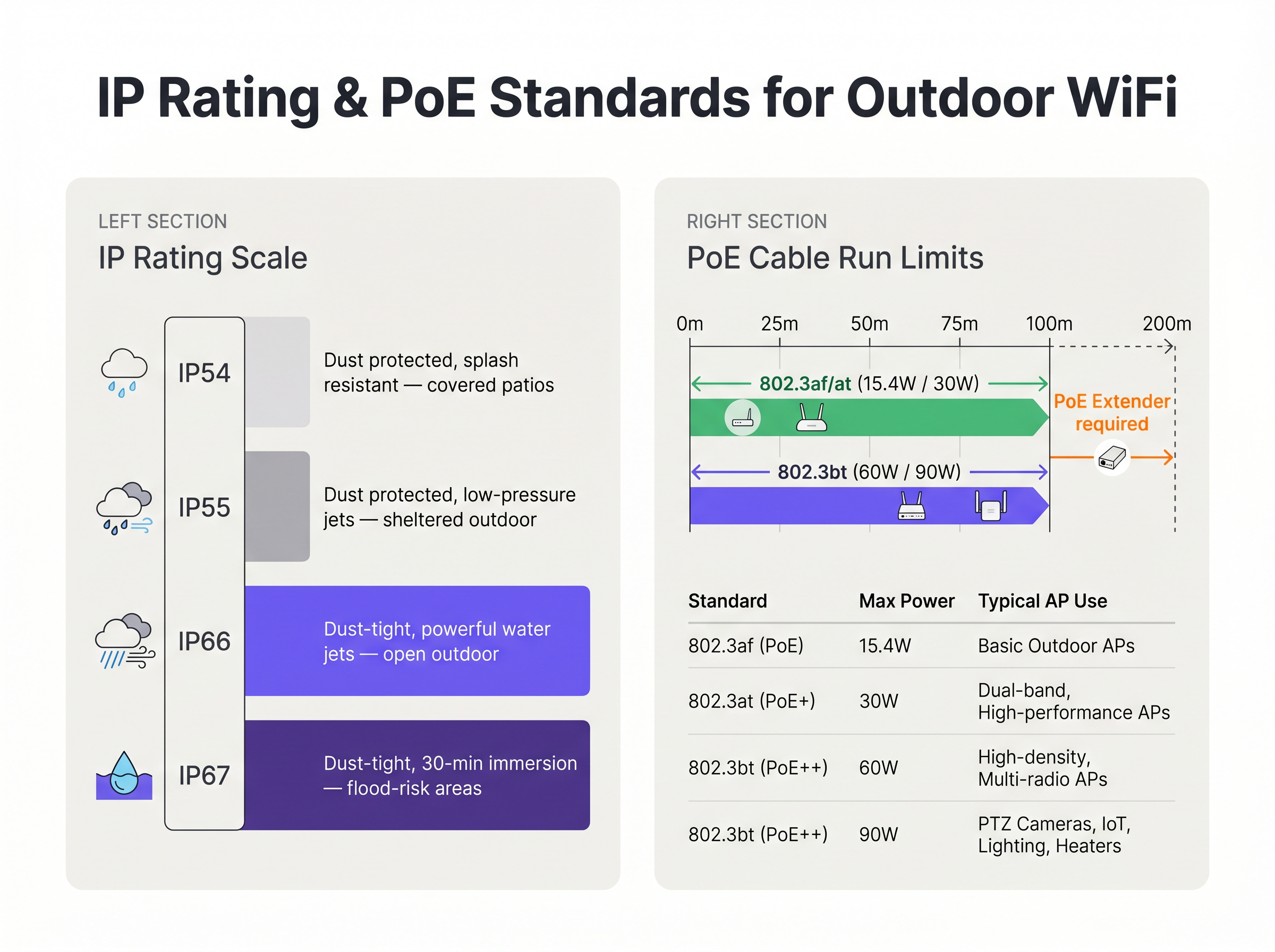
- IP66: सामान्य आउटडोर परिनियोजन के लिए न्यूनतम मानक। यह सुनिश्चित करता है कि यूनिट पूरी तरह से डस्ट-टाइट है और किसी भी दिशा से आने वाली शक्तिशाली पानी की बौछारों का सामना कर सकती है।
- IP67: खुले वातावरण के लिए गोल्ड स्टैंडर्ड, जो पानी में अस्थायी रूप से डूबने से सुरक्षा प्रदान करता है। यह बाढ़-प्रवण क्षेत्रों, मरीना, या गंभीर उष्णकटिबंधीय तूफानों के प्रभाव वाले क्षेत्रों के लिए अनिवार्य है।
महत्वपूर्ण रूप से, AP हाउसिंग शायद ही कभी विफलता का कारण बनती है। सबसे आम कमजोरी केबल इनग्रेस है। अनुचित रूप से सील किए गए RJ45 कनेक्टर पानी को ईथरनेट केबल के माध्यम से सीधे AP के चेसिस में या वापस PoE स्विच में जाने देते हैं। परिनियोजन में निर्माता द्वारा अनुमोदित वेदरप्रूफ केबल ग्लैंड्स, आउटडोर-रेटेड (UV-स्टेबलाइज्ड) CAT6A केबलिंग, और कनेक्टर से पानी को दूर रखने के लिए अनिवार्य ड्रिप लूप का उपयोग किया जाना चाहिए।
विस्तारित दूरियों के लिए पावर ओवर ईथरनेट (PoE)
आउटडोर परिनियोजन अक्सर ट्विस्टेड पेयर पर मानक ईथरनेट के लिए IEEE 802.3 द्वारा निर्दिष्ट 100-मीटर की अधिकतम चैनल लंबाई से अधिक हो जाते हैं। जब एक AP को निकटतम इंटरमीडिएट डिस्ट्रीब्यूशन फ्रेम (IDF) से 150 मीटर दूर लाइट पोल पर लगाया जाता है, तो इंजीनियरों को एक उपयुक्त पावर और डेटा डिलीवरी विधि का चयन करना होगा।
- स्थानीय पावर के साथ फाइबर ऑप्टिक: सिंगल-मोड फाइबर चलाने से डेटा के लिए व्यावहारिक रूप से असीमित दूरी मिलती है, लेकिन AP स्थान पर एक स्थानीय पावर स्रोत की आवश्यकता होती है। इसमें अक्सर स्ट्रीट लाइटिंग पावर सर्किट से बिजली लेना शामिल होता है, जो केवल रात में चालू हो सकते हैं, जिससे महंगे इनलाइन बैटरी बैकअप या रीवायरिंग की आवश्यकता होती है।
- PoE एक्सटेंडर: इनलाइन रिपीटर्स डेटा सिग्नल को पुनर्जीवित कर सकते हैं और PoE पावर को आगे बढ़ा सकते हैं, जिससे पहुंच प्रभावी रूप से दोगुनी होकर 200 मीटर हो जाती है। हालांकि, वे विफलता के अतिरिक्त बिंदु पेश करते हैं और उन्हें स्वयं वेदरप्रूफ NEMA एनक्लोजर में रखा जाना चाहिए।
- लॉन्ग-रीच PoE स्विच: विशेष स्विच मानक कॉपर पर 250 मीटर तक पावर और डेटा भेज सकते हैं, लेकिन यह आमतौर पर लिंक को ऑटो-नेगोशिएट करके 10 Mbps तक कम करने के लिए मजबूर करता है। हालांकि यह कम-बैंडविड्थ वाले Sensors के लिए पर्याप्त है, लेकिन यह हाई-डेंसिटी यूजर ट्रैफिक के लिए पूरी तरह से अपर्याप्त है।
इसके अलावा, आधुनिक हाई-डेंसिटी आउटडोर APs, विशेष रूप से ठंडी जलवायु के लिए आंतरिक हीटर वाले, पर्याप्त पावर की मांग करते हैं। उन्हें अक्सर IEEE 802.3bt (PoE++) की आवश्यकता होती है, जो 60W या 90W तक की खपत करते हैं। अंतर्निहित स्विच इन्फ्रास्ट्रक्चर सभी उपयोग किए गए पोर्ट्स पर इस पावर बजट को बनाए रखने में सक्षम होना चाहिए।
बैकहॉल आर्किटेक्चर: मेश बनाम वायर्ड
आउटडोर AP को कोर नेटवर्क से वापस कैसे जोड़ा जाए, इसका आर्किटेक्चरल निर्णय परिनियोजन के दीर्घकालिक प्रदर्शन और विश्वसनीयता को निर्धारित करता है।
वायर्ड बैकहॉल (गोल्ड स्टैंडर्ड) हर AP तक ट्रेंचिंग कंड्यूट और फाइबर या कॉपर खींचना सबसे मजबूत समाधान है। यह निश्चित लेटेंसी की गारंटी देता है, अधिकतम कुल थ्रूपुट प्रदान करता है, और यह सुनिश्चित करता है कि बैकहॉल लिंक RF हस्तक्षेप से सुरक्षित है। स्टेडियमों और Transport हब जैसे स्थायी स्थानों के लिए, दीर्घकालिक ROI के लिए वायर्ड बैकहॉल ही एकमात्र स्वीकार्य आर्किटेक्चर है।
वायरलेस मेश (व्यावहारिक विकल्प) जब ट्रेंचिंग आर्थिक रूप से निषेधात्मक हो, भौतिक रूप से असंभव हो (जैसे, विरासत स्थल), या परिनियोजन अस्थायी हो, तो वायरलेस मेश का उपयोग किया जाता है। मेश APs वायरलेस रूप से एक रूट नोड से जुड़ते हैं जिसमें एक वायर्ड कनेक्शन होता है।
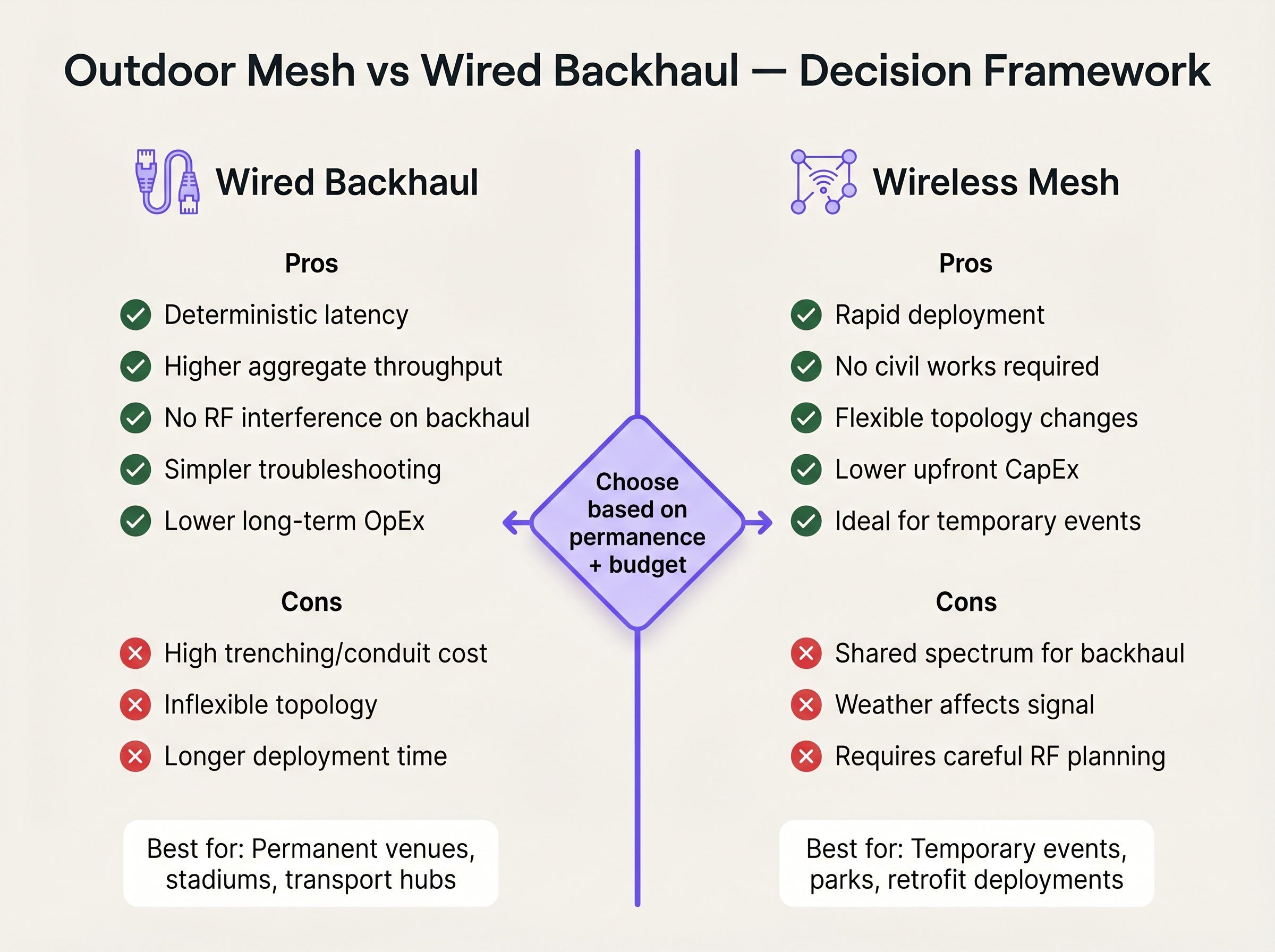
जबकि मेश सिविल वर्क्स CapEx और परिनियोजन समय को काफी कम कर देता है, यह महत्वपूर्ण तकनीकी समझौते पेश करता है। प्रत्येक वायरलेस हॉप प्रभावी रूप से उस पथ के लिए उपलब्ध बैंडविड्थ को आधा कर देता है, क्योंकि रेडियो को डेटा प्राप्त करना और फिर से प्रसारित करना होता है। इसके अलावा, बैकहॉल लिंक क्लाइंट उपकरणों के समान RF स्पेक्ट्रम साझा करता है, जिससे यह हस्तक्षेप और मौसम-प्रेरित सिग्नल गिरावट के प्रति संवेदनशील हो जाता है। यदि मेश अपरिहार्य है, तो इंजीनियरों को क्लाइंट-फेसिंग क्षमता को बनाए रखने के लिए विशेष रूप से बैकहॉल लिंक के लिए 5 GHz या 6 GHz रेडियो समर्पित करते हुए ट्राई-रेडियो APs को तैनात करना चाहिए।
कार्यान्वयन गाइड
1. साइट सर्वे और RF प्लानिंग
आउटडोर RF वातावरण जटिल होते हैं। सिग्नल उन्हें कमजोर करने वाली दीवारों के बिना आगे तक फैलते हैं, जिससे यदि प्रबंधित न किया जाए तो गंभीर को-चैनल हस्तक्षेप होता है। विशेष सॉफ़्टवेयर का उपयोग करके एक प्रेडिक्टिव सर्वे करें, जिसके बाद AP-ऑन-ए-स्टिक एक्टिव सर्वे करें। खाली जगह में सिग्नल प्रसारित करने वाले ओमनीडायरेक्शनल एंटेना का उपयोग करने के बजाय, उपयोगकर्ताओं के एकत्रित होने वाले स्थान पर RF ऊर्जा को सटीक रूप से केंद्रित करने के लिए डायरेक्शनल पैच एंटेना का उपयोग करें।
2. फिजिकल माउंटिंग और ग्राउंडिंग
मेटल पोल पर AP माउंट करने से बिजली गिरने का खतरा पैदा होता है। [1]
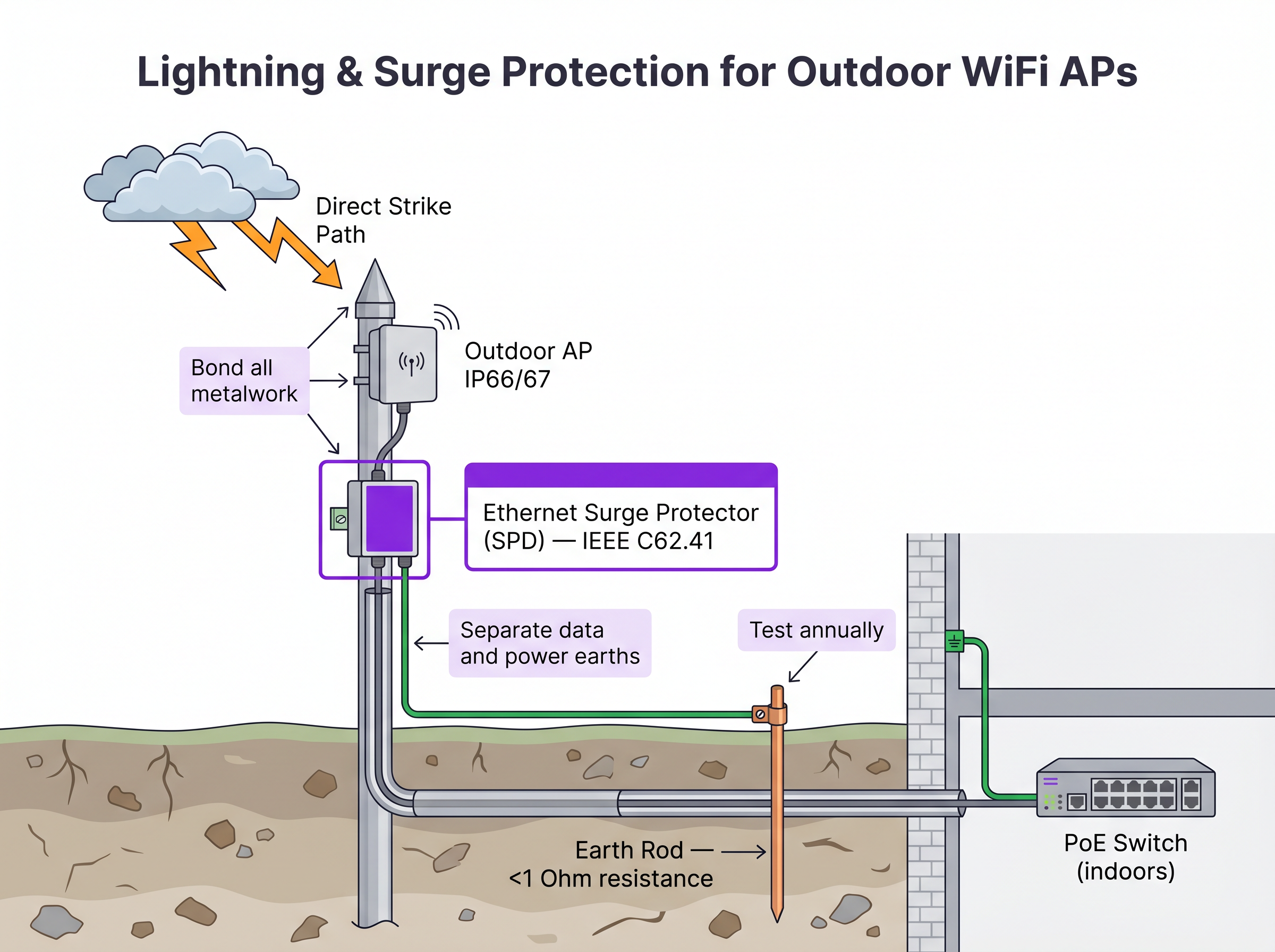
- सर्ज प्रोटेक्शन डिवाइसेस (SPDs): इनडोर स्विचिंग इन्फ्रास्ट्रक्चर की सुरक्षा के लिए AP एंड और बिल्डिंग इनग्रेस पॉइंट दोनों पर इनलाइन ईथरनेट SPDs स्थापित करें।
- बॉन्डिंग: सुनिश्चित करें कि AP माउंट, पोल और SPDs 1 ओम से कम के प्रतिरोध वाले एक समर्पित अर्थ रॉड से जुड़े हों।
- विंड लोड: सत्यापित करें कि माउंटिंग हार्डवेयर और पोल स्वयं स्थानीय अधिकतम विंड लोड गणनाओं का सामना कर सकते हैं, विशेष रूप से बड़े डायरेक्शनल एंटेना के लिए।
3. कॉन्फ़िगरेशन और सुरक्षा
आउटडोर APs दुर्भावनापूर्ण तत्वों के लिए भौतिक रूप से सुलभ होते हैं।
- AP पर अप्रयुक्त ईथरनेट पोर्ट्स को अक्षम करें।
- AP को जोड़ने वाले स्विच पोर्ट पर IEEE 802.1X पोर्ट-आधारित नेटवर्क एक्सेस कंट्रोल (NAC) लागू करें। यदि AP को हटा दिया जाता है और केबल में कोई अनधिकृत डिवाइस प्लग किया जाता है, तो स्विच को गतिशील रूप से पोर्ट को अक्षम कर देना चाहिए। विस्तृत NAC तुलनाओं के लिए, हमारी गाइड देखें: Aruba ClearPass vs Cisco ISE: NAC Platform Comparison .
- सुनिश्चित करें कि प्रबंधन ट्रैफ़िक एक समर्पित VLAN पर अलग किया गया हो।
ROI और व्यावसायिक प्रभाव
एंटरप्राइज-ग्रेड आउटडोर WiFi इन्फ्रास्ट्रक्चर में निवेश सीधे वेन्यू की लाभप्रदता और परिचालन दक्षता को प्रभावित करता है। Hospitality वेन्यू के लिए, सर्वव्यापी आउटडोर कवरेज अतिथि संतुष्टि स्कोर को बढ़ाता है और पूल और समुद्र तटों पर मोबाइल ऑर्डरिंग को सक्षम बनाता है। Retail वातावरण में, यह कर्बसाइड पिकअप और आउटडोर पॉइंट-ऑफ-सेल (POS) सिस्टम की सुविधा प्रदान करता।
आउटडोर में इनडोर हार्डवेयर को तैनात करने की गलत बचत से बचकर, या जहां ट्रेंचिंग व्यवहार्य थी वहां मेश पर अत्यधिक निर्भर न रहकर, IT टीमें गंभीर मौसम के दौरान विनाशकारी हार्डवेयर विफलता के जोखिम को कम करती हैं और रुक-रुक कर होने वाली RF बैकहॉल समस्याओं को हल करने के निरंतर OpEx खर्च को समाप्त करती हैं। एक उचित रूप से इंजीनियर किया गया आउटडोर नेटवर्क उन्नत स्थान-आधारित सेवाओं जैसे Wayfinding और परिचालन प्लेटफार्मों के साथ एकीकरण के लिए आवश्यक विश्वसनीय आधार प्रदान करता है, जैसा कि Connecting WiFi Events to 1,500+ Apps with Zapier and Purple में विस्तार से बताया गया है।
संदर्भ
[1] लोकल और मेट्रोपॉलिटन एरिया नेटवर्क के लिए IEEE मानक। "IEEE 802.3-2018 - IEEE Standard for Ethernet", IEEE Standards Association.
मुख्य परिभाषाएं
IP67 (इनग्रेस प्रोटेक्शन)
एक उपकरण रेटिंग जो प्रमाणित करती है कि डिवाइस पूरी तरह से डस्ट-टाइट (6) है और 30 मिनट के लिए 1 मीटर गहरे पानी में अस्थायी रूप से डूबने का सामना कर सकता है (7)।
जीवित रहने की क्षमता सुनिश्चित करने के लिए भारी तूफान या बाढ़ के प्रभाव वाले क्षेत्रों में आउटडोर हार्डवेयर के लिए अनिवार्य आधार रेखा।
IEEE 802.3bt (PoE++)
मानक ट्विस्टेड-पेयर केबलिंग पर 60W (टाइप 3) या 90W (टाइप 4) तक की DC पावर देने में सक्षम पावर ओवर ईथरनेट मानक।
आधुनिक, हाई-डेंसिटी आउटडोर APs के लिए आवश्यक जो कई रेडियो, समर्पित सुरक्षा स्कैनिंग रेडियो और आंतरिक हीटिंग तत्वों को पावर देते हैं।
ड्रिप लूप (Drip Loop)
किसी डिवाइस एनक्लोजर में प्रवेश करने से ठीक पहले केबल में जानबूझकर बनाया गया नीचे की ओर यू-आकार।
एक महत्वपूर्ण भौतिक स्थापना तकनीक जो केबल से नीचे बहने वाले पानी को उपकरण चेसिस में प्रवेश करने के बजाय लूप के निचले हिस्से से टपकने के लिए मजबूर करती है।
सर्ज प्रोटेक्शन डिवाइस (SPD)
अतिरिक्त करंट को ग्राउंड में भेजकर विद्युत उपकरणों को वोल्टेज स्पाइक्स से बचाने के लिए डिज़ाइन किया गया एक इनलाइन घटक।
आउटडोर नेटवर्किंग के लिए आवश्यक ताकि आउटडोर APs के पास बिजली गिरने से ईथरनेट केबल के माध्यम से कोर स्विचिंग इन्फ्रास्ट्रक्चर में विनाशकारी सर्ज जाने से रोका जा सके।
वायरलेस मेश बैकहॉल
एक नेटवर्क टोपोलॉजी जहां एक्सेस पॉइंट्स सीधे केबल कनेक्शन के बजाय अन्य एक्सेस पॉइंट्स के माध्यम से वायरलेस रूप से कोर नेटवर्क से जुड़ते हैं।
इसका उपयोग तब किया जाता है जब केबल बिछाना असंभव या बहुत महंगा हो, लेकिन बैंडविड्थ की गिरावट और लेटेंसी को कम करने के लिए सावधानीपूर्वक RF प्लानिंग की आवश्यकता होती है।
को-चैनल हस्तक्षेप (CCI)
सिग्नल में गिरावट तब होती है जब एक ही नेटवर्क पर कई एक्सेस पॉइंट्स एक ही समय में एक ही फ्रीक्वेंसी चैनल पर ट्रांसमिट करते हैं।
आउटडोर परिनियोजन में एक गंभीर समस्या जहां सिग्नल उन्हें ब्लॉक करने वाली भौतिक दीवारों के बिना आगे तक यात्रा करते हैं, जिससे सावधानीपूर्वक चैनल प्लानिंग और डायरेक्शनल एंटेना की आवश्यकता होती है।
डायरेक्शनल पैच एंटीना
सभी दिशाओं में ब्रॉडकास्ट करने के बजाय एक विशिष्ट दिशा (जैसे, 60-डिग्री कोन) में RF ऊर्जा को केंद्रित करने के लिए डिज़ाइन किया गया एंटीना।
स्टेडियमों जैसे हाई-डेंसिटी आउटडोर परिनियोजन के लिए कवरेज को सेक्टराइज करने और APs को एक-दूसरे के साथ हस्तक्षेप करने से रोकने के लिए महत्वपूर्ण।
802.1X पोर्ट-आधारित NAC
एक सुरक्षा प्रोटोकॉल जिसके लिए नेटवर्क स्विच द्वारा ट्रैफ़िक पास करने की अनुमति देने से पहले डिवाइस को प्रमाणित करने की आवश्यकता होती है।
आउटडोर APs के लिए महत्वपूर्ण सुरक्षा नियंत्रण; किसी हमलावर को आंतरिक कॉर्पोरेट नेटवर्क तक पहुंच प्राप्त करने के लिए AP को अनप्लग करने और लैपटॉप कनेक्ट करने से रोकता है।
हल किए गए उदाहरण
एक लक्जरी रिसॉर्ट को मुख्य भवन के IDF से 180 मीटर दूर स्थित पूल क्षेत्र में हाई-डेंसिटी WiFi कवरेज प्रदान करने की आवश्यकता है। जमीन पर महंगे सजावटी पत्थर लगे हैं, जिससे ट्रेंचिंग अत्यधिक अवांछनीय हो जाती है। कनेक्टिविटी को कैसे इंजीनियर किया जाना चाहिए?
- ट्रेंचिंग से बचें: मुख्य भवन से पूल क्षेत्र के एक केंद्रीय पोल तक मल्टी-गीगाबिट वायरलेस बैकहॉल स्थापित करने के लिए समर्पित 60 GHz रेडियो का उपयोग करके एक पॉइंट-टू-पॉइंट (PtP) वायरलेस ब्रिज का उपयोग करें। 60 GHz उच्च बैंडविड्थ प्रदान करता है और 5 GHz क्लाइंट WiFi के साथ हस्तक्षेप से बचाता है।
- स्थानीय वितरण: पूल पोल पर, एक कठोर, तापमान-रेटेड PoE स्विच वाले वेदरप्रूफ NEMA एनक्लोजर को स्थापित करें।
- पावर: पूल क्षेत्र के लाइटिंग या यूटिलिटी पावर सर्किट से बिजली लेकर NEMA एनक्लोजर को स्थानीय AC पावर प्रदान करें, यह सुनिश्चित करते हुए कि यह 24/7 अनस्विच्ड सर्किट पर हो।
- AP परिनियोजन: IP67-रेटेड, डुअल-बैंड आउटडोर APs को हार्डन PoE स्विच से कनेक्ट करें। पानी से सिग्नल परावर्तन को कम करते हुए, लाउंजर और कबाना पर कवरेज को केंद्रित करने के लिए डायरेक्शनल पैच एंटेना का उपयोग करें।
एक नगरपालिका पार्क Guest WiFi तैनात कर रहा है। APs को मेटल लैम्पपोस्ट पर लगाया जाएगा। मौसम और विद्युत घटनाओं से नेटवर्क के नुकसान को रोकने के लिए कौन से विशिष्ट फिजिकल लेयर सुरक्षा उपायों को लागू किया जाना चाहिए?
- केबल इनग्रेस: आउटडोर-रेटेड, UV-स्टेबलाइज्ड CAT6A केबल का उपयोग करें। निर्माता द्वारा आपूर्ति किए गए वेदरप्रूफ केबल ग्लैंड का उपयोग करके AP पर कनेक्शन को समाप्त करें। महत्वपूर्ण रूप से, AP में प्रवेश करने से ठीक पहले केबल में एक 'ड्रिप लूप' बनाएं, यह सुनिश्चित करते हुए कि पानी कनेक्टर में जाने के बजाय लूप के निचले हिस्से से टपके।
- बिजली से सुरक्षा: पोल पर एक इनलाइन ईथरनेट सर्ज प्रोटेक्शन डिवाइस (SPD) स्थापित करें, जो मेटल पोल (यदि पोल ठीक से अर्थ किया गया है) या एक समर्पित अर्थ रॉड से जुड़ा हो।
- भवन सुरक्षा: उस बिंदु पर एक दूसरा SPD स्थापित करें जहां ईथरनेट केबल कोर स्विच वाले भवन में प्रवेश करती है, इसे भवन के मुख्य अर्थ टर्मिनल से जोड़ें।
अभ्यास प्रश्न
Q1. आप एक बड़े आउटडोर संगीत समारोह के लिए WiFi डिज़ाइन कर रहे हैं जो 3 दिनों तक चलेगा। ट्रेंचिंग की अनुमति नहीं है। आपको मुख्य मंच देखने वाले क्षेत्र को कवरेज प्रदान करने की आवश्यकता है, जो वायर्ड नेटवर्क ड्रॉप से 300 मीटर दूर है। सबसे उपयुक्त बैकहॉल आर्किटेक्चर क्या है?
संकेत: इवेंट की अवधि और घनी भीड़ के प्रदर्शन आवश्यकताओं पर विचार करें।
मॉडल उत्तर देखें
वायर्ड ड्रॉप से मुख्य मंच क्षेत्र तक कनेक्शन भेजने के लिए एक पॉइंट-टू-पॉइंट (PtP) वायरलेस ब्रिज (अधिमानतः 60 GHz) का उपयोग किया जाना चाहिए। वहां से, एक स्थानीयकृत वायरलेस मेश या अस्थायी केबलिंग भीड़ की सेवा करने वाले व्यक्तिगत APs को कनेक्शन वितरित कर सकती है। यह ट्रेंचिंग से बचाता है और एक उच्च-क्षमता वाला बैकबोन प्रदान करता है, जिसे मानक मेश 300 मीटर से अधिक दूरी पर प्रदान नहीं कर सकता है।
Q2. लाइटिंग पोल पर लगा एक आउटडोर AP रुक-रुक कर पावर रीबूट का सामना कर रहा है। केबल रन CAT6 का 115 मीटर है। स्विच 802.3at (30W) PoE+ प्रदान कर रहा है। विफलता के दो सबसे संभावित कारण क्या हैं?
संकेत: फिजिकल लेयर की सीमाओं और पावर आवश्यकताओं दोनों का मूल्यांकन करें।
मॉडल उत्तर देखें
- दूरी पर वोल्टेज ड्रॉप: 115 मीटर का रन 100 मीटर के ईथरनेट मानक से अधिक है। कॉपर केबल में प्रतिरोध के कारण वोल्टेज गिर जाता है, जिसका अर्थ है कि AP को लोड के तहत संचालित करने के लिए पर्याप्त पावर नहीं मिल सकती है। 2) अपर्याप्त PoE बजट: आधुनिक आउटडोर APs, विशेष रूप से हीटर वाले, को अक्सर 802.3bt (60W) की आवश्यकता होती है। यदि स्विच केवल 30W प्रदान करता है, तो AP रीबूट हो जाएगा जब वह उपलब्ध से अधिक पावर खींचने का प्रयास करेगा।
Q3. एक इमारत की छत पर नए स्थापित आउटडोर AP के ऑडिट के दौरान, आप देखते हैं कि CAT6A केबल AP पोर्ट से सीधे नीचे जाती है और छत की झिल्ली में ड्रिल किए गए छेद में प्रवेश करती है। AP की IP67 रेटिंग है। महत्वपूर्ण स्थापना त्रुटि क्या है, और जोखिम क्या है?
संकेत: विचार करें कि पानी भौतिक सतहों पर कैसा व्यवहार करता है।
मॉडल उत्तर देखें
महत्वपूर्ण त्रुटि ड्रिप लूप की अनुपस्थिति है। ड्रिप लूप के बिना, पानी केबल के बाहर से नीचे बहेगा और सीधे छत के प्रवेश बिंदु पर जमा हो जाएगा, या यदि ग्लैंड विफल हो जाता है तो AP के RJ45 कनेक्टर में चला जाएगा। जोखिम इमारत या AP चेसिस में पानी का प्रवेश है, जिससे AP की IP67 रेटिंग के बावजूद हार्डवेयर विफलता हो सकती है।
इस श्रृंखला में आगे पढ़ें
WLC (Wireless LAN Controller) क्या है और क्या आपको अभी भी इसकी आवश्यकता है?
यह व्यापक गाइड Wireless LAN Controllers (WLCs) के विकास की पड़ताल करती है और 2026 में सही आर्किटेक्चर निर्धारित करने के लिए एक तकनीकी ढांचा प्रदान करती है। यह पारंपरिक हार्डवेयर, क्लाउड-प्रबंधित और कंट्रोलर-लेस मॉडल को कवर करती है, जो अनुपालन, स्केलेबिलिटी और अतिथि अनुभव पर उनके प्रभाव का विवरण देती है।
एक्सेस पॉइंट्स के लिए Power over Ethernet (PoE): एक कार्यान्वयन गाइड
यह गाइड इंफ्रास्ट्रक्चर तकनीशियनों, नेटवर्क आर्किटेक्ट्स और IT निर्णय निर्माताओं को होटल, रिटेल एस्टेट, स्टेडियम और सार्वजनिक-क्षेत्र की सुविधाओं सहित एंटरप्राइज़ स्थानों में Power over Ethernet (PoE) एक्सेस पॉइंट्स को डिप्लॉय करने के लिए एक निश्चित तकनीकी संदर्भ प्रदान करती है। यह 802.3af से 802.3bt तक IEEE मानकों, पावर बजट गणना, केबलिंग आवश्यकताओं, VLAN सेगमेंटेशन और सुरक्षा अनुपालन को कवर करती है, जिसमें ठोस कार्यान्वयन परिदृश्य और मापने योग्य ROI बेंचमार्क शामिल हैं। PoE आर्किटेक्चर को समझना किसी भी [Guest WiFi](/guest-wifi) या [WiFi Analytics](/guest-wifi-marketing-analytics-platform) डिप्लॉयमेंट के लिए मूलभूत है, क्योंकि भौतिक परत की विश्वसनीयता सीधे डेटा कैप्चर की गुणवत्ता, उपयोगकर्ता अनुभव और परिचालन अपटाइम को निर्धारित करती है।
Mesh Network बनाम Access Points: बड़े स्थानों के लिए कौन सा बेहतर है?
यह तकनीकी गाइड बड़े पैमाने के स्थानों के लिए मेश नेटवर्क और पारंपरिक वायर्ड एक्सेस पॉइंट के बीच एक निश्चित तुलना प्रदान करती है, जिसमें आर्किटेक्चर, प्रदर्शन ट्रेड-ऑफ़ और डिप्लॉयमेंट रणनीति शामिल है। यह IT प्रबंधकों, नेटवर्क आर्किटेक्ट्स और CTOs को हॉस्पिटैलिटी, रिटेल, इवेंट्स और सार्वजनिक-क्षेत्र के वातावरण के लिए उच्च-प्रदर्शन, अनुपालन वाले WiFi इंफ्रास्ट्रक्चर को डिज़ाइन करने के लिए कार्रवाई योग्य फ्रेमवर्क से लैस करता है। यह गाइड इन आर्किटेक्चरल निर्णयों को Purple के हार्डवेयर-एग्नोस्टिक गेस्ट WiFi और एनालिटिक्स प्लेटफ़ॉर्म पर भी मैप करती है, यह प्रदर्शित करती है कि सही इंफ्रास्ट्रक्चर विकल्प कैसे मापने योग्य व्यावसायिक परिणाम प्राप्त करता है।