
Airport WiFi Security: Public Networks वर प्रवाशांचे संरक्षण कसे करावे
हे तांत्रिक संदर्भ मार्गदर्शक विमानतळ WiFi च्या विशिष्ट थ्रेट लँडस्केपचे तपशीलवार वर्णन करते, ज्यामध्ये Evil Twin ॲक्सेस पॉइंट्स, रोग हार्डवेअर आणि मॅन-इन-द-मिडल (Man-in-the-Middle) हल्ल्यांचा समावेश आहे. हे IT व्यवस्थापक, नेटवर्क आर्किटेक्ट्स आणि व्हेन्यू ऑपरेशन्स डिरेक्टर्सना व्यावहारिक आर्किटेक्चरल रणनीती प्रदान करते - ज्यामध्ये प्रवाशांचे आणि एंटरप्राइझ इन्फ्रास्ट्रक्चरचे मोठ्या प्रमाणावर संरक्षण करण्यासाठी WPA3 अंमलबजावणी, VLAN विभागणी, WIPS डिप्लॉयमेंट आणि GDPR सुसंगत captive portal डिझाइन समाविष्ट आहे. Purple चे गेस्ट WiFi आणि ॲनालिटिक्स प्लॅटफॉर्म संपूर्णपणे प्रत्येक समस्या क्षेत्राशी ठोसपणे जोडलेले आहे.
Video overview
हे मार्गदर्शक ऐका
पॉडकास्ट ट्रान्सक्रिप्ट पहा
आमच्या मुख्य मालिकेचा भाग: Enterprise WiFi Security Guide →
कार्यकारी सारांश (Executive Summary)
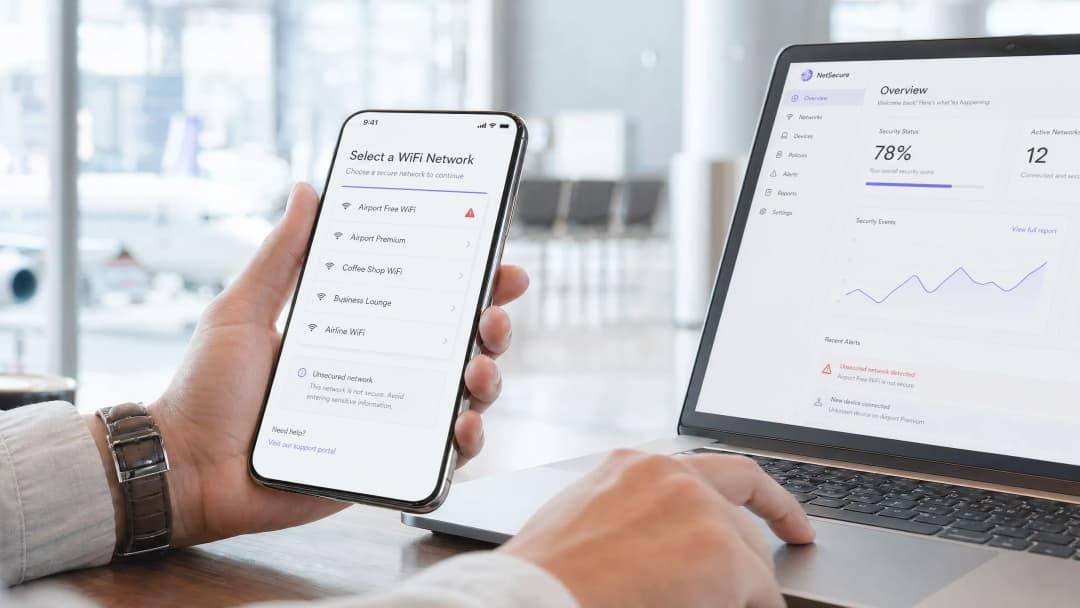
उच्च-घनतेच्या सार्वजनिक वातावरणाचे व्यवस्थापन करणाऱ्या CTOs आणि आयटी संचालकांसाठी, "is airport WiFi safe" हा केवळ एक सामान्य ग्राहकाचा प्रश्न नाही - हे थेट उत्तरदायित्व परिणाम असलेले अनुपालन आणि पायाभूत सुविधांचे आव्हान आहे. विमानतळ नेटवर्क एक अद्वितीय आणि गतिमान हल्ला क्षेत्र सादर करतात: दर तासाला हजारो तात्पुरते कनेक्शन्स, मानक ग्राहक मोबाईलपासून ते एंटरप्राइझ लॅपटॉपपर्यंतच्या उपकरणांची विविध श्रेणी आणि पाहुणे, कर्मचारी, किरकोळ भाडेकरू आणि कार्यरत तंत्रज्ञान ट्रॅफिकचे मिश्रण जे बऱ्याचदा सध्याच्या सुरक्षा मानकांच्या मागे असलेल्या पायाभूत सुविधांवर उद्भवते.
प्राथमिक धोके - Evil Twin ॲक्सेस पॉइंट्स (APs) आणि अनधिकृत हार्डवेअर इन्स्टॉलेशन्स - हे कमी खर्चाचे, उच्च-प्रभावी हल्ले आहेत ज्यांच्या अंमलबजावणीसाठी किमान तांत्रिक कौशल्याची आवश्यकता असते. याकडे दुर्लक्ष केल्यास, प्रवाशांना क्रेडेन्शियल चोरी आणि आर्थिक फसवणुकीचा धोका असतो, तर विमानतळ चालकाला GDPR अंमलबजावणी कारवाई आणि प्रतिष्ठेचे नुकसान सहन करावे लागते. Opportunistic Wireless Encryption सह WPA3 लागू करून, कडक VLAN वर्गीकरण लागू करून, Wireless Intrusion Prevention Systems (WIPS) तैनात करून आणि सुरक्षित, GDPR-सुसंगत guest WiFi प्लॅटफॉर्म समाकलित करून, स्थळ चालक अखंड कनेक्टिव्हिटी राखून प्रवाशांच्या डेटाचे रक्षण करू शकतात. Purple चा WiFi analytics स्तर या सुरक्षा पायावर कार्यरत बुद्धिमत्ता जोडतो, ज्यामुळे सुरक्षित ऑनबोर्डिंगचे मोजता येण्याजोग्या व्यावसायिक ROI मध्ये रूपांतर होते.
तांत्रिक सखोल विश्लेषण: विमानतळ WiFi धोक्यांचे दृश्य स्वरूप
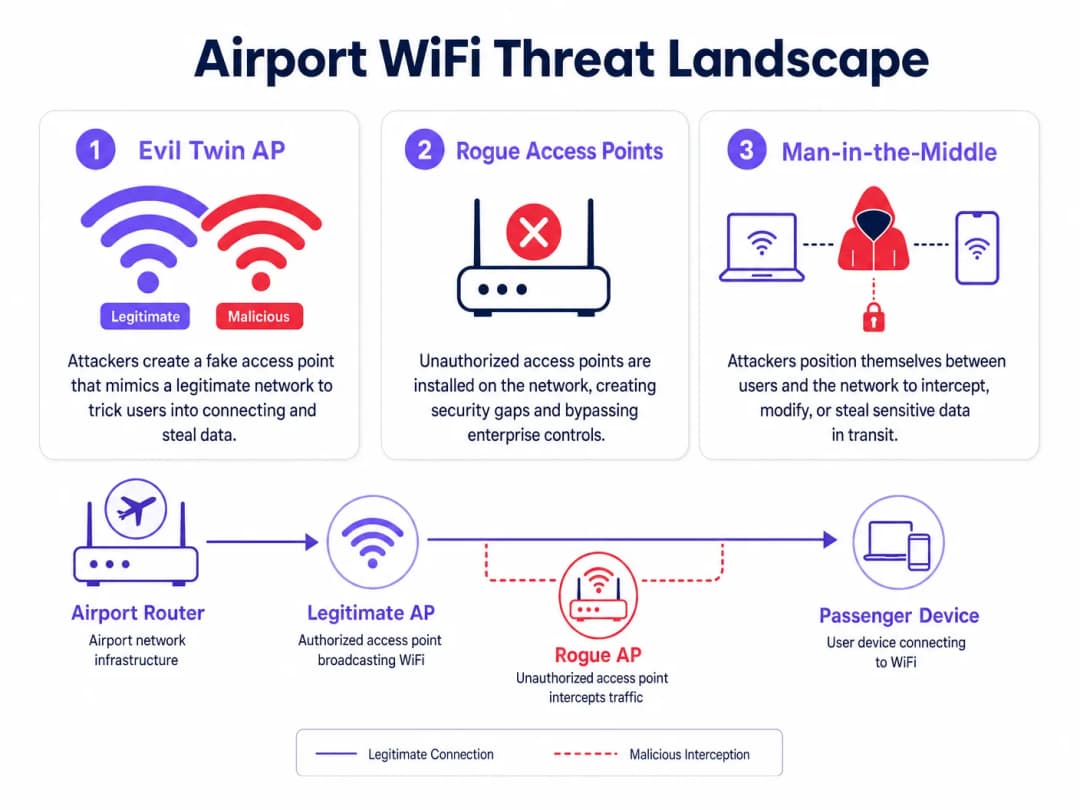
विमानतळाचे वातावरण हे वायरलेस हल्ल्यांसाठी सर्वाधिक लक्ष्यित सार्वजनिक जागांपैकी एक आहे. प्रवाशांचे प्रचंड प्रमाण, क्वचितच तक्रार करणारे तात्पुरते वापरकर्ते आणि संवेदनशील डेटा प्रसारित करणारे कॉर्पोरेट प्रवासी - हे सर्व मिळून दुर्भावनापूर्ण घटकांसाठी एक आदर्श वातावरण तयार करतात. प्रभावी प्रतिकार वास्तुकला डिझाइन करण्यासाठी विशिष्ट धोक्याचे घटक समजून घेणे आवश्यक आहे.
Evil Twin ॲक्सेस पॉइंट्स
Evil Twin हा एक दुर्भावनापूर्ण AP आहे जो कायदेशीर विमानतळ नेटवर्कचा अचूक SSID प्रसारित करण्यासाठी कॉन्फिगर केलेला असतो - उदाहरणार्थ, "Airport Free WiFi" किंवा "LHR_Passenger_WiFi". मानक क्लायंट डिव्हाइसेस SSID जुळणी आणि सिग्नल सामर्थ्यावर आधारित स्वयंचलित नेटवर्क निवड लागू करत असल्याने, प्रवाशाचे डिव्हाइस कायदेशीर पायाभूत सुविधांपेक्षा अधिक मजबूत सिग्नल प्रदान करत असल्यास Evil Twin शी कनेक्ट होण्यास प्राधान्य देईल. हे सहजपणे साध्य केले जाते: जवळच्या सीटवरून जास्तीत जास्त क्षमतेने ब्रॉडकास्ट करणारा पोर्टेबल राउटर नियंत्रित पॉवर पातळीवर कार्यरत असलेल्या छतावर बसवलेल्या एंटरप्राइझ AP ला सहजपणे मागे टाकू शकतो.
एकदा क्लायंटने Evil Twin शी कनेक्ट केले की, हल्ला करणारा अनेक प्रकारचे हल्ले सुरू करू शकतो. Passive interception द्वारे कूटबद्ध नसलेला (unencrypted) HTTP ट्रॅफिक, DNS क्वेरी आणि सेशन कुकीज कॅप्चर केल्या जातात. SSL stripping रिअल-टाइममध्ये HTTPS कनेक्शन्सना HTTP वर डाउनग्रेड करते, ज्यामुळे HTTP Strict Transport Security (HSTS) लागू न करणाऱ्या साइट्सवरील क्रेडेंशियल्स उघड होतात. DNS spoofing वापरकर्त्यांना बँकिंग पोर्टल्स किंवा एअरलाइन बुकिंग सिस्टम्सची हुबेहूब नक्कल करणाऱ्या फिशिंग पेजेसकडे रीडायरेक्ट करते. प्रवाशाला कोणत्याही चेतावणी निर्देशकांशिवाय सामान्य कनेक्शन दिसते, कारण Evil Twin स्वतःच्या अपस्ट्रीम कनेक्शनद्वारे प्रत्यक्ष इंटरनेट ॲक्सेस प्रदान करतो - हा हल्ला अंतिम वापरकर्त्यासाठी पूर्णपणे अदृश्य राहतो.
हल्ला करणाऱ्यासाठीचा ऑपरेशनल खर्च अगदी कमी असतो: एक कंझ्युमर-ग्रेड ट्रॅव्हल राउटर, ओपन-सोर्स टूल्स चालवणारा लॅपटॉप आणि डिपार्चर लाउंजमधील एक सीट. या हल्ल्यासाठी विमानतळाच्या पायाभूत सुविधांवर (infrastructure) कोणत्याही प्रत्यक्ष प्रवेशाची (physical access) आवश्यकता नसते.
Rogue Access Points
Rogue APs ही विमानतळाच्या वायर्ड नेटवर्क इन्फ्रास्ट्रक्चरशी प्रत्यक्ष जोडलेली अनधिकृत डिव्हाइसेस असतात. केवळ हवेतून कार्य करणाऱ्या Evil Twins च्या उलट, rogue APs अंतर्गत धोक्याचे प्रतिनिधित्व करतात - त्यांना नेटवर्क पोर्टवर प्रत्यक्ष प्रवेशाची आवश्यकता असते. तथापि, शेकडो किरकोळ सवलती (retail concessions), सेवा कंत्राटदार आणि साफसफाई कर्मचारी असलेल्या मोठ्या विमानतळ वातावरणात, नेटवर्क पोर्टवर प्रत्यक्ष प्रवेश मिळवणे कठीण नाही.
rogue APs चे सर्वात सामान्य स्त्रोत एखादा दुर्भावनापूर्ण हेतू असलेला व्यक्ती नसून, चांगल्या हेतूने काम करणारे कर्मचारी असतात. टर्मिनल 3 मध्ये खराब WiFi कव्हरेजचा अनुभव घेणारा रिटेल कन्सेशनर ग्राहक-श्रेणीचा (consumer-grade) राउटर खरेदी करतो आणि तो त्यांच्या काउंटरमागील इथरनेट पोर्टमध्ये प्लग करतो. हा राउटर एंटरप्राइझ फायरवॉल, Network Access Control (NAC) पॉलिसी आणि WPA3 Enterprise कॉन्फिगरेशन्सना बायपास करून स्वतःचे SSID ब्रॉडकास्ट करतो, आणि सार्वजनिक इंटरनेटवरून विमानतळाच्या अंतर्गत नेटवर्कमध्ये थेट, अनमॅनेज्ड मार्ग तयार करतो. तिथून पुढे, rogue AP शी कनेक्ट केलेले कोणतेही डिव्हाइस - मग ते कन्सेशनरचे POS टर्मिनल असो किंवा चुकून कनेक्ट झालेला प्रवासी असो - त्यांना पूर्णपणे वेगळ्या ठेवल्या जाणाऱ्या सिस्टीममध्ये संभाव्य नेटवर्क-स्तरीय प्रवेश मिळतो.
transport ऑपरेटर आणि विमानतळ IT टीम्ससाठी, वातावरणाच्या प्रचंड विस्तारामुळे rogue AP ची समस्या अधिक गुंतागुंतीची बनते. एका मोठ्या आंतरराष्ट्रीय विमानतळामध्ये, शेकडो नेटवर्क पोर्ट्स टर्मिनल्स, रिटेल युनिट्स, लाउंज आणि बॅक-ऑफिस क्षेत्रांमध्ये पसरलेले असू शकतात. ऑटोमेटेड डिटेक्शन टूलिंगशिवाय मॅन्युअल ऑडिटिंग करणे अव्यवहार्य आहे.
Man-in-the-Middle Attacks
Evil Twin आणि rogue AP या दोन्ही परिस्थितींमध्ये Man-in-the-Middle (MitM) हल्ल्यांना वाव मिळतो, जिथे हल्लेखोर स्वतःला क्लायंट डिव्हाइस आणि वैध नेटवर्कच्या दरम्यान स्थापित करतो. MitM परिस्थितीत, हल्लेखोर दोन्ही बाजूंनी येणारी-जाणारी ट्रॅफिक अडवू शकतो, वाचू शकतो आणि त्यात बदल करू शकतो. आधुनिक TLS एन्क्रिप्शन HTTPS ट्रॅफिकवरील MitM हल्ल्यांचा प्रभाव लक्षणीयरीत्या कमी करते, परंतु हल्ल्याची व्याप्ती अजूनही मोठी आहे: अनएन्क्रिप्टेड प्रोटोकॉल, चुकीच्या पद्धतीने कॉन्फिगर केलेली TLS अंमलबजावणी आणि जुन्या ॲप्लिकेशन्सचा वापर जे सर्टिफिकेट व्हॅलिडेशनची सक्ती करत नाहीत - हे सर्व गैरफायदा घेण्यासाठी अनुकूल अशा त्रुटी निर्माण करतात.
कॉर्पोरेट प्रवाशांसाठी - जे विमानतळावरील WiFi वापरकर्त्यांचा एक मोठा हिस्सा आहेत - VPN क्रेडेंशियल कॅप्चर करणे किंवा कॉर्पोरेट ईमेल सेशन हायजॅक करणे या उद्देशाने केलेले MitM हल्ले हे अत्यंत फायदेशीर ठरतात आणि यामुळे होणारे नुकसान केवळ एका प्रवाशापुरते मर्यादित न राहता कैक पटीने वाढते.
-
तुमच्या विशिष्ट सेटअपबद्दल काही प्रश्न आहेत का?
आमची टीम ८०,००० हून अधिक वेन्यूजमधील वेन्यू ऑपरेटर्स, IT मॅनेजर्स आणि नेटवर्क इंजिनिअर्ससोबत काम करते. २० मिनिटांचा कॉल बुक करा आणि तुमच्यासारख्या इतरांनी ही समस्या कशी सोडवली हे आम्ही तुम्हाला दाखवू.
अंमलबजावणी मार्गदर्शक: सुरक्षित आर्किटेक्चर
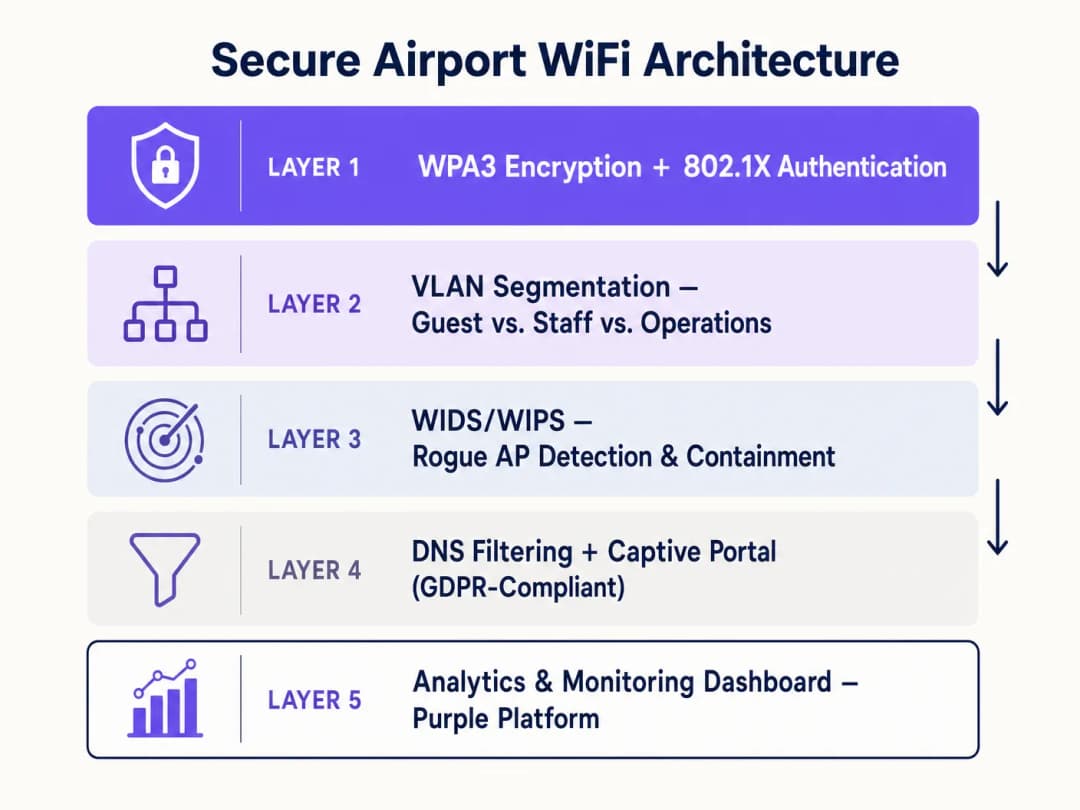
विमानतळावरील WiFi च्या सुरक्षिततेसमोरील आव्हानांना तोंड देण्यासाठी एक स्तरित, डिफेन्स-इन-डेप्थ आर्किटेक्चर आवश्यक आहे. कोणतीही एक सुरक्षा नियंत्रण पद्धत पुरेशी नाही; प्रत्येक पुढील स्तरावरील हल्ला अधिकाधिक कठीण आणि ओळखता येण्याजोगा बनवणे हे ध्येय आहे.
स्तर १: एन्क्रिप्शन आणि ऑथेंटिकेशन मानके
WPA3 कडे स्थलांतरित होणे ही पहिली गरज आहे. खुल्या सार्वजनिक नेटवर्कसाठी, WPA3 मध्ये Opportunistic Wireless Encryption (OWE) समाविष्ट करण्यात आले आहे, जे IEEE 802.11-2020 मध्ये परिभाषित केले आहे. OWE प्रत्येक क्लायंट सेशनसाठी सामायिक पासवर्ड किंवा प्री-शेअर्ड की न मागता वैयक्तिकृत एन्क्रिप्शन प्रदान करते. प्रत्येक क्लायंट-AP असोसिएशन एका अनन्य Diffie-Hellman की एक्स्चेंजवर चर्चा करते, याचा अर्थ असा की जरी एखाद्या हल्लेखोराने संपूर्ण टर्मिनलचे कच्चे रेडिओ फ्रिक्वेन्सी ट्रॅफिक कॅप्चर केले, तरीही तो कोणत्याही विशिष्ट सेशनला डिक्रिप्ट करू शकत नाही. हे थेट पॅसिव्ह इव्हस्ड्रॉपिंग कमी करते आणि खुल्या नेटवर्क इंटरसेप्शनचा प्राथमिक हल्ला मार्ग नष्ट करते.
ऑथेंटिकेटेड नेटवर्क विभागांसाठी - कर्मचारी, ऑपरेशन्स, रिटेल भाडेकरू - RADIUS ऑथेंटिकेशनसह IEEE 802.1X हे योग्य मानक आहे. 802.1X नेटवर्क प्रवेश मंजूर करण्यापूर्वी प्रति-डिव्हाइस ऑथेंटिकेशन सक्तीचे करते, ज्यामध्ये प्रत्येक ऑथेंटिकेशन इव्हेंट अनुपालन आणि ऑडिटिंगच्या उद्देशाने लॉग केला जातो. सर्टिफिकेट-बेस्ड Extensible Authentication Protocol (EAP-TLS) सह एकत्रित केल्यावर, हे कर्मचारी नेटवर्कवरील क्रेडेंशियल-बेस्ड हल्ले पूर्णपणे नष्ट करते. अखंडपणे प्रवाशांना ऑनबोर्डिंग करण्याचे पर्याय शोधणाऱ्या ठिकाणांसाठी, OpenRoaming - वायरलेस ब्रॉडबँड अलायन्सचे फेडरेटेड आयडेंटिटी मानक - प्रोफाइल-आधारित प्रमाणीकरण प्रदान करते जे प्रवाशांना मॅन्युअल SSID निवडीशिवाय स्वयंचलितपणे सत्यापित नेटवर्कशी जोडते. Purple त्याच्या Connect परवान्याअंतर्गत OpenRoaming इकोसिस्टममध्ये विनामूल्य ओळख प्रदाता म्हणून कार्य करते, ज्यामुळे विमानतळांना अखंड, सुरक्षित कनेक्टिव्हिटी ऑफर करणे आणि नेटवर्क निवडीमधील मानवी त्रुटी घटक दूर करणे शक्य होते. हे थेट Evil Twin धोक्याशी संबंधित आहे: जर प्रवाशाचे डिव्हाइस सत्यापित प्रोफाइलद्वारे स्वयंचलितपणे कनेक्ट झाले, तर ते समान SSID प्रसारित करणाऱ्या Evil Twin शी कनेक्ट होणार नाही.
लेअर २: नेटवर्क विभाजन आणि क्लायंट आयसोलेशन
अतिथी ट्रॅफिकला ऑपरेशनल टेक्नॉलॉजी (OT), कर्मचारी नेटवर्क आणि रिटेल पॉइंट-ऑफ-सेल (POS) सिस्टीमपासून पूर्णपणे वेगळे ठेवण्यासाठी AP स्तरावर कठोर VLAN टॅगिंग वापरले गेले पाहिजे. विमानतळ वातावरणासाठी किमान विभाजन मॉडेलमध्ये हे समाविष्ट असावे: एक सार्वजनिक अतिथी VLAN (केवळ इंटरनेट प्रवेश, कोणतेही अंतर्गत राउटिंग नाही), एक कर्मचारी VLAN (802.1X द्वारे प्रमाणित, अंतर्गत सिस्टीममध्ये प्रवेश), एक रिटेल भाडेकरू VLAN (अतिथी आणि कर्मचारी दोघांपासून वेगळे, POS सिस्टीमसाठी इंटरनेट प्रवेश), आणि एक ऑपरेशन्स VLAN (डिजिटल सायनेज, बिल्डिंग मॅनेजमेंट आणि एअरसाइड सिस्टीमसाठी एअर-गॅप्ड किंवा काटेकोरपणे फायरवॉल केलेले).
क्लायंट आयसोलेशन - एकाच VLAN वरील उपकरणांमधील लेअर २ आयसोलेशन - अतिथी VLAN वर सक्षम केले गेले पाहिजे. क्लायंट आयसोलेशनशिवाय, एकाच अतिथी नेटवर्कशी जोडलेले दोन प्रवासी IP लेअरवर थेट संवाद साधू शकतात, ज्यामुळे डिव्हाइस-टू-डिव्हाइस हल्ले शक्य होतात. हा वायरलेस कंट्रोलरवरील एक कॉन्फिगरेशन सेटिंग आहे जो सहसा जुन्या उपयोजनांमध्ये दुर्लक्षित केला जातो.
विमानतळ टर्मिनल्समध्ये कार्यरत असलेल्या हॉस्पिटॅलिटी आणि रिटेल वातावरणासाठी देखील हेच विभाजन नियम लागू होतात. विमानतळ ऑपरेटरसोबतच्या व्यावसायिक संबंधांचा विचार न करता, हॉटेल एअरसाइड लाउंज किंवा रिटेल सवलतीला अविश्वासू नेटवर्क विभाग म्हणून मानले जाणे आवश्यक आहे.
लेअर ३: वायरलेस इंट्र्युजन डिटेक्शन अँड प्रिव्हेंशन (WIDS/WIPS)
एक वायरलेस इंट्र्युजन प्रिव्हेंशन सिस्टम हा Evil Twin आणि रोग AP या दोन्ही धोक्यांविरुद्धचा प्राथमिक स्वयंचलित बचाव आहे. अनधिकृत SSIDs, MAC ॲड्रेस स्पूफिंग आणि डी-ऑथेंटिकेशन फ्लड हल्ल्यांसाठी सर्व चॅनेल आणि बँड्स (वाय-फाय ६ई उपयोजनांसाठी २.४ GHz, ५ GHz आणि ६ GHz) वर रेडिओ फ्रिक्वेन्सी वातावरणाचे सतत स्कॅन करण्यासाठी WIPS कॉन्फिगर केले जाणे आवश्यक आहे.
एखादा Evil Twin - जो SSID मॅच आणि व्यवस्थापित इन्फ्रास्ट्रक्चरमधील कोणत्याही अधिकृत AP शी जुळत नसलेल्या BSSID द्वारे ओळखला जातो - आढळल्यास, WIPS ने स्वयंचलितपणे प्रतिबंध (containment) तैनात केला पाहिजे. प्रतिबंधामध्ये दुर्भावनापूर्ण AP शी जोडण्याचा प्रयत्न करणाऱ्या क्लायंटना लक्ष्यित IEEE ८०२.११ डी-ऑथेंटिकेशन फ्रेम्स प्रसारित करणे समाविष्ट आहे, ज्यामुळे यशस्वी कनेक्शन रोखले जाते. हा मशीनच्या गतीने होणारा स्वयंचलित प्रतिसाद आहे, जो कोणत्याही मानवी ऑपरेटरच्या हस्तक्षेपापेक्षा खूप वेगवान आहे.
rogue AP शोधण्यासाठी, WIPS ओव्हर-द-एअर निरीक्षणांचा वायर्ड नेटवर्क टोपोलॉजीशी परस्परसंबंध जोडते. ओव्हर-द-एअर ब्रॉडकास्ट करणारा AP जो वायर्ड नेटवर्कवर कनेक्ट केलेले डिव्हाइस म्हणून देखील दिसतो - परंतु अधिकृत AP इन्व्हेंटरीमध्ये नाही - त्याला rogue म्हणून चिन्हांकित केले जाते. सिस्टम नंतर डिव्हाइसला भौतिकरित्या डिस्कनेक्ट करण्यासाठी व्यवस्थापित स्विचवर स्वयंचलित पोर्ट शटडाउन ट्रिगर करू शकते.
लेयर ४: DNS फिल्टरिंग आणि सुरक्षित Captive Portal डिझाइन
डिव्हाइसच्या स्वतःच्या सुरक्षा स्थितीचा विचार न करता, DNS-पातळीवरील फिल्टरिंग वापरकर्त्यांना दुर्भावनापूर्ण डोमेनपासून संरक्षण करण्यासाठी एक महत्त्वपूर्ण नियंत्रण प्रदान करते. सर्व DNS क्वेरी फिल्टरिंग रिझॉल्व्हरद्वारे रूट करून, नेटवर्क ज्ञात फिशिंग डोमेन, कमांड-अँड-कंट्रोल इन्फ्रास्ट्रक्चर आणि मालवेअर वितरण साइट्सचे रिझोल्यूशन ब्लॉक करू शकते. विमानतळाच्या संदर्भात हे विशेषतः मौल्यवान आहे जेथे प्रवासी आगमनापूर्वी संक्रमित झालेली तडजोड केलेली डिव्हाइसेस कनेक्ट करू शकतात.
Securing Your Network with Strong DNS and Security वरील आमच्या मार्गदर्शकामध्ये तपशीलवार वर्णन केल्याप्रमाणे, रिझॉल्व्हर कनेक्शनसाठी DNS over HTTPS (DoH) किंवा DNS over TLS (DoT) लागू केल्याने DNS क्वेरी ट्रान्झिटमध्ये इंटरसेप्ट किंवा स्पूफ होण्यापासून रोखल्या जातात - एक संबंधित विचार जेव्हा WIPS कंटेनमेंट प्रत्येक Evil Twin ला त्वरित पकडू शकत नाही.
Captive Portal हा प्रवाशाचा मुख्य ऑनबोर्डिंग टचपॉइंट आहे आणि तो सुरक्षिततेला प्रथम-ऑर्डर आवश्यकता मानून डिझाइन केला पाहिजे, नंतरचा विचार म्हणून नाही. पोर्टल एका विश्वसनीय सर्टिफिकेट अथॉरिटीच्या वैध प्रमाणपत्रासह HTTPS वर दिले जाणे आवश्यक आहे. ऑनबोर्डिंग फॉर्मने केवळ निर्दिष्ट हेतूसाठी आवश्यक असलेला डेटा गोळा केला पाहिजे (GDPR कलम ५ डेटा मिनिमायझेशन तत्त्व), कोणत्याही विपणन वापरासाठी स्पष्ट, तपशीलवार संमती यंत्रणेसह. Purple चे Captive Portal प्लॅटफॉर्म विशेषतः या अनुपालन आवश्यकतांसाठी तयार केले गेले आहे, जे GDPR-सुसंगत डेटा कॅप्चर, संमती व्यवस्थापन आणि विश्लेषण लेयर्ससह अखंड एकीकरण प्रदान करते. मल्टी-टर्मिनल विमानतळ वातावरणात हे कसे स्केल होते या संदर्भासाठी, Airport WiFi: How Operators Provide Connectivity Across Terminals आणि त्याचे इटालियन समतुल्य WiFi Aeroportuale पहा.
लेयर ५: विश्लेषण, देखरेख आणि निरंतर सुधारणा
सुरक्षा ही एक वेळची उपयोजन नाही; यासाठी सतत देखरेख आणि पुनरावृत्ती सुधारणे आवश्यक आहे. Purple चे WiFi analytics प्लॅटफॉर्म ऑपरेशनल व्हिज्युअलिटी लेयर प्रदान करते जे कच्च्या कनेक्शन डेटाला कृती करण्यायोग्य इंटेलिजन्समध्ये बदलते. डिव्हाइस कनेक्शन पॅटर्न, ड्वेल टाइम आणि सेशन विसंगतींवर देखरेख ठेवून, नेटवर्क ऑपरेशन्स टीम्स तडजोडीचे संकेत शोधू शकतात - असामान्य कनेक्शन स्पाइक्स, अनपेक्षित भौतिक स्थानांवरून कनेक्ट होणारी डिव्हाइसेस किंवा स्कॅनिंग हल्ला दर्शविणारे प्रमाणीकरण अपयश पॅटर्न.
अॅनालिटिक्स लेयर सुरक्षा गुंतवणुकीसाठी व्यावसायिक समर्थन देखील प्रदान करते. विश्वासू, सुरक्षित ऑनबोर्डिंग अनुभवाद्वारे प्रेरित - उच्च पॅसेंजर ऑप्ट-इन दर - अधिक समृद्ध फर्स्ट-पार्टी डेटा संच तयार करतात. हा डेटा लक्ष्यित मार्केटिंग, रिटेल फूटफॉल अॅनालिटिक्स आणि टर्मिनल लेआउट ऑप्टिमायझेशन सक्षम करतो, ज्यामुळे इन्फ्रास्ट्रक्चर गुंतवणुकीवर मोजता येण्याजोगा ROI मिळतो. विमानतळ वैद्यकीय सुविधांमध्ये WiFi व्यवस्थापित करणाऱ्या healthcare वातावरणासाठी, हाच अॅनालिटिक्स फ्रेमवर्क अतिरिक्त GDPR विशेष श्रेणी डेटा नियंत्रणांसह लागू होतो.
सर्वोत्तम पद्धती आणि जोखीम निवारण
तांत्रिक स्तरावर रिटेल भाडेकरू नेटवर्क धोरणे लागू करा. केवळ पॉलिसी दस्तऐवज पुरेसे नाहीत. रिटेल सवलतींना व्यवस्थापित, विभागलेला नेटवर्क प्रवेश प्रदान केला पाहिजे - इंटरनेट प्रवेशासह एक समर्पित VLAN आणि कोणतेही अंतर्गत राउटिंग नाही - आणि त्यांच्या युनिट्समधील फिजिकल नेटवर्क पोर्ट्स 802.1X पोर्ट ऑथेंटिकेशन किंवा MAC अॅड्रेस परवानगी सूचीद्वारे अनधिकृत हार्डवेअर नाकारण्यासाठी कॉन्फिगर केले पाहिजेत. पुरेशी, व्यवस्थापित कनेक्टिव्हिटी प्रदान करून अनधिकृत AP उपयोजनाचा धोका दूर करा.
नियमित RF साइट सर्वेक्षण आयोजित करा. त्रैमासिक भौतिक आणि RF साइट सर्वेक्षण अशा अनधिकृत हार्डवेअरची ओळख पटवतात जे सिग्नल अॅटेन्युएशन, भौतिक अडथळे किंवा हेतुपुरस्सर RF शील्डिंगमुळे WIPS कडून सुटू शकतात. सर्वेक्षणामध्ये सर्व टर्मिनल्स, लाउंज, रिटेल युनिट्स आणि बॅक-ऑफिस क्षेत्रांचा समावेश असावा. अधिकृत AP इन्व्हेंटरीची नोंद करा आणि सर्वेक्षण निकालांशी त्याची तुलना करा.
गंभीर पायाभूत सुविधांसाठी लीज्ड लाईन किंवा समर्पित व्यावसायिक इंटरनेट कनेक्शन लागू करा. आमच्या What is a Leased Line? Dedicated Business Internet मार्गदर्शकामध्ये चर्चा केल्याप्रमाणे, गंभीर ऑपरेशनल ट्रॅफिकला समर्पित, विनाव्यत्यय कनेक्शनवर वेगळे केल्याने हे सुनिश्चित होते की अतिथी नेटवर्कवरील कोणताही DDoS हल्ला किंवा बँडविड्थ संपल्याची घटना एअरसाइड ऑपरेशनल सिस्टमवर परिणाम करू शकत नाही.
इन्सिडेंट रिस्पॉन्स प्रक्रियेची चाचणी घ्या. एव्हील ट्विन डिटेक्शन इव्हेंटचे अनुकरण करणारे टेबलटॉप सराव आयोजित करा. WIPS कंटेनमेंट कार्यरत असल्याचे सत्यापित करा, NOC टीमला एस्केलेशन प्रक्रिया माहित असल्याची खात्री करा आणि अतिथी नेटवर्क तात्पुरते निलंबित करावे लागू शकते अशा परिस्थितीसाठी प्रवाशांशी संवाद साधण्याची तयारी ठेवा.
ROI आणि व्यावसायिक प्रभाव
नेटवर्क सुरक्षित करणे हा व्यावसायिक मूल्याचा पाया आहे, एक वेगळा खर्च केंद्र नाही. एक सुरक्षित, विश्वासार्ह आणि विश्वासू अतिथी WiFi नेटवर्क थेट Captive Portal वरील पॅसेंजर ऑप्ट-इन दरांमध्ये वाढ करते. उच्च ऑप्ट-इन दर मोठे, उच्च-गुणवत्तेचे फर्स्ट-पार्टी डेटा संच तयार करतात. हा डेटा विमानतळ ऑपरेटरला वैयक्तिकृत रिटेल जाहिराती वितरीत करण्यास, वास्तविक फूटफॉल डेटावर आधारित टर्मिनल लेआउट ऑप्टिमाइझ करण्यास आणि निष्ठा वाढवणारे लॉयल्टी प्रोग्राम तयार करण्यास सक्षम करतो. सुरक्षा घटनेचा खर्च - GDPR अंमलबजावणी कारवाया, प्रतिष्ठेचे नुकसान आणि घटना प्रतिसादाचा कार्यात्मक खर्च - या मार्गदर्शकामध्ये नमूद केलेल्या सुरक्षा नियंत्रणे तैनात करण्याच्या खर्चापेक्षा कितीतरी जास्त आहे. UK माहिती आयुक्त कार्यालयाने (ICO) डेटा संरक्षणातील अपयशासाठी UK GDPR अंतर्गत £17.5 दशलक्ष पर्यंतचा दंड आकारला आहे. दरवर्षी लाखो प्रवाशांच्या कनेक्शन्स हाताळणाऱ्या मोठ्या आंतरराष्ट्रीय विमानतळासाठी, हा संभाव्य धोका खूप मोठा आहे.
Purple चे प्लॅटफॉर्म हे व्यावसायिक फायद्यांच्या दृष्टीने सुरक्षेतील गुंतवणुकीचा मेळ घालण्यासाठी तयार केले आहे. सुरक्षित Captive Portal, GDPR सुसंगत डेटा संकलन आणि ॲनालिटिक्स लेयर हे सर्व एकाच एकात्मिक उपयोजनामध्ये समाविष्ट आहेत - यासाठी तीन वेगवेगळ्या खरेदी प्रक्रिया कराव्या लागत नाहीत. यामुळे मालकीचा एकूण खर्च कमी होतो आणि IT तसेच मार्केटिंग दोन्ही टीम्ससाठी जलद परिणाम मिळतात.
महत्वाच्या व्याख्या
इव्हिल ट्विन ॲक्सेस पॉइंट (Evil Twin Access Point)
एक बनावट वायरलेस ॲक्सेस पॉइंट जो समान SSID प्रसारित करून कायदेशीर नेटवर्क असल्याचे भासवतो, जो मॅन - इन - द - मिडल (Man-in-the-Middle) हल्ल्यांद्वारे वापरकर्त्याचा डेटा चोरण्यासाठी डिझाइन केलेला असतो.
विमानतळ टर्मिनल्समध्ये सामान्यपणे आढळते जेथे हल्लेखोर सिग्नल सामर्थ्यावर आधारित ओळखीच्या SSID ला ऑटो - कनेक्ट करणाऱ्या डिव्हाइसेसचा गैरफायदा घेतात. OWE एन्क्रिप्शन आणि WIPS प्रतिबंधाद्वारे हे कमी केले जाते.
रोग ॲक्सेस पॉइंट (Rogue Access Point)
एक अनधिकृत वायरलेस ॲक्सेस पॉइंट जो भौतिकरित्या एंटरप्राइझ वायर्ड नेटवर्कशी जोडलेला असतो, जो फायरवॉल, NAC पॉलिसी आणि एंटरप्राइझ WiFi कॉन्फिगरेशनसह सुरक्षा नियंत्रणांना बगल देतो.
बऱ्याचदा किरकोळ विक्रेते किंवा उत्तम कव्हरेज शोधणाऱ्या कर्मचाऱ्यांद्वारे स्थापित केले जाते. सर्व इथरनेट पोर्ट्सवरील 802.1X पोर्ट ऑथेंटिकेशन आणि ऑटोमेटेड WIPS डिटेक्शनद्वारे याचे निवारण केले जाते.
ऑपर्च्युनिस्टिक वायरलेस एन्क्रिप्शन (Opportunistic Wireless Encryption - OWE)
IEEE 802.11-2020 मध्ये परिभाषित केलेले एक WPA3 वैशिष्ट्य जे डिफी - हेलमन की एक्सचेंजचा वापर करून, सामायिक पासवर्डची आवश्यकता नसलेल्या खुल्या नेटवर्क्ससाठी वैयक्तिकृत, सेशन - युनिक एन्क्रिप्शन प्रदान करते.
सार्वजनिक विमानतळ अतिथी नेटवर्कसाठी योग्य एन्क्रिप्शन मानक. प्रवाशांसाठी ऑथेंटिकेशनचा अडथळा न आणता गुप्तपणे माहिती ऐकण्याचे (eavesdropping) प्रकार पूर्णपणे थांबवते.
वायरलेस इंट्रुजन प्रिव्हेंशन सिस्टम (Wireless Intrusion Prevention System - WIPS)
नेटवर्क इन्फ्रास्ट्रक्चर जे अनधिकृत ॲक्सेस पॉइंट्स, इव्हिल ट्विन्स आणि हल्ल्याच्या संकेतांसाठी रेडिओ फ्रिक्वेन्सी स्पेक्ट्रमचे सतत निरीक्षण करते आणि डी - ऑथेंटिकेशन फ्रेम्ससह स्वयंचलितपणे प्रतिबंधात्मक उपाय लागू करते.
उच्च - घनतेच्या वातावरणात इव्हिल ट्विन आणि रोग AP च्या धोक्यांविरूद्ध प्राथमिक स्वयंचलित संरक्षण. वाय-फाय ६ई उपयोजनांसाठी ६ GHz सह सर्व फ्रिक्वेन्सी बँड्स कव्हर करण्यासाठी कॉन्फिगर केले जाणे आवश्यक आहे.
क्लायंट आयसोलेशन (Client Isolation)
एक वायरलेस नेटवर्क कॉन्फिगरेशन जे एकाच SSID ला जोडलेल्या डिव्हाइसेसना लेअर २ वर एकमेकांशी थेट संवाद साधण्यापासून रोखते आणि सर्व ट्रॅफिक गेटवेपुरते मर्यादित ठेवते.
डिव्हाइस - ते - डिव्हाइस हल्ले रोखण्यासाठी अतिथी VLANs वर अनिवार्य. एक साधे कॉन्फिगरेशन सेटिंग जे जुन्या उपयोजनांमध्ये वारंवार अनुपस्थित असते.
VLAN सेगमेंटेशन (VLAN Segmentation)
ट्रॅफिकचे प्रकार वेगळे करण्यासाठी आणि ॲक्सेस कंट्रोल सीमा लागू करण्यासाठी IEEE 802.1Q VLAN टॅग्जचा वापर करून भौतिक नेटवर्कला एकाधिक लॉजिकल नेटवर्क्समध्ये विभाजित करण्याची पद्धत.
अविश्वसनीय अतिथी ट्रॅफिकला सुरक्षित विमानतळ ऑपरेशन्स, कर्मचारी यंत्रणा आणि किरकोळ POS इन्फ्रास्ट्रक्चरपासून वेगळे करण्यासाठी वापरले जाते. तडजोड केलेल्या अतिथी डिव्हाइसेसकडून होणाऱ्या लॅटरल मूव्हमेंटचा धोका काढून टाकते.
IEEE 802.1X
पोर्ट - आधारित नेटवर्क ॲक्सेस कंट्रोलसाठी एक IEEE मानक ज्यामध्ये सामान्यतः RADIUS सर्व्हरद्वारे नेटवर्क ॲक्सेस मंजूर होण्यापूर्वी डिव्हाइसेसना ऑथेंटिकेट करणे आवश्यक असते.
कर्मचारी आणि ऑपरेशन्स VLANs साठी ऑथेंटिकेशन मानक, आणि रोग AP उपयोजन रोखण्यासाठी किरकोळ इथरनेट पोर्ट्सवर पोर्ट - पातळीवरील अंमलबजावणीसाठी.
OpenRoaming
एक वायरलेस ब्रॉडबँड अलायन्स फेडरेशन मानक जे मॅन्युअल SSID निवडीशिवाय, पूर्व - प्रोविझन्ड डिव्हाइस प्रोफाइल्सचा वापर करून सहभागी नेटवर्क्सवर स्वयंचलित, अखंड WiFi ऑथेंटिकेशन सक्षम करते.
मॅन्युअल नेटवर्क निवडण्याची पायरी काढून थेट इव्हिल ट्विन हल्ले कमी करते. Purple त्याच्या Connect परवान्यांतर्गत OpenRoaming इकोसिस्टममध्ये विनामूल्य ओळख प्रदाता म्हणून कार्यरत आहे.
मॅन - इन - द - मिडल (Man-in-the-Middle - MitM) हल्ला
असा हल्ला जिथे गुन्हेगार गुप्तपणे दोन पक्षांमधील संभाषण रोखतो, प्रसारित करतो आणि संभाव्यत: बदलतो, ज्यांना असे वाटत असते की ते थेट एकमेकांशी संवाद साधत आहेत.
इव्हिल ट्विन उपयोजनांचे प्राथमिक उद्दिष्ट. रेडिओ लेअरवर OWE एन्क्रिप्शनद्वारे आणि ॲप्लिकेशन लेअरवर HSTS अंमलबजावणीद्वारे कमी केले जाते.
Captive Portal
सार्वजनिक नेटवर्कच्या नवीन वापरकर्त्यांना इंटरनेट प्रवेश मंजूर करण्यापूर्वी त्यांच्यासमोर सादर केले जाणारे वेब पेज, ज्याचा वापर प्रमाणीकरण, अटींचा स्वीकार आणि डेटा संकलनासाठी केला जातो.
प्राथमिक प्रवासी ऑनबोर्डिंग संपर्क बिंदू. वैध प्रमाणपत्रासह HTTPS वर दिले जाणे आवश्यक आहे आणि स्पष्ट संमती यंत्रणेसह GDPR पालनासाठी डिझाइन केलेले असणे आवश्यक आहे.
सोडवलेली उदाहरणे
एक मोठे आंतरराष्ट्रीय विमानतळ टर्मिनल ३ चे अपग्रेडिंग करत आहे. सध्याचे नेटवर्क फ्लॅट आहे - रिटेल POS सिस्टम, डिजिटल साइनेज आणि प्रवाशांच्या उपकरणांसह सर्व उपकरणे समान ब्रॉडकास्ट डोमेन शेअर करतात. रिटेल विक्रेते वारंवार खराब कनेक्टिव्हिटीबद्दल तक्रार करतात, ज्यामुळे ते स्वतःचे ग्राहक-ग्रेड राउटर्स स्थापित करतात. IT डिरेक्टरला अशा रिडिझाइनची आवश्यकता आहे जे टप्प्याटप्प्याने रोलआउट दरम्यान व्यावसायिक ऑपरेशन्समध्ये व्यत्यय न आणता सुरक्षिततेचे निराकरण करेल.
टप्पा १ - VLAN आर्किटेक्चर: चार VLAN डिझाइन करा: पब्लिक गेस्ट (फक्त इंटरनेट, क्लायंट आयसोलेशन सक्षम केलेले), स्टाफ (802.1X ऑथेंटिकेटेड, अंतर्गत ॲक्सेस), रिटेल टेनंट (फक्त इंटरनेट, गेस्ट आणि स्टाफपासून वेगळे केलेले, सर्व रिटेल इथरनेट पोर्ट्सवर 802.1X पोर्ट ऑथेंटिकेशन), आणि ऑपरेशन्स (साइनेज आणि बिल्डिंग मॅनेजमेंटसाठी एअर-गॅप्ड). टप्पा २ - रोग (Rogue) AP निर्मूलन: सर्व रिटेल इथरनेट पोर्ट्सवर 802.1X पोर्ट ऑथेंटिकेशन सक्षम करा. वैध प्रमाणपत्र नसलेल्या कोणत्याही उपकरणाला नेटवर्क ॲक्सेस नाकारला जातो, ज्यामुळे अनधिकृत राउटर्स प्लग इन करण्याची क्षमता संपुष्टात येते. त्याच वेळी, रिटेल भाडेकरूंना पुरेशा सिग्नल कव्हरेजसह व्यवस्थापित रिटेल टेनंट SSID प्रदान करा, ज्यामुळे रोग हार्डवेअर वापरण्याचे कारण उरणार नाही. टप्पा ३ - WIPS डिप्लॉयमेंट: अनधिकृत SSIDs स्कॅन करण्यासाठी आणि Evil Twins ला स्वयंचलितपणे रोखण्यासाठी वायरलेस कंट्रोलर कॉन्फिगर करा. कोणत्याही रोग AP शोधण्याच्या इव्हेंटसाठी NOC ला अलर्ट सेट करा. टप्पा ४ - Captive Portal आणि ॲनालिटिक्स: GDPR सुसंगत ऑनबोर्डिंग, OWE एन्क्रिप्शन आणि ॲनालिटिक्स इंटिग्रेशनसह गेस्ट VLAN वर Purple चे captive portal डिप्लॉय करा.
प्रादेशिक विमानतळावरील प्रवाशांना गेस्ट WiFi captive portal शी कनेक्ट करताना ब्राउझर वॉर्निंग मिळत आहेत आणि मार्केटिंग टीमने अहवाल दिला आहे की गेल्या सहा महिन्यांत ऑप्ट-इन दर ४०% ने घसरले आहेत. IT टीमला संशय आहे की captive portal वरील SSL प्रमाणपत्र कालबाह्य झाले आहे. याचे निराकरण कसे केले पाहिजे आणि ऑनबोर्डिंग आर्किटेक्चरमध्ये कोणती व्यापक सुधारणा केली पाहिजे?
त्वरित उपाय: captive portal सर्व्हरवरील SSL प्रमाणपत्र नूतनीकरण करा आणि पुन्हा असे घडू नये म्हणून स्वयंचलित प्रमाणपत्र नूतनीकरण लागू करा (उदा. ऑटो-रिन्यूअल स्क्रिप्टिंगसह Let's Encrypt द्वारे). व्यापक सुधारणा: १) रेडिओ लेयरवर एन्क्रिप्शन प्रदान करण्यासाठी गेस्ट SSID ला OWE सह WPA3 वर अपग्रेड करा, जे आधुनिक मोबाईल ऑपरेटिंग सिस्टम्स सकारात्मक ट्रस्ट सिग्नल म्हणून दर्शवतात. २) SSL स्ट्रिपिंग हल्ले रोखण्यासाठी captive portal डोमेनवर HSTS लागू करा. ३) Purple च्या captive portal प्लॅटफॉर्मला इंटिग्रेट करा, जे प्रमाणपत्र लाइफसायकल, GDPR संमती प्रवाह आणि ॲनालिटिक्स व्यवस्थापित सेवा म्हणून हाताळते, ज्यामुळे इन-हाउस टीमवरील ऑपरेशनल भार कमी होतो. ४) परत येणाऱ्या प्रवाशांसाठी OpenRoaming प्रोफाइल-आधारित ऑथेंटिकेशनचा विचार करा, ज्यामुळे ऑप्ट-इन केलेल्या वापरकर्त्यांसाठी पोर्टल संवाद पूर्णपणे काढून टाकला जाईल.
सराव प्रश्न
Q1. तुमचे WIPS डॅशबोर्ड तुम्हाला टर्मिनल २ मधील एका रिटेल कॉफी शॉपमधून विमानतळाचा अधिकृत गेस्ट SSID ब्रॉडकास्ट करणाऱ्या एका नवीन AP बद्दल अलर्ट करते. या AP चा BSSID तुमच्या अधिकृत AP इन्व्हेंटरीमध्ये दिसत नाही आणि तो तुमच्या वायर्ड नेटवर्कशी जोडलेला नाही. हा कोणत्या प्रकारचा धोका आहे, यावर ऑटोमेटेड WIPS प्रतिसाद काय असेल आणि NOC टीमने कोणती फॉलो-अप कारवाई करावी?
टीप: डिव्हाइस तुमच्या वायर्ड इन्फ्रास्ट्रक्चरशी भौतिकरित्या जोडलेले आहे की पूर्णपणे ओव्हर-द-एअर कार्यरत आहे याचा विचार करा. हा फरक धोक्याचे वर्गीकरण आणि उपाय योजना दोन्ही निश्चित करतो.
नमुना उत्तर पहा
हा एक Evil Twin AP आहे. कारण तो वायर्ड नेटवर्कशी जोडलेला नाही, तो कायदेशीर SSID ची नक्कल करून ओव्हर-द-एअर क्लायंट कनेक्शन्स हायजॅक करण्याचा प्रयत्न करत आहे. त्या विशिष्ट BSSID शी जोडण्याचा प्रयत्न करणाऱ्या क्लायंटना डी-ऑथेंटिकेशन फ्रेम्स पाठवणे हा ऑटोमेटेड WIPS प्रतिसाद असावा, ज्यामुळे यशस्वी कनेक्शन रोखले जाईल. NOC टीमने डिव्हाइस शोधण्यासाठी आणि ते काढून टाकण्यासाठी कॉफी शॉपच्या ठिकाणी भौतिक सुरक्षा रक्षक पाठवले पाहिजेत, सुरक्षा लॉगसाठी घटनेचे दस्तऐवजीकरण केले पाहिजे आणि कंटेनमेंट सक्रिय होण्यापूर्वी कोणतेही क्लायंट Evil Twin शी यशस्वीरित्या जोडले गेले होते का याचे पुनरावलोकन केले पाहिजे - ती सेशन्स संभाव्य तडजोड (compromised) म्हणून मानली जावीत.
Q2. सहा महिन्यांत एक नवीन टर्मिनल सुरू होत आहे. ऑपरेशन्स डायरेक्टरना प्रवाशांच्या सोयीसाठी कोणतीही Captive Portal नसलेले पूर्णपणे उघडे नेटवर्क हवे आहे. मार्केटिंग डायरेक्टरना जास्तीत जास्त ऑप्ट-इन डेटा संकलन हवे आहे. CISO ला GDPR अनुपालन आणि एन्क्रिप्शन हवे आहे. आपण एकाच आर्किटेक्चरमध्ये या तिन्ही भागधारकांचे समाधान कसे कराल?
टीप: एन्क्रिप्शनच्या आवश्यकतेसाठी WPA3 OWE चा, अखंड प्रमाणीकरणाच्या आवश्यकतेसाठी OpenRoaming चा आणि डेटा संकलन व अनुपालनाच्या आवश्यकतेसाठी Purple च्या प्लॅटफॉर्मचा विचार करा. हे परस्पर अनन्य नाहीत.
नमुना उत्तर पहा
सार्वजनिक SSID वर OWE सह WPA3 तैनात करा - हे पासवर्डची आवश्यकता नसताना एन्क्रिप्शन प्रदान करते, ऑपरेशन्स डायरेक्टरना हवी असलेली खुली, अडथळामुक्त सुविधा कायम ठेवून CISO ची एन्क्रिप्शनची आवश्यकता पूर्ण करते. Purple च्या आयडेंटिटी प्रदाता क्षमतेद्वारे OpenRoaming लागू करा, जेणेकरून विद्यमान प्रोफाइल असलेले परतणारे प्रवासी कोणत्याही मॅन्युअल हस्तक्षेपाशिवाय स्वयंचलितपणे आणि सुरक्षितपणे कनेक्ट होतील. नवीन प्रवाशांसाठी, एक हलके, GDPR-सुसंगत Captive Portal सादर करा जे संमती आणि प्रोफाइल डेटा संकलित करते - हे मार्केटिंग डायरेक्टरची आवश्यकता पूर्ण करते. याचा अंतिम परिणाम म्हणजे असे नेटवर्क जे डीफॉल्टनुसार एन्क्रिप्टेड आहे, परतणाऱ्या वापरकर्त्यांसाठी अखंड आहे आणि नवीन वापरकर्त्यांसाठी डेटा कॅप्चर करणारे आहे, तेही पूर्ण GDPR अनुपालनासह.
Q3. त्रैमासिक RF साइट सर्व्हे दरम्यान, तुमच्या टीमला बॅक-ऑफ-हाऊस सर्व्हिस कॉरिडॉरमध्ये एक AP सापडतो जो वायर्ड नेटवर्कशी जोडलेला आहे परंतु अधिकृत AP इन्व्हेंटरीमध्ये दिसत नाही. तो एक लपलेला SSID ब्रॉडकास्ट करत आहे आणि स्विच पोर्ट लॉगच्या आधारे साधारणपणे तीन महिन्यांपासून सक्रिय आहे. याचे धोक्याचे वर्गीकरण काय आहे, तात्काळ कंटेनमेंट कारवाई कोणती आहे आणि तीन महिन्यांच्या कालावधीचा तुमच्या इन्सिडंट रिस्पॉन्स प्रक्रियेसाठी काय अर्थ होतो?
टीप: हे डिव्हाइस वायर्ड नेटवर्कवर प्रवेश करू शकते, ज्यामुळे ते Evil Twin पेक्षा वेगळ्या प्रकारच्या धोक्यात येते. तीन महिन्यांच्या कालावधीचे GDPR अंतर्गत डेटा ब्रीच नोटिफिकेशनच्या जबाबदाऱ्यांवर विशिष्ट परिणाम होतात.
नमुना उत्तर पहा
हा वायर्ड नेटवर्क ॲक्सेस असलेला Rogue AP आहे - एक अत्यंत गंभीर घटना. त्वरित नियंत्रण: ज्या स्विच पोर्टला डिव्हाइस कनेक्ट केलेले आहे ते बंद करा, डिव्हाइस प्रत्यक्षपणे काढून टाका आणि पुरावा म्हणून सुरक्षित ठेवा. तीन महिन्यांचा सक्रिय कालावधी हे दर्शवतो की एका अज्ञात घटकाला अंदाजे ९० दिवसांपासून सातत्याने नेटवर्क ॲक्सेस मिळत होता. UK GDPR कलम ३३ अंतर्गत, जर वैयक्तिक डेटा उल्लंघनामुळे व्यक्तींच्या अधिकार आणि स्वातंत्र्याला धोका निर्माण होण्याची शक्यता असेल, तर त्याची माहिती मिळाल्यापासून ७२ तासांच्या आत ICO ला देणे बंधनकारक आहे. इन्सिडेंट रिस्पॉन्स टीमने त्या नेटवर्क सेगमेंटमधून कोणत्या डेटाचा ॲक्सेस मिळत होता, डेटा चोरी (exfiltration) झाली आहे का (स्विच पोर्टसाठी NetFlow/IPFIX लॉग तपासा) याचे त्वरित मूल्यांकन केले पाहिजे आणि जर मूल्यांकनात धोका दिसून आला तर उल्लंघनाची सूचना तयार करावी. ही घटना WIPS कॉन्फिगरेशनमधील त्रुटी देखील दर्शवते - सिस्टीमने इन्स्टॉलेशननंतर काही तासांतच या Rogue AP चे वायर्ड अस्तित्व आणि हवेतील ब्रॉडकास्ट शोधणे आवश्यक होते, तीन महिन्यांनंतर नाही.
या मालिकेमध्ये पुढे वाचा
कर्मचारी आणि अतिथी WiFi नेटवर्क सुरक्षितपणे कसे विभाजित करावे: एंटरप्राइझ LAN साठी सर्वोत्तम पद्धती
ही मार्गदर्शिका IT व्यवस्थापक आणि नेटवर्क आर्किटेक्ट्सना कर्मचारी आणि अतिथी WiFi ट्रॅफिकचे योग्य वर्गीकरण करून एंटरप्राइझ LAN सुरक्षित करण्यासाठी एक वेंडर-न्यूट्रल, तांत्रिक आराखडा प्रदान करते. यामध्ये सामायिक पासफ्रेजेस काढून टाकण्यासाठी आणि कॉर्पोरेट मालमत्तांचे संरक्षण करण्यासाठी आवश्यक असलेले 802.1X ऑथेंटिकेशन, क्लाउड RADIUS, VLAN आयसोलेशन आणि क्रेडेंशियल लाइफसायकल व्यवस्थापन समाविष्ट आहे.
सर्वोत्तम DNS filtering: व्यवसायांसाठी एक व्यापक मार्गदर्शक
हे तांत्रिक संदर्भ मार्गदर्शक स्पष्ट करते की कशा प्रकारे एंटरप्राइझ DNS filtering हे कनेक्शन स्थापित होण्यापूर्वीच - रिझोल्यूशन लेयरवर दुर्भावनापूर्ण डोमेन्स ब्लॉक करून सार्वजनिक नेटवर्क सुरक्षित करते. हे IT संचालक, नेटवर्क आर्किटेक्ट आणि वेन्यू ऑपरेशन्स टीम्सना डेव्हलपमेंट आर्किटेक्चर, फायरवॉल कॉन्फिगरेशन आणि अनुपालन संदर्भ प्रदान करते जे त्यांना हॉस्पिटॅलिटी, रिटेल आणि सार्वजनिक क्षेत्रातील वातावरणात Guest WiFi सुरक्षित करण्यासाठी आवश्यक आहे. Purple Shield हे ८०,००० पेक्षा जास्त थेट वेन्यूवर DNS स्तरावर मालवेअर, बॉटनेट्स आणि अयोग्य कंटेंट ब्लॉक करते.
Cisco SUDI समजून घेणे: Secure Network Access Control मधील Hardware-Anchored Identity
हे मार्गदर्शक स्पष्ट करते की Cisco SUDI कशा प्रकारे एंटरप्राइझ नेटवर्क इन्फ्रास्ट्रक्चरसाठी hardware-anchored, गुपित-सुरक्षित (cryptographically secure) ओळख प्रदान करते. तुमच्या वेन्यूच्या नेटवर्क ॲक्सेस कंट्रोल सुरक्षित करण्यासाठी स्पूफ करता येण्याजोग्या MAC ॲड्रेसेस ऐवजी अपरिवर्तनीय 802.1AR सर्टिफिकेट्स वापरण्याची पद्धत जाणून घ्या.
तुमच्या विशिष्ट सेटअपबद्दल काही प्रश्न आहेत का?
आमची टीम ८०,००० हून अधिक वेन्यूजमधील वेन्यू ऑपरेटर्स, IT मॅनेजर्स आणि नेटवर्क इंजिनिअर्ससोबत काम करते. २० मिनिटांचा कॉल बुक करा आणि तुमच्यासारख्या इतरांनी ही समस्या कशी सोडवली हे आम्ही तुम्हाला दाखवू.