
Airport WiFi सुरक्षा: पब्लिक नेटवर्क पर यात्रियों को कैसे सुरक्षित रखें
यह तकनीकी संदर्भ गाइड Airport WiFi के विशिष्ट खतरे के परिदृश्य का विवरण देती है, जिसमें Evil Twin एक्सेस पॉइंट्स, अनधिकृत हार्डवेयर और Man-in-the-Middle हमले शामिल हैं। यह IT प्रबंधकों, नेटवर्क आर्किटेक्ट्स और वेन्यू ऑपरेशंस निदेशकों को बड़े पैमाने पर यात्रियों और एंटरप्राइज इन्फ्रास्ट्रक्चर की सुरक्षा के लिए व्यावहारिक आर्किटेक्चरल रणनीतियाँ प्रदान करती है - जिसमें WPA3 कार्यान्वयन, VLAN सेगमेंटेशन, WIPS डिप्लॉयमेंट और GDPR-अनुपालन वाला Captive Portal डिज़ाइन शामिल है। पूरे समस्या क्षेत्र में Purple के गेस्ट WiFi और एनालिटिक्स प्लेटफॉर्म को ठोस रूप से मैप किया गया है।
Video overview
इस गाइड को सुनें
पॉडकास्ट ट्रांसक्रिप्ट देखें
हमारी मुख्य श्रृंखला का हिस्सा: Enterprise WiFi सुरक्षा गाइड →
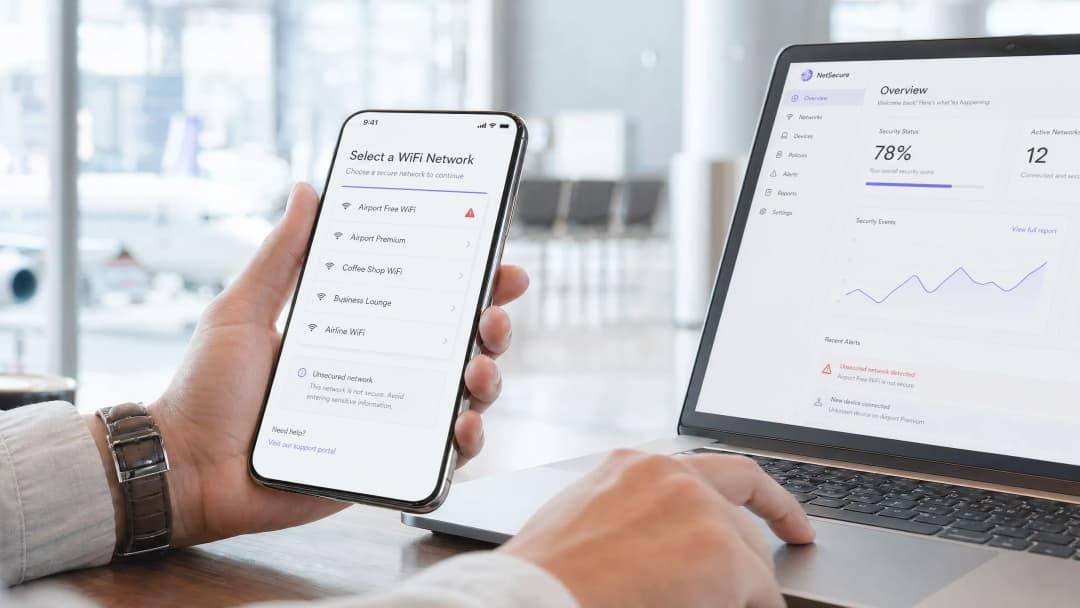
कार्यकारी सारांश (Executive Summary)
उच्च-घनत्व वाले सार्वजनिक वातावरण का प्रबंधन करने वाले CTOs और IT निदेशकों के लिए, "क्या एयरपोर्ट WiFi सुरक्षित है" यह सवाल केवल एक सामान्य उपभोक्ता प्रश्न नहीं है - यह सीधे दायित्व निहितार्थों के साथ एक अनुपालन और बुनियादी ढांचा चुनौती है। एयरपोर्ट नेटवर्क एक अनूठा और गतिशील हमले की सतह पेश करते हैं: हर घंटे हजारों क्षणिक कनेक्शन, मानक उपभोक्ता मोबाइल से लेकर एंटरप्राइज लैपटॉप तक के उपकरणों की एक विविध श्रृंखला, और एक ऐसे बुनियादी ढांचे पर होने वाले अतिथि, स्टाफ, खुदरा किरायेदार और परिचालन तकनीक ट्रैफ़िक का मिश्रण जो अक्सर वर्तमान सुरक्षा मानकों से वर्षों पीछे होता है।
प्राथमिक खतरे - Evil Twin एक्सेस पॉइंट (APs) और दुष्ट हार्डवेयर इंस्टॉलेशन - कम लागत वाले, उच्च-प्रभाव वाले हमले हैं जिन्हें निष्पादित करने के लिए न्यूनतम तकनीकी विशेषज्ञता की आवश्यकता होती है। यदि इन पर ध्यान न दिया जाए, तो यात्रियों को क्रेडेंशियल चोरी और वित्तीय धोखाधड़ी का जोखिम रहता है, जबकि एयरपोर्ट ऑपरेटर को GDPR प्रवर्तन कार्रवाइयों और प्रतिष्ठा को नुकसान का सामना करना पड़ता है। Opportunistic Wireless Encryption के साथ WPA3 को लागू करके, सख्त VLAN विभाजन को लागू करके, Wireless Intrusion Prevention Systems (WIPS) को तैनात करके, और एक सुरक्षित, GDPR-अनुपालन guest WiFi प्लेटफॉर्म को एकीकृत करके, वेन्यू ऑपरेटर निर्बाध कनेक्टिविटी बनाए रखते हुए यात्री डेटा की रक्षा कर सकते हैं। Purple का WiFi analytics टियर इस सुरक्षा आधार के ऊपर परिचालन बुद्धिमत्ता जोड़ता है, जो सुरक्षित ऑनबोर्डिंग को मापने योग्य व्यावसायिक ROI में बदल देता है।
तकनीकी गहन विश्लेषण: एयरपोर्ट WiFi खतरे का परिदृश्य
एयरपोर्ट वातावरण वायरलेस हमलों के लिए सबसे अधिक लक्षित सार्वजनिक स्थानों में से हैं। यात्रियों की भारी संख्या, क्षणिक उपयोगकर्ता जो शायद ही कभी समस्याओं की रिपोर्ट करते हैं, और संवेदनशील डेटा प्रसारित करने वाले कॉर्पोरेट यात्री - ये सभी मिलकर दुर्भावनापूर्ण अभिनेताओं के लिए एक आदर्श वातावरण बनाते हैं। एक प्रभावी जवाबी उपाय आर्किटेक्चर को डिजाइन करने के लिए विशिष्ट खतरे के वैक्टरों को समझना एक पूर्व शर्त है।
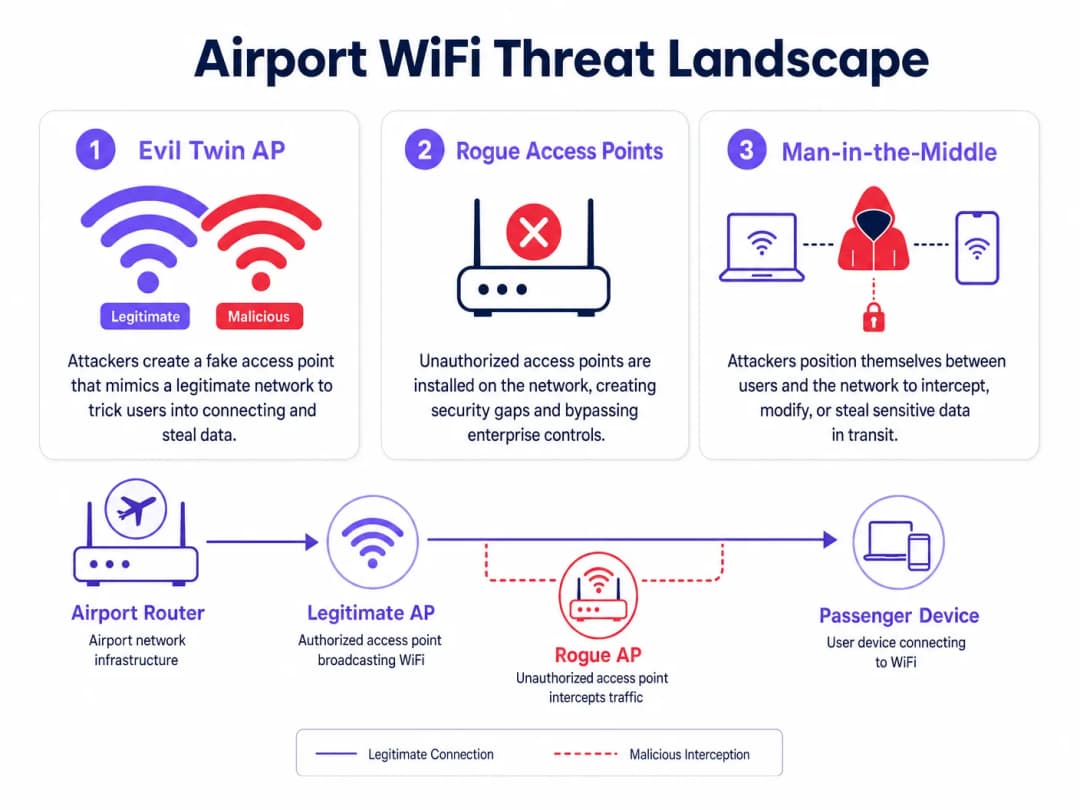
Evil Twin एक्सेस पॉइंट
एक Evil Twin एक दुर्भावनापूर्ण AP है जिसे वैध एयरपोर्ट नेटवर्क के सटीक SSID को प्रसारित करने के लिए कॉन्फ़िगर किया जाता है - उदाहरण के लिए, "Airport Free WiFi" या "LHR_Passenger_WiFi"। चूंकि मानक क्लाइंट डिवाइस SSID मिलान और सिग्नल की ताकत के आधार पर स्वचालित नेटवर्क चयन लागू करते हैं, इसलिए एक यात्री का डिवाइस Evil Twin से कनेक्ट होना पसंद करेगा यदि वह वैध बुनियादी ढांचे की तुलना में अधिक मजबूत सिग्नल प्रदान करता है। इसे आसानी से प्राप्त किया जा सकता है: पास की सीट से अधिकतम शक्ति पर प्रसारित होने वाला एक पोर्टेबल राउटर नियंत्रित बिजली स्तरों पर काम करने वाले छत पर लगे एंटरप्राइज AP को आसानी से पछाड़ देगा।
एक बार जब कोई क्लाइंट Evil Twin से कनेक्ट हो जाता है, तो हमलावर कई तरह के हमले शुरू कर सकता है। पैसेसिव इंटरसेप्शन एन्क्रिप्ट न किए गए HTTP ट्रैफ़िक, DNS क्वेरी और सेशन कुकीज़ को कैप्चर करता है। SSL stripping वास्तविक समय में HTTPS कनेक्शन को HTTP में डाउनग्रेड कर देता है, जिससे उन साइटों पर क्रेडेंशियल्स उजागर हो जाते हैं जो HTTP Strict Transport Security (HSTS) को लागू नहीं करती हैं। DNS spoofing उपयोगकर्ताओं को उन फ़िशिंग पेजों पर रीडायरेक्ट करता है जो बैंकिंग पोर्टल या एयरलाइन बुकिंग सिस्टम की नकल करते हैं। यात्री को बिना किसी चेतावनी संकेत के एक सामान्य कनेक्शन दिखाई देता है, क्योंकि Evil Twin अपने स्वयं के अपस्ट्रीम कनेक्शन के माध्यम से वास्तविक इंटरनेट एक्सेस प्रदान करता है - यह हमला अंतिम उपयोगकर्ता के लिए पूरी तरह से पारदर्शी रहता है।
एक हमलावर के लिए परिचालन लागत न्यूनतम है: एक कंज्यूमर-ग्रेड ट्रैवल राउटर, ओपन-सोर्स टूल चलाने वाला लैपटॉप, और डिपार्चर लाउंज में एक सीट। इस हमले के लिए हवाई अड्डे के इंफ्रास्ट्रक्चर तक किसी भौतिक पहुंच की आवश्यकता नहीं होती है।
Rogue Access Points
Rogue APs अनधिकृत डिवाइस हैं जो भौतिक रूप से हवाई अड्डे के वायर्ड नेटवर्क इंफ्रास्ट्रक्चर से जुड़े होते हैं। Evil Twins के विपरीत, जो पूरी तरह से ओवर-द-एयर काम करते हैं, rogue APs एक इनसाइडर थ्रेट वेक्टर का प्रतिनिधित्व करते हैं - उन्हें नेटवर्क पोर्ट तक भौतिक पहुंच की आवश्यकता होती है। हालांकि, सैकड़ों रिटेल रियायतों, सेवा ठेकेदारों और सफाई कर्मचारियों वाले एक बड़े हवाई अड्डे के वातावरण में, नेटवर्क पोर्ट तक भौतिक पहुंच प्राप्त करना मुश्किल नहीं है।
Rogue APs का सबसे आम स्रोत कोई दुर्भावनापूर्ण व्यक्ति नहीं बल्कि अच्छे इरादे वाले कर्मचारी होते हैं। टर्मिनल 3 में खराब WiFi कवरेज का अनुभव करने वाला एक रिटेल रियायतकर्ता एक कंज्यूमर-ग्रेड राउटर खरीदता है और उसे अपने काउंटर के पीछे ईथरनेट पोर्ट में प्लग कर देता है। राउटर एंटरप्राइज फ़ायरवॉल, नेटवर्क एक्सेस कंट्रोल (NAC) नीतियों और WPA3 Enterprise कॉन्फ़िगरेशन को बायपास करते हुए अपना स्वयं का SSID ब्रॉडकास्ट करता है, और सार्वजनिक इंटरनेट से हवाई अड्डे के आंतरिक नेटवर्क में एक सीधा, अनमैनेज्ड पथ बनाता है। उस बिंदु से, rogue AP से जुड़ा कोई भी डिवाइस - चाहे वह रियायतकर्ता का POS टर्मिनल हो या कोई यात्री जो गलती से कनेक्ट हो गया हो - उन सिस्टम्स तक संभावित नेटवर्क-स्तरीय पहुंच प्राप्त कर लेता है जिन्हें पूरी तरह से अलग रहना चाहिए।
परिवहन ऑपरेटरों और हवाई अड्डे की IT टीमों के लिए, rogue AP की समस्या पर्यावरण के विशाल पैमाने के कारण और भी जटिल हो जाती है। एक बड़े अंतरराष्ट्रीय हवाई अड्डे में, सैकड़ों नेटवर्क पोर्ट टर्मिनलों, रिटेल इकाइयों, लाउंज और बैक-ऑफिस क्षेत्रों में वितरित हो सकते हैं। स्वचालित डिटेक्शन टूलिंग के बिना मैन्युअल ऑडिटिंग अव्यावहारिक है।
Man-in-the-Middle Attacks
Evil Twin और रॉग AP दोनों परिदृश्य मैन-इन-द-मिडल (MitM) हमलों को सक्षम बनाते हैं, जहां हमलावर खुद को क्लाइंट डिवाइस और वैध नेटवर्क के बीच स्थापित कर लेता है। एक MitM परिदृश्य में, हमलावर दोनों दिशाओं में ट्रैफ़िक को रोक सकता है, पढ़ सकता है और संशोधित कर सकता है। आधुनिक TLS एन्क्रिप्शन HTTPS ट्रैफ़िक पर MitM हमलों के प्रभाव को महत्वपूर्ण रूप से कम करता है, लेकिन हमले का दायरा अभी भी बड़ा बना हुआ है: अनएन्क्रिप्टेड प्रोटोकॉल, गलत तरीके से कॉन्फ़िगर किए गए TLS कार्यान्वयन, और पुराने अनुप्रयोगों का उपयोग जो प्रमाणपत्र सत्यापन लागू नहीं करते हैं - ये सभी ऐसे अंतराल पैदा करते हैं जो शोषण के लिए तैयार हैं।
कॉर्पोरेट यात्रियों के लिए - जो हवाई अड्डे के WiFi उपयोगकर्ताओं का एक महत्वपूर्ण हिस्सा हैं - VPN क्रेडेंशियल कैप्चर या कॉर्पोरेट ईमेल सेशन हाईजैकिंग को लक्षित करने वाले MitM हमले एक उच्च-मूल्य वाले हमले के माध्यम का प्रतिनिधित्व करते हैं जो नुकसान को व्यक्तिगत यात्री से कहीं अधिक बढ़ा देता है।
-
अपने विशिष्ट सेटअप को लेकर कोई सवाल हैं?
हमारी टीम 80,000 से अधिक वेन्यू में वेन्यू ऑपरेटरों, IT मैनेजरों और नेटवर्क इंजीनियरों के साथ काम करती है। 20 मिनट का कॉल बुक करें और हम आपको दिखाएंगे कि आपके जैसे अन्य लोगों ने इसे कैसे हल किया।
कार्यान्वयन गाइड: सुरक्षित आर्किटेक्चर
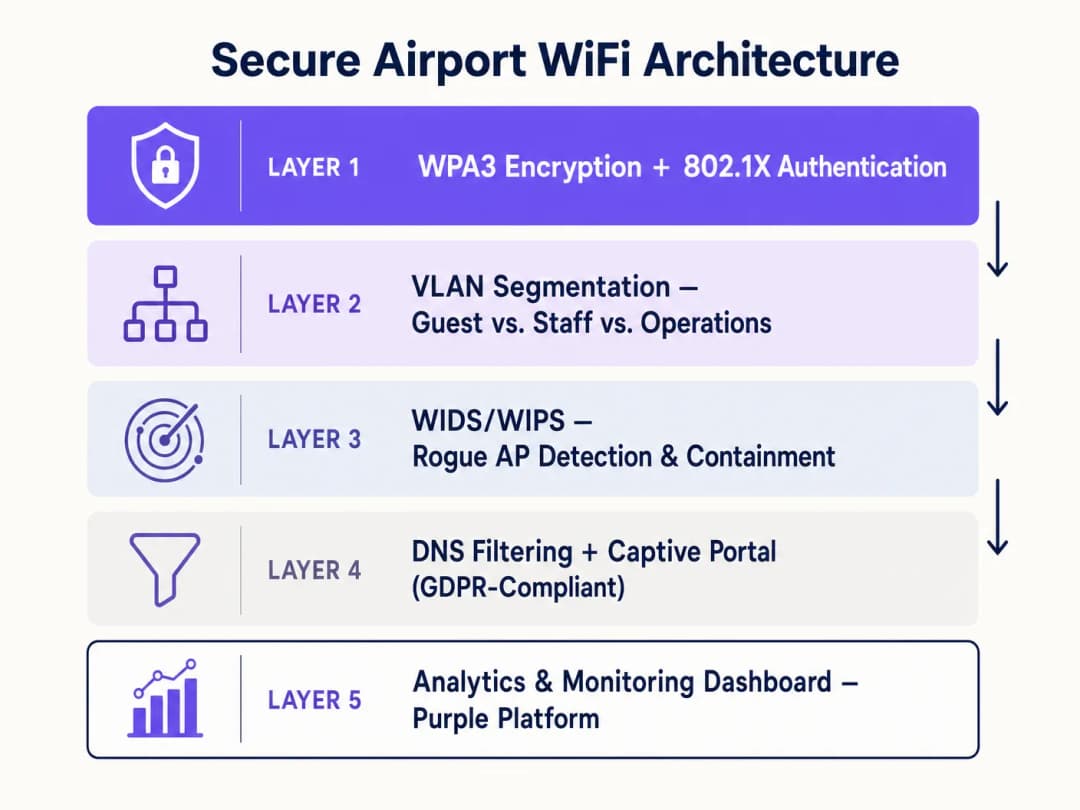
हवाई अड्डे के WiFi खतरे के परिदृश्य को संबोधित करने के लिए एक बहुस्तरीय, डिफेंस-इन-डेप्थ आर्किटेक्चर की आवश्यकता होती है। कोई भी एक नियंत्रण पर्याप्त नहीं है; लक्ष्य हमले की प्रत्येक अगली परत को उत्तरोत्तर अधिक कठिन और पहचान योग्य बनाना है।
परत 1: एन्क्रिप्शन और प्रमाणीकरण मानक
WPA3 पर संक्रमण एक प्राथमिक आवश्यकता है। खुले सार्वजनिक नेटवर्क के लिए, WPA3 Opportunistic Wireless Encryption (OWE) पेश करता है, जिसे IEEE 802.11-2020 में परिभाषित किया गया है। OWE साझा पासवर्ड या प्री-शेयर्ड कुंजी की आवश्यकता के बिना प्रत्येक क्लाइंट सेशन के लिए व्यक्तिगत एन्क्रिप्शन प्रदान करता है। प्रत्येक क्लाइंट-AP एसोसिएशन एक विशिष्ट Diffie-Hellman कुंजी एक्सचेंज पर बातचीत करता है, जिसका अर्थ है कि यदि कोई हमलावर पूरे टर्मिनल के रॉ रेडियो फ्रीक्वेंसी ट्रैफ़िक को कैप्चर भी कर लेता है, तो भी वह किसी विशिष्ट सेशन को डिक्रिप्ट नहीं कर सकता है। यह सीधे तौर पर निष्क्रिय ईव्सड्रॉपिंग को कम करता है और ओपन नेटवर्क इंटरसेप्शन के प्राथमिक हमले के माध्यम को समाप्त करता है।
प्रमाणित नेटवर्क सेगमेंट - कर्मचारी, संचालन, रिटेल किरायेदार - के लिए RADIUS प्रमाणीकरण के साथ IEEE 802.1X सही मानक है। 802.1X नेटवर्क एक्सेस देने से पहले प्रति-डिवाइस प्रमाणीकरण लागू करता है, जिसमें अनुपालन और ऑडिटिंग उद्देश्यों के लिए प्रत्येक प्रमाणीकरण इवेंट को लॉग किया जाता है। सर्टिफ़िकेट-आधारित एक्सटेंसिबल ऑथेंटिकेशन प्रोटोकॉल (EAP-TLS) के साथ संयुक्त होने पर, यह कर्मचारी नेटवर्क के खिलाफ क्रेडेंशियल-आधारित हमलों को पूरी तरह से समाप्त कर देता है। सहज पैसेंजर ऑनबोर्डिंग की तलाश कर रहे स्थानों के लिए, OpenRoaming - Wireless Broadband Alliance का फेडरेटेड आइडेंटिटी मानक - प्रोफाइल-आधारित ऑथेंटिकेशन प्रदान करता है जो बिना मैन्युअल SSID चयन के पैसेंजर्स को ऑटोमैटिक रूप से सत्यापित नेटवर्क से जोड़ता है। Purple अपने Connect लाइसेंस के तहत OpenRoaming इकोसिस्टम के भीतर एक मुफ्त आइडेंटिटी प्रोवाइडर के रूप में काम करता है, जो एयरपोर्ट्स को सहज, सुरक्षित कनेक्टिविटी प्रदान करने में सक्षम बनाता है और नेटवर्क चयन की मानवीय त्रुटि को समाप्त करता है। यह सीधे तौर पर Evil Twin खतरे से संबंधित है: यदि किसी पैसेंजर का डिवाइस सत्यापित प्रोफाइल के माध्यम से ऑटोमैटिक रूप से कनेक्ट होता है, तो यह उसी SSID को ब्रॉडकास्ट करने वाले Evil Twin से कनेक्ट नहीं होगा।
Layer 2: नेटवर्क सेगमेंटेशन और क्लाइंट आइसोलेशन
गैस्ट ट्रैफिक को ऑपरेशनल टेक्नोलॉजी (OT), स्टाफ नेटवर्क और रिटेल पॉइंट-ऑफ-सेल (POS) सिस्टम से पूरी तरह से अलग रखने के लिए AP स्तर पर सख्त VLAN टैगिंग का उपयोग किया जाना चाहिए। एयरपोर्ट परिवेश के लिए न्यूनतम सेगमेंटेशन मॉडल में शामिल होना चाहिए: एक पब्लिक गैस्ट VLAN (केवल इंटरनेट एक्सेस, कोई इंटरनल राउटिंग नहीं), एक स्टाफ VLAN (802.1X के माध्यम से ऑथेंटिकेटेड, इंटरनल सिस्टम तक पहुंच), एक रिटेल टेनेंट VLAN (गैस्ट और स्टाफ दोनों से अलग, POS सिस्टम के लिए इंटरनेट एक्सेस), और एक ऑपरेशन्स VLAN (डिजिटल साइनेज, बिल्डिंग मैनेजमेंट और एयरसाइड सिस्टम के लिए एयर-गैप्ड या सख्त फायरवॉल वाला)।
क्लाइंट आइसोलेशन - एक ही VLAN पर डिवाइसों के बीच Layer 2 आइसोलेशन - गैस्ट VLAN पर सक्षम होना चाहिए। क्लाइंट आइसोलेशन के बिना, एक ही गैस्ट नेटवर्क से जुड़े दो पैसेंजर्स IP लेयर पर सीधे संवाद कर सकते हैं, जिससे डिवाइस-टू-डिवाइस हमले संभव हो जाते हैं। यह वायरलेस कंट्रोलर पर एक कॉन्फ़िगरेशन सेटिंग है जिसे अक्सर पुराने डिप्लॉयमेंट में नजरअंदाज कर दिया जाता है।
एयरपोर्ट टर्मिनलों के भीतर काम करने वाले हॉस्पिटैलिटी और रिटेल परिवेशों के लिए भी यही सेगमेंटेशन सिद्धांत लागू होते हैं। एयरपोर्ट ऑपरेटर के साथ व्यावसायिक संबंधों के बावजूद, होटल के एयरसाइड लाउंज या रिटेल कंसेशन को एक अविश्वसनीय नेटवर्क सेगमेंट के रूप में माना जाना चाहिए।
Layer 3: वायरलेस इंट्रूडर डिटेक्शन एंड प्रिवेंशन (WIDS/WIPS)
एक Wireless Intrusion Prevention System, Evil Twin और अनधिकृत AP दोनों खतरों के खिलाफ प्राथमिक ऑटोमैटिक सुरक्षा है। WIPS को अनधिकृत SSIDs, MAC एड्रेस स्पूफिंग, और डी-ऑथेंटिकेशन फ्लड हमलों के लिए सभी चैनलों और बैंडों (Wi-Fi 6E डिप्लॉयमेंट के लिए 2.4 GHz, 5 GHz, और 6 GHz) पर रेडियो फ्रीक्वेंसी परिवेश को लगातार स्कैन करने के लिए कॉन्फ़िगर किया जाना चाहिए।
एक Evil Twin का पता चलने पर - जो कि एक SSID मैच और एक BSSID द्वारा पहचाना जाता है जो प्रबंधित इन्फ्रास्ट्रक्चर में किसी भी अधिकृत AP से मेल नहीं खाता है - WIPS को ऑटोमैटिक रूप से कंटेनमेंट लागू करना चाहिए। कंटेनमेंट में दुर्भावनापूर्ण AP के साथ जुड़ने का प्रयास करने वाले क्लाइंट्स को लक्षित IEEE 802.11 डी-ऑथेंटिकेशन फ़्रेम ट्रांसमिट करना शामिल है, जिससे सफल कनेक्शन को रोका जा सके। यह मशीन की गति से होने वाली एक ऑटोमैटिक प्रतिक्रिया है, जो किसी भी मानव ऑपरेटर के हस्तक्षेप से कहीं अधिक तेज है।rogue AP का पता लगाने के लिए, WIPS ओवर-द-एयर अवलोकनों को वायर्ड नेटवर्क टोपोलॉजी के साथ सहसंबंधित करता है। एक AP जो ओवर-द-एयर ब्रॉडकास्ट कर रहा है और वायर्ड नेटवर्क पर एक कनेक्टेड डिवाइस के रूप में भी दिखाई देता है - लेकिन अधिकृत AP इन्वेंट्री में नहीं है - उसे rogue के रूप में चिह्नित किया जाता है। इसके बाद सिस्टम डिवाइस को भौतिक रूप से डिस्कनेक्ट करने के लिए प्रबंधित स्विच पर एक स्वचालित पोर्ट शटडाउन को ट्रिगर कर सकता है।
लेयर 4: DNS फ़िल्टरिंग और सुरक्षित Captive Portal डिज़ाइन
किसी डिवाइस की अपनी सुरक्षा स्थिति की परवाह किए बिना, DNS-स्तर की फ़िल्टरिंग उपयोगकर्ताओं को दुर्भावनापूर्ण डोमेन से बचाने के लिए एक महत्वपूर्ण नियंत्रण प्रदान करती है। सभी DNS प्रश्नों को एक फ़िल्टरिंग रिज़ॉल्वर के माध्यम से रूट करके, नेटवर्क ज्ञात फ़िशिंग डोमेन, कमांड-एंड-कंट्रोल इन्फ्रास्ट्रक्चर और मैलवेयर वितरण साइटों के रिज़ॉल्यूशन को ब्लॉक कर सकता है। यह हवाई अड्डे के संदर्भ में विशेष रूप से मूल्यवान है जहां यात्री ऐसे प्रभावित उपकरणों को कनेक्ट कर सकते हैं जो आगमन से पहले संक्रमित थे।
जैसा कि हमारे Securing Your Network with Strong DNS and Security गाइड में विस्तृत है, रिज़ॉल्वर कनेक्शन के लिए DNS over HTTPS (DoH) या DNS over TLS (DoT) को लागू करना DNS प्रश्नों को ट्रांज़िट में इंटरसेप्ट या स्पूफ़ होने से रोकता है - यह एक प्रासंगिक विचार है जब WIPS नियंत्रण हर Evil Twin को तुरंत न पकड़ पाए।
Captive Portal यात्री का प्राथमिक ऑनबोर्डिंग टचपॉइंट है और इसे सुरक्षा को प्राथमिकता देकर डिज़ाइन किया जाना चाहिए, न कि बाद में सोचे जाने वाले विचार के रूप में। पोर्टल को एक विश्वसनीय सर्टिफिकेट अथॉरिटी से वैध प्रमाणपत्र के साथ HTTPS पर सर्व किया जाना चाहिए। ऑनबोर्डिंग फॉर्म में केवल निर्दिष्ट उद्देश्य के लिए आवश्यक डेटा ही एकत्र किया जाना चाहिए (GDPR आर्टिकल 5 डेटा न्यूनतमकरण सिद्धांत), जिसमें किसी भी मार्केटिंग उपयोग के लिए स्पष्ट, बारीक सहमति तंत्र हो। Purple का Captive Portal प्लेटफ़ॉर्म इन अनुपालन आवश्यकताओं के लिए विशेष रूप से बनाया गया है, जो GDPR-अनुरूप डेटा कैप्चर, सहमति प्रबंधन और एनालिटिक्स परतों के साथ निर्बाध एकीकरण प्रदान करता है। मल्टी-टर्मिनल हवाई अड्डे के वातावरण में यह कैसे स्केल करता है, इसके संदर्भ के लिए Airport WiFi: How Operators Provide Connectivity Across Terminals और इसके इतालवी समकक्ष WiFi Aeroportuale देखें।
लेयर 5: एनालिटिक्स, मॉनिटरिंग और निरंतर सुधार
सुरक्षा एकमुश्त तैनाती नहीं है; इसके लिए निरंतर निगरानी और बार-बार सुधार की आवश्यकता होती है। Purple का WiFi analytics प्लेटफ़ॉर्म परिचालन दृश्यता परत प्रदान करता है जो कच्चे कनेक्शन डेटा को कार्रवाई योग्य बुद्धिमत्ता में बदल देता है। डिवाइस कनेक्शन पैटर्न, ड्वेल टाइम और सेशन विसंगतियों की निगरानी करके, नेटवर्क ऑपरेशंस टीमें सुरक्षा से समझौता करने वाले संकेतकों की पहचान कर सकती हैं - जैसे असामान्य कनेक्शन स्पाइक्स, अप्रत्याशित भौतिक स्थानों से कनेक्ट होने वाले डिवाइस, या प्रमाणीकरण विफलता पैटर्न जो स्कैनिंग हमले का संकेत देते हैं।
\nएनालिटिक्स लेयर सुरक्षा निवेशों के लिए व्यावसायिक औचित्य भी प्रदान करती है। एक विश्वसनीय, सुरक्षित ऑनबोर्डिंग अनुभव से प्रेरित - उच्च यात्री ऑप्ट-इन दरें - अधिक समृद्ध फ़र्स्ट-पार्टी डेटा सेट उत्पन्न करती हैं। यह डेटा लक्षित मार्केटिंग, रिटेल फुटफ़ॉल एनालिटिक्स और टर्मिनल लेआउट ऑप्टिमाइज़ेशन को सक्षम बनाता है, जो इंफ्रास्ट्रक्चर निवेश पर एक मापने योग्य ROI प्रदान करता है। एयरपोर्ट चिकित्सा सुविधाओं में WiFi का प्रबंधन करने वाले healthcare परिवेशों के लिए, यही एनालिटिक्स फ़्रेमवर्क अतिरिक्त GDPR विशेष श्रेणी डेटा नियंत्रणों के साथ लागू होता है।
सर्वोत्तम अभ्यास और जोखिम न्यूनीकरण
तकनीकी स्तर पर रिटेल टेनेंट नेटवर्क नीतियों को लागू करें। नीति दस्तावेज़ पर्याप्त नहीं हैं। रिटेल रियायतों को प्रबंधित, खंडित नेटवर्क एक्सेस प्रदान किया जाना चाहिए - इंटरनेट एक्सेस के साथ एक समर्पित VLAN और कोई आंतरिक रूटिंग नहीं - और उनकी इकाइयों में भौतिक नेटवर्क पोर्ट को 802.1X पोर्ट प्रमाणीकरण या MAC एड्रेस अनुमति सूची के माध्यम से अनधिकृत हार्डवेयर को अस्वीकार करने के लिए कॉन्फ़िगर किया जाना चाहिए। पर्याप्त, प्रबंधित कनेक्टिविटी प्रदान करके दुष्ट AP परिनियोजन के प्रोत्साहन को समाप्त करें।
नियमित RF साइट सर्वेक्षण करें। त्रैमासिक भौतिक और RF साइट सर्वेक्षण उन अनधिकृत हार्डवेयर की पहचान करते हैं जिन्हें सिग्नल क्षीणन, भौतिक बाधाओं, या जानबूझकर किए गए RF परिरक्षण के कारण WIPS ने छोड़ दिया हो। एक सर्वेक्षण में सभी टर्मिनल, लाउंज, रिटेल इकाइयां और बैक-ऑफिस क्षेत्र शामिल होने चाहिए। अधिकृत AP इन्वेंट्री का दस्तावेजीकरण करें और सर्वेक्षण परिणामों के साथ इसकी तुलना करें।
महत्वपूर्ण इंफ्रास्ट्रक्चर के लिए एक लीज्ड लाइन या समर्पित व्यावसायिक इंटरनेट कनेक्शन लागू करें। जैसा कि हमारे गाइड What is a Leased Line? Dedicated Business Internet में चर्चा की गई है, महत्वपूर्ण परिचालन ट्रैफ़िक को एक समर्पित, गैर-प्रतिस्पर्धी कनेक्शन पर अलग करना यह सुनिश्चित करता है कि गेस्ट नेटवर्क पर कोई भी DDoS हमला या बैंडविड्थ की कमी की घटना एयरसाइड परिचालन प्रणालियों को प्रभावित न कर सके।
घटना प्रतिक्रिया प्रक्रियाओं का परीक्षण करें। एक Evil Twin पहचान घटना का अनुकरण करते हुए टेबलटॉप अभ्यास आयोजित करें। सत्यापित करें कि WIPS रोकथाम कार्य कर रही है, NOC टीम वृद्धि प्रक्रियाओं को जानती है, और यात्रियों का सामना करने वाले संचार को उस परिदृश्य के लिए तैयार किया गया है जहां गेस्ट नेटवर्क को अस्थायी रूप से निलंबित करने की आवश्यकता हो सकती है।
ROI और व्यावसायिक प्रभाव
नेटवर्क को सुरक्षित करना व्यावसायिक मूल्य की नींव है, न कि एक अलग लागत केंद्र। एक सुरक्षित, विश्वसनीय और विश्वसनीय गेस्ट WiFi नेटवर्क सीधे Captive Portal पर यात्री ऑप्ट-इन दरों को बढ़ाता है। उच्च ऑप्ट-इन दरें बड़े, उच्च-गुणवत्ता वाले फ़र्स्ट-पार्टी डेटा सेट उत्पन्न करती हैं। यह डेटा एयरपोर्ट ऑपरेटर को व्यक्तिगत रिटेल प्रमोशन देने, वास्तविक फुटफ़ॉल डेटा के आधार पर टर्मिनल लेआउट को अनुकूलित करने और वफादारी कार्यक्रम बनाने में सक्षम बनाता है जो बार-बार जुड़ाव को बढ़ावा देते हैं।एक सुरक्षा घटना की लागत - GDPR प्रवर्तन कार्रवाई, प्रतिष्ठा को नुकसान, और घटना की प्रतिक्रिया की परिचालन लागत - इस गाइड में बताए गए सुरक्षा नियंत्रणों को तैनात करने की लागत से कहीं अधिक है। UK Information Commissioner's Office (ICO) ने डेटा सुरक्षा विफलताओं के लिए UK GDPR के तहत £17.5 मिलियन तक का जुर्माना लगाया है। सालाना लाखों यात्री कनेक्शनों को प्रोसेस करने वाले एक बड़े अंतरराष्ट्रीय हवाई अड्डे के लिए, जोखिम का जोखिम महत्वपूर्ण है।
Purple का प्लेटफ़ॉर्म सुरक्षा निवेशों को व्यावसायिक परिणामों के साथ संरेखित करने के लिए डिज़ाइन किया गया है। सुरक्षित Captive Portal, GDPR-अनुरूप डेटा कैप्चर, और एनालिटिक्स लेयर एक एकल एकीकृत परिनियोजन हैं - तीन अलग-अलग खरीद प्रक्रियाएं नहीं। यह स्वामित्व की कुल लागत को कम करता है और IT और मार्केटिंग दोनों टीमों के लिए मूल्य-प्राप्ति के समय को तेज करता है।
मुख्य परिभाषाएं
Evil Twin Access Point
एक दुर्भावनापूर्ण वायरलेस एक्सेस पॉइंट जो एक ही SSID को प्रसारित करके एक वैध नेटवर्क के रूप में रूप बदलता है, जिसे Man-in-the-Middle हमलों के माध्यम से उपयोगकर्ता डेटा को इंटरसेप्ट करने के लिए डिज़ाइन किया गया है।
हवाई अड्डे के टर्मिनलों में आम है जहाँ हमलावर सिग्नल की शक्ति के आधार पर ज्ञात SSID से स्वचालित रूप से कनेक्ट होने वाले उपकरणों का फायदा उठाते हैं। इसे OWE एन्क्रिप्शन और WIPS रोकथाम द्वारा कम किया जाता है।
Rogue Access Point
एक अनधिकृत वायरलेस एक्सेस पॉइंट जो भौतिक रूप से एंटरप्राइज वायर्ड नेटवर्क से जुड़ा होता है, जो फ़ायरवॉल, NAC नीतियों और एंटरप्राइज WiFi कॉन्फ़िगरेशन सहित सुरक्षा नियंत्रणों को बायपास करता है।
अक्सर रिटेल किरायेदारों या बेहतर कवरेज चाहने वाले कर्मचारियों द्वारा स्थापित किया जाता है। इसे सभी ईथरनेट पोर्ट पर 802.1X पोर्ट प्रमाणीकरण और स्वचालित WIPS पहचान द्वारा संबोधित किया जाता है।
Opportunistic Wireless Encryption (OWE)
IEEE 802.11-2020 में परिभाषित एक WPA3 विशेषता जो Diffie-Hellman कुंजी विनिमय का उपयोग करके, साझा पासवर्ड की आवश्यकता के बिना ओपन नेटवर्क के लिए व्यक्तिगत, सत्र-अद्वितीय एन्क्रिप्शन प्रदान करती है।
सार्वजनिक हवाई अड्डे के गेस्ट नेटवर्क के लिए सही एन्क्रिप्शन मानक। यात्रियों के लिए प्रमाणीकरण घर्षण को बढ़ाए बिना निष्क्रिय जासूसी को समाप्त करता है।
Wireless Intrusion Prevention System (WIPS)
नेटवर्क इन्फ्रास्ट्रक्चर जो अनधिकृत एक्सेस पॉइंट, Evil Twins और हमले के हस्ताक्षरों के लिए रेडियो फ्रीक्वेंसी स्पेक्ट्रम की लगातार निगरानी करता है, और डी-ऑथेंटिकेशन फ्रेम सहित काउंटर-मेजर को स्वचालित रूप से तैनात करता है।
उच्च-घनत्व वाले वातावरण में Evil Twin और rogue AP खतरों के खिलाफ प्राथमिक स्वचालित सुरक्षा। इसे Wi-Fi 6E परिनियोजन के लिए 6 GHz सहित सभी फ्रीक्वेंसी बैंड को कवर करने के लिए कॉन्फ़िगर किया जाना चाहिए।
Client Isolation
एक वायरलेस नेटवर्क कॉन्फ़िगरेशन जो एक ही SSID से जुड़े उपकरणों को लेयर 2 पर एक दूसरे के साथ सीधे संवाद करने से रोकता है, सभी ट्रैफ़िक को गेटवे तक सीमित करता है।
डिवाइस-टू-डिवाइस हमलों को रोकने के लिए गेस्ट VLANs पर अनिवार्य है। एक सरल कॉन्फ़िगरेशन सेटिंग जो अक्सर लीगेसी परिनियोजन में अनुपस्थित होती है।
VLAN Segmentation
ट्रैफ़िक प्रकारों को अलग करने और एक्सेस कंट्रोल सीमाओं को लागू करने के लिए IEEE 802.1Q VLAN टैग का उपयोग करके एक भौतिक नेटवर्क को कई तार्किक नेटवर्क में विभाजित करने का अभ्यास।
असुरक्षित गेस्ट ट्रैफ़िक को सुरक्षित हवाई अड्डा संचालन, कर्मचारी प्रणालियों और रिटेल POS इन्फ्रास्ट्रक्चर से अलग करने के लिए उपयोग किया जाता है। समझौता किए गए गेस्ट उपकरणों से पार्श्व आंदोलन के जोखिम को समाप्त करता है।
IEEE 802.1X
पोर्ट-आधारित नेटवर्क एक्सेस कंट्रोल के लिए एक IEEE मानक जिसके लिए उपकरणों को नेटवर्क एक्सेस दिए जाने से पहले प्रमाणित होना आवश्यक होता है, आमतौर पर एक RADIUS सर्वर के माध्यम से।
कर्मचारियों और संचालन VLANs के लिए प्रमाणीकरण मानक, और rogue AP परिनियोजन को रोकने के लिए रिटेल ईथरनेट पोर्ट पर पोर्ट-स्तरीय प्रवर्तन के लिए।
OpenRoaming
एक Wireless Broadband Alliance फेडरेशन मानक जो बिना मैन्युअल SSID चयन के, पूर्व-प्रशासित डिवाइस प्रोफाइल का उपयोग करके भाग लेने वाले नेटवर्क पर स्वचालित, निर्बाध WiFi प्रमाणीकरण सक्षम करता है।
मैन्युअल नेटवर्क चयन चरण को हटाकर सीधे Evil Twin हमलों को कम करता है। Purple अपने Connect लाइसेंस के तहत OpenRoaming पारिस्थितिकी तंत्र के भीतर एक मुफ्त पहचान प्रदाता के रूप में काम करता है।
Man-in-the-Middle (MitM) Attack
एक हमला जहाँ अपराधी गुप्त रूप से दो पक्षों के बीच संचार को इंटरसेप्ट करता है, रिले करता है, और संभावित रूप से संशोधित करता है जो मानते हैं कि वे सीधे संवाद कर रहे हैं।
Evil Twin परिनियोजन का प्राथमिक लक्ष्य। रेडियो लेयर पर OWE एन्क्रिप्शन और एप्लिकेशन लेयर पर HSTS प्रवर्तन द्वारा कम किया गया।
Captive Portal
एक वेब पेज जो सार्वजनिक नेटवर्क के नए उपयोगकर्ताओं को इंटरनेट एक्सेस दिए जाने से पहले प्रस्तुत किया जाता है, जिसका उपयोग प्रमाणीकरण, शर्तों की स्वीकृति और डेटा संग्रह के लिए किया जाता है।
प्राथमिक यात्री ऑनबोर्डिंग टचपॉइंट। इसे एक वैध प्रमाणपत्र के साथ HTTPS पर परोसा जाना चाहिए और स्पष्ट सहमति तंत्र सहित GDPR अनुपालन के लिए डिज़ाइन किया जाना चाहिए।
हल किए गए उदाहरण
एक प्रमुख अंतरराष्ट्रीय हवाई अड्डा टर्मिनल 3 को अपग्रेड कर रहा है। वर्तमान नेटवर्क फ्लैट है - खुदरा POS सिस्टम, डिजिटल साइनेज और यात्री उपकरणों सहित सभी डिवाइस एक ही ब्रॉडकास्ट डोमेन साझा करते हैं। खुदरा विक्रेता अक्सर खराब कनेक्टिविटी की शिकायत करते हैं, जिससे वे अपने स्वयं के उपभोक्ता-ग्रेड राउटर स्थापित करने के लिए प्रेरित होते हैं। IT निदेशक को एक ऐसे रीडिज़ाइन की आवश्यकता है जो चरणबद्ध रोलआउट के दौरान व्यावसायिक संचालन को बाधित किए बिना सुरक्षा का समाधान करे।
चरण 1 - VLAN आर्किटेक्चर: चार VLAN डिज़ाइन करें: पब्लिक गेस्ट (केवल-इंटरनेट, क्लाइंट आइसोलेशन सक्षम), स्टाफ (802.1X प्रमाणित, आंतरिक पहुंच), रिटेल टेनेंट (केवल-इंटरनेट, गेस्ट और स्टाफ से अलग, सभी रिटेल ईथरनेट पोर्ट पर 802.1X पोर्ट प्रमाणीकरण), और ऑपरेशंस (साइनेज और बिल्डिंग मैनेजमेंट के लिए एयर-गैप्ड)। चरण 2 - अनधिकृत AP को हटाना: सभी रिटेल ईथरनेट पोर्ट पर 802.1X पोर्ट प्रमाणीकरण सक्षम करें। बिना वैध प्रमाणपत्र वाले किसी भी डिवाइस को नेटवर्क एक्सेस से वंचित कर दिया जाता है, जिससे अनधिकृत राउटर प्लग करने की क्षमता समाप्त हो जाती है। इसके साथ ही, खुदरा विक्रेताओं को पर्याप्त सिग्नल कवरेज के साथ एक प्रबंधित रिटेल टेनेंट SSID प्रदान करें, जिससे अनधिकृत हार्डवेयर लगाने की आवश्यकता खत्म हो जाए। चरण 3 - WIPS डिप्लॉयमेंट: वायरलेस कंट्रोलर को अनधिकृत SSID को स्कैन करने और Evil Twins को स्वचालित रूप से ब्लॉक करने के लिए कॉन्फ़िगर करें। किसी भी अनधिकृत AP का पता चलने पर NOC को अलर्ट भेजने की व्यवस्था सेटअप करें। चरण 4 - Captive Portal और एनालिटिक्स: GDPR-अनुपालन ऑनबोर्डिंग, OWE एन्क्रिप्शन और एनालिटिक्स इंटीग्रेशन के साथ गेस्ट VLAN पर Purple का Captive Portal डिप्लॉय करें।
एक क्षेत्रीय हवाई अड्डे पर यात्री गेस्ट WiFi Captive Portal से कनेक्ट करते समय ब्राउज़र चेतावनियां प्राप्त कर रहे हैं, और मार्केटिंग टीम की रिपोर्ट है कि पिछले छह महीनों में ऑप्ट-इन दरों में 40% की गिरावट आई है। IT टीम को संदेह है कि Captive Portal पर SSL प्रमाणपत्र समाप्त हो गया है। इसे कैसे हल किया जाना चाहिए, और ऑनबोर्डिंग आर्किटेक्चर में व्यापक सुधार क्या किए जाने चाहिए?
तत्काल सुधार: Captive Portal सर्वर पर SSL प्रमाणपत्र का नवीनीकरण करें और पुनरावृत्ति को रोकने के लिए स्वचालित प्रमाणपत्र नवीनीकरण (जैसे, ऑटो-रिन्यूअल स्क्रिप्टिंग के साथ Let's Encrypt के माध्यम से) लागू करें। व्यापक सुधार: 1) रेडियो लेयर पर एन्क्रिप्शन प्रदान करने के लिए गेस्ट SSID को OWE के साथ WPA3 पर अपग्रेड करें, जिसे आधुनिक मोबाइल ऑपरेटिंग सिस्टम एक सकारात्मक विश्वास संकेत के रूप में दिखाते हैं। 2) SSL स्ट्रिपिंग हमलों को रोकने के लिए Captive Portal डोमेन पर HSTS लागू करें। 3) Purple के Captive Portal प्लेटफॉर्म को एकीकृत करें, जो एक प्रबंधित सेवा के रूप में प्रमाणपत्र जीवनचक्र, GDPR सहमति प्रवाह और एनालिटिक्स का प्रबंधन करता है, जिससे इन-हाउस टीम पर परिचालन का बोझ समाप्त हो जाता है। 4) लौटने वाले यात्रियों के लिए OpenRoaming प्रोफ़ाइल-आधारित प्रमाणीकरण पर विचार करें, जिससे ऑप्ट-इन उपयोगकर्ताओं के लिए पोर्टल इंटरैक्शन पूरी तरह से समाप्त हो जाए।
अभ्यास प्रश्न
Q1. आपका WIPS डैशबोर्ड आपको टर्मिनल 2 में एक रिटेल कॉफी शॉप के भीतर से हवाई अड्डे के आधिकारिक गेस्ट SSID को प्रसारित करने वाले एक नए AP के बारे में सचेत करता है। AP का BSSID आपके अधिकृत AP इन्वेंट्री में दिखाई नहीं देता है, और यह आपके वायर्ड नेटवर्क से कनेक्ट नहीं है। यह किस प्रकार का खतरा है, स्वचालित WIPS प्रतिक्रिया क्या है, और NOC टीम को क्या अनुवर्ती कार्रवाई करनी चाहिए?
संकेत: विचार करें कि क्या डिवाइस आपके वायर्ड इन्फ्रास्ट्रक्चर से भौतिक रूप से जुड़ा हुआ है या पूरी तरह से ओवर-द-एयर काम कर रहा है। यह अंतर खतरे के वर्गीकरण और समाधान के मार्ग दोनों को निर्धारित करता है।
मॉडल उत्तर देखें
यह एक Evil Twin AP है। चूंकि यह वायर्ड नेटवर्क से कनेक्ट नहीं है, इसलिए यह वैध SSID की नकल करके ओवर-द-एयर क्लाइंट कनेक्शन को हाईजैक करने का प्रयास कर रहा है। स्वचालित WIPS प्रतिक्रिया उस विशिष्ट BSSID से जुड़ने का प्रयास करने वाले क्लाइंट्स को डी-ऑथेंटिकेशन फ़्रेम प्रसारित करना होना चाहिए, जिससे सफल कनेक्शन को रोका जा सके। NOC टीम को डिवाइस की पहचान करने और उसे हटाने के लिए कॉफी शॉप के स्थान पर भौतिक सुरक्षा भेजनी चाहिए, सुरक्षा लॉग के लिए घटना का दस्तावेजीकरण करना चाहिए, और यह समीक्षा करनी चाहिए कि क्या नियंत्रण सक्रिय होने से पहले कोई क्लाइंट Evil Twin से सफलतापूर्वक कनेक्ट हुआ था - उन सत्रों को संभावित रूप से समझौता किए गए सत्रों के रूप में माना जाना चाहिए।
Q2. छह महीने में एक नया टर्मिनल खुल रहा है। संचालन निदेशक यात्री सुविधा को अधिकतम करने के लिए बिना किसी Captive Portal के पूरी तरह से खुला नेटवर्क चाहते हैं। विपणन निदेशक अधिकतम ऑप्ट-इन डेटा संग्रह चाहते हैं। CISO GDPR अनुपालन और एन्क्रिप्शन चाहते हैं। आप एक ही आर्किटेक्चर में तीनों हितधारकों को कैसे संतुष्ट करते हैं?
संकेत: एन्क्रिप्शन आवश्यकता के लिए WPA3 OWE, निर्बाध प्रमाणीकरण आवश्यकता के लिए OpenRoaming, और डेटा संग्रह एवं अनुपालन आवश्यकता के लिए Purple के प्लेटफॉर्म पर विचार करें। ये एक दूसरे से अलग नहीं हैं।
मॉडल उत्तर देखें
सार्वजनिक SSID पर OWE के साथ WPA3 लागू करें - यह पासवर्ड की आवश्यकता के बिना एन्क्रिप्शन प्रदान करता है, CISO की एन्क्रिप्शन आवश्यकता को पूरा करता है और साथ ही संचालन निदेशक के इच्छित खुले, बिना किसी बाधा वाले अनुभव को बनाए रखता है। Purple की पहचान प्रदाता क्षमता के माध्यम से OpenRoaming को लागू करें, ताकि मौजूदा प्रोफाइल वाले लौटने वाले यात्री बिना किसी मैन्युअल इंटरैक्शन के स्वचालित रूप से और सुरक्षित रूप से कनेक्ट हो सकें। नए यात्रियों के लिए, एक हल्का, GDPR-compliant Captive Portal प्रस्तुत करें जो सहमति और प्रोफाइल डेटा एकत्र करता है - यह विपणन निदेशक की आवश्यकता को पूरा करता है। शुद्ध परिणाम एक ऐसा नेटवर्क है जो डिफ़ॉल्ट रूप से एन्क्रिप्टेड है, लौटने वाले उपयोगकर्ताओं के लिए निर्बाध है, और नए उपयोगकर्ताओं के लिए डेटा कैप्चर करने वाला है, जो पूर्ण GDPR अनुपालन के साथ आता है।
Q3. त्रैमासिक RF साइट सर्वेक्षण के दौरान, आपकी टीम को बैक-ऑफ-हाउस सर्विस कॉरिडोर में एक AP मिलता है जो वायर्ड नेटवर्क से जुड़ा है लेकिन अधिकृत AP इन्वेंट्री में दिखाई नहीं देता है। यह एक हिडन SSID प्रसारित कर रहा है और स्विच पोर्ट लॉग के आधार पर लगभग तीन महीने से सक्रिय है। खतरे का वर्गीकरण क्या है, तत्काल नियंत्रण कार्रवाई क्या है, और तीन महीने की अवधि आपकी घटना प्रतिक्रिया प्रक्रिया के लिए क्या संकेत देती है?
संकेत: इस डिवाइस के पास वायर्ड नेटवर्क एक्सेस है, जो इसे Evil Twin से एक अलग खतरा श्रेणी बनाता है। तीन महीने की अवधि का GDPR के तहत डेटा उल्लंघन अधिसूचना दायित्वों के लिए विशिष्ट निहितार्थ हैं।
मॉडल उत्तर देखें
यह वायर्ड नेटवर्क एक्सेस वाला एक Rogue AP है - एक उच्च-गंभीरता वाली घटना। तत्काल रोकथाम: उस स्विच पोर्ट को बंद करें जिससे डिवाइस जुड़ा हुआ है, डिवाइस को भौतिक रूप से हटा दें, और इसे साक्ष्य के रूप में सुरक्षित रखें। तीन महीने की सक्रिय अवधि का अर्थ है कि किसी अज्ञात व्यक्ति के पास लगभग 90 दिनों तक लगातार नेटवर्क एक्सेस था। UK GDPR Article 33 के तहत, व्यक्तिगत डेटा उल्लंघन की जानकारी होने के 72 घंटों के भीतर ICO को इसकी रिपोर्ट की जानी चाहिए, यदि इससे व्यक्तियों के अधिकारों और स्वतंत्रता के लिए जोखिम होने की संभावना हो। इंसिडेंट रिस्पांस टीम को तुरंत यह आकलन करना चाहिए कि उस नेटवर्क सेगमेंट से कौन सा डेटा एक्सेस किया जा सकता था, क्या कोई डेटा चोरी हुआ था (स्विच पोर्ट के लिए NetFlow/IPFIX लॉग की समीक्षा करें), और यदि आकलन जोखिम का संकेत देता है तो उल्लंघन की अधिसूचना तैयार करें। यह घटना WIPS कॉन्फ़िगरेशन में कमी को भी दर्शाती है - सिस्टम को इंस्टॉलेशन के कुछ घंटों के भीतर ही rogue AP की वायर्ड उपस्थिति और ओवर-द-एयर ब्रॉडकास्ट का पता लगा लेना चाहिए था, न कि तीन महीने बाद।
इस श्रृंखला में आगे पढ़ें
स्टाफ और गेस्ट WiFi नेटवर्क को सुरक्षित रूप से कैसे खंडित करें: एंटरप्राइज LANs के लिए सर्वोत्तम अभ्यास
यह गाइड IT प्रबंधकों और नेटवर्क आर्किटेक्ट्स को स्टाफ और गेस्ट WiFi ट्रैफ़िक को ठीक से खंडित करके एंटरप्राइज LANs को सुरक्षित करने के लिए एक विक्रेता-तटस्थ, तकनीकी खाका प्रदान करती है। इसमें 802.1X प्रमाणीकरण, क्लाउड RADIUS, VLAN आइसोलेशन और साझा पासफ़्रेज़ को समाप्त करने और कॉर्पोरेट संपत्तियों की सुरक्षा के लिए आवश्यक क्रेडेंशियल लाइफसाइकल मैनेजमेंट शामिल है।
सर्वश्रेष्ठ DNS फ़िल्टरिंग: व्यवसायों के लिए एक व्यापक गाइड
यह तकनीकी संदर्भ गाइड बताती है कि कैसे उद्यम DNS फ़िल्टरिंग रिज़ॉल्यूशन परत पर दुर्भावनापूर्ण डोमेन को ब्लॉक करके सार्वजनिक नेटवर्क को सुरक्षित करती है - इससे पहले कि कोई कनेक्शन स्थापित हो। यह IT निदेशकों, नेटवर्क आर्किटेक्ट्स और वेन्यू ऑपरेशंस टीमों को परिनियोजन आर्किटेक्चर, फ़ायरवॉल कॉन्फ़िगरेशन और अनुपालन संदर्भ प्रदान करता है जिसकी उन्हें हॉस्पिटैलिटी, रिटेल और सार्वजनिक क्षेत्र के वातावरण में Guest WiFi की सुरक्षा के लिए आवश्यकता होती है। Purple Shield 80,000 से अधिक लाइव वेन्यू में DNS स्तर पर मैलवेयर, बॉटनेट और अनुपयुक्त सामग्री को ब्लॉक करता है।
Cisco SUDI को समझना: सुरक्षित नेटवर्क एक्सेस कंट्रोल में हार्डवेयर-एंकर वाली पहचान
यह गाइड बताती है कि Cisco SUDI एंटरप्राइज़ नेटवर्क इंफ्रास्ट्रक्चर के लिए हार्डवेयर-एंकर वाली, क्रिप्टोग्राफ़िक रूप से सुरक्षित पहचान कैसे प्रदान करता है। सीखें कि अपने स्थान के नेटवर्क एक्सेस कंट्रोल को सुरक्षित करने के लिए स्पूफ़ किए जा सकने वाले MAC पते को अपरिवर्तनीय 802.1AR प्रमाणपत्रों से कैसे बदलें।
अपने विशिष्ट सेटअप को लेकर कोई सवाल हैं?
हमारी टीम 80,000 से अधिक वेन्यू में वेन्यू ऑपरेटरों, IT मैनेजरों और नेटवर्क इंजीनियरों के साथ काम करती है। 20 मिनट का कॉल बुक करें और हम आपको दिखाएंगे कि आपके जैसे अन्य लोगों ने इसे कैसे हल किया।