
एअरपोर्ट WiFi: ऑपरेटर्स टर्मिनल्सवर कनेक्टिव्हिटी कशी प्रदान करतात
हे मार्गदर्शक IT नेत्यांना उच्च-घनतेचे एअरपोर्ट WiFi नेटवर्क डिझाइन, तैनात आणि व्यवस्थापित करण्यासाठी कृतीयोग्य धोरणे प्रदान करते. यामध्ये तांत्रिक आर्किटेक्चर, RF नियोजन आणि प्रवाशांच्या कनेक्टिव्हिटीचे मौल्यवान ॲनालिटिक्स आणि महसुलात रूपांतर करण्यासाठी Purple सारख्या प्लॅटफॉर्मचा कसा लाभ घ्यावा याचा समावेश आहे.
हे मार्गदर्शक ऐका
पॉडकास्ट ट्रान्सक्रिप्ट पहा
आमच्या मुख्य मालिकेचा भाग: Guest WiFi Guide →
कार्यकारी सारांश
IT व्यवस्थापक आणि नेटवर्क आर्किटेक्ट्ससाठी, एअरपोर्ट वायरलेस नेटवर्क तैनात करणे हे एंटरप्राइझ IT मधील सर्वात कठीण आव्हानांपैकी एक आहे. तुम्ही केवळ इंटरनेट ॲक्सेस प्रदान करत नाही आहात; तुम्ही लाखो स्क्वेअर फूटमध्ये पसरलेल्या आणि एकाच वेळी हजारो युजर्सना सेवा देणाऱ्या उच्च-घनता (high-density), उच्च-हस्तक्षेप (high-interference) असलेल्या RF वातावरणाचे व्यवस्थापन करत आहात. प्रवासी टर्मिनलमध्ये प्रवेश केल्यापासून ते बोर्डिंग करेपर्यंत अखंड, हाय-स्पीड कनेक्टिव्हिटीची अपेक्षा करतात. हे प्रदान करण्यात अयशस्वी झाल्यास प्रवाशांच्या अनुभवाचा स्कोअर खराब होतो आणि व्यावसायिक संधी गमावल्या जातात。
हे तांत्रिक संदर्भ मार्गदर्शक एंटरप्राइझ-ग्रेड एअरपोर्ट WiFi चे आर्किटेक्चर, परिनियोजन (deployment) धोरणे आणि व्यावसायिक प्रभावाचे विश्लेषण करते. आम्ही हे शोधू की जुन्या डिप्लॉयमेंटमधून उच्च-क्षमतेच्या WiFi 6/6E नेटवर्कमध्ये कसे ट्रान्झिशन करावे, सामान्य RF आव्हाने कशी कमी करावीत आणि फर्स्ट-पार्टी डेटा कॅप्चर करण्यासाठी, निष्ठा वाढवण्यासाठी आणि रिटेल मीडिया कमाईद्वारे नवीन महसूल स्रोत अनलॉक करण्यासाठी Purple च्या Guest WiFi सारख्या प्लॅटफॉर्मचा वापर कसा करावा。
तांत्रिक डीप-डाइव्ह: आर्किटेक्चर आणि मानके
विश्वसनीय प्रवाशांसाठी WiFi प्रदान करण्यासाठी एका मजबूत, बहु-स्तरीय आर्किटेक्चरची आवश्यकता असते जे केवळ कव्हरेजसाठी नाही तर क्षमतेसाठी (capacity) डिझाइन केलेले असते。
ॲक्सेस लेयर: घनतेवर (Density) मात करणे
ॲक्सेस लेयर ही अशी जागा आहे जिथे कामगिरीची लढाई जिंकली किंवा हरली जाते. एअरपोर्टच्या वातावरणात, प्राथमिक आव्हान घनता आहे—प्रस्थान लाउंज, फूड कोर्ट आणि बॅगेज क्लेम क्षेत्रांमध्ये एकाच वेळी येणारे हजारो डिव्हाइसेस।
- WiFi 6 (802.11ax) आणि 6E: WiFi 6 मध्ये अपग्रेड करणे अत्यंत महत्त्वाचे आहे. ऑर्थोगोनल फ्रिक्वेन्सी-डिव्हिजन मल्टिपल ॲक्सेस (OFDMA) आणि मल्टि-युझर MIMO (MU-MIMO) सारखी वैशिष्ट्ये ॲक्सेस पॉइंट्सना (APs) एकाच वेळी अनेक क्लायंट डिव्हाइसेस हाताळण्याची परवानगी देतात, ज्यामुळे गर्दीच्या भागात लेटन्सी लक्षणीयरीत्या कमी होते. WiFi 6E हे 6GHz बँड सादर करते, जे गर्दीच्या 2.4GHz आणि 5GHz बँडपासून दूर अत्यंत आवश्यक असलेले क्लीन स्पेक्ट्रम प्रदान करते。
- डायनॅमिक RF व्यवस्थापन: एअरपोर्टचे भौतिक वातावरण सतत बदलत असते. प्रवाशांच्या संख्येतील चढ-उतारांसह को-चॅनेल हस्तक्षेप कमी करण्यासाठी एका केंद्रीकृत कंट्रोलरने चॅनेल असाइनमेंट आणि ट्रान्समिट पॉवर स्वयंचलितपणे समायोजित करण्यासाठी डायनॅमिक RF व्यवस्थापनाचा वापर केला पाहिजे。
- क्लायंट स्टीयरिंग: नेटवर्कने सक्षम क्लायंट्सना 5GHz किंवा 6GHz बँडकडे आक्रमकपणे स्टीयर केले पाहिजे, ज्यामुळे जुन्या डिव्हाइसेस आणि IoT इन्फ्रास्ट्रक्चरसाठी 2.4GHz बँड सुरक्षित राहील。
कोर नेटवर्क आणि सुरक्षा
कोर नेटवर्कने कोणत्याही अडथळ्यांशिवाय (bottlenecks) मोठ्या प्रमाणावर ट्रॅफिक एकत्रित केले पाहिजे。
- हाय-स्पीड अपलिंक्स: रिडंडंट, उच्च-क्षमतेचे इंटरनेट कनेक्शन अनिवार्य आहेत. हमी दिलेली बँडविड्थ आणि SLAs सुनिश्चित करण्यासाठी What Is a Leased Line? Dedicated Business Internet समजून घेणे महत्त्वाचे आहे。
- सुरक्षा आणि सेगमेंटेशन: VLANs आणि फायरवॉलचा वापर करून गेस्ट ट्रॅफिकला ऑपरेशनल नेटवर्कपासून (उदा. बॅगेज हँडलिंग, सुरक्षा प्रणाली) काटेकोरपणे वेगळे केले पाहिजे. Protect Your Network with Strong DNS and Security साठी WPA3 (जिथे समर्थित असेल) आणि मजबूत DNS फिल्टरिंग लागू करणे आवश्यक आहे。

तुमच्या विशिष्ट सेटअपबद्दल काही प्रश्न आहेत का?
आमची टीम ८०,००० हून अधिक वेन्यूजमधील वेन्यू ऑपरेटर्स, IT मॅनेजर्स आणि नेटवर्क इंजिनिअर्ससोबत काम करते. २० मिनिटांचा कॉल बुक करा आणि तुमच्यासारख्या इतरांनी ही समस्या कशी सोडवली हे आम्ही तुम्हाला दाखवू.
अंमलबजावणी मार्गदर्शक: परिनियोजन (Deployment) धोरणे
एअरपोर्ट वातावरणात वायरलेस नेटवर्क तैनात करण्यासाठी काळजीपूर्वक नियोजनाची आवश्यकता असते。
- सर्वसमावेशक साइट सर्वेक्षण: कधीही केवळ प्रेडिक्टिव मॉडेलिंगवर अवलंबून राहू नका. प्रबलित काँक्रीट, स्ट्रक्चरल स्टील आणि विशेष काच यांसारख्या वास्तुकलेच्या घटकांमुळे होणारे एटेन्युएशन (attenuation) लक्षात घेण्यासाठी सक्रिय आणि निष्क्रिय RF साइट सर्वेक्षण करा。
- क्षमतेसाठी डिझाइन: पारंपारिक डिप्लॉयमेंट कव्हरेजवर (सर्वत्र सिग्नल मिळवणे) केंद्रित होते. आधुनिक डिप्लॉयमेंटने क्षमतेवर (दिलेल्या झोनमधील सर्व कनेक्ट केलेल्या डिव्हाइसेससाठी पुरेसा थ्रूपुट सुनिश्चित करणे) लक्ष केंद्रित केले पाहिजे. याचा अर्थ सहसा सेल ओव्हरलॅप कमी करण्यासाठी कमी ट्रान्समिट पॉवरसह उच्च AP घनता असा होतो。
- अखंड रोमिंग: टर्मिनलवरून जाताना क्लायंट डिव्हाइसेस APs दरम्यान सहजपणे ट्रान्झिशन करू शकतील याची खात्री करण्यासाठी फास्ट रोमिंग प्रोटोकॉल (उदा. 802.11r/k/v) लागू करा, ज्यामुळे VoIP कॉल किंवा व्हिडिओ स्ट्रीम दरम्यान कनेक्शन खंडित होण्यापासून रोखता येईल。
- प्रोफाइल-आधारित प्रमाणीकरण: अडथळे कमी करण्यासाठी, OpenRoaming सारख्या प्रोफाइल-आधारित प्रमाणीकरण पद्धती लागू करा. हे सुसंगत डिव्हाइसेसना स्वयंचलितपणे आणि सुरक्षितपणे कनेक्ट होण्याची परवानगी देताना युझर अनुभवात लक्षणीय सुधारणा करते आणि वेन्यूला नियंत्रण राखता येते。
वेन्यू ऑपरेटर्ससाठी सर्वोत्तम पद्धती
भौतिक पायाभूत सुविधांच्या पलीकडे, तुम्ही कनेक्शन कसे व्यवस्थापित करता यावरून त्याचे व्यावसायिक मूल्य ठरते。
- कॅप्टिव्ह पोर्टल चा लाभ घ्या: कॅप्टिव्ह पोर्टल हा एक धोरणात्मक टचपॉइंट आहे. फर्स्ट-पार्टी डेटा (GDPR/CCPA अनुपालनासह) कॅप्टर करण्यासाठी आणि लक्ष्यित ऑफर्स सादर करण्यासाठी याचा वापर करा. हे नेटवर्कला खर्चाच्या केंद्रातून मार्केटिंग मालमत्तेत बदलते。
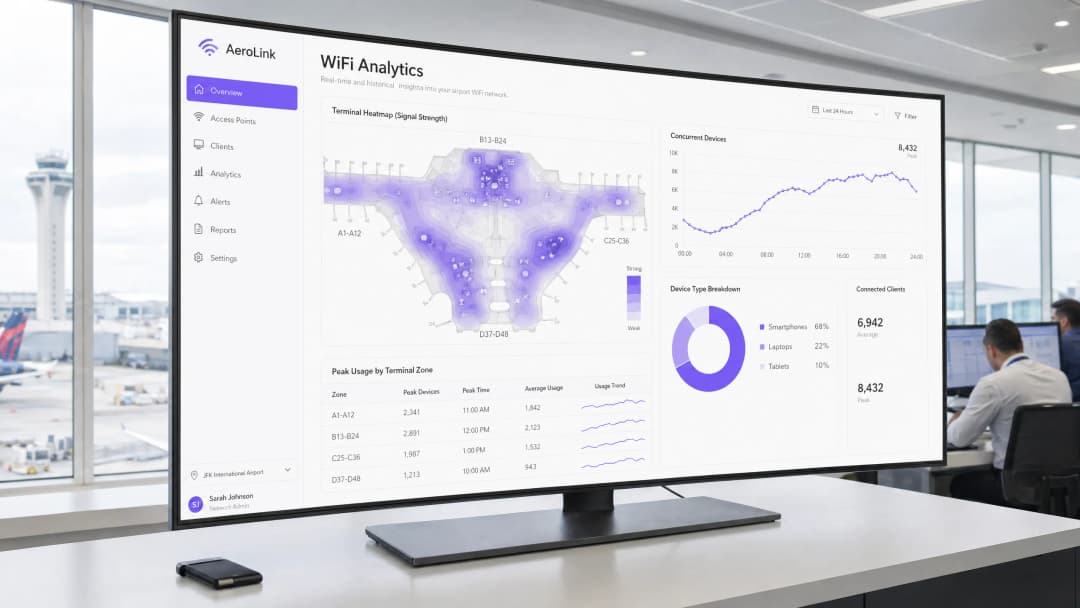
- WiFi ॲनालिटिक्सचा वापर करा: कृतीयोग्य माहिती मिळवण्यासाठी Purple च्या WiFi Analytics सारखे प्लॅटफॉर्म तैनात करा. डिव्हाइस प्रोब विनंत्या आणि कनेक्शन डेटाचे विश्लेषण करून, ऑपरेटर्स प्रवाशांच्या प्रवाहाचे व्हिज्युअलायझेशन करू शकतात, रिटेल झोनमधील ड्वेल टाइम मोजू शकतात आणि टर्मिनल लेआउट ऑप्टिमाइझ करू शकतात。
- क्रॉस-इंडस्ट्री लर्निंग्स: सिद्ध धोरणांसाठी इतर उच्च-घनतेची वातावरणे पहा. एअरपोर्टवर येणारी आव्हाने मोठ्या रिटेल केंद्रांसारखी किंवा प्रमुख वाहतूक केंद्रांसारखीच असतात. उदाहरणार्थ, ऑपरेटर्स Retail क्षेत्रात कनेक्टिव्हिटी कशी हाताळतात याचे पुनरावलोकन करणे किंवा Railway WiFi Network: How Operators Are Delivering Connectivity at Speed शोधणे मौल्यवान आर्किटेक्चरल माहिती प्रदान करू शकते。
ट्रबलशूटिंग आणि जोखीम कमी करणे
अगदी चांगल्या प्रकारे डिझाइन केलेल्या नेटवर्कमध्येही समस्या येतात. सामान्य बिघाड मोडमध्ये खालील गोष्टींचा समावेश होतो:
- स्टिकी क्लायंट्स: जे डिव्हाइसेस जवळच्या AP वर रोम करण्यास नकार देतात, ज्यामुळे त्यांच्यासाठी आणि इतरांसाठी कामगिरी खराब होते. उपाय: क्लायंट्सना डिस्कनेक्ट करण्यासाठी आणि अधिक चांगला AP शोधण्यास भाग पाडण्यासाठी कडक किमान RSSI (Received Signal Strength Indicator) थ्रेशोल्ड लागू करा。
- रॉग APs: अनधिकृत ॲक्सेस पॉइंट्स (उदा. प्रवाशांचे मोबाईल हॉटस्पॉट) जे हस्तक्षेप निर्माण करतात. उपाय: रॉग APs चा स्वयंचलितपणे शोध घेण्यासाठी आणि त्यांना रोखण्यासाठी वायरलेस इंट्रूजन प्रिव्हेंशन सिस्टम (WIPS) चा वापर करा。
- कॅप्टिव्ह पोर्टल बिघाड: DNS किंवा DHCP संपल्यामुळे युझर्स प्रमाणीकरण करू शकत नाहीत. उपाय: हे सुनिश्चित करा की DHCP स्कोप पीक क्षमतेसाठी योग्य आकाराचे आहेत आणि DNS सर्व्हर अत्यंत उपलब्ध आहेत。
ROI आणि व्यावसायिक प्रभाव
एंटरप्राइज़-ग्रेड एअरपोर्ट वायरलेस नेटवर्क तैनात करण्यासाठी मोठ्या प्रमाणावर CapEx आवश्यक आहे, परंतु ROI मोजता येण्याजोगा आहे。
- ऑपरेशनल कार्यक्षमता: नेटवर्कमधून मिळालेले ॲनालिटिक्स ऑप्टिमाइझ्ड स्टाफिंगची परवानगी देतात (उदा. रिअल-टाइम प्रवासी घनतेवर आधारित अधिक सुरक्षा लेन उघडणे)。
- रिटेल मीडिया कमाई: WiFi स्क्रीन रिअल इस्टेट आणि कॅप्टिव्ह पोर्टल चा वापर करून, एअरपोर्ट लक्ष्यित जाहिराती देऊ शकतात, ज्यामुळे नवीन महसूल स्रोत तयार होतात जे नेटवर्क पायाभूत सुविधांच्या खर्चाची भरपाई करू शकतात。
- उत्कृष्ट प्रवासी अनुभव: विश्वसनीय कनेक्टिव्हिटी थेट प्रवाशांच्या उच्च समाधान स्कोअरशी संबंधित आहे, जी एअरलाईन मार्ग नियोजन आणि एकूण एअरपोर्टच्या स्पर्धात्मकतेवर परिणाम करते。
महत्वाच्या व्याख्या
हाय-डेन्सिटी डिप्लॉयमेंट
मर्यादित भौतिक जागेत एकाच वेळी मोठ्या संख्येने क्लायंट डिव्हाइसेसना सेवा देण्यावर केंद्रित असलेले नेटवर्क डिझाइन धोरण, जे साध्या भौगोलिक कव्हरेजपेक्षा क्षमता आणि थ्रूपुटला प्राधान्य देते.
प्रस्थान गेट्स आणि बॅगेज क्लेम यांसारख्या क्षेत्रांसाठी अत्यंत महत्त्वाचे आहे जिथे हजारो प्रवासी एकाच वेळी एकत्र येतात.
कॅप्टिव्ह पोर्टल
एक वेब पेज जे सार्वजनिक ॲक्सेस नेटवर्कच्या युझरला ॲक्सेस मिळण्यापूर्वी पाहणे आणि संवाद साधणे बंधनकारक असते, सामान्यतः प्रमाणीकरण, सेवा अटी स्वीकारणे किंवा मार्केटिंगसाठी वापरले जाते.
वेन्यू ऑपरेटर्ससाठी फर्स्ट-पार्टी डेटा कॅप्चर करण्यासाठी आणि प्रवाशांना रिटेल मीडिया सादर करण्यासाठी प्राथमिक यंत्रणा.
बँड स्टीयरिंग
वायरलेस कंट्रोलर्सवरील एक वैशिष्ट्य जे ड्युअल-बँड क्लायंट डिव्हाइसेसना गर्दीच्या 2.4GHz बँडऐवजी कमी गर्दीच्या 5GHz किंवा 6GHz बँडशी कनेक्ट होण्यासाठी प्रोत्साहित करते.
एकूण नेटवर्क कामगिरी जास्तीत जास्त वाढवण्यासाठी आणि गर्दीच्या टर्मिनल्समध्ये सुरळीत अनुभव सुनिश्चित करण्यासाठी आवश्यक.
OFDMA (Orthogonal Frequency-Division Multiple Access)
WiFi 6 चे एक महत्त्वाचे वैशिष्ट्य जे एकाच ॲक्सेस पॉईंटला वायरलेस चॅनेलचे लहान सब-चॅनेल्समध्ये विभाजन करून एकाच वेळी अनेक क्लायंट डिव्हाइसेसशी संवाद साधण्याची परवानगी देते.
जुन्या WiFi मानकांच्या तुलनेत हाय-डेन्सिटी वातावरणात लेटन्सी लक्षणीयरीत्या कमी करते आणि कार्यक्षमता सुधारते.
RSSI (Received Signal Strength Indicator)
प्राप्त झालेल्या रेडिओ सिग्नलमधील शक्तीचे मोजमाप. उच्च मूल्ये अधिक मजबूत कनेक्शन दर्शवतात.
IT टीम्स लांबच्या APs पासून 'स्टिकी क्लायंट्स' ला डिस्कनेक्ट करण्यासाठी आणि जवळच्या APs वर रोम करण्यासाठी भाग पाडण्यासाठी RSSI थ्रेशोल्डचा वापर करतात, ज्यामुळे नेटवर्कचे आरोग्य ऑप्टिमाइझ होते.
फर्स्ट-पार्टी डेटा
कंपनी थेट तिच्या ग्राहकांकडून किंवा युझर्सकडून गोळा करत असलेली माहिती, जसे की ईमेल पत्ते, डेमोग्राफिक्स आणि वर्तनाचा डेटा (जसे की ड्वेल टाइम).
WiFi कॅप्टिव्ह पोर्टलद्वारे कॅप्टर केलेला हा डेटा वैयक्तिकृत मार्केटिंग आणि營運 ॲनालिटिक्ससाठी अत्यंत मौल्यवान आहे, विशेषतः जेव्हा थर्ड-पार्टी कुकीज बंद केल्या जात आहेत.
रिटेल मीडिया कमाई
लक्ष्यित जाहिराती किंवा प्रमोशन्स प्रदर्शित करण्यासाठी मालकीच्या डिजिटल रिअल इस्टेटचा (जसे की WiFi कॅप्टिव्ह पोर्टल किंवा वेन्यू ॲप) वापर करण्याची पद्धत.
टर्मिनल रिटेलर्ससोबत भागीदारी करून त्यांच्या IT पायाभूत सुविधांमधून महसूल मिळवण्यासाठी एअरपोर्ट ऑपरेटर्ससाठी एक महत्त्वाचे धोरण.
प्रोफाइल-आधारित प्रमाणीकरण (उदा. OpenRoaming)
एक प्रणाली जी युझर्सना प्रत्येक वेळी मॅन्युअली पासवर्ड न टाकता किंवा कॅप्टिव्ह पोर्टलशी संवाद न साधता सहभागी WiFi नेटवर्कशी सुरक्षितपणे आणि स्वयंचलितपणे कनेक्ट होण्याची परवानगी देते.
सुरक्षा राखताना प्रवाशांना विना-अडथळा अनुभव प्रदान करते, जे अखंड सुरक्षित WiFi च्या भविष्याचे प्रतिनिधित्व करते.
सोडवलेली उदाहरणे
एका मोठ्या आंतरराष्ट्रीय एअरपोर्टवर पीक प्रस्थान वेळेत नव्याने नूतनीकरण केलेल्या कॉन्कोर्स B मध्ये गंभीर नेटवर्क बिघाड होत आहे. प्रवासी WiFi शी कनेक्ट असल्याचे सांगतात परंतु त्यांना इंटरनेट ॲक्सेस मिळत नाही. IT टीमच्या लक्षात आले की गेस्ट VLAN साठी DHCP पूल संपला आहे.
यावर त्वरित उपाय म्हणजे गेस्ट नेटवर्कसाठी DHCP लीझ वेळ कमी करणे. एअरपोर्ट कॉन्कोर्ससारख्या हाय-टर्नओव्हर वातावरणात, प्रमाणित २४-तासांची लीझ वेळ उपलब्ध IP पत्ते वेगाने संपवून टाकेल कारण प्रवासी कनेक्ट होतात, त्यांच्या विमानांमध्ये चढतात आणि निघून जातात, तर त्यांचा IP राखीव राहतो. लीझ वेळ १ किंवा २ तासांपर्यंत कमी केली पाहिजे. शिवाय, एकाच वेळी कनेक्ट होणाऱ्या डिव्हाइसेसच्या पीक संख्येला सामावून घेण्यासाठी गेस्ट VLAN च्या सबनेट आकाराचे मूल्यांकन केले पाहिजे आणि बहुधा ते वाढवले पाहिजे (उदा. /24 वरून /22 किंवा /21 वर जाणे).
एका एअरपोर्ट ऑपरेटरला टर्मिनल १ मधील रिटेल महसूल वाढवायचा आहे. त्यांच्याकडे मजबूत WiFi नेटवर्क आहे परंतु सध्या ते ॲक्सेससाठी केवळ मूलभूत 'क्लिक-टू-ॲक्सेप्ट' अटी आणि शर्तींचे पृष्ठ ऑफर करत आहेत.
ऑपरेटरने Purple च्या Guest WiFi प्लॅटफॉर्मसारखे प्रगत कॅप्टिव्ह पोर्टल सोल्यूशन तैनात केले पाहिजे. साध्या स्प्लॅश पेजऐवजी, पोर्टलला प्रमाणीकरणासाठी सोशल लॉगिन किंवा ईमेल पत्त्याची आवश्यकता असावी. एकदा प्रमाणीकरण झाल्यानंतर, युझरला टर्मिनल १ मधील रेस्टॉरंट्स आणि ड्युटी-फ्री शॉप्ससाठी लक्ष्यित प्रमोशन्स दर्शवणाऱ्या लँडिंग पेजवर रिडायरेक्ट केले जाते. त्याच वेळी, प्लॅटफॉर्म रिटेल युनिट्सभोवती ड्वेल टाइम आणि पादचाऱ्यांच्या रहदारीच्या पॅटर्नचे विश्लेषण करण्यासाठी लोकेशन डेटा गोळा करण्यास सुरवात करतो.
सराव प्रश्न
Q1. तुमचा एअरपोर्ट नवीन हाय-एंड रिटेल आणि डायनिंग कॉन्कोर्ससह टर्मिनल ३ चा विस्तार करत आहे. कमर्शियल डायरेक्टरला नवीन स्टोअर्ससह जास्तीत जास्त प्रतिबद्धता (engagement) सुनिश्चित करायची आहे. या व्यावसायिक उद्दिष्टाला पाठिंबा देण्यासाठी तुम्ही WiFi ॲक्सेस लेयर आणि प्रमाणीकरण प्रक्रियेचे आर्किटेक्चर कसे डिझाइन केले पाहिजे?
टीप: गर्दीच्या जागेसाठी RF क्षमता आणि लक्ष्यित सामग्री वितरीत करण्याची यंत्रणा या दोन्हीचा विचार करा.
नमुना उत्तर पहा
आर्किटेक्चरच्या दृष्टीने, डायनिंग एरियामध्ये अपेक्षित डिव्हाइस व्हॉल्यूम हाताळण्यासाठी क्षमतेवर (लहान सेल आकार) केंद्रित हाय-डेन्सिटी WiFi 6/6E APs तैनात करा. प्रमाणीकरणासाठी, फर्स्ट-पार्टी डेटा कॅप्टर करण्यासाठी युझर नोंदणी (ईमेल किंवा सोशल लॉगिन) आवश्यक असलेले कॅप्टिव्ह पोर्टल तैनात करा. प्रमाणीकरणानंतर लँडिंग पेजवर लक्ष्यित रिटेल मीडिया (उदा. ड्युटी-फ्री डिस्काउंट कोड) प्रदर्शित करण्यासाठी Purple सारख्या प्लॅटफॉर्मसह हे समाकलित (integrate) करा. शिवाय, कमर्शियल डायरेक्टरला ROI डेटा परत देण्यासाठी विशिष्ट रिटेल युनिट्ससमोरील ड्वेल टाइमचा मागोवा घेण्यासाठी WiFi ॲनालिटिक्सचा वापर करा.
Q2. सुट्टीच्या प्रवासाच्या एका व्यस्त वीकेंडला, प्रवासी सुरक्षा तपासणी नाक्यावरून कॉन्कोर्स A मधील त्यांच्या प्रस्थान गेट्सकडे जात असताना WiFi कनेक्शन खंडित झाल्याच्या अनेक तक्रारी IT हेल्पडेस्कला मिळतात. याचे सर्वात संभाव्य तांत्रिक कारण काय आहे आणि तुम्ही त्याचे निराकरण कसे कराल?
टीप: विविध ॲक्सेस पॉइंट्सच्या कव्हरेज क्षेत्रांमध्ये फिरताना क्लायंट डिव्हाइस कसे वागते याचा विचार करा.
नमुना उत्तर पहा
सर्वात संभाव्य कारण म्हणजे अखंड रोमिंगमधील बिघाड, जो सहसा 'स्टिकी क्लायंट्स' जवळच्या, अधिक मजबूत सिग्नलवर ट्रान्झिशन करण्याऐवजी कमकुवत AP सिग्नलला धरून ठेवल्यामुळे होतो. याचे निराकरण करण्यासाठी, वायरलेस कंट्रोलरवर फास्ट रोमिंग प्रोटोकॉल (802.11r/k/v) सक्षम असल्याची खात्री करा. याव्यतिरिक्त, कमकुवत सिग्नल असलेल्या क्लायंट्सना सक्रियपणे डिस्कनेक्ट करण्यासाठी किमान RSSI थ्रेशोल्ड लागू करा किंवा समायोजित करा, ज्यामुळे ते कॉन्कोर्समधून जात असताना त्यांना चांगल्या AP वर रोम करण्यास भाग पाडले जाईल.
Q3. तुम्हाला एअरपोर्टचे नवीन सार्वजनिक WiFi नेटवर्क सुरक्षित करण्याचे काम सोपवले आहे. ऑपरेशन्स टीमला काळजी आहे की प्रवाशांचे डिव्हाइसेस बॅगेज हँडलिंग सिस्टममध्ये हस्तक्षेप करू शकतात किंवा त्यात प्रवेश करू शकतात, जे समान भौतिक स्विचिंग इन्फ्रास्ट्रक्चरवर कार्य करतात. हा जोखीम कमी करण्यासाठी प्रमाणित दृष्टिकोन काय आहे?
टीप: कोर नेटवर्क लेयरवर नेटवर्क सेगमेंटेशन आणि ट्रॅफिक आयसोलेशन तंत्रांचा विचार करा.
नमुना उत्तर पहा
प्रमाणित दृष्टिकोन म्हणजे व्हर्च्युअल लोकल एरिया नेटवर्क (VLANs) का वापर करून कडक नेटवर्क सेगमेंटेशन करणे. सार्वजनिक WiFi ट्रॅफिक एका समर्पित, वेगळ्या गेस्ट VLAN वर ठेवले पाहिजे. या VLAN वर कडक फायरवॉल नियम लागू केले पाहिजेत, जे ऑपरेशनल VLANs (जसे की बॅगेज हँडलिंग सिस्टम) मधील कोणत्याही राउटिंग किंवा ॲक्सेसला स्पष्टपणे नकार देतात. शिवाय, प्रवाशांच्या डिव्हाइसेसना एकमेकांशी थेट संवाद साधण्यापासून रोखण्यासाठी गेस्ट SSID वर क्लायंट आयसोलेशन सक्षम केले पाहिजे, ज्यामुळे पीअर-टू-पीअर हल्ल्यांचा धोका कमी होईल.
या मालिकेमध्ये पुढे वाचा
Staff WiFi vs. Guest WiFi: Corporate Network Segmentation साठी सर्वोत्तम पद्धती
स्टाफ आणि guest WiFi नेटवर्क्सचे विभाजन करण्याबाबत IT लीडर्ससाठी एक सर्वसमावेशक तांत्रिक मार्गदर्शक. यामध्ये VLAN आर्किटेक्चर, 802.1X ऑथेंटिकेशन, फायरवॉल पॉलिसीज आणि सुरक्षित नेटवर्क डिझाइनचा व्यवसायावर होणारा प्रभाव समाविष्ट आहे.
हॉटेल अतिथी WiFi व्यवस्थापन: PMS, पोर्टल्स आणि ब्रँड मानके यांचे एकत्रीकरण
हे तांत्रिक मार्गदर्शक एंटरप्राइझ-श्रेणीचे हॉटेल WiFi नेटवर्क कसे डिझाइन करावे हे तपशीलवार सांगते, ज्यामध्ये VLAN विभाजन, स्वयंचलित सत्र व्यवस्थापनासाठी PMS एकत्रीकरण आणि GDPR-अनुपालक डेटा संकलनासाठी captive portal ऑप्टिमायझेशन यावर लक्ष केंद्रित केले आहे.
Guest WiFi कसा सेट करावा: एक सुरक्षित Enterprise कॉन्फिगरेशन मार्गदर्शिका
ही अधिकृत मार्गदर्शिका IT लीडर्स आणि नेटवर्क आर्किटेक्ट्सना सुरक्षित enterprise guest WiFi तैनात करण्यासाठी एक निश्चित ब्ल्यूप्रिंट प्रदान करते. यामध्ये अंतर्गत प्रणालींचे संरक्षण करताना सुसंगत फर्स्ट - पार्टी डेटा गोळा करण्यासाठी आवश्यक आर्किटेक्चर, WPA3 मायग्रेशन, VLAN सेगमेंटेशन आणि captive portal इंटिग्रेशन समाविष्ट आहे.
तुमच्या विशिष्ट सेटअपबद्दल काही प्रश्न आहेत का?
आमची टीम ८०,००० हून अधिक वेन्यूजमधील वेन्यू ऑपरेटर्स, IT मॅनेजर्स आणि नेटवर्क इंजिनिअर्ससोबत काम करते. २० मिनिटांचा कॉल बुक करा आणि तुमच्यासारख्या इतरांनी ही समस्या कशी सोडवली हे आम्ही तुम्हाला दाखवू.