
Railway WiFi Network: ऑपरेटर्स वेगाने कनेक्टिव्हिटी कशी प्रदान करत आहेत
हे तांत्रिक संदर्भ मार्गदर्शक IT लीडर्स, नेटवर्क आर्किटेक्ट्स आणि ट्रान्सपोर्ट ऑपरेशन्स डायरेक्टर्सना विश्वसनीय रेल्वे WiFi नेटवर्क्सचे आर्किटेक्चर आणि उपयोजन करण्यासाठी उपयुक्त अंतर्दृष्टी प्रदान करते. यामध्ये लाईनसाइड इन्फ्रास्ट्रक्चर आणि मल्टि-बेअरर अॅग्रीगेशनपासून बँडविड्थ मॅनेजमेंट, Captive Portal आणि प्रवासी अॅनालिटिक्सपर्यंतच्या संपूर्ण स्टॅकचा समावेश आहे. हे मार्गदर्शक दाखवते की ऑपरेटर्स ऑनबोर्ड WiFi कडे केवळ खर्च करण्याचे साधन म्हणून न पाहता, त्याचा वापर फर्स्ट-पार्टी डेटा, ऑपरेशनल इंटेलिजन्स आणि मोजता येण्याजोगा ROI मिळवून देणारी एक धोरणात्मक मालमत्ता म्हणून कसा करू शकतात.
हे मार्गदर्शक ऐका
पॉडकास्ट ट्रान्सक्रिप्ट पहा

कार्यकारी सारांश (Executive summary)
धावत्या ट्रेनमध्ये विश्वसनीय WiFi प्रदान करणे हे एंटरप्राइझ नेटवर्किंगमधील सर्वात आव्हानात्मक कामांपैकी एक आहे. आयटी व्यवस्थापक, नेटवर्क आर्किटेक्ट आणि वेन्यू ऑपरेशन्स डायरेक्टर्ससाठी, प्रवाशांची कनेक्टिव्हिटी आता केवळ एक लक्झरी राहिलेली नाही - ती एक मूलभूत गरज आहे जी थेट ग्राहकांच्या समाधानावर आणि ब्रँडच्या प्रतिमेवर परिणाम करते.
हे मार्गदर्शक १२५ मैल प्रति तास वेगाने धावताना कनेक्टिव्हिटी कशी राखायची यासाठी आवश्यक असलेल्या तांत्रिक आर्किटेक्चरची रूपरेषा स्पष्ट करते, ज्यामध्ये सातत्याने होणारे सेल टॉवर हँडऑफ्स, मेटल डब्यांमुळे निर्माण होणारा फॅराडे केजचा प्रभाव (Faraday cage effect) आणि बदलणारी वापरकर्त्यांची घनता या गोष्टींचा समावेश आहे. आम्ही साध्या सेल्युलर राउटरपासून ते मल्टि-बेअरर ॲग्रीगेशन गेटवेज आणि समर्पित लाईनसाईड इन्फ्रास्ट्रक्चरपर्यंतच्या बदलांचा आढावा घेतो. महत्त्वाचे म्हणजे, बँडविड्थ व्यवस्थापित करण्यासाठी, GDPR चे पालन सुनिश्चित करण्यासाठी आणि कृतीयोग्य फर्स्ट-पार्टी डेटा गोळा करण्यासाठी ऑपरेटर्स कॅप्टिव्ह पोर्टल्स आणि ॲनालिटिक्स प्लॅटफॉर्म्स - जसे की guest WiFi आणि WiFi analytics - चा कसा वापर करतात याचे आम्ही विश्लेषण करतो. ऑनबोर्ड नेटवर्कला केवळ एक खर्चाचे साधन न मानता एक धोरणात्मक मालमत्ता मानून, ट्रान्सपोर्ट ऑपरेटर्स आधुनिक प्रवाशांच्या डिजिटल गरजा पूर्ण करत उत्कृष्ट ROI मिळवू शकतात.
तांत्रिक सखोल विश्लेषण (Technical deep-dive)
रेल्वे WiFi नेटवर्क तयार करण्यासाठी पारंपारिक स्टॅटिक एंटरप्राइझ LAN डिझाइनपेक्षा पूर्णपणे वेगळा दृष्टिकोन आवश्यक आहे. नेटवर्कने वेगाने धावणाऱ्या स्थानिक वातावरण आणि मुख्य इंटरनेट बॅकहॉल यांच्यात दुवा साधला पाहिजे, तसेच एकाच वेळी शेकडो वापरकर्त्यांसाठी सत्र सातत्य (session continuity) राखले पाहिजे.
मल्टि-बेअरर बॅकहॉल आर्किटेक्चर
धावत्या ट्रेनसाठी एकाच मोबाईल नेटवर्क ऑपरेटरवर अवलंबून राहणे पुरेसे नाही. आधुनिक डिप्लॉयमेंट्स ट्रेनवर बसवलेल्या मल्टि-SIM ॲग्रीगेशन गेटवे (किंवा मल्टि-बेअरर राउटर) चा वापर करतात. हे डिव्हाइस एकाच वेळी अनेक मोबाईल नेटवर्क ऑपरेटर्सचे (MNOs) 4G आणि 5G कनेक्शन जोडते.
जेव्हा ट्रेन वेगवेगळ्या कव्हरेज क्षेत्रांमधून प्रवास करते, तेव्हा ॲग्रीगेटर रिअल-टाइम लेटन्सी, पॅकेट लॉस आणि सिग्नल स्ट्रेंथ मेट्रिक्सच्या आधारे उपलब्ध कनेक्शनवर ट्रॅफिक डायनॅमिकली रूट करतो. जर एखाद्या बोगद्यात किंवा ग्रामीण भागात एका ऑपरेटरचा सिग्नल गेला, तर इतर ऑपरेटर सत्र सुरू ठेवतात, ज्यामुळे प्रवाशांना कोणताही अडथळा न जाणवता अखंड फेलोव्हर (seamless failover) मिळते. कोणत्याही रेल्वे WiFi डिप्लॉयमेंटमधील हा सर्वात महत्त्वाचा आर्किटेक्चरल निर्णय आहे.
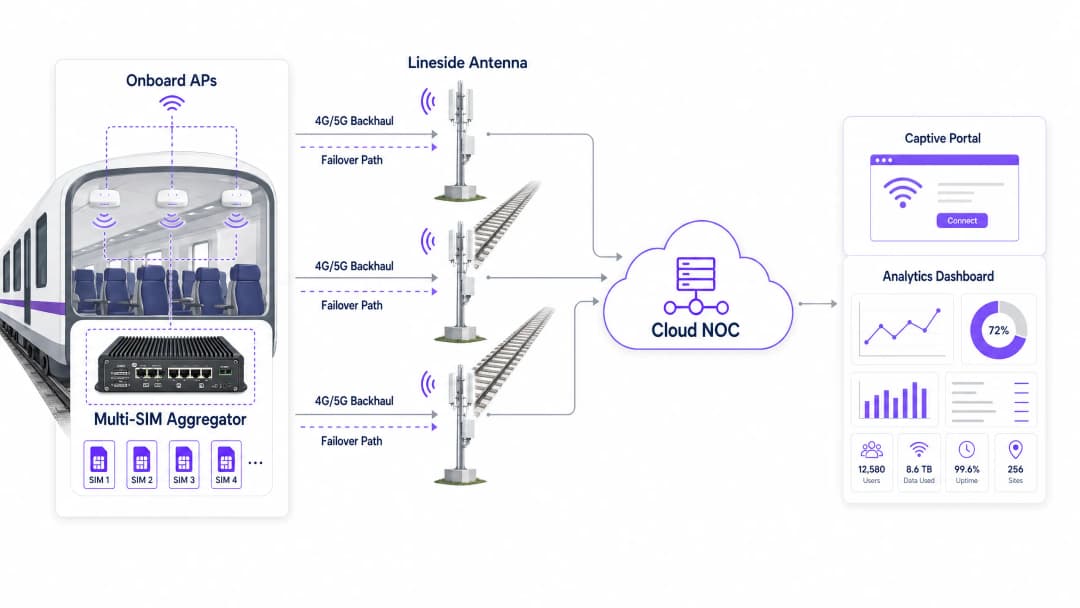
लाईनसाईड इन्फ्रास्ट्रक्चर (ट्रॅक-टू-ट्रेन)
गर्दीच्या वेळी सार्वजनिक सेल्युलर नेटवर्कमध्ये अडथळे येणाऱ्या उच्च घनतेच्या प्रवासी मार्गांसाठी, ऑपरेटर्स समर्पित लाईनसाईड इन्फ्रास्ट्रक्चरमध्ये गुंतवणूक करत आहेत. यामध्ये रेल्वे ट्रॅकच्या बाजूने अँटेना बसवले जातात - तंत्रज्ञानाच्या आधारावर सामान्यतः ५०० मीटर ते २ किलोमीटर अंतरावर - ज्यामध्ये थेट ट्रेनच्या डब्यांच्या बाहेरील बाजूस बसवलेल्या रिसीव्हर्सकडे समर्पित सिग्नल पाठवण्यासाठी मिलिमीटर वेव्ह किंवा समर्पित 5G स्पेक्ट्रमचा वापर केला जातो.
हा दृष्टिकोन सार्वजनिक सेल्युलर नेटवर्कमधील गर्दी पूर्णपणे टाळतो आणि खात्रीशीर थ्रुपुट प्रदान करतो. यासाठी ट्रॅकच्या बाजूने बांधकाम करण्याचा मोठा भांडवली खर्च करावा लागतो, परंतु उच्च महसूल देणाऱ्या आंतरशहरी मार्गांसाठी हा बिझनेस केस अत्यंत फायदेशीर ठरतो. यामध्ये डॉप्लर इफेक्ट (Doppler effect) हा एक महत्त्वाचा विचार आहे: १०० mph पेक्षा जास्त वेगाने प्रवास करताना, रिसीव्हरने स्वीकारलेली रेडिओ फ्रिक्वेन्सी ही ट्रान्समिट केलेल्या फ्रिक्वेन्सीपेक्षा वेगळी असते, ज्यामुळे हाय-स्पीड मोबिलिटी परिस्थितीसाठी डिझाइन केलेल्या विशेष रेडिओ उपकरणांची आवश्यकता असते.
ऑनबोर्ड वितरण आणि हार्डवेअर मानके
एकदा बॅकहॉल सुरक्षित झाल्यानंतर, सिग्नल प्रत्येक डब्यातील वायरलेस ॲक्सेस पॉइंट्स (APs) ला ऑनबोर्ड इथरनेट बॅकबोनद्वारे वितरित केला जातो. ट्रेन्सवर तैनात केलेल्या हार्डवेअरने कठोर पर्यावरणीय मानकांचे, विशेषतः EN 50155 चे पालन करणे आवश्यक आहे. हे मानक रोलिंग स्टॉकवर वापरल्या जाणाऱ्या इलेक्ट्रॉनिक उपकरणांच्या आवश्यकता निर्दिष्ट करते, ज्यामुळे अति तापमान बदल (सामान्यतः -२५°C ते +७०°C), आर्द्रता, धक्का आणि कंपन सहन करण्याची क्षमता सुनिश्चित होते.
कंपनामुळे कनेक्शन तुटू नये म्हणून APs ला सामान्यतः मानक RJ45 पोर्ट्स ऐवजी M12 इंडस्ट्रियल कनेक्टर्सची आवश्यकता असते. नवीन उपयोजनांसाठी WiFi 6 (802.1Xax) हे सध्याचे शिफारस केलेले मानक आहे, जे OFDMA आणि BSS Colouring सारख्या तंत्रज्ञानाद्वारे उच्च घनतेच्या वातावरणात सुधारित कामगिरी प्रदान करते.
ऑनबोर्ड LAN टोपोलॉजी देखील तितकीच महत्त्वाची आहे. डेझी-चेन दृष्टिकोनामुळे प्रत्येक आंतर-डब्यातील जोडणीवर सिंगल पॉईंट ऑफ फेल्युअर (single point of failure) निर्माण होतो. यासाठी शिफारस केलेली आर्किटेक्चर म्हणजे रिडंडंट रिंग टोपोलॉजी होय, ज्यामध्ये कोणत्याही एका केबल सेगमेंटमध्ये बिघाड झाल्यास रिंगच्या विरुद्ध दिशेने ट्रॅफिक रूट करून तो बिघाड आपोआप बायपास केला जातो.
अंमलबजावणी मार्गदर्शक
रेल्वे WiFi सेवा तैनात करण्यासाठी काळजीपूर्वक नियोजन आणि टप्प्याटप्प्याने अंमलबजावणी करणे आवश्यक आहे. खालील पायऱ्या IT टीम्सना एक व्यावहारिक फ्रेमवर्क प्रदान करतात.
पायरी १: RF सर्व्हे आणि बॅकहॉल मूल्यांकन
हार्डवेअर निवडण्यापूर्वी, संपूर्ण ट्रेन मार्गाचा सर्वसमावेशक RF सर्व्हे करा. दिवसाच्या प्रातिनिधिक वेळेत ट्रॅकच्या बाजूने सर्व प्रमुख MNOs साठी सिग्नलची ताकद आणि डेटा थ्रुपुटचे मॅपिंग करा. डेड झोन्स शोधा - जसे की बोगदे, खोल दऱ्या, ग्रामीण भाग - जिथे सेल्युलर कव्हरेज पूर्णपणे नाहीसे होते. हा डेटा थेट ॲग्रीगेशन गेटवेच्या SIM कॅरियर कॉन्फिगरेशनला माहिती पुरवतो आणि लाईनसाईड इन्फ्रास्ट्रक्चरमधील गुंतवणूक कुठे फायदेशीर ठरू शकते हे स्पष्ट करतो.
पायरी २: हार्डवेअर खरेदी आणि इन्स्टॉलेशन
रेल्वेमध्ये वापरल्याचा सिद्ध इतिहास असलेल्या विक्रेत्यांकडून EN 50155-अनुरूप हार्डवेअर निवडा. एका सुरक्षित, हवेशीर कॉम्स कॅबिनेटमध्ये multi-SIM ॲग्रीगेटर स्थापित करा, सहसा पुढील किंवा मागील डब्यात. कॅरेजेस दरम्यान मजबूत केबलिंग चालवा - APs पर्यंत इंडस्ट्रियल-ग्रेड केबल वापरून ड्युअल-रिडंडंट इथरनेट रिंग. बाह्य अँटेनांना एरोडायनामिक प्रोफाइल असल्याची आणि वारा आणि हवामानापासून संरक्षणासाठी IP67 किंवा त्याहून अधिक सीलबंद असल्याची खात्री करा.
पायरी ३: captive portal आणि बँडविड्थ व्यवस्थापन कॉन्फिगरेशन
हा एक महत्त्वपूर्ण एकत्रीकरण बिंदू आहे जिथे पायाभूत सुविधा प्रवाशांच्या अनुभवाशी जोडल्या जातात. तुम्ही ट्रेनमध्ये अमर्यादित बँडविड्थ देऊ शकत नाही; बॅकहॉल हे एक मर्यादित, सामायिक संसाधन आहे. वाजवी वापर धोरण (FUP) लागू करण्यासाठी captive portal सोल्यूशन वापरा.
रेट लिमिटिंग वैयक्तिक वापरकर्त्याच्या गतीवर मर्यादा घालते - सहसा ५ Mbps डाउनलोड - जेणेकरून सर्व कनेक्ट केलेल्या उपकरणांना योग्य प्रवेश मिळेल. ट्रॅफिक शेपिंग उच्च-बँडविड्थ ॲप्लिकेशन्स जसे की 4K स्ट्रीमिंग किंवा मोठे सॉफ्टवेअर अपडेट्स ब्लॉक करते किंवा मर्यादित करते, आणि वेब ब्राउझिंग, ईमेल आणि VoIP ला प्राधान्य देते. पोर्टलद्वारे होणारे ऑथेंटिकेशन प्रवाशांचा डेटा (ईमेल पत्ता, सोशल लॉगिन) पूर्ण GDPR च्या अनुपालनासह गोळा करते आणि तो तुमच्या विश्लेषण प्लॅटफॉर्मवर पाठवते.
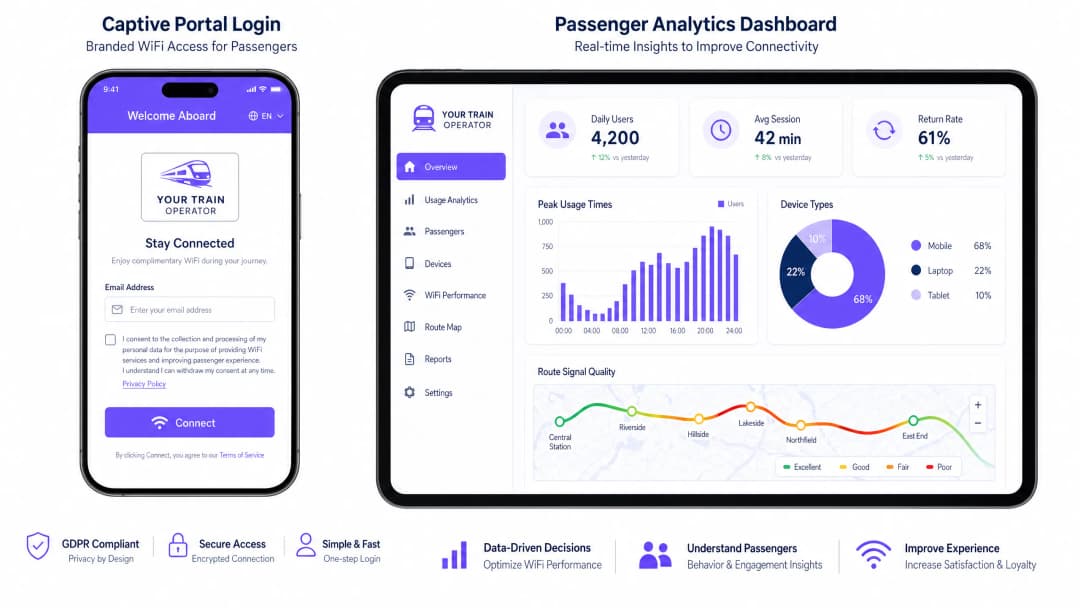
पायरी ४: NOC एकत्रीकरण आणि मॉनिटरिंग
ऑनबोर्ड नेटवर्कला क्लाउड-आधारित नेटवर्क ऑपरेशन्स सेंटर (NOC) सह एकत्रित करा. AP चे आरोग्य, बॅकहॉल लेटन्सी थ्रेशोल्ड आणि SIM फेलओव्हर इव्हेंटसाठी रिअल-टाइम अलर्ट कॉन्फिगर करा. मार्ग-स्तरीय सिग्नल गुणवत्ता नकाशे तयार करण्यासाठी नेटवर्क कार्यप्रदर्शन मेट्रिक्ससह GPS ट्रेन पोझिशन डेटा ओव्हरले करा. हे केवळ तक्रारींचे निवारण करण्याऐवजी सक्रिय व्यवस्थापनाचा पाया आहे.
सर्वोत्तम पद्धती
सर्व APs वर क्लायंट आयसोलेशन लागू करा. लोकल नेटवर्कवर प्रवाशांची उपकरणे थेट एकमेकांशी संवाद साधू शकत नाहीत याची खात्री करा. हे ऑनबोर्ड LAN वर पीअर-टू-पीअर हल्ले, मॅन-इन-द-मिडल हल्ले आणि मालवेअर प्रसाराचा धोका कमी करते. कोणत्याही सार्वजनिक नेटवर्कसाठी हे तडजोड न करण्यासारखे सुरक्षा बेसलाइन आहे.
पोर्टलवरील अडथळे कमी करण्यासाठी OpenRoaming चा अवलंब करा. वारंवार प्रवास करणाऱ्या प्रवाशांचा अनुभव सुधारण्यासाठी, Passpoint आणि OpenRoaming (IEEE 802.11u) ला सपोर्ट द्या. हे सुसंगत उपकरणांना प्रत्येक प्रवासात captive portal सोबत संवाद न साधता सुरक्षितपणे आणि आपोआप ऑथेंटिकेट होण्याची अनुमती देते. आधीच हे प्लॅटफॉर्म वापरत असलेल्या ऑपरेटरसाठी, Purple हे OpenRoaming सेवांसाठी विनामूल्य ओळख प्रदाता म्हणून कार्य करते, ज्यामुळे हा एक सुलभ अपग्रेड मार्ग बनतो. नेटवर्क सुरक्षेच्या मूलभूत गोष्टींबद्दल अधिक माहितीसाठी, Protecting your network with robust DNS and security पहा.
सक्रिय देखरेख (Proactive monitoring) अत्यंत आवश्यक आहे. आउटेज शोधण्यासाठी प्रवाशांच्या तक्रारींवर अवलंबून राहू नका. रिअल टाइममध्ये अपटाइम, बॅकहॉल लेटन्सी आणि AP आरोग्याचे परीक्षण करण्यासाठी ऑनबोर्ड नेटवर्कला क्लाउड NOC सह समाकलित करा. पहिले प्रवासी लक्षात घेण्यापूर्वी समस्या ओळखणे आणि त्यांचे निराकरण करणे हे उद्दिष्ट आहे.
Captive Portal कडे एक उत्पादन म्हणून पहा, उपयुक्तता म्हणून नाही. हे पोर्टल प्रवाशांशी जोडणारा तुमचा मुख्य मार्ग आहे. ब्रँडेड, जलद लोड होणाऱ्या अनुभवामध्ये गुंतवणूक करा जो सेवा अटी आणि डेटा कसा वापरला जाईल हे स्पष्टपणे सांगतो. खराब डिझाइन केलेले पोर्टल अडथळा निर्माण करते आणि ऑथेंटिकेशनचे प्रमाण कमी करते, ज्यामुळे तुमच्या फर्स्ट-पार्टी डेटाच्या गुणवत्तेवर थेट परिणाम होतो.
ट्रबलशूटिंग आणि जोखीम कमी करणे
स्टेशन सर्ज इफेक्ट (The station surge effect)
जोखीम: जेव्हा एखादी ट्रेन गर्दीच्या स्टेशनवर येते, तेव्हा शेकडो ऑनबोर्ड डिव्हाइसेस एकाच वेळी स्टेशनच्या मॅक्रो सेल्युलर नेटवर्कशी किंवा स्टेशनच्या स्वतःच्या सार्वजनिक WiFi शी कनेक्ट करण्याचा प्रयत्न करू शकतात, ज्यामुळे गंभीर हस्तक्षेप, बॅकहॉल सॅचुरेशन आणि सर्व प्रवाशांसाठी खराब अनुभव उद्भवू शकतो.
निवारण: स्टेशन प्लॅटफॉर्मवर सेल्युलरवरून थेट समर्पित हाय-कॅपॅसिटी WiFi किंवा फायबर लिंकवर बॅकहॉल डायनॅमिकपणे स्विच करण्यासाठी ऑनबोर्ड APs कॉन्फिगर करा. जेव्हा ट्रेन मोठ्या हबवर स्थिर असते, तेव्हा बँडविड्थ धोरणे स्वयंचलितपणे समायोजित करण्यासाठी भौगोलिक स्थान किंवा GPS ट्रिगर्स वापरा, ज्यामुळे बॅकहॉल क्षमता प्रभावीपणे अमर्यादित असताना प्रति-वापरकर्ता मर्यादा तात्पुरत्या उठवल्या जातात.
डब्यांमधील केबल बिघाड (Inter-carriage cable failure)
जोखीम: डब्यांमधील भौतिक कनेक्शन कपलिंग आणि अनकपलिंगच्या दरम्यान सतत यांत्रिक ताण, कंपन आणि हालचाली सहन करतात, ज्यामुळे केबल खराब होते आणि नेटवर्कचे तुकडे होतात.
निवारण: Rapid Spanning Tree Protocol (RSTP) किंवा प्रोप्रायटरी रिंग प्रोटोकॉलसह EN 50155-अनुरूप स्विचेस वापरून ऑनबोर्ड LAN साठी रिडंडंट रिंग टोपोलॉजी लागू करा. कोणत्याही दोन डब्यांमधील केबल निकामी झाल्यास, ट्रॅफिक स्वयंचलितपणे रिंगच्या विरुद्ध दिशेने मार्गस्थ होते आणि काही सेकंदात सर्व APs शी कनेक्टिव्हिटी कायम ठेवली जाते.
बोगद्यातून बाहेर पडताना बॅकहॉल सॅचुरेशन (Backhaul saturation on tunnel exit)
जोखीम: जेव्हा एखादी ट्रेन लांब बोगद्यातून बाहेर येते, तेव्हा प्रत्येक डिव्हाइस एकाच वेळी डेटा (ईमेल, ॲप अपडेट्स, क्लाउड बॅकअप) रीसिंक्रोनाइझ करण्याचा प्रयत्न करते, ज्यामुळे ट्रॅफिकचा मोठा लोंढा निर्माण होतो आणि 30 ते 60 सेकंदांसाठी बॅकहॉल सॅचुरेट होते.
निवारण: आक्रमक ट्रॅफिक शेपिंग धोरणे लागू करा जी विशेषतः पार्श्वभूमीतील ॲप्लिकेशन ट्रॅफिक मर्यादित करतात. ॲप्लिकेशन लेयरवर OS अपडेट ट्रॅफिक आणि क्लाउड सिंक सेवांना कमी प्राधान्य देण्यासाठी Captive Portal कॉन्फिगर करा, ज्यामुळे परस्परसंवादी ट्रॅफिकला (वेब ब्राउझिंग, मेसेजिंग) नेहमी प्राधान्य मिळेल.
ROI आणि व्यावसायिक प्रभाव
रेल्वे WiFi नेटवर्क तैनात करण्यासाठी मोठ्या प्रमाणावर भांडवली खर्चाची आवश्यकता असते - सहसा प्रति ट्रेन £50,000 ते £200,000 पर्यंत, बॅकहॉल सोल्यूशनच्या गुंतागुंतीवर अवलंबून - परंतु जेव्हा हे मजबूत विश्लेषण प्लॅटफॉर्मसह समाकलित केले जाते, तेव्हा ते लक्षणीय आणि मोजता येण्याजोगा परतावा देते.
| व्हॅल्यू ड्रायव्हर | कार्यपद्धती | मोजता येणारे परिणाम |
|---|---|---|
| फर्स्ट-पार्टी डेटा संकलन | Captive Portal प्रमाणीकरण | CRM आणि मार्केटिंगसाठी प्रवाशांचा ईमेल डेटाबेस |
| ऑपरेशन्स इंटेलिजन्स | NOC ॲनालिटिक्स + GPS ओव्हरले | कॅरियर SLA उत्तरदायित्व, कव्हरेजमधील त्रुटी शोधणे |
| रिटेल मीडिया महसूल | Captive Portal जाहिरात | लॉगइनच्या वेळी प्रायोजित कंटेंटमधून थेट महसूल |
| प्रवासी समाधान | विश्वसनीय कनेक्टिव्हिटी | सुधारित NPS स्कोअर, रेल्वेचा उच्च वाटा |
| नियामक अनुपालन | GDPR-अनुपालक डेटा संकलन | कमी झालेले कायदेशीर धोके, ऑडिट करण्यायोग्य संमती रेकॉर्ड्स |
Captive Portal द्वारे प्रमाणीकरण आवश्यक करून, ऑपरेटर प्रवाशांच्या लोकसंख्याशास्त्रीय माहितीचा आणि प्रवास करण्याच्या सवयींचा एक मौल्यवान डेटाबेस तयार करतात. या डेटाचा वापर लक्ष्यित मार्केटिंग मोहिमा, लॉयल्टी प्रोग्राम्स आणि सेवा वैयक्तिकरणासाठी केला जाऊ शकतो. नेटवर्कच्या कामगिरीला ट्रेनच्या पोझिशन डेटासह ओव्हरले करणारे ॲनालिटिक्स डॅशबोर्ड ऑपरेटरना रेल्वे ट्रॅकवर कव्हरेज नसलेले भाग अचूकपणे शोधण्यास आणि सेल्युलर प्रदात्यांना करारातील SLA साठी जबाबदार धरण्यास मदत करतात.
Captive Portal हे स्वतःच एक उत्तम डिजिटल रीअल इस्टेट आहे. ऑपरेटर इन्फ्रास्ट्रक्चरचा खर्च भरून काढण्यासाठी लॉगइन फ्लोमध्ये लक्ष्यित जाहिराती किंवा प्रायोजित संदेश समाविष्ट करू शकतात, ज्यामुळे थेट महसूल मिळतो. हा मॉडेल रिटेल आणि वाहतूक केंद्रांसह इतर क्षेत्रांमध्ये अत्यंत यशस्वी ठरला आहे, आणि हेच नियम थेट रेल्वे वातावरणालाही लागू होतात. रेल्वे स्टेशनवरील हॉटेल्स किंवा लाउंज व्यवस्थापित करणाऱ्या हॉस्पिटॅलिटी ऑपरेटर्ससाठी, हेच प्लॅटफॉर्म नियम लागू होतात - समांतर अंमलबजावणी पद्धतींसाठी आमचे हॉस्पिटॅलिटी WiFi उपयोजन मार्गदर्शक पहा.
महत्वाच्या व्याख्या
मल्टि-बेअरर अॅग्रीगेशन (Multi-Bearer Aggregation)
एकत्रित बँडविड्थ सुधारण्यासाठी आणि स्वयंचलित फेलओव्हर प्रदान करण्यासाठी बाँडिंग गेटवेचा वापर करून एकाधिक नेटवर्क कनेक्शन्स - सामान्यतः वेगवेगळ्या वाहकांकडून अनेक 4G किंवा 5G सिम कार्ड - एका मजबूत डेटा कनेक्शनमध्ये एकत्र करण्याची प्रक्रिया.
ट्रेन्ससाठी अत्यंत आवश्यक आहे, कारण जेव्हा ट्रेन अशा भागातून जाते जिथे एकाच सेल्युलर प्रदात्याचे कव्हरेज नसते, तेव्हा हे नेटवर्क खंडित होण्यापासून वाचवते. गेटवे रिअल-टाइममध्ये सर्व उपलब्ध बेअरर्सवर पॅकेट्स डायनॅमिकपणे राउट करतो.
EN 50155
रेल्वे ऍप्लिकेशन्ससाठी रोलिंग स्टॉकवर वापरल्या जाणाऱ्या इलेक्ट्रॉनिक उपकरणांचा समावेश असलेले एक आंतरराष्ट्रीय मानक (IEC 60571), जे तापमान, आर्द्रता, कंपन, धक्का आणि वीज पुरवठ्यातील चढ-उतारांसाठीच्या आवश्यकता निर्दिष्ट करते.
IT टीम्सनी हे सुनिश्चित केले पाहिजे की सर्व ऑनबोर्ड राउटर्स, स्विचेस आणि APs हे EN 50155 प्रमाणित आहेत. रेल्वेच्या वातावरणात कंपन आणि तापमानाच्या तीव्रतेमुळे मानक कॉर्पोरेट हार्डवेअर अयशस्वी ठरेल.
Captive Portal
एक वेब पेज जे सार्वजनिक - ऍक्सेस नेटवर्कच्या युजरला संपूर्ण इंटरनेट ऍक्सेस मिळण्यापूर्वी पाहणे आणि संवाद साधणे बंधनकारक असते. यासाठी सहसा प्रमाणीकरण आणि सेवा अटींचे स्वीकृती आवश्यक असते.
ऑपरेटरद्वारे युजर्सचे प्रमाणीकरण करण्यासाठी, फेअर युसेज पॉलिसी लागू करण्यासाठी आणि मौल्यवान फर्स्ट-पार्टी मार्केटिंग डेटा कॅप्चर करण्यासाठी वापरले जाते. हे WiFi नेटवर्कवरील ऑपरेटर आणि प्रवासी यांच्यातील प्राथमिक व्यावसायिक इंटरफेस आहे.
Client Isolation
वायरलेस ऍक्सेस पॉईंट्सवरील एक सुरक्षा वैशिष्ट्य जे कनेक्ट केलेल्या डिव्हाइसेसना स्थानिक नेटवर्कवर एकमेकांशी थेट संवाद साधण्यापासून प्रतिबंधित करते आणि सर्व ट्रॅफिकला गेटवेद्वारे जाण्यास भाग पाडते.
ट्रेन WiFi सारख्या सार्वजनिक नेटवर्कसाठी प्रवाशांना पीअर - टू - पीअर हॅकिंगचे प्रयत्न, मॅन - इन - द - मिडल हल्ले आणि ऑनबोर्ड LAN वरील मालवेअर प्रसारापासून वाचवण्यासाठी अत्यंत आवश्यक आहे.
Lineside Infrastructure
रेल्वे ट्रॅकच्या कडेला स्थापित केलेली समर्पित दूरसंचार उपकरणे - ज्यामध्ये अँटेना, रेडिओ युनिट्स आणि फायबर बॅकहॉल समाविष्ट आहेत - जे ट्रेनसाठी खाजगी, उच्च - क्षमतेचे बॅकहॉल नेटवर्क प्रदान करतात.
जेव्हा सार्वजनिक सेल्युलर नेटवर्क्स दाट गर्दीच्या मार्गांवरील उच्च डेटाची मागणी हाताळू शकत नाहीत तेव्हा हे तैनात केले जाते. यासाठी मोठ्या भांडवली गुंतवणुकीची आवश्यकता असते परंतु सार्वजनिक नेटवर्कच्या गर्दीपासून स्वतंत्र अशा खात्रीशीर थ्रूपुटची ऑफर मिळते.
Passpoint / OpenRoaming
एक प्रोटोकॉल सूट (IEEE 802.11u आणि हॉटस्पॉट 2.0 वर आधारित) जो डिव्हाइसेसना सर्टिफिकेट - आधारित प्रमाणीकरणाचा वापर करून, captive portal लॉगिनची आवश्यकता न पडता सहभागी WiFi नेटवर्कशी स्वयंचलित आणि सुरक्षितपणे कनेक्ट होण्याची परवानगी देतो.
अखंड, स्वयंचलित कनेक्टिव्हिटी प्रदान करून वारंवार प्रवास करणाऱ्या प्रवाशांचा अनुभव सुधारते. Purple या सेवेसाठी ओळख प्रदाता (आयडेंटिटी प्रोव्हायडर) म्हणून काम करते, ज्यामुळे ऑपरेटरना स्वतःची प्रमाणीकरण पायाभूत सुविधा न उभारता ही सेवा ऑफर करणे शक्य होते.
Traffic Shaping (QoS)
बँडविड्थ वाटप नियंत्रित करण्यासाठी, विशिष्ट प्रकारच्या ट्रॅफिकला प्राधान्य देण्यासाठी आणि इतरांना ब्लॉक किंवा मर्यादित करण्यासाठी नेटवर्क डेटा ट्रान्सफरचे नियमन करण्याची पद्धत, ज्यामुळे सर्व युजर्ससाठी सेवेची निश्चित गुणवत्ता सुनिश्चित होते.
मर्यादित बॅकहॉल क्षमता असूनही सर्व प्रवाशांना वापरण्यायोग्य कनेक्शन मिळावे यासाठी हाय - बँडविड्थ ऍप्लिकेशन्स (जसे की 4K व्हिडिओ स्ट्रीमिंग) ब्लॉक करण्यासाठी आणि परस्परसंवादी ट्रॅफिकला (वेब ब्राउझिंग, ईमेल, VoIP) प्राधान्य देण्यासाठी ट्रेनमध्ये वापरले जाते.
Doppler Shift
ट्रान्समीटरच्या सापेक्ष फिरत असलेल्या रिसीव्हरद्वारे जाणवणारा रेडिओ वेव्हच्या वारंवारतेमधील (फ्रीक्वेन्सी) बदल. उच्च वेगाने, हा फ्रिक्वेन्सीमधील बदल रेडिओ लिंकच्या गुणवत्तेला खराब करू शकतो.
हाय - स्पीड रेल्वे नेटवर्किंगमधील एक मूलभूत भौतिक आव्हान. १०० mph पेक्षा जास्त वेगाने Doppler shift ची भरपाई करण्यासाठी विशेष ट्रॅक - टू - ट्रेन रेडिओ उपकरणांची आवश्यकता असते, ज्यामुळे मानक कॉर्पोरेट आउटडोअर APs लाईनसाइड तैनातीसाठी अयोग्य ठरतात.
Fair Usage Policy (FUP)
नेटवर्क ऑपरेटरद्वारे लागू केलेल्या नियमांचा संच जो सर्व कनेक्ट केलेल्या डिव्हाइसेससाठी समान ऍक्सेस सुनिश्चित करण्यासाठी वैयक्तिक युजर्सच्या बँडविड्थ किंवा डेटा वापराची मर्यादा निश्चित करतो.
मल्टी - सिम ऍग्रिगेटरवर captive portal आणि ट्रॅफिक शेपिंग इंजिनद्वारे लागू केले जाते. FUP शिवाय, थोडे भारी युजर्स संपूर्ण बॅकहॉल संपवू शकतात, ज्यामुळे सर्व प्रवाशांचा अनुभव खराब होतो.
सोडवलेली उदाहरणे
५० ट्रेन्स असलेल्या एका प्रादेशिक रेल्वे ऑपरेटरला गंभीर WiFi तक्रारींचा सामना करावा लागत आहे. ग्रामीण दरीतून जाणाऱ्या प्रवासाच्या १५ मिनिटांच्या टप्प्यात नेटवर्क पूर्णपणे खंडित होत असल्याचे प्रवासी सांगत आहेत. सध्याच्या सेटअपमध्ये प्रत्येक डब्यात सिंगल-SIM 4G राउटर वापरला आहे. यासाठी शिफारस केलेली सुधारणा पद्धत कोणती आहे?
ऑपरेटरने मल्टि-बेअरर आर्किटेक्चरमध्ये अपग्रेड केले पाहिजे. पायरी १: सिंगल-SIM राउटर बदलून प्रत्येक ट्रेनमध्ये एक केंद्रीकृत EN 50155-सुसंगत मल्टि-SIM अॅग्रीगेशन गेटवे वापरा. पायरी २: प्रभावित भागात कोणत्या MNOs चे अंशतः कव्हरेज आहे हे निश्चित करण्यासाठी दरीचे RF सर्वेक्षण करा. पायरी ३: पॅकेट-लेव्हल बॉन्डिंग आणि अखंड फेलओव्हरसाठी गेटवे कॉन्फिगर करून किमान तीन वेगवेगळ्या MNOs च्या (उदा. EE, O2, Vodafone) SIMs सह गेटवे सज्ज करा. पायरी ४: मूलभूत वेब ब्राउझिंगसाठी कनेक्शन टाईमआउट टाळण्यासाठी कमी कव्हरेज असलेल्या दरीच्या टप्प्यात प्रति-वापरकर्ता कठोर २ Mbps दर मर्यादा लागू करण्यासाठी Captive Portal स्थापित करा. पायरी ५: रिअल-टाइममध्ये फेलओव्हर इव्हेंट्सचे परीक्षण करण्यासाठी आणि करिअर वाटाघाटीसाठी कव्हरेज मॅप तयार करण्यासाठी क्लाउड NOC सह समाकलित करा.
एक प्रमुख इंटरसिटी ऑपरेटर नवीन प्रीमियम सेवा सुरू करत आहे आणि त्यांना एक वेगळा WiFi अनुभव द्यायचा आहे: फर्स्ट-क्लास प्रवाशांना अमर्यादित २० Mbps मिळेल, तर स्टँडर्ड-क्लास प्रवाशांना स्ट्रीमिंग ब्लॉकसह ५ Mbps मिळेल. याचे आर्किटेक्चर कसे असावे?
यासाठी प्रति-SSID QoS पॉलिसीसह मल्टि-SSID आर्किटेक्चर आवश्यक आहे. पायरी १: ऑनबोर्ड APs वर दोन स्वतंत्र SSIDs कॉन्फिगर करा - एक फर्स्ट क्लाससाठी, एक स्टँडर्ड क्लाससाठी. पायरी २: प्रत्येक SSID एका स्वतंत्र VLAN ला नियुक्त करा. पायरी ३: मल्टि-SIM अॅग्रीगेटरवर, प्रति-VLAN ट्रॅफिक शेपिंग पॉलिसी कॉन्फिगर करा: VLAN १० (फर्स्ट क्लास) ला कोणतीही अॅप्लिकेशन-लेयर ब्लॉकिंग नसलेली प्रायोरिटी क्यूइंग मिळते; VLAN २० (स्टँडर्ड क्लास) ला ज्ञात स्ट्रीमिंग सर्व्हिस डोमेन्स आणि IP रेंजेस ब्लॉक करणाऱ्या Deep Packet Inspection (DPI) नियमांसह प्रति-वापरकर्ता ५ Mbps ची मर्यादा मिळते. पायरी ४: प्रत्येक SSID साठी स्वतंत्र Captive Portal इन्स्टन्स तैनात करा, ज्यामध्ये फर्स्ट-क्लास पोर्टल नियमित प्रवाशांसाठी OpenRoaming किंवा लॉयल्टी प्रोग्राम टोकनद्वारे आधीच भरलेले असेल.
सराव प्रश्न
Q1. तुम्ही नवीन ८-डब्यांच्या ट्रेनच्या ताफ्यासाठी ऑनबोर्ड LAN डिझाइन करत आहात. प्रोजेक्ट मॅनेजर खर्च कमी करण्यासाठी डब्यांच्या दरम्यान मानक Cat6 केबलद्वारे APs डेझी-चेन करण्याची शिफारस करतो. या दृष्टिकोनाचा प्राथमिक धोका काय आहे आणि त्याऐवजी तुम्ही कोणत्या आर्किटेक्चरची शिफारस करावी?
टीप: चालत्या ट्रेनच्या भौतिक वातावरणाचा विचार करा आणि तुटलेल्या आंतर - डब्यातील केबलच्या खालील नेटवर्क घटकांचे काय होते याचा विचार करा.
नमुना उत्तर पहा
प्राथमिक धोका हा कॅस्केडिंग सिंगल पॉइंट ऑफ फेल्युअर आहे. जर डबा ३ आणि डबा ४ मधील केबल कपलिंग दरम्यान कंपन किंवा यांत्रिक ताणामुळे तुटली, तर डबा ४ ते ८ मधील सर्व नेटवर्क कनेक्टिव्हिटी खंडित होते. मी RSTP किंवा प्रोप्रायटरी रिंग प्रोटोकॉलसह M12 कनेक्टर्स असलेल्या EN 50155-सुसंगत मॅनेज्ड स्विचेसचा वापर करून रिडंडंट रिंग टोपोलॉजीची शिफारस करेन. रिंग टोपोलॉजीमध्ये, कोणत्याही एका केबल सेगमेंटमधील बिघाड आपोआप मिलिसेकंदांच्या आत रिंगच्या विरुद्ध दिशेने ट्रॅफिक वळवून बायपास केला जातो, ज्यामुळे सर्व APs साठी कनेक्टिव्हिटी कायम राहते.
Q2. तुमचा अॅनालिटिक्स डॅशबोर्ड दर्शवितो की सकाळी ०८:०० च्या कम्युटर सेवेवरील एकूण बँडविड्थ मल्टि-SIM बॅकहॉलची मर्यादा गाठत आहे, ज्यामुळे संथ गतीबद्दल मोठ्या प्रमाणावर तक्रारी येत आहेत. तथापि, केवळ ३०% प्रवाशांनी Captive Portal वर ऑथेंटिकेशन केले आहे. याचे संभाव्य कारण काय आहे आणि यावर उपाय काय आहे?
टीप: वापरकर्त्याने सक्रियपणे ब्राउझ करण्यापूर्वी, डिव्हाइसेसना ज्ञात किंवा खुल्या WiFi नेटवर्कचा शोध लागल्यावर ते बॅकग्राउंडमध्ये काय करतात याचा विचार करा.
नमुना उत्तर पहा
याचे सर्वात संभाव्य कारण म्हणजे बॅकग्राउंड डिव्हाइस अॅक्टिव्हिटी: OS अपडेट्स, क्लाउड बॅकअप्स (iCloud, Google Drive), अॅप रिफ्रेश सायकल आणि ईमेल सिंक हे सर्व डिव्हाइस SSID शी जोडले जाताच स्वयंचलितपणे सुरू होतात, मग वापरकर्त्याने Captive Portal द्वारे ऑथेंटिकेशन केले असो वा नसो. यावर उपाय म्हणजे Captive Portal वर कडक प्री-ऑथेंटिकेशन वॉल्ड गार्डन्स लागू करणे - लॉगिन करण्यापूर्वी केवळ पोर्टललाच अॅक्सेस देणे - आणि यासोबतच पोस्ट-ऑथेंटिकेशन ट्रॅफिक शेपिंग वापरणे जे पीक अवर्स दरम्यान ज्ञात अपडेट सर्व्हर IP रेंज आणि CDN डोमेन्स ब्लॉक करते. पोस्ट-ऑथेंटिकेश नंतर लगेच प्रति-वापरकर्ता रेट लिमिटिंग देखील लागू केले पाहिजे.
Q3. एका ट्रेन ऑपरेटरला सार्वजनिक सेल्युलर नेटवर्क्स पूर्णपणे बायपास करण्यासाठी समर्पित ट्रॅक-टू-ट्रेन इन्फ्रास्ट्रक्चर तैनात करायचे आहे. त्यांच्या खरेदी टीमने ट्रॅकच्या बाजूने २०० मीटर अंतरावर खांबांवर बसवलेले मानक एंटरप्राइझ आउटडोअर WiFi अॅक्सेस पॉइंट्स वापरून कमी खर्चाचा पर्याय निवडला आहे. ट्रेन्स १२५ mph वेगाने धावतात. हा दृष्टिकोन का अयशस्वी ठरेल आणि त्यांनी त्याऐवजी काय निर्दिष्ट करावे?
टीप: हाय-स्पीड रेडिओ कम्युनिकेशनचे भौतिकशास्त्र आणि अॅक्सेस पॉइंट्स दरम्यान हँडऑफच्या ऑपरेशनल आवश्यकता या दोन्हीचा विचार करा.
नमुना उत्तर पहा
हा दृष्टिकोन दोन मूलभूत कारणांमुळे अयशस्वी ठरेल. पहिले म्हणजे, ट्रेन १२५ mph वेगाने धावत असताना आवश्यक असणारे जलद हँडऑफ हाताळण्यासाठी मानक एंटरप्राइझ आउटडोअर APs डिझाइन केलेले नसतात - या वेगाने, ट्रेन २०० मीटरची सेल ४ सेकंदांपेक्षा कमी वेळेत पार करते, जे मानक 802.11 रोमिंग प्रोटोकॉलद्वारे क्लीन हँडऑफ पूर्ण करण्याच्या गतीपेक्षा खूपच जास्त आहे. दुसरे म्हणजे, या वेगातील डॉप्लर शिफ्ट इफेक्टमुळे रेडिओ लिंकची गुणवत्ता खराब होईल, कारण मानक APs ट्रेन आणि फिक्स अँटेना मधील सापेक्ष वेगामुळे होणाऱ्या फ्रिक्वेन्सी शिफ्टची भरपाई करू शकत नाहीत. ऑपरेटरने हाय-स्पीड रेल्वे तैनातीचा सिद्ध इतिहास असलेल्या विक्रेत्यांकडून समर्पित ट्रॅक-टू-ट्रेन रेडिओ उपकरणे निर्दिष्ट करणे आवश्यक आहे, ज्यामध्ये ट्रेनच्या वेगासाठी ऑप्टिमाइझ केलेले डायरेक्शनल अँटेना आणि प्रोप्रायटरी हँडऑफ प्रोटोकॉलसह मोबिलिटी परिस्थितीसाठी विशेषतः डिझाइन केलेले तंत्रज्ञान वापरले जाते.
Q4. एक पॅसेंजर रेल्वे ऑपरेटर GDPR ऑडिटची तयारी करत आहे. त्यांचे Captive Portal ईमेल पत्ते गोळा करते आणि मार्केटिंगसाठी वापरते. त्यांनी सिद्ध करणे आवश्यक असलेल्या तीन सर्वात गंभीर अनुपालन (compliance) आवश्यकता कोणत्या आहेत?
टीप: प्रक्रियेचा कायदेशीर आधार, संमती मागे घेण्याचा अधिकार आणि डेटा धारणा यावर लक्ष केंद्रित करा.
नमुना उत्तर पहा
तीन सर्वात महत्त्वाच्या आवश्यकता पुढीलप्रमाणे आहेत: १) कायदेशीर आधार आणि स्पष्ट संमती - पोर्टलने मार्केटिंग संवादांसाठी एक स्पष्ट, अनबंडल केलेले संमती चेकबॉक्स सादर करणे आवश्यक आहे जे आधीपासून टिक केलेले नसेल आणि WiFi प्रवेशासाठी आवश्यक असलेल्या सेवा अटींच्या मंजुरीपेक्षा वेगळे असेल. प्रवाशांना मार्केटिंगला संमती न देताही WiFi वापरता आले पाहिजे. २) संमती मागे घेण्याचा अधिकार - प्रवाशांना त्यांची मार्केटिंग संमती कधीही मागे घेण्यासाठी एक स्पष्ट, सुलभ व्यवस्था असणे आवश्यक आहे, सामान्यतः प्रत्येक ईमेलमध्ये अनसब्सक्राइब लिंक आणि स्व-सेवा प्राधान्य केंद्र (self-service preference centre). ३) डेटा धारणा आणि न्यूनीकरण - ऑपरेटरकडे प्रवाशांचा डेटा किती काळ ठेवला जातो हे स्पष्ट करणारे दस्तऐवजीकरण केलेले डेटा धारणा धोरण असले पाहिजे आणि धारणा कालावधीनंतर डेटा हटवला गेला आहे किंवा निनावी केला गेला आहे हे दाखवण्यास सक्षम असले पाहिजे. या तिन्ही गोष्टी ऑडिट लॉगसह सिद्ध केल्या पाहिजेत.
या मालिकेमध्ये पुढे वाचा
Staff WiFi vs. Guest WiFi: Corporate Network Segmentation साठी सर्वोत्तम पद्धती
स्टाफ आणि guest WiFi नेटवर्क्सचे विभाजन करण्याबाबत IT लीडर्ससाठी एक सर्वसमावेशक तांत्रिक मार्गदर्शक. यामध्ये VLAN आर्किटेक्चर, 802.1X ऑथेंटिकेशन, फायरवॉल पॉलिसीज आणि सुरक्षित नेटवर्क डिझाइनचा व्यवसायावर होणारा प्रभाव समाविष्ट आहे.
अपार्टमेंट WiFi सोल्यूशन्स: व्यवसायांसाठी एक व्यापक मार्गदर्शक
हे मार्गदर्शक Build to Rent आणि multi-dwelling unit प्रॉपर्टीजमधील अपार्टमेंट WiFi सोल्यूशन्ससाठी आर्किटेक्चर, डिप्लॉयमेंट आणि बिझनेस केस कव्हर करते. हे स्पष्ट करते की कशा प्रकारे Identity Pre-Shared Key (iPSK) तंत्रज्ञान स्मार्ट डिव्हाइसेस आणि IoT ला सपोर्ट करत प्रत्येक रहिवाशासाठी सुरक्षित, वेगळे नेटवर्क बबल्स तयार करते. प्रॉपर्टी डेव्हलपर्स, घरमालक आणि BTR ऑपरेटर्सना यामध्ये प्रत्यक्ष अंमलबजावणीसाठी डिप्लॉयमेंट मार्गदर्शन, ROI डेटा आणि सविस्तर अंमलबजावणीच्या परिस्थिती मिळतील.
Cox business managed WiFi: व्यवसायांसाठी एक सर्वसमावेशक मार्गदर्शिका
हे मार्गदर्शक मालमत्ता विकासक आणि BTR ऑपरेटर Cox Business व्यवस्थापित WiFi चा वापर करून स्केलेबल, सुरक्षित नेटवर्क कसे उपयोजित करू शकतात याचा तपशील देते. यामध्ये नेटवर्क आर्किटेक्चर, वेंडर-तटस्थ हार्डवेअर उपयोजन आणि कनेक्टिव्हिटीला एका ऑपरेशनल डोकेदुखीवरून विश्वसनीय पायाभूत सुविधांमध्ये रूपांतरित करण्याचा व्यावसायिक प्रभाव समाविष्ट आहे.