

WiFi Advertising: तुमच्या गेस्ट नेटवर्कमधून महसूल कसा मिळवायचा
हे तांत्रिक संदर्भ मार्गदर्शक एंटरप्राइझ IT आणि ऑपरेशन्स टीम्स जाहिरातींद्वारे त्यांच्या गेस्ट WiFi इन्फ्रास्ट्रक्चरमधून महसूल कसा मिळवू शकतात हे सविस्तरपणे सांगते. यात प्रायोजित स्प्लॅश पेजेस, डिस्प्ले जाहिराती आणि प्रीमियम टियर्ससाठी आर्किटेक्चरल मॉडेल्स, डिप्लॉयमेंट स्ट्रॅटेजीज आणि महसूल फ्रेमवर्क समाविष्ट आहेत.
🎧 हे मार्गदर्शक ऐका
ट्रान्सक्रिप्ट पहा
कार्यकारी सारांश
एंटरप्राइझ ठिकाणांसाठी—हॉटेल, रिटेल चेन, स्टेडियम आणि वाहतूक केंद्रे—गेस्ट WiFi प्रदान करणे आता वेगळेपण राहिले नाही; ती एक मूलभूत कार्यात्मक आवश्यकता आहे. तथापि, उच्च-घनतेच्या WLAN डिप्लॉयमेंट्सशी संबंधित इन्फ्रास्ट्रक्चर, बँडविड्थ आणि देखभालीचा खर्च हा एक महत्त्वपूर्ण भांडवली आणि कार्यात्मक खर्च दर्शवतो. हे मार्गदर्शक गेस्ट WiFi ला खर्च केंद्रातून लक्ष्यित जाहिरात आणि डेटा मॉनेटायझेशनद्वारे महसूल-उत्पन्न करणाऱ्या मालमत्तेत रूपांतरित करण्यासाठी आवश्यक असलेल्या तांत्रिक आणि व्यावसायिक फ्रेमवर्कची रूपरेषा देते.
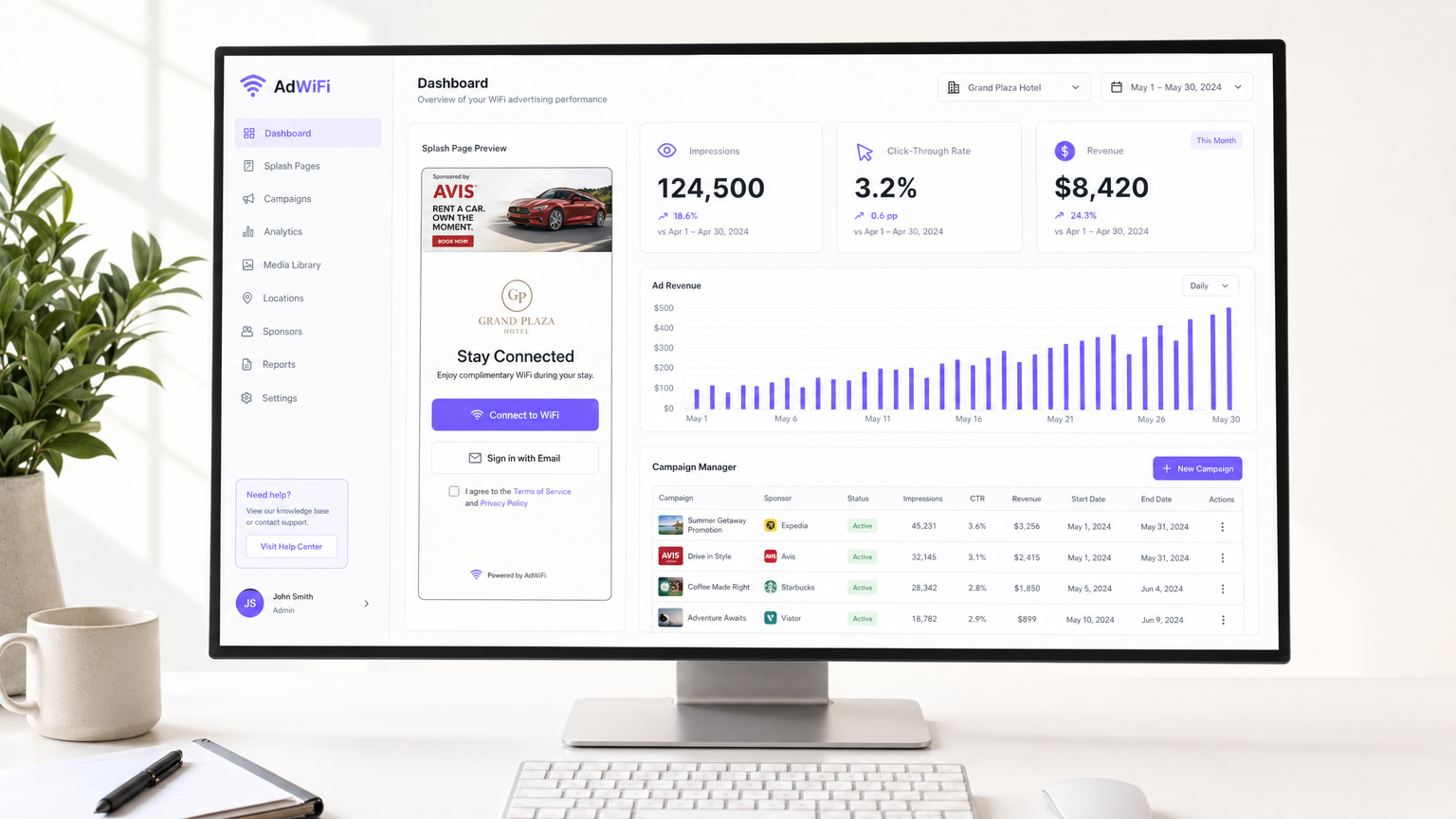
Captive Portal आणि ऑथेंटिकेशन फ्लोचा लाभ घेऊन, IT आणि मार्केटिंग टीम्स नेटवर्क ॲक्सेस देण्यापूर्वी वापरकर्त्यांना ब्रँड-सुरक्षित, संदर्भानुसार संबंधित जाहिराती देऊ शकतात. हे दस्तऐवज प्राथमिक महसूल मॉडेल्स, वितरणासाठी आवश्यक असलेली अंतर्निहित तांत्रिक आर्किटेक्चर आणि विद्यमान नेटवर्क हार्डवेअर आणि Guest WiFi प्लॅटफॉर्मसह एकत्रीकरण बिंदूंचे तपशील देतो.
तांत्रिक सखोल अभ्यास: आर्किटेक्चर आणि वितरण
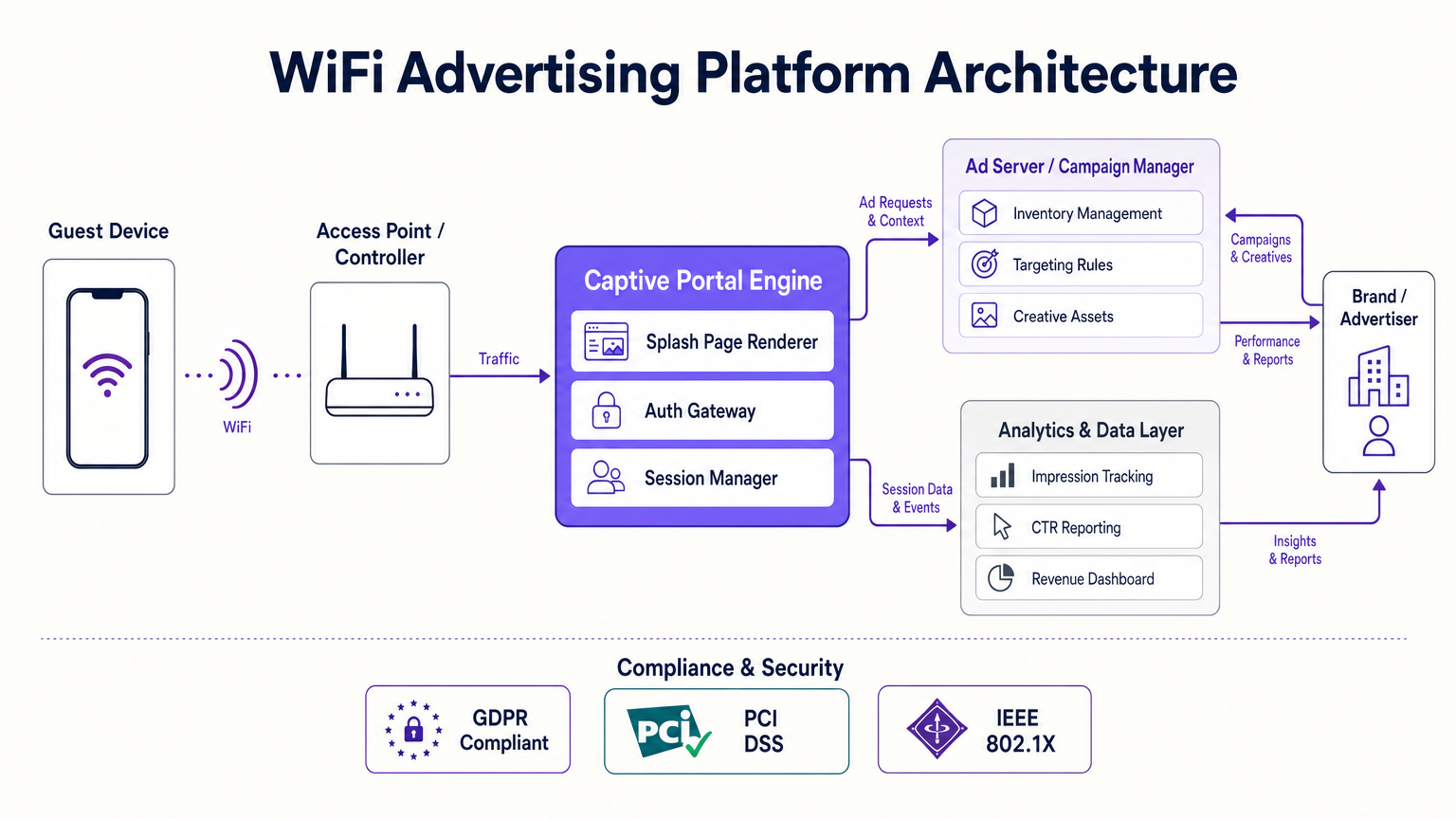
WiFi जाहिरातींसाठीची मुख्य यंत्रणा वायरलेस LAN कंट्रोलर (WLC) किंवा क्लाउड-व्यवस्थापित ॲक्सेस पॉइंट्ससह एकत्रित केलेल्या मजबूत Captive Portal इंजिनवर अवलंबून असते. आर्किटेक्चरने वापरकर्त्याच्या प्रवासात अस्वीकार्य विलंब न आणता अखंड पुनर्निर्देशन, सुरक्षित प्रमाणीकरण आणि डायनॅमिक सामग्री वितरणास समर्थन दिले पाहिजे.
प्रमाणीकरण प्रवाह
- संलग्नता: गेस्ट डिव्हाइस ओपन SSID शी संलग्न होते.
- पुनर्निर्देशन: नेटवर्क इन्फ्रास्ट्रक्चर प्रारंभिक HTTP/HTTPS विनंतीला अडवते आणि RADIUS किंवा API एकत्रीकरणाद्वारे क्लायंटला Captive Portal च्या स्प्लॅश पेजवर पुनर्निर्देशित करते.
- सामग्री वितरण: स्प्लॅश पेज रेंडरर लक्ष्यीकरण नियमांनुसार (स्थान, दिवसाची वेळ, डिव्हाइस प्रकार) योग्य क्रिएटिव्ह ॲसेट (उदा. प्रायोजित बॅनर किंवा पूर्ण-स्क्रीन व्हिडिओ) पुनर्प्राप्त करण्यासाठी ॲड सर्व्हर किंवा कॅम्पेन मॅनेजरला क्वेरी करतो.
- प्रमाणीकरण: वापरकर्ता जाहिरातीशी संवाद साधतो आणि प्रमाणीकरण करतो (ईमेल, सोशल लॉगिन किंवा SMS द्वारे).
- अधिकृतीकरण: प्लॅटफॉर्म RADIUS Access-Accept द्वारे सत्राला अधिकृत करतो, डिव्हाइसला इंटरनेट ॲक्सेस देतो.
इन्फ्रास्ट्रक्चर आवश्यकता
प्रोग्रामॅटिक किंवा थेट-विक्री जाहिरात मॉडेलला समर्थन देण्यासाठी, अंतर्निहित नेटवर्क मजबूत असणे आवश्यक आहे. उच्च-रिझोल्यूशन मीडिया किंवा व्हिडिओ जाहिराती देण्यासाठी एजवर पुरेसा बँडविड्थ आवश्यक आहे. शिवाय, जलद पेज लोड वेळा सुनिश्चित करण्यासाठी Captive Portal उच्च उपलब्ध, जागतिक स्तरावर वितरित CDN वर होस्ट केले पाहिजे. हळू स्प्लॅश पेजेसमुळे उच्च त्याग दर (abandonment rates) होतात, ज्यामुळे जाहिरात इंप्रेशन्स आणि महसुलावर थेट परिणाम होतो.
एका सर्वसमावेशक WiFi Analytics प्लॅटफॉर्मसह एकत्रीकरण महत्त्वाचे आहे. प्लॅटफॉर्मने फ्रिक्वेन्सी कॅपिंग, इंप्रेशन ट्रॅकिंग आणि अनुपालन (GDPR, CCPA) यांसारख्या जटिल लॉजिकला हाताळले पाहिजे, ज्यामुळे IT टीमवर वैयक्तिक जाहिरात मोहिमा व्यवस्थापित करण्याचा भार पडणार नाही.
अंमलबजावणी मार्गदर्शक: महसूल मॉडेल्स
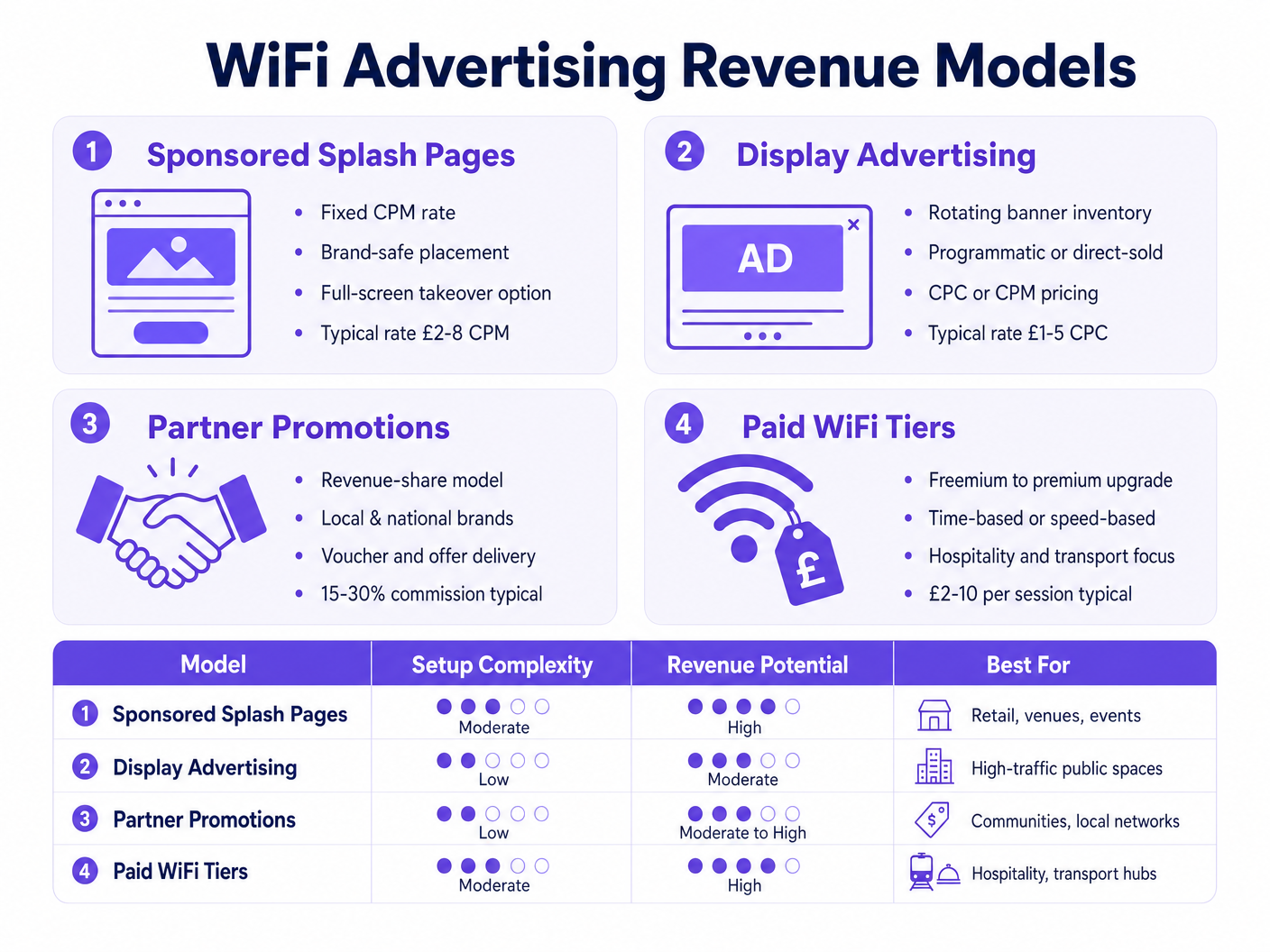
गेस्ट नेटवर्कमधून महसूल मिळवण्यासाठी चार प्राथमिक मॉडेल्स आहेत. इष्टतम मिश्रण ठिकाणाचा प्रकार, पादचारी संख्या आणि वापरकर्ता बेसच्या लोकसंख्याशास्त्रीय प्रोफाइलवर अवलंबून असते.
1. प्रायोजित स्प्लॅश पेजेस
हे सर्वात सोपे आणि ब्रँड-सुरक्षित मॉडेल आहे. एकच प्रायोजक परिभाषित कालावधीसाठी किंवा निश्चित संख्येच्या इंप्रेशन्ससाठी लॉगिन अनुभवाचा 'मालक' असतो. प्रायोजकाचे ब्रँडिंग स्प्लॅश पेज डिझाइनमध्ये समाकलित केले जाते, ज्यासाठी वापरकर्त्याला कनेक्ट करण्यापूर्वी संदेश पाहणे किंवा लिंकवर क्लिक करणे आवश्यक असते.
- किंमत मॉडेल: निश्चित CPM (Cost Per Mille) किंवा एक निश्चित प्रायोजकत्व शुल्क.
- यासाठी सर्वोत्तम: मोठे कार्यक्रम, स्टेडियम आणि प्रमुख रिटेल ठिकाणे जिथे उच्च दृश्यमानता (visibility) सुनिश्चित केली जाते.
2. डिस्प्ले जाहिरात
हे मॉडेल स्प्लॅश पेज किंवा प्रमाणीकरणानंतरच्या यशस्वी पेजमध्ये एम्बेड केलेल्या मानक IAB बॅनर फॉरमॅटचा (उदा. 300x250 आयत किंवा 728x90 लीडरबोर्ड) वापर करते. इन्व्हेंटरी स्थानिक व्यवसायांना थेट विकली जाऊ शकते किंवा ॲड एक्सचेंजेसद्वारे प्रोग्रामॅटिकरित्या भरली जाऊ शकते.
- किंमत मॉडेल: CPC (Cost Per Click) किंवा CPM.
- यासाठी सर्वोत्तम: उच्च-ट्रॅफिक सार्वजनिक जागा आणि विविध वापरकर्ता लोकसंख्या असलेल्या वाहतूक केंद्रांसाठी.
3. भागीदार जाहिराती आणि महसूल वाटणी
Retail आणि Hospitality वातावरणात विशेषतः प्रभावी असलेले हे मॉडेल, लक्ष्यित ऑफर देण्यासाठी भाडेकरू किंवा स्थानिक व्यवसायांशी भागीदारी करते. उदाहरणार्थ, एक शॉपिंग सेंटर ठिकाणाच्या आत असलेल्या कॉफी शॉपसाठी 20% सूटचे व्हाउचर देऊ शकते.
- किंमत मॉडेल: रिडीम केलेल्या व्हाउचरवर महसूल वाटणी किंवा पादचारी संख्या वाढवण्यासाठी निश्चित शुल्क.
- यासाठी सर्वोत्तम: एकाच छताखाली अनेक भिन्न व्यावसायिक संस्था असलेल्या वातावरणासाठी.
4. सशुल्क WiFi टियर्स (फ्रीमियम)
मूलभूत ॲक्सेस विनामूल्य (कदाचित जाहिरात-समर्थित किंवा स्पीड-कॅप केलेले) दिले जात असताना, वापरकर्ते शुल्क भरून प्रीमियम टियरमध्ये अपग्रेड करू शकतात. हा टियर उच्च बँडविड्थ, स्ट्रीमिंग सेवांना अप्रतिबंधित ॲक्सेस किंवा जास्त सत्राचा कालावधी प्रदान करतो.
- किंमत मॉडेल: प्रति-सत्र किंवा वेळ-आधारित शुल्क (उदा. 24 तासांसाठी £5).
- यासाठी सर्वोत्तम: Transport (विमानतळ, ट्रेन) आणि हॉस्पिटॅलिटी (हॉटेल) जिथे वापरकर्त्यांना बँडविड्थ-केंद्रित मीडिया वापरण्याची उच्च इच्छा असते.
डिप्लॉयमेंटसाठी सर्वोत्तम पद्धती
यशस्वी मॉनेटायझेशनसाठी महसूल निर्मिती आणि वापरकर्ता अनुभव यांच्यात संतुलन राखणे आवश्यक आहे. अति-आक्रमक जाहिरात धोरण वापरकर्त्यांना कनेक्ट होण्यापासून परावृत्त करेल, ज्यामुळे एकूण लक्ष्यित प्रेक्षक कमी होतील.
- पेज लोड गतीला प्राधान्य द्या: सर्व क्रिएटिव्ह ॲसेट्स ऑप्टिमाइझ केलेले असल्याची खात्री करा. 3-5 सेकंदांपेक्षा जास्त वेळ घेणाऱ्या स्प्लॅश पेजमध्ये लक्षणीय घट दिसून येईल. वापरा lहलके HTML5 आणि प्रतिमा संकुचित करा.
- संदर्भात्मक प्रासंगिकता: तुमच्याकडे असलेल्या डेटाचा लाभ घ्या. जर एखादा वापरकर्ता स्पोर्ट्स स्टेडियममध्ये कनेक्ट करत असेल, तर इव्हेंट किंवा स्थानिक प्रायोजकांशी संबंधित जाहिराती दाखवा. सामान्य, लक्ष्य नसलेल्या जाहिरातींचा सहभाग दर कमी असतो.
- स्पष्ट मूल्य विनिमय: वापरकर्त्याला हे समजले पाहिजे की जाहिरात पाहण्याच्या किंवा मूलभूत लोकसंख्याशास्त्रीय डेटा प्रदान करण्याच्या बदल्यात त्यांना एक मौल्यवान सेवा (मोफत WiFi) मिळत आहे. विश्वास टिकवून ठेवण्यासाठी पारदर्शकता महत्त्वाची आहे.
- A/B चाचणी: विविध स्प्लॅश पेज लेआउट्स, जाहिरात स्वरूप आणि कृतीसाठी आवाहन यांची सतत चाचणी करा. बटणाच्या स्थानामध्ये किंवा जाहिरात युनिटच्या आकारात केलेला एक छोटासा बदल CTR (क्लिक-थ्रू रेट) वर लक्षणीय परिणाम करू शकतो.
- अखंड एकीकरण: जाहिरात प्लॅटफॉर्म तुमच्या विद्यमान नेटवर्क हार्डवेअरसह सहजपणे एकत्रित होतो याची खात्री करा. मोठ्या इस्टेटसाठी, मोठ्या क्षेत्रात किंवा मल्टी-साइट इस्टेटमध्ये WiFi कसे सेट करावे या आमच्या मार्गदर्शकाचा संदर्भ घ्या.
समस्यानिवारण आणि जोखीम कमी करणे
जाहिरात-समर्थित नेटवर्क तैनात केल्याने विशिष्ट धोके निर्माण होतात जे डिझाइन टप्प्यात कमी केले पाहिजेत.
अनुपालन आणि डेटा गोपनीयता
लक्ष्यित जाहिरातींसाठी वापरकर्ता डेटा कॅप्चर करताना, GDPR आणि CCPA सारख्या नियमांचे पालन करणे अनिवार्य आहे. Captive Portal ने स्पष्ट, संदिग्ध नसलेल्या संमती यंत्रणा सादर केल्या पाहिजेत. वापरकर्त्यांनी मार्केटिंग संप्रेषणांसाठी सक्रियपणे निवड केली पाहिजे आणि प्लॅटफॉर्मने वापरकर्त्यांना डेटा हटविण्याची विनंती करण्यासाठी एक सोपा मार्ग प्रदान केला पाहिजे. हे योग्यरित्या व्यवस्थापित करण्यात अयशस्वी झाल्यास संस्थेला महत्त्वपूर्ण कायदेशीर आणि आर्थिक धोका निर्माण होतो.
नेटवर्कची गर्दी आणि "वॉल्ड गार्डन"
जर जाहिरात सर्व्हर किंवा क्रिएटिव्ह मालमत्ता होस्ट करणार्या CDN मध्ये डाउनटाइम आला, तर वापरकर्ते प्रमाणीकरण करू शकणार नाहीत, ज्यामुळे अतिथी नेटवर्क प्रभावीपणे ऑफलाइन होईल. हे कमी करण्यासाठी, वॉल्ड गार्डन (प्रमाणीकरणापूर्वी प्रवेशयोग्य IP पत्ते आणि डोमेनची सूची) काळजीपूर्वक कॉन्फिगर करा. Captive Portal व्यवस्थितपणे डिग्रेड होऊ शकते याची खात्री करा—जर जाहिरात निर्दिष्ट वेळेत लोड होण्यास अयशस्वी झाली, तरीही वापरकर्त्याला प्रमाणीकरण चरणातून पुढे जाऊ दिले पाहिजे.
सुरक्षा विचार
क्लायंट डिव्हाइस, Captive Portal आणि जाहिरात सर्व्हरमधील सर्व रहदारी HTTPS द्वारे एन्क्रिप्टेड असल्याची खात्री करा. हे मॅन-इन-द-मिडल हल्ले प्रतिबंधित करते आणि प्रमाणीकरण प्रक्रियेची अखंडता सुनिश्चित करते. आरोग्यसेवेसारख्या उच्च सुरक्षिततेची आवश्यकता असलेल्या वातावरणासाठी, हॉस्पिटल्समधील WiFi: सुरक्षित क्लिनिकल नेटवर्कसाठी मार्गदर्शक मध्ये चर्चा केलेल्या परिणामांचा विचार करा.
ROI आणि व्यवसायावर परिणाम
WiFi जाहिरातीचे अंतिम ध्येय म्हणजे नेटवर्क इन्फ्रास्ट्रक्चरच्या एकूण मालकी खर्चाची (TCO) भरपाई करणे. तथापि, अप्रत्यक्ष फायदे अनेकदा थेट जाहिरात महसुलापेक्षा जास्त असतात.
वापरकर्त्यांना प्रमाणीकरणासाठी प्रोत्साहित करून, ठिकाण एक मौल्यवान फर्स्ट-पार्टी डेटा मालमत्ता तयार करते. हा CRM डेटाबेस त्यानंतरच्या ईमेल मार्केटिंग, लॉयल्टी प्रोग्राम्स आणि ऑपरेशनल विश्लेषणासाठी वापरला जाऊ शकतो. उदाहरणार्थ, थांबण्याचा वेळ आणि परत येण्याचे दर समजून घेणे—कदाचित इनडोअर पोझिशनिंग सिस्टम: UWB, BLE, आणि WiFi मार्गदर्शक द्वारे वाढवलेले—भाडेपट्ट्याच्या निर्णयांना, कर्मचाऱ्यांच्या पातळीला आणि एकूण ठिकाणाच्या धोरणाला माहिती देणारे अंतर्दृष्टी प्रदान करते.
ROI ची गणना करताना, थेट CPM/CPC महसूल आणि प्राप्त झालेल्या ग्राहक प्रोफाइलचे मूल्य दोन्ही विचारात घ्या. एक चांगल्या प्रकारे अंमलात आणलेली WiFi जाहिरात धोरण नेटवर्कला निष्क्रिय उपयुक्ततेतून संस्थेच्या व्यावसायिक इंजिनचा एक सक्रिय घटक बनवते.
महत्त्वाच्या संज्ञा आणि व्याख्या
Captive Portal
A web page that the user of a public-access network is obliged to view and interact with before access is granted.
This is the primary real estate for delivering WiFi advertising and capturing user consent.
Walled Garden
A restricted environment that controls the user's access to web content and services. In WiFi, it's the list of domains a user can access before authenticating.
Ad servers, CDNs hosting creative assets, and privacy policy pages must be included in the walled garden to function correctly during the login phase.
CPM (Cost Per Mille)
An advertising metric representing the cost an advertiser pays for one thousand views or impressions of an advertisement.
The standard pricing model for sponsored splash pages and brand awareness campaigns on guest networks.
RADIUS (Remote Authentication Dial-In User Service)
A networking protocol that provides centralised Authentication, Authorization, and Accounting (AAA) management.
Used by the network controller to communicate with the captive portal platform to authorise the user's session after they have viewed the ad.
Frequency Capping
A feature that restricts the number of times a specific user is shown a particular advertisement within a given timeframe.
Essential for preventing ad fatigue and ensuring a positive user experience, especially for returning visitors.
First-Party Data
Information a company collects directly from its customers and owns.
The demographic and behavioural data captured during the WiFi authentication process, which is often more valuable long-term than the immediate ad revenue.
Splash Page
The initial landing page presented to a user when connecting to a guest WiFi network.
The digital storefront for the venue, where branding, terms of service, and advertisements are displayed.
Programmatic Advertising
The automated buying and selling of online advertising space in real-time.
Allows venues to fill unsold display ad inventory on their splash pages automatically via ad exchanges.
केस स्टडीज
A 500-room resort hotel currently offers free, unmanaged guest WiFi. They are experiencing high bandwidth costs due to guests streaming video and want to introduce a monetisation strategy without alienating their core clientele.
Implement a tiered bandwidth model (Freemium). The basic tier offers free access capped at 2Mbps, sufficient for web browsing and email. This tier is supported by a sponsored splash page (e.g., a local tour operator) upon login. A premium tier is offered at £5 per 24 hours, providing uncapped speeds (up to 20Mbps) suitable for 4K streaming and VPN access. The premium tier bypasses the ad experience entirely.
A large shopping mall with 150 retail units wants to use its guest WiFi to drive footfall to specific stores and generate revenue from the tenants.
Deploy a Partner Promotion model. The IT team configures the captive portal to display a rotating carousel of digital vouchers upon successful authentication. Tenants pay a monthly subscription fee to feature their offers on the portal. The platform tracks the number of times an offer is viewed and clipped (saved to the user's device).
परिस्थिती विश्लेषण
Q1. Your marketing team wants to implement a full-screen video ad on the splash page that users must watch for 15 seconds before connecting. Your network is currently running on older 802.11n access points in a high-density stadium environment. What is the primary technical risk?
💡 संकेत:Consider the impact of large file sizes on legacy wireless infrastructure.
शिफारस केलेला दृष्टिकोन दाखवा
The primary risk is network congestion and high abandonment rates. Delivering high-resolution video over legacy 802.11n APs in a high-density environment will likely cause the splash page to load very slowly or fail entirely. Users will abandon the login process, resulting in zero ad impressions and a poor guest experience. The recommendation is to use lightweight, static imagery or upgrade the infrastructure to 802.11ax (Wi-Fi 6) before deploying video assets.
Q2. A sponsor has purchased a 'Sponsored Splash Page' campaign for a major conference. During the event, users report that they are stuck on a blank white page after connecting to the WiFi and cannot access the internet. What is the most likely configuration error?
💡 संकेत:Think about how the captive portal fetches external resources before the user is authenticated.
शिफारस केलेला दृष्टिकोन दाखवा
The most likely error is an incorrectly configured Walled Garden. The ad server's domain or the CDN hosting the sponsor's creative assets has not been added to the Walled Garden list on the wireless controller. Therefore, the device cannot fetch the ad image before authentication, causing the splash page to hang. The solution is to add the required IP addresses or domains to the pre-authentication access list.
Q3. You are deploying a 'Partner Promotion' model where local retailers offer discounts on the splash page. How do you technically ensure that a user doesn't just disconnect and reconnect repeatedly to collect multiple different vouchers?
💡 संकेत:How does the platform identify a unique device across multiple sessions?
शिफारस केलेला दृष्टिकोन दाखवा
You must implement Frequency Capping within the campaign manager, relying on the device's MAC address (or the authenticated user profile if they have logged in previously) as the unique identifier. The platform must be configured to limit the number of times a specific campaign or voucher is shown to the same MAC address within a defined time period (e.g., once per 24 hours).




