

WiFi Advertising: Como Gerar Receita com Sua Rede de Convidados
Este guia de referência técnica detalha como as equipes de TI e operações corporativas podem monetizar sua infraestrutura de WiFi de convidados por meio de publicidade. Ele abrange modelos arquitetônicos, estratégias de implantação e estruturas de receita para splash pages patrocinadas, anúncios gráficos e níveis premium.
🎧 Ouça este Guia
Ver Transcrição
Resumo Executivo
Para locais corporativos — hotéis, redes de varejo, estádios e centros de transporte — fornecer WiFi de convidados não é mais um diferencial; é um requisito operacional básico. No entanto, os custos de infraestrutura, largura de banda e manutenção associados a implantações WLAN de alta densidade representam um gasto significativo de capital e operacional. Este guia descreve as estruturas técnicas e comerciais necessárias para transformar o WiFi de convidados de um centro de custo em um ativo gerador de receita por meio de publicidade direcionada e monetização de dados.
Ao aproveitar o captive portal e o fluxo de autenticação, as equipes de TI e marketing podem veicular anúncios seguros para a marca e contextualmente relevantes aos usuários antes de conceder acesso à rede. Este documento detalha os principais modelos de receita, a arquitetura técnica subjacente necessária para a entrega e os pontos de integração com o hardware de rede existente e as plataformas de Guest WiFi .
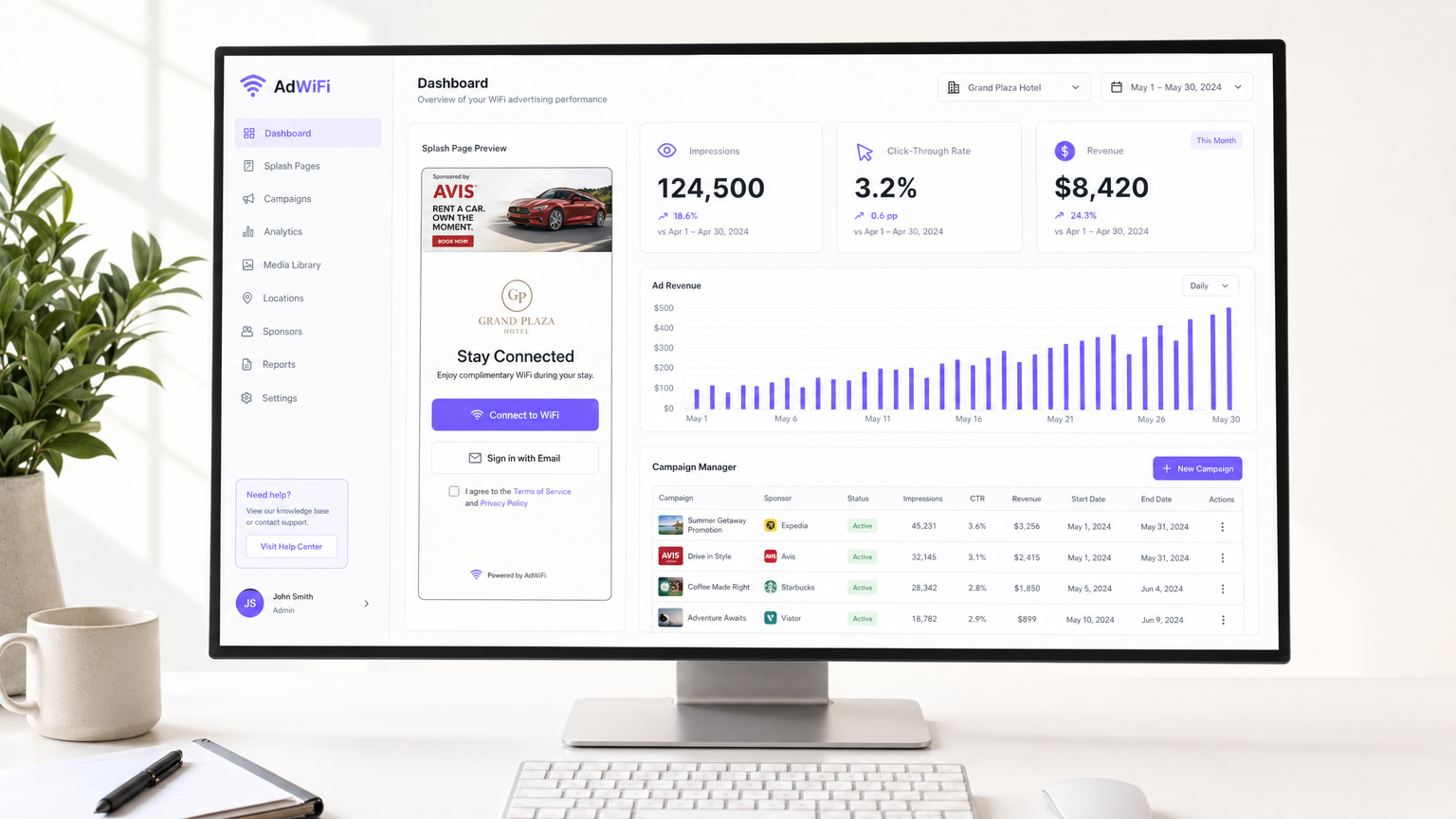
Análise Técnica Aprofundada: Arquitetura e Entrega
O mecanismo central para WiFi advertising depende de um robusto motor de captive portal integrado ao controlador de LAN sem fio (WLC) ou a pontos de acesso gerenciados na nuvem. A arquitetura deve suportar redirecionamento contínuo, autenticação segura e entrega dinâmica de conteúdo sem introduzir latência inaceitável na jornada do usuário.
O Fluxo de Autenticação
- Associação: O dispositivo do convidado se associa ao SSID aberto.
- Redirecionamento: A infraestrutura de rede intercepta a solicitação HTTP/HTTPS inicial e redireciona o cliente para a splash page do captive portal via RADIUS ou integração de API.
- Entrega de Conteúdo: O renderizador da splash page consulta o servidor de anúncios ou o gerente de campanha para recuperar o ativo criativo apropriado (por exemplo, um banner patrocinado ou vídeo em tela cheia) com base nas regras de segmentação (localização, hora do dia, tipo de dispositivo).
- Autenticação: O usuário interage com o anúncio e se autentica (via e-mail, login social ou SMS).
- Autorização: A plataforma autoriza a sessão via RADIUS Access-Accept, concedendo acesso à internet ao dispositivo.
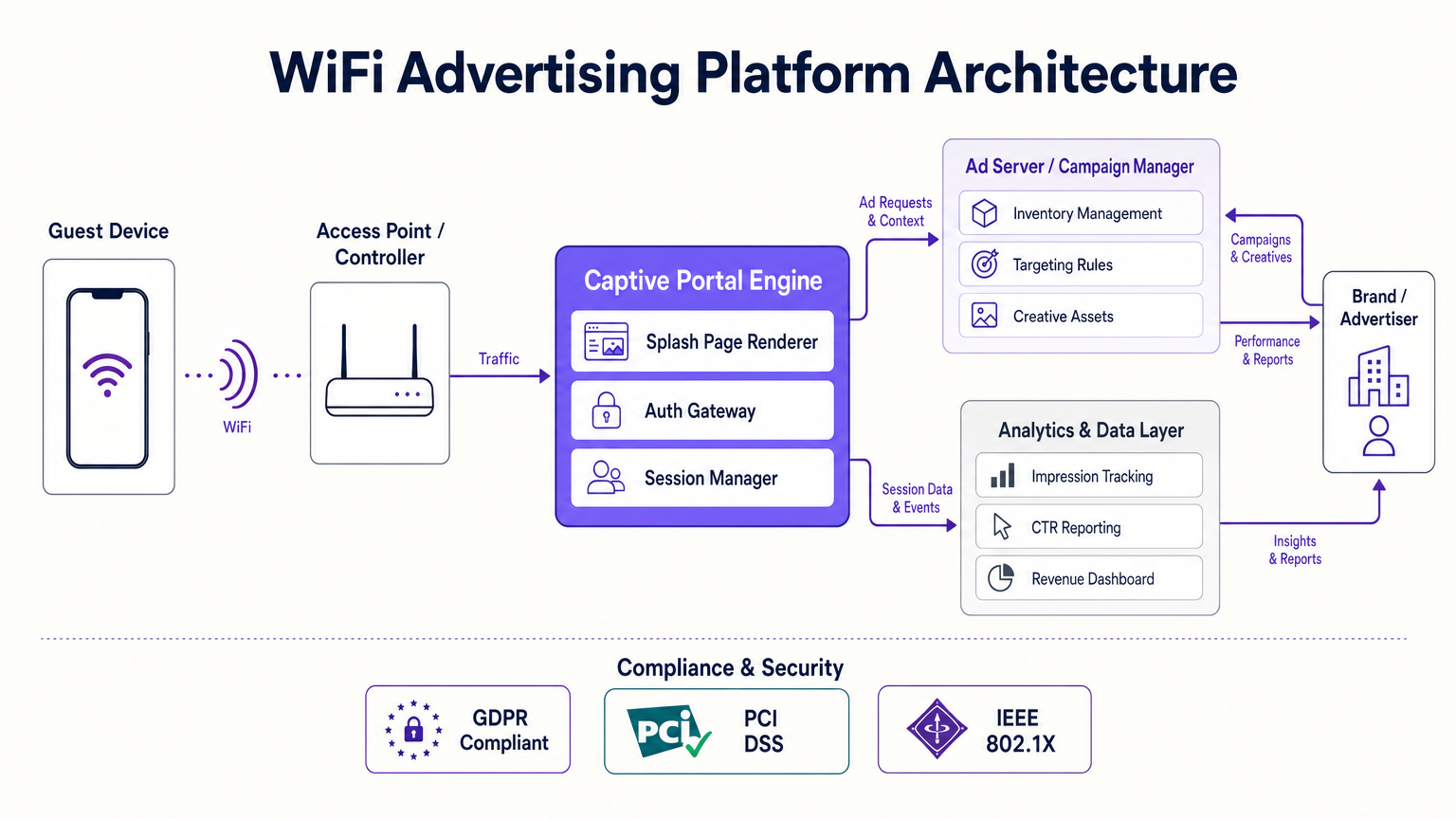
Requisitos de Infraestrutura
Para suportar um modelo de publicidade programática ou de venda direta, a rede subjacente deve ser robusta. A veiculação de mídia de alta resolução ou anúncios em vídeo requer largura de banda suficiente na borda. Além disso, o captive portal deve ser hospedado em uma CDN altamente disponível e globalmente distribuída para garantir tempos de carregamento de página rápidos. Splash pages lentas levam a altas taxas de abandono, impactando diretamente as impressões de anúncios e a receita.
A integração com uma plataforma abrangente de WiFi Analytics é crítica. A plataforma deve lidar com a lógica complexa de limitação de frequência, rastreamento de impressões e conformidade (GDPR, CCPA), garantindo que a equipe de TI não seja sobrecarregada com o gerenciamento de campanhas de anúncios individuais.
Guia de Implementação: Modelos de Receita
Existem quatro modelos principais para gerar receita a partir da rede de convidados. A combinação ideal depende do tipo de local, do fluxo de pessoas e do perfil demográfico da base de usuários.
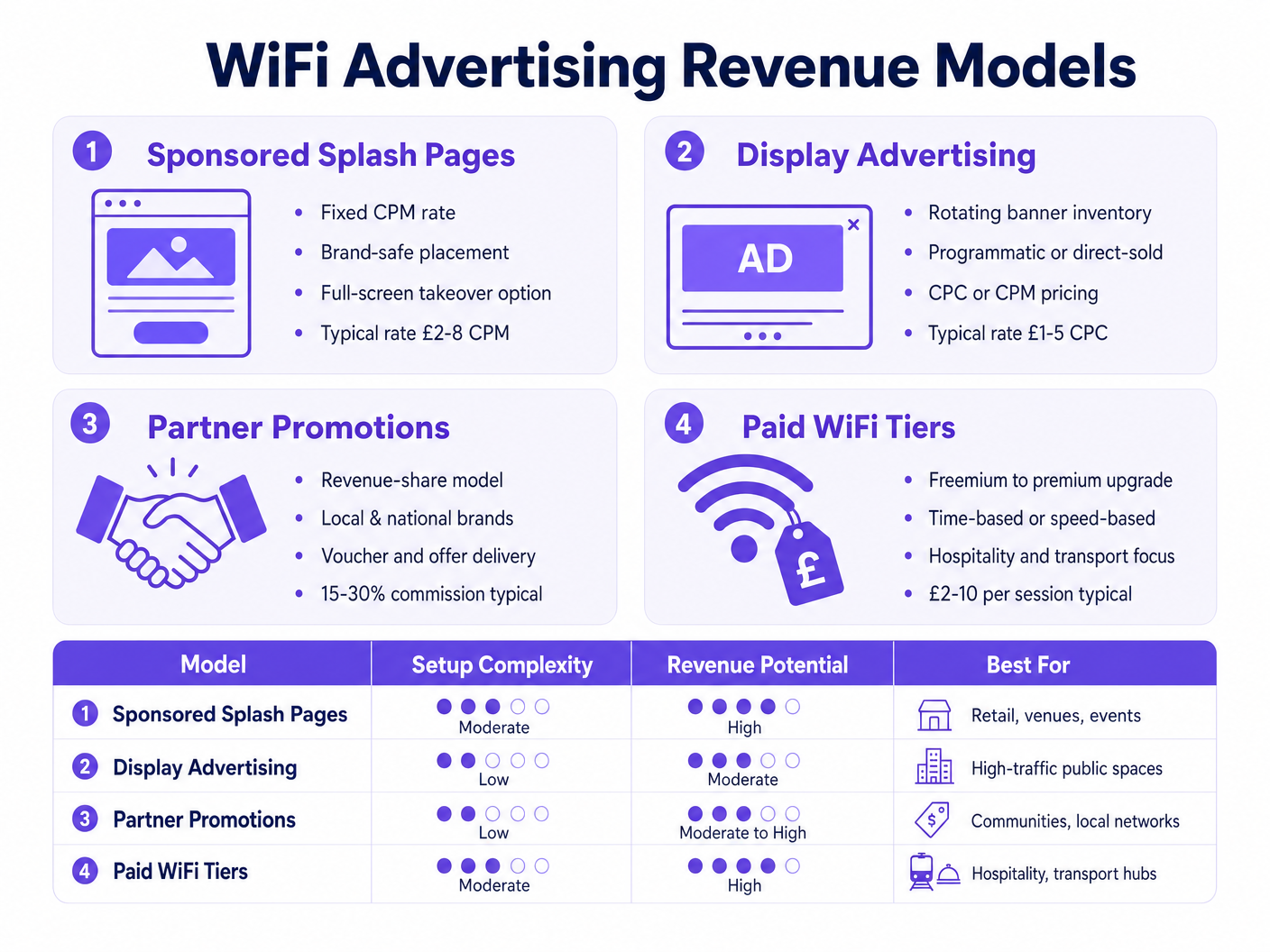
1. Splash Pages Patrocinadas
Este é o modelo mais direto e seguro para a marca. Um único patrocinador "possui" a experiência de login por um período definido ou um número fixo de impressões. A marca do patrocinador é integrada ao design da splash page, muitas vezes exigindo que o usuário visualize uma mensagem ou clique em um link antes de se conectar.
- Modelo de Precificação: CPM fixo (Custo Por Mil) ou uma taxa de patrocínio fixa.
- Melhor Para: Grandes eventos, estádios e lojas de varejo emblemáticas onde a alta visibilidade é garantida.
2. Publicidade Gráfica
Este modelo utiliza formatos de banner IAB padrão (por exemplo, retângulos 300x250 ou leaderboards 728x90) incorporados na splash page ou na página de sucesso pós-autenticação. O inventário pode ser vendido diretamente para empresas locais ou preenchido programaticamente via ad exchanges.
- Modelo de Precificação: CPC (Custo Por Clique) ou CPM.
- Melhor Para: Espaços públicos de alto tráfego e centros de transporte com demografias de usuários diversas.
3. Promoções de Parceiros e Compartilhamento de Receita
Particularmente eficaz em ambientes de Varejo e Hotelaria , este modelo envolve a parceria com inquilinos ou empresas locais para entregar ofertas direcionadas. Por exemplo, um shopping center pode oferecer um voucher de 20% de desconto para uma cafeteria localizada dentro do local.
- Modelo de Precificação: Compartilhamento de receita sobre vouchers resgatados ou uma taxa fixa para impulsionar o fluxo de pessoas.
- Melhor Para: Ambientes com múltiplas entidades comerciais distintas sob o mesmo teto.
4. Níveis de WiFi Pagos (Freemium)
Embora o acesso básico seja oferecido gratuitamente (talvez com suporte de anúncios ou com limite de velocidade), os usuários podem fazer upgrade para um nível premium mediante uma taxa. Este nível oferece maior largura de banda, acesso irrestrito a serviços de streaming ou durações de sessão mais longas.
- Modelo de Precificação: Taxa por sessão ou baseada em tempo (por exemplo, £5 por 24 horas).
- Melhor Para: Transporte (aeroportos, trens) e hotelaria (hotéis) onde os usuários têm alta intenção de consumir mídia que exige muita largura de banda.
Melhores Práticas para Implantação
A monetização bem-sucedida exige o equilíbrio entre a geração de receita e a experiência do usuário. Uma estratégia de anúncios excessivamente agressiva dissuadirá os usuários de se conectar, reduzindo o público total endereçável.
- Priorize a Velocidade de Carregamento da Página: Garanta que todos os ativos criativos sejam otimizados. Uma splash page que leva mais de 3-5 segundos para carregar terá uma queda significativa. Use lHTML5 leve e comprimir imagens.
- Relevância Contextual: Aproveite os dados que você possui. Se um usuário está se conectando em um estádio esportivo, exiba anúncios relevantes para o evento ou patrocinadores locais. Anúncios genéricos e não segmentados têm taxas de engajamento mais baixas.
- Troca de Valor Clara: O usuário deve entender que está recebendo um serviço valioso (WiFi gratuito) em troca de visualizar um anúncio ou fornecer dados demográficos básicos. A transparência é fundamental para manter a confiança.
- Teste A/B: Teste continuamente diferentes layouts de página inicial, formatos de anúncio e chamadas para ação. Uma pequena alteração no posicionamento do botão ou no tamanho da unidade de anúncio pode impactar significativamente a CTR (Taxa de Cliques).
- Integração Perfeita: Garanta que a plataforma de publicidade se integre perfeitamente com o hardware de rede existente. Para grandes propriedades, consulte nosso guia sobre Como Configurar WiFi em uma Grande Área ou Propriedade Multi-Site .
Solução de Problemas e Mitigação de Riscos
A implantação de uma rede com suporte a anúncios introduz riscos específicos que devem ser mitigados durante a fase de design.
Conformidade e Privacidade de Dados
Ao capturar dados do usuário para publicidade segmentada, a conformidade com regulamentações como GDPR e CCPA é inegociável. O captive portal deve apresentar mecanismos de consentimento claros e inequívocos. Os usuários devem optar ativamente por receber comunicações de marketing, e a plataforma deve fornecer uma maneira direta para os usuários solicitarem a exclusão de dados. A falha em gerenciar isso corretamente expõe a organização a riscos legais e financeiros significativos.
Congestionamento de Rede e o "Jardim Murado"
Se o servidor de anúncios ou a CDN que hospeda os ativos criativos sofrerem tempo de inatividade, os usuários podem não conseguir se autenticar, efetivamente tirando a rede de convidados do ar. Para mitigar isso, configure o jardim murado (a lista de endereços IP e domínios acessíveis antes da autenticação) cuidadosamente. Garanta que o captive portal possa degradar graciosamente — se o anúncio não carregar dentro de um tempo limite especificado, o usuário deve ser passado para a etapa de autenticação de qualquer forma.
Considerações de Segurança
Garanta que todo o tráfego entre o dispositivo cliente, o captive portal e o servidor de anúncios seja criptografado via HTTPS. Isso evita ataques man-in-the-middle e garante a integridade do processo de autenticação. Para ambientes que exigem maior segurança, como hospitais, considere as implicações discutidas em WiFi em Hospitais: Um Guia para Redes Clínicas Seguras .
ROI e Impacto nos Negócios
O objetivo final da publicidade WiFi é compensar o custo total de propriedade (TCO) da infraestrutura de rede. No entanto, os benefícios indiretos muitas vezes superam a receita direta de anúncios.
Ao incentivar os usuários a se autenticarem, o local constrói um valioso ativo de dados primários. Este banco de dados de CRM pode ser usado para marketing por e-mail subsequente, programas de fidelidade e análise operacional. Por exemplo, entender os tempos de permanência e as taxas de retorno — talvez aumentados por um Sistema de Posicionamento Interno: Guia UWB, BLE e WiFi — fornece insights que informam decisões de locação, níveis de pessoal e a estratégia geral do local.
Ao calcular o ROI, considere tanto a receita direta de CPM/CPC quanto o valor dos perfis de clientes adquiridos. Uma estratégia de publicidade WiFi bem executada transforma a rede de uma utilidade passiva em um componente ativo do motor comercial da organização.
Termos-Chave e Definições
Captive Portal
A web page that the user of a public-access network is obliged to view and interact with before access is granted.
This is the primary real estate for delivering WiFi advertising and capturing user consent.
Walled Garden
A restricted environment that controls the user's access to web content and services. In WiFi, it's the list of domains a user can access before authenticating.
Ad servers, CDNs hosting creative assets, and privacy policy pages must be included in the walled garden to function correctly during the login phase.
CPM (Cost Per Mille)
An advertising metric representing the cost an advertiser pays for one thousand views or impressions of an advertisement.
The standard pricing model for sponsored splash pages and brand awareness campaigns on guest networks.
RADIUS (Remote Authentication Dial-In User Service)
A networking protocol that provides centralised Authentication, Authorization, and Accounting (AAA) management.
Used by the network controller to communicate with the captive portal platform to authorise the user's session after they have viewed the ad.
Frequency Capping
A feature that restricts the number of times a specific user is shown a particular advertisement within a given timeframe.
Essential for preventing ad fatigue and ensuring a positive user experience, especially for returning visitors.
First-Party Data
Information a company collects directly from its customers and owns.
The demographic and behavioural data captured during the WiFi authentication process, which is often more valuable long-term than the immediate ad revenue.
Splash Page
The initial landing page presented to a user when connecting to a guest WiFi network.
The digital storefront for the venue, where branding, terms of service, and advertisements are displayed.
Programmatic Advertising
The automated buying and selling of online advertising space in real-time.
Allows venues to fill unsold display ad inventory on their splash pages automatically via ad exchanges.
Estudos de Caso
A 500-room resort hotel currently offers free, unmanaged guest WiFi. They are experiencing high bandwidth costs due to guests streaming video and want to introduce a monetisation strategy without alienating their core clientele.
Implement a tiered bandwidth model (Freemium). The basic tier offers free access capped at 2Mbps, sufficient for web browsing and email. This tier is supported by a sponsored splash page (e.g., a local tour operator) upon login. A premium tier is offered at £5 per 24 hours, providing uncapped speeds (up to 20Mbps) suitable for 4K streaming and VPN access. The premium tier bypasses the ad experience entirely.
A large shopping mall with 150 retail units wants to use its guest WiFi to drive footfall to specific stores and generate revenue from the tenants.
Deploy a Partner Promotion model. The IT team configures the captive portal to display a rotating carousel of digital vouchers upon successful authentication. Tenants pay a monthly subscription fee to feature their offers on the portal. The platform tracks the number of times an offer is viewed and clipped (saved to the user's device).
Análise de Cenário
Q1. Your marketing team wants to implement a full-screen video ad on the splash page that users must watch for 15 seconds before connecting. Your network is currently running on older 802.11n access points in a high-density stadium environment. What is the primary technical risk?
💡 Dica:Consider the impact of large file sizes on legacy wireless infrastructure.
Mostrar Abordagem Recomendada
The primary risk is network congestion and high abandonment rates. Delivering high-resolution video over legacy 802.11n APs in a high-density environment will likely cause the splash page to load very slowly or fail entirely. Users will abandon the login process, resulting in zero ad impressions and a poor guest experience. The recommendation is to use lightweight, static imagery or upgrade the infrastructure to 802.11ax (Wi-Fi 6) before deploying video assets.
Q2. A sponsor has purchased a 'Sponsored Splash Page' campaign for a major conference. During the event, users report that they are stuck on a blank white page after connecting to the WiFi and cannot access the internet. What is the most likely configuration error?
💡 Dica:Think about how the captive portal fetches external resources before the user is authenticated.
Mostrar Abordagem Recomendada
The most likely error is an incorrectly configured Walled Garden. The ad server's domain or the CDN hosting the sponsor's creative assets has not been added to the Walled Garden list on the wireless controller. Therefore, the device cannot fetch the ad image before authentication, causing the splash page to hang. The solution is to add the required IP addresses or domains to the pre-authentication access list.
Q3. You are deploying a 'Partner Promotion' model where local retailers offer discounts on the splash page. How do you technically ensure that a user doesn't just disconnect and reconnect repeatedly to collect multiple different vouchers?
💡 Dica:How does the platform identify a unique device across multiple sessions?
Mostrar Abordagem Recomendada
You must implement Frequency Capping within the campaign manager, relying on the device's MAC address (or the authenticated user profile if they have logged in previously) as the unique identifier. The platform must be configured to limit the number of times a specific campaign or voucher is shown to the same MAC address within a defined time period (e.g., once per 24 hours).




