

WiFi Advertising: Come Generare Entrate dalla Tua Rete Ospiti
Questa guida tecnica di riferimento descrive come i team IT e operativi aziendali possono monetizzare la loro infrastruttura WiFi per ospiti tramite la pubblicità. Copre modelli architetturali, strategie di implementazione e framework di ricavo per splash page sponsorizzate, annunci display e livelli premium.
🎧 Ascolta questa guida
Visualizza trascrizione
Riepilogo Esecutivo
Per le sedi aziendali—hotel, catene di negozi, stadi e hub di trasporto—fornire WiFi per ospiti non è più un elemento distintivo; è un requisito operativo di base. Tuttavia, i costi di infrastruttura, larghezza di banda e manutenzione associati alle implementazioni WLAN ad alta densità rappresentano una spesa significativa in termini di capitale e operatività. Questa guida delinea i framework tecnici e commerciali necessari per trasformare il WiFi per ospiti da centro di costo a risorsa generatrice di entrate attraverso pubblicità mirata e monetizzazione dei dati.
Sfruttando il captive portal e il flusso di autenticazione, i team IT e di marketing possono servire annunci pubblicitari sicuri per il brand e contestualmente pertinenti agli utenti prima di concedere l'accesso alla rete. Questo documento descrive i principali modelli di ricavo, l'architettura tecnica sottostante necessaria per la consegna e i punti di integrazione con l'hardware di rete esistente e le piattaforme Guest WiFi .
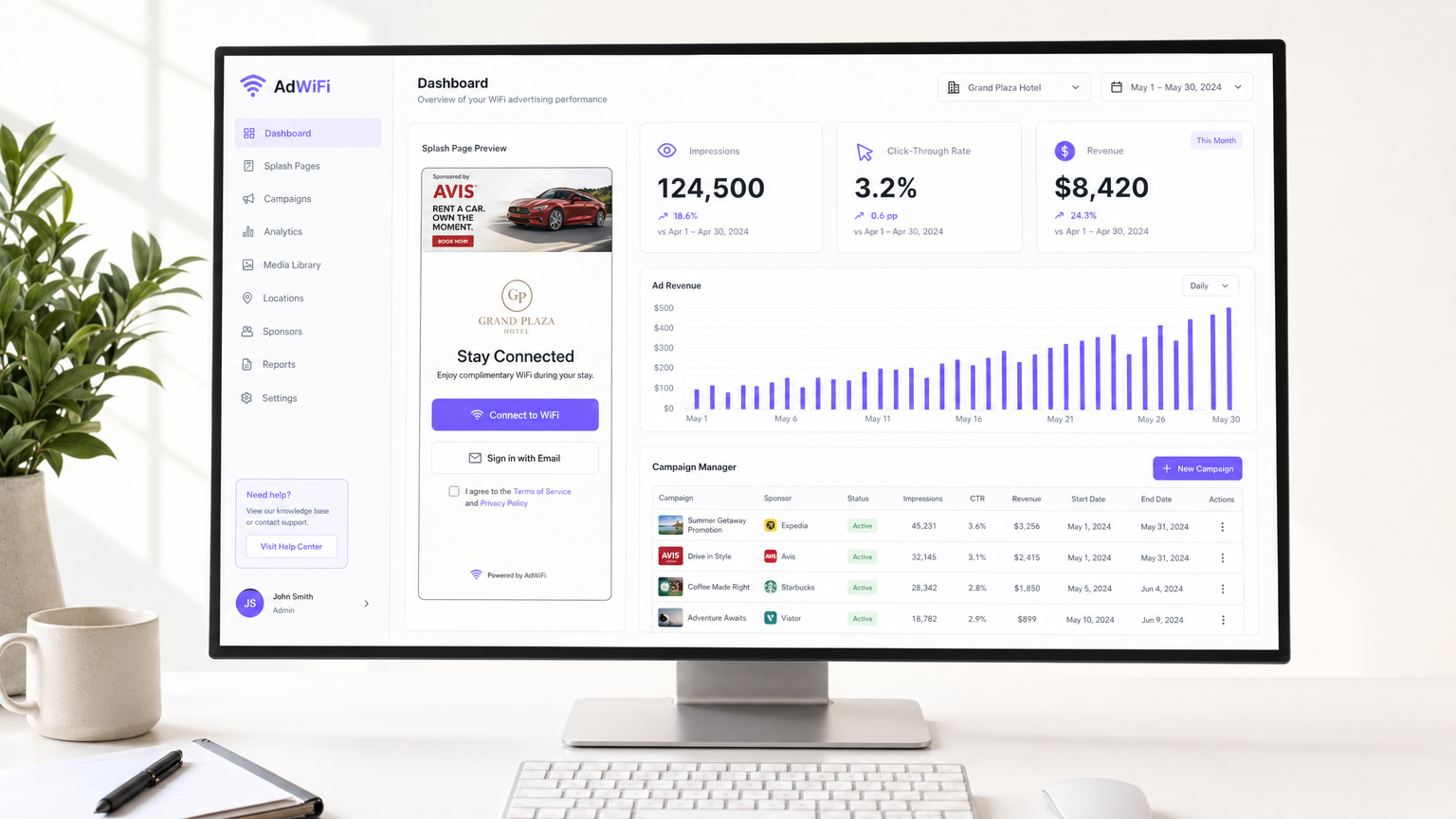
Approfondimento Tecnico: Architettura e Consegna
Il meccanismo centrale per il WiFi advertising si basa su un robusto motore di captive portal integrato con il controller LAN wireless (WLC) o con access point gestiti tramite cloud. L'architettura deve supportare il reindirizzamento senza interruzioni, l'autenticazione sicura e la consegna dinamica dei contenuti senza introdurre latenza inaccettabile nel percorso dell'utente.
Il Flusso di Autenticazione
- Associazione: Il dispositivo ospite si associa all'SSID aperto.
- Reindirizzamento: L'infrastruttura di rete intercetta la richiesta HTTP/HTTPS iniziale e reindirizza il client alla splash page del captive portal tramite integrazione RADIUS o API.
- Consegna dei Contenuti: Il renderer della splash page interroga l'ad server o il gestore della campagna per recuperare l'asset creativo appropriato (ad esempio, un banner sponsorizzato o un video a schermo intero) basato su regole di targeting (posizione, ora del giorno, tipo di dispositivo).
- Autenticazione: L'utente interagisce con l'annuncio e si autentica (tramite email, social login o SMS).
- Autorizzazione: La piattaforma autorizza la sessione tramite RADIUS Access-Accept, concedendo al dispositivo l'accesso a internet.
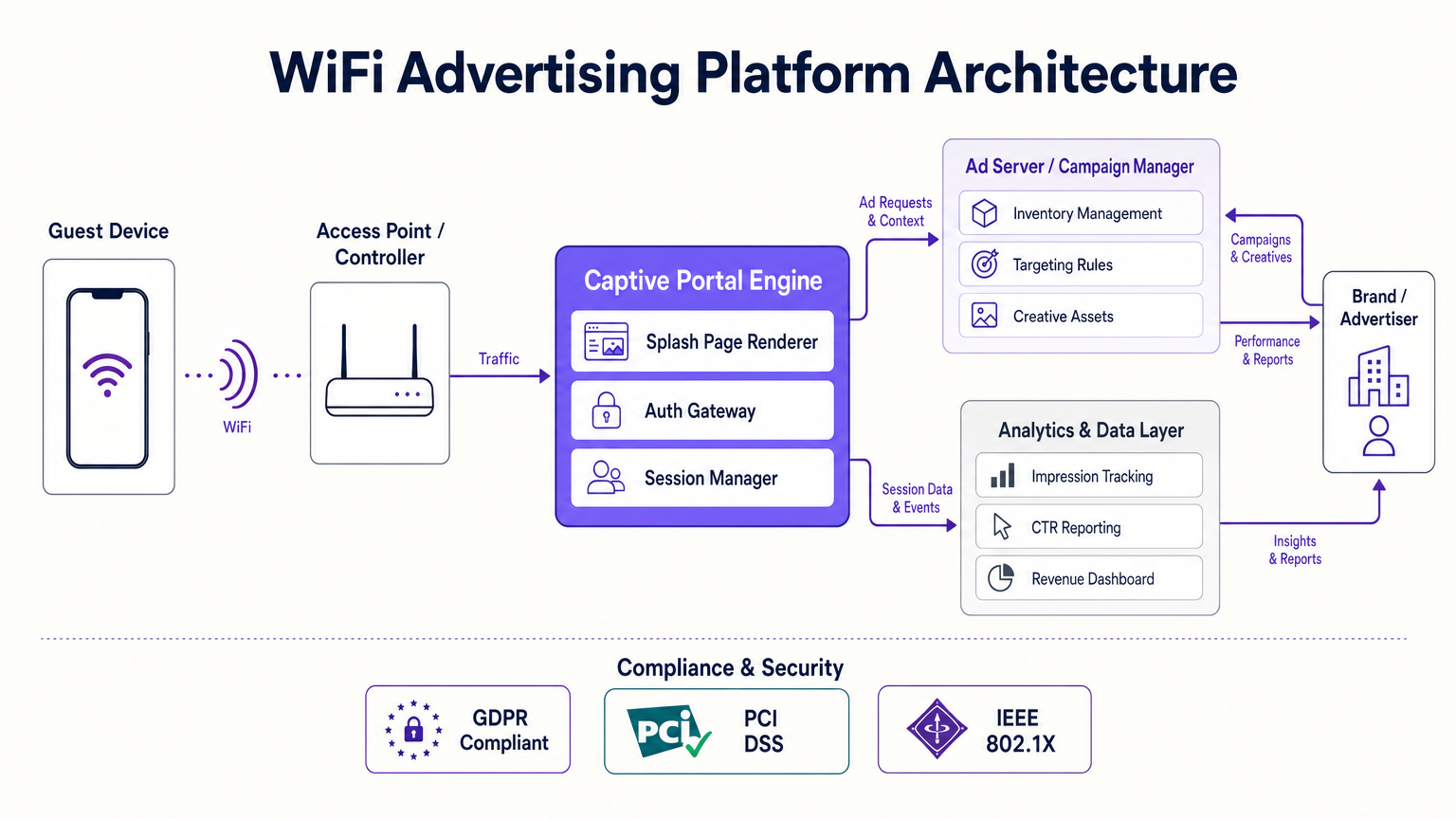
Requisiti di Infrastruttura
Per supportare un modello pubblicitario programmatico o a vendita diretta, la rete sottostante deve essere robusta. La pubblicazione di media ad alta risoluzione o annunci video richiede una larghezza di banda sufficiente al bordo. Inoltre, il captive portal deve essere ospitato su una CDN altamente disponibile e distribuita globalmente per garantire tempi di caricamento rapidi delle pagine. Splash page lente portano a tassi di abbandono elevati, influenzando direttamente le impressioni degli annunci e le entrate.
L'integrazione con una piattaforma WiFi Analytics completa è fondamentale. La piattaforma deve gestire la logica complessa di frequency capping, tracciamento delle impressioni e conformità (GDPR, CCPA), assicurando che il team IT non sia gravato dalla gestione di singole campagne pubblicitarie.
Guida all'Implementazione: Modelli di Ricavo
Esistono quattro modelli principali per generare entrate dalla rete ospiti. Il mix ottimale dipende dal tipo di sede, dal flusso di visitatori e dal profilo demografico della base utenti.
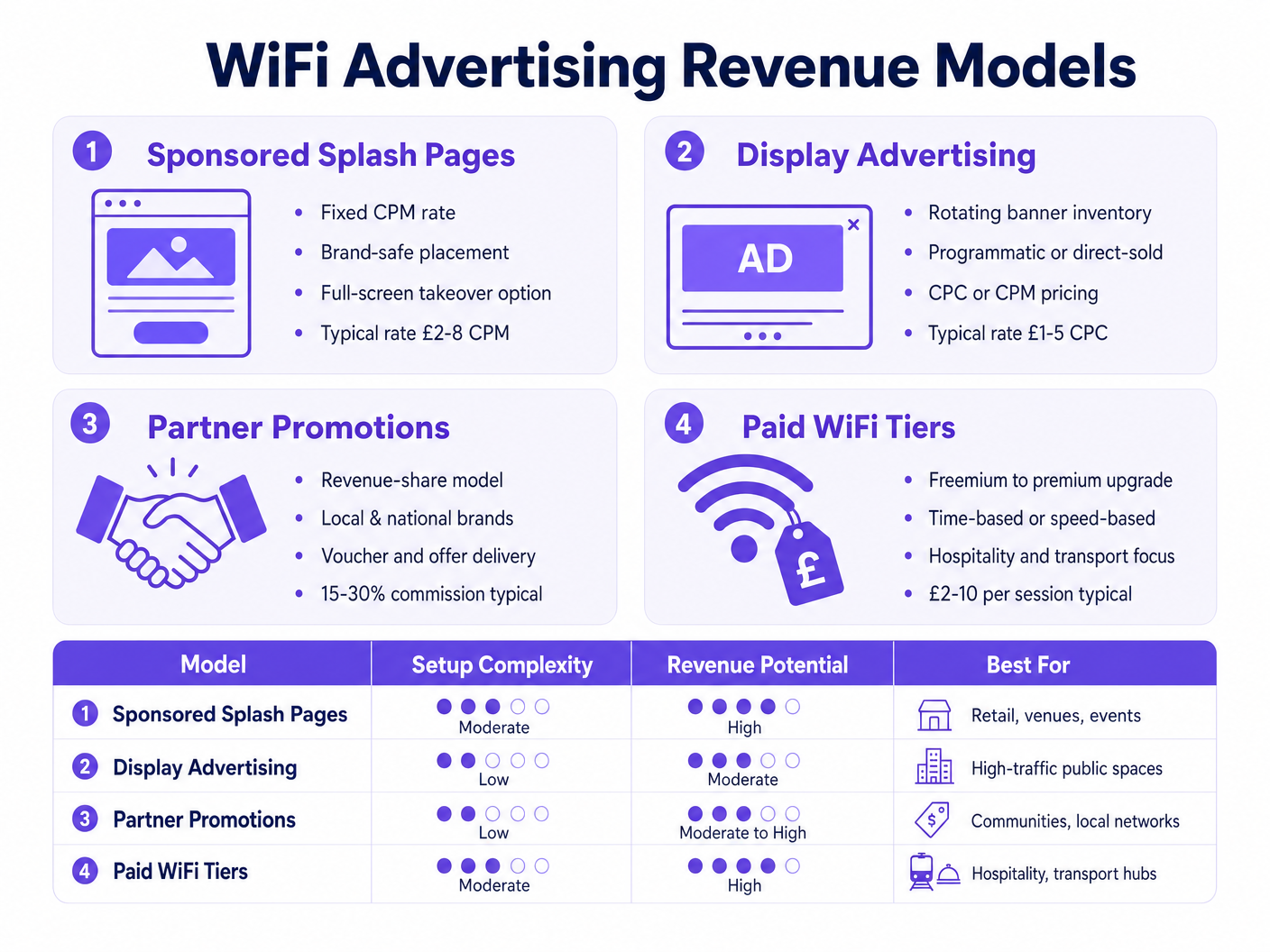
1. Splash Page Sponsorizzate
Questo è il modello più semplice e sicuro per il brand. Un singolo sponsor "possiede" l'esperienza di login per un periodo definito o un numero prestabilito di impressioni. Il branding dello sponsor è integrato nel design della splash page, spesso richiedendo all'utente di visualizzare un messaggio o cliccare su un link prima di connettersi.
- Modello di Prezzo: CPM fisso (Costo Per Mille) o una tariffa di sponsorizzazione fissa.
- Ideale Per: Grandi eventi, stadi e punti vendita al dettaglio di punta dove è garantita un'alta visibilità.
2. Pubblicità Display
Questo modello utilizza formati banner IAB standard (ad esempio, rettangoli 300x250 o leaderboard 728x90) incorporati nella splash page o nella pagina di successo post-autenticazione. L'inventario può essere venduto direttamente alle attività commerciali locali o riempito programmaticamente tramite scambi di annunci.
- Modello di Prezzo: CPC (Costo Per Click) o CPM.
- Ideale Per: Spazi pubblici ad alto traffico e hub di trasporto con demografie di utenti diverse.
3. Promozioni Partner e Condivisione delle Entrate
Particolarmente efficace negli ambienti Retail e Hospitality , questo modello prevede la collaborazione con inquilini o attività commerciali locali per offrire promozioni mirate. Ad esempio, un centro commerciale potrebbe servire un buono sconto del 20% per una caffetteria situata all'interno della sede.
- Modello di Prezzo: Condivisione delle entrate sui buoni riscattati o una tariffa fissa per generare afflusso di visitatori.
- Ideale Per: Ambienti con più entità commerciali distinte sotto lo stesso tetto.
4. Livelli WiFi a Pagamento (Freemium)
Mentre l'accesso di base è offerto gratuitamente (magari supportato da annunci o con limiti di velocità), gli utenti possono passare a un livello premium a pagamento. Questo livello offre maggiore larghezza di banda, accesso illimitato ai servizi di streaming o durate di sessione più lunghe.
- Modello di Prezzo: Tariffa per sessione o basata sul tempo (ad esempio, £5 per 24 ore).
- Ideale Per: Trasporti (aeroporti, treni) e hospitality (hotel) dove gli utenti hanno un'alta intenzione di consumare media ad alta intensità di larghezza di banda.
Migliori Pratiche per l'Implementazione
Una monetizzazione di successo richiede di bilanciare la generazione di entrate con l'esperienza utente. Una strategia pubblicitaria eccessivamente aggressiva scoraggerà gli utenti dal connettersi, riducendo il pubblico totale indirizzabile.
- Prioritizzare la Velocità di Caricamento della Pagina: Assicurarsi che tutti gli asset creativi siano ottimizzati. Una splash page che impiega più di 3-5 secondi a caricarsi vedrà un calo significativo. Utilizzare lHTML5 leggero e comprimere le immagini.
- Rilevanza Contestuale: Sfrutta i dati a tua disposizione. Se un utente si connette in uno stadio sportivo, proponi annunci pertinenti all'evento o agli sponsor locali. Gli annunci generici e non mirati hanno tassi di coinvolgimento inferiori.
- Chiaro Scambio di Valore: L'utente deve comprendere che sta ricevendo un servizio prezioso (WiFi gratuito) in cambio della visualizzazione di un annuncio o della fornitura di dati demografici di base. La trasparenza è fondamentale per mantenere la fiducia.
- A/B Testing: Testa continuamente diversi layout di splash page, formati di annunci e call to action. Una piccola modifica al posizionamento del pulsante o alla dimensione dell'unità pubblicitaria può influire significativamente sul CTR (Click-Through Rate).
- Integrazione Perfetta: Assicurati che la piattaforma pubblicitaria si integri senza problemi con l'hardware di rete esistente. Per grandi proprietà, consulta la nostra guida su Come configurare il WiFi in un'area estesa o in una proprietà multi-sito .
Risoluzione dei Problemi e Mitigazione dei Rischi
L'implementazione di una rete supportata da annunci introduce rischi specifici che devono essere mitigati durante la fase di progettazione.
Conformità e Privacy dei Dati
Quando si acquisiscono dati utente per la pubblicità mirata, la conformità a normative come GDPR e CCPA è non negoziabile. Il captive portal deve presentare meccanismi di consenso chiari e inequivocabili. Gli utenti devono acconsentire attivamente alle comunicazioni di marketing e la piattaforma deve fornire un modo semplice per gli utenti di richiedere la cancellazione dei dati. La mancata gestione corretta di questo aspetto espone l'organizzazione a significativi rischi legali e finanziari.
Congestione della Rete e il "Walled Garden"
Se l'ad server o la CDN che ospita le risorse creative subisce un'interruzione, gli utenti potrebbero non essere in grado di autenticarsi, rendendo di fatto la rete ospite offline. Per mitigare questo, configura attentamente il walled garden (l'elenco di indirizzi IP e domini accessibili prima dell'autenticazione). Assicurati che il captive portal possa degradare in modo elegante: se l'annuncio non si carica entro un timeout specificato, l'utente dovrebbe comunque essere reindirizzato al passaggio di autenticazione.
Considerazioni sulla Sicurezza
Assicurati che tutto il traffico tra il dispositivo client, il captive portal e l'ad server sia crittografato tramite HTTPS. Questo previene attacchi man-in-the-middle e garantisce l'integrità del processo di autenticazione. Per ambienti che richiedono maggiore sicurezza, come l'assistenza sanitaria, considera le implicazioni discusse in WiFi negli ospedali: una guida alle reti cliniche sicure .
ROI e Impatto sul Business
L'obiettivo finale della pubblicità WiFi è compensare il costo totale di proprietà (TCO) dell'infrastruttura di rete. Tuttavia, i benefici indiretti spesso superano i ricavi pubblicitari diretti.
Incentivando gli utenti ad autenticarsi, la sede costruisce un prezioso patrimonio di dati di prima parte. Questo database CRM può essere utilizzato per successive attività di email marketing, programmi fedeltà e analisi operativa. Ad esempio, la comprensione dei tempi di permanenza e dei tassi di ritorno—magari aumentata da un Sistema di Posizionamento Indoor: Guida UWB, BLE e WiFi —fornisce approfondimenti che informano le decisioni di leasing, i livelli di personale e la strategia complessiva della sede.
Nel calcolare il ROI, considera sia i ricavi diretti CPM/CPC sia il valore dei profili cliente acquisiti. Una strategia di pubblicità WiFi ben eseguita trasforma la rete da un'utilità passiva in un componente attivo del motore commerciale dell'organizzazione.
Termini chiave e definizioni
Captive Portal
A web page that the user of a public-access network is obliged to view and interact with before access is granted.
This is the primary real estate for delivering WiFi advertising and capturing user consent.
Walled Garden
A restricted environment that controls the user's access to web content and services. In WiFi, it's the list of domains a user can access before authenticating.
Ad servers, CDNs hosting creative assets, and privacy policy pages must be included in the walled garden to function correctly during the login phase.
CPM (Cost Per Mille)
An advertising metric representing the cost an advertiser pays for one thousand views or impressions of an advertisement.
The standard pricing model for sponsored splash pages and brand awareness campaigns on guest networks.
RADIUS (Remote Authentication Dial-In User Service)
A networking protocol that provides centralised Authentication, Authorization, and Accounting (AAA) management.
Used by the network controller to communicate with the captive portal platform to authorise the user's session after they have viewed the ad.
Frequency Capping
A feature that restricts the number of times a specific user is shown a particular advertisement within a given timeframe.
Essential for preventing ad fatigue and ensuring a positive user experience, especially for returning visitors.
First-Party Data
Information a company collects directly from its customers and owns.
The demographic and behavioural data captured during the WiFi authentication process, which is often more valuable long-term than the immediate ad revenue.
Splash Page
The initial landing page presented to a user when connecting to a guest WiFi network.
The digital storefront for the venue, where branding, terms of service, and advertisements are displayed.
Programmatic Advertising
The automated buying and selling of online advertising space in real-time.
Allows venues to fill unsold display ad inventory on their splash pages automatically via ad exchanges.
Casi di studio
A 500-room resort hotel currently offers free, unmanaged guest WiFi. They are experiencing high bandwidth costs due to guests streaming video and want to introduce a monetisation strategy without alienating their core clientele.
Implement a tiered bandwidth model (Freemium). The basic tier offers free access capped at 2Mbps, sufficient for web browsing and email. This tier is supported by a sponsored splash page (e.g., a local tour operator) upon login. A premium tier is offered at £5 per 24 hours, providing uncapped speeds (up to 20Mbps) suitable for 4K streaming and VPN access. The premium tier bypasses the ad experience entirely.
A large shopping mall with 150 retail units wants to use its guest WiFi to drive footfall to specific stores and generate revenue from the tenants.
Deploy a Partner Promotion model. The IT team configures the captive portal to display a rotating carousel of digital vouchers upon successful authentication. Tenants pay a monthly subscription fee to feature their offers on the portal. The platform tracks the number of times an offer is viewed and clipped (saved to the user's device).
Analisi degli scenari
Q1. Your marketing team wants to implement a full-screen video ad on the splash page that users must watch for 15 seconds before connecting. Your network is currently running on older 802.11n access points in a high-density stadium environment. What is the primary technical risk?
💡 Suggerimento:Consider the impact of large file sizes on legacy wireless infrastructure.
Mostra l'approccio consigliato
The primary risk is network congestion and high abandonment rates. Delivering high-resolution video over legacy 802.11n APs in a high-density environment will likely cause the splash page to load very slowly or fail entirely. Users will abandon the login process, resulting in zero ad impressions and a poor guest experience. The recommendation is to use lightweight, static imagery or upgrade the infrastructure to 802.11ax (Wi-Fi 6) before deploying video assets.
Q2. A sponsor has purchased a 'Sponsored Splash Page' campaign for a major conference. During the event, users report that they are stuck on a blank white page after connecting to the WiFi and cannot access the internet. What is the most likely configuration error?
💡 Suggerimento:Think about how the captive portal fetches external resources before the user is authenticated.
Mostra l'approccio consigliato
The most likely error is an incorrectly configured Walled Garden. The ad server's domain or the CDN hosting the sponsor's creative assets has not been added to the Walled Garden list on the wireless controller. Therefore, the device cannot fetch the ad image before authentication, causing the splash page to hang. The solution is to add the required IP addresses or domains to the pre-authentication access list.
Q3. You are deploying a 'Partner Promotion' model where local retailers offer discounts on the splash page. How do you technically ensure that a user doesn't just disconnect and reconnect repeatedly to collect multiple different vouchers?
💡 Suggerimento:How does the platform identify a unique device across multiple sessions?
Mostra l'approccio consigliato
You must implement Frequency Capping within the campaign manager, relying on the device's MAC address (or the authenticated user profile if they have logged in previously) as the unique identifier. The platform must be configured to limit the number of times a specific campaign or voucher is shown to the same MAC address within a defined time period (e.g., once per 24 hours).




