

Publicidad WiFi: Cómo Generar Ingresos con tu Red de Invitados
Esta guía de referencia técnica detalla cómo los equipos de TI y operaciones empresariales pueden monetizar su infraestructura de WiFi para invitados a través de la publicidad. Cubre modelos arquitectónicos, estrategias de implementación y marcos de ingresos para páginas de inicio patrocinadas, anuncios gráficos y niveles premium.
🎧 Escucha esta guía
Ver transcripción
Resumen Ejecutivo
Para los recintos empresariales —hoteles, cadenas minoristas, estadios y centros de transporte—, proporcionar WiFi para invitados ya no es un diferenciador; es un requisito operativo básico. Sin embargo, los costos de infraestructura, ancho de banda y mantenimiento asociados con las implementaciones de WLAN de alta densidad representan un gasto de capital y operativo significativo. Esta guía describe los marcos técnicos y comerciales necesarios para transformar el WiFi para invitados de un centro de costos a un activo generador de ingresos mediante publicidad dirigida y monetización de datos.
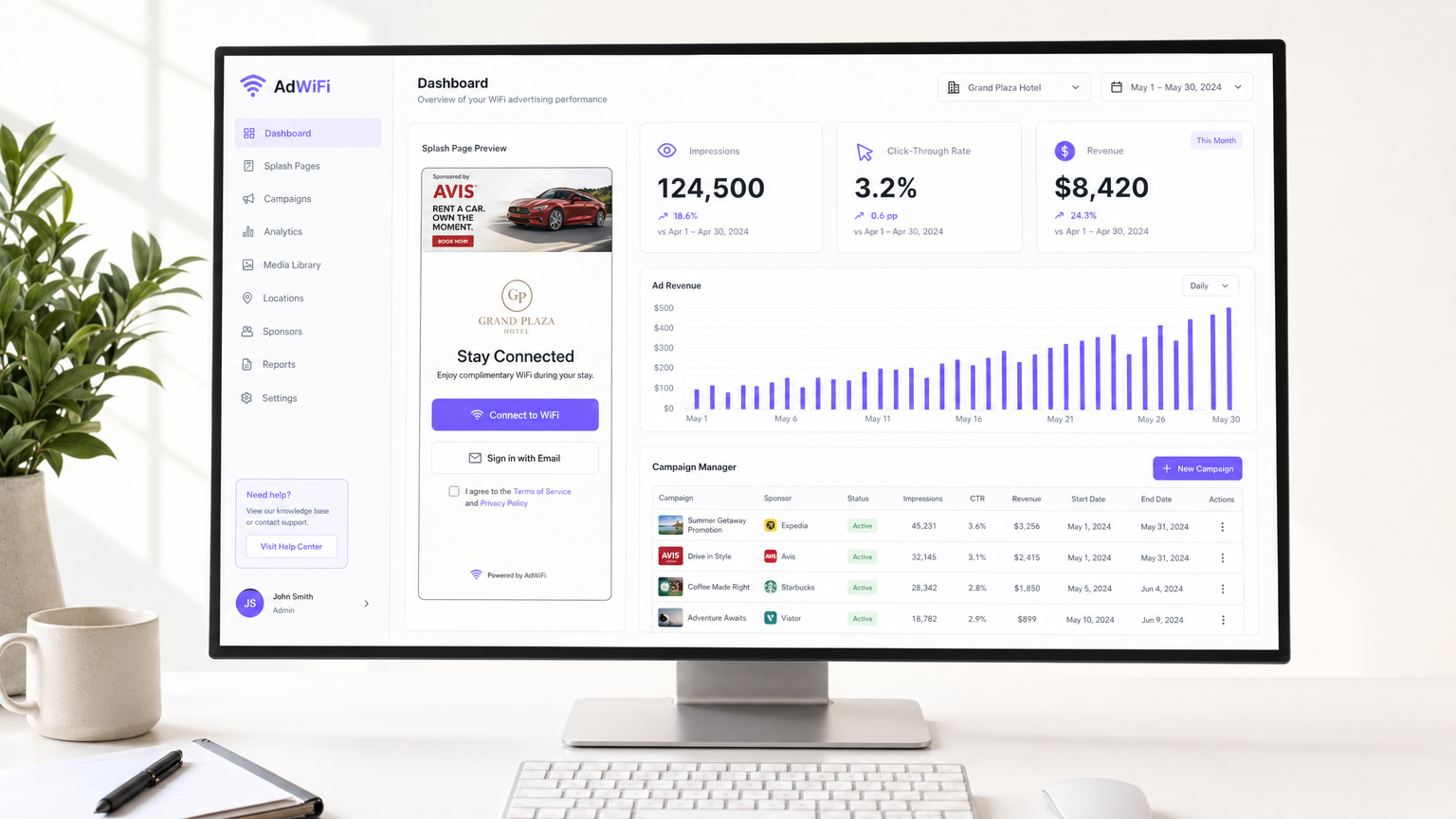
Al aprovechar el Captive Portal y el flujo de autenticación, los equipos de TI y marketing pueden ofrecer anuncios seguros para la marca y contextualmente relevantes a los usuarios antes de otorgar acceso a la red. Este documento detalla los modelos de ingresos principales, la arquitectura técnica subyacente requerida para la entrega y los puntos de integración con el hardware de red existente y las plataformas de WiFi para Invitados .
Análisis Técnico Detallado: Arquitectura y Entrega
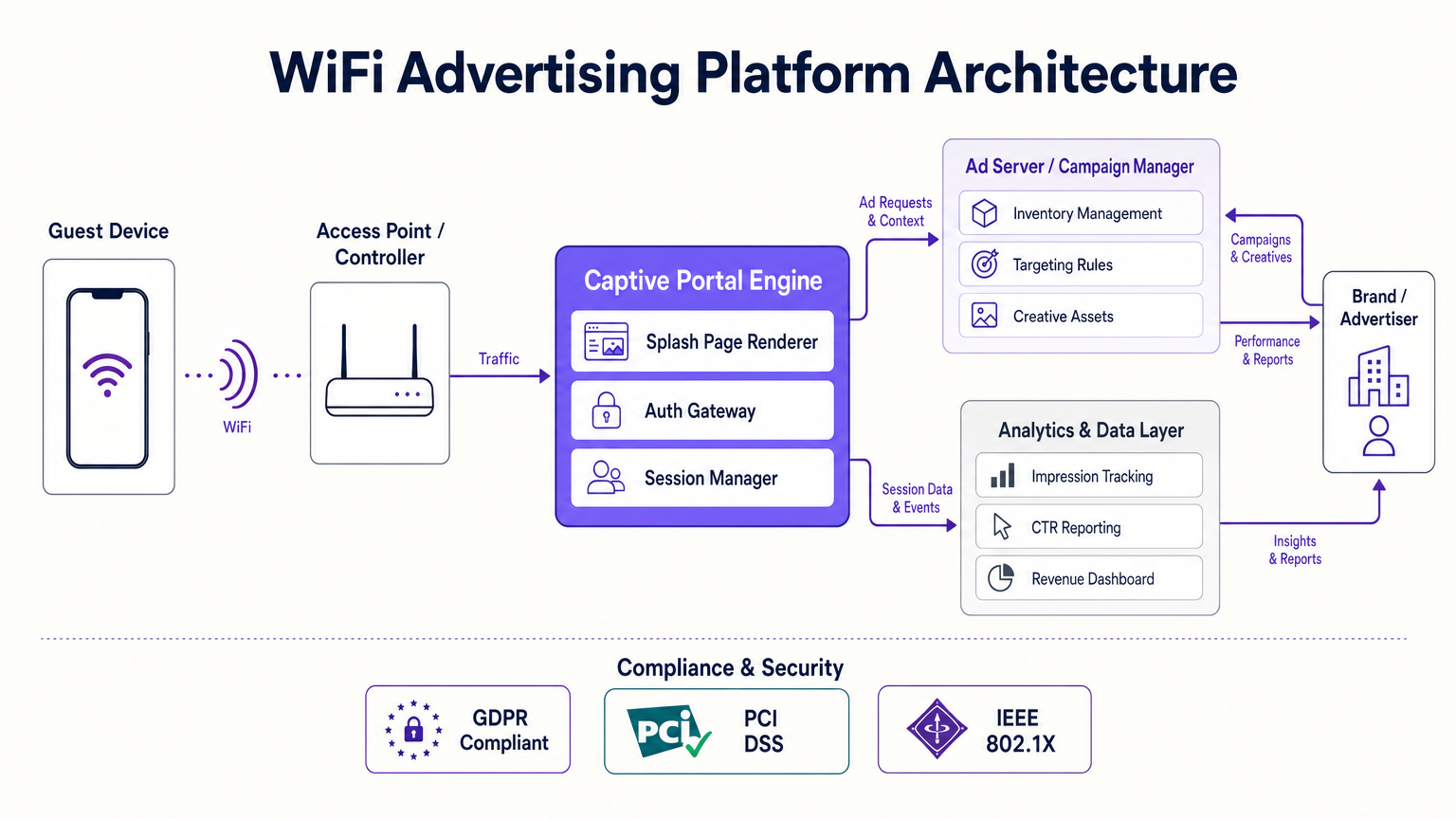
El mecanismo central para la publicidad WiFi se basa en un motor de Captive Portal robusto integrado con el controlador de LAN inalámbrica (WLC) o puntos de acceso gestionados en la nube. La arquitectura debe soportar la redirección sin interrupciones, la autenticación segura y la entrega dinámica de contenido sin introducir una latencia inaceptable en la experiencia del usuario.
El Flujo de Autenticación
- Asociación: El dispositivo del invitado se asocia con el SSID abierto.
- Redirección: La infraestructura de red intercepta la solicitud inicial HTTP/HTTPS y redirige al cliente a la página de inicio del Captive Portal a través de RADIUS o integración API.
- Entrega de Contenido: El renderizador de la página de inicio consulta el servidor de anuncios o el gestor de campañas para recuperar el activo creativo apropiado (por ejemplo, un banner patrocinado o un video de pantalla completa) basado en reglas de segmentación (ubicación, hora del día, tipo de dispositivo).
- Autenticación: El usuario interactúa con el anuncio y se autentica (a través de correo electrónico, inicio de sesión social o SMS).
- Autorización: La plataforma autoriza la sesión a través de RADIUS Access-Accept, otorgando acceso a internet al dispositivo.
Requisitos de Infraestructura
Para soportar un modelo de publicidad programática o de venta directa, la red subyacente debe ser robusta. La entrega de medios de alta resolución o anuncios de video requiere suficiente ancho de banda en el borde. Además, el Captive Portal debe estar alojado en una CDN de alta disponibilidad y distribución global para asegurar tiempos de carga de página rápidos. Las páginas de inicio lentas conducen a altas tasas de abandono, impactando directamente las impresiones de anuncios y los ingresos.
La integración con una plataforma integral de Análisis de WiFi es fundamental. La plataforma debe manejar la lógica compleja de limitación de frecuencia, seguimiento de impresiones y cumplimiento (GDPR, CCPA), asegurando que el equipo de TI no se vea sobrecargado con la gestión de campañas publicitarias individuales.
Guía de Implementación: Modelos de Ingresos
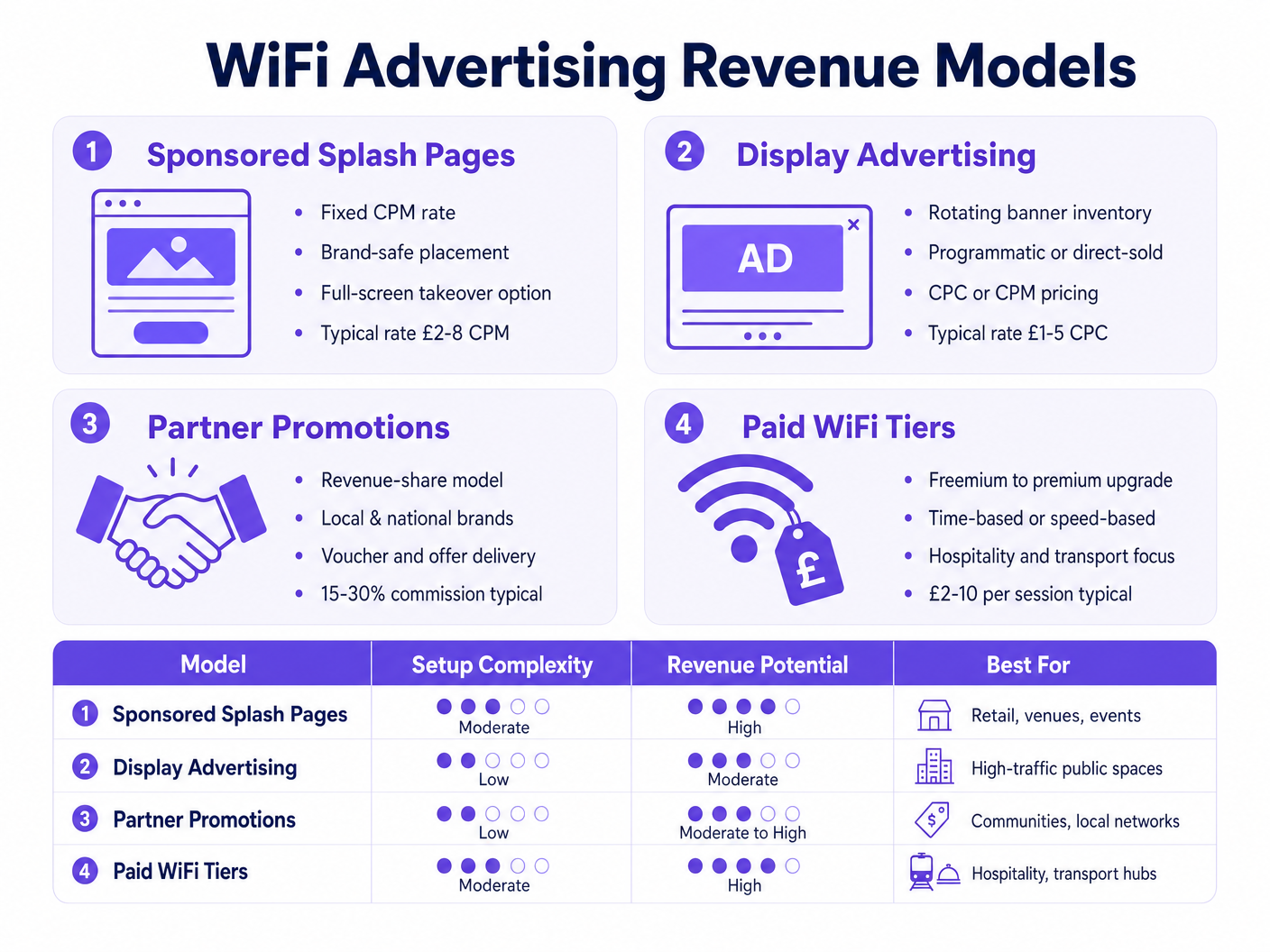
Existen cuatro modelos principales para generar ingresos a partir de la red de invitados. La combinación óptima depende del tipo de recinto, la afluencia de público y el perfil demográfico de la base de usuarios.
1. Páginas de Inicio Patrocinadas
Este es el modelo más sencillo y seguro para la marca. Un único patrocinador "posee" la experiencia de inicio de sesión durante un período definido o un número determinado de impresiones. La marca del patrocinador se integra en el diseño de la página de inicio, a menudo requiriendo que el usuario vea un mensaje o haga clic en un enlace antes de conectarse.
- Modelo de Precios: CPM fijo (Costo por Mil) o una tarifa de patrocinio plana.
- Ideal Para: Grandes eventos, estadios y ubicaciones minoristas insignia donde se garantiza una alta visibilidad.
2. Publicidad Gráfica
Este modelo utiliza formatos de banner IAB estándar (por ejemplo, rectángulos de 300x250 o leaderboards de 728x90) incrustados en la página de inicio o en la página de éxito posterior a la autenticación. El inventario se puede vender directamente a empresas locales o llenarse programáticamente a través de intercambios de anuncios.
- Modelo de Precios: CPC (Costo por Clic) o CPM.
- Ideal Para: Espacios públicos de alto tráfico y centros de transporte con demografías de usuarios diversas.
3. Promociones de Socios y Reparto de Ingresos
Particularmente efectivo en entornos de Comercio Minorista y Hostelería , este modelo implica asociarse con inquilinos o negocios locales para ofrecer ofertas dirigidas. Por ejemplo, un centro comercial podría ofrecer un cupón de 20% de descuento para una cafetería ubicada dentro del recinto.
- Modelo de Precios: Reparto de ingresos sobre cupones canjeados o una tarifa plana por generar afluencia.
- Ideal Para: Entornos con múltiples entidades comerciales distintas bajo un mismo techo.
4. Niveles de WiFi de Pago (Freemium)
Si bien el acceso básico se ofrece de forma gratuita (quizás con soporte publicitario o con límite de velocidad), los usuarios pueden actualizar a un nivel premium por una tarifa. Este nivel ofrece mayor ancho de banda, acceso sin restricciones a servicios de streaming o duraciones de sesión más largas.
- Modelo de Precios: Tarifa por sesión o basada en el tiempo (por ejemplo, £5 por 24 horas).
- Ideal Para: Transporte (aeropuertos, trenes) y hostelería (hoteles) donde los usuarios tienen una alta intención de consumir medios que requieren mucho ancho de banda.
Mejores Prácticas para la Implementación
La monetización exitosa requiere equilibrar la generación de ingresos con la experiencia del usuario. Una estrategia publicitaria demasiado agresiva disuadirá a los usuarios de conectarse, reduciendo la audiencia total a la que se puede llegar.
- Priorizar la Velocidad de Carga de la Página: Asegúrese de que todos los activos creativos estén optimizados. Una página de inicio que tarda más de 3-5 segundos en cargar experimentará una caída significativa. Utilice lHTML5 ligero y comprima las imágenes.
- Relevancia Contextual: Aproveche los datos que tiene. Si un usuario se conecta en un estadio deportivo, muestre anuncios relevantes para el evento o los patrocinadores locales. Los anuncios genéricos y no segmentados tienen tasas de interacción más bajas.
- Intercambio de Valor Claro: El usuario debe comprender que está recibiendo un servicio valioso (WiFi gratuito) a cambio de ver un anuncio o proporcionar datos demográficos básicos. La transparencia es clave para mantener la confianza.
- Pruebas A/B: Pruebe continuamente diferentes diseños de páginas de inicio, formatos de anuncios y llamadas a la acción. Un pequeño ajuste en la ubicación del botón o el tamaño de la unidad de anuncio puede impactar significativamente el CTR (Click-Through Rate).
- Integración Perfecta: Asegúrese de que la plataforma publicitaria se integre sin problemas con su hardware de red existente. Para propiedades grandes, consulte nuestra guía sobre Cómo Configurar WiFi en un Área Grande o Propiedad Multi-Sitio .
Solución de Problemas y Mitigación de Riesgos
La implementación de una red con soporte publicitario introduce riesgos específicos que deben mitigarse durante la fase de diseño.
Cumplimiento y Privacidad de Datos
Al capturar datos de usuario para publicidad dirigida, el cumplimiento de regulaciones como GDPR y CCPA es innegociable. El captive portal debe presentar mecanismos de consentimiento claros e inequívocos. Los usuarios deben optar activamente por recibir comunicaciones de marketing, y la plataforma debe proporcionar una forma sencilla para que los usuarios soliciten la eliminación de datos. La gestión incorrecta de esto expone a la organización a un riesgo legal y financiero significativo.
Congestión de la Red y el "Jardín Amurallado"
Si el servidor de anuncios o la CDN que aloja los activos creativos experimenta un tiempo de inactividad, los usuarios pueden no poder autenticarse, dejando efectivamente la red de invitados fuera de línea. Para mitigar esto, configure cuidadosamente el jardín amurallado (la lista de direcciones IP y dominios accesibles antes de la autenticación). Asegúrese de que el captive portal pueda degradarse elegantemente: si el anuncio no se carga dentro de un tiempo de espera especificado, el usuario debe pasar al paso de autenticación de todos modos.
Consideraciones de Seguridad
Asegúrese de que todo el tráfico entre el dispositivo cliente, el captive portal y el servidor de anuncios esté cifrado mediante HTTPS. Esto previene ataques de intermediario (man-in-the-middle) y garantiza la integridad del proceso de autenticación. Para entornos que requieren mayor seguridad, como el sector de la salud, considere las implicaciones discutidas en WiFi en Hospitales: Una Guía para Redes Clínicas Seguras .
ROI e Impacto Comercial
El objetivo final de la publicidad WiFi es compensar el costo total de propiedad (TCO) de la infraestructura de red. Sin embargo, los beneficios indirectos a menudo superan los ingresos publicitarios directos.
Al incentivar a los usuarios a autenticarse, el lugar construye un valioso activo de datos de primera parte. Esta base de datos CRM puede utilizarse para marketing por correo electrónico posterior, programas de lealtad y análisis operativo. Por ejemplo, comprender los tiempos de permanencia y las tasas de retorno —quizás aumentados por un Sistema de Posicionamiento Interior: Guía UWB, BLE y WiFi — proporciona información que ayuda a tomar decisiones de arrendamiento, niveles de personal y estrategia general del lugar.
Al calcular el ROI, considere tanto los ingresos directos por CPM/CPC como el valor de los perfiles de clientes adquiridos. Una estrategia de publicidad WiFi bien ejecutada transforma la red de una utilidad pasiva en un componente activo del motor comercial de la organización.
Términos clave y definiciones
Captive Portal
A web page that the user of a public-access network is obliged to view and interact with before access is granted.
This is the primary real estate for delivering WiFi advertising and capturing user consent.
Walled Garden
A restricted environment that controls the user's access to web content and services. In WiFi, it's the list of domains a user can access before authenticating.
Ad servers, CDNs hosting creative assets, and privacy policy pages must be included in the walled garden to function correctly during the login phase.
CPM (Cost Per Mille)
An advertising metric representing the cost an advertiser pays for one thousand views or impressions of an advertisement.
The standard pricing model for sponsored splash pages and brand awareness campaigns on guest networks.
RADIUS (Remote Authentication Dial-In User Service)
A networking protocol that provides centralised Authentication, Authorization, and Accounting (AAA) management.
Used by the network controller to communicate with the captive portal platform to authorise the user's session after they have viewed the ad.
Frequency Capping
A feature that restricts the number of times a specific user is shown a particular advertisement within a given timeframe.
Essential for preventing ad fatigue and ensuring a positive user experience, especially for returning visitors.
First-Party Data
Information a company collects directly from its customers and owns.
The demographic and behavioural data captured during the WiFi authentication process, which is often more valuable long-term than the immediate ad revenue.
Splash Page
The initial landing page presented to a user when connecting to a guest WiFi network.
The digital storefront for the venue, where branding, terms of service, and advertisements are displayed.
Programmatic Advertising
The automated buying and selling of online advertising space in real-time.
Allows venues to fill unsold display ad inventory on their splash pages automatically via ad exchanges.
Casos de éxito
A 500-room resort hotel currently offers free, unmanaged guest WiFi. They are experiencing high bandwidth costs due to guests streaming video and want to introduce a monetisation strategy without alienating their core clientele.
Implement a tiered bandwidth model (Freemium). The basic tier offers free access capped at 2Mbps, sufficient for web browsing and email. This tier is supported by a sponsored splash page (e.g., a local tour operator) upon login. A premium tier is offered at £5 per 24 hours, providing uncapped speeds (up to 20Mbps) suitable for 4K streaming and VPN access. The premium tier bypasses the ad experience entirely.
A large shopping mall with 150 retail units wants to use its guest WiFi to drive footfall to specific stores and generate revenue from the tenants.
Deploy a Partner Promotion model. The IT team configures the captive portal to display a rotating carousel of digital vouchers upon successful authentication. Tenants pay a monthly subscription fee to feature their offers on the portal. The platform tracks the number of times an offer is viewed and clipped (saved to the user's device).
Análisis de escenarios
Q1. Your marketing team wants to implement a full-screen video ad on the splash page that users must watch for 15 seconds before connecting. Your network is currently running on older 802.11n access points in a high-density stadium environment. What is the primary technical risk?
💡 Sugerencia:Consider the impact of large file sizes on legacy wireless infrastructure.
Mostrar enfoque recomendado
The primary risk is network congestion and high abandonment rates. Delivering high-resolution video over legacy 802.11n APs in a high-density environment will likely cause the splash page to load very slowly or fail entirely. Users will abandon the login process, resulting in zero ad impressions and a poor guest experience. The recommendation is to use lightweight, static imagery or upgrade the infrastructure to 802.11ax (Wi-Fi 6) before deploying video assets.
Q2. A sponsor has purchased a 'Sponsored Splash Page' campaign for a major conference. During the event, users report that they are stuck on a blank white page after connecting to the WiFi and cannot access the internet. What is the most likely configuration error?
💡 Sugerencia:Think about how the captive portal fetches external resources before the user is authenticated.
Mostrar enfoque recomendado
The most likely error is an incorrectly configured Walled Garden. The ad server's domain or the CDN hosting the sponsor's creative assets has not been added to the Walled Garden list on the wireless controller. Therefore, the device cannot fetch the ad image before authentication, causing the splash page to hang. The solution is to add the required IP addresses or domains to the pre-authentication access list.
Q3. You are deploying a 'Partner Promotion' model where local retailers offer discounts on the splash page. How do you technically ensure that a user doesn't just disconnect and reconnect repeatedly to collect multiple different vouchers?
💡 Sugerencia:How does the platform identify a unique device across multiple sessions?
Mostrar enfoque recomendado
You must implement Frequency Capping within the campaign manager, relying on the device's MAC address (or the authenticated user profile if they have logged in previously) as the unique identifier. The platform must be configured to limit the number of times a specific campaign or voucher is shown to the same MAC address within a defined time period (e.g., once per 24 hours).




