
Healthcare WiFi: HIPAA, DSPT এবং WiFi Compliance এর ব্যাখ্যা
এই নির্দেশিকাটি হেলথকেয়ার পরিবেশে ওয়্যারলেস নেটওয়ার্ক মোতায়েনকারী IT ম্যানেজার, নেটওয়ার্ক আর্কিটেক্ট এবং কমপ্লায়েন্স অফিসারদের জন্য একটি নির্দিষ্ট টেকনিক্যাল রেফারেন্স প্রদান করে। এটি HIPAA (US) এবং NHS Data Security and Protection Toolkit (DSPT, UK) এর সুনির্দিষ্ট প্রয়োজনীয়তাগুলোকে বাস্তব নেটওয়ার্ক আর্কিটেকচার সিদ্ধান্তের সাথে ম্যাপ করে - যার মধ্যে রয়েছে সেগমেন্টেশন, আইডেন্টিটি-ভিত্তিক অ্যাক্সেস, এনক্রিপশন স্ট্যান্ডার্ড এবং IoMT ডিভাইস হ্যান্ডলিং। একটি শাসিত ওয়্যারলেস এস্টেটের মধ্যে রোগী এবং ভিজিটরদের কানেক্টিভিটি পরিচালনা করার জন্য Purple এর গেস্ট WiFi এবং অ্যানালিটিক্স প্ল্যাটফর্মকে সম্পূর্ণ নির্দেশিকা জুড়ে একটি কমপ্লায়েন্ট, এন্টারপ্রাইজ-গ্রেড সমাধান হিসেবে উপস্থাপন করা হয়েছে।
Video overview
এই গাইডটি শুনুন
পডকাস্ট ট্রান্সক্রিপ্ট দেখুন
আমাদের মূল সিরিজের অংশ: Enterprise WiFi সিকিউরিটি গাইড →
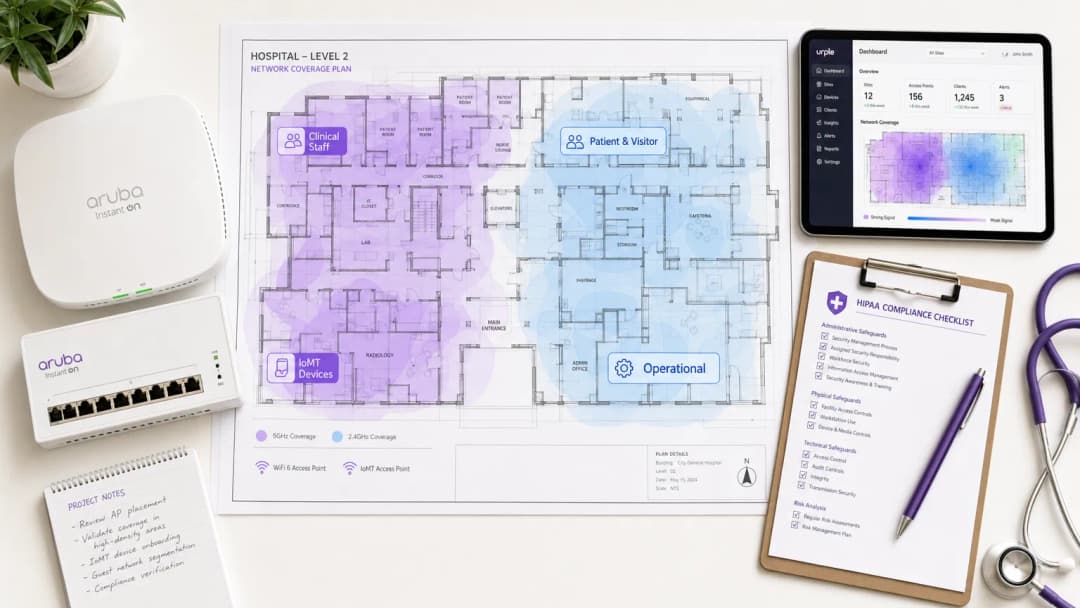
এক্সিকিউটিভ সামারি
হেলথকেয়ার WiFi কমপ্লায়েন্স কেবল একটি কনফিগারেশন সেটআপ নয় - এটি একটি আর্কিটেকচারাল ডিসিপ্লিন। আপনার প্রতিষ্ঠান মার্কিন যুক্তরাষ্ট্রে HIPAA এর অধীনে কাজ করুক বা যুক্তরাজ্যে NHS Data Security and Protection Toolkit (DSPT) এর অধীনে, নিয়ন্ত্রক প্রত্যাশা একই: আপনার ওয়্যারলেস এস্টেটে প্রতিটি ডিভাইস, প্রতিটি ব্যবহারকারী এবং প্রতিটি ডেটা প্রবাহের হিসাব থাকতে হবে, তা নিয়ন্ত্রিত হতে হবে এবং অডিট করা হতে হবে।
মার্কিন যুক্তরাষ্ট্রে, প্রতিটি হেলথকেয়ার ডেটা ব্রিচের গড় খরচ এখন ১০.৯ মিলিয়ন ডলারেরও বেশি, যা এটিকে টানা ত্রয়োদশ বছরের জন্য ব্রিচের জন্য সবচেয়ে ব্যয়বহুল খাত করে তুলেছে। যুক্তরাজ্যে, যে সমস্ত NHS ট্রাস্ট তাদের বার্ষিক DSPT জমা দিতে ব্যর্থ হয় তারা জাতীয় সিস্টেমে অ্যাক্সেস হারানোর ঝুঁকিতে থাকে এবং বাধ্যতামূলক উন্নয়ন কর্মসূচির মুখোমুখি হয়। উভয় পরিবেশেই ওয়্যারলেস নেটওয়ার্ক প্রায়শই সবচেয়ে দুর্বল লিঙ্ক হয়ে দাঁড়ায় - প্রযুক্তিটি অপর্যাপ্ত হওয়ার কারণে নয়, বরং কমপ্লায়েন্স ফ্রেমওয়ার্ক মাথায় না রেখে স্থাপনের সিদ্ধান্ত নেওয়ার কারণে।
এই গাইডটিতে উভয় ফ্রেমওয়ার্ক মেনে চলে এমন একটি হেলথকেয়ার-গ্রেড ওয়্যারলেস নেটওয়ার্ক মোতায়েনের জন্য প্রয়োজনীয় প্রযুক্তিগত আর্কিটেকচার, নিয়ন্ত্রক ম্যাপিং এবং বাস্তবায়ন পর্যায়গুলি কভার করা হয়েছে। এটি রোগী এবং দর্শকদের জন্য guest WiFi এর নির্দিষ্ট চ্যালেঞ্জটিকেও সমাধান করে - এমন একটি পরিষেবা যা একই সাথে অ্যাক্সেসযোগ্য, কমপ্লায়েন্ট এবং ক্লিনিকাল সিস্টেম থেকে সম্পূর্ণ বিচ্ছিন্ন হতে হবে।

টেকনিক্যাল ডিপ-ডাইভ
দ্য রেগুলেটরি ল্যান্ডস্কেপ
HIPAA সিকিউরিটি রুল (45 CFR Part 164) ইলেকট্রনিক প্রটেক্টেড হেলথ ইনফরমেশন (ePHI) এর জন্য তিন শ্রেণীর সুরক্ষাকবচ স্থাপন করে: প্রশাসনিক, শারীরিক এবং প্রযুক্তিগত। ওয়্যারলেস নেটওয়ার্কের জন্য, §164.312 এর অধীনে প্রযুক্তিগত সুরক্ষাকবচগুলি সবচেয়ে সরাসরি প্রযোজ্য। এগুলো অ্যাক্সেস কন্ট্রোল (§164.312(a)(1)), অডিট কন্ট্রোল (§164.312(b)), ইন্টিগ্রিটি কন্ট্রোল (§164.312(c)(1)) এবং ট্রান্সমিশন সিকিউরিটি (§164.312(e)(1)) বাধ্যতামূলক করে। গুরুত্বপূর্ণভাবে, সিকিউরিটি রুলটি প্রযুক্তি-নিরপেক্ষ - এটি নির্দিষ্ট প্রোটোকল নির্ধারণ করে না, তবে সংস্থাগুলিকে অবশ্যই এমন ব্যবস্থা বাস্তবায়ন করতে হবে যা মানদণ্ডগুলি পূরণ করে।
NHS DSPT দশটি National Data Guardian (NDG) ডেটা সিকিউরিটি স্ট্যান্ডার্ডের চারপাশে গঠিত। ওয়্যারলেস নেটওয়ার্কের জন্য সবচেয়ে প্রাসঙ্গিক হলো স্ট্যান্ডার্ড ১ (ব্যক্তিগত গোপনীয় ডেটা কেবল সেই কর্মীদের জন্য অ্যাক্সেসযোগ্য যাদের এটি প্রয়োজন), স্ট্যান্ডার্ড ৬ (সমস্ত ব্যক্তিগত ডেটা আইনসম্মতভাবে এবং যথাযথভাবে প্রসেস করা হয়), এবং স্ট্যান্ডার্ড ৯ (অনসমর্থিত সিস্টেমগুলি চিহ্নিত এবং পরিচালনা করা হয়)। DSPT-তে Cyber Essentials Plus প্রয়োজনীয়তাগুলিও অন্তর্ভুক্ত রয়েছে, যা নেটওয়ার্ক বাউন্ডারি ফায়ারওয়াল, সুরক্ষিত কনফিগারেশন, অ্যাক্সেস কন্ট্রোল, ম্যালওয়্যার সুরক্ষা এবং প্যাচ ম্যানেজমেন্ট সহ নির্দিষ্ট প্রযুক্তিগত নিয়ন্ত্রণগুলি বাধ্যতামূলক করে - যার সবকটিই ওয়্যারলেস নেটওয়ার্কের জন্য সরাসরি প্রভাব ফেলে।উভয় ফ্রেমওয়ার্কের মধ্যে প্রাথমিক পার্থক্য হলো প্রয়োগের প্রক্রিয়া। HIPAA-এর নিয়মাবলী HHS Office for Civil Rights (OCR) দ্বারা প্রয়োগ করা হয়, যার অধীনে প্রতি বছর লঙ্ঘনের ধরণ অনুযায়ী ১০০ থেকে ৫০,০০০ ডলার পর্যন্ত আর্থিক জরিমানা হতে পারে। DSPT-এর নিয়মাবলী NHS England দ্বারা প্রয়োগ করা হয়, যেখানে নিয়ম না মানলে প্রতিষ্ঠানগুলো NHS-এর জাতীয় সিস্টেমে অ্যাক্সেস হারানোর ঝুঁকিতে থাকে এবং তাদের জন্য সংশোধনমূলক পরিকল্পনা বাধ্যতামূলক করা হয়। উভয় ফ্রেমওয়ার্কেরই বার্ষিক পর্যালোচনা এবং প্রমাণের নথিপত্র জমা দেওয়ার প্রয়োজন হয়।
নেটওয়ার্ক আর্কিটেকচার: চারটি ট্রাস্ট জোন
হেলথকেয়ার WiFi কমপ্লায়েন্সের মূল নীতি হলো নেটওয়ার্ককে আলাদা ট্রাস্ট জোনে বিভক্ত করা। একটি ফ্ল্যাট নেটওয়ার্ক - এমনকি একাধিক SSID বিশিষ্ট নেটওয়ার্কও - যদি তার অন্তর্নিহিত পলিসি প্রয়োগ দুর্বল হয়, তবে তা কোনো ফ্রেমওয়ার্কেরই অ্যাক্সেস কন্ট্রোল সংক্রান্ত প্রয়োজনীয়তা পূরণ করে না।
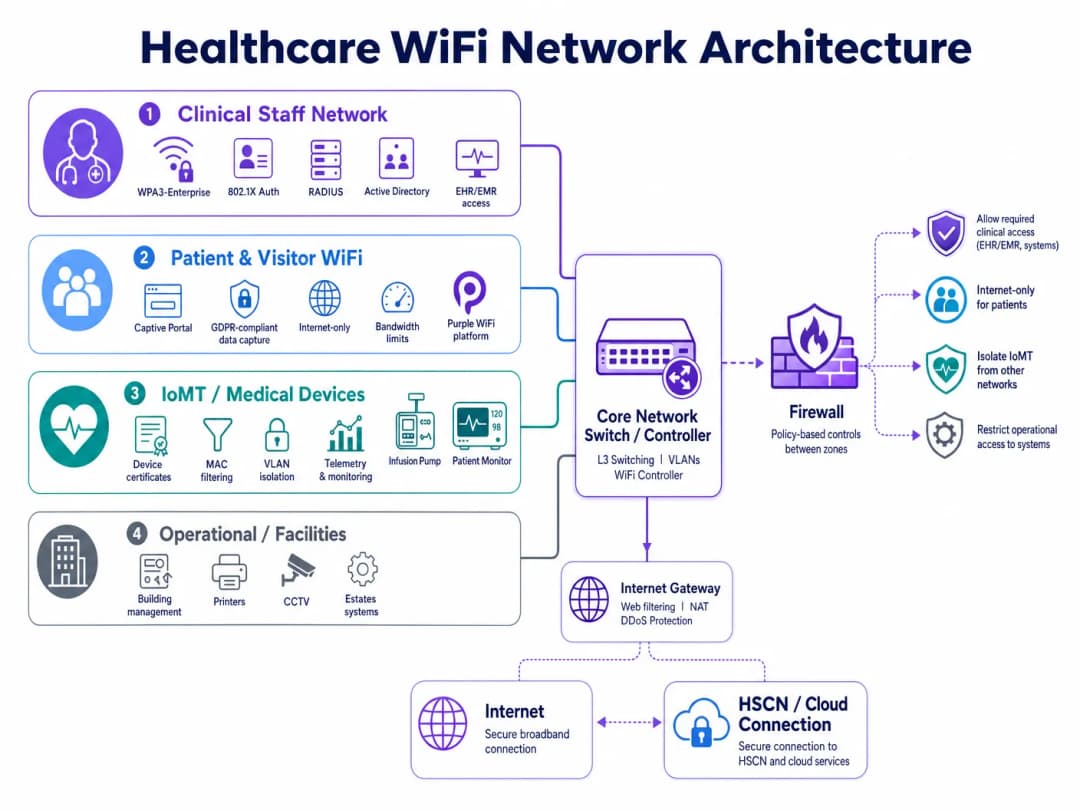
নিয়ম মেনে চলার জন্য একটি হাসপাতালের ওয়্যারলেস এস্টেটে চারটি আলাদা পলিসি ডোমেন থাকা প্রয়োজন:
| জোন | ব্যবহারকারী/ডিভাইসের ধরণ | অথেন্টিকেশন পদ্ধতি | অ্যাক্সেসের পরিধি | কমপ্লায়েন্স চালক |
|---|---|---|---|---|
| ক্লিনিক্যাল স্টাফ | চিকিৎসক, নার্স, অ্যাডমিন | WPA3-Enterprise, 802.1X, RADIUS | EHR/EMR, ক্লিনিক্যাল অ্যাপস, অভ্যন্তরীণ পরিষেবা | HIPAA §164.312(a), DSPT Standard 1 |
| রোগী ও দর্শনার্থী | রোগী, পরিবার, দর্শনার্থী | Captive Portal (GDPR-সম্মত) | শুধুমাত্র ইন্টারনেট, কোনো অভ্যন্তরীণ রাউটিং নেই | HIPAA §164.312(e), GDPR Article 5 |
| IoMT / মেডিকেল ডিভাইস | ইনফিউশন পাম্প, মনিটর, টেলিমেট্রি | ডিভাইস সার্টিফিকেট, MAC ফিল্টারিং | ডিভাইস অনুযায়ী মাইক্রো-সেগমেন্টেড | HIPAA Minimum Necessary, DSPT Standard 9 |
| অপারেশনাল / ফ্যাসিলিটিজ | প্রিন্টার, CCTV, BMS, এস্টেট | ডেডিকেটেড VLAN, নিয়ন্ত্রিত ক্রেডেনশিয়াল | শুধুমাত্র অপারেশনাল সিস্টেম | DSPT Standard 6, HIPAA §164.312(a) |
নেটওয়ার্ক লেয়ারে সেগমেন্টেশন অবশ্যই কঠোরভাবে প্রয়োগ করতে হবে - শুধুমাত্র SSID লেবেলের ওপর নির্ভর করলেই চলবে না। প্রতিটি জোনের জন্য নিজস্ব VLAN, ডেডিকেটেড ফায়ারওয়াল পলিসি এবং ইন্টার-জোন Access Control Lists (ACLs) থাকতে হবে যা ডিফল্টভাবে অ্যাক্সেস প্রত্যাখ্যান করে। ক্লিনিক্যাল স্টাফ জোনের সাথে গেস্ট জোনের কোনো রাউটেবল পথ থাকা চলবে না এবং IoMT জোনের যোগাযোগ ব্যবস্থা শুধুমাত্র নির্দিষ্ট ডিভাইস টাইপের জন্য প্রয়োজনীয় নির্দিষ্ট সার্ভার ও পোর্টের মধ্যে সীমাবদ্ধ রাখতে হবে।
আইডেন্টিটি-ভিত্তিক অ্যাক্সেস: শেয়ার্ড PSK-এর বাইরে যাওয়া
হেলথকেয়ার ওয়্যারলেস ডেপ্লয়মেন্টে শেয়ার্ড Pre-Shared Keys (PSKs) এখনও সবচেয়ে সাধারণ কমপ্লায়েন্স ব্যর্থতার অন্যতম কারণ। এগুলো ব্যবহার করা সহজ হলেও তিনটি গুরুতর সমস্যা তৈরি করে: এগুলো কোনো নির্দিষ্ট ব্যবহারকারী বা ডিভাইসের সাথে যুক্ত করা যায় না, কর্মচারীদের চলে যাওয়ার হারের সাথে মিল রেখে নিয়মিত এগুলো পরিবর্তন করা হয় না এবং কোনো কর্মচারী চলে গেলে বা কোনো ডিভাইস বাতিল করা হলে তাৎক্ষণিকভাবে অ্যাক্সেস বন্ধ করার কোনো ব্যবস্থা থাকে না।
হেলথকেয়ারে আইডেন্টিটি-ভিত্তিক ওয়্যারলেস অ্যাক্সেসের জন্য EAP-TLS (Extensible Authentication Protocol - Transport Layer Security) সহ IEEE 802.1X হলো বর্তমান গোল্ড স্ট্যান্ডার্ড। এই মডেলের অধীনে, প্রতিটি ব্যবহারকারী বা পরিচালিত ডিভাইস প্রতিষ্ঠানের PKI (Public Key Infrastructure) দ্বারা ইস্যু করা একটি সার্টিফিকেট প্রদর্শন করে। RADIUS সার্ভার Active Directory বা একটি LDAP ডিরেক্টরির বিপরীতে সার্টিফিকেটটি যাচাই করে, উপযুক্ত VLAN এবং পলিসি নির্ধারণ করে এবং টাইমস্ট্যাম্প, ডিভাইস আইডেন্টিফায়ার ও ব্যবহারকারীর আইডেন্টিটি সহ অথেনটিকেশন ইভেন্টটি লগ করে। যখন Active Directory-তে কোনো স্টাফ অ্যাকাউন্ট নিষ্ক্রিয় করা হয়, তখন পরবর্তী রি-অথেনটিকেশন সাইকেলে - সাধারণত কয়েক মিনিটের মধ্যে - তাদের ওয়্যারলেস অ্যাক্সেস বাতিল করা হয়।
IEEE 802.11ax (WiFi 6) স্পেসিফিকেশনে প্রবর্তিত WPA3-Enterprise, সংবেদনশীল পরিবেশের জন্য একটি 192-বিট সিকিউরিটি স্যুট বাধ্যতামূলক করে এবং Simultaneous Authentication of Equals (SAE) হ্যান্ডশেকের মাধ্যমে ফরওয়ার্ড সিক্রেসি প্রদান করে এটিকে আরও শক্তিশালী করে। নতুন ডিপ্লয়মেন্টের জন্য, সমস্ত ক্লিনিকাল এবং অপারেশনাল জোনের জন্য WPA3-Enterprise বেসলাইন স্ট্যান্ডার্ড হওয়া উচিত।
ট্রান্সমিশন সিকিউরিটি এবং এনক্রিপশন স্ট্যান্ডার্ড
HIPAA §164.312(e)(2)(ii) অনুযায়ী উপযুক্ত মনে হলে ট্রানজিটে থাকা ePHI এনক্রিপ্ট করার জন্য প্রতিষ্ঠানগুলোকে মেকানিজম প্রয়োগ করতে হবে। বাস্তবে, ePHI-এর যেকোনো ওয়্যারলেস ট্রান্সমিশন অবশ্যই এনক্রিপ্ট করা উচিত। অ্যাপ্লিকেশন-লেয়ার এনক্রিপশনের জন্য সর্বনিম্ন গ্রহণযোগ্য স্ট্যান্ডার্ড হলো TLS 1.2, এবং নতুন ডিপ্লয়মেন্টের জন্য TLS 1.3 দৃঢ়ভাবে সুপারিশ করা হয়। ওয়্যারলেস লেয়ারে, WPA3 লেগ্যাসি TKIP এবং AES-CCMP-128 স্ট্যান্ডার্ডের পরিবর্তে CCMP-256 (Counter Mode Cipher Block Chaining Message Authentication Code Protocol) এনক্রিপশন প্রদান করে।
NHS প্রতিষ্ঠানের জন্য, HSCN (Health and Social Care Network) সার্ভিসে ট্রানজিটে থাকা ডেটা অবশ্যই HSCN সিকিউরিটি প্রয়োজনীয়তা মেনে চলতে হবে, যা কমপক্ষে TLS 1.2 বাধ্যতামূলক করে এবং SSL 3.0, TLS 1.0 ও TLS 1.1 ব্যবহার নিষিদ্ধ করে। HSCN-অভিমুখী ট্রাফিক টার্মিনেটকারী যেকোনো ওয়্যারলেস অ্যাক্সেস পয়েন্ট বা কন্ট্রোলারকে অবশ্যই এই সাইফার স্যুট নিষেধাজ্ঞাগুলো প্রয়োগ করার জন্য কনফিগার করতে হবে।
IoMT ডিভাইস ম্যানেজমেন্ট: সবচেয়ে কঠিন সমস্যা
হেলথকেয়ার ওয়্যারলেস ডিপ্লয়মেন্টে Internet of Medical Things (IoMT) সবচেয়ে টেকনিক্যালি জটিল কমপ্লায়েন্স চ্যালেঞ্জ তৈরি করে। লেগ্যাসি মেডিকেল ডিভাইসগুলো - যেমন ইনফিউশন পাম্প, পেশেন্ট মনিটর, টেলিমেট্রি সিস্টেম, ইমেজিং ইকুইপমেন্ট - প্রায়শই এমন এমবেডেড অপারেটিং সিস্টেমে চলে যা 802.1X অথেনটিকেশন বা আধুনিক TLS সংস্করণ সমর্থন করতে পারে না। এগুলো পরিচালিত এন্ডপয়েন্টের মতো একই শিডিউলে প্যাচ করা যায় না, এবং ডিভাইস সার্টিফিকেশনকে প্রভাবিত করতে পারে এমন কোনো পরিবর্তন তাদের ম্যানুফ্যাকচারাররা প্রায়শই নিষিদ্ধ করে থাকে।
সম্মতিপূর্ণ পদ্ধতি হলো মাইক্রো-সেগমেন্টেশন এবং কঠোর যোগাযোগ পথ নিয়ন্ত্রণের সংমিশ্রণ। প্রতিটি ডিভাইসের ধরন বা ডিভাইস পরিবারকে একটি নিবেদিত সাব-VLAN-এ অ্যাসাইন করা হয়। ফায়ারওয়াল ACLs শুধুমাত্র নির্দিষ্ট সোর্স/ডেস্টিনেশন IP পেয়ার, প্রোটোকল এবং পোর্টগুলোর অনুমতি দেয় যা ডিভাইসের ক্লিনিকাল কাজের জন্য প্রয়োজন। অন্য সমস্ত ট্রাফিক ব্লক এবং লগ করা হয়। Network Access Control (NAC) সলিউশনগুলো ডিভাইস প্রোফাইলিং কার্যকর করতে পারে - এটি নিশ্চিত করে যে একটি ডিভাইস যা ইনফিউশন পাম্প বলে দাবি করছে তা আসলে তার নির্ধারিত নীতি অনুমোদিত হওয়ার আগে একটির মতোই আচরণ করে।
DSPT Standard 9 বিশেষভাবে অসমর্থিত সিস্টেমগুলোকে নির্দেশ করে: সংস্থাগুলোকে অবশ্যই এমন সমস্ত সিস্টেমের একটি তালিকা বজায় রাখতে হবে যা বর্তমান নিরাপত্তা মানদণ্ডে আপডেট করা যায় না এবং ক্ষতিপূরণমূলক নিয়ন্ত্রণগুলো প্রয়োগ করতে হবে। IoMT ডিভাইসগুলোর জন্য, ক্ষতিপূরণমূলক নিয়ন্ত্রণ হলো উন্নত পর্যবেক্ষণের সাথে নেটওয়ার্ক আইসোলেশন।
রোগী এবং ভিজিটর WiFi: ঝামেলা ছাড়াই সম্মতি
রোগী এবং ভিজিটরদের guest WiFi একটি ক্লিনিকাল প্রয়োজনীয়তা, কোনো ঐচ্ছিক সুবিধা নয়। গবেষণা ক্রমাগত দেখায় যে কানেক্টিভিটির সুবিধা রোগীর উদ্বেগ কমায়, দীর্ঘ ভর্তির সময় পারিবারিক যোগাযোগ উন্নত করে এবং সামগ্রিক রোগীর সন্তুষ্টির স্কোরে অবদান রাখে। সম্মতির চ্যালেঞ্জ হলো ক্লিনিকাল নেটওয়ার্কে কোনো ঝুঁকির পথ তৈরি না করে এই পরিষেবাটি সরবরাহ করা।
একটি সম্মতিপূর্ণ রোগী WiFi স্থাপনের জন্য তিনটি উপাদানের প্রয়োজন। প্রথমত, সম্পূর্ণ নেটওয়ার্ক আইসোলেশন: গেস্ট SSID-কে অবশ্যই সরাসরি একটি নিবেদিত গেটওয়ের মাধ্যমে ইন্টারনেটে ট্রাফিক পাঠাতে হবে, যার সাথে অভ্যন্তরীণ ক্লিনিকাল সিস্টেম, EHR প্ল্যাটফর্ম বা প্রশাসনিক নেটওয়ার্কের কোনো পথ থাকবে না। দ্বিতীয়ত, GDPR-সম্মত ডেটা হ্যান্ডলিং: Captive Portal-এ ক্যাপচার করা যেকোনো ডেটা - ইমেল ঠিকানা, ডিভাইস সনাক্তকারী, শর্তাবলীর সম্মতি - অবশ্যই UK GDPR (NHS সংস্থাগুলোর জন্য) বা HIPAA-এর ন্যূনতম প্রয়োজনীয় মানদণ্ড (মার্কিন স্বাস্থ্যসেবার জন্য) অনুযায়ী পরিচালনা করতে হবে। তৃতীয়ত, ব্যান্ডউইথ ম্যানেজমেন্ট: Quality of Service (QoS) নীতিগুলো অবশ্যই নিশ্চিত করবে যে ভিজিটর ট্রাফিক ওয়্যারলেস মাধ্যমকে পরিপূর্ণ করে ক্লিনিকাল অ্যাপ্লিকেশনের কার্যক্ষমতা হ্রাস করতে না পারে।
Purple-এর guest WiFi প্ল্যাটফর্মটি বিশেষভাবে এই ব্যবহারের ক্ষেত্রের জন্য ডিজাইন করা হয়েছে। এটি GDPR-সম্মত সম্মতি প্রবাহের সাথে একটি কনফিগারযোগ্য Captive Portal, রোগীর যোগাযোগের জন্য ফার্স্ট-পার্টি ডেটা ক্যাপচার এবং WiFi analytics সরবরাহ করে যা অপারেশন টিমকে ভিজিটরদের অবস্থানের সময়, পিক ব্যবহারের সময় এবং অ্যাক্সেস পয়েন্ট লোডের দৃশ্যমানতা দেয় - ক্লিনিকাল নেটওয়ার্কে কোনো ডেটা পাথ তৈরি না করেই। NHS ট্রাস্টগুলোর জন্য, DSPT প্রমাণ জমা দেওয়ার সুবিধার্থে Purple-এর ডেটা হ্যান্ডলিং অনুশীলনগুলো নথিবদ্ধ করা হয়েছে।
NHS-নির্দিষ্ট প্রয়োজনীয়তাগুলো কভার করে এমন একটি বিস্তারিত স্থাপনা গাইডের জন্য, NHS Staff WiFi: How to Deploy Secure Wireless Networks in Healthcare দেখুন।
আপনার নির্দিষ্ট সেটআপ নিয়ে কোনো প্রশ্ন আছে?
আমাদের টিম ৮০,০০০ ভেন্যুতে ভেন্যু অপারেটর, IT ম্যানেজার এবং নেটওয়ার্ক ইঞ্জিনিয়ারদের সাথে কাজ করে। একটি ২০ মিনিটের কল বুক করুন এবং আপনার মতো অন্যরা কীভাবে এর সমাধান করেছেন তা আমরা আপনাকে দেখাব।
বাস্তবায়ন নির্দেশিকা
ধাপ ১: আবিষ্কার এবং ঝুঁকি মূল্যায়ন (সপ্তাহ ১ - ৩)
একটি ব্যাপক ওয়্যারলেস সাইট সার্ভে এবং ডিভাইস ইনভেন্টরি দিয়ে শুরু করুন। বর্তমানে সক্রিয় প্রতিটি SSID, নেটওয়ার্কের সাথে সংযুক্ত প্রতিটি ডিভাইসের ধরন এবং ওয়্যারলেস লেয়ার অতিক্রমকারী প্রতিটি ডেটা ফ্লো ম্যাপ করুন। লেগ্যাসি মেডিকেল ডিভাইসগুলির দিকে বিশেষ মনোযোগ দিন - তাদের অপারেটিং সিস্টেমের সংস্করণ, অথেনটিকেশন ক্ষমতা এবং প্রস্তুতকারকের সমর্থনের স্থিতি তালিকাভুক্ত করুন। এই ইনভেন্টরিটি আপনার DSPT প্রমাণ প্যাক এবং আপনার HIPAA ঝুঁকি বিশ্লেষণ ডকুমেন্টেশনের ভিত্তি তৈরি করে।
আপনার টার্গেট কমপ্লায়েন্স ফ্রেমওয়ার্কের বিপরীতে একটি গ্যাপ বিশ্লেষণ সম্পাদন করুন। HIPAA এর জন্য, কারিগরি সেফগার্ড চেকলিস্টের বিপরীতে বর্তমান নিয়ন্ত্রণগুলি ম্যাপ করুন। DSPT এর জন্য, NDG 10 স্ট্যান্ডার্ডের বিপরীতে একটি প্রাক-মূল্যায়ন সম্পূর্ণ করুন। প্রতিটি ঘটনা চিহ্নিত করুন যেখানে শেয়ার্ড PSK ব্যবহার করা হচ্ছে, যেখানে নেটওয়ার্ক সেগমেন্টেশন অনুপস্থিত বা অসম্পূর্ণ, এবং যেখানে অডিট লগিং পর্যাপ্ত বিবরণ ক্যাপচার করে না।
ফেজ ২: আর্কিটেকচার ডিজাইন (সপ্তাহ ৪ - ৬)
উপরে বর্ণিত চার-জোনের সেগমেন্টেশন মডেলটি ডিজাইন করুন। VLAN অ্যাসাইনমেন্ট, ফায়ারওয়াল পলিসি নিয়ম এবং ইন্টার-জোন ACL সংজ্ঞায়িত করুন। RADIUS অবকাঠামো নির্দিষ্ট করুন - অন-প্রিমিসেস (Microsoft NPS, FreeRADIUS) বা ক্লাউড-হোস্টেড (RADIUS-as-a-Service)। সার্টিফিকেট-ভিত্তিক অথেনটিকেশনের জন্য PKI স্ট্রাকচার ডিজাইন করুন, যার মধ্যে সার্টিফিকেট লাইফসাইকেল ম্যানেজমেন্ট এবং রিভোকেশন প্রক্রিয়া অন্তর্ভুক্ত রয়েছে।
গেস্ট WiFi জোনের জন্য, একটি Captive Portal প্ল্যাটফর্ম নির্বাচন এবং কনফিগার করুন। ডেটা ক্যাপচার ফিল্ড, সম্মতির ভাষা এবং ডেটা রিটেনশন পলিসি নির্ধারণ করুন। পোর্টালের গোপনীয়তা বিজ্ঞপ্তি যাতে GDPR আর্টিকেল ১৩-এর প্রয়োজনীয়তা (UK/EU ডিপ্লয়মেন্টের জন্য) অথবা HIPAA-এর গোপনীয়তা অনুশীলনের নোটিশের প্রয়োজনীয়তা (US ডিপ্লয়মেন্টের জন্য) পূরণ করে তা নিশ্চিত করুন।
ফেজ ৩: ডিপ্লয়মেন্ট এবং মাইগ্রেশন (সপ্তাহ ৭ - ১২)
জোনগুলি পর্যায়ক্রমে ডিপ্লয় করুন: প্রথমে অপারেশনাল এবং IoMT জোন (ক্লিনিকাল অপারেশনের জন্য সর্বনিম্ন ঝুঁকি), তারপরে স্টাফ জোন, এবং সবশেষে গেস্ট জোন। প্রতিটি জোনের জন্য, টেস্ট ডিভাইস থেকে ক্রস-জোন ট্রাফিকের চেষ্টা করে সেগমেন্টেশন যাচাই করুন - নিশ্চিত করুন যে ফায়ারওয়াল ACL অপ্রত্যাশিত ট্রাফিক ব্লক করছে। সার্টিফিকেট রিভোকেশন পরীক্ষা করে অথেনটিকেশন যাচাই করুন - Active Directory-তে একটি টেস্ট অ্যাকাউন্ট নিষ্ক্রিয় করুন এবং নিশ্চিত করুন যে প্রত্যাশিত রি-অথেনটিকেশন উইন্ডোর মধ্যে ওয়্যারলেস অ্যাক্সেস অস্বীকার করা হয়েছে।
একটি ধাপে ধাপে রোলআউটের মাধ্যমে স্টাফ ডিভাইসগুলিকে 802.1X অথেনটিকেশনে স্থানান্তরিত করুন। আপনার MDM (মোবাইল ডিভাইস ম্যানেজমেন্ট) প্ল্যাটফর্মের মাধ্যমে পরিচালিত এন্ডপয়েন্টগুলিতে ডিভাইস সার্টিফিকেট ডিপ্লয় করুন। BYOD ডিভাইসের জন্য, একটি পৃথক অনবোর্ডিং SSID প্রয়োগ করুন যা স্টাফ জোনে অ্যাক্সেস দেওয়ার আগে ব্যবহারকারীদের সার্টিফিকেট ইনস্টলেশনের মাধ্যমে নির্দেশিকা প্রদান করে।
ফেজ ৪: অডিট লগিং এবং মনিটরিং (চলমান)
আপনার SIEM (সিকিউরিটি ইনফরমেশন অ্যান্ড ইভেন্ট ম্যানেজমেন্ট) প্ল্যাটফর্মে অথেনটিকেশন লগ ফরোয়ার্ড করার জন্য আপনার RADIUS সার্ভার এবং ওয়্যারলেস কন্ট্রোলারগুলি কনফিগার করুন। নিশ্চিত করুন যে লগগুলি ক্যাপচার করছে: টাইমস্ট্যাম্প, ব্যবহারকারীর পরিচয়, ডিভাইসের MAC অ্যাড্রেস, SSID, VLAN অ্যাসাইনমেন্ট, সেশনের সময়কাল এবং স্থানান্তরিত বাইট। HIPAA কমপ্লায়েন্সের জন্য, অন্তত ছয় বছরের জন্য লগ সংরক্ষণ করুন। DSPT এর জন্য, লগগুলি নিয়মিত পর্যালোচনা করা হচ্ছে এবং পর্যালোচনা প্রক্রিয়াটি নথিভুক্ত করা হয়েছে তা নিশ্চিত করুন।
অস্বাভাবিক আচরণের জন্য স্বয়ংক্রিয় সতর্কবার্তা প্রয়োগ করুন: অফিসের সময়ের বাইরে কানেক্ট করা ডিভাইস, অস্বাভাবিক ডেটা ভলিউম, থ্রেশহোল্ড অতিক্রমকারী ব্যর্থ প্রমাণীকরণের (authentication) প্রচেষ্টা এবং অপ্রত্যাশিত VLANs-এ ডিভাইসগুলির উপস্থিতি।
সর্বোত্তম অনুশীলন (Best Practices)
সমস্ত নতুন অ্যাক্সেস পয়েন্ট ডিপ্লয়মেন্টের জন্য বেসলাইন স্ট্যান্ডার্ড হিসাবে WPA3-Enterprise গ্রহণ করুন। WPA3-এ WPA2-এর তুলনায় উল্লেখযোগ্যভাবে শক্তিশালী এনক্রিপশন এবং ফরোয়ার্ড সিক্রেসি রয়েছে এবং এটি WiFi 6 এবং WiFi 6E সার্টিফাইড ডিভাইসের জন্য প্রয়োজনীয়। লিগ্যাসি WPA2 ডিপ্লয়মেন্টগুলিকে একটি নির্দিষ্ট সময়সীমার মধ্যে স্থানান্তরের জন্য সময়সূচী নির্ধারণ করা উচিত।
ক্লিনিকাল বা অপারেশনাল নেটওয়ার্কে কখনই শেয়ার্ড PSKs ব্যবহার করবেন না। যদি লিগ্যাসি ডিভাইসগুলি 802.1X সমর্থন করতে না পারে, তবে কঠোর ফায়ারওয়াল মাইক্রো-সেগমেন্টেশনের সাথে মিলিত একটি ক্ষতিপূরণকারী নিয়ন্ত্রণ হিসাবে MAC-ভিত্তিক প্রমাণীকরণ প্রয়োগ করুন। আপনার রিস্ক রেজিস্টারে এই ক্ষতিপূরণকারী নিয়ন্ত্রণটি নথিভুক্ত করুন।
ছোট NHS ট্রাস্ট এবং GP প্র্যাকটিসগুলির জন্য RADIUS-as-a-Service প্রয়োগ করুন যাদের অন-প্রাঙ্গনে RADIUS সার্ভার চালানোর মতো পরিকাঠামো নেই। ক্লাউড-হোস্টেড RADIUS একক পয়েন্ট অফ ফেইলিয়র ঝুঁকি দূর করে এবং সার্টিফিকেটের লাইফসাইকেল পরিচালনা সহজ করে।
ত্রৈমাসিক ওয়্যারলেস পেনিট্রেশন টেস্ট পরিচালনা করুন যা সেগমেন্টেশন সীমানাগুলিকে লক্ষ্য করে। বিশেষ করে VLAN হপিং, রোগ অ্যাক্সেস পয়েন্ট সনাক্তকরণ এবং Captive Portal বাইপাস দুর্বলতার জন্য পরীক্ষা করুন। আপনার DSPT প্রমাণ প্যাক বা HIPAA রিস্ক অ্যানালাইসিসে প্রাপ্ত ফলাফল এবং প্রতিকারের পদক্ষেপগুলি নথিভুক্ত করুন।
আপনার NAC প্ল্যাটফর্মের সাথে সমন্বিত একটি লাইভ ডিভাইস ইনভেন্টরি বজায় রাখুন। ওয়্যারলেস এস্টেটের প্রতিটি ডিভাইসের একজন পরিচিত মালিক, একটি সংজ্ঞায়িত নীতি এবং একটি নথিভুক্ত পর্যালোচনার তারিখ থাকতে হবে। অজানা ডিভাইসগুলির জন্য একটি স্বয়ংক্রিয় সতর্কবার্তা ট্রিগার হওয়া উচিত এবং তদন্তাধীন না হওয়া পর্যন্ত কোয়ারেন্টাইনে রাখা উচিত।
বিভিন্ন ক্ষেত্রে প্রযোজ্য বিস্তৃত এন্টারপ্রাইজ WiFi নিরাপত্তা নীতিগুলির জন্য, WiFi in Auto: The Complete 2026 Enterprise Guide নির্দেশিকায় সরাসরি স্বাস্থ্যসেবা পরিবেশের জন্য প্রযোজ্য বেশ কয়েকটি আর্কিটেকচারাল প্যাটার্ন কভার করা হয়েছে।
সমস্যা সমাধান এবং ঝুঁকি প্রশমন
সাধারণ ব্যর্থতার মোড ১: VLAN লিকেজ
সবচেয়ে ঘন ঘন সেগমেন্টেশন ব্যর্থতা হল অ্যাক্সেস লেয়ারে VLAN ভুল কনফিগারেশন। সমস্ত VLAN পাস করার জন্য ভুলভাবে কনফিগার করা একটি ট্রাঙ্ক পোর্ট বা একটি অতিরিক্ত-অনুমতিমূলক গন্তব্য সহ একটি ফায়ারওয়াল নিয়ম অলক্ষ্যে ক্রস-জোন ট্রাফিকের অনুমতি দিতে পারে। প্রশমন: প্রতিটি কনফিগারেশন পরিবর্তনের পর সক্রিয় পেনিট্রেশন টেস্টিংয়ের মাধ্যমে সেগমেন্টেশন যাচাই করুন। অপ্রত্যাশিত ইন্টার-VLAN পাথ সনাক্ত করতে স্বয়ংক্রিয় নেটওয়ার্ক স্ক্যানিং টুল ব্যবহার করুন।
সাধারণ ব্যর্থতার মোড ২: সার্টিফিকেট মেয়াদ শেষ হওয়ার কারণে ক্লিনিকাল ব্যাহত
যখন স্বয়ংক্রিয় পুনর্নবীকরণ ছাড়াই ডিভাইসের সার্টিফিকেটের মেয়াদ শেষ হয়ে যায়, তখন ক্লিনিকাল ডিভাইসগুলি ওয়্যারলেস অ্যাক্সেস হারায় - যা সম্ভবত শিফটের মাঝখানে হতে পারে। প্রশমন: ন্যূনতম ৩০ দিনের রিনিউয়াল উইন্ডো সহ আপনার MDM প্ল্যাটফর্মের মাধ্যমে স্বয়ংক্রিয় সার্টিফিকেট পুনর্নবীকরণ বাস্তবায়ন করুন। ৬০ দিনের মধ্যে মেয়াদ শেষ হতে যাওয়া সার্টিফিকেটের জন্য সতর্কবার্তা কনফিগার করুন। কঠোর অ্যাক্সেস লগিং সহ জরুরি ক্লিনিকাল ডিভাইস অ্যাক্সেসের জন্য একটি ব্রেক-গ্লাস PSK বজায় রাখুন।
সাধারণ ব্যর্থতার মোড ৩: iOS/Android-এ Captive Portal বাইপাস
আধুনিক মোবাইল অপারেটিং সিস্টেমগুলো Captive Network Assist (CNA) ব্যবহার করে - এটি একটি হালকা ব্রাউজার যা Captive Portal রিডাইরেক্টগুলোকে আটকে দেয়। iOS বা Android এর CNA আচরণে পরিবর্তন আসলে পোর্টালের স্বাভাবিক কার্যপ্রবাহ ব্যাহত হতে পারে। প্রশমন: প্রতিটি OS আপডেট সাইকেলের পরে বর্তমান iOS এবং Android সংস্করণে Captive Portal-এর কার্যপ্রবাহ পরীক্ষা করুন। Purple-এর মতো একটি প্ল্যাটফর্ম ব্যবহার করুন যা বিভিন্ন OS সংস্করণে সক্রিয়ভাবে পোর্টালের সামঞ্জস্য বজায় রাখে।
সাধারণ ব্যর্থতার ধরণ ৪: নেটওয়ার্ক পরিবর্তনের পর IoMT ডিভাইসের ব্যর্থতা
পুরানো চিকিৎসা ডিভাইসগুলো নেটওয়ার্ক পরিবর্তনের প্রতি অত্যন্ত সংবেদনশীল। VLAN রি-নাম্বারিং, ফায়ারওয়াল পলিসি আপডেট, বা DHCP স্কোপের পরিবর্তন ডিভাইসের সংযোগ ব্যাহত করতে পারে। প্রশমন: ক্লিনিকাল চলাকালীন সময়ে IoMT VLAN-এর জন্য পরিবর্তন স্থগিত রাখার সময়সীমা বজায় রাখুন। প্রোডাকশন ডেপ্লয়মেন্টের আগে একটি ল্যাব পরিবেশে প্রতিনিধি ডিভাইস প্রকারের বিপরীতে সমস্ত পরিবর্তন পরীক্ষা করুন। IoMT VLAN-কে প্রভাবিত করে এমন যেকোনো নেটওয়ার্ক পরিবর্তনের আগে ডিভাইস প্রস্তুতকারকদের ক্লিনিকাল ইঞ্জিনিয়ারিং টিমের সাথে যোগাযোগ করুন।
সাধারণ ব্যর্থতার ধরণ ৫: অপর্যাপ্ত অডিট লগ সংরক্ষণ
HIPAA-এর জন্য ছয় বছরের লগ সংরক্ষণ করা প্রয়োজন। অনেক ওয়্যারলেস কন্ট্রোলার ডিফল্টরূপে ৩০ বা ৯০ দিনের লগ সংরক্ষণের ব্যবস্থা রাখে। প্রশমন: উপযুক্ত ধারণ নীতিসহ একটি কেন্দ্রীভূত SIEM-এ লগ ফরোয়ার্ড করতে সমস্ত ওয়্যারলেস অবকাঠামো কনফিগার করুন। আপনার HIPAA ঝুঁকি বিশ্লেষণ বা DSPT স্ব-মূল্যায়নের অংশ হিসেবে প্রতি বছর লগ সংরক্ষণের কনফিগারেশন যাচাই করুন।
ROI এবং ব্যবসায়িক প্রভাব
কমপ্লায়েন্স মেনে না চলার খরচের সাথে তুলনা করলে কমপ্লায়েন্ট স্বাস্থ্যসেবা WiFi-এর ব্যবসায়িক যৌক্তিকতা খুবই স্পষ্ট। স্বাস্থ্যসেবা সংস্থায় একটি একক HIPAA লঙ্ঘনের গড় মোট খরচ হলো ১০.৯ মিলিয়ন ডলার - যার মধ্যে রয়েছে নিয়ামক জরিমানা, আইনি ফি, প্রতিকার এবং সুনামহানি। একটি DSPT ব্যর্থতা যার ফলে NHS-এর জাতীয় সিস্টেমে অ্যাক্সেস নষ্ট হয়, তা ক্লিনিকাল কার্যক্রম কয়েক দিন বা সপ্তাহের জন্য বন্ধ করে দিতে পারে, যার সরাসরি প্রভাব রোগীর নিরাপত্তার ওপর পড়ে।
ঝুঁকি প্রশমনের বাইরেও, একটি সুপরিকল্পিত ওয়্যারলেস ব্যবস্থা পরিমাপযোগ্য পরিচালন মুনাফা প্রদান করে। ক্লিনিকাল কর্মীরা সংযোগ সমস্যার সমাধান খুঁজতে কম সময় ব্যয় করেন - ২০২৩ সালের একটি NHS ডিজিটাল জরিপে দেখা গেছে যে ৬৭% ক্লিনিকাল কর্মী দুর্বল সংযোগকে উৎপাদনশীলতার প্রতিবন্ধক হিসেবে উল্লেখ করেছেন। MDM-এর মাধ্যমে স্বয়ংক্রিয় ডিভাইস অনবোর্ডিং ওয়্যারলেস অ্যাক্সেস সংক্রান্ত সমস্যার জন্য IT সার্ভিস ডেস্কের টিকিট কমায়। এবং একটি কমপ্লায়েন্ট, সুপরিচালিত গেস্ট WiFi পরিষেবা - যা Purple-এর WiFi Analytics-এর মতো প্ল্যাটফর্মের মাধ্যমে সরবরাহ করা হয় - ফার্স্ট-পার্টি রোগীর ডেটা তৈরি করে যা যোগাযোগ, সন্তুষ্টি জরিপ এবং পরিচালন পরিকল্পনায় সহায়তা করতে পারে।
NHS ট্রাস্টগুলোর জন্য, একটি সফল DSPT জমা দেওয়া NHS Shared Business Services ফ্রেমওয়ার্ক এবং জাতীয় সংগ্রহ পথগুলোতে অ্যাক্সেস উন্মুক্ত করে, যা ভবিষ্যতের প্রযুক্তি ক্রয়ের খরচ কমিয়ে দেয়। একটি কমপ্লায়েন্ট ওয়্যারলেস আর্কিটেকচারে বিনিয়োগ সমগ্র ডিজিটাল ব্যবস্থার জুড়েই সুবিধা প্রদান করে।
আপনার হেলথকেয়ার পরিবেশে বাস্তবায়ন সহায়তা এবং কমপ্লায়েন্ট গেস্ট WiFi ডেপ্লয়মেন্টের জন্য, Purple-এর হেলথকেয়ার WiFi সমাধানসমূহ দেখুন বা বিস্তারিত NHS স্টাফ WiFi ডেপ্লয়মেন্ট গাইড পর্যালোচনা করুন।
মূল সংজ্ঞাসমূহ
ePHI (ইলেকট্রনিক প্রোটেক্টেড হেলথ ইনফরমেশন)
ইলেকট্রনিক আকারে তৈরি, প্রাপ্ত, রক্ষণাবেক্ষণ বা স্থানান্তরিত যে কোনো ব্যক্তিগতভাবে শনাক্তযোগ্য স্বাস্থ্য তথ্য। HIPAA-এর অধীনে, এর মধ্যে রোগীর নাম, সেবার তারিখ, মেডিকেল রেকর্ডের নম্বর এবং অন্য যে কোনো ডেটা অন্তর্ভুক্ত যা রোগীর স্বাস্থ্য পরিস্থিতি বা চিকিৎসার সাথে সম্পর্কিত করে তাকে শনাক্ত করতে ব্যবহার করা যেতে পারে।
নেটওয়ার্ক সেগমেন্টেশন এবং ডেটা হ্যান্ডলিং পলিসি ডিজাইন করার সময় আইটি টিমগুলো এটার মুখোমুখি হয়। ক্লিনিকাল স্টাফদের ব্যবহৃত ওয়্যারলেস নেটওয়ার্কসহ যে কোনো সিস্টেম বা নেটওয়ার্ক পাথ যা ePHI বহন করতে পারে, তা HIPAA-এর টেকনিক্যাল সেফগার্ডের প্রয়োজনীয়তার আওতাভুক্ত।
DSPT (ডেটা সিকিউরিটি অ্যান্ড প্রোটেকশন টুলকিট)
NHS England দ্বারা বাধ্যতামূলক একটি বার্ষিক সেলফ-অ্যাসেসমেন্ট ফ্রেমওয়ার্ক, যা NHS রোগীর ডেটা অ্যাক্সেসকারী বা NHS সিস্টেমের সাথে সংযুক্ত সমস্ত সংস্থার জন্য প্রযোজ্য। দশটি ন্যাশনাল ডেটা গার্ডিয়ান (NDG) ডেটা সিকিউরিটি স্ট্যান্ডার্ডের উপর ভিত্তি করে, এটি সংস্থাগুলোকে প্রদর্শন করতে বাধ্য করে যে ব্যক্তিগত ডেটা সুরক্ষিতভাবে পরিচালনা করা হচ্ছে এবং উপযুক্ত প্রযুক্তিগত ও সাংগঠনিক নিয়ন্ত্রণ ব্যবস্থা বজায় রয়েছে।
NHS ট্রাস্ট, GP প্র্যাকটিস এবং NHS সিস্টেমগুলোতে অ্যাক্সেস থাকা থার্ড-পার্টি সরবরাহকারীদের অবশ্যই প্রতি বছর DSPT সাবমিশন সম্পন্ন করতে হবে। ওয়্যারলেস নেটওয়ার্কের জন্য, সবচেয়ে প্রাসঙ্গিক মানদণ্ডগুলো হলো স্ট্যান্ডার্ড ১ (অ্যাক্সেস কন্ট্রোল), স্ট্যান্ডার্ড ৬ (আইনসম্মত প্রক্রিয়াকরণ), এবং স্ট্যান্ডার্ড ৯ (অসমর্থিত সিস্টেম ম্যানেজমেন্ট)।
802.1X
পোর্ট-ভিত্তিক নেটওয়ার্ক অ্যাক্সেস নিয়ন্ত্রণের জন্য একটি IEEE স্ট্যান্ডার্ড। এটি একটি অথেন্টিকেশন ফ্রেমওয়ার্ক প্রদান করে যার জন্য নেটওয়ার্ক অ্যাক্সেস দেওয়ার আগে ডিভাইসগুলোকে একটি RADIUS সার্ভারে বৈধ ক্রেডেনশিয়াল (সাধারণত একটি সার্টিফিকেট বা ইউজারনেম/পাসওয়ার্ড) উপস্থাপন করতে হয়। ওয়্যারলেস ডেপ্লয়মেন্টে, একক ব্যবহারকারী এবং ডিভাইসগুলোকে অথেন্টিকেট করতে EAP-এর সাথে 802.1X ব্যবহার করা হয়।
এন্টারপ্রাইজ এবং স্বাস্থ্যসেবা পরিবেশে শেয়ার করা PSK-এর প্রতিস্থাপন। যখন অ্যাক্টিভ ডিরেক্টরিতে একজন স্টাফ মেম্বারের অ্যাকাউন্ট নিষ্ক্রিয় করা হয়, তখন তাদের 802.1X-অথেন্টিকেটেড ওয়্যারলেস অ্যাক্সেস স্বয়ংক্রিয়ভাবে বাতিল হয়ে যায় - যা HIPAA এবং DSPT উভয়ের দ্বারা প্রয়োজনীয় অ্যাক্সেস কন্ট্রোল অ্যাকাউন্টেবিলিটি প্রদান করে।
WPA3-Enterprise
এন্টারপ্রাইজ ওয়্যারলেস নেটওয়ার্কের জন্য বর্তমান Wi-Fi Alliance সিকিউরিটি সার্টিফিকেশন, যা Wi-Fi 6 (802.11ax) এর সাথে প্রবর্তিত হয়েছে। এটি GCMP-256 এনক্রিপশন ব্যবহার করে ১৯২-বিট সিকিউরিটি মোড এবং অথেন্টিকেশনের জন্য HMAC-SHA-384 বাধ্যতামূলক করে, যা WPA2-Enterprise-এর তুলনায় উল্লেখযোগ্যভাবে শক্তিশালী সুরক্ষা প্রদান করে। এটি ফরোয়ার্ড সিক্রেসিও প্রদান করে, যার অর্থ দীর্ঘমেয়াদী কী (Key) লঙ্ঘিত হলেও অতীতের সেশন ট্রাফিক প্রকাশ পায় না।
নতুন স্বাস্থ্যসেবা ওয়্যারলেস ডেপ্লয়মেন্টের জন্য বেসলাইন এনক্রিপশন স্ট্যান্ডার্ড। Wi-Fi 6 এবং Wi-Fi 6E প্রত্যয়িত সরঞ্জামের জন্য এটি আবশ্যক। সংস্থার প্রযুক্তি আধুনিকীকরণ কর্মসূচির অংশ হিসেবে লিগ্যাসি WPA2 ডেপ্লয়মেন্টগুলোকে স্থানান্তরের জন্য তালিকাভুক্ত করা উচিত।
RADIUS (রিমোট অথেন্টিকেশন ডায়াল-ইন ইউজার সার্ভিস)
একটি নেটওয়ার্কিং প্রোটোকল যা নেটওয়ার্ক অ্যাক্সেসের জন্য সেন্ট্রালাইজড অথেন্টিকেশন, অথরাইজেশন এবং অ্যাকাউন্টিং (AAA) প্রদান করে। ওয়্যারলেস ডিপ্লয়মেন্টের ক্ষেত্রে, RADIUS সার্ভার 802.1X ক্রেডেন্সিয়াল যাচাই করে, ব্যবহারকারী বা ডিভাইসের আইডেন্টিটির উপর ভিত্তি করে VLAN এবং পলিসি অ্যাসাইন করে এবং টাইমস্ট্যাম্প ও ডিভাইস আইডেন্টিফায়ার সহ প্রতিটি অথেন্টিকেশন ইভেন্ট লগ করে।
পরিচয়-ভিত্তিক ওয়্যারলেস অ্যাক্সেসের জন্য মূল অবকাঠামোগত উপাদান। এটি অন-প্রিমিসেস (Microsoft NPS, FreeRADIUS) অথবা ক্লাউড সার্ভিস (RADIUS-as-a-Service) হিসেবে ডেপ্লয় করা যেতে পারে। RADIUS অথেন্টিকেশন লগ হলো HIPAA অডিট কন্ট্রোল এবং DSPT অ্যাক্সেস অ্যাকাউন্টেবিলিটি প্রয়োজনীয়তার জন্য প্রমাণের একটি প্রাথমিক উৎস।
IoMT (Internet of Medical Things)
কানেক্টেড মেডিকেল ডিভাইসগুলোর ইকোসিস্টেম যা IP নেটওয়ার্কের মাধ্যমে যোগাযোগ করে, যার মধ্যে রয়েছে ইনফিউশন পাম্প, পেশেন্ট মনিটর, টেলিমেট্রি সিস্টেম, ইমেজিং সরঞ্জাম এবং পরিধানযোগ্য সেন্সর। IoMT ডিভাইসগুলো সাধারণত সীমিত সিকিউরিটি ক্ষমতাসম্পন্ন এবং দীর্ঘ প্রতিস্থাপন চক্রের এম্বেডেড অপারেটিং সিস্টেমে চলে, যা হেলথকেয়ার নেটওয়ার্ক কমপ্লায়েন্সের জন্য নির্দিষ্ট চ্যালেঞ্জ তৈরি করে।
হেলথকেয়ার ওয়্যারলেস ডিপ্লয়মেন্টের ক্ষেত্রে সবচেয়ে প্রযুক্তিগতভাবে জটিল কমপ্লায়েন্স চ্যালেঞ্জ। IoMT ডিভাইসগুলো প্রায়শই 802.1X অথেন্টিকেশন বা আধুনিক TLS সংস্করণ সমর্থন করতে পারে না, যার জন্য MAC-ভিত্তিক অথেন্টিকেশন, মাইক্রো-সেগমেন্টেশন এবং উন্নত মনিটরিংয়ের মতো ক্ষতিপূরণমূলক নিয়ন্ত্রণের প্রয়োজন হয়। DSPT Standard 9-এ বিশেষভাবে প্রয়োজন যে অসমর্থিত সিস্টেমগুলো (যার মধ্যে অনেক IoMT ডিভাইস অন্তর্ভুক্ত) ইনভেন্টরি করা হয় এবং ডকুমেন্টেড ক্ষতিপূরণমূলক নিয়ন্ত্রণের সাথে পরিচালনা করা হয়।
Network Segmentation / VLAN
একটি ফিজিক্যাল নেটওয়ার্ককে একাধিক লজিক্যাল নেটওয়ার্কে (ভার্চুয়াল লোকাল এরিয়া নেটওয়ার্ক বা VLANs) বিভক্ত করার অনুশীলন যা নেটওয়ার্ক স্তরে একে অপরের থেকে বিচ্ছিন্ন থাকে। VLAN-গুলোর মধ্যকার ট্রাফিক ফায়ারওয়াল পলিসি এবং অ্যাক্সেস কন্ট্রোল লিস্ট দ্বারা নিয়ন্ত্রিত হয়। হেলথকেয়ারের ক্ষেত্রে, ক্লিনিকাল, গেস্ট, IoMT এবং অপারেশনাল ট্রাফিককে পৃথক পলিসি ডোমেনে আলাদা করতে সেগমেন্টেশন ব্যবহার করা হয়।
হেলথকেয়ার WiFi কমপ্লায়েন্সের জন্য মৌলিক প্রযুক্তিগত নিয়ন্ত্রণ। HIPAA এবং DSPT উভয়েরই প্রয়োজন যে সংবেদনশীল ডেটাতে অ্যাক্সেস অনুমোদিত ব্যবহারকারী এবং সিস্টেমের মধ্যে সীমাবদ্ধ থাকবে। নেটওয়ার্ক সেগমেন্টেশন অবকাঠামো স্তরে এটি প্রয়োগ করে, যা নিশ্চিত করে যে ভিজিটর WiFi-এ থাকা একটি গেস্ট ডিভাইস ক্লিনিকাল সিস্টেমে ট্রাফিক পাঠাতে পারবে না, এমনকি অ্যাপ্লিকেশন-স্তরের নিয়ন্ত্রণ ব্যর্থ হলেও।
Captive Portal
একটি ওয়েব পেজ যা কোনো ব্যবহারকারী WiFi নেটওয়ার্কের সাথে সংযোগ করার সময় তার প্রাথমিক HTTP/HTTPS অনুরোধকে বাধা দেয় এবং সম্পূর্ণ নেটওয়ার্ক অ্যাক্সেস দেওয়ার আগে তাকে একটি কাজ সম্পূর্ণ করার (পরিষেবার শর্তাবলী স্বীকার করা, ক্রেডেন্সিয়াল প্রবেশ করানো বা যোগাযোগের বিবরণ প্রদান করা) অনুরোধ করে। হেলথকেয়ারের ক্ষেত্রে, পেশেন্ট এবং ভিজিটর WiFi অনবোর্ডিং পরিচালনা করতে, GDPR-কমপ্লায়েন্ট সম্মতি সংগ্রহ করতে এবং গ্রহণযোগ্য ব্যবহার নীতি প্রয়োগ করতে Captive Portal ব্যবহার করা হয়।
একটি কমপ্লায়েন্ট গেস্ট WiFi ডিপ্লয়মেন্টের প্রাথমিক ব্যবহারকারী-মুখী উপাদান। কেবল একটি Captive Portal থাকলেই গেস্ট নেটওয়ার্ক কমপ্লায়েন্ট হয় না - অন্তর্নিহিত নেটওয়ার্কটিকে অবশ্যই সঠিকভাবে সেগমেন্টেড এবং আইসোলেটেড হতে হবে। তবে, একটি সঠিকভাবে কনফিগার করা পোর্টাল (যেমন Purple-এর প্ল্যাটফর্ম) গেস্ট অ্যাক্সেস লেয়ারের জন্য GDPR সম্মতি ম্যানেজমেন্ট, ডেটা মিনিমাইজেশন এবং অডিট লগিং পরিচালনা করে।
HSCN (Health and Social Care Network)
NHS-এর পরিচালিত নেটওয়ার্ক পরিষেবা যা স্বাস্থ্য ও সমাজসেবা সংস্থা এবং জাতীয় NHS সিস্টেমের মধ্যে সংযোগ প্রদান করে। HSCN ২০১৯ সালে N3-কে প্রতিস্থাপন করেছে এবং NHS Spine, NHSmail এবং ক্লিনিকাল ইনফরমেশন সিস্টেম সহ জাতীয় পরিষেবাগুলো অ্যাক্সেস করার জন্য একটি নিরাপদ, পরিচালিত IP নেটওয়ার্ক প্রদান করে। HSCN-এর সাথে সংযুক্ত সংস্থাগুলোকে অবশ্যই নির্দিষ্ট সিকিউরিটি প্রয়োজনীয়তা পূরণ করতে হবে।
NHS সংস্থাগুলোর জন্য প্রাসঙ্গিক যাদের ওয়্যারলেস অবকাঠামো HSCN-সংযুক্ত সিস্টেমে অ্যাক্সেস সরবরাহ করে। ওয়্যারলেস অ্যাক্সেস পয়েন্ট বা কন্ট্রোলার যা HSCN পরিষেবাগুলোর উদ্দেশ্যে পাঠানো ট্রাফিক সমাপ্ত করে, সেগুলোকে অবশ্যই HSCN-এর সিকিউরিটি প্রয়োজনীয়তাগুলো প্রয়োগ করার জন্য কনফিগার করতে হবে, যার মধ্যে ন্যূনতম TLS 1.2 এবং অনুমোদিত সাইফার স্যুট অন্তর্ভুক্ত রয়েছে।
সমাধানকৃত উদাহরণসমূহ
একটি ৪৫০ শয্যাবিশিষ্ট NHS Trust তাদের বার্ষিক DSPT সাবমিশন প্রস্তুত করছে এবং চিহ্নিত করেছে যে ক্লিনিক্যাল স্টাফরা বর্তমানে স্টাফ SSID-এ একটি শেয়ার্ড WPA2 PSK ব্যবহার করছেন। IT ডিরেক্টরের ক্লিনিক্যাল অপারেশনে কোনো ব্যাঘাত না ঘটিয়ে আইডেন্টিটি-ভিত্তিক অ্যাক্সেসে স্থানান্তরিত হওয়া প্রয়োজন। এই এস্টেটের মধ্যে রয়েছে ২৮০টি ম্যানেজড Windows ল্যাপটপ, Jamf-এ নথিভুক্ত ১২০টি iOS ডিভাইস এবং প্রায় ৬০টি লেগ্যাসি মেডিকেল ডিভাইস (ইনফিউশন পাম্প এবং বেডসাইড মনিটর) যা 802.1X সমর্থন করতে পারে না।
একযোগে চলমান চারটি ওয়ার্কস্ট্রিমের মাধ্যমে মাইগ্রেশনটি পর্যায়ক্রমে সম্পন্ন করুন। প্রথমত, একটি ক্লাউড-হোস্টেড RADIUS পরিষেবা মোতায়েন করুন (অথবা বিদ্যমান ডোমেন কন্ট্রোলারে Microsoft NPS কনফিগার করুন) এবং এটিকে Active Directory এর সাথে একীভূত করুন। দ্বিতীয়ত, ১২০টি iOS ডিভাইসে EAP-TLS প্রোফাইল এবং ডিভাইস সার্টিফিকেট পুশ করতে Jamf ব্যবহার করুন - এটি ব্যবহারকারীর হস্তক্ষেপ ছাড়াই নীরবে সম্পন্ন করা যেতে পারে। তৃতীয়ত, Group Policy এর মাধ্যমে ২৮০টি Windows ল্যাপটপে সার্টিফিকেট মোতায়েন করুন, নতুন RADIUS সার্ভারের সাথে EAP-TLS ব্যবহার করতে ওয়্যারলেস প্রোফাইলটি কনফিগার করুন। মাইগ্রেশন উইন্ডো চলাকালীন লেগ্যাসি PSK SSID এবং নতুন 802.1X SSID উভয়ই একসাথে চালান, এবং যেসব ডিভাইসে ম্যানুয়াল সার্টিফিকেট ইনস্টলেশন প্রয়োজন সেগুলোর জন্য একটি ডেডিকেটেড অনবোর্ডিং SSID ব্যবহার করুন। চতুর্থত, ৬০টি লেগ্যাসি মেডিকেল ডিভাইসকে একটি ডেডিকেটেড IoMT VLAN-এ রাখুন যেখানে ক্ষতিপূরণমূলক নিয়ন্ত্রণ হিসেবে MAC-ভিত্তিক প্রমাণীকরণ ব্যবহার করা হবে, এবং ফায়ারওয়াল ACLs প্রতিটি ডিভাইসের ধরনকে কেবল তার প্রয়োজনীয় কমিউনিকেশন পাথে সীমাবদ্ধ রাখবে। DSPT ঝুঁকি রেজিস্টারে একটি ক্ষতিপূরণমূলক নিয়ন্ত্রণ হিসেবে এই MAC-ভিত্তিক প্রমাণীকরণটি নথিভুক্ত করুন, যার পর্যালোচনার তারিখটি ডিভাইস প্রতিস্থাপন কর্মসূচির সাথে যুক্ত থাকবে। সমস্ত ম্যানেজড ডিভাইস মাইগ্রেট হয়ে গেলে, শেয়ার্ড PSK SSID নিষ্ক্রিয় করুন এবং DSPT এভিডেন্স প্যাকে মাইগ্রেশনটি নথিভুক্ত করুন।
তিনটি কমিউনিটি হাসপাতাল পরিচালনাকারী একটি US হেলথকেয়ার সিস্টেমের সমস্ত সাইটে কমপ্লায়েন্ট রোগী এবং ভিজিটর WiFi মোতায়েন করা প্রয়োজন। প্রতিটি সাইটে ১৫০ থেকে ৩০০টি শয্যা রয়েছে, যেখানে ওয়েটিং এরিয়া, আউটপেশেন্ট ক্লিনিক এবং ক্যাফেটেরিয়াগুলোতে প্রচুর ভিজিটর সমাগম হয়। CIO ভিজিট-পরবর্তী সন্তুষ্টির সমীক্ষার জন্য রোগীর যোগাযোগের ডেটা সংগ্রহ করতে গেস্ট WiFi ব্যবহার করতে চান, কিন্তু লিগ্যাল টিম একটি হেলথকেয়ার নেটওয়ার্কে ডেটা সংগ্রহের বিষয়ে HIPAA উদ্বেগ প্রকাশ করেছে।
প্রতিটি সাইটে একটি পৃথক VLAN-এ একটি ডেডিকেটেড গেস্ট WiFi SSID স্থাপন করুন, যেখানে ট্র্যাফিক সরাসরি একটি ডেডিকেটেড গেটওয়ের মাধ্যমে ইন্টারনেটে রাউট করা হবে - ইন্টারনাল ক্লিনিকাল সিস্টেম, EHR প্ল্যাটফর্ম বা প্রশাসনিক নেটওয়ার্কগুলিতে কোনো রাউটিং পাথ থাকবে না। একটি Captive Portal প্ল্যাটফর্ম (যেমন Purple) প্রয়োগ করুন যা ব্যবহারকারীর অনবোর্ডিং ফ্লো পরিচালনা করে। পোর্টালে একটি স্পষ্ট গোপনীয়তার নোটিশ উপস্থাপন করা উচিত যা ব্যাখ্যা করবে কোন ডেটা সংগ্রহ করা হচ্ছে, কীভাবে এটি ব্যবহার করা হবে এবং কীভাবে ব্যবহারকারীরা অপ্ট-আউট করতে পারেন - এটি যেকোনো ডেটা সংগ্রহের জন্য HIPAA-এর Notice of Privacy Practices-এর প্রয়োজনীয়তা পূরণ করে। গুরুত্বপূর্ণ বিষয় হলো, পোর্টালে সংগৃহীত ডেটা (ইমেল ঠিকানা, ডিভাইস সনাক্তকারী, সংযোগের টাইমস্ট্যাম্প) ePHI গঠন করে না কারণ এটি কোনো স্বাস্থ্য তথ্যের সাথে যুক্ত নয় - এটি কেবল একজন ভিজিটরের কাছ থেকে সংগৃহীত যোগাযোগের ডেটা। সন্তুষ্টি সমীক্ষার ব্যবহারের ক্ষেত্রের জন্য প্রয়োজনীয় ন্যূনতম ডেটা সংগ্রহের জন্য পোর্টালটি কনফিগার করুন: ইমেল ঠিকানা এবং ঐচ্ছিক নাম। ডেটা যেন ক্লিনিকাল নেটওয়ার্কের সাথে সংযুক্ত কোনো সিস্টেমে না রেখে গেস্ট WiFi প্ল্যাটফর্মের ক্লাউড এনভায়রনমেন্টে সংরক্ষণ করা হয় তা নিশ্চিত করুন। গেস্ট ট্র্যাফিক প্রতি ডিভাইসে 10 Mbps এবং সাইট প্রতি সামগ্রিকভাবে 100 Mbps-এ সীমাবদ্ধ করতে ব্যান্ডউইথ QoS পলিসি প্রয়োগ করুন, যা ভিজিটরদের ব্যবহার যাতে ক্লিনিকাল অ্যাপ্লিকেশনের পারফরম্যান্সে প্রভাব না ফেলে তা প্রতিরোধ করবে। HIPAA ঝুঁকি বিশ্লেষণে নেটওয়ার্ক আইসোলেশন আর্কিটেকচার এবং ডেটা হ্যান্ডলিং অনুশীলনগুলি ডকুমেন্ট করুন।
যুক্তরাজ্যের একটি বেসরকারি হাসপাতাল গ্রুপ একটি নতুন নির্মিত ফেসিলিটিতে Wi-Fi 6E মোতায়েন করছে। নেটওয়ার্ক আর্কিটেক্টকে DSPT সম্মতি এবং CQC (Care Quality Commission) পরিদর্শনের প্রস্তুতি উভয়কেই সমর্থন করার জন্য ওয়্যারলেস এস্টেট ডিজাইন করতে হবে, পাশাপাশি একটি প্রিমিয়াম পেশেন্ট WiFi অভিজ্ঞতা প্রদান করতে হবে যা হাসপাতালের প্রাইভেট পে মডেলকে সমর্থন করে।
Technical Deep-Dive বিভাগে বর্ণিত চার-জোনের আর্কিটেকচার ডিজাইন করুন, যেখানে ক্লিনিকাল এবং IoMT জোনের জন্য Wi-Fi 6E-এর 6 GHz ব্যান্ড (কম হস্তক্ষেপ, উচ্চতর থ্রুপুট) এবং পেশেন্ট/ভিজিটর কভারেজের জন্য 5 GHz এবং 2.4 GHz ব্যান্ড ব্যবহার করা হবে। হাসপাতালের Active Directory-র সাথে একীভূত EAP-TLS অথেনটিকেশনের মাধ্যমে ক্লিনিকাল জোনে WPA3-Enterprise স্থাপন করুন। পেশেন্ট WiFi জোনের জন্য, ব্র্যান্ডেড অনবোর্ডিং, রুম-নম্বর-ভিত্তিক অথেনটিকেশন (যা হাসপাতালকে বিলিং এবং যোগাযোগের উদ্দেশ্যে রোগীর রেকর্ডের সাথে WiFi সেশন সংযুক্ত করার অনুমতি দেয়, স্পষ্ট GDPR সম্মতি সহ), এবং টায়ার্ড ব্যান্ডউইথ প্যাকেজ সহ একটি প্রিমিয়াম Captive Portal প্রয়োগ করুন। Captive Portal, GDPR-সম্মত সম্মতি ব্যবস্থাপনা এবং অ্যানালিটিক্স পরিচালনা করতে Purple-এর গেস্ট WiFi প্ল্যাটফর্ম স্থাপন করুন। অ্যানালিটিক্স ড্যাশবোর্ড অপারেশন টিমকে অ্যাক্সেস পয়েন্ট লোড, পেশেন্ট কানেক্টিভিটি রেট এবং পিক ব্যবহারের সময়ের রিয়েল-টাইম ভিজিবিলিটি প্রদান করে - যা অপারেশনাল প্ল্যানিং এবং পেশেন্ট অভিজ্ঞতার উপর CQC প্রমাণ উভয়কেই সমর্থন করে। প্ল্যাটফর্ম প্রদানকারীর সাথে একটি GDPR-সম্মত ডেটা প্রসেসিং চুক্তির অধীনে পেশেন্ট WiFi ডেটা পরিচালনা করা হচ্ছে তা নিশ্চিত করুন। DSPT স্ব-মূল্যায়ন প্রমাণ প্যাকে নেটওয়ার্ক আর্কিটেকচার, সেগমেন্টেশন নিয়ন্ত্রণ এবং ডেটা হ্যান্ডলিং অনুশীলনগুলি ডকুমেন্ট করুন।
অনুশীলনী প্রশ্নসমূহ
Q1. আপনার NHS Trust-এর IT সিকিউরিটি টিম এইমাত্র একটি ওয়্যারলেস সাইট সার্ভে সম্পন্ন করেছে এবং দেখেছে যে রেডিওলজি বিভাগ বিভাগের সমস্ত ওয়্যারলেস ডিভাইসের জন্য একটি শেয়ার্ড WPA2 PSK ব্যবহার করছে, যার মধ্যে ম্যানেজড Windows ওয়ার্কস্টেশন এবং Windows 7 (সাপোর্ট আউট) চালিত তিনটি লেগ্যাসি DICOM ইমেজিং ওয়ার্কস্টেশন উভয়ই অন্তর্ভুক্ত রয়েছে। DSPT সাবমিশন ছয় সপ্তাহের মধ্যে জমা দিতে হবে। আপনার তাত্ক্ষণিক অ্যাকশন প্ল্যান কী, এবং আপনি DSPT-এর জন্য এটি কীভাবে ডকুমেন্ট করবেন?
ইঙ্গিত: বিবেচনা করুন যে DSPT Standard 9 বিশেষভাবে অসমর্থিত সিস্টেমগুলোকে নির্দেশ করে। আপনার এখানে দুটি আলাদা সমস্যা রয়েছে: শেয়ার্ড PSK (অ্যাক্সেস কন্ট্রোল) এবং অসমর্থিত OS (সিস্টেম ম্যানেজমেন্ট)। এগুলোর জন্য ভিন্ন প্রতিকার পদ্ধতি এবং ভিন্ন ভিন্ন DSPT প্রমাণ এন্ট্রির প্রয়োজন।
মডেল উত্তর দেখুন
তাত্ক্ষণিক পদক্ষেপ: (১) বিদ্যমান ডোমেন সার্টিফিকেট ব্যবহার করে ম্যানেজড Windows ওয়ার্কস্টেশনগুলিকে 802.1X অথেন্টিকেশনে মাইগ্রেট করুন - এটি গ্রুপ পলিসির মাধ্যমে ছয় সপ্তাহের উইন্ডোর মধ্যে সম্পন্ন করা যেতে পারে। (২) তিনটি Windows 7 DICOM ওয়ার্কস্টেশনকে একটি ডেডিকেটেড IoMT VLAN-এ রাখুন যেখানে MAC-ভিত্তিক অথেন্টিকেশন এবং কঠোর ফায়ারওয়াল ACL থাকবে যা শুধুমাত্র PACS সার্ভারে DICOM ট্রাফিকের অনুমতি দেয়। (৩) স্ট্যান্ডার্ড ৯-এর অধীনে DSPT রিস্ক রেজিস্টারে Windows 7 সিস্টেমগুলিকে 'ক্ষতিপূরণমূলক নিয়ন্ত্রণ সহ অসমর্থিত সিস্টেম' হিসাবে ডকুমেন্ট করুন, ক্ষতিপূরণমূলক নিয়ন্ত্রণ হিসাবে নেটওয়ার্ক আইসোলেশন নির্দিষ্ট করে এবং একটি পরিকল্পিত প্রতিস্থাপনের তারিখ অন্তর্ভুক্ত করুন। (৪) সমস্ত ম্যানেজড ডিভাইস মাইগ্রেট করার পরে শেয়ার্ড PSK SSID নিষ্ক্রিয় করুন। DSPT প্রমাণ প্যাকের জন্য: নতুন সেগমেন্টেশন দেখানো নেটওয়ার্ক আর্কিটেকচার ডায়াগ্রাম, ম্যানেজড ডিভাইসের জন্য নামযুক্ত ব্যবহারকারীর অথেন্টিকেশন দেখানো RADIUS অথেন্টিকেশন লগ, Windows 7 সিস্টেমের জন্য রিস্ক রেজিস্টার এন্ট্রি এবং IoMT VLAN-এর জন্য ফায়ারওয়াল ACL কনফিগারেশন প্রদান করুন। মূল DSPT অন্তর্দৃষ্টি হলো স্ট্যান্ডার্ড ৯-এর জন্য অসমর্থিত সিস্টেমগুলির তাত্ক্ষণিক প্রতিস্থাপনের প্রয়োজন হয় না - এটির জন্য প্রয়োজন যে সেগুলি চিহ্নিত করা হবে, ঝুঁকি মূল্যায়ন করা হবে এবং ডকুমেন্ট করা ক্ষতিপূরণমূলক নিয়ন্ত্রণের সাথে পরিচালনা করা হবে।
Q2. একটি মার্কিন স্বাস্থ্যসেবা ব্যবস্থার CISO মার্কেটিং টিমের কাছ থেকে হাসপাতালের রোগী WiFi ডেটা ব্যবহার করে রোগীদের নতুন পরিষেবা সম্পর্কে প্রচারমূলক ইমেল পাঠানোর জন্য একটি অনুরোধ পেয়েছেন যারা তাদের পরিদর্শনের সময় সংযুক্ত হয়েছিলেন। মার্কেটিং টিম যুক্তি দেয় যে রোগীরা গেস্ট WiFi-এ সংযোগ করার সময় তাদের ইমেল ঠিকানা সরবরাহ করেছিল, তাই সম্মতি ইতিমধ্যে দেওয়া হয়েছে। এটি কি HIPAA-সম্মত? কী কী নিয়ন্ত্রণ থাকা প্রয়োজন?
ইঙ্গিত: WiFi পোর্টাল থেকে সংগৃহীত ডেটা (যোগাযোগের ডেটা) এবং এটি যে প্রেক্ষাপটে সংগ্রহ করা হয়েছিল (একটি স্বাস্থ্যসেবা কেন্দ্র) তার মধ্যে পার্থক্যের কথা বিবেচনা করুন। এছাড়াও বিবেচনা করুন যে ইমেল ঠিকানাটি, ব্যক্তিটি একটি হাসপাতালে ছিল এই বাস্তবতার সাথে মিলিত হয়ে, ePHI গঠন করে কিনা।
মডেল উত্তর দেখুন
এটি একটি সূক্ষ্ম HIPAA প্রশ্ন। একটি গেস্ট WiFi পোর্টালে সংগৃহীত একটি ইমেল ঠিকানা নিজেই ePHI নয়। তবে, সেই ইমেল ঠিকানার সাথে এই সত্যটি যুক্ত করা যে ব্যক্তিটি একটি নির্দিষ্ট তারিখে একটি স্বাস্থ্যসেবা কেন্দ্রে উপস্থিত ছিলেন তা ePHI গঠন করতে পারে - কারণ এটি প্রকাশ করে যে ব্যক্তিটি স্বাস্থ্যসেবা গ্রহণ করেছিলেন বা চেয়েছিলেন। এটি HIPAA-তে 'কেন্দ্র পরিদর্শন' সমস্যা: একটি হাসপাতালে থাকার নিছক ঘটনাটিই স্বাস্থ্য সম্পর্কিত তথ্য। মার্কেটিং ব্যবহারের ক্ষেত্রে সম্মত হওয়ার জন্য: (১) Captive Portal-এর সম্মতির ভাষায় স্পষ্টভাবে উল্লেখ থাকতে হবে যে ইমেল ঠিকানাটি হাসপাতালের পরিষেবা সম্পর্কে মার্কেটিং যোগাযোগের জন্য ব্যবহার করা হবে - জেনেরিক 'পরিষেবার শর্তাবলী' গ্রহণ করা যথেষ্ট নয়। (২) সম্মতিটি WiFi অ্যাক্সেস প্রদানের থেকে আলাদা হতে হবে - রোগীদের মার্কেটিং ইমেলে সম্মতি না দিয়েও WiFi অ্যাক্সেস করতে সক্ষম হতে হবে (অপ্ট-ইন, অপ্ট-আউট নয়)। (৩) ডেটা হ্যান্ডলিং অবশ্যই HIPAA গোপনীয়তা নোটিশে ডকুমেন্ট করা থাকতে হবে। (৪) যদি মার্কেটিং ইমেলগুলি রোগীর পরিদর্শন বা স্বাস্থ্য পরিষেবাগুলিকে উল্লেখ করে, তবে একটি HIPAA অথরাইজেশন (কেবল সম্মতি নয়) প্রয়োজন হতে পারে। সবচেয়ে নিরাপদ আর্কিটেকচার হলো একটি স্বাস্থ্যসেবা কেন্দ্রের WiFi পোর্টালে সংগৃহীত যেকোনো ইমেল ঠিকানাকে সম্ভাব্য ePHI হিসাবে বিবেচনা করা এবং সে অনুযায়ী পরিচালনা করা - WiFi প্ল্যাটফর্ম প্রদানকারীর সাথে একটি BAA এবং মার্কেটিং ব্যবহারের জন্য স্পষ্ট অপ্ট-ইন সম্মতি সহ।
Q3. আপনি UK-তে তৈরি হওয়া একটি নতুন ২০০ বেডের প্রাইভেট হাসপাতালের নেটওয়ার্ক আর্কিটেক্ট। ক্লিনিকাল ডিরেক্টর প্রতি ওয়ার্ডে ৪৫টি IoMT ডিভাইস (ইনফিউশন পাম্প, ভাইটাল সাইন মনিটর, নার্স কল সিস্টেম এবং স্মার্ট বেড) সহ একটি 'স্মার্ট ওয়ার্ড' তৈরি করতে চান, যা সম্পূর্ণ ওয়্যারলেস হবে। এস্টেট টিম ক্যাবলিংয়ের খরচ কমাতে একই ওয়্যারলেস ইনফ্রাস্ট্রাকচারের সাথে বিল্ডিং ম্যানেজমেন্ট সিস্টেম (BMS), CCTV এবং অ্যাক্সেস কন্ট্রোল সংযোগ করতে চায়। এই সমস্ত ব্যবহারের ক্ষেত্রে সুবিধা দেওয়ার পাশাপাশি DSPT-এর প্রয়োজনীয়তাগুলি পূরণ করতে আপনি কীভাবে ওয়্যারলেস এস্টেট ডিজাইন করবেন?
ইঙ্গিত: আপনার কতগুলি পৃথক পলিসি ডোমেন প্রয়োজন তা মনোযোগ সহকারে ভাবুন। স্মার্ট বেড এবং নার্স কল সিস্টেমের সিকিউরিটি প্রোফাইল ইনফিউশন পাম্প থেকে আলাদা। BMS এবং CCTV-র রিস্ক প্রোফাইল ক্লিনিকাল ডিভাইস থেকে আলাদা। লজিক্যাল সেপারেশন (VLANs) বজায় রেখে ফিজিক্যাল ইনফ্রাস্ট্রাকচার (অ্যাক্সেস পয়েন্ট) শেয়ার করা যথেষ্ট কিনা, নাকি কিছু ডিভাইসের জন্য ফিজিক্যাল সেপারেশন প্রয়োজন তা বিবেচনা করুন।
মডেল উত্তর দেখুন
এই এনভায়রনমেন্টের জন্য একটি সিক্স-জোন আর্কিটেকচার ডিজাইন করুন: (১) ক্লিনিকাল স্টাফ - WPA3-Enterprise, 802.1X, Active Directory ইন্টিগ্রেশন। (২) পেশেন্ট ও ভিজিটর - captive portal, শুধুমাত্র ইন্টারনেট অ্যাক্সেস, GDPR-সম্মত। (৩) ক্রিটিক্যাল IoMT (ইনফিউশন পাম্প, ভাইটাল সাইন মনিটর) - ডেডিকেটেড VLAN, যেখানে সম্ভব ডিভাইস সার্টিফিকেট, কঠোর ACLs, উন্নত মনিটরিং, নন-ক্লিনিকাল জোনের সাথে কোনো শেয়ার্ড ইনফ্রাস্ট্রাকচার থাকবে না। (৪) নন-ক্রিটিক্যাল IoMT (স্মার্ট বেড, নার্স কল) - ক্রিটিক্যাল IoMT থেকে আলাদা VLAN, কম কঠোর ACLs তবে ক্লিনিকাল স্টাফ এবং গেস্ট জোন থেকে আলাদা। (৫) বিল্ডিং ম্যানেজমেন্ট সিস্টেম - ডেডিকেটেড VLAN, যেখানে সম্ভব ক্লিনিকাল জোন থেকে ফিজিক্যালি আলাদা, ক্লিনিকাল নেটওয়ার্কগুলিতে কোনো রাউটিং থাকবে না। (৬) CCTV / অ্যাক্সেস কন্ট্রোল - ডেডিকেটেড VLAN, অ্যাক্সেস কন্ট্রোল ডেটার সিকিউরিটি সেন্সিটিভিটি বিবেচনা করে এটি একটি ফিজিক্যালি আলাদা নেটওয়ার্কে থাকা উচিত কিনা তা ভাবুন। মূল DSPT বিবেচনাটি হলো CCTV এবং অ্যাক্সেস কন্ট্রোল ডেটা UK GDPR-এর অধীনে পার্সোনাল ডেটা, এবং BMS ডেটা সংবেদনশীল অপারেশনাল ডেটা হতে পারে - এগুলি পেশেন্ট WiFi জোন বা পেশেন্ট ডেটা হ্যান্ডেল করে এমন ক্লিনিকাল সিস্টেম থেকে অ্যাক্সেসযোগ্য হওয়া যাবে না। ক্রিটিক্যাল IoMT জোনের জন্য, প্রতি ওয়ার্ডে ৪৫টি ডিভাইসের ঘনত্ব VLAN সেপারেশন সহ শেয়ার্ড AP-এর পরিবর্তে সেই জোনের জন্য ডেডিকেটেড অ্যাক্সেস পয়েন্ট ব্যবহারের যৌক্তিকতা প্রমাণ করে কিনা তা বিবেচনা করুন - এটি আরও শক্তিশালী ফিজিক্যাল আইসোলেশন প্রদান করে এবং ভুল কনফিগারেশনের কারণে ক্রস-জোন পাথ তৈরির ঝুঁকি দূর করে। জোন আর্কিটেকচার, প্রতিটি ডিজাইনের সিদ্ধান্তের যৌক্তিকতা এবং DSPT এভিডেন্স প্যাকে মডার্ন অথেন্টিকেশন সমর্থন করতে পারে না এমন ডিভাইসগুলির জন্য কমপেনসেটিং কন্ট্রোলগুলি নথিবদ্ধ করুন।
এই সিরিজে পড়া চালিয়ে যান
CIPA compliance: ভেন্যু অপারেটরদের জন্য একটি কমপ্লায়েন্স চেকলিস্ট
আপনি সিদ্ধান্ত নিতে পারবেন CIPA আপনার WiFi-কে বাধ্য করে কিনা, তারপর নেটওয়ার্ক সেগমেন্ট করতে পারবেন, Purple Shield-এর মাধ্যমে DNS রাউট করতে পারবেন এবং বাইপাস রুট বন্ধ করতে পারবেন। Form 486 বা Form 479 সার্টিফিকেশনের জন্য কী প্রমাণ রাখতে হবে তাও আপনি জানতে পারবেন। এই চেকলিস্টটি প্রতিটি প্রয়োজনীয়তার জন্য একজন দায়িত্বশীল ব্যক্তি নির্ধারণ করে, যাতে আপনার পরবর্তী ফান্ডিং বছরের সার্টিফিকেশনে কোনো কিছুই বাদ না পড়ে।
WPA3 transition mode কানেকশন ব্যর্থতা: Cisco Meraki, HPE Aruba এবং Ruckus-এর জন্য একটি ডিপ্লয়মেন্ট চেকলিস্ট
ডিভাইসগুলো কেন একটি WPA3 SAE transition mode SSID-তে ব্যর্থ হচ্ছে তা নির্ণয় করতে এবং Cisco Meraki, HPE Aruba বা Ruckus-এ এটি সমাধান করতে এই চেকলিস্টটি ব্যবহার করুন। আপনি 802.11 স্ট্যাটাস কোডগুলোর সাথে কারণগুলো মেলাবেন, PMF, 802.11r এবং 6GHz সমস্যাগুলো আলাদা করবেন এবং কখন একটি WPA3-only SSID-তে স্থানান্তরিত হতে হবে তা সিদ্ধান্ত নেবেন।
সেরা DNS filtering: ব্যবসার জন্য একটি বিস্তৃত নির্দেশিকা
এই প্রযুক্তিগত রেফারেন্স নির্দেশিকাটি ব্যাখ্যা করে যে কীভাবে এন্টারপ্রাইজ DNS filtering কোনো সংযোগ স্থাপন করার আগেই রেজোলিউশন স্তরে ক্ষতিকারক ডোমেনগুলিকে ব্লক করে পাবলিক নেটওয়ার্কগুলিকে সুরক্ষিত করে। এটি আইটি ডিরেক্টর, নেটওয়ার্ক আর্কিটেক্ট এবং ভেন্যু অপারেশন টিমকে ডেপ্লয়মেন্ট আর্কিটেকচার, ফায়ারওয়াল কনফিগারেশন এবং কমপ্লায়েন্স প্রসঙ্গ প্রদান করে যা তাদের আতিথেয়তা, খুচরা বিক্রয় এবং পাবলিক সেক্টরের পরিবেশ জুড়ে Guest WiFi সুরক্ষিত করতে প্রয়োজন। Purple Shield ৮০,০০০+ লাইভ ভেন্যু জুড়ে DNS স্তরে ম্যালওয়্যার, বটনেট এবং অনুপযুক্ত সামগ্রী ব্লক করে।
আপনার নির্দিষ্ট সেটআপ নিয়ে কোনো প্রশ্ন আছে?
আমাদের টিম ৮০,০০০ ভেন্যুতে ভেন্যু অপারেটর, IT ম্যানেজার এবং নেটওয়ার্ক ইঞ্জিনিয়ারদের সাথে কাজ করে। একটি ২০ মিনিটের কল বুক করুন এবং আপনার মতো অন্যরা কীভাবে এর সমাধান করেছেন তা আমরা আপনাকে দেখাব।